Category Archives: Cinematheque Live

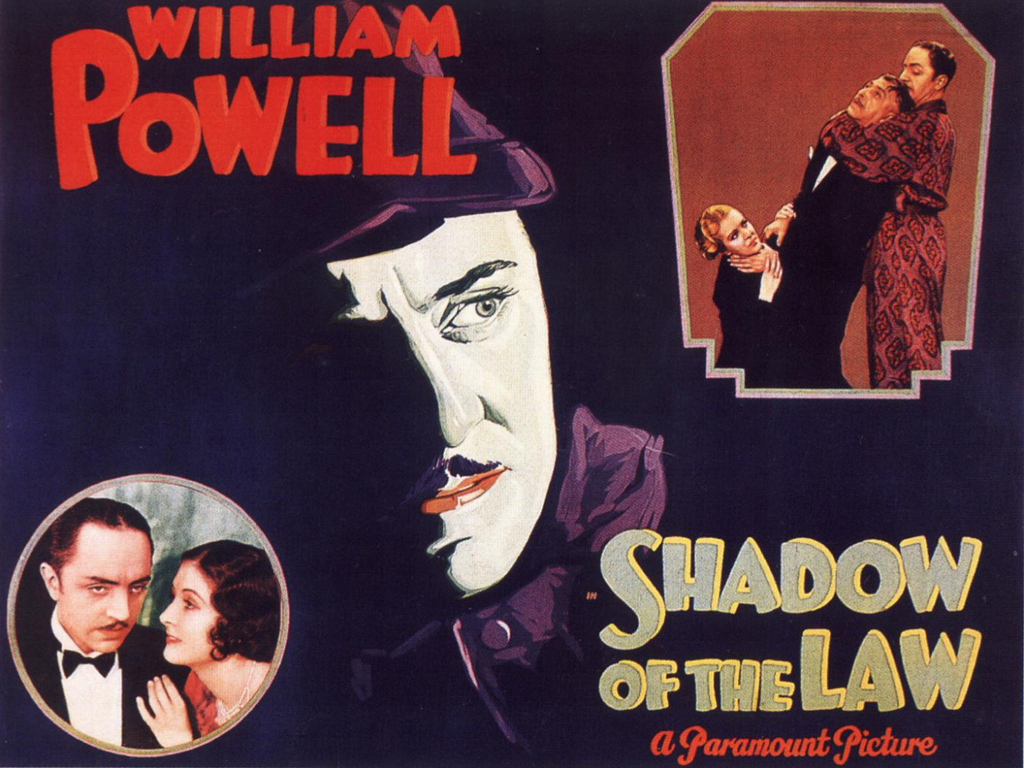
Shadow of the Law (1930)


Pre Code Logo 1

Pre Code Hollywood Season: FD Cinematheque

Shadow of the Law (1930)

Shadow of the Law 2

Shadow of the Law 3

Director: Louis J Gasnier

Cast: William Powell, Marion Shilling, Natalie Moorhead, Regis Toomey, Paul Hurst, George Irving, Frederick Burt, James Durkin, Richard Tucker, Walter James, Broderick O Farrell

69 min

Shadow of the Law 12

Shadow of the Law is a 1930 film directed by Louis Gasnier and starring William Powell.

Plot

A woman being pursued by an intoxicated man breaks into John Nelson’s apartment, imploring his help. Nelson, a young engineer, confronts the man, who accidentally topples through a window to his death.

Unable to prove the circumstances, Nelson is convicted of murder and sentenced to life imprisonment. With the aid of his cellmate, he escapes and under an assumed name becomes manager of a textile mill in North Carolina.

Shadow of the Law 4

Later, his former cellmate, Pete, is commissioned to find Ethel Barry, the woman who can clear him so that he may marry Edith, the mill owner’s daughter; but Ethel forces his hand through blackmail.

Detective Mike Kearney tracks him down, but when Montgomery (Nelson) mutilates his hands in a machine to erase his fingerprint identity, Kearney decides to force Ethel to clear him.

Shadow of the Law 7

Cast

William Powell William Powell
Marion Shilling Marion Shilling
Edith Wentworth
Natalie Moorhead Natalie Moorhead
Ethel Barry aka Ethel George
Regis Toomey Regis Toomey
Tom Owens
Paul Hurst Paul Hurst
Pete Shore
George Irving George Irving
Colonel Wentworth
Frederick Burt Frederick Burt
Detective Lt. Mike Kearney
James Durkin James Durkin
Prison Warden
Richard Tucker Richard Tucker
Lew Durkin
Walter James Walter James
Captain of the Guards

Shadow of the Law 6

Shadow of the Law 5

Shadow of the Law 8

Shadow of the Law 9

Shadow of the Law 10

Shadow of the Law 11

Film Collectors Corner

Watch Shadow of the Law  Now – Instant Video on Internet Archive

Blu Ray

Not released on Blu Ray


DVD

Not released on DVD

Four Feathers, The (1929)


Pre Code Logo 1

Pre Code Hollywood Season: FD Cinematheque

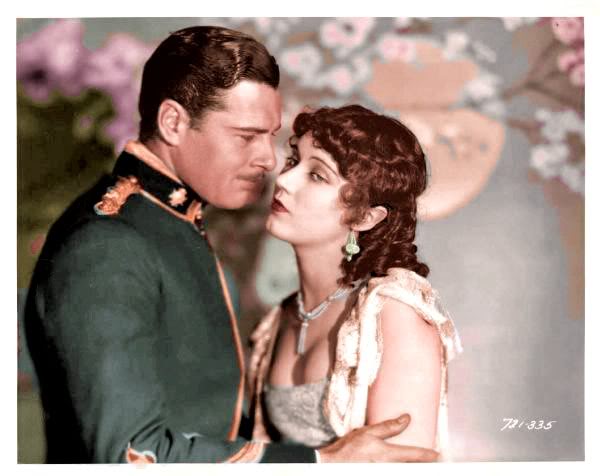
The Four Feathers (1929)

Four Feathers The 1

Four Feathers The 5

Four Feathers The 6

Directors: Merian C Cooper, Ernest B Shoedsack

Cast: Richard Arlen, Fay Wray, Clive Brook, William Powell, Theodore von Eltz, Noah Beery Sr., Zack Williams, Noble Johnson, Phillippe De Lacy, Harold Hightower, Rex Ingram

81 min

The Four Feathers is a 1929 American war film directed by Merian C. Cooper and starring Fay Wray.[1] The picture has the distinction of being one of the last major Hollywood pictures of the silent era.

It was also released by Paramount Pictures in a version with a Movietone soundtrack with music and sound effects only.[2] The film is the third of numerous film versions of the 1902 novel The Four Feathers written by A. E. W. Mason, and the cast features Richard Arlen, Clive Brook, William Powell and Noah Beery, Sr.

Four Feathers The 8

Four Feathers The 9

Cast

Four Feathers The 7

Accolades

The film is recognized by American Film Institute in these lists:

References

  1. Jump up^ Hall, Mordaunt. “New York Times: The Four Feathers”. NY Times. Retrieved July 22, 2008.
  2. Jump up^ IMDB entry
  3. Jump up^ “AFI’s 100 Years…100 Cheers Nominees” (PDF). Retrieved August 14, 2016

Four Feathers The 10

Four Feathers The 11

Four Feathers The 12

Four Feathers The 13

Four Feathers The 14

Four Feathers The 15

Four Feathers The 16

Four Feathers The 17

Film Collectors Corner

Watch The Four Feathers Now – Instant Video on Internet Archives

Blu Ray

Not released on Blu Ray

DVD

Benson Murder Case, The (1930)


Pre Code Logo 1

Pre Code Hollywood Season: FD Cinematheque

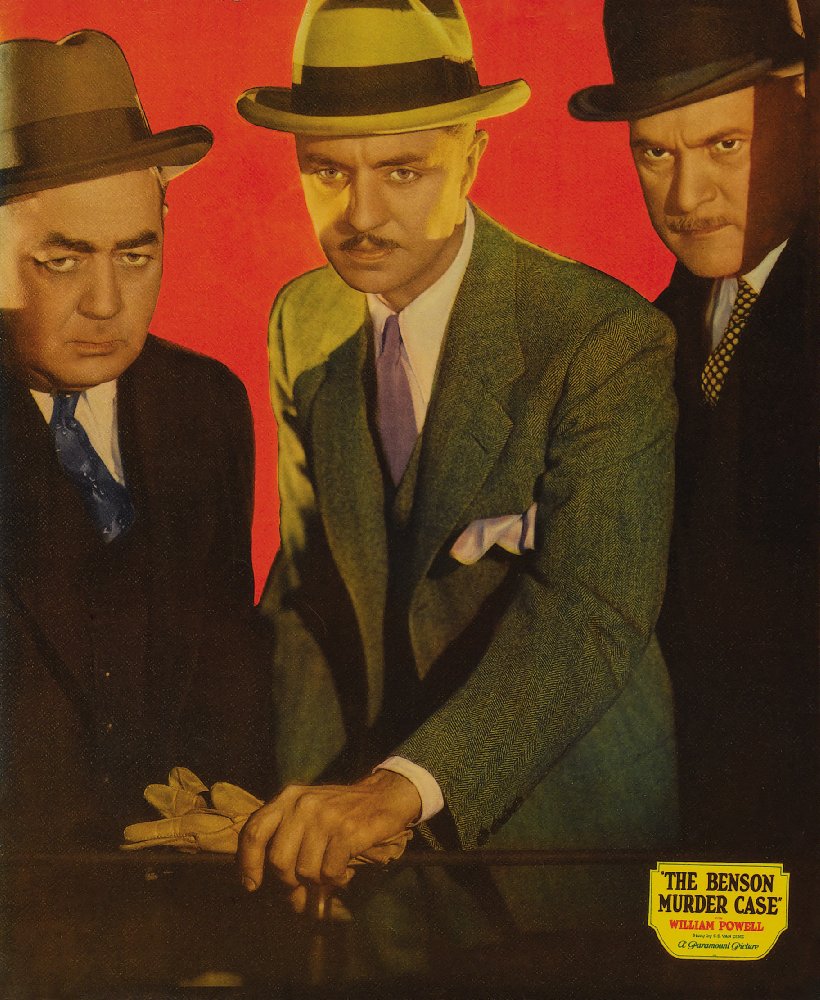
The Benson Murder Case (1930)

Benson Murder Case the 11

Benson Murder Case the 5

Benson Murder Case the 6

Director: Frank Tuttle

Cast: William Powell, William Stage Boyd, Eugene Pallette, Paul Lukas, Natalie Moorhead, Richard Tucker, May Beatty, E H Calvert, Mischa Auer, Guy Oliver

65 min

The Benson Murder Case is the first novel in the Philo Vance series of mystery novels by S. S. Van Dine, which became a best-seller.

Benson Murder Case the 8

Plot outline

New York dilettante Philo Vance decides to assist the police in investigating the death of another man-about-town because he finds the psychological aspects of the crime of interest, and feels that they would be beyond the capacities of the police, even those of his friend District Attorney Markham.

Benson Murder Case the 9

Vance investigates the circumstances under which the body was found and reconstructs the crime sufficiently to determine that the murderer is five feet, ten and a half inches in height. Together, Vance and Markham investigate Benson’s business associates and romantic interests until Vance manages to pierce the murderer’s alibi for the time of the murder and force a confession.

Benson Murder Case the 10

Literary significance and criticism

The novel was very loosely based upon a real-life case that had made headlines, the unsolved 1920 murder of bridge expert Joseph Bowne Elwell.

It was considered a roman à clef because the circumstances under which Elwell’s body was found—he was shot to death in a room in his home which was found to be locked from the inside, and he was not wearing his toupee—are duplicated in the novel. Modern knowledge of ballistics reveals that one of the central premises of the novel is fanciful, because the reconstruction of the height of the murderer is impossible (Dashiell Hammett had said as much at the time, in a 1927 book review).

Benson Murder Case the 12

“The first and best, partly because Van Dine had the real-life model of the Joseph Elwell murder (1920) to hold his fancy in check.”[1]

“Vance spots the murderer almost immediately but doesn’t reveal him, allowing Markham and Sergeant Heath to fix the guilt on five successive persons by circumstantial evidence.”[2]

Benson Murder Case the 13

Film adaptations

Paramount Pictures released The Benson Murder Case (1930) a film version directed by Frank Tuttle and starring William Powell as Philo Vance. The film was moderately faithful to the plot of the novel. Paramount also released a Spanish-language version, El Cuerpo del Delito, written by Catalan writer Josep Carner Ribalta (1898–1988), and co-directed by Cyril Gardner and A. Washington Pezet.

Benson Murder Case the 14

References

  1. Jump up^ Barzun, Jacques and Taylor, Wendell Hertig. A Catalogue of Crime. New York: Harper & Row. 1971, revised and enlarged edition 1989. ISBN 0-06-015796-8
  2. Jump up^ Roseman, Mill et al.. Detectionary. New York: Overlook Press, 1971. ISBN 0-87951-041-2

Benson Murder Case the 15

Benson Murder Case the 16

Benson Murder Case the 17

Film Collectors Corner

Watch The Benson Murder Case Now – Instant Video on Internet Archive

Blu Ray

Not released on Blu Ray

DVD

Not released on DVD


Paramount on Parade (1930)


Pre Code Logo 1

Pre Code Hollywood Season: FD Cinematheque

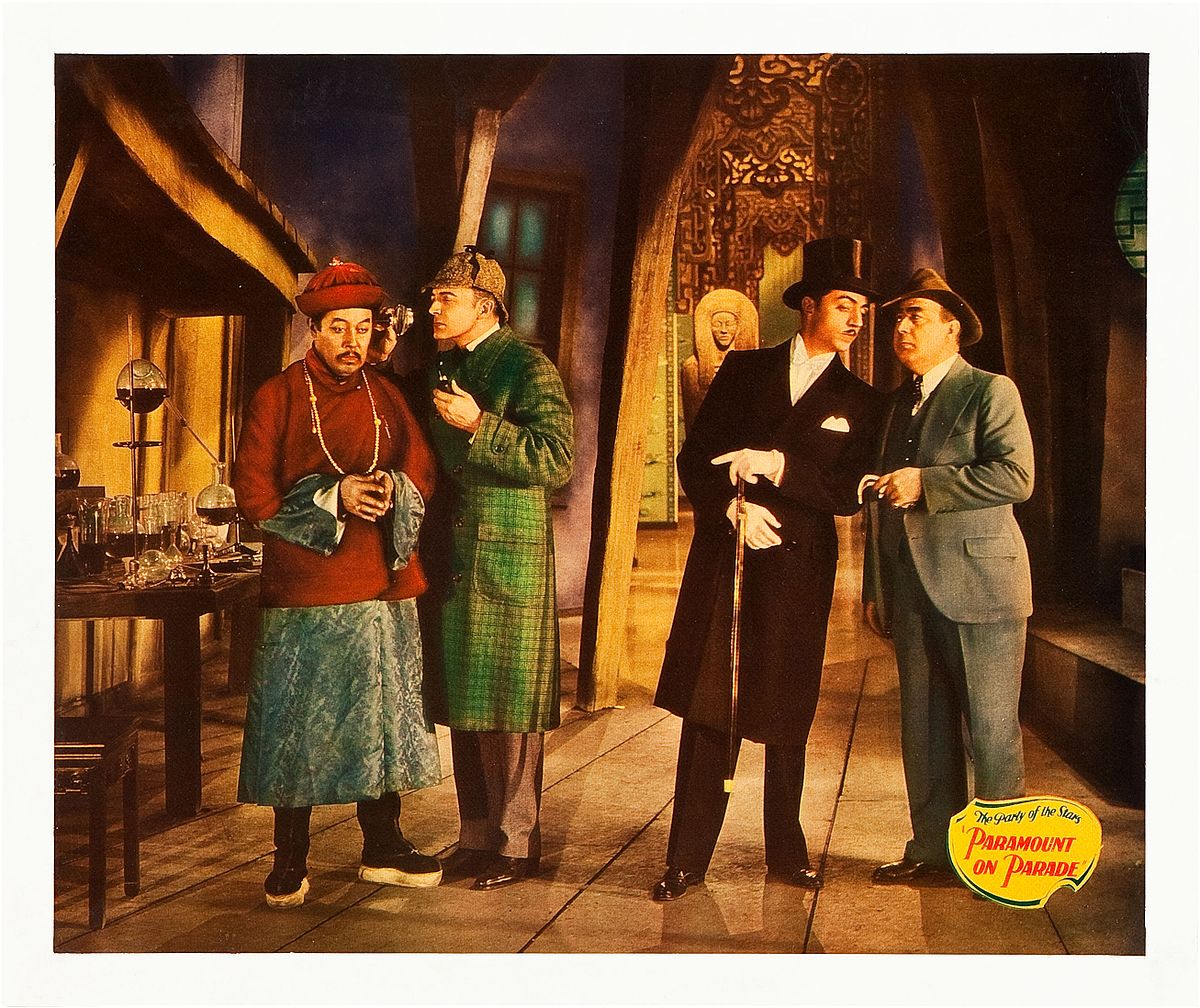
Paramount on Parade (1930)

Paramount on Parade 7

Paramount on Parade 2

Paramount on Parade 4

Paramount on Parade 5

Directors: Dorothy Arzner, Otto Brower, Edmund Goulding, Victor Heerman, Edwin H Knopf, Rowland V Lee, Ernst Lubitsch, Lothar Mendes, Victor Schertzinger, A Edward Sutherland, Frank Tuttle

Cast: Maurice Chevalier, Richard Arlen, Jean Arthur, William Austin, George Bancroft, Clara Bow, Evelyn Brent, Mary Brian, Clive Brook, Nancy Carroll, Kay Francis, Richard Skeets Gallagher, Gary Cooper, Ruth Chatterton, Mitzi Green, Fredric March and many others

102 min

Paramount on Parade 3


Paramount on Parade is a 1930 all-star American Pre-Code revue released by Paramount Pictures, directed by several directors including Edmund Goulding, Dorothy Arzner, Ernst Lubitsch, Rowland V. Lee, A. Edward Sutherland, Lothar Mendes, Otto Brower, Edwin H. Knopf, Frank Tuttle, and Victor Schertzinger—all supervised by the production supervisor, singer, actress, and songwriter Elsie Janis.

Featured stars included Jean Arthur, Richard Arlen, Clara Bow, Evelyn Brent, Buddy Rogers, Jack Oakie, Helen Kane, Maurice Chevalier, Nancy Carroll, George Bancroft, Kay Francis, Richard “Skeets” Gallagher, Gary Cooper, Fay Wray, Lillian Roth and other Paramount stars. The screenplay was written by Joseph L. Mankiewicz, produced by Adolph Zukor and Jesse L. Lasky, with cinematography by Victor Milner and Harry Fischbeck.

Paramount on Parade 8

Production

Paramount on Parade, released on April 22, 1930, was Paramount’s answer to all-star revues like Hollywood Revue of 1929 from Metro-Goldwyn-Mayer, The Show of Shows from Warner Brothers, and King of Jazz from Universal Studios.[1][2] The film had 20 individual segments—several of them in two-color Technicolor — directed by 11 directors, and almost every star on the Paramount roster except Claudette Colbert and the Marx Brothers. (Colbert became a star in May 1930 with the release of The Big Pond, also with Chevalier and also released in a French-language version.)

Paramount on Parade 9

International versions

Paramount also produced a French-language version Paramount en Parade directed by Charles de Rochefort and a Romanian-language version Parada Paramount (Chevalier and Martini also starred in the French version, and Romanian actress Pola Illéry starred in the Romanian version. There was also a Dutch version, Paramount op Parade with Theo Frenkel. The Scandinavian version starred Ernst Rolf and his wife, Tutta Rolf.

Paramount on Parade 11

Preservation status

Paramount on Parade 20

Paramount on Parade featured in a 1930 advertisement for Technicolor

The film, including some of its Technicolor sequences, has been restored by the UCLA Film and Television Archive. The original title sequence and chorus girl number immediately following it, however, are still lost. The sound for two of the Technicolor sequences (“Gallows Song” and “Dream Girl”) are also missing.

Paramount on Parade 13

According to Robert Gitt, film archivist now retired from UCLA, in a lecture at Pacific Film Archive at UC Berkeley, the film was also released with sound-on-disc for those theaters not equipped for sound-on-film. The archive had a report of the soundtrack for this film still existing on disc until the 1994 Northridge earthquake destroyed a set of discs that a collector was planning to donate.

In August 2010, CapitolFest in Rome, New York showed a 102-minute version restored by UCLA Film and Television Archive. Some sequences are still missing the sound, for some sequences only the soundtrack exists.

Paramount on Parade 12

List of sequences

Paramount on Parade 14

Paramount on Parade 15

Paramount on Parade 18

Paramount on Parade 19

Foreign-language versions

A large number of foreign-language versions were shot including:

Paramount on Parade 21

  • Parada Paramount (Romanian) with Pola Illéry; directed by Rochefort
  • Paramount op Parade (Dutch) with Theo Frenkel Jr., Mien Duymaer van Twist, and Louis Davids; directed by Job Weening

At Paramount’s Hollywood studio, Ernst Rolf and his Norwegian wife, Tutta Rolf, filmed introductions and sequences for the Scandinavian version. Japanese comedian Suisei Matsui introduced the film in Japan. Mira Zimińska and Mariusz Maszynski appeared in the Polish version, and Dina Gralla and Eugen Rex appeared in the German version. Paramount filmed most of the above versions, along with Czech, Hungarian, Serbian, and Italian versions, at their Joinville Studios in Paris.

Paramount on Parade 22

See also

References[edit]

  1. Jump up^ “Paramount on Parade”. IMDb.com. Retrieved 2016-02-06.
  2. Jump up^ “Paramount on Parade (1930) – Overview”. TCM.com. Retrieved 2016-02-06.
  3. ^ Jump up to:a b c d e Lynn Kear; James King (2009-07-31). Evelyn Brent: The Life and Films of Hollywood’s Lady Crook. Books.google.com.pe. p. 188. Retrieved 2016-02-06.

Paramount on Parade 23

Paramount on Parade 24

Paramount on Parade 25


Film Collectors Corner

Watch Paramount on Parade Now – Instant Video on Internet Archive

Blu Ray

Not released on Blu Ray


DVD

Not released on DVD


Marriage Playground, The (1929)


Pre Code Logo 1

Pre Code Hollywood Season: FD Cinematheque

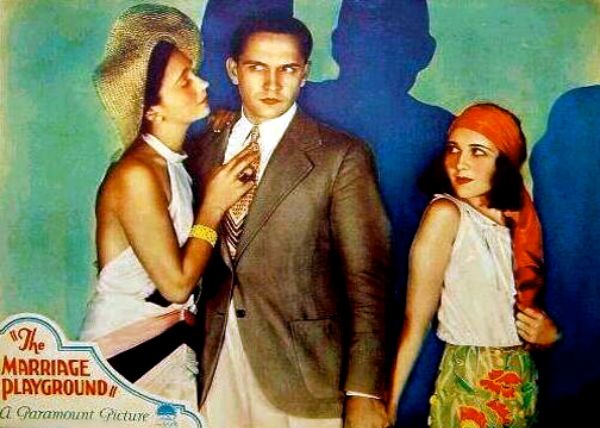
The Marriage Playground (1929)

Marriage Playground The 1

Marriage Playground The 2

Marriage Playground The 3

Marriage Playground The 5

Marriage Playground The 4

Director: Lothar Mendes

Cast: Mary Brian, Fredric March, Lilyan Tashman, Huntley Gordon, Kay Francis, William Austin, Seena Owen, Phillipe De Lacy, Anita Louise, Mitzi Green, Clive Brook (narrator)

70 min

Marriage Playground The 6

The Marriage Playground is a 1929 American Pre-Code drama film directed by Lothar Mendes and written by Doris Anderson, J. Walter Ruben and Edith Wharton. The film stars Mary Brian, Fredric March, Lilyan Tashman, Huntley Gordon, Kay Francis, William Austin, and Seena Owen.

The film was released on December 21, 1929, by Paramount Pictures.[1][2]

Marriage Playground The 8

Plot

Joyce and Cliffe Wheater, a much-divorced American couple, leave their seven children to fend for themselves as they tour the smart resorts of Europe. Judith, the eldest, takes care of the group. Martin Boyne, an American tourist, meets Judith and the children at the Lido and remembers that he knew their father in America; attracted to Judith, he is quick to sympathize with the problems of the children.

Although he is the way to Switzerland to meet Rose Sellers, his fiancée, Martin delays the trip to help the children through a crisis that threatens to separate them. When he leaves, Judith despairs, feeling that he regards her as only a child, and she decides to take the children to Switzerland; there Martin realizes he loves her, and when Wheater, repenting of his neglect, telephones him to bring the children back, Martin declares that he is marrying Judith and will himself care for the children.

Marriage Playground The 7

Cast

Marriage Playground The 9

Marriage Playground The 10

References

  1. Jump up^ “Movie Review – Lucky in Love – THE SCREEN; Fun and Romance”. nytimes.com. Retrieved February 15, 2015.
  2. Jump up^ “The Marriage Playground”. afi.com. Retrieved February 15, 2015.

Marriage Playground The 11

Marriage Playground The 12

Marriage Playground The 14

Marriage Playground The 13

Marriage Playground The 15

Marriage Playground The 16

Marriage Playground The 17

Marriage Playground The 18

Marriage Playground The 19

Marriage Playground The 20

Marriage Playground The 21

Marriage Playground The 22

Film Collectors Corner

Watch The Marriage Playground Now –  Instant Video 0n Internet Archive

Blu Ray

Not released on Blu Ray

DVD

Not released on DVD

Behind the Make Up (1930)


Pre Code Logo 1

Pre Code Hollywood Season: FD Cinematheque

Behind the Make Up (1930)

Behind the Make Up 2

Behind the Make Up 1

Behind the Make Up 3

Behind the Make Up 4

Director: Robert Milton, Dorothy Arzner, Henry Hathaway

Cast: Hal Skelly, William Powell, Fay Wray, Kay Francis, Paul Lukas, E H Calvert, Torben Meyer, Bob Perry, Walter Huston

70 min

Behind the Make Up 6

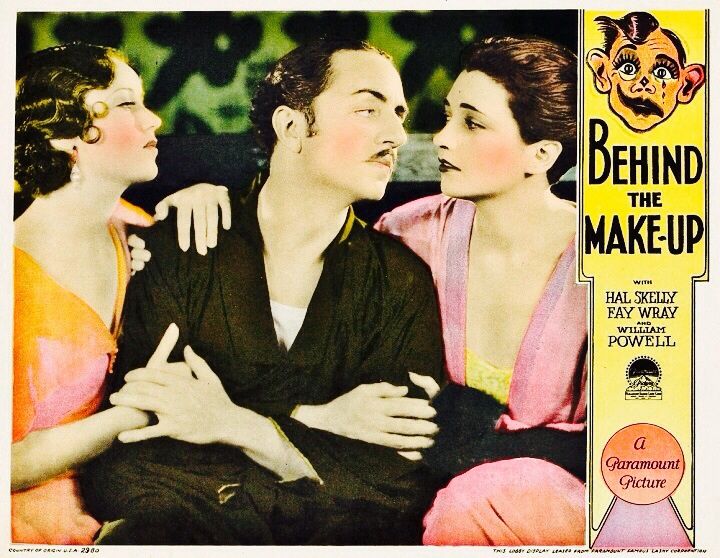
Behind the Make-Up (1930) is an American Pre-Code drama film starring Hal Skelly, William Powell, Kay Francis, and Fay Wray, and based on the short story “The Feeder” by Mildred Cram.

This was the first of seven in which Powell and Francis co-starred, the others being Street of Chance (1930), Paramount on Parade (1930), For the Defense (1930), Ladies’ Man (1931), Jewel Robbery (1932), and One Way Passage (1932).

Plot Summary

Gardoni, a down-on-his-luck vaudeville performer, is taken in by a fellow performer, a clown who has a bicycle riding act. Gardoni shows his appreciation by stealing the clown’s act and his girlfriend, whom he marries.

Behind the Make Up 7

Cast

Behind the Make Up 12

Critical reception

Mordaunt Hall, film critic of the New York Times, praised the performances of Powell (“excellent”), Wray (“pleasing”), Skelly (“goes about his part with earnestness and intelligence”), and Francis (“does nicely”), but noted “the story is rather limp and disappointing.”[1]

Behind the Make Up 10

References

  1. ^ Jump up to:a b Mordaunt Hall (January 18, 1930). “Behind the Makeup (1930)”. New York Times.

Behind the Make Up 13

Behind the Make Up 11

Film Collectors Corner

Watch Behin the Make Up Now – Instant Video on Internet Archive

Blu Ray

Not released on Blu Ray

DVD

Cocoanuts, The (1929)


Pre Code Logo 1

Pre Code Hollywood Season: FD Cinematheque

The Cocoanuts (1929)

Coconuts the 1

Coconuts the 3

Coconuts the 5

Director: Robert Florey, Joseph Santley

Cast: Zeppo Marx, Groucho Marx, Harpo Marx, Chico Marx, Mary Eaton, Kay Francis, Oscar Shaw, Margaret Dumont, Cyril Ring, Barton MacLane

96 min

Coconuts the 6

The Cocoanuts (1929) is the Marx Brothers‘ first feature-length film. Produced for Paramount Pictures by Walter Wanger, who is not credited, the musical comedy stars the four Marx Brothers, Oscar Shaw, Mary Eaton, and Margaret Dumont.

It was the first sound film to credit more than one director (Robert Florey and Joseph Santley), and was adapted to the screen by Morrie Ryskind from the George S. Kaufman Broadway musical play. Five of the film’s tunes were composed by Irving Berlin, including “When My Dreams Come True”, sung by Oscar Shaw and Mary Eaton.

Coconuts the 7

Plot

The Cocoanuts is set in the Hotel de Cocoanut, a resort hotel, during the Florida land boom of the 1920s. Mr. Hammer (Groucho Marx) runs the place, assisted by Jamison (Zeppo Marx), who would rather sleep at the front desk than actually help him run it. Chico and Harpo arrive with empty luggage, which they apparently plan to fill by robbing and conning the guests.

Mrs. Potter (Margaret Dumont, in the first of seven film appearances with the Marxes) is one of the few paying customers. Her daughter Polly (Mary Eaton) is in love with struggling young architect Bob Adams (Oscar Shaw).

He works to support himself as a clerk at the hotel, but has plans for the development of the entire area as Cocoanut Manor. Mrs. Potter wants her daughter to marry Harvey Yates (Cyril Ring), whom she believes to be of higher social standing than the clerk. This suitor is actually a con man out to steal the dowager’s diamond necklace with the help of his conniving partner Penelope (Kay Francis).

Coconuts the 9

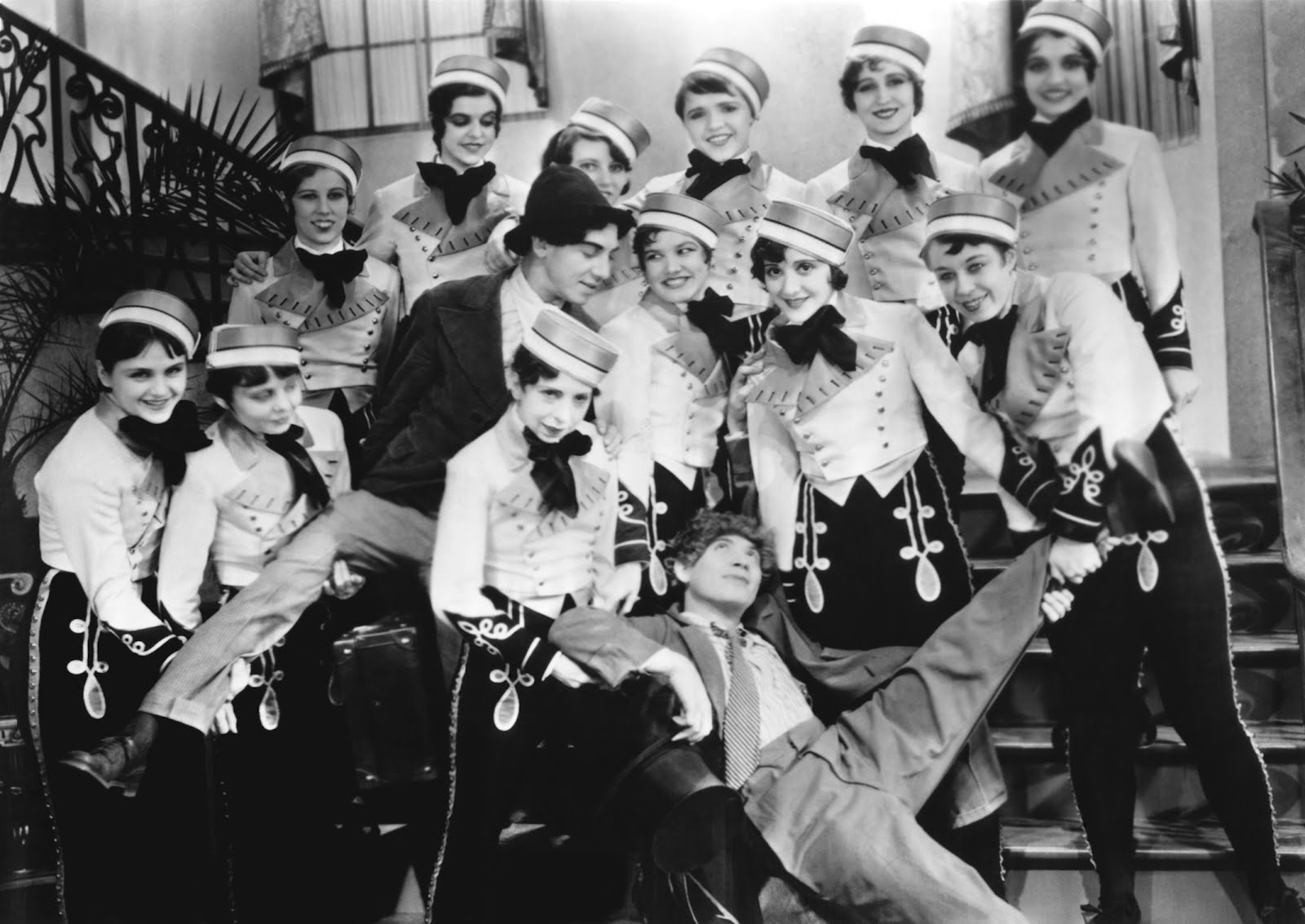
The plot is almost beside the point, and the story and setting are little more than an excuse for the brothers to run amok. The film is notable for its musical “production numbers”, including techniques which were soon to become standard, such as overhead shots of dancing girls imitating the patterns of a kaleidoscope.

The musical numbers were recorded live on the soundstage as they were shot, rather than pre-recorded, using an off-camera orchestra. The main titles are superimposed over a negative image of the “Monkey-Doodle-Do” number photographed from an angle that does not appear in the body of the film.

Coconuts the 8

One of the more famous gags in the film has Groucho giving directions to Chico, who keeps misunderstanding “viaduct” as “why-a-duck“. In another sequence Groucho is the auctioneer for some land of possibly questionable value (“You can have any kind of a home you want to; you can even get stucco!

Oh, how you can get stuck-oh!”) He has hired Chico to inflate the sale prices by making phony bids. To Groucho’s frustration, Chico keeps outbidding everyone, even himself. During the auction, Mrs. Potter announces that her necklace has been stolen and offers a thousand dollar reward, whereupon Chico offers two thousand. Still another sequence has Groucho, Mrs. Potter and Harvey Yates (the necklace thief) make formal speeches. Harpo repeatedly walks off, with a grimace on his face, to the punch bowl. (His staggering implies that the fruit punch has been spiked with alcohol.) Another highlight is when the cast, already dressed in traditional Spanish garb for a theme party, erupts into an operatic treatment about a lost shirt to music from Carmen (specifically, Habanera and the song of the Toreador). An earlier scene shows Harpo and Chico abusing a cash register while whistling the Anvil Chorus from Il trovatore, a piece also referenced in several other Marx Brothers films.

Coconuts the 11

Cast

The Cocoanuts (1929)
Zeppo Marx, Groucho Marx, Chico Marx & Harpo Marx Film: The Cocoanuts (USA 1929) Character(s): Jamison, Hammer, Chico, Harpo Director: Robert Florey & Joseph Santley 03 May 1929 AFF20867 AF Archive Picture Library/PARAMOUNT PICTURES **Warning** This Photograph is for editorial use only and is the copyright of PARAMOUNT PICTURES and/or the Photographer assigned by the Film or Production Company & can only be reproduced by publications in conjunction with the promotion of the above Film. A Mandatory Credit To PARAMOUNT PICTURES is required. The Photographer should also be credited when known. No commercial use can be granted without written authority from the Film Company.

Production

Referring to directors Robert Florey and Joseph Santley, Groucho Marx remarked, “One of them didn’t understand English and the other didn’t understand comedy.”[2]

As was common in the early days of sound film, to eliminate the sound of the camera motors the cameras and the cameramen were enclosed in large soundproof booths with glass fronts to allow filming, hence the largely static camera work. For many years, Marxian legend had it that Florey, who had never seen the Marxes’ work before, was put in the soundproof booth because he could not contain his laughter at the brothers’ spontaneous antics.[3]

Coconuts the 13

Every piece of paper in the movie is soaking wet, to keep crackling paper sounds from overloading the primitive recording equipment of the time. In fact, this did not occur to director Florey until 27 takes had been made (of the “Viaduct” scene) and disposed of because of the noise made by the paper. Florey finally got the idea to soak the paper in water; the 28th take of the “Viaduct” scene used soaked paper, and this take was quiet and used in the film.[4]

The “ink” that Harpo drank from the hotel lobby inkwell was actually Coca-Cola, and the “telephone mouthpiece” that he nibbled was made of chocolate, both inventions of Robert Florey.

Filming took place at Paramount’s Astoria Studios in Astoria, Queens. Their second film, Animal Crackers, was also shot there. After that, production of all Marx films moved to Hollywood.

Coconuts the 12

Songs

  • “Florida by the Sea” (instrumental with brief vocal by chorus during opening montage)
  • “When My Dreams Come True” (theme song, Mary Eaton and Oscar Shaw variously, several reprises)
  • “The Bell-Hops” (instrumental, dance number)
  • “Monkey Doodle Doo” (vocal by Mary Eaton and dance number)
  • “Ballet Music” (instrumental, dance number)
  • “Tale of the Shirt” (vocal by Basil Ruysdael, words set to music from Carmen by Georges Bizet)
  • “Tango Melody” (vocal included in the stage production, used in the film as background music only)
  • “Gypsy Love Song” (by Victor Herbert, piano solo by Chico Marx)

The Cocoanuts is one of the few Irving Berlin vehicles that did not yield any particularly memorable songs. Several songs from the stage play were omitted from the film: “Lucky Boy”, sung by the chorus to congratulate Bob on his engagement to Polly and “A Little Bungalow”, a love duet sung by Bob and Polly that was replaced with “When My Dreams Come True” in the film.

Coconuts the 14

Irving Berlin wrote two songs entitled “Monkey Doodle Doo”. The first was published in 1913, the second introduced in the 1925 stage production and featured in the film. They are very different songs.

Although legend claims Berlin wrote the song “Always” for The Cocoanuts, he never meant for the song to be included, writing it, instead, as a gift for his fiancee.[5]

Reception

When the Marx Brothers were shown the final cut of the film, they were so horrified they tried to buy the negative back and prevent its release.[6] Paramount wisely resisted — the movie turned out to be a big box office hit, with a $1,800,000 gross making it one of the most successful early talking films.[1]

It received mostly positive reviews from critics, with the Marx Brothers themselves earning most of the praise while other aspects of the film drew a more mixed reaction. Mordaunt Hall of The New York Times reported that the film “aroused considerable merriment” among the viewing audience, and that a sequence using an overhead shot was “so engaging that it elicited plaudits from many in the jammed theatre.”

Coconuts the 16

However, he found the audio quality during some of the singing to be “none too good”, adding, “a deep-voiced bass’s tones almost fade into a whisper in a close-up. Mary Eaton is charming, but one obtains little impression of her real ability as a singer.”[7]

Variety called it “a comedy hit for the regular picture houses. That’s all it has – comedy – but that’s enough.” It reported the sound had “a bit of muffling now and then” and that the dancers weren’t always filmed well: “When the full 48 were at work only 40 could be seen and those behind the first line could be seen but dimly.”[8]

“It is as a funny picture and not as a musical comedy, not for its songs, pretty girls, or spectacular scenes, that The Cocoanuts succeeds”, wrote John Mosher in The New Yorker. “Neither Mary Eaton, nor Oscar Shaw, who contribute the “love interest”, is effective, nor are the chorus scenes in the least superior to others of the same sort in various musical-comedy-movies now running in town. To the Marxes belongs the success of the show, and their peculiar talents seem, surprisingly enough, even more manifest on the screen than on the stage.”[9]

Film Daily called it “a good amount of fun, although some of it proves tiresome. This is another case of a musical comedy transferred almost bodily to the screen and motion picture treatment forgotten. The result is a good many inconsistencies which perhaps may be overlooked provided the audience accepts the offering for what it is.”[10]

Coconuts the 17

Awards and honors

American Film Institute recognition

• AFI’s 100 Years… 100 Laughs – Nominated

See also

Coconuts the 18

References

  1. ^ Jump up to:a b “Big Sound Grosses”. Variety. New York. June 21, 1932. p. 62.
  2. Jump up^ Bowen, Peter (August 3, 2010). “The Cocoanuts Released”. Focus Features. Retrieved December 9, 2014.
  3. Jump up^ Paul Zimmerman, The Marx Brothers At The Movies. Putnam, 1968.
  4. Jump up^ Paul D. Zimmerman and Burt Goldblatt The Marx Brothers at the Movies,[page needed]
  5. Jump up^ Bader, Robert S. (2016). Four of the Three Musketeers: The Marx Brothers on Stage. Evanston, IL: Northwestern University Press. p. 309. ISBN 9780810134164.
  6. Jump up^ Nixon, Rob. “The Cocoanuts”. TCM.com. Turner Entertainment Networks, Inc. Retrieved December 9, 2014.
  7. Jump up^ Hall, Mordaunt (May 25, 1929). “Movie Review – The Cocoanuts”. The New York Times. Retrieved December 9, 2014.
  8. Jump up^ “The Cocoanuts”. Variety. New York: 14. May 29, 1929.
  9. Jump up^ Mosher, John (June 1, 1929). “The Current Cinema”. The New Yorker. p. 74.
  10. Jump up^ “The Cocoanuts”. Film Daily. New York: Wid’s Films and Film Folk, Inc. June 2, 1929. p. 9.

Coconuts the 19

Coconuts the 20

Film Collectors Corner

Watch The Coconuts Now – Instant Video on Internet Archive

Blu Ray

DVD

Gentlemen of the Press (1929)


Pre Code Logo 1

Pre Code Hollywood Season: FD Cinematheque

Gentlemen of the Press (1929)


Gentlemen of the Press 3

Gentlemen of the Press 2

Director: Millard Webb

Cast: Walter Huston, Kay Francis, Charles Ruggles, Betty Lawford, Norman Foster, Duncan Penwarden, Lawrence Leslie, Harry Lee, Brian Donlevy, Victor Killian

80 min

Gentlemen of the Press is a 1929 all-talking film starring Walter Huston in his first feature film role and Kay Francis in her first film role. The film still survives. This film’s copyright has expired and it is now in the public domain. It survives in a copy sold to MCA for television distribution.[1]

The film is based on Ward Morehouse’s 1928 Broadway play Gentlemen of the Press.[2]

Gentlemen of the Press 5

Cast

uncredited

Gentlemen of the Press 4

References


DVD

Not released on DVD


Virtuous Sin, The (1930)


Pre Code Logo 1

Pre Code Hollywood Season: FD Cinematheque

The Virtuous Sin (1930)


Virtuous Sin The 2

Virtuous Sin The 4

Virtuous Sin The 5

Virtuous Sin The 3

Virtuous Sin The 13

Director: George Cukor, Louis J Gasnier

Cast: Walter Huston, Kay Francis, Kenneth MacKenna, Jobyna Howland, Paul Cavanagh, Eric Kalkhurst, Oscar Apfel, Gordon McLeod, Victor Potel

80 min

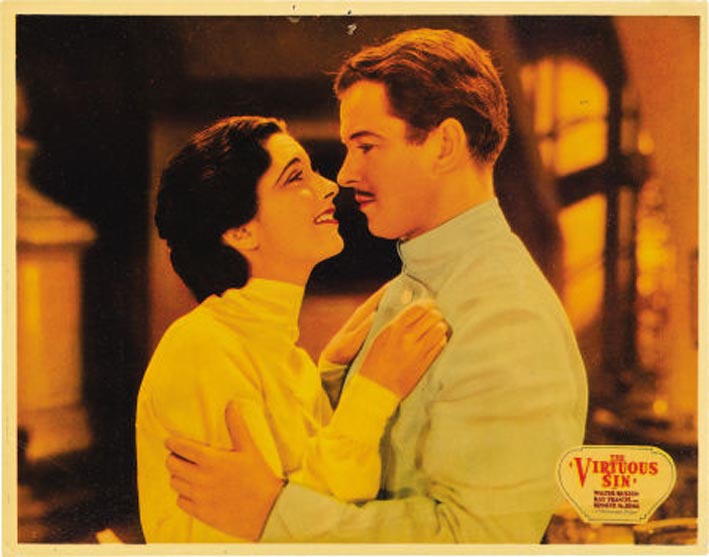
The Virtuous Sin is a 1930 American Pre-Code comedy-drama film directed by George Cukor and Louis J. Gasnier. The screenplay by Martin Brown and Louise Long is based on the play The General by Lajos Zilahy.

Plot

Marya is the wife of medical student Victor Sablin, who finds it impossible to deal with military life when he is inducted into the Russian army during World War I. With her husband is sentenced to death by firing squad due to his insubordination, Marya offers herself to General Gregori Platoff in order to save him. When the two unexpectedly fall in love, Victor — not caring that his life has been spared — threatens to kill his rival. His determination to eliminate the general falters when Marya confesses she is not in love with her husband — and never was.

Virtuous Sin The 7

Cast

Virtuous Sin The 10

Critical reception

Mordaunt Hall of the New York Times called the film “a clever comedy with a splendid performance by Walter Huston” and added, “There is a constant fund of interest in this picture’s action. It is one of those rare offerings in which youth takes a back seat.[1]

Virtuous Sin The 11

George Cukor’s reflection in 1972

In the book On Cukor, director George Cukor confided to biographer Gavin Lambert: “It wasn’t much good. I’d be in great shock if they [film restorationists & historians] rescued this one. I remember that I enjoyed working with Kay Francis and Walter Huston, though.”[2]

Virtuous Sin The 9

Preservation status

A complete print of this film is held by the UCLA Film and Television Archive. However, the UCLA archive’s website says the print is too shrunken for projection.[3]

Virtuous Sin The 10

See also

Virtuous Sin The 12

References

  1. Jump up^ “Review”, The New York Times.
  2. Jump up^ Parish, James Robert; Mank, Gregory W.; Stanke, Don E. (1978), The Hollywood Beauties, New Rochelle, New York: Arlington House Publishers, p. 73, ISBN 0-87000-412-3
  3. Jump up^ UCLA Film and Television Archive website

Virtuous Sin The 1

Film Collectors Corner

Watch The Virtuous Sin Now – Instant Video on Internet Archive


Blu Ray

Not released on Blu Ray


DVD

Not released on DVD

Let’s Go Native (1930)


Pre Code Logo 1

Pre Code Hollywood Season: FD Cinematheque

Let’s Go Native (1930)

LET'S GO NATIVE, Jeanette MacDonald, 1930

Lets Go Native 3

Lets Go Native 4

Director: Leo McCarey

Cast: Jack Oakie, Jeanette MacDonald, Kay Francis, Richard Skeets Gallagher, James Hall, William Austin, David Newell, Charles Sellon, Eugene Pallette, Virginia Bruce, John Elliott, Douglas Haig

77 min

Lets Go Native 5

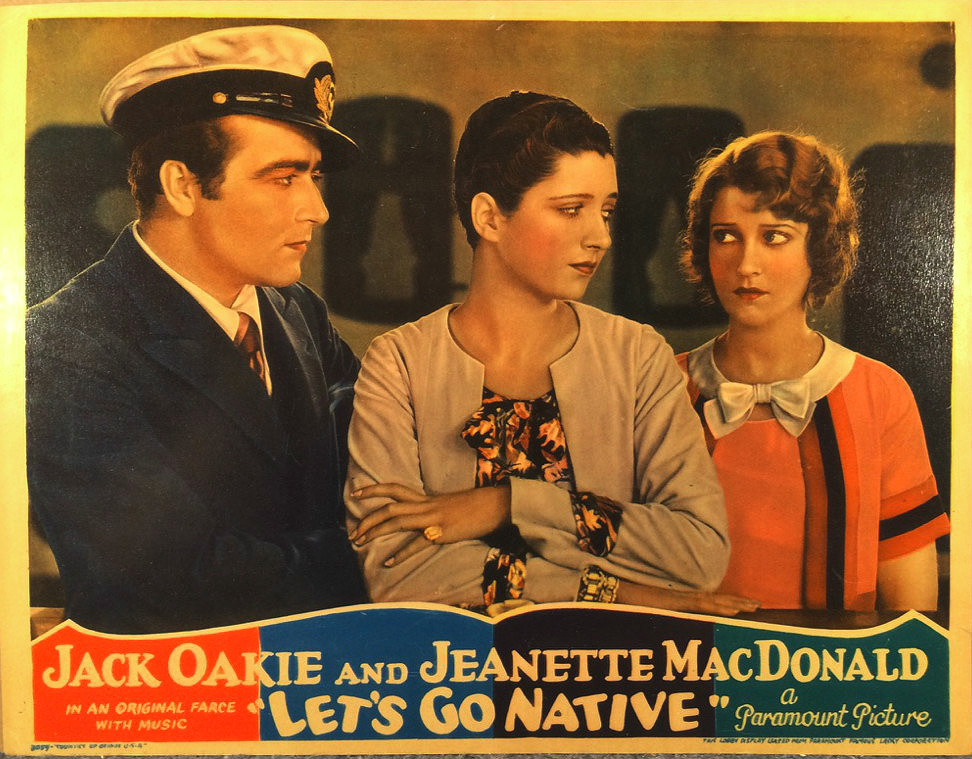
Let’s Go Native is a 1930 American Pre-Code black-and-white musical comedy film, directed by Leo McCarey and released by Paramount Pictures.

Jerry comments on being the only man on an island populated by women, “It was one of the Virgin Islands, but it drifted.” The tagline was: “Paramount’s wild, merry, mad hilarious farce!”

Cast

Lets Go Native 6

Lets Go Native 10

Lets Go Native 13

Lets Go Native 15

Lets Go Native 16

Soundtrack

  • “It Seems To Be Spring”
Lyrics by George Marion Jr.
Music by Richard A. Whiting
Copyright 1930 by Famous Music Corp.
  • “Let’s Go Native”
Lyrics by George Marion Jr.
Music by Richard A. Whiting
Copyright 1930 by Famous Music Corp.
  • “My Mad Moment”
Lyrics by George Marion Jr.
Music by Richard A. Whiting
Copyright 1930 by Famous Music Corp.
  • “I’ve Gotta Yen For You”
Lyrics by George Marion Jr.
Music by Richard A. Whiting
Copyright 1930 by Famous Music Corp.
Sung by Jack Oakie
  • “Joe Jazz”
Lyrics by George Marion Jr.
Music by Richard A. Whiting
Copyright 1930 by Famous Music Corp.
Sung by Jack Oakie
  • “Pampa Rose”
Lyrics by George Marion Jr.
Music by Richard A. Whiting
Copyright 1930 by Famous Music Corp.
  • “Don’t I Do?”
Lyrics by George Marion Jr.
Music by Richard A. Whiting
Copyright 1930 by Famous Music Corp.

Lets Go Native 7

Lets Go Native 8

Lets Go Native 9

Lets Go Native 12

Lets Go Native 14

Lets Go Native 18

Lets Go Native 17

Film Collectors Corner

Watch Let’s Go Native Now – Instant Video On Internet Archive

Blu Ray

Not released on Blu Ray

DVD

Street Of Chance (1930)


Pre Code Logo 1

Pre Code Hollywood Season: FD Cinematheque

Street Of Chance (1930)

Street of Chance 2

Street of Chance 4

Street of Chance 1

Street of Chance 3

Director: John Cromwell

Cast: Kay Francis, William Powell, Jean Arthur, Regis Toomey, Stanley Fields, Brooks Benedict, Maurice Black, Irving Bacon, John Risso, Joan Standing

75 min

Street of Chance 6

Street of Chance is a 1930 American pre-Code film directed by John Cromwell and starring William Powell, Jean Arthur, Kay Francis and Regis Toomey. Howard Estabrook was nominated for the Academy Award for Best Writing, Achievement.

Street of Chance 5

Plot

John Marsden, a famed and powerful New York gambler who refuses to throw a game, is devoted to his wife, Alma, and his impressionistic younger brother, “Babe,” to whom he sends a wedding gift of $10,000, which Babe may keep on the condition that he does not indulge in gambling. Alma, dismayed by John’s ruthless tactics and his obsession with gambling, threatens to leave him unless he takes his winnings and leaves the city with her. He agrees.

Street of Chance 12

However, that evening Babe, who has become a cardsharp, comes to town with his new wife, Judith. He goes to see his brother, whom he believes is a stockbroker, unaware of John’s true profession and the reality that he is trying to quit and rebuild his marriage. Babe insists on playing and tries to win a fortune with his savings in an organized gambling session. He wins remarkably. The professional gambler sees that his card-playing sibling is preparing to make the same mistakes he did.

John therefore decides to risk his life and gamble one more time, and to break the gambler’s code and cheat by throwing the game, in order to disillusion Babe, thereby teaching him an unforgettable lesson. However, John is caught cheating by Dorgan and becomes a marked man. John is later mortally wounded, in spite of his wife’s attempts to save him.

Street of Chance 11

Cast

Street of Chance 8

See also

Street of Chance 7

Street of Chance 9

Film Collectors Corner

Watch Street of Chance Now – Instant Video on Internet Archive

Blu Ray

Not released on Blu Ray


DVD

For The Defense (1930)


Pre Code Logo 1

Pre Code Hollywood Season: FD Cinematheque

For The Defense (1930)

For the Defense 1

For the Defense 2

Director: John Cromwell

Cast: Kay Francis, William Powell, Scott Kolk, William B Davidson, Thomas E Jackson, Harry Walker, James Finlayson, Charles West, Bertram Marburgh, Billy Bevan, John Cromwell, Sidney D’Albrook

65 min

TCM ARCHIVE

For the Defense is a 1930 Pre-Code crime drama film starring William Powell as a lawyer whose ethics are challenged when the woman he loves hits and kills a pedestrian while out driving with another suitor.

Plot

For the Defense 9

In New York City, William Foster (William Powell) is a criminal defense attorney so successful that prosecutors regard him as a menace. He holds himself to high ethical standards but is willing to mislead without actually lying.

Foster defends a man who planned a murder using explosives. District Attorney Stone (William B. Davidson) displays a vial and says chemical tests have shown that the liquid in it is sensitive nitroglycerin. Foster sniffs the liquid, questions him to verify the chain of custody, and then smashes the vial dramatically on the floor. When order is restored, he explains to the judge that he knew it was safe because nitro has a distinctive smell, and Stone says he had removed the actual nitro for safety after the chemical test. But Foster points out that only the liquid now in the bottle was entered into evidence, and wins his case.

For the Defense 7

Foster is in love with actress Irene Manners (Kay Francis), and she loves him, but she wants to be married and he does not. When another suitor, Jack Defoe (Scott Kolk), proposes to her, she says she needs to tell Foster about him before she can accept; but she finds she cannot do so. She stays out late enough at night with Defoe to leave only one implication of what they were doing, and while driving him home, she does agree to marry him. He suddenly hugs her and she loses control of the car, killing a bystander.

To protect Irene’s reputation, Defoe urges her to leave the scene, lying that the victim is not badly hurt. Presumed to have been driving while drunk, he is charged with manslaughter. They both still conceal her involvement, but she begs Foster to defend him. He asks why she cares enough about Defoe to insist; she says she and Defoe are just friends, but she had already promised him on Foster’s behalf, assuming Foster would be willing. Foster agrees, but finds that Defoe cannot tell a credible story at trial.

For the Defense 4

Then Foster finds out that Irene was at the accident scene and therefore must be much more than “just friends” with Defoe. Foster is crushed, but she still begs him to get Defoe acquitted, while Defoe fears Foster will throw the case and Irene will be charged and convicted as well. Foster eventually puts his love for Irene first and, for the first time in his life, bribes a juror to vote not guilty, hanging the jury.

Foster is quickly found out and arrested, and defends himself at trial. As he will not see Irene, she goes to Stone, admits what really happened at the accident, and says Foster was only trying to protect her. If Stone does not agree to recommend mercy, Irene says, she will tell her story in court. Stone says he will think about it.

Although his defense is going well, Foster then offers to plead guilty (and thus be disbarred, no doubt making life easier for prosecutors in future) if only Stone will agree not to retry Defoe; but Stone says he does not make deals. Back in court, Irene sends Foster a note pleading to let her testify and tell the truth. To protect her, Foster immediately changes his plea to guilty. Stone then tells Foster that neither Defoe nor Irene will be prosecuted.

As Foster arrives at Sing Sing to serve his sentence, Irene is there and says she will be waiting for him when he comes out. He says that if she does, then he will marry her.

For the Defense 10

Cast

For the Defense 5

For the Defense 3

For the Defense 11

For the Defense  12.jpg

Film Collectors Corner

Watch For The Defense Now – Instant Video on Internet Archive

Blu Ray

Not released on Blu Ray

DVD

Girls About Town (1931)


Pre Code Logo 1

Pre Code Hollywood Season: FD Cinematheque

Girls About Town (1931)

Girls About Town 1

Girls About Town 2

Girls About Town 4

Girls About Town 3

Director: George Cukor

Cast: Kay Francis, Joel McCrea, Lilyan Tashman, Eugene Palette, Alan Dinehart, Lucile Gleason, Anderson Lawler, Lucile Browne, George Barbier, Robert McWade, Louise Beavers, Judith Wood, Adrienne Ames

80 min

Girls About Town 8

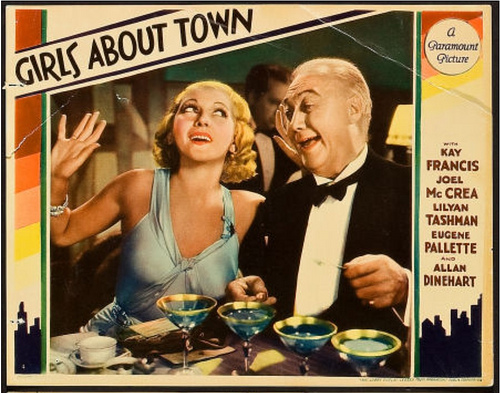
Girls About Town is a 1931 American pre-Code romantic comedy film directed by George Cukor and starring Kay Francis and Joel McCrea.

Contents

Girls About Town 15

Plot

Wanda Howard (Kay Francis) and Marie Bailey (Lilyan Tashman) go out with two balding, middle-aged businessmen from out of town (for $500 apiece) to help Jerry Chase (Alan Dinehart) close a sale. However, the women, who share a luxurious suite in an apartment building, have their African-American maid Hattie (Louise Beavers) disguise herself as their mother, waiting at the window, to avoid having to invite the men inside.

Wanda is getting tired of how she makes a living, but she and Marie go aboard a yacht the next night to divert rich practical joker Benjamin Thomas (Eugene Pallette) and his handsome business associate Jim Baker (Joel McCrea).

Girls About Town 10

Jim knows that the women are paid “entertainment”, but quickly finds himself falling for Wanda anyway, and vice versa. (When Jerry pays her for her efforts, Wanda tears up the check.) Once Jim realizes she genuinely loves him, he asks her to marry him. Although she is initially reluctant, she agrees. However, she informs Jim that there is one complication: her estranged husband Alex (Anderson Lawler). She asks him for a divorce, and he agrees.

Meanwhile, Benjamin’s wife, who is divorcing him because of his stinginess, shows up and asks Marie to stop making a fool of him. Marie realizes that Mrs Thomas (Lucille Gleason) is still in love with her husband, and comes up with a plan to cure him of his tightfisted ways. The next day, Marie steers Benjamin to the jewelry store where Mrs Thomas is waiting. Mrs Thomas, pretending not to see him, complains (in a loud voice) how cheap her husband is. Benjamin becomes so angry he buys Marie lots of expensive items for about $50,000.

GIRLS ABOUT TOWN

That night, Alex crashes the birthday party Marie has arranged for Benjamin. He tells Jim that he wants $10,000 or he will name Jim as the co-respondent in the divorce. Alex insinuates that Wanda is part of the blackmail scheme. Believing the lie, Jim breaks up with Wanda.

Wanda visits Alex in Brooklyn and demands he give the money back. He introduces her (as “cousin Wanda”) to the ailing Mrs. Howard and their baby, the reasons he needs the money so desperately. He confesses that he got a divorce in Mexico 2 years before, and promises to pay her back once he is back on his feet financially. Touched, Wanda leaves without the check.

Wanda decides to auction off enough of her possessions to her friends to raise $10,000 and pay Jim back. She also asks Marie to return her jewelry. Wanda gives Jim the proceeds; even before that, however, he has come to his senses, and the couple reconcile. Marie gives Benjamin’s gifts to his wife and reunites that couple.

Girls About Town 12

Cast

Uncredited:

Girls About Town 13

Reception

Mordaunt Hall, The New York Times film critic, gave Girls About Town a qualified favorable review, writing, “This handsomely staged and ably directed production is one that affords no little laughter, but unfortunately it is burdened in the latter stages by highly improbable serious sequences.”

Girls About Town 11

See also

References

  1. Jump up^ Hall, Mordaunt (November 2, 1931). “The Screen; Movietone News.”. The New York Times. Retrieved July 24, 2008.

Girls About Town 18

Girls About Town 14

Girls About Town 7

Girls About Town 6

Girls About Town 17

Film Collectors Corner

Watch Girls About Town Now – Instant Video on You Tube

Blu Ray

Not released on Blu Ray

DVD

Not released on DVD

24 Hours (1931)


Pre Code Logo 1

Pre Code Hollywood Season: FD Cinematheque

24 Hours (1931)

24 Hours 1

24 Hours 2

24 Hours 3

24 Hours 4

Director: Marion Gering

Cast: Clive Brook, Kay Francis, Miriam Hopkins, Regis Toomey, George Barbier, Adrienne Ames, Minor Watson, Charlotte Granville, Lucille La Verne, Wade Boteler

66 min

24 Hours 16

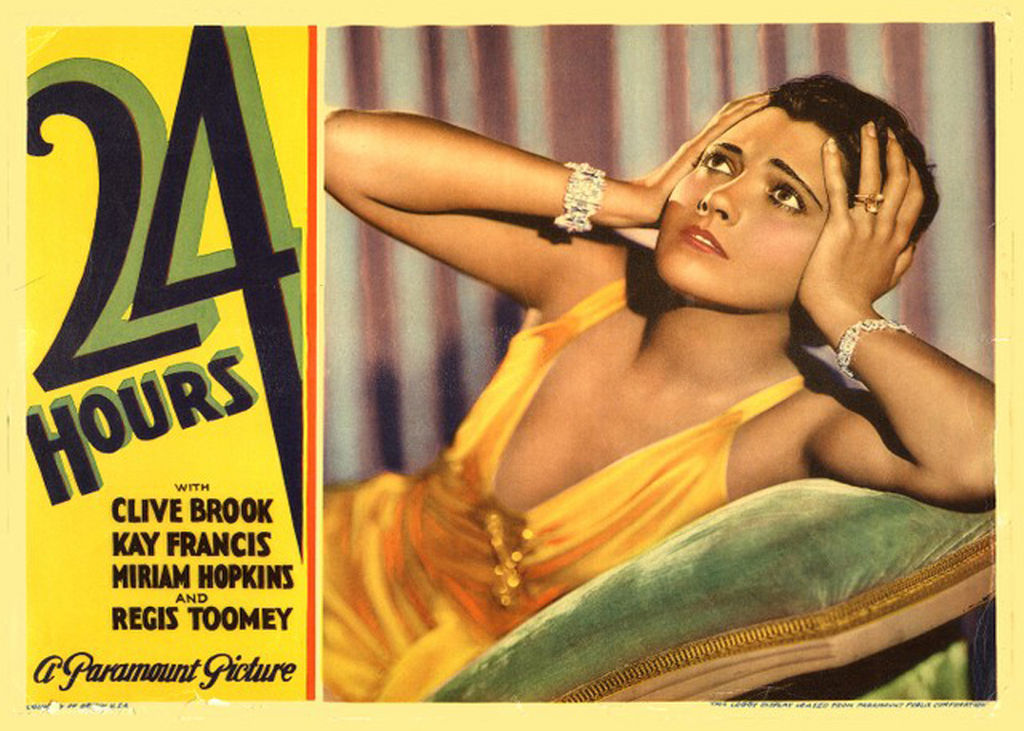
24 Hours is a 1931 American pre-Code romantic drama film starring Clive Brook, Kay Francis, Miriam Hopkins and Regis Toomey. It was based on the novel Twenty-Four Hours by Louis Bromfield and the play Shattered Glass by Will D. Lengle and Lew Levenson. An alcoholic married man is accused of murdering the woman with whom he has been carrying on an affair. The title comes from the fact that the film takes place from 11 pm one night to the same time the following night.

24 Hours 5

Plot

At an evening party in New York City, the Towners mourn their failing marriage, then leave separately. The somewhat drunk Jim walks to a bar for some more liquor. Before he arrives, a man is shot to death outside the establishment; those inside hastily carry the body inside and surmise that someone named Tony is responsible. Meanwhile, Fanny is driven home by her lover, David Melbourn. On the way, she breaks up with him, telling him she realizes now that she still loves Jim. However, she plans to leave her husband, thinking she is not good enough for him.

Jim next heads to a nightclub to see his lover, star singer Rosie Duggan. He asks her if it is possible for a man to love two women, then remarks that the snow was red outside the bar. After he leaves, her ex-con husband Tony Bruzzi shows up. He wants her to take him back, but she has him thrown out, though she keeps his gun; she guesses from the red snow that Tony killed someone.

24 Hours 14

Later, she takes Jim home. He falls asleep on her chaise longue. Then Tony shows up, jealous and determined to kill Jim. She tells him that Jim is not there, but he does not believe her. When she refuses to open a locked door, they struggle and he accidentally kills her.

The next morning, Jim wakes up and finds Rosie’s body. Meanwhile, Tony hides out at Mrs. Dacklehorst’s place, but he is tracked down by Dave the Slapper and his gang; the man Tony shot was part of Dave’s mob. Tony demands Mrs. Dacklehorst deliver or mail a letter to his gang, but she betrays him instead, and he is shot dead.

Jim is charged with Rosie’s murder. When Fanny shows up at the police station, Jim tells her to divorce him so she will not get entangled in his troubles, but she refuses to do so. Fortunately, fingerprints on a liquor bottle at Rosie’s place match Tony’s, and Jim is released. The couple reconcile, and Jim promises to stop drinking.

24 Hours 17

Cast

24 Hours 13

See also[edit]

24 Hours 6

24 Hours 8

24 Hours 10

24 Hours 9

24 Hours 12

24 Hours 15

24 Hours 19

Film Collectors Corner

Watch 24 Hours Now – Instant Video on You Tube


Blu Ray

Not released on Blu Ray as yet


DVD

Not released on DVD as yet

Rain ( 1932)


Pre Code Logo 1

Pre Code Hollywood Season: FD Cinematheque

Rain (1932)

Rain 1

Rain 2

Rain 3

Rain 4

Director: Lewis Milestone

Cast: Joan Crawford, Walter Houston, Fred Howard, Ben Hendricks Jr., William Gargan, Mary Shaw, Guy Kibbee,  Beulah Bondi, Matt Moore

94 min

Rain 5

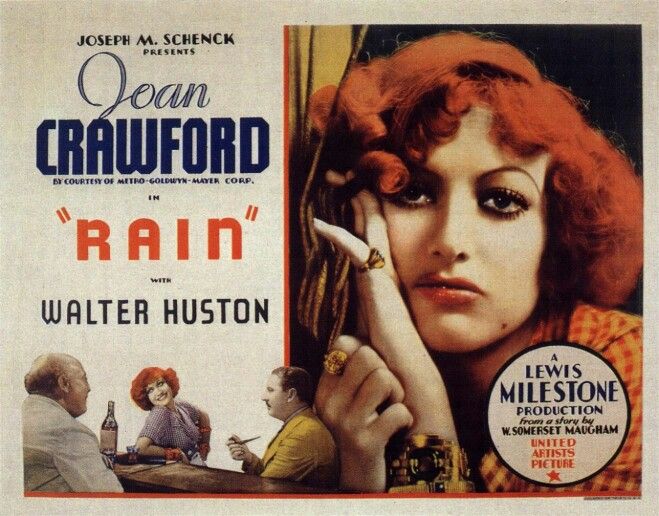
Rain is a 1932 South Seas drama film directed by Lewis Milestone with portions filmed at Santa Catalina Island, California. The pre-Code film stars Joan Crawford as prostitute Sadie Thompson and features Walter Huston as a conflicted missionary who wants to reform Sadie, but whose own morals start decaying. Crawford was loaned out by MGM to United Artists for this film.

The plot of the film is based on the 1922 play Rain by John Colton and Clemence Randolph, which in turn was based on the short story “Miss Thompson” (later retitled “Rain”) by W. Somerset Maugham.

Rain 8

Actress Jeanne Eagels had played the role on stage. Other movie versions of the story include: a 1928 silent film titled Sadie Thompson starring Gloria Swanson, and the heavily sanitized Miss Sadie Thompson (1953), which starred Rita Hayworth.

In 1960, the film entered the public domain in the USA due to the copyright claimant’s failure to renew the copyright registration in the 28th year after publication.[1]

Rain 7

Plot

Rain 9

A westbound ship en route to Apia, Samoa, is temporarily stranded at nearby Pago Pago due to a possible cholera outbreak on board. Among the passengers are Alfred Davidson, a self-righteous missionary, his wife, and Sadie Thompson, a prostitute. Thompson passes the time partying and drinking with the American Marines stationed on the island. Sergeant Tim O’Hara, nicknamed by Sadie as “Handsome”, falls in love with her.

Her wild behavior soon becomes more than the Davidsons can stand and Mr. Davidson confronts Sadie, resolving to save her soul. When she dismisses his offer, Davidson has the Governor order her deported to San Francisco, California, where she is wanted for an unspecified crime (for which she says she was framed).

She begs Davidson to allow her to remain on the island a few more days – her plan is to flee to Sydney, Australia. During a heated argument with Davidson, she experiences a religious conversion and agrees to return to San Francisco and the jail sentence awaiting her there.

Rain 11

The evening before she is to leave, Sergeant O’Hara asks Sadie to marry him and offers to hide her until the Sydney boat sails, but she refuses. Later, while native drums beat, the repressed Davidson satisfies his lust with Sadie. The next morning he is found dead on the beach – a suicide. Davidson’s hypocrisy and betrayal cause Thompson to return to her old self and she goes off to Sydney with O’Hara to start a new life.

Rain 13

Cast

Rain 12

Reception

Rain was not well received – either critically or financially – upon initial release. The unglamorous role for Crawford, and bold story (religious hypocrisy being its main theme), caught Depression-era audiences off guard.

Motion Picture Herald commented, “Because the producers have made such a strong attempt to establish the stern impressiveness of the story, it is rather slow. In its drive to become powerful, it appears to have lost the spark of spontaneity….Joan Crawford and Walter Huston are satisfactory.”

Rain 14

Variety noted, “It turns out to be a mistake to have assigned the Sadie Thompson role to Miss Crawford. It shows her off unfavorably. The dramatic significance of it all is beyond her range…. [Director] Milestone tried to achieve action with the camera, but wears the witnesses down with words.

Joan Crawford’s get-up as the light lady is extremely bizarre. Pavement pounders don’t quite trick themselves up as fantastically as all that. In commercial favor of Rain is the general repute of the theme and Miss Crawford’s personal following, but the finished product will not help either.”

Rain 15

Box office

The film earned $538,000 in the United States and Canada and $166,000 elsewhere, resulting in a loss of $198,000.

Rain 17

References

Notes

  1. Jump up^ Pierce, David (March 29, 2001). Legal Limbo: How American Copyright Law Makes Orphan Films (mp3 in “file3”). Orphans of the Storm II: Documenting the 20th Century. Retrieved 2012-01-05.

Rain 18

Rain 16

Rain 19

Rain 20

Rain 22

Rain 23

Rain 24

Rain 25

Film Collectors Corner

Watch Rain Now – Amazon Instant Video

Blu Ray

Not released on Blu Ray as yet


DVD

Night World (1932)


Pre Code Logo 1

Pre Code Hollywood Season: FD Cinematheque

Night World (1932)

Night World 1

Night World 2

Night World 3

Night World 4

Night World 19

Director: Hobart Henley

Cast: Lew Ayres, Mae Clarke, Boris Karloff, Dorothy Revier, Russell Hopton, Hedda Hopper, Clarence Ruse, Bert Roach, George Raft, Arleta Duncan, Jack La Rue

58 min 

Night World 14


Night World is a 1932 American pre-Code drama film featuring Lew Ayres, Mae Clarke, and Boris Karloff.[1] The supporting cast includes George Raft and Hedda Hopper (before she became a noted gossip columnist).

The movie was directed by Hobart Henley and features an early Busby Berkeley music number, “Who’s Your Little Who-Zis”.[2] Although Karloff is a villain, he plays a charming man, quite unlike most of the parts he was allowed to play at the time.

Night World 22

Contents

1 – Plot

2 – Cast

3 – See also

4 – References

Night World 5

Plot

On a cold winter’s night outside Happy’s Nightclub, Irish-American police officer Ryan (Robert Emmett O’Connor) chats with African-American doorman Tim Washington (Clarence Muse), who is worried about his critically ill wife.

Inside, club owner Happy (Boris Karloff) is arguing with his shrewish but glamorous wife Jill (Dorothy Revier) and welcoming frequent customers Ed Powell (George Raft), a crooked gambler, and Michael Rand (Lew Ayres). Rand is a wealthy college boy who watched his mother kill his father after catching him with another woman, a case widely covered by the tabloids. Rand is now drinking heavily to deaden his pain.

Night World 16

Backstage, gambler Powell asks chorus girl Ruth Taylor (Mae Clarke) for a date and, after losing an impromptu bet, she agrees to go out with him. After the floor show, all the chorus girls are asked to stay late by their cruel dance master, Klauss (Russell Hopton), who is secretly having an affair with Happy’s wife Jill.

Edith Blair (Dorothy Petersen) spots a drunken Michael sitting alone at a table. Edith was the ‘other woman’ in the murder of Michael’s father. She tell Michael that she and his father were only good friends, and that his father loved him deeply.

She also tells Michael that his killer mother never loved his father, and cursed him as he was dying. An upset Michael creates an outburst and overturns a table at the nightclub. He passes out after being punched, and is taken to the back room of the club where Ruth cares for him.

Night World 7

Happy leaves to discuss bootleg liquor purchases with another gangster, Jim. (Huntley Gordon.) As he exits, doorman Tim asks if he can leave early to visit is ailing wife, but Happy refuses.

When Michael wakes up from his liquor-related nap, he and Ruth have a warm chat. Gambler Powell interrupts them and insists Ruth to come to his apartment immediately. Michael punches Powell and Tim takes the fallen gambler out to a taxi. Suddenly, Michael’s mother (Hedda Hopper) arrives at the nightclub. Michael confronts her about the way she treated his father.

Night World 10

The late-night dance rehearsal continues, but Klauss calls a break so he can spend more time with Jill. Happy returns, and Tim asks again if he can go see his wife in the hospital. Happy refuses. Happy catches Jill and Klauss together, and Klauss leaves in disgrace. Happy tells Jill that he will not divorce her, but remain married to her and do his best to make her miserable.

Michael and Ruth sit down for a meal together. Michael asks Ruth if she would be interested in running away to Bali with him, as his wife, even though they have only known each other for a few hours.

Night World 11

Their happy moment is interrupted by Tim, who has just learned that his wife is dead. As he leaves the club to finally go to her bedside, he is fatally shot by gangster Jim and a comrade, who have come for Happy. They shoot Happy and then his wife Jill. When they turn their guns towards Michael and Ruth, they are suddenly shot dead by the returning police officer Ryan. Michael and Ruth get into the police wagon together, and Ruth agrees to go Bali with Michael.

Night World 18

Cast

Night World 26

See also

Night World 23

References

  1. Jump up^ Night World, imdb.com; accessed August 9, 2015.
  2. Jump up^ Everett Aaker, The Films of George Raft, McFarland & Company, 2013 p 26

Night World 25

Night World 8

Night World 13

Night World 17

Night World 20

Night World 24

Night World 9

Night World 21

Film Collectors Corner

DVD

Night World 6

Not Available On Amazon or Other Major Retailers At Present

Parole Girl (1933)


Pre Code Logo 1

Pre Code Hollywood Season: FD Cinematheque

Parole Girl (1933)

Parole Girl 2

Parole Girl 3

Parole Girl 4

Director: Edward F Cline

Cast: Mae Clarke, Ralph Bellamy, Marie Prevost, Hale Hamilton, Ferdinand Gottschalk, Ernest Wood, Sam Godfrey, Lucille Browne, Frank Fanning, Raul Freeman

67 min

Parole Girl 6

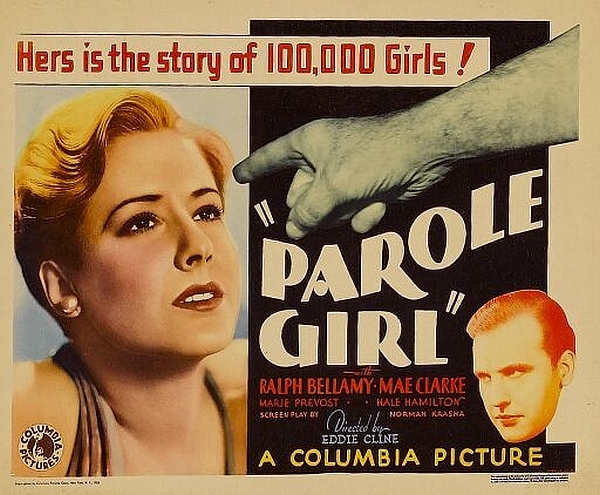
Parole Girl is a 1933 American Pre-Code romantic drama film directed by Edward Cline. The film stars Mae Clarke and Ralph Bellamy.

Plot

Parole Girl 10

When Sylvia Day (Mae Clarke) is caught trying to pull a scam on the Taylor Department Store in New York City, she pleads with the store manager to let her go, but his boss, Joe Smith (Ralph Bellamy), insists on following store policy, and she is handed over to the police, convicted and sentenced to a year in prison. Sylvia is consumed with the idea of getting revenge on Joe.

She becomes friends with chatty fellow inmate Jeanie Vance (Marie Prevost), who offers to team up with her (and commit more crimes) once they have served their time. When Sylvia learns that Jeanie has a surprising connection to Joe, she decides to get out early. She sets a fire, then passes out from the smoke while trying to put it out. For her “heroism”, she is granted parole.

Parole Girl 8

Tony Gratton (Hale Hamilton), her partner in the failed con, tries to talk her into marrying him and going to Chicago to continue their life of crime, but she is determined to avenge herself. Besides, she knows that Tony is already married.

Sylvia stalks Joe, learning all she can about him. Then, she pretends to be an old acquaintance at a nightclub where Joe is celebrating his promotion to general manager by getting drunk. The next morning, Joe discovers her in his apartment. She informs him that they have gotten married. Joe laughs, then tells her that he already has a wife. She tells him she knows (it is Jeanie), then reveals her motives. Tony shows up, masquerading as the person who married them; he gives Joe the marriage license the couple supposedly left behind. Threatened with a charge of bigamy, Joe reluctantly agrees to support Sylvia for a year, the length of her parole.

Parole Girl 7

Tony tries again to get Sylvia to be his partner in crime. When she refuses, he slips a counterfeit $20 bill in her purse. Sylvia goes on a shopping spree and pays for some of her purchases with the bill. It is traced back to her, but when a policeman shows up to take her back to jail, Joe pretends that she took the money out of his pants pocket. As a store manager, he deals with counterfeit money all the time. The ploy works, and Jeanie sends back her extravagant purchases.

Later, Joe calls her from the office and asks her for a favor. Mr. Taylor (Ferdinand Gottschalk), the store’s somewhat eccentric owner, has found out that Joe is married, so he is coming to dinner at their apartment. While Sylvia is cooking, Jeanie shows up. Her friend has been released early and intends to blackmail her husband (whom she married long ago while he was in college and then lost track of), once she can locate him, before heading to Florida with Sylvia. Sylvia gets her to leave before Joe and Mr. Taylor show up (early) by promising to give her a decision the next day. Taylor insists on doing the cooking; he is fed up with being waited on by servants. He becomes very fond of the couple and hints at a promotion to vice president if they were to have a baby.

Parole Girl 9

The next day, Sylvia persuades Jeanie that it is too dangerous to try blackmail in New York because of her record and agrees to go with her to Florida. Sylvia leaves a letter for Joe explaining everything, ending with the admission “I love you”. On the train, however, Jeanie reveals that she divorced Joe without his knowledge. Sylvia gets off and rushes back to the apartment; Joe has already read the letter and takes her in his arms.

Cast

“The Players” as listed in the opening credits of Parole Girl:[1]

Parole Girl 11

Cast notes

  • Mae Clarke is the same actress who two years before the release of Parole Girl had a grapefruit shoved into her face by James Cagney in the film The Public Enemy. That same year, in 1931, she also appeared in Universal Studios‘ horror classic Frankenstein, portraying the fiancee of the monster’s creator.

Parole Girl 19

  • By the time of Parole Girl’s release in 1933, Ralph Bellamy had become a busy actor and a very popular one among American movie audiences. Bellamy appeared in eleven other films released that same year, including the Picture Snatcher, an action film in which he plays second-lead to James Cagney.[2]

Parole Girl 17

  • Sam Godfrey, who plays “Walsh” in Parole Girl, rarely received an on-screen credit like the one he has in this film. Godfrey’s career as a peripheral or supporting character lasted only a few years, from 1932 until his death at the age of forty-three in 1935. He managed, however, during that brief period to appear in forty-one films. Of that total he received a screen credit in only seven of those productions.[3]

References

Parole Girl 20

  1. Jump up^ A full copy (1:51) of Parole Girl is available for viewing on YouTube. Search by film title on YouTube’s homepage. Retrieved March 14, 2017.
  2. Jump up^ “Ralph Bellamy,” Internet Movie Database (IMDb). Retrieved March 14, 2017.
  3. Jump up^ “Sam Godfrey,” IMDb. Retrieved March 14, 2017.

Parole Girl 18

Parole Girl 5

Parole Girl 15

Film Collectors Corner

This film has not been released on Blu Ray and DVD as yet

Country Doctor, The (1909)


Mary Pickford 1

Mary Pickford Season: FD Cinematheque

The Country Doctor (1909)

Director: D W Griffith

Cast: Mary Pickford, Kate Bruce, Adele DeGarde, Gladys Egan, Rose King, Florence Lawrence, Frank Powell, 

14 min

DW Griffith 2

D W Griffith

Country Doctor The 1

The Country Doctor is a 1909 American short silent drama film written and directed by D. W. Griffith. Currently in the public domain, prints of The Country Doctor are preserved at the film archives of the Museum of Modern Art and the Library of Congress.[1]

Plot

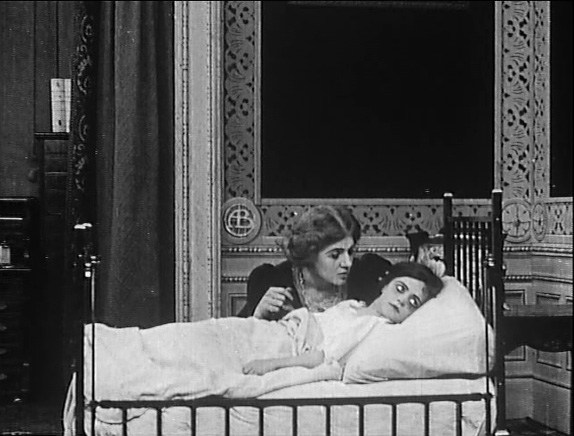
A doctor (Frank Powell) leaves his sick daughter (Adele DeGarde) to assist a neighbor that is gravely ill, and ignores his wife’s requests to come home and take care of his own daughter who is getting worse.

Country Doctor The 3

Cast

Country Doctor The 4

See also

Country Doctor The 5

References

Country Doctor The 7

Country Doctor The 8

Country Doctor The 9

Country Doctor The 10

Broken Locket, The (1909)


Mary Pickford 1

Mary Pickford Season: FD Cinematheque

The Broken Locket (1909)

Director: D W Griffith

Cast: Mary Pickford, Frank Powell, Kate Bruce, Robert Harron, Dell Henderson, Arthur V Johnson, James Kirkwood, Marion Leonard, Owen Moore, Lottie Pickford, Mack Sennett

11 min

DW Griffith 2

 D W Griffith

The Broken Locket is a short silent film written and directed by David W. Griffith in 1909. Produced and distributed by the Biograph Company , the film was released September 16, 1909.

Broken Locket The 4

Plot 

Broken Locket The 3

George Peabody has a drinking habit. Ruth, his friend from childhood loves him, brings him back to the right path and makes him abandon the bad companions who contributed to his downfall. George decides to mend the tatters of his life. Sets out for the West; and before leaving, greets his beloved Ruth, then realising that he truly loved her. She, then, as a token of love, gives him one half of her precious medallion. He will bring together the two pieces when he comes back to her.

In the West, George follows a new life, achieving success in his work. But, one day, ends up succumbing to the desire for a nightcap. This will be the beginning of his end. He falls into the arms of a Mexican girl who pretends to love him, and then his descent becomes unstoppable. His mistress, to completely remove the memory of Ruth, writes a letter in which she says that George is dead.

Without a penny, now reduced to a filthy, tattered exisitence, George returns. One day in front of the girl who still loves him and who is still waiting to reassemble their medallion.

She, who is now blind, cannot see it. George ashamed of everything he did, escapes from her. The medallion will remain broken forever.

Production 

Broken Locket The 2

The film was produced by the Biograph Company and was shot in Edgewater, New Jersey.

Distribution 

Distributed by the Biograph Company, the film  – was released in US cinemas on September 13, 1909. In the projections, was programmed with the split reel system, merged into a single coil with another short film produced by the Biograph and directed by Griffith,

It was screened with another short film produced by the Biograph and directed by Griffith, The Children’s Friend [1] .

In August 2006, the Grapevine has included this film in an anthology on DVD titled DW Griffith, Director, Volume 4 (1909) , containing eleven Griffith films  [2] .

Notes 

See also 

Broken Locket The 1


The Gibson Goddess (1909)


Mary Pickford 1

Mary Pickford Season: FD Cinematheque

The Gibson Goddess (1909)

Director: D W Griffith

Cast: Mary Pickford, Marion Leonard, Kate Bruce, Frank Evans, Arthur V Johnson, James Kirkwood, George Nichols, Anthony O’Sullivan, Billy Quirk, Mack Sennett, Dorothy West

6 min

DW Griffith 2

D W Griffith

Gibson Goddess The 1


The Gibson Goddess is a 1909 short comedy film directed by D. W. Griffith. It stars Marion Leonard.[1][2]

Cast

Gibson Goddess The 2

References


Through The Back Door (1921)


Mary Pickford 1

Mary Pickford Season: FD Cinematheque

Through The Back Door (1921)

Director: Alfred E Green, Jack Pickford

Cast: Mary Pickford, Gertrude Astor, Wilfred Lucas, Helen Raymond, C Norman Hammond, Elinor Fair, Adolphe Menjou, Peaches Jackson, Doreen Jackson, John Harron, George Dromgold, Kate Price

89 min

Through The Back Door 1

Through The Back Door 3

Through The Back Door 5

Through the Back Door is a 1921 American silent comedy drama film directed by Alfred E. Green and Jack Pickford, and starring Mary Pickford.[1]

Plot

The movie starts in Belgium in the early 1900s. Jeanne (Mary Pickford) is the 10-year-old daughter of Louise (Gertrude Astor). Troubles start when Louise remarries a selfish but rich man named Elton Reeves (Wilfred Lucas). He convinces her to move to America and leave Jeanne behind in Belgium to live with the maid Marie (Helen Raymond). At first Louise refuses to, but eventually gives in and leaves Jeanne in the care of Marie.

Five years pass and Jeanne and Marie bonded. Meanwhile, Louise hated living in America and feels guilty having left her kid behind. She returns to Belgium to reunite with Jeanne, but Marie doesn’t want to give her up. When Louise finally arrives, Marie lies to her Jeanne drowned in a river nearby. Louise is devastated and collapses, before returning to America. This results in estranging from Elton.

Through The Back Door 6

World War I broke out and Belgium is occupied by Germany. Marie fears for Jeanne’s safety and brings her to America to live with her mother. After an emotional goodbye, Jeanne sets out for America to find her mother. Along the way she meets two orphan boys and decides to take care of them. When she finally arrives in America, she travels to Louise’s big mansion.

Too afraid to tell her she is her daughter, Jeanne applies to serve as her maid. While pretending to be someone else, she gets to know her mother. However, she has trouble keeping up the lie and wants nothing more but have a reconciliation. Waiting for the right time to tell the truth, Jeanne hopes everything will come to a right end. When guests of the mansion plot to fleece Elton, Jeanne is forced to reveal her true identity to save the day. A happy reunion follows.

Through The Back Door 8

Cast

References

Through The Back Door 9

Through The Back Door 15

Through The Back Door 13

Narrow Road, The (1912)


Mary Pickford 1

Mary Pickford Season: FD Cinematheque

The Narrow Road (1912)

Director: D W Griffith

Cast: Mary Pickford, Elmer Booth, Charles Hill Mailes, Jack Pickford, Christy Cabanne, Max Davidson, Grace Henderson, Adolph Lestina, Alfred Paget, Harry Hyde, Frank Evans

17 Min

DW Griffith 2

D W Griffith

Narrow Road The 7


The Narrow Road is a 1912 short silent film directed by D. W. Griffith and produced and distributed by the Biograph Company.[1]

A short Biograph film preserved from the Library of Congress paperprint collection.[2]

Narrow Road The 6

Cast

other cast

Narrow Road The 5

References

  1. Jump up^ The Narrow Road at silentera.com
  2. Jump up^ Catalog of Holdings The American Film Institute Collection and The United Artists Collection at The Library of Congress p. 125 c.1978 by The American Film Institute

Narrow Road The 4

Narrow Road The 3

Narrow Road The 2

Narrow Road The 1

Red Man’s View, The (1909)


Mary Pickford 1

Mary Pickford Season: FD Cinematheque

Red Man’s View The (1909)

Director: D W Griffith

Cast: Mary Pickford, Alfred Paget, Kate Bruce, Charles Craig, Frank Evans, Edith Haldeman, Ruth Hart, Arthur V Johnson, James Kirkwood, Henry Lehrman, Owen Moore, George Nichols, Lottie Pickford, Mack Sennett, Dorothy West

14 min

DW Griffith 2

D W Griffith

Red Man's View The 1

The Red Man’s View is a 1909 American Western film directed by D. W. Griffith and shot in New York state. Prints of the film exist in the film archives of the Museum of Modern Art and the Library of Congress.[1]

According to the New York Dramatic Mirror, the film is about “the helpless Indian race as it has been forced to recede before the advancing white, and as such is full of poetic sentiment”.[2]

According to Scott Simon, “the film’s title works out to mean “The Red Man’s Point of View”, and for all the film’s difficulty in making drama from a long, passive march, there’s nothing like The Red Man’s View in Hollywood until John Ford’s Cheyenne Autumn more than fifty years later”.[3]

Red Man's View The 2

Cast

Red Man's View The 3

See also

Red Man's View The 4

References

  1. Jump up^ “Progressive Silent Film List: The Red Man’s View”. Silent Era. Retrieved 2008-07-16.
  2. Jump up^ Thomas Cripps, Hollywood’s High Noon: Moviemaking and Society Before Television, JHU Press, 1997, p. 27
  3. Jump up^ Scott Simon, The Invention of the Western Film: A Cultural History of the Genre’s First, Cambridge University Press, 2003, p. 55-56

Red Man's View The 5


Amarilly of Clothes-Line Alley (1918)


Mary Pickford 1

Mary Pickford Season: FD Cinematheque

Amarilly of Clothes-Line Alley (1918)

Director: Marshall Neilan

Cast: Mary Pickford, William Scott, Kate Price, Ida Waterman, Norman Kerry, Fred Goodwin, Margaret Landis, Tom Wilson, Gustav Von Seyffertitz, Leo White

67 min

Marshall Neilan 1

Marshall Neilan

Amarilly 1

Amarilly 2

Amarilly 7


Amarilly of Clothes-Line Alley is a 1918 American silent comedy romance film starring Mary Pickford that was directed by Marshall Neilan and written by Frances Marion based upon a novel by Belle K. Maniates.[2]

Amarilly 3

Plot

Set in San Francisco during the early 1900s, the film revolves around Amarilly (Mary Pickford), the daughter of a widowed scrubwoman. Amarilly is proud of her hard-working Irish family, and takes care of her five roughhouse brothers. She is engaged to bartender Terry McGowan (William Scott), who gets her a job as a cigarette girl in his cafe after a fire unfairly causes her to lose her job as a theater scrubwoman. While working as a cigarette girl, she meets Gordon Phillips (Norman Kerry), a handsome and wealthy but frivolous young man, who is a society sculptor.

Terry becomes jealous when Amarilly starts hanging out with Gordon, and he breaks off the engagement. Gordon offers Amarilly a job with his wealthy and snobbish aunt, Mrs. Phillips (Ida Waterman). When the neighborhood is quarantined after a breakout of scarlet fever, Mrs. Phillips decides to take the time to teach Amarilly high class manners in a Pygmalion-like experiment. However, once she discovers her nephew has fallen in love with Amarilly, she turns against her. Mrs. Phillips tries to humiliate Amarilly by inviting her family over for a social party.

Amarilly 6

Amarilly is outraged and returns to her old home. She sees Terry and invites him for supper. He is delighted, and on the way to her house, he stops to buy expensive 50 cent violets, even though he had earlier passed up violets at 15 cents. He is shot by accident, and barely makes it to Amarilly’s house before collapsing. Fortunately, Terry survives. Amarilly visits him in the hospital and tells him that when he gets out, they have a date at City Hall.

The final scene is five years later. Amarilly is in a side car on Terry’s motor bike; they both are nicely dressed and seem to be doing well. Then it is revealed under the blanket she has a baby, and behind Terry is a little boy.

Amarilly 8

Cast

unbilled

Amarilly 5

Reception

Like many American films of the time, Amarilly of Clothes-Line Alley was subject to cuts by city and state film censorship boards. For example, the Chicago Board of Censors required a cut, i Reel 1, of a closeup of money in a man’s hand and, Reel 4, maid opening door to alleged house of ill-fame and man entering.[3]

References

  1. Jump up^ Moviemeter (Dutch) Running time
  2. Jump up^ Progressive Silent Film List: Amarilly of Clothes-Line Alley at silentera.com
  3. Jump up^ “Official Cut-Outs by the Chicago Board of Censors”. Exhibitors Herald. New York City: Exhibitors Herald Company. 6 (15): 33. April 6, 1918.

Amarilly 9


Arcadian Maid, An (1910)


Mary Pickford 1

Mary Pickford Season: FD Cinematheque

An Arcadian Maid (1910)

Director: D W Griffith

Cast: Mary Pickford, Mack Sennett, George Nichols, Kate Bruce, Edward Dillon, William J Butler, Henry Lehrman, Anthony O’Sullivan, Vivian Prescott

16 min

DW Griffith 2

D W Griffith

An Arcadian Maid is a 1910 American silent film directed by D.W. Griffith.

Arcadian Maid An 2

Plot

Mary Pickford plays Priscilla an unemployed maid who finds work at a farm. There she meets a no-good peddler who starts flirting with her and makes her fall in love with him. He runs up a gambling bill and asks her to help him pay his debts or he won’t be able to marry her.[1]

Cast

Arcadian Maid An 1

See also

References