
Pre-Code Hollywood
Prepared by Daniel B Miller
Films made in the pre-Code era frequently presented people in sexually suggestive or provocative situations, and did not hesitate to display women in scanty attire. In this publicity photo, Dorothy Mackaill plays a secretary-turned-prostitute in Safe in Hell, a 1931 Warner Bros. film directed by William Wellman.
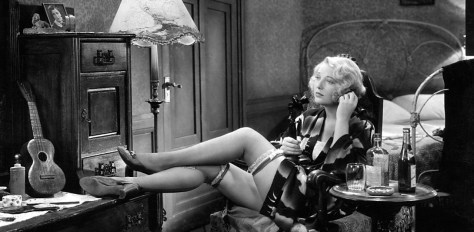
Dorothy Mackaill in William Wellman’s Safe in Hell (1931)
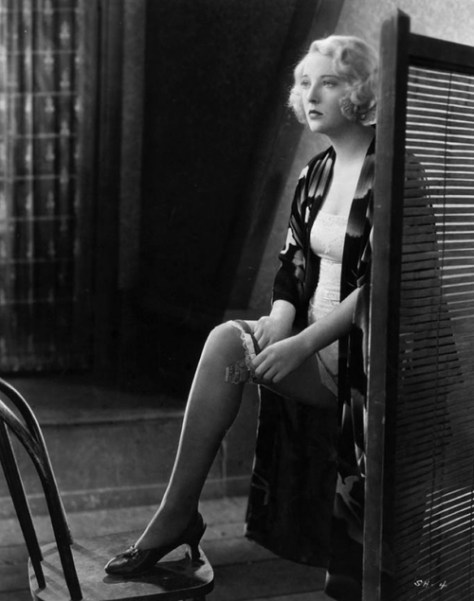
William Wellman’s Safe in Hell (1931)
Gangster films, such as The Public Enemy, starring James Cagney (pictured here) and Little Caesar, starring Edward G. Robinson, were a mainstay of the pre-Code releases of the Hollywood studios. The anti-hero characters could transgress society’s rules in a way that the audience could not, but always paid for their crimes at the end of the film.
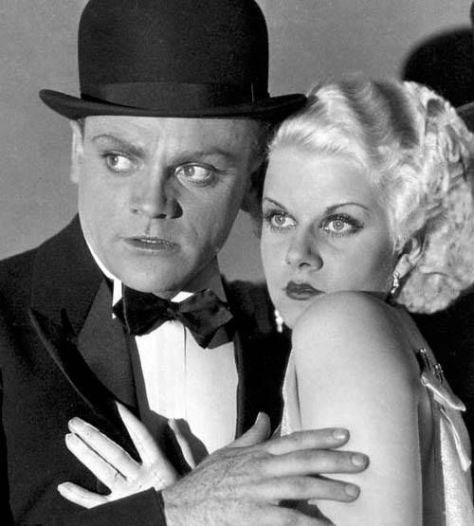
James Cagney and Jean Harlow in William Wellman’s The Public Enemy (1931)
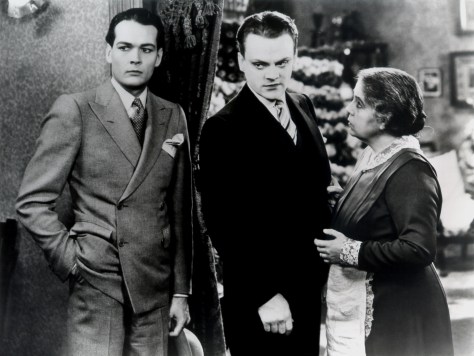
William Wellman’s The Public Enemy (1931)
The anti-hero characters could transgress society’s rules in a way that the audience could not, but always paid for their crimes at the end of the film.
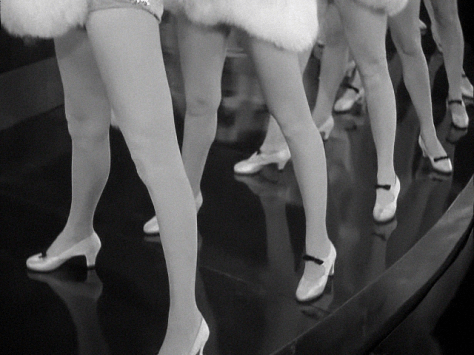
Pre-Code musicals took advantage of their backstage stories to show women in states of dress – in skimpy rehearsal clothes, changing in dressing rooms, or onstage in tight or revealing costumes – which were beyond those considered decent for women in ordinary life. This shot is from the trailer for Warner Bros.‘ 42nd Street, in which auditioning women show their legs for the director.
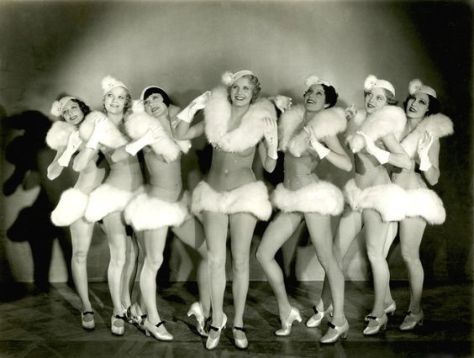
42nd Street (1933)
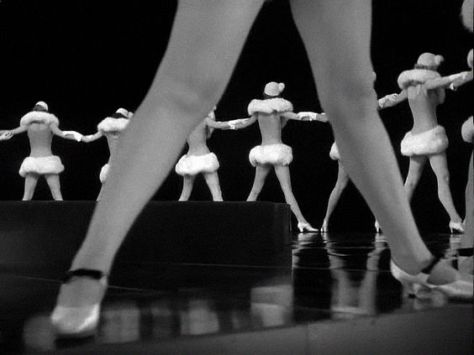
42nd Street (1933)
Definitions
Pre-Code Hollywood refers to the brief era in the American film industry between the introduction of sound pictures in 1929[1] and the enforcement of the Motion Picture Production Code censorship guidelines, popularly known as the “Hays Code”, in mid-1934. Although the Code was adopted in 1930, oversight was poor and it did not become rigorously enforced until July 1, 1934, with the establishment of the Production Code Administration (PCA).
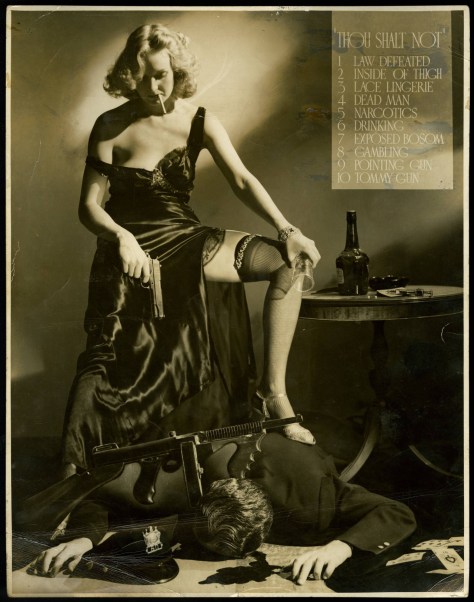
Before that date, movie content was restricted more by local laws, negotiations between the Studio Relations Committee (SRC) and the major studios, and popular opinion, than strict adherence to the Hays Code, which was often ignored by Hollywood filmmakers.
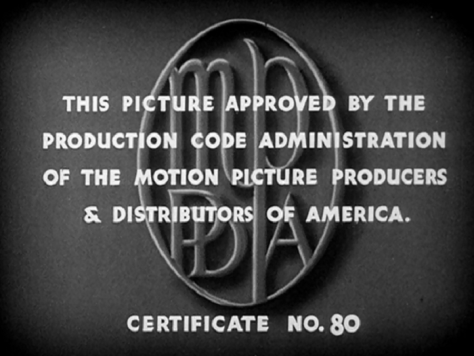
As a result, films in the late 1920s and early 1930s included sexual innuendo, miscegenation, profanity, illegal drug use, promiscuity, prostitution, infidelity, abortion, intense violence, and homosexuality. Strong female characters were ubiquitous in such pre-Code films as Female, Baby Face, and Red-Headed Woman.
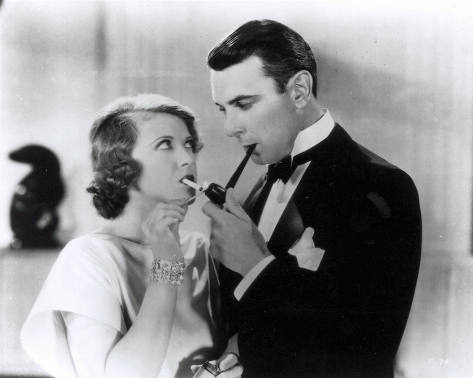
Ruth Chatterton and George Brent in Female, Michael Curtiz/William Dieterle (1933)
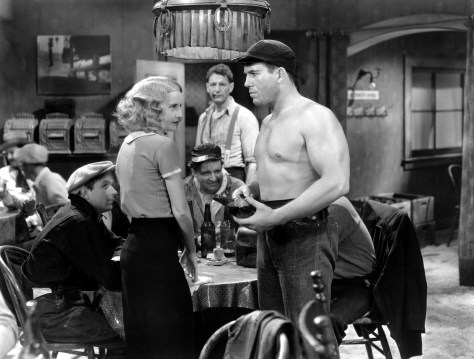
Barbara Stanwyck in Baby Face, Alfred E Green (1933)
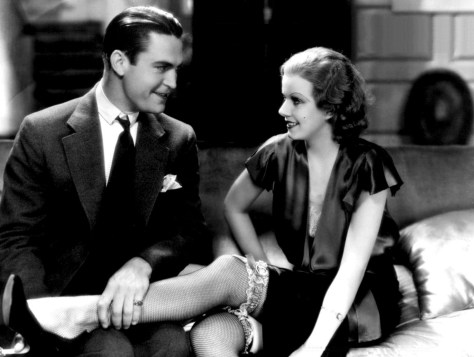
Jean Harlow and Chester Morris in Red Headed Woman, Jack Conway (1932)
Gangsters in films like The Public Enemy, Little Caesar, and Scarface were seen by many as heroic rather than evil. Along with featuring stronger female characters, films examined female subject matters that would not be revisited until decades later in US films. Nefarious characters were seen to profit from their deeds, in some cases without significant repercussions, and drug use was a topic of several films.
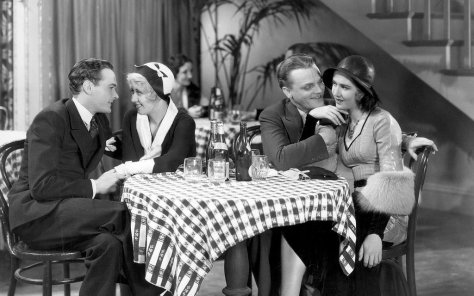
The Public Enemy, William Wellman (1931)
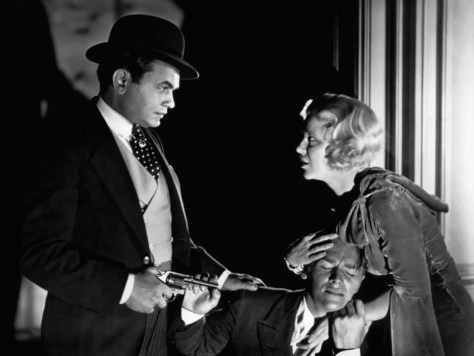
Edward G Robinson in Little Ceasar, Mervyn LeRoy (1931)
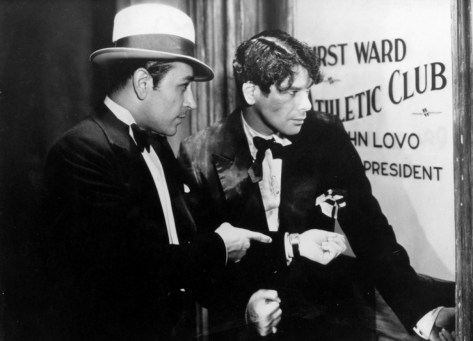
Paul Muni and George Raft in Scarface, Howard Hawks (1932)
Many of Hollywood’s biggest stars such as Clark Gable, Barbara Stanwyck, Joan Blondell and Edward G. Robinson got their start in the era. Other stars who excelled during this period, however, like Ruth Chatterton (who decamped to England) and Warren William (the so-called “king of Pre-Code”, who died in 1948), would wind up essentially forgotten by the general public within a generation.[2]
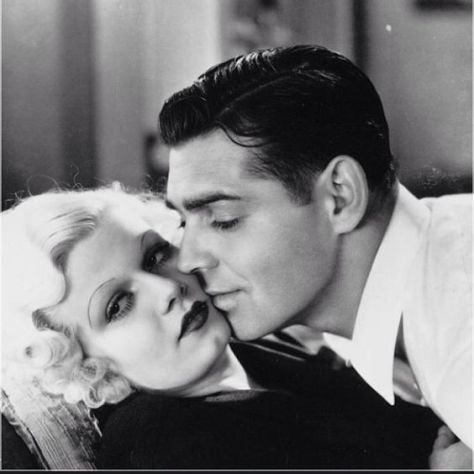
Clark Gable with Jean Harlow
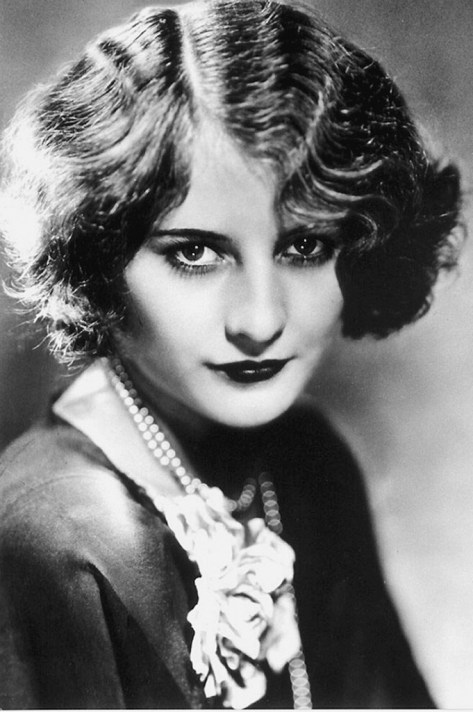 Barbara Stanwyck
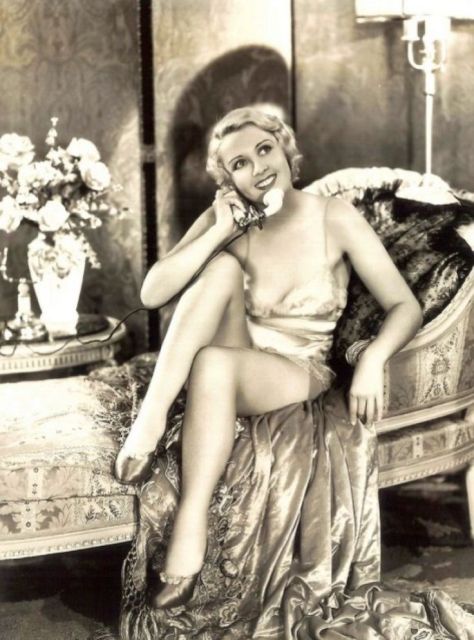
Joan Blondell
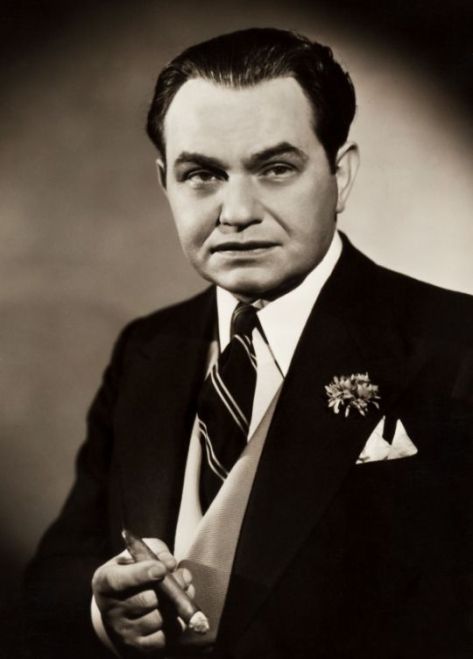
Edward G Robinson
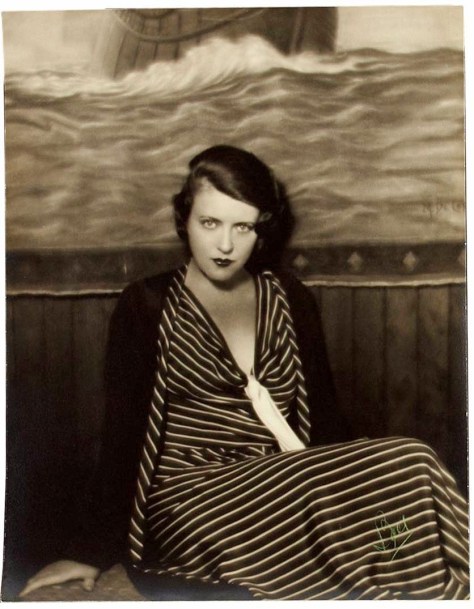
Ruth Chatterton
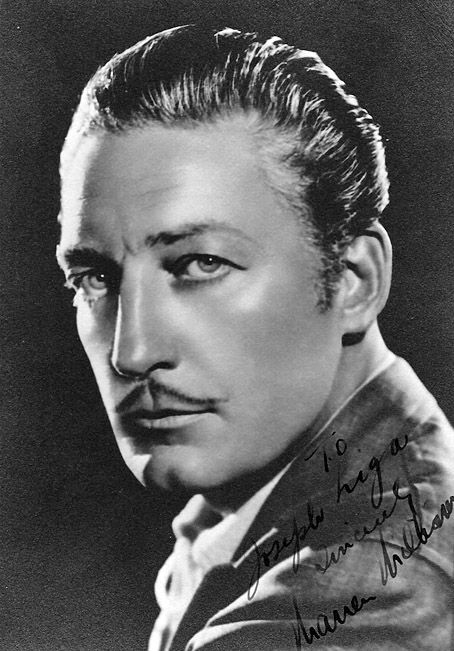
Warren William
Beginning in late 1933 and escalating throughout the first half of 1934, American Roman Catholics launched a campaign against what they deemed the immorality of American cinema. This, plus a potential government takeover of film censorship and social research seeming to indicate that movies which were seen to be immoral could promote bad behavior, was enough pressure to force the studios to capitulate to greater oversight.
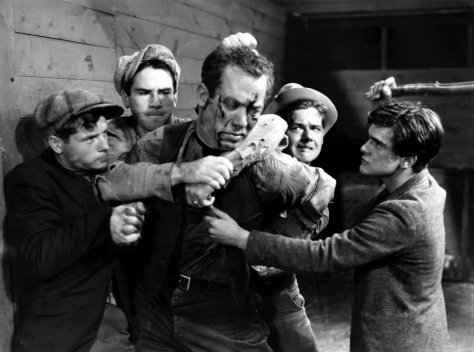
Wild Boys of the Road, William Wellman (1933)
Contents
- 1 – Origins of the Code (1915-1930)
- 2 – Early sound film era
- 3 – Hollywood during the Great Depression
- 4 – Social problem films
- 5 – Crime films
- 6 – Sex films
- 7 – Comedy
- 8 – Musicals
- 9 – Horror and science fiction
- 10 – Exotic adventure films
- 11 – Newsreels and documentaries
- 12 – Beginning of Code era (July 1, 1934)
- 13 – After the Code era – Motion Picture Association of America film rating system (MPAA)
- 14 – Contemporary screenings
- 15 – Home video
- 16 – See also
- 17 – References
- 18 – External links
Origins of the Code (1915-1930)
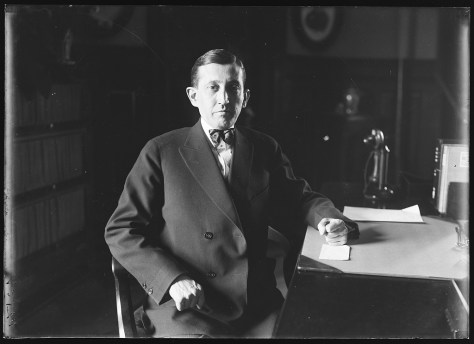
William Harrison Hayes Sr. (1922–1945), the first chairman of the Motion Picture Producers and Distributors of America
William H. “Will” Hays was recruited, by the Hollywood studios, in 1922, to help clean up their “Sin City” image, after a series of scandals, especially the Roscoe “Fatty” Arbuckle manslaughter trial.[3]
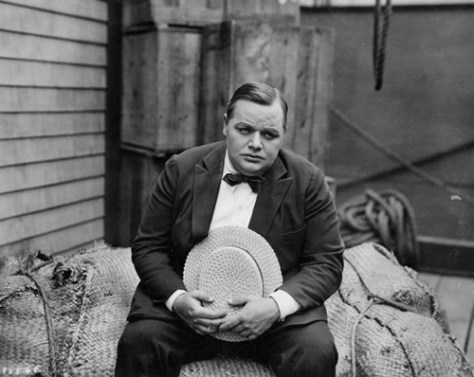
Roscoe “Fatty” Arbuckle
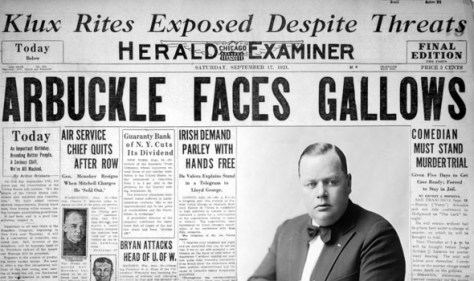
Arbuckle Scandal Press Coverage
Earliest attempts for the Code
In 1922, after some risqué films and a series of off-screen scandals involving Hollywood stars, the studios enlisted Presbyterian elderWilliam H. “Will” Hays, a figure of unblemished rectitude, to rehabilitate Hollywood’s image. Hays, later nicknamed the motion picture “Czar”, was paid the then-lavish sum of $100,000 a year (equivalent to more than $1.4 million in 2014 dollars).[4][5][6]
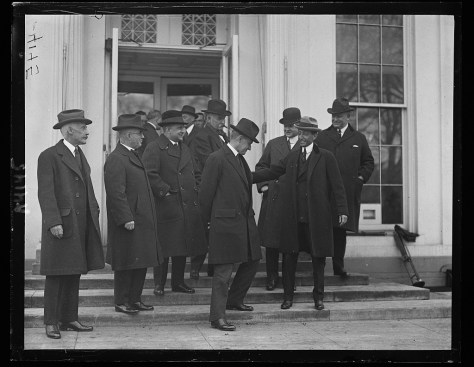
Hayes Code Meetings – Andrew W. Mellon, James J. Davis, Albert Fall, Calvin Coolidge, Herbert Hoover, and William Harrison Hayes. White House, Washington, D.C
Hays, Postmaster General under Warren G. Harding and former head of the Republican National Committee,[3]served for 25 years as president of the Motion Picture Producers and Distributors of America (MPPDA), where he “defended the industry from attacks, recited soothing nostrums, and negotiated treaties to cease hostilities.”[7] Hollywood mimicked the decision Major League Baseball had made in hiring judge Kenesaw Mountain Landis as League Commissioner the previous year to quell questions about the integrity of baseball in wake of the 1919 World Series gambling scandal; The New York Times called Hays the “screen Landis”.[4]
Hays introduced a set of recommendations dubbed “The Formula” in 1924, which the studios were advised to heed, and asked filmmakers to describe to his office the plots of pictures they were planning.[8] The Supreme Court had already decided unanimously in 1915 in Mutual Film Corporation v. Industrial Commission of Ohio that free speech did not extend to motion pictures,[9] and while there had been token attempts to clean up the movies before, such as when the studios formed the National Association of the Motion Picture Industry (NAMPI) in 1916, little had come of the efforts.[10]
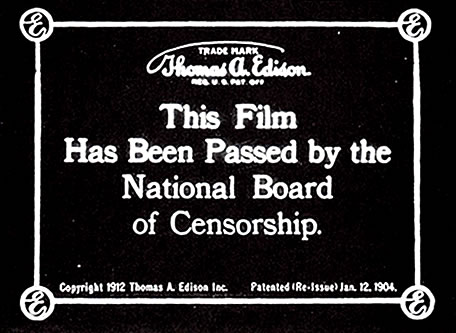
The National Board of Censorship – Early Censorship Certification 1912
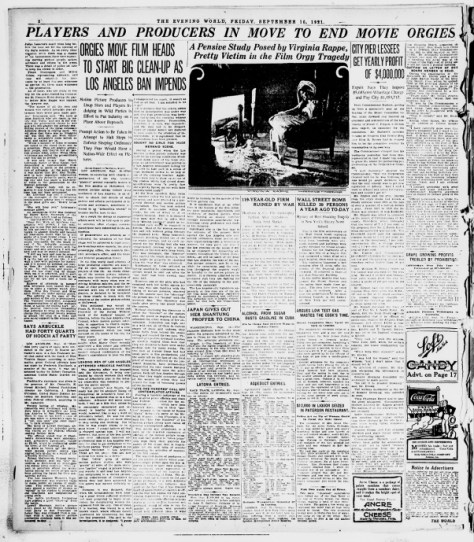
Newspaper coverage of movie industry scandals 1921
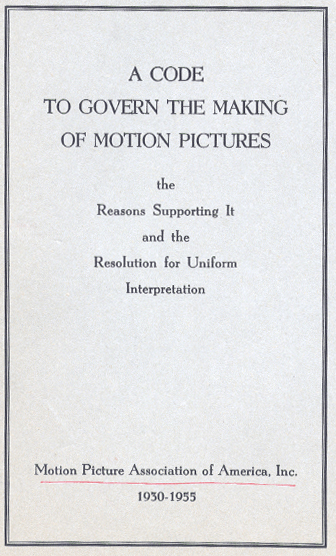
1934 Motion Picture Production Code Cover
Creation of the Code and its contents
In 1929, an American Roman Catholic layman Martin Quigley, editor of the prominent trade paper Motion Picture Herald, and Father Daniel A. Lord, a Jesuit priest, created a code of standards (which Hays liked immensely[11]), and submitted it to the studios.[7][12] Lord’s concerns centered on the effects sound film had on children, whom he considered especially susceptible to their allure.[11] Several studio heads, including Irving Thalberg of Metro-Goldwyn-Mayer (MGM), met with Lord and Quigley in February 1930. After some revisions, they agreed to the stipulations of the Code. One of the main motivating factors in adopting the Code was to avoid direct government intervention.[13] It was the responsibility of the Studio Relations Committee, headed by Colonel Jason S. Joy, to supervise film production and advise the studios when changes or cuts were required.[14][15]
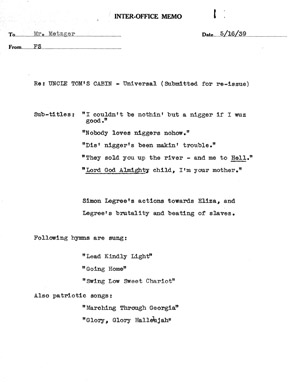
An Inter-Office memo discussing potential sub-titles and various ideas for Uncle Tom’s Cabin
The Code was divided into two parts. The first was a set of “general principles” which mostly concerned morality. The second was a set of “particular applications” which was an exacting list of items that could not be depicted. Some restrictions, such as the ban on homosexuality or the use of specific curse words, were never directly mentioned but were assumed to be understood without clear demarcation.
Miscegenation, the mixing of the races, was forbidden. It stated that the notion of an “adults-only policy” would be a dubious, ineffective strategy that would be difficult to enforce.[16]
However, it did allow that “maturer minds may easily understand and accept without harm subject matter in plots which does younger people positive harm.” If children were supervised and the events implied elliptically, the code allowed what Brandeis University cultural historian Thomas Doherty called “the possibility of a cinematically inspired thought crime”.[17]

This 1932 promotional photo of Joan Blondell was later banned, under the then unenforceable Motion Picture Production Code.
The Code sought not only to determine what could be portrayed on screen, but also to promote traditional values.[18] Sexual relations outside of marriage could not be portrayed as attractive and beautiful, presented in a way that might arouse passion, nor be made to seem right and permissible.[14] All criminal action had to be punished, and neither the crime nor the criminal could elicit sympathy from the audience.[4] Authority figures had to be treated respectfully, and the clergy could not be portrayed as comic characters or villains. Under some circumstances, politicians, police officers and judges could be villains, as long as it was clear that they were the exception to the rule.[14]
The entire document contained Catholic undertones and stated that art must be handled carefully because it could be “morally evil in its effects” and because its “deep moral significance” was unquestionable.[16] The Catholic influence on the Code was initially kept secret.[why?][19] A recurring theme was “throughout, the audience feels sure that evil is wrong and good is right.”[4] The Code contained an addendum commonly referred to as the Advertising Code, which regulated film advertising copy and imagery.[20]
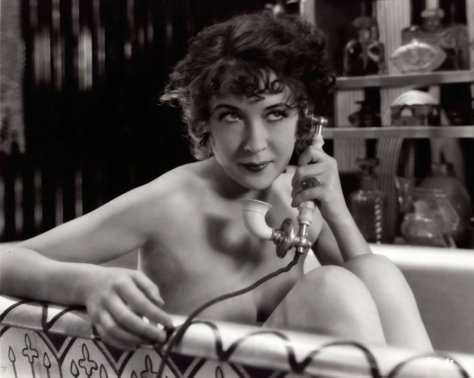
Yola D’Avril in Beauty And The Boss, Roy Del Ruth (1932)
Enforcement
On February 19, 1930, Variety published the entire contents of the Code and predicted that state film censorship boards would soon become obsolete.[21] However, the men obligated to enforce the code — Jason Joy, who was the head of the Committee until 1932, and his successor, Dr. James Wingate — were seen as generally ineffective.[15][22] The very first film the office reviewed, The Blue Angel, which was passed by Joy without revision, was considered indecent by a California censor.[23] Although there were several instances where Joy negotiated cuts from films, and there were indeed definite—albeit loose—constraints, a significant amount of lurid material made it to the screen.[24]
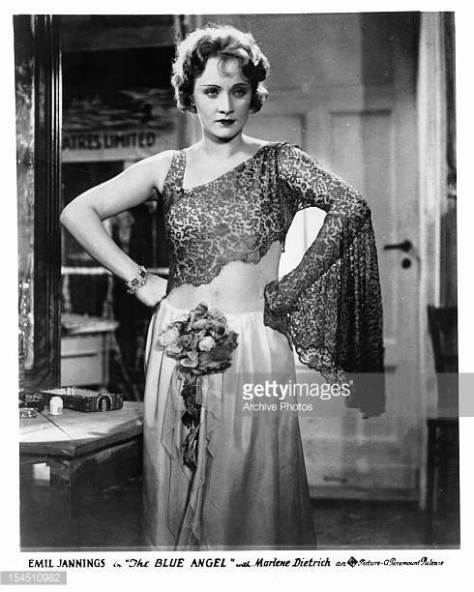
Marlene Dietrich in The Blue Angel, Josef Von Sternberg (1930)
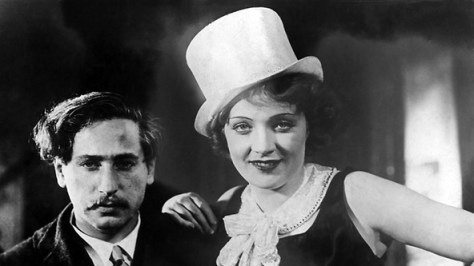
Josef Von Sternberg and Marlene Dietrich on the set of The Blue Angel (1930)


Marlene Dietrich in The Blue Angel, Josef Von Sternberg (1930)
Joy had to review 500 films a year using a small staff and little power.[22] The Hays office did not have the authority to order studios to remove material from a film in 1930, but instead worked by reasoning and sometimes pleading with them.[25] Complicating matters, the appeals process ultimately put the responsibility for making the final decision in the hands of the studios themselves.[15]
One factor in ignoring the Code was the fact that some found such censorship prudish. This was a period in which the Victorian era was sometimes ridiculed as being naïve and backward.[14] When the Code was announced, The Nation, a liberal periodical, attacked it.[26] The publication stated that if crime were never presented in a sympathetic light, then, taken literally, “law” and “justice” would become the same. Therefore, events such as the Boston Tea Party could not be portrayed. And if clergy were always to be presented positively, then hypocrisy could not be examined either.[27] The Outlook agreed, and, unlike Variety, predicted from the beginning the Code would be difficult to enforce.[27]
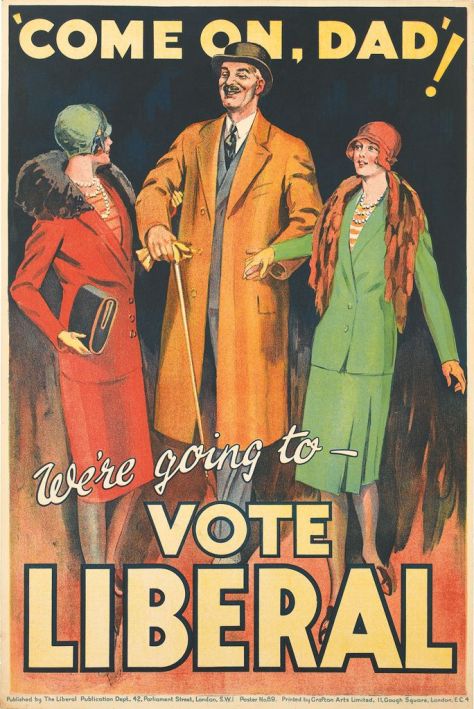
The Nation attacked the Code
Clara Bow, a popular silent film star who made the transition to sound film, lifts her skirt on the poster for the 1929 film The Saturday Night Kid. Skirt lifting was one of many suggestive activities detested by Will H. Hays.[28]
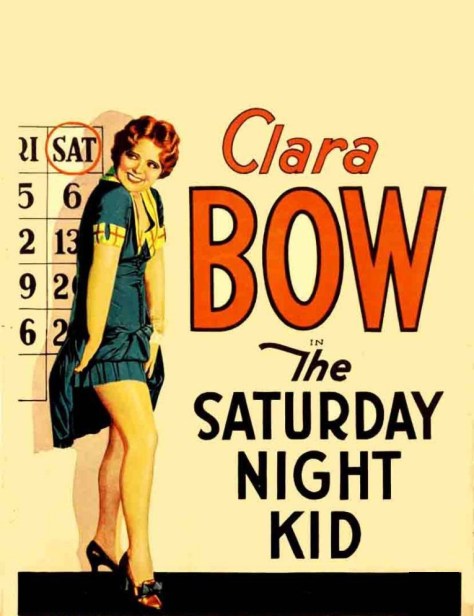
Clara Bow in The Saturday Night Kid, Poster, A. Edward Sutherland (1929)
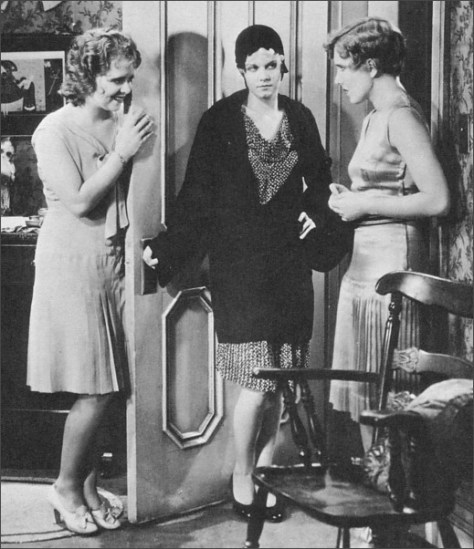
Clara Bow, Jean Harlow and Jean Arthur in The Saturday Night Kid, A. Edward Sutherland (1929)
Additionally, the Great Depression of the 1930s led many studios to seek income by any way possible. As films containing racy and violent content resulted in high ticket sales, it seemed reasonable to continue producing such films.[14] Soon, the flouting of the code became an open secret. In 1931, The Hollywood Reporter mocked the code, and Variety followed suit in 1933. In the same year as the Variety article, a noted screenwriter stated that “the Hays moral code is not even a joke any more; it’s just a memory.”[15]
Early sound film era
Although the liberalization of sexuality in American film had increased during the 1920s,[29] the pre-Code era is either dated to the start of the sound film era, or more generally to March 1930, when the Hays Code was first written.[1][30] Over the protests of NAMPI,[31] New York became the first state to take advantage of the Supreme Court’s decision in Mutual Film vs. Ohio by instituting a censorship board in 1921. Virginia followed suit the following year,[32] and eight individual states had a board by the advent of sound film.[33][34]
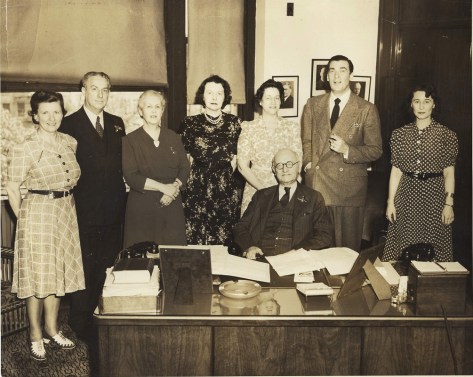
New York’s state censors in the 1930s. As in many of the seven states with censor boards, most of those doing the actual reviewing of the movies were women. Seated is the head of the Motion Picture Division, Irwin Esmond. Standing, second from right is the popular Canadian actor Walter Pidgeon. Photo courtesy John Crysler, Wilmington, NC
Many of these boards were ineffectual. By the 1920s, the New York stage, a frequent source of subsequent screen material, had topless shows; performances were filled with curse words, mature subject matter, and sexually suggestive dialogue.[35] Early during the sound system conversion process, it became apparent that what might be acceptable in New York would not be so in Kansas.[35] In 1927, Hays suggested studio executives form a committee to discuss film censorship. Irving G. Thalberg of Metro Goldwyn Mayer (MGM), Sol Wurtzel of Fox, and E. H. Allen of Paramount responded by collaborating on a list they called the “Don’ts and Be Carefuls”, based on items that were challenged by local censor boards, and which consisted of eleven subjects best avoided, and twenty-six to be handled very carefully. The Federal Trade Commission (FTC) approved the list, and Hays created the SRC to oversee its implementation.[36][37] But there was still no way to enforce these tenets.[4] The controversy surrounding film standards came to a head in 1929.[1][38]
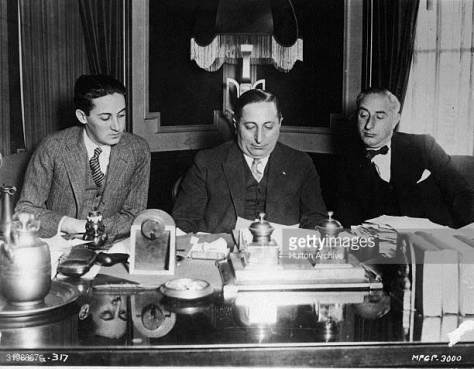
American film producer Irving Thalberg (1889 – 1986), joins producers, Louis B. Mayer (1885 – 1957) & Harry Rapf (18182 – 1949) in a meeting, 1930s
Director Cecil B. DeMille was responsible for the increasing discussion of sex in cinema in the 1920s.[39][40] Starting with Male and Female (1919), he made a series of films that examined sex and were highly successful.[39] Films featuring Hollywood’s original “It girl” Clara Bow such as The Saturday Night Kid (released four days before the October 29, 1929, market crash) highlighted Bow’s sexual attractiveness.[41] 1920s stars such as Bow, Gloria Swanson, and Norma Talmadge freely displayed their sexuality in a straightforward fashion.[42]
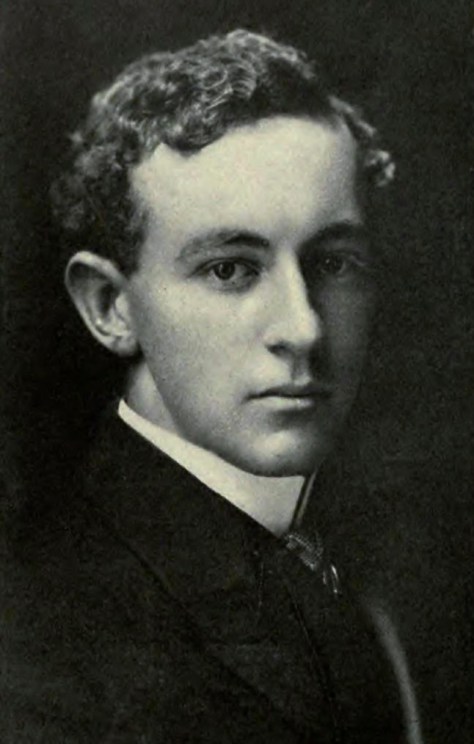
Young Cecil B DeMille

![Title: SIGN OF THE CROSS, THE ¥ Year: 1932 ¥ Dir: DE MILLE, CECIL B. ¥ Ref: SIG001BX ¥ Credit: [ PARAMOUNT / THE KOBAL COLLECTION ]](https://i0.wp.com/filmdialogueone.com/wp-content/uploads/2017/04/sign-of-the-cross-pre-code-4.jpg?w=207&h=283&ssl=1 "sign-of-the-cross-pre-code- 4")


Cecil B DeMille’s Pre-Code Films Madam Satan (1930) and The Sign of the Cross (1932)
Hollywood during the Great Depression
The Great Depression presented a unique time for film-making in the United States. The economic disaster brought on by the stock market crash of 1929 changed American values and beliefs in various ways. Themes of American exceptionalism and traditional concepts of personal achievement, self-reliance, and the overcoming of odds lost great currency.[43] Due to the constant empty economic reassurances from politicians in the early years of the Depression, the American public developed an increasingly jaded attitude.[44]
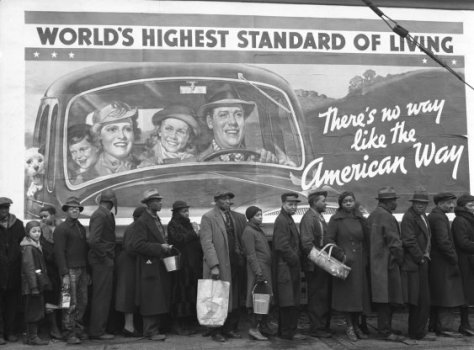
USA 1929
The Depression had a profound influence on Pre-Code Hollywood in both financial and artistic terms.
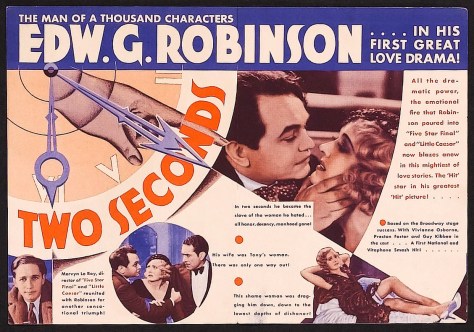
2 Seconds with Edward G Robinson, Mervyn LeRoy (1932)
The cynicism, challenging of traditional beliefs, and political controversy of Hollywood films during this period mirrored the attitudes of many of their patrons.[45] Also gone was the carefree and adventurous lifestyle of the 1920s.[46]
“After two years the Jazz Age seems as far away as the days before the war”, F. Scott Fitzgerald commented in 1931.[47] In the sense noted by Fitzgerald, understanding the moral climate of the early 1930s is complex. Although films experienced an unprecedented level of freedom and dared to portray things that would be kept hidden for several decades, many in America looked upon the stock market crash as a product of the excesses of the previous decade.[48]
In looking back upon the 1920s, events were increasingly seen as occurring in prelude to the market crash.[49] In Dance, Fools, Dance (1931), lurid party scenes featuring 1920s flappers are played to excess. Joan Crawford ultimately reforms her ways and is saved; less fortunate is William Bakewell, who continues on the careless path that leads to his ultimate self-destruction.[49]
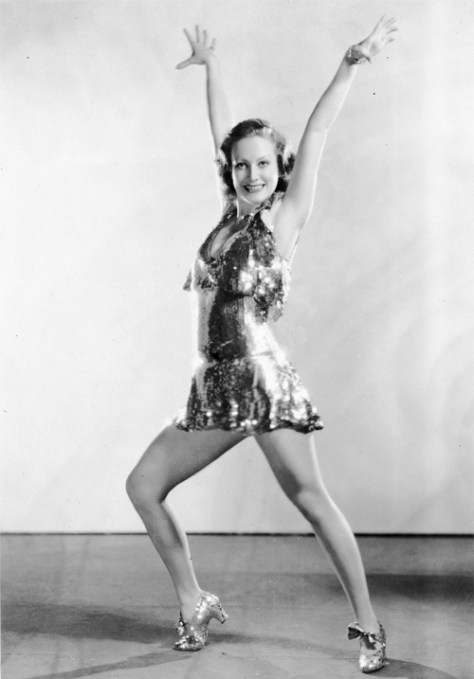
Joan Crawford in Dance, Fools, Dance, Harry Beaumont (1931)
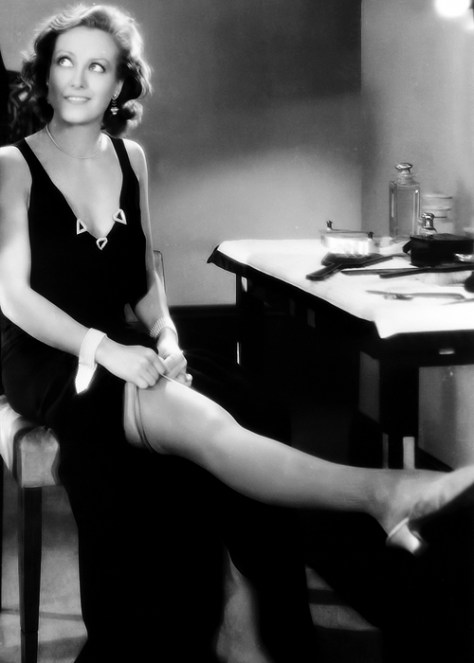
Joan Crawford in Dance, Fools, Dance, Harry Beaumont (1931)


Joan Crawford in Dance, Fools, Dance, Harry Beaumont (1931)
For Rain or Shine (1930), Milton Ager and Jack Yellin composed “Happy Days Are Here Again“. The song was repeated sarcastically by characters in several films such as Under Eighteen (1931) and 20,000 Years in Sing Sing (1933). Less comical was the picture of the United States’ future presented in Heroes for Sale that same year (1933), in which a hobo looks into a depressing night and proclaims, “It’s the end of America”.[50]
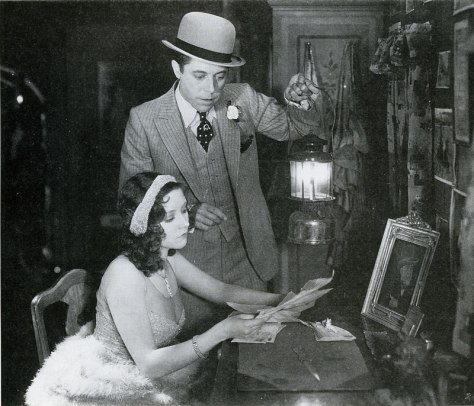
Joan Peers and Joe Cook in Rain or Shine, Frank Capra (1930)
Heroes for Sale was directed by prolific pre-Code director William Wellman and featured silent film star Richard Barthelmess as a World War I veteran cast onto the streets with a morphine addiction from his hospital stay. In Wild Boys of the Road (1933), the young man played by Frankie Darrow leads a group of dispossessed juvenile drifters who frequently brawl with the police.[51] Such gangs were common; around 250,000 youths traveled the country by hopping trains or hitchhiking in search of better economic circumstances in the early 1930s.[52]
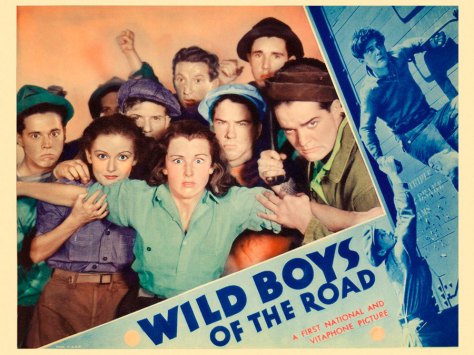
Lobby card for Wild Boys of the Road, William Wellman (1933)


Wild Boys of the Road, William Wellman (1933)
The mob mentality displayed in bank runs was portrayed in films like American Madness (1932), where Frank Capra depicted “the thin line between investor confidence and panic in Hoover’s America.”[53]
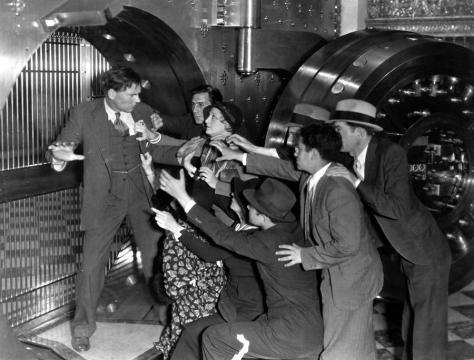
American Madness, Frank Capra (1932)
Complicating matters for the studios, the advent of sound film in 1927 required an immense expenditure in sound stages, recording booths, cameras, and movie-theater sound systems, not to mention the new-found artistic complications of producing in a radically altered medium. The studios were in a difficult financial position even before the market crash as the sound conversion process and some risky purchases of theater chains had pushed their finances near the breaking point.[54]
These economic circumstances led to a loss of nearly half of the weekly attendance numbers and closure of almost a third of the country’s theaters in the first few years of the depression. Even so, 60 million Americans went to the cinema weekly.[55]
Apart from the economic realities of the conversion to sound, were the artistic considerations. Early sound films were often noted for being too verbose.[2][56] In 1930, Carl Laemmle criticized the wall-to-wall banter of sound pictures, and director Ernst Lubitsch wondered what the camera was intended for if characters were going to narrate all the onscreen action.[56] The film industry also withstood competition from the home radio, and often characters in films went to great lengths to belittle the medium.[57] The film industry was not above using the new medium to broadcast commercials for its projects however, and occasionally turned radio stars into short feature performers to take advantage of their built-in following.[58]
Seething beneath the surface of American life in the Depression was the fear of the angry mob, portrayed in panicked hysteria in films such as Gabriel Over the White House (1933), The Mayor of Hell (1933), and American Madness (1932).[53] Massive wide shots of angry hordes, comprising sometimes hundreds of men, rush into action in terrifyingly efficient uniformity.
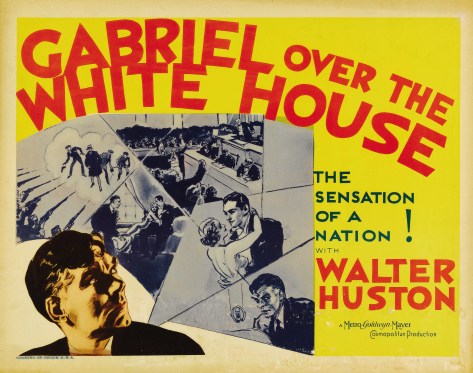
Poster for Gabriel Over the White House, Gregory LaCava (1933)


Gabriel Over the White House, Gregory LaCava (1933)
Groups of agitated men either standing in breadlines, loitering in hobo camps, or marching the streets in protest became a prevalent sight during the Great Depression.[53] The Bonus Army protests of World War I veterans on the capital in Washington, D.C., on which Hoover unleashed a brutal crackdown, prompted many of the Hollywood depictions. Although social issues were examined more directly in the pre-Code era, Hollywood still largely ignored the Great Depression, as many films sought to ameliorate patrons’ anxieties rather than incite them.[59]
Hays remarked in 1932:[60]
The function of motion pictures is to ENTERTAIN. … This we must keep before us at all times and we must realize constantly the fatality of ever permitting our concern with social values to lead us into the realm of propaganda … the American motion picture … owes no civic obligation greater than the honest presentment of clean entertainment and maintains that in supplying effective entertainment, free of propaganda, we serve a high and self-sufficing purpose.
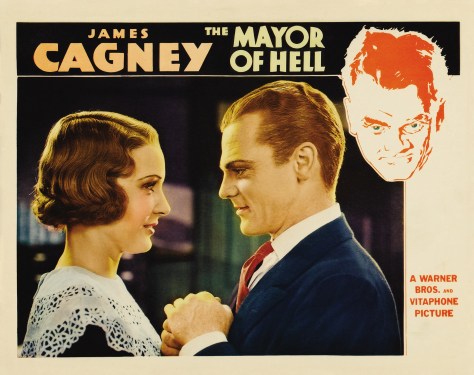
James Cagney and Madge Evans in The Mayor of Hell, Archie Mayo (1933)
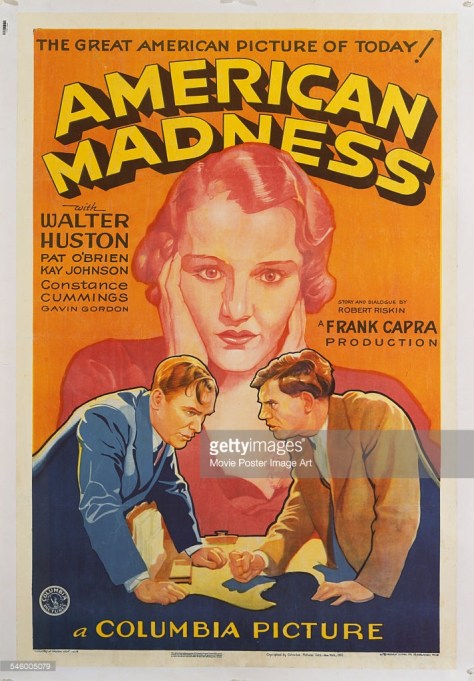
Poster for American Madness, Frank Capra (1932)
Social problem films
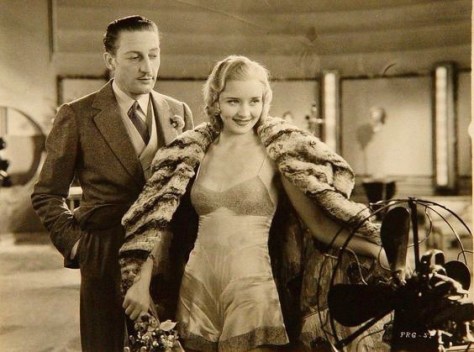
Warren William and Marian Marsh in Under Eighteen, Archie Mayo (1931)
Hays and others, such as Samuel Goldwyn, obviously felt that motion pictures presented a form of escapism that served a palliative effect on American moviegoers.[61] Goldwyn had coined the famous dictum, “If you want to send a message, call Western Union” in the pre-Code era.[61] However, the MPPDA took the opposite stance when questioned about certain so-called “message” films before Congress in 1932, claiming the audiences’ desire for realism led to certain unsavory social, legal, and political issues being portrayed in film.[62]
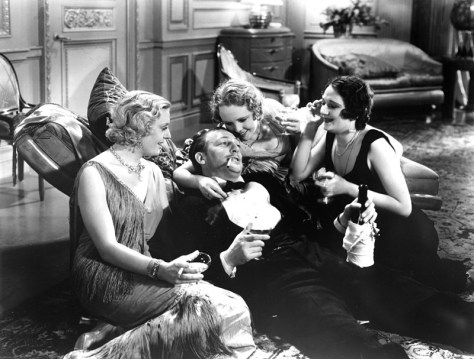
Warren William in The Mouthpiece (1932)
Warren William, described by Mick LaSalle as “one of the singular joys of the Pre-Code era,”[63] played industrialist villains in several pre-Code films, and his gangster-freeing, lowlife character in The Mouthpiece (1932) reflected much of America’s views of lawyers at the time.[64]
The length of pre-Code films was usually comparatively short,[65] but that running time often required tighter material and did not affect the impact of message films. Employees’ Entrance (1933) received the following review from Jonathan Rosenbaum: “As an attack on ruthless capitalism, it goes a lot further than more recent efforts such as Wall Street, and it’s amazing how much plot and character are gracefully shoehorned into 75 minutes.”[66]
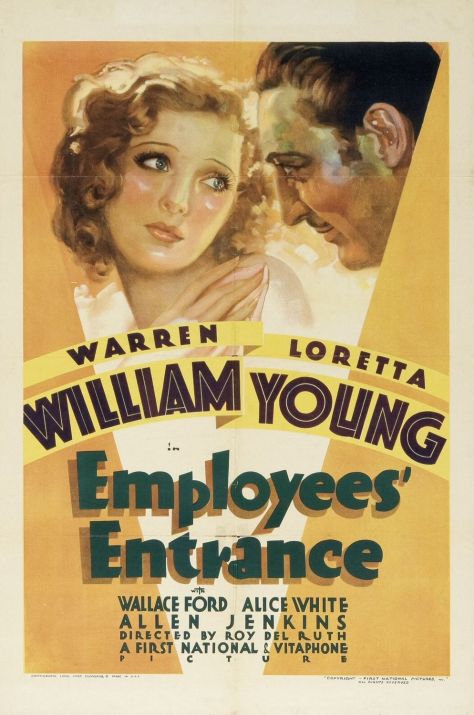
Poster for Employees Entrance, Roy Del Ruth (1933)


Employees Entrance, Roy Del Ruth (1933)
The film featured pre-Code megastar Warren William (later dubbed “the king of Pre-Code”[2]), “at his magnetic worst”,[67] playing a particularly vile and heartless department store manager who, for example, terminates the jobs of two long-standing male employees, one of whom commits suicide as a result. He also threatens to fire Loretta Young‘s character, who pretends to be single to stay employed, unless she sleeps with him, then attempts to ruin her husband after learning she is married.[68]
Films that stated a position about a social issue were usually labeled either “propaganda films” or “preachment yarns”. In contrast to Goldwyn and MGM’s definitively Republican stance on social issue films, Warner Brothers, led by New Deal advocate Jack L. Warner, was the most prominent maker of these types of pictures and preferred they be called “Americanism stories”.[62][69][70] Pre-Code historian Thomas Doherty has written that two recurring elements marked the so-called preachment yarns. “The first is the exculpatory preface; the second is the Jazz Age prelude.”[71] The preface was essentially a softened version of a disclaimer that intended to calm any in the audience who disagreed with the film’s message. The Jazz Age prelude was almost singularly used to cast shame on the boisterous behavior of the 1920s.[71]
Cabin in the Cotton (1932) is a Warner Bros. message film about the evils of capitalism. The film takes place in an unspecified southern state where workers are given barely enough to survive and taken advantage of by being charged exorbitant interest rates and high prices by unscrupulous landowners.[72] The film is decidedly anti-capitalist;[73] however, its preface claims otherwise:[71]
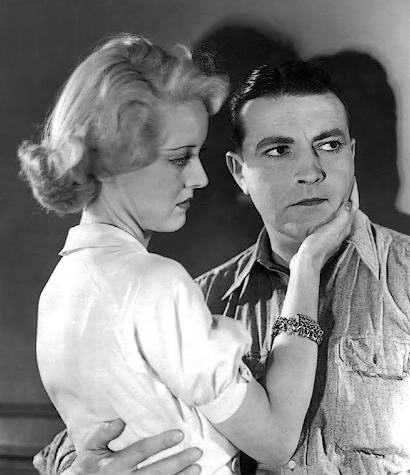
Bette Davis and Richard Barthelmess in The Cabin in the Cotton, Michael Curtiz (1932)
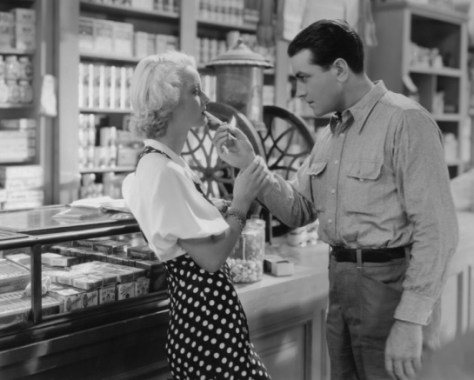
Bette Davis and Richard Barthelmess in The Cabin in the Cotton, Michael Curtiz (1932)


The Cabin in the Cotton, Michael Curtiz (1932)
“In many parts of the South today, there exists an endless dispute between rich land-owners, known as planters, and the poor cotton pickers, known as “peckerwoods”. The planters supply the tenants with the simple requirements of everyday life and; in return, the tenants work the land year in and year out. A hundred volumes could be written on the rights and wrongs of both parties, but it is not the object of the producers of Cabin in the Cotton to take sides. We are only concerned with the effort to picture these conditions.”
In the end, however, the planters admit their wrongdoing and agree to a more equitable distribution of capital.[73]
The avaricious businessman remained a recurring character in pre-Code cinema. In The Match King (1932), Warren William played an industrialist based on real-life Swedish entrepreneur Ivar Kreuger, himself nicknamed the “Match King”, who attempts to corner the global market on matches. William’s vile character, Paul Kroll, commits robbery, fraud, and murder on his way from a janitor to a captain of industry.[74][75] When the market collapses in the 1929 crash, Kroll is ruined and commits suicide to avoid imprisonment.[74] William played another unscrupulous businessman in Skyscraper Souls (1932): David Dwight, a wealthy banker who owns a building named after himself that is larger than the Empire State Building.[76] He tricks everyone he knows into poverty to appropriate others’ wealth.[74] He is ultimately shot by his secretary (Verree Teasdale), who then ends the film and her own life by walking off the roof of the skyscraper.[77]
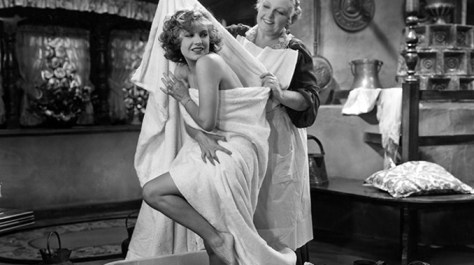
Lili Damita in The Match King, William Keighley, Howard Bretherton (1932)
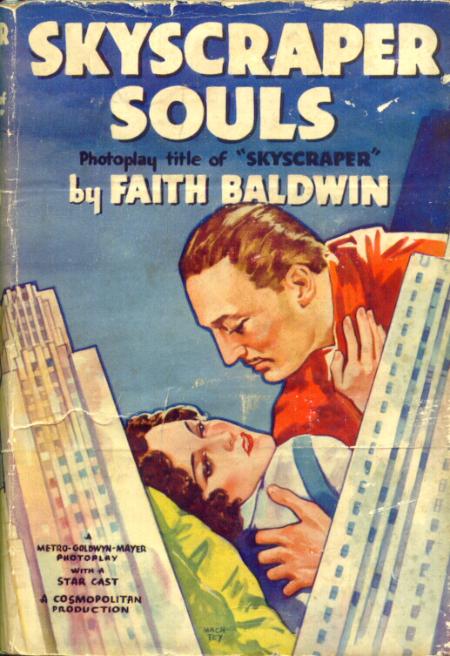
Dustjacket for for Skyscraper Souls, Edgar Selwyn (1932)
Americans’ mistrust and dislike of lawyers was a frequent topic of dissection in social problem films such Lawyer Man (1933), State’s Attorney, and The Mouthpiece (1932). In films such as Paid (1930), the legal system turns innocent characters into criminals. The life of Joan Crawford‘s character is ruined and her romantic interest is executed so that she may live free, although she is innocent of the crime for which the district attorney wants to convict her.[64] Religious hypocrisy was addressed in such films as The Miracle Woman (1931), starring Barbara Stanwyck and directed by Frank Capra. Stanwyck also portrayed a nurse and initially reluctant heroine who manages to save, via unorthodox means, two young children in danger from nefarious characters (including Clark Gable as a malevolent chauffeur) in Night Nurse (1931).[78]
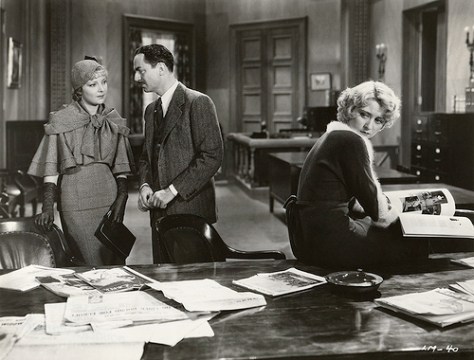
Claire Dodd, William Powell and Joan Blondell in Lawyer Man, William Dieterle (1933)
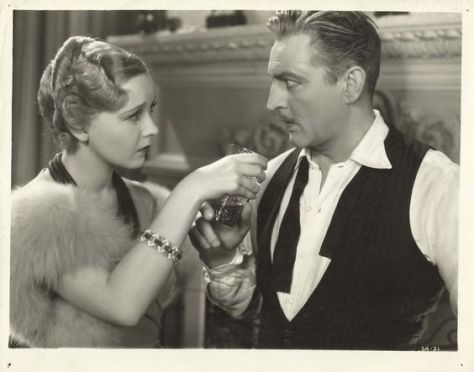
John Barrymore and Helen Twelvetrees in State’s Attorney, George Archainbaud (1932)
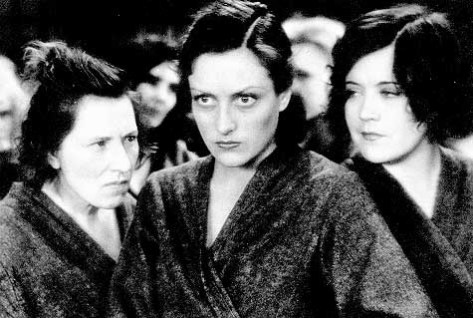
Joan Crawford in Paid, Sam Wood (1930)


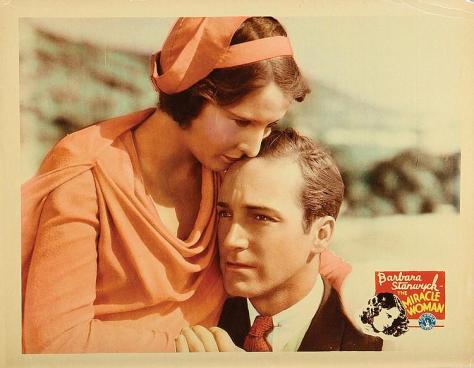
Lobby card for The Miracle Woman with Barbara Stanwyck and David Manners, Frank Capra (1931)
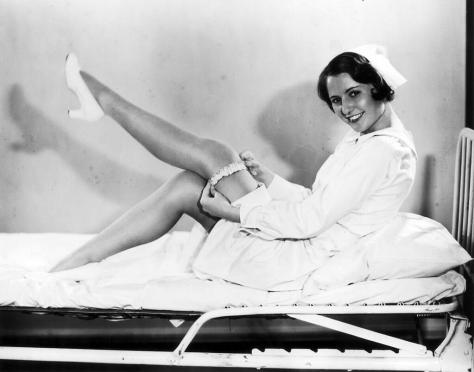
Barbara Stanwyck in Night Nurse, William Wellman (1931)


Barbara Stanwyck in Night Nurse, William Wellman (1931)
Many pre-Code films dealt with the economic realities of a country struggling to find its next meal. In Blonde Venus (1932), Marlene Dietrich‘s character resorts to prostitution to feed her child, and Claudette Colbert‘s character in It Happened One Night (1934) gets her comeuppance for throwing a tray of food onto the floor by later finding herself without food or financial resources.[79]Joan Blondell‘s character in Big City Blues (1932) reflects that as a chorus girl she regularly received diamonds and pearls as gifts, but now must content herself with a corned beef sandwich.[79] In Union Depot (1932), Douglas Fairbanks, Jr. puts a luscious meal as the first order of business on his itinerary after coming into money.[80]
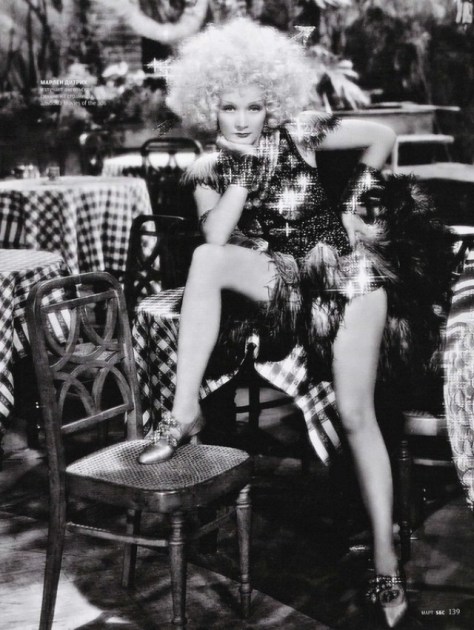
Marlene Dietrich in Blonde Venus, Josef Von Sternberg (1932)
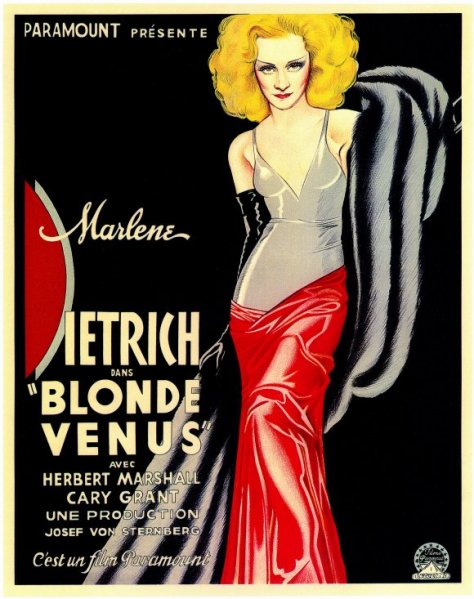
Poster for Blonde Venus, Josef Von Sternberg (1932)
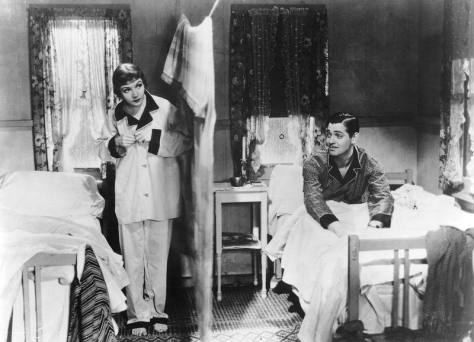
Claudette Colbert and Clark Gable in It Happened One Night, Frank Capra (1934)
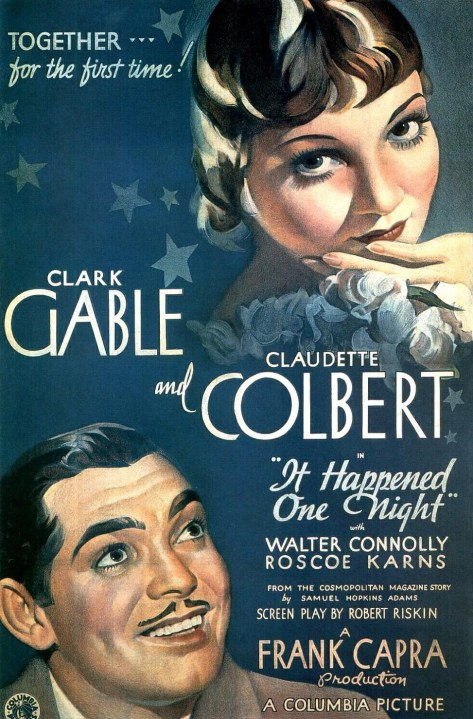
Claudette Colbert and Clark Gable in It Happened One Night, Frank Capra (1934)
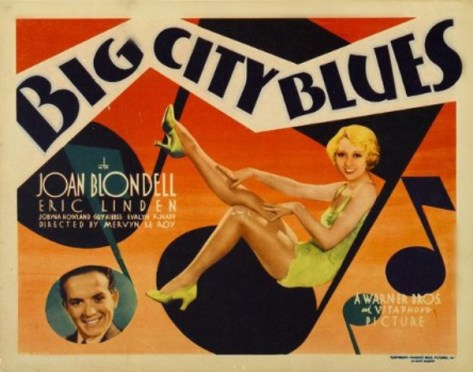
Poster for Big City Blues with Joan Blondell, Mervyn LeRoy (1932)
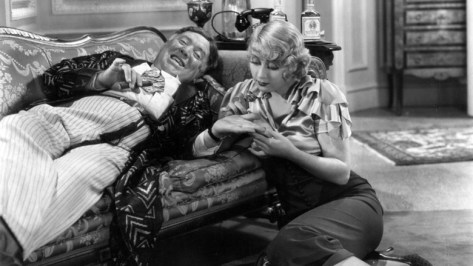
Joan Blondell and Guy Kibee in Big City Blues, Mervyn LeRoy (1932)
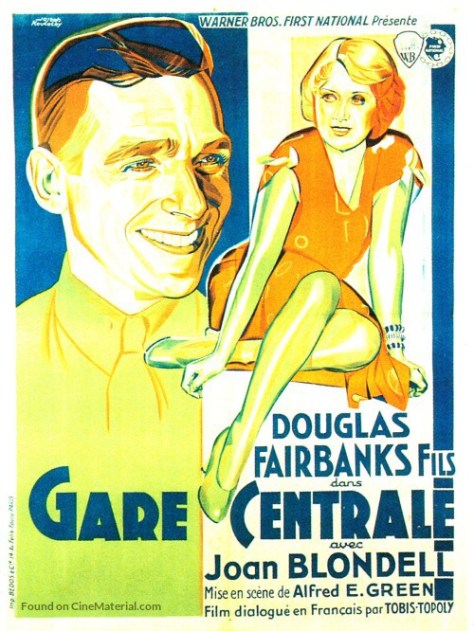
French poster for Union Depot, Alfred E Green (1932)
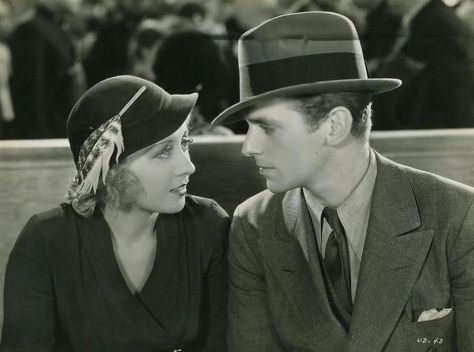
Joan Blondell and Douglas Fairbanks Jr in Union Depot, Alfred E Green (1932)
Political Releases
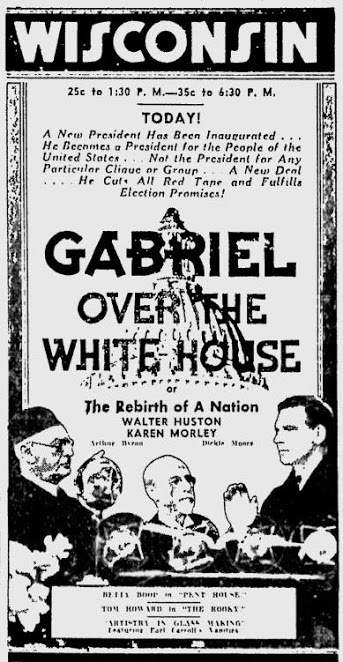
Poster for Gabriel Over the White House, Gregory La Cava (1933)
In the pre-Code film Gabriel Over the White House (1933), a U.S. President wakes up from an accident possessed by an angel and then changes American law to make himself dictator. The film was part of what the 1930s trade papers dubbed the “dictator craze.” During the early Depression era, many Americans desired politicians who could give them something beyond empty reassurances and hollow promises.[81]
Given the social circumstances, politically oriented social problem films ridiculed politicians and portrayed them as incompetent bumblers, scoundrels, and liars.[82] In The Dark Horse (1932), Warren William is again enlisted, this time to get an imbecile, who is accidentally in the running for Governor, elected. The candidate wins the election despite his incessant, embarrassing mishaps. Washington Merry-Go-Round portrayed the state of a political system stuck in neutral.[82]Columbia Pictures nearly released the film with a scene of the public execution of a politician as the climax before deciding to cut it.[83]
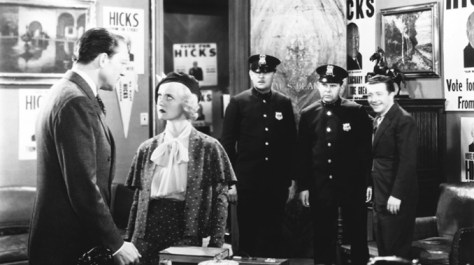
Warren William and Bette Davis in The Dark Horse, Alfred E Green (1932)
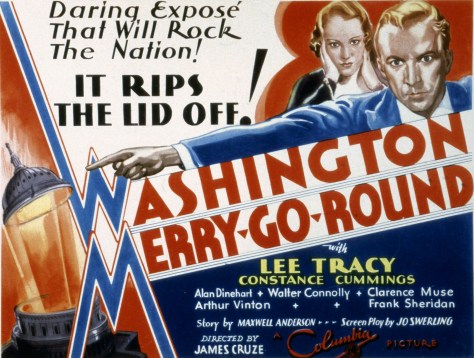
Poster for Washington Merry-Go-Round, James Cruze (1932)
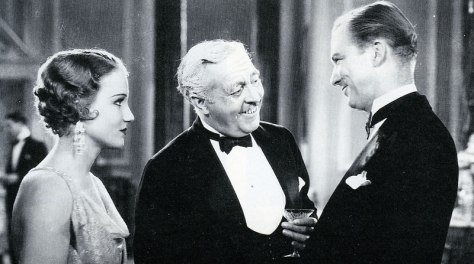
Constance Cummings, Walter Connolly and Lee Tracy in Washington Merry-Go-Round, James Cruze (1932)
Cecil B. DeMille released This Day and Age in 1933, and it stands in stark contrast to his other films of the period. Filmed shortly after DeMille had completed a five-month tour of the Soviet Union, This Day and Age takes place in America and features several children torturing a gangster who got away with the murder of a popular local shopkeeper.[84][85] The youngsters are seen lowering the gangster into a vat of rats when the police arrive, and their response is to encourage the youths to continue this. The film ends with the youngsters taking the gangster to a local judge and forcing the magistrate to conduct a trial in which the outcome is never in doubt.[86]
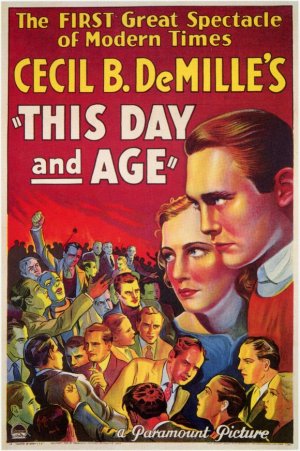
Poster for This Day and Age, Cecil B DeMille, (1933)
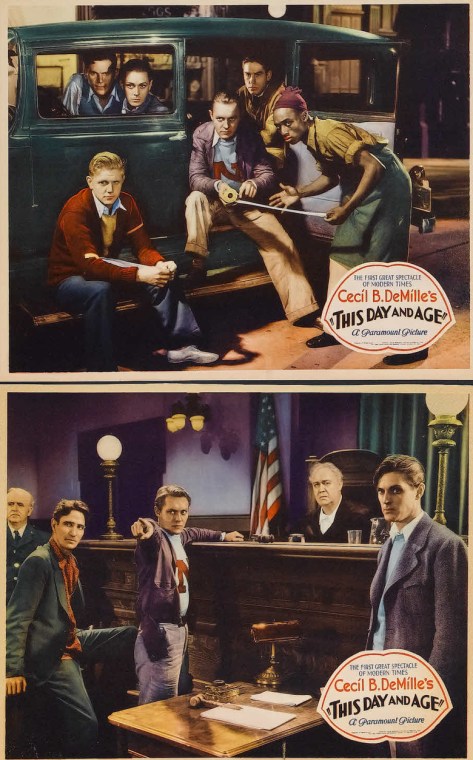
Lobby cards for This Day and Age, Cecil B DeMille, (1933)
The need for strong leaders who could take charge and steer America out of its crisis is seen in Gabriel Over the White House (1933), about a benevolent dictator who takes control of the United States.[87]Walter Huston stars as a weak-willed, ineffectual president (likely modeled after Hoover) who is inhabited by the archangel Gabriel upon being knocked unconscious.[88][89] The spirit’s behavior is similar to that of Abraham Lincoln. The president solves the nation’s unemployment crisis and executes an Al Capone-type criminal who has continually flouted the law.[88]
Dictators were not just glorified in fiction. Columbia’s Mussolini Speaks (1933) was a 76-minute paean to the Fascist leader, narrated by NBC radio commentator Lowell Thomas. After showing some of the progress Italy has made during Il Duce‘s 10-year reign, Thomas opines, “This is a time when a dictator comes in handy!”[90] The film was viewed by over 175,000 jubilant people during its first two weeks at the cavernous Palace Theater in Albany, New York.[91]

Poster for Mussolini Speaks, Edgar G Ulmer (1933)
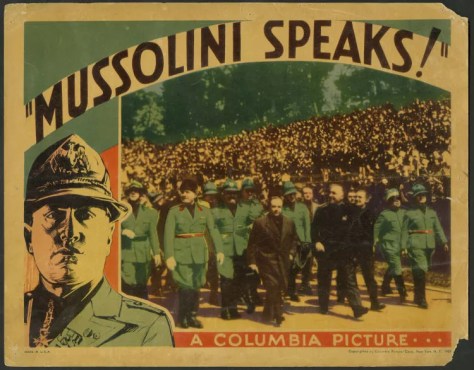
Poster for Mussolini Speaks, Edgar G Ulmer (1933)
The election of Franklin Delano Roosevelt (FDR) in 1932 quelled the public affection for dictators.[91] As the country became increasingly enthralled with FDR, who was featured in countless newsreels, it exhibited less desire for alternative forms of government.[92] Many Hollywood films reflected this new optimism. Heroes for Sale, despite being a tremendously bleak and at times anti-American film, ends on a positive note as the New Deal appears as a sign of optimism.[93] When Wild Boys of the Road (1933), directed by William Wellman, reaches its conclusion, a dispossessed juvenile delinquent is in court expecting a jail sentence. However the judge lets the boy go free, revealing to him the symbol of the New Deal behind his desk, and tells him “[t]hings are going to be better here now, not only here in New York, but all over the country.”[94] A box-office casualty of this hopefulness was Gabriel Over the White House, which entered production during the Hoover era malaise and sought to capitalize on it. By the time the film was released on March 31, 1933, FDR’s election had produced a level of hopefulness in America that rendered the film’s message obsolete.[95]
Adolf Hitler‘s rise to power in Germany and his regime’s anti-Semitic policies significantly affected American pre-Code filmmaking. Although Hitler had become unpopular in many parts of the United States, Germany was still a voluminous importer of American films and the studios wanted to appease the German government.[96] The ban on Jews and negative portrayals of Germany in the Fatherland even led to a significant reduction in work for Jews in Hollywood until after the end of World War II. As a result, only two social problem films released by independent film companies addressed the mania in Germany during the pre-Code era (Are We Civilized? and Hitler’s Reign of Terror).[97]
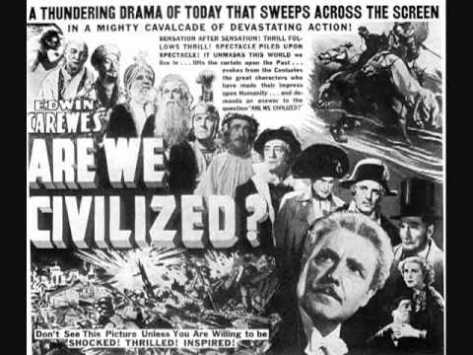
Poster for Are We Civilised?, Edwin Carew (1934)
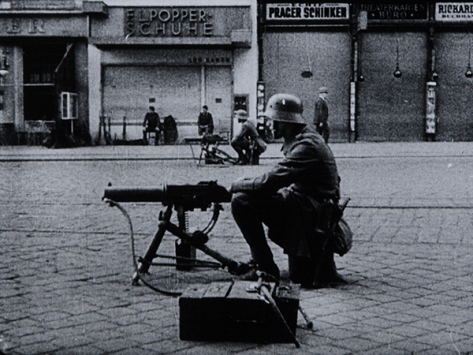
Hitler’s Reign of Terror, Michael Mindlin (1934)
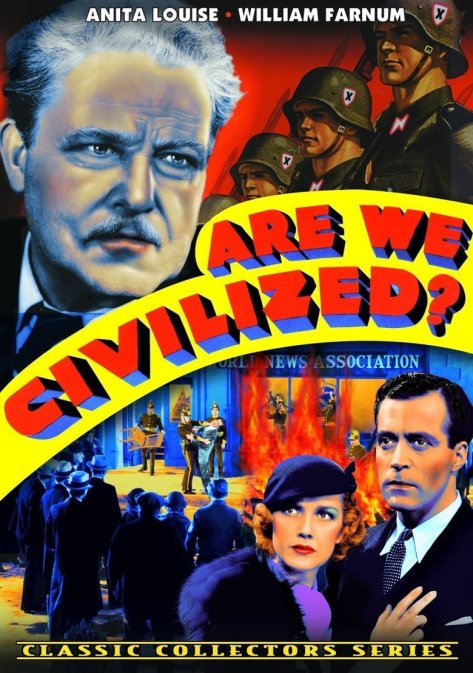
Poster/DVD Cover for Are We Civilised?, Edwin Carew (1934)
In 1933, Herman J. Mankiewicz and producer Sam Jaffe announced they were working on a picture, to be titled Mad Dog of Europe, which was intended to be a full-scale attack on Hitler.[98] Jaffe had quit his job at RKO Pictures to make the film. Hays summoned the pair to his office and told them to cease production as they were causing needless headaches for the studios.[99] Germany had threatened to seize all the properties of the Hollywood producers in Germany and ban the import of any future American films.[100][101]
Crime films
In the early 1900s, the United States was still primarily a rural country, especially in self-identity.[102]D. W. Griffith‘s The Musketeers of Pig Alley (1912) is one of the earliest American films to feature urban organized crime.[103] Prohibition’s arrival in 1920 created an environment where anyone who wanted to drink had to consort with criminals,[104] especially in urban areas. Nonetheless, the urban-crime genre was mostly ignored until 1927 when Underworld, which is recognized as the first gangster movie,[105] became a surprise hit.
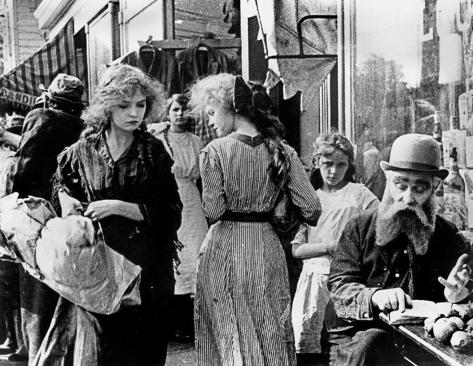
The Musketeers of Pig Alley, DW Griffith (1912)
According to the Encyclopedia of Hollywood entry on Underworld, “The film established the fundamental elements of the gangster movie: a hoodlum hero; ominous, night-shrouded city streets; floozies; and a blazing finale in which the cops cut down the protagonist”. Gangster films such as Thunderbolt (1929), and Doorway to Hell (1930) were released to capitalize on Underworld‘s popularity,[102] with Thunderbolt being described as “a virtual remake” of the film.[106] Other late 1920s crime films investigated the connection between mobsters and Broadway productions in movies such as Lights of New York (1928), Tenderloin (1928) and Broadway (1929).[107]
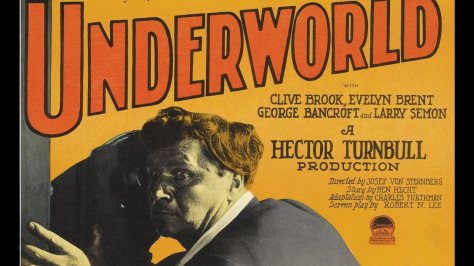
Poster for Underworld, Josef Von Sternberg (1927)
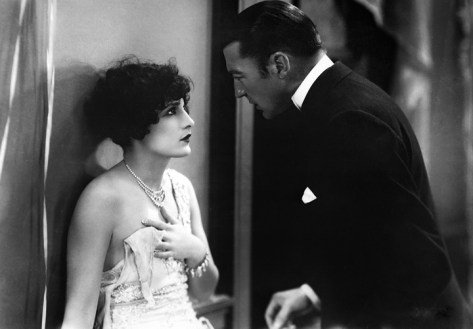
Evelyn Brent and Clive Brook in Underworld, Josef Von Sternberg (1927)
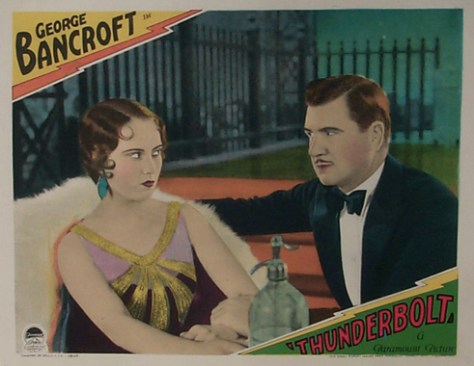
Lobby card for Thunderbolt, Josef Von Sternberg (1929)
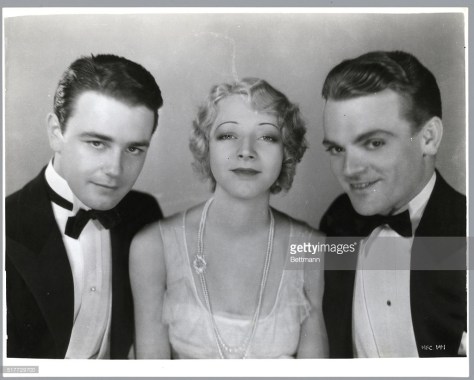
Lew Ayres, Dorthy Mathews and James Cagney in Doorway to Hell, Archie Mayo (1930)
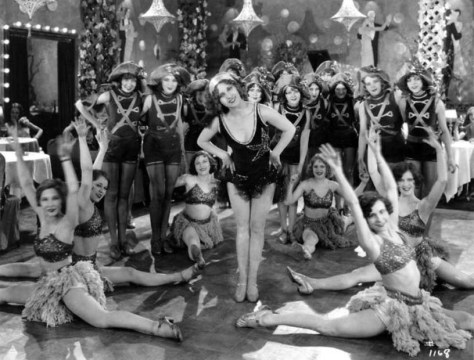
Helene Costello with the nightclub dancers in Lights of New York, Bryan Foy (1928)
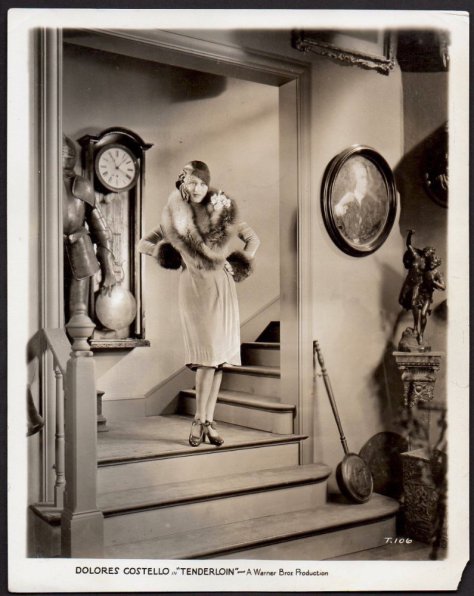
Dolores Costelo in Tenderloin, Michael Curtiz (1928)
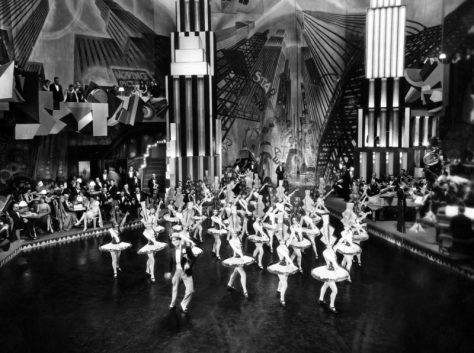
Broadway, Paul Feyos (1929)
The Hays Office had never officially recommended banning violence in any form in the 1920s—unlike profanity, the drug trade or prostitution—but advised that it be handled carefully.[8] New York’s censor board was more thorough than that of any other state, missing only around 50 of the country’s 1,000 to 1,300 annual releases.[108]
From 1927 to 1928, violent scenes removed were those in which a gun was pointed at the camera or “at or into the body of another character”. Many shots where machine guns were featured, scenes where criminals shot at law enforcement officers, some scenes involving stabbing or knife brandishing (audiences considered stabbings more disturbing than shootings), most whippings, several involving choking, torture, or electrocution, and any scenes which could be considered educational in their depiction of crime methods. Sadistic violence and reaction shots showing the faces of individuals on the receiving end of violence were considered especially sensitive areas.[109] The Code later recommended against scenes showing robbery, theft, safe-cracking, arson, “the use of firearms”, “dynamiting of trains, machines, and buildings”, and “brutal killings”, on the basis that they would be rejected by local censors.[37]
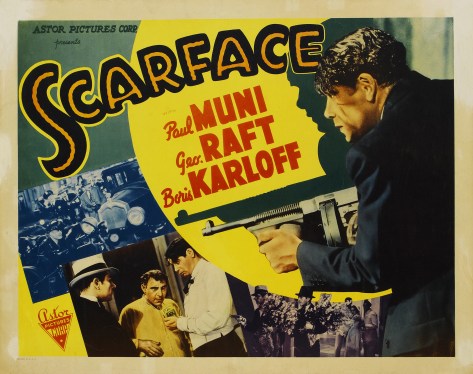
Poster for Scarface, Howard Hawks (1932)
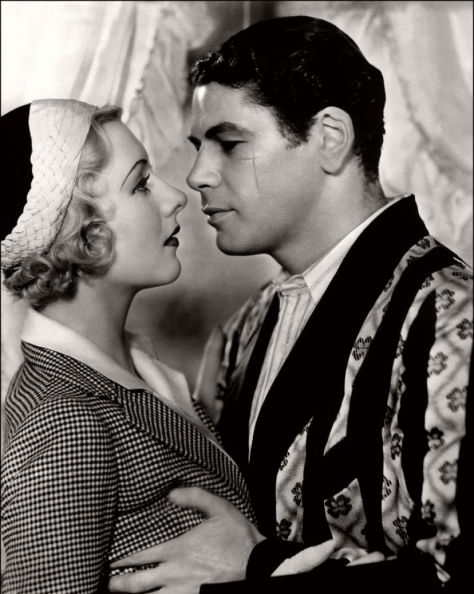 Paul Muni Karen Morley in Scarface, Howard Hawks (1932)
The public’s fascination with gangster films in the early 1930s was bolstered by the constant newsreel appearances of real-life criminals like Al Capone and John Dillinger, upon whom characters like Muni’s were often based.
Birth of the Hollywood gangster
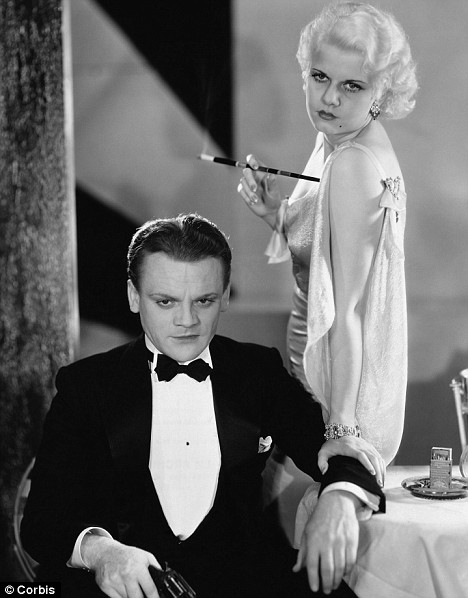
James Cagney and Jean Harlow in The Public Enemy, William Wellman (1931)
“No motion picture genre of the Pre-Code era was more incendiary than the gangster film; neither preachment yarns nor vice films so outraged the moral guardians or unnerved the city fathers as the high caliber scenarios that made screen heroes out of stone killers.”[110]
— Pre-Code historian Thomas P. Doherty
In the early 1930s, several real-life criminals became celebrities. Two in particular captured the American imagination: Al Capone and John Dillinger. Gangsters like Capone had transformed the perception of entire cities.[110] Capone gave Chicago its “reputation as the locus classicus of American gangsterdom, a cityscape where bullet-proof roadsters with tommygun-toting hoodlums on running boards careened around State Street spraying fusillades of slugs into flower shop windows and mowing down the competition in blood-spattered garages”. Capone appeared on the cover of Time magazine in 1930.[110] He was even offered 7-figure sums by two major Hollywood studios to appear in a film but declined.[111]
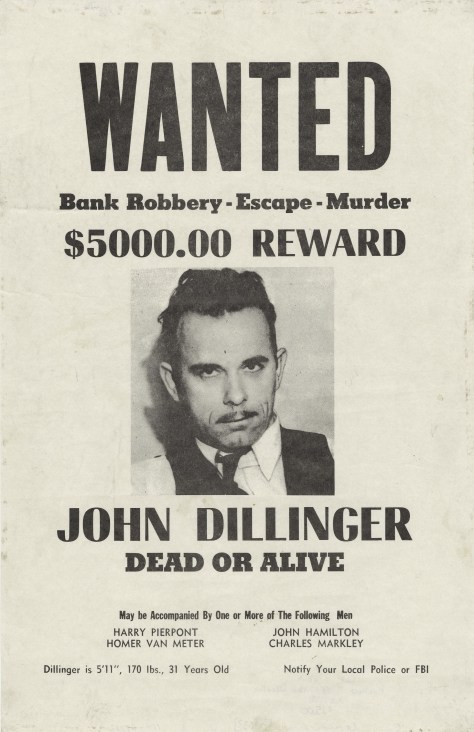
A wanted poster for bank robber John Dillinger
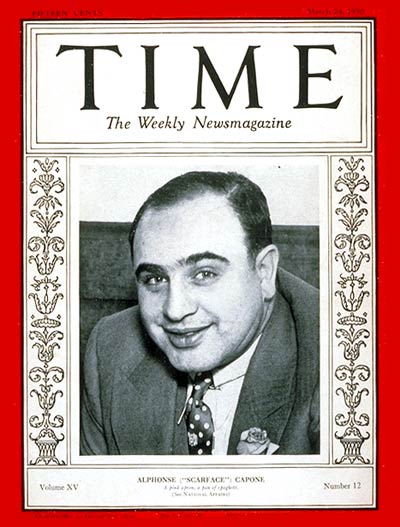
TIME Magazine Cover, Al Capone, Mar. 24, 1930
Dillinger became a national celebrity as a bank robber who eluded arrest and escaped confinement several times. He had become the most celebrated public outlaw since Jesse James.[112] His father appeared in a popular series of newsreels giving police homespun advice on how to catch his son. Dillinger’s popularity rose so quickly that Variety joked that “if Dillinger remains at large much longer and more such interviews are obtained, there may be some petitions circulated to make him our president.”[113] Hays wrote a cablegram to all the studios in March 1934 mandating that Dillinger not be portrayed in any motion picture.[114]
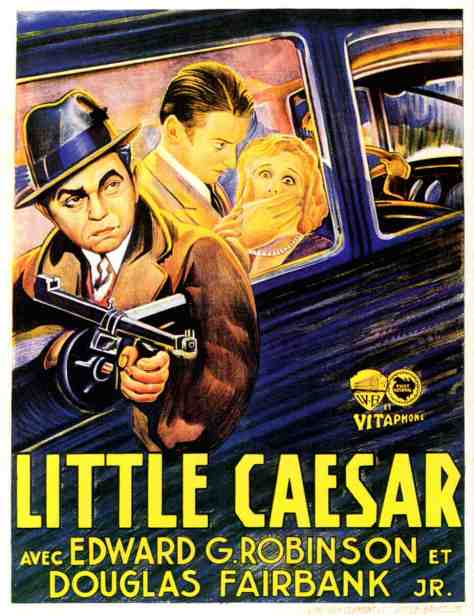
Poster for Little Caesar, Mervyn LeRoy (1931)

Poster for The Public Enemy, William Wellman (1931)
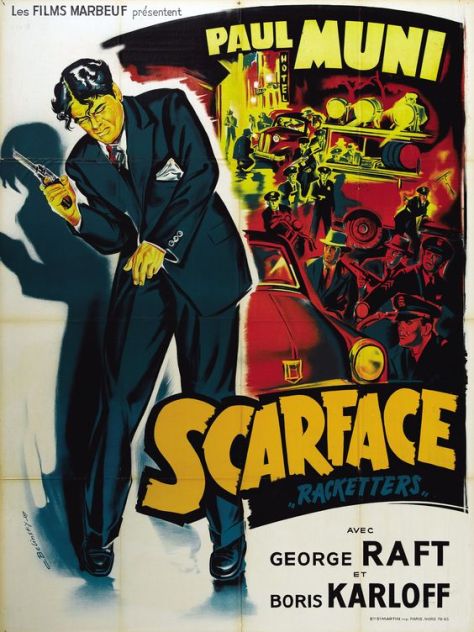
French release poster for Scarface, Howard Hawks (1932)
The genre entered a new level following the release of Little Caesar (1931), which featured Edward G. Robinson as gangster Rico Bandello.[102][115]Caesar, along with The Public Enemy starring James Cagney as Tom Powers and Scarface (1932), featuring Paul Muni as Tony Comante, were, by standards of the time, incredibly violent films that created a new type of anti-hero. Nine gangster films were released in 1930, 26 in 1931, 28 in 1932, and 15 in 1933, when the genre’s popularity began to subside after the end of Prohibition.[116] The backlash against gangster films was swift. In 1931, Jack Warner announced that his studio would stop making them and that he himself had never allowed his 15-year-old son to see them.[117]


Little Caesar, Mervyn LeRoy (1931)
Rico (Edward G. Robinson) confronts Joe (Douglas Fairbanks Jr.) when Joe decides to give up the gangster lifestyle in Little Caesar (1931).
Generally considered the grandfather of gangster films,[118] in Little Caesar, Robinson as Rico and his close friend Joe Massara (Douglas Fairbanks, Jr.) move to Chicago. Joe wants to go straight and meets a woman. Rico, however, seeks a life of crime and joins the gang of Sam Vettori. He rises to the rank of boss of the crime family. After becoming concerned his friend will betray him he threatens him, at which point Joe’s girlfriend goes to the police. Unable to bring himself to kill Joe and eliminate the witness against him, Rico goes into hiding. He is coaxed out by the police, who publish that he is a coward to the press.
Rico is killed in a blaze of gunfire; his last words are “Mother of mercy, is this the end of Rico?”[119] Robinson was initially cast in a small role but persuaded the film’s producer to let him play the lead.[120]
Wingate, who then headed New York’s censorship board, told Hays that he was flooded with complaints from people who saw kids in theaters nationwide “applaud the gang leader as a hero.”[121]


The success of Little Caesar inspired Fox’s The Secret Six (1931) and Quick Millions (1931), and Paramount’s City Streets (1931), but the next big Hollywood gangster would come from Warners.[122]
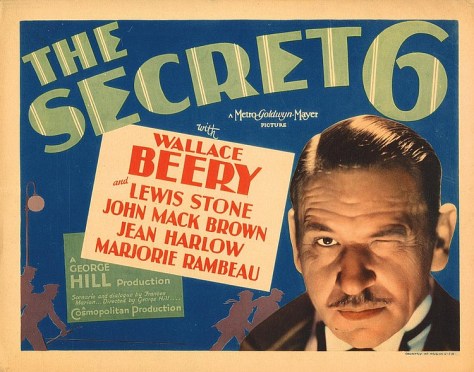


Lobby cards for The Secret Six, George W. Hill, George King (1931)
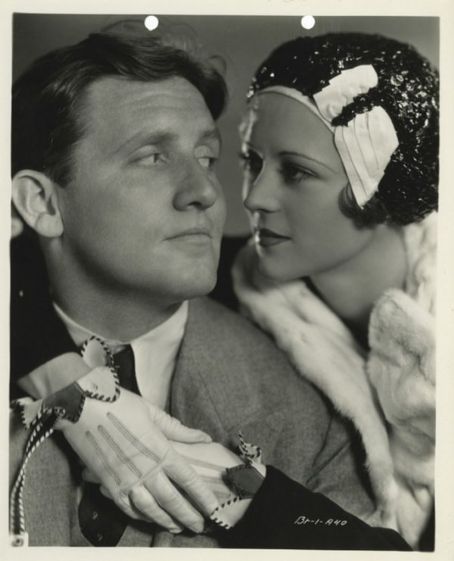
Spencer Tracy and Sally Eilers in Quick Millions, Rowland Brown (1931)
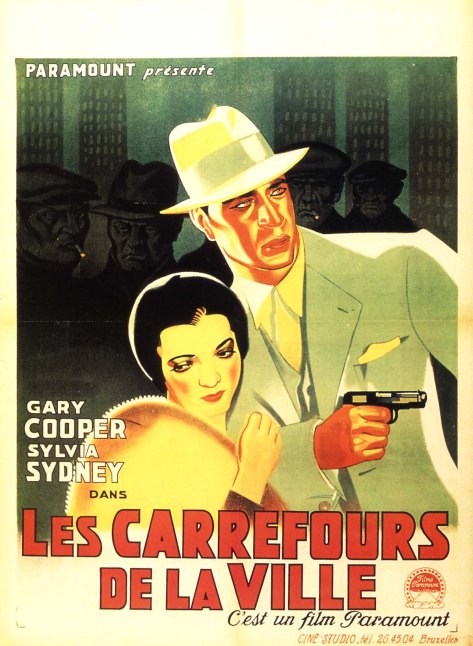
French release poster for City Streets, Rouben Mamoulian (1931)


City Streets, Rouben Mamoulian (1931)
William Wellman‘s The Public Enemy (1931), released by Warner Brothers, features another career-defining performance, this time James Cagney as Tom Powers. The film is similar to the template set in Little Caesar in that it follows Powers from his rise to his eventual fall in the world of crime.
The film was partially based on the real life of Chicago gangster Dion O’Banion.[123] Cagney’s character is contrasted with his puritanical brother who wants him to go straight; their mother is at the center of the conflict. Tom Powers is egotistical, amoral, heartless, ruthless, and extremely violent.[124]


The Public Enemy, William Wellman (1931)
The best-remembered scene in the picture is referred to as the “grapefruit scene”: when Cagney’s girlfriend (Mae Clarke) angers him during breakfast, he shoves half a grapefruit in her face.[124] Instead of scenes from the film, its trailer contained a voiceover warning of the picture’s intensity and showed a gun being fired directly at the camera.[125]
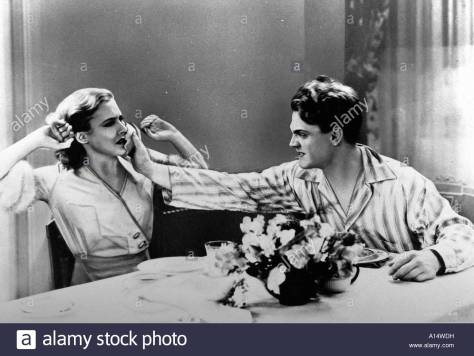
The infamous “grapefruit scene” in The Public Enemy (1931), with James Cagney and Mae Clarke


The Public Enemy, William Wellman (1931)


The Public Enemy, William Wellman (1931)


The Public Enemy, William Wellman (1931)
Cagney was even more violent towards women in the gangster film Picture Snatcher (1933): in one scene, he knocks out an amorous woman whose feelings he does not reciprocate and violently throws her into the backseat of his car.[126]
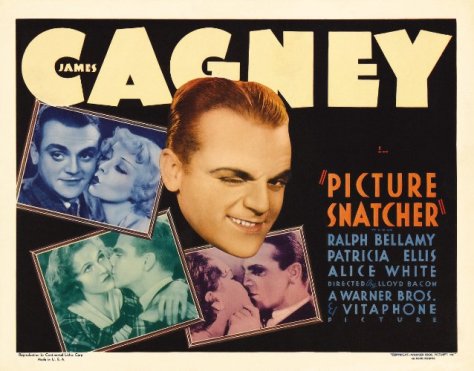
Poster for Picture Snatcher, Lloyd Bacon (1933)
In April 1931, the same month as the release of The Public Enemy, Hays recruited former police chief August Vollmer to conduct a study on the effect gangster pictures had on children. After he had finished his work, Vollmer stated that gangster films were innocuous and even overly favorable in depicting the police.[127]
Although Hays used the results to defend the film industry,[127] the New York State censorship board was not impressed, and from 1930 through 1932, removed 2,200 crime scenes from pictures.[128]
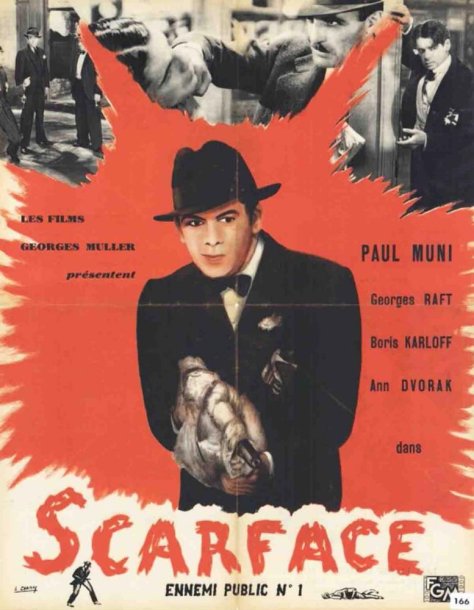
French release poster for Scarface, Howard Hawks (1932)
Some critics have named Scarface (1932) as the most incendiary pre-Code gangster film.[129][130] Directed by Howard Hawks and starring Paul Muni as Tony Camonte, the film is partially based on the life of Al Capone and incorporates details of Capone’s biography into the storyline.[129] The film begins with Camonte working for Johnny Lovo (Osgood Perkins), but he’s dissatisfied with being a subordinate and he’s also attracted to Lovo’s girlfriend Poppy (Karen Morley).
He has an unhealthily controlling relationship with his sister Francesca (Ann Dvorak) – whom he expects to remain chaste—that many critics have described as incestuous.[131] Lovo warns Camonte to leave the North Side alone as it is controlled by a rival mob, but he ignores this warning and launches a series of executions and extortions that result in a war with the North Side gang.
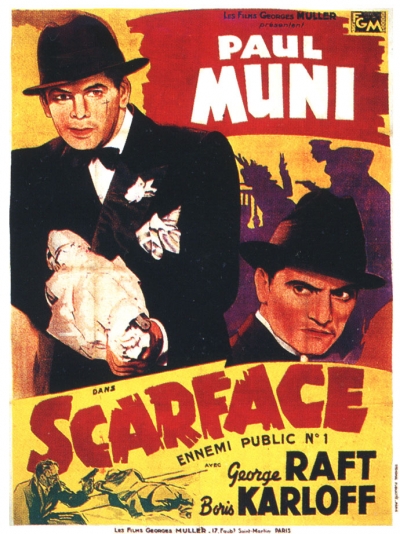
Poster for Scarface, Howard Hawks (1932)
Camonte then forcefully takes the gang over from Lovo, who tries unsuccessfully to kill him for this. Camonte’s attempt to kill Lovo is more successful, and Poppy happily becomes his girl. When Camonte finds Francesca in a hotel room with his closest friend, coin-flipping gangster Guino Rinaldo (George Raft), he kills Rinaldo in a rage. Afterward, he becomes despondent when he learns that the couple had wanted to surprise him with the news that they had gotten married.
The production of Scarface was troubled from the start. The Hays office warned producer Howard Hughes not to make the film;[132] when it was completed in late 1931, the Hays office demanded numerous changes including a conclusion where Comante was captured, tried, convicted, and hanged[133] and that the film carry the subtitle Shame of a Nation.[128] Hughes sent the film to numerous state censorship boards, saying he hoped to show that the film was made to combat the “gangster menace”.[126] After he was unable to get the film past the New York State censor board (then headed by Wingate)[126] even after the changes, Hughes sued the New York board and won, allowing him to release the film in a version close to its intended form.[133][134] When other local censors refused to release the edited version, the Hays Office sent Jason Joy around to them to assure them that the cycle of gangster films of this nature was ending.[135]


Scarface, Howard Hawks (1932)
Scarface provoked outrage mainly because of its unprecedented violence, but also for its shifts of tone from serious to comedic.[136]Dave Kehr, writing in the Chicago Reader, stated that the film blends “comedy and horror in a manner that suggests Chico Marx let loose with a live machine gun.”[131]


Scarface, Howard Hawks (1932)
In one scene, Camonte is inside a cafe while a torrent of machine-gun fire from the car of a rival gang is headed his way; when the barrage is over, Camonte picks up one of the newly released tommy guns the gangsters dropped and exhibits childlike wonder and unrestrained excitement over the new toy.[126] Civic leaders became furious that gangsters like Capone (who was also the inspiration for Little Caesar)[120] were being applauded in movie houses all across America.[102] The screenplay, adapted by Ben Hecht who was a journalist in Chicago, contained biographical details for Muni’s character in Scarface that were so obviously taken from Capone, and the detail so close, that it was impossible not to draw the parallels.[129]
One of the factors that made gangster pictures so subversive was that, in the difficult economic times of the Depression, there already existed the viewpoint that the only way to get financial success was through crime.[137] The Kansas City Times argued that although adults may not be particularly affected, these films were “misleading, contaminating, and often demoralizing to children and youth.”[138] Exacerbating the problem, some cinema theater owners advertised gangster pictures with a singular irresponsibility. Real-life murders were tied into promotions and “theater lobbies displayed tommy guns and blackjacks“.[139] The situation reached such a nexus that the studios had to ask exhibitors to tone down the gimmickry in their promotions.[139]
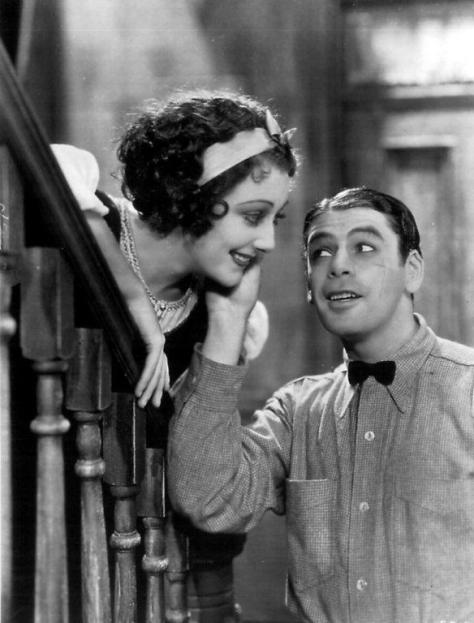
Paul Muni and Ann Dvorak in Scarface, Howard Hawks (1932)
Prison films
Prison films of the pre-Code era often involved men and women who were unjustly incarcerated, and films set in prisons of the north tended to portray them as a bastion of solidarity against the crumbling social system of the Great Depression.[140] Sparked by the real-life Ohio penitentiary fire on April 21, 1930, in which guards refused to release prisoners from their cells, causing 300 deaths, the films depicted the inhumane conditions inside prisons in the early 1930s.[140]
The genre was composed of two archetypes: the prison film and the chain gang film.[141] In the prison film, large hordes of men move about in identical uniforms, resigned to their fate, they live by a well defined code.[142] In the chain gang film, Southern prisoners were subjected to a draconian system of discipline in the blazing outdoor heat, where they were treated terribly by their ruthless captors.[140]
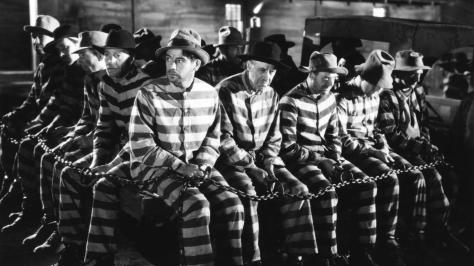
Paul Muni in I Am A Fugitive From A Chain Gang, Mervyn LeRoy (1932)
Paul Muni prepares to have his ankle shackles bent, and thus disabled, via sledge hammer, courtesy of the prisoner in the background in I am a Fugitive from a Chain Gang (1932). Based on the autobiographical memoirs of Robert E. Burns, who was himself a fugitive at the time of the picture’s release, the film was a powerful agent for social change.
The prototype of the prison genre was The Big House (1930).[143] In The Big House, Robert Montgomery plays a squirmy inmate who is sentenced to six years after committing vehicular manslaughter while under the influence. His cell mates are a murderer played by Wallace Beery and a forger played by Chester Morris. The picture features future staples of the prison genre such as solitary confinement, informers, riots, visitations, an escape, and the codes of prison life. The protagonist, Montgomery, ends up being a loathsome character, a coward who will sell anyone in the prison out to get an early release.[144] The film was banned in Ohio, the site of the deadly prison riots that inspired it.[145]Numbered Men, The Criminal Code, Shadow of the Law, Convict’s Code, and others, from no less than seven studios, followed.[146] However, prison films mainly appealed to men, and had weak box office performances as a result.[145]
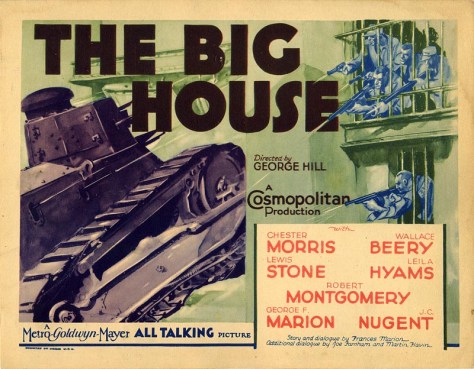
Poster for The Big House, George W Hill (1930)


The Big House, George W Hill (1930)
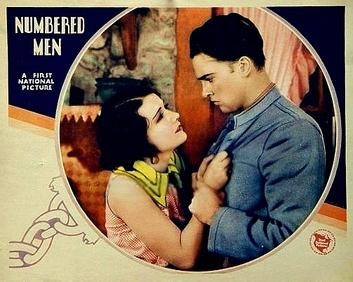
Lobby card for Numbered Men, Mervyn LeRoy (1930)
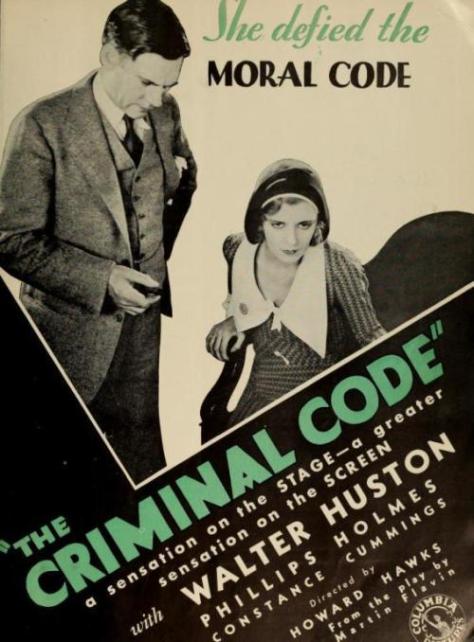
Poster for The Criminal Code, Howard Hawks, (1931)
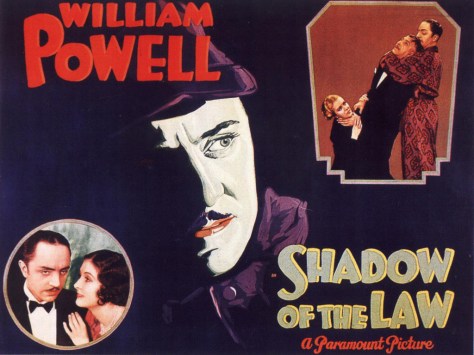
Poster for Shadow of the Law, Louis J Gasnier (1930)
Studios also produced children’s prison films that addressed the juvenile delinquency problems of America in the Depression. The Mayor of Hell, for instance, featured kids killing a murderously abusive reform school overseer without retribution.[147]
Chain Gang Films
The most searing criticism of the American prison system was reserved for the depiction of Southern chain gangs, with I Am a Fugitive from a Chain Gang being by far the most influential.[148]
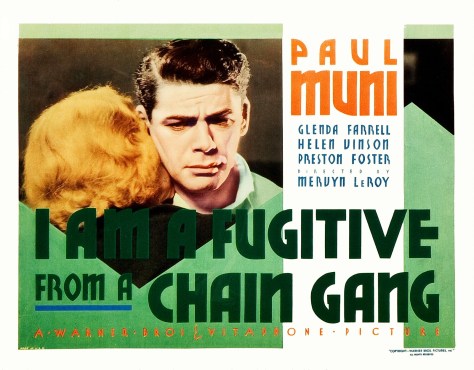
Lobby card for I Am A Fugitive From A Chain Gang, Mervyn LeRoy (1932)
I Am a Fugitive from a Chain Gang, which is based on the true story of Robert. E. Burns, is by far the most famous of the early 1930s chain gang films.[149] In the first half of 1931, True Detective Mysteries magazine had published Burns’ work over six issues, and it was released as a book in January 1932.[150]
Decorated veteran James Allen (Paul Muni) returns from World War I a changed man, and seeks an alternative to the tedious job that he left behind. He travels the country looking for construction work. His ultimate goal is to become involved in construction planning. Allen follows a hobo he met at a homeless shelter into a cafe, taking him up on his offer of a free meal.
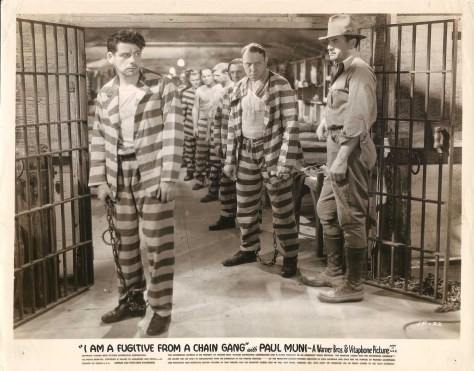
Lobby card for I Am A Fugitive From A Chain Gang, Mervyn LeRoy (1932)
When the hobo attempts to rob the eatery, Allen is charged as an accessory, convicted of stealing a few dollars, and sentenced to ten years in a chain gang. The men are chained together and transported to a quarry to break rocks every day.
Even when unchained from each other, shackles remain around their ankles at all times. Allen convinces a large black prisoner who has particularly good aim to hit the shackles on his ankles with a sledgehammer to bend them. He removes his feet from the bent shackles, and in a famous sequence, escapes through the woods while being chased by bloodhounds. On the outside he develops a new identity and becomes a respected developer in Chicago. He is blackmailed into marriage by a woman he does not love who finds out his secret.
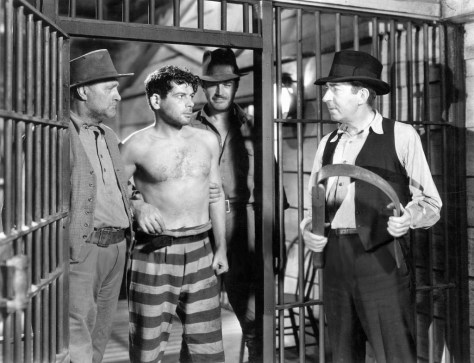
Paul Muni in I Am A Fugitive From A Chain Gang, Mervyn LeRoy (1932)
When he threatens to leave her for a young woman he has fallen in love with, she turns him in. His case becomes a cause célèbre, and he agrees to turn himself in under the agreement that he will serve 90 days and then be released. He is tricked however, and not freed at the agreed upon time. This forces him to escape again, and he seeks out the young woman, telling her that they cannot be together because he will always be hunted. The film ends with her asking him how he survives, and his ominous reply from the darkness: “I steal.”[151]


I Am A Fugitive From A Chain Gang, Mervyn LeRoy (1932)
Although based on reality, Chain Gang changes the facts slightly to appeal to Depression-era audiences by making Allen’s return home one to a country that is struggling economically, even though Burns returned to the roaring twenties.[152] The film’s bleak, anti-establishment ending shocked audiences.[153]
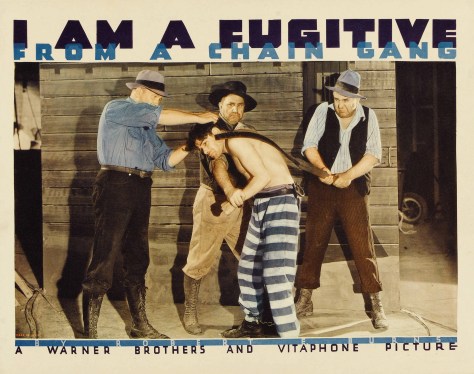
Lobby card for I Am A Fugitive From A Chain Gang, Mervyn LeRoy (1932)
Laughter in Hell, a 1933 film directed by Edward L. Cahn and starring Pat O’Brien, was inspired in part by I Am a Fugitive from a Chain Gang.[154]
O’Brien plays a railroad engineer who kills his wife and her lover in a jealous rage, and is sent to prison. The dead man’s brother ends up being the warden of the prison and torments O’Brien’s character. O’Brien and several others revolt, killing the warden and escaping with his new lover (Gloria Stuart).[155][156]
The film, rediscovered in 2012,[157]drew controversy for its lynching scene in which several black men were hanged. Reports vary if the blacks were hanged alongside other white men, or by themselves. The New Age (an African American weekly newspaper) film critic praised the filmmakers for being courageous enough to depict the atrocities that were occurring in some Southern states.[156]
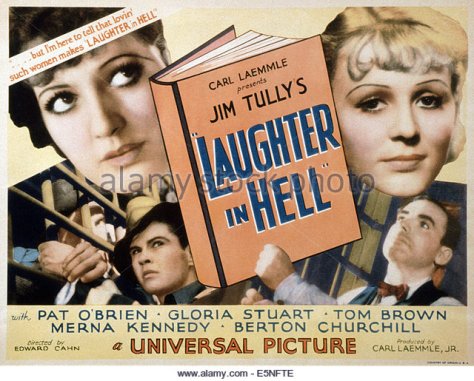
Lobby card for Laughter in Hell, Edward Cahn (1933)


Laughter in Hell, Edward Cahn (1933)
The titles of pre-Code films were often created with a deliberate intent to titillate. Although violent, the film Safe in Hell (1931) was actually a thoroughly modern, thoughtful film in its social views. Its most likable characters were those portrayed by African-American actors Nina Mae McKinney and Noble Johnson, who spoke in their own natural voices, without having to employ “Negro dialect”.[158][159]
Sex films
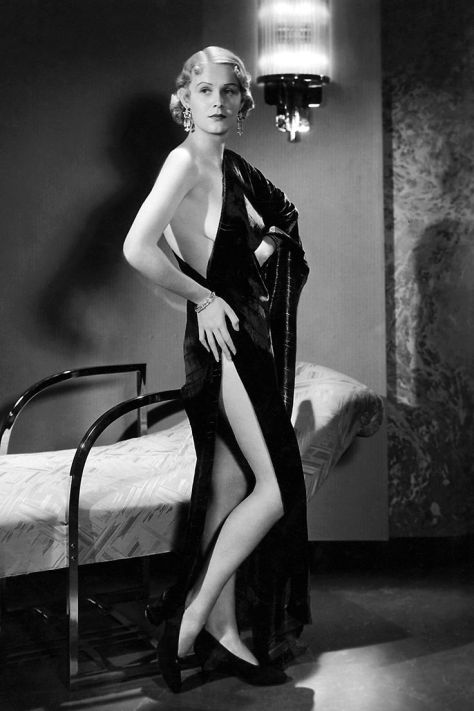
Gloria Stuart
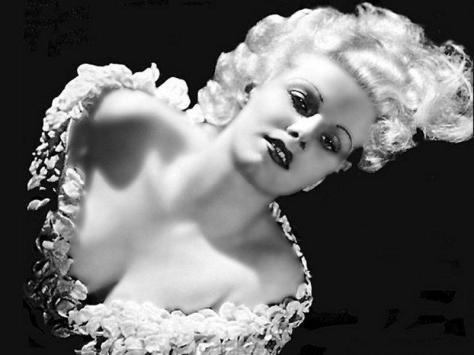
Jean Harlow
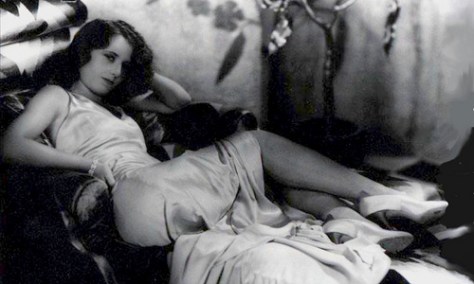
Barbara Stanwyck
Promotion
As films featuring prurient elements performed well at the box office, after the crackdown on crime films,[160]Hollywood increased its production of pictures featuring the seven deadly sins.[161]
In 1932, Warner Bros formed an official policy decreeing that “two out of five stories should be hot”, and that nearly all films could benefit by “adding something having to do with ginger.”[162] Filmmakers began putting in overly suggestive material they knew would never reach theaters in hopes that lesser offenses would survive the cutting-room floor.
MGM screenwriter Donald Ogden Stewart said that “[Joy and Wingate] wouldn’t want to take out too much, so you would give them five things to take out to satisfy the Hays Office—and you would get away with murder with what they left in.”[163]
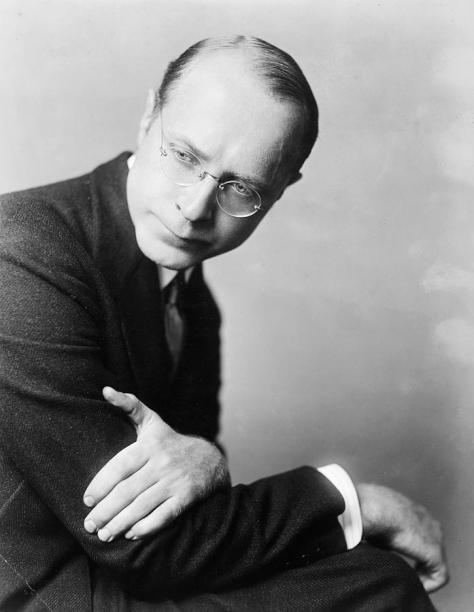
Donald Ogden Stewart
Films such as Laughing Sinners, Safe in Hell, Merrily We Go to Hell, Laughter in Hell, and The Road to Ruin were provocative in their mere titles.[161] Studios marketed their films, sometimes dishonestly, by inventing suggestive tag lines and lurid titles, even going so far as to hold in-house contests for thinking up provocative titles for screenplays.[164]
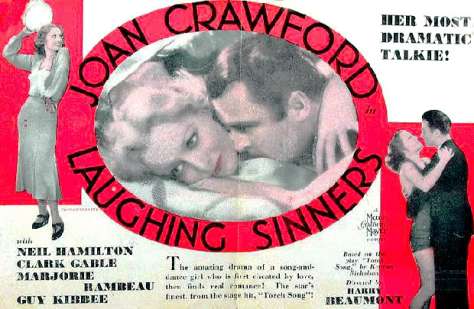
Poster for Laughing Sinners, Harry Beaumont (1931)
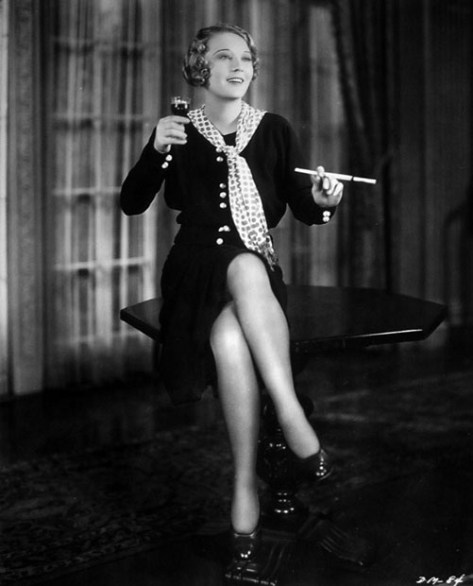
Dorothy Mackaill in Safe in Hell, William Wellman (1931)
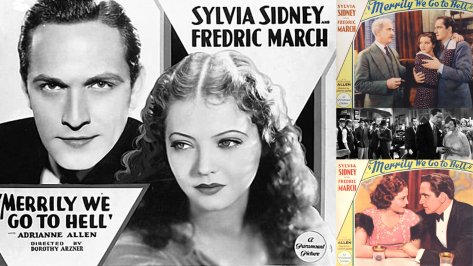
Lobby cards for Merrily We Go To Hell, Dorothy Arzner (1932)
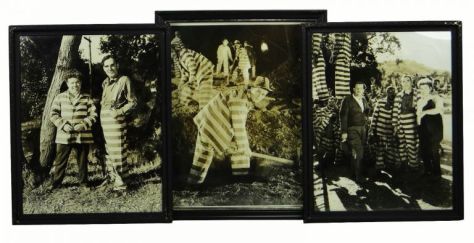
Promo still for Laughter in Hell, Edward L Cahn (1933)
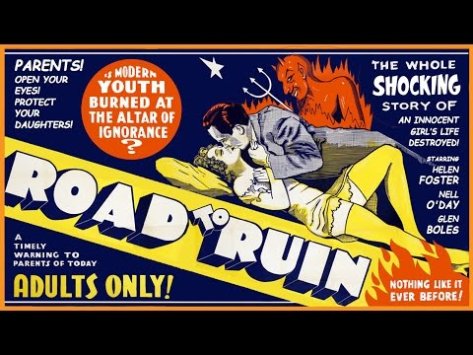
Poster for The Road to Ruin, Dorothy Davenport, Melville Shyer (1934)
Commonly labeled “sex films” by the censors, these pictures offended taste in more categories than just sexuality.[161] According to a Variety analysis of 440 pictures produced in 1932–33, 352 had “some sex slant”, with 145 possessing “questionable sequences”, and 44 being “critically sexual”. Variety summarized that “over 80% of the world’s chief picture output was … flavored with bedroom essence.”[162] Attempts to create films for adults only (dubbed “pinking”) wound up bringing large audiences of all ages to cinemas.[165]
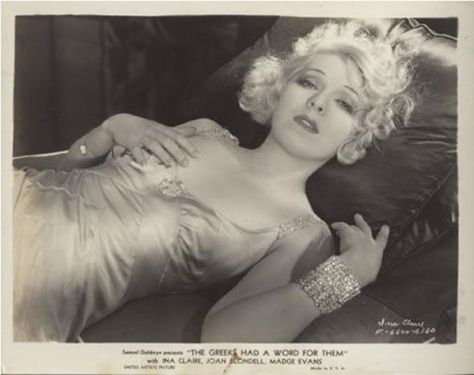
Publicity photos like this (Ina Claire in a publicity still for the 1932 film The Greeks Had a Word for Them AKA Three Broadway Girls, Lowell Sherman 1932), with a woman posing suggestively in her nightgown on a bed, provoked outrage among civic leaders.
Posters and publicity photos were often tantalizing.[166] Women appeared in poses and garb not even glimpsed in the films themselves. In some cases actresses with small parts in films (or in the case of Dolores Murray in her publicity still for The Common Law, no part at all) appeared scantily clad.[167]
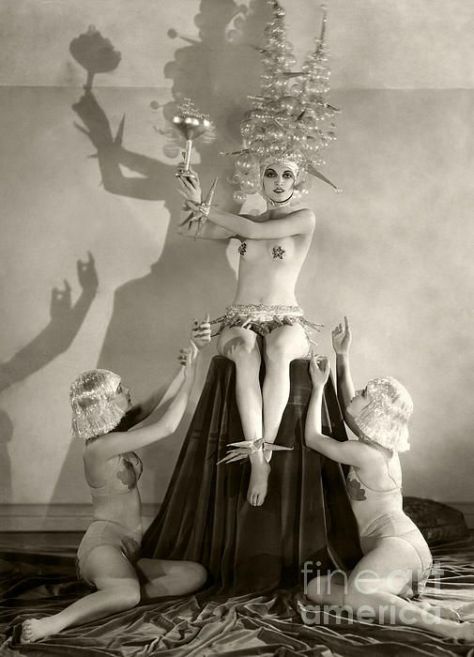
Chorus Girls in The Common Law, Paul L Stein (1931)
Hays became outraged at the steamy pictures circulating in newspapers around the country.[168] The original Hays Code contained an often-ignored note about advertising imagery, but he wrote an entirely new advertising screed in the style of the Ten Commandments that contained a set of twelve prohibitions.[169]
The first seven addressed imagery. They prohibited women in undergarments, women raising their skirts, suggestive poses, kissing, necking, and other suggestive material. The last five concerned advertising copy and prohibited misrepresentation of the film’s contents, “salacious copy”, and the word “courtesan“.[28]
Studios found their way around the restrictions and published increasingly racy imagery. Ultimately this backfired in 1934 when a billboard in Philadelphia was placed outside the home of Cardinal Dennis Dougherty. Severely offended, Dougherty took his revenge by helping to launch the motion-picture boycott which would later facilitate enforcement of the Code.[170]
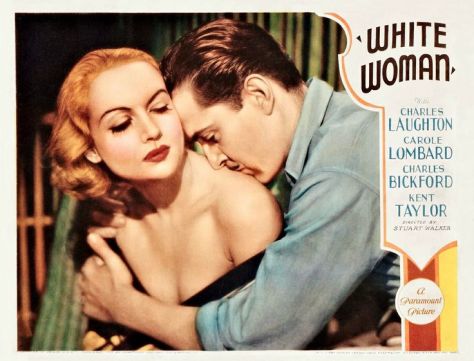
Lobby card for White Woman, Stewart Walker (1933)
A commonly repeated theme by those supporting censorship, and one mentioned in the Code itself[171] was the notion that the common people needed to be saved from themselves by the more refined cultural elite.[172]
Despite the obvious attempts to appeal to red-blooded American males, most of the patrons of sex pictures were female. Variety squarely blamed women for the increase in vice pictures:[173]
“Women are responsible for the ever-increasing public taste in sensationalism and sexy stuff. Women who make up the bulk of the picture audiences are also the majority reader of the tabloids, scandal sheets, flashy magazines, and erotic books … the mind of the average man seems wholesome in comparison. … Women love dirt, nothing shocks ’em.”
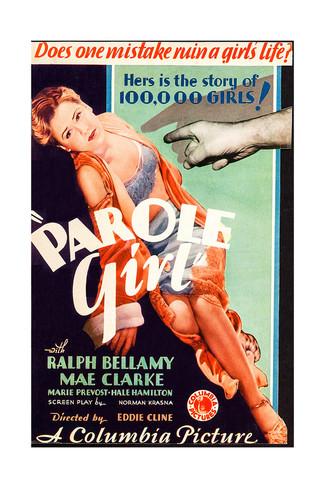
Poster for Parole Girl, Eddie Cline (1933)
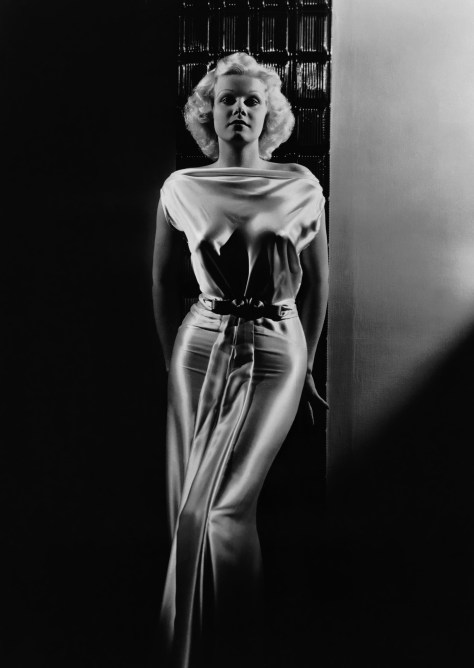
Jean Harlow
Jean Harlow was described in the Encyclopedia of Hollywood as “the reigning sex symbol of the 1930s.”[39] Harlow was propelled to stardom in pre-Code films such as Platinum Blonde, Red Dust, and Red-Headed Woman. This image is from the cover of Time from August 19, 1935.
Pre-Code female audiences liked to indulge in the carnal lifestyles of mistresses and adulteresses while at the same time taking joy in their usually inevitable downfall in the closing scenes of the picture.[174] While gangster films were claimed to corrupt the morals of young boys, vice films were blamed for threatening the purity of adolescent women.[165]
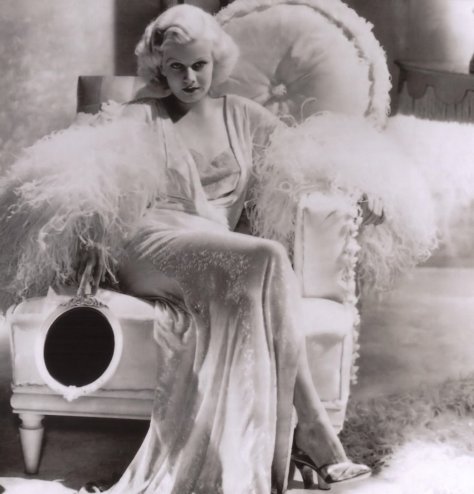
Jean Harlow
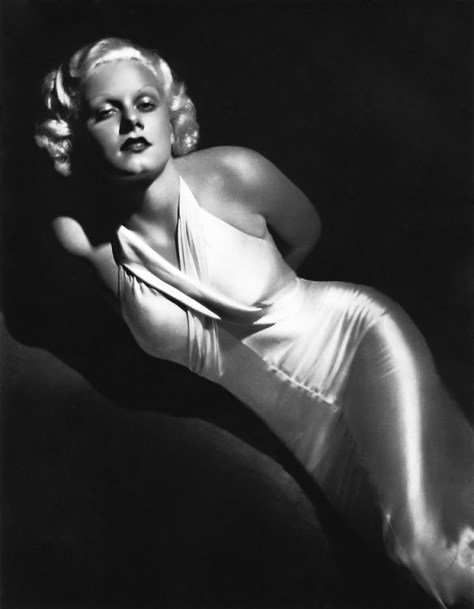
Jean Harlow
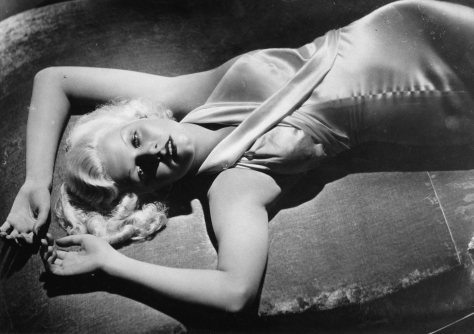
Jean Harlow
Content
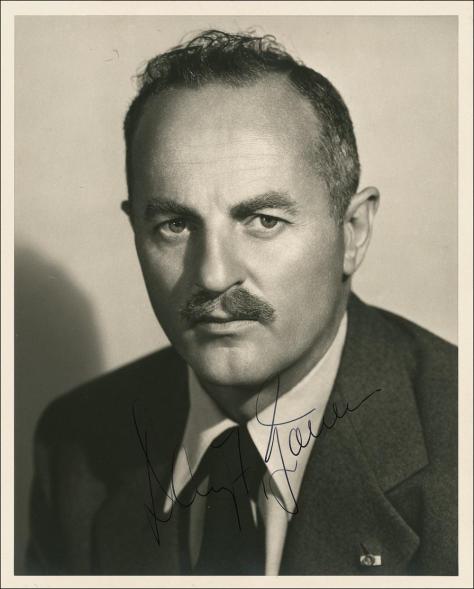
Darryl F Zanuck
In pre-Code Hollywood, the sex film became synonymous with women’s pictures — Darryl F. Zanuck once told Wingate that he was ordered by Warner Brothers’ New York corporate office to reserve 20% of the studio’s output for “women’s pictures, which inevitably means sex pictures.”[175] Vice films typically tacked on endings where the most sin-filled characters were either punished or redeemed. Films explored Code-defying subjects in an unapologetic manner with the premise that an end-reel moment could redeem all that had gone before.
Vice films typically tacked on endings where the most sin-filled characters were either punished or redeemed. Films explored Code-defying subjects in an unapologetic manner with the premise that an end-reel moment could redeem all that had gone before.
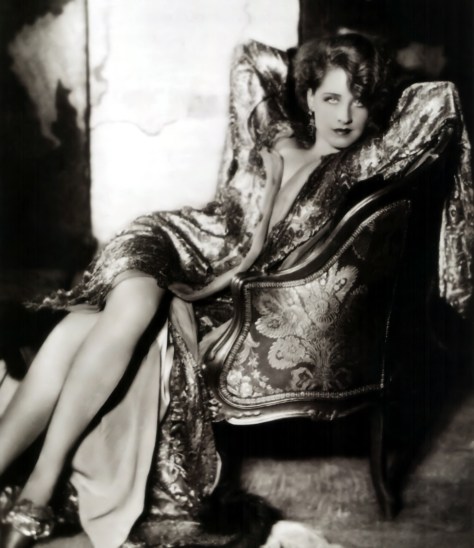
Norma Shearer
Vice films typically tacked on endings where the most sin-filled characters were either punished or redeemed. Films explored Code-defying subjects in an unapologetic manner with the premise that an end-reel moment could redeem all that had gone before.[176] The concept of marriage was often tested in films such as
The concept of marriage was often tested in films such as The Prodigal (1931), in which a woman is having an affair with a seedy character, and later falls in love with her brother-in-law. When her mother-in-law steps in at the end of the film, it is to encourage one son to grant his wife a divorce so she can marry his brother, with whom she is obviously in love. The older woman proclaims the message of the film in a line near the end: “This the twentieth century. Go out into the world and get what happiness you can.”[177]
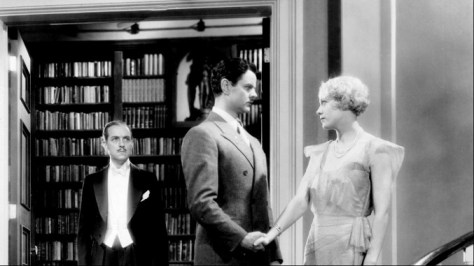
Lawrence Tibbett and Esther Ralston in Prodigal, Harry A Pollard (1931)
In Madame Satan (1930), adultery is explicitly condoned and used as a sign for a wife that she needs to act in a more enticing way to maintain her husband’s interest.[178]
In Secrets (1933), a husband admits to serial adultery, only this time he repents and the marriage is saved.[178] The films took aim at what was already a damaged institution. During the Great Depression, relations between spouses often deteriorated due to financial strain, marriages lessened, and husbands abandoned their families in increased numbers.[179]
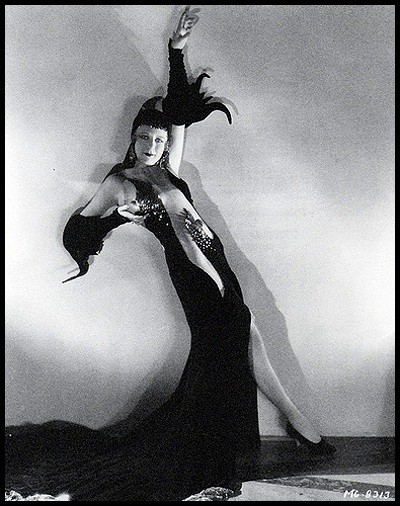
Kay Johnson in Madam Satan, Cecil B DeMille (1930)
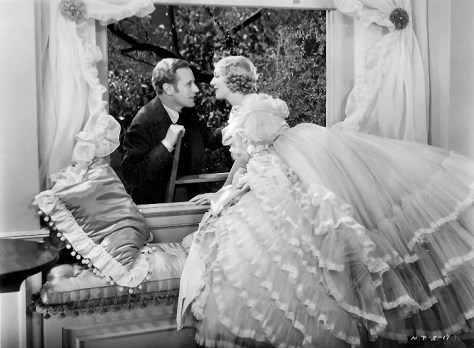
Leslie Howard and Mary Pickford in Secrets, Frank Borzage (1933)
Marriage rates continually declined in the early 1930s, finally rising in 1934, the final year of the pre-Code era, and although divorce rates lowered, this is likely because desertion was a more likely method of separation.[180] Consequently, female characters, such as Ruth Chatterton‘s in Female, live promiscuous bachelorette lifestyles, and control their own financial destiny (Chatterton supervises an auto factory) without regret.[175]
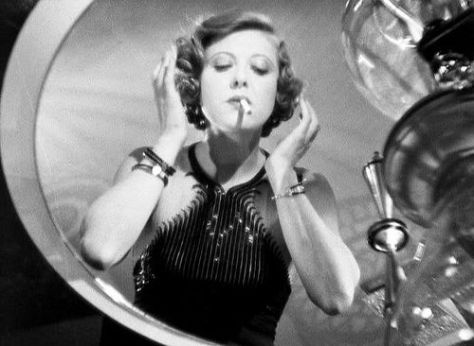
Ruth Chatterton in Female, Michael Curtiz (1933)
In The Divorcee (1930), starring Norma Shearer, a wife discovers that her husband (played by Chester Morris), has been cheating on her. In reaction, she decides to have an affair with his best friend (played by Robert Montgomery). When the husband finds out, he decides to leave her.
After pleading with him to stay, the wife unleashes her frustrations upon him, and in a moment of inspiration reveals her desire to live a fearless, sexually liberated life without him.
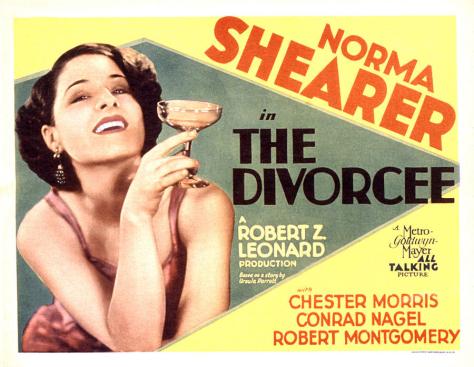
Lobby card for The Divorcee, Robert Z Leonard (1930)
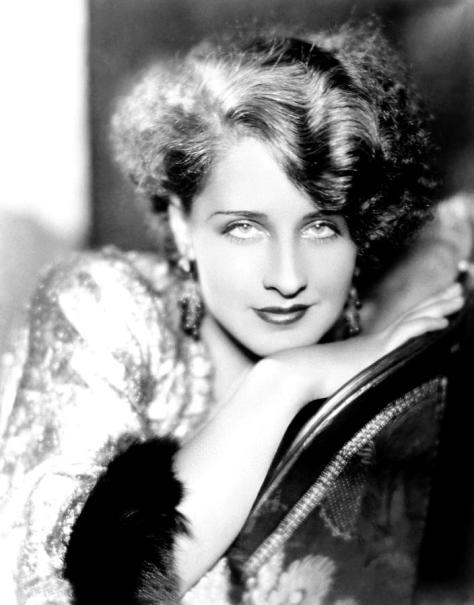
Norma Shearer in The Divorcee, Robert Z Leonard (1930)


The Divorcee, Robert Z Leonard (1930)
According to at least one film historian,[who?] this was the motion picture that inspired other films centering upon sophisticated female protagonists, who stayed out late, had affairs, wore revealing gowns, and who basically destroyed the sexual double standard by asserting themselves both within society and in the bedroom.
From The Divorcee onward, there developed “a trend toward a sophistication in women’s pictures that would continue unabated until the end of the Pre-Code era in mid-1934.[181]
One of the most prominent examples of punishment for immoral transgressions in vice film can be seen in The Story of Temple Drake, based on the William Faulkner novel Sanctuary.
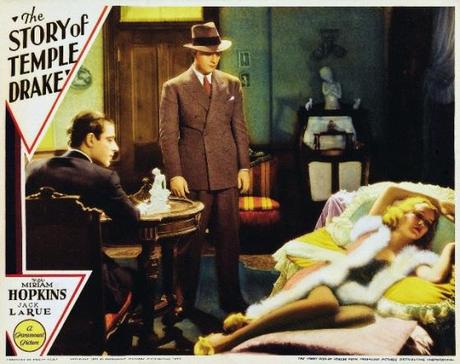
Lobby cards for The Story of Temple Drake, Stephen Roberts (1933)
In Drake, the title character (Miriam Hopkins), a cold, vapid “party girl”, the daughter of a judge, is raped and forced into prostitution by a backwoods character, and according to pre-Code scholar Thomas Doherty, the film implies that the deeds done to her are in recompense for her immorality.[182]
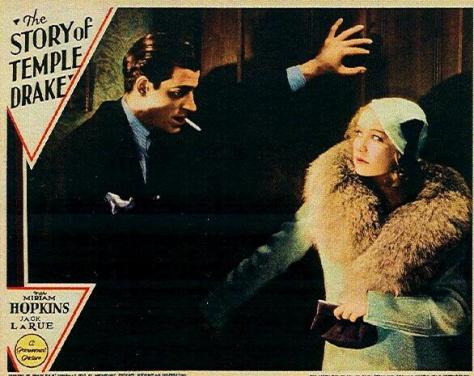
Lobby cards for The Story of Temple Drake, Stephen Roberts (1933)
Later, in court, she confesses that she killed the man who raped and kept her. She faints after this confession, upon which her lawyer carries her out, leading to a “happy ending”.[183]


The Story of Temple Drake, Stephen Roberts (1933)
In the RKO film Christopher Strong, Katharine Hepburn plays an aviator who becomes pregnant from an affair with a married man. She commits suicide by flying her plane directly upwards until she breaks the world altitude record, at which point she takes off her oxygen mask and plummets to earth.[184]
Strong female characters often ended films as “reformed” women, after experiencing situations in which their progressive outlook proved faulty.[175]
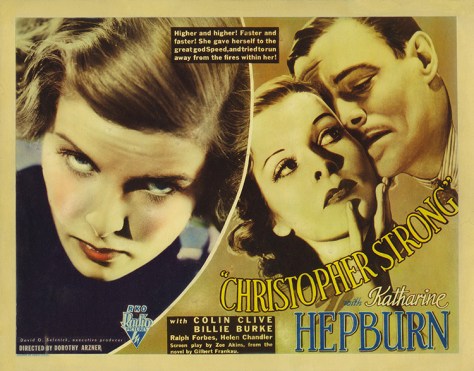
Lobby card for Christopher Strong, Dorothy Arzner (1933)
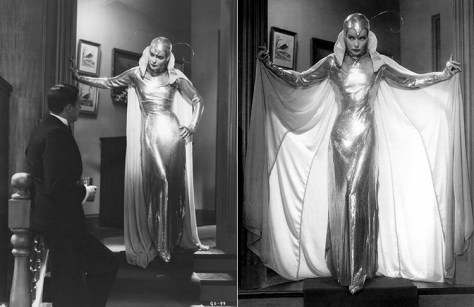
Katherine Hepburn in Christopher Strong, Dorothy Arzner (1933)


Katherine Hepburn in Christopher Strong, Dorothy Arzner (1933)
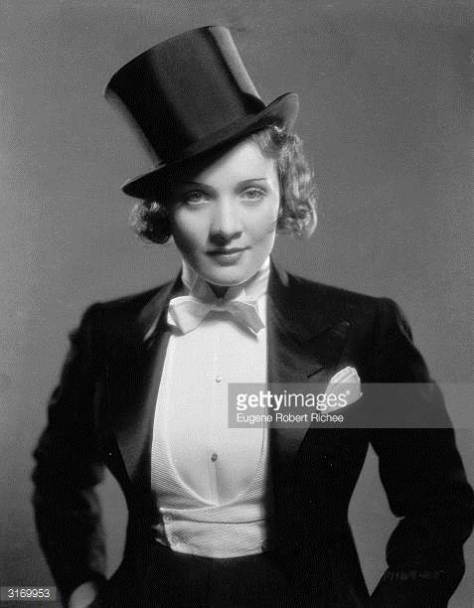
Marlene Dietrich
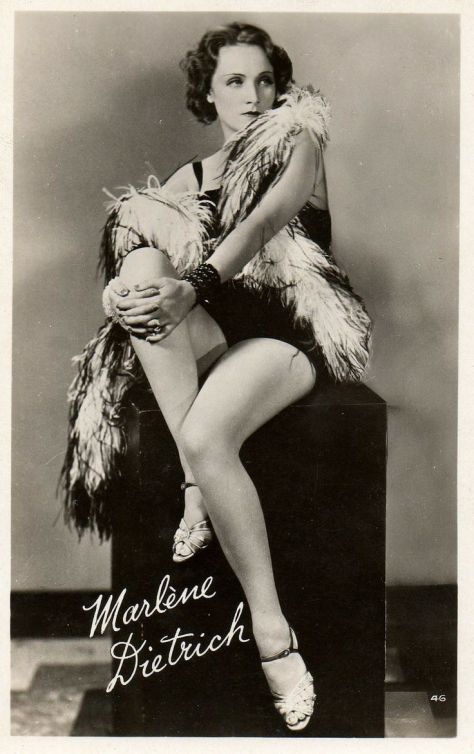
Marlene Dietrich
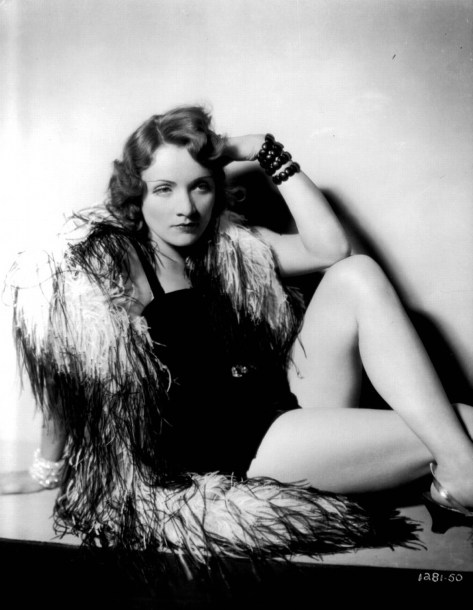
Marlene Dietrich
Marlene Dietrich, who was open about her bisexuality, wore men’s clothes in public. In a society still markedly against homosexuality and cross-genderism, this caused quite an uproar. In 1933, her studio, Paramount, signed a largely ineffectual document stating that they would not allow women in men’s clothes to appear in their films, both to quell the backlash and generate publicity.[185]
Female protagonists in aggressively sexual vice films were usually of two general kinds: the bad girl or the fallen woman.[186] In so-called “bad girl” pictures, female characters profited from promiscuity and immoral behavior.[187]
Jean Harlow, an actress who was by all reports a lighthearted, kind person offscreen, frequently played bad girl characters and dubbed them “sex vultures”.[188] Two of the most prominent examples of bad girl films, Red-Headed Woman and Baby Face, featured Harlow and Stanwyck. In Red-Headed Woman Harlow plays a secretary determined to sleep her way into a more luxurious lifestyle, and in Baby Face Stanwyck is an abused runaway determined to use sex to advance herself financially.[189]
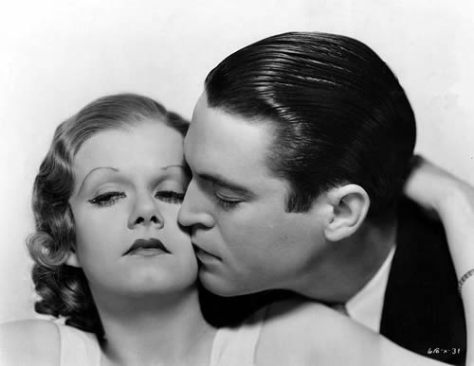
Jean Harlow and Chester Morris in Red Headed Woman, Jack Conway (1932)


Red Headed Woman, Jack Conway (1932)
In Baby Face Stanwyck moves to New York and sleeps her way to the top of Gotham Trust.[190] Her progress is illustrated in a recurring visual metaphor of the movie camera panning ever upward along the front of Gotham Trust’s skyscraper.
Men are driven mad with lust over her and they commit murder, attempt suicide, and are ruined financially for associating with her before she mends her ways in the final reel.[191] In another departure from post Code films, Stanwyck’s sole companion for the duration of the picture is a black woman named Chico (Theresa Harris), whom she took with her when she ran away from home at age 14.[192]
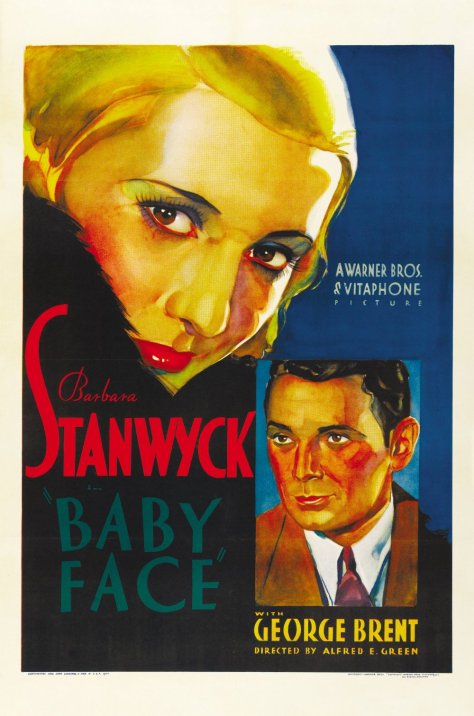
Poster for Baby Face, Alfred E Green (1933)


Baby Face, Alfred E Green (1933)
Red-Headed Woman begins with Harlow seducing her boss Bill LeGendre and intentionally breaking up his marriage. During her seductions, he tries to resist and slaps her, at which point she looks at him deliriously and says “Do it again, I like it! Do it again!”[193] They eventually marry but Harlow seduces a wealthy aged industrialist who is in business with her husband so that she can move to New York. Although this plan succeeds, she is cast aside when she is discovered having an affair with her chauffeur, in essence cheating on her paramour. Harlow shoots LeGendre, nearly killing him. When she is last seen in the film, she is in France in the back seat of a limousine with an elderly wealthy gentleman being driven along by the same chauffeur.[194] The film was a boon to Harlow’s career and has been described as a “trash masterpiece”.[195][196]
Cinema classified as “fallen woman” films was often inspired by real-life hardships women endured in the early Depression era workplace. The men in power in these pictures frequently sexually harassed the women working for them. Remaining employed often became a question of a woman’s virtue. In She Had to Say Yes (1933), starring Loretta Young, a struggling department store offers dates with its female stenographers as an incentive to customers. Employees’ Entrance was marketed with the tag line “See what out of work girls are up against these days.”[186] Joy complained in 1932 of another genre, the “kept woman” film, which presented adultery as an alternative to the tedium of an unhappy marriage.[197]
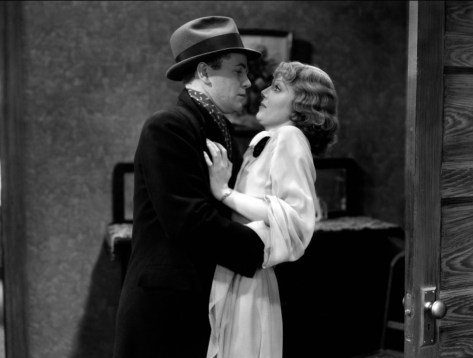
Loretta Young in She Had To Say Yes, Busby Berkeley, George Amy (1933)
Homosexuals were portrayed in such pre-Code films as Our Betters (1933), Footlight Parade (1933), Only Yesterday (1933), Sailor’s Luck (1933), and Cavalcade (1933).[198] Although the topic was dealt with much more openly than in the decades that followed, the characterizations of gay and lesbian characters were usually derogatory. Gay male characters were portrayed as flighty with high voices, existing merely as buffoonish supporting characters.[199]
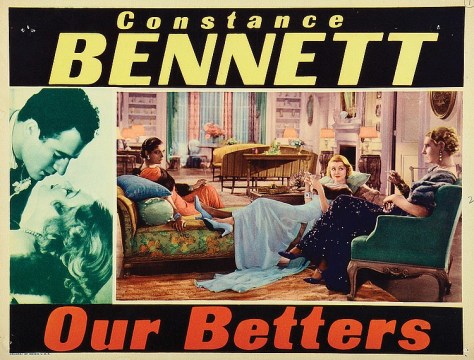
Lobby card for Our Better, George Cukor, Tommy Atkins (1933)
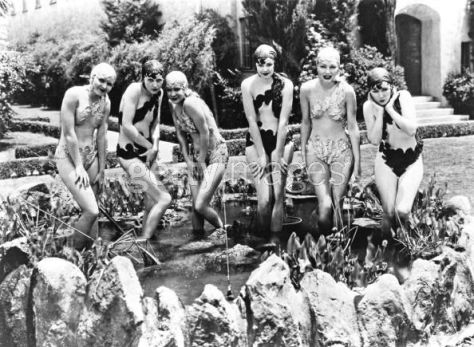
Footlight Parade, Busby Berkeley, Lloyd Bacon (1933)
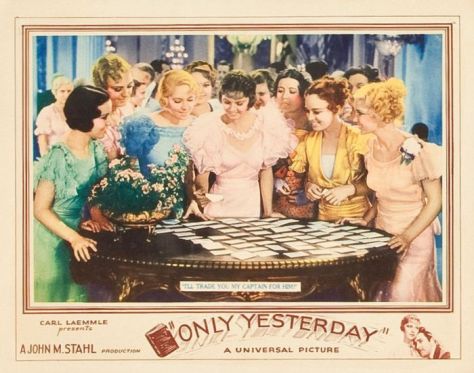
Lobby Card for Only Yesterday, John M Stahl (1933)
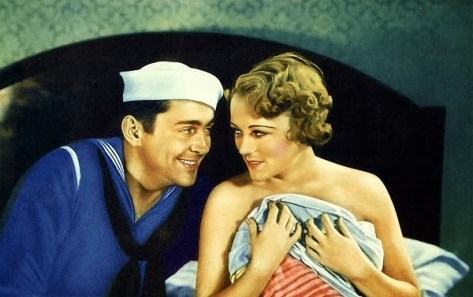
James Dunn and Sally Eillers in Sailor’s Luck, Raoul Walsh (1933)
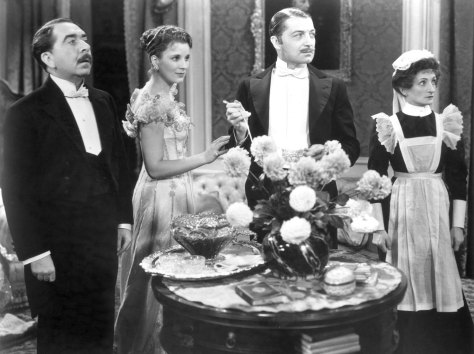
Clive Brook and Diana Wynyard in Cavalcade, Frank Lloyd (1933)
In films like Ladies They Talk About, lesbians were portrayed as rough, burly characters, but in DeMille’s The Sign of the Cross, a female Christian slave is brought to a Roman prefect and seduced in dance by a statuesque lesbian dancer.[200] Fox nearly became the first American studio to use the word “gay” to refer to homosexuality, but the SRC made the studio muffle the word in the soundtrack of all filmreels that reached theaters.[201]
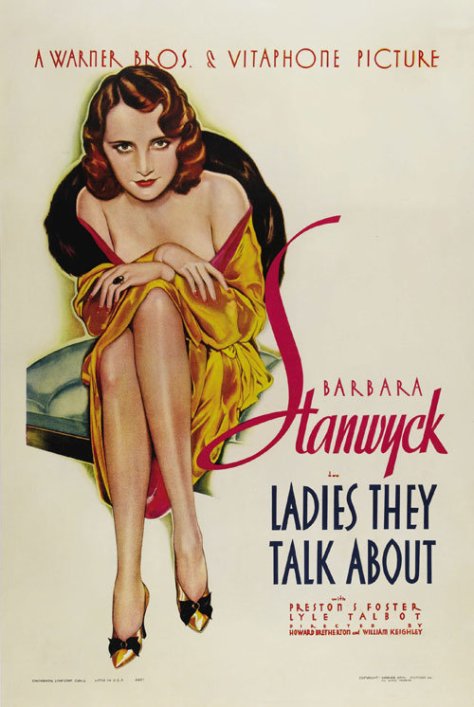
Poster for Ladies They Talk About, Howard Bretheton, William Keighley (1933)
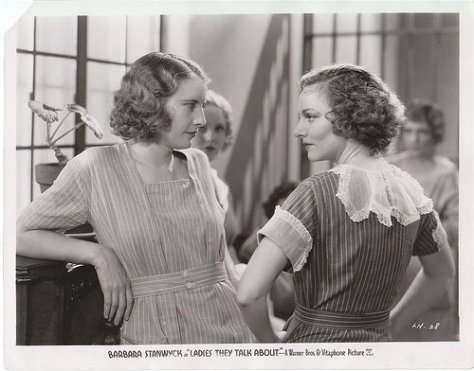
Barbara Stanwyck in Ladies They Talk About, Howard Bretheton, William Keighley (1933)
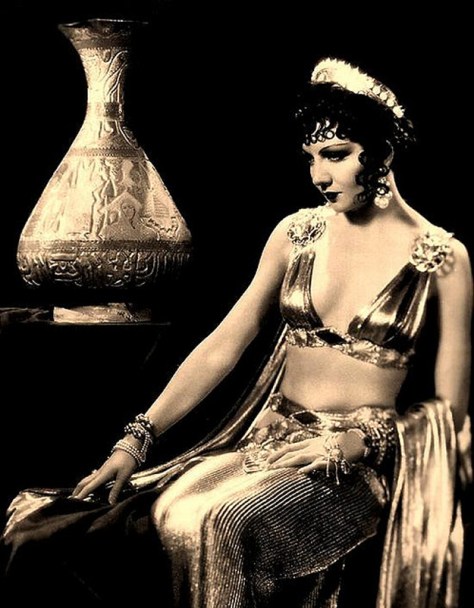
Claudette Colbert in The Sign of the Cross, Cecil B DeMille (1932)
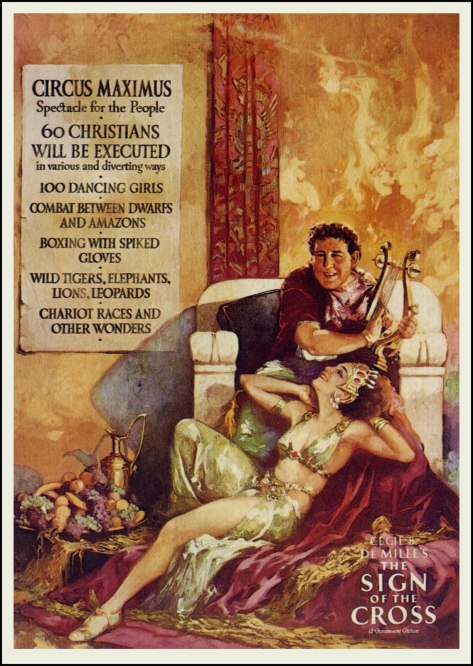
Poster for The Sign of the Cross, Cecil B DeMille (1932)
A well known film seductress, Mae West was also a noted wit. The Encyclopedia of Hollywood describes her as “easily the greatest comedienne in film history.”[202] West is sometimes erroneously credited as being the sole reason for the Production Code.[203]This is a publicity still for the 1936 film Go West, Young Man. Notice that even under the Production Code, West managed to be daring, wearing a dress that looked transparent on her lower body, except in her pubic area.
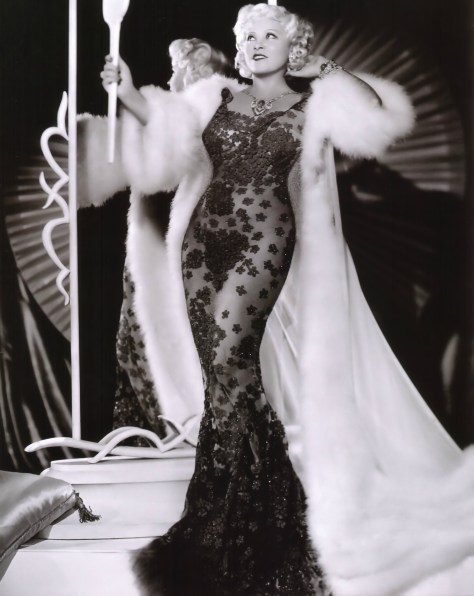
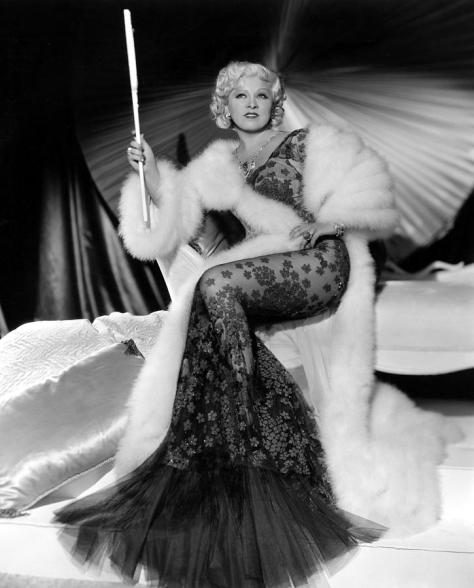
Mae West in Go West Young Man, Henry Hathaway (1936)
Bisexual actress Marlene Dietrich cultivated a cross-gender fan base and started a trend when she began wearing men’s suits. She caused a commotion when she appeared at the premiere of The Sign of the Cross in 1932 in a tuxedo, complete with top hat and cane.[204] The appearance of homosexual characters was at its height in 1933; in that year, Hays declared that all gay male characters would be removed from pictures. Paramount took advantage of the negative publicity Dietrich generated by signing a largely meaningless agreement stating that they would not portray women in male attire.[205]
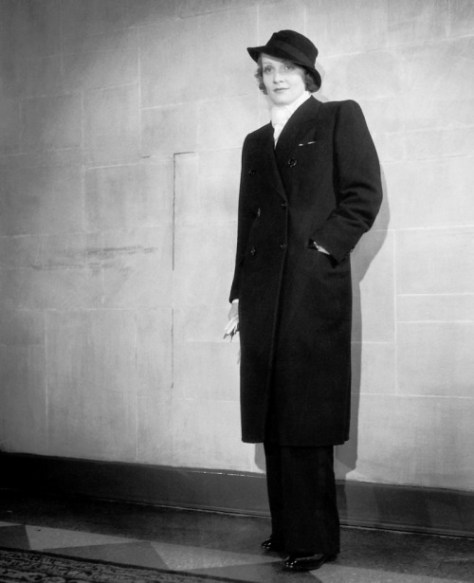
Marlene Dietrich at the Biltmore Theater in Los Angeles for the premiere of The Sign of the Cross, 23 January 1932
Comedy
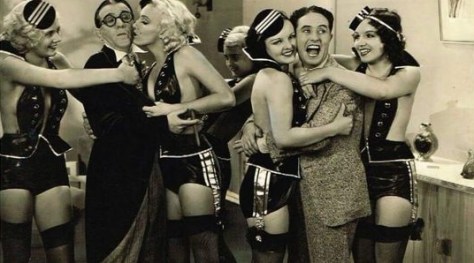
Bert Wheeler and Robert Woolsey in Hips, Hips, Hooray, Mark Sandrich (1934)
In the harsh economic times of the early Depression, films and performers often featured an alienated, cynical, and socially dangerous comic style. As with political films, comedy softened with the election of FDR and the optimism of the New Deal.
Characters in the pre-Code era frequently engaged in comedic duels of escalating sexual innuendo.[206]
In Employee’s Entrance, a woman enters the office of a scoundrel boss who remarks, “Oh, it’s you — I didn’t recognize you with all your clothes on.”[207] Racial stereotypes were usually employed when ethnic characters appeared. Blacks in particular were usually the butt of the wisecrack, never the author. The most acknowledged black comedian was Stepin Fetchit, whose slow-witted comedic character was only meant to be successful in an unintentional manner, with himself as the punchline.[208]
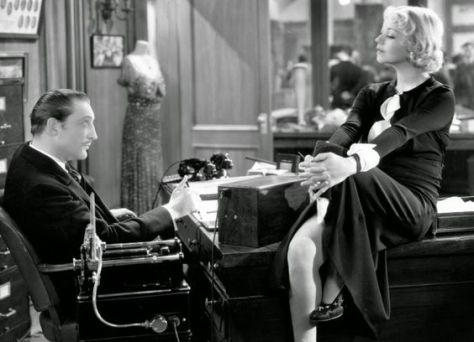
Warren William in Employees Entrance, Roy Del Ruth (1933)
The New York stage was filled with ribald humor and sexually offensive comedy; when movie producers started to put wisecracks in their sound pictures, they sought New York performers.[35][209] Popular comics such as the Marx Brothers got their start on Broadway in front of live audiences.[210] Censors complained when they had to keep up with the deluge of jokes in pictures in the early 1930s, some of which were designed to go over their heads.[209] The comic banter of some early sound films was rapid-fire, non-stop, and frequently exhausting for the audience by the final reel.[210]
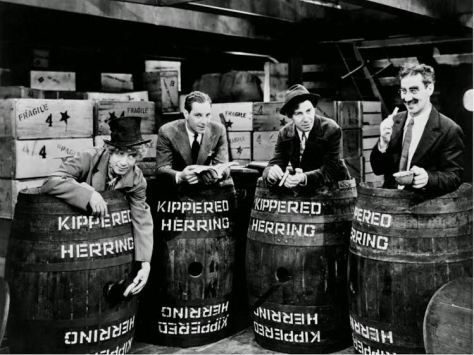
Marx Brothers
The Marx Brothers as they appeared in the early 1930s. From the top: Chico, Harpo, Groucho, and Zeppo. The brothers’ 1933 film Duck Soup is generally considered to be their finest picture.[211]
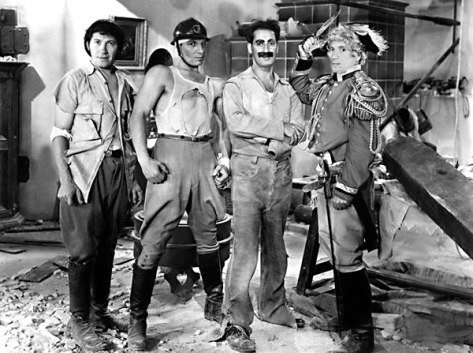
Marx Brothers in Duck Soup, Leo McCarey (1933)
Mae West had already established herself as a comedic performer when her 1926 Broadway show Sex made national headlines. Tried and convicted of indecency by the New York City District Attorney, she served eight days in prison.[212]
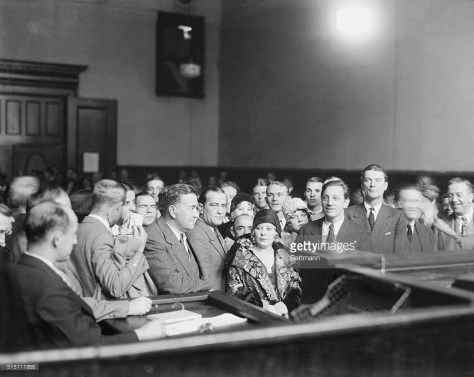
Mae West Indicted for Indecent Play! Fifty-seven men and women–the cast, author, producer, and stage director of Mae West‘s show, Pleasure Man, have been indicted on charges of producing an obscene play of sex perversion, April 19, 1927
West carefully constructed a stage persona and carried it over into her interviews and personal appearances.[213] Despite her voluptuous physique, most of her appeal lay in her suggestive manner. She became a wordsmith in the art of the come-on and the seductive line, and despite her obvious appeal to male audiences, was popular with women as well.[214][215]
Over the cries of the censors,[216] West got her start in the film Night After Night (1932), which starred George Raft and Constance Cummings, as a Texas Guinan-esque supporting character. She agreed to appear in the film only after producers agreed to let her write her own lines.[217]
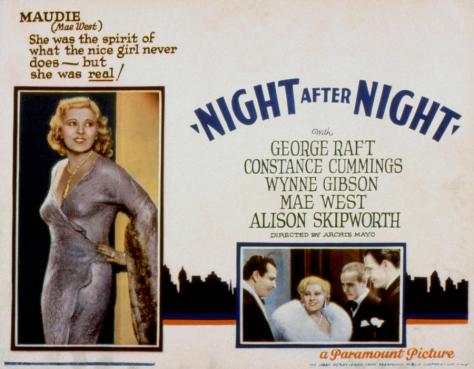
Lobby card for Night After Night, Archie Mayo (1932)
In West’s first line on film, after a hat check girl remarks “Goodness, what beautiful diamonds”, West replies, “Goodness had nothing to do with it, dearie.”[218] Raft, who had wanted Texas Guinan herself for the role that went to West, later wrote, “In this picture, Mae West stole everything but the cameras.”[202]
She went on to make She Done Him Wrong in 1933, which became a huge box office hit, grossing $3 million against a $200,000 budget,[219] and then nine months later wrote and starred in I’m No Angel.[220] She became such a success that her career saved Paramount from financial ruin.[212][216]
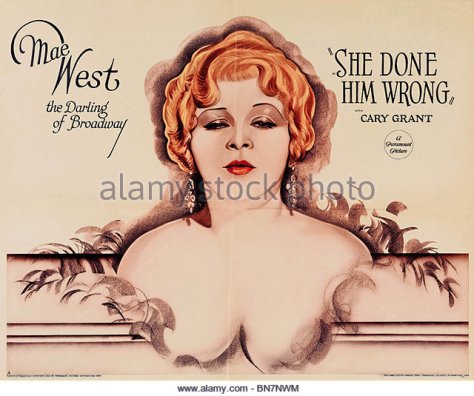
Poster for She Done Him Wrong, Lowell Sherman (1933)
The arrival of sound film created a new job market for writers of screen dialogue. Many newspaper journalists moved to California and became studio-employed screenwriters. This resulted in a series of fast-talking comedy pictures featuring newsmen.[221]
The Front Page, later re-made as the much less cynical and more sentimental post-Code His Girl Friday (1940), was adapted from the Broadway play by Chicago newsmen, and Hollywood screenwriters, Ben Hecht and Charles MacArthur. It was based on Hecht’s experiences working as a reporter for the Chicago Daily Journal.[222]
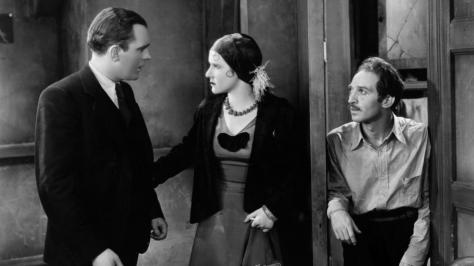
Pat O’Brien in The Front Page, Lewis Milestone (1931)
The Marx Brothers had been stage performers since the early 1900s. By the 1930s, their act consisted of wisecracking leader Groucho, the chronically silent Harpo, the overly ethnic Chico, and the strangely normal Zeppo.
The plot of the seminal comedy Duck Soup (1933) is quite convoluted. Groucho’s plebeian character is named king of the fictional Freedonia, and he is pursued by two bumbling spies played by Chico and Harpo.
Zeppo plays a typically normal secretary. Groucho’s con artist character leads Freedonia into war with neighboring Sylvania. The plot essentially exists to provide a framework for several comedic bits and long sketches. The film was unsuccessful at the box office and the anarchic zaniness and subversive nature of the comedy in the film would be unmatched in the brothers’ post-Code work, which was more standardly burlesque.[223][224][225]
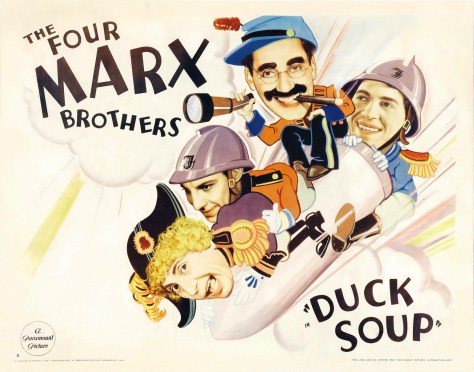
Poster for Duck Soup, Leo McCarey (1933)
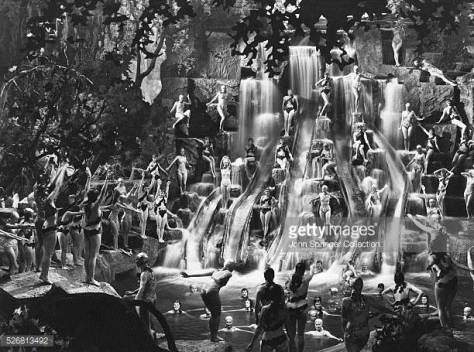
One of Busby Berkeley‘s aquatic creations for the “By a Waterfall“ number from Footlight Parade (1933), a film which also highlighted James Cagney‘s dancing abilities.
Cartoons
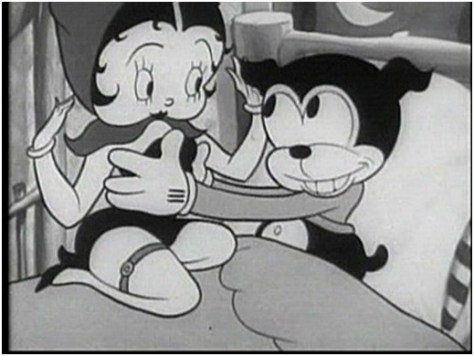
Theatrical cartoons were also covered by the Production Code.
According to Leonard Maltin: “In early 1933 a Georgia theater owner wrote to Film Daily: ‘The worst kicks we have are on smut in cartoons. They are primarily a kid draw, and parents frequently object to the filth that is put in them, incidentally without helping the comedy. The dirtiest ones are invariably the least funny.'”
Betty Boop thus underwent some of the most dramatic changes after the Code was imposed: “gone was the garter, the short skirt, the décolletage”.[226]
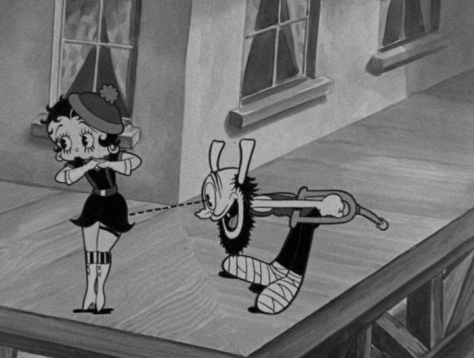
Musicals
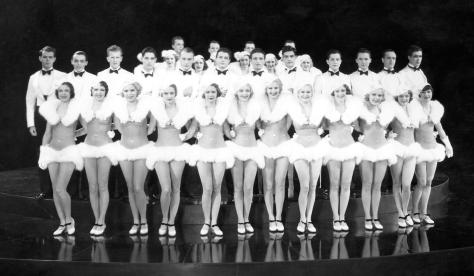
Busby Berkeley Crew
As sound pictures became the norm in Hollywood, the “backstage” film musical was a natural subject for the new medium.
Not only could the studios present singing and dancing to their audiences – many of whom were unlikely to have ever seen a stage musical before – but the Pre-Code film musicals also tended to feature shapely young female chorus “girls” wearing skimpy rehearsal clothing which revealed parts of the body which were still not normal to see on the street, and hinted at other parts in a way that normal fashion did not allow.[227]
But even if this could be considered to be exploitative use of the female body, the Pre-Code movie musicals were generally not derogatory in their presentation of the physical virtues of their women, but celebratory, with Busby Berkeley‘s spectacular musical numbers being especially, and wittily, so; Berkeley avoided fetishizing his female performers.[228]
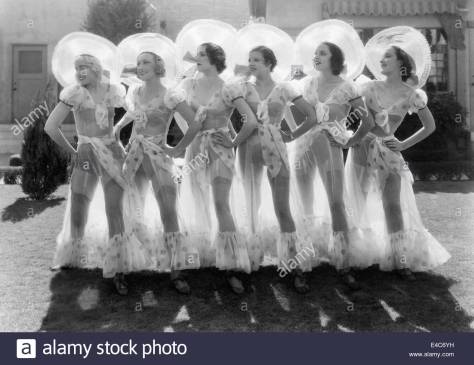
Gold Diggers 1933, Mervyn LeRoy (1933)
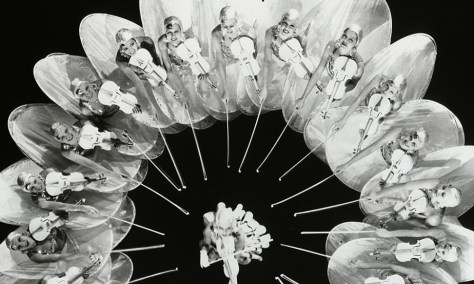
Gold Diggers 1933, Mervyn LeRoy (1933)
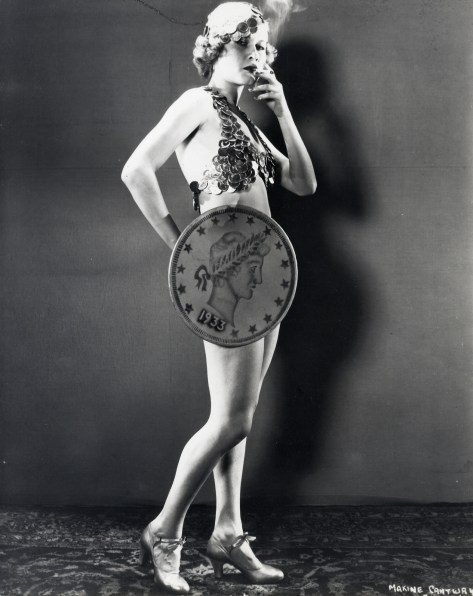
Gold Diggers 1933, Mervyn LeRoy (1933)
Chorus “boys”, too, were generally well built, healthy-looking, virile specimens, but even so they never got nearly the attention that the women did. As well as these obvious displays of male and female sexual potential – and the flirting and courting that went with it – Pre-Code musicals also featured the energy and vitality of their youthful featured actors,[227] as well as the comedic abilities of the many older character actors in Hollywood, who were often cast as producers, agents, Broadway “angels” (financial backers) and stingy rich relatives, and brought a light – if often stereotypical – touch to these films.
Some Pre-Code musicals
|
|
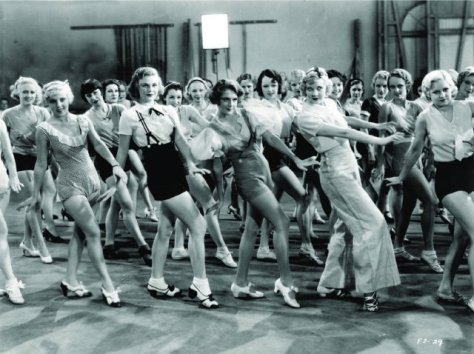
42nd Street, Lloyd Bacon (1933)
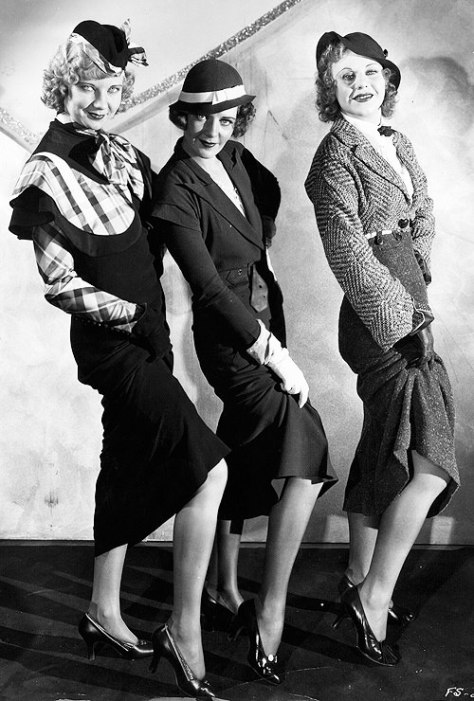
42nd Street, Lloyd Bacon (1933)
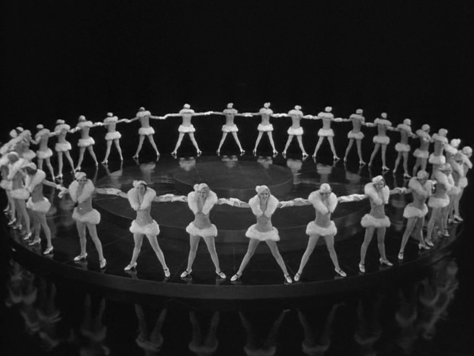
42nd Street, Lloyd Bacon (1933)
Horror and science fiction
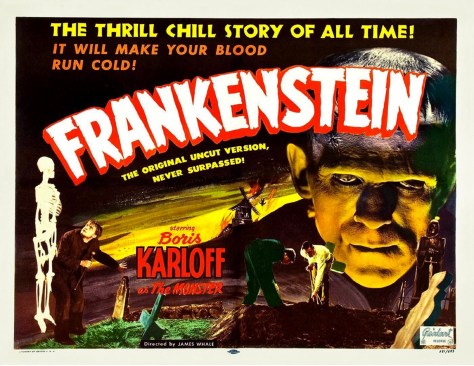
Poster for Frankenstein, James Whale (1931)
Boris Karloff as Doctor Frankenstein’s monster in the 1931 film Frankenstein. The violence of the monster, as displayed when it brutally kills the doctor’s assistant, Fritz, and when it throws a little girl into a lake, drowning her, was too shocking for the average moviegoer.
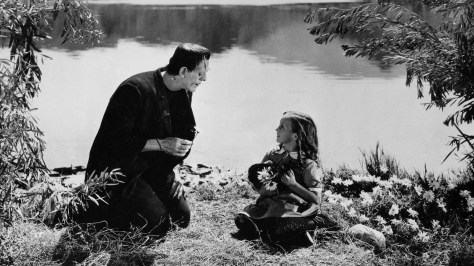
Controversial scene in Frankenstein, James Whale (1931)
By the time the film’s sequel, Bride of Frankenstein, arrived in 1935, enforcement of the Code was in full effect and the doctor’s overt God complex was forbidden.[229] When Frankenstein’s monster is brought to life in the first picture, before the Code’s enforcement, its mad scientist creator proclaims, “Now I know what it feels like to be God!”[230]
Unlike silent-era sex and crime pictures, silent horror movies, despite being produced in the hundreds, were never a major concern for censors or civic leaders. When sound horror films were released however, they quickly caused controversy.


Frankenstein, James Whale (1931)
Sound provided “atmospheric music and sound effects, creepy-voiced macabre dialogue and a liberal dose of blood-curdling screams” which intensified its effects on audiences, and consequently on moral crusaders.[231][232] The Hays Code did not mention gruesomeness, and filmmakers took advantage of this oversight.
However, state boards usually had no set guidelines and could object to any material they found indecent.[233] Although films such as Frankenstein and Freaks caused controversy when they were released, they had already been re-cut to comply with censors.[234]


Frankenstein, James Whale (1931)
Comprising the nascent motion picture genres of horror and science fiction, the nightmare picture provoked individual psychological terror in its horror incarnations, while embodying group sociological terror in its science fiction manifestations. The two main types of pre-Code horror pictures were the single monster movie, and films where masses of hideous beasts rose up and attacked their putative betters. Frankenstein and Freaks exemplified both genres.[235]
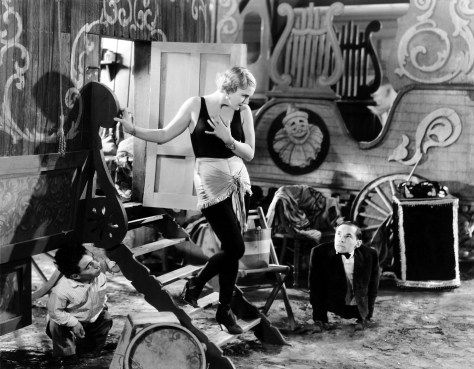
Freaks, Tod Browning (1932)
The pre-Code horror cycle was motivated by financial necessity. Universal in particular buoyed itself with the production of horror hits such as Dracula (1931) and Frankenstein, then followed those successes up with Murders in the Rue Morgue (1932), The Mummy (1932), and The Old Dark House (1932). Other major studios responded with their own productions.[231] Much like the crime film cycle however, the intense boom of the horror cycle was ephemeral, and had fallen off at the box office by the end of the pre-Code era.[236]
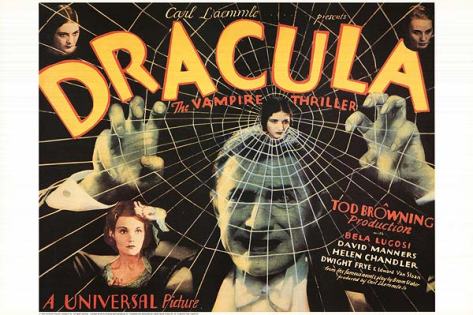
Poster for Dracula, Tod Browning, Karl Freund (1931)
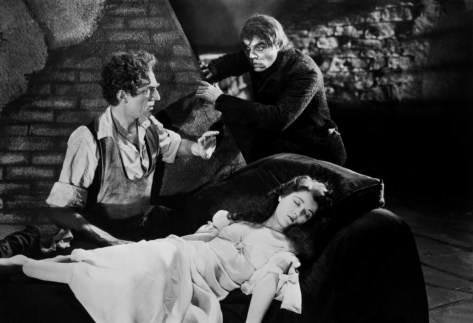
Murders in the Rue Morgue, Robert Florey, Edgar G. Ulmer, A. Edward Sutherland (1932)
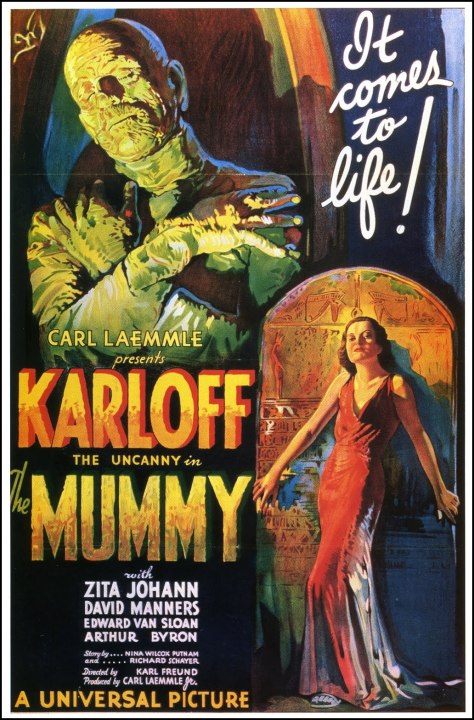
Poster for The Mummy, Karl Freund (1932)
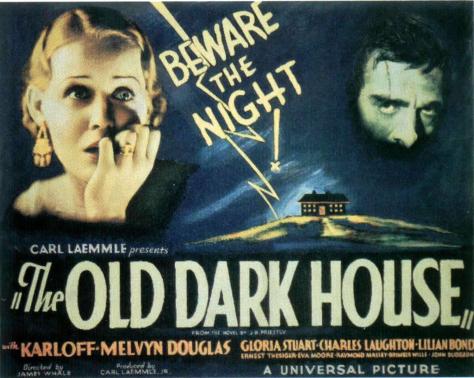
Poster for The Old Dark House, James Whale (1932)
While Joy declared Dracula “quite satisfactory from the standpoint of the Code” before it was released, and the film had little trouble reaching theaters, Frankenstein was a different story.[237] New York, Pennsylvania, and Massachusetts removed the scene where the monster unintentionally drowns a little girl and lines that referenced Dr. Frankenstein’s God complex.[238]Kansas, in particular, objected to the film. The state’s censor board requested the cutting of 32 scenes, which if removed, would have halved the length of the film.[233]


Dracula, Tod Browning (1931)
Paramount’s Dr. Jekyll and Mr. Hyde (1931) played to the Freudian theories popular with the audience of its time.
Fredric March played the split-personality title character. Jekyll represented the composed super-ego, and Hyde the lecherous id. Miriam Hopkins‘s coquettish bar singer, Ivy Pierson, sexually teases Jekyll early in the film by displaying parts of her legs and bosom.[239] Joy felt the scene had been “dragged in simply to titillate the audience.”[238]
Poster for Dr Jekyll and Mr Hyde, Rouben Mamoulian (1931)
Hyde coerces her with the threat of violence into becoming his paramour and beats her when she attempts to stop seeing him. She is contrasted with his wholesome fiancée Muriel (Rose Hobart), whose chaste nature dissatisfies March’s baser alter ego.[240] The film is considered the “most honored of the Pre-Code horror films.”[241]
Many of the graphic scenes between Hyde and Ivy were cut by local censors because of their suggestiveness.[242] Sex was intimately tied to horror in many pre-Code horror movies.


Poster for Dr Jekyll and Mr Hyde, Rouben Mamoulian (1931)
In Murders in the Rue Morgue, an adaptation of Edgar Allan Poe‘s classic tale which has little in common with the source material, Bela Lugosi plays a mad scientist who tortures and kills women, trying to mix human blood with ape blood during his experiments. His prized experiment, an intelligent ape named Erik, breaks into a woman’s second-floor apartment window and rapes her.[243]


Murders in the Rue Morgue, Robert Florey, Edgar G. Ulmer, A. Edward Sutherland (1932)
A screen shot from the trailer for the 1932 film Murders in the Rue Morgue. The ape Erik enters the room of Camille (Sidney Fox), with the shadow of his hand appearing over her head. What follows has been dubbed “interspecies miscegenation” by film historian Thomas Doherty.[239]
In Freaks, director Tod Browning of Dracula fame helms a picture that depicts a traveling circus populated by a group of deformed carnival freaks. Browning populated the movie with actual carnival sideshow performers including “midgets, dwarfs, hermaphrodites, Siamese twins, and, most awful, the armless and legless man billed as the ‘living torso'”.[244] There is also a group of Pinheads, who are depicted as fortunate in that they are not mentally capable enough to understand that they disgust people.[244]
But the truly unsavory characters here are the villains, the circus strongman Hercules and the beautiful high-wire artist Cleopatra, who intends to marry and poison Hans, the midget heir who is enamored of her. At a dinner celebrating their union, one of the freaks dances on the table as they chant “gooble-gobble, gobble, gobble, one of us, one of us, we accept her, we accept her.”


Freaks, Tod Browning (1932)
Disgusted, Cleopatra insults Hans and makes out with Hercules in front of him. When the freaks discover her plot, they exact revenge by mutilating Cleopatra into a freak.[245] Although, circus freaks were common in the early 1930s, the film was their first depiction on screen.[244] Browning took care to linger over shots of the deformed, disabled performers with long takes of them including one of the “living torso” lighting a match and then a cigarette with his mouth.
The film was accompanied by a sensational marketing campaign that asked sexual questions such as “Do the Siamese Twins make love?”, “What sex is the half-man half-woman?”, and “Can a full grown woman truly love a midget?” [246]
Surprisingly, given its reaction to Frankenstein, the state of Kansas objected to nothing in Freaks.[247] However, other states, such as Georgia, were repulsed by the film and it was not shown in many locales.[248] The film later became a cult classic spurred by midnight movie showings,[249] but it was a box-office bomb in its original release.[250]


Posters for Freaks, Tod Browning (1932)
In Island of Lost Souls (1932), an adaptation of H. G. Wells‘ science-fiction novel, The Island of Doctor Moreau, Charles Laughton plays yet another mad scientist with a God complex.[251]
As Moreau, Laughton creates a mad scientist’s island paradise, an unmonitored haven where he is free to create a race of man-beasts and Lota, a beast-woman he wants to mate with a normal human male. A castaway lands on his island, providing him an opportunity to see how far his science experiment, the barely clothed, attractive Lota, has come.
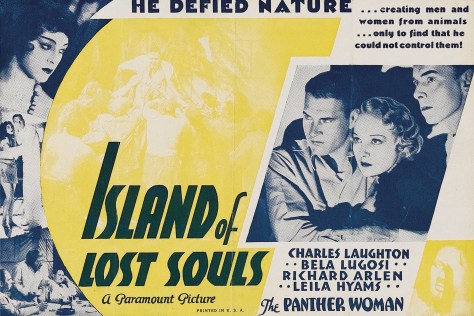
Poster for Island of Lost Souls, Erle C Kenton (1932)
The castaway discovers Moreau vivisecting one of the beast-men and attempts to leave the island. He runs into the camp of the man-beasts and Moreau beats them back with a whip. The film ends with Lota dead, the castaway rescued, and the man-beasts chanting, “Are we not men?” as they attack and then vivisect Moreau.[252]
The film has been described as “a rich man’s Freaks” due to its esteemed source material.[253]Wells, however, despised the movie for its lurid excesses. It was rejected by 14 local censor boards in the United States, and considered “against nature” in Great Britain, where it was banned until 1958.[253][254]


Island of Lost Souls, Erle C Kenton (1932)
Exotic adventure films
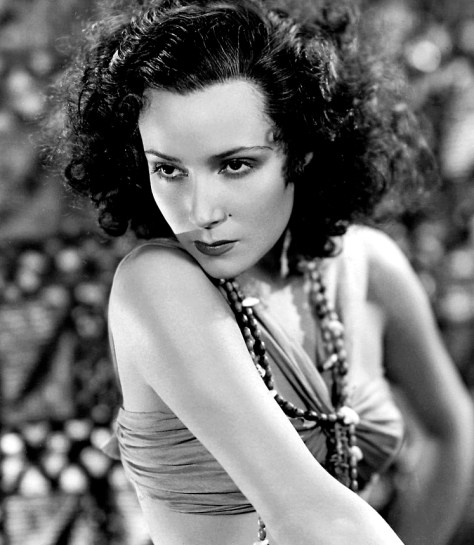
Dolores del Río in Bird of Paradise, King Vidor (1932)
Pre-Code films contained a continual, recurring theme of white racism.[255] In the early 1930s, the studios filmed a series of pictures that aimed to provide viewers a sense of the exotic, an exploration of the unknown and the forbidden.
These pictures often imbued themselves with the allure of interracial sex according to pre-Code historian Thomas Doherty. “At the psychic core of the genre is the shiver of sexual attraction, the threat and promise of miscegenation.”[255]
Films such as Africa Speaks were directly marketed by referencing interracial sex; moviegoers received small packets labeled “Secrets” which contained pictures of naked black women.[256]As portrayals of historic conditions, these movies are of little educational value, but as artifacts that show Hollywood’s attitude towards race and foreign cultures they are enlightening.[255]
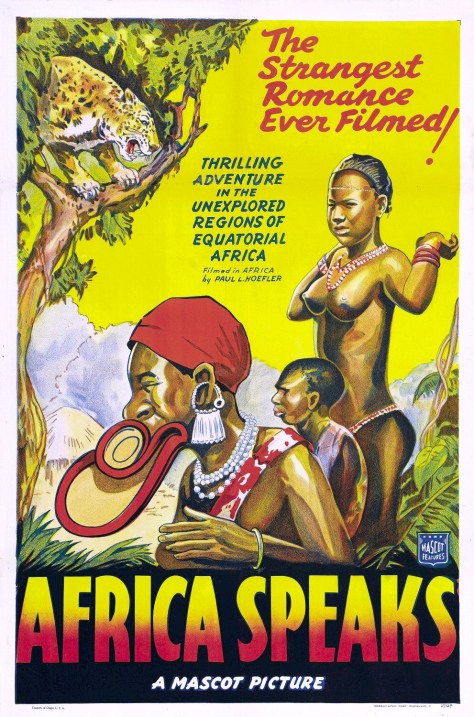
Poster for Africa Speaks, Walter Futter (1930)
The central point of interest in The Blonde Captive (1931), a film which depicted a blonde woman abducted by a savage tribe of Aboriginal Australians, was not that she was kidnapped, but that she enjoys living among the tribe.[256] The lack of black characters in films highlights their status in Jim Crow America.[257]
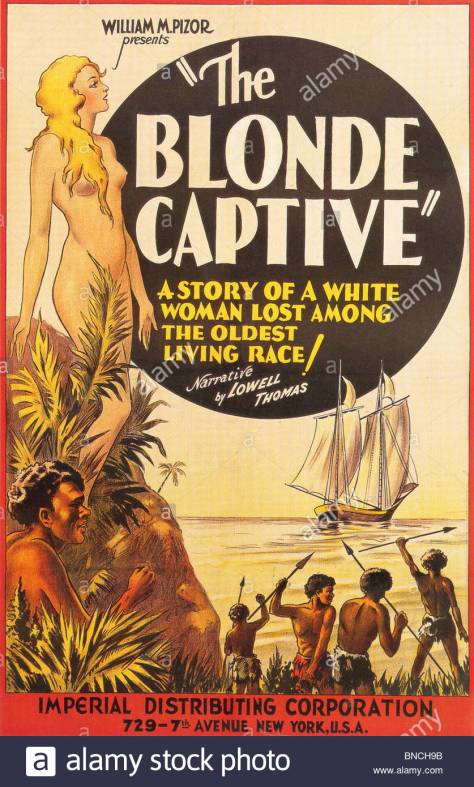
Poster for Blonde Captive, Clinton Childs, Ralph P. King, Paul Withington, Linus J. Wilson (1931)
In Bird of Paradise, a white American man (Joel McCrea) enjoys a torrid affair with a Polynesian princess (Dolores del Río). The film created a scandal when released due to a scene featuring del Río swimming naked.[258]Orson Welles said del Río represented the highest erotic ideal with her performance in the film.[259]
Dolores Del Rio swimming in Bird of Paradise, King Vidor (1932)
The white protagonist in Tarzan, the Ape Man (1932) is the “King of the [African] Jungle”. Tarzan (Johnny Weissmuller) is a monosyllabic half-naked jungle creature whose attractiveness is derived from his physical prowess; throughout the movie, he saves Jane (Maureen O’Sullivan) from danger and she swoons in his arms.[260]
When Jane’s father warns her “[h]e’s not like us”, she responds, “[h]e’s white” as evidence to the contrary.[261] In the racy 1934 sequel, Tarzan and His Mate (the last word meaning both a status and a biological function[262]), men come from the U.S. with fancy gowns and other accoutrements to woo and clothe the bra-less, barely clothed Jane, again played by O’Sullivan, hoping to lure her away from the savage Tarzan.[263]
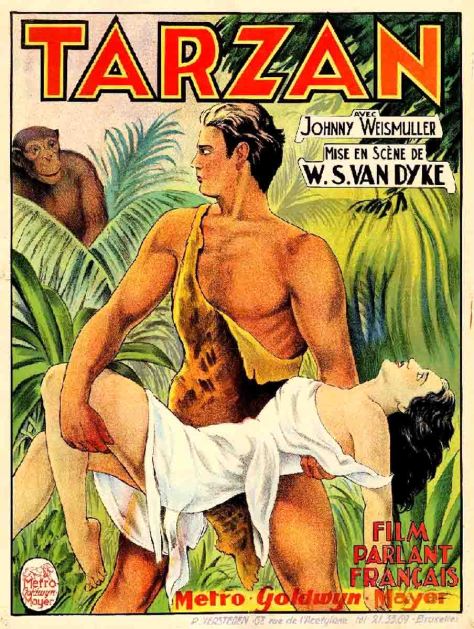
French poster for Tarzan the Ape Man, W S Van Dyke (1932)
He detests the fancier clothing and tears it off. The film included a skinny-dipping scene with extensive nudity with a body double standing in for O’Sullivan.[264] Breen, then head of the SRC, objected to the scene, and MGM, the movie’s producer, decided to take their case to the appeals review board.
The board consisted of the heads of Fox, RKO, and Universal. After watching the scene “several times”, the board sided with Breen and the MPPDA, and the scene was removed, but MGM still allowed some uncut trailers and a few reels to stay in circulation.[265] MGM marketed the film primarily towards women using taglines such as:[266]
“Girls! Would you live like Eve if you found the right Adam?
- Modern marriages could learn plenty from this drama of primitive jungle mating!
- If all marriages were based on the primitive mating instinct, it would be a better world.”
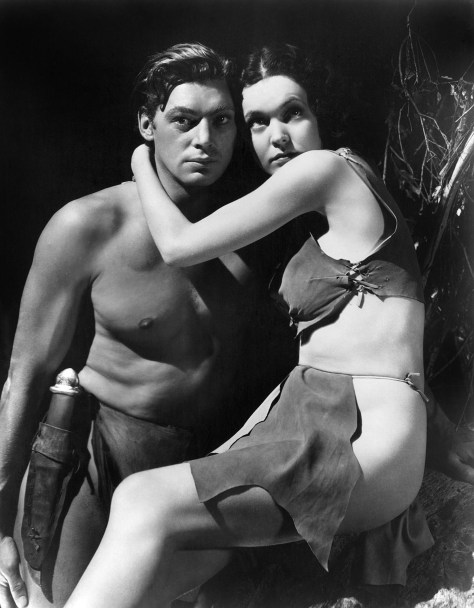
From the trailer to Tarzan and His Mate (1934)
Ethnic characters were portrayed against stereotype in Massacre (1934). The protagonist (Richard Barthelmess) is a Native American who performs in a Wild West Show in full Indian garb, but then slips into a suit and speaks in American slang once the show is over.[267] He has a black butler who is atypically intelligent; his character merely plays dumb by slipping into a stereotypical slow-witted “negro” character when it suits him, rather than being genuinely unintelligent.[268]
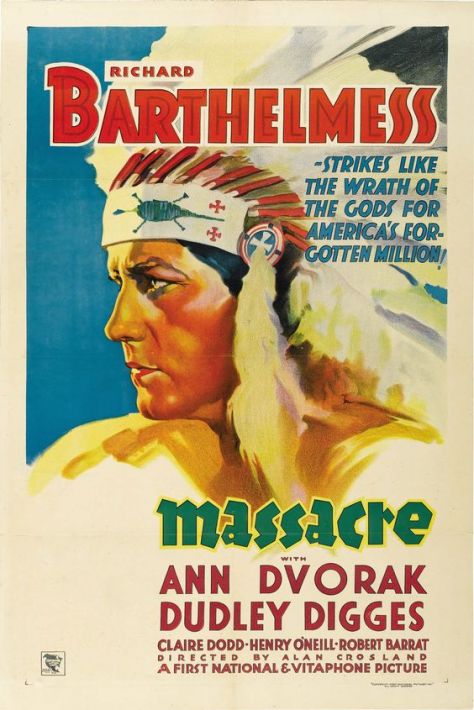
Poster for Massacre, Alan Crossland (1934)
Films such as The Mask of Fu Manchu (1932) and The Bitter Tea of General Yen (1933), explored the exoticism of the Far East — by using white actors, not Asians, in the lead roles. The white actors frequently looked absurd in yellow-face makeup next to genuine Asians, so the studios would cast all the Asian parts white.[269]
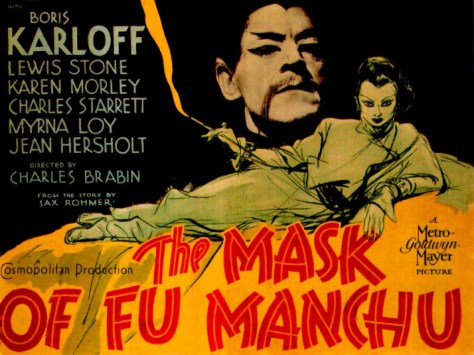
Poster for The Mask of Fu Manchu, Charles Brabin, Charles Vidor (1932)
In Manchu, Karloff plays a mad scientist who wants to find the sword and mask of Genghis Khan as they will give him the power to control the “countless hordes” into battle versus the West.[270] Manchu is a sexual deviant who engages in ritual torture and has occult powers.[271]
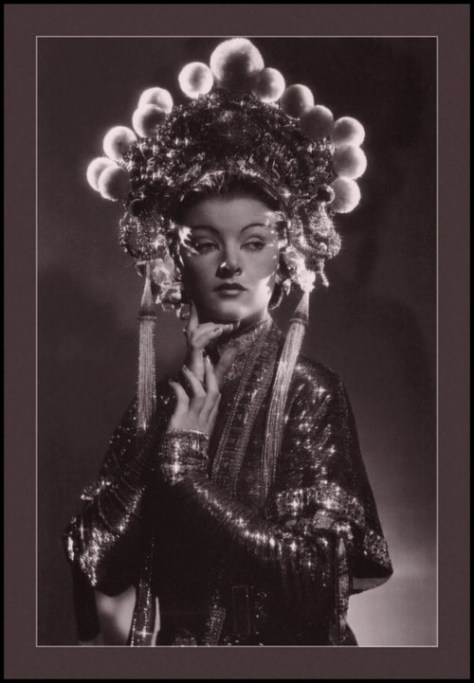
Myrna Loy in The Mask of Fu Manchu, Charles Brabin, Charles Vidor (1932)
In a scene cut from the film due to its miscegenation, he shows a man the image of Manchu’s depraved daughter (Myrna Loy) violating one of the chaste good characters.[272] He is eventually conquered, but not before he temporarily lays his hand on the sword and proclaims to his men: “Would you have maidens like this [Karen Morley] for your wives? Then conquer and breed! Kill the white man and take his women!”[270]


The Mask of Fu Manchu, Charles Brabin, Charles Vidor (1932)
Frank Capra‘s The Bitter Tea of General Yen was not quite the same type of film: Stanwyck plays a missionary who goes to civil-war-torn China and meets the titular general (played by Nils Asther) after his car kills the driver of her rickshaw.
When she is knocked unconscious in a riot, he takes her out of the rabble and onto a train car. She has lurid, horror-themed, symbolic dreams about the General, in which she is both titillated and repulsed by him.
The film breaks precedent by developing into an interracial love story, but his army ends in ruins. Yen kills himself at the film’s conclusion—by drinking poisoned tea—rather than be captured and killed.[273]
Capra adored the script and disregarded the risk of making a film that broke California’s (and 29 other states’) laws concerning the portrayal of miscegenation. Cinematographer Joseph Walker tested a new technique he created, which he dubbed “Variable Diffusion”, in filming the picture. This rendered the entire picture in very soft focus.[175]
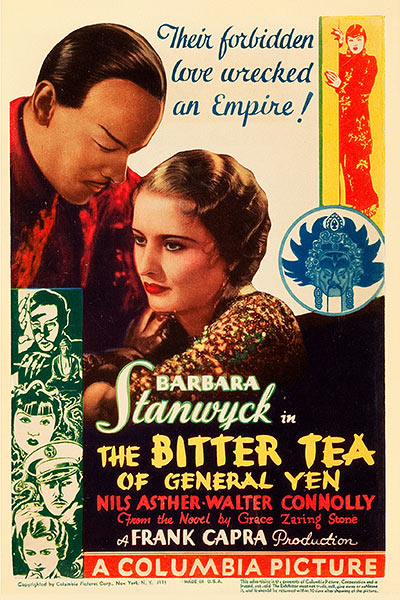
Poster for The Bitter Tea of General Yen, Frank Capra (1933)


The Bitter Tea of General Yen, Frank Capra (1933)
Newsreels and documentaries
Movietone News Logo
Newsreel
From 1904 until 1967, when television finally killed them off, newsreels preceded films. In the early sound-film era, they lasted around eight minutes and featured highlights and clips of the world’s biggest stories.
Updated twice a week by the five major studios, they became a highly profitable enterprise: in 1933, newsreels had a total box office take of almost $19.5 million against an outlay of under $10 million.[274] The sound-film era created the narrator; among the first was Graham McNamee, who provided voiceover during the clips, often delivering hackneyed jokes while delineating the on-screen action.[275]
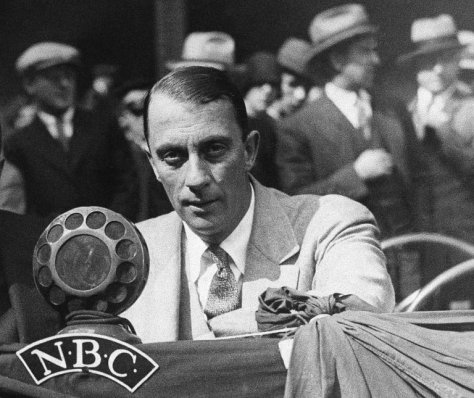
Graham McNamee
Sound newsreel interviews and monologues featured famous subjects unaccustomed to the new medium. These clips changed public perception of important historical figures depending on their elocution, the sound of their previously unheard voices, and their composure in front of the camera.[276]
Around 12 “newsreel theaters” were soon created around the United States, the most successful being the Embassy Newsreel Theater on Broadway. The Embassy was a 578-seat facility that presented fourteen 45–50 minute programs a day, running from 10 in the morning until midnight.[277] It was noted for its discerning, intellectual audience, many of whom did not attend motion-picture theaters.[278]
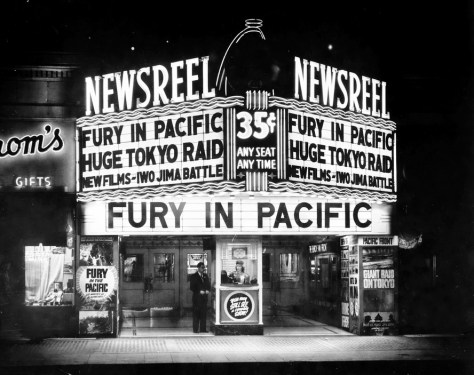
The Los Angeles Newsreel Theater at 744 So. Broadway
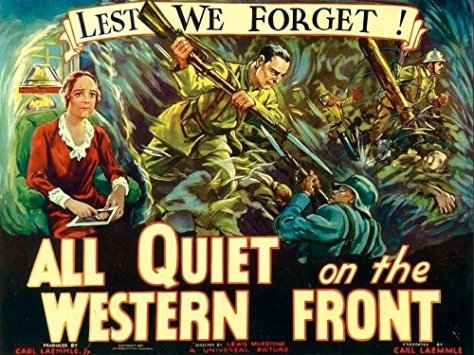
While not a documentary, All Quiet on the Western Front (1930) was one of the first American films to deal with the horrors of World War I. It received tremendous praise from the general public for its humanitarian, anti-war message.
The most gripping news story of the pre-Code era was the kidnapping of the Lindbergh baby on the evening of 1 March 1932.[279] As the child was already enormously famous before the kidnapping, the event created a media circus, with news coverage more intense than anything since World War I. Newsreels featuring family photos of the child (the first time private pictures had been “conscripted for public service”[280]) asked spectators to report any sight of him.
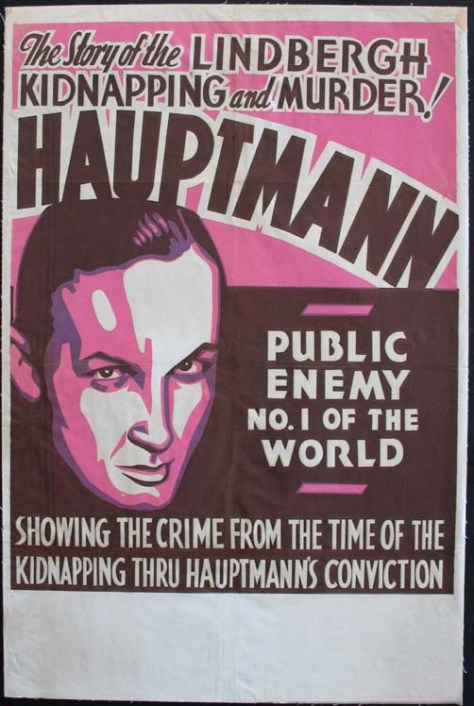
Lindbergh Kidnapping Newsreels Poster
On May 12, 1932, the child’s body was found less than five miles from the Lindbergh home.[279][281] Although newsreels covered the most important topics of the day, they also presented human-interest stories (such as the immensely popular coverage of the Dionne quintuplets[281]) and entertainment news, at times in greater detail than more pressing political and social matters.[282]
Some of the images’ impact belies their historical accuracy; nearly all ceremonies and public events that were filmed for newsreels in the early sound era were staged, and in some cases even reenacted. For instance: when FDR signed an important bill, a member of his cabinet was called away before the staged reenactment began, so the film shows him absent at the time of the signing, although he had been present.[283]
The newsreels of FDR were staged to hide his hobbled gait caused by polio.[284] Caught between the desire to present accurate hard-hitting news stories and the need to keep an audience in the mood for the upcoming entertainment, newsreels often soft-pedaled the difficulties Americans faced during the early years of the Great Depression.[285]
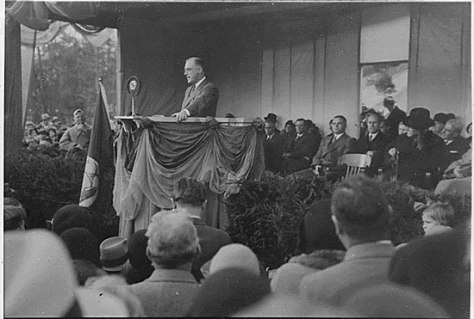
FDR Speech Newsreel (1930)
FDR in particular received favorable treatment from Hollywood, with all five of the major studios producing pro-FDR shorts by late 1933. These shorts featured some of the studios’ lesser contract talent extolling the virtues of FDR created government and social programs.[286] Roosevelt himself was a natural before the camera. The newsreels were instrumental to the success of his initial campaign, and his enduring popularity while in office.[284] He was described by Variety as the “Barrymore of the Capital”.[70]
Taking advantage of the existence of 30 years of newsreels archives were filmmakers who made early sound era documentaries. World War I was a popular topic of these pictures and spawned the following documentaries; The Big Drive (1933), World in Revolt (1933), This is America (1933), and Hell’s Holiday (1933).[287] The most prescient[clarification needed] pre-Code World War I documentary was aptly called The First World War (1934) and was the most critically and commercially successful documentary of the era.
Filmmakers also made feature-length documentaries that covered the dark recesses of the globe, including the Amazon Rainforest, Native American settlements, the Pacific islands, and everywhere in between. Taking advantage of audiences’ voyeuristic impulses, aided by the allowance of nudity in tribal documentaries, the filming of lands untouched by modernity, and the presentation of locales never before filmed, these movies placated Depression era American audiences by showing them lifestyles more difficult than their own.[288] Also captured were Arctic expeditions in films such 90° South and With Byrd at the South Pole, and deepest Africa in the safari films of Martin and Osa Johnson, among others.[289]
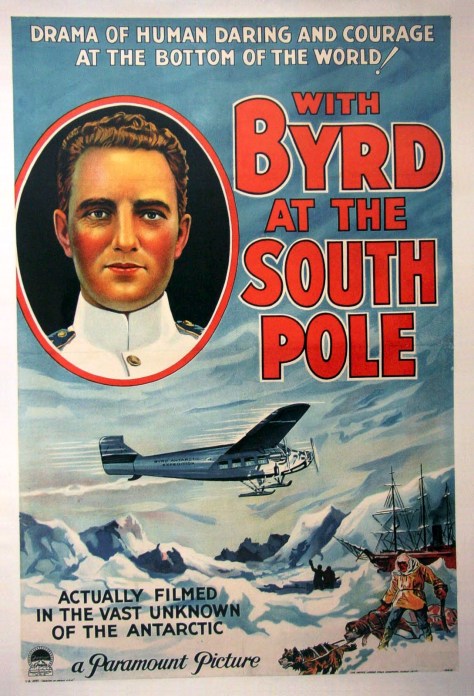
Poster for With Byrd At South Pole, Jesse L. Lasky, Adolph Zukor (1930)
Some exploitation style documentaries purported to show actual events but were instead staged, elaborate ruses. The most prominent of which was Ingagi (1930), a film which claimed to show a ritual where African women were given over to gorillas as sex slaves, but instead was mostly filmed in Los Angeles using local blacks in place of natives.[290]
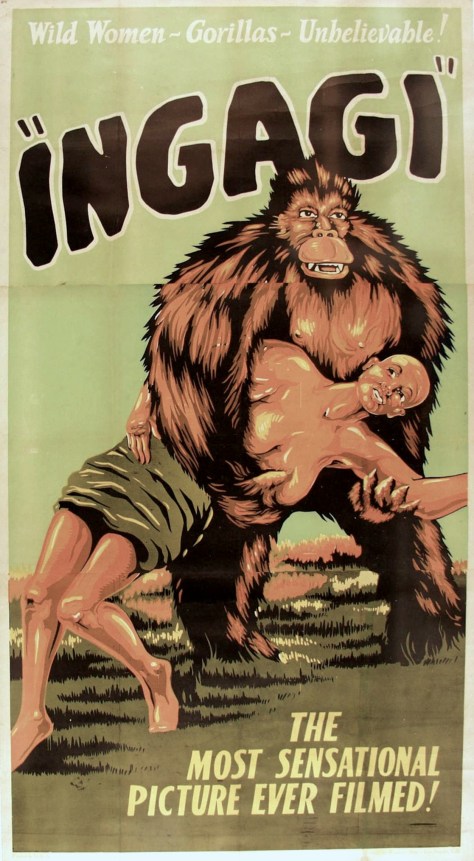
Poster for Ingagi, William Campbell (1930)
Douglas Fairbanks mocked the phoniness of many pre-Code documentaries in his parody Around the World in 80 Minutes with Douglas Fairbanks, in one scene of which he filmed himself wrestling a stuffed tiger doll, then a tiger-skin rug.[291] Opposing these films was the travelogue which was shown before features and served as a short saccharine form of cinematic tourism.[292]
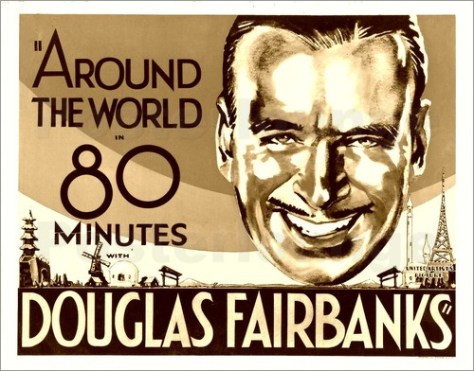
Poster for Around the World in 80 Minutes, Douglas Fairbanks, Victor Fleming (1931)
Beginning of Code era (July 1, 1934)
Pre-code: “Don’ts” and “Be Carefuls”, as proposed in 1927
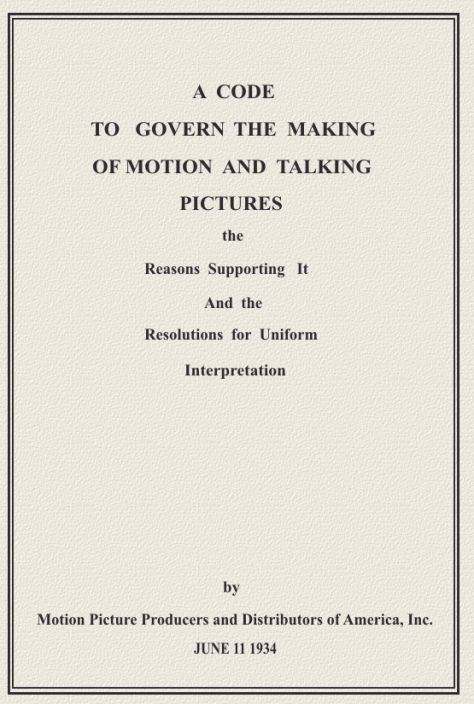
1934 Motion Picture Production Code cover
The Code enumerated a number of key points known as the “Don’ts” and “Be Carefuls”:[293]
Resolved, That those things which are included in the following list shall not appear in pictures produced by the members of this Association, irrespective of the manner in which they are treated:
- Pointed profanity – by either title or lip – this includes the words “God,” “Lord,” “Jesus,” “Christ” (unless they be used reverently in connection with proper religious ceremonies), “hell,” “damn,” “Gawd,” and every other profane and vulgar expression however it may be spelled;
- Any licentious or suggestive nudity – in fact or in silhouette; and any lecherous or licentious notice thereof by other characters in the picture;
- The illegal traffic in drugs;
- Any inference of sex perversion;
- White slavery;
- Miscegenation (sex relationships between the white and black races);
- Sex hygiene and venereal diseases;
- Scenes of actual childbirth – in fact or in silhouette;
- Children’s sex organs;
- Ridicule of the clergy;
- Willful offense to any nation, race or creed;
And be it further resolved, That special care be exercised in the manner in which the following subjects are treated, to the end that vulgarity and suggestiveness may be eliminated and that good taste may be emphasized:
- The use of the flag;
- International relations (avoiding picturizing in an unfavorable light another country’s religion, history, institutions, prominent people, and citizenry);
- Arson;
- The use of firearms;
- Theft, robbery, safe-cracking, and dynamiting of trains, mines, buildings, etc. (having in mind the effect which a too-detailed description of these may have upon the moron);
- Brutality and possible gruesomeness;
- Technique of committing murder by whatever method;
- Methods of smuggling;
- Third-degree methods;
- Actual hangings or electrocutions as legal punishment for crime;
- Sympathy for criminals;
- Attitude toward public characters and institutions;
- Sedition;
- Apparent cruelty to children and animals;
- Branding of people or animals;
- The sale of women, or of a woman selling her virtue;
- Rape or attempted rape;
- First-night scenes;
- Man and woman in bed together;
- Deliberate seduction of girls;
- The institution of marriage;
- Surgical operations;
- The use of drugs;
- Titles or scenes having to do with law enforcement or law-enforcing officers;
- Excessive or lustful kissing, particularly when one character or the other is a “heavy“.
Pre-Code films began to draw the ire of various religious groups, some Protestant but mostly a contingent of Roman Catholic crusaders.[294]Amleto Giovanni Cicognani, apostolic delegate to the Catholic Church in the United States, called upon Roman Catholics in the United States to unite against the surging immorality of films.
As a result, in 1933 the Catholic Legion of Decency, headed by the Reverend John T. McNicholas (later renamed the National Legion of Decency), was established to control and enforce decency standards and boycott films they deemed offensive.[295][296] They created a rating system for films that started at “harmless” and ended at “condemned”, with the latter denoting a film that was a sin to watch.[297]
“I wish to join the Legion of Decency, which condemns vile and unwholesome moving pictures. I unite with all who protest against them as a grave menace to youth, to home life, to country and to religion. I condemn absolutely those salacious motion pictures which, with other degrading agencies, are corrupting public morals and promoting a sex mania in our land… Considering these evils, I hereby promise to remain away from all motion pictures except those which do not offend decency and Christian morality.”
(Catholic Legion of Decency Pledge)[298]
The Legion spurred several million Roman Catholics across the U.S. to sign up for the boycott, allowing local religious leaders to determine which films to protest.[296][299] Conservative Protestants tended to support much of the crackdown, particularly in the South, where anything relating to the state of race relations or miscegenation could not be portrayed. Although the Central Conference of American Rabbis joined in the protest, it was an uneasy alliance given the heavy presence of Jewish studio executives and producers, which, it was felt had inspired at least some of the vitriol from the Catholic groups.[300]
Hays opposed direct censorship, considering it “Un-American”. He had stated that although there were some tasteless films in his estimation, working with filmmakers was better than direct oversight, and that, overall, films were not harmful to children. Hays blamed some of the more prurient films on the difficult economic times which exerted “tremendous commercial pressure” on the studios more than a flouting of the code.[301]
Catholic groups became enraged with Hays and as early as July 1934 were demanding that he resign from his position, which he did not, although his influence waned and Breen took control, with Hays becoming a functionary.[302][303]
The PCA seal of approval in the 1930s. The Seal appeared before every picture approved by the MPPDA.
The Payne Study and Experiment Fund was created in 1927 by Frances Payne Bolton to support a study of the influence of fiction on children.[304] The Payne Fund Studies, a series of eight[305] books published from 1933 to 1935 which detailed five (5) years of research aimed specifically at the cinema’s effects on children, were also gaining publicity at this time, and became a great concern to Hays.[301][306][307]
Payne Study and Experiment Fund
Hays had said certain pictures might alter “… that sacred thing, the mind of a child … that clean, virgin thing, that unmarked state” and have “the same responsibility, the same care about the thing put on it that the best clergyman or the most inspired teacher would have.”[308]
Despite its initial reception, the main findings of the study were largely innocuous. It found that cinema’s effect on individuals varied with age and social position, and that pictures reinforced audiences’ existing beliefs.[309][310]
The Motion Picture Research Council (MPRC, led by honorary vice president Sara Delano Roosevelt (mother of President Franklin D. Roosevelt),[311] and executive director the Rev. William H. Short[312]) which funded the study, was not pleased. An “alarmist summary” of the study’s results written by Henry James Forman appeared in McCall’s, a leading women’s magazine of the time, and Forman’s book, Our Movie Made Children, which became a best-seller, publicized the Payne Fund’s results, emphasizing its more negative aspects.[300][313]
Our Movie Made Children, Henry James Forman (1935)
The social environment created by the publicity of the Payne Fund Studies and religious protests reached such a fever pitch that a member of the Hays Office described it as a “state of war”.[314] However, newspapers including The Plain Dealer (Cleveland), New Orleans Times Picayune, Chicago Daily News, Atlanta Journal, Saint Paul Dispatch, the Philadelphia Record and Public Ledger, the Boston American and New York’s Daily News, Daily Mirror, and Evening Post all lambasted the studies.[315]
When discussing the Supreme Court’s 1915 decision, film historian Gregory Black argues that the efforts of reformers might have been lessened had “filmmakers been willing to produce films for specialized audiences (adults only, family, no children) … but the movers and shakers of the industry wanted or needed the largest possible market.”[316] The most provocative pictures were the most profitable, with the 25% of the motion picture industry’s output that was the most sensational supporting the cleaner 75%.[317]
Joseph Breen
By 1932, there was an increasing movement for government control.[318] By mid-1934 when Cardinal Dougherty of Philadelphia called for a Catholic boycott of all films, and Raymond Cannon was privately preparing a congressional bill supported by both Democrats and Republicans which would introduce Government oversight, the studios decided they had had enough.[319]
They re-organized the enforcement procedures giving Hays and the recently appointed Joseph I. Breen, a devout Roman Catholic, head of the new Production Code Administration (PCA), greater control over censorship.[320] The studios agreed to disband their appeals committee and to impose a $25,000 fine for producing, distributing, or exhibiting any film without PCA approval.[4] Hays had originally hired Breen, who had worked in public relations, in 1930 to handle Production Code publicity, and the latter was popular among Catholics.[321] Joy began working solely for Fox Studios, and Wingate had been bypassed in favor of Breen in December 1933.[322][323] Hays became a functionary, while Breen handled the business of censoring films.[324]
Breen was a rabid anti-Semite,[325] who was quoted as stating that Jews “are, probably, the scum of the earth.”[299][326] When Breen died in 1965, the trade magazine Variety stated, “More than any single individual, he shaped the moral stature of the American motion picture.”[327] Although the Legion’s impact on the more effective enforcement of the Code is unquestionable, its influence on the general populace is harder to gauge. A study done by Hays after the Code was finally fully implemented found that audiences were doing the exact opposite of what the Legion had recommended. Each time the Legion protested a film it meant increased ticket sales; unsurprisingly, Hays kept these results to himself and they were not revealed until many years later.[328] In contrast to big cities, boycotts in smaller towns were more effective and theater owners complained of the harassment they received when they exhibited salacious films.[329]
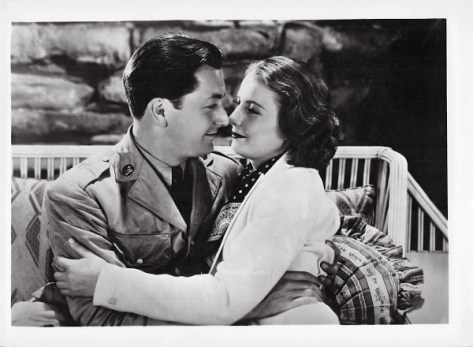
Robert Young and Barbara Stanwyck in Red Salute, Sidney Lanfield (1935)
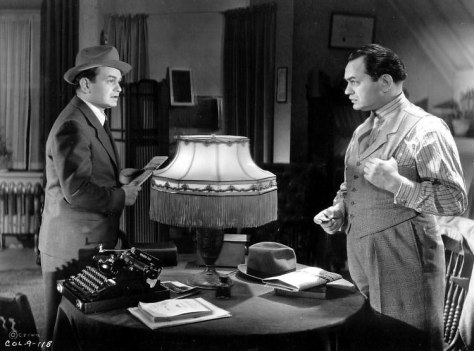
Edward G Robinson in The Whole Town’s Talking, John Ford (1935)
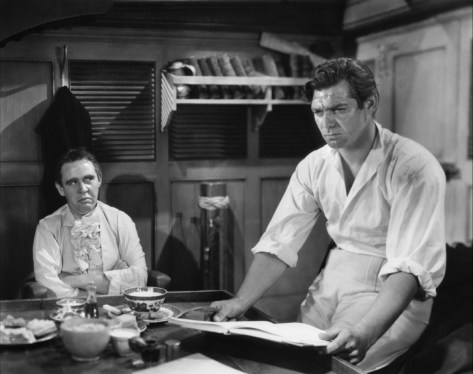
Charles Laughton and Clark Gable in Mutiny on the Bounty, Frank Lloyd (1935)
Many actors and actresses, such as Edward G. Robinson, Barbara Stanwyck, and Clark Gable, continued their careers apace after the Code was enforced. However, others, such as Ruth Chatterton (who decamped to England around 1936) and Warren William (who died relatively young in the 1940s), who excelled during this period, are mostly forgotten today.[2][330]
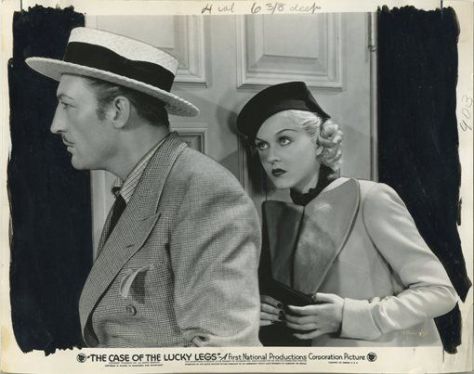
Warren William and Patricia Ellis in The Case of the Lucky Legs, Archie Mayo (1935)
After the Code era
Motion Picture Association of America film rating system (MPAA)
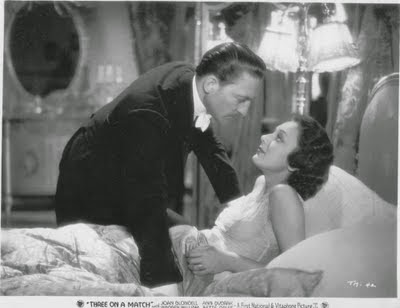
Scenes such as this, in which a man is about to kiss a woman in bed in her nightgown, (Warren William and Ann Dvorak in 1932’s Three on a Match) were prescribed by the Production Code. After 1934, a scene such as this would not appear in a Hollywood film for decades.
Censors like Martin Quigley and Joseph Breen understood that:
“a private industry code, strictly enforced, is more effective than government censorship as a means of imposing religious dogma. It is secret, for one thing, operating at the pre-production stage. The audience never knows what has been trimmed, cut, revised, or never written. For another, it is uniform—not subject to hundreds of different licensing standards. Finally and most important, private censorship can be more sweeping in its demands, because it is not bound by constitutional due process or free-expression rules—in general, these apply to only the government—or by the command of church-state separation … there is no question that American cinema today is far freer than in the heyday of the Code, when Joe Breen’s blue pencil and the Legion of Decency’s ever-present boycott threat combined to assure that films adhered to Catholic Church doctrine.”[331]
Termed by Breen as “Compensating moral value”, the maxim was that “any theme must contain at least sufficient good in the story to compensate for, and to counteract, any evil which relates.”[17] Hollywood could present evil behavior, but only if it were eradicated by the end of the film, “with the guilty punished, and the sinner redeemed”.[17]
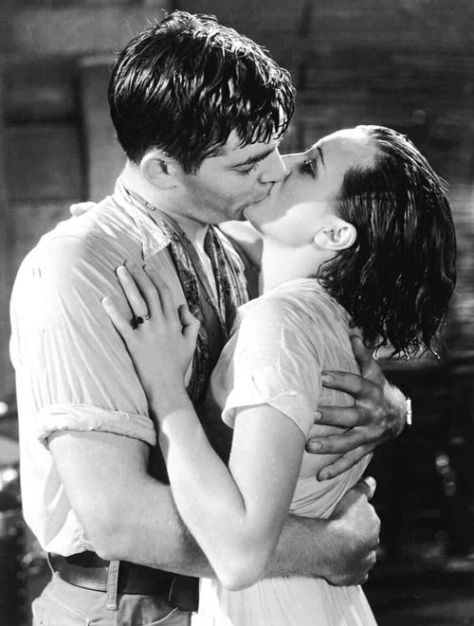
Clark Gable and Mary Astor in Red Dust, Victor Fleming (1932)
Pre-Code scholar Thomas Doherty summarized the practical effects:[332]
“Even for moral guardians of Breen’s dedication, however, film censorship can be a tricky business. Images must be cut, dialogue overdubbed or deleted, and explicit messages and subtle implications excised from what the argot of film criticism calls the “diegesis“. Put simply, the diegesis is the world of the film, the universe inhabited by the characters existing in the landscape of cinema.
“Diegetic” elements are experienced by the characters in the film and (vicariously) by the spectator; “nondiegetic” elements are apprehended by the spectator alone…. The job of the motion picture censor is to patrol the diegesis, keeping an eye and ear out for images, languages, and meanings that should be banished from the world of film…. The easiest part of the assignment is to connect the dots and connect what is visually and verbally forbidden by name. … More challenging is the work of the textual analysis and narrative rehabilitation that discerns and redirects hidden lessons and moral meanings.”
Shirley Temple, a rising star in 1934, was advertised as “an attraction that will serve as an answer to many of the attacks that are being hurled at pictures.”[333]
The censors thus expanded their jurisdiction from what was seen to what was implied in the spectator’s mind. In The Office Wife (1930), several of Joan Blondell‘s disrobing maneuvers were strictly forbidden and the implied image of the actress being naked just off-screen was deemed too suggestive even though it relied upon the audience using their imaginations, so post-Code releases of the film had scenes which were blurred or rendered indistinct, if allowed at all.[17]
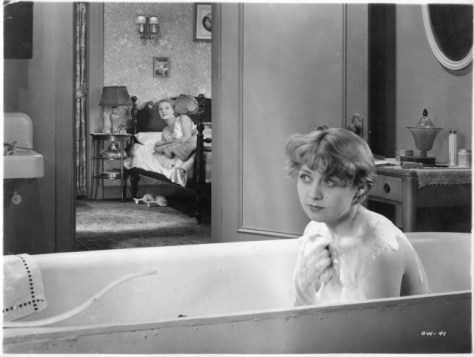
Joan Blondell with Dorothy Mackaill in The Office Wife, Lloyd Bacon (1930)
Following the July 1, 1934 decision by the studios put the power over film censorship in Breen’s hands, he appeared in a series of newsreel clips promoting the new order of business, assuring Americans that the motion-picture industry would be cleansed of “the vulgar, the cheap, and the tawdry” and that pictures would be made “vital and wholesome entertainment”.[334] All scripts now went through PCA,[328] and several films playing in theaters were ordered withdrawn.[314][335]
The first film Breen censored in the production stage was the Joan Crawford film Forsaking All Others.[336] Although Independent film producers vowed they would give “no thought to Mr. Joe Breen or anything he represents”, they caved on their stance within one month of making it.[337]
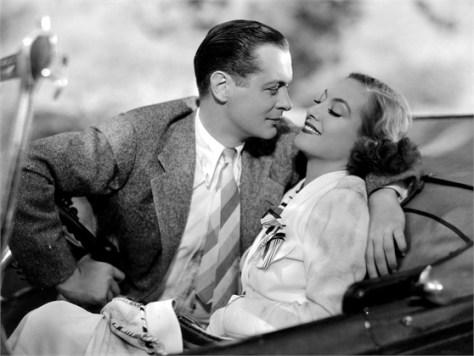
Robert Montgomery and Joan Crawford in Forsaking All Others, WS Van Dyke (1934)
The major studios still owned most of the successful theaters in the country,[3] and studio heads such as Harry Cohn of Columbia Pictures had already agreed to stop making indecent films.[338][339]
In several large cities audiences booed when the Production seal appeared before films.[337] But the Catholic Church was pleased, and in 1936 Pope Pius XI stated that the U.S. film industry “has recognized and accepts its responsibility before society.”[4] The Legion condemned zero films produced by the MPPDA between 1936 and 1943.[340]
A coincidental upswing in the fortunes of several studios was publicly explained by Code proponents such as the Motion Picture Herald as proof positive that the code was working.[341]
Another fortunate coincidence for Code supporters was the torrent of famous criminals such as John Dillinger, Baby Face Nelson, and Bonnie and Clyde that were killed by police shortly after the PCA took power. Corpses of the outlaws were shown in newsreels around the country, alongside clips of Al Capone and Machine Gun Kelly in Alcatraz.[342]
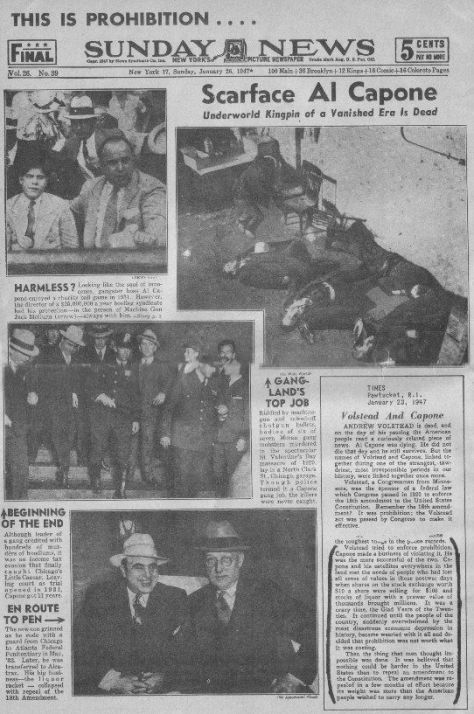
Sunday News announces the death of Al Capone
Among the unarguably positive aspects of the Code being enforced was the money it saved studios in having to edit, cut, and alter films to get approval from the various state boards and censors. The money saved was in the millions annually.[343] A spate of more wholesome family films featuring performers such as Shirley Temple took off.[333]
Stars such as James Cagney redefined their images. Cagney played a series of patriots, and his gangster in Angels with Dirty Faces (1937) purposefully acts like a coward when he is executed so children who had looked up to him would cease any such admiration.[342]
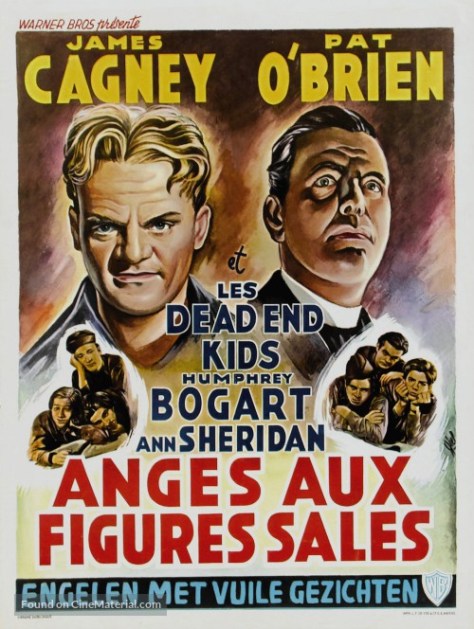
Belgian poster for Angels With Dirty Faces, Michael Curtiz (1938)


Angels With Dirty Faces, Michael Curtiz (1938)
Breen in essence neutered Groucho Marx, removing most of his jokes which directly referenced sex, although some sexual references slipped through unnoticed in the Marx Brothers post-Code pictures.[344] In the political realm, films such Mr. Smith Goes to Washington in which James Stewart tries to change the American system from within while reaffirming its core values, stand in stark contrast to Gabriel Over the White House where a dictator is needed to cure America’s woes.[345]
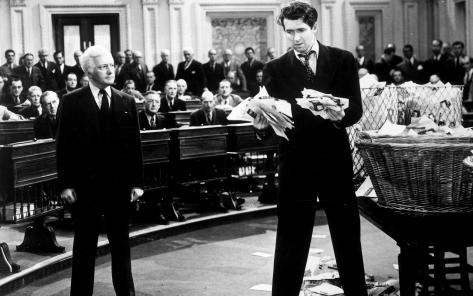
James Stewart in Mr Smith Goes To Washington, Frank Capra (1939)
Some pre-Code movies suffered irreparable damage from censorship after 1934. When studios attempted to re-issue films from the 1920s and early 1930s, they were forced to make extensive cuts. Films such as Animal Crackers (1930), Mata Hari (1931), Arrowsmith (1931), and A Farewell to Arms (1932) exist only in their censored versions.
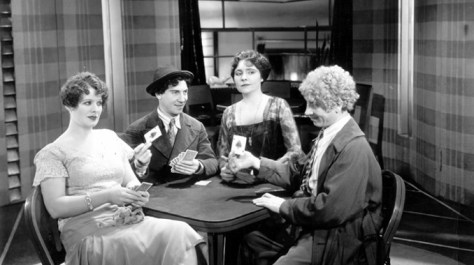
Marx Brothers in Animal Crackers, Victor Heerman (1930)
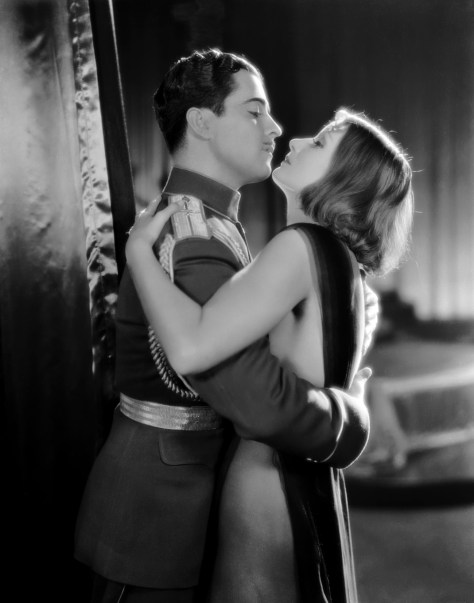
Ramon Novarro and Greta Garbo in Mata Hari, George Fitzmaurice (1931)
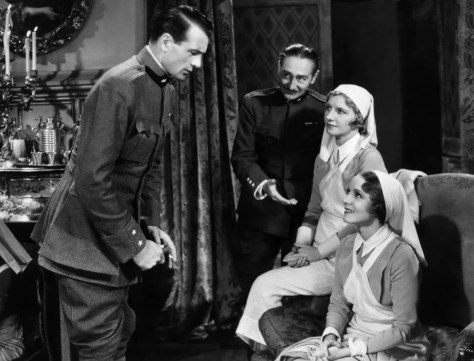
Gary Cooper, Adolphe Menjou, Mary Philips and Helen Hayes in A Farewell To Arms, Frank Borzage (1932)
Many other films survived intact because they were too controversial to be re-released, such as The Maltese Falcon (1931), which was remade a decade later with the same name, and thus never had their master negatives edited.[346]
In the case of Convention City (1933), which Breen would not allow to be re-released in any form, the entire film remains missing. Although it has been rumored that all prints and negatives were ordered destroyed by Jack Warner in the late thirties,[347] further research shows the negative was in the vaults as late as 1948 when it was junked due to nitrate decomposition.[348]
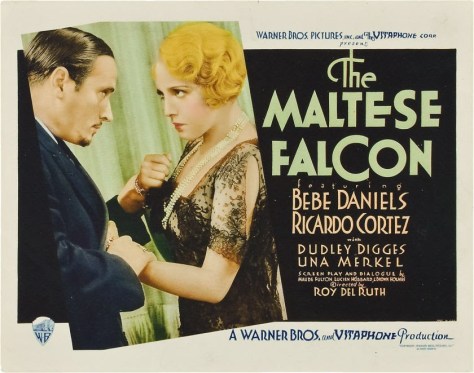
Poster for Maltese Falcon, Roy Del Ruth (1931)
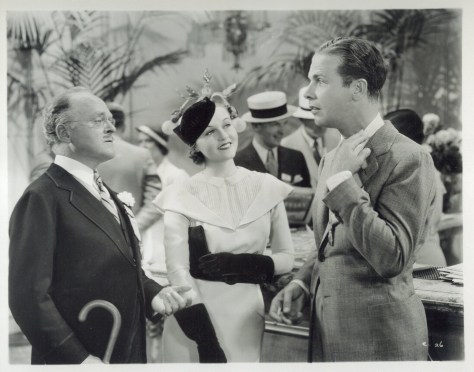
Grant Mitchell, Patricia Ellis and Dick Powell in Convention City, Archie Mayo (1933)
Contemporary screenings
In the 1980s, New York City Film Forum programmer Bruce Goldstein held the first film festivals featuring pre-Code films.[349] Goldstein is also credited by San Francisco film critic Mick LaSalle as the person to bring the term “pre-Code” into general use.[350]
UCLA ran several series of pre-Code films during the 2000s, showcasing films which had not been seen for decades, and not available on any home media.[351]
In 2014 the British Film Institute ran a 21-film season titled Hollywood Babylon: Early Talkies Before the Censors, at the BFI Southbank.[352][353]
Pre Code Film Season: Hollywood Babylon: Early Talkies Before the Censors, at the BFI Southbank (2014)
Home video
In the 1990s, MGM released several pre-Code films on laserdisc and VHS. “The Forbidden Hollywood Collection” included: Baby Face; Beauty and the Boss; Big Business Girl; Blessed Event; Blonde Crazy; Bombshell; Dance, Fools, Dance; Employees’ Entrance; Ex-Lady; Female; Havana Widows; Heroes for Sale; Illicit; I’ve Got Your Number; Ladies They Talk About; Lady Killer; Madam Satan; Night Nurse; Our Dancing Daughters; Our Modern Maidens; The Purchase Price; Red-Headed Woman; Scarlet Dawn; Skyscraper Souls; The Strange Love of Molly Louvain; They Call It Sin; and Three on a Match.[354][355]
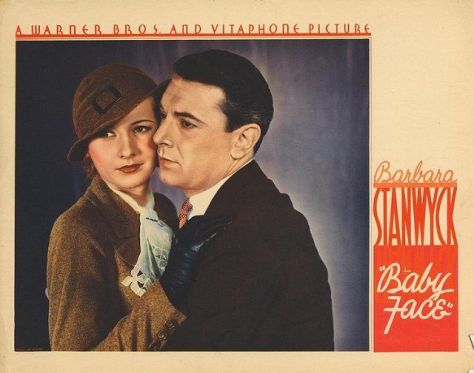
Lobby card for Baby Face, a sexually-charged 1933 drama starring Barbara Stanwyck, who “…had it and made it pay”.[51]
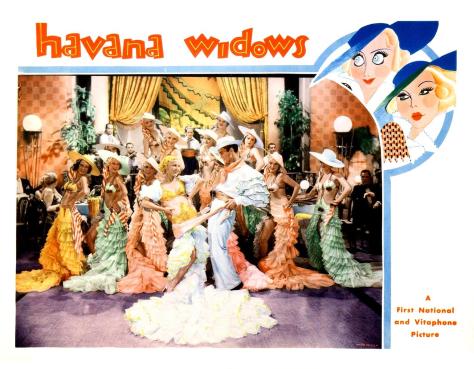 Lobby card for Havana Widows, Ray Enright (1933)
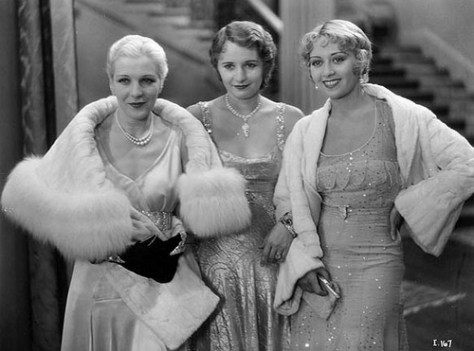
Natalie Moorhead, Barbara Stanwyck and Joan Blondell in Illicit, Archie Mayo (1931)
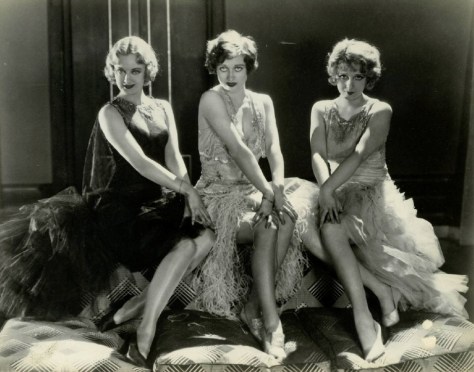
Publicity photo for Our Modern Maidens Joan Crawford, Josephine Dunn and Anita Page, Jack Conway (1929)
MGM/UA and Turner Classic Movies also released other pre-Code films such as The Divorcee, Doctor X, A Free Soul, Little Caesar, Mystery of the Wax Museum, Possessed, The Public Enemy, Red Dust (remade in 1953 as Mogambo), and Riptide under other labels.
In 1999, the Roan Group/Troma Entertainment released two pre-Code DVD collections: Pre-Code Hollywood: The Risqué Years #1, featuring Of Human Bondage, Millie and Kept Husbands, and Pre-Code Hollywood 2, featuring Bird of Paradise and The Lady Refuses.
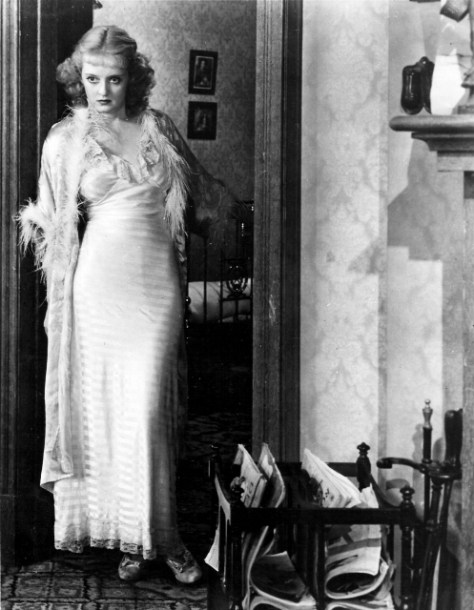
Bette Davis in Of Human Bondage, John Cromwell (1934)
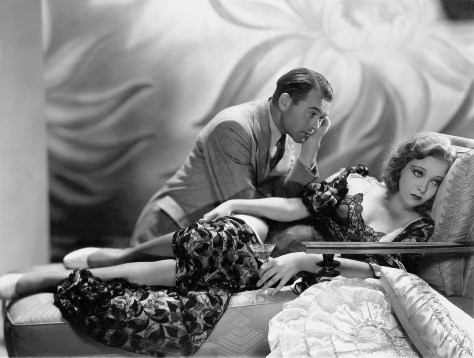
Helen Twelvetrees in Millie, John Francis Dillon (1931)
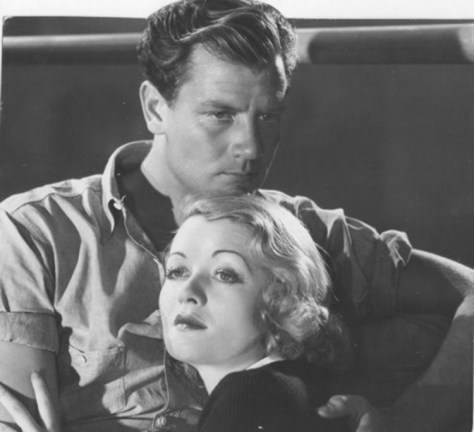
Joel McCrea and Dorothy Mackaill in Kept Husbands, Lloyd Bacon (1931)
Warner Bros. Home Video has released a number of their pre-Code films on DVD under the Forbidden Hollywood banner. To date, ten volumes have been released:
-
- Volume 1 (December 5, 2006), includes Baby Face, Red-Headed Woman, and Waterloo Bridge.[356]
- Volume 2 (March 4, 2008), includes The Divorcee, A Free Soul, Three on a Match, Female, and Night Nurse.[330]
- Volume 3 (March 24, 2009), featured six films from William Wellman: Other Men’s Women, The Purchase Price, Frisco Jenny, Midnight Mary, Heroes for Sale, and Wild Boys of the Road.[357]
- Volume 4 (August 9, 2012), includes Jewel Robbery, Lawyer Man, Man Wanted, and They Call It Sin.
- Volume 5 (August 9, 2012), includes Hard to Handle, Ladies They Talk About, The Mind Reader, and Miss Pinkerton.
- Volume 6 (April 2, 2013), includes The Wet Parade, Downstairs, Mandalay, and Massacre.[358]
- Volume 7 (April 30, 2013), includes The Hatchet Man, Skyscraper Souls, Employees’ Entrance, Ex-Lady[359]
- Volume 8 (October 28, 2014), includes Blonde Crazy, Strangers May Kiss, Hi, Nellie, Dark Hazard[360]
- Volume 9 (October 27, 2015), includes Big City Blues, Hell’s Highway, The Cabin in the Cotton, When Ladies Meet[361]
- Volume 10 (April 19, 2016), includes Guilty Hands,The Mouthpiece,Secrets of the French Police,The Match King and Ever in My Heart.[362]
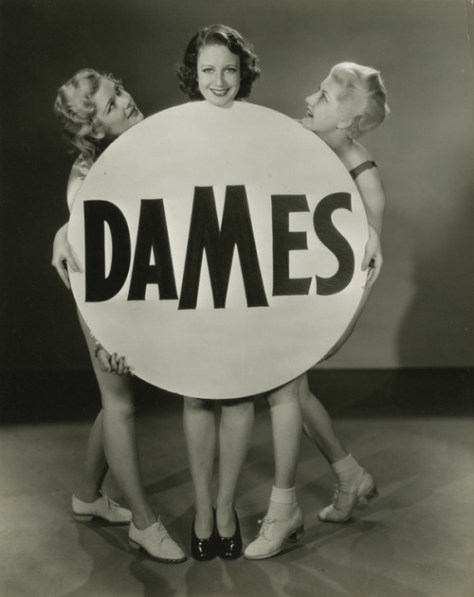
Universal Home Video followed suit with the Pre-Code Hollywood Collection: Universal Backlot Series box set (April 7, 2009). It includes The Cheat, Merrily We Go to Hell, Hot Saturday, Torch Singer, Murder at the Vanities, and Search for Beauty, together with a copy of the entire Hays Code.
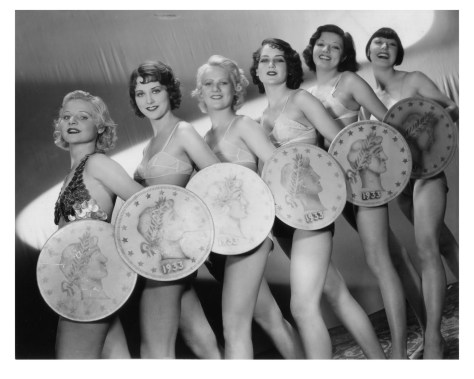
There have been numerous releases of manufactured-on-demand DVD-Rs, with Warner also issuing various pre-Coders individually and as dual-film sets via their Warner Archive Collection imprint. These include:
- Pre-Code Double Feature (March 29, 2012) with The Crash and Registered Nurse
- Dorothy Mackaill Pre-Code Double Feature (March 29, 2012) with Bright Lights and The Reckless Hour.
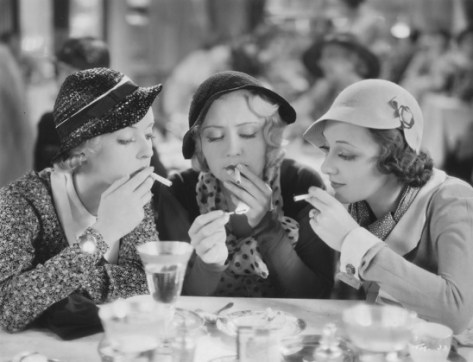
Turner have also released MOD DVDs, including:
- Pre-Code Double Feature (May 17, 2012) with The Song of Songs and This Is the Night.
- Columbia Pictures Pre-Code Collection (TCM, November 25, 2014) includes Ten Cents a Dance, Arizona, Three Wise Girls, Shopworn and Virtue
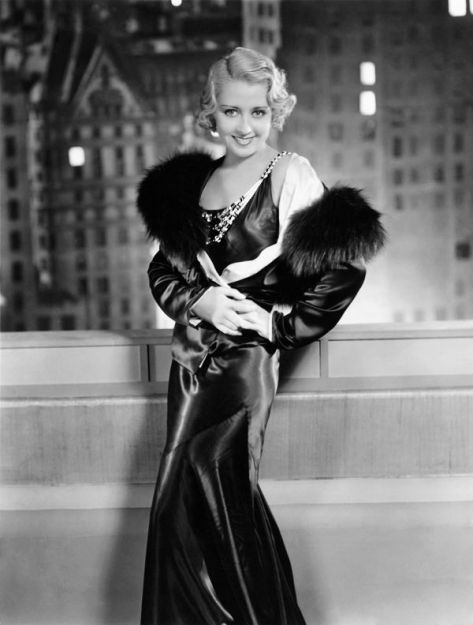
Joan Blondell – publicity shot
Pre Code Movies List – Film Viewing Guide
1929
- Alibi
- Applause
- The Awful Truth
- Betrayal
- Big News
- Big Time
- The Black Watch
- Blackmail
- The Broadway Melody
- Bulldog Drummond
- The Canary Murder Case
- Captain Lash
- Careers
- Close Harmony
- The Cock-Eyed World
- The Cocoanuts
- Condemned
- Coquette
- Dance Hall
- The Delightful Rogue
- The Desert Song
- Devil-May-Care
- Diary of a Lost Girl
- The Flying Fleet
- Footlights and Fools
- The Four Feathers
- The Godless Girl
- Gold Diggers of Broadway
- Glorifying the American Girl
- The Great Gabbo
- Hallelujah
- Hell’s Heroes
- Her Private Life
- High Voltage
- The Hole in the Wall
- The Idle Rich
- In Old Arizona
- The Kiss
- The Lady Lies
- The Last of Mrs. Cheyney
- The Letter
- The Locked Door
- The Love Parade
- Lucky Star
- Madame X
- Marianne (silent)
- Marianne (musical)
- The Mysterious Dr. Fu Manchu
- Our Modern Maidens
- The Pagan
- Piccadilly
- Painted Faces
- Pointed Heels
- The Racketeer
- Redskin
- Rio Rita
- The River
- Sally
- Salute
- Street Girl
- The Saturday Night Kid
- Seven Footprints to Satan
- The Single Standard
- The Squall
- Sunny Side Up
- Their Own Desire
- This Thing Called Love
- Thunderbolt
- The Trespasser
- The Trial of Mary Dugan
- Untamed
- The Valiant
- The Virginian
- Voice of the City
- Where East Is East
- The Wild Party
- The Wolf Song
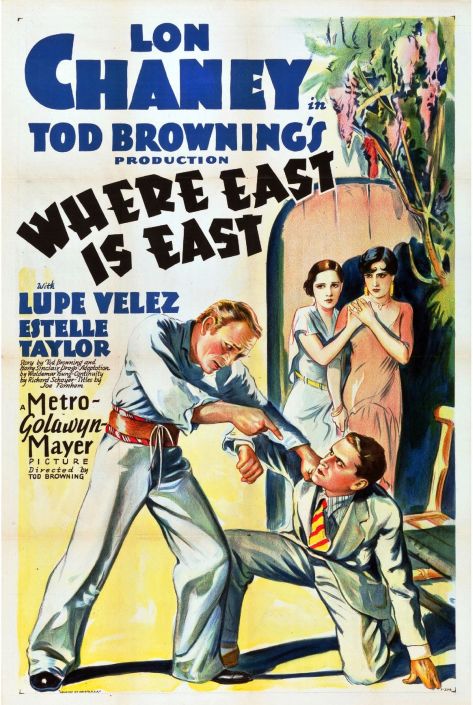 1930
1930
- A Devil with Women
- Africa Speaks[2]
- All Quiet on the Western Front
- Animal Crackers[3]
- Anna Christie
- The Arizona Kid
- The Bad Man
- The Big House
- The Bat Whispers
- The Big Pond
- The Big Trail
- Billy the Kid
- The Bishop Murder Case
- The Blue Angel
- Born Reckless
- Bride of the Regiment
- Bright Lights
- Call of the Flesh
- Captain Thunder
- Charley’s Aunt
- Chasing Rainbows
- Cheer Up and Smile
- Children of Pleasure
- City Girl
- Clancy in Wall Street
- Conspiracy
- The Cuckoos
- Danger Lights
- The Dawn Patrol
- The Devil to Pay!
- The Devil’s Holiday
- Dixiana
- The Divorcee
- The Doorway to Hell
- Doughboys
- Du Barry, Woman of Passion
- Fast and Loose
- Feet First
- Follow Thru
- For the Defense
- Golden Dawn
- Good News
- The Green Goddess
- Half Shot at Sunrise
- Hell Harbor
- Hell’s Angels
- Hell’s Heroes
- High Society Blues
- Hold Everything
- Holiday
- In Gay Madrid
- Inside the Lines
- Just Imagine
- King of Jazz
- Kismet
- Ladies Love Brutes
- Ladies of Leisure
- The Lash
- Laughter
- Leathernecking
- Let Us Be Gay
- Let’s Go Native
- The Life of the Party
- Liliom
- Loose Ankles
- The Lottery Bride
- Madame Satan
- Mammy
- The Man from Blankley’s
- Manslaughter
- The Matrimonial Bed
- Maybe It’s Love
- The Melody Man
- Men Without Women
- Min and Bill
- Moby Dick
- Montana Moon
- Monte Carlo
- Morocco
- Murder!
- New Moon
- No, No, Nanette
- Not So Dumb
- The Office Wife
- Oh Sailor Behave
- One Night at Susie’s
- One Romantic Night
- Our Blushing Brides
- Outward Bound
- Paid
- Paramount on Parade
- Peacock Alley
- Playing Around
- Puttin’ on the Ritz
- Queen High
- Raffles
- Reaching for the Moon
- Redemption
- Renegades
- Road to Paradise
- Romance
- The Rogue Song
- Rough Romance
- The Royal Family of Broadway
- The Runaway Bride
- Safety in Numbers
- Sarah and Son
- The Second Floor Mystery
- She Couldn’t Say No
- Show Girl in Hollywood
- The Silver Horde
- Sin Takes a Holiday
- The Sins of the Children
- Sinners’ Holiday
- Slightly Scarlet
- Son of the Gods
- Song of the Flame
- Song of the West
- The Spoilers
- Street of Chance
- Strictly Unconventional
- Sunny
- Sweet Kitty Bellairs
- They Learned About Women
- Three Faces East
- Tol’able David
- True to the Navy
- The Truth About Youth
- Under a Texas Moon
- Up the River
- The Unholy Three
- The Vagabond King
- Viennese Nights
- The Virtuous Sin
- War Nurse
- Way for a Sailor
- What a Widow!
- The Woman Racket
- Whoopee!
- Young Man of Manhattan
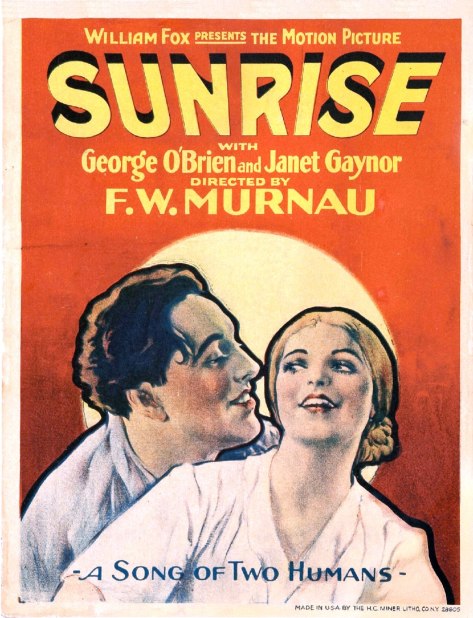
1931
- A Connecticut Yankee
- A Free Soul
- A Holy Terror
- Alexander Hamilton
- Ambassador Bill
- An American Tragedy
- Arizona
- Arrowsmith
- Bachelor Apartment
- Bad Company
- Bad Girl
- Bad Sister
- Beyond Victory
- Big Business Girl
- The Blonde Captive[4]
- Blonde Crazy
- Body and Soul
- Born to Love
- Bought!
- Broadminded
- Captain Applejack
- Caught Plastered
- The Champ
- Chances
- The Cheat
- Cimarron
- City Lights
- City Streets
- The Common Law
- Compromised
- Confessions of a Co-Ed
- Cracked Nuts
- The Criminal Code
- Dance, Fools, Dance
- Delicious
- Dirigible
- Dishonored
- Dr. Jekyll and Mr. Hyde
- Dracula[5]
- The Easiest Way
- Everything’s Rosie
- Expensive Women
- Fifty Million Frenchmen
- Fighting Caravans
- Five and Ten
- Five Star Final
- Frankenstein[5]
- Friends and Lovers
- The Front Page
- The Gay Diplomat
- Girls About Town
- Girls Demand Excitement
- God’s Gift to Women
- Goldie
- The Great Lover
- The Guilty Generation
- Guilty Hands
- Hell Divers
- Her Majesty, Love
- His Woman
- Honor Among Lovers
- Hush Money
- I Take This Woman
- Indiscreet
- Inspiration
- Iron Man
- It Pays to Advertise
- Kept Husbands
- Kick In
- Kiki
- Ladies’ Man
- Ladies of the Big House
- The Lady Refuses
- The Last Flight
- Laughing Sinners
- Little Caesar
- Local Boy Makes Good
- Lonely Wives
- M
- The Mad Genius
- The Mad Parade
- Mädchen in Uniform
- Maker of Men
- The Maltese Falcon
- Man of the World
- The Man Who Came Back
- Manhattan Parade
- Mata Hari
- Men Call It Love
- Merely Mary Ann
- Millie
- The Millionaire
- The Miracle Woman
- Monkey Business
- Morals for Women
- Never the Twain Shall Meet
- Night Nurse
- No Limit
- Once a Lady
- Other Men’s Women
- Palmy Days
- Peach O’Reno
- The Phantom of Paris
- Platinum Blonde
- Possessed
- Private Lives
- The Public Defender
- The Public Enemy
- Quick Millions
- The Road to Singapore
- Safe in Hell
- The Secret Six
- The Sin of Madelon Claudet
- The Sin Ship
- Sit Tight
- Six Cylinder Love
- Smart Money
- Smart Woman
- The Smiling Lieutenant
- Son of India
- Sporting Blood
- The Squaw Man
- Strangers May Kiss
- Street Scene
- Strictly Dishonorable
- Surrender
- Susan Lenox (Her Fall and Rise)
- Svengali
- Tarnished Lady
- Ten Cents a Dance
- Tonight or Never
- Too Many Cooks
- Trader Horn[2]
- Transatlantic
- Traveling Husbands
- Under Eighteen
- The Unholy Garden
- Up Pops the Devil
- Waterloo Bridge
- Way Back Home
- Women of All Nations
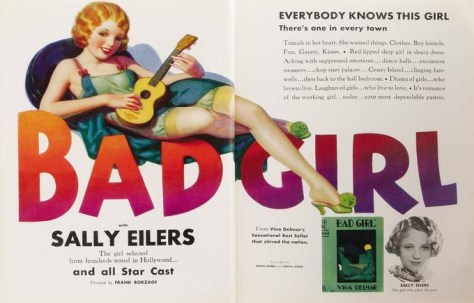
1932
- 20,000 Years in Sing Sing
- A Bill of Divorcement
- A Farewell to Arms
- A Successful Calamity
- Afraid to Talk
- After Tomorrow
- The Age of Consent
- Air Mail
- Alias the Doctor
- American Madness
- Attorney for the Defense
- The Animal Kingdom
- Are You Listening?
- Arsène Lupin
- As You Desire Me
- Back Street
- The Beast of the City
- The Big Broadcast
- Big City Blues
- The Big Timer
- Bird of Paradise
- Blessed Event
- Blonde Venus
- Blondie of the Follies
- The Cabin in the Cotton
- Call Her Savage
- Central Park
- The Crash
- The Crowd Roars
- Cynara
- The Dark Horse
- The Devil is Driving
- Devil and the Deep
- Disorderly Conduct
- Divorce in the Family
- Doctor X[5]
- Downstairs
- Emma
- Faithless
- The Famous Ferguson Case
- Fast Life
- The First Year
- Flesh
- Forbidden
- Freaks
- Frisco Jenny
- Girl Crazy
- Grand Hotel
- The Greeks Had a Word for Them
- The Half-Naked Truth
- The Hatchet Man[7]
- Hell’s Highway
- Hell’s House
- High Pressure
- Hold ‘Em Jail
- Horse Feathers
- Hot Saturday
- I Am a Fugitive From a Chain Gang
- If I Had a Million
- Impatient Maiden
- Island of Lost Souls[8]
- It’s Tough to Be Famous
- Jewel Robbery
- The Kid from Spain
- Klondike
- Kongo
- Lady and Gent
- Lady with a Past
- Lawyer Man
- Letty Lynton
- Life Begins
- The Lost Squadron
- Love Affair
- Love Is a Racket
- Love Me Tonight
- Madame Butterfly
- Madame Racketeer
- Man Wanted
- The Man Who Played God
- The Mask of Fu Manchu[8]
- The Match King
- Me and My Gal
- Men of Chance
- Merrily We Go to Hell
- Million Dollar Legs
- The Miracle Man
- Mr. Robinson Crusoe
- The Most Dangerous Game
- The Mouthpiece
- The Mummy
- Murders in the Rue Morgue
- New Morals for Old
- Night After Night
- Night World
- No Man of Her Own
- No More Orchids
- No One Man
- The Old Dark House
- Old Morals for New[9]
- One Hour with You
- One Way Passage
- Panama Flo
- Payment Deferred
- The Penguin Pool Murder
- The Phantom President
- Polly of the Circus
- Prestige
- Probation
- The Purchase Price
- Rain
- Rasputin and the Empress
- Red Dust
- Red-Headed Woman[9]
- The Rich Are Always with Us
- Roar of the Dragon
- Scarface
- Scarlet Dawn
- Shanghai Express
- Shopworn[9]
- The Sign of the Cross
- The Silent Witness
- Silver Dollar
- Sinners in the Sun
- Sky Devils
- Skyscraper Souls
- Smilin’ Through
- So Big!
- Speak Easily
- The Sport Parade
- State’s Attorney
- Strange Interlude
- Strange Justice[10]
- The Strange Love of Molly Louvain
- Symphony of Six Million
- Tarzan the Ape Man[11]
- Taxi!
- Tess of the Storm Country
- Thirteen Women
- The Thirteenth Guest
- This Is the Night
- This Reckless Age
- Three on a Match
- Three Wise Girls
- Trouble in Paradise
- Two Against the World
- Two Kinds of Women
- Vanity Fair
- Virtue
- Week-End Marriage
- Week Ends Only
- Westward Passage
- The Wet Parade
- What Price Hollywood
- White Zombie
- Wild Girl
- The Wiser Sex
- Winner Take All
- You Said a Mouthful
- Young America
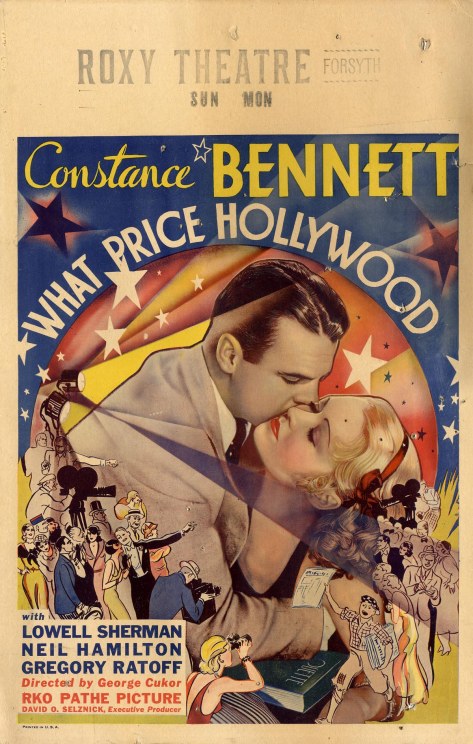
1933
- 42nd Street
- A Shriek in the Night
- Ace of Aces
- After Tonight
- Air Hostess
- Ann Carver’s Profession
- Ann Vickers
- Another Language
- Baby Face[9]
- The Barbarian[12]
- Beauty for Sale[9]
- Bed of Roses[9]
- Before Dawn
- The Bitter Tea of General Yen
- Blind Adventure
- Blondie Johnson
- Blood Money[13]
- Bombshell
- The Bowery
- Brief Moment
- Broadway Through a Keyhole
- Broadway to Hollywood
- Bureau of Missing Persons
- Captured!
- Cavalcade
- Central Airport
- The Chief
- Child of Manhattan
- Christopher Strong
- College Coach
- College Humor
- Convention City
- Counsellor at Law
- Dancing Lady
- Day of Reckoning
- Design for Living
- The Devil’s Brother
- Dinner at Eight[12]
- Diplomaniacs
- Doctor Bull
- Double Harness
- Duck Soup
- The Eagle and the Hawk
- Elmer, the Great
- The Emperor Jones
- Employees’ Entrance
- Ever in My Heart
- Ex-Lady
- Fast Workers
- Female
- Flying Devils
- Flying Down to Rio
- Footlight Parade[13]
- From Headquarters
- From Hell to Heaven
- Gabriel Over the White House
- Gambling Ship
- Girl Without a Room
- Going Hollywood[12]
- Gold Diggers of 1933
- Goodbye Again
- Goodbye Love
- Hallelujah, I’m a Bum
- Hard to Handle
- Havana Widows
- Hell Below
- Hello, Sister![14]
- Heroes for Sale[15]
- Hold Your Man
- Hoop-La[14]
- Hot Pepper
- The House on 56th Street
- I Am Suzanne
- I Cover the Waterfront
- I’m No Angel[13]
- The Invisible Man
- International House
- It’s Great to Be Alive
- Jennie Gerhardt
- The Kennel Murder Case
- King Kong
- The Kiss Before the Mirror
- Ladies They Talk About[13]
- Lady Killer
- Laughter in Hell
- The Life of Jimmy Dolan
- Lilly Turner
- The Little Giant
- Man’s Castle
- The Masquerader
- The Mayor of Hell
- Meet the Baron
- Melody Cruise
- Men Must Fight
- Midnight Club
- Midnight Mary
- Morning Glory
- Murders in the Zoo
- Myrt and Marge
- Mystery of the Wax Museum
- My Weakness[13]
- Night Flight
- No Other Woman
- One Man’s Journey
- One Sunday Afternoon
- Only Yesterday[13]
- Our Betters
- Parachute Jumper
- Parole Girl
- The Past of Mary Holmes
- Peg o’ My Heart
- Penthouse[9]
- Perfect Understanding
- Pick-Up
- Picture Snatcher
- The Power and the Glory
- Private Detective 62
- The Private Life of Henry VIII
- The Prizefighter and the Lady
- Queen Christina
- Rafter Romance
- The Right to Romance
- Roman Scandals
- Sailor’s Luck[13]
- Saturday’s Millions
- Scarlet River
- Secret of the Blue Room
- Secrets
- Sensation Hunters
- Shanghai Madness
- She Done Him Wrong[13]
- She Had to Say Yes
- Should Ladies Behave[12]
- The Silver Cord
- The Sin of Nora Moran
- Sitting Pretty
- So This Is Africa
- Sons of the Desert
- The Secret of Madame Blanche
- The Song of Songs
- Stage Mother
- State Fair
- The Story of Temple Drake
- The Stranger’s Return
- Supernatural
- This Day and Age
- Three-Cornered Moon
- To the Last Man
- Today We Live
- Too Much Harmony[13]
- Topaze
- Torch Singer
- Tugboat Annie
- Turn Back the Clock
- The Vampire Bat
- Voltaire
- The Warrior’s Husband[13]
- West of Singapore[10]
- When Ladies Meet
- Whistling in the Dark
- The White Sister
- White Woman
- Wild Boys of the Road
- The Woman Accused
- The Working Man
- The World Changes
- The World Gone Mad
- You Made Me Love You
- Zoo in Budapest
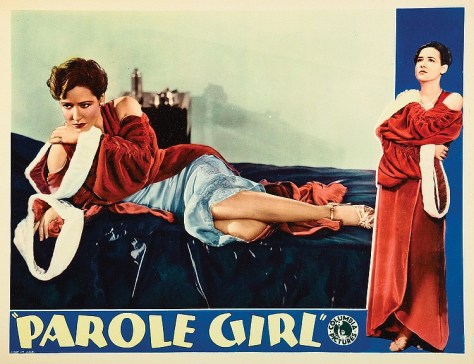
1934
- A Modern Hero
- A Very Honorable Guy
- The Affairs of Cellini
- All of Me
- Bachelor Bait
- The Barretts of Wimpole Street
- Belle of the Nineties
- The Big Shakedown
- The Black Cat
- Black Moon[8]
- Bolero
- Born to Be Bad
- Bottoms Up
- Carolina
- The Cat and the Fiddle
- Chained
- Change of Heart
- Cleopatra
- Dames
- Dark Hazard
- Death Takes a Holiday
- Dr. Monica
- Evelyn Prentice
- Fashions of 1934
- Finishing School
- Fog Over Frisco
- Forsaking All Others
- Four Frightened People
- Fugitive Lovers
- Gambling Lady
- The Gay Bride
- The Gay Divorcee
- George White’s Scandals
- The Girl from Missouri
- Hat, Coat, and Glove
- Heat Lightning
- He Was Her Man
- Hi Nellie!
- Hips, Hips, Hooray!
- Hollywood Party
- The House of Rothschild
- Imitation of Life
- It Happened One Night
- Jimmy the Gent
- Journal of a Crime
- Lady by Choice
- Laughing Boy
- Lazy River
- The Life of Vergie Winters
- Liliom
- Little Man, What Now?
- Little Miss Marker
- The Lost Patrol
- The Man with Two Faces
- Mandalay
- Manhattan Love Song
- Manhattan Melodrama
- Massacre
- Men in White
- The Merry Widow
- Midnight
- Midnight Alibi
- Moulin Rouge
- Murder at the Vanities
- Murder on the Blackboard
- The Mystery of Mr. X
- Nana
- No Greater Glory
- Now I’ll Tell
- Of Human Bondage
- Once to Every Woman
- Operator 13
- The Painted Veil
- Palooka
- The Personality Kid
- The Richest Girl in the World
- Riptide
- The Road to Ruin
- Sadie McKee
- The Scarlet Empress
- Search for Beauty
- She Loves Me Not
- The Show-Off
- Side Streets
- Sing and Like It
- Six of a Kind
- Smarty
- Social Register
- Spitfire
- Stand Up and Cheer!
- Stingaree
- Strictly Dynamite
- Success at Any Price
- Tarzan and His Mate[11]
- The Thin Man
- Thirty-Day Princess
- This Man Is Mine
- The Trumpet Blows
- Twentieth Century
- Twenty Million Sweethearts
- Two Alone
- Upper World
- Viva Villa!
- We’re Not Dressing
- We’re Rich Again
- West of the Divide
- Wharf Angel
- Wonder Bar
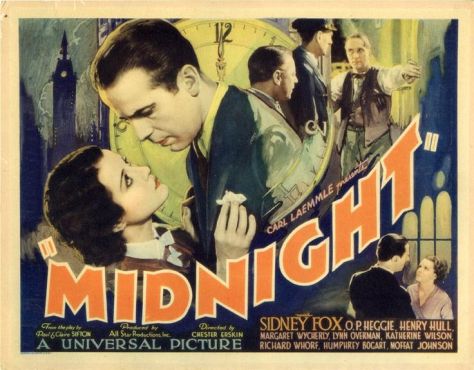
References
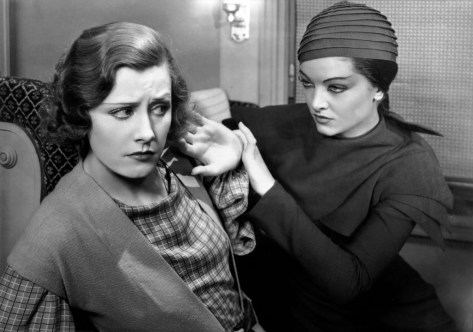
Irene Dunne and Myrna Loy in Thirteen Women, George Archinbaud (1932)
Notes
- ^ Jump up to:a b c LaSalle (2002), pg. 1.
- ^ Jump up to:a b c d Turan, pg. 371.
- ^ Jump up to:a b c Siegel & Siegel, pg. 190.
- ^ Jump up to:a b c d e f g Yagoda, Ben. HOLLYWOOD CLEANS UP ITS ACT: The curious career of the Hays Office, americanheritage.com; accessed October 11, 2012.
- Jump up^ Gardner (2005), pg. 92. (available online)
- Jump up^ “Inflation Calculator”. DaveManuel.com. Retrieved October 30, 2015.
- ^ Jump up to:a b Doherty, pg. 6.
- ^ Jump up to:a b Prince, pg. 20.
- Jump up^ Jowett, essay in Bernstein, pg. 16.
- Jump up^ Butters Jr, pg. 149.
- ^ Jump up to:a b Smith, pg. 38.
- Jump up^ Jacobs, pg. 108.
- Jump up^ Prince, pg. 21.
- ^ Jump up to:a b c d e LaSalle, Mick. “Pre-Code Hollywood”, GreenCine.com; accessed October 4, 2010.
- ^ Jump up to:a b c d Doherty, pg. 8.
- ^ Jump up to:a b Doherty, pg. 7.
- ^ Jump up to:a b c d Doherty, pg. 11.
- Jump up^ Butters Jr, pg. 188.
- Jump up^ Black, pg. 43.
- Jump up^ Doherty, pg. 107.
- Jump up^ Black, pg. 44.
- ^ Jump up to:a b Black, pg. 51.
- Jump up^ Black, pp. 50–51.
- Jump up^ Jacobs, pg. 27.
- Jump up^ Black, pg. 52.
- Jump up^ Black, pp. 44–45.
- ^ Jump up to:a b Black, pg. 45.
- ^ Jump up to:a b Doherty, pp. 111–112.
- Jump up^ Benshoff & Griffin, pg. 218.
- Jump up^ Doherty, pg. 2.
- Jump up^ Black, pg. 30.
- Jump up^ Butters Jr, pg. 148.
- Jump up^ LaSalle (1999), pg. 62.
- Jump up^ Vieira. pp. 7–8.
- ^ Jump up to:a b c Butters Jr, pg. 187.
- Jump up^ Vieira, pg. 8.
- ^ Jump up to:a b Prince, pg. 31.
- Jump up^ Butters Jr, pg. 189
- ^ Jump up to:a b c Siegel & Siegel, pg. 379.
- Jump up^ Black, pp. 27–29. *Parkinson, pg. 42.
- Jump up^ Jeff & Simmons, pg. 6.
- Jump up^ Black, pg. 27.
- Jump up^ Doherty, pg. 16.
- Jump up^ Doherty, pp. 24–26.
- Jump up^ Doherty, pp. 16–17.
- Jump up^ Doherty, pg. 20.
- Jump up^ Doherty, pg. 22.
- Jump up^ Doherty, pp. 22–23.
- ^ Jump up to:a b Doherty, pg. 23.
- Jump up^ Doherty, pp. 26–27.
- ^ Jump up to:a b Turan, pg. 375.
- Jump up^ McElvaine (vol 1), pg. 311.
- ^ Jump up to:a b c Doherty, pg. 40.
- Jump up^ Doherty, pg. 17.
- Jump up^ Doherty, pg. 18.
* McElvaine (Vol 1), pg. 448. - ^ Jump up to:a b Doherty, pg. 34.
- Jump up^ Doherty, pg. 36.
- Jump up^ Doherty, pp. 36–37.
- Jump up^ Doherty, pp. 41–44.
- Jump up^ Doherty, pg. 45.
- ^ Jump up to:a b Doherty, pg. 46.
- ^ Jump up to:a b Doherty, pg. 49.
- Jump up^ LaSalle (2002), pg. 148.
- ^ Jump up to:a b Doherty, pg. 60.
- Jump up^ Turan, pg. 370
- Jump up^ Rosenbaum, Jonathan. Employees’ Entrancereview, Chicago Reader; accessed October 7, 2010.
- Jump up^ Doherty, pg. 71.
- Jump up^ Turan, pg. 374.
- Jump up^ Doherty, pg. 54.
- ^ Jump up to:a b Doherty, pg. 79.
- ^ Jump up to:a b c Doherty, pg. 50.
- Jump up^ Doherty, pp. 50–51.
- ^ Jump up to:a b Doherty, pg. 51.
- ^ Jump up to:a b c Doherty, pg. 59.
- Jump up^ Kehr, Dave. The Nation; Seeing Business Through Hollywood’s Lens, The New York Times, July 14, 2002; accessed October 9, 2010.
- Jump up^ Hall, Mourdant. Skyscraper Souls (1932) – A Banker’s Ambition, The New York Times, August 5, 1932; accessed October 9, 2010.
- Jump up^ LaSalle (2002), pg. 150.
- Jump up^ Doherty, pp. 61–62.
- ^ Jump up to:a b Doherty, pg. 56.
- Jump up^ Doherty, pp. 57–58.
- Jump up^ Doherty, pp. 70–77.
Kehr, Dave. Gabriel over the White House review inThe Chicago Reader; accessed October 30, 2010. - ^ Jump up to:a b Doherty, pg. 63.
- Jump up^ Doherty, pg. 64.
- Jump up^ Doherty, pg. 65.
- Jump up^ Monahan, Kaspar. “High Schoolers Smash Rule Of Gangland – Save City From Mobsters In DeMille Film At Penn”, The Pittsburgh Press, September 16, 1933; accessed October 9, 2010.
- Jump up^ Doherty, pg. 66.
- Jump up^ Black, pg. 137.
- ^ Jump up to:a b Doherty, pp. 73–75.
- Jump up^ Hall, Mordaunt. Gabriel Over the White Housereview in The New York Times, April 1, 1933; accessed October 20, 2010
- Jump up^ Doherty, pg. 76.
- ^ Jump up to:a b Doherty, pg. 77.
- Jump up^ Doherty, pg. 85.
- Jump up^ Doherty, pg. 89.
- Jump up^ Doherty, pg. 92.
- Jump up^ Doherty, pg. 75.
*Black, pg. 144. - Jump up^ Doherty, pg. 97.
- Jump up^ Doherty, pp. 98–99.
- Jump up^ Doherty, pp. 100–101.
- Jump up^ Doherty, pg. 101.
- Jump up^ “Charges Nazis Here Using Threats to Halt Production of “mad Dog of Europe””. Jta.org. 1933-10-23. Retrieved 2013-06-27.
- Jump up^ “Scholar asserts that Hollywood avidly aided Nazis”, nytimes.com, June 26, 2013; accessed December 11, 2016.
- ^ Jump up to:a b c d Siegel & Siegel, pg. 165.
- Jump up^ Shadoian, pg. 29.
- Jump up^ Leitch, pg. 22.
- Jump up^ Kehr, Dave. Underworld (film) review, Chicago Reader; accessed October 11, 2010.
- Jump up^ Leitch, pg. 23.
- Jump up^ Hughes, p. xii.
- Jump up^ Prince, pg. 23.
- Jump up^ Prince, pp. 23–28.
- ^ Jump up to:a b c Doherty, pg. 139.
- Jump up^ Doherty, pg. 140.
- Jump up^ Doherty, pg. 137.
- Jump up^ Doherty, pg. 142.
- Jump up^ Doherty, pp. 137–38.
- Jump up^ Siegel & Siegel, pg. 359.
- Jump up^ Black, pg. 110.
- Jump up^ Leitch, pg. 24.
- Jump up^ Dirks, Tim. Little Caesar profile, filmsite.org; accessed October 15, 2010.
- Jump up^ Canby, Vincent. FILM VIEW; Annual Report On the Mob, New York Times, December 4, 1988; accessed October 15, 2010.
- ^ Jump up to:a b Little Caesar review at Film4.com; accessed October 14, 2010.
- Jump up^ Black, p. 115.
- Jump up^ Vieira, pg. 33.
- Jump up^ Hughes, pp. xiii, 4.
- ^ Jump up to:a b Dirk, Tim. The Public Enemy review at filmsite.org; accessed October 15, 2010.
- Jump up^ Hughes. pg. 8.
- ^ Jump up to:a b c d Doherty, pg. 150.
- ^ Jump up to:a b Black, pg. 123.
- ^ Jump up to:a b Smith, pg. 51.
- ^ Jump up to:a b c Doherty, pg. 148.
- Jump up^ Ebert, Roger. of Scarface, The Chicago Sun-Times, December 9, 1983.
Scarface review in Variety, December 31, 1931; accessed October 15, 2010.
Wood, Bret. Scarface review tcm.com], accessed November 1, 2010. - ^ Jump up to:a b Kehr, Dave.Scarface review at Chicago Reader; accessed October 15, 2010.
- Jump up^ Vieira, pg. 69.
- ^ Jump up to:a b Cinema: The New Pictures, TIME, April 18, 1932; accessed October 15, 2010.
- Jump up^ Corliss essay in Schatz, p. 159.
- Jump up^ Black, pg. 131.
- Jump up^ Doherty, pp. 149–50.
- Jump up^ Doherty, pg. 151.
- Jump up^ Black, pg. 109.
- ^ Jump up to:a b Doherty, pg. 153.
- ^ Jump up to:a b c Doherty, pg. 158
- Jump up^ Doherty, pg. 159
- Jump up^ Doherty. pp. 159–160
- Jump up^ Druker, Don. The Big House, Chicago Reader, accessed October 17, 2010.
- Jump up^ Doherty, pg. 160
- ^ Jump up to:a b Doherty, pg. 170
- Jump up^ Black, pp. 158–159
- Jump up^ Doherty, pg. 169
- Jump up^ Wollstein, Hans J. REVIEW: Hell’s Highway, nytimes.com; accessed October 17, 2010.
- Jump up^ Doherty, pg. 163
- Jump up^ Niemi, pg. 381
- Jump up^ Leroy, Mervyn. I Am a Fugitive from a Chain Gang (1932) United States: Warner Bros.
- Jump up^ Doherty, pg. 164
- Jump up^ Doherty. pg. 166
- Jump up^ Doherty, pg. 162
- Jump up^ REVIEW: Laughter in Hell, tcm.com, accessed October 12, 2010.
- ^ Jump up to:a b Doherty, pg 167
- Jump up^ King, Susan (October 4, 2012). “Bernardo Bertolucci feted at the American Cinematheque”. Los Angeles Times. Retrieved July 19, 2014.
- Jump up^ Doherty, pg. 280.
- Jump up^ Fristoe, Roger. Safe in Hell, tcm.com; accessed October 11, 2010.
- Jump up^ Vasey, pg. 114.
- ^ Jump up to:a b c Doherty, pg. 103.
- ^ Jump up to:a b Doherty, pg. 104.
- Jump up^ Vieira, pg. 130.
- Jump up^ Doherty, pp. 107–10.
- ^ Jump up to:a b Smith, pg. 56.
- Jump up^ Doherty, pp. 110–111.
- Jump up^ Doherty, pg. 110.
- Jump up^ Doherty, pg. 111.
- Jump up^ Doherty, pp. 107, 110–112.
- Jump up^ Doherty, pp. 112–113.
- Jump up^ Reprinted in Jacobs, pg. 10: “Most arts appeal to the mature. This art appeals at once to every class, mature, immature, developed, underdeveloped, law abiding, criminal. Music has its grades for different classes; so has literature and drama. This art of the motion picture, combining as its does the two fundamental appeals of looking at a picture and listening to a story, at once reached [sic] every class of society. [Thus] it is difficult to produce films intended for only certain classes of people …. Films, unlike books and music, can with difficulty be confined to certain selected groups”
- Jump up^ Doherty, pp. 106–107.
Massey, pg. 71. - Jump up^ Doherty, pg. 126.
- Jump up^ Doherty, pg. 127.
- ^ Jump up to:a b c d Vieira, pg. 118.
- Jump up^ Doherty, pg. 113.
- Jump up^ Doherty, pp. 113–114.
- ^ Jump up to:a b Doherty, pg. 114.
- Jump up^ McElvaine (Vol 2), pg. 1055.
- Jump up^ McElvaine (Vol 1), pp. 310–311.
- Jump up^ LaSalle M. (2000). Complicated Women: Sex and Power in Pre-Code Hollywood. New York, NY: St. Martin’s Press, page 12.
- Jump up^ Doherty, pp. 117–118.
- Jump up^ Black, Gregory D. Hollywood Censored, Cambridge University Press, 1994.
- Jump up^ Doherty, pg. 128.
Profile: Christopher Strong, timeout.com; accessed November 11, 2010.
- Jump up^ Doherty, pp. 124–125.
- ^ Jump up to:a b Doherty, pg. 131.
- Jump up^ Doherty, pg. 132.
- Jump up^ LaSalle (1999), pg. 127.
- Jump up^ LaSalle, Mick. ‘Baby Face’ now better (and racier) than ever before, February 3, 2006; accessed October 11, 2010.
- Jump up^ Burr, Ty. “Uncut version of ‘Baby Face’ is naughty but nice”, Boston Globe, April 7, 2006; accessed October 11, 2010.
- Jump up^ Hall, Mordaunt. “Baby Face (1933) – A Woman’s Wiles”, The New York Times, June 24, 1933; accessed October 11, 2010.
- Jump up^ Doherty, pg. 277.
- Jump up^ LaSalle (1999), p. 130.
- Jump up^ Doherty, pg. 130.
- Jump up^ Hanke, Ken. Red-Headed Woman, Mountain Xpress, November 20, 2007; accessed October 11, 2010.
- Jump up^ Schwartz, Dennis. REVIEW: Red-Headed Woman, January 2, 2007; accessed October 11, 2010.
- Jump up^ Smith, pg. 53.
- Jump up^ Vieira, pp. 132–133.
- Jump up^ Doherty, pg. 121.
- Jump up^ Doherty, pg. 122.
- Jump up^ Vieira, pg. 133.
- ^ Jump up to:a b Siegel & Siegel, p. 457.
- Jump up^ Jacobs, p. 3.
- Jump up^ Doherty, pg. 123.
Siegel & Siegel, pg. 124. - Jump up^ Doherty, pg. 125.
- Jump up^ Doherty, pp. 172–175.
- Jump up^ Doherty, pg. 176.
- Jump up^ Doherty, pp. 177–178.
Bogle, pg. 42. - ^ Jump up to:a b Doherty, p. 181.
- ^ Jump up to:a b Doherty, pg. 179.
- Jump up^ AFI’s 100 Years…100 Laughs, afi.com, June 14, 2000.
Dirks, Tim. Duck Soup review at filmsite.org; accessed November 1, 2010.
Andrew, Geoff. Duck Soup review, timeout.com; accessed November 1, 2010. - ^ Jump up to:a b Doherty, pg. 182.
- Jump up^ Doherty, pg. 183.
- Jump up^ Doherty, pp. 182–83.
- Jump up^ Smith, pg. 55.
- ^ Jump up to:a b McElvaine (vol 2), pg. 1039.
- Jump up^ Vieira, pg. 112.
- Jump up^ LaSalle (2000), pg. 118.
- Jump up^ Hughes, pg. 9.
- Jump up^ Doherty, pg. 186.
- Jump up^ Doherty, pg. 187.
- Jump up^ Doherty, pg. 188.
- Jump up^ Doherty, pp. 193–195.
- Jump up^ McElvaine (Vol 2), pg. 598.
- Jump up^ Ebert, Roger. REVIEW: Duck Soup, rogerebert.com, July 9, 2000; accessed November 1, 2010.
- Jump up^ Maltin, Leonard. Of Mice and Magic: A History of American Animated Cartoons Revised edition. 1987, pp. 105–106.
- ^ Jump up to:a b LaSalle, Mike (2014) Complicated Women: Sex and Power in Pre-Code Hollywood New York: MacMillan. p.158 ISBN 9781466876972
- Jump up^ Haskell, Molly (1987) From Reverence to Rape: The Treatment of Women in the Movies (2nd ed.) Chicago: University of Chicago Press. p.146. ISBN 0-226-31885-0
- Jump up^ Gardner (1988), pg. 66.
- Jump up^ Teresi, Dick. “Are You Mad, Doctor?”, The New York Times, September 13, 1988; accessed November 24, 2010.
- ^ Jump up to:a b Smith, pg. 57.
- Jump up^ Berenstein, pp. 2, 14.
- ^ Jump up to:a b Doherty, pg. 297.
- Jump up^ Doherty, pg. 303.
- Jump up^ Doherty, pp. 296, 299, 308.
- Jump up^ Doherty, pg. 298.
- Jump up^ Vieira, pp. 42–43.
- ^ Jump up to:a b Vieira, pg. 43.
- ^ Jump up to:a b Doherty, pg. 305.
- Jump up^ Review: Dr. Jekyll And Mr. Hyde, tvguide.com; accessed November 24, 2010.
- Jump up^ Doherty, pp. 303–304.
- Jump up^ Vieira, pg. 49.
- Jump up^ Doherty, pp. 305–307.
- ^ Jump up to:a b c Doherty, pg. 313.
- Jump up^ Doherty, pp. 313–318.
- Jump up^ Doherty, pp. 315–317.
- Jump up^ Butters, pg. 206.
- Jump up^ Doherty, pp. 317–18.
- Jump up^ Phipps, Keith. Review of the film Freaks profile, avclub.com, August 16, 2004; accessed November 26, 2010.
- Jump up^ Doherty, pg. 318.
- Jump up^ Vieira, pg. 147.
- Jump up^ Doherty, pp. 308–311.
- ^ Jump up to:a b Vieira, p. 132.
- Jump up^ Hanke, Ken. REVIEW: Island of Lost Souls/White Zombie, Mountain Xpress, August 24, 2010; accessed November 26, 2010.
- ^ Jump up to:a b c Doherty, pg. 254.
- ^ Jump up to:a b Doherty, pg. 255.
- Jump up^ Doherty, pp. 255–256.
- Jump up^ Sex in Cinema, AMC filmsite
- Jump up^ Bird of Paradise (1932 film) review, dawnsdeloresdelrio.blogspot.com; accessed June 23, 2014.
- Jump up^ Doherty, p. 257.
Hall, Mourdant. Tarzan, the Ape Man (1932), The New York Times, February 28, 1932, accessed December 15, 2010. - Jump up^ Van Dyke, W.S. Tarzan, the Ape Man (1932) Hollywood: MGM
- Jump up^ Doherty, pg. 259.
- Jump up^ Tarzan and His Mate reviews, film4.com, accessed December 15, 2010
- Jump up^ Gibbons, Cedric. Tarzan and His Mate (1934). Hollywood: MGM
Tarzan and His Mate, Variety, December 31, 1933, accessed December 15, 2010.
Doherty, pg. 260. - Jump up^ Doherty, pp. 260–261.
Vieira, pp. 179–80. - Jump up^ Doherty, pg. 262.
- Jump up^ Doherty, pg. 263.
- Jump up^ Doherty, pg. 266.
- Jump up^ Doherty, pg. 268.
- ^ Jump up to:a b Brabin, Charles. The Mask of Fu Manchu (1932). United States: MGM.
- Jump up^ Doherty, pp. 269–270.
- Jump up^ Vieira, pg. 88.
- Jump up^ Doherty, pp. 270–274.
- Jump up^ Doherty, pp. 197, 212.
- Jump up^ Doherty, pp. 174–175, 198.
- Jump up^ Doherty, pp. 200–202.
- Jump up^ Doherty, pg. 200.
- Jump up^ Doherty, pg. 212.
- ^ Jump up to:a b Gill, Barbara. “Lindbergh kidnapping rocked the world 50 years ago”, The Hunterdon County Democrat, 1981, accessed October 29, 2010
- Jump up^ Doherty, pp. 218–219.
- ^ Jump up to:a b Doherty, p. 220.
- Jump up^ Doherty, pg. 199.
- Jump up^ Doherty, pp. 203–204.
- ^ Jump up to:a b Doherty, pp. 81–82.
- Jump up^ Doherty, pp. 208, 213–215.
- Jump up^ Doherty, pg. 84.
- Jump up^ Doherty, pp. 204–205.
- Jump up^ Doherty, pp. 223, 225–227.
- Jump up^ Doherty, pp. 227–228, 246.
- Jump up^ Doherty, pp. 236, 241.
- Jump up^ Doherty, pg. 243.
- Jump up^ Doherty, pg. 222.
- Jump up^ Lewis (2000), pp. 301–02
- Jump up^ LaSalle (2002), p. xii.
- Jump up^ Doherty, pp. 320–321.
- ^ Jump up to:a b Religion: Legion of Decency, TIME, June 11, 1934; accessed October 21, 2010.
- Jump up^ Jowett, Jarvie, and Fuller, p. 93.
- Jump up^ “Pre-Code: Hollywood before the censors”. British Film Institute. Retrieved October 30, 2015.
- ^ Jump up to:a b Black, pg. 149.
- ^ Jump up to:a b Doherty, pg. 322.
- ^ Jump up to:a b Black, pg. 150.
- Jump up^ United Press. “Movie Critic asks Film Czar to Quit”, The Pittsburgh Press, July 7, 1934; accessed October 21, 2010.
- Jump up^ Associated Press. “Church Critics of Movies Call for Ousting of Will Hays”, Gettysburg Times, July 10, 1934; accessed October 21, 2010.
- Jump up^ Jowett, Jarvie, and Fuller, p. xvi.
- Jump up^ See Jowett, Jarvie and Fuller, pg. 92. Frequently this number is mistakenly given as nine; nine were announced, but only eight were ever released.
- Jump up^ Jacobs, pg. 107.
- Jump up^ Massey, pg. 75.
- Jump up^ Lewis, pg. 133.
- Jump up^ Massey, pg. 29.
- Jump up^ Jowett, Jarvie, and Fuller, p. 5.
- Jump up^ Doherty, p. 323.
- Jump up^ Saettler, pg. 229.
- Jump up^ Massey, pp. 29–30.
*Jowett, Jarvie, and Fuller, pp. 94–95. - ^ Jump up to:a b Jacobs, p. 106.
- Jump up^ Black, pg. 154.
- Jump up^ Black, pg. 18.
- Jump up^ Richard Corliss essay reprinted in Schatz, pg. 144.
- Jump up^ Butters Jr, p. 191.
- Jump up^ Doherty, pp. 321, 324–325.
- Corliss essay in Schatz, pg. 149.
- Jump up^ Doherty, pp. 8, 9.
- Jump up^ Butters Jr., pg. 190.
* Jeff & Simmmons, pg. 55.
* Ross, pg. 270. - Jump up^ Jacobs, pg. 109.
- Jump up^ Smith, pg. 60.
- Jump up^ LaSalle (1999), pg. 192.
- Jump up^ Black, pg. 39.
- Jump up^ Doherty. pg. 98. *For more discussion of Breen’s antisemitism, see Doherty (2009), chapter 10, in the “Further reading” section.
- Jump up^ Doherty, pg. 9.
- ^ Jump up to:a b LaSalle, pg. 201.
- Jump up^ Doherty, pp. 324–325.
- ^ Jump up to:a b Kehr, Dave. Critic’s Choice – New DVDs: Forbidden Hollywood, The New York Times, March 11, 2008, accessed September 20, 2011.
- Jump up^ Heins, Marjorie. “The Miracle: Film Censorship and the Entanglement of Church and State”, fepproject.org; accessed October 4, 2010.
- Jump up^ Doherty, p. 10.
- ^ Jump up to:a b Doherty, p. 333.
- Jump up^ Doherty, pp. 328–30.
- Jump up^ Doherty, pg. 331.
- Jump up^ Doherty, pg. 329.
- ^ Jump up to:a b Doherty, p. 334.
- Jump up^ United Press. Will Hays Confers with Film Leaders, Berkeley Daily Gazette, July 10, 1934; accessed October 20, 2010.
- Jump up^ Stir in Hollywood, Evening Post, July 21, 1934; accessed October 20, 2010
- Jump up^ Corliss essay in Schatz, pg. 151.
- Jump up^ Doherty, pg. 336.
- ^ Jump up to:a b Doherty, pg. 339.
- Jump up^ Doherty, pg. 335.
- Jump up^ Gardner (1988), pp. 114–116, 118–120.
- Jump up^ Doherty, pp. 341–342.
- Jump up^ Vieira, pg. 6.
- Jump up^ Vieira, pp. 211–212, 230
- Jump up^ Where is Convention City hiding?, chiseler.org; accessed August 9, 2015.
- Jump up^ LaSalle, Mick. “Bruce Goldstein Introduces The Tingler“, sfgate.com, July 10, 2009, accessed October 17, 2010.
- Jump up^ LaSalle, Mick. “A Gift Idea – An Interview With Rialto’s Bruce Goldstein”, sfgate.com, December 21, 2008; accessed October 17, 2010.
- Jump up^ Turan, Kenneth. “Back when Hollywood played it fast and sassy”, Los Angeles Times, January 27, 2008, accessed December 28, 2010.
- Jump up^ “Pre-Code Hollywood: The Forgotten Genre”. Huffington Post. Retrieved 18 April 2017.
- Jump up^ “Hollywood behaving badly: the outrageous films of the early-talkie era”. The Telegraph. Retrieved 18 April 2017.
- Jump up^ Nichols, Peter M. “Home Entertainments/Video: Fast Forward; Rent Now, Buy Later”, The New York Times, March 24, 1991; accessed September 20, 2011.
- Jump up^ James, Caryn. “Movies Used to Be Really Good by Being Bad”, The New York Times, May 30, 1993, accessed September 20, 2011.
- Jump up^ Kehr, Dave. Hollywood Treasures, Boxed, Tinned and Ready for Viewers, December 19, 2006, accessed September 20, 2011.
- Jump up^ Kehr, Dave. On the William Wellman Depression Express, The New York Times, March 20, 2009, accessed September 20, 2011.
- Jump up^ Laz. “Forbidden Hollywood Collection: Volume 6”. Shop.warnerarchive.com. Retrieved 2013-06-27.
- Jump up^ “Forbidden Hollywood Collection: Volume 7 DVD”. TCM Shop. Retrieved 6 September 2014.
- Jump up^ “Forbidden Hollywood Collection: Volume 8 DVD”. TCM Shop. Retrieved December 6, 2014.
- Jump up^ “Forbidden Hollywood Volume 9 DVD”. TCM Shop. Retrieved October 31, 2015.
- Jump up^ “Forbidden Hollywood Collection: Volume 10 DVD”. TCM Shop. Retrieved 7 September 2016.
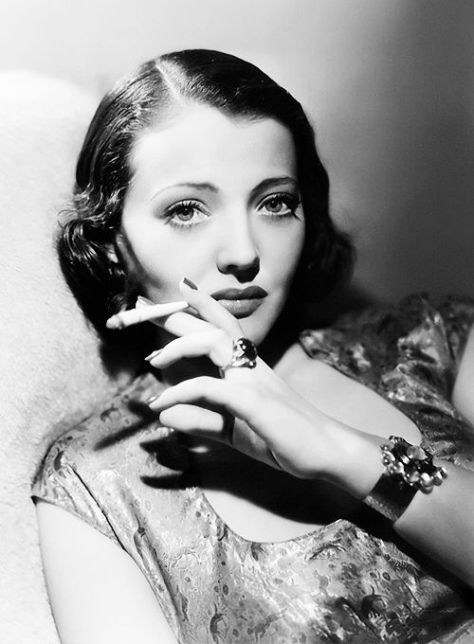
Sylvia Sidney
Sources
- Benshoff, Harry M. & Griffin, Sean. America on film: representing race, class, gender, and sexuality at the movies. Wiley-Blackwell 2004; ISBN 1-4051-7055-7.
- Berenstein, Rhona J. Attack of the leading ladies: gender, sexuality, and spectatorship in classic horror cinema.Columbia University Press 1995; ISBN 0-231-08463-3.
- Bernstein, Matthew. Controlling Hollywood: Censorship and Regulation in the Studio Era. Rutgers University Press 1999; ISBN 0-8135-2707-4.
- Black, Gregory D. Hollywood Censored: Morality Codes, Catholics, and the Movies. Cambridge University Press 1996; ISBN 0-521-56592-8.
- Bogle, Donald. Toms, Coons, Mulattoes, Mammies, and Bucks: An Interpretive History of Blacks in American Films (Fourth Edition) Continuum 2001; ISBN 0-8264-1267-X
- Butters, Jr., Gerard R. Banned in Kansas: motion picture censorship, 1915–1966. University of Missouri Press 2007; ISBN 0-8262-1749-4.
- Doherty, Thomas Patrick. Pre-Code Hollywood: Sex, Immorality, and Insurrection in American Cinema 1930–1934. New York: Columbia University Press 1999; ISBN 0-231-11094-4.
- Gardner, Eric. The Czar of Hollywood. Indianapolis Monthly, Emmis Publishing LP February 2005. ISSN0899-0328 (available online).
- Gardner, Gerald. The Censorship Papers: Movie Censorship Letters from the Hays Office, 1934 to 1968. Dodd Mead 1988; ISBN 0-396-08903-8.
- Hughes, Howard. Crime Wave: The Filmgoers’ Guide to the Great Crime Movies. I.B. Tauris 2006; ISBN 1-84511-219-9.
- Jacobs, Lea. The Wages of Sin: Censorship and the Fallen Woman Film, 1928–1942. Madison: University of Wisconsin Press 1997; ISBN 0-520-20790-4.
- Jeff, Leonard L. & Simmons, Jerold L. The Dame in the Kimono: Hollywood, Censorship, and the Production Code. The University Press of Kentucky 2001; ISBN 0-8131-9011-8
- Jowett, Garth S., Jarvie, Ian C., and Fuller, Kathryn H. Children and the movies: media influence and the Payne Fund controversy. Cambridge University Press 1996; ISBN 0-521-48292-5.
- LaSalle, Mick. Complicated Women: Sex and Power in Pre-Code Hollywood. New York: St. Martin’s Press 2000; ISBN 0-312-25207-2.
- LaSalle, Mick. Dangerous Men: Pre-Code Hollywood and the Birth of the Modern Man. New York: Thomas Dunne Books 2002; ISBN 0-312-28311-3.
- Leitch, Thomas. Crime Films. Cambridge University Press 2004; ISBN 0-511-04028-8.
- Lewis, Jen. Hollywood V. Hard Core: How the Struggle Over Censorship Created the Modern Film Industry. NYU Press 2002; ISBN 0-8147-5142-3.
- Massey, Anne. Hollywood Beyond the Screen: Design and Material Culture. Berg Publishers 2000; ISBN 1-85973-316-6.
- McElvaine, Robert S. (editor in chief) Encyclopedia of The Great Depression Volume 1 (A–K). Macmillan Reference USA 2004; ISBN 0-02-865687-3.
- McElvaine, Robert S. (editor in chief) Encyclopedia of The Great Depression Volume 2 (L–Z). Macmillan Reference USA 2004; ISBN 0-02-865688-1.
- Parkinson, David. History of Film. Thames & Hudson 1996; ISBN 0-500-20277-X.
- Prince, Stephen. Classical Film Violence: Designing and Regulating Brutality in Hollywood Cinema, 1930–1968. Rutgers University Press 2003; ISBN 0-8135-3281-7.
- Ross, Stephen J. “The Seen, The Unseen, and The Obscene: Pre-Code Hollywood.” Reviews in American History. The Johns Hopkins University Press June 2000[ISBN missing]
- Schatz, Thomas. Hollywood: Social dimensions: technology, regulation and the audience. Taylor & Francis 2004; ISBN 0-415-28134-2.
- Shadoian, Jack. Dreams & dead ends: the American gangster film. Oxford University Press 2003; ISBN 0-19-514291-8.
- Siegel, Scott & Barbara. The Encyclopedia of Hollywood. 2nd edition Checkmark Books 2004; ISBN 0-8160-4622-0.
- Smith, Sarah. Children, Cinema and Censorship: From Dracula to the Dead End Kids. Wiley-Blackwell 2005; ISBN 1-4051-2027-4.
- Turan, Kenneth. Never Coming to a Theater Near You: A Celebration of a Certain Kind of Movie. Public Affairs 2004; ISBN 1-58648-231-9.
- Vasey, Ruth. The world according to Hollywood, 1918–1939. University of Wisconsin Press 1997; ISBN 0-299-15194-8.
- Vieira, Mark A. Sin in Soft Focus: Pre-Code Hollywood. New York: Harry N. Abrams, Inc. 1999; ISBN 0-8109-8228-5.
Further reading
- Doherty, Thomas Patrick. Hollywood’s Censor: Joseph I. Breen and the Production Code Administration. New York: Columbia University Press 2009; ISBN 0-231-14358-3.
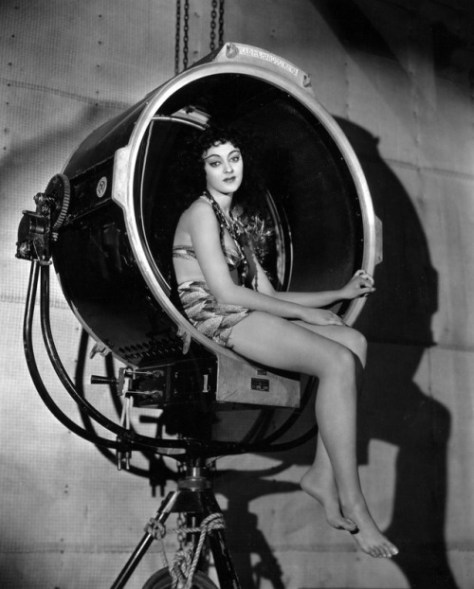
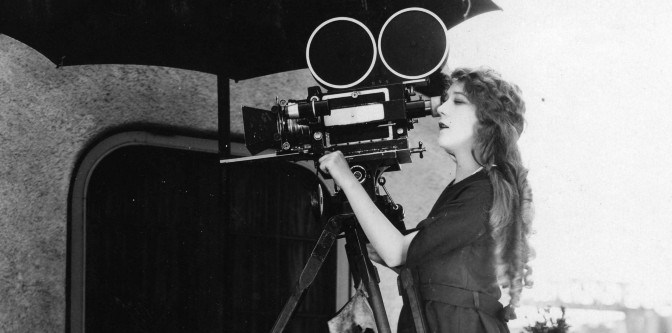
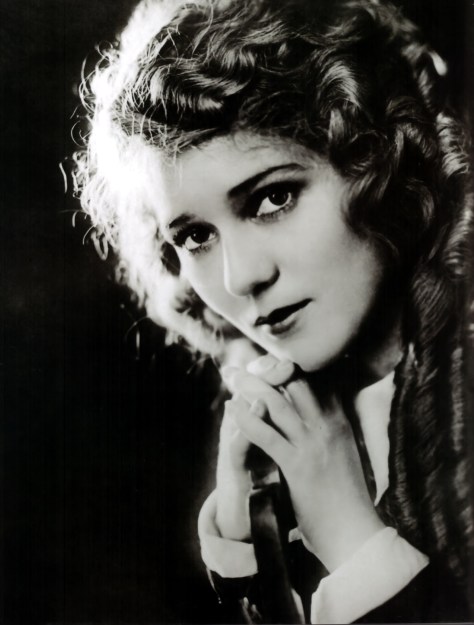
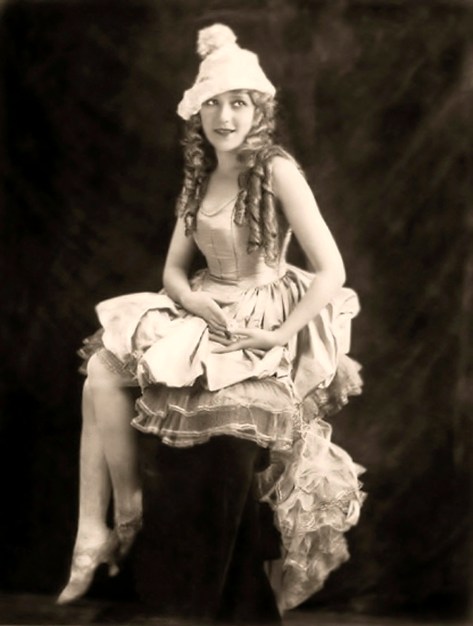


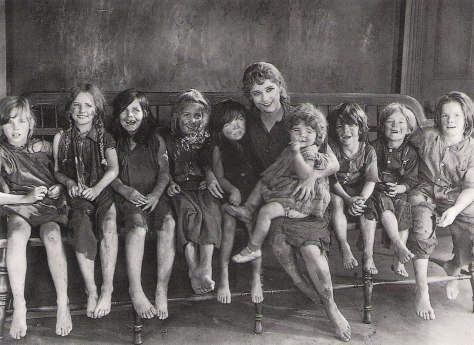
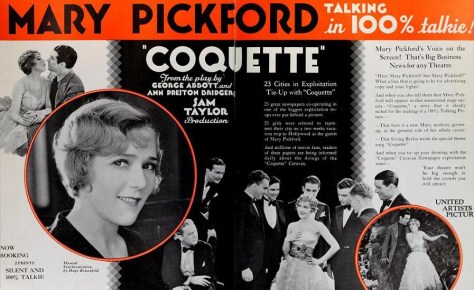
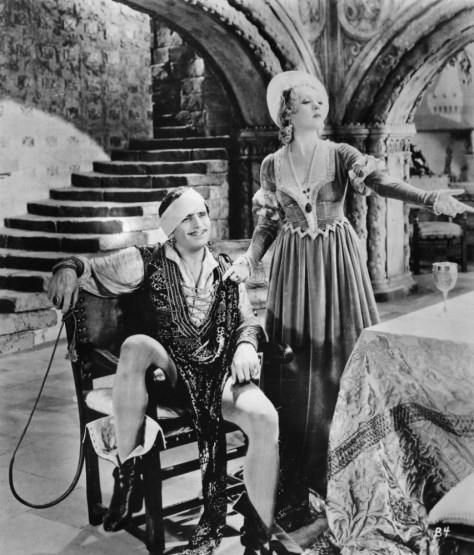
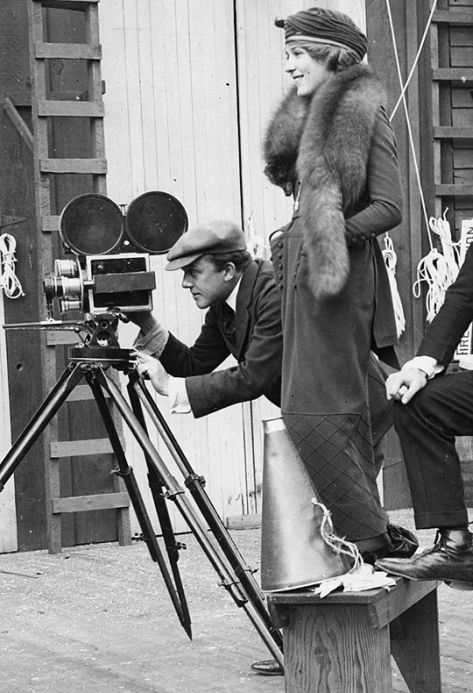
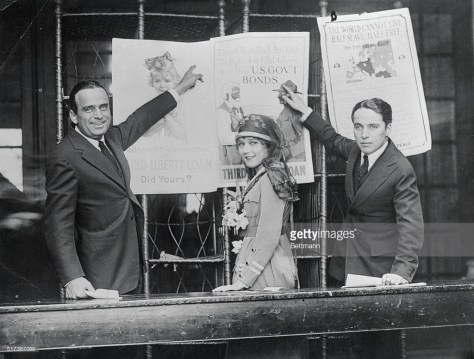
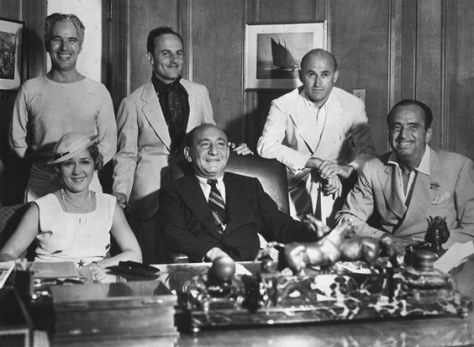
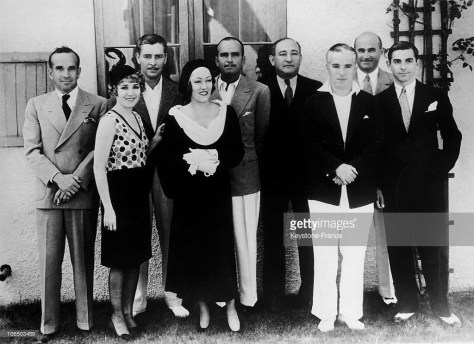
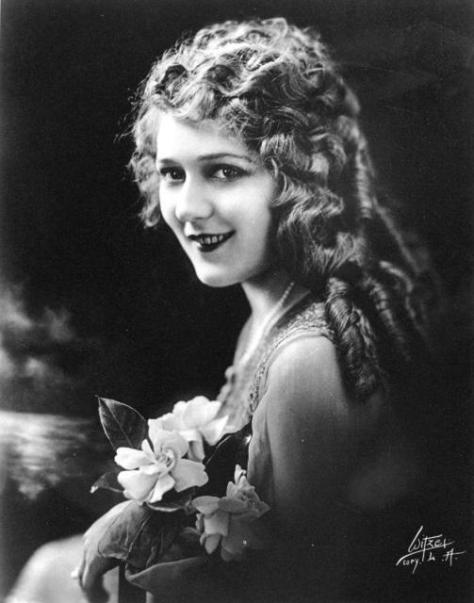
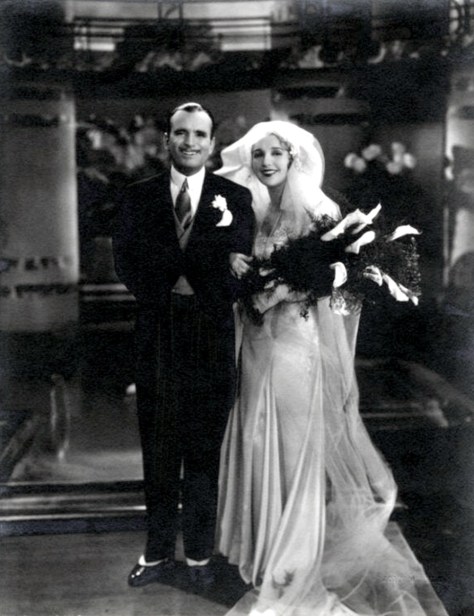
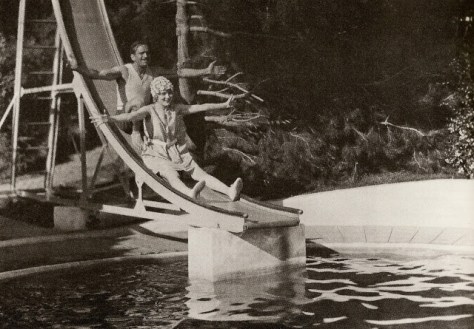
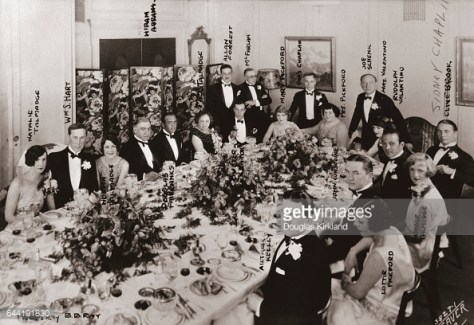
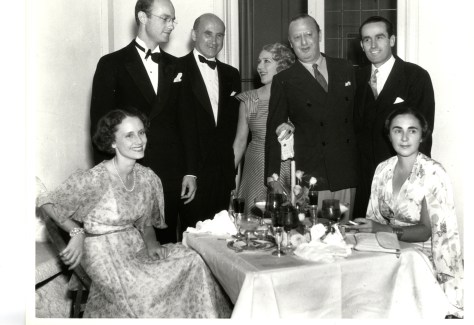
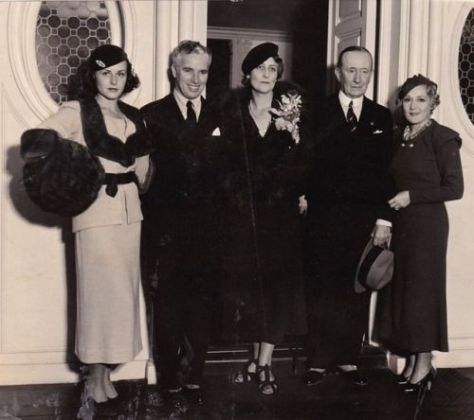
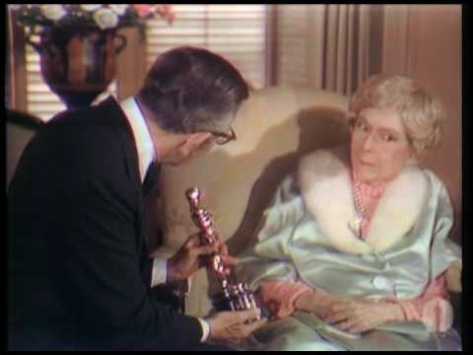
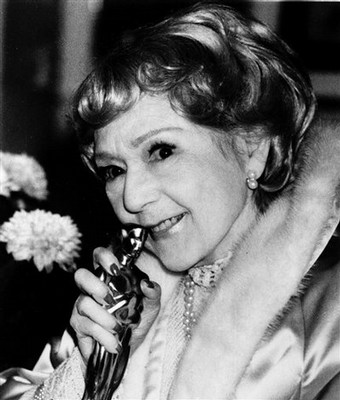

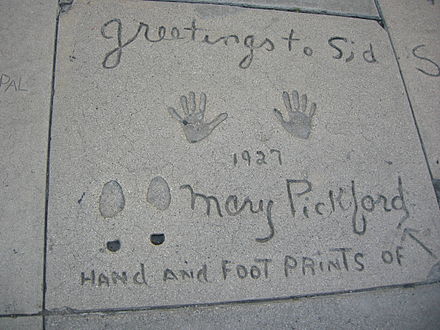


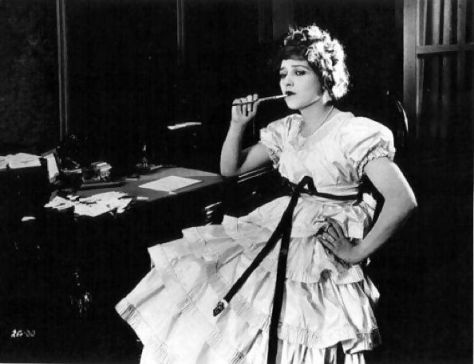


 Mary Pickford behind the camera
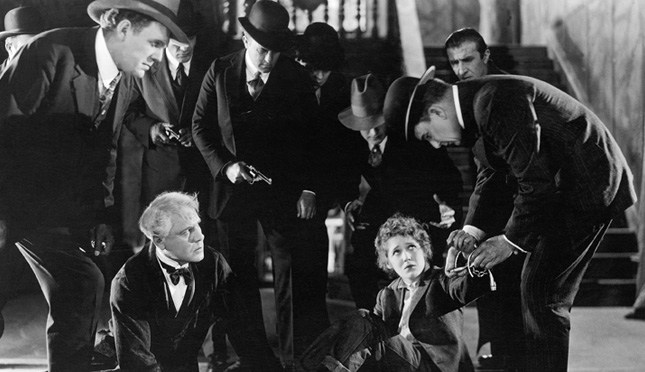


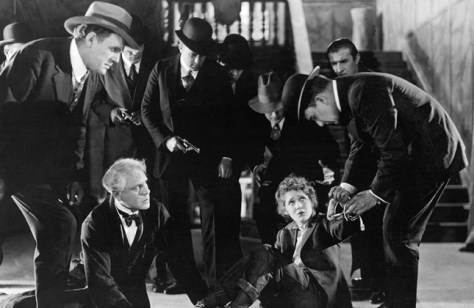




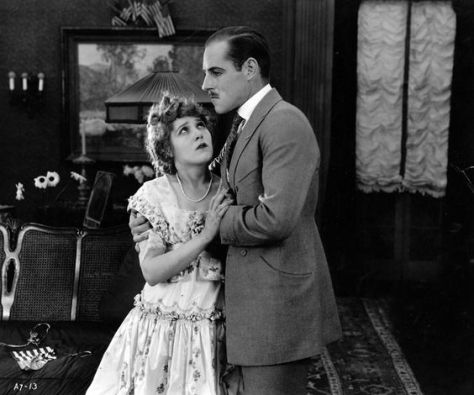





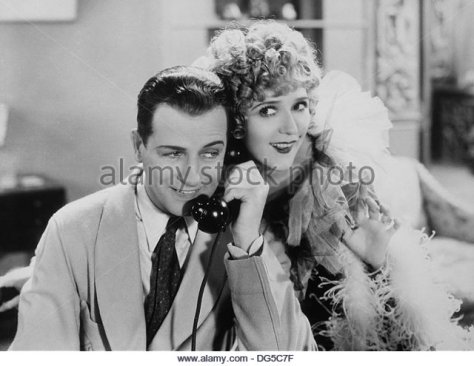
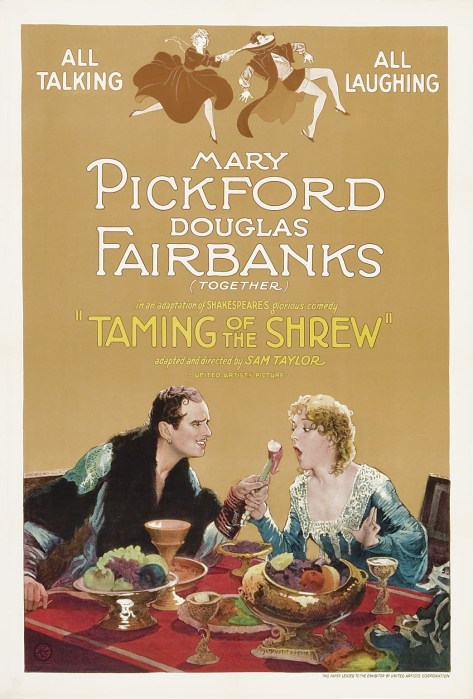


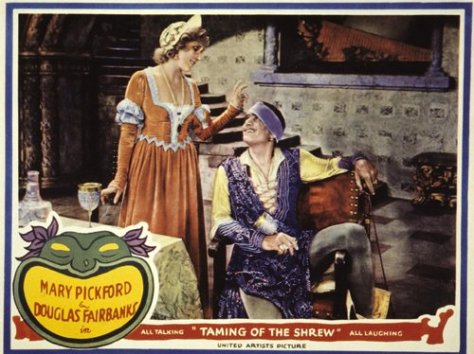








![0 R UMAX Power Look 2000 V1.8 [3]](https://i0.wp.com/filmdialogueone.com/wp-content/uploads/2017/04/romance-of-the-redwoods-11.jpg?w=174&h=117&ssl=1 "0 R UMAX Power Look 2000 V1.8 [3]")




















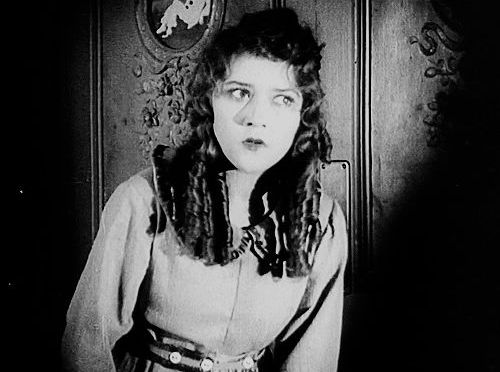


 Film Dialogue
You must be logged in to post a comment.