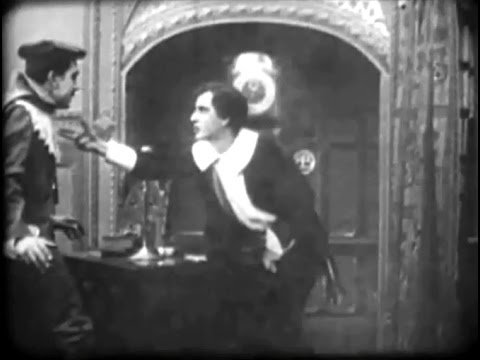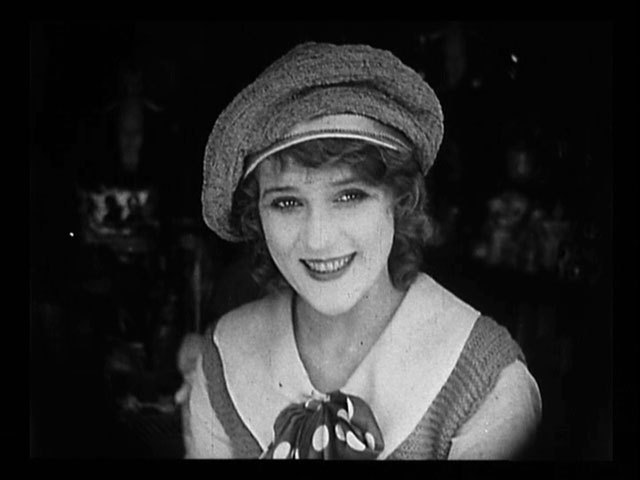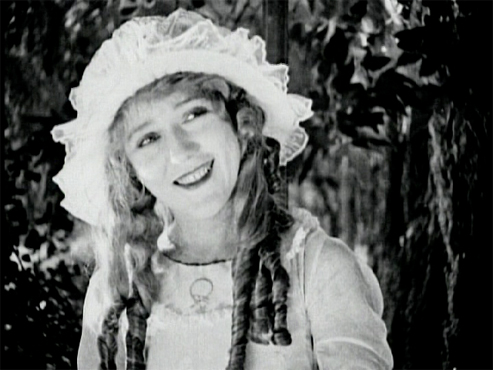
Cast: Mary Pickford, Charles Avery, Robert Harron, Arthur V Johnson, James Kirkwood, Owen Moore, Lottie Pickford, Mack Sennett, Billy Quirk, Anthony O’Sullivan
3 min
D W Griffith
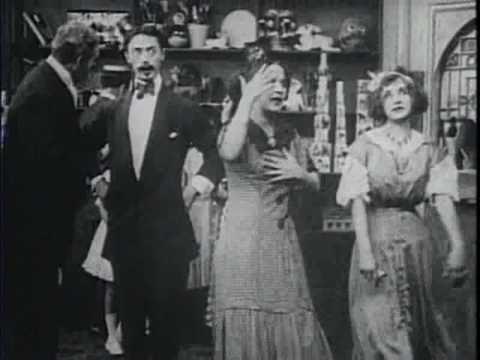
The Little Darling is a 1909 short film directed by D. W. Griffith. Released in split-reel for with Griffith’s The Sealed Room.[1]
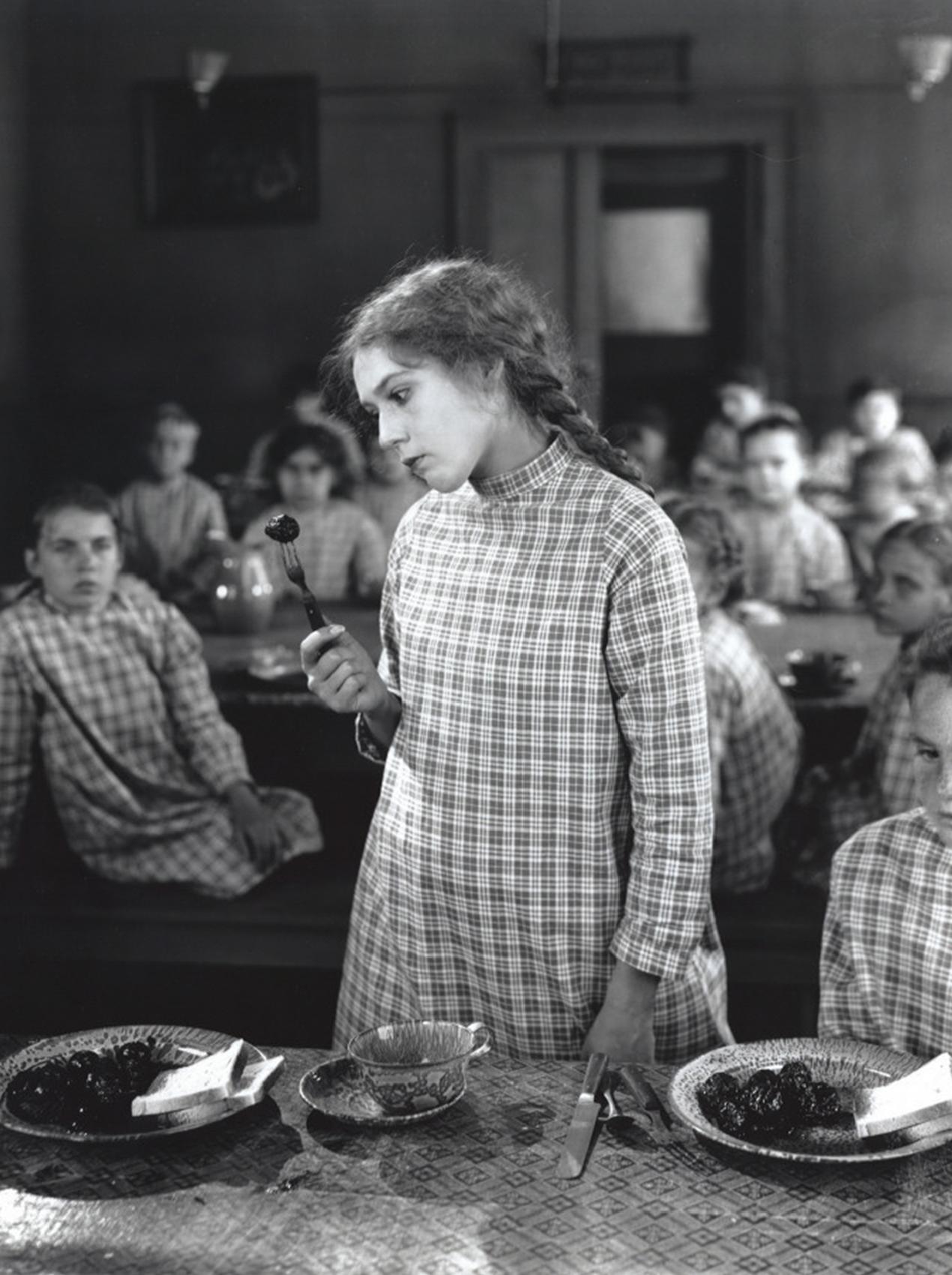
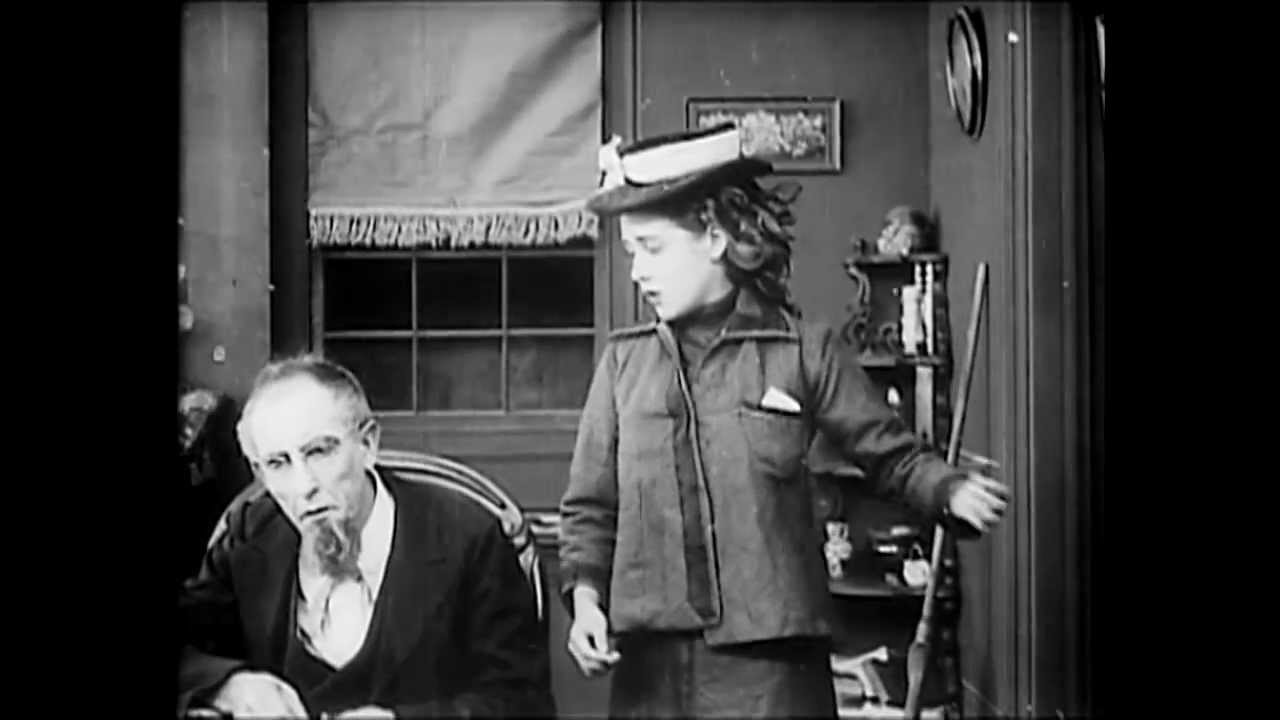
A police officer finds a baby in a trash can, and Mrs. Lippett, the cruel matron at an orphanage where children are made to work, names her “Jerusha Abbott” (she picks “Abbott” out of a phone book and gets “Jerusha” from a tombstone). The orphan, who comes to be called Judy, does what she can to stand up for the younger children, frequently clashing with both Mrs. Lippett and the cold hearted trustees. At one point she leads a rebellion against being served prunes with every meal and at another, steals a doll from a selfish rich girl to lend to a dying orphan.
Years later, wealthy Jervis Pendleton, a mysterious benefactor, pays to send Judy, now the oldest and most talented child in the orphanage, to college. He insists, however, that Judy must never try to contact him in person. Judy calls him “Daddy-Long-Legs,” and writes to him, however. Judy proves popular with her wealthier and more “aristocratic” classmates, and writes a successful book to repay “Daddy-Long-Legs” the money he spent on her. She is generally happy but misses not having any real family members to take pride in her accomplishments. Judy also finds herself caught up in a romantic triangle with the older brother of a classmate and an older man (who is, unknown to her, her mysterious benefactor). She eventually chooses the older suitor and is delighted to learn that he is her “Daddy-Long-Legs.”
Cast: Mary Pickford, Owen Moore, Frank Powell, Arthur V Johnson, James Kirkwood, Marion Leonard, Lottie Pickford, Mack Sennett
11 min
D W Griffith
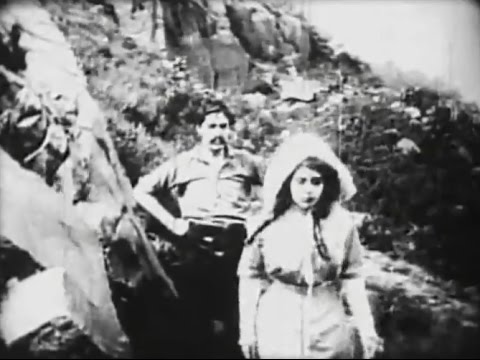
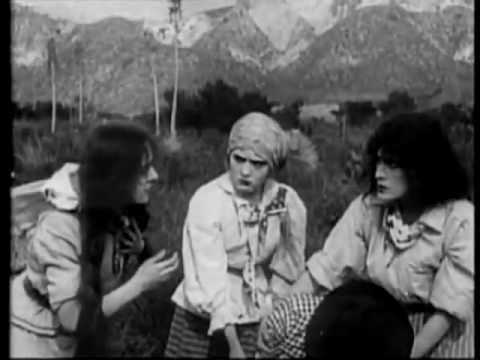
An Indian comforts a dying prospector in his last moments. In exchange, the prospector tells him the location of his gold claim. A group of cowboys tries to get the information and go as far as kidnapping the Indian’s wife.
D W Griffith made this film in 1909 for Biograph Productions.
Cast: Mary Pickford, George Nichols, Grace Henderson, Mack Sennett, Edward Dillon, Anthony O’Sullivan, Alfred Paget, Kate Bruce, Henry B Walthall, Claire McDowell, Linda Arvidson, Florence Barker, Dorothy West
Griffith employs many of his favorite actors of that period: Linda Arvidson (wife of Griffith), George Nichols (in the title role), Jeanie Macpherson , who three years later will start a successful career as a screenwriter and the young Mary Pickford in a young girl invalid role.
A wealthy, callous moneylender finds a terrifying way to learn about money’s limitations.
Production
The short film was produced by the Biograph Company . It was shot – from 10 to 15 July 1910 – in New York, at the Biograph studios on Fourteenth Street [1] .
Distribution
Distributed by the Biograph Company , this film was released in US cinemas on August 15, 1910. A copy of the film is kept in the archives of the Library of Congress and Museum of Modern Art . The rights of the film are in the public domain [1] .
In 2002, Kino on Video published an anthology on DVD entitled Griffith Masterworks: Biograph Shorts (1908-1914) lasting 362 minutes which also contained this film in a version of 18 minutes [2] .
Cast: Mary Pickford, Billy Quirk, James Kirkwood, Edwin August, Florence Barker, Kate Bruce, Arthur V Johnson, Florence La Badie, George Nichols, Lottie Pickford, Henry B Walthall, Mack Sennett
Cast: Mary Pickford, Charles West, Herbert Prior, Anita Hendrie, Harry Solter, Arthur V Johnson, David Miles, Frank Powell, Billy Quirk, Edwin August, Charles Avery
11 min
D W Griffith
The Son’s Return is a silent short film made in 1909 and directed by D W. Griffith . Produced and distributed by the Biograph Company , the film – shot in Coytesville, New Jersey – was released in theaters June 14, 1909.
The son leaves home to go to town to seek his fortune. After many years, back in the parents’ inn that did not recognize him but, noting his bulging portfolio of notes, plan to rob the unknown customer.
Distributed by the Biograph Company, the film – a short film in a coil – was released in US theaters on June 14, 1909. The film was mastered and poured on DVD. Released in 2006 by Grapevine, it has been included in an anthology titled DW Griffith, Director – Volume 3 (1909) which has a dozen titles for a total of 112 minutes [2] .
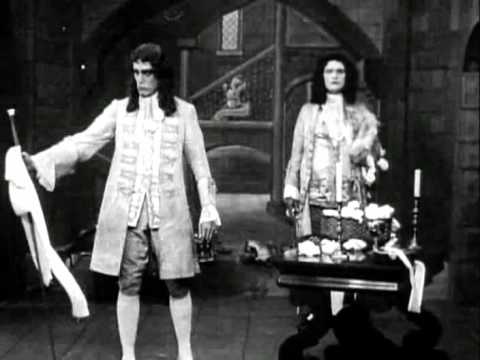
The film’s theme of immurement draws inspiration from Balzac‘s “La Grande Bretêche“,[2] and Edgar Allan Poe‘s “The Cask of Amontillado“. The king constructs a cozy, windowless love-nest for himself and his concubine. However, she is not faithful to her sovereign, but consorts with the court troubadour. In fact, they use the king’s new play chamber for their trysts. When the king discovers this, he sends for his masons. With the faithless duo still inside, the masons use stone and mortar to quietly seal the only door to the vault. The two lovers suffocate and the film ends.
Cast: Mary Pickford, Edwin August, Alfred Paget, Mae Marsh, Marguerite Marsh, Robert Harron, Henry Lehrman, Lottie Pickford, Charles West, Francis J Grandon
Jump up^Catalog of Holdings The American Film Institute Collections and The United Artists Collection at The Library of Congress (<-book title) p.13 c.1978 by the American Film Institute
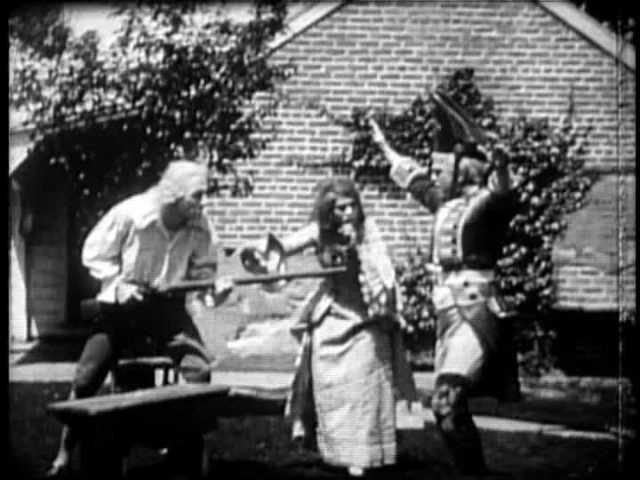
A young soldier during the American Revolution has the mission to carry a crucial message to General Washington but he is spotted by a group of enemy soldiers called Hessians. He finds refuge with a family, but the enemies soon discover him. After that the family and neighbors plan to find out a way to send the important message.
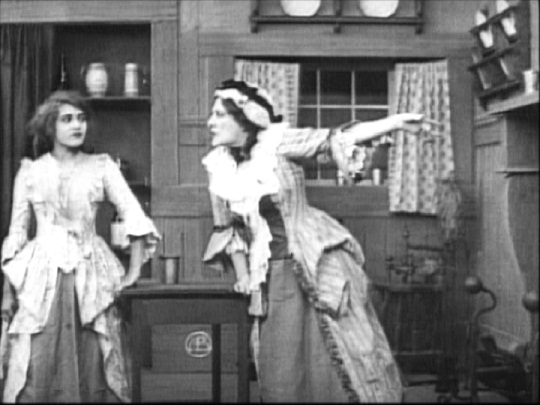
Peggy is a feisty peasant girl who catches the eye of a wealthy lord. Enamored with her, he proposes, but she harshly refuses. Her mother pushes her into the marriage against her will. After their marriage, she makes a fool of herself among the socialites at her husband’s party. In the height of her embarrassment, her husband’s nephew convinces her to run away with him. She innocently agrees, but it soon becomes obvious what the nephew’s true intentions were.
Cast: Mary Pickford, Henry B Walthall, Francis J Grandon, Kate Bruce, W Chrystie Miller, Dorothy Bernard, Robert Harron, Mae Marsh, Jack Pickford, Mack Sennett, Charles West, Dotothy West
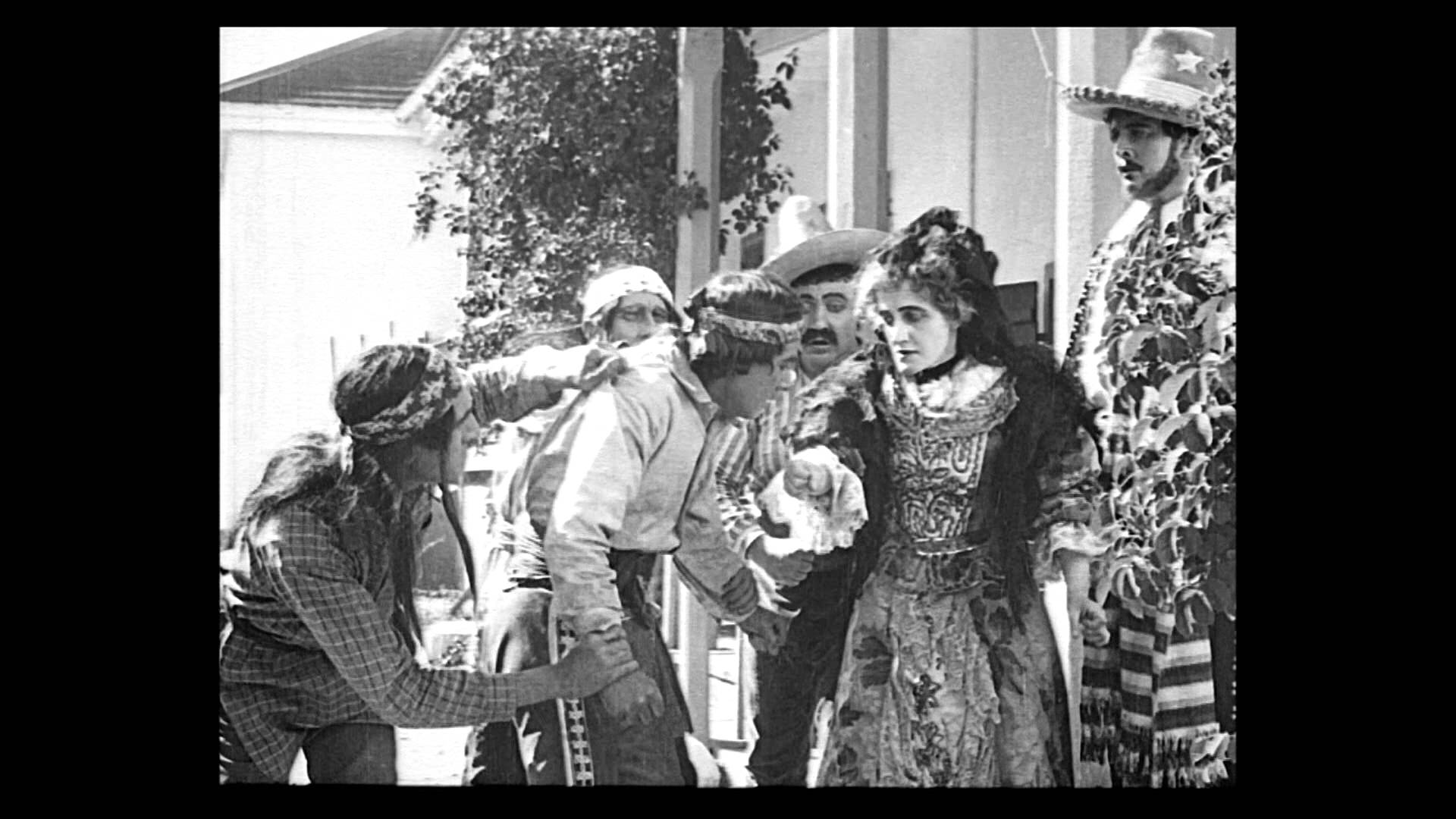
Ramona chronicles the romance between Ramona (Mary Pickford), a Spanish orphan from the prestigious Moreno family, and Alessandro (Henry B. Walthall), an Indian who appears on her family’s ranch one day. A man named Felipe (Francis J. Grandon) proclaims his love for Ramona, but she rejects him because she has fallen for Alessandro.
They fall deeply in love, yet their desire to wed is denied by Ramona’s stepmother, who reacts by exiling Alessandro from her ranch. He returns to his village, only to find that it has been demolished by white men. Meanwhile, Ramona is informed that she also has “Indian blood”, which leads her to abandon everything she has to be with Alessandro.
They marry, and live among the wreckage of Alessandro’s devastated village. They have a child together and live at peace until the white men come to force them from their home as they claim the land. Their baby perishes, and then Alessandro is then killed by the white men. Ramona is then rescued by Felipe and returned to her family back on the ranch.[3]
Cast: Herbert Prior, Mary Pickford, Owen Moore, David Miles, Harry Solter, Marion Leonard, Charles Avery, Mack Sennett
D W Griffith
The Violin Maker of Cremona is an American silentshort film made in 1909 and directed by DW Griffith . This is Pickford’s first fully credited film. However, it is presently still unclear whether she had extras roles in previous Biograph films.
Story
Cremona held a competition on the best violin. If you win this game, you may marry the beautiful Gianinna. Two people start fighting for her hand.
A girl wants to go to a ball, admission one Liberty Bond, but rather than go herself, she loans the bond to a girlfriend. A soldier and a sailor find out and take her to the ball with them.
Distributed by Famous Players-Lasky even with the alternative title 100% American , the short film was released in US theaters on October 5, 1918. Since the star Mary Pickford at the time was still a Canadian citizen, in Canada the film was given the title 100% Canadian [1] .
The film has been included in an anthology distributed in October 2007 by the National Film Preservation Foundation.
On NTSC , the DVD box set offers a total of 739 minutes entitled Treasures III: Social Issues in American Film (1900-1934) [2] .
Cast: Mary Pickford, Norman Kerry, Katherine Griffith, Anne Schaefer, Zasu Pitts, WE Lawrence, Theodore Roberts, Gertrude Short, Gustav von Seyffertitz, Loretta Blake, George A McDaniel, Edythe Chapman, Josephine Hutchinson, Joan Marsh, Joe Murphy
As described in a film magazine,[2] Sara Crewe (Pickford) is treated as a little princess at the Minchin boarding school for children until it is learned that her father has lost his entire fortune, and she is made a slavey (a household servant). She and Becky (Pitts), another slavey, become close friends who share their joys and sorrows.
Christmastime draws near and the girls watch the preparations wistfully. Their loneliness arouses the sympathy of a servant of the rich Mr. Carrisford. On the night before Christmas he prepares a spread for the slaveys in their attic. He calls his master Mr. Carrisford (von Seyffertitz) to watch their joy, but both are witness to the slaveys being abused and whipped by Miss Minchin (Griffith). Carrisford interferes and learns that Sara is the daughter of his best friend. He adopts Sara and Becky and in their new home they have a real Christmas.
The film opens with Sarah’s father moving back to London after serving in the British Army in India. She is opposed to leaving the luxurious life of an officer’s child with a large house and many servants, and is initially shy when enrolled in Miss Minchin’s School. Her reputation as “the little princess” precedes her and the other girls are fascinated with her tales of life in India. The girls sneak into Sarah’s room at night to listen to her stories. One night, she tells “Ali Baba and the Forty Thieves” which becomes a story within a story with elaborate exotic sets and costumes.
The film opens in a fancy restaurant where the husband and a woman who is not his wife are polishing off a bottle of wine. Cut to home, where a dejected wife sits at the dining room table waiting for her husband. She briefly nods off before rousing and checking the wall clock indicating that it’s getting late. Cut back to the fancy restaurant, where the husband settles the check with a large wad of bills. The waiter obliges by helping the husband and his lady companion with their hats and coats. The other woman kicks the husbands hat out of his hand.
Six hours later, the husband strides through the door awakening his wife who is still sitting by the dining room table. He rebuffs her attempt to take his hat, whereupon she points to the wall clock. She draws his attention to dinner, which still sits on the dining table. He upends a few dishes then overturns a chair before collapsing on the sofa, cigarette in hand. Upset, the wife walks off camera and the scene fades to black.
In the next scene, introduced by a title card stating “HIS DREAM”, the wife returns, clad in a form-fitting dress and a plumed hat. She awakens the husband by jostling his head. Talking animatedly, she downs a couple of glasses of wine from a decanter on the sideboard and tosses the wineglass on the floor. She drop-kicks a plate, lights up a cigarette, flicks the match at her husband, and blows smoke in his face. She pelts him with a pillow that has been lying on the floor, slings her coat over her arm, pulls down the curtains covering the door, and blows the husband a kiss goodbye. A well-appointed gentleman arrives at the front steps to their house a second or two before the wife steps out the front door and they leave together.
Confounded by what he has just witnessed, the husband grabs his hat and coat and leaves. The wife and her gentleman caller arrive by taxi at the fancy restaurant where they are shown to the same table the husband had occupied earlier. The husband arrives hot on their heels, briefly considers confronting them, but then flees, distressed by the whole affair. He stumbles out into the street before returning home. There he rants wildly, repeatedly grasping his forehead before settling down to compose a letter which reads in part “You’re not the woman I supposed you were.” Stumbling to the sideboard, he pulls out a small revolver from a drawer, points it at his abdomen, pulls the trigger, and collapses spasmodically on the sofa.
In the next scene, introduced by a title card stating “HIS AWAKENING”, he falls off the sofa and stands up, clutching his abdomen. His wife enters the scene, this time reclad in her modest attire, and startles him. He recounts his vivid experience, she comforts him and helps him realize it was all just a dream. While she turns her attention to preparing dessert on the dining room table, he pulls his address book from his suitcoat pocket and shreds it. Reconciled, they embrace and then settle down to eat the confection.
Polly Biblett (Mary Pickford), a young lady, tells her grandmother Lettie about her new boyfriend. The news provokes the elderly woman to reminisce about her own sweetheart, long time before. The touching sequence expresses the power of lives going on, the older woman aging as her grandchildren grow and knowing they will soon have children of their own.
In Old Madrid (1911) is a Mary Pickford film directed by Thomas H Ince.
Thomas H Ince
Synopsis
Don Gomez writes a letter to the parents of Zelda, a young Spanish girl, regretting his inability to pay them a visit, but sends his son, Jose, instead. Jose arrives and is immediately smitten by the charms of Zelda. Zelda indulges in a little flirtation.
Her mother inaugurates a system of espionage that is very inconvenient for the lovers. They are surprised by the duenna-like mother and are driven to desperation.
Zelda has a girlfriend about her age who resembles her and is attired to represent a clever counterpart of Zelda. The mother walks in the garden accompanied by Zelda. Seating herself on a bench, she commands the girl to repose beside her. Finding the vigil rather tiresome, the elder woman lapses into a state of drowsiness, and the companions of Zelda beckon her to join them.
So clever is the disguise of Rosa that Jose is deceived and he kisses her. The father of Zelda discovers the act and hastens to the mother to inform her only to see Zelda yawning beside his wife on the bench. Exhausted, the guardian falls asleep, and Rosa exchanges places with Zelda, who joins her lover. Jose induces Zelda to accompany him to the seashore.
He gathers the girl in his arms, and wades across a stretch of water, and they take a perilous position on the rocks. A search is instituted and Zelda and Jose are discovered on the rocks. Jose has a scheme which he quickly imparts to Zelda and she acquiesces. The irate parents see the daughter and her lover.
Jose is firm and threatens to throw Zelda into the roaring torrent, unless the parents consent to their immediate marriage. The agonized parents relent. The obdurate parents have been outwitted by the scheming lovers.
This is one of the earliest surviving prints from the beginning of Mary Pickford’s career. It is assumed to have been her 9th film.
Director: D W Griffith
Cast: David Miles, Marion Leonard, Mary Pickford, Gladys Egan, Adele DeGarde, Robert Harron, James Kirkwood, Florence Lawrence, Owen Moore, Mack Sennett
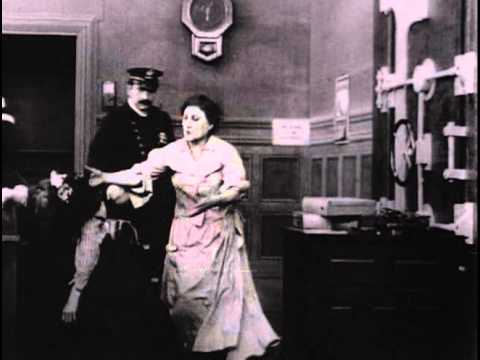
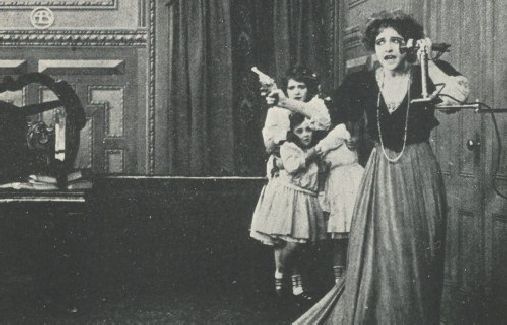
A group of criminals waits until a wealthy man goes out to break into his house and threaten his wife and daughters. They refuge themselves inside one of the rooms, but the thieves break in. The father finds out what is happening and runs back home to try to save his family.
The Lonely Villa was produced by the Biograph Company and shot in Fort Lee, New Jersey.[3][4] It was released on June 10, 1909 along with another D.W. Griffith split-reel film, A New Trick.[2]
Jump up^Choi, Jinhee; Wada-Marciano, Mitsuyo, eds. (2001). Horror to the Extreme: Changing Boundaries in Asian Cinema. Hong Kong University Press. p. 111. ISBN962-209-973-4.
Cast: Mary Pickford, Charles Hill Mailes, Kate Bruce, Lionel Barrymore, Alfred Paget, Claire McDowell, Mae Marsh, Madge Kirby, Lillian Gish, Jack Pickford, Robert Harron, Dorothy Gish, Mack Sennett
The New York Hat is one of the most notable of the Biograph Studios short films and is perhaps the best known example of Pickford’s early work, and an example of Anita Loos‘s witty writing. The film was made by Biograph when it and many other early U.S. movie studios were based in Fort Lee, New Jersey at the beginning of the 20th century.[1][2][3]
Plot
Mollie Goodhue leads a cheerless, impoverished life, largely because of her stern, miserly father. Mrs. Goodhue is mortally ill, but before dying, she gives the minister, Preacher Bolton, some money with which to buy her daughter the “finery” her father always forbade her.
Mollie is delighted when the minister presents her with a fashionable New York hat she has been longing for, but village gossips misinterpret the minister’s intentions and spread malicious rumors. Mollie becomes a social pariah, and her father tears up the beloved hat in a rage.
All ends well, however, after the minister produces a letter from Mollie’s mother about the money she left the minister to spend on Mollie. Soon afterwards, he proposes to Mollie, who accepts his offer of marriage.
Based upon a summary in a film publication,[2] Angela (Pickford), an Italian girl, bids goodbye to her second brother, who is the youngest, as he goes off to join the troops. Then comes news that her older brother has been killed in the war. Giovanni (Bloomer), who loves Angela, tries to comfort her, and then he too is called. Left alone, Angela is made a keeper of the lighthouse. Joseph (Thomson) arrives and says that he is an American and a deserter. They are later secretly married. One night he has Angela flash him a “love” signal using the lighthouse.
The next morning an Italian ship carrying wounded men is reported as having been destroyed at midnight, the hour when the signal was sent. Angela steals some chocolate from Tony (Regas) for Joseph to take with him. When she arrives home, she hears Joseph murmur in his sleep “Gott mitt uns,” and it dawns on her that her husband is a German spy. Tony traces the theft to her, and after he says that her wounded brother had been on the ship, she realizes that it was the signal that sent her brother to his death. She gives up Joseph, who still proclaims his love for her. Joseph breaks away from his jailers and plunges over a cliff to his death. Later, with her and Joseph’s baby, Angela is happy with her old sweetheart Giovanni, who has returned from the war blind.
Photoplay published a very critical review by Burns Mantle. He wrote, in summary, “The Love Light is a poor picture in the sense of being quite unworthy of the star’s talents. The story is developed without reasonable logic and filmed with only the value of the pictures in mind. The Love Light’s one value to my mind is that it takes the nation’s sweetheart out of curls and short frocks and makes a woman of her.”[3]
Cast: Mary Pickford, Anne Schaefer, Fred Huntley, Monte Blue, Douglas MacLean, Emory Johnson, John Steppling, Wallace Beery, Wesley Barry, June Prentis, Jean Prentis, Joan Marsh (uncredited), Bull Montana (uncredited)
72 min
Mary Pickford with Frances Marion – Female Hollywood Pioneers
Mary Pickford in Johanna Enlists
Mary Pickford behind the camera
Mary Pickford taking a picture of Douglas Fairbanks
Johanna Enlists is a 1918 silent film comedy-drama produced by and starring Mary Pickford with distributed by Paramount Pictures. The film was directed by William Desmond Taylor from a short story by Rupert Hughes, The Mobilization of Johanna. Frances Marion, a frequent Pickford collaborator, wrote the scenario. The film was made at a time during World War I when sentimental or patriotic films were immensely popular. It was an early starring vehicle for Monte Blue, the male lead opposite Pickford. The film survives in several prints, including one at the Library of Congress.[1][2][3]
As described in a film magazine,[4] Johanna Renssaller (Pickford), an uncouth, freckled country lass, works from dawn until late at night. Her only love affairs were with the hired man and a “beautiful brakeman” on the railroad. The hired man proved to be married and the brakeman proved impossible. She prayed for a beau, and then a whole regiment of soldiers came along and camped on the farm. Everyone from Captain Archie van Renssaller (MacLean) down to Prvate Vibbard (Blue) fell in love with her, ate her pies, and sat in her hammock. She took milk baths and tried Isadora Duncan style calisthenics and finally fell in love with Captain van Renssaller. When the troops moved on, she rode at the head of the officer staff.
Like many American films of the time, Johanna Enlists was subject to cuts by city and state film censorship boards. For example, the Chicago Board of Censors required a cut, in Reel 4, of views of a nude figure in a book.[5]
References
Jump up^The American Film Institute Catalog Feature films: 1911–20 published by The American Film Institute, c. 1988
Jump up^Catalog of Holdings The American Film Institute Collection and The United Artists Collection at The Library of Congress, p. 93 by The American Film Institute, c. 1978
You must be logged in to post a comment.