Prepared by Daniel B Miller
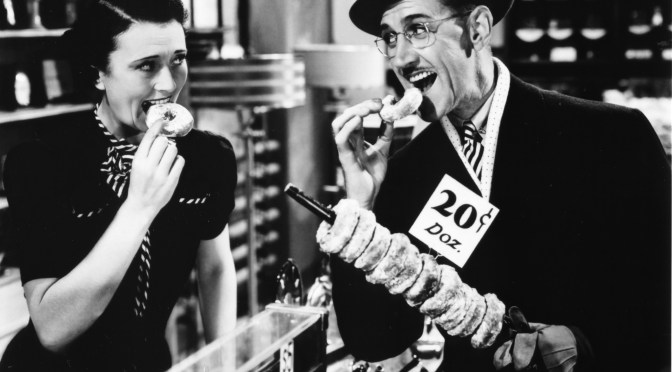
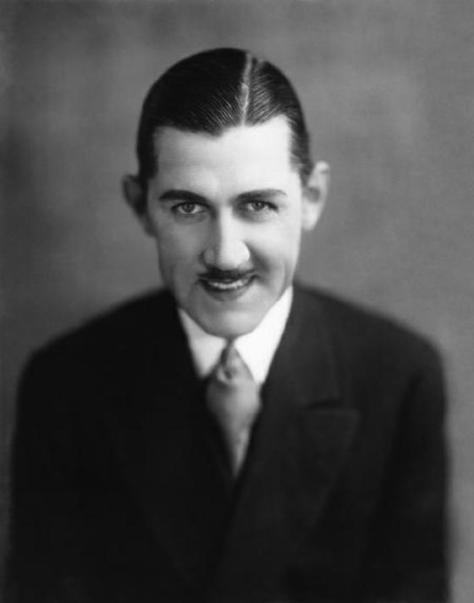
Charley Chase (born Charles Joseph Parrott, October 20, 1893 – June 20, 1940) was an American comedian, actor, screenwriter and film director, best known for his work in Hal Roach short film comedies. He was the older brother of comedian/director James Parrott.
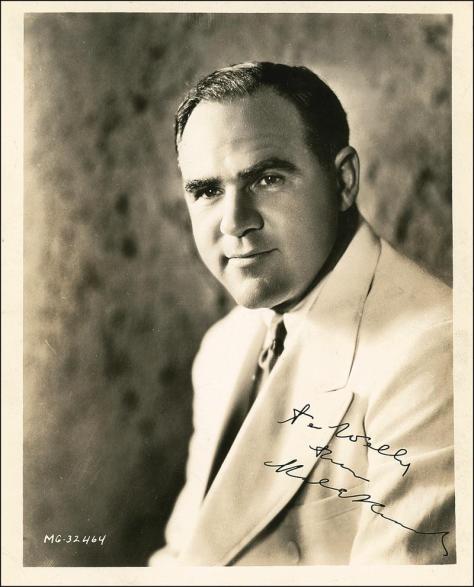
Hal Roach
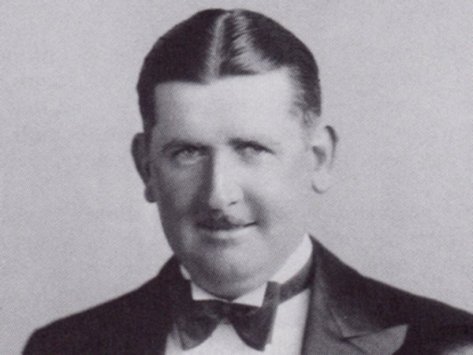
James Parrot – Film Director and Charley Chase’s brother
Contents
Life and career
Born Charles Joseph Parrott in Baltimore, Maryland, Charley Chase began performing in vaudeville as a teenager and started his career in films by working at the Christie Film Company in 1912.
He then moved to Keystone Studios, where he began appearing in bit parts in the Mack Sennett films, including those of Charlie Chaplin.
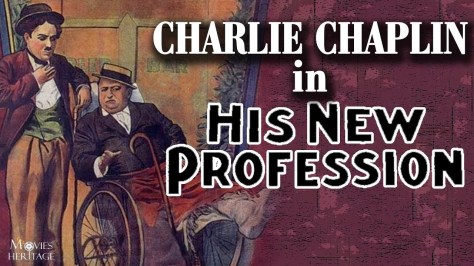
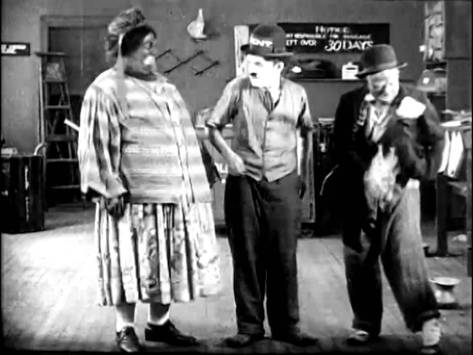
Poster for His New Profession (Charles Chaplin, 1914) with Charles Chaplin and Charley Chase
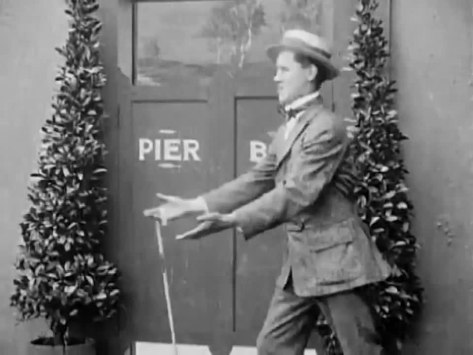
His New Profession (Charles Chaplin, 1914) with Charles Chaplin and Charley Chase
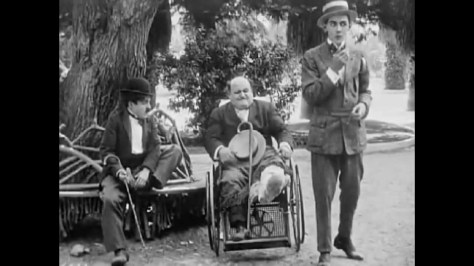
His New Profession (Charles Chaplin, 1914) with Charles Chaplin and Charley Chase
By 1915 he was playing juvenile leads in the Keystones, and directing some of the films as Charles Parrott. His Keystone credentials were good enough to get him steady work as a comedy director with other companies; he directed many of Chaplin imitator Billy West‘s comedies, which featured a young Oliver Hardy as villain.
Charley Chase, Billy West and Oliver Hardy in The Hobbo (Arvid L Gillstrom, 1917)
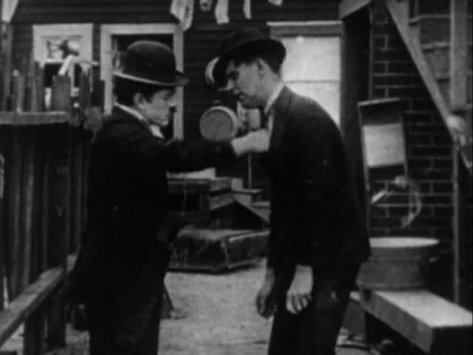
Charley Chase, Billy West and Oliver Hardy in Playmates (Charley Chase, 1918)
He worked at L-KO Kompany during its final months of existence. Then in 1920, Chase began working as a film director for Hal Roach Studios.
Among his notable early works for Roach was supervising the first entries in the Our Gang series, as well as directing several films starring Lloyd Hamilton; like many other silent comedians, Chase is reported to have regarded Hamilton’s work as a major influence on that of his own. Chase became director-general of the Hal Roach studio in late 1921, supervising the production of all the Roach series except the Harold Lloyd comedies.
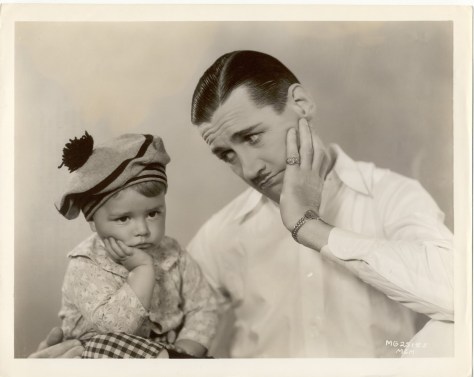
Charley Chase and Our Gang 1920s – Hal Roach Studios
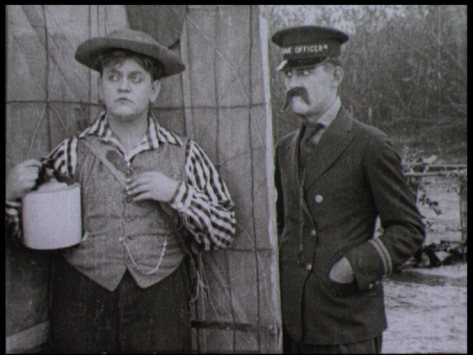
Moonshine (Charley Chase, 1920) Charley Chase with Lloyd Hamilton
Following Lloyd’s departure from the studio in 1923, Chase moved back in front of the camera with his own series of shorts, adopting the screen name Charley Chase.
Chase was a master of the comedy of embarrassment, and he played either hapless young businessmen or befuddled husbands in dozens of situation comedies. His screen persona was that of a pleasant young man with a dapper mustache and ordinary street clothes; this set him apart from the clownish makeups and crazy costumes used by his contemporaries. His earliest Roach shorts cast him as a hard-luck fellow named “Jimmie Jump” in one-reel (10-minute) comedies.
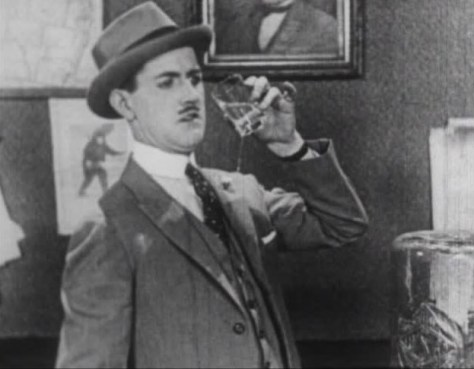
Charley Chase as Jimmy Jump in April Fool (Ralph Ceder, 1924)
The first Chase series was successful and expanded to two reels (20 minutes); this would become the standard length for Chase comedies, apart from a few three-reel featurettes later.
Direction of the Chase series was taken over by Leo McCarey, who in collaboration with Chase formed the comic style of the series—an emphasis on characterization and farce instead of knockabout slapstick. Some of Chase’s starring shorts of the 1920s, particularly Mighty Like a Moose, Crazy Like a Fox, Fluttering Hearts, and Limousine Love, are often considered to be among the finest in silent comedy.
Chase remained the guiding hand behind the films, assisting anonymously with the directing, writing, and editing.
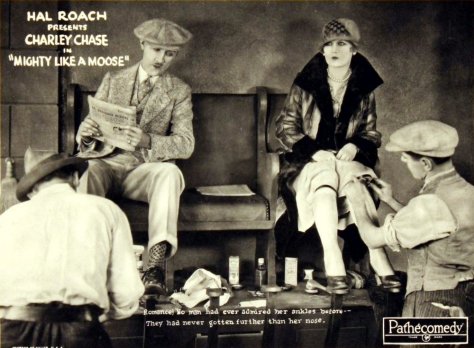
Mighty Like A Moose (Leo McCarey, 1926) with Charley Chase, and Vivien Oakland
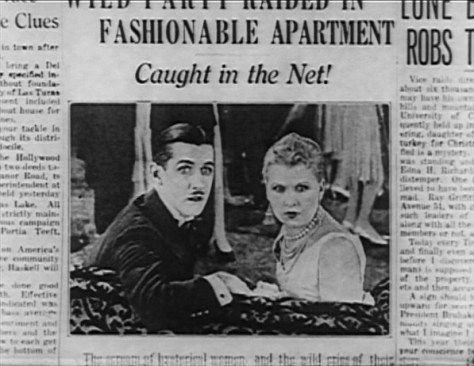
Mighty Like A Moose (Leo McCarey, 1926) with Charley Chase, and Vivien Oakland
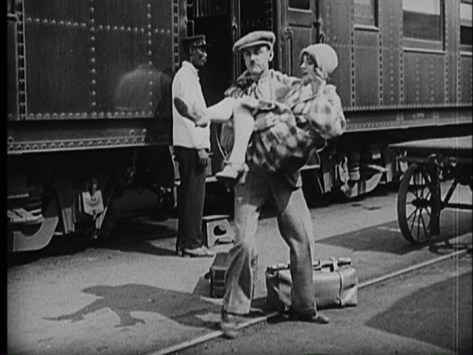
Crazy Like A Fox (Leo McCarey, 1926) Charley Chase with Martha Sleeper
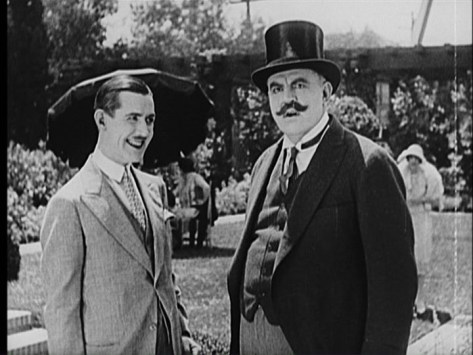
Crazy Like A Fox (Leo McCarey, 1926) Charley Chase with William Blaisdell
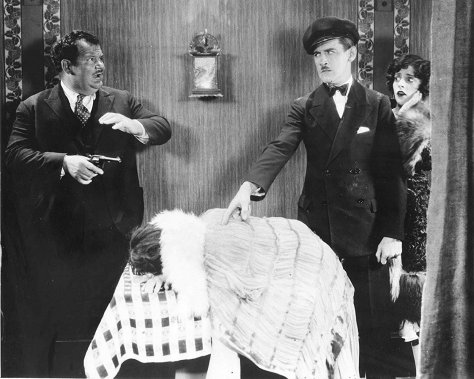
Fluttering Hearts (James Parrot, 1927) Charley Chase with Oliver Hardy and Martha Sleeper
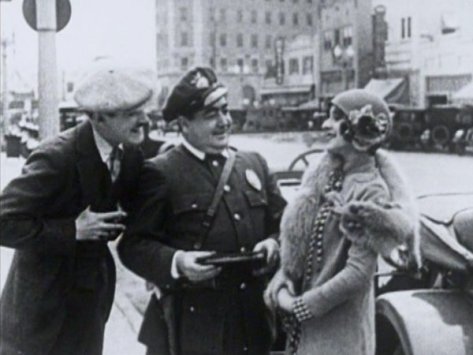
Fluttering Hearts (James Parrot, 1927) Charley Chase with Martha Sleeper and Eugene Paltette
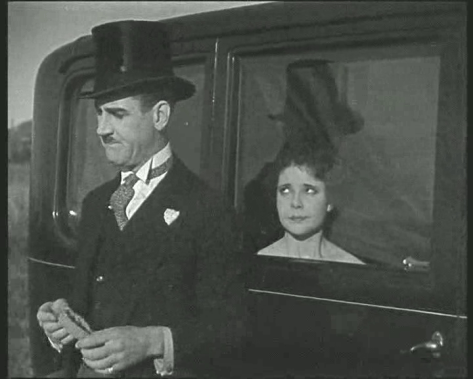
Limousine Love (Fred Guiol, 1928) Charley Chase with Viola Richard
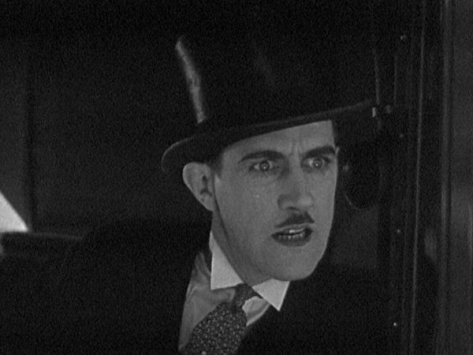
Limousine Love (Fred Guiol, 1928) Charley Chase
Chase moved with ease into sound films in 1929, and became one of the most popular film comedians of the period.
He continued to be very prolific in the talkie era, often putting his fine singing voice on display and including his humorous, self-penned songs in his comedy shorts. The two-reeler The Pip from Pittsburg, released in 1931 and co-starring Thelma Todd, is one of the most celebrated Charley Chase comedies of the sound era.
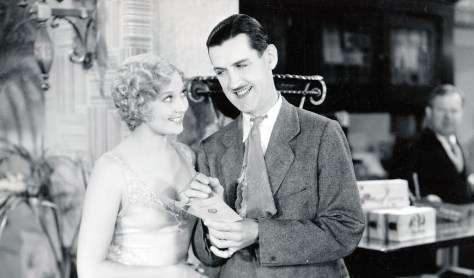
The Pip From Pittsburg (James Parrott, 1931) Charley Chase with Thelma Todd
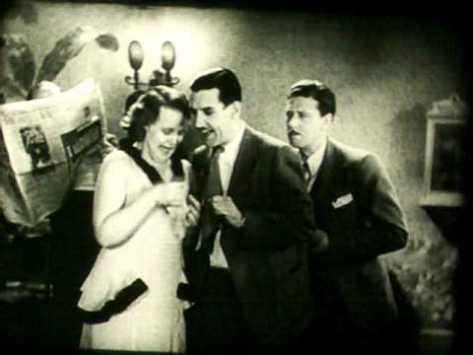
The Pip From Pittsburg (James Parrott, 1931) Charley Chase with Dorothy Granger and Carlton Griffin
Throughout the decade, the Charley Chase shorts continued to stand alongside Laurel and Hardy and Our Gang as the core output of the Roach studio. Chase was featured in the Laurel and Hardy feature Sons of the Desert; Laurel and Hardy made cameo appearances as hitchhikers in Chase’s On the Wrong Trek.
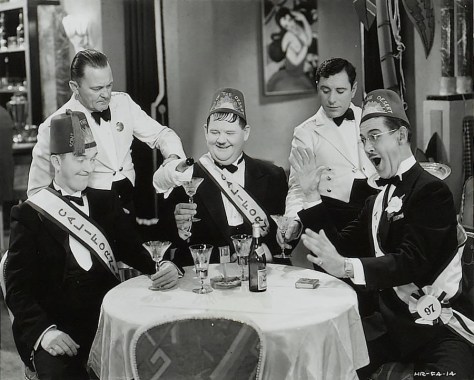
Sons of the Desert (William A Seiter, 1933) Charley Chase with Stan Laurel and Oliver Hardy
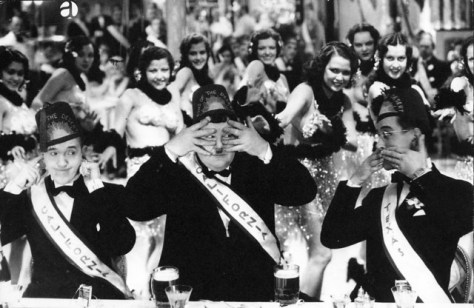
Sons of the Desert (William A Seiter, 1933) Charley Chase with Stan Laurel and Oliver Hardy
On the Wrong Trek was supposed to be the final Charley Chase short subject; by 1936 producer Hal Roach was now concentrating on making ambitious feature films.
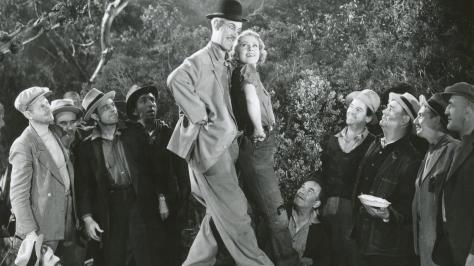
On the Wrong Treck (Charley Chase and Harold Law, 1936) Charley Chase with Rosina Lawrence
Chase played a character role in the Patsy Kelly feature Kelly the Second, and starred in a feature-length comedy called Bank Night, lampooning the popular Bank Night phenomenon of the 1930s.
Chase’s feature was plagued with a host of production problems and legalities, and the film was drastically edited down to two reels and finally released as one last Charley Chase short, Neighborhood House. Chase was then dismissed from the Roach studio.
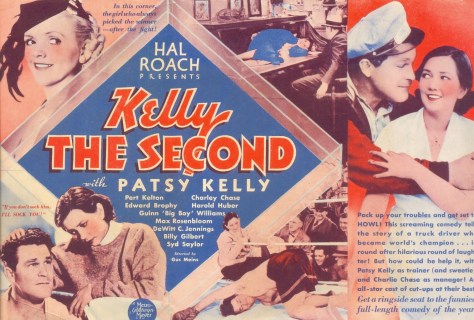
Kelly the Second (Gus Meins, 1936) Poster
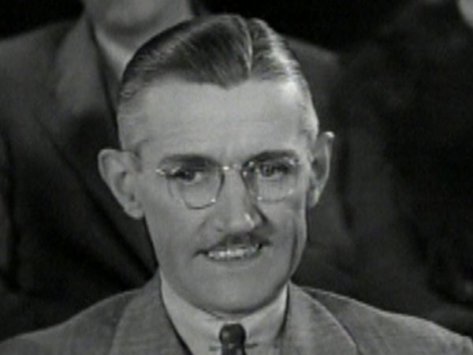
Neighborhood House (Charley Chase and Harold Law 1936) Charley Chase
Later years and death
In 1937, Chase began working at Columbia Pictures, where he spent the rest of his career starring in his own series of two-reel comedies, as well as producing and directing other Columbia comedies, including those of The Three Stooges and Andy Clyde.
He directed the Stooges’ classic Violent Is the Word for Curly (1938); although he is often credited with writing the film’s song “Swinging the Alphabet“,[4] the tune actually originates with 19th-century songwriter Septimus Winner.
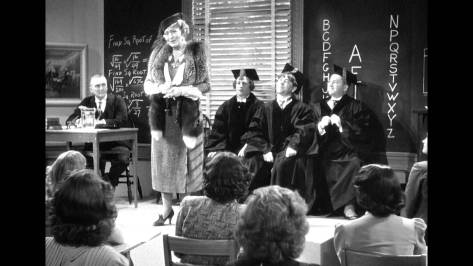
Violent is the Word For Curly (Charley Chase, 1938) Charley Chase with Three Stooges
Recent research asserts that the Chase family’s maid introduced the song to Chase and taught it to his daughters. Chase’s own shorts at Columbia favored broader sight gags and more slapstick than his earlier, subtler work, although he does sing in two of the Columbias, The Grand Hooter and The Big Squirt (both 1937).
Many of Chase’s Columbia short subjects were strong enough to be remade in the 1940s with other comedians; Chase’s The Heckler (1940) was remade with Shemp Howardas Mr. Noisy (1946) while The Nightshirt Bandit (1938) was remade with Andy Clyde as Go Chase Yourself (1948) and again in 1956 as Pardon My Nightshirt.
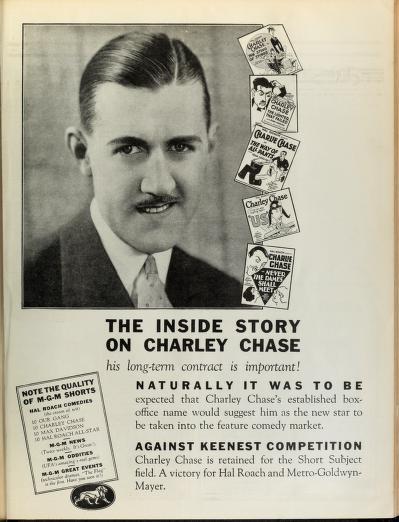
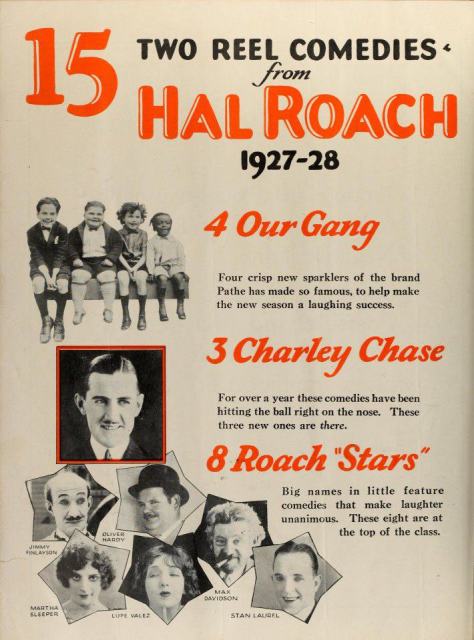
Charley Chase promotional material 1920s
Chase reportedly suffered from depression and alcoholism for most of his professional career, and his tumultuous lifestyle began to take a serious toll on his health. His hair had turned prematurely gray, and he dyed it jet-black for his Columbia comedies.
His younger brother, comedy writer-director James Parrott, had personal problems resulting from a drug treatment, and died in 1939. Chase was devastated. He had refused to give his brother money to support his drug habit, and friends knew he felt responsible for Parrott’s death.
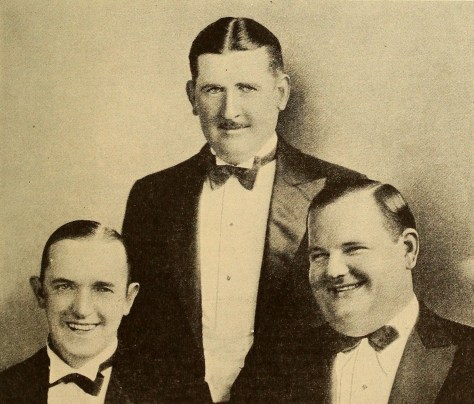
James Parrott with Stan Laurel and Oliver Hardy
He coped with the loss by throwing himself into his work and by drinking more heavily than ever, despite doctors’ warnings. The stress ultimately caught up with him; just over a year after his brother’s death, Charley Chase died of a heart attack in Hollywood, California on June 20, 1940. He is interred in the Forest Lawn Memorial Park Cemetery near his wife Bebe Eltinge in Glendale, California. Brother James Parrott is also interred at Forest Lawn.
For his contribution to the motion picture industry, Charley Chase received a star on the Hollywood Walk of Fame at 6630 Hollywood Boulevard on February 8, 1960.
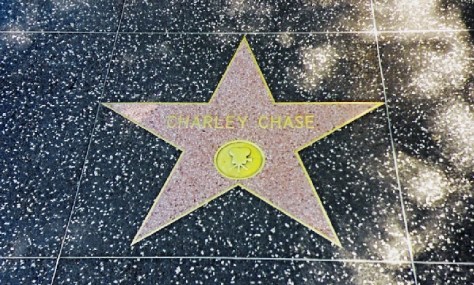
Renewed interest
Since the 1990s, there has been a revival of interest in the films of Charley Chase, due in large part to the increased availability of his comedies. An extensive website researching his life and work, The World of Charley Chase, was created in 1996, and a biography, Smile When the Raindrops Fall, was published in 1998.
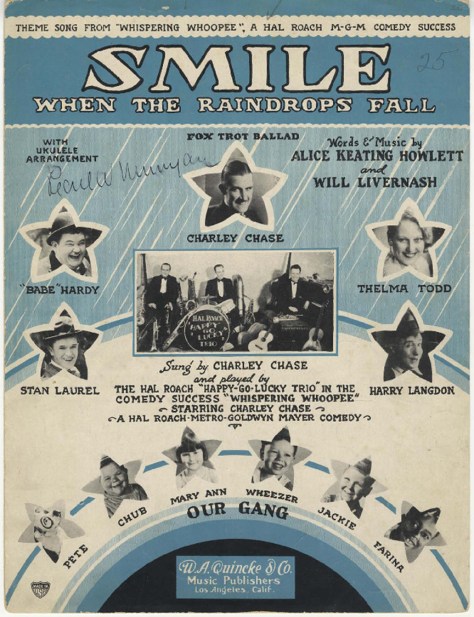
Smile When The Raindrops Fall was the theme song of Whispering Whoopee, a two-reeler from 1930, starring Charley Chase
Chase’s sound comedies for Hal Roach were briefly televised in the late 1990s on the short-lived American cable network the Odyssey Channel. Retrospectives of Chase’s work organized by The Silent Clowns Film Series were held in 1999, 2001, 2006, and 2008 in New York City.
A marathon of selected Charley Chase shorts from the silent era was broadcast in 2005 on the American cable television network Turner Classic Movies. In late 2006, Turner Classic Movies began to air Charley Chase’s sound-era comedies. In January 2011, several of his sound shorts were featured during Turner Classic Movies’ tribute to Hal Roach Studios.
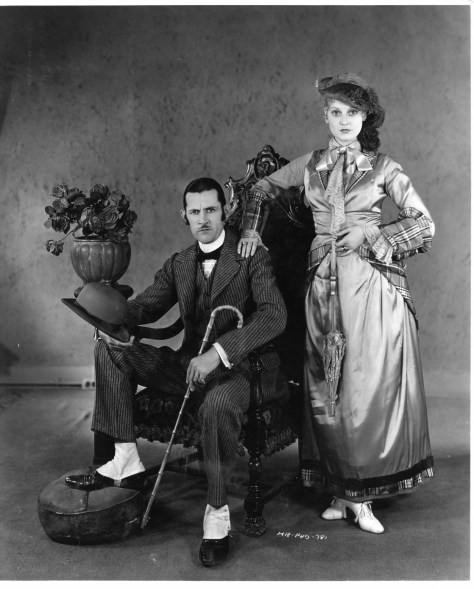
In 2007, Mighty Like a Moose (1926) was selected for inclusion in the Library of Congress’s National Film Registry, solidifying its reputation as one of the most celebrated comedies of the silent era and cementing Chase’s status as a pioneer of early film comedy.
Kino International released two Charley Chase DVD volumes in 2004 and 2005 for their Slapstick Symposium series. The films came from archives and collectors around the world. In July 2009, VCI Entertainment released Becoming Charley Chase, a DVD boxed set of Charley Chase’s early silent films.
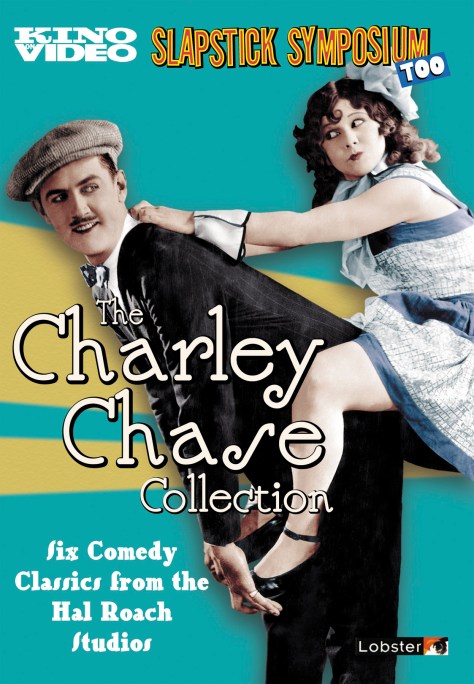
Kino Lorber Charley Chase Collection on DVD
Columbia Pictures has prepared digital restorations of its twenty Charley Chase shorts, in the same manner as its Buster Keaton DVD restorations. On January 1, 2013 Sony Home Entertainment released Charley Chase Shorts Volume 1, part of its “Columbia Choice Collection” MOD DVD-R library. The 1-disc release contains eight of Chase’s starring shorts, and one Smith & Dale short which he directed, A Nag in the Bag (1938). On November 5, 2013 Sony Home Entertainment released Charley Chase Shorts Volume 2, another in their MOD DVD-R series, which contained the remaining twelve Chase shorts.
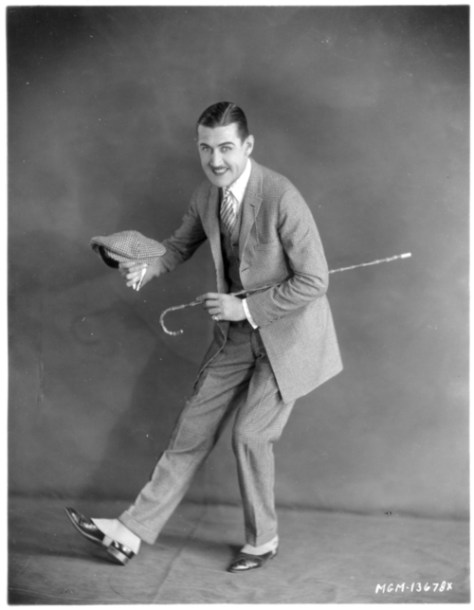
Charley Chase MGM promotional photo
Selected filmography
- The Masquerader (1914)
- Tillie’s Punctured Romance (1914) as Detective in movie theatre (uncredited)
- All Wet (1924)
- Looking for Sally (1925)
- Isn’t Life Terrible? (1925)
- Dog Shy (1926)
- Mighty Like a Moose (1926)
- Crazy Like a Fox (1926)
- Bromo and Juliet (1926)
- Call of the Cuckoo (1927)
- Fluttering Hearts (1927)
- Limousine Love (1928)
- The Pip From Pittsburgh (1931)
- Arabian Tights (1933)[12]
- Sons of the Desert (1933)
- Public Ghost#1 (1935)
- On the Wrong Trek (1936)
- Life Hesitates at 40 (1936)
- The Heckler (1940)
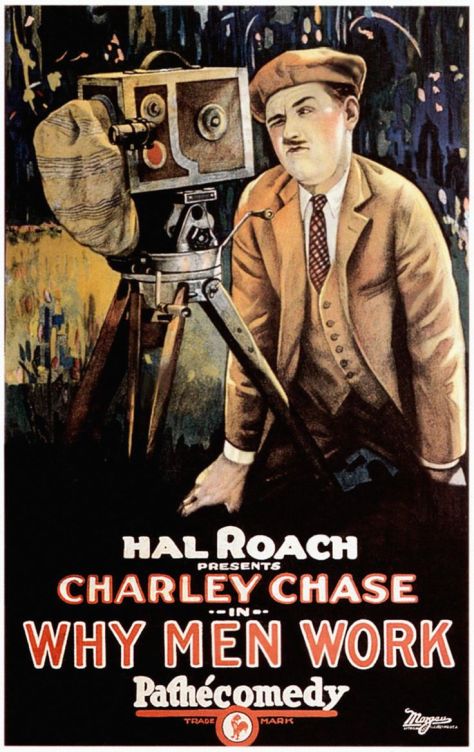
Release poster for Why Men Work (Leo McCarey, 1924)
See also
References
- Jump up^ Anthony, Brian and Edmonds, Andy (1998). Smile When the Raindrops Fall: The Story of Charley Chase. The Scarecrow Press, Inc., 23. ISBN 0-8108-3377-8
- Jump up^ Lahue, Kalton C. and Gill, Samuel (1970). Clown Princes and Court Jesters. A.S. Barnes and Company, 94.
- Jump up^ Solan, Yair. “Many Big Squawks.” The World of Charley Chase. “Archived copy”. Archived from the original on 2010-01-26. Retrieved 2009-07-12.
- Jump up^ Okuda, Ted and Watz, Edward (1986). The Columbia Comedy Shorts: Two-Reel Hollywood Film Comedies, 1933–1958. McFarland & Company, Inc., 27. ISBN 0-7864-0577-5.
- Jump up^ Finegan, Richard. “Swingin’ the Alphabet Composer Finally Identified.” The Three Stooges Journal (Winter 2005): 4.
- Jump up^ “Charley Chase (1893–1940) – Find A Grave Memorial”. http://www.findagrave.com. Retrieved 2016-06-28.
- Jump up^ “BeBe Chase (1888–1948) – Find A Grave Memorial”. http://www.findagrave.com. Retrieved 2016-06-28.
- Jump up^ “James Parrott (1897–1939) – Find A Grave Memorial”. http://www.findagrave.com. Retrieved 2016-06-28.
- Jump up^ “Charley Chase | Hollywood Walk of Fame”. http://www.walkoffame.com. Retrieved 2016-06-28.
- Jump up^ “Charley Chase”. latimes.com. Retrieved 2016-06-28.
- Jump up^ “National Film Registry 2007.” https://www.loc.gov/film/nfr2007.html
- Jump up^ “ARABIAN TIGHTS(1933)“, Turner Classic Movies
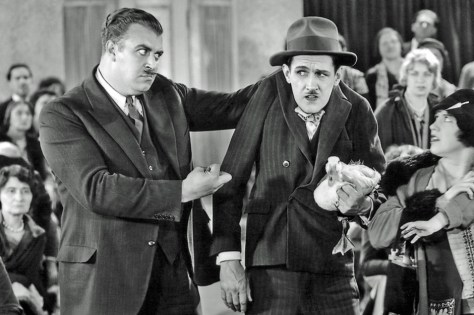
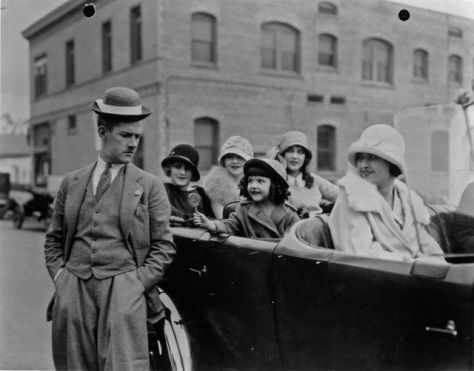


 Film Dialogue
You must be logged in to post a comment.