Tag Archives: archive films

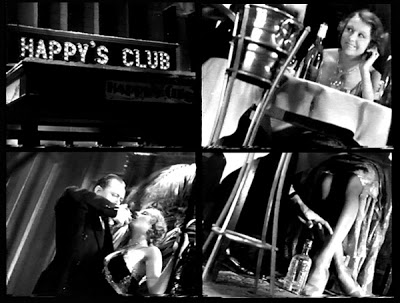
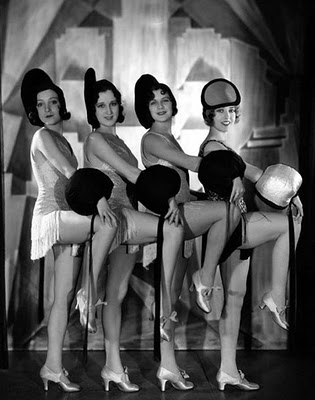
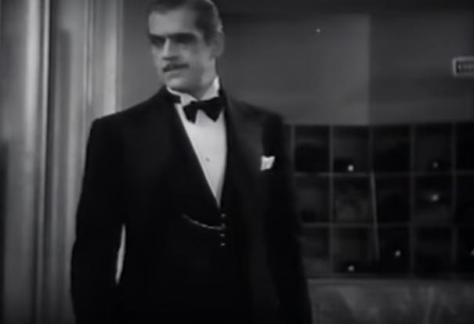
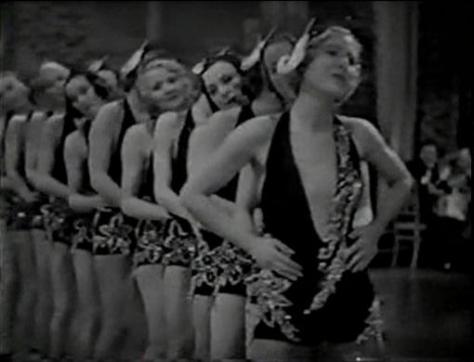
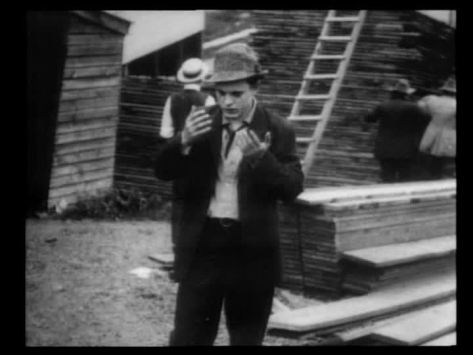
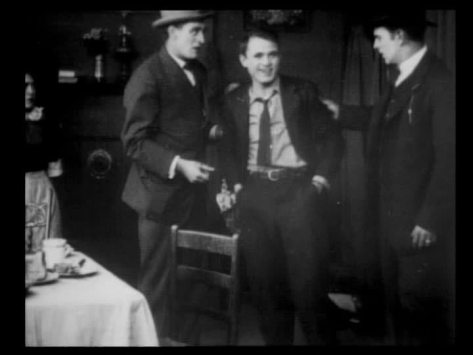
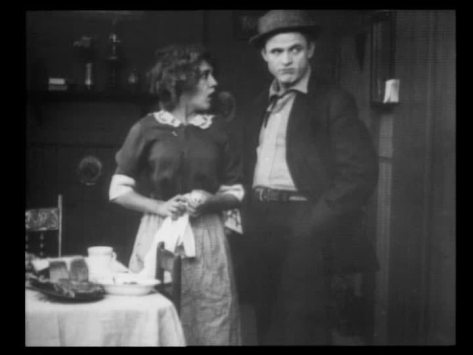
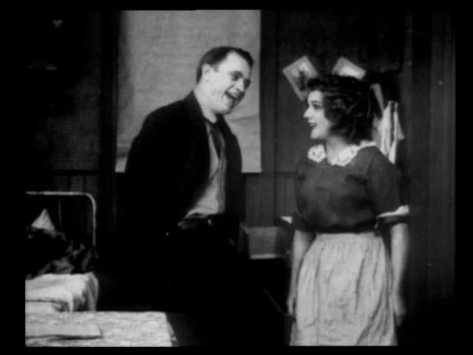
Big News (1929)


Pre Code Logo 1

Pre Code Hollywood Season: FD Cinematheque

Big News (1929)

Big News 2

Director: Gregory La Cava

Cast: Robert Armstrong, Carole Lombard, Louis Payne, Wade Boteler, Charles Sellon, Sam Hardy, Tom Kennedy, Warner Richmond,  Helen Ainsworth, Herbert Clark, George Gabby Hayes, Vernon Steele, Lew Ayres, Lynton Brent

75 min

Big News 4

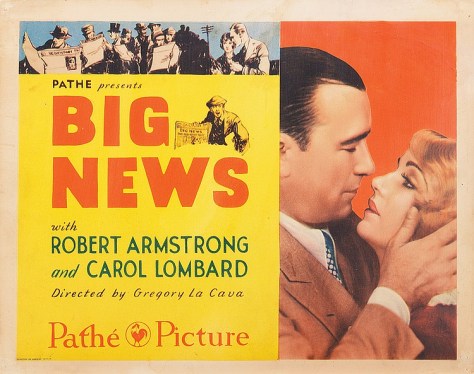
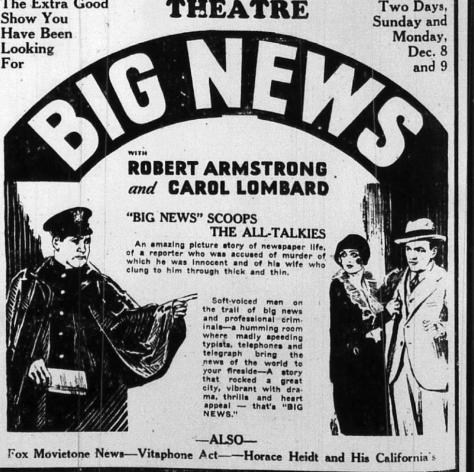
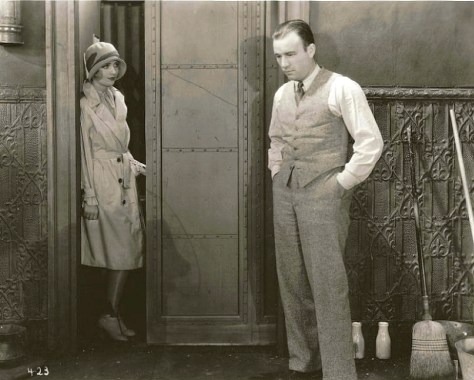
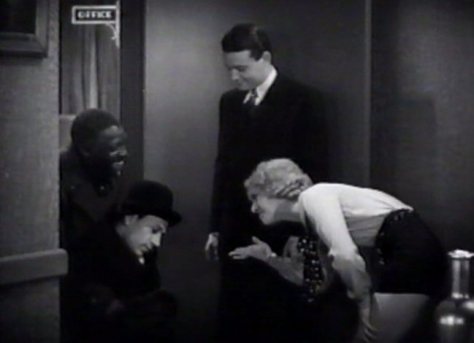
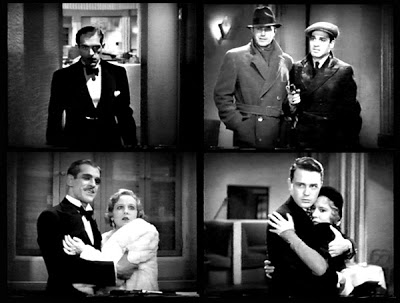
Big News is a 1929 American pre-Code film directed by Gregory La Cava, released by Pathé Exchange, and starring Robert Armstrong and Carole Lombard, billed as “Carol Lombard”.

Cast

Big News 6

Plot

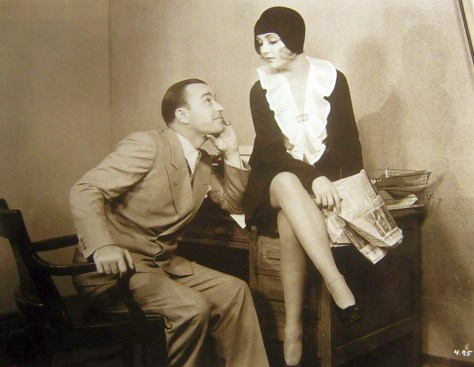
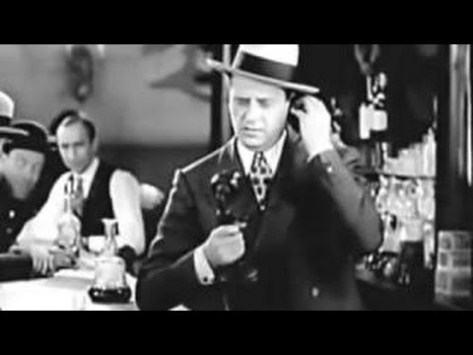
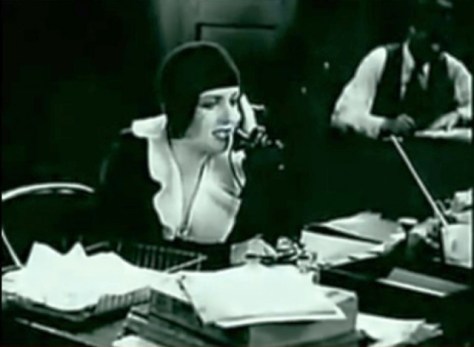
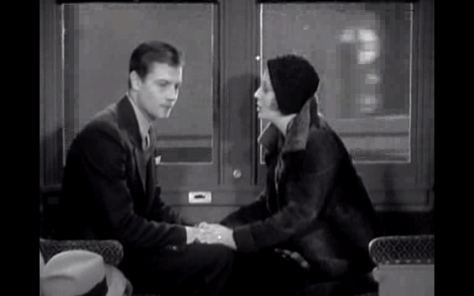
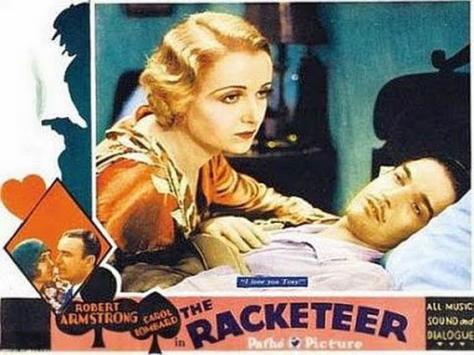
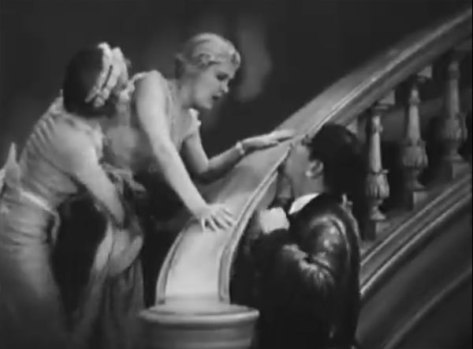
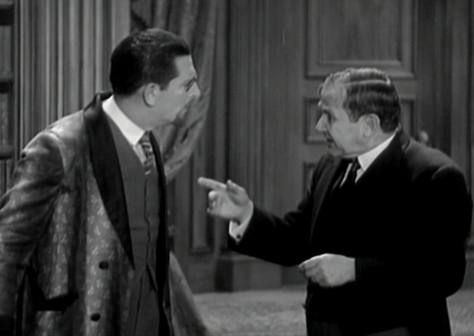
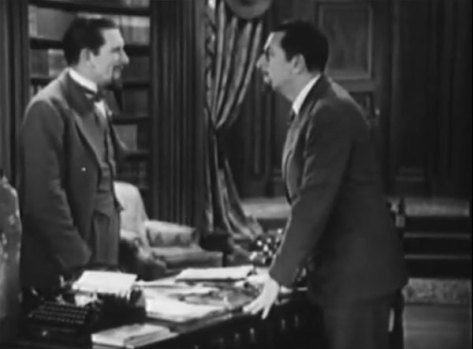
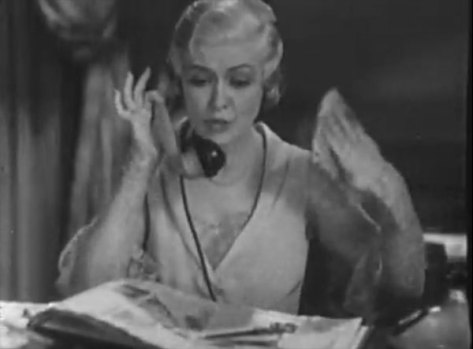
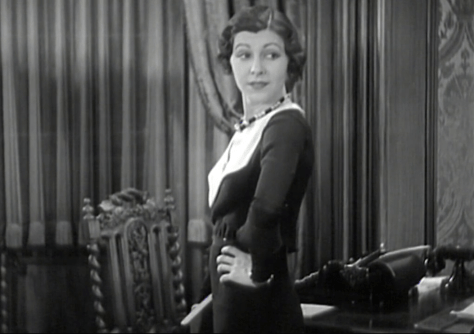
Steve Banks (Armstrong) is a hard-drinking newspaper reporter. His wife Margaret (Lombard), a reporter for a rival paper, threatens to divorce him if he doesn’t quit the drinking that is compromising his career. Steve pursues a story about drug dealers even when his editor fires him. When the editor is murdered, Steve is accused of the killing.

Preservation status

The film exists in a 16mm reduction print.[1]

References

Big News 8

Big News 7

Big News 9

Film Collectors Corner

Watch Big News Now – Amazon Instant Video

Blu Ray

Not released on Blu Ray

DVD

Racketeer, The (1929)


Pre Code Logo 1

Pre Code Hollywood Season: FD Cinematheque

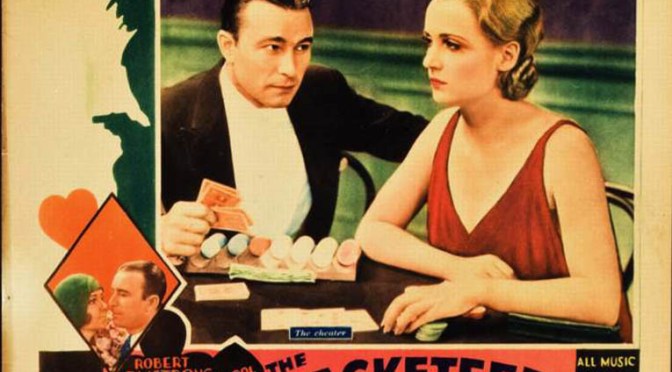
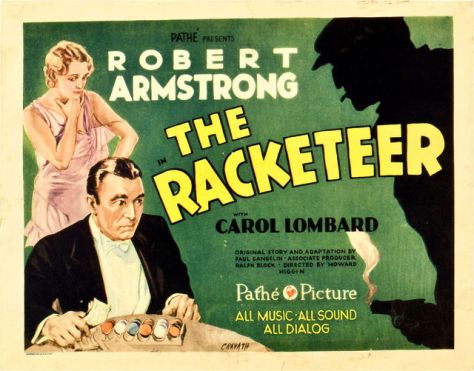
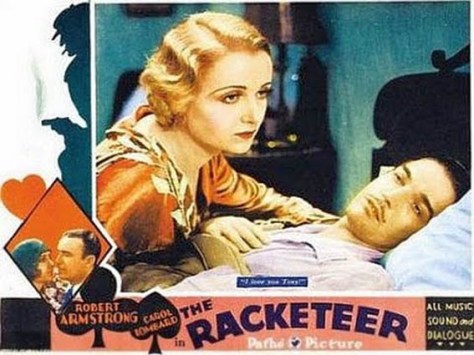
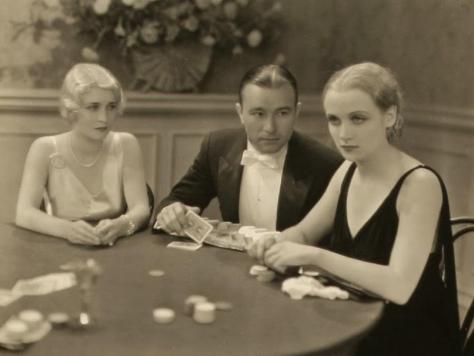
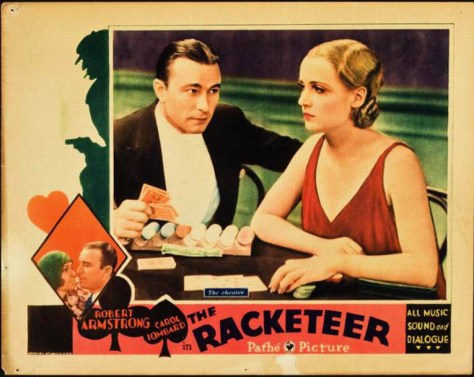
The Racketeer AKA Love’s Conquest (1929)

Racketeer The 1

Director: Howard Higgin

Cast: Carole Lombard, Robert Armstrong, Roland Drew, Paul Hurst, Kit Guard, Al Hill, Robby Dunn, Budd Fine, Hedda Hopper, Jeanette Loff, John Loder, Winter Hall, Robert Parrish

68 min

Racketeer The 2

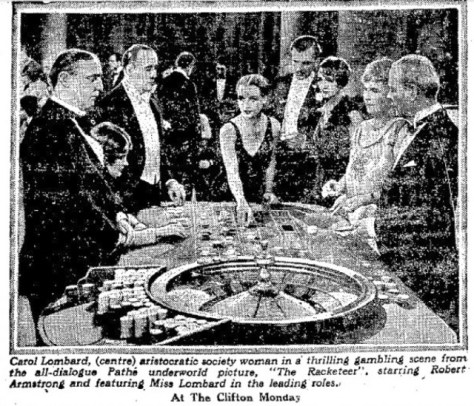
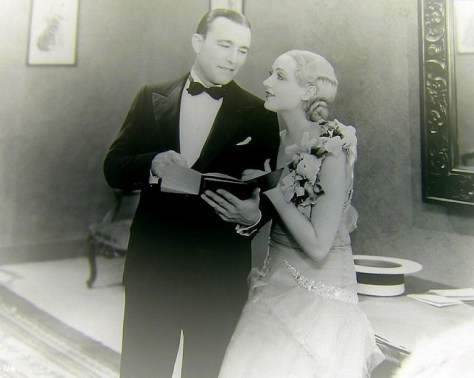
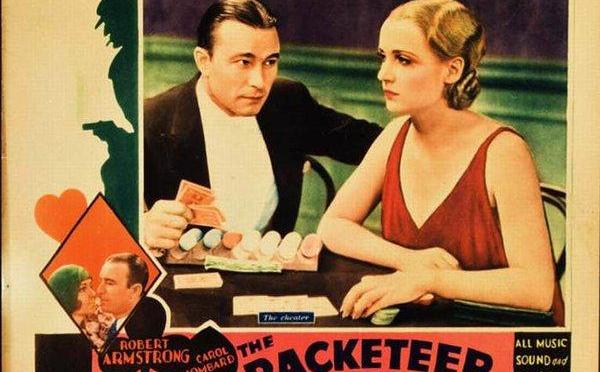
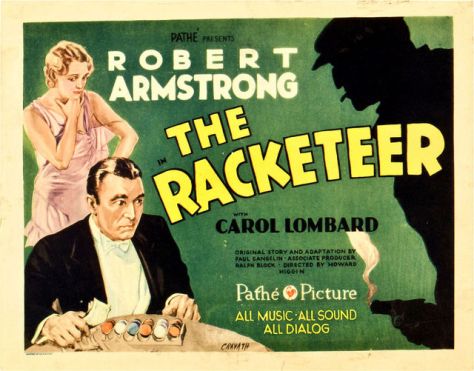
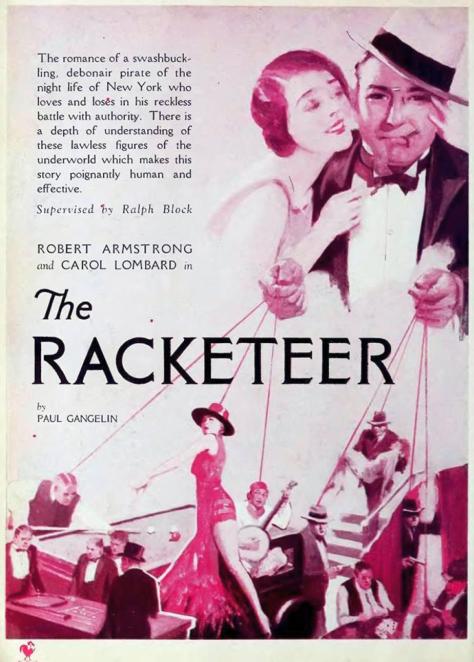
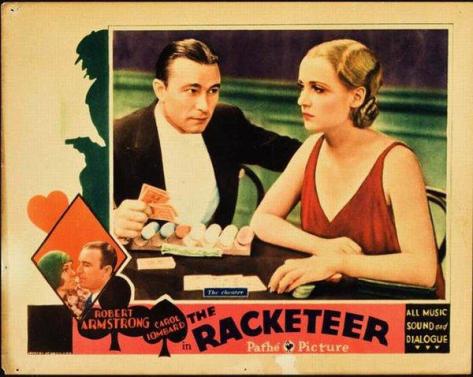
The Racketeer is a 1929 American Pre-Code drama film. Directed by Howard Higgin, the film is also known as Love’s Conquest in the United Kingdom. It tells the tale of some members of the criminal class in 1920s America, and in particular one man and one woman’s attempts to help him. Gossip columnist Hedda Hopper appears in a minor role. The film is one of the early talkies, and as a result, dialogue is very sparse.

Plot

Mahlon Keene, a suave racketeer, notices Mehaffy, a policeman, arrest a shabby, drunken violinist for vagrancy and bribes him to forget the charge; after Keene and his henchman depart, Rhoda Philbrook appears in a taxi, addresses the musician as “Tony,” and has him driven away. Meanwhile, Keene arranges for a planned robbery to be delayed.

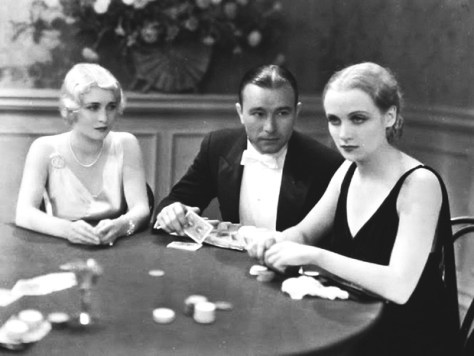
At a charity function, Keene takes an interest in Rhoda when he detects her cheating at cards; she reveals that she has left her husband for the violinist, whom she hopes to regenerate; and for Rhoda’s sake Keene arranges for Tony’s appearance at a concert. When threatened by Weber, a rival, Keene shoots him and, after the concert, bids farewell to Rhoda. The rival gang take revenge on Keene, leaving Tony and Rhoda to a new life together.

Racketeer The 6

Cast

Racketeer The 3

Racketeer The 8

Racketeer The 7

Racketeer The 6

Film Collectors Corner

Watch The Racketeer Now – Amazon Instant Video

Blu Ray

Not released on Blu Ray


DVD

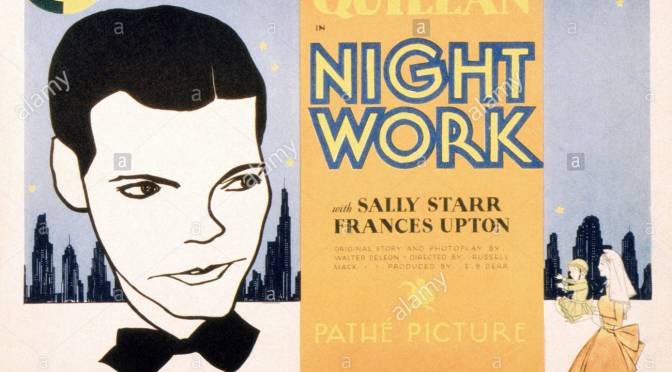
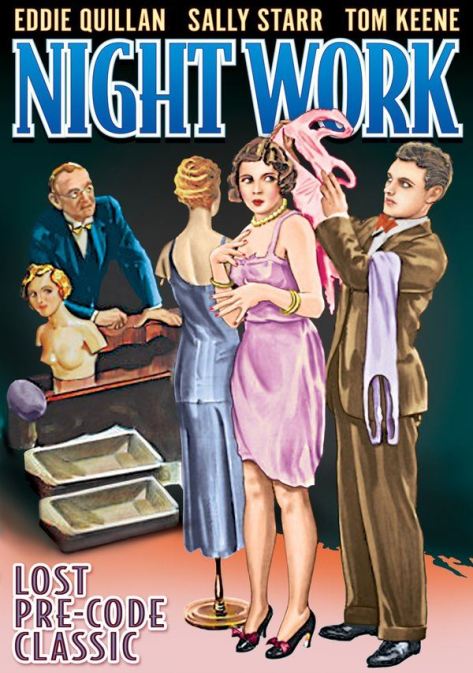
Night Work (1930)


Pre Code Logo 1

Pre Code Hollywood Season: FD Cinematheque

Night Work (1930)

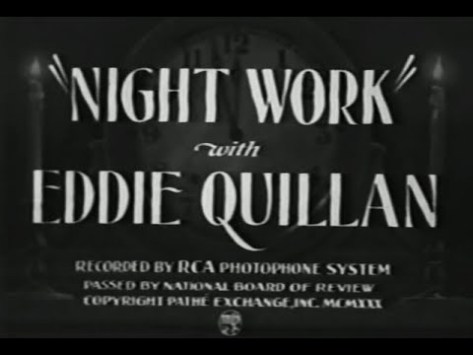
Night Work 1

Night Work 2

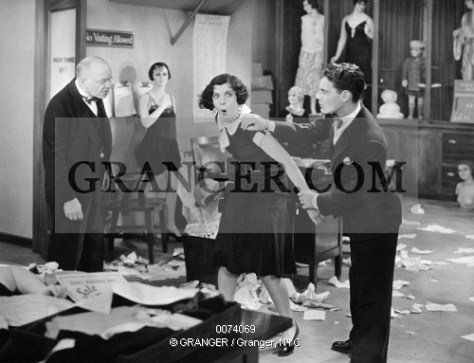
Night Work 3

Director: Russel Mack

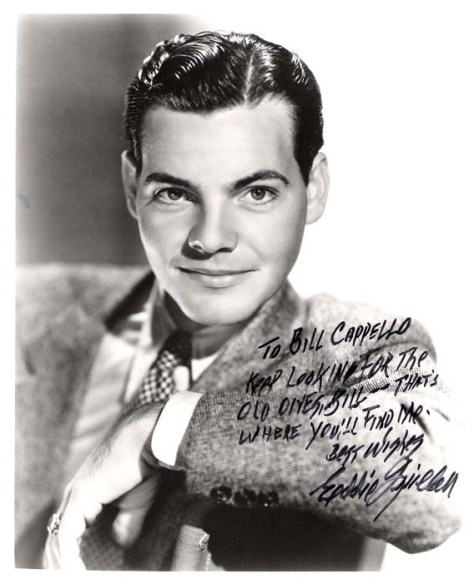
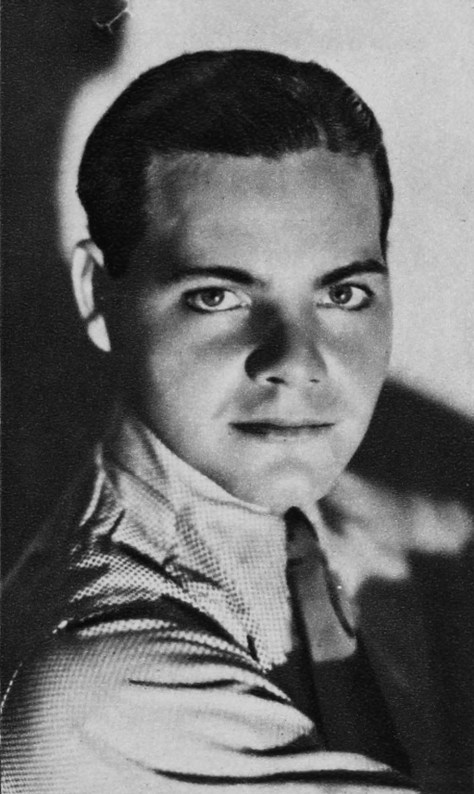
Cast: Eddie Quillan, Sally Starr, Frances Upton, John T Murray, Tom Keene, Ben Bard, Robert McVade, Douglas Scott, Addie McPhaill, Kit Guard, Georgia Caine, Georgie Billings, Charles Clary

93 min

Night Work is a Pre Code comedy directed by Russel Mack, released in 1930 and starring Eddie Quillan, Sally Starr and Frances Upton.

Plot

Willie Musher, assistant window-trimmer and jack-of-all-trades at Tracy’s Department Store, consistently shoulders the blame for patrons who deem themselves aggrieved and one day is awarded a $10 bill.

On his way to the bank, he stops to examine a car that is campaigning for funds for an orphans’ home; he holds his bank book in such a way that Mary, a nurse, takes the bill and leaves him a receipt. Later, he is alarmed to learn he has obligated himself to support a baby, but taking an interest in Mary and little Oscar, he gets a job as waiter in a nightclub to support the child. To Willie’s chagrin, he learns that Vanderman, Sr., wants to adopt Oscar, apparently the offspring of his son, Harvey.

Willie dreams of hair-raising stunts to kidnap Oscar; finding that he has been promoted, he proves that Oscar is not Vanderman’s grandson, adopts the boy, and asks Mary to marry him.

Night Work 11


Cast

Eddie Quillan Eddie Quillan
Sally Starr Sally Starr
Mary
Frances Upton Frances Upton
Aggie
John T. Murray John T. Murray
Calloway
Tom Keene Tom Keene
Harvey Vanderman (as George Duryea)
Ben Bard Ben Bard
Pinkie
Robert McWade Robert McWade
Phil Reisman
Douglas Scott Douglas Scott
Oscar, the Orphan
Addie McPhail Addie McPhail
Trixie
Kit Guard Kit Guard
Squint
Georgia Caine Georgia Caine
Mrs. Ten Eyck
Georgie Billings Georgie Billings
Buster (as George Billings)
Charles Clary Charles Clary
Mr. Vanderman
Tom Dugan Tom Dugan
Johnny Harris
Arthur Hoyt Arthur Hoyt
George Twining


Night Work 9

Night Work 4

Night Work 5

Night Work 6

Night Work 7

Night Work 8

Night Work 10

Film Collectors Corner

Watch Night Work Now – You Tube Instant Video


Blu Ray

Not released on Blu Ray


DVD

Not released on DVD


Tip Off, The (1931)


Pre Code Logo 1

Pre Code Hollywood Season: FD Cinematheque

The Tip Off (1931)

Tip Off The 1

Tip Off The 2

Director: Albert S Rogell

Cast: Eddie Quillan, Robert Armstrong, Ginger Rogers, Joan Peers, Ralf Harolde, Mike Donlin, Ernie Adams, Charles Sellon, Helen Ainsworth, Luis Alberni, Harry Bowen, Dorothy Granger

71 min

Tip Off The 3

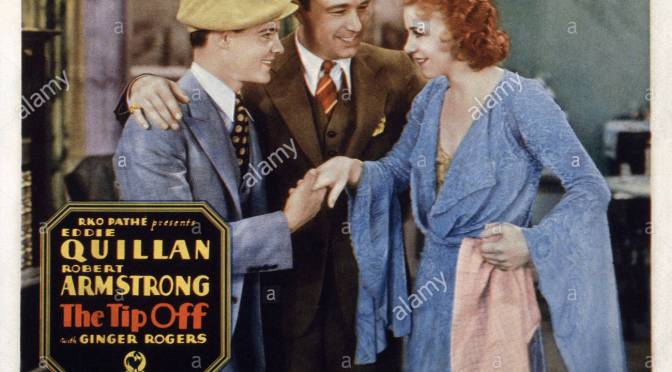
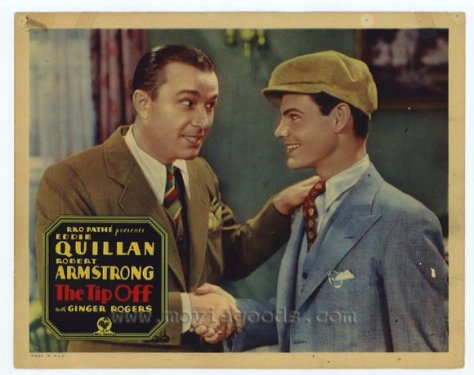
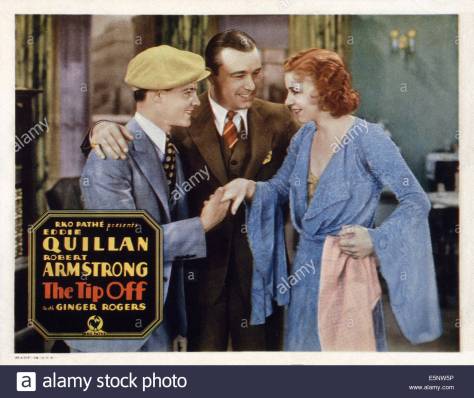
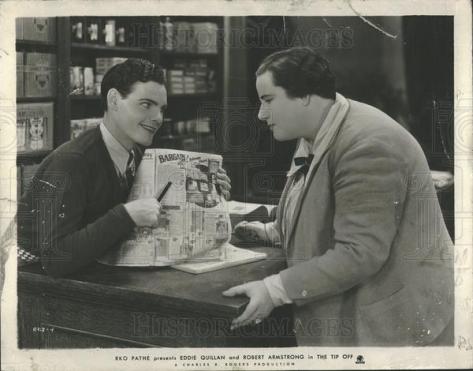
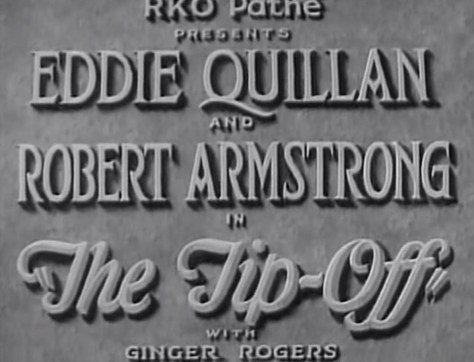
The Tip-Off is a 1931 American Pre-Code comedy film directed by Albert S. Rogell and written by Earl Baldwin. The film stars Eddie QuillanRobert ArmstrongGinger Rogers, Joan Peers and Ralf Harolde.[1][2] The film was released on October 16, 1931, by RKO Pictures.

Plot

Young Tommy Jordan (Eddie Quillan) is sent for a repair job. When he arrives at the address he was told, two guys are waiting for him on the street, bringing him somewhere else – without letting him see where – to repair a radio.

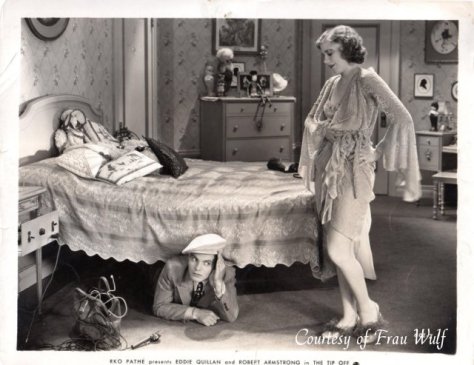
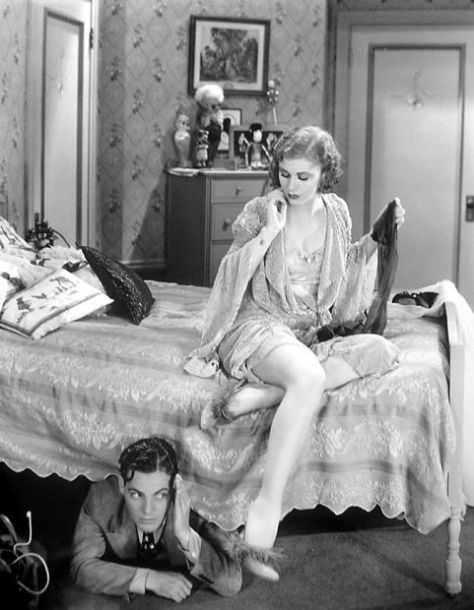
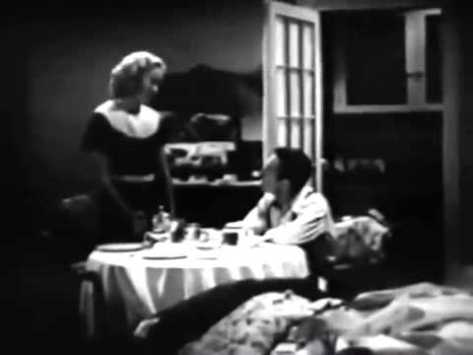
He jokes about “must be a hide-out, that I should not know where I am”, for which he earns a “you’re a smart guy”. When left in the apartment doing his job, he follows a wire and ends up in the bedroom, lying on the floor under the bed. At this point, the telephone rings and a woman comes out of the bathroom and answers.

Tip Off The 4

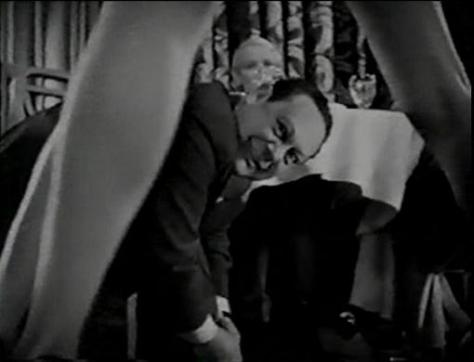
He is trapped under the bed and can only see her legs. When the lady has finished her conversation, they have to talk and he is told that his great idol Kayo McClure (Robert Armstrong (actor)) a fighter lives in that apartment.

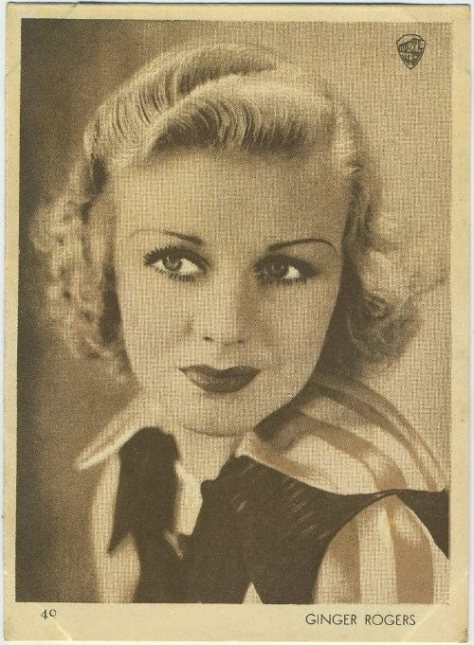
She herself is “famous” Babyface (Ginger Rogers) the woman of McClure. When McClure comes back home, Tommy manages to hide and when Gang leader Nick Vatelli (Ralf Harolde) appears in McClure’s apartment with his men threatening him, Tommy acts as Policeofficers through the radio-microphone, so that they leave the flat. McClure is forever thankful to Tommy and he offers him to help him whenever he needs it. McClure hands him out a ticket to a ball.

Tip Off The 6

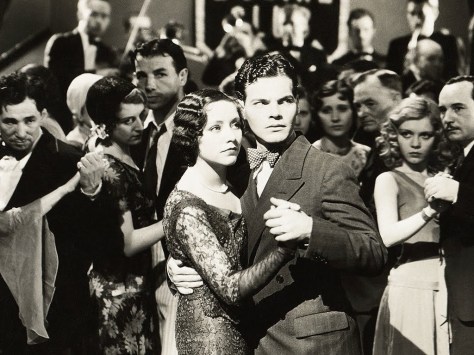
When he gets to the ball there is Baby-Face eager to dance with him. To avoid being mixed up too much with her attracting jealousy of McClure he grabs another girl, that was handy to him, to dance. But this girl is even worse, as she is the fiancé of Nick, Edna Moreno (Joan Peers). Tommy is very fond of her and when Nick appears he finally takes Edna with him to McClure, to hide for a night. The next day Babyface argues with McClure about hiding the kids, threatening to leave him.

Edna leaves the apartment without saying anything. Tommy finds out where she is, and with the help of McClure he saves her from marrying Nick. As the movie ends, Tommy and Edna get married.

Tip Off The 6

Cast

References

  1. Jump up^ “The Tip-Off (1931) – Overview”Turner Classic Movies. Retrieved September 9, 2014.
  2. Jump up^ “The Tip-Off Trailer, Reviews and Schedule for The Tip-Off”TV Guide. Retrieved September 9, 2014.

Tip Off The 7

Tip Off The 8

Tip Off The 9

Tip Off The 10


Film Collectors Corner

Watch The Tip Off Now – You Tube Instant Video

Blu Ray

Not released on Blu Ray 


DVD

Not released on DVD

Little Cafe, The (1930)


Pre Code Logo 1

Pre Code Hollywood Season: FD Cinematheque

Little Cafe, The (1930)

Little Cafe The 1

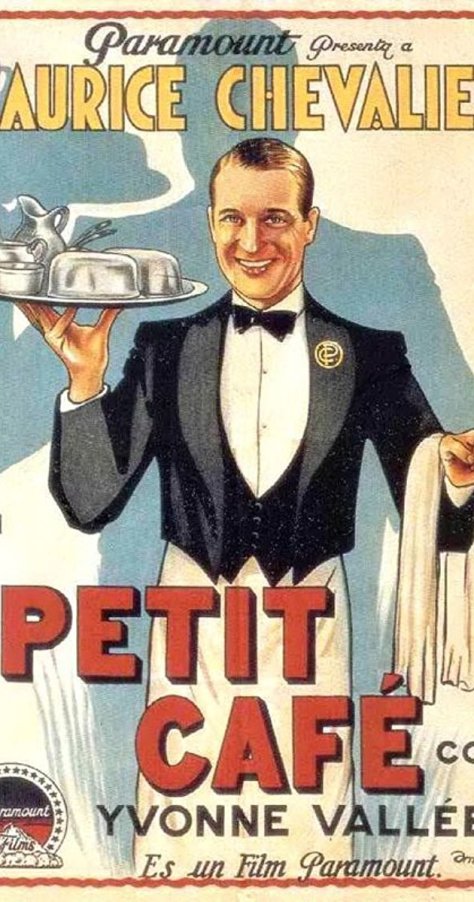
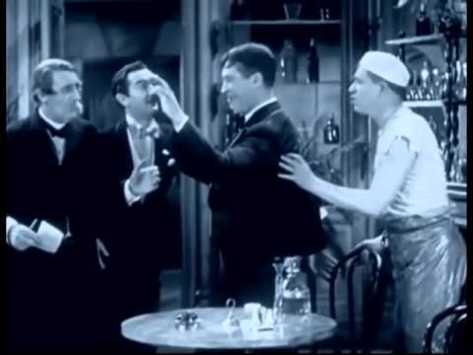
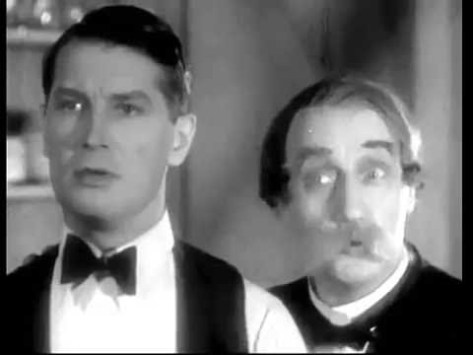
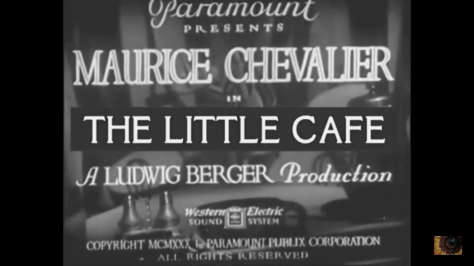
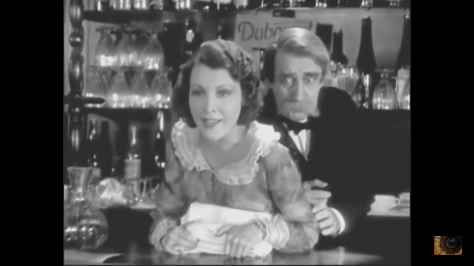
The Little Cafe (French:Le petit café) is a 1931 French-language American Pre-Code musical film directed by Ludwig Berger and starring Maurice ChevalierYvonne Vallée and Tania Fédor. The film is a foreign-language version of the 1930 film Playboy of Paris, which was based on the play The Little Cafe by Tristan Bernard. Multiple-language versions were common in the years following the introduction of sound film, before the practice of dubbing became widespread.

The film received a better reception from critics than the English-language version had.[1]

Little Cafe The 3

Synopsis

Albert Loriflan, a waiter in a Paris cafe, unexpectedly inherits a large sum of money from a wealthy relative. His unscrupulous boss, Philibert, refuses to release him from his long-term contract in the hope that Albert will buy him off with a large payment. But Albert refuses, and continues to work at the cafe even though he is now very rich. Before long he falls in love with Philibert’s daughter Yvonne.

Little Cafe The 4

Cast

Little Cafe The 5

References

  1. Jump up^ Bradley p.119

Bibliography

  • Bradley, Edwin M. The First Hollywood Musicals: A Critical Filmography Of 171 Features, 1927 Through 1932. McFarland, 2004.

Little Cafe The 2

Little Cafe The 6

Little Cafe The 7

Little Cafe The 8

Film Collectors Corner

Watch The Little Cafe Now – You Tube Instant Video

Blu Ray

Not released on Blu Ray 


DVD

Not released on DVD 


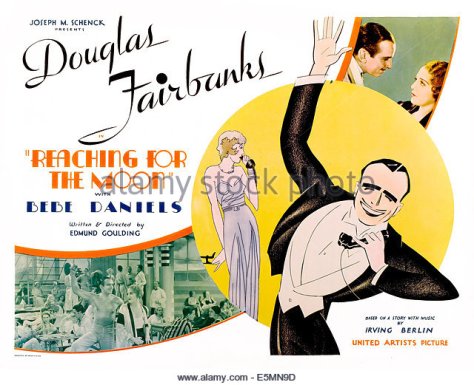
Reaching for the Moon (1930)


Pre Code Logo 1

Pre Code Hollywood Season: FD Cinematheque

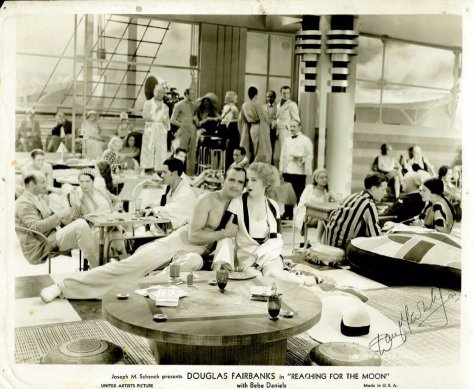
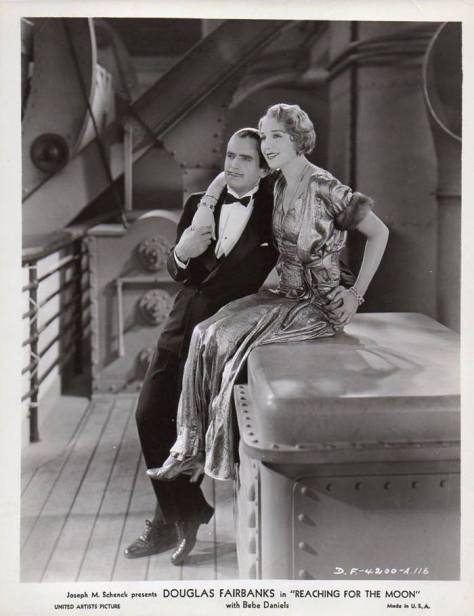
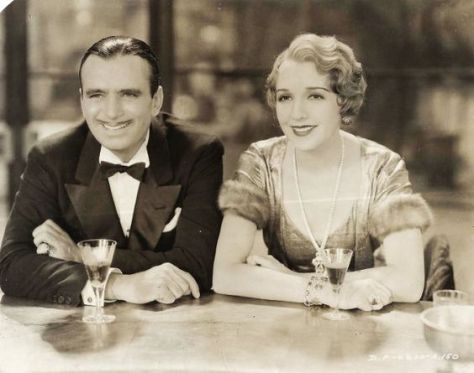
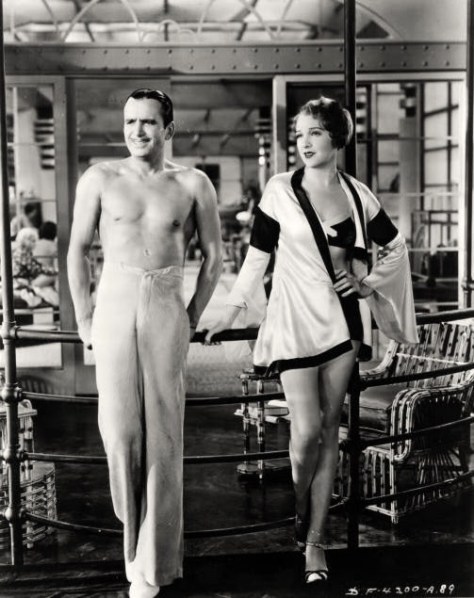
Reaching for the Moon (1930)

Reaching For The Moon 1

Reaching For The Moon 8

Reaching For The Moon 11

Director: Edmund Goulding

Cast: Douglas Fairbanks, Bebe Daniels, Edward Everett Horton, Claud Allister, Jack Mulhall, Walter Walker, June MacCloy, Bing Crosby

91 min

Reaching For The Moon 3

Reaching for the Moon is a 1930 American Pre-Code black and white musical film. Originally released at 91 minutes; surviving versions are usually cut to 62 minutes. A 74-minute version aired in 1998 on USA cable channel AMC. The DVD version runs just under 72 minutes. The film’s working title was Lucky Break and is known as Para alcanzar la Lunain Spain. It is not to be confused with the Fairbanks silent film, Reaching for the Moon (1917).

Reaching For The Moon 4

Background

The film was originally intended to be a musical with songs written by Irving Berlin but problems soon developed. From the start, Berlin found Edmund Goulding, the director, difficult to work with. Also by mid-1930 the studio realized that the public’s demand for musicals had disappeared. So Goulding jettisoned many of Berlin’s songs from the score.

Although just five Berlin songs had been recorded, the film, even in its scaled-down form, proved very expensive to make. By the time the filming was complete, the costs had come to about a million dollars, a huge budget for the times, and one that virtually ruled out the possibility of the film returning a profit.[1]

Reaching For The Moon 5

The one song that was retained was “When the Folks High Up Do the Mean Low Down” introduced by Bing Crosby who had filmed it late at night after completing his work at the Cocoanut Grove.[2] Variety commented on this song specifically, saying: “None of the Berlin songs is left other than a chorus of hot numbers apparently named “Lower Than Lowdown” [sic]. Tune suddenly breaks into the running in the ship’s bar when Bing Crosby, of the Whiteman Rhythm Boys, gives it a strong start for just a chorus which, in turn, is ably picked up by Miss Daniels, also for merely a chorus, and then in an exterior shot to the deck where June MacCloy sends the lyric and melody for a gallop of half a chorus.[3]

Reaching For The Moon 6

Plot

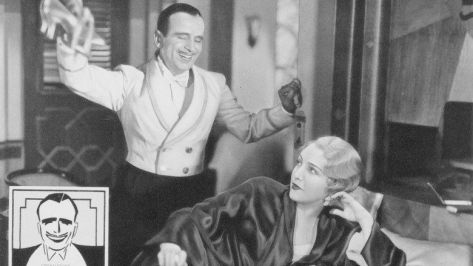
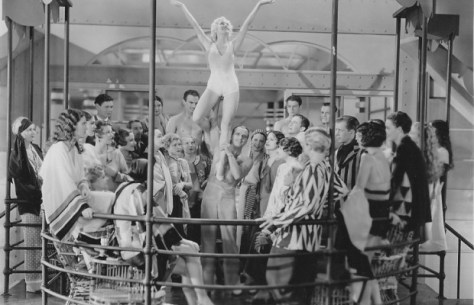
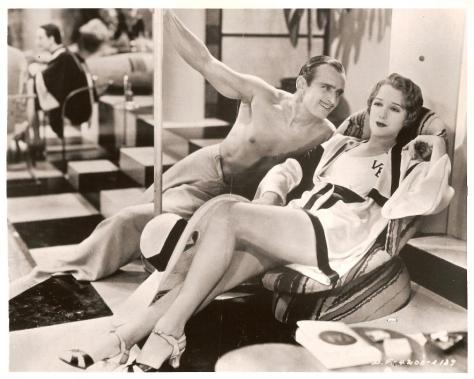
Wall Street wizard, Larry Day, new to the ways of love, is coached by his valet. He follows Vivian Benton on an ocean liner, where cocktails, laced with a “love potion”, work their magic. He then loses his fortune in the market crash and feels he has also lost his girl.

Reaching For The Moon 9

Cast

Reaching For The Moon 10

Soundtrack

  • “When the Folks High-Up Do the Mean Low-Down”
Written by Irving Berlin
Sung by Bing Crosby, Bebe Daniels, June MacCloy and chorus.
Written by Irving Berlin
(heard instrumentally over the opening credits, as background music for a love scene, then briefly at the end)

Reaching For The Moon 12

References

  1. Jump up^ Bergreen, Laurence (1990). As Thousands Cheer. London: Hodder and Stoughton. pp. 291–293. ISBN 0-340-53486-9.
  2. Jump up^ Giddins, Gary (2001). A Pocketful of Dreams. New York: Little, Brown and Company. p. 233. ISBN 0-316-88188-0.
  3. Jump up^ “Variety”. Variety. January 7, 1931.

Bebe Daniels

Reaching For The Moon 14

Reaching For The Moon 15

Film Collectors Corner

Watch Reaching For The Moon Now – Instant Video on You Tube

Blu Ray

Not released on Blu Ray


DVD

World Gone Mad, The (1933)


Pre Code Logo 1

Pre Code Hollywood Season: FD Cinematheque

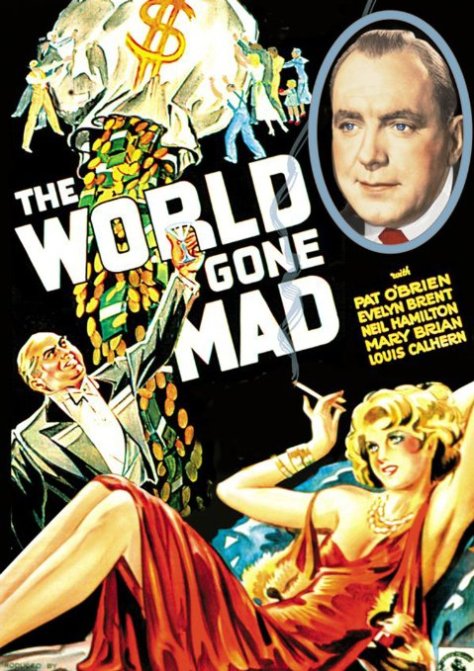
The World Gone Mad AKA The Public Be Hanged (1933)

World Gone Mad The 1

Director: Christy Cabanne

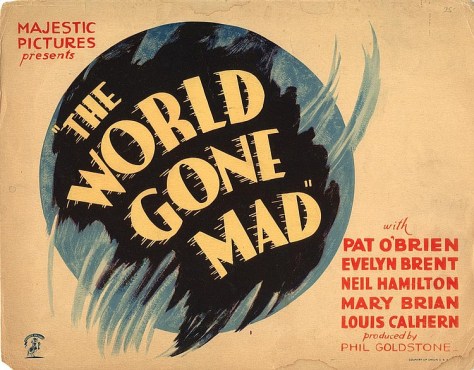
Cast: Pat O’Brien, Evelyn Brent, Neil Hamilton, Mary Brian, Louis Calhern, J Carrol Naish, Buster Phelps, Richard Tucker, Edward Van Sloan

80 min

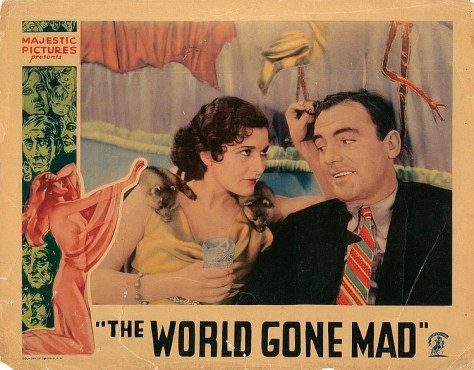
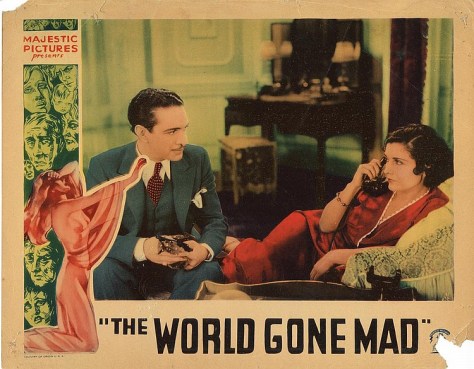
The World Gone Mad (also released as The Public Be Hanged) is a 1933 American Pre-Code crime film directed by Christy Cabanne and starring Pat O’BrienEvelyn Brent and Neil Hamilton.[1] It was made on a low-budget by the independent Majestic Pictures, a Poverty Row forerunner of Republic Pictures.[2]

World Gone Mad The 2

World Gone Mad The 3

Plot

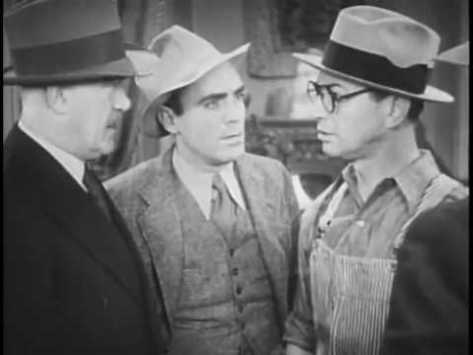
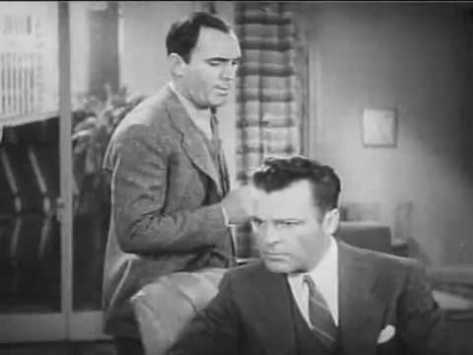
When a district attorney who has been investigating a utility company’s directors for fraud is suddenly killed, his wisecracking newspaperman friend (Pat O’Brien) gets curious. He and the upstanding new district attorney (Neil Hamilton) separately pursue the case. Cultivated but sinister businessmen, a shady nightclub owner specializing in “import and export”, several beautiful young women always seen in evening gowns, a “Latin lover” type who reads Casanova and an abundance of suave men in evening dress provide eye-candy for the duration.

World Gone Mad The 4

Cast

World Gone Mad The 5

References

World Gone Mad The 6

World Gone Mad The 7

World Gone Mad The 8

Film Collectors Corner

Watch The World Gone Mad Now – Amazon Instant Video

Blu Ray

Not released on Blu Ray

DVD

Savage Girl, The (1932)


Pre Code Logo 1

Pre Code Hollywood Season: FD Cinematheque

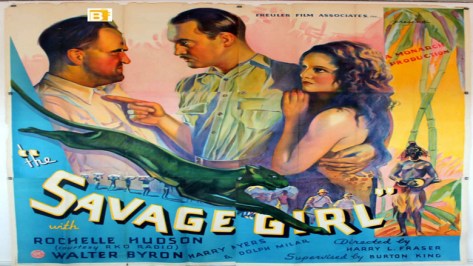
The Savage Girl (1932)

Savage Girl The 1

Director: Harry L Fraser

Cast: Rochelle Hudson, Walter Byron, Harry Myers, Adolph Milar, Ted Adams, Floyd Shackelford, Herbert Evans

66 min

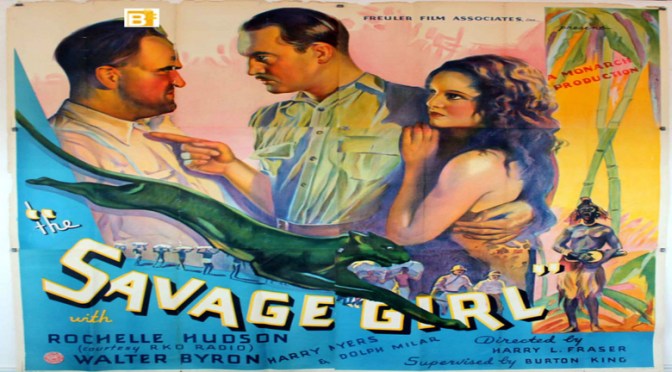
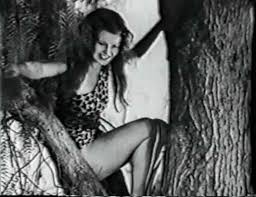
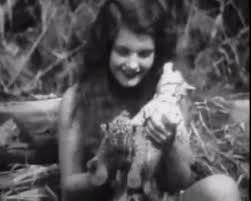
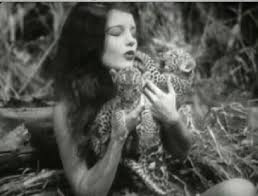
The Savage Girl is a 1932 American film directed by Harry L. Fraser.

Plot

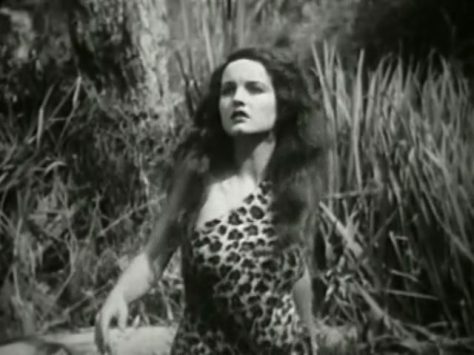
A white jungle goddess is protected by a fierce killer gorilla.

Savage Girl The 5

Cast

External links

Savage Girl The 4

Savage Girl The 2

Savage Girl The 6

Savage Girl The 3

Film Collectors Corner

Watch The Savage Girl Now – Amazon Instant Video

Blu Ray

Not released on Blu Ray as yet


DVD

East of Borneo (1931)


Pre Code Logo 1

Pre Code Hollywood Season: FD Cinematheque

East of Borneo (1931)

East of Borneo 1

East of Borneo 3

Director: George Melford

Cast: Rose Hobart, Charles Bickford, Georges Renavent, Lupita Tovar, Noble Johnson, Tom London

77 min

East of Borneo 6

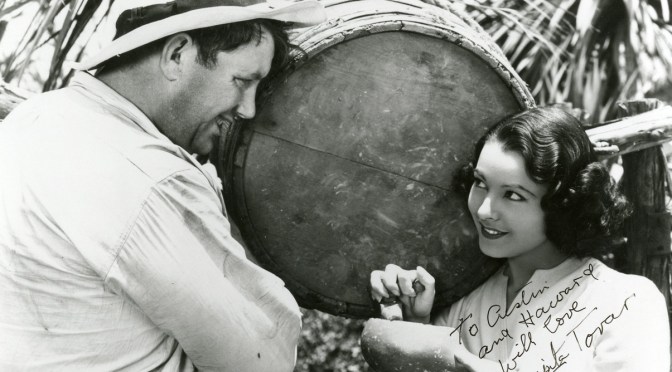
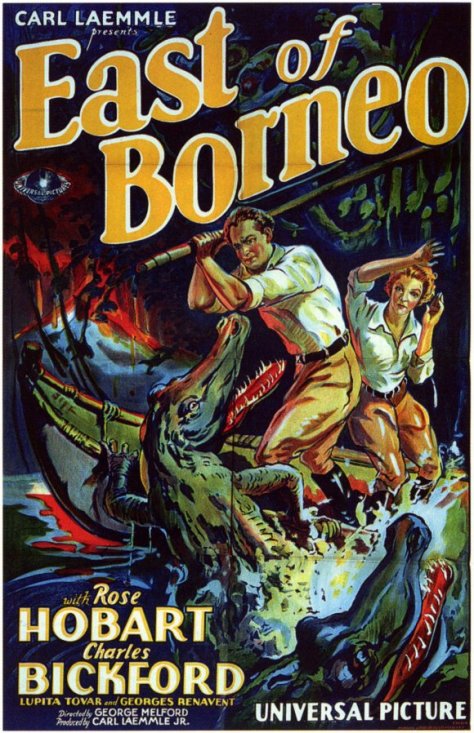
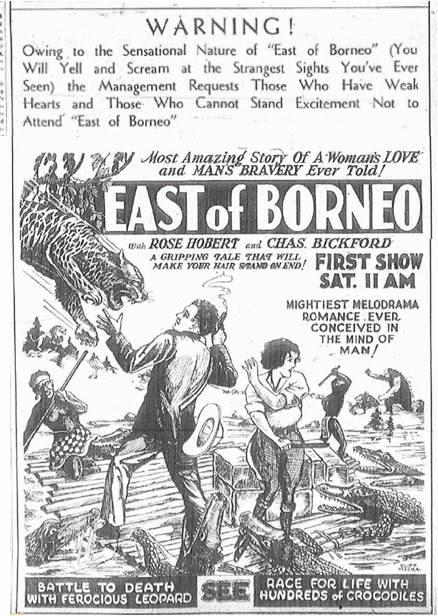
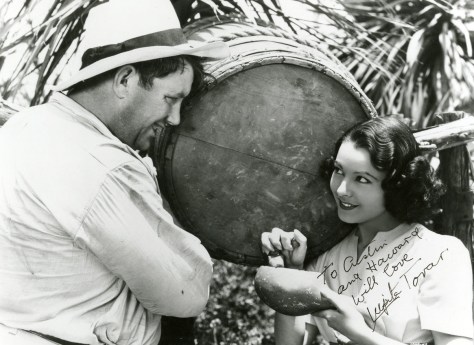
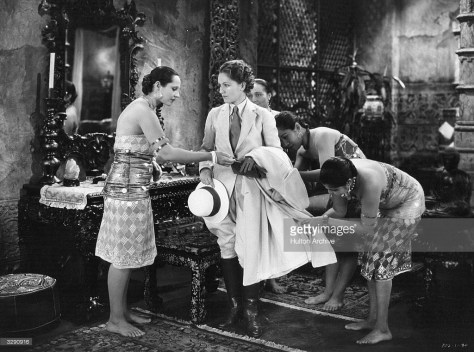
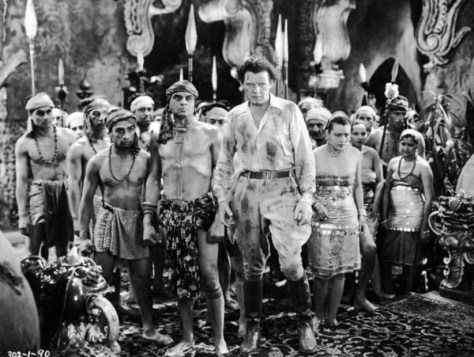
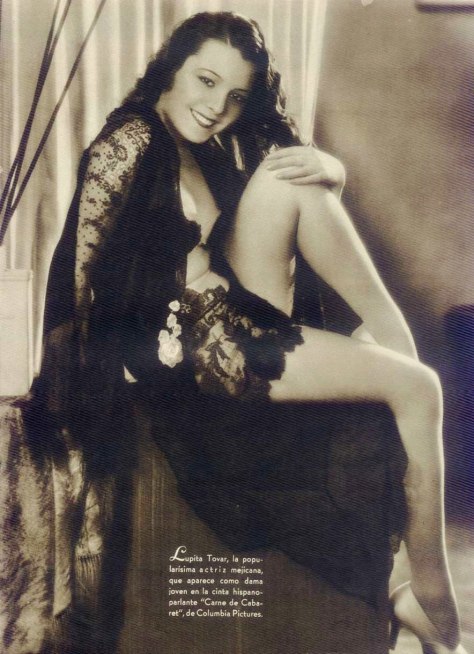
East of Borneo (1931) is an American Pre-Code adventure film directed by George Melford, co-written by Edwin H. Knopf and Dale Van Every, starring Rose HobartCharles BickfordGeorges RenaventLupita Tovar, and Noble Johnson, and released by Universal Studios.

In 1936, artist Joseph Cornell edited this feature film into his short experimental film Rose Hobart which runs about 19 minutes.

East of Borneo 7

Plot

Linda Randolph (Hobart) looks for her husband on the island of Marado just east of Borneo. Although Linda is warned that Marado’s jungles are “entirely too dangerous” for a woman, she persists through dangerous raft rides and wild crocodiles. She discovers that her husband is now the personal physician to the island’s enigmatic prince. The prince lusts for Linda, and a love triangle ensues.

East of Borneo 5

Production

The film was shot largely at Universal Studios. Despite being essentially a b-picture, East of Borneo featured elaborate sets. Props and set dressing used in the film were reportedly valued at $100,000; this figure includes a large $25,000 Buddha statue, a very rare small white Buddha and a long mother-of-pearl inlaid bench, silver dinner utensils and Oriental rugs and drapery.[1]

References

  1. Jump up^ “East of Borneo” Set Cost $100,000. The Florence Times Vol VIII. Number 252. 29 April 1932. p 6. Retrieved 29 February 2016

East of Borneo 9

East of Borneo 11

East of Borneo 12

East of Borneo 13

Film Collectors Corner

Watch East of Borneo Now – Instant Video on Internet Archive 


Blu Ray

Not released on Blu Ray 


DVD

Glorifying the American Girl (1929)


Pre Code Logo 1

Pre Code Hollywood Season: FD Cinematheque

Glorifying the American Girl (1929)

Glorifying the American Girl 1

Glorifying the American Girl 2

Glorifying the American Girl 3

Director: Millard Webb

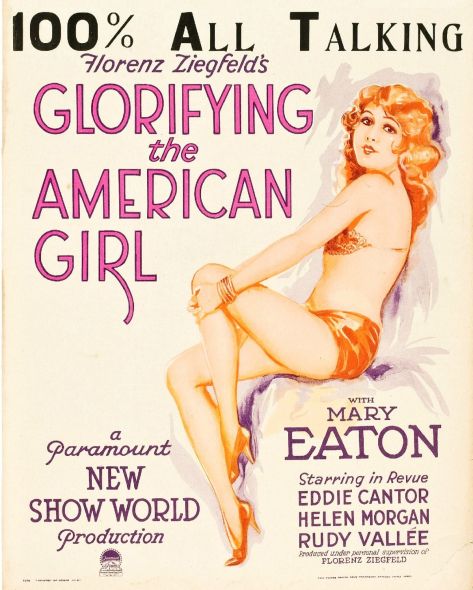
Cast: Mary Eaton, Eddie Cantor, Helen Morgan, Rudy Vallee, Dan Healy, Kaye Renard, Edward Crandall, Gloria Shea, Sarah Edwards, Billie Burke, Noah Beery, Irving Berlin, Johnny Weissmuller, Adolph Zukor, Texas Guinan

95 min

Glorifying the American Girl 4

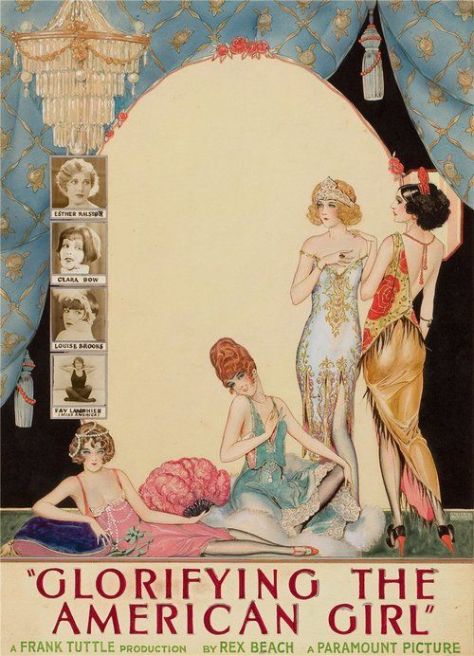
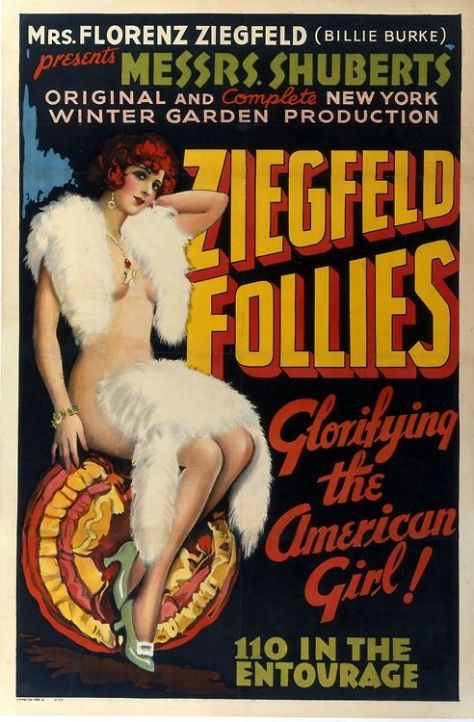
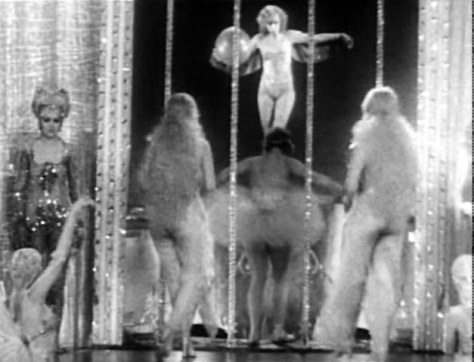
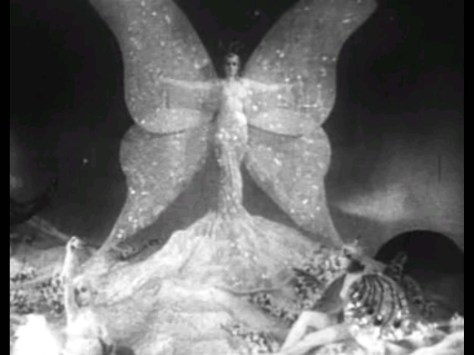
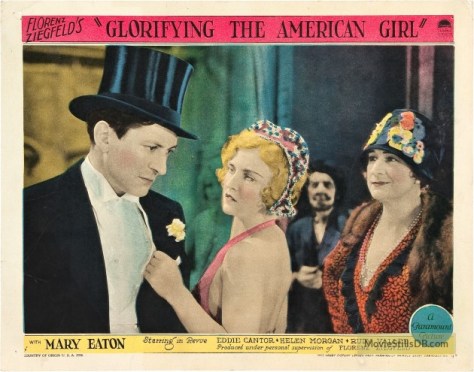
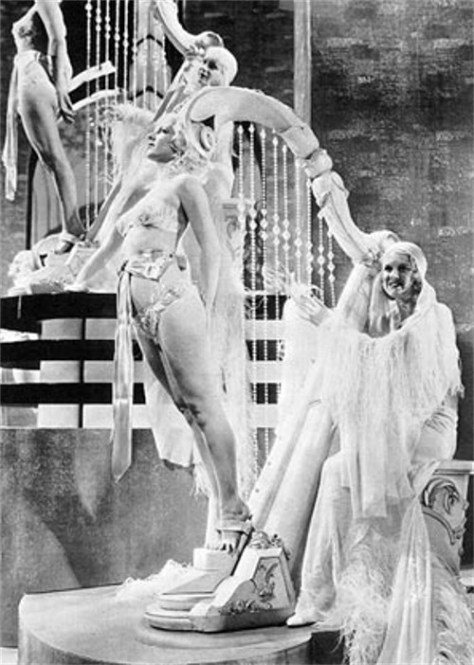
Glorifying the American Girl is a 1929 American Pre-Codemusical comedy film produced by Florenz Ziegfeld that highlights Ziegfeld Follies performers. The last third of the film (which was filmed in early Technicolor) is basically a Follies production, with cameo appearances by Rudy ValleeHelen Morgan, and Eddie Cantor.

Rex Beach was paid $35,000 for the original story.[1][2]

The script for the film was written by J.P. McEvoy and Millard Webb and directed by John W. Harkrider and Millard Webb. The songs were written by Irving BerlinWalter DonaldsonRudolf Friml, James E. Hanley, Larry Spier and Dave Stamper. The film is in the public domain, and many prints exhibited on television are in black-and-white only, and do not include pre-Code material, such as nudity.

Glorifying the American Girl 6

Plot

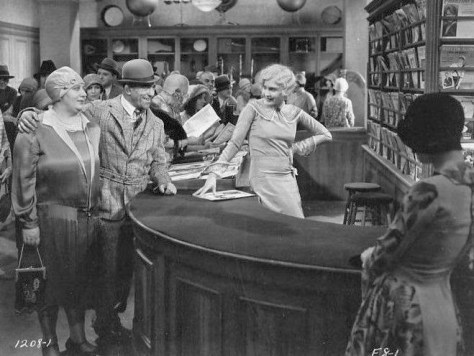
The plot involves a young woman (Mary Eaton) who wants to be in the Follies, but in the meantime is making ends meet by working at a department store‘s sheet music department, where she sings the latest hits.

She is accompanied on piano by her childhood boyfriend (Edward Crandall), who is in love with her, despite her single-minded interest in her career. When a vaudeville performer (Dan Healy) asks her to join him as his new partner, she sees it as an opportunity to make her dream come true.

Upon arriving in New York City, our heroine finds out that her new partner is only interested in sleeping with her and makes this a condition of making her a star. Soon, however, she is discovered by a representative of Ziegfeld.

Glorifying the American Girl 8

Cast

Glorifying the American Girl 9

Cameo Appearances

Glorifying the American Girl 17

Production

  • This Pre-Code movie is notable for being the first talkie to use the word “damn” (that credit usually goes to either Pygmalion or Gone with the Wind). The word is used on at least one occasion by Sarah Edwards as well as multiple times in the skit involving Eddie Cantor, Louis Sorin and Lew Hearn. (The word was also used twice in the movie Coquette, released in April of the same year.)
  • The revue sequence contains virtual nudity and revealing costumes.
  • Both Paramount and EMKA failed to renew the copyright and the film is now in the public domain.[citation needed] EMKA’s successor, Universal Studios, continues to hold the original film elements; though technically the EMKA library is part of NBC Universal Television, successor to Universal Television and MCA Television (EMKA was a subsidiary of MCA).

Glorifying the American Girl 10

Preservation

The black-and-white prints currently shown on television, with a cut-down running time of 87 minutes, were made in the 1950s and have a number of sequences cut due to their Pre-Code content, i.e. nudity, etc. The film was restored, to the length of 96 minutes, with the original Technicolor sequences, by the UCLA Film and Television Archive.[3]

Glorifying the American Girl 12

Miscellany

Glorifying the American Girl 13

Soundtrack

The film begins with a medley of hits from Ziegfeld productions, including “Tulip Time”, “A Pretty Girl Is Like a Melody“, “Sally, Won’t You Come Back?”, and “No Foolin’.” The band at the picnic plays “Bye Bye Blackbird” and “Side by Side.”

Glorifying the American Girl 11

  • “No Foolin'”
Music by Rudolf Friml and James F. Hanley
Lyrics by Gene Buck and Irving Caesar
Sung by Mary Eaton
  • “Baby Face”
Music by Harry Akst
Lyrics by Benny Davis
Sung by Mary Eaton
  • “I’ll Be There”
Music by Larry Spier, J. Fred Coots, and Lou Davis
Sung by Mary Eaton and played on the piano several times by Edward Crandall
  • “Spooning with the One You Love”
Performed by Dan Healy and Kaye Renard

Glorifying the American Girl 14

Music by Irving Berlin
Played by a band while the acrobats are performing
  • “Sam, the Old Accordion Man”
Music by Walter Donaldson
Danced to by Dan Healy and Mary Eaton at the picnic and later onstage
  • “Hot Feet”
Music by Jimmy McHugh
Danced to by Dan Healy and Mary Eaton
  • “I’m Just a Vagabond Lover”
Music by Rudy Vallée and Leon Zimmerman
Performed by Rudy Vallée and His Connecticut Yankees

Glorifying the American Girl 15

  • “What Wouldn’t I Do for That Man?”
Music by Jay Gorney
Lyrics by E.Y. Harburg
Performed by Helen Morgan
  • “There Must Be Somebody Waiting For Me”
Music by Walter Donaldson
Performed by Mary Eaton and chorus in the finale. Played by pianist while Eaton dances en pointe. Played during opening credits.

Glorifying the American Girl 16

See also

References

  1. Jump up^ Beach, Rex (1940). Personal Exposures. New York: Harper & Brothers. p. 205.
  2. Jump up^ H.J. (January 7, 1950). “Miner and Novelist”The Age. Retrieved August 1, 2015.
  3. Jump up^ Feature films preserved by UCLA (1977-2012)

Glorifying the American Girl 19

Glorifying the American Girl 20

Glorifying the American Girl 21

Film Collectors Corner

Watch Glorifying the American Girl Now – Amazon Instant Video

Blu Ray

Not released on Blu Ray 


DVD

Kept Husbands (1931)


Pre Code Logo 1

Pre Code Hollywood Season: FD Cinematheque

Kept Husbands (1931)

Kept Husbands 3

Director: Lloyd Bacon

Cast: Dorothy Mackaill, Joel McCrea, Ned Sparks, Mary Carr, Clara Kimball Young, Robert McWade, Bryant Washburn, Florence Roberts, Freeman Wood, Lita Chevret

76 min

Kept Husbands 6

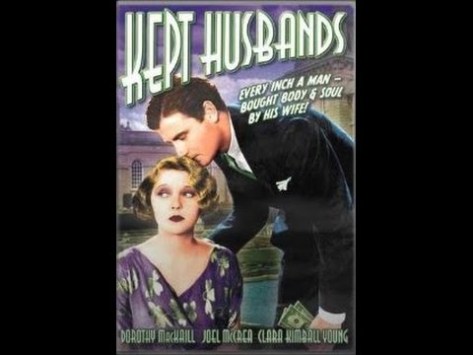
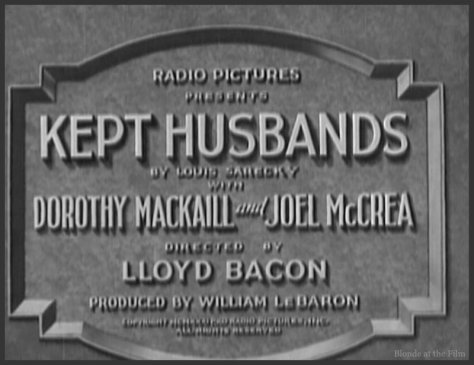
Kept Husbands is a 1931 American pre-Code drama film directed by Lloyd Bacon, starring Dorothy Mackaill and Joel McCrea, with major supporting roles filled by Robert McWadeFlorence Roberts and Mary Carr.

The original story was written by the film’s associate producer, Louis Sarecky, and adapted for the screen by Forrest Halsey and Alfred Jackson. Although primarily a drama, the film has many comedic touches to it.

The film centers around the class struggles and stereotypes between the working class and the wealthy, which was particularly striking during the Depression era when this film was made. The film also points out the stereotypical gender roles which were prevalent at that time.

Kept Husbands 2

Plot summary

Arthur Parker (Robert McWade) is a wealthy steel magnate who is relating the story to his snobbish wife and spoiled daughter of one of his plant supervisors who fearlessly rushed in and saved the lives of two of his fellow co-workers.

When his wife, Henrietta (Florence Roberts), asks if he rewarded the young man, Parker shows his astonishment by saying that the hero had refused the thousand dollars he had offered.

Kept Husbands 4

When the daughter, Dot (Dorothy Mackaill), remarks that she would like to meet a man like that, the father tells her not to worry, she will, for he is coming to dinner that very evening. Henrietta is aghast at having to socialize with someone not of their class, but Parker, who is a better judge of character, assures her that all will be well.

During dinner, Dot is smitten with the young man, Dick Brunton (Joel McCrea). So smitten she makes a bet with her father that she can get him to marry her within four weeks, by December 20. The father takes that bet, and lo and behold she wins Dick’s heart and gets him to accept her proposal of marriage by the deadline, despite his fears of their different social circumstances.

After the wedding, Parker sends the newlyweds on an expensive honeymoon to Europe, after which they return to their lavish home, also supplied by Parker. Parker also promotes Dick, but within six months, his new lifestyle threatens to emasculate Dick, who loses interest in his career and finds himself dominated by Dot’s vapid, social whirl of bridge games, cocktail parties and passive acceptance of life as a “kept husband”.

Kept Husbands 5

This does not sit well with the proud husband, and when Parker offers him a chance to prove himself with a new position in St. Louis, he jumps at the chance. When told of the opportunity however, Dot is less than enthusiastic, not wanting to leave her friends and social circle. She refuses to agree to accompany Dick.

Dick decides to go to St. Louis, with or without Dot, making her incredibly upset. Not knowing what to do, he goes to ask advice from his mother (Mary Carr), who tells him that he needs to reconcile with Dot before he leaves for St. Louis. Meanwhile, Dot has agreed to meet with a former beau, Charles Bates (Bryant Washburn), who attempts to seduce her.

Kept Husbands 7

When she returns to their house the following morning, Dick questions her regarding her whereabouts. She lies to him, and he knows it, since he had seen her with Washburn the prior evening. Furious, he storms out, saying their marriage is over, and intending to resign from Parker’s company.

Realizing her love for him, Dot eventually finds Dick at the rail station, about to leave for St. Louis. He has decided to take Parker’s position after all. The husband and wife reconcile, with Dot agreeing to live within the means that Dick’s salary can provide.

Kept Husbands 8

Cast

Kept Husbands 11

(Cast list as per AFI database)[2]

Soundtrack

Kept Husbands 10

Notes

In 1959, the film entered the public domain in the USA due to the copyright claimants failure to renew the copyright registration in the 28th year after publication.[5]

The tag line for the film was “Every Inch a Man – Bought Body and Soul by His Wife”.[6]

This film marked the debut in sound films of Clara Kimball Young, who had been a major star during the silent film era. She came back after a six-year hiatus from making films.[7]

Kept Husbands 13

References

  1. Jump up to:a b “Kept Husband: Details”New York Times. Archived from the original on August 16, 2014. Retrieved August 16, 2014.
  2. Jump up to:a b c d Kept Husbands: Detail View”. American Film Institute. Archived from the original on March 6, 2013. Retrieved October 5, 2016.
  3. Jump up^ “Max Steiner: Film Scores”. Songwriter Hall of Fame. Retrieved April 1, 2016.
  4. Jump up to:a b c “Kept Husbands, Technical Details”. theiapolis.com. Retrieved August 16, 2014.[permanent dead link]
  5. Jump up^ Pierce, David (June 2007). “Forgotten Faces: Why Some of Our Cinema Heritage Is Part of the Public Domain”. Film History: An International Journal19 (2): 125–43. ISSN 0892-2160JSTOR 25165419OCLC 15122313doi:10.2979/FIL.2007.19.2.125. See Note #60, p. 143.
  6. Jump up^ Jewell, Richard B.; Harbin, Vernon (1982). The RKO Story. New York: Arlington House. p. 34. ISBN 0-517-546566.
  7. Jump up^ “Kept Husbands, Notes”. Turner Classic Movies. Archived from the original on August 16, 2014. Retrieved August 16, 2014.

Kept Husbands 9

Kept Husbands 12

Kept Husbands 18

Kept Husbands 15

Film Collectors Corner

Watch Kept Husbands Now – Amazon Instant Video


Blu Ray

Not released on Blu Ray as yet


DVD


All Quiet on the Western Front (1929)


Pre Code Logo 1

Pre Code Hollywood Season: FD Cinematheque

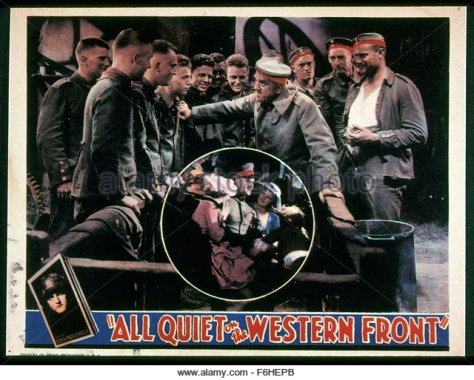
All Quiet on the Western Front (1929)
All Quiet on the Western Front 9

All Quiet on the Western Front 10

All Quiet on the Western Front 6

Director: Lewis Milestone

Cast: Lew Ayres, Louis Wolheim, John Wray, Arnold Lucy, Ben Alexander, Scott Kolk, Owen Davis Jr, Walter Rogers, William Bakewell, Russell Gleason, Richard Alexander, Harold Goodwin, Slim Summerville, G Pat Collins, Beryl Mercer, Edmund Breese, Zasu Pitts ( silent version only ), Raymond Griffith, Joan Marsh, Fred Zinnemann, Dorothy Vernon, Wolfgang Staudte, Robert Parrish, Yola D’Avril

136 min
All Quiet on the Western Front 4

All Quiet on the Western Front (GermanIm Westen nichts Neueslit. ‘In the West Nothing New’) is a novel by Erich Maria Remarque, a German veteran of World War I. The book describes the German soldiers’ extreme physical and mental stress during the war, and the detachment from civilian life felt by many of these soldiers upon returning home from the front.

The novel was first published in November and December 1928 in the German newspaper Vossische Zeitung and in book form in late January 1929. The book and its sequel, The Road Back (1930), were among the books banned and burned in Nazi GermanyAll Quiet on the Western Front sold 2.5 million copies in 22 languages in its first 18 months in print.[1]

In 1930, the book was adapted as an Academy-Award-winning film of the same name, directed by Lewis Milestone. It was adapted again in 1979 by Delbert Mann, this time as a television film starring Richard Thomas and Ernest Borgnine.
All Quiet on the Western Front 12

Title and translation

All Quiet on the Western Front 23

The English translation by Arthur Wesley Wheen gives the title as All Quiet on the Western Front. The literal translation of “Im Westen nichts Neues” is “In the West Nothing New,” with “West” being the Western Front; the phrase refers to the content of an official communiqué at the end of the novel.

Brian Murdoch’s 1993 translation would render the phrase as “there was nothing new to report on the Western Front” within the narrative. Explaining his retention of the original book-title, he says:

Although it does not match the German exactly, Wheen’s title has justly become part of the English language and is retained here with gratitude.

The phrase “all quiet on the Western Front” has become a colloquial expression meaning stagnation, or lack of visible change, in any context.[citation needed]
All Quiet on the Western Front 13

Plot summary

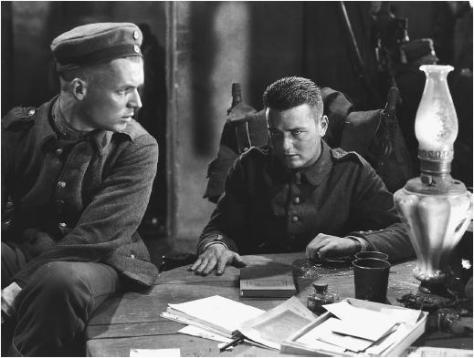
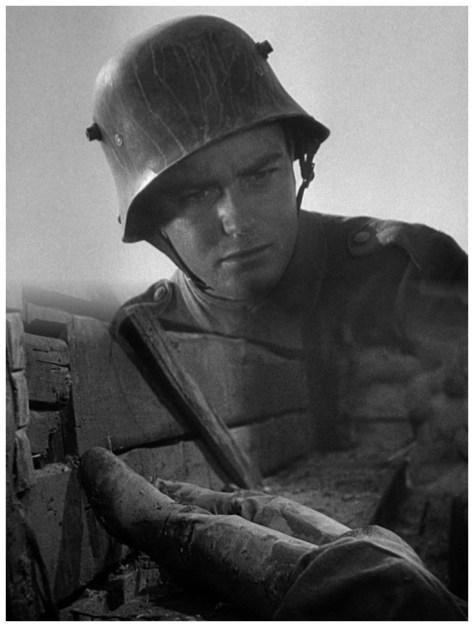
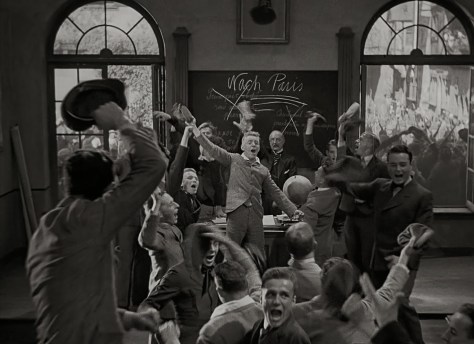
The book tells the story of Paul Bäumer, a German soldier who—urged on by his school teacher—joins the German army shortly after the start of World War I. His class was “scattered over the platoons amongst Frisian fishermen, peasants, and labourers.” Bäumer arrives at the Western Front with his friends and schoolmates (Leer, Müller, Kropp and a number of other characters). There they meet Stanislaus Katczinsky, an older soldier, nicknamed Kat, who becomes Paul’s mentor. While fighting at the front, Bäumer and his comrades have to engage in frequent battles and endure the treacherous and filthy conditions of trench warfare.
All Quiet on the Western Front 14

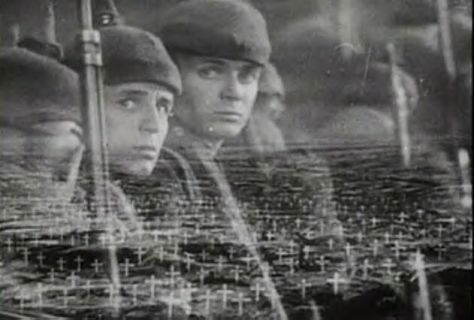
At the very beginning of the book, Erich Maria Remarque says “This book is to be neither an accusation nor a confession, and least of all an adventure, for death is not an adventure to those who stand face to face with it. It will try simply to tell of a generation of men who, even though they may have escaped (its) shells, were destroyed by the war.”[2] The book does not focus on heroic stories of bravery, but rather gives a view of the conditions in which the soldiers find themselves. The monotony between battles, the constant threat of artillery fire and bombardments, the struggle to find food, the lack of training of young recruits (meaning lower chances of survival), and the overarching role of random chance in the lives and deaths of the soldiers are described in detail.
All Quiet on the Western Front 15

The battles fought here have no names and seem to have little overall significance, except for the impending possibility of injury or death for Bäumer and his comrades. Only pitifully small pieces of land are gained, about the size of a football field, which are often lost again later. Remarque often refers to the living soldiers as old and dead, emotionally drained and shaken. “We are not youth any longer. We don’t want to take the world by storm. We are fleeing from ourselves, from our life. We were eighteen and had begun to love life and the world; and we had to shoot it to pieces.”

Paul’s visit on leave to his home highlights the cost of the war on his psyche. The town has not changed since he went off to war; however, he finds that he does “not belong here anymore, it is a foreign world.” He feels disconnected from most of the townspeople. His father asks him “stupid and distressing” questions about his war experiences, not understanding “that a man cannot talk of such things.” An old schoolmaster lectures him about strategy and advancing to Paris while insisting that Paul and his friends know only their “own little sector” of the war but nothing of the big picture.
All Quiet on the Western Front 16

Indeed, the only person he remains connected to is his dying mother, with whom he shares a tender, yet restrained relationship. The night before he is to return from leave, he stays up with her, exchanging small expressions of love and concern for each other. He thinks to himself, “Ah! Mother, Mother! How can it be that I must part from you? Here I sit and there you are lying; we have so much to say, and we shall never say it.” In the end, he concludes that he “ought never to have come [home] on leave.”

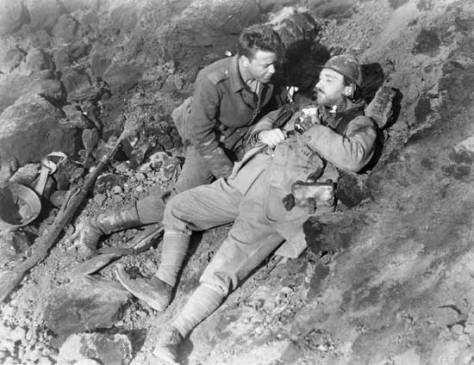
Paul feels glad to be reunited with his comrades. Soon after, he volunteers to go on a patrol and kills a man for the first time in hand-to-hand combat. He watches the man die, in pain for hours. He feels remorse and asks forgiveness from the man’s corpse. He is devastated and later confesses to Kat and Albert, who try to comfort him and reassure him that it is only part of the war.

They are then sent on what Paul calls a “good job.” They must guard a supply depot in a village that was evacuated due to being shelled too heavily. During this time, the men are able to adequately feed themselves, unlike the near-starvation conditions in the German trenches. In addition, the men enjoy themselves while living off the spoils from the village and officers’ luxuries from the supply depot (such as fine cigars). While evacuating the villagers (enemy civilians), Paul and Albert are taken by surprise by artillery fired at the civilian convoy and wounded by a shell.
All Quiet on the Western Front 18

On the train back home, Albert takes a turn for the worse and cannot complete the journey, instead being sent off the train to recuperate in a Catholic hospital. Paul uses a combination of bartering and manipulation to stay by Albert’s side. Albert eventually has his leg amputated, while Paul is deemed fit for service and returned to the front.

By now, the war is nearing its end and the German Army is retreating. In despair, Paul watches as his friends fall one by one. It is the death of Kat that eventually makes Paul careless about living. In the final chapter, he comments that peace is coming soon, but he does not see the future as bright and shining with hope. Paul feels that he has no aims or goals left in life and that their generation will be different and misunderstood. When he dies at the end of the novel, the situation report from the frontline states, “All is Quiet on the Western Front.”
All Quiet on the Western Front 19

Themes

One of the major themes of the novel is the difficulty of soldiers to revert to civilian life after having experienced extreme combat situations. Remarque comments in the preface that “[This book] will try simply to tell of a generation of men who, even though they may have escaped its shells, were destroyed by the war.”[2]

This internal destruction can be found as early as the first chapter as Paul comments that, although all the boys are young, their youth has left them. In addition, the massive loss of life and negligible gains from the fighting are constantly emphasized. Soldiers’ lives are thrown away by their commanding officers who are stationed comfortably away from the front, ignorant of the daily terrors of the front line.
All Quiet on the Western Front 20

Main characters

Cover of first English language edition. The design is based upon a German war bonds poster by Fritz Erler.

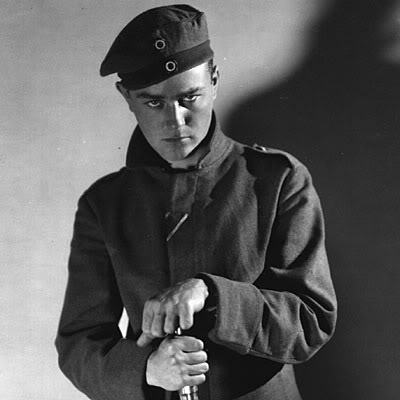
Paul Bäumer
All Quiet on the Western Front 25

Paul Bäumer is the main character and narrator. At 19 years of age, Paul enlists in the German Army and is deployed to the Western Front where he experiences the severe psychological and physical effects of the war. Before the war, Paul was a creative, sensitive and passionate person, writing poems and having a clear love for his family. But as the war changed his attitude and personality, poems and other aspects of his past life become something Paul was no longer linked to, since the horrors of war trained him to disconnect himself from his feelings. He feels he can’t tell anyone about his experiences and feels like an outsider where his family is concerned.

By the end of the book, Paul realises that he no longer knows what to do with himself and decides that he has nothing more to lose. The war appears to have snuffed out his hopes and dreams, which he feels he can never regain. After years of fighting in the war, Paul is finally killed in October 1918, on an extraordinarily quiet, peaceful day. The army report that day contains only one phrase: “All quiet on the Western Front.” As Paul dies, his face is calm, “as though almost glad the end had come.”

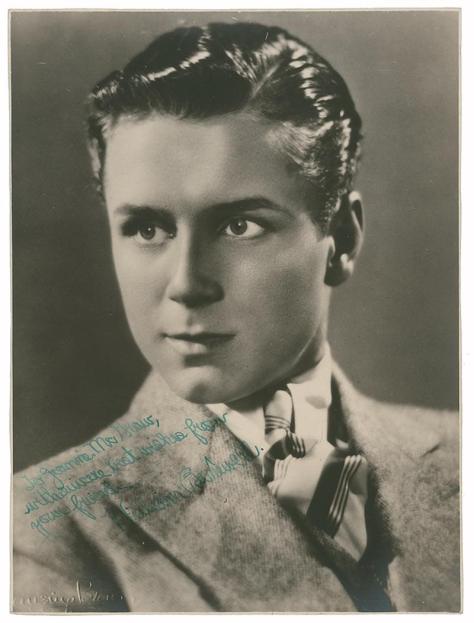
Albert Kropp
All Quiet on the Western Front 26

Kropp was in Paul’s class at school and is described as the clearest thinker of the group as well as the smallest. Kropp is wounded towards the end of the novel and undergoes a leg amputation. Both he and Bäumer end up spending time in a Catholic hospital together, Bäumer suffering from shrapnel wounds to the leg and arm. Though Kropp initially plans to commit suicide if he requires an amputation, the book suggests he postponed suicide because of the strength of military camaraderie. Kropp and Bäumer part ways when Bäumer is recalled to his regiment after recovering. Paul comments that saying farewell was “very hard, but it is something a soldier learns to deal with.”[3]

Haie Westhus
All Quiet on the Western Front 27

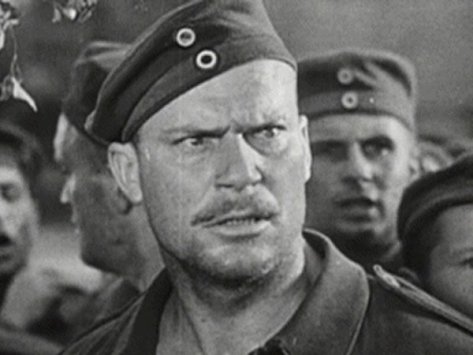
Haie is described as being tall and strong, and a peat-digger by profession. Overall, his size and behavior make him seem older than Paul, yet he is the same age as Paul and his school-friends (roughly 19 at the start of the book). Haie, in addition, has a good sense of humor. During combat, he is injured in his back, fatally (Chapter 6)—the resulting wound is large enough for Paul to see Haie’s breathing lung when Himmelstoß (Himmelstoss) carries him to safety.

Fredrich Müller
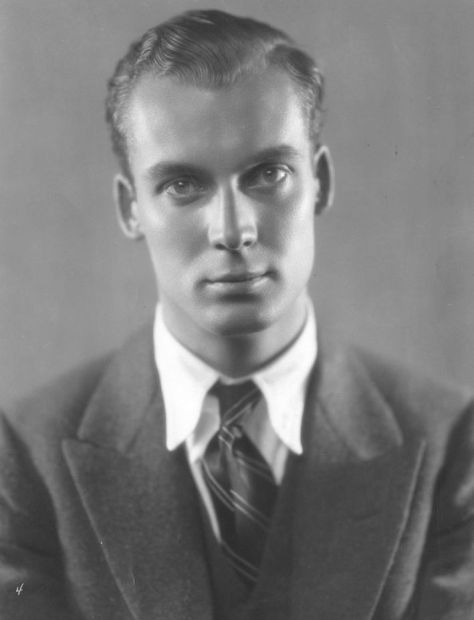
All Quiet on the Western Front 28

Müller is about 18 and a half years of age, one of Bäumer’s classmates, when he also joins the German army as a volunteer to go to the war. Carrying his old school books with him to the battlefield, he constantly reminds himself of the importance of learning and education. Even while under enemy fire, he “mutters propositions in physics”. He became interested in Kemmerich’s boots and inherits them when Kemmerich dies early in the novel. He is killed later in the book after being shot point-blank in the stomach with a “light pistol” (flare gun). As he was dying “quite conscious and in terrible pain”, he gave his boots which he inherited from Kemmerich to Paul.

Stanislaus “Kat” Katczinsky
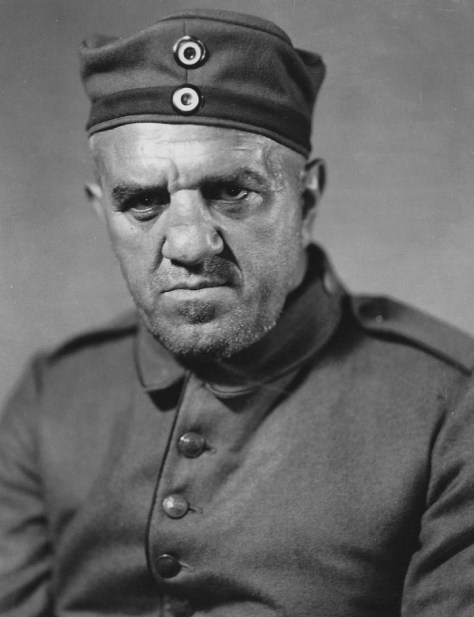
All Quiet on the Western Front 29

Kat has the most positive influence on Paul and his comrades on the battlefield. Katczinsky was a cobbler (shoemaker) in civilian life; he is older than Paul Bäumer and his comrades, about 40 years old, and serves as their leadership figure. He also represents a literary model highlighting the differences between the younger and older soldiers. While the older men have already had a life of professional and personal experience before the war, Bäumer and the men of his age have had little life experience or time for personal growth.

Kat is also well known for his ability to scavenge nearly any item needed, especially food. At one point he secures four boxes of lobster. Bäumer describes Kat as possessing a sixth sense. One night, Bäumer along with a group of other soldiers are holed up in a factory with neither rations nor comfortable bedding. Katczinsky leaves for a short while, returning with straw to put over the bare wires of the beds. Later, to feed the hungry men, Kat brings bread, a bag of horse flesh, a lump of fat, a pinch of salt and a pan in which to cook the food.

Kat is hit by shrapnel at the end of the story, leaving him with a smashed shin. Paul carries him back to camp on his back, only to discover upon their arrival that a stray splinter had hit Kat in the back of the head and killed him on the way. He is thus the last of Paul’s close friends to die in battle. It is Kat’s death that eventually makes Bäumer careless whether he survives the war or not, but that he can face the rest of his life without fear. “Let the months and the years come, they can take nothing from me, they can take nothing more. I am so alone, and so without hope that I can confront them without fear.”

Tjaden
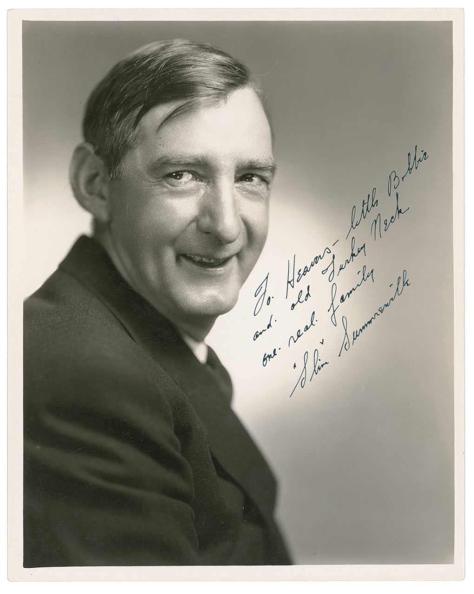
All Quiet on the Western Front 30

One of Bäumer’s non-schoolmate friends. Before the war, Tjaden was a locksmith. A big eater with a grudge against the former postman-turned corporal Himmelstoß (thanks to his strict ‘disciplinary actions’), he manages to forgive Himmelstoß later in the book. Throughout the book, Paul frequently remarks on how much of an eater he is, yet somehow manages to stay as “thin as a rake”. The fate of Tjaden is unknown but he appears in the sequel, The Road Back.

Minor characters

Kantorek
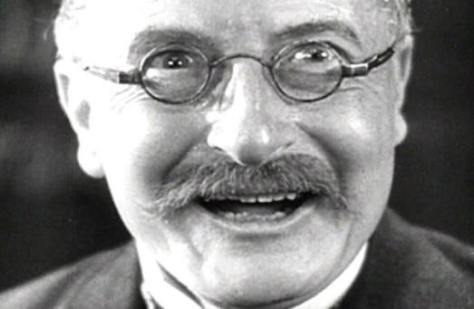
All Quiet on the Western Front 31

Kantorek was the schoolmaster of Paul and his friends, including Kropp, Leer, Müller, and Behm. Behaving “in a way that cost [him] nothing,” Kantorek is a strong supporter of the war and encourages Bäumer and other students in his class to join the war effort. Among twenty enlistees was Joseph Behm, the first of the class to die in battle. In an example of tragic irony, Behm was the only one who did not want to enter the war.

Kantorek is a hypocrite, urging the young men he teaches to fight in the name of patriotism, while not voluntarily enlisting himself. In a twist of fate, Kantorek is later called up as a soldier as well. He very reluctantly joins the ranks of his former students, only to be drilled and taunted by Mittelstädt, one of the students he had earlier persuaded to enlist.

Peter Leer
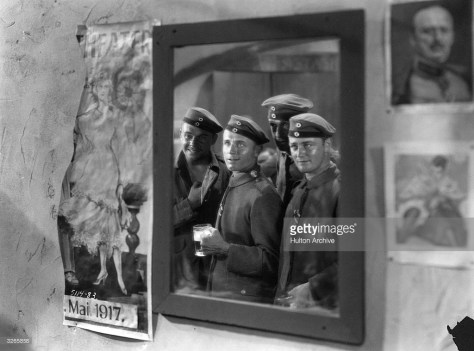
All Quiet on the Western Front 32

Leer is an intelligent soldier in Bäumer’s company, and one of his classmates. He is very popular with women; when he and his comrades meet three French women, he is the first to seduce one of them. Bäumer describes Leer’s ability to attract women by saying “Leer is an old hand at the game”. In chapter 11, Leer is hit by a shell fragment, which also hits Bertinck. The shrapnel tears open Leer’s hip, causing him to bleed to death quickly. His death causes Paul to ask himself, “What use is it to him now that he was such a good mathematician in school?”[4]

Bertinck
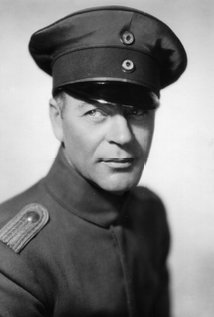
All Quiet on the Western Front 33

Lieutenant Bertinck is the leader of Bäumer’s company. His men have a great respect for him, and Bertinck has great respect for his men. He permits them to eat the rations of the men that had been killed in action, standing up to the chef Ginger who would only allow them their allotted share. Bertinck is genuinely despondent when he learns that few of his men had survived an engagement.

When he and the other characters are trapped in a trench under heavy attack, Bertinck, who has been injured in the firefight, spots a flamethrower team advancing on them. He gets out of cover and takes aim on the flamethrower but misses, and gets hit by enemy fire. With his next shot he kills the flamethrower, and immediately afterwards an enemy shell explodes on his position blowing off his chin. The same explosion also fatally wounds Leer.

Himmelstoss
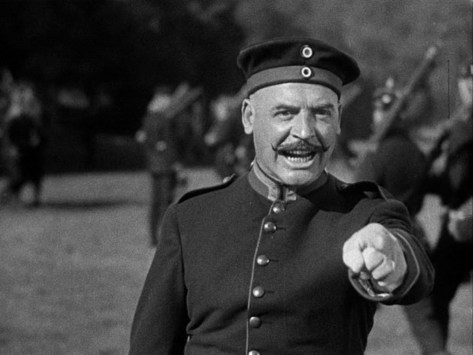
All Quiet on the Western Front 34

Corporal Himmelstoss (spelled Himmelstoß in some editions) was a postman before enlisting in the war. He is a power-hungry corporal with special contempt for Paul and his friends, taking sadistic pleasure in punishing the minor infractions of his trainees during their basic training in preparation for their deployment.

Paul later figures that the training taught by Himmelstoss made them “hard, suspicious, pitiless, and tough” but most importantly it taught them comradeship. However, Bäumer and his comrades have a chance to get back at Himmelstoss because of his punishments, mercilessly whipping him on the night before they board trains to go to the front.

Himmelstoss later joins them at the front, revealing himself as a coward who shirks his duties for fear of getting hurt or killed, and pretends to be wounded because of a scratch on his face. Paul Bäumer beats him because of it and when a lieutenant comes along looking for men for a trench charge, Himmelstoss joins and leads the charge. He carries Haie Westhus’s body to Bäumer after he is fatally wounded. Matured and repentant through his experiences Himmelstoß later asks for forgiveness from his previous charges. As he becomes the new staff cook, to prove his friendship he secures two pounds of sugar for Bäumer and half a pound of butter for Tjaden.

Detering
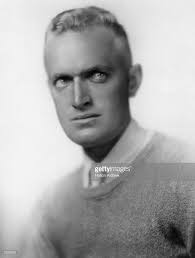
All Quiet on the Western Front 35

Detering is a farmer who constantly longs to return to his wife and farm. He is also fond of horses and is angered when he sees them used in combat. He says, “It is of the vilest baseness to use horses in the war,” when the group hears several wounded horses writhe and scream for a long time before dying during a bombardment. He tries to shoot them to put them out of misery, but is stopped by Kat to keep their current position hidden. He is driven to desert when he sees a cherry tree in blossom, which reminds him of home too much and inspires him to leave. He is found by military police and court-martialed, and is never heard from again.

Josef Hamacher
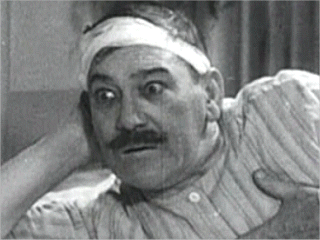
All Quiet on the Western Front 36

Hamacher is a patient at the Catholic hospital where Paul and Albert Kropp are temporarily stationed. He has an intimate knowledge of the workings of the hospital. He also has a “Special Permit,” certifying him as sporadically not responsible for his actions due to a head wound, though he is clearly quite sane and exploiting his permit so he can stay in the hospital and away from the war as long as possible.

Franz Kemmerich
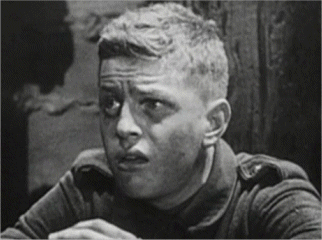
All Quiet on the Western Front 37

A young boy of only 19 years. Franz Kemmerich had enlisted in the army for World War I along with his best friend and classmate, Bäumer. Kemmerich is shot in the leg early in the story; his injured leg has to be amputated, and he dies shortly after. In anticipation of Kemmerich’s imminent death, Müller was eager to get his boots. While in the hospital, someone steals Kemmerich’s watch that he intended to give to his mother, causing him great distress and prompting him to ask about his watch every time his friends visit him in the hospital. Paul later finds the watch and hands it over to Kemmerich’s mother, only to lie and say Franz died instantly and painlessly when questioned.

Joseph Behm
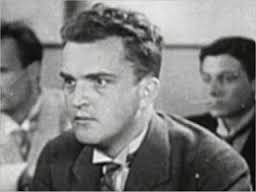
All Quiet on the Western Front 38

A student in Paul’s class who is described as youthful and overweight. Behm was the only student that was not quickly influenced by Kantorek’s patriotism to join the war, but eventually, due to pressure from friends and Kantorek, he joins the war. He is the first of Paul’s friends to die. He is blinded in no man’s land and believed to be dead by his friends. The next day, when he is seen walking blindly around no-man’s-land, it is discovered that he was only unconscious. However, he is killed before he can be rescued.

Publication and reception
All Quiet on the Western Front 17

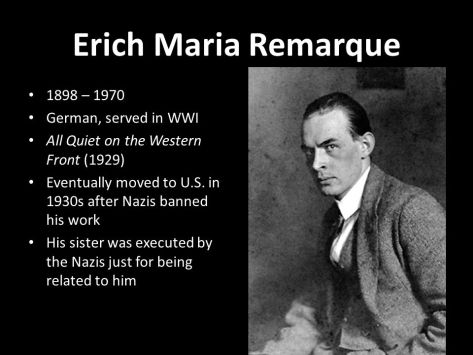
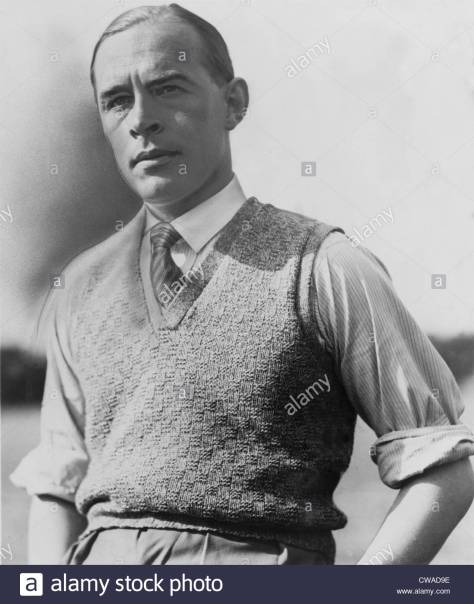
Erich Maria Remarque

From November 10 to December 9, 1928, All Quiet on the Western Front was published in serial form in Vossische Zeitung magazine. It was released in book form the following year to smashing success, selling one and a half million copies that same year. Although publishers had worried that interest in World War I had waned more than 10 years after the armistice, Remarque’s realistic depiction of trench warfare from the perspective of young soldiers struck a chord with the war’s survivors—soldiers and civilians alike—and provoked strong reactions, both positive and negative, around the world.

With All Quiet on the Western Front, Remarque emerged as an eloquent spokesman for a generation that had been, in his own words, “destroyed by war, even though it might have escaped its shells.” Remarque’s harshest critics, in turn, were his countrymen, many of whom felt the book denigrated the German war effort, and that Remarque had exaggerated the horrors of war to further his pacifist agenda. The strongest voices against Remarque came from the emerging National Socialist Party and its ideological allies. In 1933, when the Nazis rose to power, All Quiet on the Western Front became one of the first degenerate books to be publicly burnt;[5] in 1930 screenings of the Academy Award-winning film based on the book were met with Nazi-organized protests and mob attacks on both movie theatres and audience members.[6]
All Quiet on the Western Front 24

However, objections to Remarque’s portrayal of the German army personnel during World War I were not limited to the Nazis. Dr. Karl Kroner (de) objected to Remarque’s depiction of the medical personnel as being inattentive, uncaring, or absent from frontline action. Dr. Kroner was specifically worried that the book would perpetuate German stereotypes abroad that had subsided since the First World War. He offered the following clarification: “People abroad will draw the following conclusions: if German doctors deal with their own fellow countrymen in this manner, what acts of inhumanity will they not perpetuate against helpless prisoners delivered up into their hands or against the populations of occupied territory?” [7][8]

A fellow patient of Remarque’s in the military hospital in Duisburg objected to the negative depictions of the nuns and patients, and of the general portrayal of soldiers: “There were soldiers to whom the protection of homeland, protection of house and homestead, protection of family were the highest objective, and to whom this will to protect their homeland gave the strength to endure any extremities.”[8]
All Quiet on the Western Front 39

These criticisms suggest that perhaps experiences of the war and the personal reactions of individual soldiers to their experiences may be more diverse than Remarque portrays them; however, it is beyond question that Remarque gives voice to a side of the war and its experience that was overlooked or suppressed at the time. This perspective is crucial to understanding the true effects of World War I. The evidence can be seen in the lingering depression that Remarque and many of his friends and acquaintances were suffering a decade later.[7]

In contrast, All Quiet on the Western Front was trumpeted by pacifists as an anti-war book.[8] Remarque makes a point in the opening statement that the novel does not advocate any political position, but is merely an attempt to describe the experiences of the soldier.[9]
LEAD Technologies Inc. V1.01

The main artistic criticism was that it was a mediocre attempt to cash in on public sentiment.[citation needed] The enormous popularity the work received was a point of contention for some literary critics, who scoffed at the fact that such a simple work could be so earth-shattering.[citation needed]

Much of this literary criticism came from Salomo Friedlaender, who wrote a book Hat Erich Maria Remarque wirklich gelebt? “Did Erich Maria Remarque really live?” (under pen name Mynona), which was, it its turn, criticized in: Hat Mynona wirklich gelebt? “Did Mynona really live?” by Kurt Tucholsky.[10]

Friedlaender’s criticism was mainly personal in nature—he attacked Remarque as being ego-centric and greedy. Remarque publicly stated that he wrote All Quiet on the Western Front for personal reasons, not for profit, as Friedlaender had claimed.[7][8] Max Joseph Wolff (de) wrote a parody titled Vor Troja nichts Neues (Compared to Troy, Nothing New) under the pseudonym Emil Marius Requark.[11]
All Quiet on the Western Front 42

Adaptations

Film

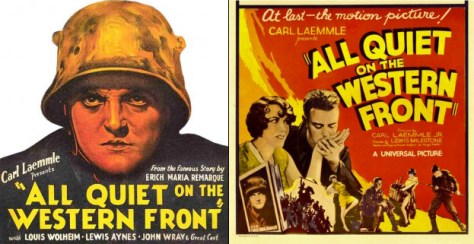
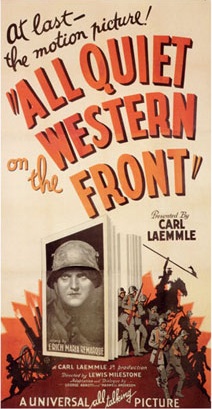
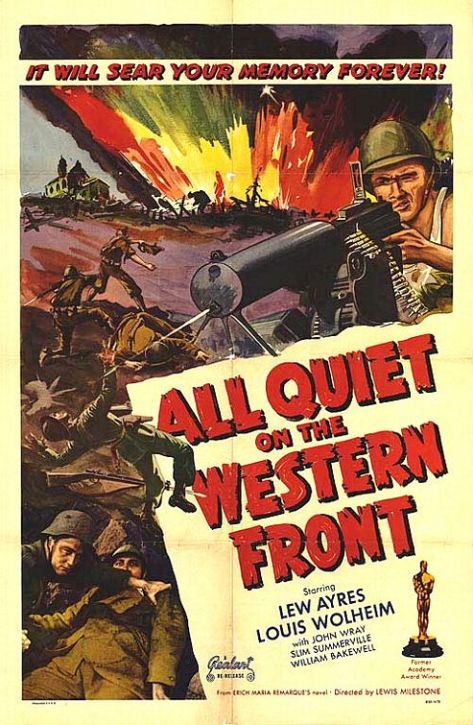
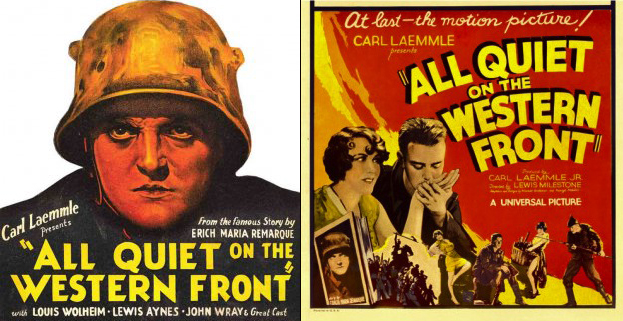
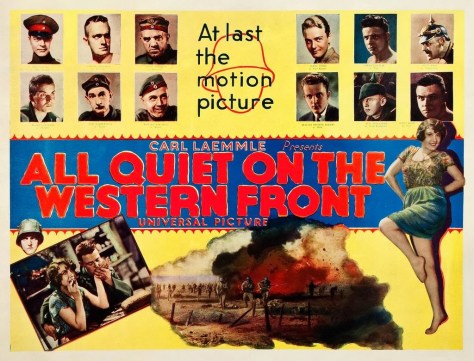
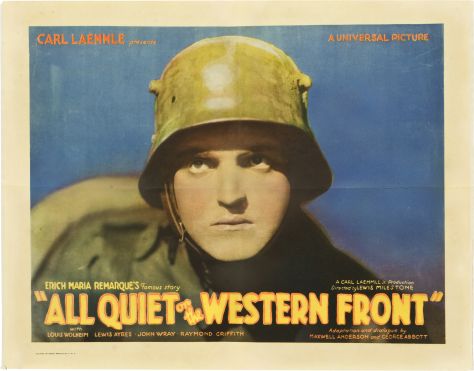
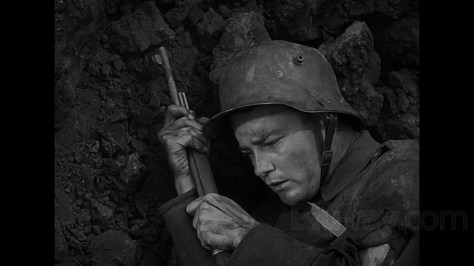
Poster for the movie All Quiet on the Western Front (1930), featuring star Lew Ayres

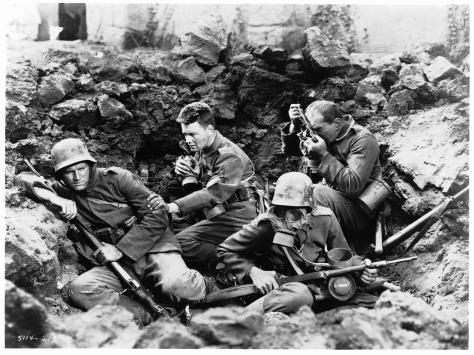
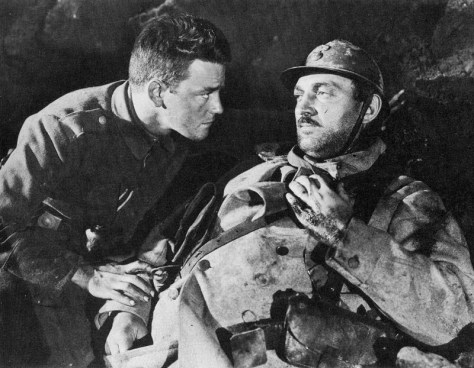
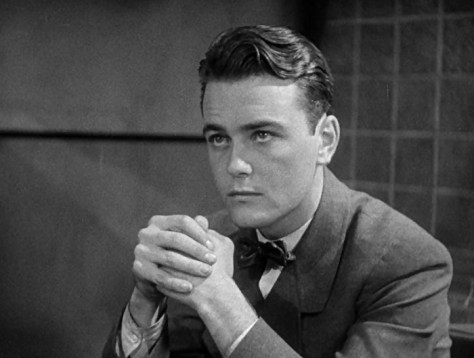
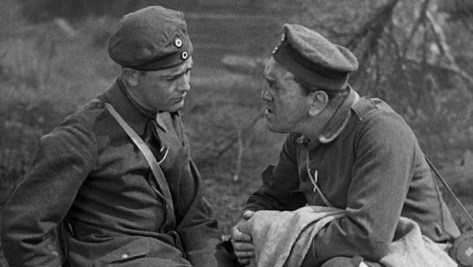
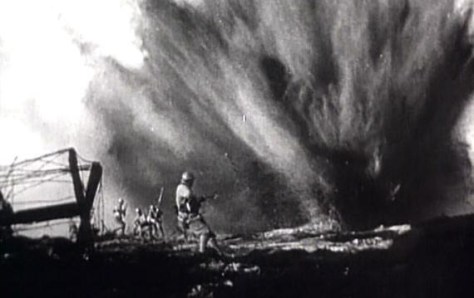
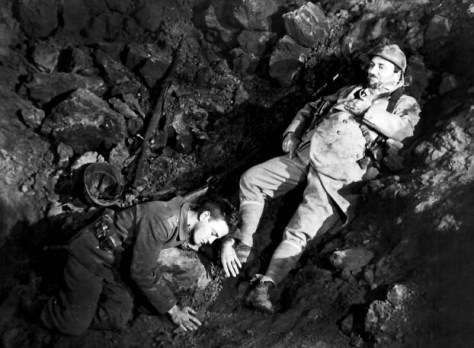
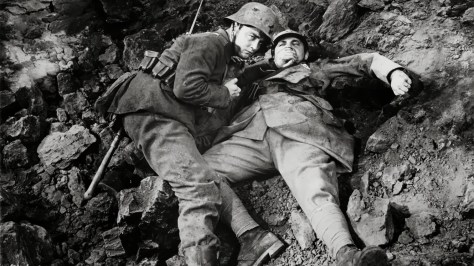
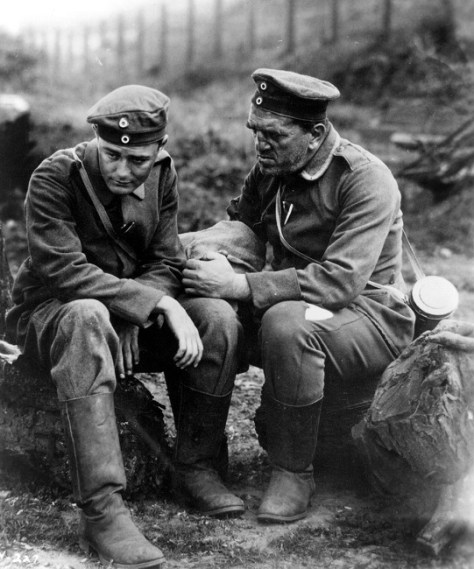
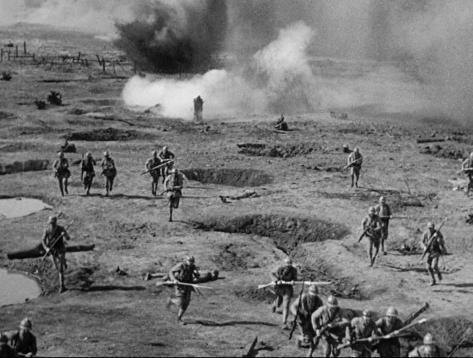
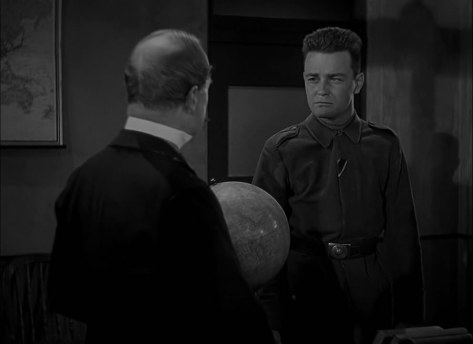
In 1930, an American film of the novel was made, directed by Lewis Milestone; with a screenplay by Maxwell AndersonGeorge AbbottDel AndrewsC. Gardner Sullivan; and with uncredited work by Walter Anthony and Milestone. It stars Louis WolheimLew AyresJohn WrayArnold Lucy, and Ben Alexander.

The film won the Academy Award for Best Picture in 1930 for its producer Carl Laemmle Jr., the Academy Award for Directing for Lewis Milestone, and the Academy Award for Outstanding Production. It was the first all-talking non-musical film to win the Best Picture Oscar. It also received two further nominations: Best Cinematography, for Arthur Edeson, and Best Writing Achievement for Abbott, Anderson, and Andrews.[12]
All Quiet on the Western Front 45

In 2016, it was confirmed that Roger Donaldson will direct a remake of All Quiet on the Western Front starring Travis Fimmel as Katczinsky.[13]

TV film

In 1979, the film was remade for CBS television by Delbert Mann, starring Richard Thomas of The Waltons as Paul Bäumer and Ernest Borgnine as Kat. The movie was filmed in Czechoslovakia.[14]

Music

Elton John‘s album Jump Up! (1982) features the song, “All Quiet on the Western Front” (written by Elton and Bernie Taupin). The song is a sorrowful rendition of the novel’s story (“It’s gone all quiet on the Western Front / Male Angels sigh / ghosts in a flooded trench / As Germany dies”).

Bob Dylan, during his Nobel Laureate lecture, cited this book as one that had a profound effect on this songwriting.
All Quiet on the Western Front 46

Radio

On November 9, 2008, a radio adaptation of the novel was broadcast on BBC Radio 3, starring Robert Lonsdale as Paul Bäumer and Shannon Graney as Katczinsky. Its screenplay was written by Dave Sheasby, and the show was directed by David Hunter.[15]

Audiobook

In 2010, Hachette Audio UK published an audiobook adaptation of the novel, narrated by Tom Lawrence. It was well received by critics[16] and listeners.
All Quiet on the Western Front 47

See also

References

  1. Jump up^ Eksteins, Modris (April 1980). “All Quiet on the Western Front and the Fate of a War”. Journal of Contemporary HistorySAGE Publications15 (2): 353. doi:10.1177/002200948001500207.
  2. Jump up to:a b Erich Maria Remarque’s All Quiet on the Western Front. 2009. p. 48.
  3. Jump up^ Chapter Ten of All Quiet on the Western Front
  4. Jump up^ All Quiet on the Western Front (London: Putnam & Company Ltd, 1970 reprint), page 240.
  5. Jump up^ “Nov 10, 1928: Remarque publishes All Quiet on the Western Front”History.com. Retrieved June 3, 2013.
  6. Jump up^ Sauer, Patrick (June 16, 2015). “The Most Loved and Hated Novel About World War I”Smithsonian.com. Smithsonian Institution. Retrieved June 21, 2015.
  7. Jump up to:a b c Patrick Clardy. “All Quiet on the Western Front: Reception”Yale Modernism Lab. Retrieved June 3, 2013.
  8. Jump up to:a b c d Barker, Christine R.; Last, Rex William (1979). Erich Maria Remarque. New York: Barnes & Noble Books.
  9. Jump up^ Wagner, Hans (1991). Understanding Erich Maria Remarque. Columbia, SC: University of South Carolina Press.
  10. Jump up^ Kurt Tucholsky (under pen name Ignaz Wrobel), Hat Mynona wirklich gelebt?Die Weltbühne, December 31, 1929, No. 1, p. 15
  11. Jump up^ Catalogue entry for Vor Troja nichts Neues in the German National Library, retrieved January 29, 2014
  12. Jump up^ “The 3rd Academy Awards – 1931”Oscars. Academy of Motion Picture Arts and Sciences. Retrieved 1 September 2016.
  13. Jump up^ Kay, Jeremy. “‘Warcraft’ star Travis Fimmel to lead ‘All Quiet On The Western Front'”ScreenDaily. MBI Ltd. Retrieved 1 September 2016.
  14. Jump up^ “All Quiet on the Western Front (1979)”IMDb. IMDb.com, Inc. Retrieved 1 September 2016.
  15. Jump up^ “BBC Radio 3 – Drama on 3, All Quiet on the Western Front”. Bbc.co.uk. November 9, 2008. Retrieved February 7, 2013.
  16. Jump up^ “All Quiet on the Western Front Audiobook Review – Audiobook Jungle – Audiobook Reviews In All Genres”audiobookjungle.com. Retrieved April 10, 2016.
All Quiet on the Western Front 48

All Quiet on the Western Front 5

Film Collectors Corner

Watch All Quiet on the Western Front Now – Instant Video on Internet Archive

Blu Ray


DVD

Morals for Women (1931)


Pre Code Logo 1

Pre Code Hollywood Season: FD Cinematheque

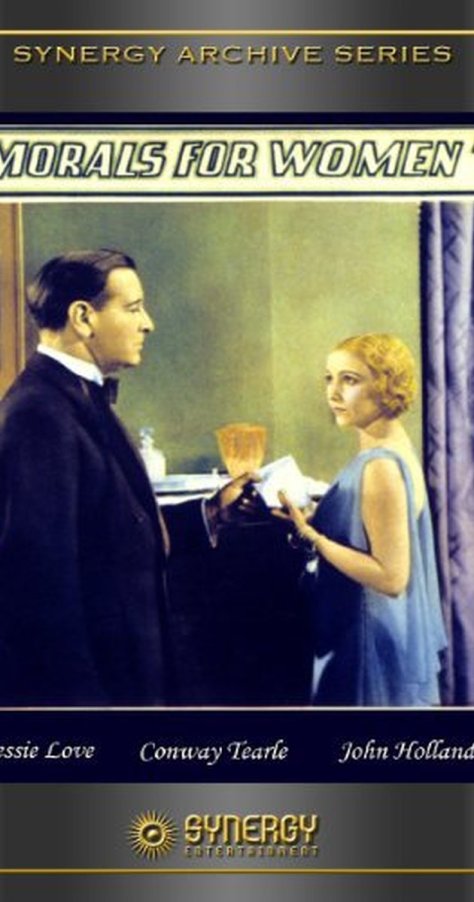
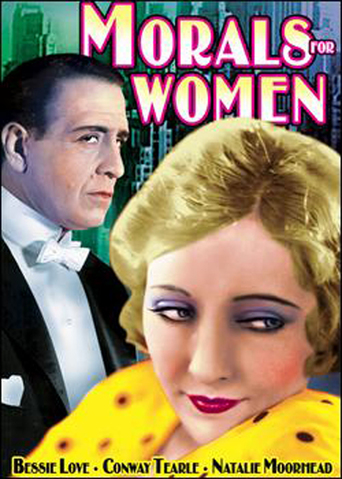
Morals for Women (1931)

Morals for Women 1

Morals for Women 2

Director: Mort Blumenstock

Cast: Bessie Love, Conway Tearle, John Holland, Natalie Moorhead, Emma Dunn, June Clyde, Edmund Breese, David Rollins, Lina Basquette, Virginia Lee Corbin, Otis Harlan

65 min

Morals for Women 5

Plot

Helen Hutson, the secretary and mistress of New York businessman Van Dyne, is initially upset when her childhood sweetheart, Paul Cooper, comes to her office to visit. However, she agrees to have dinner with him after he says he is leaving town that night and, feigning a headache, breaks a date with Van.

They go dancing, and Paul, whom Helen once told not to come back into her life until he made good, proposes by the end of the evening. Helen avoids giving an answer, and at the train

They go dancing, and Paul, whom Helen once told not to come back into her life until he made good, proposes by the end of the evening. Helen avoids giving an answer, and at the train station before he leaves, she tries but fails to confess her involvement with Van.

Morals for Women 6

Despite advice from her friend Katherine, Helen, now in love with Paul, plans to return to her hometown of Greenfield, New York and tell him everything before they marry. In Greenfield, Helen finds that her younger sister Lorraine is infatuated with a wealthy boy from the southern school she is attending.

Her father, who has lost his job as a newspaperman, comes in drunk with friends, one of whom asks Helen to repay $200 that her father borrowed. When a boy in town makes insulting innuendos about Helen, her brother Bud defends her reputation, breaking a bottle over the boy’s head. After the sheriff tells Helen that the injured boy’s father will not press charges if he is paid for the hospital expenses, Helen reveals to Bud that the rumors are true.

He embraces her nonetheless, and Helen returns to New York where she placates Van by saying that Paul means nothing to her, and gets the money to bail Bud out of jail. Sometime later, on the night of a party Van demands she hold for some drunken business associates, Helen’s mother and father visit her apartment. That same day, Paul, who has come back from his trip, looks for her at the office, and meets Van instead.

Morals for Women 7

When Paul announces their impending marriage, Van maliciously brings Paul to the party. Meanwhile, Helen’s mother has made lemonade for the surprised guests, while her father gets drunk with two of Van’s associates. When Van, in front of Paul, orders Helen to get him handkerchiefs from his drawer, Paul leaves in disgust. Helen leaves town the next day with her parents. They receive a telegram from Lorraine announcing her marriage, and Helen is happy that her sister is “safe.” Paul comes to the house, and as Bud and his mother watch from the window, Helen and Paul embrace and reconcile.

Morals for Women 4


Cast 

Bessie Love Bessie Love
Helen Huston
Conway Tearle Conway Tearle
Van Dyne
John Holland John Holland
Natalie Moorhead Natalie Moorhead
Flora
Emma Dunn Emma Dunn
Mrs. Huston
June Clyde June Clyde
Lorraine Huston
Edmund Breese Edmund Breese
Mr. Huston
David Rollins David Rollins
Bill Huston
Lina Basquette Lina Basquette
Claudia
Virginia Lee Corbin Virginia Lee Corbin
Maybelle
Crauford Kent Crauford Kent
Mr. Marston
Otis Harlan Otis Harlan
Mr. Johnston
Rest of cast listed alphabetically:
George Olsen George Olsen
Orchestra Leader (archive footage)
Ethan Allen Ethan Allen
(uncredited)
Norman Budd Norman Budd
(uncredited)
Wilbur Higby Wilbur Higby
(uncredited)
John Hyams John Hyams
(uncredited)
Walter Perry Walter Perry
(uncredited)
Lillian Rich Lillian Rich
(uncredited)

Morals for Women 8

circa 1920: Bessie Love (1898 - 1986), the Hollywood film actress.

Morals for Women 10

Film Collectors Corner

Watch Morals For Women Now – Instant Video on You Tube

Blu Ray

Not released on Blu Ray


DVD

Man of Sentiment, A (1933)


Pre Code Logo 1

Pre Code Hollywood Season: FD Cinematheque

A Man of Sentiment (1933)

Man of Sentiment A 1

Director: Richard Thorpe

Cast: Marian Marsh, Owen Moore, Christian Rub, William Bakewell, Emma Dunn, Edmund Breese, Geneve Mitchell, Pat O’Malley, Syd Saylor

62 min

Plot

Herman Heupelkossel, a kindhearted orderly at a New York hospital, is teased by his fellow workers for the sympathy he gives patients. An unconscious, badly bleeding girl under twenty, the victim of a speeding, drunk driver, is brought in by the driver, twenty-four-year-old John Russell, who wants to be punished for his offense.

Herman sees that the girl, Julia Wilkins, will be alright in a few days and convinces John to hide his drunkenness so that he will be able to help Julia, rather than go to jail. With the aid of Limburger cheese, black coffee and Herman’s old pipe, John reluctantly covers up his alcoholic breath.

Man of Sentiment A 2

As Julia gets better, she and John fall in love, and when he brings her home to her roominghouse, he proposes. When the accident occurred, Julia had been on her way to meet her former suitor Stanley Colton, a wealthy playboy, and accept his offer to become his mistress in exchange for luxurious rooms, a piano, musical instruction and eventually a trip to Europe to study.

She now tells Colton, who is waiting at her room, that she only kidded herself into believing that she was a musical genius. Colton still extends an offer to help her, which John rebuffs. John, who has hidden from Julia the fact that he is the black sheep son of wealthy parents, takes her to his home, where his family, especially his snooty sister Doris, make the meeting unpleasant because they think she is after his money. As a result, Julia breaks off the engagement, which leads John to go on a drinking binge. When Herman learns of this, he calls Julia, who brings John to her room.

Man of Sentiment A 7

They plan to marry without financial help from his family, and this time, Julia, anxious to leave before anything else goes wrong, calls Colton to ask him for money. She goes to have dinner at his apartment, and after she refuses his entreaties that she break with John, he has her wait in his bedroom while he answers the door. John, whom Colton craftily had called and asked to visit after he heard from Julia, enters and accuses Julia of selling herself to Colton.

Their engagement broken again, Julia soon is kicked out of her room for non-payment of rent. After two weeks, she is taken to the hospital, suffering from pneumonia. Herman, thinking that John’s presence when she regains consciousness could determine whether she lives or dies, leaves the hospital to find him, at the risk of losing his job, but arrives at John’s house just after John has left to take a steamer to Europe.

Herman convinces John’s father of the urgency of the situation and they find John. As Mr. Russell is the hospital’s heaviest donor, Herman is not fired. Julia recovers and the couple are reconciled.

Man of Sentiment A 4

Cast

Marian Marsh Marian Marsh
Julia Wilkens
Owen Moore Owen Moore
Stanley Colton
Christian Rub Christian Rub
Herman Heupelkossel
William Bakewell William Bakewell
John Russell
Emma Dunn Emma Dunn
Mrs. John Russell Sr.
Edmund Breese Edmund Breese
John Russell Sr.
Geneva Mitchell Geneva Mitchell
Doris Russell
Pat O'Malley Pat O’Malley
Officer Ryan
Syd Saylor Syd Saylor
Swede – Orderly
Lucille Ward Lucille Ward
Miss Tracy
Cornelius Keefe Cornelius Keefe
Dr. Jordan
Otto Hoffman Otto Hoffman
Landlord
Matt McHugh Matt McHugh
Alex (Willie) Moran – Orderly
William Bailey William Bailey
Doctor
Mildred Washington Mildred Washington
Mildred – the Maid
Rest of cast listed alphabetically:
Lionel Backus Lionel Backus
Superintendent Orderly (uncredited)
John Beck John Beck
Beck – the Butler (uncredited)
Almeda Fowler Almeda Fowler
Nurse (uncredited)
Frank LaRue Frank LaRue
Sergeant Muldoon (uncredited)
Arthur Millett Arthur Millett
Bill Collector (uncredited)
Dick Rush Dick Rush
Barney – Ambulance Driver (uncredited)


Film Collectors Corner

Watch A Man of Sentiment Now – Instant Video on You Tube

Blu Ray

Not released on Blu Ray


DVD

Not released on DVD


Gigolettes of Paris (1933)


Pre Code Logo 1

Pre Code Hollywood Season: FD Cinematheque

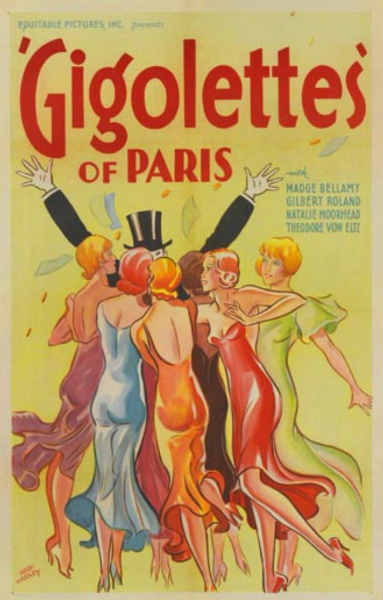
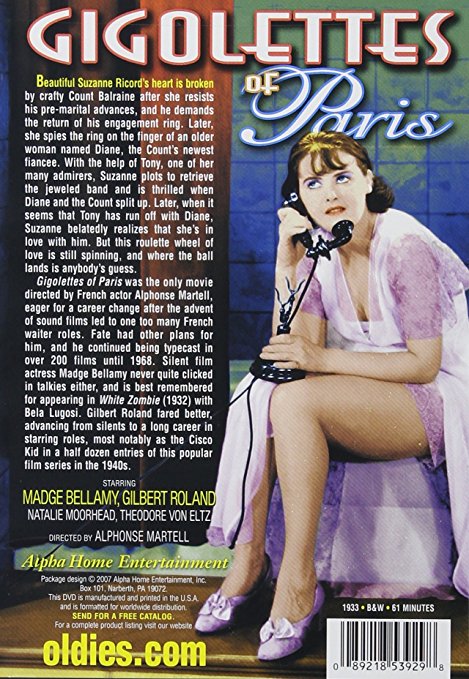
Gigolettes of Paris (1933)

Gigolettes of Paris 11

Gigolettes of Paris 12

Director: Alphonse Martell

Cast: Madge Bellamy, Gilbert Roland, Natalie Moorhead, Theodore Von Eltz, Molly O’Day, Henry Kolker, Paul Porcasi, Robert Bolder, Ellinor Vanderveer

64 min

Gigolettes of Paris 5

Plot

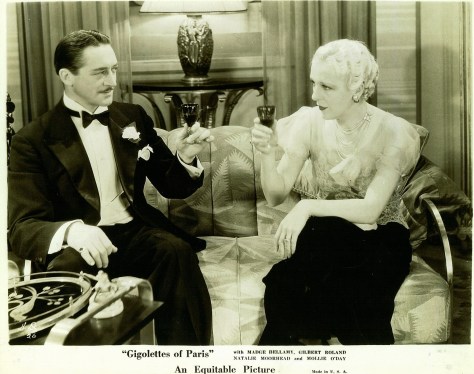
Suzanne Ricord, the prettiest salesgirl at the Parfumerie Parisienne, attracts the attention of wealthy Albert Valraine, who purchases all the expensive perfumes that she recommends.

After work, Suzanne and her roommate Paulette find Valraine waiting. He insists on giving the demure Suzanne a ride home and puts Paulette in the rear outdoor seat, where she still manages to hear Valraine offer Suzanne both the perfumes that he bought and to be her “fairy godfather.”

Gigolettes of Paris 4

Suzanne refuses, but after she finds no mail from her lover, Paulette talks her into accepting Valraine’s offer. She removes the ring that her lover gave her, and it is soon replaced by Valraine’s. Suzanne and Paulette now live in a nicely-furnished apartment paid for by Valraine, and Suzanne is his mistress.

However, when she begins to talk about their planned honeymoon, Valraine takes back his ring and, accusing her of not having learned the rules of the game, says that everything has to end sometime.

Suzanne cries in disappointment. Valraine then promises his fiancée Diane that he is finished with his mistress and gives her the ring he took back from Suzanne.

Gigolettes of Paris 6

Sometime later, Suzanne sings at a cabaret and accepts gifts from the many wealthy men who come to see her. Her friend, Antoine “Tony” Ferand, a gigolo, dances with Diane, now Valraine’s wife, and Suzanne notices the ring on her finger. When Tony tells Suzanne that Diane is Mrs. Albert Valraine, Suzanne reveals that the ring was her engagement ring and says she wants it back.

Diane gives the ring to Tony supposedly to help finance his business, and when Tony, who really loves Suzanne, gives her the ring, she reveals that her plan is to show Valraine how it feels to be at the losing end of the game. When Tony says that he is sick of their life and has no self-respect, Suzanne refuses to listen.

Valraine, who has just returned from a trip, accompanies his wife to the cabaret, and he notices that her ring is gone. Seeing the ring on a hand holding the curtain leading to the telephone, Valraine grabs it only to find Suzanne waiting for his approach.

Gigolettes of Paris 7

When he questions her about the ring, she obliquely threatens to reveal their affair if his inquiries go too far. Back at the table with his wife, after Valraine, noticing Tony staring at Diane, accuses her of humiliating him with a common gigolo, Diane leaves with Tony, who is frustrated with Suzanne’s schemes. In their cab, Tony reveals to Diane that Suzanne had been engaged to Valraine and apologizes.

Although disappointed, Diane refuses his offer to return the ring. Tony goes to Monte Carlo, where he is arrested after he leaves a watch that had been given to Suzanne by a man at the cabaret, at a repair shop. The watch turns out to be stolen property.

The next night, Suzanne, upset that Tony has not come to the club, rebukes Valraine when he apologetically asks if she could ever care for him again. In front of Valraine, she gives the ring as a present to Louie, her waiter.

Gigolettes of Paris 9

Meanwhile, Tony, in jail, refuses to say who gave him the watch. Realizing that she really loves Tony, Suzanne goes with Paulette to Monte Carlo to get away. She sees Diane at a table but her fears at finding her with Tony are relieved when her new husband joins her.

After Paulette shows her a newspaper article about the stolen watch, she tells her story to the police. Tony is released and the man who gave her the watch is picked up in Marseilles. Tony and Suzanne plan to marry, and he plans to return to his father’s textile producing business. To their surprise, they find that with the ring, Louie has married Paulette.

Tony is released and the man who gave her the watch is picked up in Marseilles. Tony and Suzanne plan to marry, and he plans to return to his father’s textile producing business. To their surprise, they find that with the ring, Louie has married Paulette.

Gigolettes of Paris 8

Madge Bellamy Madge Bellamy
Suzanne Ricord
Gilbert Roland Gilbert Roland
Antoine ‘Tony’ Ferrand
Natalie Moorhead Natalie Moorhead
Diane Valraine
Theodore von Eltz Theodore von Eltz
Albert Valraine
Molly O'Day Molly O’Day
Paulette
Henry Kolker Henry Kolker
Police Interrogator
Paul Porcasi Paul Porcasi
Albert Conti Albert Conti
Ferdinand Schumann-Heink Ferdinand Schumann-Heink
(as F. Schumann-Heink)
Maude Truax Maude Truax
Lester New Lester New
Robert Bolder Robert Bolder
Rest of cast listed alphabetically:
Ellinor Vanderveer Ellinor Vanderveer
Diane’s Friend (uncredited)

Gigolettes of Paris 10

Film Collectors Corner

Watch Gigolettes of Paris Now – Instant Video on You Tube

Blu Ray

Not released on Blu Ray

DVD

Racketeer, The (1929)


Pre Code Logo 1

Pre Code Hollywood Season: FD Cinematheque

Racketeer, The (1929)

Racketeer The 1

Racketeer The 2

Racketeer The 3

Racketeer The 4

Director: Howard Higgin

Cast: Robert Armstrong, Carole Lombard, Roland Drew, Paul Hurst, Kit Guard, Al Hill, Hedda Hopper, John Loder, Jeanette Loff, Winter Hall, Winifred Harris, Robert Parrish

68 min

Racketeer The 6

The Racketeer is a 1929 American Pre-Code drama film. Directed by Howard Higgin, the film is also known as Love’s Conquest in the United Kingdom.

It tells the tale of some members of the criminal class in 1920s America, and in particular one man and one woman’s attempts to help him. Gossip columnist Hedda Hopper appears in a minor role. The film is one of the early talkies, and as a result, dialogue is very sparse.

Racketeer The 8

Plot

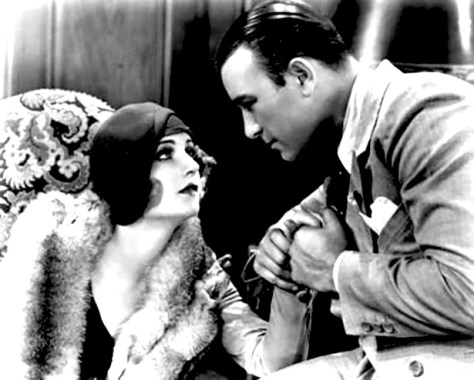
New York City gangster Mahlon Keene (Robert Armstrong) melts when he meets down-on-her-luck beauty Rhoda (Carole Lombard), a society gal who’s in desperate need of dough to support herself and her boyfriend, Tony (Roland Drew), a brilliant violinist with a serious drinking problem.

Mahlon pulls some strings to help Tony get back on top; in return, Rhoda is to dump the musician and marry the mobster.

The already heated situation is further complicated when the cops decide to crack down on Mahlon.

Racketeer The 9

Cast

Racketeer The 13

Racketeer The 14

Racketeer The 7

Racketeer The 10

Racketeer The 12

Racketeer The 11

Film Collectors Corner

Watch The Racketeer Now – Amazon Instant Video

 Blu Ray

Not released on Blu Ray


DVD

Lonely Wives (1931)


Pre Code Logo 1

Pre Code Hollywood Season: FD Cinematheque

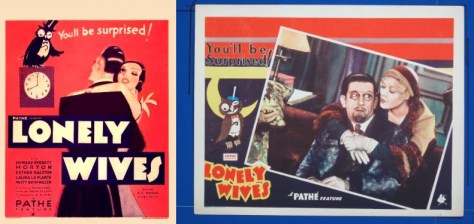
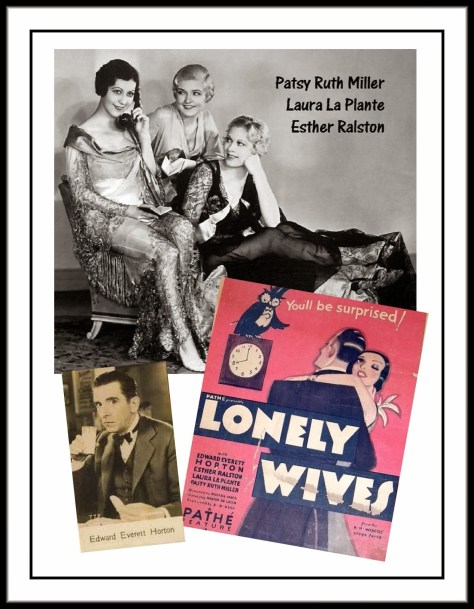
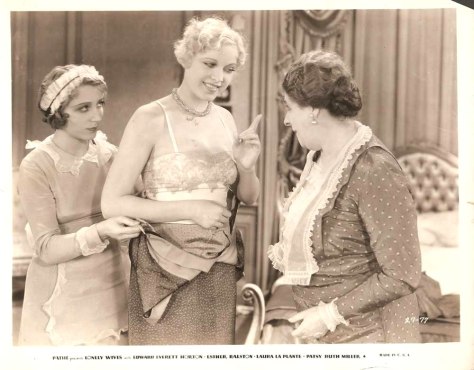
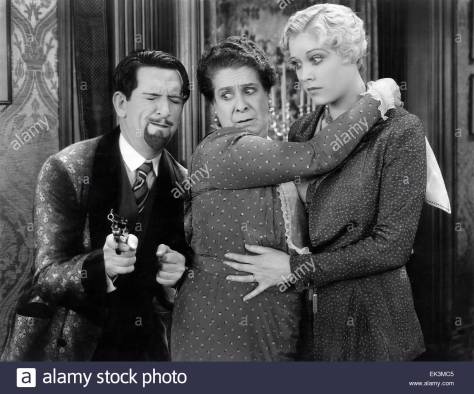
Lonely Wives (1931)

Lonely Wives 3

Lonely Wives 2

Lonely Wives 1

Director: Russell Mack 

Cast: Edward Everett Horton, Esther Ralston, Laura La Plante, Patsy Ruth Miller, Spencer Charters, Maude Eburne, Maurice Black

85 min

Lonely Wives 5

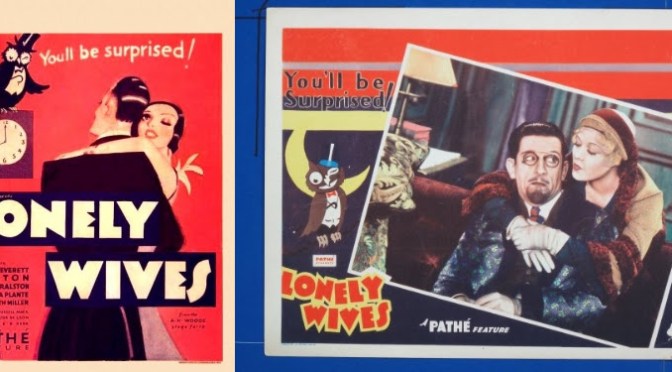
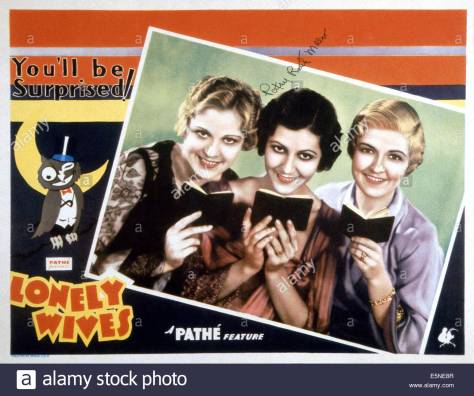
Lonely Wives is a 1931 American comedy film directed by Russell Mack and produced by E.B. Derr for Pathé Exchange, and was distributed by RKO Pictures after the merger of the two studios; it starred Edward Everett Horton, Esther Ralston, Laura La Plante, and Patsy Ruth Miller.

The screenplay was written by Walter DeLeon, based upon a successful German Vaudeville act entitled Tanzanwaltz, penned by Pordes Milo, Walter Schütt, and Dr. Eric Urban. The German production had been translated for the American stage by DeLeon and Mark Swan and, under the same title as the film.

Lonely Wives 6

Plot summary

Edward Everett Horton, in dual roles as Richard and Felix, the Great Zero.

Richard “Dickie” Smith (Edward Everett Horton), is a seemingly respectable defense attorney by day, who turns into a philandering Don Juan when the clock strikes 8 o’clock.

His wife, Madeline (Esther Ralston), has been away for several months, and is not expected back anytime soon. However, Madeline’s mother, Mrs. Mantel (Maude Eburne) is staying with the Smiths, in an effort to curtail the possibility of any straying by Richard.

Lonely Wives 7

Unbeknownst to her, he has made plans to go out on the town that night with his new, sultry secretary Kitty Minter (Patsy Ruth Miller), and his new sexy client, Diane O’Dare (Laura La Plante), who, a lonely wife herself, wishes to divorce her husband for neglect.

The issue is how can he go out on the town without alerting his mother-in-law. An issue which is seemingly resolved by the arrival at his home of a vaudeville impersonator: Felix, the Great Zero (also played by Edward Everett Horton). Felix is seeking permission to impersonate the famous lawyer on-stage. At first reluctant, Richard, noticing the striking resemblance between himself and the actor, realizes he might have a way to deceive Mrs. Mantel. In order to obtain his approval, Felix must agree to impersonate him at his house that evening, while he goes out.

Lonely Wives 8

While Richard goes out on the town, he discovers that Diane’s husband is none other than Felix. Meanwhile, Madeline arrives home unannounced and early.Thinking that he is about to be exposed, Felix phones the nightclub where Richard has taken the two women for dinner and drinks. As he waits for the return phone call, much to his surprise, rather than exposing him as an imposter, Madeline begins to come on to him. He attempts to resist, trying to hold out until he can speak to Richard, but he succumbs to her charms just as the phone begins ringing.

When Richard returns home the next morning, Felix is still there. He is followed closely by a very inebriated Diane, with whom it seems he has spent his time away from home. When Felix recognizes Diane, and Richard understands that Felix has spent the night at his house, both men believe that his look-a-like has slept with the others’ wife. After a series of events, Smith ends up chasing Zero with a loaded gun. Meanwhile, Andrews, the Butler, (Spencer Charters), thinks he must have the DT’s, seeing double of his employer.

Lonely Wives 12

The truth comes out when Madeline admits that she knew it wasn’t Richard all along, and other than the kissing, nothing happened between the two of them. Diane admits that she spent the night in the cab, riding around, and not with Richard. Reconciled, Richard is cured of his wandering ways and Felix and Diane are reunited.

Cast

(Cast as per AFI database)[5]

Lonely Wives 10

Production

Tie-in advertisement for Jo-Cur Beauty Products and Lonely Wives.

Pathé announced that the film was going into production in mid-November 1930, with Russell Mack at the helm.[6] Shortly after, it was reported that La Plante had been attached to the cast;[7] La Plante was returning to films after a brief seven-month hiatus, during which time speculation arose that her career might be over.

Her appearance in this film, and its success, would re-ignite her career.[8] On December 7, it was learned that DeLeon would be adapting the story into a screenplay,[9] and on the 10th the announcement came that Esther Ralston and Patsy Ruth Miller would be added to the list of cast members, along with Edward Everett Horton.[10]

Horton and Miller had co-starred the prior year in four films together for Warner Brothers.[11] The following day, December 11, The Film Daily announced that the film had begun production.[12]Included in the cast was Spencer Charters, who had acted with Mack in several Broadway plays.[13]

Lonely Wives 11

Pathe announced that the film would be part of its 1931 schedule, and it began to appear on its list of upcoming releases in the trades, but without a specific release date.[14] The release was held up in late January due to the sale of Pathe to RKO Pictures. By the end of the month the go-ahead was given to release the film.[15] Finally on February 16 RKO announced they would be releasing the film the following week.[16]

Several days prior to its release, Pathe announced that the marketing campaign for the film would include “tie-ins” with a coterie of manufacturers and retail stores. The campaign would include drug stores and department stores, and have advertising material supplied by manufacturers such as Underwood (typewriters), John H. Woodbury (toiletries), and Jo-Cur Laboratories (beauty products).[17] Lonely Wives was released by RKO on February 22, 1931.[5]

Lonely Wives 13

Soundtrack

  • “Madeline”, unknown composer
  • “Baby Feet”, unknown composer, sung by Maude Eburne[1]

 Lonely Wives 14

Reception

Mordaunt Hall, the film critic for the New York Times, gave the film a positive review, calling the direction “skillful”, and singles out the performance of several of the actors, including Esther Ralston, Maude Eburne, Patsy Ruth Miller, and Spencer Charters.

He was especially impressed with Horton, stating that he “delivers a wonderfully clever dual impersonation …”, and is “wonderfully amusing”.[18] The Film Daily also gave the film a nod of approval, calling it “… one of the cleverest and most entertaining comedies of the season”.

Lonely Wives 15

They particularly highlighted the direction of Mack, Horton’s performance in his dual role, as well as complimenting the rest of the cast. The trade paper also gave the highest marks to the cinematography of Edward Snyder.[19]

Photoplay listed it as one of the best films of the month in February 1931, singling out the acting talents of Horton, Ralston, La Plante, and Miller.[20] Picture Play Magazine was a bit more reserved in their review of the film.

While they called it “… the most consistently broad comedy of any film since “The Cock-eyed World”,” they also stated that it was “supposedly hilarious”.[21]

Other positive reviews came from: Billboard, “… destined to be one of the laugh highlights of the screen year”; Motion Picture Herald, “Highly sophisticated comedy, goes over with a great laugh”; Los Angeles Express, “Fast, furious, frothy farce. Lonely Wives is a laugh riot”; and Motion Picture Daily, “Laughs keep rolling out in a steady deluge of ultra-sophisticated wise cracks.”[22]

Lonely Wives 16

Notes

In 1959, the film entered the public domain in the USA due to the copyright claimants failure to renew the copyright registration in the 28th year after publication.[23]

It was released on DVD by Roan/Troma Entertainment in 2001.[24]

The English translation of the 1912 German vaudeville act, Tanzanwaltz, entitled Lonely Wives, written by DeLeon and Mark Swan, was produced by A.H. Woods in Stamford, Connecticut on August 11, 1922.[2] The play was scheduled to open in New York in August 1922, starring a well-known female impersonator of that time, Julian Eltinge as its star, but was never produced, apparently because while humorous, it had no value or integrity.[25]

The film was acquired by RKO when they purchased Pathé Exchange in January 1931.[25]

Lonely Wives 17

References

  1. ^ Jump up to:a b “Lonely Wives: Technical Details”. theiapolis.com. Retrieved August 15, 2014.
  2. ^ Jump up to:a b “Lonely Wives: Screenplay Info”. Turner Classic Movies. Archived from the original on August 20, 2014. Retrieved October 20, 2014.
  3. Jump up^ “Lonely Wives, Credits”. Turner Classic Movies. Archived from the original on August 19, 2014. Retrieved August 15, 2014.
  4. Jump up^ Jewell, Richard B.; Harbin, Vernon (1982). The RKO Story. New York: Arlington House. p. 34. ISBN 0-517-546566.
  5. ^ Jump up to:a b c “Lonely Wives: Detail View”. American Film Institute. Retrieved August 15, 2014.
  6. Jump up^ Wilk, Ralph (November 12, 1930). “Hollywood Flashes”. The Film Daily. p. 5.
  7. Jump up^ Wilk, Ralph (November 25, 1930). “Hollywood Flashes”. The Film Daily. p. 6.
  8. Jump up^ “News And Gossip”. Motion Picture Magazine. April 1931. p. 94.
  9. Jump up^ “6 Features And 6 Shorts In The Works At Pathe”. The Film Daily. December 7, 1930. p. 4.
  10. Jump up^ Wilk, Ralph (December 10, 1930). “Hollywood Flashes”. The Film Daily. p. 8.
  11. Jump up^ “A Little From “Lots””. The Film Daily. December 21, 1930. p. 4.
  12. Jump up^ Wilk, Ralph (December 11, 1930). “Hollywood Flashes”. The Film Daily. p. 6.
  13. Jump up^ “A Little From “Lots””. The Film Daily. December 26, 1930. p. 7.
  14. Jump up^ “Complete Release Chart:Pathe Coming Feature Attractions”. Motion Picture News. December 6, 1930. p. 125.
  15. Jump up^ “Pathe-RKO Deal Still Awaiting Signatures”. The Film Daily. January 30, 1931. p. 1.
  16. Jump up^ “”Lonely Wives” Release Feb. 22″. The Film Daily. February 16, 1931. p. 2.
  17. Jump up^ “Exploitettes:Three Big Tie-ups On “Lonely Wives””. The Film Daily. February 18, 1931. p. 3.
  18. Jump up^ Hall, Mordaunt (March 16, 1931). “Lonely Wives: The Lawyer and His Double”. New York Times. Archived from the original on August 15, 2014. Retrieved August 15, 2014.
  19. Jump up^ “Lonely Wives”. The Film Daily. February 15, 1931. p. 10.
  20. Jump up^ “The Shadow Stage: The Best Pictures of the Month”. Photoplay. May 1931. p. 49.
  21. Jump up^ “The Screen In Review: Lonely Wives”. Picture Play Magazine. June 1931. p. 98.
  22. Jump up^ “Sell Laughs and You’ll Sell Seats!”. Variety. February 25, 1931. pp. 14–15.
  23. Jump up^ Pierce, David (June 2007). “Forgotten Faces: Why Some of Our Cinema Heritage Is Part of the Public Domain”. Film History: An International Journal. 19 (2): 125–43. ISSN 0892-2160. JSTOR 25165419. OCLC 15122313. doi:10.2979/FIL.2007.19.2.125. See Note #60, pg. 143
  24. Jump up^ “The Troma Shop”. Troma Entertainment. Archived from the original on October 20, 2014. Retrieved October 20, 2014.
  25. ^ Jump up to:a b “Lonely Wives, Notes”. Turner Classic Movies. Archived from the originalon August 15, 2014. Retrieved August 15, 2014.

Lonely Wives  18.jpg

Lonely Wives 4

Film Collectors Corner

Watch Lonely Wives Now – Instant Video on You Tube

Blu Ray

Not released on Blu Ray

DVD

Kennel Murder Case, The (1933)


Pre Code Logo 1

Pre Code Hollywood Season: FD Cinematheque

The Kennel Murder Case (1933)

Kennel Murder Case The 2

Kennel Murder Case The 1

Kennel Murder Case The 4

Director: Michael Curtiz

Cast: William Powell, Mary Astor, Eugene Pallette, Ralph Morgan, Robert McVade, Robert Barratt, Frank Conroy, Etienne Giradot, James Lee, Helen Winson, Paul Cavanagh, Jack La Rue

73 min

Kennel Murder Case The 14

The Kennel Murder Case is a 1933 American pre-Code mystery film directed by Michael Curtiz and starring William Powell as Philo Vance, reprising the role for Warner Bros. after appearing as Vance in three films for Paramount.

Plot

Philo Vance’s dog does not make it into the final of the Long Island Kennel Club’s dog show.

Fellow competitor Archer Coe (Robert Barrat) is disappointed, having hoped to savor a victory over Vance. Coe is found dead the next morning in his bedroom, locked from the inside. District Attorney Markham (Robert McWade) and Police Sergeant Heath (Eugene Pallette) assume it was suicide, because he was shot through the head and was found holding a pistol.

Kennel Murder Case The 6

Vance is not convinced. He soon finds evidence that Coe was murdered. Coroner Dr. Doremus (Etienne Girardot) determines the victim died of a stab wound.

There is no shortage of suspects; Coe was very much disliked. His niece Hilda Lake (Mary Astor) resented her uncle’s tight control of her finances and jealousy of any men who showed interest in her.

Her boyfriend, Sir Thomas MacDonald (Paul Cavanagh), suspected Coe of killing his dog to ensure winning the competition. Raymond Wrede (Ralph Morgan), the dead man’s secretary, was in love with Miss Lake, but had been laughed at when he sought Coe’s support.

Kennel Murder Case The 7

Coe’s next-door neighbor and lover Doris Delafield (Helen Vinson) had been cheating on him with Eduardo Grassi (Jack La Rue). When Coe found out, he cancelled a contract to sell his collection of Chinese artworks to the Milan museum for which Grassi worked.

Liang (James Lee), the cook, had worked long, hard, and illegally to help Coe amass his collection. He warned his employer against the proposed sale and was fired as a result. Even Coe’s own brother Brisbane (Frank Conroy) despised Coe. Finally, Gamble (Arthur Hohl), the head servant, had concealed his criminal past.

Kennel Murder Case The 8

Brisbane Coe becomes Vance’s prime suspect. His alibi of taking a train at the time of the murder is disproved. When he is found dead in a closet, Vance is both puzzled and enlightened. Among Brisbane’s effects, Vance finds a book titled Unsolved Murders; a bookmarked page details a method of using string to lock a door through the keyhole without leaving a trace. Part of the mystery is solved.

Later, an attempt is made on the life of Sir Thomas using the same dagger used to kill Coe. Finally, a Doberman Pinscher belonging to Miss Delafield is found seriously injured, apparently struck with a fireside poker. From these and other clues, Vance finally solves the crime.

Kennel Murder Case The 9

It turns out that two men sought Coe’s life that night. The successful murderer struggled with Coe and stabbed him, leaving him for dead. Coe awakened soon after. Too dazed to recall the fight or notice that he was mortally wounded, he went upstairs to his bedroom and opened his window before dying.

Brisbane entered the chamber, saw his brother apparently asleep in his chair. He shot the corpse and arranged the scene to look like a suicide. Downstairs, he ran into the actual killer, who had seen that Archer Coe was still alive and came back to finish the job. In the darkness, he mistook Brisbane for Archer and killed the wrong man. Delafield’s dog then wandered in, attracted by the commotion, and attacked the murderer.

While sure of the killer’s identity, Vance has no proof. He therefore arranges for Sir Thomas and Wrede to quarrel over Hilda Lake. When Wrede instinctively reaches for the poker to strike his rival, the Doberman recognizes its attacker and leaps on him. Wrede confesses he became enraged when Coe refused to assist his courtship of Miss Lake, precipitating the stabbing.

Kennel Murder Case The 10

Cast

Kennel Murder Case The 11

Reception

Many film historians (including William K. Everson, who pronounced it a “masterpiece” in the August 1984 issue of Films in Review) consider it one of the greatest screen adaptations of a Golden Age mystery novel, and rank it with the 1946 film Green for Danger.

Kennel Murder Case The 12

Kennel Murder Case The 13

Kennel Murder Case The 15

Kennel Murder Case The 16

Kennel Murder Case The 17

Film Collectors Corner

Watch The Kennel Murder Case Now – Amazon Instant Video

Blu Ray

Not released on Blu Ray


DVD

Fashions of 1934 (1934)


Pre Code Logo 1

Pre Code Hollywood Season: FD Cinematheque

Fashions of 1934 (1934)

Fashions of 1934 2

Fashions of 1934 3

Fashions of 1934 19

Director: William Dieterle

Cast: William Powell, Bette Davis, Frank McHugh, Hugh Herbert, Verree Teasdale, Reginald Owen, Henry O Neill, Phillip Reed, Gordon Westcott, Dorothy Burgess, Nella Walker

78 min

Fashions of 1934 12

Fashions of 1934 is a 1934 American pre-Code musical comedy film directed by William Dieterle with musical numbers created and directed by Busby Berkeley.

The screenplay by F. Hugh Herbert and Carl Erickson was based on the story The Fashion Plate by Harry Collins and Warren Duff.

The film stars William Powell, Bette Davis, Hugh Herbert and Frank McHugh, and has songs by Sammy Fain (music) and Irving Kahal (lyrics). (Sometime after the initial release, the title “Fashions of 1934” was changed to “Fashions”, replacing the original title with an insert card stating William Powell in “Fashions”).

Fashions of 1934 5

Plot

When the Manhattan investment firm of Sherwood Nash (William Powell) goes broke, he joins forces with his partner Snap (Frank McHugh) and fashion designer Lynn Mason (Bette Davis) to provide discount shops with cheap copies of Paris couture dresses. Lynn discovers that top designer Oscar Baroque (Reginald Owen) gets his inspiration from old costume books, and she begins to create designs the same way, signing each one with the name of an established designer.

Fashions of 1934 6

Sherwood realizes Baroque’s companion, the alleged Grand Duchess Alix (Verree Teasdale), is really Mabel McGuire, his old friend from Hoboken, New Jersey, and threatens to reveal her identity unless she convinces Baroque to design the costumes of a musical revue in which she will star. Baroque buys a supply of ostrich feathers from Sherwood’s crony Joe Ward (Hugh Herbert) and starts a fashion rage.

Sherwood then opens Maison Elegance, a new Paris fashion house that’s a great success until Baroque discovers Lynn is forging his sketches. He has him arrested, but Sherwood convinces the police to give him time to straighten out the situation. He crashes Baroque and Alix’s wedding and promises to humiliate the designer by publicly revealing who his bride really is unless Baroque withdraws the charges. The designer agrees and purchases Maison Elegance from Sherwood, who assures Lynn he’ll never get involved in another illegal activity if she returns to America with him.

Fashions of 1934 8

Cast

Fashions of 1934 7

Fashions of 1934 9

Cast notes:

  • Arthur Treacher, appearing in his fourth Hollywood film, played his first part as a butler, a role he was to play many times in his long career.[1]

Production

Fashions of 1934 10

With this film, Warner Bros. chief Jack L. Warner tried to change Bette Davis‘ screen persona by putting her in a platinum blonde wig and false eyelashes and dressing her in glamorous costumes.

The actress, who had been trying to convince the studio head to loan her to RKO so she could portray slatternly waitress Mildred Rogers in Of Human Bondage, was appalled at the transformation, complaining they were trying to turn her into Greta Garbo.[2] In an interview with Photoplay editor Kathryn Dougherty, she complained, “I can’t get out of these awful ruts. They just won’t take me seriously.

Fashions of 1934 16

Look at me in this picture – all done up like a third-rate imitation of the MGM glamour queens. That isn’t me. I’ll never be a clothes horse or romantic symbol.”[3] To Gerald Clarke of Time she lamented, “I looked like somebody dressed up in mother’s clothes. But it was a great break because I learned from the experience. I never let them do that to me again. Ever!”[4]

Working titles for the film, which was filmed at Warner Bros. Burbank studios in 1933, were King of Fashion and Fashion Follies of 1934. Warners listed writers Gene Markey and Katherine Scola as having adapted the original story that was the basis of the film, but according to the Screen Writers Guild they had nothing to do with the film.[5]

Songs

The film’s musical numbers included “Spin a Little Web of Dreams” and “Broken Melody” by Sammy Fain and Irving Kahal and “Mon Homme (My Man)” by Maurice Yvain, Albert Willemetz, and Jacques Charles. Harry Warren wrote the untitled theme that accompanies the fashion show.

Fashions of 1934 13

Critical reception

Fashions of 1934 4

The New York Times described it as “a brisk show” and added, “The story is lively, the gowns are interesting and the Busby Berkeley spectacles with Hollywood dancing girls are impressive . . . William Dieterle, that expert director who has been responsible for several imaginative pictures, does well by this particular production.”[6]

Variety called it “a bit far-fetched and inconsistent . . . but it has color, flash, dash, class, girls and plenty of clothes . . . Just why and how Bette Davis enters the picture never quite rings true.”[7]

Fashions of 1934 15

References[edit]

Paramount on Parade (1930)


Pre Code Logo 1

Pre Code Hollywood Season: FD Cinematheque

Paramount on Parade (1930)

Paramount on Parade 7

Paramount on Parade 2

Paramount on Parade 4

Paramount on Parade 5

Directors: Dorothy Arzner, Otto Brower, Edmund Goulding, Victor Heerman, Edwin H Knopf, Rowland V Lee, Ernst Lubitsch, Lothar Mendes, Victor Schertzinger, A Edward Sutherland, Frank Tuttle

Cast: Maurice Chevalier, Richard Arlen, Jean Arthur, William Austin, George Bancroft, Clara Bow, Evelyn Brent, Mary Brian, Clive Brook, Nancy Carroll, Kay Francis, Richard Skeets Gallagher, Gary Cooper, Ruth Chatterton, Mitzi Green, Fredric March and many others

102 min

Paramount on Parade 3


Paramount on Parade is a 1930 all-star American Pre-Code revue released by Paramount Pictures, directed by several directors including Edmund Goulding, Dorothy Arzner, Ernst Lubitsch, Rowland V. Lee, A. Edward Sutherland, Lothar Mendes, Otto Brower, Edwin H. Knopf, Frank Tuttle, and Victor Schertzinger—all supervised by the production supervisor, singer, actress, and songwriter Elsie Janis.

Featured stars included Jean Arthur, Richard Arlen, Clara Bow, Evelyn Brent, Buddy Rogers, Jack Oakie, Helen Kane, Maurice Chevalier, Nancy Carroll, George Bancroft, Kay Francis, Richard “Skeets” Gallagher, Gary Cooper, Fay Wray, Lillian Roth and other Paramount stars. The screenplay was written by Joseph L. Mankiewicz, produced by Adolph Zukor and Jesse L. Lasky, with cinematography by Victor Milner and Harry Fischbeck.

Paramount on Parade 8

Production

Paramount on Parade, released on April 22, 1930, was Paramount’s answer to all-star revues like Hollywood Revue of 1929 from Metro-Goldwyn-Mayer, The Show of Shows from Warner Brothers, and King of Jazz from Universal Studios.[1][2] The film had 20 individual segments—several of them in two-color Technicolor — directed by 11 directors, and almost every star on the Paramount roster except Claudette Colbert and the Marx Brothers. (Colbert became a star in May 1930 with the release of The Big Pond, also with Chevalier and also released in a French-language version.)

Paramount on Parade 9

International versions

Paramount also produced a French-language version Paramount en Parade directed by Charles de Rochefort and a Romanian-language version Parada Paramount (Chevalier and Martini also starred in the French version, and Romanian actress Pola Illéry starred in the Romanian version. There was also a Dutch version, Paramount op Parade with Theo Frenkel. The Scandinavian version starred Ernst Rolf and his wife, Tutta Rolf.

Paramount on Parade 11

Preservation status

Paramount on Parade 20

Paramount on Parade featured in a 1930 advertisement for Technicolor

The film, including some of its Technicolor sequences, has been restored by the UCLA Film and Television Archive. The original title sequence and chorus girl number immediately following it, however, are still lost. The sound for two of the Technicolor sequences (“Gallows Song” and “Dream Girl”) are also missing.

Paramount on Parade 13

According to Robert Gitt, film archivist now retired from UCLA, in a lecture at Pacific Film Archive at UC Berkeley, the film was also released with sound-on-disc for those theaters not equipped for sound-on-film. The archive had a report of the soundtrack for this film still existing on disc until the 1994 Northridge earthquake destroyed a set of discs that a collector was planning to donate.

In August 2010, CapitolFest in Rome, New York showed a 102-minute version restored by UCLA Film and Television Archive. Some sequences are still missing the sound, for some sequences only the soundtrack exists.

Paramount on Parade 12

List of sequences

Paramount on Parade 14

Paramount on Parade 15

Paramount on Parade 18

Paramount on Parade 19

Foreign-language versions

A large number of foreign-language versions were shot including:

Paramount on Parade 21

  • Parada Paramount (Romanian) with Pola Illéry; directed by Rochefort
  • Paramount op Parade (Dutch) with Theo Frenkel Jr., Mien Duymaer van Twist, and Louis Davids; directed by Job Weening

At Paramount’s Hollywood studio, Ernst Rolf and his Norwegian wife, Tutta Rolf, filmed introductions and sequences for the Scandinavian version. Japanese comedian Suisei Matsui introduced the film in Japan. Mira Zimińska and Mariusz Maszynski appeared in the Polish version, and Dina Gralla and Eugen Rex appeared in the German version. Paramount filmed most of the above versions, along with Czech, Hungarian, Serbian, and Italian versions, at their Joinville Studios in Paris.

Paramount on Parade 22

See also

References[edit]

  1. Jump up^ “Paramount on Parade”. IMDb.com. Retrieved 2016-02-06.
  2. Jump up^ “Paramount on Parade (1930) – Overview”. TCM.com. Retrieved 2016-02-06.
  3. ^ Jump up to:a b c d e Lynn Kear; James King (2009-07-31). Evelyn Brent: The Life and Films of Hollywood’s Lady Crook. Books.google.com.pe. p. 188. Retrieved 2016-02-06.

Paramount on Parade 23

Paramount on Parade 24

Paramount on Parade 25


Film Collectors Corner

Watch Paramount on Parade Now – Instant Video on Internet Archive

Blu Ray

Not released on Blu Ray


DVD

Not released on DVD


For The Defense (1930)


Pre Code Logo 1

Pre Code Hollywood Season: FD Cinematheque

For The Defense (1930)

For the Defense 1

For the Defense 2

Director: John Cromwell

Cast: Kay Francis, William Powell, Scott Kolk, William B Davidson, Thomas E Jackson, Harry Walker, James Finlayson, Charles West, Bertram Marburgh, Billy Bevan, John Cromwell, Sidney D’Albrook

65 min

TCM ARCHIVE

For the Defense is a 1930 Pre-Code crime drama film starring William Powell as a lawyer whose ethics are challenged when the woman he loves hits and kills a pedestrian while out driving with another suitor.

Plot

For the Defense 9

In New York City, William Foster (William Powell) is a criminal defense attorney so successful that prosecutors regard him as a menace. He holds himself to high ethical standards but is willing to mislead without actually lying.

Foster defends a man who planned a murder using explosives. District Attorney Stone (William B. Davidson) displays a vial and says chemical tests have shown that the liquid in it is sensitive nitroglycerin. Foster sniffs the liquid, questions him to verify the chain of custody, and then smashes the vial dramatically on the floor. When order is restored, he explains to the judge that he knew it was safe because nitro has a distinctive smell, and Stone says he had removed the actual nitro for safety after the chemical test. But Foster points out that only the liquid now in the bottle was entered into evidence, and wins his case.

For the Defense 7

Foster is in love with actress Irene Manners (Kay Francis), and she loves him, but she wants to be married and he does not. When another suitor, Jack Defoe (Scott Kolk), proposes to her, she says she needs to tell Foster about him before she can accept; but she finds she cannot do so. She stays out late enough at night with Defoe to leave only one implication of what they were doing, and while driving him home, she does agree to marry him. He suddenly hugs her and she loses control of the car, killing a bystander.

To protect Irene’s reputation, Defoe urges her to leave the scene, lying that the victim is not badly hurt. Presumed to have been driving while drunk, he is charged with manslaughter. They both still conceal her involvement, but she begs Foster to defend him. He asks why she cares enough about Defoe to insist; she says she and Defoe are just friends, but she had already promised him on Foster’s behalf, assuming Foster would be willing. Foster agrees, but finds that Defoe cannot tell a credible story at trial.

For the Defense 4

Then Foster finds out that Irene was at the accident scene and therefore must be much more than “just friends” with Defoe. Foster is crushed, but she still begs him to get Defoe acquitted, while Defoe fears Foster will throw the case and Irene will be charged and convicted as well. Foster eventually puts his love for Irene first and, for the first time in his life, bribes a juror to vote not guilty, hanging the jury.

Foster is quickly found out and arrested, and defends himself at trial. As he will not see Irene, she goes to Stone, admits what really happened at the accident, and says Foster was only trying to protect her. If Stone does not agree to recommend mercy, Irene says, she will tell her story in court. Stone says he will think about it.

Although his defense is going well, Foster then offers to plead guilty (and thus be disbarred, no doubt making life easier for prosecutors in future) if only Stone will agree not to retry Defoe; but Stone says he does not make deals. Back in court, Irene sends Foster a note pleading to let her testify and tell the truth. To protect her, Foster immediately changes his plea to guilty. Stone then tells Foster that neither Defoe nor Irene will be prosecuted.

As Foster arrives at Sing Sing to serve his sentence, Irene is there and says she will be waiting for him when he comes out. He says that if she does, then he will marry her.

For the Defense 10

Cast

For the Defense 5

For the Defense 3

For the Defense 11

For the Defense  12.jpg

Film Collectors Corner

Watch For The Defense Now – Instant Video on Internet Archive

Blu Ray

Not released on Blu Ray

DVD

Girls About Town (1931)


Pre Code Logo 1

Pre Code Hollywood Season: FD Cinematheque

Girls About Town (1931)

Girls About Town 1

Girls About Town 2

Girls About Town 4

Girls About Town 3

Director: George Cukor

Cast: Kay Francis, Joel McCrea, Lilyan Tashman, Eugene Palette, Alan Dinehart, Lucile Gleason, Anderson Lawler, Lucile Browne, George Barbier, Robert McWade, Louise Beavers, Judith Wood, Adrienne Ames

80 min

Girls About Town 8

Girls About Town is a 1931 American pre-Code romantic comedy film directed by George Cukor and starring Kay Francis and Joel McCrea.

Contents

Girls About Town 15

Plot

Wanda Howard (Kay Francis) and Marie Bailey (Lilyan Tashman) go out with two balding, middle-aged businessmen from out of town (for $500 apiece) to help Jerry Chase (Alan Dinehart) close a sale. However, the women, who share a luxurious suite in an apartment building, have their African-American maid Hattie (Louise Beavers) disguise herself as their mother, waiting at the window, to avoid having to invite the men inside.

Wanda is getting tired of how she makes a living, but she and Marie go aboard a yacht the next night to divert rich practical joker Benjamin Thomas (Eugene Pallette) and his handsome business associate Jim Baker (Joel McCrea).

Girls About Town 10

Jim knows that the women are paid “entertainment”, but quickly finds himself falling for Wanda anyway, and vice versa. (When Jerry pays her for her efforts, Wanda tears up the check.) Once Jim realizes she genuinely loves him, he asks her to marry him. Although she is initially reluctant, she agrees. However, she informs Jim that there is one complication: her estranged husband Alex (Anderson Lawler). She asks him for a divorce, and he agrees.

Meanwhile, Benjamin’s wife, who is divorcing him because of his stinginess, shows up and asks Marie to stop making a fool of him. Marie realizes that Mrs Thomas (Lucille Gleason) is still in love with her husband, and comes up with a plan to cure him of his tightfisted ways. The next day, Marie steers Benjamin to the jewelry store where Mrs Thomas is waiting. Mrs Thomas, pretending not to see him, complains (in a loud voice) how cheap her husband is. Benjamin becomes so angry he buys Marie lots of expensive items for about $50,000.

GIRLS ABOUT TOWN

That night, Alex crashes the birthday party Marie has arranged for Benjamin. He tells Jim that he wants $10,000 or he will name Jim as the co-respondent in the divorce. Alex insinuates that Wanda is part of the blackmail scheme. Believing the lie, Jim breaks up with Wanda.

Wanda visits Alex in Brooklyn and demands he give the money back. He introduces her (as “cousin Wanda”) to the ailing Mrs. Howard and their baby, the reasons he needs the money so desperately. He confesses that he got a divorce in Mexico 2 years before, and promises to pay her back once he is back on his feet financially. Touched, Wanda leaves without the check.

Wanda decides to auction off enough of her possessions to her friends to raise $10,000 and pay Jim back. She also asks Marie to return her jewelry. Wanda gives Jim the proceeds; even before that, however, he has come to his senses, and the couple reconcile. Marie gives Benjamin’s gifts to his wife and reunites that couple.

Girls About Town 12

Cast

Uncredited:

Girls About Town 13

Reception

Mordaunt Hall, The New York Times film critic, gave Girls About Town a qualified favorable review, writing, “This handsomely staged and ably directed production is one that affords no little laughter, but unfortunately it is burdened in the latter stages by highly improbable serious sequences.”

Girls About Town 11

See also

References

  1. Jump up^ Hall, Mordaunt (November 2, 1931). “The Screen; Movietone News.”. The New York Times. Retrieved July 24, 2008.

Girls About Town 18

Girls About Town 14

Girls About Town 7

Girls About Town 6

Girls About Town 17

Film Collectors Corner

Watch Girls About Town Now – Instant Video on You Tube

Blu Ray

Not released on Blu Ray

DVD

Not released on DVD
Frankenstein (1931)


Pre Code Logo 1

Pre Code Hollywood Season: FD Cinematheque

Frankenstein (1931)

Frankenstein 1

Frankenstein 17

Frankenstein 18

Frankenstein 19

Frankenstein 20

Director: James Whale

Cast: Colin Clive, Mae Clarke, Boris Karloff, Edward Van Sloan, Frederick Kerr, Dwight Frye, Lionel Belmore, Marylin Harris, Ted Billings, Mae Bruce, Jack Curtis, Arleta Duncan

70 min

Frankenstein 3

Frankenstein is a 1931 American pre-Code horror monster film from Universal Pictures directed by James Whale and adapted from the play by Peggy Webling (which in turn is based on the novel of the same name by Mary Shelley), about a scientist and his assistant who dig up corpses to build a man animated by electricity, but his assistant accidentally gives the creature an abnormal, murderer’s brain. The resultant monster is portrayed by Boris Karloff in the film.

The movie stars Colin Clive, Mae Clarke, John Boles and Karloff, and features Dwight Frye and Edward van Sloan. The Webling play was adapted by John L. Balderston and the screenplay written by Francis Edward Faragoh and Garrett Fort with uncredited contributions from Robert Florey and John Russell.

The make-up artist was Jack Pierce. A hit with both audiences and critics, the film was followed by multiple sequels and has become arguably the most iconic horror film.

In 1991, the Library of Congress selected Frankenstein for preservation in the United States National Film Registry as being “culturally, historically, or aesthetically significant.”

Frankenstein 2

Frankenstein 6

Plot

1931 Frankenstein film trailer

In a European village, a young scientist, named Henry Frankenstein, and his assistant Fritz, a hunchback, piece together a human body, the parts of which have been collected from various sources. Frankenstein desires to create human life through electrical devices which he has perfected.

Elizabeth, his fiancée, is worried over his peculiar actions. She cannot understand why he secludes himself in an abandoned watch tower, which he has equipped as a laboratory, refusing to see anyone. She and a friend, Victor Moritz, go to Dr. Waldman, Henry’s old medical professor, and ask Waldman’s help in reclaiming the young scientist from his experiments.

Frankenstein 7

Waldman tells them that Frankenstein has been working on creating life. Elizabeth, intent on rescuing Frankenstein, arrives just as Henry is making his final tests. He tells them to watch, claiming to have discovered the ray that brought life into the world. They watch Frankenstein and the hunchback as they raise the dead creature on an operating table, high into the room, toward an opening at the top of the laboratory. Then a terrific crash of thunder, the crackling of Frankenstein’s electric machines, and the hand of Frankenstein’s monster begins to move, prompting Frankenstein to shout ‘It’s alive!’.

Through the incompetence of Fritz, a criminal brain was secured for Frankenstein’s experiments instead of the desired normal one. The manufactured monster, despite its grotesque form, initially appears to be a simple, innocent creation. Frankenstein welcomes it into his laboratory and asks his creation to sit, which it does. He then opens up the roof, causing the monster to reach out towards the sunlight. Fritz enters with a flaming torch, which frightens the monster.

Frankenstein 8

Its fright is mistaken by Frankenstein and Waldman as an attempt to attack them, and it is chained in the dungeon. Thinking that it is not fit for society and will wreak havoc at any chance, they leave the monster locked up, where Fritz antagonizes it with a torch. As Henry and Waldman consider the monster’s fate, they hear a shriek from the dungeon. Frankenstein and Waldman find the monster has strangled Fritz.

The monster lunges at the two but they escape, locking the monster inside. Realizing that the creature must be destroyed, Henry prepares an injection of a powerful drug and the two conspire to release the monster and inject it as it attacks. When the door is unlocked the creature lunges at Frankenstein as Waldman injects the drug into the creature’s back. The monster falls to the floor unconscious.

Henry leaves to prepare for his wedding while Waldman examines the creature. As he is preparing to vivisect it, the creature awakens and strangles him. It escapes from the tower and wanders through the landscape.

Frankenstein 9

It has a short encounter with a farmer’s young daughter, Maria, who asks him to play a game with her in which they toss flowers into a lake and watch them float. The monster enjoys the game, but when they run out of flowers the monster thinks Maria will float as well, so he throws her into the lake where, to his puzzlement, she drowns. Upset by this outcome, the monster runs away.

With preparations for the wedding completed, Frankenstein is serenely happy with Elizabeth. They are to marry as soon as Waldman arrives. Victor rushes in, saying that the Doctor has been found strangled in his operating room. Frankenstein suspects the monster. A chilling scream convinces him that the monster is in the house. When the searchers arrive, they find Elizabeth unconscious on the bed. The monster has escaped.

Maria’s father arrives, carrying his daughter’s body. He says she was murdered, and a band of peasants form a search party to capture the monster, and bring it to justice. In order to search the whole country for the monster, they split into three groups: Ludwig leads the first group into the woods, Frankenstein leads the second group into the mountains, and the Burgomaster leads the third group by the lake.

Frankenstein 10

During the search, Frankenstein becomes separated from the group and is discovered by the monster, who attacks him. The monster knocks Frankenstein unconscious and carries him off to an old mill. The peasants hear his cries and they regroup to follow. They find the monster has climbed to the top, dragging Frankenstein with him. The monster hurls the scientist to the ground. His fall is broken by the vanes of the windmill, saving his life. Some of the villagers hurry him to his home while the rest of the mob set the windmill ablaze, killing the entrapped monster inside.

At Castle Frankenstein, Frankenstein’s father, Baron Frankenstein celebrates the wedding of his recovered son with a toast to a future grandchild.

Frankenstein 11

Cast

Frankenstein 12

Background

In 1930, Universal Studios had lost $2.2 million in revenues. Within 48 hours of its opening at New York’s Roxy Theatre on February 12, 1931, Dracula starring Bela Lugosi had sold 50,000 tickets, building a momentum that culminated in a $700,000 profit, the largest of Universal’s 1931 releases. As a result, head of production Carl Laemmle, Jr. announced immediate plans for more horror films.

Frankenstein 13

Production

Frankenstein begins with Edward Van Sloan stepping from behind a curtain and delivering a brief caution before the opening credits:

How do you do? Mr. Carl Laemmle feels it would be a little unkind to present this picture without just a friendly word of warning: We are about to unfold the story of Frankenstein, a man of science who sought to create a man after his own image without reckoning upon God. It is one of the strangest tales ever told. It deals with the two great mysteries of creation; life and death. I think it will thrill you. It may shock you. It might even horrify you. So, if any of you feel that you do not care to subject your nerves to such a strain, now’s your chance to uh, well, ––we warned you!!

Immediately, following his success in Dracula, Bela Lugosi had hoped to play Dr. Frankenstein in Universal’s original film concept, but the actor was expected by Carl Laemmle, Jr. to be the Monster (a common move for a contract player in a film studio at the time) to keep his famous name on the bill.

Frankenstein 14

After several disastrous make-up tests (said to resemble that of Paul Wegener in The Golem), the Dracula star left the project. Although this is often regarded as one of the worst decisions of Lugosi’s career, in actuality, the part that Lugosi was offered was not the same character that Karloff eventually played.

The character in the Florey script was simply a killing machine without a touch of human interest or pathos, reportedly causing Lugosi to complain, “I was a star in my country and I will not be a scarecrow over here!” Florey later wrote that “the Hungarian actor didn’t show himself very enthusiastic for the role and didn’t want to play it.”

However, the decision may not have been Lugosi’s in any case, since recent evidence suggests that he was kicked off the project, along with director Robert Florey when the newly arrived James Whale asked for the property. Whale had been imported from England by the Laemmles and given a free hand as to his choice of projects at Universal.

Frankenstein 21

He was immediately attracted to Frankenstein and greatly revised the script and conceptualization of the project, which had troubled the management. Florey and Lugosi were given the Murders in the Rue Morgue film, as a consolation.

Lugosi would later go on to play the monster in Frankenstein Meets the Wolf Man a decade later, when his career was in decline (in the original shooting script the Monster spoke, cancelling Lugosi’s initial objection to the part, but his filmed dialogue sequences were cut prior to release, along with the premise that the Monster was blind, which was the way Lugosi had played it).

Frankenstein 23

Actors who worked on the project were, or became familiar to, fans of the Universal horror films. These included Frederick Kerr as the old Baron Frankenstein, Henry’s father; Lionel Belmore as Herr Vogel, the Bürgermeister; Marilyn Harris as Little Maria, the girl the monster accidentally kills; Dwight Frye as Frankenstein’s hunchbacked assistant, Fritz; and Michael Mark as Ludwig, Maria’s father. Kerr died a year and a half later.

Kenneth Strickfaden designed the electrical effects used in the “creation scene.” So successful were they that such effects came to be considered an essential part of every subsequent Universal film involving the Frankenstein Monster. Accordingly, the equipment used to produce them has come to be referred to in fan circles as “Strickfadens.”

It appears that Strickfaden managed to secure the use of at least one Tesla Coil built by the inventor Nikola Tesla himself. According to this same source, Strickfaden also doubled for Karloff during the creation scene, as Karloff was afraid of being burned by sparks being thrown off the arcing electrical equipment simulating lightning.

Frankenstein 25

Although he was partially covered by a surgical drape, Karloff’s abdomen was otherwise exposed during the scene and the high-voltage arc “scissors” threw white-hot bits of metal when they were used to create flashes.

The film opened in New York City at the Mayfair Theatre on December 4, 1931, and grossed $53,000 in one week.

Pre-Code era scenes and censorship history

Frankenstein 35

The scene in which the monster throws the little girl into the lake and accidentally drowns her has long been controversial. Upon its original 1931 release, the second part of this scene was cut by state censorship boards in Massachusetts, Pennsylvania, and New York.

Those states also objected to a line they considered blasphemous, one that occurred during Frankenstein’s exuberance when he first learns that his creature is alive. The original line was: “It’s alive! It’s alive! In the name of God! Now I know what it feels like to be God!” Kansas requested the cutting of 32 scenes, which, if removed, would have halved the length of the film.

Jason Joy of the Studio Relations Committee sent censor representative Joseph Breen to urge them to reconsider. Eventually, an edited version was released in Kansas. The shot of Maria being thrown into the lake was rediscovered during the 1980s in the collection of the British National Film Archive. Modern copies incorporate it.

As with many Pre-Code films that were reissued after strict enforcement of the Production Code in 1934, Universal made cuts from the original camera negative.

Frankenstein 26

Reception

Mordaunt Hall gave Frankenstein a very positive review and said that the film “aroused so much excitement at the Mayfair yesterday that many in the audience laughed to cover their true feelings.” “[T]here is no denying that it is far and away the most effective thing of its kind. Beside it Dracula is tame and, incidentally, Dracula was produced by the same firm”.

Film Daily also lauded the picture, calling it a “gruesome, chill-producing and exciting drama” that was “produced intelligently and lavishly and with a grade of photography that is superb.”

Frankenstein 33

Variety reported that it “Looks like a Dracula plus, touching a new peak in horror plays,” and described Karloff’s performance as “a fascinating acting bit of mesmerism.” Its review also singled out the look of the film as uniquely praiseworthy, calling the photography “splendid” and the lighting “the last word in ingenuity, since much of the footage calls for dim or night effect and the manipulation of shadows to intensify the ghostly atmosphere.”

John Mosher of The New Yorker was less enthused, calling the film only a “moderate success” and writing that “The makeup department has a triumph to its credit in the monster and there lie the thrills of the picture, but the general fantasy lacks the vitality which that little Mrs. P.B. Shelley was able to give her book.”

Frankenstein 29

Frankenstein has continued to receive acclaim from critics and is widely regarded as one of the best films of 1931, as well as one of the greatest movies of all time. It holds a 100% “Fresh” rating on the review aggregate website Rotten Tomatoes.[24] In 1991, the film was selected for preservation in the United States National Film Registry as being deemed “culturally, historically or aesthetically significant”.[25][26] In 2004, The New York Times placed the film on its Best 1000 Movies Ever list.[27]

Frankenstein also received recognition from the American Film Institute. It was named the 87th greatest movie of all time on 100 Years… 100 Movies.[22] The line “It’s alive! It’s alive!” was ranked as the 49th greatest movie quote in American cinema.[28] The film was on the ballot for several of AFI’s 100 series lists, including AFI’s 10 Top 10 for the sci-fi category,[29] 100 Years… 100 Movies (10th Anniversary Edition),[30] and twice on 100 Years… 100 Heroes and Villains for both Dr. Henry Frankenstein and the Monster in the villains category.[31]

The film was ranked number 56 on AFI’s 100 Years… 100 Thrills, a list of America’s most heart-pounding movies.[32] It was also ranked number 27 on Bravo‘s 100 Scariest Movie Moments.[33] Additionally, the Chicago Film Critics Association named it the 14th scariest film ever made.[34]

Frankenstein 28

Box office

The film was a big hit. In June 1932 the film had earned reported rentals of $1.4 million. In 1943 Universal reported it had earned a profit of $708,871. By 1953 all the Frankenstein films earned an estimated profit of $13 million.[35]

Sequels

The next sequel, 1939’s Son of Frankenstein, was made, like all those that followed, without Whale or Clive (who had died in 1937). This film featured Karloff’s last full film performance as the Monster.

Frankenstein 32

Son of Frankenstein featured Basil Rathbone as Baron Wolf von Frankenstein, Bela Lugosi as bearded hunchback Ygor, and Lionel Atwill as Inspector Krogh.

The Ghost of Frankenstein was released in 1942. The movie features Lon Chaney, Jr. as the Monster, taking over from Boris Karloff, who played the role in the first three films of the series, and Bela Lugosi in his second appearance as the demented Ygor.

The fifth installment, Frankenstein Meets the Wolf Man was released in 1943, directed by Roy William Neill, and starring Bela Lugosi as Frankenstein’s monster. This is also the sequel to The Wolf Man, with Lon Chaney, Jr. as the Wolf Man.

Frankenstein 24

Karloff returned to the series, but not the role, in the 1944 followup, House of Frankenstein, which also featured Chaney, and adds Dracula, played by John Carradine, and a Hunchback for good measure. 1945’s House of Dracula continued the theme of combining Universal’s three most popular monsters.

Many of the subsequent films which featured Frankenstein’s monster demote the creature to a robotic henchman in someone else’s plots, such as in its final Universal film appearance in the deliberately farcical Abbott and Costello Meet Frankenstein (1948).

Frankenstein 36

Other adaptations

  • Karloff would return to the wearing of the makeup and to the role of the monster one last time in a 1962 episode of the TV show Route 66.
  • The popular 1960s TV show, The Munsters, depicts the family’s father Herman as Frankenstein’s monster, who married Count Dracula‘s daughter. The make-up for Herman is based on the make-up of Boris Karloff.

Frankenstein 37

Frankenstein’s assistant

Although Frankenstein’s hunchbacked assistant is often referred to as “Igor” in descriptions of the films, he is not so called in the earliest films. In both Frankenstein and Bride of Frankenstein, Frankenstein has an assistant who is played both times by Dwight Frye who is crippled. In the original 1931 film the character is named “Fritz” who is hunchbacked and walks with the aid of a small cane.

In Bride of Frankenstein, Frye plays “Karl” a murderer who stands upright but has a lumbering metal brace on both legs that can be heard clicking loudly with every step. Both characters would be killed by Karloff’s monster in their respective films.

It was not until Son of Frankenstein (1939) that a character called “Ygor” first appears (here played by Bela Lugosi and revived by Lugosi in 1942’s The Ghost of Frankenstein after his apparent murder in the earlier film). This character — a deranged blacksmith whose neck was broken and twisted due to a botched hanging — befriends the monster and later helps Dr. Wolf Frankenstein, leading to the “hunchbacked assistant” called “Igor” commonly associated with Frankenstein in pop culture.

Frye also appears in later films in the series, such as in Frankenstein Meets the Wolf Man (1943).

Frankenstein 40

Cancelled remake

Guillermo del Toro had expressed interest in directing the reboot film for Universal.[36] Del Toro said his Frankenstein would be a faithful “Miltonian tragedy”, citing Frank Darabont‘s “near perfect” script, which evolved into Kenneth Branagh‘s Frankenstein.[37] Del Toro said of his vision, “What I’m trying to do is take the myth and do something with

Del Toro said of his vision, “What I’m trying to do is take the myth and do something with it, but combining elements of Frankenstein and Bride of Frankenstein without making it just a classical myth of the monster. The best moments in my mind of

The best moments in my mind of Frankenstein, of the novel, are yet to be filmed […] The only guy that has ever nailed for me the emptiness, not the tragic, not the Miltonian dimension of the monster, but the emptiness is Christopher Lee in the Hammer films, where he really looks like something obscenely alive. Boris Karloff has the tragedy element nailed down but there are so many versions, including that great screenplay by Frank Darabont that was ultimately not really filmed.”[38]

Frankenstein 39

He has also cited Bernie Wrightson‘s illustrations as inspiration, and said the film will not focus on the monster’s creation, but be an adventure film featuring the character.[39] Del Toro said he would like Wrightson to design his version of the creature. The film will also focus on the religious aspects of Shelley’s tale.[40] In June 2009, del Toro stated that production on Frankenstein was not likely to begin for at least four years.[41] Despite this, he has already cast frequent collaborator

Despite this, he has already cast frequent collaborator Doug Jones in the role of Frankenstein’s monster. In an interview with Sci Fi Wire, Jones stated that he learned of the news the same day as everybody else; that “Guillermo did say to the press that he’s already cast me as his monster, but we’ve yet to talk about it. But in his mind, if that’s what he’s decided, then it’s done … It would be a dream come true.”[42] The film will be a period piece.[43]

Frankenstein 41

Reboot

Universal Pictures is developing a shared universe of rebooted modern-day versions of their classic Universal Monsters, with various films in different stages of development.

In June of 2017, producer/director Alex Kurtzman revealed that Frankenstein is one of the films that will have an installment in the Dark Universe.[44]Javier Bardem is cast to portray the titular character.

Frankenstein 42

See also

Frankenstein 43

Notes

  1. Jump up^ Michael Brunas, John Brunas & Tom Weaver, Universal Horrors: The Studios Classic Films, 1931-46, McFarland, 1990 p24
  2. Jump up^ Box Office Information for Frankenstein. The Numbers. Retrieved April 13, 2012.
  3. Jump up^ “Brief Descriptions and Expanded Essays of National Film Registry Titles”. The Library of Congress. Retrieved April 19, 2016.
  4. Jump up^ Vieira, Mark A. (2003). Hollywood Horror: From Gothic to Cosmic. New York: Harry N. Abrams, Inc. p. 35. ISBN 0-8109-4535-5.
  5. Jump up^ It’s Alive! The Classic Cinema Saga of Frankenstein – A.S. Barnes, San Diego, California,1981
  6. Jump up^ “”Frankenstein” Cast Chosen.”. New York Times. August 30, 1931. The Universal production of Mary Shelley’s “Frankenstein” is taking shape under the knowing guidance of James Whale. Boris Karloff and not Bela Lugosi is the final choice to play the monster.
  7. Jump up^ Bela Lugosi was born outside the western border of Transylvania in Austria–Hungary (now Lugoj, Romania)
  8. ^ Jump up to:a b c d e Vieira. pgs. 42–3
  9. Jump up^ MagicImage Filmbooks Series, Frankenstein Meets the Wolf Man
  10. Jump up^ Golman, Harry (November 11, 2005). Kenneth Strickfaden, Dr. Frankenstein’s Electrician. McFarland & Company. ISBN 0-7864-2064-2.
  11. Jump up^ Doherty. pg. 297
  12. Jump up^ Robert Horton Frankenstein, New York & Chichester: Wallflower Press & Columbia University Press, 2014, p.24
  13. Jump up^ Vieira. pg. 48
  14. Jump up^ Review by Mordaunt Hall, The New York Times
  15. Jump up^ “Frankenstein”. Film Daily. New York: Wid’s Films and Film Folk, Inc.: 10 December 6, 1931.
  16. Jump up^ Greason, Alfred Rushford (December 8, 1931). “Frankenstein”. Variety. New York: Variety, Inc. p. 14.
  17. Jump up^ Mosher, John (December 12, 1931). “The Current Cinema”. The New Yorker. New York: P-B Publishing Corporation. p. 81.
  18. Jump up^ “The Greatest Films of 1931”. AMC Filmsite.org. Retrieved July 2, 2010.
  19. Jump up^ “The Best Movies of 1931 by Rank”. Films101.com. Retrieved July 2, 2010.
  20. Jump up^ “The Best Films of 1931”. listal.com. Retrieved July 2, 2010.
  21. Jump up^ “Most Popular Feature Films Released in 1931”. IMDb.com. Retrieved July 2, 2010.
  22. ^ Jump up to:a b “AFI’s 100 Years… 100 Movies” (PDF). AFI.com. Retrieved July 2, 2010.
  23. Jump up^ “5-Star Movies by Rank”. Films101.com. Retrieved July 2, 2010.
  24. Jump up^ Frankenstein Movie Reviews, Pictures”. Rotten Tomatoes. Retrieved July 2, 2010.
  25. Jump up^ “Films Selected to the National Film Registry, Library of Congress 1989 to 2009”. LOC.gov. Retrieved July 2, 2010.
  26. Jump up^ Frankenstein: Award Wins and Nominations”. IMDb.com. Retrieved July 2, 2010.
  27. Jump up^ “The Best 1,000 Movies Ever Made”. The New York Times. April 29, 2003. Retrieved July 2, 2010.
  28. Jump up^ “AFI’s 100 Years… 100 Movie Quotes” (PDF). AFI.com. Archived from the original (PDF) on July 16, 2011. Retrieved July 2, 2010.
  29. Jump up^ “AFI’s 10 Top 10 Official Ballot” (PDF). AFI.com. Archived from the original(PDF) on July 16, 2011. Retrieved July 2, 2010.
  30. Jump up^ “AFI’s 100 Years… 100 Movies (10th Anniversary Edition) Official Ballot” (PDF). AFI.com. Retrieved July 2, 2010.
  31. Jump up^ “AFI’s 100 Years… 100 Heroes and Villains: The 400 Nominated Characters”(PDF). AFI.com. Retrieved July 2, 2010.
  32. Jump up^ “AFI’s 100 Years… 100 Thrills” (PDF). AFI.com. Retrieved July 2, 2010.
  33. Jump up^ “Bravo’s The 100 Scariest Movie Moments”. web.archive.org. Archived from the original on October 30, 2007. Retrieved May 21, 2010.
  34. Jump up^ “Chicago Critics’ Scariest Films”. AltFilmGuide.com. Retrieved July 2, 2010.
  35. Jump up^ Stephen Jacobs, Boris Karloff: More Than a Monster, Tomohawk Press 2011 p 107
  36. Jump up^ Brendon Connelly (2009-06-11). “Guillermo Del Toro Confirms Hugo Weaving For The Hobbit… And Much More”. /Film. Retrieved 2009-06-12.
  37. Jump up^ Mike Sampson (2007-10-26). “Guillermo talks!”. JoBlo.com. Retrieved 2007-10-27.
  38. Jump up^ Chris Hewitt (2008-02-08). “Guillermo Del Toro Talks The Hobbit”. Empire. Retrieved 2008-02-08.
  39. Jump up^ Max Evry (2008-10-05). “Guillermo del Toro on The Hobbit and Frankenstein”. ComingSoon.net. Retrieved 2008-10-05.
  40. Jump up^ Josh Horowitz (2008-10-14). “Guillermo Del Toro Talks ‘Hobbit’ Casting, Creatures”. MTV. Retrieved 2008-10-15.
  41. Jump up^ “Guillermo Del Toro Casts Doug Jones in Frankenstein. June 14, 2009. Retrieved June 24, 2009.
  42. Jump up^ Frappier, Rob (June 24, 2009). “Doug Jones Talks Frankenstein, The Hobbit, &Hellboy 3. Screen Rant. Retrieved June 24, 2009.
  43. Jump up^ “Hobbits, monsters and CSI vampires”. BBC News Online. 2009-06-05. Retrieved 2009-06-08.
  44. Jump up^ http://screenrant.com/dark-universe-hunchback-of-notre-dame-phantom-of-the-opera/

Frankenstein 45

Sources

  • Doherty, Thomas Patrick. Pre-Code Hollywood: Sex, Immorality, and Insurrection in American Cinema 1930-1934. New York: Columbia University Press 1999. ISBN 0-231-11094-4
  • Vieira, Mark A., Sin in Soft Focus. New York: Harry N. Abrams, Inc. 2003. ISBN 0-8109-8228-5

See also

Frankenstein 30

Frankenstein 46

Frankenstein 47

Film Collectors Corner

Watch Frankenstein Now – Amazon Instant Video

Blu Ray

Complete Legacy Collection

DVD
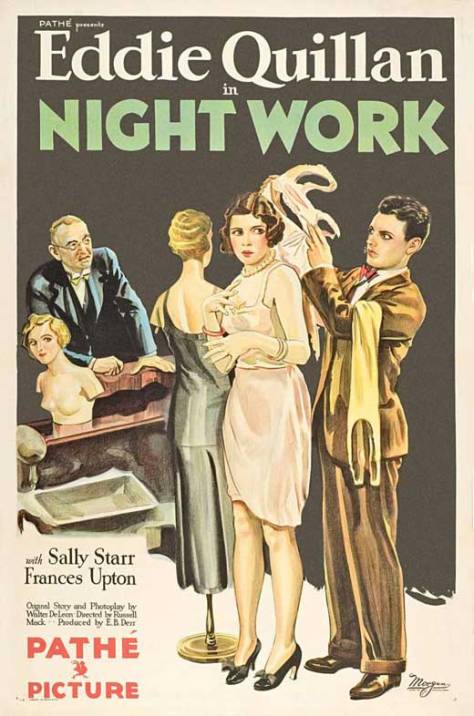
Double Bill – Frankenstein/The Bride Of Frankenstein

Frankenstein 48

Frankenstein 49

Frankenstein 50

Night World (1932)


Pre Code Logo 1

Pre Code Hollywood Season: FD Cinematheque

Night World (1932)

Night World 1

Night World 2

Night World 3

Night World 4

Night World 19

Director: Hobart Henley

Cast: Lew Ayres, Mae Clarke, Boris Karloff, Dorothy Revier, Russell Hopton, Hedda Hopper, Clarence Ruse, Bert Roach, George Raft, Arleta Duncan, Jack La Rue

58 min 

Night World 14


Night World is a 1932 American pre-Code drama film featuring Lew Ayres, Mae Clarke, and Boris Karloff.[1] The supporting cast includes George Raft and Hedda Hopper (before she became a noted gossip columnist).

The movie was directed by Hobart Henley and features an early Busby Berkeley music number, “Who’s Your Little Who-Zis”.[2] Although Karloff is a villain, he plays a charming man, quite unlike most of the parts he was allowed to play at the time.

Night World 22

Contents

1 – Plot

2 – Cast

3 – See also

4 – References

Night World 5

Plot

On a cold winter’s night outside Happy’s Nightclub, Irish-American police officer Ryan (Robert Emmett O’Connor) chats with African-American doorman Tim Washington (Clarence Muse), who is worried about his critically ill wife.

Inside, club owner Happy (Boris Karloff) is arguing with his shrewish but glamorous wife Jill (Dorothy Revier) and welcoming frequent customers Ed Powell (George Raft), a crooked gambler, and Michael Rand (Lew Ayres). Rand is a wealthy college boy who watched his mother kill his father after catching him with another woman, a case widely covered by the tabloids. Rand is now drinking heavily to deaden his pain.

Night World 16

Backstage, gambler Powell asks chorus girl Ruth Taylor (Mae Clarke) for a date and, after losing an impromptu bet, she agrees to go out with him. After the floor show, all the chorus girls are asked to stay late by their cruel dance master, Klauss (Russell Hopton), who is secretly having an affair with Happy’s wife Jill.

Edith Blair (Dorothy Petersen) spots a drunken Michael sitting alone at a table. Edith was the ‘other woman’ in the murder of Michael’s father. She tell Michael that she and his father were only good friends, and that his father loved him deeply.

She also tells Michael that his killer mother never loved his father, and cursed him as he was dying. An upset Michael creates an outburst and overturns a table at the nightclub. He passes out after being punched, and is taken to the back room of the club where Ruth cares for him.

Night World 7

Happy leaves to discuss bootleg liquor purchases with another gangster, Jim. (Huntley Gordon.) As he exits, doorman Tim asks if he can leave early to visit is ailing wife, but Happy refuses.

When Michael wakes up from his liquor-related nap, he and Ruth have a warm chat. Gambler Powell interrupts them and insists Ruth to come to his apartment immediately. Michael punches Powell and Tim takes the fallen gambler out to a taxi. Suddenly, Michael’s mother (Hedda Hopper) arrives at the nightclub. Michael confronts her about the way she treated his father.

Night World 10

The late-night dance rehearsal continues, but Klauss calls a break so he can spend more time with Jill. Happy returns, and Tim asks again if he can go see his wife in the hospital. Happy refuses. Happy catches Jill and Klauss together, and Klauss leaves in disgrace. Happy tells Jill that he will not divorce her, but remain married to her and do his best to make her miserable.

Michael and Ruth sit down for a meal together. Michael asks Ruth if she would be interested in running away to Bali with him, as his wife, even though they have only known each other for a few hours.

Night World 11

Their happy moment is interrupted by Tim, who has just learned that his wife is dead. As he leaves the club to finally go to her bedside, he is fatally shot by gangster Jim and a comrade, who have come for Happy. They shoot Happy and then his wife Jill. When they turn their guns towards Michael and Ruth, they are suddenly shot dead by the returning police officer Ryan. Michael and Ruth get into the police wagon together, and Ruth agrees to go Bali with Michael.

Night World 18

Cast

Night World 26

See also

Night World 23

References

  1. Jump up^ Night World, imdb.com; accessed August 9, 2015.
  2. Jump up^ Everett Aaker, The Films of George Raft, McFarland & Company, 2013 p 26

Night World 25

Night World 8

Night World 13

Night World 17

Night World 20

Night World 24

Night World 9

Night World 21

Film Collectors Corner

DVD
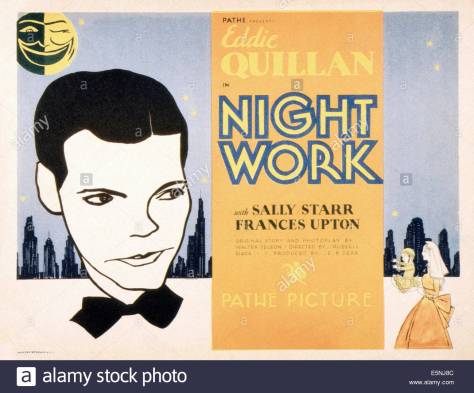
Night World 6

Not Available On Amazon or Other Major Retailers At Present

Narrow Road, The (1912)


Mary Pickford 1

Mary Pickford Season: FD Cinematheque

The Narrow Road (1912)

Director: D W Griffith
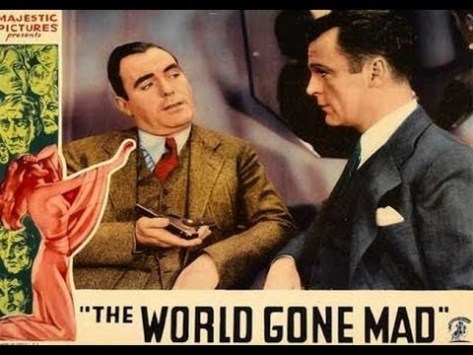
Cast: Mary Pickford, Elmer Booth, Charles Hill Mailes, Jack Pickford, Christy Cabanne, Max Davidson, Grace Henderson, Adolph Lestina, Alfred Paget, Harry Hyde, Frank Evans

17 Min

DW Griffith 2

D W Griffith

Narrow Road The 7


The Narrow Road is a 1912 short silent film directed by D. W. Griffith and produced and distributed by the Biograph Company.[1]

A short Biograph film preserved from the Library of Congress paperprint collection.[2]

Narrow Road The 6

Cast

other cast

Narrow Road The 5

References

  1. Jump up^ The Narrow Road at silentera.com
  2. Jump up^ Catalog of Holdings The American Film Institute Collection and The United Artists Collection at The Library of Congress p. 125 c.1978 by The American Film Institute

Narrow Road The 4

Narrow Road The 3

Narrow Road The 2

Narrow Road The 1