The Sin Of Nora Moran (1933) AKA Voice From The Grave
Director: Phil Goldstone
Cast: Zita Johann, John Miljan, Alan Dinehart, Paul Cavanagh, Claire Du Brey, Sarah Padden, Henry B Walthall, Otis Harlan, Aggie Herring, Cora Sue Collins, Ann Brody
65 min
The Sin of Nora Moran is a 1933 American film directed by Phil Goldstone. The film is also known as Voice from the Grave (American reissue title).
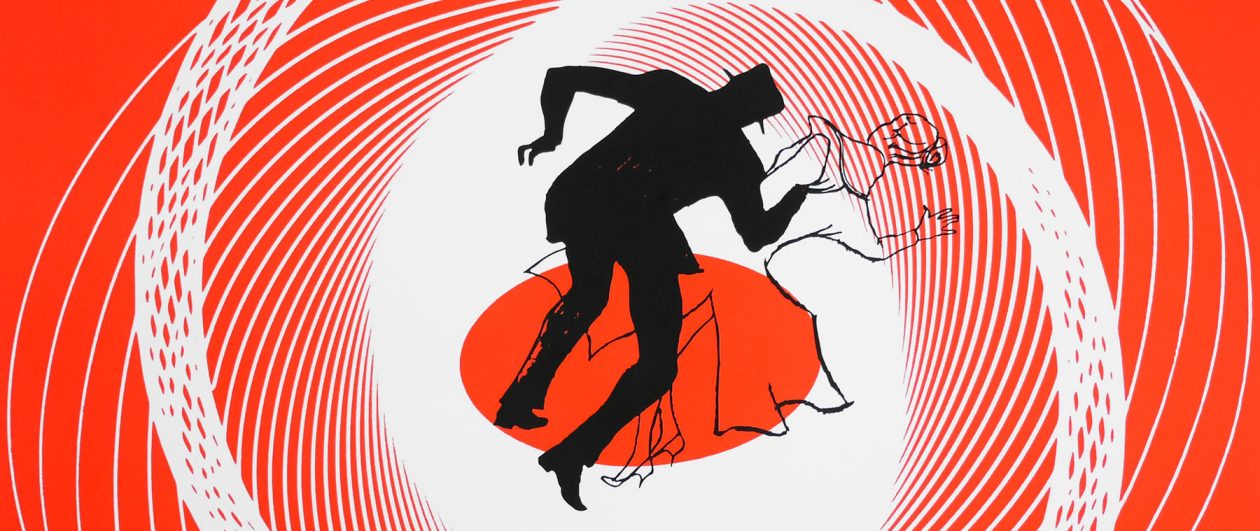
The painting for the movie poster was by Peruvian Alberto Vargas, who was working in the United States and later became known for his images of the “Vargas Girls.” This poster is frequently named as one of the greatest movie posters ever made.[1]
Nora Moran, a young woman with a difficult and tragic past, is sentenced to die for a murder that she did not commit. She could easily reveal the truth and save her own life, if only it would not damage the lives, careers and reputations of those whom she loves.
Cast: William Powell, Mary Astor, Eugene Pallette, Ralph Morgan, Robert McVade, Robert Barratt, Frank Conroy, Etienne Giradot, James Lee, Helen Winson, Paul Cavanagh, Jack La Rue
Philo Vance’s dog does not make it into the final of the Long Island Kennel Club’s dog show.
Fellow competitor Archer Coe (Robert Barrat) is disappointed, having hoped to savor a victory over Vance. Coe is found dead the next morning in his bedroom, locked from the inside. District Attorney Markham (Robert McWade) and Police Sergeant Heath (Eugene Pallette) assume it was suicide, because he was shot through the head and was found holding a pistol.
Vance is not convinced. He soon finds evidence that Coe was murdered. Coroner Dr. Doremus (Etienne Girardot) determines the victim died of a stab wound.
There is no shortage of suspects; Coe was very much disliked. His niece Hilda Lake (Mary Astor) resented her uncle’s tight control of her finances and jealousy of any men who showed interest in her.
Her boyfriend, Sir Thomas MacDonald (Paul Cavanagh), suspected Coe of killing his dog to ensure winning the competition. Raymond Wrede (Ralph Morgan), the dead man’s secretary, was in love with Miss Lake, but had been laughed at when he sought Coe’s support.
Coe’s next-door neighbor and lover Doris Delafield (Helen Vinson) had been cheating on him with Eduardo Grassi (Jack La Rue). When Coe found out, he cancelled a contract to sell his collection of Chinese artworks to the Milan museum for which Grassi worked.
Liang (James Lee), the cook, had worked long, hard, and illegally to help Coe amass his collection. He warned his employer against the proposed sale and was fired as a result. Even Coe’s own brother Brisbane (Frank Conroy) despised Coe. Finally, Gamble (Arthur Hohl), the head servant, had concealed his criminal past.
Brisbane Coe becomes Vance’s prime suspect. His alibi of taking a train at the time of the murder is disproved. When he is found dead in a closet, Vance is both puzzled and enlightened. Among Brisbane’s effects, Vance finds a book titled Unsolved Murders; a bookmarked page details a method of using string to lock a door through the keyhole without leaving a trace. Part of the mystery is solved.
Later, an attempt is made on the life of Sir Thomas using the same dagger used to kill Coe. Finally, a Doberman Pinscher belonging to Miss Delafield is found seriously injured, apparently struck with a fireside poker. From these and other clues, Vance finally solves the crime.
It turns out that two men sought Coe’s life that night. The successful murderer struggled with Coe and stabbed him, leaving him for dead. Coe awakened soon after. Too dazed to recall the fight or notice that he was mortally wounded, he went upstairs to his bedroom and opened his window before dying.
Brisbane entered the chamber, saw his brother apparently asleep in his chair. He shot the corpse and arranged the scene to look like a suicide. Downstairs, he ran into the actual killer, who had seen that Archer Coe was still alive and came back to finish the job. In the darkness, he mistook Brisbane for Archer and killed the wrong man. Delafield’s dog then wandered in, attracted by the commotion, and attacked the murderer.
While sure of the killer’s identity, Vance has no proof. He therefore arranges for Sir Thomas and Wrede to quarrel over Hilda Lake. When Wrede instinctively reaches for the poker to strike his rival, the Doberman recognizes its attacker and leaps on him. Wrede confesses he became enraged when Coe refused to assist his courtship of Miss Lake, precipitating the stabbing.
Many film historians (including William K. Everson, who pronounced it a “masterpiece” in the August 1984 issue of Films in Review) consider it one of the greatest screen adaptations of a Golden Age mystery novel, and rank it with the 1946 film Green for Danger.
Film Collectors Corner
Watch The Kennel Murder Case Now – Amazon Instant Video
Marya is the wife of medical student Victor Sablin, who finds it impossible to deal with military life when he is inducted into the Russian army during World War I. With her husband is sentenced to death by firing squad due to his insubordination, Marya offers herself to General Gregori Platoff in order to save him. When the two unexpectedly fall in love, Victor — not caring that his life has been spared — threatens to kill his rival. His determination to eliminate the general falters when Marya confesses she is not in love with her husband — and never was.
Mordaunt Hall of the New York Times called the film “a clever comedy with a splendid performance by Walter Huston” and added, “There is a constant fund of interest in this picture’s action. It is one of those rare offerings in which youth takes a back seat.[1]
George Cukor’s reflection in 1972
In the book On Cukor, director George Cukor confided to biographer Gavin Lambert: “It wasn’t much good. I’d be in great shock if they [film restorationists & historians] rescued this one. I remember that I enjoyed working with Kay Francis and Walter Huston, though.”[2]
Preservation status
A complete print of this film is held by the UCLA Film and Television Archive. However, the UCLA archive’s website says the print is too shrunken for projection.[3]
Jump up^Parish, James Robert; Mank, Gregory W.; Stanke, Don E. (1978), The Hollywood Beauties, New Rochelle, New York: Arlington House Publishers, p. 73, ISBN0-87000-412-3


![[icon]](https://en.wikipedia.org/wiki/File:Wiki_letter_w_cropped.svg)


You must be logged in to post a comment.