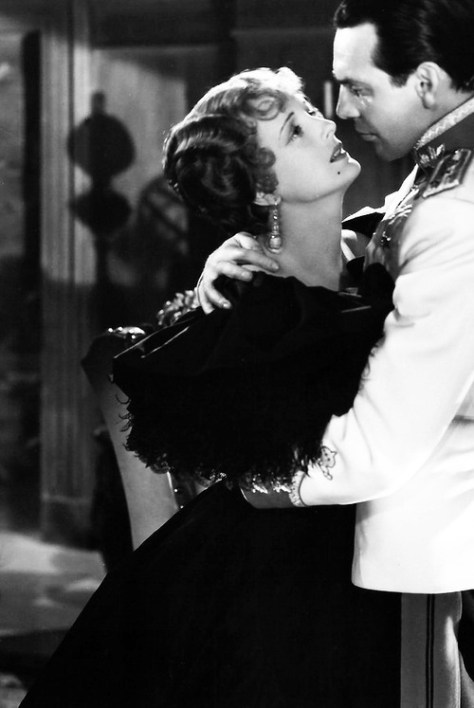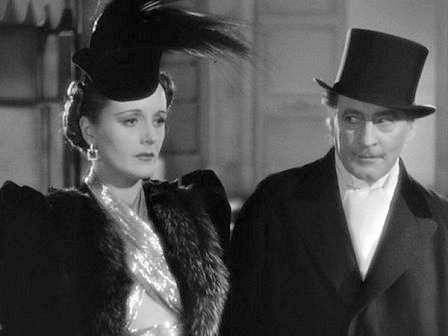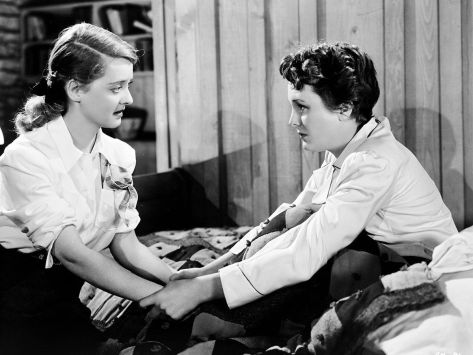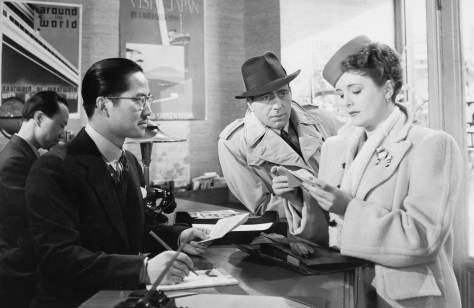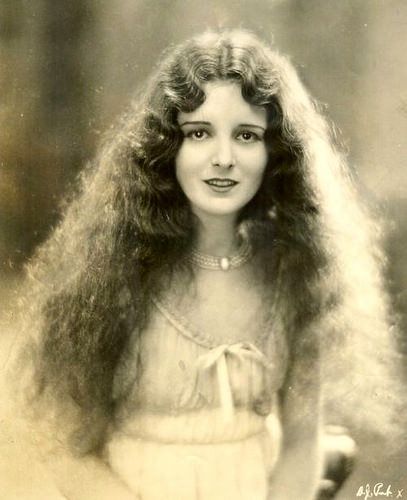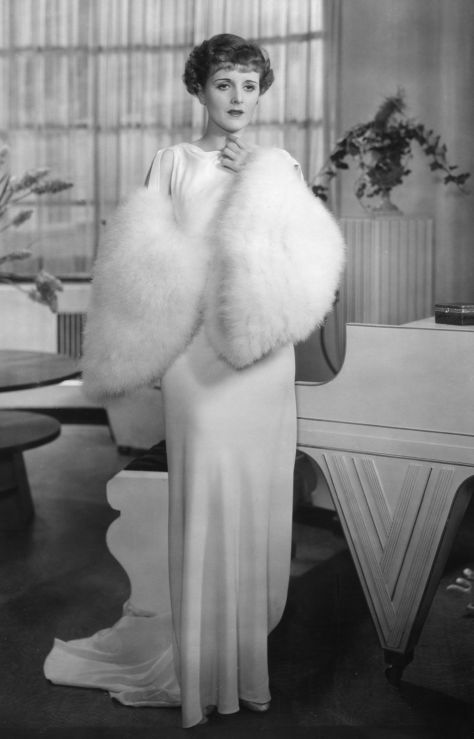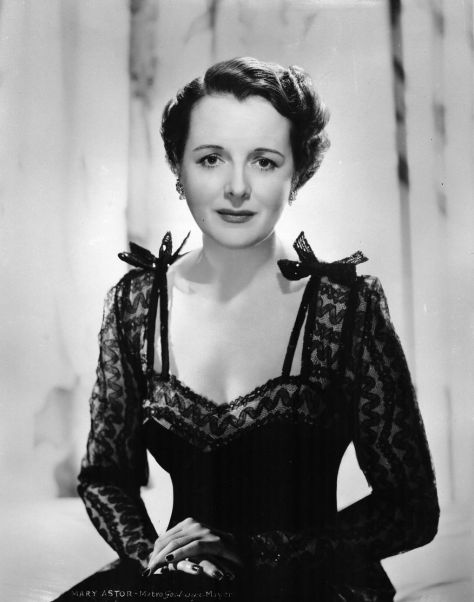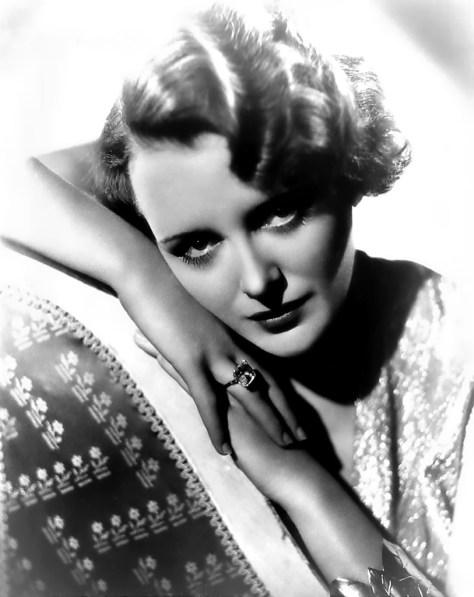
Tag Archives: silent stars

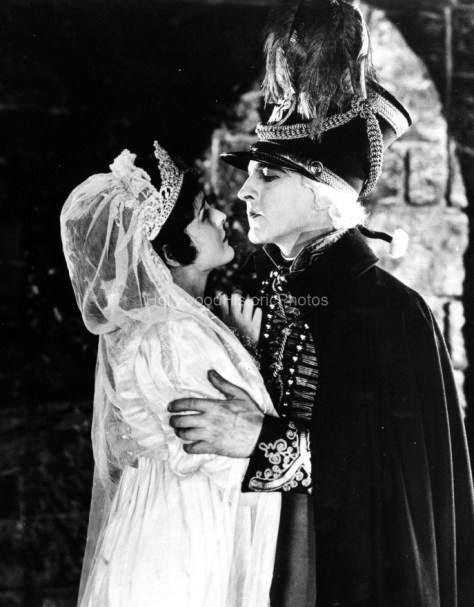
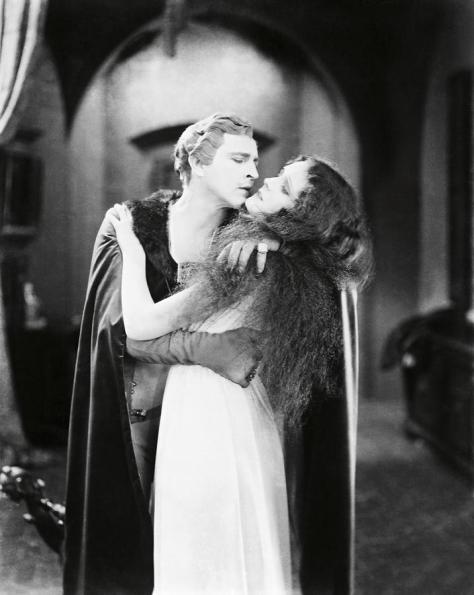
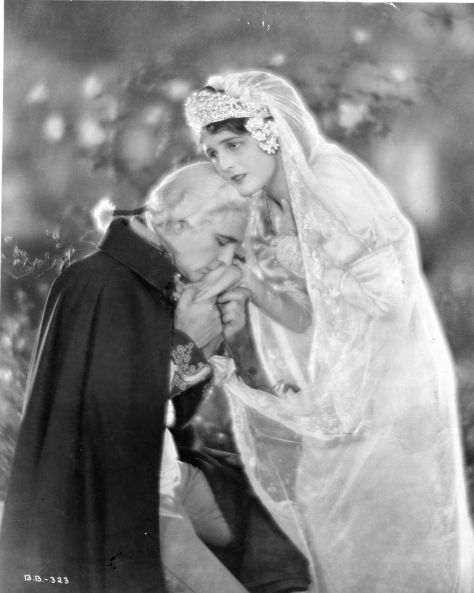
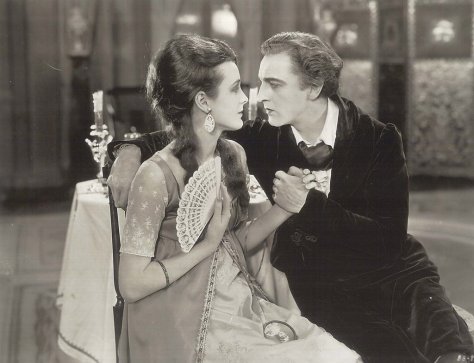
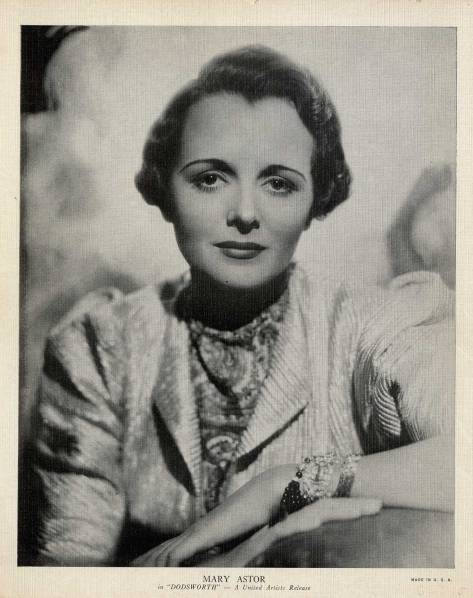
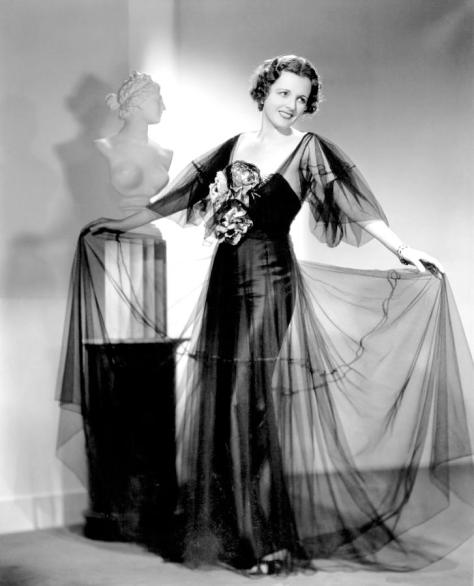
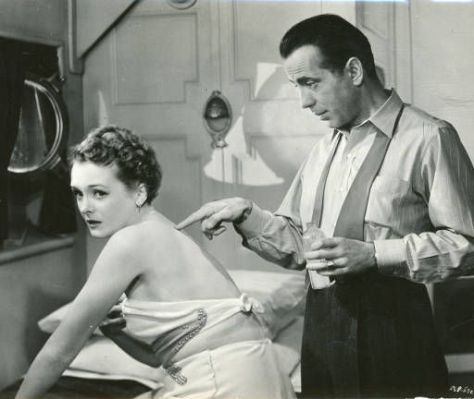
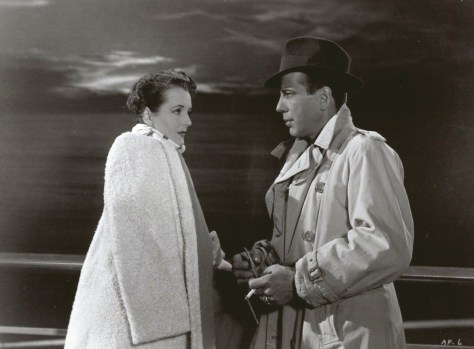
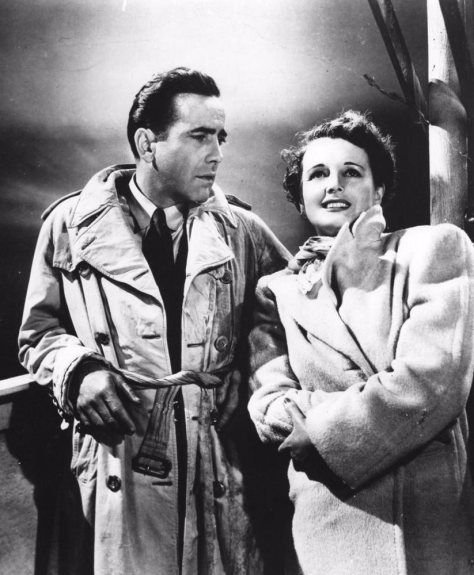
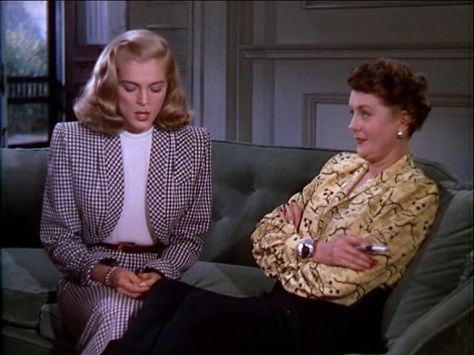
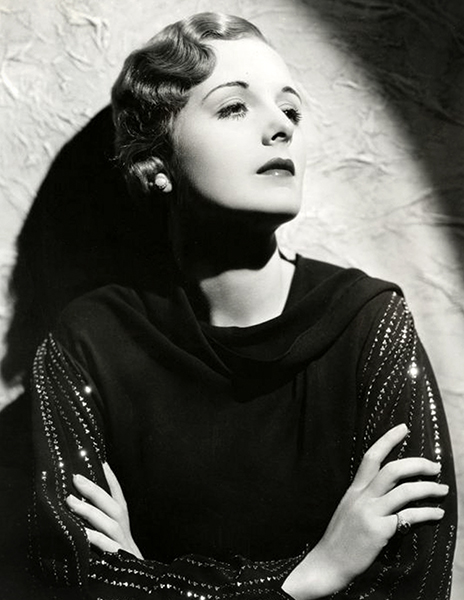
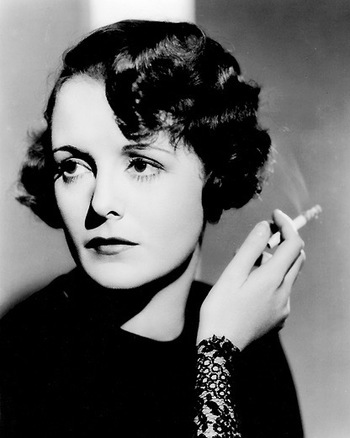
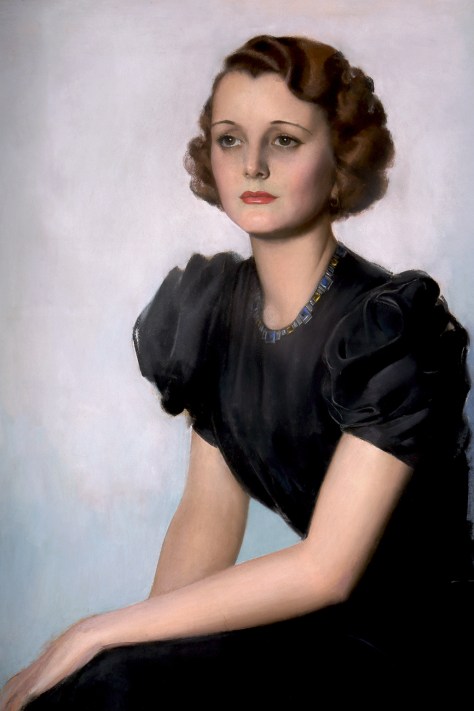
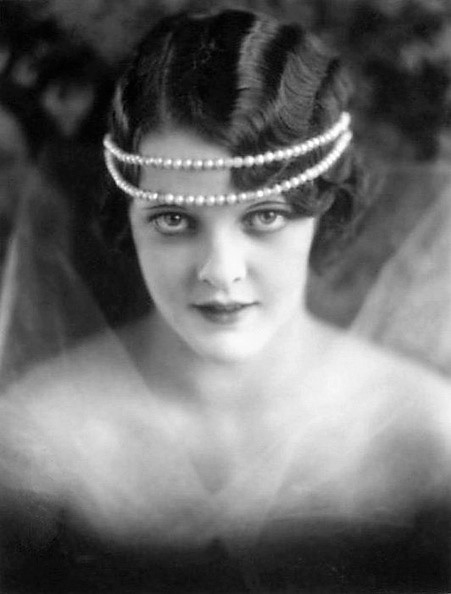
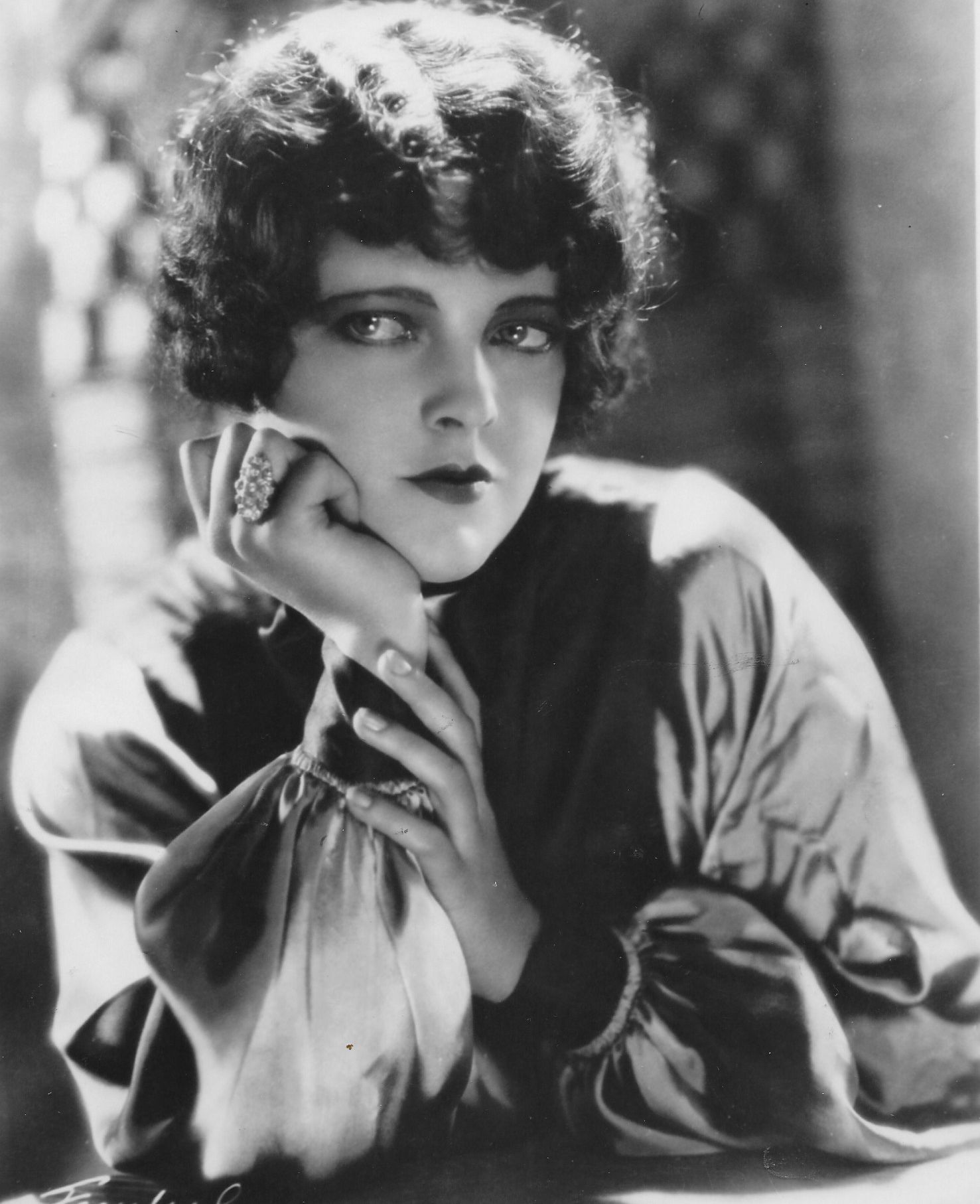
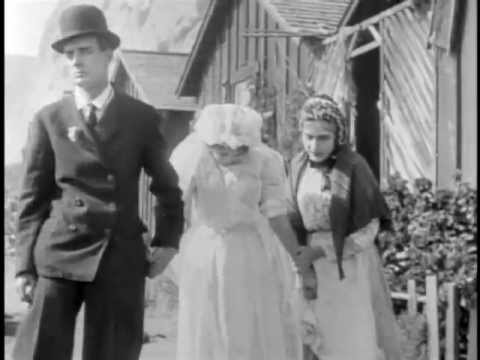
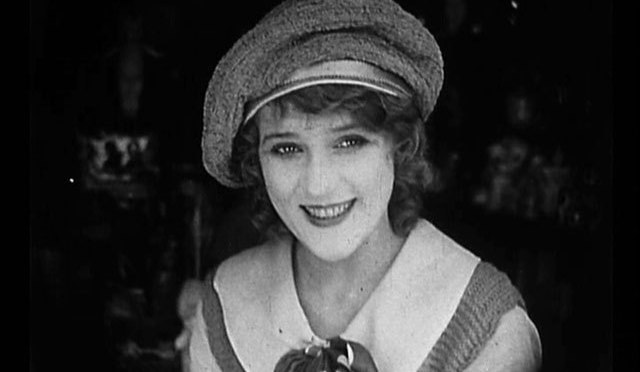
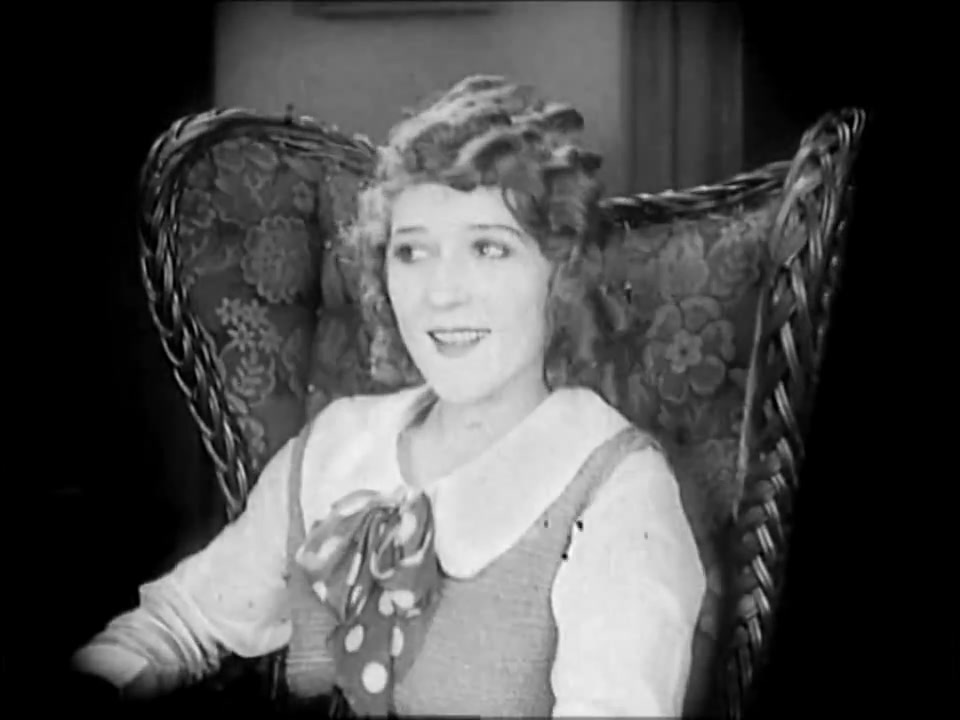
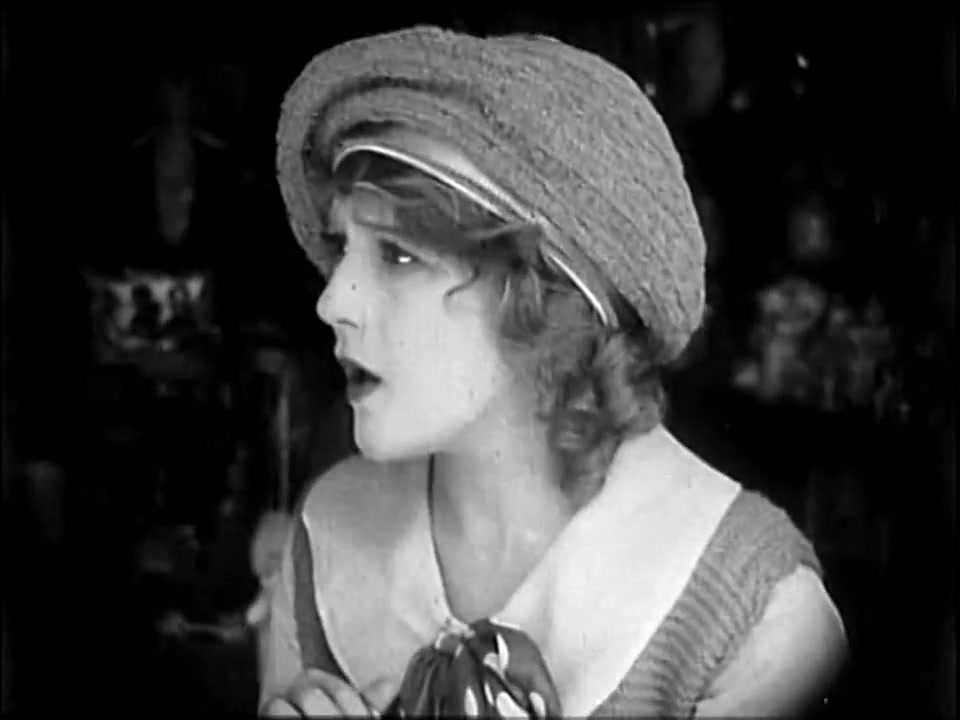
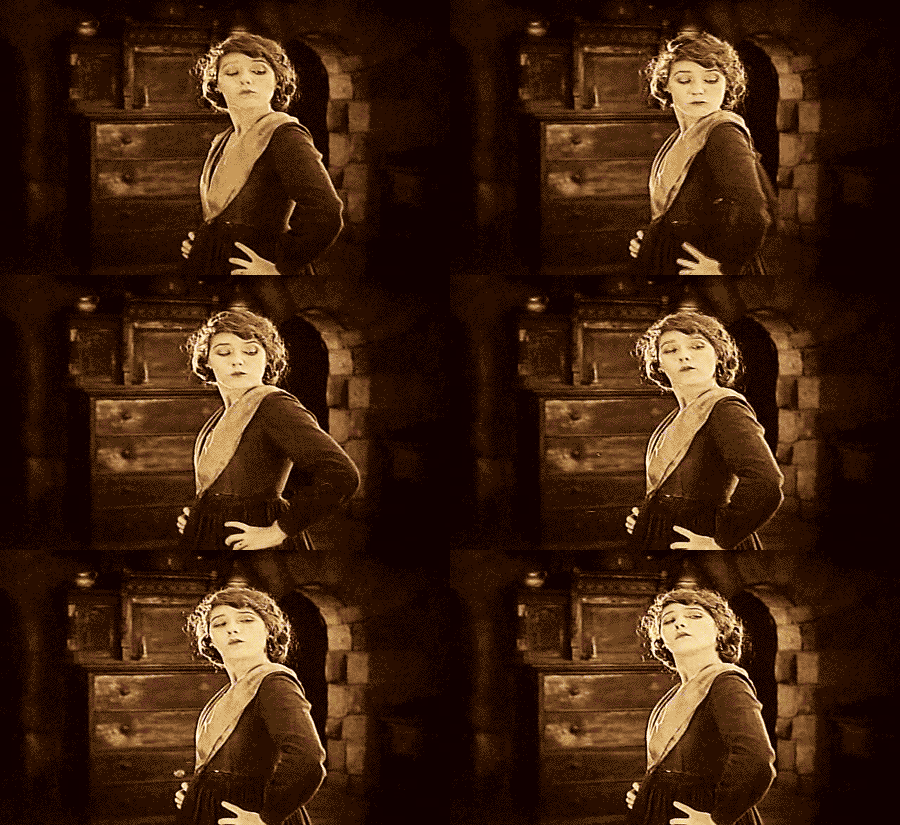
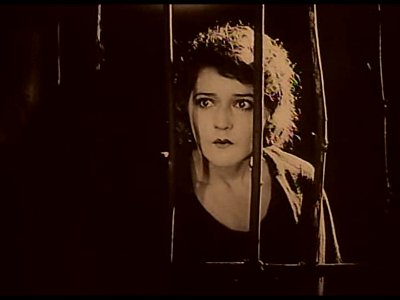
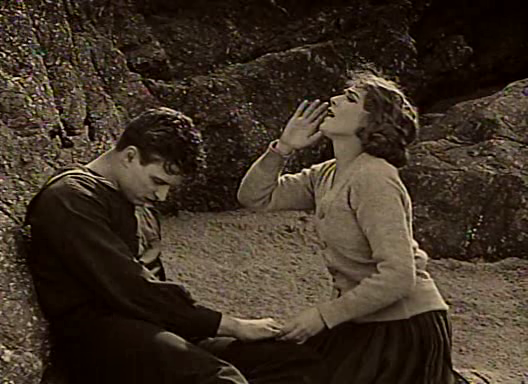
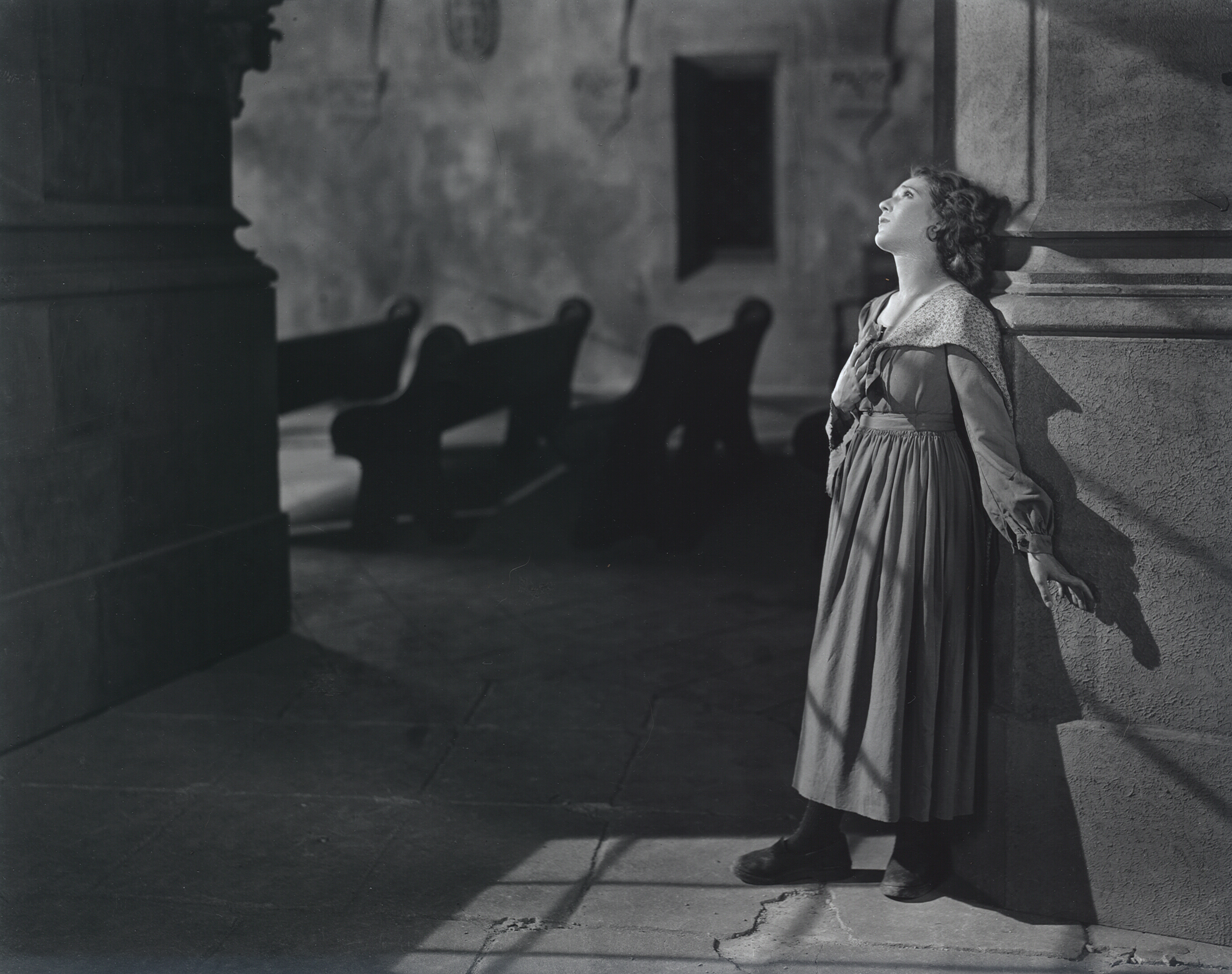
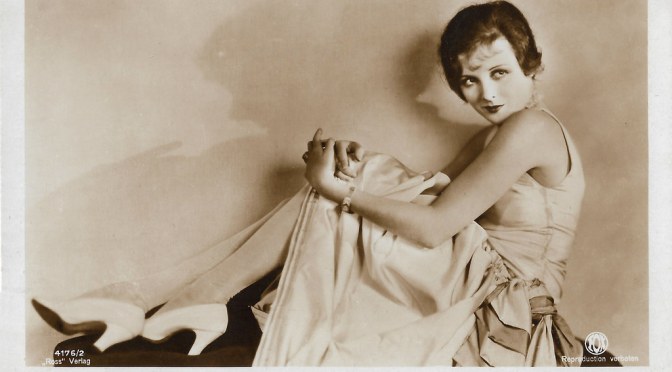
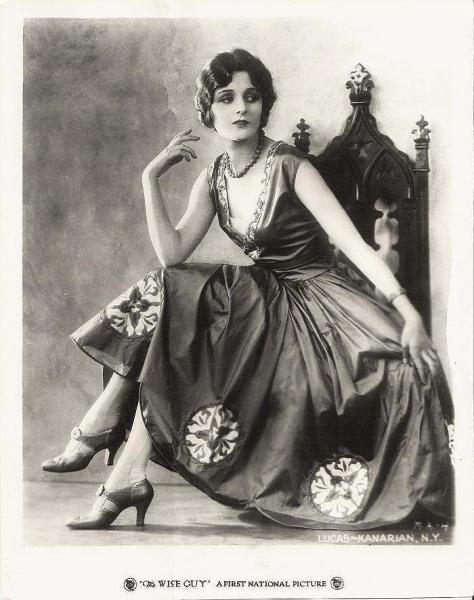
Mary Astor


mary astor_restored

Prepared by Daniel B Miller

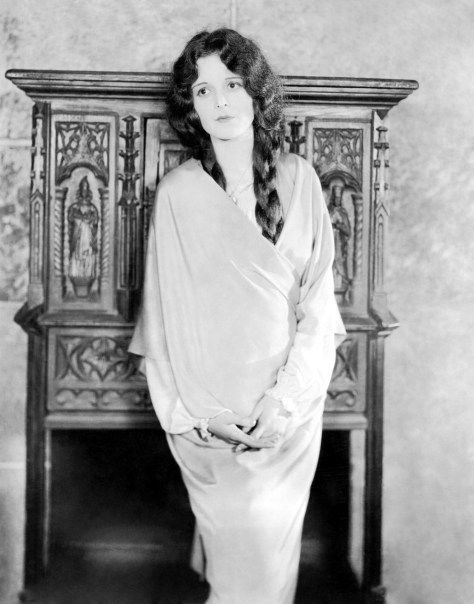
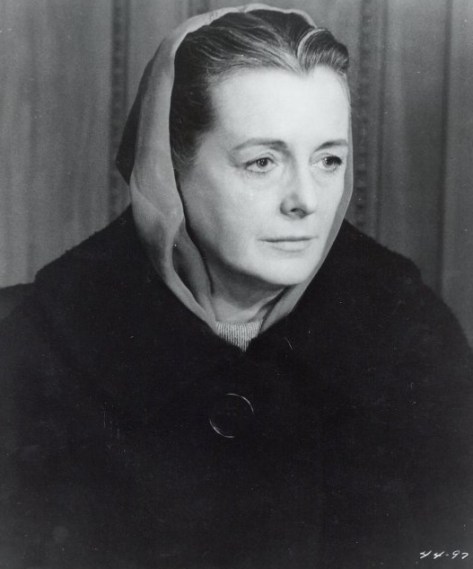
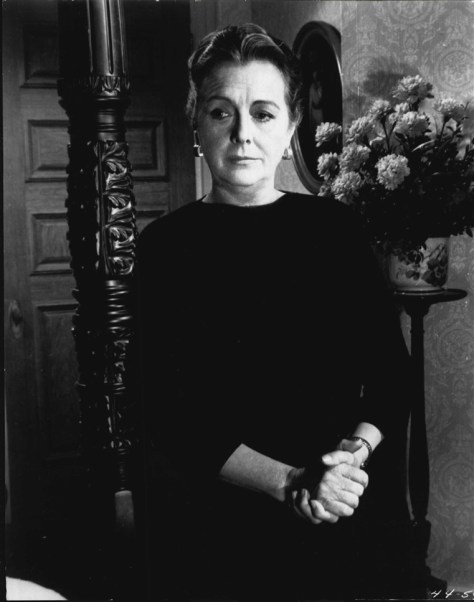
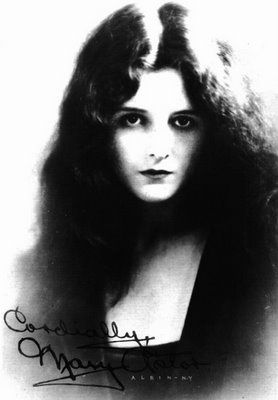
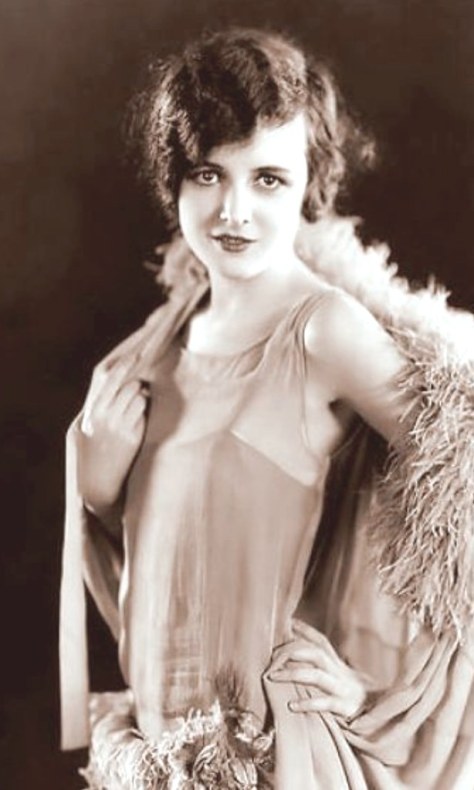
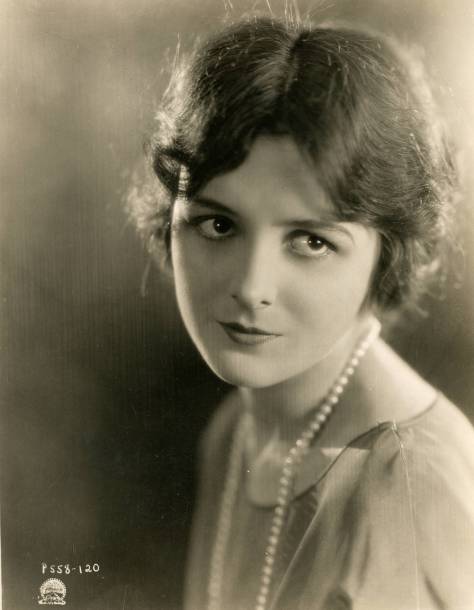
Mary Astor (born Lucile Vasconcellos Langhanke; May 3, 1906 – September 25, 1987) was an American actress.

She is best remembered for her role as Brigid O’Shaughnessy in The Maltese Falcon (1941).

Astor began her long motion picture career as a teenager in the silent movies of the early 1920s. She eventually changed to talkies. At first her voice was considered too masculine and she was off the screen for a year. She appeared in a play with friend Florence Eldridge, and the film offers came in, so she was able to resume her career in talking films.
8982031079_a524bf8482_b

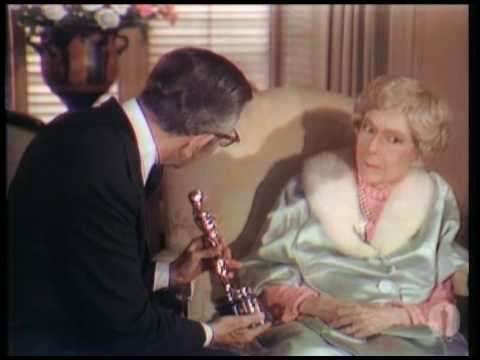
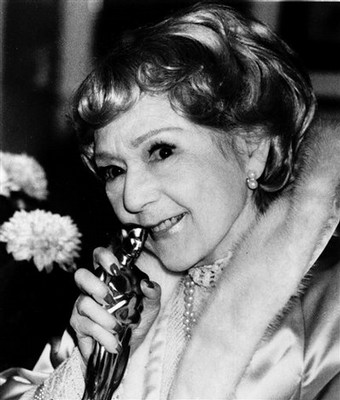
Four years later her career was nearly destroyed due to scandal. In 1936 Astor was later branded an adulterous wife by her ex-husband, in a custody fight over her daughter. Overcoming these stumbling blocks in her private life, Astor went on to greater success on screen, eventually winning an Academy Award for Best Supporting Actress for her performance in The Great Lie  (1941).

Astor was a Metro-Goldwyn-Mayer contract player through most of the 1940s and continued to work in film, television and on stage until her retirement in 1964. Astor was the author of five novels.

Her autobiography was a bestseller, as was her later book, A Life on Film, which was about her career. Director Lindsay Anderson wrote of her in 1990 that “when two or three who love the cinema are gathered together, the name of Mary Astor always comes up, and everybody agrees that she was an actress of special attraction, whose qualities of depth and reality always seemed to illuminate the parts she played”.
Film_actress_Mary_Astor_(SAYRE_2372)

enticement-mary-astor-1925-everett

Early life

Astor was born in Quincy, Illinois, the only child of Otto Ludwig Langhanke (October 2, 1871 – February 3, 1943) and Helen Marie de Vasconcellos (April 19, 1881 – January 18, 1947).

Both of her parents were teachers. Her father, a German man from Berlin, emigrated to the United States in 1891 and became a naturalized U.S. citizen; her American mother was born in Jacksonville, Illinois, and had Irish and Portuguese roots. They married on August 3, 1904 in Lyons, Kansas.
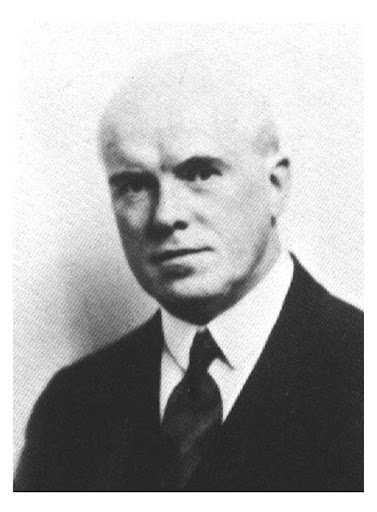
unnamed (24)

Otto Ludwig Langhanke, Mary Astor’s father

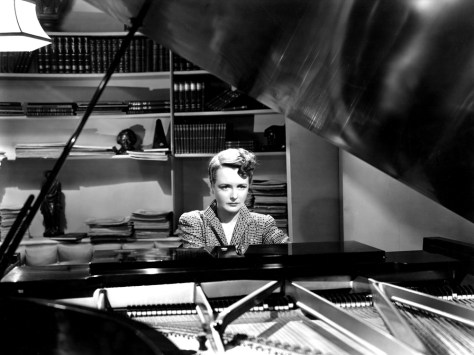
Astor’s father taught German at Quincy High School until the U.S. entered World War I. Later on, he took up light farming. Astor’s mother, who had always wanted to be an actress, taught drama and elocution. Astor was home-schooled in academics and was taught to play the piano by her father, who insisted she practice daily. Her piano talents came in handy when she played piano in her films The Great Lie and Meet Me in St. Louis.
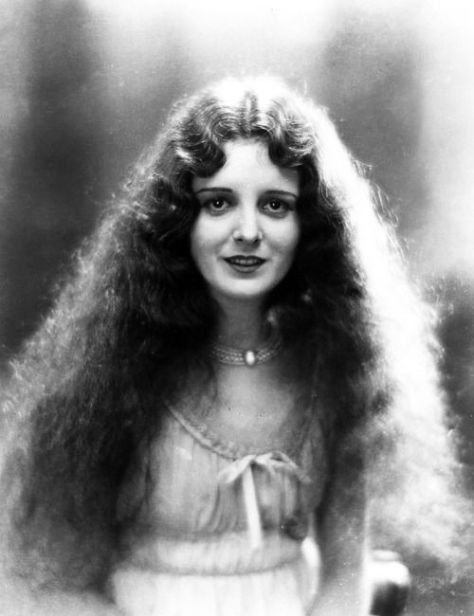
cab7b29d4e6ba28a8d254e2332afcefe

In 1919, Astor sent a photograph of herself to a beauty contest in Motion Picture Magazine, becoming a semifinalist. When Astor was 15, the family moved to Chicago, Illinois, with her father teaching German in public schools. Astor took drama lessons and appeared in various amateur stage productions. The following year, she sent another photograph to Motion Picture Magazine, this time becoming a finalist and then runner-up in the national contest. Her father then moved the family to New York City, in order for his daughter to act in motion pictures. He managed her affairs from September 1920 to June 1930.
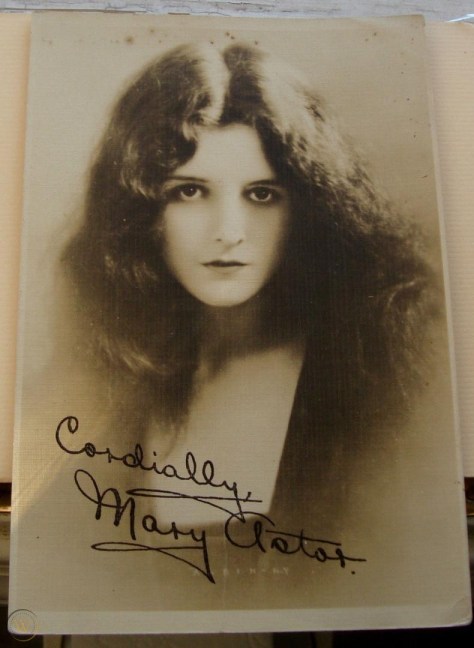
young-mary-astor-1920-albin-y-linen-x_1_0e2eb090daa49767bb5b3f6da75c77c6

Manhattan photographer, Charles Albin, saw her photograph and asked the young girl with haunting eyes and long auburn hair, whose nickname was “Rusty”, to pose for him. The Albin photographs were seen by Harry Durant of Famous Players-Lasky and Astor was signed to a six-month contract with Paramount Pictures. Her name was changed to “Mary Astor” during a conference between Paramount Pictures chief Jesse Lasky, film producer Walter Wanger, and gossip columnist Louella Parsons.
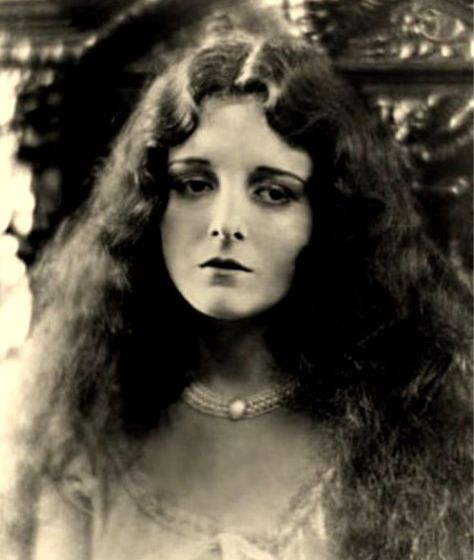
44791ef8f26028aa648d418e1ab7d8aa--mary-astor-young-and-beautiful

Silent movie career

tumblr_m330uy6pjf1rttw4ro1_500

A 1924 publicity photo of Astor from Stars of the Photoplay

Astor’s first screen test was directed by Lillian Gish, who was so impressed with her recitation of Shakespeare that she shot a thousand feet of her.

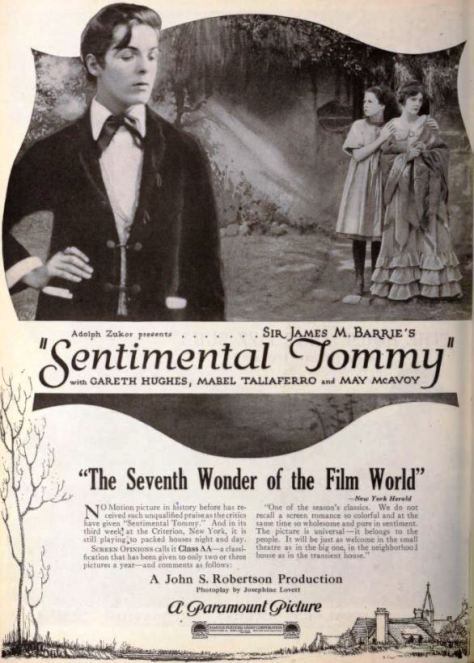
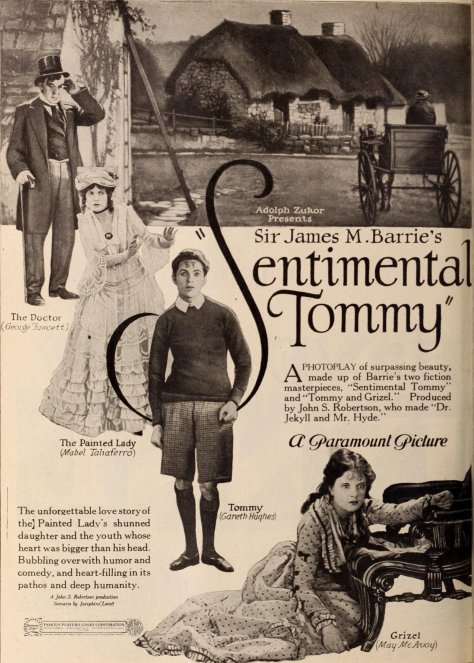
She made her debut at age 14 in the 1921 film Sentimental Tommy, but her small part in a dream sequence wound up on the cutting room floor.
MV5BNjAwYjk0MjItYWIwMS00NDNmLTg5YjUtMGVkYTViNzIwMTE3XkEyXkFqcGdeQXVyNDY1NzU5NjY@._V1_

Sentimental_Tommy_(1921)_-_9

Sentimental Tommy (1921)  Dir: John S Robertson

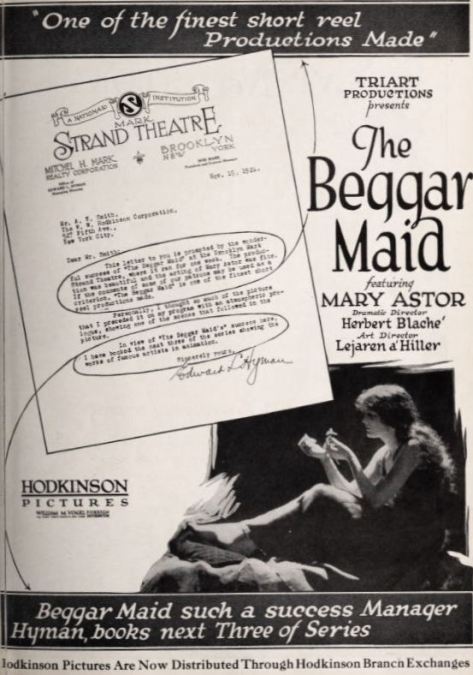
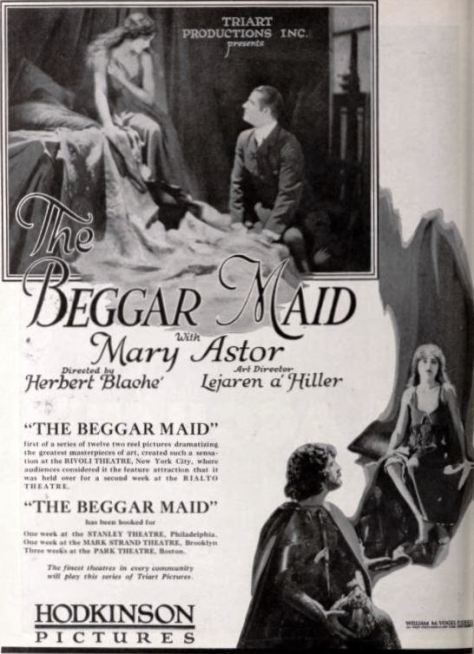
Paramount let her contract lapse. She then appeared in some movie shorts with sequences based on famous paintings. She received critical recognition for the 1921 two-reeler The Beggar Maid. Her first feature-length movie was John Smith (1922), followed that same year by The Man Who Played God. In 1923, she and her parents moved to Hollywood.
The_Beggar_Maid_(1921)_-_1

The_Beggar_Maid_(1921)_-_2

The Beggar Maid (1921)  Dir: Herbert Blache

After appearing in several larger roles at various studios, she was again signed by Paramount, this time to a one-year contract at $500 a week.

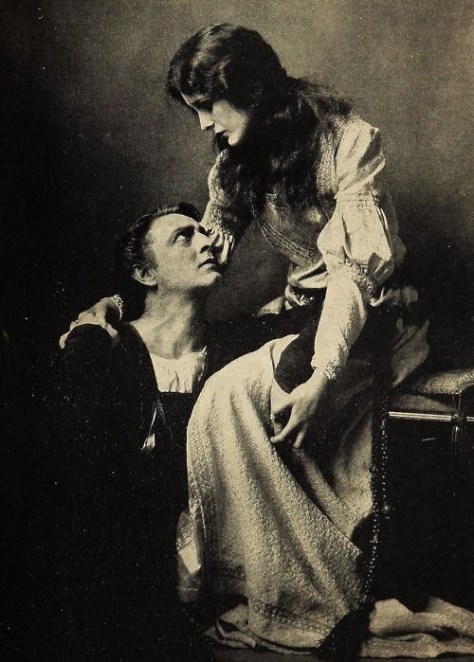
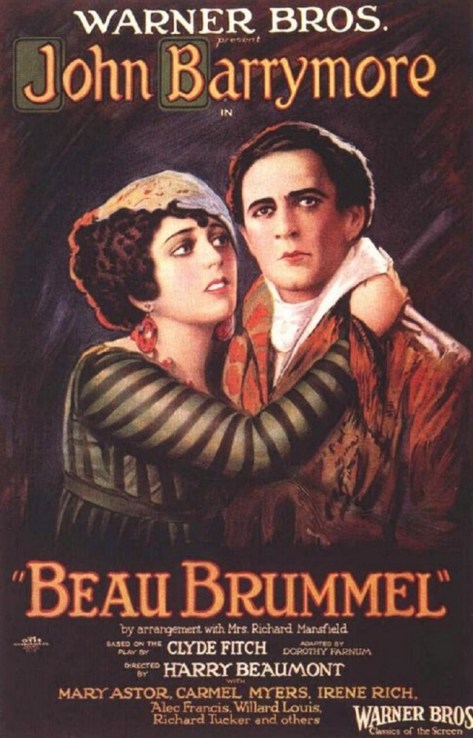
After she appeared in several more movies, John Barrymore saw her photograph in a magazine and wanted her cast in his upcoming movie. On loan-out to Warner Bros., she starred with him in Beau Brummel (1924).
MV5BMjc1NTZjYzAtYWIwMS00MzA4LTlhMzEtMWQyMjAzNmQ2NDQ0XkEyXkFqcGdeQXVyMjUxODE0MDY@._V1_

Beau Brummel (1924) Dir: Harry Beaumont 
b

MV5BM2EzNGM3NDQtNzEzNy00MmFlLTk3YWEtOTAwZDMwN2Y5NDNkXkEyXkFqcGdeQXVyODc1NDEwNzQ@._V1_

john-barrymore-and-mary-astor-in-don-juan-1926--album

d362274db4575a6ed7cb4865deb27734

005-john-barrymore-theredlist

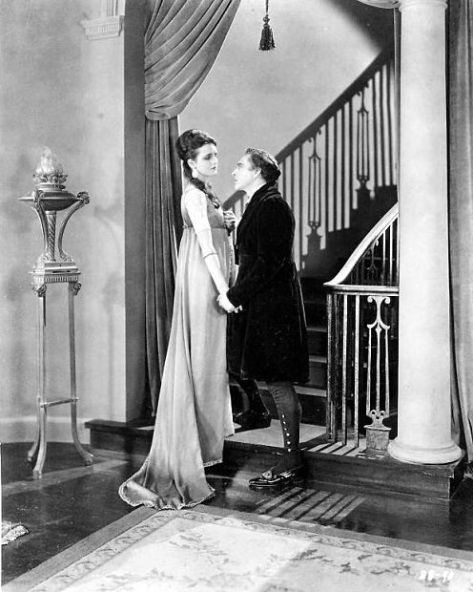
Mary Astor and John Barrymore in Beau Brummel (1924) 

The older actor wooed the young actress, but their relationship was severely constrained by Astor’s parents’ unwillingness to let the couple spend time alone together; Mary was only seventeen and legally underage.

It was only after Barrymore convinced the Langhankes that his acting lessons required privacy that the couple managed to be alone at all. Their secret engagement ended largely because of the Langhankes’ interference and Astor’s inability to escape their heavy-handed authority, and because Barrymore became involved with Astor’s fellow WAMPAS Baby Star Dolores Costello, whom he later married.

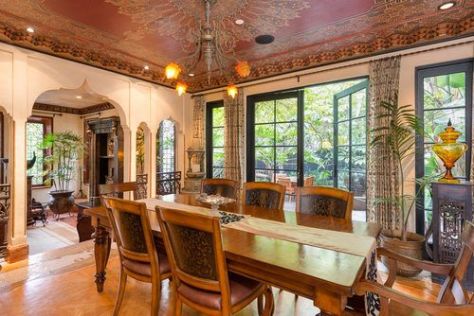
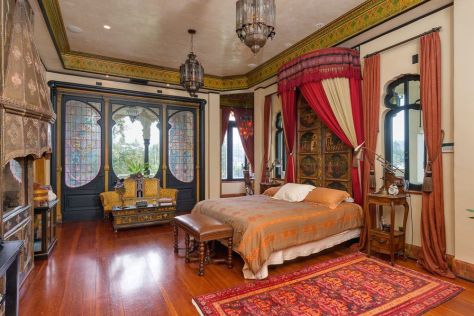
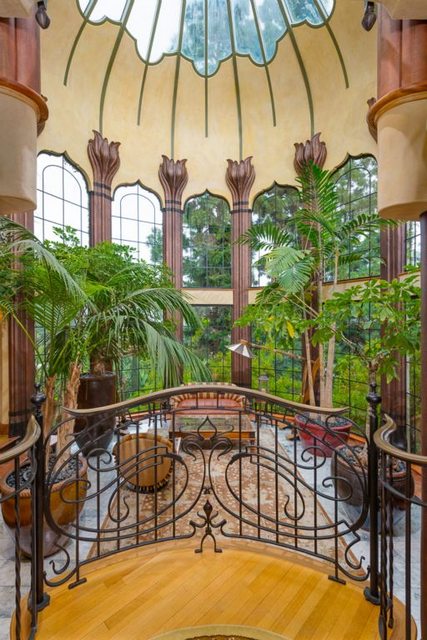
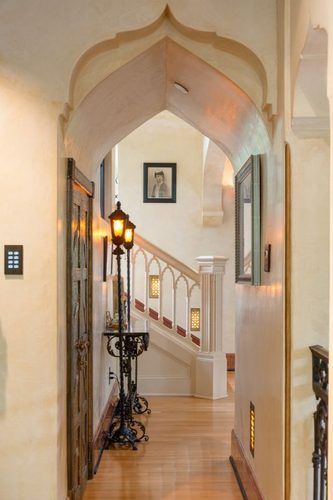
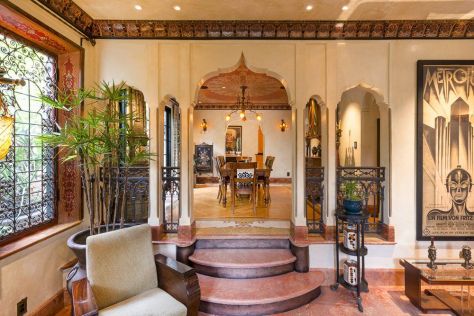
In 1925, Astor’s parents bought a Moorish style mansion with 1 acre (4,000 m2) of land known as “Moorcrest” in the hills above Hollywood. The Langhankes not only lived lavishly off of Astor’s earnings, but kept her a virtual prisoner inside Moorcrest.

Moorcrest is notable not only for its ornate style, but its place as the most lavish residence associated with the Krotona Colony, a utopian society founded by the Theosophical Society in 1912.

006b393d9c7d4a362d4e00ac0732ced8

Moorcrest Estate

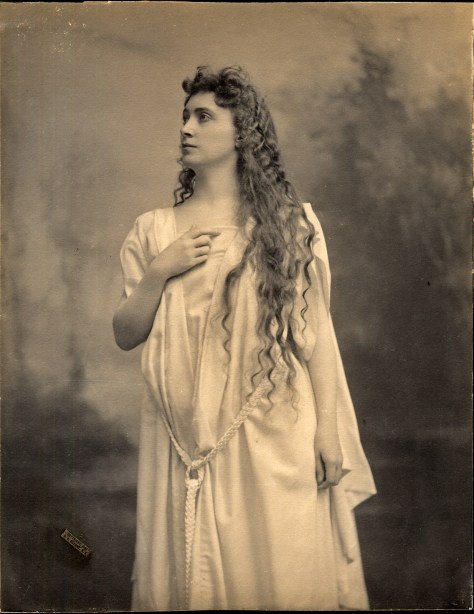
The 6,432-square-foot gated estate was designed by philosophical architect Marie Russak Hotchener and built in 1921, combining Moorish, Gothic and Art Nouveau architectural influences to striking effect

temple_20hill_2020.0.1486865112.0

bba841fbc1909c77f9ed636a7ad49aa4

c596b44252d526579ca86f6ba6924205

18a9fa82c616a21e719529009c566297

article-0-1FCBE05800000578-763_964x641

Mg21Lufl

ff9a7ba0ab83067817fa3b688364c0c1

A8doRaCl

article-0-1FCBE04800000578-558_470x698

article-0-1FCBE0DC00000578-693_470x702

196470925

article-0-1FCBE07800000578-108_964x1424

Built by Marie Russak Hotchener, a Theosophist who had no formal architectural training, the house combines Moorish and Mission Revival styles and contains such Arts and Crafts features as art-glass windows (whose red lotus design Astor called “unfortunate”), and Batchelder tiles.

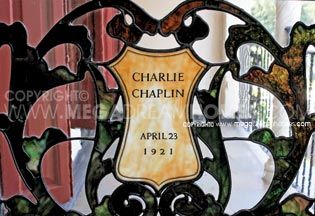
Moorcrest, which has since undergone a multimillion-dollar renovation, remains standing. Before the Langhankes bought it, it was rented by Charlie Chaplin, whose tenure is memorialized by an art glass window featuring the Little Tramp.
6bdb3057c9b40520608c91b722742855--hollywood-hills-charlie-chaplin

Astor’s parents were not Theosophists, though the family was friendly with both Marie Hotchener and her husband Harry, prominent TS members.

Marie Hotchener negotiated Astor’s right to a $5 a week allowance (at a time when she was making $2,500 a week) and the right to go to work unchaperoned by her mother.

The following year when she was 19, Astor, fed up with her father’s constant physical and psychological abuse as well as his control of her money, climbed from her second floor bedroom window and escaped to a hotel in Hollywood, as recounted in her memoirs.
Marie_Russak

Marie Rusak Hotchener (born Mary Ellen Barnard)

Hotchener facilitated her return by persuading Otto Langhanke to give Astor a savings account with $500 and the freedom to come and go as she pleased.

Nevertheless, she did not gain control of her salary until she was 26 years old, at which point her parents sued her for financial support. Astor settled the case by agreeing to pay her parents $100 a month. Otto Langhanke put Moorcrest up for auction in the early 1930s, hoping to realize more than the $80,000 he had been offered for it; it sold for $25,000.
MV5BNTcxN2M3ZTItYmYyNi00MDU0LTkzMWYtNDFlZjhkZjU1YmZiXkEyXkFqcGdeQXVyMjUxODE0MDY@._V1_

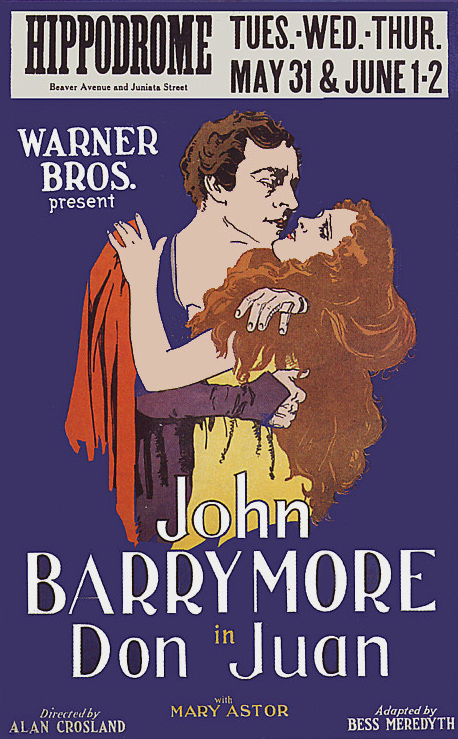
Don Juan (1926)  Dir: Alan Crosland  

tumblr_pmir2eHVQa1ra2pb4_500

MV5BZDQ3MWU0OWEtZDhkNS00N2FiLWFhM2ItZDg0MjY1ZmFiNWYwXkEyXkFqcGdeQXVyMDI2NDg0NQ@@._V1_

Mary Astor in Don Juan (1926)

MV5BOWMwNGM4MmItNTFjMy00MDE0LWJmYzQtMWMzNTA2Njc3MzFiXkEyXkFqcGdeQXVyNjk5MTQ1OTE@._V1_

MV5BYjQyZjUwZmItMzkzZC00ZDU2LTgwMWUtNjAyNDJjZDViNTgwXkEyXkFqcGdeQXVyNDY1NzU5NjY@._V1_

MV5BY2E0NzEyY2QtNWY1ZC00YTc3LWEyNWUtOGMxYWYxY2UxMjI1XkEyXkFqcGdeQXVyMzAwOTU1MTk@._V1_

don-juan-8x10-26-john-barrymore_375_b634f4018d230315543ef8a74f21d9c3

tumblr_n2e9y7KMH61r7ws74o1_500

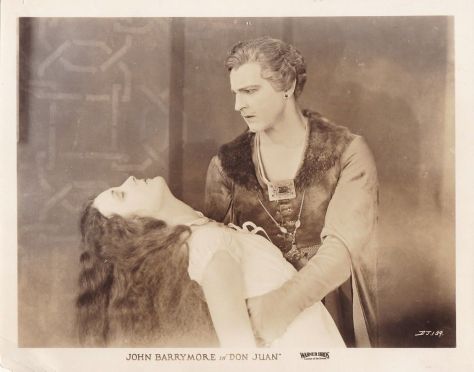
Mary Astor and John Barrymore in Don Juan (1926)
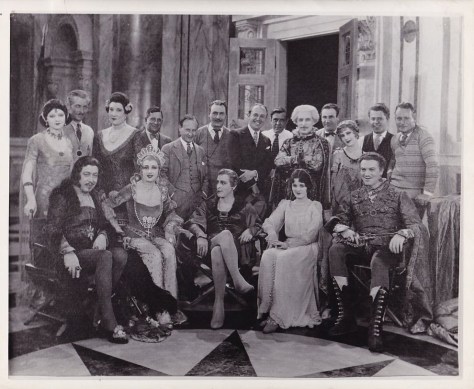
MV5BM2UwZjQ4MDctN2YxNS00ZDcxLWI3ODMtZDcwZTc3MjdkNzQ0XkEyXkFqcGdeQXVyMDU0Mzg3Nw@@._V1_

Cast and crew of Don Juan (1926)

Astor continued to appear in movies at various studios. When her Paramount contract ended in 1925, she was signed at Warner Bros.

Among her assignments was another role with John Barrymore, this time in Don Juan (1926).

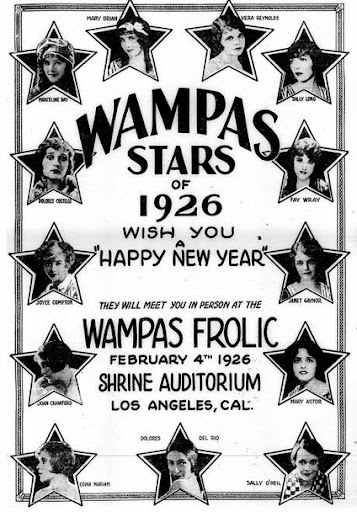
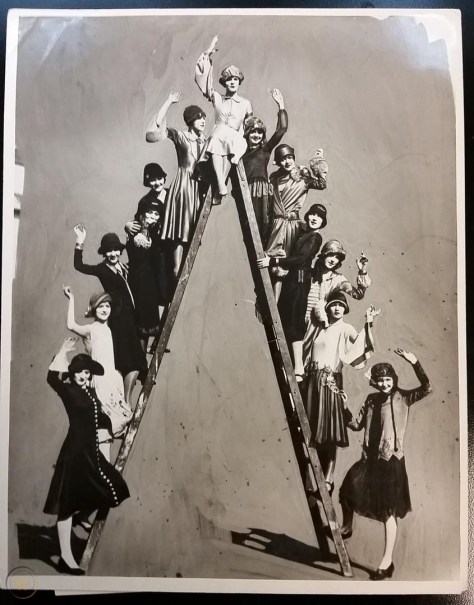
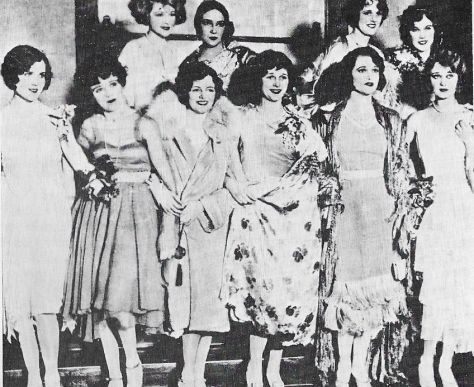
She was named one of the WAMPAS Baby Stars in 1926, along with Mary BrianDolores CostelloJoan CrawfordDolores del RíoJanet Gaynor, and Fay Wray.

unnamed (31)

wampas-baby-stars-1926-joan-crawford_1_c7a226bcfa0fbaf3ed03a3caadb641b3

MV5BNDYyNzI0OWYtZDcxZi00ZmFlLWI3OTQtN2VhZTNjZjVjNzZjXkEyXkFqcGdeQXVyMDMxMjQwMw@@._V1_

WAMPAS Baby Stars of 1926

On loan to Fox Film Corporation, Astor starred in Dressed To Kill (1928), which received good reviews.
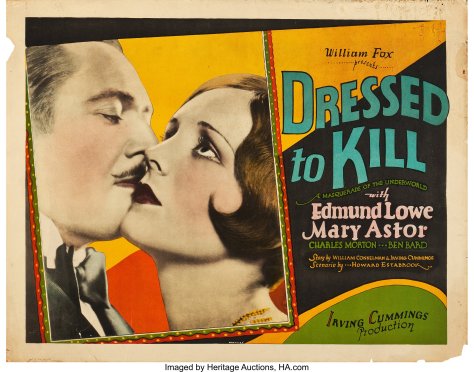
lf (17)

Dressed to Kill  (1928)

MV5BZWNkMWE2ODAtMzM4YS00YWRlLTllNWUtM2E0NWE3MDk5NTZmXkEyXkFqcGdeQXVyMTcyODY2NDQ@._V1_

MV5BNjljMGNiNDYtNjJjNy00NWE1LTg3MTktZmQ5NmU4NGE5MWUxXkEyXkFqcGdeQXVyMTcyODY2NDQ@._V1_

Edmund Lowe and Mary Astor in Dressed to Kill (1928)
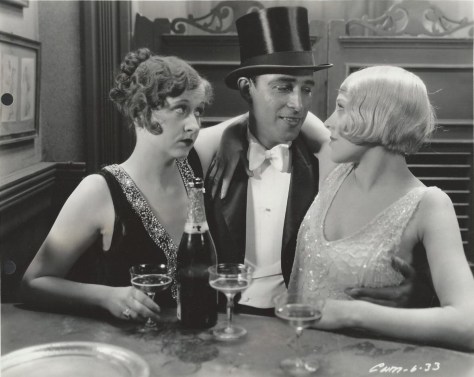
MV5BYzg2ZWEwMWUtMjgzZi00ZDY2LTkwYjEtNzg5MGUwY2IyMTJiXkEyXkFqcGdeQXVyMTcyODY2NDQ@._V1_

Ben Bard in Dressed t o Kill (1928)

That same year, she starred in the sophisticated comedy Dry Martini at Fox. She later said that, while working on the latter, she “absorbed and assumed something of the atmosphere and emotional climate of the picture.”

She said it offered “a new and exciting point of view; with its specious doctrine of self-indulgence, it rushed into the vacuum of my moral sense and captivated me completely.”

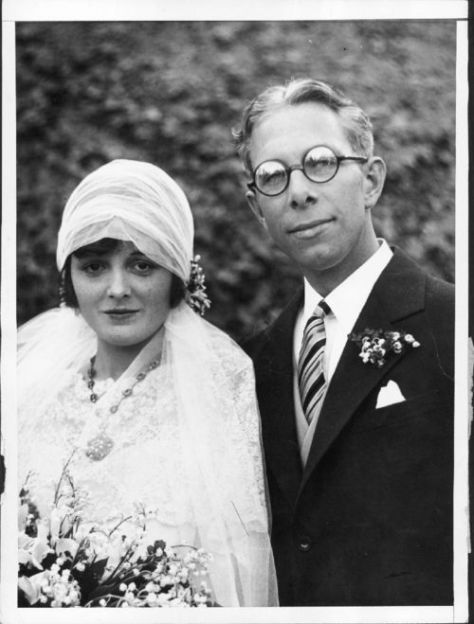
When her Warner Bros. contract ended, she signed a contract with Fox for $3,750 a week. In 1928, she married director Kenneth Hawks at her family home, Moorcrest.
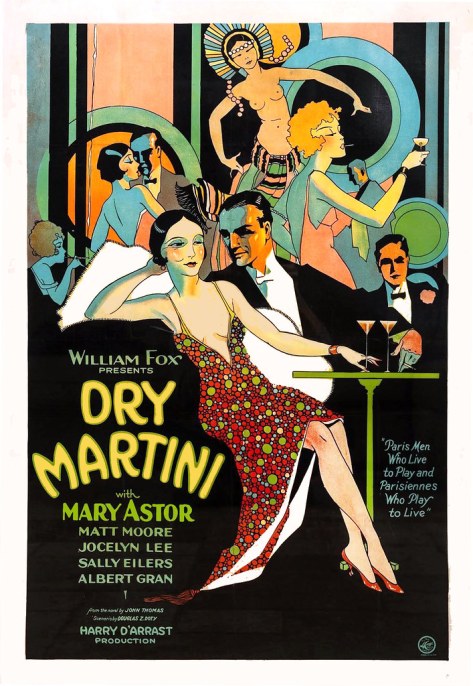
50359479747_3c093270fd_b

Dry Martini (1928)  Dir: Harry D’Arrast  
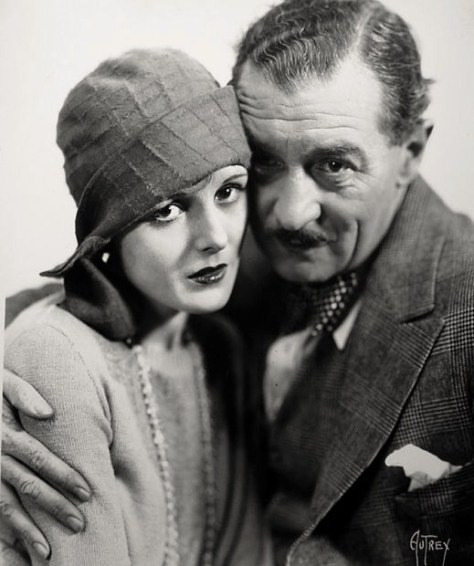
Mary_Astor-Albert_Conti_in_Dry_Martini

image-w1280 (26)

Mary Astor and Albert Conti in Dry Martini (1928)
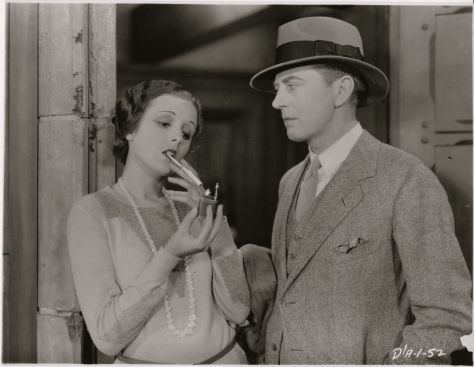
MV5BNjM1ODBmYTAtNWYxOC00ODJiLWFkNmQtOTUzZGVlOGExODkyXkEyXkFqcGdeQXVyMTcyODY2NDQ@._V1_

Mary Astor and Matt Moore in Dry Martini (1928)

He gave her a Packard automobile as a wedding present and the couple moved into a home high up on Appian Way, a small hilltop street in Laurel Canyon above the Sunset Strip. Their address was 8803 Appian Way.

Other celebrities who lived at different times on this short street include Errol Flynn and his French wife Lili Damita (8946 Appian Way); Ida Lupino (8761); fashion designer Jean Louis [Berthault] (8761); Ginger Rogers(8782); German composer Rudolf Friml (8782); Gypsy Rose Lee (8815 Appian Way); Carole King (8815); Courteney Cox (8815).

As the film industry made the transition to talkies, Fox gave her a sound test, which she failed because the studio found her voice to be too deep. Though this was probably due to early sound equipment and the inexperience of technicians, the studio released her from her contract and she found herself out of work for eight months in 1929.
6b4e6d9988fd9459c35bb2a737a5a1d0--s-wedding-vintage-weddings

Mary Astor and Kenneth Hawks on their Wedding Day

New beginnings

Astor took voice training and singing lessons in her time off, but no roles were offered. Her acting career was then given a boost by her friend, Florence Eldridge (wife of Fredric March), in whom she confided.

Eldridge, who was to star in the stage play Among the Married at the Majestic Theatre in Downtown Los Angeles, recommended Astor for the second female lead. The play was a success and her voice was deemed suitable, being described as low and vibrant.

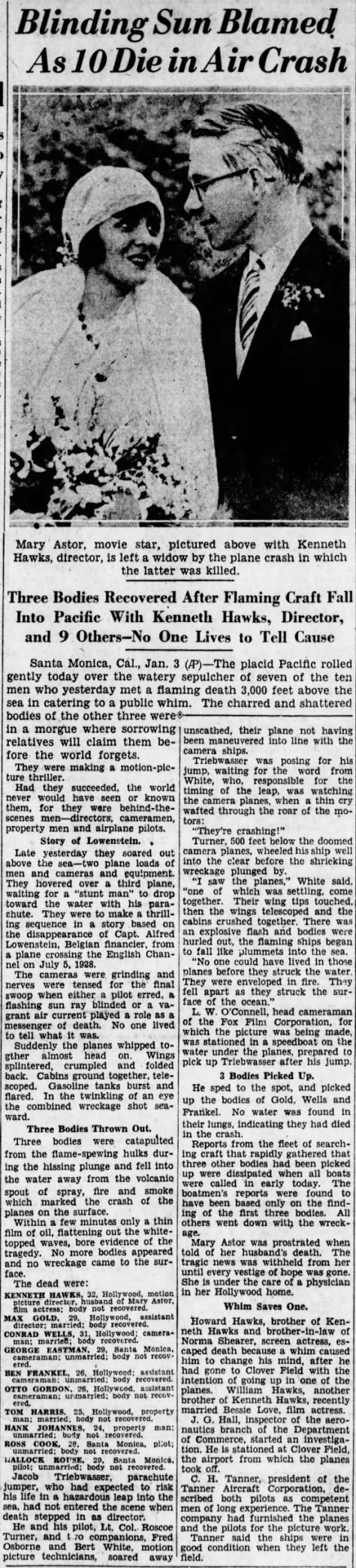
She was happy to work again, but her happiness soon ended. On January 2, 1930, while filming sequences for the Fox movie Such Men Are Dangerous, Kenneth Hawks was killed in a mid-air plane crash over the Pacific.

Astor had just finished a matinee performance at the Majestic when Florence Eldridge gave her the news. She was rushed from the theatre to Eldridge’s apartment; a replacement, Doris Lloyd, stepped in for the next show. Astor remained with Eldridge at her apartment for some time, then soon returned to work.
4d0dec61cd17d0a8e1e1083a6c7445bf

Newspaper article on Kenneth Hawks’ death

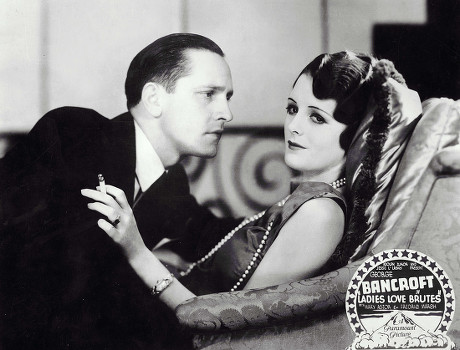
Shortly after her husband’s death, she debuted in her first “talkie”, Ladies Love Brutes (1930) at Paramount, which co-starred friend Fredric March. 
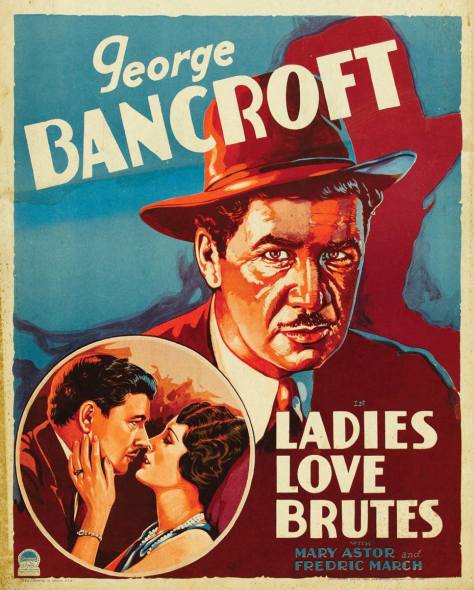
MV5BM2VhZGM5NzQtYWI1YS00NjJmLTkxMmQtOGMzZTlkNGVjNzczL2ltYWdlXkEyXkFqcGdeQXVyNTA2NDc4OA@@._V1_

Ladies Love Brutes  Dir: Rowland W Lee  (1930)  
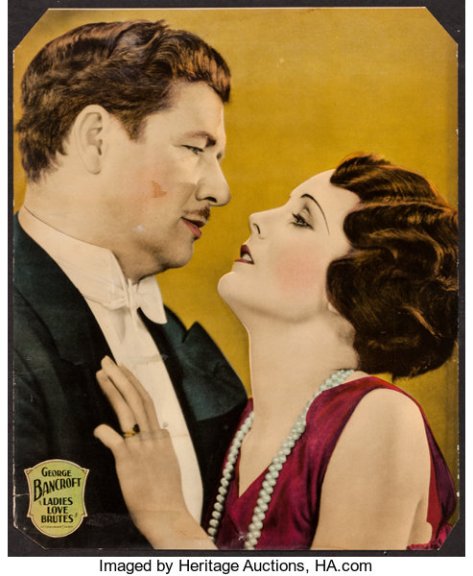
lf (24)

George Bancroft and Mary Astor in Ladies Love Brutes (1930)
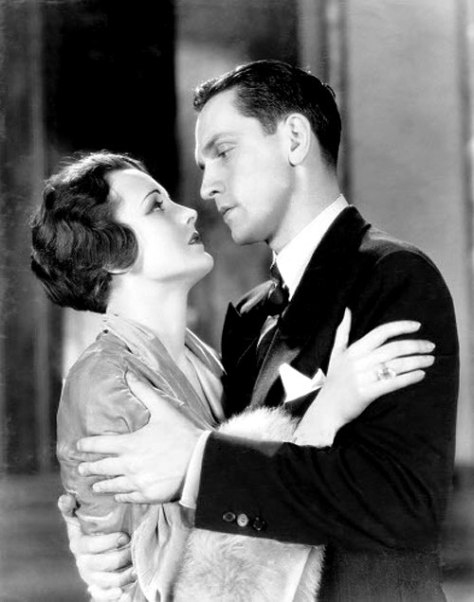
MV5BN2IyMGRkNGEtNTY2NS00MGQ5LTg5YjgtZGQzYjAxZDQ0MDViXkEyXkFqcGdeQXVyMTcyODY2NDQ@._V1_

Ladies Love Brutes - 1930
Editorial use only. No book cover usage. Mandatory Credit: Photo by Paramount/Kobal/Shutterstock (5858852a) Fredric March, Mary Astor Ladies Love Brutes – 1930 Director: Rowland V. Lee Paramount USA Film Portrait

Mary Astor and Fredric March in Ladies Love Brutes (1930)

While her career picked up, her private life remained difficult. After working on several more movies, she suffered delayed shock over her husband’s death and had a nervous breakdown.

During the months of her illness, she was attended to by Dr. Franklyn Thorpe, whom she married on June 29, 1931.
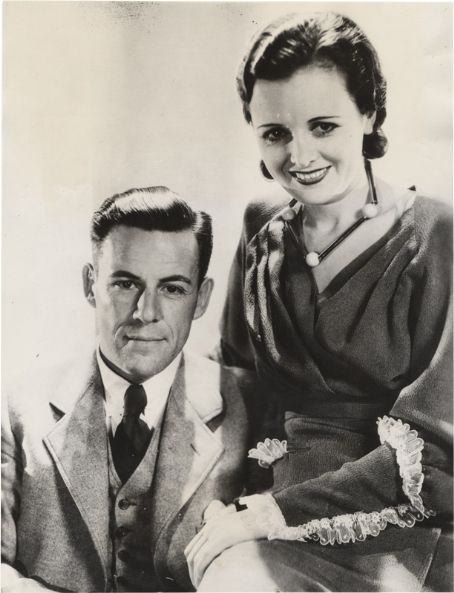
ecc4eced873a6466564deb3c44d752f5

Mary Astor and Dr Franklyn Thorpe

That year, she starred as Nancy Gibson in Smart Woman, playing a woman determined to retrieve her husband from a gold-digging flirtation.

The clever dialogue, played against the trappings of a lavish mansion, involves another man who is obviously in love with Astor’s character.

This wealthy lord, at the behest of Gibson, attracts the attention of the gold-digger during lazy days at the manor. The husband, initially set upon divorcing Nancy and marrying the intruder “Peggy Preston”, is dismayed to find Peggy attracted to the newcomer because of his extraordinary wealth. All done in a civil, but cunning, manner.
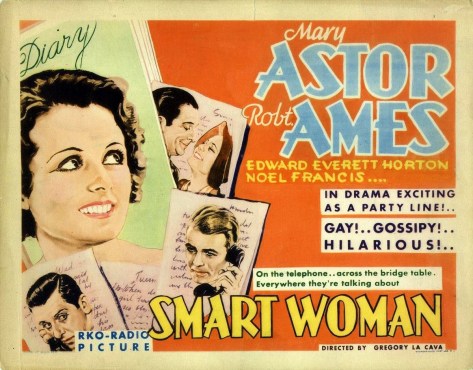
SmartWomanPoster

Smart Woman  Dir: Gregory La Cava  (1931)  
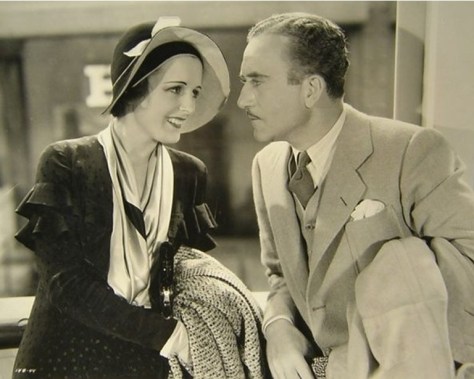
MV5BODIzYzlmMWEtMGNlYS00NDZjLWE3YTUtNzc1NGQyMmIyNGIwXkEyXkFqcGdeQXVyODQzNTYxODQ@._V1_

SmartWoman1931TCM

Mary Astor and Johnny Halliday in Smart Woman (1931)
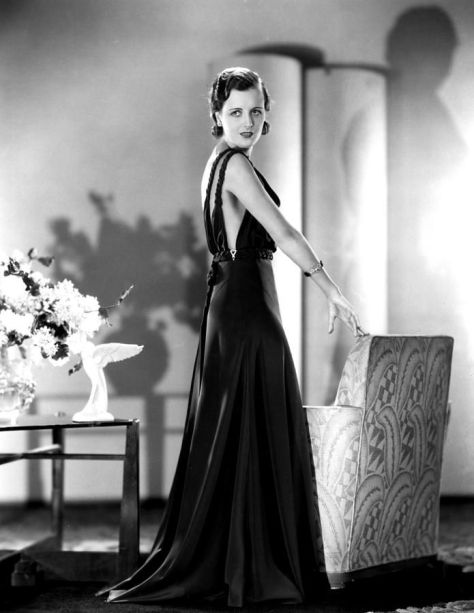
1e7d35eb8c040d796bbb31473aa4bed8

Mary Astor in Smart Woman (1931) 

In May 1932, the Thorpes purchased a yacht and sailed to Hawaii. Astor was expecting a baby in August, but gave birth in June in Honolulu. The child, a daughter, was named Marylyn Hauoli Thorpe: her first name combined her parents’ names and her middle name is Hawaiian. When they returned to Southern California,
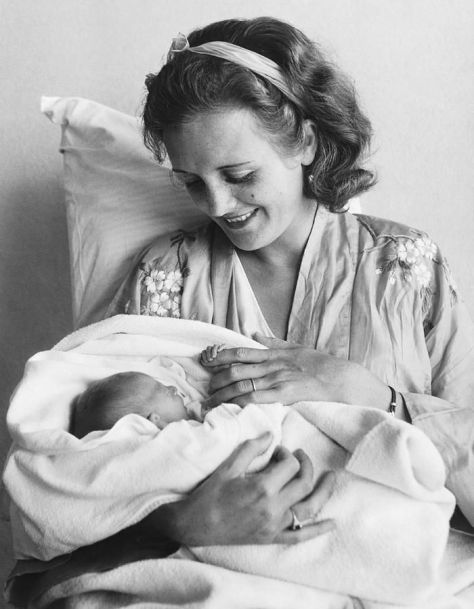
d7ef1d19b5711828d7b8fd11367aa947

Mary Astor with her baby Marylin Hauoli Thorpe in 1932

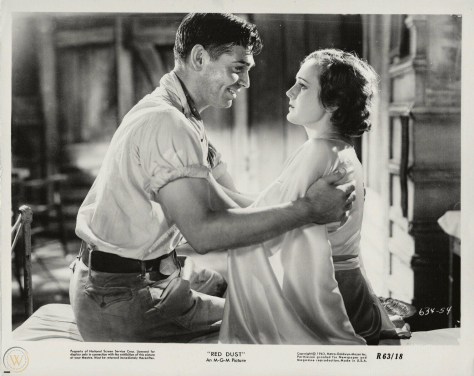
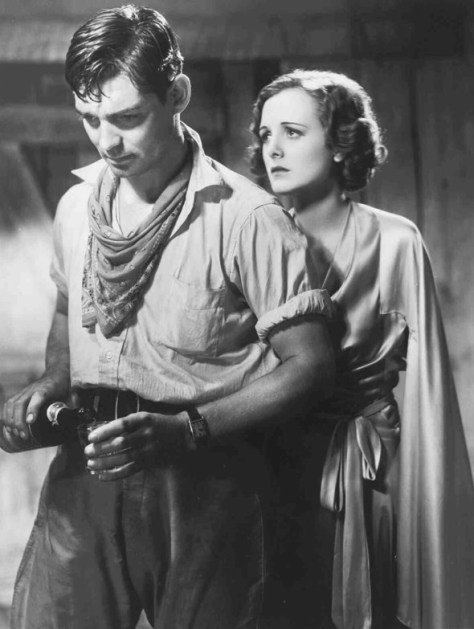
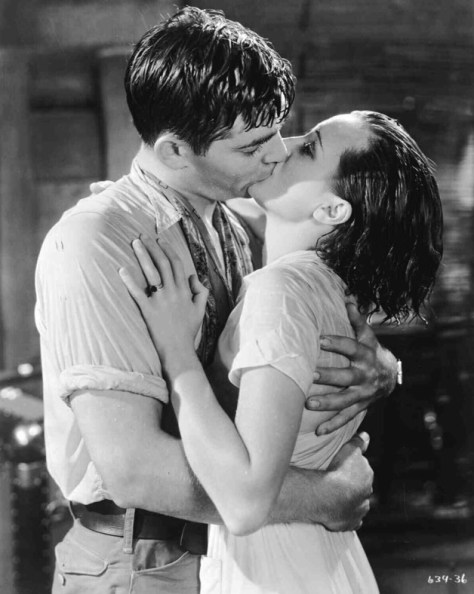
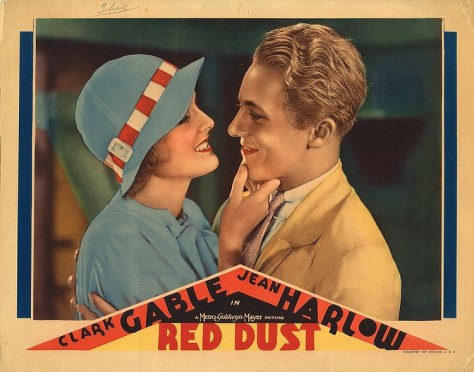
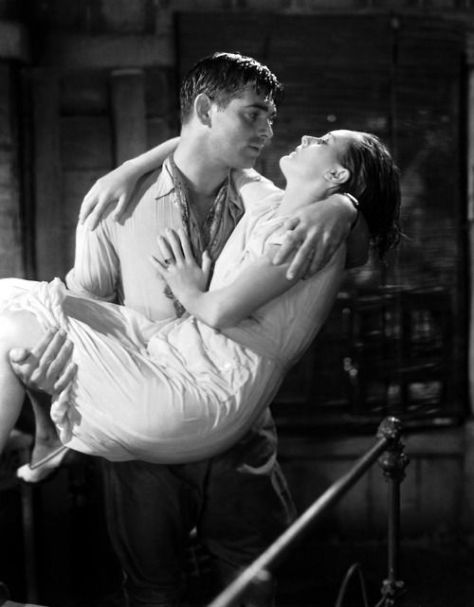
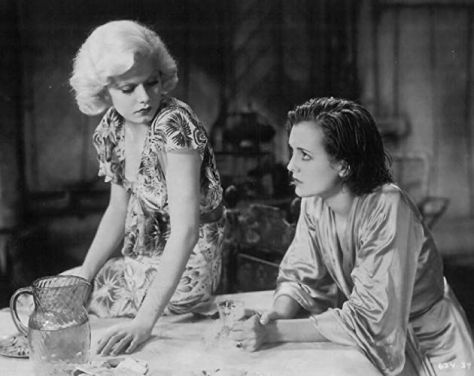
Astor freelanced and gained the pivotal role of Barbara Willis in MGM‘s Red Dust (1932) with Clark Gable and Jean Harlow.
MV5BODg0YjNjZDQtZTI5Yy00NDY5LWI1YTctNDA0NTEzNGNlOWQ5XkEyXkFqcGdeQXVyMTcyODY2NDQ@._V1_

Red Dust  Dir: Victor Fleming  (1932)  
clark-gable-jean-harlow-mary-astor_1_52933b7e56b41db49d9edcf9b04b9ea5

MV5BZTkzYTNhYzItMjMzOS00Y2FjLWI3MDgtNTZmZDQ1ODc5YjBmXkEyXkFqcGdeQXVyOTg5NzIwMDU@._V1_

You-Must-Red-Dust-Gable-holding-Astor

MV5BYTVhNGRiMDMtZTYyNi00YmJmLWFhOTItOGZmMDI5NzkzNWI0XkEyXkFqcGdeQXVyOTg5NzIwMDU@._V1_

Clark Gable and Mary Astor in Red Dust (1932)
48b6666fd764b56d4149b76ddba3e86c

Jean Harlow and Mary Astor in Red Dust (1932)

In late 1932, Astor signed a featured player contract with Warner Bros. Meanwhile, besides spending lavishly, her parents invested in the stock market, which often turned out unprofitable.

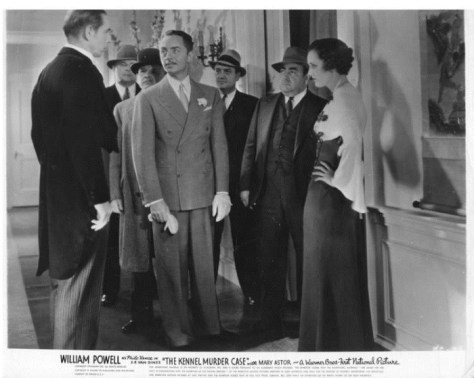
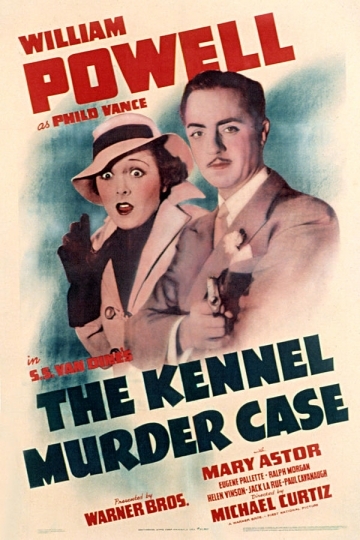
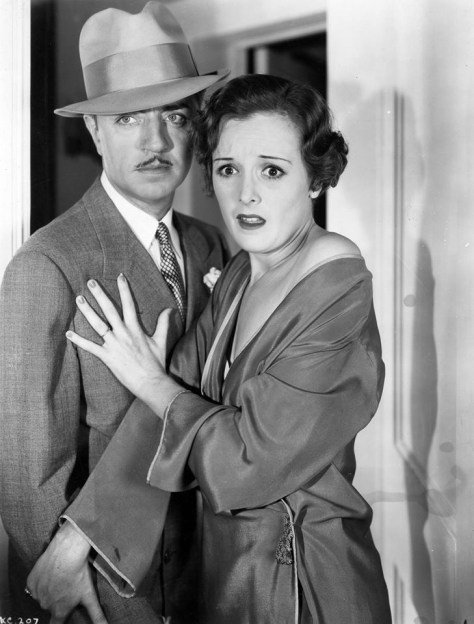
While they remained in Moorcrest, Astor dubbed it a “white elephant”, and she refused to maintain the house. She had to turn to the Motion Picture Relief Fund in 1933 to pay her bills. In 1933, she appeared as the female lead, Hilda Lake, niece of the murder victims, in The Kennel Murder Case, co-starring with William Powell as detective Philo Vance.
50139_1_large

The Kennel Murder Case  Dir: Michael Curtiz  (1933)
MV5BOGJkMzEwYmQtYjE2Mi00MDU1LTliMzEtZmRlZjUwZjk3YjczXkEyXkFqcGdeQXVyMDI3OTIzOA@@._V1_

philo-vance-investiages-2-1

kennel_murder_case_1

p1861_i_v9_ab

03JPKEHR1-articleLarge

Mary Astor and William Powell in The Kennel Murder Case (1933)

Film critic William K. Everson pronounced it a “masterpiece” in the August 1984 issue of Films in Review.

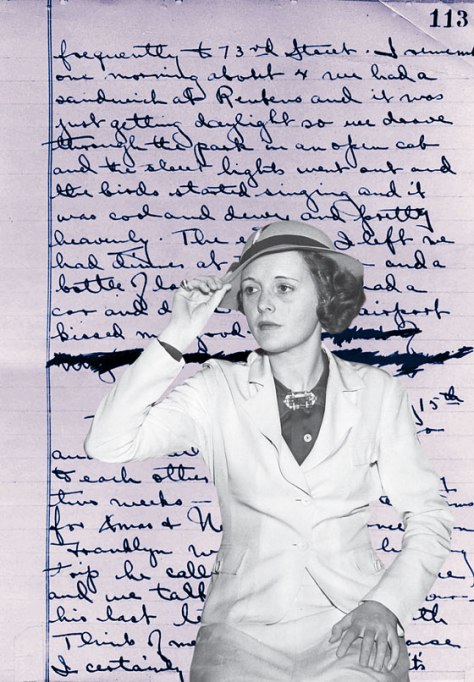
Unhappy with her marriage, she took a break from movie-making in 1933 and went to New York alone. While there, enjoying a whirlwind social life, she met the playwright George Kaufman and they had an affair, which she documented in her diary.
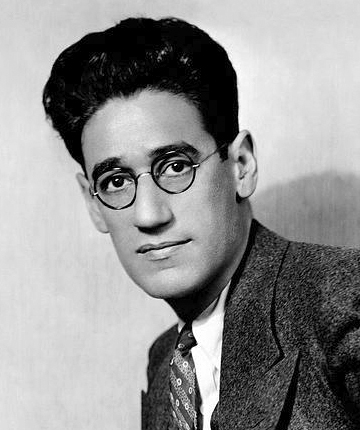
George_S._Kaufman              George S Kauffman

scandals120409_1936_560  Mary Astor Diary

Scandals

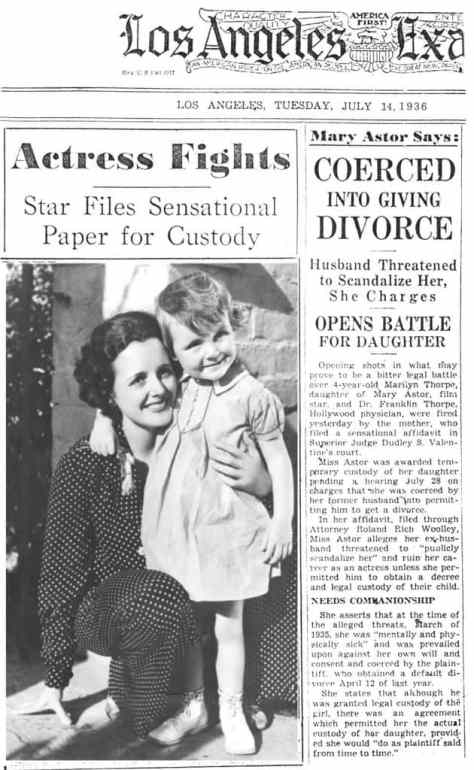
A legal battle drew press attention to Astor in 1936. Dr. Franklyn Thorpe divorced Astor in April 1935, and a custody battle resulted over their four-year-old daughter, Marylyn.
branablog5

Los Angeles Examiner 14/07/1936

Thorpe threatened to use Astor’s diary in the proceedings, which told of her affairs with many celebrities, including George S. Kaufman. The diary was never formally offered as evidence during the trial, but Thorpe and his lawyers constantly referred to it, and its notoriety grew. Astor admitted that the diary existed and that she had documented her affair with Kaufman, but maintained that many of the parts that had been referred to were forgeries, following the theft of the diary from her desk.
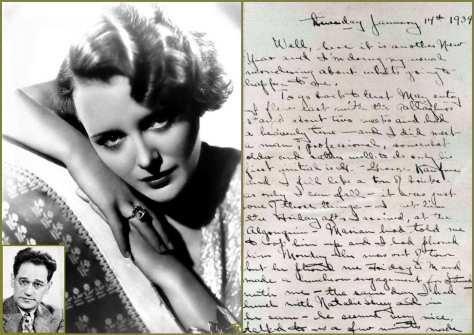
THE_DIARY_of_MARY_ASTOR__35190 (1)

The diary was deemed inadmissible as a mutilated document, and the trial judge, Goodwin J. Knight, ordered it sealed and impounded. In 1952, by court order, Astor’s diary was removed from the bank vault where it had been sequestered for 16 years and destroyed.

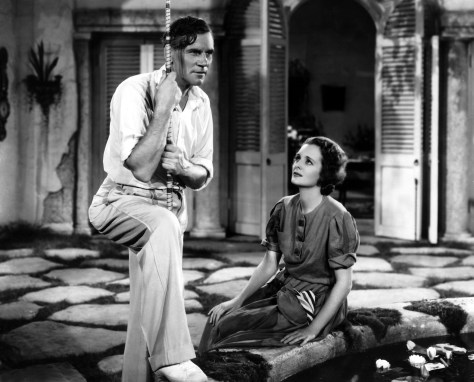
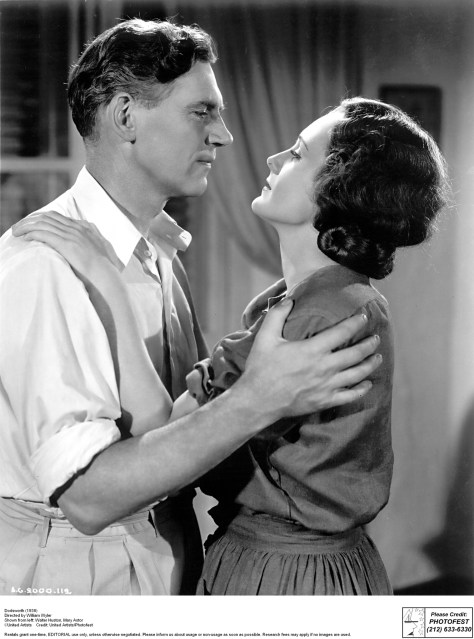
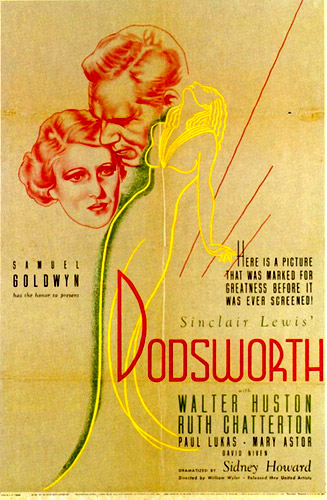
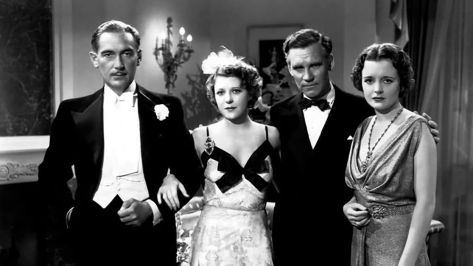
Astor had just begun work as Edith Cortwright, opposite Walter Huston in the title role of Dodsworth as news of the diary became public. Producer Samuel Goldwyn was urged to fire her, as her contract included a morality clause, but Goldwyn refused and the movie was a hit.
dodsworth2

Dodsworth  (1936)  Dir: William Wyler  
Dodsworth-MaryAstorST

MBDDODS EC001
DODSWORTH, Walter Huston, Mary Astor, 1936

g5wwlCbyX5IAGGJIRMgAhQ0Uugw-1200-1200-675-675-crop-000000

dodsworth-mary-astor-1936-everett

MV5BMjE3NDAzMDUyMV5BMl5BanBnXkFtZTcwNzAzMjM4NA@@._V1_
Dodsworth (1936) Directed by William Wyler Shown from left: Walter Huston, Mary Astor

Mary Astor and Walter Huston in Dodsworth (1936)

Mid-career

Ultimately, the scandals caused no harm to Astor’s career, which was actually revitalized because of the custody fight and the wide publicity it generated; Dodsworth (1936), with Walter Huston, was released to rave reviews, and the public’s acceptance assured the studios that she remained a viable commercial property.

In 1937, she returned to the stage in well-received productions of Noël Coward‘s Tonight at 8:30The Astonished Heart, and Still Life. She also began performing regularly on radio.

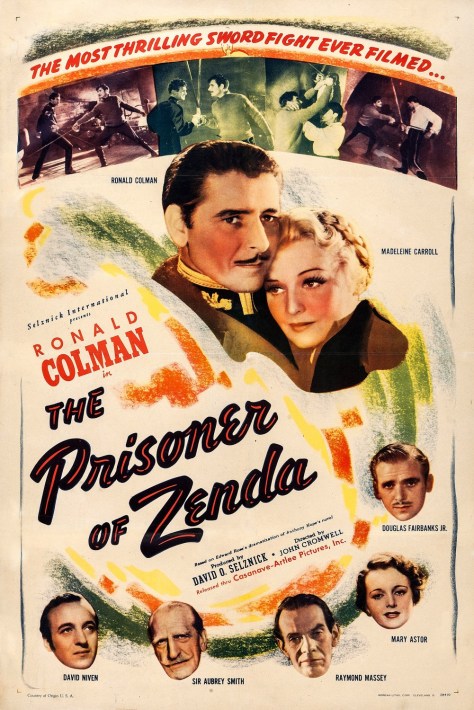
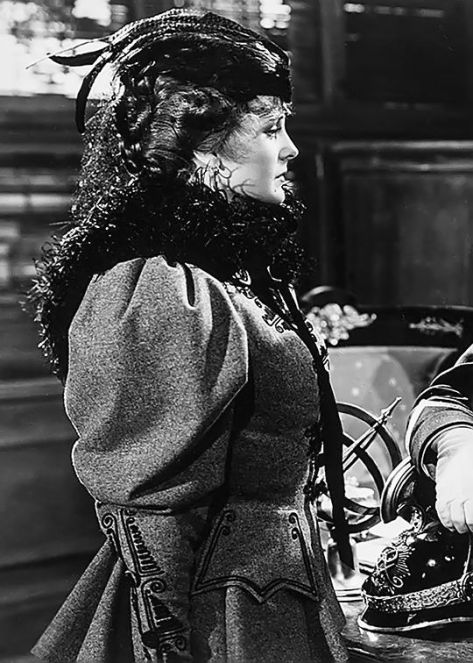
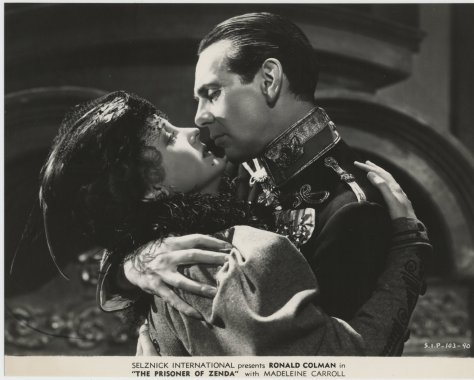
Some of her best movies were yet to come, including The Prisoner of Zenda (1937), John Ford‘s The Hurricane (1937), Midnight (1939) and Brigham Young (1940).
MV5BODA1YjlmZmEtNWI3MC00ZDQ3LTgxODAtZWQ3NmYyOGYzNzI0L2ltYWdlL2ltYWdlXkEyXkFqcGdeQXVyMjUxODE0MDY@._V1_

The Prisoner of Zenda (1937)  Dir: John Cromwell  
b8a1145679ba645004a2aadd326e4a45

Mary Astor in The Prisoner of Zenda (1937)
MV5BNGYzY2FlYmUtMGQ1Mi00ZGEzLTkxM2QtNGI5NTlhZWZjZTBiXkEyXkFqcGdeQXVyMzAwOTU1MTk@._V1_

ZendaAstorMassey

Mary Astor and Raymond Massey n The Prisoner of Zenda (1937)
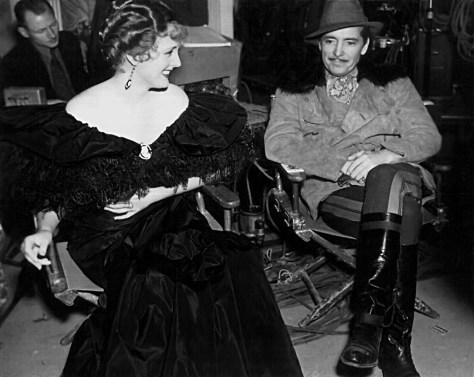
The-Prisoner-of-Zenda-1937-Mary-Astor-Ronald-Colman

Mary Astor and Ronald Colman in The Prisoner of Zenda (1937)

Review_83_Photo_2_-_The_Hurricane_(1937)_400_609_90

The Hurricane (1937)  Dir: John Ford – Poster
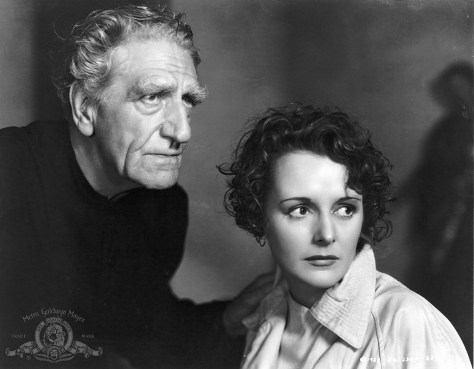
MV5BMjExNTAyODY1Nl5BMl5BanBnXkFtZTcwNDA0MTI0NA@@._V1_

C Aubrey Smith and Mary Astor in The Hurricane (1937)
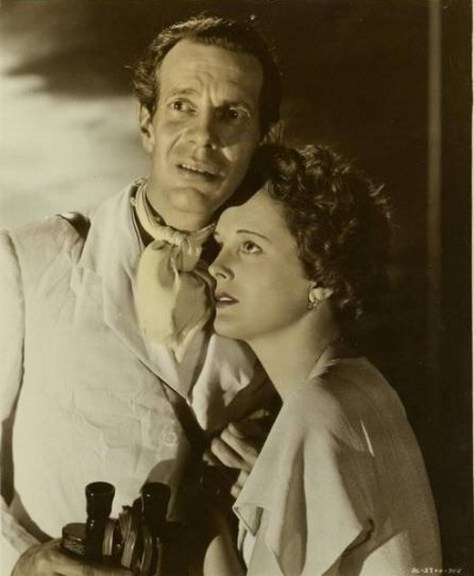
MV5BNmFkNDg5M2UtYWVhMS00ZGI5LWFmMzMtNWYxMWM3MjdkNGIxXkEyXkFqcGdeQXVyMDUyOTUyNQ@@._V1_

Raymond Massay and Mary Astor in The Hurricane (1937)
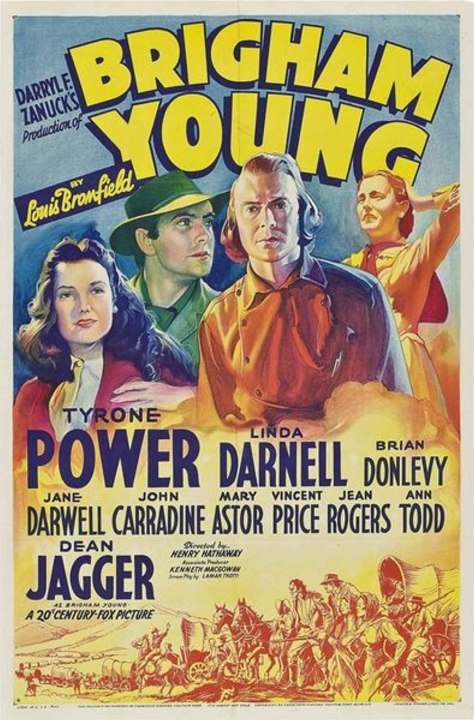
MV5BM2M0NmE3ZDYtNDBhNS00MjVmLWFiMzEtOWY4YzFkYzQ3ZWU2L2ltYWdlL2ltYWdlXkEyXkFqcGdeQXVyNjQzNDI3NzY@._V1_FMjpg_UX1000_

Brigham Young: Frontiersman (1940)  Dir: Henry Hathaway 
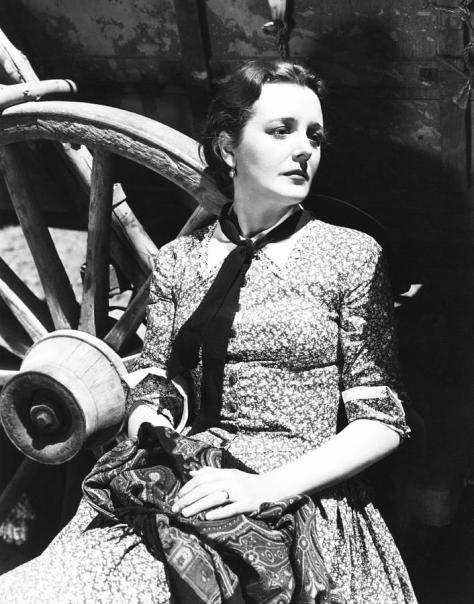
brigham-young-mary-astor-1940-tm--everett

Mary Astor in Brigham Young: Frontiersman (1940) 
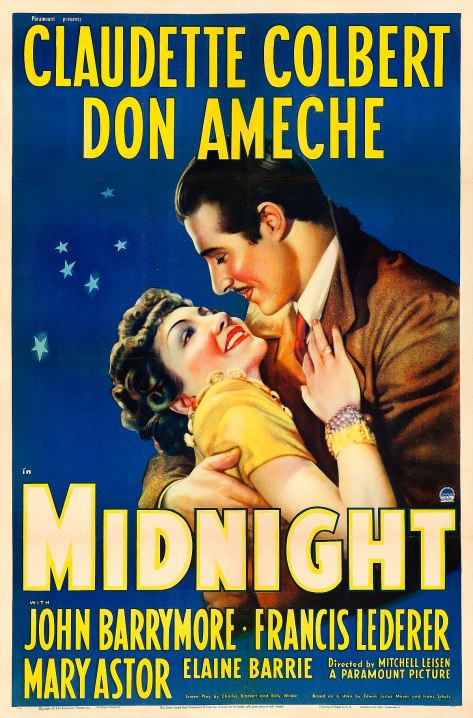
midnight-1939

Midnight (1939)  Dir: Mitchell Leisen

midnight 2

Mary Astor and John Barrymore in Midnight (1939)
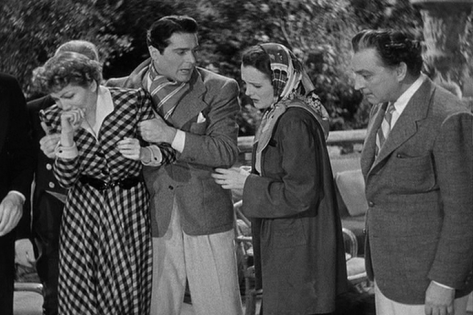
claudette-colbert-francis-lederer-mary-astor-john-barrymore-in-midnight

Claudette Colbert, Francis Lederer, Mary Astor and John Barrymore in Midnight (1939)
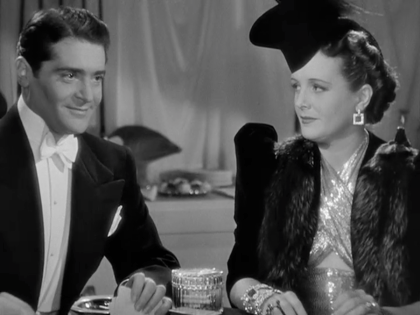
midnight-astor-jealous

Francis Lederer and Mary Astor in Midnight (1939)

In John Huston‘s The Maltese Falcon (1941), Astor played scheming temptress Brigid O’Shaughnessy. The film also starred Humphrey Bogart and featured Peter Lorre and Sydney Greenstreet. This was to become her most memorable role.

The_Maltese_Falcon_(1941_film_poster)

The Maltese Falcon (1941)  Dir: John Huston
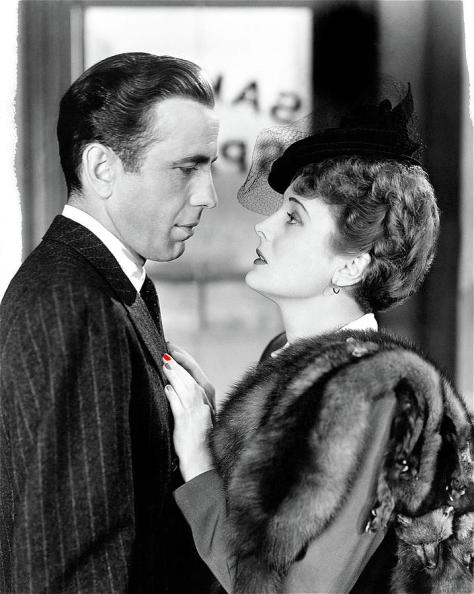
1-bogie-and-mary-astor-the-maltese-falcon-1940-david-lee-guss

Humphrey Bogart and Mary Astor in The Maltese Falcon (1941) 
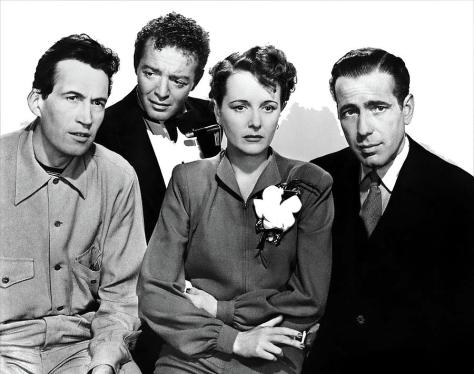
director-john-huston-peter-lorre-mary-astor-humphrey-bogart-the-maltese-falcon-1941-david-lee-guss

John Huston, Peter Lorre, Mary Astor and Humphrey Bogart – publicity shot for The Maltese Falcon (1941) 
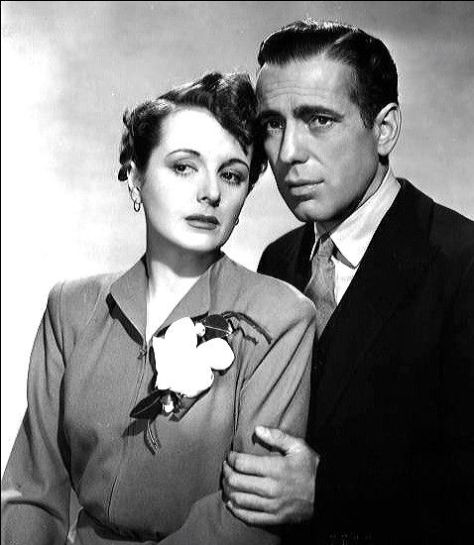
86e5a5188b04b0a34d0730b821b83f11

Mary Astor and Humphrey Bogart in The Maltese Falcon (1941) 
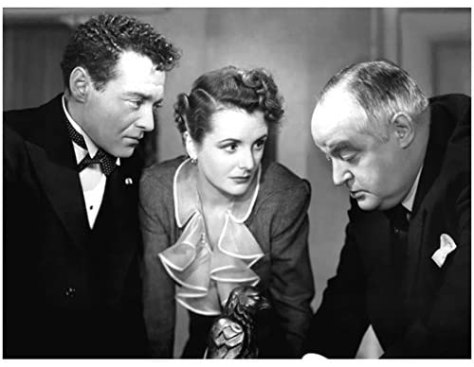
51wiRYad6eL._AC_Peter Lorre, Mary Astor and Sidney Greenstreet in The Maltese Falcon (1941) 
e8de96c5e503138c4cf9965364e298a2

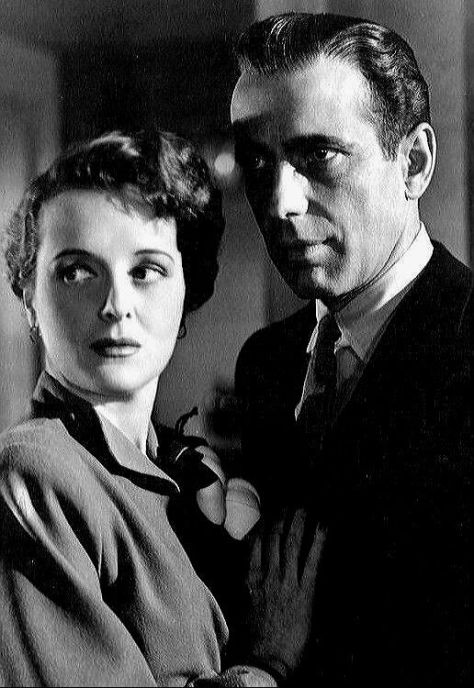
Mary Astor and Humphrey Bogart in The Maltese Falcon (1941) 
MALTESE FALCON, THE (1941)
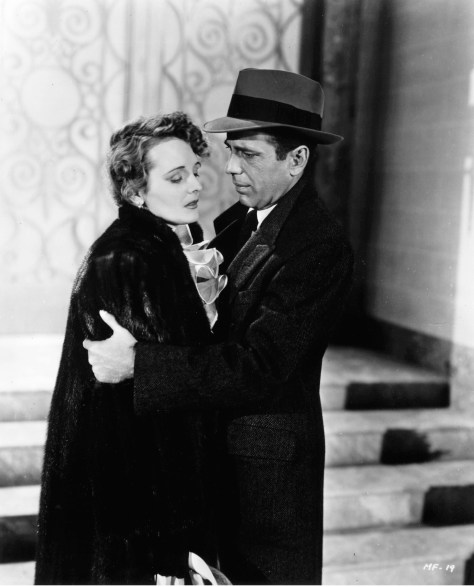
Medium shot of Mary Astor as Bridgid O’Shaughnessy/Miss. Wonderly/Miss. LaBlanc and Humphrey Bogart as Sam Spade, who wears hat/fedora.

Mary Astor and Humphrey Bogart in The Maltese Falcon (1941) 

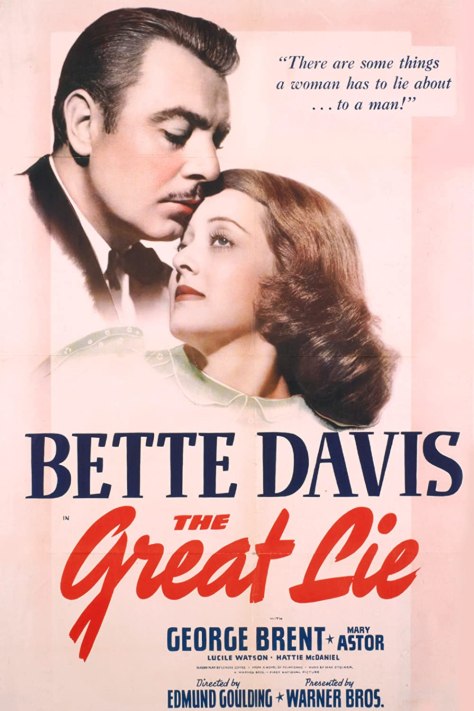
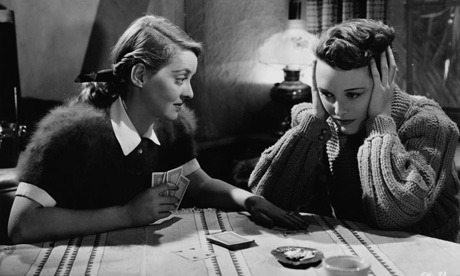
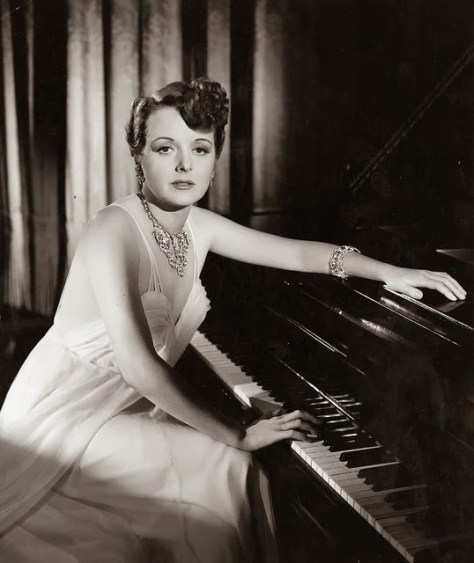
Another noteworthy performance was her Oscar-winning role as Sandra Kovak, the selfish, self-centered concert pianist, who willingly gives up her child, in The Great Lie (1941). George Brent played her intermittent love interest, but the film’s star was Bette Davis.
MV5BMGYzYTFhYWItNzcxZi00NzI4LThjZTYtMWRjYWNhODZmZjgwXkEyXkFqcGdeQXVyNjc0MzMzNjA@._V1_FMjpg_UX1000_

The Great Lie (1941)  Dir: Edmund Goulding
bette-davis-mary-astor-the-great-lie-1941

Bette Davis and Mary Astor in  The Great Lie (1941)  
MV5BODUyNDUyNDgtNmIyMy00OGYyLWEzZTEtODI3OTRmZDdiMTljXkEyXkFqcGdeQXVyMTk2MzI2Ng@@._V1_

Mary Astor in The Great Lie (1941)  

f36121c1cd08e7bb19c28615038beb41

Bette Davis and Mary Astor in  The Great Lie (1941)  
MV5BNmY2NDg5NTEtZDRiYi00YzQzLWI1NGItNzhiMDJmYTQ1OTljXkEyXkFqcGdeQXVyMTk2MzI2Ng@@._V1_

Mary Astor in The Great Lie (1941)

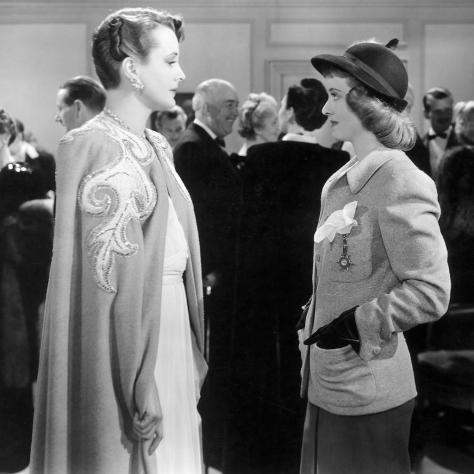
Davis wanted Astor cast in the role after watching her screen test and seeing her play Tchaikovsky‘s Piano Concerto No. 1. She then recruited Astor to collaborate on rewriting the script, which Davis felt was mediocre and needed work to make it more interesting. Astor further followed Davis’s advice and sported a brazenly bobbed hairdo for the role.

The soundtrack of the movie in the scenes where she plays the concerto, with violent hand movements on the piano keyboard, was dubbed by pianist Max Rabinovitch. Davis deliberately stepped back to allow Astor to shine in her key scenes. As a result of her performance, Astor won the Academy Award for Best Supporting Actress, thanking Bette Davis and Tchaikovsky in her acceptance speech. Astor and Davis became good friends.
EJvanIdWsAIdtv8

Bette Davis and Mary Astor in  The Great Lie (1941)  

Astor was not propelled into the upper echelon of movie stars by these successes, however.

She always declined offers of starring in her own right. Not wanting the responsibility of top billing and having to “carry the picture,” she preferred the security of being a featured player.

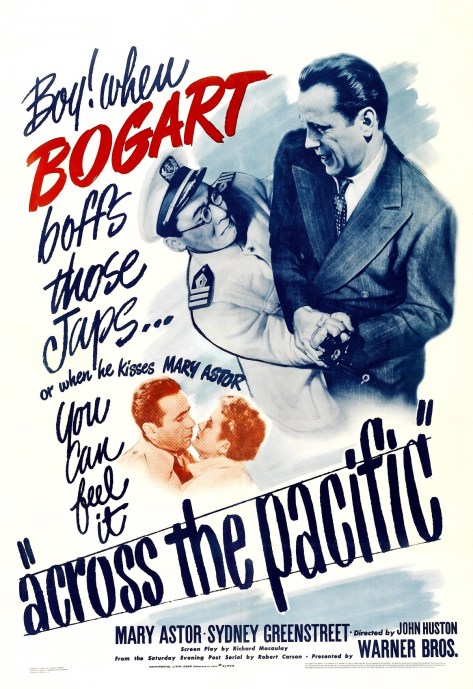
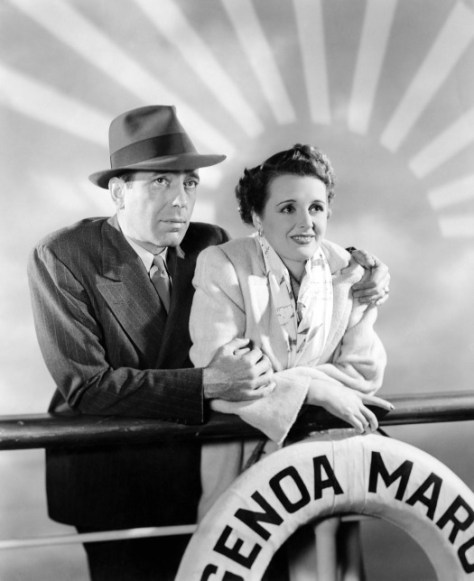
In 1942, she reunited with Humphrey Bogart and Sydney Greenstreet in John Huston‘s Across the Pacific.
MV5BNDRlYTkwMWQtMGVkMi00MTEzLWEwNzAtMWVhYTVhOWEyNGVmXkEyXkFqcGdeQXVyNDY2MTk1ODk@._V1_

Across the Pacific (1942)  Dir: John Huston
Across-the-Pacific-inside

acrossthepacific1942.2085

6f85ef4a320f84a8038d49c23a704131

MV5BYWQxZDQwN2ItZjViMy00YzExLTg1Y2YtM2M4YTEwOGM3MjZhXkEyXkFqcGdeQXVyOTI2MjI5MQ@@._V1_

3539709784082237218

Humphrey Bogart and Mary Astor in Across the Pacific (1942)  

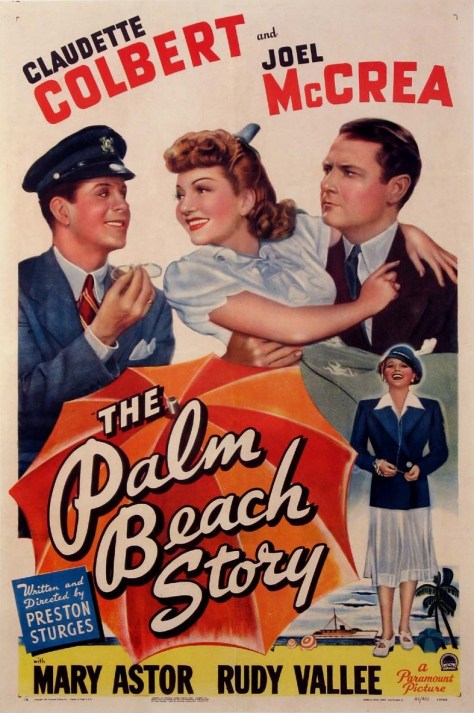
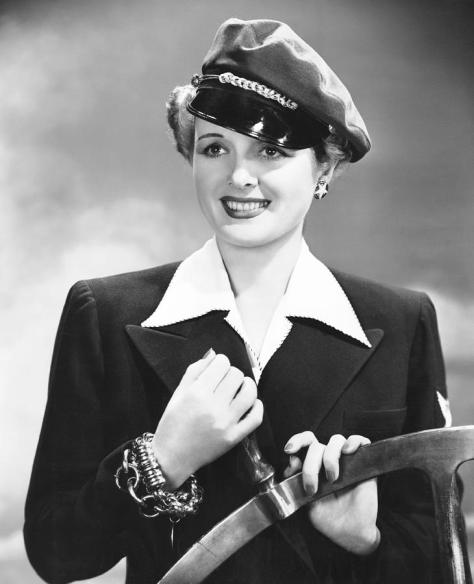
Though usually cast in dramatic or melodramatic roles, Astor showed a flair for comedy as The Princess Centimillia in the Preston Sturges film, The Palm Beach Story (1942) for Paramount.
MV5BMjU3MTlmNmUtZmMxZS00YTNmLTlkZWQtOTBhYjNkYjkyMWUxXkEyXkFqcGdeQXVyMTMxMTY0OTQ@._V1_

The Palm Beach Story (1942)  Dir: Preston Sturges 
the-palm-beach-story-mary-astor-1942-everett

Mary Astor in The Palm Beach Story (1942)  
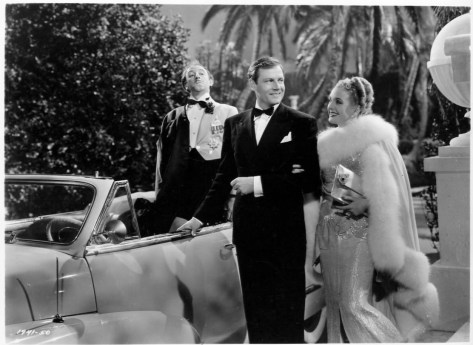
MV5BZmYxOTY0ZmYtOTlhMy00NWMxLThhZWMtYjA1MjkxYWUzOGUwXkEyXkFqcGdeQXVyNjA5MTAzODY@._V1_

Mary Astor and Joel McCrea in The Palm Beach Story (1942)  
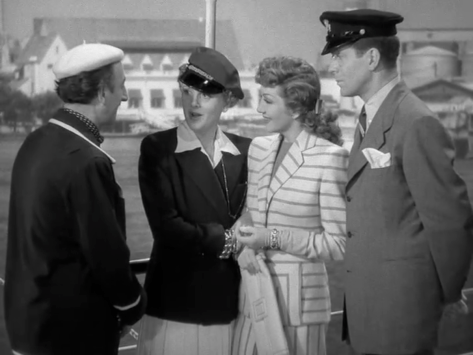
the-palm-beach-story-mary-astor

Mary Astor, Claudette Colbert and Rudy Vallee in The Palm Beach Story (1942)  
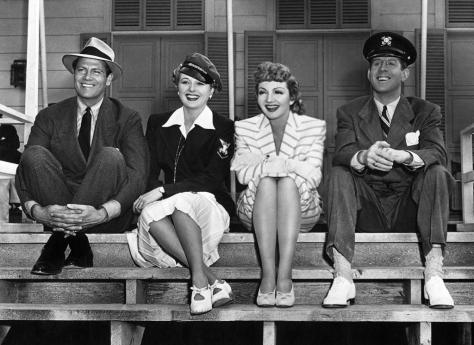
EeA9SB9WAAAYKa6

Joel McCrea, Mary Astor, Claudette Colbert an Rudy Vallee in The Palm Beach Story (1942)   
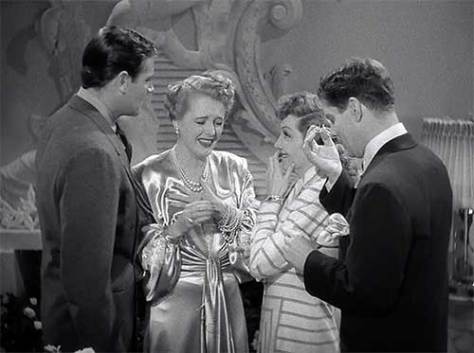
tpbs12

Joel McCrea, Mary Astor, Claudette Colbert an Rudy Vallee in The Palm Beach Story (1942)   

In February 1943, Astor’s father, Otto Langhanke, died in Cedars of Lebanon Hospital as a result of a heart attack complicated by influenza. His wife and daughter were at his bedside.

That same year, Astor signed a seven-year contract with MGM, a regrettable mistake.

She was kept busy playing what she considered mediocre roles she called “Mothers for Metro.”

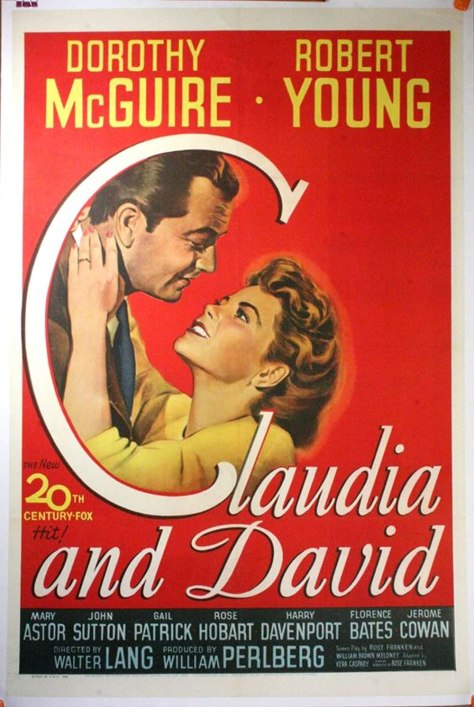
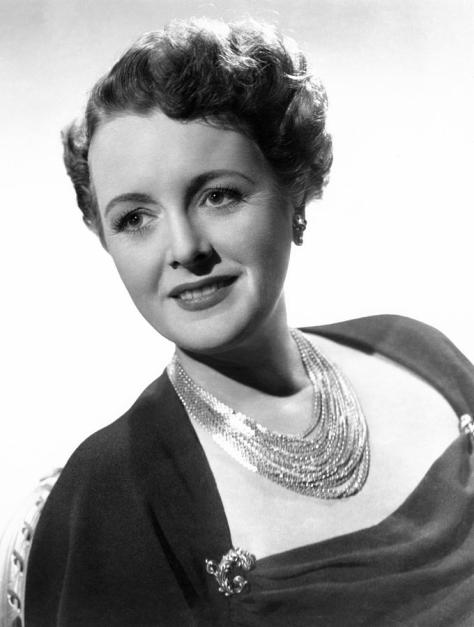
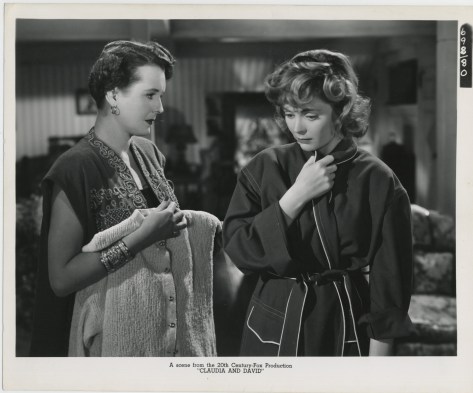
After Meet Me in St. Louis (1944), the studio allowed her to debut on Broadway in Many Happy Returns (1945). The play was a failure, but Astor received good reviews. On loan-out to 20th Century Fox, she played a wealthy widow in Claudia and David (1946).
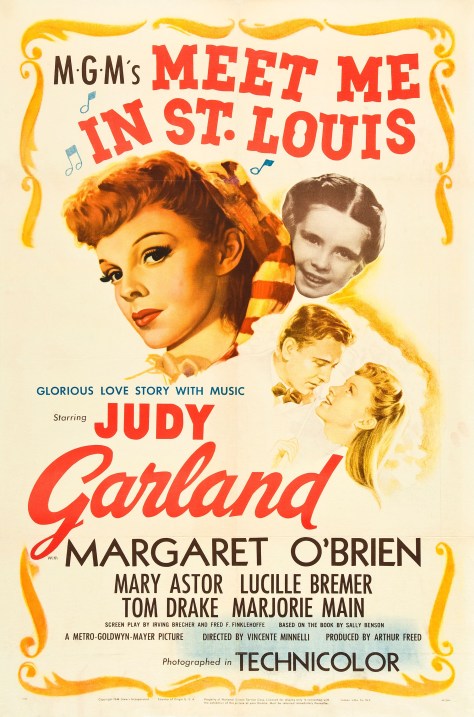
Meet_Me_in_St._Louis_poster

Meet Me in St Louis (1944)  Dir: Vincente Minelli
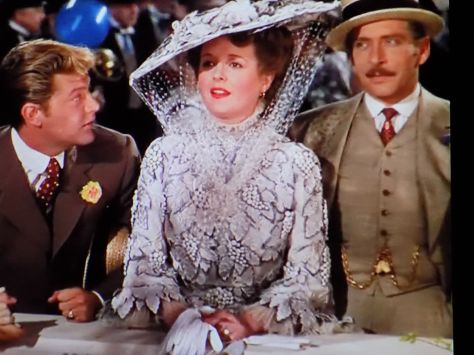
b21d0662e7a94cfa7223c6d6f921bce9

Tom Drake, Mary Astor and Leon Ames in Meet Me in St Louis (1944)  
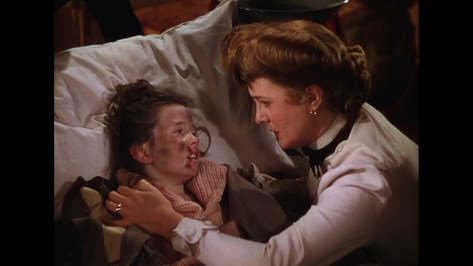
MV5BYmZkNzFkYjYtOWJhYi00YzlmLWJkYzItMTJmY2U4OTliMWE0XkEyXkFqcGdeQXVyMzA1MDQ4Mzk@._V1_

Mary Astor and Margaret O’Brien in Meet Me in St Louis (1944)  
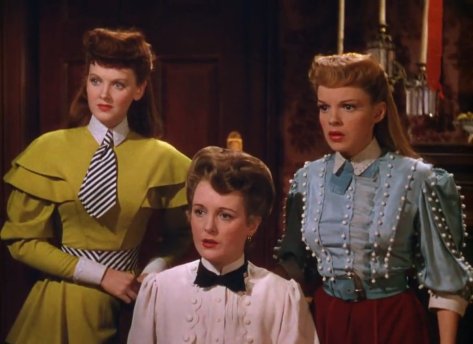
DvoGD4SXQAA6Bg_

Lucille Bremer, Mary Astor and Judy Garland in Meet Me in St Louis (1944) 
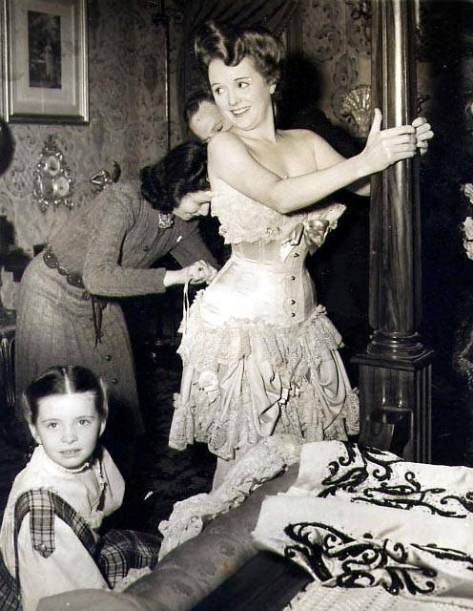
mary-astor-meet-me-in-st-louis

Mary Astor on the set of Meet Me in St Louis (1944)  
MV5BZGY4ZDI1ZWMtZmVkNi00NzI3LWI2OTMtYmE2ODlkMTU0YmI3XkEyXkFqcGdeQXVyMTIxOTk5MzY@._V1_FMjpg_UX1000_

Claudia and David (1946)  Dir: Walter Lang
claudia-and-david-mary-astor-1946-everett

Mary Astor in Claudia and David (1946)  
MV5BNWFjOTE5YmItOWIwNi00YmM0LWIwZjMtNGZiZTdhMDEyNGZmXkEyXkFqcGdeQXVyMzAwOTU1MTk@._V1_

Mary Astor and Dorothy McGuire in Claudia and David (1946)  
8 (3)

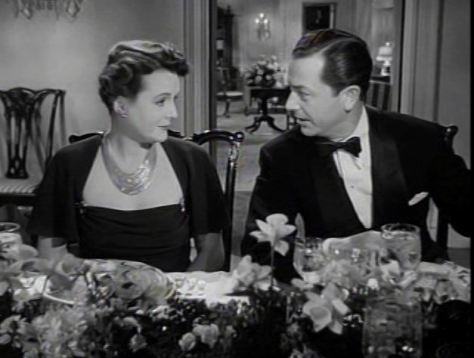
Mary Astor and Robert Taylor in Claudia and David (1946)  

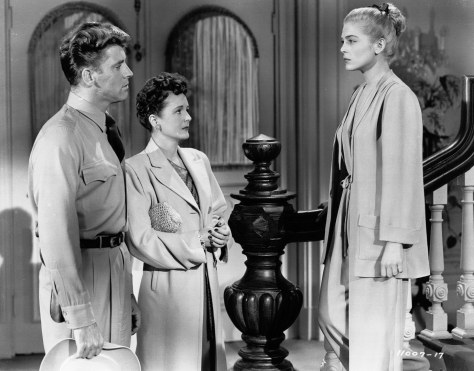
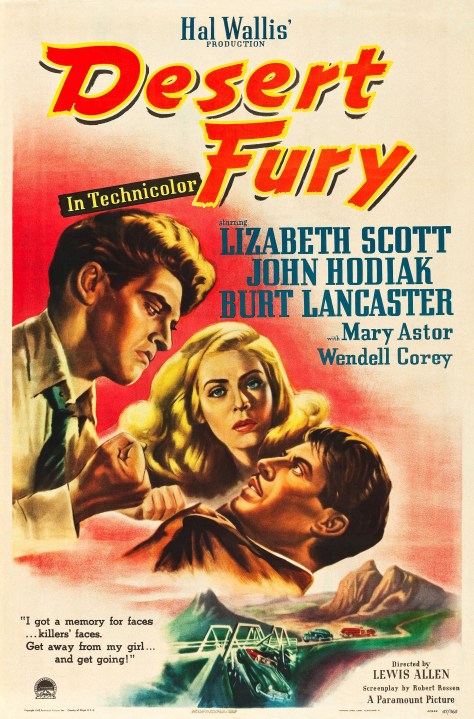
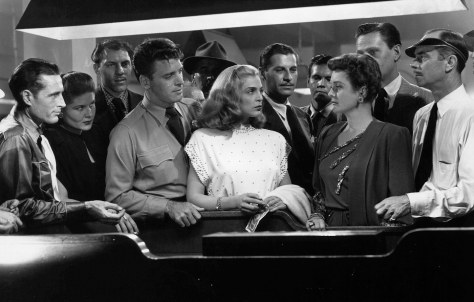
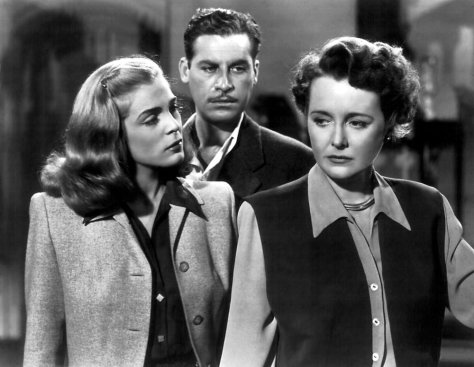
She was also loaned to Paramount to play Fritzi Haller in Desert Fury (1947) playing the tough owner of a saloon and casino in a small mining town.
MV5BOTQyNTYzZjEtYTQ5Mi00OTgxLTliYWQtYzE5Y2VhMGRhYTY3XkEyXkFqcGdeQXVyMDI2NDg0NQ@@._V1_

Desert Fury (1947)  Dir: Lewis Allen

5876bc9a716d2b49101d2eeb7cb735e6

Lisabeth Scott and Mary Astor in Desert Fury (1947) 
MV5BZDY4NGFlZWItM2JiZC00YjI3LTkyZTAtOWJmOTVkNmUxNmVjXkEyXkFqcGdeQXVyNjc2OTM5MTU@._V1_

Burt Lancaster, Lisbeth Scott, John Hodiak and Mary Astor in Desert Fury (1947)  
desert fury mary astor and company

Lisbeth Scott, John Hodiak and Mary Astor in Desert Fury (1947)  
ETCZ8i3WsAALgQj

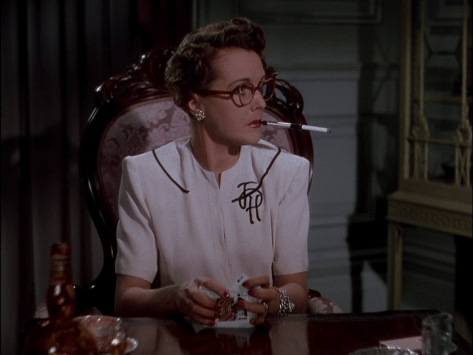
Mary Astor in Desert Fury (1947)  

MV5BYTM4ZjMxN2QtYmM3Yi00YWVjLWFiMTEtNTljMjFiYWJhZmU2XkEyXkFqcGdeQXVyNjc2OTM5MTU@._V1_

Burt Lancaster, Mary Astor and Lisbeth Scott in Desert Fury (1947)  

Before Helen Langhanke died of a heart ailment in January 1947, Astor said she sat in the hospital room with her mother, who was delirious and did not know her, and listened quietly as Helen told her all about terrible, selfish Lucile.

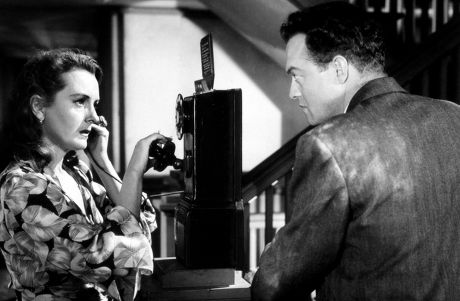
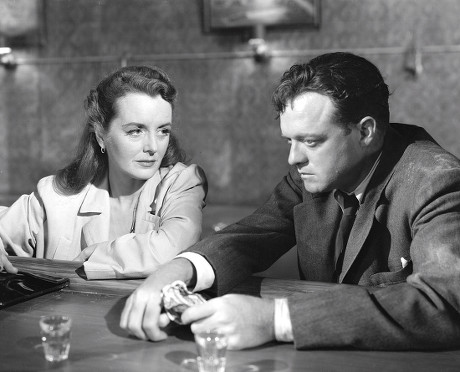
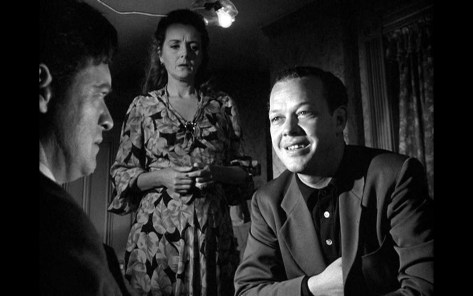
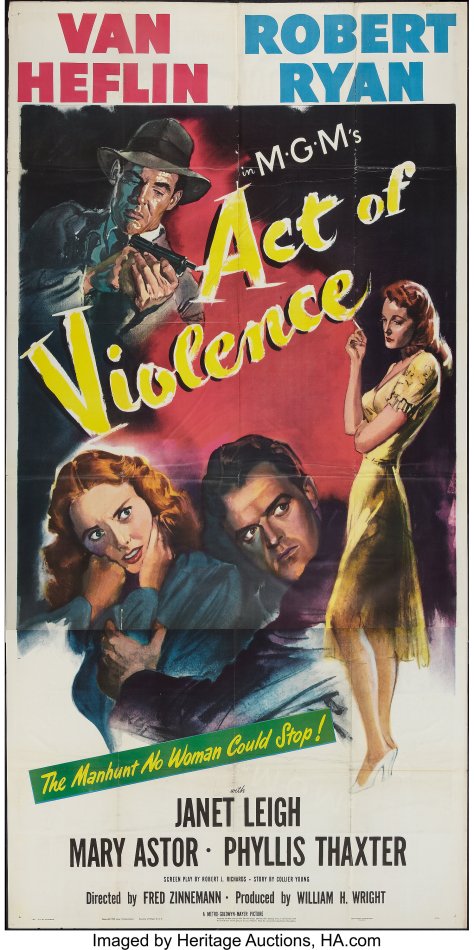
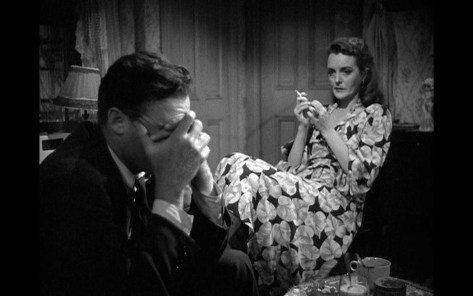
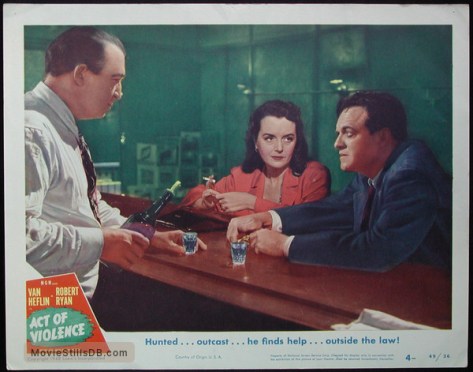
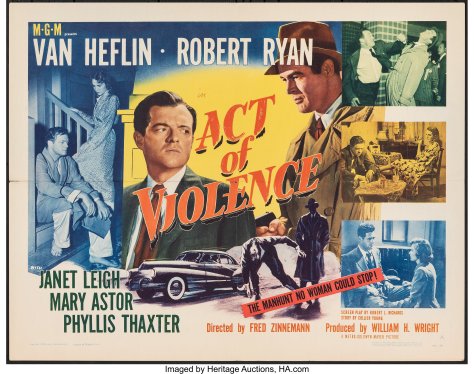
After her death, Astor said she spent countless hours copying her mother’s diary so she could read it and was surprised to learn how much she was hated. Back at MGM, Astor continued being cast in undistinguished, colorless mother roles. One exception was when she played a prostitute in the film noir Act of Violence (1948).
lf (26)

Act of Violence (1948)  Dir: Fred Zinnemann
MV5BMmI4OWRmOGQtNGIxNS00ZmRmLWIyZTYtMWUyYWI2Mjk5MTExXkEyXkFqcGdeQXVyMzk4OTI2MjM@._V1_

Van Heflin and Mary Astor in Act of Violence (1948) 
act-of-violence-lg

Act of Violence (1948)  Lobby Card

Act of Violence  - 1948
Editorial use only. No book cover usage. Mandatory Credit: Photo by Moviestore/Shutterstock (2389494a) ACT OF VIOLENCE (1948) Mary Astor, Van Heflin Act of Violence – 1948
Act Of Violence - 1948
Editorial use only. No book cover usage. Mandatory Credit: Photo by Mgm/Kobal/Shutterstock (5876856a) Mary Astor, Van Heflin Act Of Violence – 1948 Director: Fred Zinnemann MGM USA Scene Still Acte de violence

MV5BMGMxYjg5ODEtYTc5YS00MDg2LWJhMjQtNDkyM2E3MDIzYzY4XkEyXkFqcGdeQXVyMzk4OTI2MjM@._V1_

Mary Astor and Berry Kroeger in Act of Violence (1948) 
lf (25)

Act of Violence (1948)  Dir: Fred Zinnemann

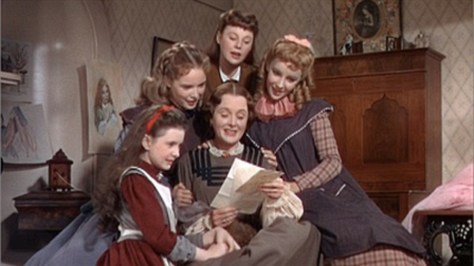
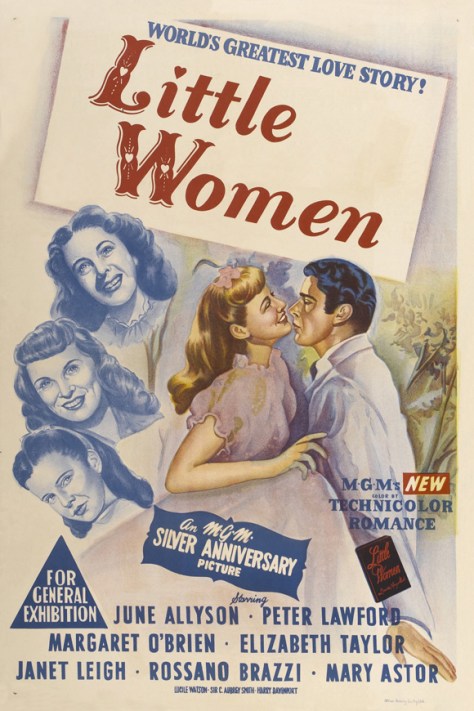
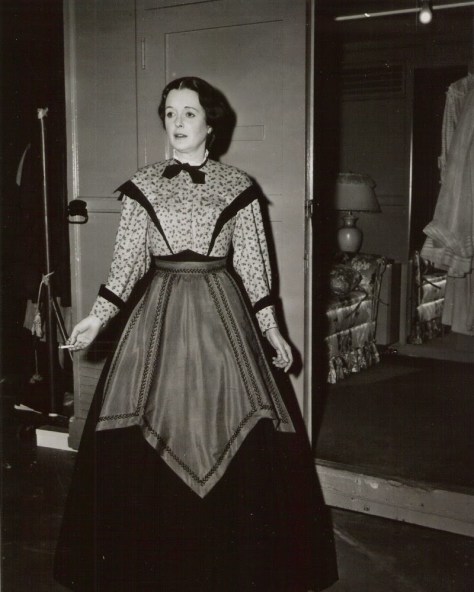
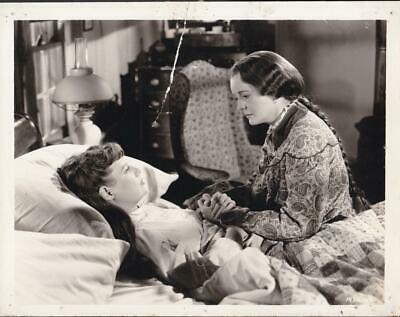
The last straw came when she was cast as Marmee March in Little Women (1949).

She later described her disappointment with her cast members and the shoot in her memoir My Story: An Autobiography: “The girls all giggled and chattered and made a game of every scene. Taylor was engaged, and in love, and talking on the telephone most of the time (which is fine normally, but not when the production clock is ticking away the company’s money). June Allyson chewed gum constantly and irritatingly, and Maggie O’Brien looked at me as though she were planning something very unpleasant.”
MV5BMzg3YjBkYTMtNzUyNy00Y2MwLWJhZTktNDRmMmRhOTMyMjhhL2ltYWdlL2ltYWdlXkEyXkFqcGdeQXVyMjUxODE0MDY@._V1_

Little Women (1949)  Dir: Mervyn LeRoy
MaryAstor Little Women 1949 Costume Test

Mary Astor in Little Women (1949)  

image-w1280 (27)

Margaret O’Brien, Janet Leigh, Mary Astor, June Alyson and Elisabeth Taylor in Little Women (1949)  
s-l400 (7)

June Alyson and Mary Astor in Little Women (1949) 
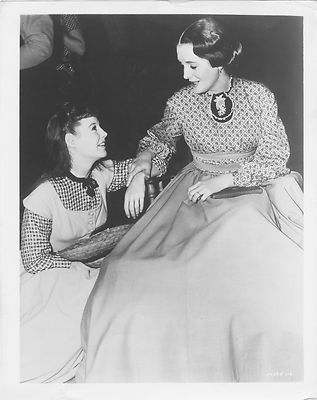
f5d3102606b11a6afe317f6ccae6a588

June Alyson and Mary Astor in Little Women (1949) 
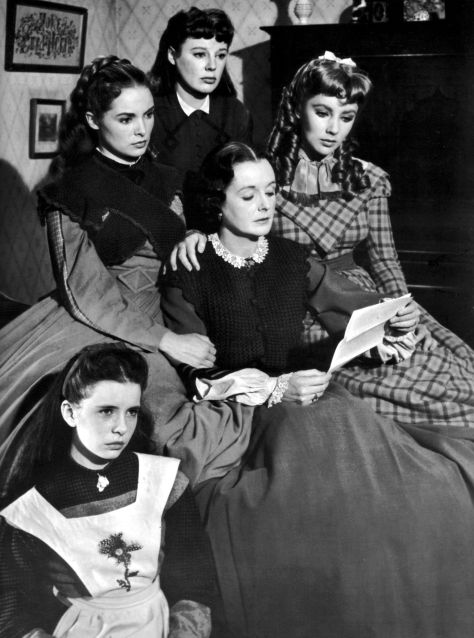
3ec2a9cb515dc58fccf924ed8b014fa0

Margaret O’Brien, Janet Leigh, Mary Astor, June Alyson and Elisabeth Taylor in Little Women (1949)  

Astor found no redemption in playing what she considered another humdrum mother and grew despondent. The studio wanted to renew her contract, promising better roles, but she declined the offer.

Middle years

At the same time, Astor’s drinking was growing troublesome. She admitted to alcoholism as far back as the 1930s, but it had never interfered with her work schedule or performance. She hit bottom in 1949 and went into a sanitarium for alcoholics.

In 1951, she made a frantic call to her doctor and said that she had taken too many sleeping pills. She was taken to a hospital and the police reported that she had attempted suicide, this being her third overdose in two years, and the story made headline news. She maintained it had been an accident.
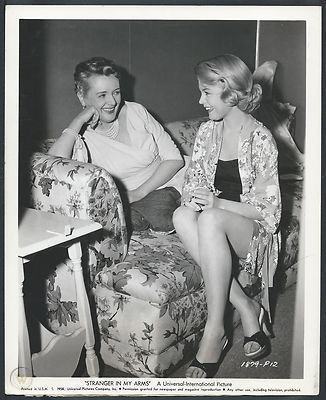
sandra-dee-mary-astor-original-1950s_1_3b5c792c49a36487060c56b082e7ef0d

Mary Astor and Sandra Dee in Stranger in My Arms (1959)

That same year, she joined Alcoholics Anonymous and converted to Roman Catholicism. She credited her recovery to a priest, Peter Ciklic, also a practicing psychologist, who encouraged her to write about her experiences as part of therapy. She also separated from her fourth husband, Thomas Wheelock (a stockbroker she married on Christmas Day 1945), but did not actually divorce him until 1955.

In 1952, she was cast in the leading role of the stage play The Time of the Cuckoo, which was later made into the movie Summertime (1955), and subsequently toured with it. After the tour, Astor lived in New York for four years and worked in the theater and on television.
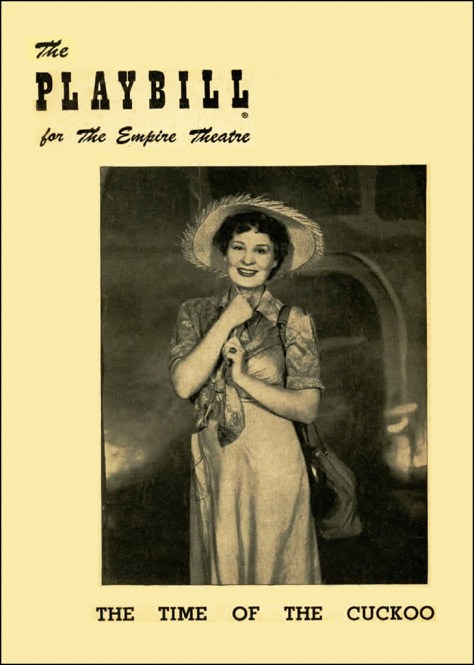
89131e014dffb16c2964454b3381a363-the-time-of-the-cuckoo-playbill-1952-12-web

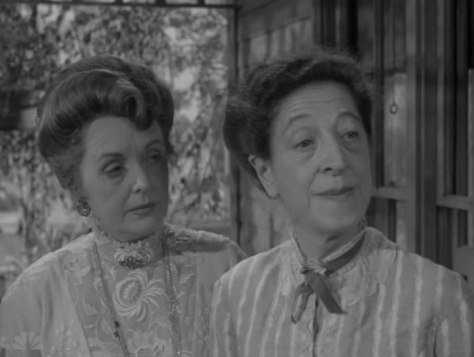
Her TV debut was in The Missing Years (1954) for Kraft Television Theatre. She acted frequently in TV during the ensuing years and appeared on many big shows of the time, including The United States Steel HourAlfred Hitchcock PresentsRawhideDr. KildareBurke’s Law, and Ben Casey.

MV5BZmZlYWMzZWUtMDRkYy00NzI1LTk0MjMtMTFjMWM1ZmI1YmYwXkEyXkFqcGdeQXVyODIzMzQ0ODQ@._V1_FMjpg_UX1000_

Mary Astor and Doro Merande in Alfred Hitchcock Presents – Episode: Mrs Herman and Mrs Fenimore (1958)
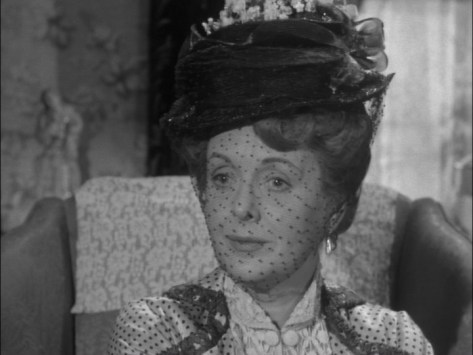
vlcsnap-2016-06-14-18h53m12s585

Mary Astor in Alfred Hitchcock Presents – Episode: Mrs Herman and Mrs Fenimore (1958)
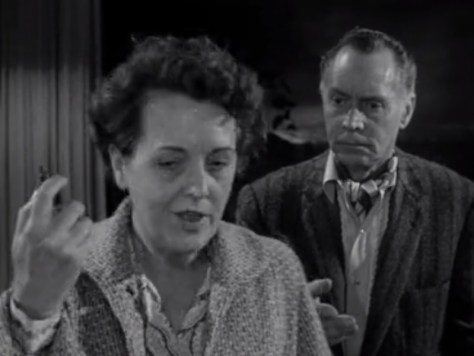
MV5BOThlMDYyNzAtN2JiNy00Y2Q1LTk3NTEtMGFmZDJmODBlZmFkXkEyXkFqcGdeQXVyMjc3MjgzOTU@._V1_

Mary Astor and Franchot Tone in Alfred Hitchcock Presents – Episode: The Impossible Dream (1959)
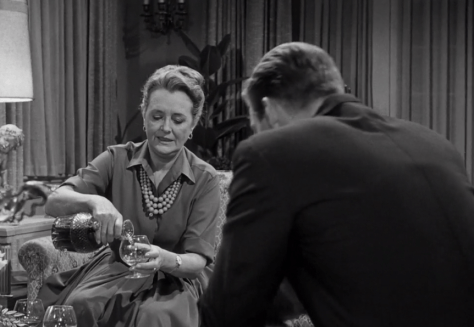
1_tFt6eLfXDdadAmiiMLElGw

Mary Astor in Dr Kildare “Operation Lazarus” (Season 1 Episode 33)
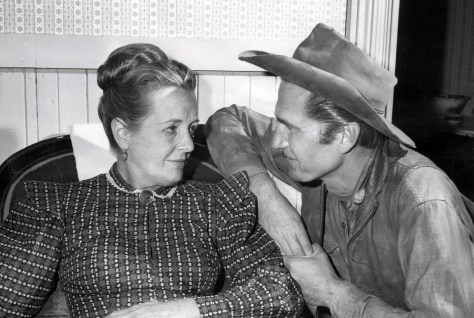
MV5BZDY5YTc5YjctMGE1Ni00ZWIzLThhYzYtZDk3NTY3YmRkM2ZmXkEyXkFqcGdeQXVyNDY1NzU5NjY@._V1_

Mary Astor in Rawhide – Episode: Incident Near the Promised Land (1961)

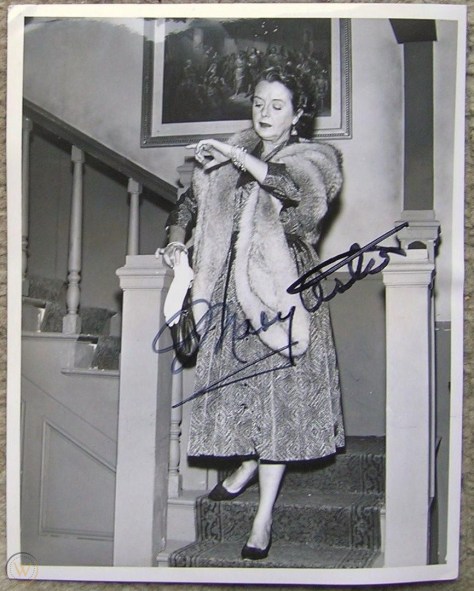
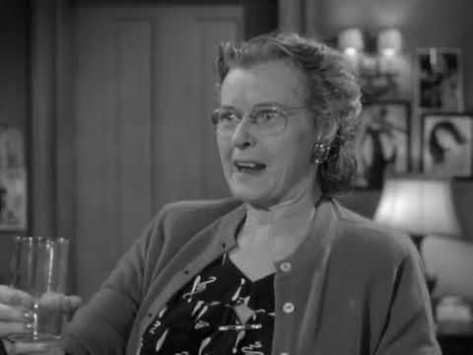
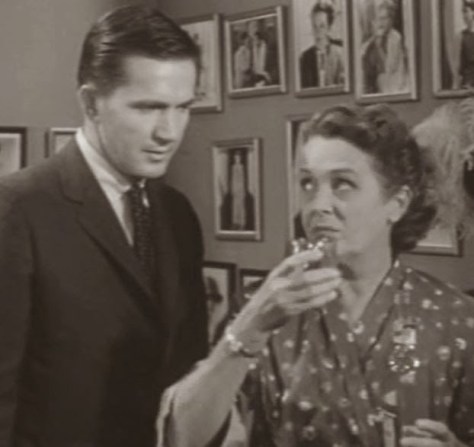
In 1954, she appeared in the episode “Fearful Hour” of the Gary Merrill NBC series Justice in the role of a desperately poor and aging film star who attempts suicide to avoid exposure as a thief. She also played an ex-film star on the Boris Karloff-hosted Thriller, in an episode titled “Rose’s Last Summer.”
mary-astor-thriller-episode-roses_1_91644215985375b4a57222ce3ca87f04

Mary Astor signed still from Thriler – Episode: Rose’s Last Summer (1960)
hqdefault (48)

Mary Astor in Thriler – Episode: Rose’s Last Summer (1960)
thrill.five.drinking

Mary Astor signed still from Thriler – Episode: Rose’s Last Summer (1960)

She starred on Broadway again in The Starcross Story (1954), another failure and returned to Southern California in 1956. She then went on a successful theatre tour of Don Juan in Hell directed by Agnes Moorehead and co-starring Ricardo Montalban.

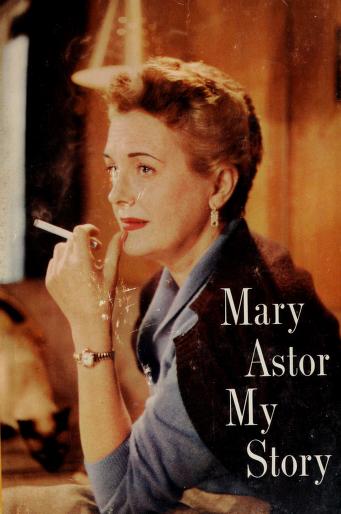
Astor’s memoirMy Story: An Autobiography, was published in 1959, becoming a sensation in its day and a bestseller. It was the result of Father Ciklic urging her to write. Though she spoke of her troubled personal life, her parents, her marriages, the scandals, her battle with alcoholism, and other areas of her life, she did not mention the movie industry or her career in detail.
mystoryautobiogr00asto_0001

Mary Astor autobiography – My Story: An Autobiography (1959)

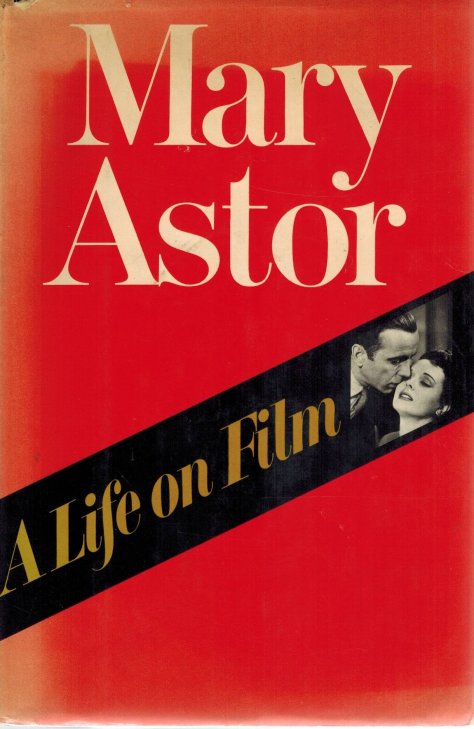
In 1971, a second book was published, A Life on Film, where she discussed her career. It too became a bestseller. Astor also tried her hand at fiction, writing the novels The Incredible Charley Carewe (1960), The Image of Kate (1962), which was published in 1964 in a German translation as Jahre und TageThe O’Conners (1964), Goodbye, Darling, be Happy (1965), and A Place Called Saturday (1968).
81jARtozmZL

Mary Astor – My Life on Film (1971)

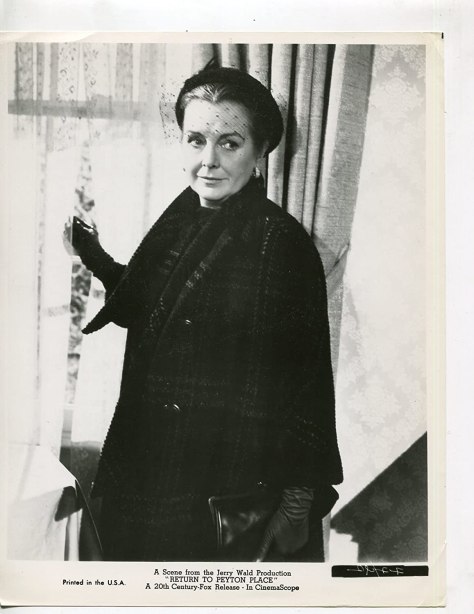
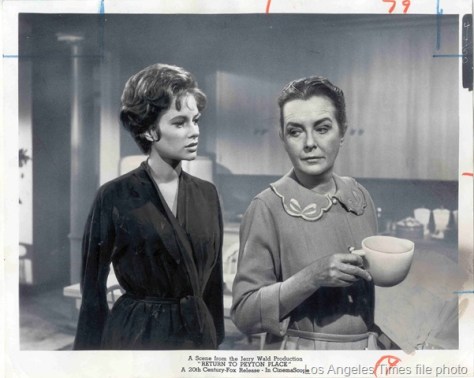
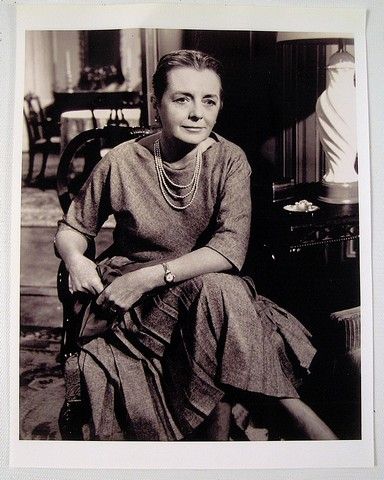
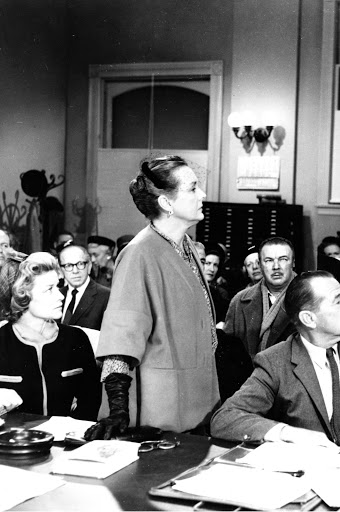
She appeared in several movies during this time, including A Stranger in My Arms (1959). She made a comeback in Return to Peyton Place (1961) playing Roberta Carter, the domineering mother who insists the “shocking” novel written by Allison Mackenzie should be banned from the school library, and received good reviews for her performance. According to film scholar Gavin Lambert, Astor invented memorable bits of business in her last scene of that film, where Roberta’s vindictive motives are exposed.
16373689_4

peyton-astor-in-court-unnamed

71u+TVtoG8L._AC_SL1500_

6a00d8341c630a53ef0133f5df237d970b

MV5BOTJiZTNhYzgtNWZhYy00NGRkLWFkNzEtZTU5NzVmYzVmOTQzXkEyXkFqcGdeQXVyMzk3NTUwOQ@@._V1_

MV5BYjNiZDRhNGUtZWE2MS00MGQ2LWI2MzEtYjQ4ZDNjZWJjYTdmL2ltYWdlL2ltYWdlXkEyXkFqcGdeQXVyMzk3NTUwOQ@@._V1_

Mary Astor in Return to Peyton Place (1961)

Final years and death

After a trip around the world in 1964, Astor was lured away from her Malibu, California home, where she was gardening and working on her third novel, to make what she decided would be her final film.

hush_hush_sweet_charlotte_1965_french_original_film_art_5000x

Hush, Hush Sweet Charlotte (1964)

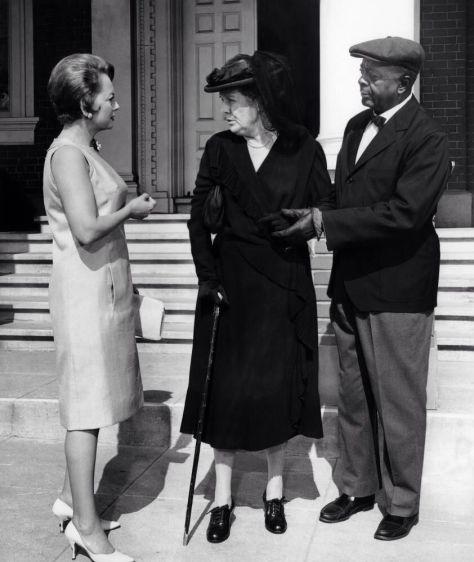
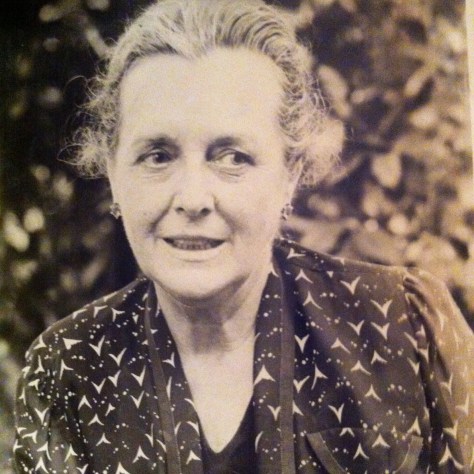
She was offered the small role as a key figure, Jewel Mayhew, in the murder mystery Hush… Hush, Sweet Charlotte, starring her friend Bette Davis. She filmed her final scene with Cecil Kellaway at Oak Alley Plantation in southern Louisiana. In A Life on Film, she described her character as “a little old lady, waiting to die.” Astor decided it would serve as her swan song in the movie business. After 109 movies in a career spanning 45 years, she turned in her Screen Actors Guild card and retired.
MV5BNTU2MGI0ZjYtN2RiYi00MGFkLTk0OTQtNTNmMjFiYmQzZDQ2XkEyXkFqcGdeQXVyNjgyNTk4NTY@._V1_

9dc15269922367bfe92dbcf93e595791

Olivia De Havilland, Mary Astor and William Walker in  Hush, Hush Sweet Charlotte (1964)

Astor later moved to Fountain Valley, California, where she lived near her son, Tono del Campo (from her third marriage to Mexican film editor Manuel del Campo), and his family, until 1971.

That same year, suffering from a chronic heart condition, she moved to a small cottage on the grounds of the Motion Picture & Television Country House, the industry’s retirement facility in Woodland Hills, California, where she had a private table when she chose to eat in the resident dining room.

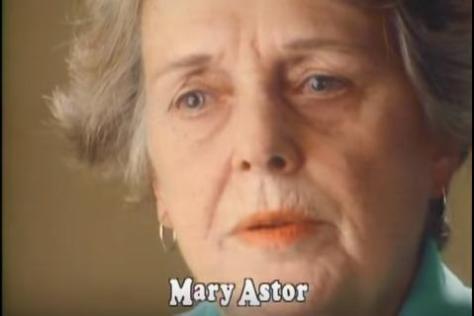
She appeared in the television documentary series Hollywood: A Celebration of the American Silent Film (1980), produced by Kevin Brownlow, in which she discussed her roles during the silent film period. After years of retirement she had been urged to appear in Brownlow’s documentary by a former sister-in-law Bessie Love who also appeared in the series.
MV5BMGQ5NzNlMDEtMGIyYS00ZmZkLTg5NjQtYjA2YjBlZjJhYmI4XkEyXkFqcGdeQXVyMTUyODMyMw@@._V1_

Astor died on September 25, 1987, at age 81, of respiratory failure due to pulmonary emphysema while in the hospital at the Motion Picture House complex.
MaryAstor

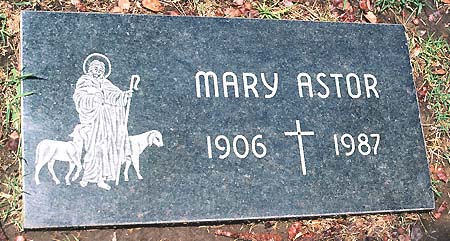
Grave of Mary Astor at Holy Cross Cemetery

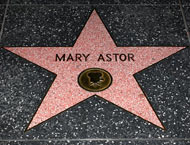
She is interred in Holy Cross Cemetery in Culver City, California. Astor has a star for motion pictures on the Hollywood Walk of Fame at 6701 Hollywood Boulevard.
mary_astor_motion_pictures

She has been quoted as saying, “There are five stages in the life of an actor: who’s Mary Astor? Get me Mary Astor. Get me a Mary Astor type. Get me a young Mary Astor. Who’s Mary Astor?” Several other actors, among them Jack Elam and Ricardo Montalban, have been quoted as saying this.

Radio appearances

Year Program Episode/source
1941 Gulf Screen Guild Theatre No Time for Comedy[17]

Bibliography

d38c18c10d138d51a0ad20d2ea61fc2b--mary-astor-antigua

References

  1. Jump up to:a b Thomas, Bob (September 26, 1987). “‘Maltese Falcon’ star Astor dies at 81”. Kansas, Salina. The Salina Journal. p. 8. Retrieved February 20, 2016 – via Newspapers.com. open access publication – free to read
  2. Jump up to:a b c d “Mary Astor Not Actress by Accident; Career Planned”. Montana, Butte. The Montana Standard. August 24, 1936. p. 5. Retrieved February 20, 2016 – via Newspapers.com. open access publication – free to read
  3. Jump up^ Lindsay Anderson “Mary Astor”, Sight and Sound, Autumn 1990, reprinted in Paul Ryan (ed) Never Apologise: The Collected Writings, 2004, London: Plexus, pp. 431–36, 431
  4. Jump up^ Distinguished Americans & Canadians of Portuguese Descent
  5. Jump up^ [1]
  6. Jump up to:a b c “Mary Astor Dies at 81 – A ‘Maltese Falcon’ Star”. Los Angeles Times. (September 26, 1987) Accessed on August 14, 2007.
  7. Jump up^ Mary Astor, 81, Is Dead; Star of ‘Maltese Falcon’
  8. Jump up to:a b Mary Astor Profile
  9. Jump up^ Trivia – Mary Astor scandal
  10. Jump up^ Mary Astor, “A Life on Film”, Dell Publishing 1967, New York pp. 125–127
  11. Jump up^ Sorel, Edward (September 14, 2016). “Inside the Trial of Actress Mary Astor, Old Hollywood’s Juiciest Sex ScandalVanity Fair, September 2016, retrieved December 6, 2016.
  12. Jump up^ Justice. The Classic TV Archive. Retrieved February 8, 2011.
  13. Jump up^ Brownlow, Kevin; Gill, David (1980). Hollywood: A Celebration of the American Silent Film. (video). Thames Video Production.
  14. Jump up^ Mary Astor at Find a Grave
  15. Jump up^ “Walk of Fame Stars, Mary Astor”walkoffame.com. Hollywood Chamber of Commerce. Archived from the original on April 3, 2016. Retrieved December 1,2016.
  16. Jump up^ Astor, Mary. A Life on FilmDell Publishing Company, 1969
  17. Jump up^ “Abel, Walter”radioGOLDINdex. Retrieved 26 May 2015.
  18. Jump up^ “Woody Allen Reviews a Graphic Tale of a Scandalous Starlet” by Woody AllenThe New York Times, December 22, 2016

Mary-Astor

External links

7e9cc57b290c0d85e71fc10f1972b0cc

top

bizarre-los-angeles-astor

mary_astor

Mary+Astor+1920s

Rolf_Armstrong_Mary_Astor-3

Powder and Smoke (1924) and its forgotten stars


Powder and Smoke (1924)

Dir: James Parrott

Cast: Charley Chase, Blanche Mehaffey, Jack Gavin, Eddie Baker, Leo Willis, Chet Brandenburg, Lyle Tayo

Prepared by Daniel B Miller

Powder and Smoke (1924) is a Charley Chase one reeler produced by Hal Roach for the popular Jimmy Jump series.

Charley Chase made 104 films for Hal Roach, many of which were directed and written by his brother James Parrott.

In addition to its highly entertaining content, this film is a true archive gem, full of long forgotten personalities, events, facts and trivia from the golden era of silent cinema.

In this delightful little comedy, Chase was joined by the usual suspects of many Hal Roach Studio comedies. Those were fronted by Blanche Mehaffey who played the daughter and his love interest, followed by Jack Gavin as the Sheriff, Eddie Baker in the role of the Real Estate Agent, and with Leo Willis as the Bandit Chief.

Mehaffey and Gavin are hardly remembered by the filmgoers of today, but their lives and careers are certainly of interest.

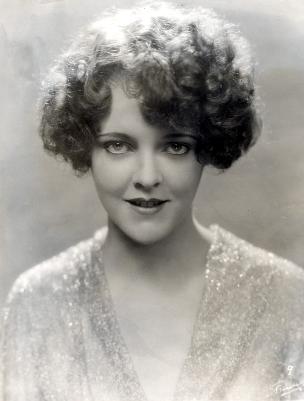
Blanche Mehaffey

In her early years, Blanche Mehaffey was considered a huge potential, and began her career as a dancer with the Ziegfeld Foillies,

Mehaffey’s presence was described as “truly mesmerising” by many theater lovers of the day who watched her on stage. Those dedicated fans enchanted her boss Florenz Ziegfeld with so many endless compliments, that in return she began describing Mehaffey as “the girl with the most beautiful eyes in the whole world”.

Such great publicity opened the whole world of possibilities for the young performer.

Blanche Mehaffey

In no time she spearheaded the Baby Stars of 1924, where she was joined by Clara Bow, Dorothy Mackaill and Hazel Keneer.

Her film debut was in Hal Roach Studios one reeler Fully Insured (1923) directed by George Jeske and featuring two other silent comedy heavyweights, Snub Pollard and James Finlayson.

The success of this film had led to her pairing with Charley Chase and later Glenn Tyron. With Chase she made a selection of films in addition to Power and Smoke. Those included April Fool (1924), Just a Minute (1924), At First Sight (1924), One of the Family (1924) and Position Wanted (1924).

Blanche Mehaffey in The Samaritan (1931)

Her films with Tyron included Meet the Missus (1924), The Wages of Tin (1925), Tell it to the Policeman (1925), and The Haunted Honeymoon (1925).

Her comedy talent flourished when playing the love interest for those two leading men. Her biggest success of this period was in Malcolm St. Clair’s comedy A Woman of the World (1925), where she joined Paula Negri and Charles Emmet Mack.

Her persona in Powder and Smoke gave a contemporary touch to the female characters of 1920s westerns, also paving the way to prominent parts in a number of bigger productions.

Some of those films performed badly at the box office, and in 1927 she decided to use the name of Joan Alden to detach from those pictures. In 1928 she married a sound engineer and producer Ralph M Like hoping to rescue her career.

Unlike many other silent films stars, she prepared for the transition to sound in advance. She took a decision to depart from the industry for a full year, in order to study languages and enhance her voice techniques.

It is likely that being absent at the height of her silent film career, coupled with some box office failures affected her relationships with the leading producers and directors.

Blanche Mehaffey

She returned to silver screen two years later, with her first sound feature, again a western called The Sunrise Trail (1931), where she joined Bob Steele and Jack Rube Clifford.

Her presence in westerns continued, mainly in B productions, that supported other major features. Those never brought back the early successes of her silent comedies.

Similar to other actors of the silent and early sound periods, she drifted into obscurity. Her last film was made in 1938 and she died in 1968.

Jack Gavin

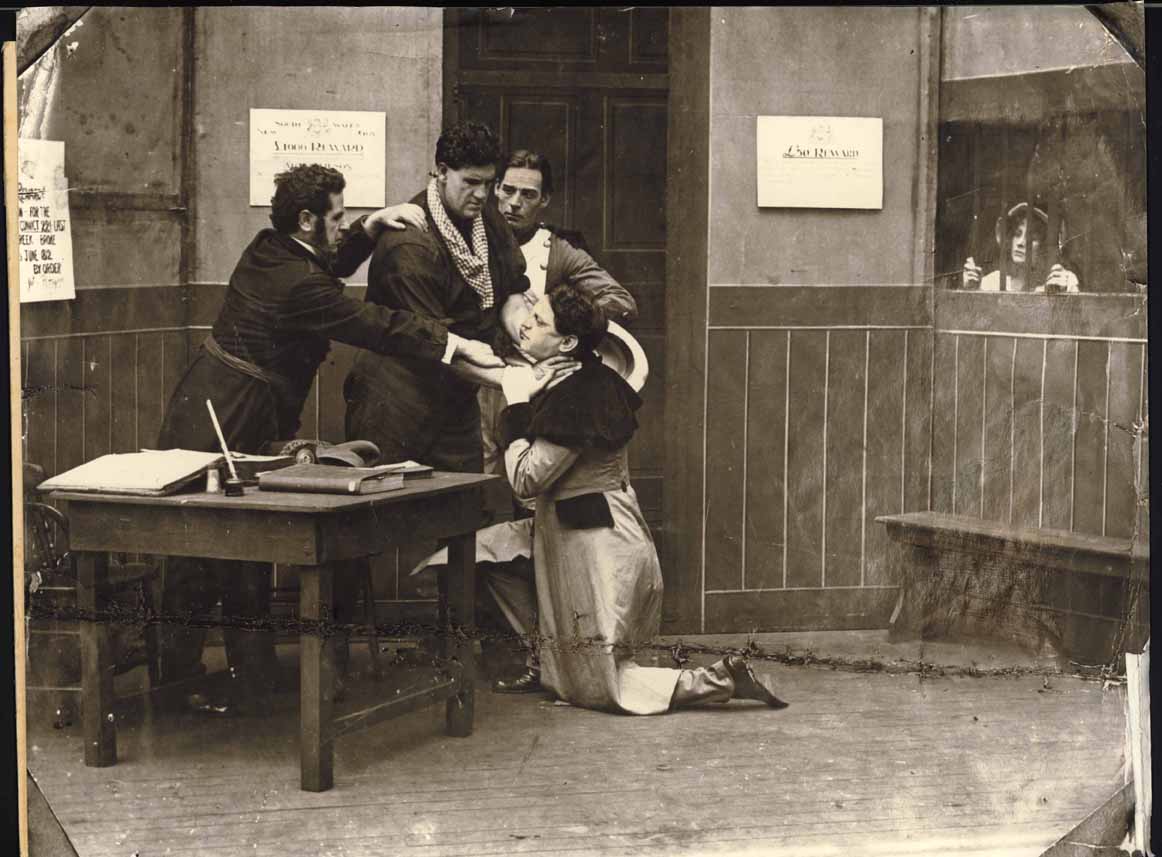
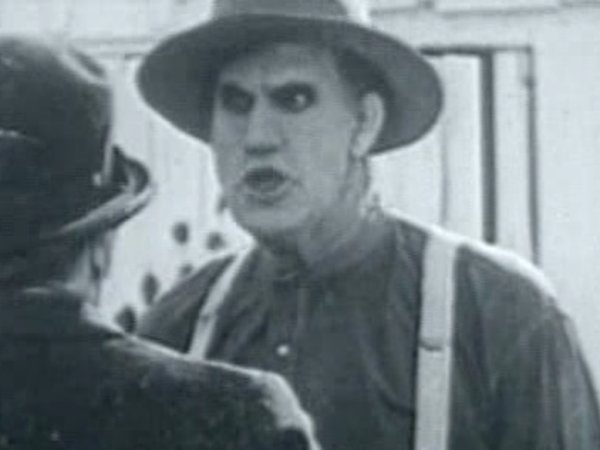
Another person of interest in Powder and Smoke was the film director and actor Jack Gavin (born John Francis Henry Gavin) who played the Sheriff.

Gavin came to Hollywood from Australia.

He was one of the early filmmakers of the 1910s, and a true pioneer of Australian cinema. Gavin’s versatility, coupled with the multitude of talents and highly developed entrepreneurial skills, enabled his early rise to prominence.

Jack Gavin in His Convict Bride (1918)

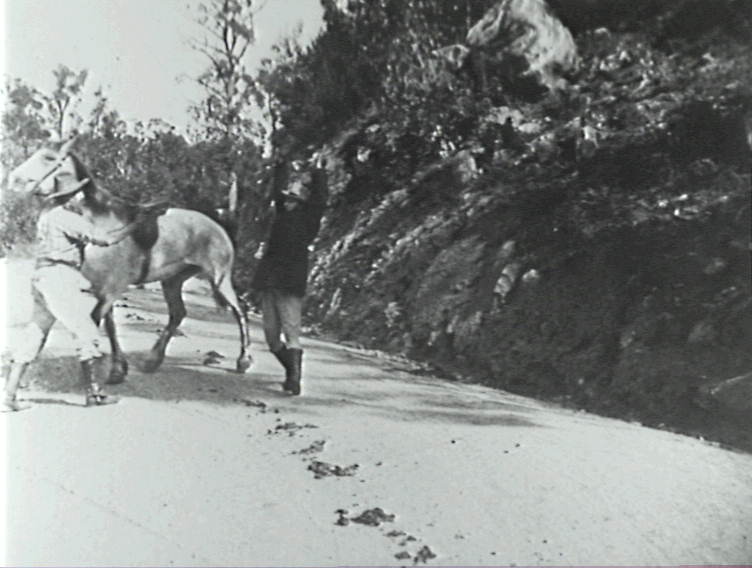
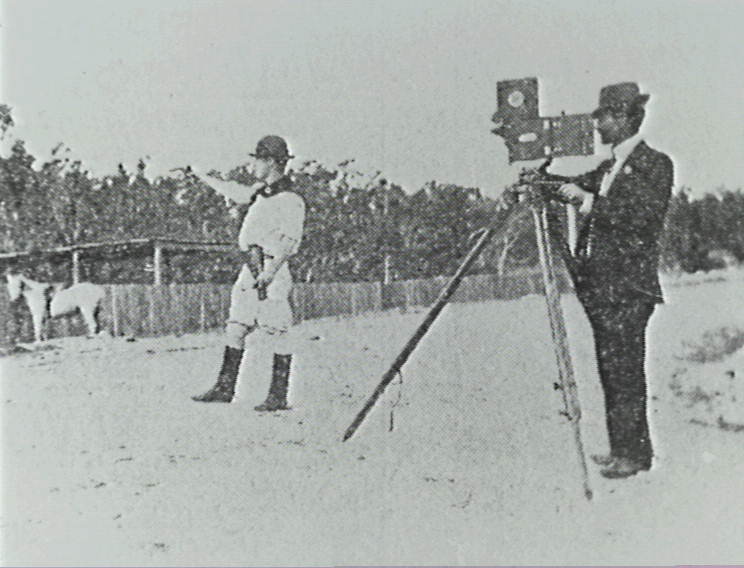
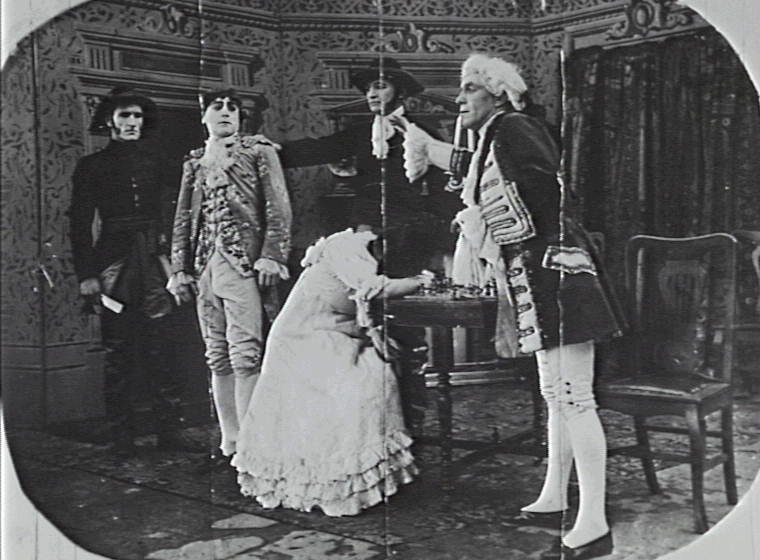
He is remembered for making films in Australia about bushrangers such as Thunderbolt (1910), Moonlite (1910), Ben Hall and His Gang (1911) and Frank Gardiner, the King of the Road (1911).

He was known by the nickname “Jack” and worked in collaboration with his wife Agnes who wrote many of his films. Most of those have not survived.

Everyones Magazine remarked in 1920: “although Gavin was prolific his later surviving work shows that his entrepreneurial talent outweighed any he might have had as director.”

He displayed a variety of talents and was never afraid to take up any role offered, if it guaranteed success or career enhancement. His life was eventful and highly productive but also full of difficult challenges.

Jack Gavin in Thunderbolt (1910)

He was accredited with Australia’s first animated short, an advertising film which featured a koala taking cough syrup.

Gavin was born in Sydney and described himself as busy since his early childhood, claiming that he worked for the circus company already at age ten.

He moved to the country and worked as cattle drover, being involved in a record cattle drive from Camooweal to Adelaide. He served for a time in the Sydney Lancers as the captain of a squadron. During his service he became interested in acting and received an offer to join the touring company of Bland Holt.

He stayed with them for a number of seasons, then travelled to the USA where he worked with Barnum and Bailey’s Circus, and Buffalo Bill’s Wild West Show. He married Agnes in 1898.

Gavin returned to Australia and organised his own Wild West Show which was successful at the Melbourne Cyclorama, although plagued by a number of legal troubles. Gavin eventually had a company of 150 before moving into filmmaking. In 1908 he started managing theatres which he did for the next few years, displaying versatility with entrepreneurial knowledge and skill.

His debut feature film was about Thunderbolt in 1910, produced by H A Forsyth, and its success launched his career.

Jack Gavin filming Moonlite (1910)

He followed this up with Moonlite  in the same year. He directed and starred in both films which was well noted. By February 1911 The Newsletter: an Australian Paper for Australian People described:”more film has been used over Jack Gavin than over any other Australian biograph actor.” They described him as “the beauteous bushranger”.

Overall success of Gavin’s bushranging films was attributed to two main factors: the quality of horsemanship in them, and the fact they were normally shot on the actual locations where the events occurred.

General Gossip: The Referee stated in 1911 that “The pictures already turned out by Mr. Gavin demonstrates that in biographic art Australian producers are in no way behind their European and American brothers. Clearness in detail and execution, with the cleverly-constructed stories by Agnes Gavin enable Mr. Gavin to offer attractive films.”

Gavin’s films were also often accompanied by popular lecturer Charles Woods, whose tales would delight the audiences country wide.

Jack Gavin in He Forgot to Remember (1926)

His first two movies were made for H.A. Forsyth at Southern Cross Motion Pictures but he and Forsyth had a falling out and Gavin went his separate way, publicly announcing the fact in January 1911.

In July 1911 he set up his own company, the Gavin Photo Play Company, based out of Waverley.

He was involved in the formation of the Australian Photo-Play Company, but then established his own production company in October 1911. When bushranging films were banned in Australia in 1912, he turned to dramatising other true characters, such as Edith Cavell and Charles Fryatt.

In 1912 Gavin was arrested for owing money to a business associate though he was later released.

In January 1917 he took out a lease on a studio at North Sydney and announced plans for make four feature films over a year, starting with The Murder of Captain Fryatt. He also started up a film school and spoke of offers from America.

As making movies in Australia became increasingly difficult for him, Gavin moved to Hollywood, where he lived for eight years.

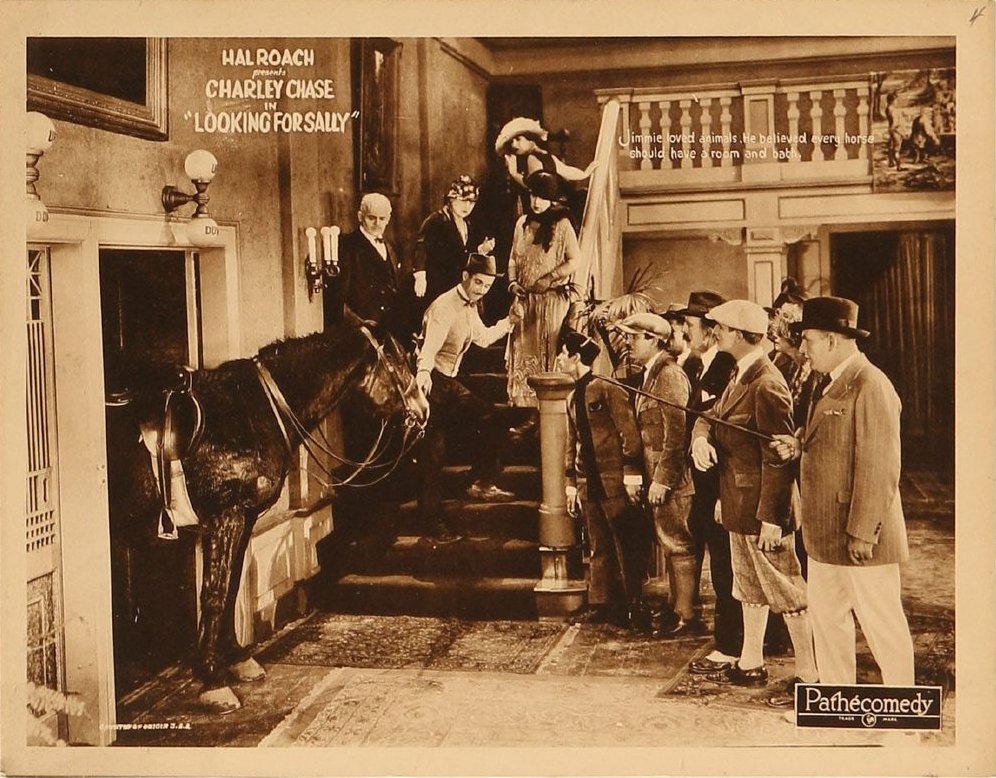
Jack Gavin in Looking for Sally (1925)

He told reporters from The Film Trade: Maitland Weekly Mercury NSW in 1927, that he appeared in over 300 films. Claimed he was a good friend of Lon Chaney, Rudolph Valentino and Lon Chaney.

In Hollywood he also worked with harold Lloyd and Snub Pollard.

Gavin always stated that he was particularly pleased with his public efforts to popularise the drinking of tea in Hollywood.

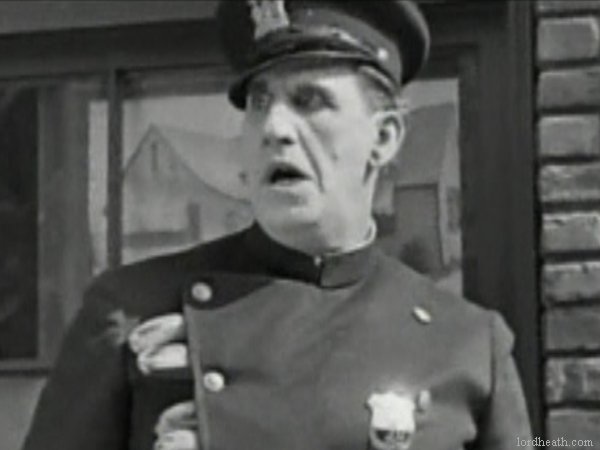
Jack Gavin in Official Officers (1925)

He returned to Australia in February 1922 to make several outback films, including a serial based on notorious criminal Ned Kelly. He also set up a new company in Brisbane, but faced serious censorship problems and could not raise enough capital for what was to be his major project.

Disappointed, he went back to Hollywood in May 1923, where he faced further challenges with casting and overall working conditions, then returned to Australia in 1925.

As a great supporter of the domestic production and the Australian cinema overall, he gave evidence at the 1928 Royal Commission on the Moving Picture Industry in Australia.

He passionately argued for a regular and easily verifiable quota for Australian films.

Agnes Gavin ( formerly Wangnheim, Kurtz ) in The Assigned Servant (1911) directed by her husband Jack Gavin

His contemporaries described Gavin as “a big man with a generous and naive personality… more enthusiasm and stubborn persistence than talent.”

Towards the end of his life he lived in a flat in Neutral Bay and suffered from rheumatism.

He died in 1938 survived by his wife Agnes and their daughters.

His personality, highly cinematic presence in so many one and two reelers as well as versatility, drive us to futher research and strongly stimulate further learning about his contemporaries from the 1920s.

Eddie Baker

Eddie Baker, who played the Real Estate Agent, is another actor and director from the golden age of silent cinema. He made more than 300 films.

Eddie Baker

Baker played supporting roles in many silent comedies with Gale Henry, Snub Pollard, Jobyna Ralston, James Parrott, Stan Laurel, Katherine Grant, Charlie Chase, Harry Langdon, Bobby Vernon, Bill Dooley and Jimmie Adams. He was also one of the original Keystone Cops.

Sadly he is only remembered for his presence in Laurel and Hardy films, and for his uncredited role as a boxing referee in Charles Chaplin’s City Lights (1931).

Eddie Baker in Get Busy (1924)

He represented those early cinema actors who subscribed to the Hollywood assembly line of mass production, men and women who would embrace any opportunity offered.

Baker would play any given role from cafe owner, laundry worker, german agent, stable hand, cop, prospector, boss, to detective, train official and plantation owner.

His talent for slapstick and situational comedy thrived when in some of the films he joined the biggest stars of that period.

With Stan Laurel he excelled in Oranges and Lemons (1923), A Man About Town (1923), Short Orders (1923) Gas and Air (1923) and Smithy (1924). With Charley Chase in addition to Powder and Smoke he was in Hard Knocks (1924), and Publicity Pays (1924). With Harry Langdon he was in Sea Squawk (1925), Tied for Life (1933), Knight Duty (1933) and Tired Feet (1933).

Eddie Baker in A Man About Town (1923)

With the onset of sound in pictures, he was demoted to minor, episodic roles for which he was rarely credited. Baker died in 1968 from emphysema.

Leo Willis

Leo Willis was also a veteran of early silent years, whose career began in films of Thomas Ince with William S Hart.

Leo Willis

Similar to Edie Baker he played tough characters on either side of the law and a selection of comic villains in films with Chase, Harold Lloyd and Laurel and Hardy.

He was a Hal Roach Studios regular and is best remembered for The Bulls Eye (1917), The Rent Collector (1921), Timber Queen ,(1922), Wild Bill Hickok (1923), Isn’t Life Terrible (1925), and The Kid Brother (1927).

Leo Willis in Sittin’Pretty (1924)

Similar to Baker, in sound pictures he was given insignificant parts and worked as an extra. He died in 1952.

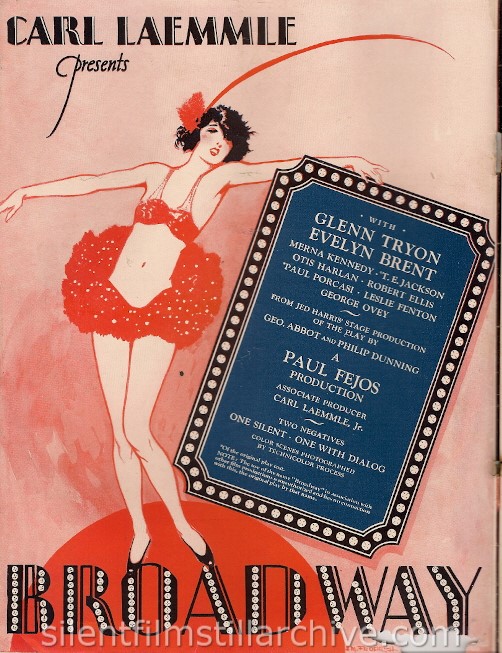
Broadway (1929)


Pre Code Logo 1

Pre Code Hollywood Season: FD Cinematheque

Broadway (1929)

Broadway 4

Director: Paul Fejos

Cast: Glenn Tryon, Evelyn Brent, Merna Kennedy, Thomas E Jackson, Robert Ellis, Otis Harlan, Paul Porcasi, Marion Lord, Fritz Field, Leslie Fenton, Arthur Housman

104 min


Broadway 3

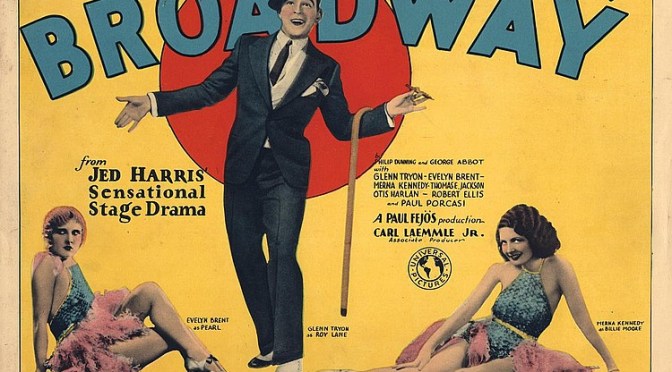
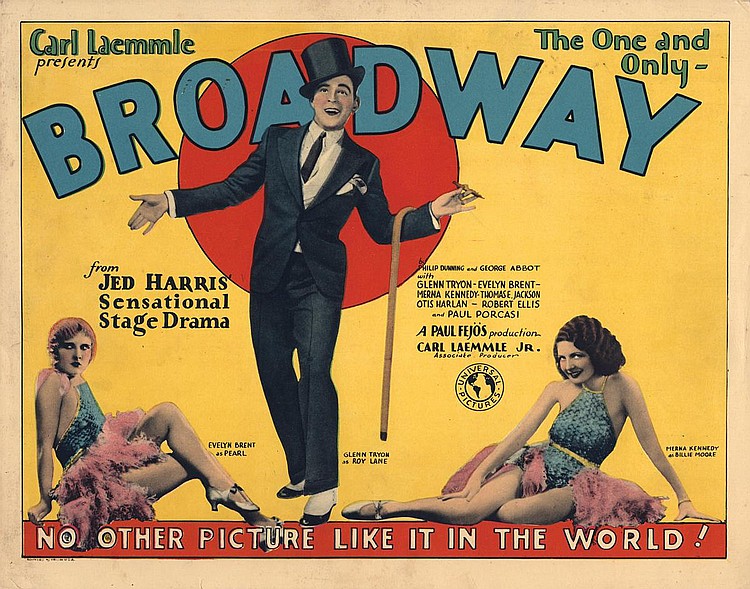
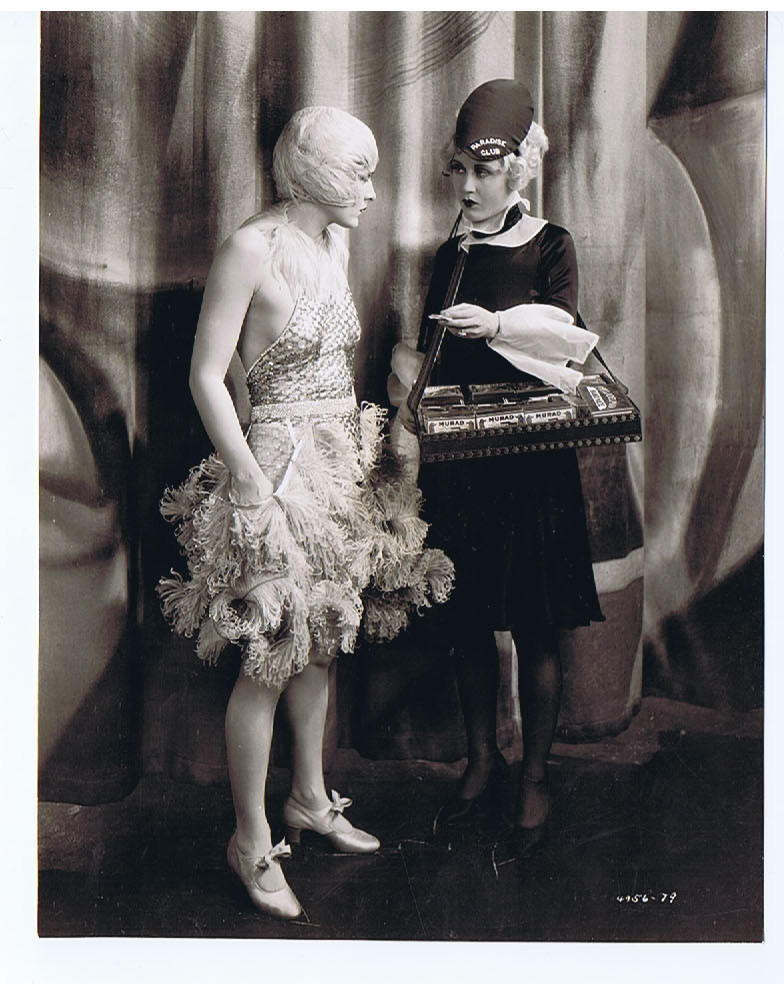
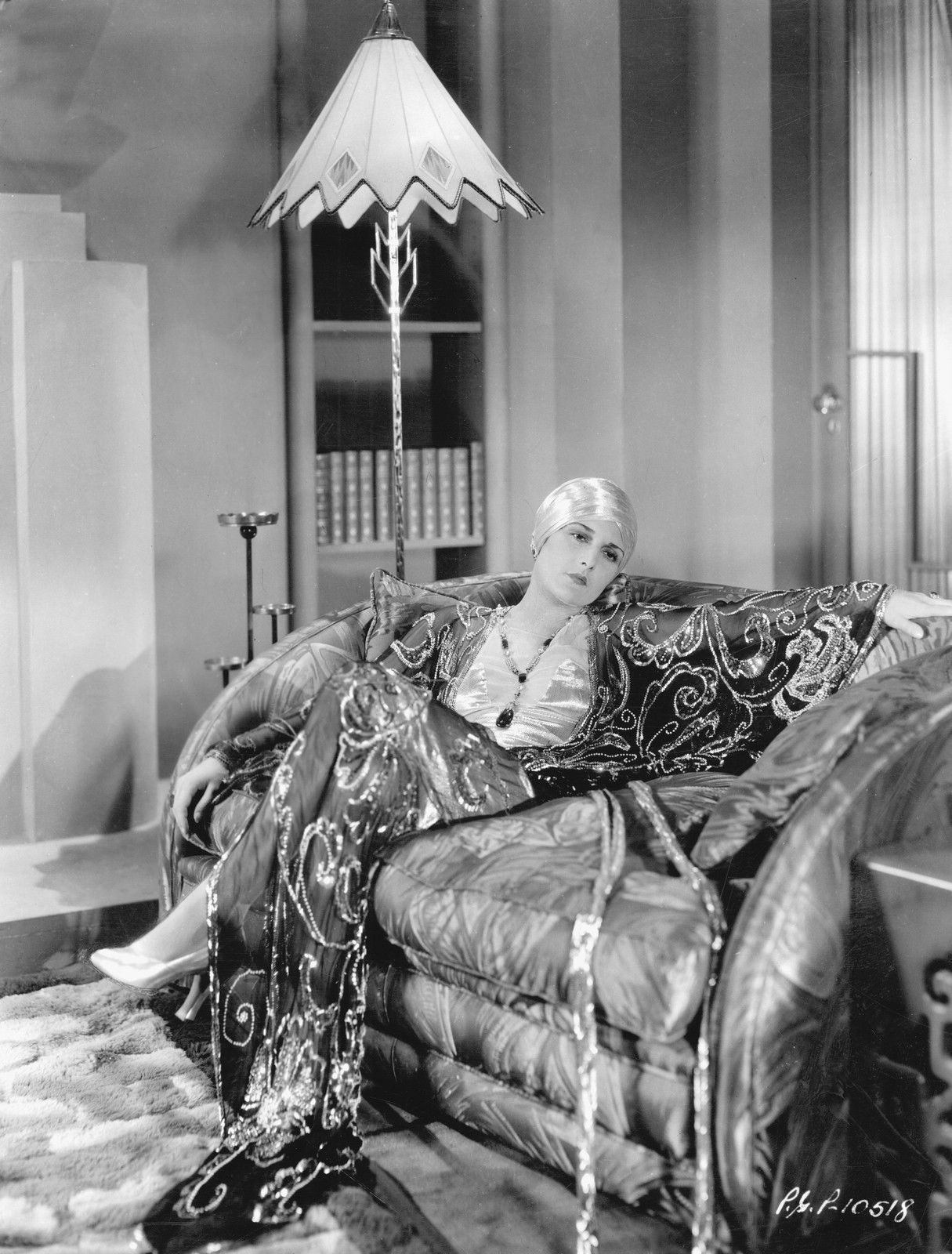
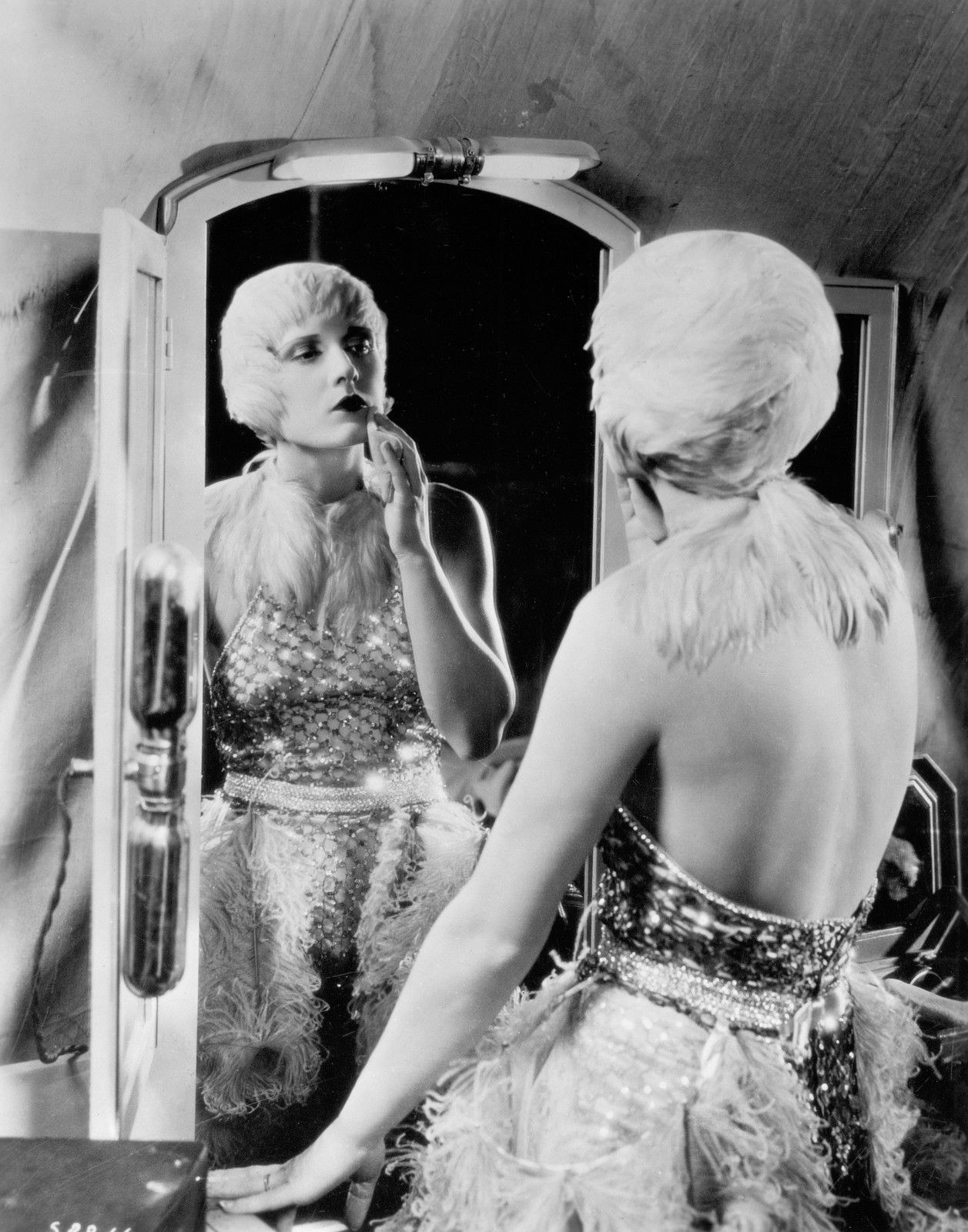
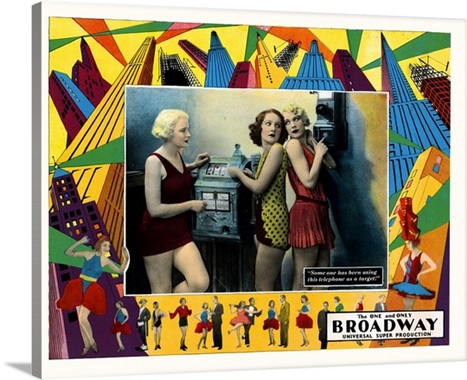
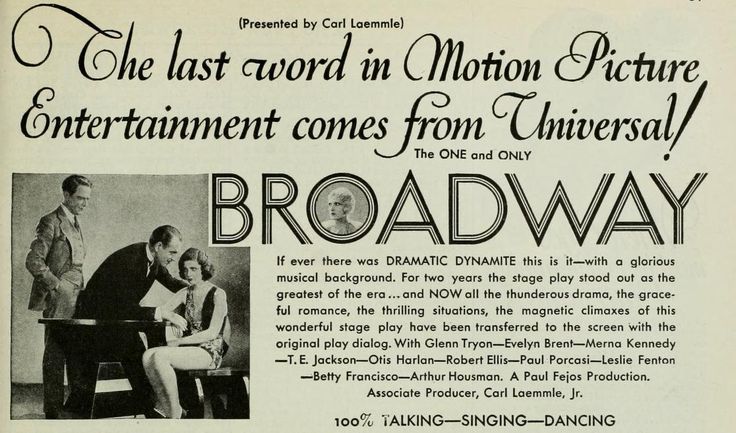
Broadway is a 1929 film directed by Paul Fejos from the play of the same name by George Abbott and Philip Dunning. It stars Glenn TryonEvelyn BrentPaul PorcasiRobert EllisMerna Kennedy and Thomas E. Jackson.[1]

This was Universal’s first talking picture with Technicolor sequences. The film was released by the Criterion Collection on Blu-ray and DVD with Paul Fejo’s Lonesome on August 2012.

Plot

Roy Lane and Billie Moore, entertainers at the Paradise Nightclub, are in love and are rehearsing an act together. Late to work one evening, Billie is saved from dismissal by Nick Verdis, the club proprietor, through the intervention of Steve Crandall, a bootlegger, who desires a liaison with the girl.

Broadway 5

“Scar” Edwards, robbed of a truckload of contraband liquor by Steve’s gang, arrives at the club for a showdown with Steve and is shot in the back. Steve gives Billie a bracelet to forget that she has seen him helping a “drunk” from the club. Though Roy is arrested by Dan McCorn, he is later released on Billie’s testimony.

Nick is murdered by Steve. Billie witnesses the killing, but keeps quiet about the dirty business until she finds out Steve’s next target is Roy. Billie is determined to tell her story to the police before Roy winds up dead, but Steve isn’t about to let that happen and kidnaps her. Steve, in his car, is fired at from a taxi, and overheard by Pearl, he confesses to killing Edwards. Pearl confronts Steve in Nick’s office and kills him; and McCorn, finding Steve’s body, insists that he committed suicide, exonerating Pearl and leaving Roy and Billie to the success of their act.

Broadway 6

Cast

Broadway 7

Production

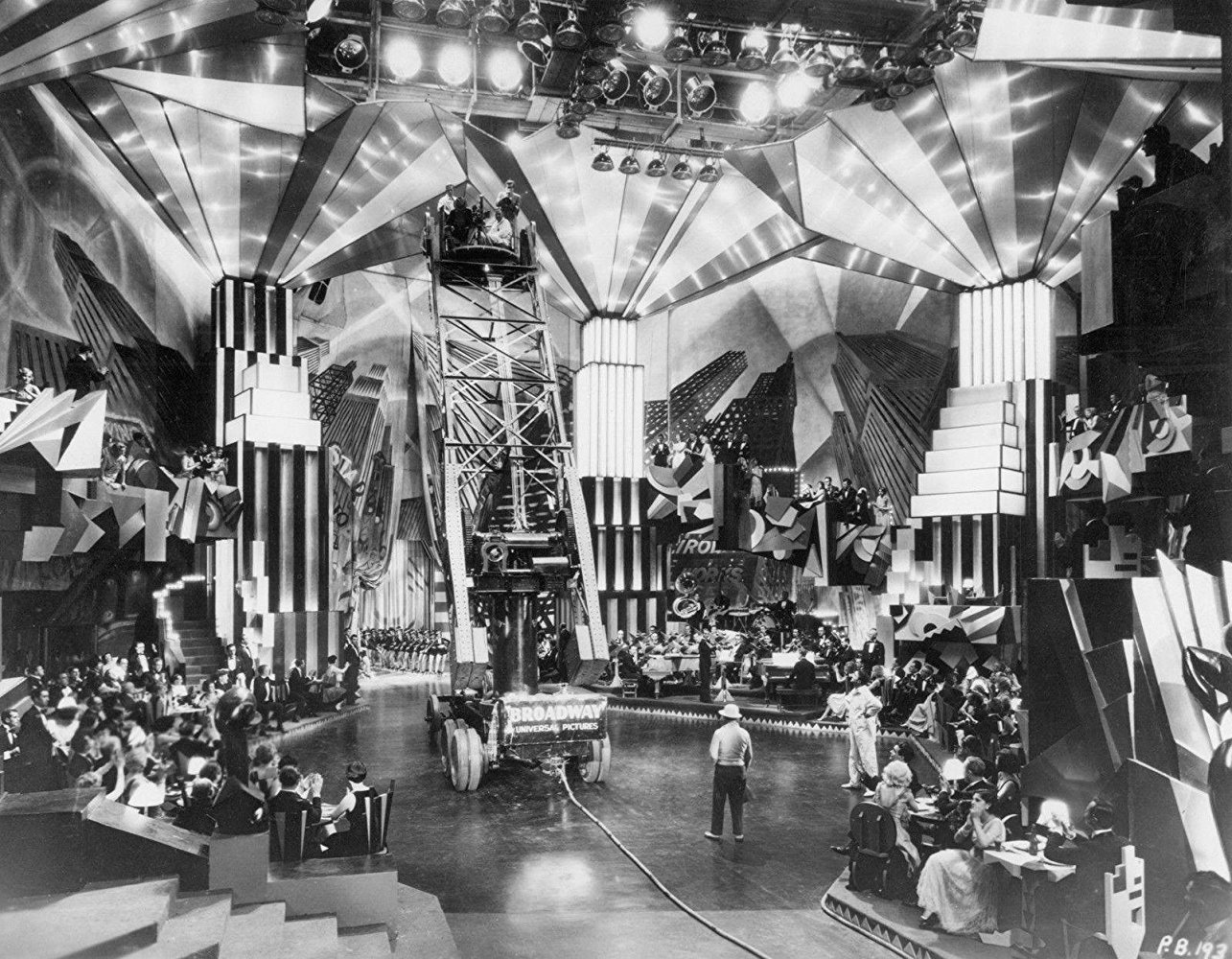
Director Fejos designed the camera crane specifically for use on this movie, allowing unusually fluid movement and access to nearly every conceivable angle. It could travel at 600 feet per minute and enlivened the visual style of this film and others that followed.

Broadway 8

Preservation status

Both the silent version and the talking version of Broadway are extant, but the surviving talking version is incomplete. The color sequence at the end survives in color and in sound. In 2013, Broadway was restored by The Criterion Collection and released on DVD and Blu-ray.

Broadway 11

See also

References[edit]

  1. Jump up to:a b BroadwayCatalog of Feature Films. American Film Institute. Retrieved 2015-11-24.

Broadway 12

Broadway 10


Broadway 9

Broadway 13

Film Collectors Corner

Watch Broadway Now – You Tube Instant Video


Blu Ray

Not released on Blu Ray


DVD

Not released on DVD


Broken Locket, The (1909)


Mary Pickford 1

Mary Pickford Season: FD Cinematheque

The Broken Locket (1909)

Director: D W Griffith

Cast: Mary Pickford, Frank Powell, Kate Bruce, Robert Harron, Dell Henderson, Arthur V Johnson, James Kirkwood, Marion Leonard, Owen Moore, Lottie Pickford, Mack Sennett

11 min

DW Griffith 2

 D W Griffith

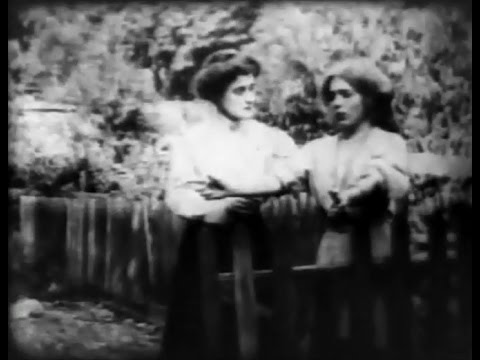
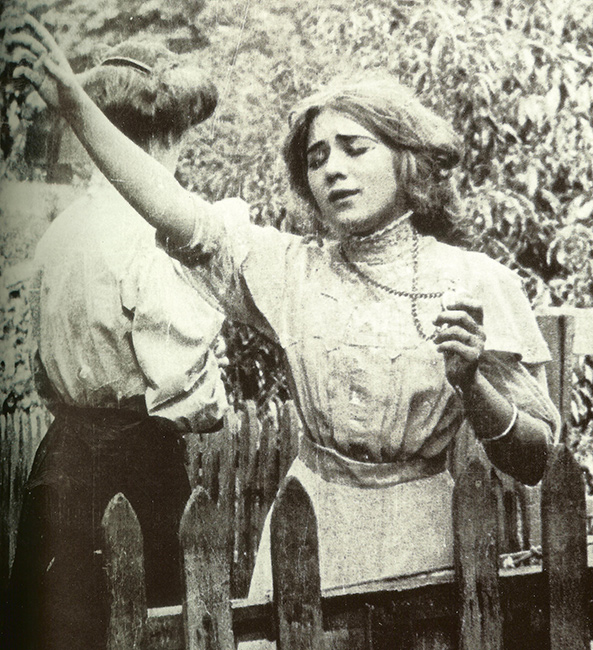
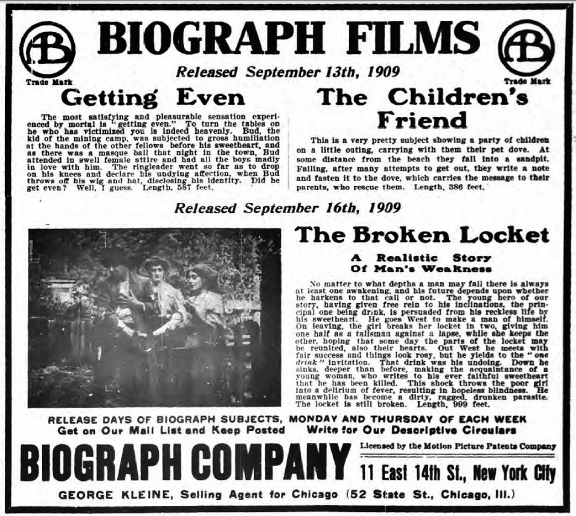
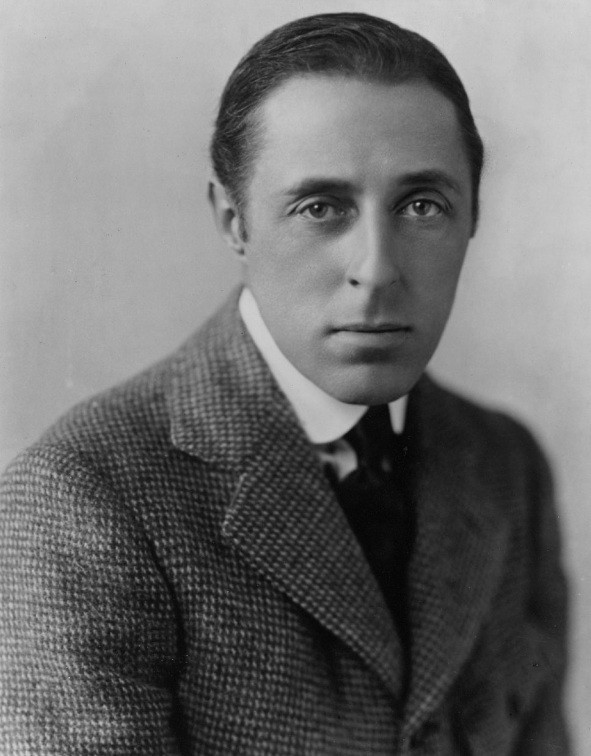
The Broken Locket is a short silent film written and directed by David W. Griffith in 1909. Produced and distributed by the Biograph Company , the film was released September 16, 1909.

Broken Locket The 4

Plot 

Broken Locket The 3

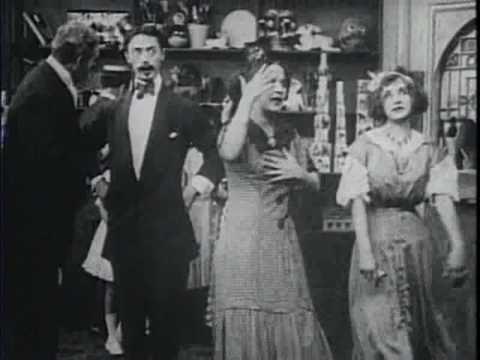
George Peabody has a drinking habit. Ruth, his friend from childhood loves him, brings him back to the right path and makes him abandon the bad companions who contributed to his downfall. George decides to mend the tatters of his life. Sets out for the West; and before leaving, greets his beloved Ruth, then realising that he truly loved her. She, then, as a token of love, gives him one half of her precious medallion. He will bring together the two pieces when he comes back to her.

In the West, George follows a new life, achieving success in his work. But, one day, ends up succumbing to the desire for a nightcap. This will be the beginning of his end. He falls into the arms of a Mexican girl who pretends to love him, and then his descent becomes unstoppable. His mistress, to completely remove the memory of Ruth, writes a letter in which she says that George is dead.

Without a penny, now reduced to a filthy, tattered exisitence, George returns. One day in front of the girl who still loves him and who is still waiting to reassemble their medallion.

She, who is now blind, cannot see it. George ashamed of everything he did, escapes from her. The medallion will remain broken forever.

Production 

Broken Locket The 2

The film was produced by the Biograph Company and was shot in Edgewater, New Jersey.

Distribution 

Distributed by the Biograph Company, the film  – was released in US cinemas on September 13, 1909. In the projections, was programmed with the split reel system, merged into a single coil with another short film produced by the Biograph and directed by Griffith,

It was screened with another short film produced by the Biograph and directed by Griffith, The Children’s Friend [1] .

In August 2006, the Grapevine has included this film in an anthology on DVD titled DW Griffith, Director, Volume 4 (1909) , containing eleven Griffith films  [2] .

Notes 

See also 

Broken Locket The 1


Little Darling, The (1909)


Mary Pickford 1

Mary Pickford Season: FD Cinematheque

The Little Darling (1909)

Director: D W Griffith

Cast: Mary Pickford, Charles Avery, Robert Harron, Arthur V Johnson, James Kirkwood, Owen Moore, Lottie Pickford, Mack Sennett, Billy Quirk, Anthony O’Sullivan

3 min

DW Griffith 2

D W Griffith

Little Darling The 2

The Little Darling is a 1909 short film directed by D. W. Griffith. Released in split-reel for with Griffith’s The Sealed Room.[1]

Preserved from a paper print.

Cast

Little Darling The 1

References

External links

Little Darling The 3

Renunciation, The (1909)


Mary Pickford 1

Mary Pickford Season: FD Cinematheque

The Renunciation (1909)

Director: D W Griffith

Cast: Mary Pickford, Anthony O’Sullivan, James Kirkwood, Harry Solter, Billy Quirk, Edwin August, Arthur V Johnson, Wilfred Lucas

11 min

DW Griffith 2

D W Griffith

Renunciation The 2

The Renunciation is a 1909 silent short film directed by D. W. Griffith and st

arring Mary Pickford. It was produced and distributed by the Biograph Company.[1][2]

Cast

Renunciation The 4

other cast

Renunciation The 1

References

Daddy-Long-Legs (1919)


Mary Pickford 1

Mary Pickford Season: FD Cinematheque

Daddy-Long-Legs (1919)

Director: Marshall Neilan

Cast: Mary Pickford, Milla Davenport, Percy Haswell, Fay Lemport, Percy Haswell, Fay Lemport, Mahlon Hamilton, Lillian Langdon, Marshall Neilan, True Boardman, Joan Marsh

Marshall Neilan 1

Marshall Neilan

Daddy Long Legs 2

Daddy Long Legs 6

Daddy Long Legs 10

Daddy Long Legs 13

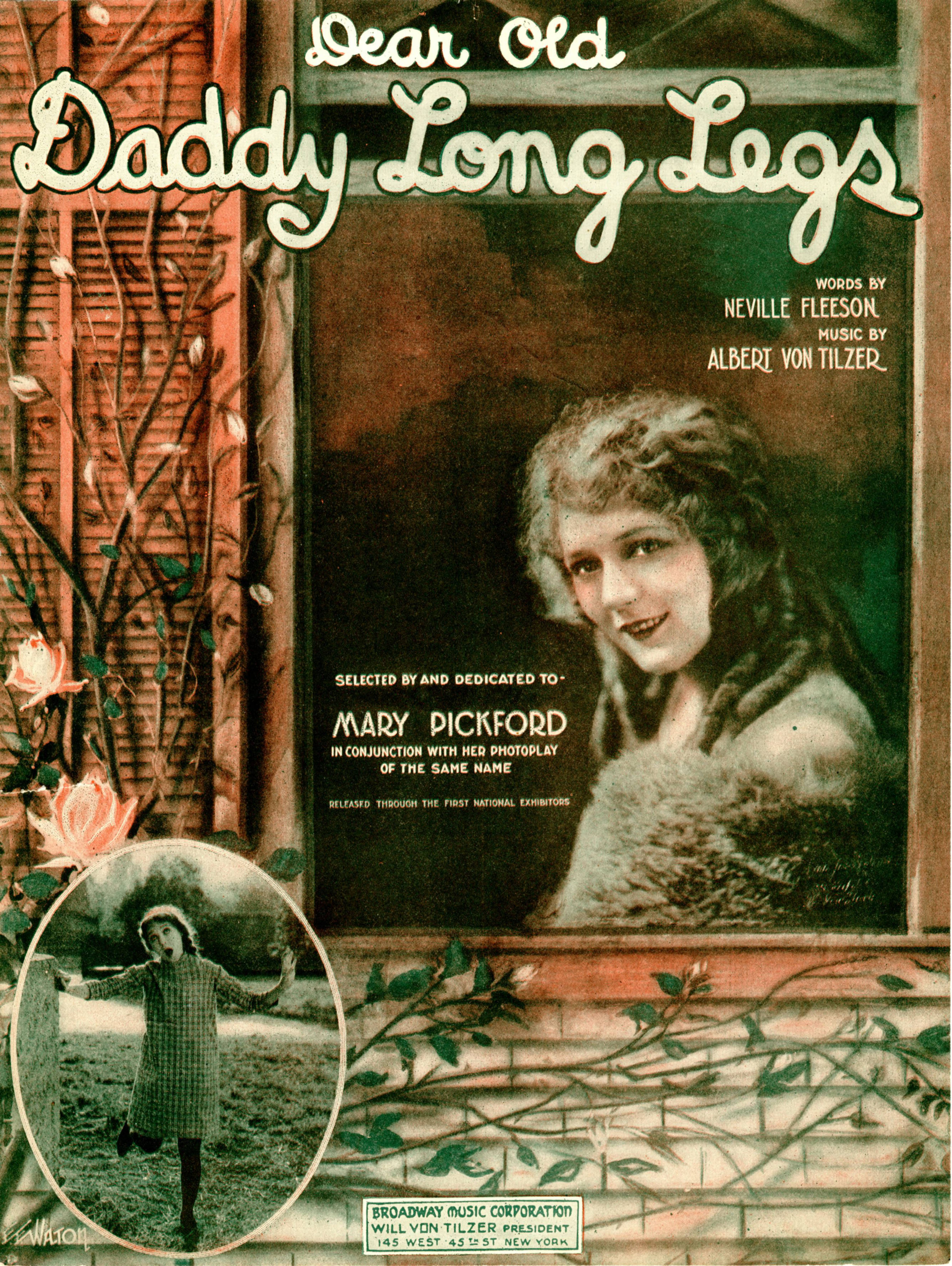
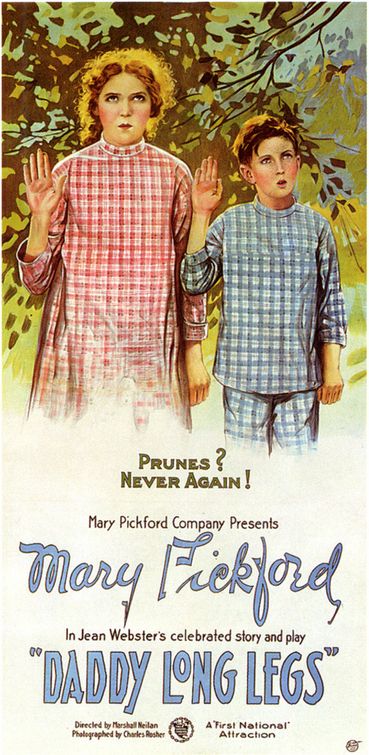
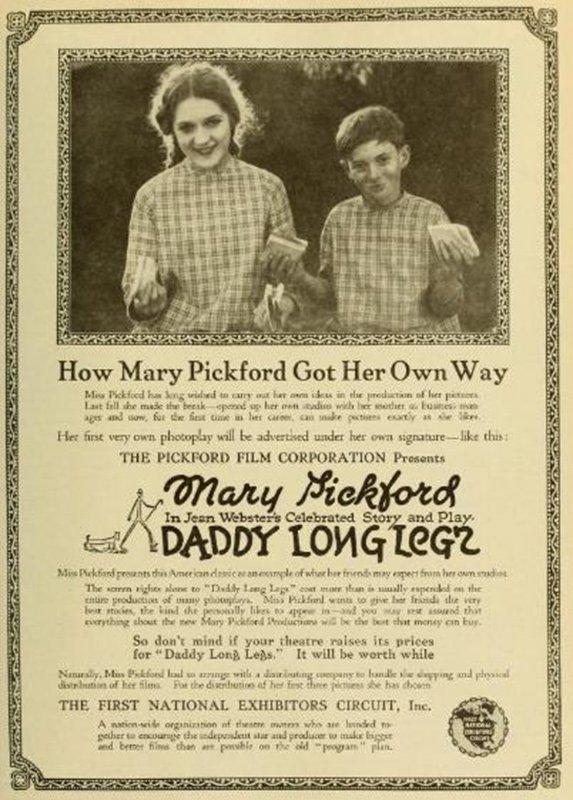
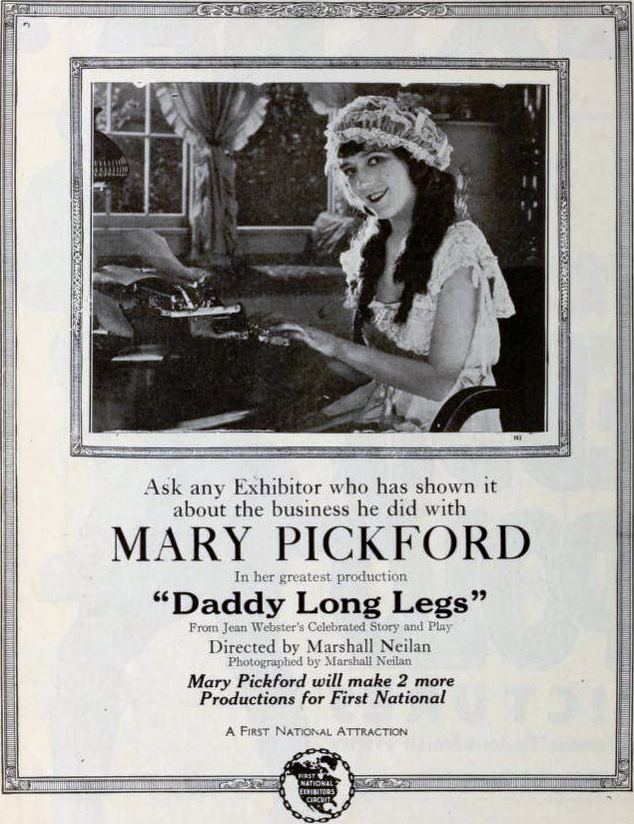
Daddy-Long-Legs is a 1919 silent comedy-drama film directed by Marshall Neilan, and based on Jean Webster‘s novel Daddy-Long-Legs. The film stars Mary Pickford.[2][3]

Daddy Long Legs 9

Plot

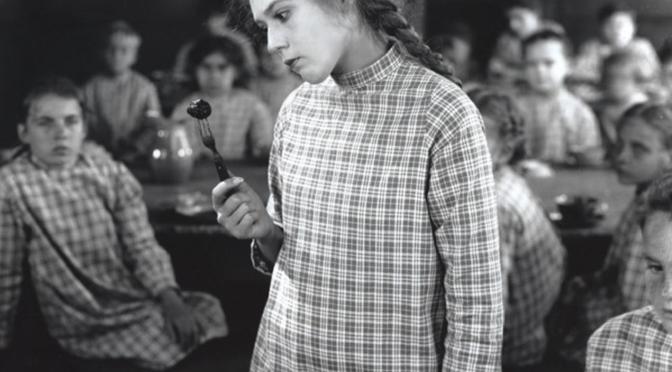
A police officer finds a baby in a trash can, and Mrs. Lippett, the cruel matron at an orphanage where children are made to work, names her “Jerusha Abbott” (she picks “Abbott” out of a phone book and gets “Jerusha” from a tombstone). The orphan, who comes to be called Judy, does what she can to stand up for the younger children, frequently clashing with both Mrs. Lippett and the cold hearted trustees. At one point she leads a rebellion against being served prunes with every meal and at another, steals a doll from a selfish rich girl to lend to a dying orphan.
Daddy Long Legs 7

Years later, wealthy Jervis Pendleton, a mysterious benefactor, pays to send Judy, now the oldest and most talented child in the orphanage, to college. He insists, however, that Judy must never try to contact him in person. Judy calls him “Daddy-Long-Legs,” and writes to him, however. Judy proves popular with her wealthier and more “aristocratic” classmates, and writes a successful book to repay “Daddy-Long-Legs” the money he spent on her. She is generally happy but misses not having any real family members to take pride in her accomplishments. Judy also finds herself caught up in a romantic triangle with the older brother of a classmate and an older man (who is, unknown to her, her mysterious benefactor). She eventually chooses the older suitor and is delighted to learn that he is her “Daddy-Long-Legs.”

Cast

Daddy Long Legs 11

Accolades

The film is recognized by American Film Institute in these lists:

References

Usurer, The (1910)


Mary Pickford 1

Mary Pickford Season: FD Cinematheque

The Usurer (1910)

Director: D W Griffith

Cast: Mary Pickford, George Nichols, Grace Henderson, Mack Sennett, Edward Dillon, Anthony O’Sullivan, Alfred Paget, Kate Bruce, Henry B Walthall, Claire McDowell, Linda Arvidson, Florence Barker, Dorothy West

17 min

DW Griffith 2

D W Griffith

The Usurer is a silent short film made in 1910 directed by David W. Griffith for Biograph Company .

Griffith employs many of his favorite actors of that period: Linda Arvidson (wife of Griffith), George Nichols (in the title role), Jeanie Macpherson , who three years later will start a successful career as a screenwriter and the young Mary Pickford in a young girl invalid role.

Usurer, The 1

Plot 

A wealthy, callous moneylender finds a terrifying way to learn about money’s limitations.

Usurer, The 2

Production 

The short film was produced by the Biograph Company . It was shot – from 10 to 15 July 1910 – in New York, at the Biograph studios on Fourteenth Street [1] .

Distribution 

Distributed by the Biograph Company , this film was released in US cinemas on August 15, 1910. A copy of the film is kept in the archives of the Library of Congress and Museum of Modern Art . The rights of the film are in the public domain [1] .

In 2002, Kino on Video published an anthology on DVD entitled Griffith Masterworks: Biograph Shorts (1908-1914) lasting 362 minutes which also contained this film in a version of 18 minutes [2] .

Notes 

See also 


Usurer, The 3

Ramona (1910)


Mary Pickford 1

Mary Pickford Season: FD Cinematheque

Ramona (1910)

Director: D W Griffith

Cast: Mary Pickford, Henry B Walthall, Francis J Grandon, Kate Bruce, W Chrystie Miller, Dorothy Bernard, Robert Harron, Mae Marsh, Jack Pickford, Mack Sennett, Charles West, Dotothy West

17 min

DW Griffith 2

D W Griffith

Ramona 3

Ramona 5


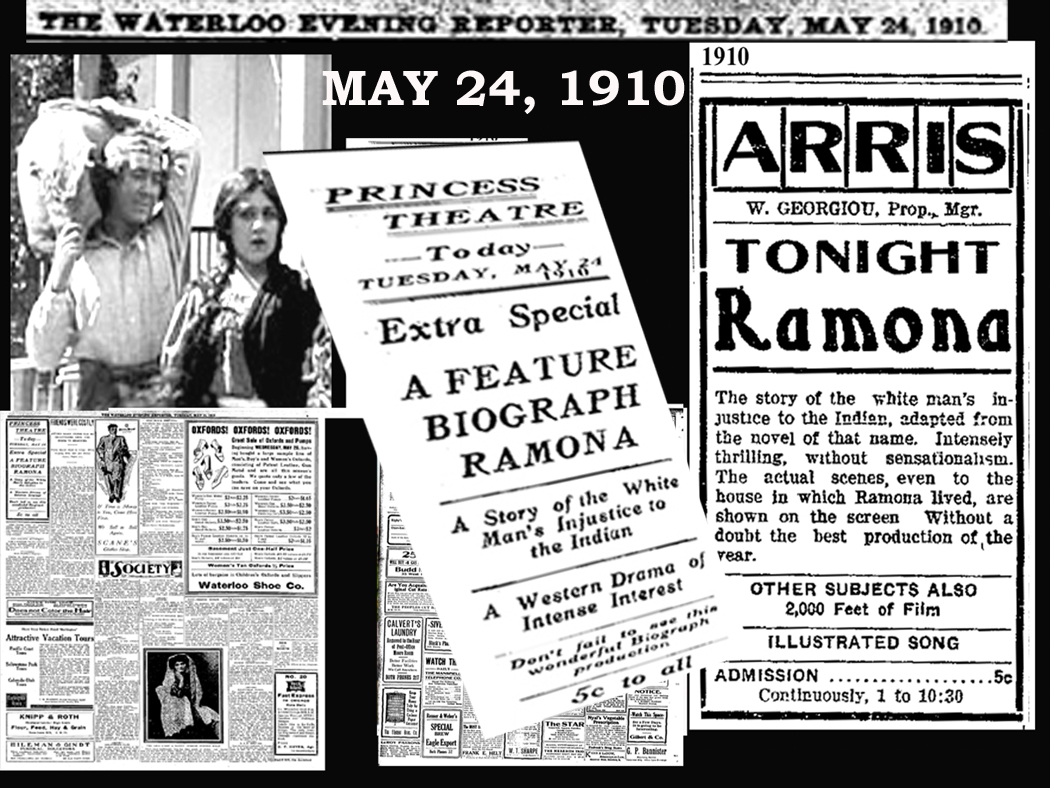
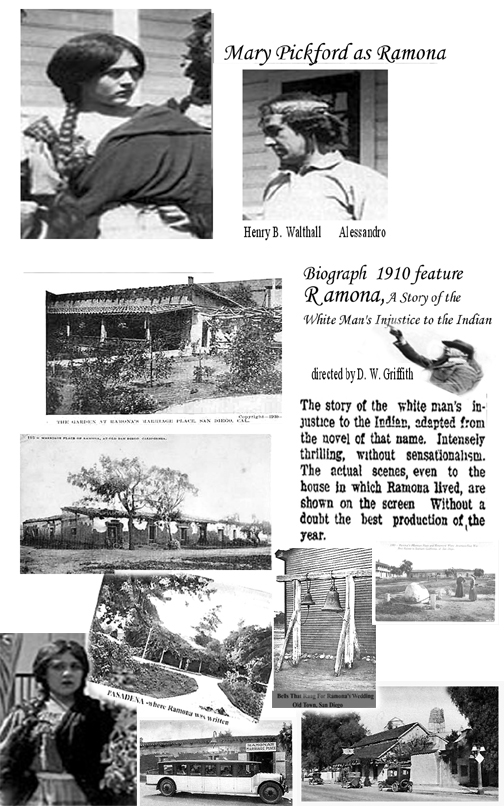
Ramona is a 1910 American short drama film directed by D. W. Griffith, based on Helen Hunt Jackson‘s 1884 novel Ramona. Through a love story, the early silent short explores racial injustice to Native Americans and stars Mary Pickford and Henry B. Walthall.[1] A copy of the print survives in the Library of Congress film archive.[2]
The film was remade in 1928 (dir. Edwin Carewe) with Dolores del Rio and 1936 (dir. Henry King) with Loretta Young.

Plot

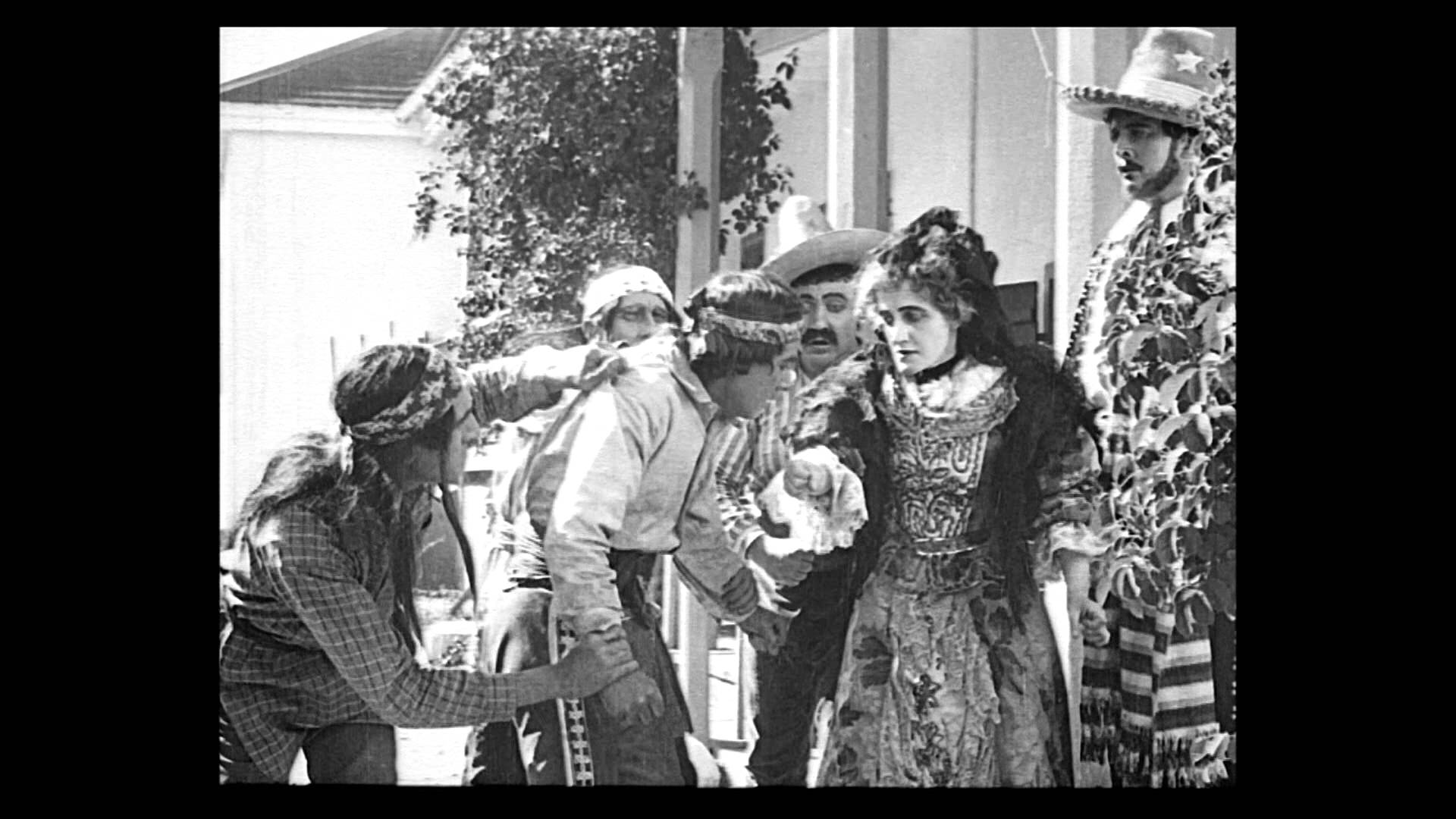
Ramona chronicles the romance between Ramona (Mary Pickford), a Spanish orphan from the prestigious Moreno family, and Alessandro (Henry B. Walthall), an Indian who appears on her family’s ranch one day. A man named Felipe (Francis J. Grandon) proclaims his love for Ramona, but she rejects him because she has fallen for Alessandro.

They fall deeply in love, yet their desire to wed is denied by Ramona’s stepmother, who reacts by exiling Alessandro from her ranch. He returns to his village, only to find that it has been demolished by white men. Meanwhile, Ramona is informed that she also has “Indian blood”, which leads her to abandon everything she has to be with Alessandro.

They marry, and live among the wreckage of Alessandro’s devastated village. They have a child together and live at peace until the white men come to force them from their home as they claim the land. Their baby perishes, and then Alessandro is then killed by the white men. Ramona is then rescued by Felipe and returned to her family back on the ranch.[3]

Ramona 2

Cast

See also

References[edit]

  1. Jump up^ “Ramona (1910) — (Movie Clip) Opening”. Turner Classic Movies. Retrieved October 4, 2016.
  2. Jump up^ “Progressive Silent Film List: Ramona”. Silent Era. Retrieved June 2, 2008.
  3. Jump up^ Moving Picture World. “Ramona (1910) Plot Summary”. IMDB. Retrieved September 30, 2015.

Ramona 6

Unchanging Sea, The (1910)


Mary Pickford 1

Mary Pickford Season: FD Cinematheque

The Unchanging Sea (1910)

Director: D W Griffith

Cast: Arthur V Johnson, Linda Arvidson, Gladys Egan, Mary Pickford, Charles West, Dell Henderson, Dorothy West

DW Griffith 2

D W Griffith


The Unchanging Sea is a 1910 American drama film that was directed by D. W. Griffith. A print of the film survives in the Library of Congress film archive.[1]

Unchanging Sea, The 7

Cast

See also

References[edit]

Unchanging Sea, The 2

One Hundred Percent American (1918)


Mary Pickford 1

Mary Pickford Season: FD Cinematheque

One Hundred Percent American (1918)

Director: Arthur Rosson

Cast: Mary Pickford, Loretta Blake, Theodore Reed, Henry Bergman, Monte Blue, Joan Marsh

14 min


One Hundred Percent American is a silent short film made in 1918 directed by Arthur Rosson and starring Mary Pickford.

Plot 

A girl wants to go to a ball, admission one Liberty Bond, but rather than go herself, she loans the bond to a girlfriend. A soldier and a sailor find out and take her to the ball with them.

One Hundred Percent American 2

Production 

The Famous Players-Lasky Corporation produced this short film that was to advertise the sale of the bonds of the Liberty Loan Committee .

Distribution 

Distributed by Famous Players-Lasky even with the alternative title 100% American , the short film was released in US theaters on October 5, 1918. Since the star Mary Pickford at the time was still a Canadian citizen, in Canada the film was given the title 100% Canadian [1] .

The film has been included in an anthology distributed in October 2007 by the National Film Preservation Foundation.

On NTSC , the DVD box set offers a total of 739 minutes entitled Treasures III: Social Issues in American Film (1900-1934) [2] .

One Hundred Percent American 4

Little Princess, The (1917)


Mary Pickford 1

Mary Pickford Season: FD Cinematheque

The Little Princess (1917)

Director: Marshall Neilan, Howard Hawks

Cast: Mary Pickford, Norman Kerry, Katherine Griffith, Anne Schaefer, Zasu Pitts, WE Lawrence, Theodore Roberts, Gertrude Short, Gustav von Seyffertitz, Loretta Blake, George A McDaniel, Edythe Chapman, Josephine Hutchinson, Joan Marsh, Joe Murphy

62 min

A Little Princess is a 1917 American silent film directed by Marshall Neilan based upon the novel A Little Princess by Frances Hodgson Burnett. This version is notable for having been adapted by famed female screenwriter Frances Marion.[1]

Marshall Neilan 1

Marshall Neilan

Howard Hawks 1 Howard Hawks

Contents

Plot 

As described in a film magazine,[2] Sara Crewe (Pickford) is treated as a little princess at the Minchin boarding school for children until it is learned that her father has lost his entire fortune, and she is made a slavey (a household servant). She and Becky (Pitts), another slavey, become close friends who share their joys and sorrows.
Little Princess The 9

Christmastime draws near and the girls watch the preparations wistfully. Their loneliness arouses the sympathy of a servant of the rich Mr. Carrisford. On the night before Christmas he prepares a spread for the slaveys in their attic. He calls his master Mr. Carrisford (von Seyffertitz) to watch their joy, but both are witness to the slaveys being abused and whipped by Miss Minchin (Griffith). Carrisford interferes and learns that Sara is the daughter of his best friend. He adopts Sara and Becky and in their new home they have a real Christmas.

Little Princess The 4

The film opens with Sarah’s father moving back to London after serving in the British Army in India. She is opposed to leaving the luxurious life of an officer’s child with a large house and many servants, and is initially shy when enrolled in Miss Minchin’s School. Her reputation as “the little princess” precedes her and the other girls are fascinated with her tales of life in India. The girls sneak into Sarah’s room at night to listen to her stories. One night, she tells “Ali Baba and the Forty Thieves” which becomes a story within a story with elaborate exotic sets and costumes.

Little Princess The 10

Cast

References

  1. Jump up^ Progressive Silent Film List: A Little Princess at silentera.com
  2. Jump up^ “Reviews: A Little Princess. Exhibitors Herald. New York: Exhibitors Herald Company. 5 (22): 29. November 24, 1917.

Little Princess The 8

Dream, The (1911)


Mary Pickford 1

Mary Pickford Season: FD Cinematheque

The Dream (1911)

Director: Thomas Ince

Cast: Mary Pickford, Owen Moore, Charles Arling, William Robert Daly, J Farrel MacDonald, Lottie Pickford

11 min

Dream The 1

The Dream is a 1911 short film, one reel, produced and released by the Independent Moving Pictures Company (IMP) and directed by Thomas H. Ince and George Loane Tucker. It starred Mary Pickford and her husband Owen Moore after they left working at the Biograph Company. This film is preserved at the Library of Congress, a rare survivor from Pickford’s IMP period. It appears on the Milestone Films DVD of Pickford’s 1918 feature Amarilly of Clothes-Line Alley.[1]

47cd13265547c46bab0641c111d327aa

Plot

The film opens in a fancy restaurant where the husband and a woman who is not his wife are polishing off a bottle of wine. Cut to home, where a dejected wife sits at the dining room table waiting for her husband. She briefly nods off before rousing and checking the wall clock indicating that it’s getting late. Cut back to the fancy restaurant, where the husband settles the check with a large wad of bills. The waiter obliges by helping the husband and his lady companion with their hats and coats. The other woman kicks the husbands hat out of his hand.
Six hours later, the husband strides through the door awakening his wife who is still sitting by the dining room table. He rebuffs her attempt to take his hat, whereupon she points to the wall clock. She draws his attention to dinner, which still sits on the dining table. He upends a few dishes then overturns a chair before collapsing on the sofa, cigarette in hand. Upset, the wife walks off camera and the scene fades to black.

Dream The 2

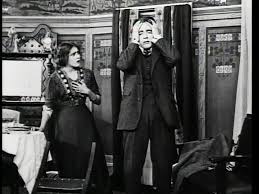
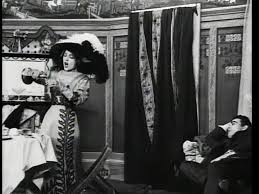
In the next scene, introduced by a title card stating “HIS DREAM”, the wife returns, clad in a form-fitting dress and a plumed hat. She awakens the husband by jostling his head. Talking animatedly, she downs a couple of glasses of wine from a decanter on the sideboard and tosses the wineglass on the floor. She drop-kicks a plate, lights up a cigarette, flicks the match at her husband, and blows smoke in his face. She pelts him with a pillow that has been lying on the floor, slings her coat over her arm, pulls down the curtains covering the door, and blows the husband a kiss goodbye. A well-appointed gentleman arrives at the front steps to their house a second or two before the wife steps out the front door and they leave together.

Confounded by what he has just witnessed, the husband grabs his hat and coat and leaves. The wife and her gentleman caller arrive by taxi at the fancy restaurant where they are shown to the same table the husband had occupied earlier. The husband arrives hot on their heels, briefly considers confronting them, but then flees, distressed by the whole affair. He stumbles out into the street before returning home. There he rants wildly, repeatedly grasping his forehead before settling down to compose a letter which reads in part “You’re not the woman I supposed you were.” Stumbling to the sideboard, he pulls out a small revolver from a drawer, points it at his abdomen, pulls the trigger, and collapses spasmodically on the sofa.

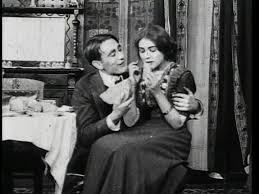
In the next scene, introduced by a title card stating “HIS AWAKENING”, he falls off the sofa and stands up, clutching his abdomen. His wife enters the scene, this time reclad in her modest attire, and startles him. He recounts his vivid experience, she comforts him and helps him realize it was all just a dream. While she turns her attention to preparing dessert on the dining room table, he pulls his address book from his suitcoat pocket and shreds it. Reconciled, they embrace and then settle down to eat the confection.

Dream The 3

Cast

References


Dream The 5


Sweet Memories (1911)


Mary Pickford 1

Mary Pickford Season: FD Cinematheque

Sweet Memories (1911)

Director: Thomas Ince

Cast: Mary Pickford, King Baggot, Owen Moore, William E Shay, Jack Pickford, Lottie Pickford, Charles Arling, J. Farrell MacDonald, Charlotte Smith

 10 min

hqdefault (1)

Sweet Memories (also known as Sweet Memories of Yesterday and Sweetheart Days) is a 1911 silent short romantic drama film, written and directed by Thomas H. Ince, released by the Independent Moving Pictures Company on March 27, 1911.[1]

47cd13265547c46bab0641c111d327aa

Thomas H Ince

Plot

Polly Biblett (Mary Pickford), a young lady, tells her grandmother Lettie about her new boyfriend. The news provokes the elderly woman to reminisce about her own sweetheart, long time before. The touching sequence expresses the power of lives going on, the older woman aging as her grandchildren grow and knowing they will soon have children of their own.

Cast

References

sweetmem2

In Old Madrid (1911)


Mary Pickford 1

Mary Pickford Season: FD Cinematheque

In Old Madrid (1911)

Director: Thomas H Ince

Cast: Mary Pickford, Owen Moore

11 min

In Old Madrid (1911) is a Mary Pickford film directed by Thomas H Ince.

47cd13265547c46bab0641c111d327aa

Thomas H Ince

Synopsis

Don Gomez writes a letter to the parents of Zelda, a young Spanish girl, regretting his inability to pay them a visit, but sends his son, Jose, instead. Jose arrives and is immediately smitten by the charms of Zelda. Zelda indulges in a little flirtation.

Her mother inaugurates a system of espionage that is very inconvenient for the lovers. They are surprised by the duenna-like mother and are driven to desperation.

Zelda has a girlfriend about her age who resembles her and is attired to represent a clever counterpart of Zelda. The mother walks in the garden accompanied by Zelda. Seating herself on a bench, she commands the girl to repose beside her. Finding the vigil rather tiresome, the elder woman lapses into a state of drowsiness, and the companions of Zelda beckon her to join them.

So clever is the disguise of Rosa that Jose is deceived and he kisses her. The father of Zelda discovers the act and hastens to the mother to inform her only to see Zelda yawning beside his wife on the bench. Exhausted, the guardian falls asleep, and Rosa exchanges places with Zelda, who joins her lover. Jose induces Zelda to accompany him to the seashore.

He gathers the girl in his arms, and wades across a stretch of water, and they take a perilous position on the rocks. A search is instituted and Zelda and Jose are discovered on the rocks. Jose has a scheme which he quickly imparts to Zelda and she acquiesces. The irate parents see the daughter and her lover.

Jose is firm and threatens to throw Zelda into the roaring torrent, unless the parents consent to their immediate marriage. The agonized parents relent. The obdurate parents have been outwitted by the scheming lovers.

mqdefault

In Old Madrid

Mary Pickford – Hollywood Pioneer


Mary Pickford – Hollywood Pioneer

Mary Pickford 3

Prepared by Daniel B Miller

Gladys Louise Smith (April 8, 1892 – May 29, 1979), known professionally as Mary Pickford, was a prolific Canadian-American film actress and producer. She was a co-founder of both the Pickford-Fairbanks Studio (along with Douglas Fairbanks) and, later, the United Artists film studio (with Fairbanks, Charlie Chaplin and D.W. Griffith), and one of the original 36 founders of the Academy of Motion Picture Arts and Sciences who present the yearly “Oscar” award ceremony.

Known in her prime as “America’s Sweetheart” and the “girl with the curls”, Pickford was one of the Canadian pioneers in early Hollywood and a significant figure in the development of film acting. Pickford was one of the earliest stars to be billed under her name (film performers up until that time were usually unbilled), and was one of the most popular actresses of the 1910s and 1920s, earning the nickname “Queen of the Movies”.

She was awarded the second ever Academy Award for Best Actress for her first sound-film role in Coquette (1929) and also received an honorary Academy Award in 1976. In consideration of her contributions to American cinema, the American Film Institute ranked Pickford as 24th in its 1999 list of greatest female stars of classic Hollywood Cinema.

Mary Pickford Season is screening in our Cinematheque Live. Join us in viewing those rare classic films

https://filmdialogueone.wordpress.com/category/cinematheque-live/

Mary Pickford - Ziegfeld - c. 1920s - by Alfred Cheney Johnston

An Introduction to Mary Pickford by Mary Pickford Foundation – on Film Dialogue YouTube Channel 

Mary Pickford Foundation Copyright

Early life 

Mary Pickford 9

Mary Pickford was born Gladys Louise Smith in 1892 (although she would later claim 1893 or 1894 as her year of birth) at 211 University Avenue, Toronto, Ontario.
Her father, John Charles Smith, was the son of English Methodist immigrants, and worked a variety of odd jobs. Her mother, Charlotte Hennessey, was of Irish Catholic descent and worked for a time as a seamstress.
She had two younger siblings, Charlotte, called “Lottie” (born 1893), and John Charles, called “Jack” (born 1896), who also became actors.
Mary Pickford 8
To please her husband’s relatives, Pickford’s mother baptized her children as Methodists, the faith of their father.
John Charles Smith was an alcoholic; he abandoned the family and died on February 11, 1898, from a fatal blood clot caused by a workplace accident when he was a purser with Niagara Steamship.
Mary Pickford 7

When Gladys was age four, her household was under infectious quarantine, a public health measure. Their devoutly Catholic maternal grandmother (Catherine Faeley Hennessey) asked a visiting Roman Catholic priest to baptize the children. Pickford was at this time baptized as Gladys Marie Smith.

Mary Pickford 6

Charlotte Smith began taking in boarders after being widowed. One of these was a theatrical stage manager. At his suggestion, Gladys (age 7) was given two small roles, one as a boy and the other as a girl, in a stock company production of The Silver King at Toronto’s Princess Theatre. She subsequently acted in many melodramas with Toronto’s Valentine Company, finally playing the major child role in their version of The Silver King.

She capped her short career in Toronto with the starring role of Little Eva in their production of Uncle Tom’s Cabin, adapted from the 1852 novel by United States writer and abolitionist Harriet Beecher Stowe. Stowe’s novel was, coincidentally, based on the memoirs of another Ontarian, Josiah Henson.

Mary Pickford 5

Career

Mary Pickford 15

Mary Pickford on stage 1905

Early years

By the early 1900s, theatre had become a family enterprise. Gladys, her mother and two younger siblings toured the United States by rail, performing in third-rate companies and plays.
After six impoverished years, Pickford allowed one more summer to land a leading role on Broadway, planning to quit acting if she failed. In 1906 Gladys, Lottie and Jack Smith supported singer Chauncey Olcott on Broadway in Edmund Burke.
Mary Pickford 14
Mary Pickford in 1908

Gladys finally landed a supporting role in a 1907 Broadway play, The Warrens of Virginia. The play was written by William C. DeMille, whose brother, Cecil, appeared in the cast. David Belasco, the producer of the play, insisted that Gladys Smith assumes the stage name Mary Pickford. After completing the Broadway run and touring the play, however, Pickford was again out of work.

Mary Pickford 10

Mary Pickford on stage in The Warrens of Virginia 1907

Mary Pickford 11

The Warrens of Virginia newspaper advert 1907

Mary Pickford 16

The Warrens of Virgina Belasco Theatre Poster 1907

Mary Pickford 12

Mary Pickford promotional photo for The Warrens of Virgina – Belasco Theatre

On April 19, 1909, the Biograph Company director D. W. Griffith screen-tested her at the company’s New York studio for a role in the nickelodeon film, Pippa Passes. The role went to someone else but Griffith was immediately taken with Pickford.

She quickly grasped that movie acting was simpler than the stylized stage acting of the day. Most Biograph actors earned $5 a day but, after Pickford’s single day in the studio, Griffith agreed to pay her $10 a day against a guarantee of $40 a week.

Mary Pickford 19

Mary Pickford in one of her first film roles in DW Griffith’s The Lonely Villa 1909 – Biograph Productions

Pickford, like all actors at Biograph, played both bit parts and leading roles, including mothers, ingenues, charwomen, spitfires, slaves, Native Americans, spurned women, and a prostitute. As Pickford said of her success at Biograph:

“I played scrubwomen and secretaries and women of all nationalities … I decided that if I could get into as many pictures as possible, I’d become known, and there would be a demand for my work.”

Mary Pickford 20

Biograph Offices in 1909

She appeared in 51 films in 1909 – almost one a week. While at Biograph, she suggested to Florence La Badie to “try pictures”, invited her to the studio and later introduced her to D. W. Griffith, who launched La Badie’s career.

Mary Pickford 22

Mary Pickford in DW Griffith’s The Country Doctor 1909

Mary Pickford 23

Mary Pickford in DW Griffith’s The Hessian Renegades 1909

Mary Pickford 24

Mary Pickford in DW Griffith’s The Violin Maker Of Cremona 1909

Mary Pickford 21

Mary Pickford in DW Griffith’s Willful Peggy 1910

In January 1910, Pickford traveled with a Biograph crew to Los Angeles. Many other film companies wintered on the West Coast, escaping the weak light and short days that hampered winter shooting in the East. Pickford added to her 1909 Biographs (Sweet and Twenty, They Would Elope, and To Save Her Soul, to name a few) with films made in California.

Actors were not listed in the credits in Griffith’s company. Audiences noticed and identified Pickford within weeks of her first film appearance. Exhibitors in turn capitalized on her popularity by advertising on sandwich boards that a film featuring “The Girl with the Golden Curls”, “Blondilocks”, or “The Biograph Girl” was inside.

Mary Pickford 25

Mary Pickford in DW Griffith’s They Would Elope 1909

Mary Pickford 26

Mary Pickford in DW Griffith’s To Save Her Soul 1909

Pickford left Biograph in December 1910. The following year, she starred in films at Carl Laemmle‘s Independent Moving Pictures Company (IMP). IMP was absorbed into Universal Pictures in 1912, along with Majestic. Unhappy with their creative standards, Pickford returned to work with Griffith in 1912. Some of her best performances were in his films, such as Friends, The Mender of Nets, Just Like a Woman, and The Female of the Species. That year Pickford also introduced Dorothy and Lillian Gish (both friends from her days in touring melodrama) to Griffith. Both became major silent stars, in comedy and tragedy, respectively. Pickford made her last Biograph picture, The New York Hat, in late 1912.

Mary Pickford 27

Mary Pickford in DW Griffith’s Friends 1912

Mary Pickford 28

Film Poster for Mary Pickford in DW Griffith’s The Mender of the Nets 1912

Mary Pickford 29

Mary Pickford in DW Griffith’s The New York Hat 1912

Mary Pickford 30

Mary Pickford in DW Griffith’s The Female of the Species (1912)

She returned to Broadway in the David Belasco production of A Good Little Devil (1912). This was a major turning point in her career. Pickford, who had always hoped to conquer the Broadway stage, discovered how deeply she missed film acting. In 1913, she decided to work exclusively in film. The previous year, Adolph Zukor had formed Famous Players in Famous Plays. It was later known as Famous Players-Lasky and then Paramount Pictures, one of the first American feature film companies.

Pickford left the stage to join Zukor’s roster of stars. Zukor believed film’s potential lay in recording theatrical players in replicas of their most famous stage roles and productions.
Zukor first filmed Pickford in a silent version of A Good Little Devil. The film, produced in 1913, showed the play’s Broadway actors reciting every line of dialogue, resulting in a stiff film that Pickford later called “one of the worst [features] I ever made … it was deadly”. Zukor agreed; he held the film back from distribution for a year.
Mary Pickford 31
Poster for A Good Little Devil (1914) with Mary Pickford

Pickford’s work in material written for the camera by that time had attracted a strong following. Comedy-dramas, such as In the Bishop’s Carriage (1913), Caprice (1913), and especially Hearts Adrift (1914), made her irresistible to moviegoers.

Hearts Adrift was so popular that Pickford asked for the first of her many publicized pay raises based on the profits and reviews. The film marked the first time Pickford’s name was featured above the title on movie marquees. Tess of the Storm Country was released five weeks later.

Biographer Kevin Brownlow observed that the film “sent her career into orbit and made her the most popular actress in America, if not the world”.

Mary Pickford 32

Poster for In the Bishop’s Carriage (1913) with Mary Pickford

Mary Pickford 33

Poster for Caprice (1913) with Mary Pickford

Mary Pickford 34

Poster for Hearts Adrift (1914) with Mary Pickford

Mary Pickford 35

Mary Pickford in Tess of the Storm Country (1914)

Her appeal was summed up two years later by the February 1916 issue of Photoplay as “luminous tenderness in a steel band of gutter ferocity”. Only Charlie Chaplin, who reportedly slightly surpassed Pickford’s popularity in 1916, had a similarly spellbinding pull with critics and the audience.

Each enjoyed a level of fame far exceeding that of other actors. Throughout the 1910s and 1920s, Pickford was believed to be the most famous woman in the world, or, as a silent-film journalist described her, “the best known woman who has ever lived, the woman who was known to more people and loved by more people than any other woman that has been in all history”.

Mary Pickford 36

Silent film superstars: Fairbanks, Pickford and Chaplin

Stardom

Mary Pickford 37

Adolph Zukor with Mary Pickford and her mother, Mrs. Charlotte Smith in 1916

Pickford starred in 52 features throughout her career. On June 24, 1916, Pickford signed a new contract with Zukor that granted her full authority over production of the films in which she starred, and a record-breaking salary of $10,000 a week.

In addition, Pickford’s compensation was half of a film’s profits, with a guarantee of $1,040,000 (US$ 17,330,000 in 2017). Occasionally, she played a child, in films such as The Poor Little Rich Girl (1917), Rebecca of Sunnybrook Farm (1917), Daddy-Long-Legs (1919) and Pollyanna (1920). Pickford’s fans were devoted to these “little girl” roles, but they were not typical of her career.

Mary Pickford 38

Mary Pickford in The Poor Little Rich Girl (1917)

Mary Pickford 39

Mary Pickford in Rebecca of Sunnybrook Farm (1917)

Mary Pickford 40

Mary Pickford in Daddy Long Legs (1919)

Mary Pickford 41

Mary Pickford in Polyanna ( 1920)

In August 1918, Pickford’s contract expired and, when refusing Zukor’s terms for a renewal, she was offered $250,000 to leave the motion picture business. She declined, and went to First National Pictures, which agreed to her terms.

In 1919, Pickford, along with D.W. Griffith, Charlie Chaplin, and Douglas Fairbanks, formed the independent film production company United Artists. Through United Artists, Pickford continued to produce and perform in her own movies; she could also distribute them as she chose. In 1920, Pickford’s film Pollyanna grossed around $1,100,000.

The following year, Pickford’s film Little Lord Fauntleroy was also a success, and in 1923, Rosita grossed over $1,000,000 as well. During this period, she also made Little Annie Rooney (1925), another film in which Pickford played a child, Sparrows (1926), which blended the Dickensian with newly minted German expressionist style, and My Best Girl (1927), a romantic comedy featuring her future husband Buddy Rogers.

Mary Pickford 42

Mary Pickford signing United Artists documents – with Douglas Fairbanks, Charles Chaplin and DW Griffith

Mary Pickford 44

Mary Pickford in Little Lord Fauntleroy (1921)

Mary Pickford 45

Mary Pickford in Rosita (1927)

Mary Pickford 46

Mary Pickford in Little Annie Rooney (1925)

Mary Pickford 47

Mary Pickford in Sparrows (1926)

The arrival of sound was her undoing. Pickford underestimated the value of adding sound to movies, claiming that “adding sound to movies would be like putting lipstick on the Venus de Milo“.

She played a reckless socialite in Coquette (1929), a role for which her famous ringlets were cut into a 1920s’ bob. Pickford had already cut her hair in the wake of her mother’s death in 1928. Fans were shocked at the transformation. 

Pickford’s hair had become a symbol of female virtue, and when she cut it, the act made front-page news in The New York Times and other papers. Coquette was a success and won her an Academy Award for Best Actress, although this was highly controversial.

The public failed to respond to her in the more sophisticated roles. Like most movie stars of the silent era, Pickford found her career fading as talkies became more popular among audiences.

Mary Pickford 43

Mary Pickford in Coquette (1929)

Her next film, The Taming of The Shrew, made with husband Douglas Fairbanks, was not well received at the box office. Established Hollywood actors were panicked by the impending arrival of the talkies.

On March 29, 1928, The Dodge Brothers Hour was broadcast from Pickford’s bungalow, featuring Fairbanks, Chaplin, Norma Talmadge, Gloria Swanson, John Barrymore, D.W. Griffith, and Dolores del Rio, among others. They spoke on the radio show to prove that they could meet the challenge of talking movies.

Mary Pickford 48

Mary Pickford and Douglas Fairbanks in The Taming of the Shrew (1929)

But the transition came as Pickford was in her late 30s, no longer able to play the children, teenage spitfires, and feisty young women so adored by her fans, and was not suited for the glamorous and vampish heroines of early sound.

In 1933, Pickford underwent a Technicolor screen test for an animated/live action film version of Alice in Wonderland, but Walt Disney discarded the project when Paramount released its own version of the book. Only one Technicolor still of her screen test still exists.

Mary Pickford Technicolor test for The Black Pirate 1926 – Courtesy of George Eastman House – watch it on Film Dialogue YouTube Channel

She retired from acting in 1933; her last acting film was released in 1934. She continued to produce for others, however, including Sleep, My Love (1948; with Claudette Colbert) and Love Happy (1949), with the Marx Brothers).

Mary Pickford 49

Mary Pickford behind the camera
Mary Pickford talking about her life and career – CBC Radio Interview May 25th 1959 – on Film Dialogue You Tube Channel

The Film Industry

Mary Pickford 50

Pickford, Fairbanks and Chapling promoting the sale of Liberty Bonds

Pickford used her stature in the movie industry to promote a variety of causes. Although her image depicted fragility and innocence, Pickford proved to be a worthy businesswoman who took control of her career in a cutthroat industry.

During World War I, she promoted the sale of Liberty Bonds, making an intensive series of fund-raising speeches that kicked off in Washington, D.C., where she sold bonds alongside Charles Chaplin, Douglas Fairbanks, Theda Bara, and Marie Dressler.

Five days later she spoke on Wall Street to an estimated 50,000 people. Though Canadian-born, she was a powerful symbol of Americana, kissing the American flag for cameras and auctioning one of her world-famous curls for $15,000. In a single speech in Chicago she sold an estimated five million dollars’ worth of bonds. She was christened the U.S. Navy’s official “Little Sister”; the Army named two cannons after her and made her an honorary colonel.

 At the end of World War I, Pickford conceived of the Motion Picture Relief Fund, an organization to help financially needy actors.
Leftover funds from her work selling Liberty Bonds were put toward its creation, and in 1921, the Motion Picture Relief Fund (MPRF) was officially incorporated, with Joseph Schenck voted its first president and Pickford its vice president.
In 1932, Pickford spearheaded the “Payroll Pledge Program”, a payroll-deduction plan for studio workers who gave one-half of one percent of their earnings to the MPRF. As a result, in 1940, the Fund was able to purchase land and build the Motion Picture Country House and Hospital, in Woodland Hills, California.

Mary Pickford 51

Charles Chaplin, Darryl Zanuck, Samuel Goldwyn, Douglas Fairbanks, Joseph Schenck and Mary Pickford

An astute businesswoman, Pickford became her own producer within three years of her start in features. According to her Foundation, “she oversaw every aspect of the making of her films, from hiring talent and crew to overseeing the script, the shooting, the editing, to the final release and promotion of each project”.

She demanded (and received) these powers in 1916, when she was under contract to Zukor’s Famous Players In Famous Plays (later Paramount). Zukor acquiesced to her refusal to participate in block-booking, the widespread practice of forcing an exhibitor to show a bad film of the studio’s choosing to also be able to show a Pickford film. In 1916, Pickford’s films were distributed, singly, through a special distribution unit called Artcraft. The Mary Pickford Corporation was briefly Pickford’s motion-picture production company.

Mary Pickford 52

Mary Pickford with her crew members

In 1919, she increased her power by co-founding United Artists (UA) with Charlie Chaplin, D. W. Griffith, and her soon-to-be husband, Douglas Fairbanks. Before UA’s creation, Hollywood studios were vertically integrated, not only producing films but forming chains of theaters.
Distributors (also part of the studios) arranged for company productions to be shown in the company’s movie venues. Filmmakers relied on the studios for bookings; in return they put up with what many considered creative interference.

United Artists broke from this tradition. It was solely a distribution company, offering independent film producers access to its own screens as well as the rental of temporarily unbooked cinemas owned by other companies. Pickford and Fairbanks produced and shot their films after 1920 at the jointly owned Pickford-Fairbanks studio on Santa Monica Boulevard.

The producers who signed with UA were true independents, producing, creating and controlling their work to an unprecedented degree. As a co-founder, as well as the producer and star of her own films, Pickford became the most powerful woman who has ever worked in Hollywood. By 1930, Pickford’s acting career had largely faded.

Mary Pickford 53

Al Jolson, Mary Pickford, Ronald Colman, Gloria Swanson, Douglas Fairbanks, Joseph Schenck, Charlie Chaplin, Samuel Goldwyn and Eddie Cantor

After retiring three years later, however, she continued to produce films for United Artists. She and Chaplin remained partners in the company for decades. Chaplin left the company in 1955, and Pickford followed suit in 1956, selling her remaining shares for three million dollars.

Madge Bellamy on Mary Pickford, Charlie Chaplin and United Artists – Radio Interview – on Film Dialogue YouTube Channel

Personal life

Mary Pickford 54

Pickford was married three times. She married Owen Moore, an Irish-born silent film actor, on January 7, 1911. It is rumored she became pregnant by Moore in the early 1910s and had a miscarriage or an abortion.

Some accounts suggest this resulted in her later inability to have children. The couple had numerous marital problems, notably Moore’s alcoholism, insecurity about living in the shadow of Pickford’s fame, and bouts of domestic violence. The couple lived together on-and-off for several years.

Mary Pickford 55

Mary Pickford with Owen Moore 1917

Pickford became secretly involved in a relationship with Douglas Fairbanks. They toured the U.S. together in 1918 to promote Liberty Bond sales for the World War I effort. Around this time, Pickford also suffered from the flu during the 1918 flu pandemic. Pickford divorced Moore on March 2, 1920, after she agreed to his $100,000 demand for a settlement.

She married Fairbanks just days later on March 28, 1920. They went to Europe for their honeymoon; fans in London and in Paris caused riots trying to get to the famous couple. The couple’s triumphant return to Hollywood was witnessed by vast crowds who turned out to hail them at railway stations across the United States.

Mary Pickford 56

Mary Pickford and Douglas Fairbanks wedding day

The Mark of Zorro (1920) and a series of other swashbucklers gave the popular Fairbanks a more romantic, heroic image. Pickford continued to epitomize the virtuous but fiery girl next door.

Even at private parties, people instinctively stood up when Pickford entered a room; she and her husband were often referred to as “Hollywood royalty”. Their international reputations were broad. Foreign heads of state and dignitaries who visited the White House often asked if they could also visit Pickfair, the couple’s mansion in Beverly Hills.

Mary Pickford 57

Mary Pickford and Douglas Fairbanks at Pickfair

PickfordwDougslide-1

Dinners at Pickfair included a number of notable guests. Charlie Chaplin, Fairbanks’ best friend, was often present. Other guests included George Bernard Shaw, Albert Einstein, Elinor Glyn, Helen Keller, H. G. Wells, Lord Mountbatten, Fritz Kreisler, Amelia Earhart, F. Scott Fitzgerald, Noël Coward, Max Reinhardt, Baron Nishi, Vladimir Nemirovich-Danchenko, Sir Arthur Conan Doyle, Austen Chamberlain, Sir Harry Lauder, and Meher Baba, among others.

guests-at-pickfair-picture-id644191830

Special guests at Pickfair: Natalie Talmage, William S Hart, Charles Chaplin, Mary Pickford’s mother, Joseph Schenck, Sidney ChaplinRudolph Valentino and others

WFP-BARRY03

Mary Pickford with Frances Goldwyn, Samuel Goldwyn, John Abbott and Mary Pickford

9a6e1cab79471f420e5fcbdfb34c3029

Mary Pickford with Paulette Goddard, Charlie Chaplin, Maria Christina Marconi and her husband Guglielmo Marconi at Pickfair 

The public nature of Pickford’s second marriage strained it to the breaking point. Both she and Fairbanks had little time off from producing and acting in their films. They were also constantly on display as America’s unofficial ambassadors to the world, leading parades, cutting ribbons, and making speeches.

When their film careers both began to flounder at the end of the silent era, Fairbanks’ restless nature prompted him to overseas travel (something which Pickford did not enjoy). When Fairbanks’ romance with Sylvia, Lady Ashley became public in the early 1930s, he and Pickford separated.

They divorced January 10, 1936. Fairbanks’ son by his first wife, Douglas Fairbanks Jr., claimed his father and Pickford long regretted their inability to reconcile.

134255-004-8A803276

Mary Pickford and Douglas Fairbanks

On June 24, 1937, Pickford married her third and last husband, actor and band leader Buddy Rogers. They adopted two children: Roxanne (born 1944, adopted 1944) and Ronald Charles (born 1937, adopted 1943, a.k.a. Ronnie Pickford Rogers).

As a PBS American Experience documentary noted, Pickford’s relationship with her children was tense. She criticized their physical imperfections, including Ronnie’s small stature and Roxanne’s crooked teeth. Both children later said their mother was too self-absorbed to provide real maternal love. In 2003, Ronnie recalled that “Things didn’t work out that much, you know. But I’ll never forget her. I think that she was a good woman.”

65086b5818f22cfbc9ec8149fe4cb695.jpg

Buddy Rogers and Mary Pickford wedding with Charles Chaplin and Paulette Goddard, 24th June 1937

Mary Pickford – Selection of Radio Interviews – 1938 – 1968 – on Film Dialogue YouTube Channel

Later years

article-2430410-09903903000005DC-496_634x485-1

Mary Pickford later in life

After retiring from the screen, Pickford became an alcoholic, as her father had been. Her mother Charlotte died of breast cancer in March 1928. Her siblings, Lottie and Jack, both died of alcohol-related causes. These deaths, her divorce from Fairbanks, and the end of silent films left Pickford deeply depressed. Her relationship with her children, Roxanne and Ronald, was turbulent at best.
Pickford withdrew and gradually became a recluse, remaining almost entirely at Pickfair and allowing visits only from Lillian Gish, her stepson Douglas Fairbanks, Jr., and few other people.
She appeared in court in 1959, in a matter pertaining to her co-ownership of North Carolina TV station WSJS-TV. The court date coincided with the date of her 67th birthday; under oath, when asked to give her age, Pickford replied: “I’m 21, going on 20.”
FJ.11468-300x239
Mary Pickford visiting WSJS TV – 30th September 1953

In the mid-1960s, Pickford often received visitors only by telephone, speaking to them from her bedroom. Buddy Rogers often gave guests tours of Pickfair, including views of a genuine western bar Pickford had bought for Douglas Fairbanks, and a portrait of Pickford in the drawing room. A print of this image now hangs in the Library of Congress.

In addition to her Oscar as best actress for Coquette (1929), Mary Pickford received an Academy Honorary Award in 1976 for lifetime achievement. The Academy sent a TV crew to her house to record her short statement of thanks – offering the public a very rare glimpse into Pickfair Manor.

hqdefault-3

Mary Pickford receiving an Academy Honorary Award in 1976

Pickford had become an American citizen upon her marriage to Fairbanks in 1920. Toward the end of her life, Pickford made arrangements with the Department of Citizenship to regain her Canadian citizenship because she wished to “die as a Canadian”. Her request was approved and she became a dual Canadian-American citizen.

People Pickford Oscar

Mary Pickford with her Academy Honorary Award

Mary Pickford Documentary – American Hollywood History Documentary – watch it on Film Dialogue YouTube Channel

Death

MaryPickford

The tomb of actress Mary Pickford in the Garden of Memory, Forest Lawn Glendale

On May 29, 1979, Pickford died at a Santa Monica, California, hospital of complications from a cerebral hemorrhage she had suffered the week before. She was interred in the Garden of Memory of the

She was interred in the Garden of Memory of the Forest Lawn Memorial Park cemetery in Glendale, California.

51ea8fee74d8c029686efbc190fd84fc

Mary Pickford’s tomb in the Garden of Memory, Forest Lawn Glendale

Legacy

 440px-Grauman's_Chinese_Theatre,_mary_pickford
Pickford’s handprints and footprints at Grauman’s Chinese Theatre in Hollywood, California

Pickford-Center-2-1000x525

Pickford Center for Motion Picture Study in Hollywood, California

You can watch many Mary Pickford documentary clips and audio recordings – on our YouTube Channel

https://www.youtube.com/filmdialogueone

  • Pickford was awarded a star in the category of motion pictures on the Hollywood Walk of Fame at 6280 Hollywood Blvd.
  • Her handprints and footprints are displayed at Grauman’s Chinese Theatre in Hollywood, California.
  • Pickford Film Center in Bellingham, Washington is a three-screen, two-venue art house cinema dedicated to showing the best in independent, foreign and documentary film and world class performing arts in high definition.
  • The Pickford Center for Motion Picture Study at 1313 Vine Street in Hollywood, constructed by the Academy of Motion Picture Arts and Sciences, opened in 1948 as a radio and television studio facility.
  • The Mary Pickford Theater at the James Madison Memorial Building of the Library of Congress is named in her honor.
  • The Mary Pickford Auditorium at Claremont McKenna College is named in her honor.
  • A first-run movie theatre in Cathedral City, California, is called The Mary Pickford Theatre. The theater is a grand one with several screens and is built in the shape of a Spanish Cathedral, complete with bell tower and three-story lobby. The lobby contains a historic display with original artifacts belonging to Pickford and Buddy Rogers, her last husband. Among them are a rare and spectacular beaded gown she wore in the film Dorothy Vernon of Haddon Hall (1924) designed by Mitchell Leisen, her special Oscar, and a jewelry box.
  • The 1980 stage musical The Biograph Girl, about the silent film era, features the character of Pickford.
  • In 2007, the Academy of Motion Picture Arts and Sciences sued the estate of the deceased Buddy Rogers’ second wife, Beverly Rogers, in order to stop the public sale of one of Pickford’s Oscars.
  • A bust and historical plaque marks her birthplace in Toronto, now the site of the Hospital for Sick Children. The plaque was unveiled by her husband Buddy Rogers in 1973. The bust by artist Eino Gira was added ten years later. Her date of birth on the plaque is April 8, 1893. This can only be assumed to be because her date of birth was never registered – and throughout her life, beginning as a child, she led many people to believe that she was a year younger so she would appear to be more of an acting prodigy and continue to be cast in younger roles, which were more plentiful in the theatre.
  • The family home had been demolished in 1943, and many of the bricks delivered to Pickford in California. Proceeds from the sale of the property were donated by Pickford to build a bungalow in East York, Ontario, then a Toronto suburb. The bungalow was the first prize in a lottery in Toronto to benefit war charities, and Pickford unveiled the home on May 26, 1943.
  • In 1993, a Golden Palm Star on the Palm Springs Walk of Stars was dedicated to her.

stock-photo-toronto-canada-june-walk-of-fame-mary-pickford-star-on-the-sidewalk-of-david-pecaut-square-442549135

 Pickford’s star on the Walk of Fame in Toronto
  • Pickford received a posthumous star on Canada’s Walk of Fame in Toronto in 1999.
  • Pickford was featured on a Canadian postage stamp in 2006.
  • From January 2011 until July 2011, the Toronto International Film Festival exhibited a collection of Mary Pickford memorabilia in the Canadian Film Gallery of the TIFF Bell LightBox building.
  • In February 2011, the Spadina Museum, dedicated to the 1920s and 1930s era in Toronto, staged performances of Sweetheart: The Mary Pickford Story, a one-woman musical based on the life and career of Pickford.
  • In 2013, a copy of an early Pickford film that was thought to be lost (Their First Misunderstanding) was found by Peter Massie, a carpenter tearing down an abandoned barn in New Hampshire. It was donated to Keene State College and is currently undergoing restoration by the Library of Congress for exhibition. The film is notable as being the first in which Pickford was credited by name.
  • On August 29, 2014, while presenting Behind The Scenes (1914) at Cinecon, film historian Jeffrey Vance announced he is working with the Mary Pickford Foundation on what will be her official biography.
  • The Google Doodle of April 8, 2017 commemorates Mary Pickford’s 125th birthday.

Mary-Pickford-Tea-Party-held-in-September-1928

Filmography

See also

2BB5912600000578-3213623-No_Merchandising_Editorial_Use_Only_No_Book_Cover_Usage_Mandator-m-23_1440773238971

Mary Pickford with Charles Chaplin and Douglas Fairbanks

Mary Pickford Season is screening in our Cinematheque Live. Join us in viewing those rare classic films

https://filmdialogueone.wordpress.com/category/cinematheque-live/

Notes

A. ^ 211 University Avenue at the time of Mary Pickford’s birth was at the corner of University Avenue and Elm Street, now the location of the Hospital for Sick Children. University Avenue was later extended south of Queen Street and the addresses renumbered.

References

  1. ^ Jump up to:a b c d e f g h i j k l m n Whitfield, Eileen: Pickford: the Woman Who Made Hollywood (1997), pp. 8, 25, 28, 115, 125, 126, 131, 300, 376. University Press of Kentucky; ISBN 0-8131-2045-4
  2. Jump up^ Photoplay, Volume 18, Issues 2–6. Macfadden Publications. 1920. p. 99.
  3. Jump up^ Obituary Variety, May 30, 1979.
  4. Jump up^ Baldwin, Douglas; Baldwin, Patricia (2000). The 1930s. Weigl. p. 12. ISBN 1-896990-64-9.
  5. Jump up^ Flom, Eric L. (2009). Silent Film Stars on the Stages of Seattle: A History of Performances by Hollywood Notables. McFarland. p. 226. ISBN 0-7864-3908-4.
  6. ^ Jump up to:a b Sonneborn, Liz (2002). A to Z of American Women in the Performing Arts. Infobase. p. 166. ISBN 1-4381-0790-0.
  7. Jump up^ Kevin Brownlow (1968). The Parade’s Gone by ... University of California Press. p. 123. ISBN 9780520030688. I was baptized Gladys Marie by a French priest — Gladys Marie Smith. David Belasco settled on Pickford after I told him the various names in my family…
  8. Jump up^ Gladys Smith (Mary Pickford) was baptized in the Catholic faith at the age of four at her home by a visiting priest, books.google.com; accessed May 19, 2014
  9. Jump up^ name=”Whitfield”
  10. Jump up^ “Josiah Henson Historical Plaque”.
  11. Jump up^ Pictorial History of the American Theatre 1860–1985 by Daniel C. Blum, c. 1985
  12. ^ Jump up to:a b “Mary Pickford at Filmbug.”. Filmbug. Retrieved January 24, 2007.
  13. Jump up^ Mary Pickford, Sunshine and Shadow, Doubleday & Co., 1955, p. 10.
  14. Jump up^ Zonarich, Gene (2013-08-03). “FLORENCE LA BADIE, BECOMING”. 11 East 14th Street. Retrieved 2017-04-08.
  15. Jump up^ “Mary Pickford at Golden Silents.”. Golden Silents.com. Retrieved January 15, 2007.
  16. ^ Jump up to:a b c Brownlow, Kevin (May 1, 1999). Mary Pickford Rediscovered. Harry N. Abrams. pp. 86, 93. ISBN 978-0810943742.
  17. Jump up^ “Mary Pickford, Filmmaker” (PDF). Retrieved February 25, 2010.
  18. Jump up^ Lane, Christina (January 29, 2002). Mary Pickford. St. James Encyclopedia of Pop Culture. Retrieved January 11, 2009.
  19. Jump up^ “Timeline: Mary Pickford”. American Experience. PBS. July 23, 2004. Retrieved January 11, 2009.
  20. Jump up^ Balio 1985, p. 159
  21. Jump up^ The New York Times, October 29, 1925
  22. ^ Jump up to:a b c “Timeline: Mary Pickford”. American Experience. PBS. July 23, 2004. Retrieved January 11, 2009.
  23. Jump up^ People & Events: Mary Pickford, Fan Culture, PBS.org; accessed December 4, 2015.
  24. ^ Jump up to:a b c The Long Decline, PBS,org; accessed December 4, 2015.
  25. Jump up^ Andre Soares. “Mary Pickford Oscar Controversy”. Alt Film Guide.
  26. Jump up^ “Douglas Fairbanks profile”, pbs.org; accessed May 19, 2014.
  27. Jump up^ Ramon, David (1997). The Dodge Brothers Hour. Clío. ISBN 968-6932-35-6.
  28. Jump up^ McDonald, Paul (2000). The Star System: Hollywood’s Production of Popular Identities. London, UK: Wallflower. p. 33. ISBN 978-1-903364-02-4.
  29. ^ Jump up to:a b c d “Mary Pickford biography”. Retrieved January 24, 2007.
  30. Jump up^ Peggy Dymond Leavey, Mary Pickford: Canada’s Silent Siren, America’s Sweetheart. Dundurn Press (2011), pp. 80–81
  31. Jump up^ Kirsty Duncan (19 August 2006). Hunting the 1918 Flu: One Scientist’s Search for a Killer Virus. University of Toronto Press. p. 16. ISBN 978-0-8020-9456-8. Retrieved January 12, 2013.
  32. Jump up^ Peggy Dymond Leavey, Mary Pickford: Canada’s Silent Siren, America’s Sweetheart. Dundurn Press (2011), p. 110
  33. Jump up^ Sergei Bertensson; Paul Fryer; Anna Shoulgat (2004). In Hollywood with Nemirovich-Danchenko, 1926–1927: the memoirs of Sergei Bertensson. Scarecrow Press. pp. 47–. ISBN 978-0-8108-4988-4. Retrieved July 19, 2010.
  34. Jump up^ “Buddy Rogers, Mary Pickford and Their Children”. American Experience. Retrieved August 26, 2007.
  35. Jump up^ “Mary Pickford “Going On 20″ (Or Is It 66?)”, The Ottawa Citizen, April 11, 1959, p. 18
  36. Jump up^ The 48th Annual Academy Awards. March 29, 1976.
  37. Jump up^ “Mary Pickford Files TV Bid”. Billboard. Nielsen Business Media, Inc.: 14 April 30, 1949. ISSN 0006-2510.
  38. Jump up^ Colombo, John Robert (2011). Fascinating Canada: A Book of Questions and Answers. Dundurn. p. 20. ISBN 1-554-88923-5.
  39. Jump up^ “City, fans honor Mary Pickford”. The Leader-Post. May 18, 1983. pp. D–8. Retrieved November 26, 2012.
  40. Jump up^ “Mary Pickford Is Dead At 86”. The Palm Beach Post. May 30, 1979. Retrieved 26 November 2012.[dead link]
  41. Jump up^ “Mary Pickford – Hollywood Walk of Fame”.
  42. Jump up^ Siderious, Christina (September 1, 2007). “The Oscar goes to … Court”. The Seattle Times.; September 1, 2007.
  43. Jump up^ “Mary Pickford Historical Plaque”. Retrieved February 3, 2011.
  44. Jump up^ Filey, Mike (2002). A Toronto Album 2: More Glimpses of the City That Was. Dundurn Press Ltd. p. 9.
  45. Jump up^ “ARCHIVED – Mary Pickford – Celebrating Women’s Achievements”. Collectionscanada.gc.ca. Retrieved February 15, 2014.
  46. Jump up^ “Yardwork at the Mary Pickford Bungalow”. Retrieved February 3, 2011.
  47. Jump up^ “Palm Springs Walk of Stars by date dedicated”(PDF). Retrieved February 15, 2014.
  48. Jump up^ “Canadians in Hollywood”. Canada Post. May 26, 2006.
  49. Jump up^ “TIFF: Films – Winter Calendar”. Toronto International Film Festival. Retrieved February 3, 2011.
  50. Jump up^ “America’s Sweetheart Home in Toronto”. Torontoist. Retrieved November 16, 2016.
  51. Jump up^ “Lost Mary Pickford movie discovered in N.H. barn”. CBS News. September 24, 2013. Retrieved February 15, 2014.
  52. Jump up^ “Mary Pickford Film ‘Their First Misunderstanding’ Found In Barn Is Restored”. Huffingtonpost.com. September 24, 2013. Retrieved February 15, 2014.

d5476488d585ef9ccd3d890d2bf03423

Further reading

f1266_it2235_1924

Mary Pickford and her husband Douglas Fairbanks on a visit to Toronto in the 1920s

Love Light, The (1921)


Mary Pickford 1

Mary Pickford Season: FD Cinematheque

Love Light, The (1921)

Director: Frances Marion

Cast: Mary Pickford, Evelyn Dumo, Raymond Bloomer, Fred Thompson, Albert Prisco, George Regas, Eddie Phillips, Jean De Briac

89 min

Love Light The 1

Love Light The 2

Love Light The 3

Love Light The 5


Love Light The 11

Plot

Based upon a summary in a film publication,[2] Angela (Pickford), an Italian girl, bids goodbye to her second brother, who is the youngest, as he goes off to join the troops. Then comes news that her older brother has been killed in the war. Giovanni (Bloomer), who loves Angela, tries to comfort her, and then he too is called. Left alone, Angela is made a keeper of the lighthouse. Joseph (Thomson) arrives and says that he is an American and a deserter. They are later secretly married. One night he has Angela flash him a “love” signal using the lighthouse.

Love Light The 12

The next morning an Italian ship carrying wounded men is reported as having been destroyed at midnight, the hour when the signal was sent. Angela steals some chocolate from Tony (Regas) for Joseph to take with him. When she arrives home, she hears Joseph murmur in his sleep “Gott mitt uns,” and it dawns on her that her husband is a German spy. Tony traces the theft to her, and after he says that her wounded brother had been on the ship, she realizes that it was the signal that sent her brother to his death. She gives up Joseph, who still proclaims his love for her. Joseph breaks away from his jailers and plunges over a cliff to his death. Later, with her and Joseph’s baby, Angela is happy with her old sweetheart Giovanni, who has returned from the war blind.

Love Light The 13

Cast

Reception

Photoplay published a very critical review by Burns Mantle. He wrote, in summary, “The Love Light is a poor picture in the sense of being quite unworthy of the star’s talents. The story is developed without reasonable logic and filmed with only the value of the pictures in mind. The Love Light’s one value to my mind is that it takes the nation’s sweetheart out of curls and short frocks and makes a woman of her.”[3]

Love Light The 10

See also

References[

  1. Jump up^ Progressive Silent Film List: The Love Light at silentera.com
  2. Jump up^ “The Love Light: They’re Going to Like the Production and Mary Too”. Film Daily. New York City: Wyd’s Films and Film Folks, Inc. 15 (14): 7. Jan 16, 1921. Retrieved 2014-03-05.
  3. Jump up^ Mantle, Burns (April 1921). “The Shadow Stage”. Photoplay. New York: Photoplay Publishing Co.

Love Light The 6

Hoodlum, The AKA Ragamuffin, The (1919)


Mary Pickford 1

Mary Pickford Season: FD Cinematheque

Hoodlum, The AKA Ragamuffin, The (1919)

Director: Sidney Franklin

Cast: Mary Pickford, Ralph Lewis, Kenneth Harlan, T D Crittenden, Aggie Herring, Andrew Arbuckle, Max Davidson, Paul Mullen, Buddy Messinger, Nellie Anderson, B A Lewis, Lafe McKee

78 min

 Hoodlum The 1 

Hoodlum The 2


The Hoodlum is a 1919 silent film comedy-drama produced by and starring Mary Pickford and released through First National. The film was directed by Sidney A. Franklin and was based on the novel Burkeses Amy by Julie Matilde Lippman.[1][2]

Hoodlum The 12

Plot

Spoiled Amy Burke (Mary Pickford) lives with her doting grandfather, ruthless business magnate Alexander Guthrie (Ralph Lewis), in his Fifth Avenue, New York City mansion. She is initially delighted when he offers to take her with him on a trip to Europe. However, as the day approaches for their departure, she changes her mind and decides to go live with her newly returned father, “sociological writer” John Burke (T. D. Crittenden), at Craigen Street, wherever that is. Unused to having his plans thwarted, Guthrie becomes cold to his beloved granddaughter.

Craigen Street turns out to be in one of the slums of lower New York, the subject of her father’s study. At first, Amy is horrified by the squalor. She makes it clear to a couple of friendly young women who want to become acquainted and to Nora (Aggie Herring), her father’s cook and servant, that she feels she is far above them. Deeply unhappy, she eventually takes her father’s advice to treat their neighbors as equals. She fits in after several weeks. She makes friends with boy inventor Dish Lowry and young man William Turner (Kenneth Harlan), a reclusive neighbor. Amy also ends a years-long feud between Irishman Pat O’Shaughnessy (Andrew Arbuckle) and Jew Abram Isaacs (Max Davidson) through good-natured trickery.

Hoodlum The 11

When a policeman is alerted by a sore loser to her game of craps in the street, she escapes by hiding under the cloak of newcomer Peter Cooper, who takes a room on the floor above the Burkes’. Unbeknownst to Amy, the new resident is actually her grandfather in disguise, come to see how she is doing. He is initially disgusted with her behavior, noting on paper that she “has become a hoodlum”. When Amy takes a sick mother and her children under her wing, she asks Cooper to look after a baby, only to be brusquely rebuffed. Cooper has a change of heart, however, and adopts a whole new, more benevolent attitude, much to Amy’s delight. He returns to his mansion a changed man (taking along Dish Lowry).

One night, Amy spots a thief in Turner’s room. The intruder flees. Turner informs Amy that it was no thief but an agent of Alexander Guthrie looking for his writings. Guthrie framed him to hide corrupt business practices, resulting in a year in the penitentiary. Amy and Turner break into her grandfather’s mansion to try to steal evidence that would prove him innocent, but set off a burglar alarm and are caught. When Guthrie recognizes Amy, he has Turner freed and offers to exonerate him. Afterward, Amy and Turner are married.

Hoodlum The 13

Cast

Public service announcement

At least some prints of the film open with Pickford in a public service announcement for World War I war savings stamps.[citation needed]

Hoodlum The 3

Home media

The film is in the public domain.[2] It has been released on DVD and Blu-ray.[4]

See also

Hoodlum The 7

References

  1. Jump up^ The American Film Institute Catalog Feature Films: 1911–20 / The American Film Institute Catalog of Motion Pictures Produced in the United States: Feature Films, 1911–1920. [Cover title and copyrighted title] University of California Press. 1989. ISBN 978-0520063013.
  2. ^ Jump up to:a b The Hoodlum. Silent Era. Archived from the original on July 6, 2008. Retrieved January 1, 2012.
  3. Jump up^ “Mary Pickford in “The Hoodlum.””. The Register. Adelaide. 7 January 1920. Note: Turner Classic Movies, AllRovi and Silent Era all give the character’s name as John Graham, but this does not match the opening credits and intertitles. See credits, at 2:00, at YouTube cite, below.
  4. Jump up^ Kehr, Dave (November 16, 2012). “Defending the Young and Innocent: New DVDs, Mary Pickford on Blu-ray, Early Perry Mason”. The New York Times.

Hoodlum The 16

Little Annie Rooney (1925)


Mary Pickford 1

Mary Pickford Season: FD Cinematheque

Little Annie Rooney (1925)

Director: William Beaudine

Cast: Mary Pickford, Willaim Haines, Walter James, Gordon Griffith, Carlo Schipa, Spec O’Donnell, Hugh Fay, Vola Vale, Joe Butterworth, Eugene Jackson, Oscar Rudolph, Bernard Berger, Francis X Bushman Jr. (uncredited), Charles K French (uncredited)

94 min

LITTLE ANNIE ROONEY, Mary Pickford, 1925.

Little Annie Rooney 4


Little Annie Rooney is a 1925 American silent comedy-drama film starring Mary Pickford and directed by William Beaudine. Pickford, one of the most successful actresses of the silent era, was best known throughout her career for her iconic portrayals of penniless young girls. After generating only modest box office revenue playing adults in her previous two films, Pickford wrote and produced Little Annie Rooney to cater to silent film audiences. Though she was 33 years old, Pickford played the title role, an Irish girl living in the slums of New York City.

The film was a critical and commercial success, becoming one of the highest grossing films of 1925. Restored by the Academy of Motion Picture Arts and Sciences in 2014, Little Annie Rooney is remembered today for Pickford’s performance and the high quality associated with its production.

Little Annie Rooney 13

Plot

Annie Rooney is a young girl who spends her days wreaking havoc in the tenements with a gang of children and their rival gang, the Kid Kellys. They fight in the streets, accidentally scaring a fruit vendor’s horse in the process. Annie’s father is a respected neighborhood police officer, but her brother, Tim, is a member of the Big Kellys, a gang of older boys led by Joe Kelly. The gang raises money for themselves by selling tickets to an upcoming dance.

Joe is kind to Annie and she develops a crush on him. But when Joe visits the Rooney home later that day, Officer Rooney warns him that if he continues to lead his gang, he will no longer allow Tim to spend time with Joe.

The fruit vendor arrives and informs Officer Rooney that Annie’s activities that morning cost him five dollars’ worth of fresh fruit. When each of the children claim responsibility for scaring the horse, Officer Rooney decides that they will all have to repay the fruit vendor together.

Little Annie Rooney 12

The children decide to raise funds by staging a play set in the Wild West. Prompted by teasing from a heckler, Annie attempts to ride the same horse that the children had scared earlier, but it is spooked once again and gallops through the city with Annie on its back. Joe spots Annie and manages to catch her when she falls. When the fruit vendor catches up with them, Joe pays him back with five dollars’ worth of tickets to the dance.

The night of the dance is also Officer Rooney’s birthday; he is on patrol outside the dance hall. Back at home, Tim and Annie are preparing for their father’s return. At the dance, a fight breaks out between Joe and two of his fellow gang members, Tony and Spider. The lights in the dance hall are switched off, attracting the attention of Officer Rooney, who ventures inside. Tony fires a gun, but the bullet meant for Joe hits Officer Rooney instead, killing him.

A week passes. The police still haven’t discovered Officer Rooney’s killer. Tony and Spider lie to Tim, telling him that Joe killed Officer Rooney. Tim intends to take revenge himself.

Meanwhile, Annie is told that Tony was seen discarding a gun in an alley. Members of the Kid Kellys begin to suspect Tony as well. The rival gangs unite and manage to bring Tony to the police station, but Tim arrives shortly after them and announces that he has just shot Joe.

Annie rushes to the hospital and learns that Joe will die unless he is given an immediate blood transfusion. Annie volunteers, though she mistakenly believes that she will die as a result. She is tested and donates her blood. After the procedure, Annie learns that she is not going to die, and she states her intention to marry Joe one day.

Later, Joe drives Annie and her friends through town. Tim, now a traffic officer, waves them through the intersection.

Little Annie Rooney 10

Cast

Little Annie Rooney 18

Production

“America’s Sweetheart” Mary Pickford had built a successful career playing young ragamuffins, but she was interested in playing roles that were more appropriate for her age.[1] Pickford was perhaps the most powerful woman in Hollywood at the time, and as one of the founders of United Artists, she was able to produce and star in films like Rosita and Dorothy Vernon of Haddon Hall. But audiences were still clamoring for her to return to screens as the “girl with the curls.” In a 1925 interview with Photoplay magazine, Pickford asked her fans what roles they would like to see her play; Photoplay received 20,000 letters in reply urging Pickford to portray children, with suggestions including Anne of Green Gables, Heidi, and Alice in Wonderland.[2] Despite being 33 years old, Pickford acquiesced to her public, once again stepping into the role of a young girl for Little Annie Rooney.[3]

The idea for the film’s subject – a tough Irish girl from the streets – came to Pickford as she was wandering through a vacant city set on a Hollywood backlot. Seeking advice from a distinctly Irish-American perspective, she called Mabel Normand, who simply suggested, “I’d get an Irish title… and write something to go with it.”[4]

Pickford selected the hit music hall song “Little Annie Rooney” as the basis for her character. The song is referenced twice in the movie’s intertitles; written in 1889 but now largely forgotten, it was very popular at the time, also inspiring a comic strip and an animated short film. Pickford wrote the story herself, but is credited under the name of her Irish grandmother, Catherine Hennessey.[5]

To help realize her story, Pickford hired some of the top-tier talent of the day: husband-and-wife screenwriting team Hope Loring and Louis Lighton, who also wrote Wings and It, adapted the story for the screen; Charles Rosher, who would later win an Academy Award for Sunrise, served as the film’s cinematographer; William Beaudine, who had found much success working with children in films like Boy of Mine and Penrod and Sam, was chosen by Pickford to direct.[5]

Little Annie Rooney probably owes a debt to the Our Gang franchise for its comedic cast of multi-ethnic children (including Irish, Greek, Jewish, Italian, Chinese, and African-American characters), but Little Annie Rooney takes place in a far grittier urban setting. One of the advertisements for the film identifies Annie as “the Princess of the Bowery,” an area home to many immigrant populations at the time and known as the skid row of New York through the 1970s.[6] An enormous set filled with realistic details was constructed in the Pickford-Fairbanks backlot to simulate the impoverished downtown neighborhood.[7]

Little Annie Rooney 8

Legacy

Pickford’s return as a scruffy young girl in Little Annie Rooney was a critical success as well as a triumph at the box office, becoming one of the highest grossing films of 1925. This film was a particular achievement for Pickford after the lukewarm reception for her last two starring efforts.[8][9] Pickford biographer Eileen Whitfield wrote, “One watches in amazement as Pickford, at thirty-three, fresh from the seductions of Rosita and the stiff declamations of Dorothy Vernon, slips into the body of a twelve-year-old tomboy.”[10]

Little Annie Rooney was restored by the Academy Film Archive in 2014 from Pickford’s personal 35mm tinted nitrate print and contains longer scenes, different camera set-ups, and better shots of Mary Pickford as well as special tinting effects not seen in any previously available versions.[11] This restoration, with a new score composed by Andy Gladbach, has been presented at college campuses, by the American Cinematheque at Grauman’s Egyptian Theatre, at the Academy of Motion Picture Arts and Sciences’ annual “Mary Pickford Celebration of Silent Film”, and on Turner Classic Movies.[12][13][14][15]

Writing in his program notes for the restoration’s premiere, Jeffrey Vance observed: “Little Annie Rooney has always been overshadowed by the films that have chronologically surrounded it. The Academy Film Archive’s restoration of Little Annie Rooney reveals the work to be one of her most accomplished efforts and a fine introduction to the art of Mary Pickford.”[14]

Kevin Brownlow wrote of the film, “when you think that it was all shot on the Pickford-Fairbanks backlot… it is all the more remarkable… All the artistry, technical skill, and emotional impact of a medium only thirty years old shine triumphantly through.”[7]

Little Annie Rooney 16

References

  1. Jump up^ “The Pickford Waif”. MaryPickford.org. Archived from the original on 16 October 2015. Retrieved 2015-08-29.
  2. Jump up^ Leavey, Peggy Dymond (2011). Mary Pickford: Canada’s Silent Siren, America’s Sweetheart. Toronto: Dundurn.
  3. Jump up^ “Little Annie Rooney: Mary Pickford’s return to childhood, newly restored”. Los Angeles Times. Archived from the original on 16 October 2015. Retrieved 2015-07-13.
  4. Jump up^ “Little Annie Rooney”. Turner Classic Movies. Archived from the original on 16 October 2015. Retrieved 2015-07-13.
  5. ^ Jump up to:a b Bronlow, Kevin (1999). Mary Pickford Rediscovered: Rare Pictures of a Hollywood Legend. New York: Abrams.
  6. Jump up^ “Little Annie Rooney (1925)”, IMDb, retrieved 2015-08-02
  7. ^ Jump up to:a b “The Costume of Silent Drama: Mary Pickford and Little Annie Rooney”. Oscars.org. Archived from the original on 16 October 2015. Retrieved 2015-08-25.
  8. Jump up^ “Little Annie Rooney”. Variety. Archived from the original on 16 October 2015. Retrieved 2015-07-13.
  9. Jump up^ “Little Annie Rooney (1925)”. New York Times. Archived from the original on 16 October 2015. Retrieved 2015-07-13.
  10. Jump up^ Whitfield, Eileen (1997). Pickford: The Woman Who Made Hollywood. Toronto: MacFarlane, Walter & Ross.
  11. Jump up^ “The Academy, Mary Pickford Foundation Present Restoration World Premiere of “Little Annie Rooney””. Oscars.org. Archived from the original on 16 October 2015. Retrieved 2015-07-13.
  12. Jump up^ “Special Screening: Mary Pickford’s splendidly restored Little Annie Rooney”. UCLA Graduate Students Association. Retrieved 4 October 2016.
  13. Jump up^ “Little Annie Rooney”. American Cinematheque. Retrieved 4 October 2016.
  14. ^ Jump up to:a b Vance, Jeffrey (2014). “Little Annie Rooney” program notes. Academy of Motion Picture Arts and Sciences, Mary Pickford Celebration of Silent Film. Bing Theater program book.
  15. Jump up^ “Little Annie Rooney on Turner Classic Movies”. MaryPickford.org. Retrieved 4 October 2016.

Little Annie Rooney 3

Little American (1917)


Mary Pickford 1

Mary Pickford Season: FD Cinematheque

Little American (1917)


Director: Cecil B DeMille (uncredited) and Joseph Levering (uncredited)

Cast: Mary Pickford, Jack Holt, Raymond Hatton, Hobart Bosworth, Walter Long, James Neill, Ben Alexander, Guy Oliver, Edythe Chapman, Lillian Leighton, DeWitt Jennings, Wallace Beery (uncredited), Olive Corbett, Lucille Dorrington, Colleen Moore (uncredited), Ramon Novarro (uncredited), Sam Wood (uncredited)

80 minutes

Little American The 1917 2

Little American The 1917 6

Little American The 1917 5


The Little American is a 1917 American silent romantic war drama film directed by Cecil B. DeMille. The film stars Mary Pickford (who also served as producer) as an American woman who is in love with both a German and a French soldier during World War I. A print of the film is housed at the UCLA Film and Television Archive and has been released on DVD.[2]

Little American The 1917 7

Plot

Karl Von Austreim (Jack Holt) lives in America with his German father and American mother. He notices a young lady, Angela More (Mary Pickford). As she is celebrating her birthday on the Fourth of July of 1914, she receives flowers from the French Count Jules De Destin (Raymond Hatton). They are interrupted by Karl, who also gives her a present. They soon battle for Angela’s attention. To lose his competition, Count Jules arranges for Karl to be sent to Hamburg, where he will have to join his regiment. Angela is crushed when he announces he has to leave. The next day, Angela reads in the paper the Germans and French are at war and 10,000 Germans have been killed already.

Three months pass by without a word from Karl. Karl is wounded in the fighting. Word spreads that Germany will sink any ship which is thought to be carrying munitions to the Allies. Angela is aboard one of those ships when it is hit. Angela saves herself by climbing on a floating table and begging the attackers not to fire on the passengers. Angela is eventually rescued.

Little American The 1917 11

After weeks of ceaseless hammering from the German guns, the French fall back on Vangy. Angela arrives in Vangy as well to visit her aunt, only to discover she has died. The Old Prussians are bombing the city and Angela is requested to flee. However, she is determined to stay to nurse the wounded soldiers. Meanwhile, the Germans enter the chateau with the intention of getting drunk and enjoying themselves with the young women. A French soldier tries to help Angela escape, but she is unwilling to. He next asks her to let a French soldier spy on the Germans and inform the French via a secret hidden telephone. Angela is afraid, but gives them permission.

The Germans are intent on raping Angela, who is the only person in the mansion not to be hidden. She reveals herself to be an American to save herself, but they do not believe her. Angela attempts to run away and hide, but is discovered by a German soldier who turns out to be Karl. Angela orders him to save the other women in the house, but Karl responds he cannot give orders to his fellow Germans. She realizes there is nothing she can do. With permission to leave the mansion, she witnesses the execution of the French soldiers. She is heartbroken and decides to go back in for revenge.

Angela secretly calls the French with the hidden telephone and informs them that there are three gun holders near the chateau. The French prepare themselves and attack the Germans. The Germans realize someone is giving the French information and Karl catches Angela. He tries to help her escape, but they are caught. The commander orders that Angela be shot. When Karl tries to save her, he is to sentenced to be executed as well for treason. As the couple face death, the French bomb the mansion, enabling Angela and Karl to escape. They are too weak to run and collapse near a statue of Jesus. The next day, they are found by French soldiers. They initially want to shoot Karl, but Angela begs them to set him free. They eventually allow her to fly back to America with Karl by her side as a German prisoner.

Little American The 1917 9

Cast

Reception

Although the United States had entered World War I and declared war on Germany earlier in 1917, the Chicago Board of Censors initially blocked exhibition of the film in that city, calling it anti-German and suggesting that showing it could start a riot.[3] Artcraft challenged the Board in state court and, after a jury trial, the refusal of the board to issue a permit despite a court order, and the denial of a second appeal by the board, won the right to show the film in Chicago.[4]

Little American The 1917 9

See also

References

  1. ^ Jump up to:a b Birchard, Robert S. (2009). “25”. Cecil B. DeMille’s Hollywood. University Press of Kentucky. ISBN 0-813-13829-9.
  2. Jump up^ The Little American at the silentera.com database
  3. Jump up^ “Chicago Censors Call “Little American” Anti-German and Block Exhibition”. Exhibitors Herald. New York City: Exhibitors Herald Company. 5 (3): 13. 14 July 1917. Retrieved 2014-11-07.
  4. Jump up^ “Pickford Film Wins in Chicago Over Funkhouser”. Exhibitors Herald. New York City: Exhibitors Herald Company. 5 (6): 17. 8 August 1917. Retrieved 2014-11-07.

Little American The 1917 12

Suds (1920)


Mary Pickford 1

Mary Pickford Season: FD Cinematheque

Suds (1920)

Director: John Francis Dillon

Cast: Mary Pickford, Albert Austin, Harold Goodwin, Rose Dione, Darwin Karr, Lavendor the Horse, Taylor N Duncan, Joan Marsh, Nadyne Montgomery, Theodore Roberts, Hal Wilson

75 min

Suds 1

Suds 6


Suds is a 1920 American silent comedy film directed by John Francis Dillon and starring Mary Pickford. The film is based on the 1904 English stage play ‘Op o’ Me Thumb, a one-act work first produced in London and presented the following year in New York with Maude Adams, a curtain raiser for her appearance in Peter Pan.[2]

Suds 4

Plot

Amanda Afflick (Mary Pickford) is a poor laundry woman working in London. She is too weak to do the hard work, but is always picked on and humiliated by her boss Madame Didier (Rose Dione). Amanda is desperately in love with the handsome customer Horace Greensmith (Albert Austin), but none of her colleague think she stands a chance of being his sweetheart.

One afternoon Amanda gets in trouble again and is forced to work all night long. All alone, she fantasizes about her first and only meeting with Horace, eight months ago. All the fellow employees ridicule her for still having faith that he will return someday to pick up his clothes. Amanda is fed up with all her colleagues making fun of her and lies that she is a duchess, coming from a wealthy family. She comes up with a story of her having an affair with Horace. Her father found out and sent her to live in London.

Meanwhile, co-worker Benjamin Jones (Harold Goodwin) has the job of collecting laundry with his cart. One day, his beloved horse Lavender is too weak to go up a hill and falls. The cart is destroyed and when Benjamin admits the truth to Madame Didier, she asks for the horse to be killed. Benjamin reveals to Amanda what will happen with Lavender and she tries to stop the horse from being killed. She eventually buys the horse and takes it into her own home.

Amanda is not allowed to take the horse into her own apartment and is noticed on the streets by the wealthy and sympathizing Lady Burke-Cavendish. She offers to take the horse to live at her country place. Amanda is delighted and accepts her offer. Later, Lady Burke-Cavendish stops by to tell Amanda the horse is doing very well. Amanda lies to the fellow laundry women Lady Burke-Cavendish is actually her aunt.

They are interrupted by Horace: he has returned for his laundry. The fellow workers assume he will recognize Amanda, since they were lied to he is her secret lover. Amanda is desperate and successfully pretends to be reunited with him. Horace is confused and wants to leave. While the laundry women are away she tells the truth to Horace. Benjamin walks in on them, initially trying to flirt with Amanda , but when he notices Horace’s presence he leaves.

Horace sympathizes with Amanda and invites her to his mansion. He changes his mind when he becomes ashamed of her. Amanda notices this and pulls back. Horace leaves and Amanda is left behind with a broken heart. She is later hired as Lady Burke-Cavendish’s personal maid and now lives in wealth. She finds out Horace is a worker at the country place and they fall in love with each other.

Suds 3

Remake

The original film was adapted to a musical written by Deonn Ritchie Hunt with music by Kim Douglas in the 2000s.

Cast

  • Mary Pickford as Amanda Afflick
  • Albert Austin as Horace Greensmith
  • Harold Goodwin as Benjamin Pillsbury Jones
  • Rose Dione as Madame Jeanne Gallifilet Didier
  • Darwin Karr as The Archduke
  • Taylor N. Duncan (undetermined role) (uncredited)
  • Joan Marsh (undetermined role) (uncredited)
  • Nadyne Montgomery (undetermined role) (uncredited)
  • Theodore Roberts (undetermined role) (uncredited)
  • Hal Wilson (undetermined role) (uncredited)

Suds 5

Production crew

  • Produced by Mary Pickford
  • Cinematography by L. William O’Connell and Charles Rosher
  • Art Direction by Max Parker
  • Costume Design by Adele Crinley
  • Assistant Director William A. Crinley
  • Art Department – Alfred L. Werker (props)
  • Other crew – William S. Johnson (electrical effects)

See also

References

Kiki (1931)


Mary Pickford 1

Mary Pickford Season: FD Cinematheque

Kiki (1931)

Director: Sam Taylor

Cast: Mary Pickford, Reginald Denny, Joseph Cawthorn, Margaret Livingston, Phil Tead, Fred Walton, Edwin Maxwell, George Davis, Betty Grable (uncredited), Edmund Mortimer, Fred Warren, Blue Washington

87 min

Kiki 2


Kiki is a 1931 American Pre-Code romantic comedy, starring Mary Pickford and Reginald Denny, which was directed by Sam Taylor. The film is a remake of the 1926 version starring Norma Talmadge.

Plot

Kiki (Mary Pickford) is a hapless French chorus girl who has just been fired from her job. She doesn’t accept it and goes to see producer Victor Randall (Reginald Denny). He, however, is really busy and is annoyed by her presence. To get her out of his office, he promises her job back. Before she leaves, she drops her purse and clippings of Victor shaped in hearts fall out. It becomes clear Kiki is secretly in love with him.

When the next show becomes a disaster because of Kiki, she is again fired. She goes complaining at Victor Randall’s office for the second time. He is now charmed by her and invites Kiki to his apartment. There, she notices a photo of his ex-wife Paulette Vaile (Margaret Livingston). He kisses her, but she is insulted and slaps him. She hides in another room and makes clear she feels used and thinks Victor is still not over Paulette.

She eventually falls asleep in the room and finds a letter from Paulette the next morning. Although it’s for Victor, she reads it. It says she is sorry about last night and wants to make up with Victor. Kiki becomes jealous and ruins the letter. Meanwhile, the servants are irritated by Kiki and try to get her out of Victor’s apartment. Victor confronts her when the servants inform him Kiki has stolen a few of Paulette’s letters. He eventtually finds the letters and reads them.

Victor and Kiki have a conversation and flirt for the first time. Kiki becomes angry when Victor receives a phone call from Paulette and answers it. Paulette later visits Victor’s apartment. Kiki is outraged and tells Paulette she is in love with Victor and intends to marry him. Victor catches Kiki intimidating and scaring Paulette and orders her to get out.

Victor and Paulette fall in love with each other again, but they find out Kiki hasn’t left the apartment. Kiki pretends to be unconscious. Victor puts her in bed to rest and Kiki kisses him. He tells Paulette he can’t leave Kiki alone. Paulette feels betrayed and leaves him. Victor and Kiki finally fall in love and kiss.

Kiki 6

Cast

Release

The film was released in 1931. New York Times film critic Mordaunt Hall credited the film for its comedy and characterizations of the stars in the movie; however longtime Pickford fans were not used to the loose adult role that the star traded for her earlier ingenuousness and it eventually flopped at the box office.[2]

A copy of the film still exists at the UCLA Film and Television Archive. However, it has not been released on home video or DVD, the only Mary Pickford talkie not to be released.

It was the first Mary Pickford film since the formation of United Artists to lose money.[1]

References

  1. ^ Jump up to:a b Balio, Tino (2009). United Artists: The Company Built by the Stars. University of Wisconsin Press. ISBN 978-0-299-23004-3. p93
  2. Jump up^ The New York Times Review

Kiki 11

Taming of the Shrew, The (1929)


Mary Pickford 1Mary Pickford Season: FD Cinematheque

Taming of the Shrew, The (1929)

Director: Sam Taylor

Cast: Mary Pickford, Douglas Fairbanks, Edwin Maxwell, Joseph Cawthorn, Clyde Cook, Geoffrey Wardwell, Dorothy Jordan, Frankie Genardi, Charles Stevens

63 min

Taming of the Shrew 1929 2

Taming of the Shrew 1929 3


The Taming of the Shrew (1929) is the first sound film adaptation of the Shakespearean play of the same name. The movie was directed by Sam Taylor, adapted by Taylor from William Shakespeare‘s play, and stars Mary Pickford and her husband Douglas Fairbanks.

Douglas Fairbanks 1929 - The Taming of the Shrew

Cast

Taming of the Shrew 1929 21

Production

The first sound version of the play on film, this version was planned as a sound film from the start. Pickford had already made her sound film debut in Coquette (1929) so The Taming of the Shrew marked her second talkie. [1] This version of the film is primarily known for how Pickford delivers Katherina’s last speech. As she moves though the litany of reasons why a woman should obey her husband, she winks toward Bianca, unseen by Petruchio. Bianca smiles in silent communication with Katherina, thus acknowledging that Katherina has not been tamed at all. Pickford and Fairbanks’ marriage was breaking down even before filming began, and animosity between the couple increased during filming. In later years, Pickford stated that working on the film was the worst experience of her life, although she also acknowledged that Fairbanks’ performance was one of his best.

Taming of the Shrew 1929 19

Reception

Fairbanks biographer Jeffrey Vance, writing in 2008, believes “Taming of the Shrew has never received the recognition it deserves as the first talking film of a Shakespeare play. It was not only technically superior to the majority of talking pictures in 1929 but would unquestionably be the finest translation onto film of Shakespeare for some time to come.” Vance also sees the film as a window into the Pickford-Fairbanks marriage: “As a reenactment of the Pickford-Fairbanks marriage, Taming of the Shrew continues to fascinate as a rather grim comedy. The two willful, larger-than-life personalities working at cross-purposes and conveying their resentment and frustration to each other through blatant one-upmanship and harsh wounds is both the movie and the marital union.” [2]

Taming of the Shrew 1929 10

Home media

After many years out of circulation, the film was re-released in 1966 in a new cut supervised by Pickford herself. New sound effects and music were added throughout, much of the voice dubbing was enhanced with newly available technology, and seven minutes were cut from the initial print. This re-released version is the only version now available on DVD or VHS.[3]

Taming of the Shrew 1929 17

References

  1. Jump up^ John C. Tibbetts; James M. Welsh. Douglas Fairbanks and the American Century. Books.google.com. p. 225. Retrieved 2016-11-02.
  2. Jump up^ Vance, Jeffrey. Douglas Fairbanks (Berkeley, 2008), 280.ISBN 978-0-520-25667-5.
  3. Jump up^ Aikman Archive DVD booklet

Taming of the Shrew 1929 4

Little Lord Fountleroy (1921)


Mary Pickford 1

Mary Pickford Season: FD Cinematheque

Little Lord Fountleroy (1921)

Director: Alfred E Green and Jack Pickford

Cast: Mary Pickford, Claude Gillingwater, Joseph J Dowling, James A Marcus, Kate Price, Fred Malatesta, Rose Dione, Arthur Thalasso, Colin Kenny, Emmett King, Madame De Bodamere, Jackie Condon, Gordon Griffith

112 min

Little Lord Fountleroy 3

Little Lord Fauntleroy is a 1921 American silent drama film directed by Alfred E. Green and Jack Pickford and starred the latter’s elder sister Mary Pickford as both Cedric Errol and Widow Errol. The film is based on the 1886 novel of the same name by Frances Hodgson Burnett.[2] A statue depicting Pickford’s role exists today on the facade of New York City’s landmarked I. Miller Building.[3]

Little Lord Fountleroy 15

Plot summary

Cedric Errol is a poor American boy who finds out that he is the sole heir to a wealthy British earldom and thus becomes Lord Fauntleroy.

Little Lord Fountleroy 18

Cast

See also

References

  1. Jump up^ Balio, Tino (2009). United Artists: The Company Built By Stars. University of Wisconsin Press. ISBN 978-0-299-23004-3. p42
  2. Jump up^ “Little Lord Fauntleroy (1921)”. IMDb. Retrieved 2 March 2013.
  3. Jump up^ “In Times Square, a New Landmark: I. Miller Building, With 4 Calder Sculptures; There’s No Business Like Shoe Business”. New York Times. July 4, 1999. Retrieved 2014-01-29. And the winners were: for opera, Rosa Ponselle in the title role of Norma; for movies, Mary Pickford in the title role of Little Lord Fauntleroy (1921); for musical comedy, Marilyn Miller in the title role of Sunny (1925) and for drama, Ethel Barrymore as Ophelia, a non-title role.

Little Lord Fountleroy 13

Rosita (1923)


Mary Pickford 1

Mary Pickford Season: FD Cinematheque

Rosita (1913)

Dir: Ernst Lubitsch ( and Raoul Walsh – Uncredited )

Cast: Mary Pickford, Holbrook Blinn, Irene Rich, George Walsh, Charles Belcher, Frank Leigh, Mathilde Comont, George Priolat, Bert Sprotte, Snitz Edwards, Phillippe De Lacy

Rosita 1

Rosita 15

Rosita 3

Rosita 2 Rosita 13


Rosita is a 1923 American silent film directed by Ernst Lubitsch. The film is based upon an 1872 opera Don César de Bazan of Adolphe d’Ennery et Philippe Dumanoir.

Rosita 8

Contents

Synopsis

The film takes place in Seville, in a period where the city has sunk into the depths of depravity and sin. Shocked by the depths his people have sunk to, the king of Spain (Holbrook Blinn) decides to give the town a visit when a carnaval is organized in order to redeem it. One of its inhabitants is Rosita (Mary Pickford), a beloved street singer praised by the townspeople for her entertainment.

Rosita is the only source of income to her poor family, who are always fighting each other. She is fed up with living in extreme poverty, while the king is living in wealth. After being forced to pay taxes, Rosita is enraged and comes up with a song in which she insults the king. Soon, the king is informed with the offensive ballad and visits her anonymously. Instead of being angry, he is charmed by the woman. However, the soldiers have come to arrest her for publicly insulting the king.

While being taken to prison, Don Diego (George Walsh) tries to defend her. Instead of convincing the soldiers to set her free, however, he is arrested as well. They fall in love at the police station, but she is unaware Diego is a powerful captain. By the king’s request, Rosita is set free and escorted to his castle. Diego, however, is told he will be hung. When she meets him, Rosita doesn’t believe he is the king. He tries to seduce her, but she isn’t impressed until he offers her fashionable clothes. She doesn’t want to have anything to do with him, but is pressured into giving in on his advances by her family, who see an opportunity on becoming wealthy.

Living a luxurious life in the castle, the family still feels disrespected. Rosita’s mother (Mathilde Comont) demands for her daughter to have a noble husband, and the king offers her to be married to Diego. Rosita’s mother is pleased, not knowing he will be sentenced to death shortly after the wedding. Diego is manipulated into participating by the offer of being shot like a respectable soldier, rather than hanged. At the wedding, they are married with their eyes covered, thus not knowing who they will be married to. The king’s plan fails when Rosita breaks the rules and looks at her future husband.

Rosita is shocked to learn her new husband is Diego, who is sent back to jail immediately. Rosita convinces the king to set Diego free. However, when she leaves, the king again orders the guards to kill Diego. Meanwhile, the queen (Irene Rich) has found out about his new fling and is furious.

Soon afterward, Rosita is informed that Diego has been executed. Devastated, she attempts to kill the king until she and the king find out Diego is still alive, and the lovers are reunited. The king leaves his castle to be confronted by his wife about his affair. She reveals she ordered the guards to spare Diego.

Rosita 4

Cast

Rosita 10

Production

Prior to this movie, Mary Pickford mostly appeared in features portraying children. Pickford appealed to a fan magazine for new film ideas, and the magazine’s contributors wrote back that they wanted to see her play more child roles, such as Cinderella. Pickford thanked them and promptly set out to make a film with an adult role.

In 1922, her studio United Artists was not making any profits, despite releasing successful films such as Broken Blossoms, Little Lord Fauntleroy (1921) and Robin Hood (1922). Pickford was desperate to release a film which could perform well and free her of her image as an ingenue.

Realizing Hollywood was making profits and costume movies, such as When Knighthood Was in Flower she decided to make a film based on the 1902 novel Dorothy Vernon of Haddon Hall. She chose Ernst Lubitsch as her director and brought him over from Germany in October 1922 to meet with her.[2]

Lubitsch decided he could not make Dorothy Vernon of Haddon Hall. Pickford was annoyed, since she had already paid $250,000 on its preparations (and would eventually film the story later on). They looked for another story to make a movie out of, ultimately choosing Faust. However, the project was dropped when Pickford’s mother, Charlotte Hennessy, overheard Lubitsch discussing the baby killing scene and immediately nixed the idea. Lubitsch and Pickford eventually decided to film the opera Don César de Bazan, retitling it as Rosita. Lubitsch hesitated about making it, but Pickford eventually convinced him to work on the project.[3]

Pickford wanted Ramón Novarro to co-star opposite her as Don Diego. Rex Ingram, Navarro’s mentor, protested to this offer, reminding Novarro that Pickford once stated that Novarro’s “face and body do not match”.[4] Novarro followed Ingram’s advice and rejected the role.

Lubitsch later said working with Pickford was a delight. Pickford also enjoyed working with Lubitsch, and at first contracted him to make three more movies with her.[5]

Rosita 14

Reception and release

After its release, the film became a huge success, earning over $1,000,000.[5] The movie was praised by both the critics and the audience. It eventually made profits for the studio.[6]

However, for reasons unknown Pickford decided the film was a failure.[7] She wanted the prints destroyed, and when she handed her films over for preservation she refused to hand over Rosita. However, another print was found.

See also

References

  1. Jump up^ Balio, Tino (2009). United Artists: The Company Built by the Stars. University of Wisconsin Press. ISBN 978-0-299-23004-3. p91
  2. Jump up^ Whitfield, Eileen: Pickford: the Woman Who Made Hollywood, pages 232-234 – ISBN 0-8131-2045-4
  3. Jump up^ Whitfield, Eileen: Pickford: the Woman Who Made Hollywood, pages 234-235 – ISBN 0-8131-2045-4
  4. Jump up^ Ellenberger, A., Ramon Novarro: a biography of the silent film idol, 1899-1968. p.26
  5. ^ Jump up to:a b Whitfield, Eileen: Pickford: the Woman Who Made Hollywood, page 238 – ISBN 0-8131-2045-4
  6. Jump up^ The New York Times Review
  7. Jump up^ Official website of Ernst Lubitsch Ernst Lubitsch biography

Rosita 6