Tag Archives: billy bevan

Journey’s End (1930)


Pre Code Logo 1

Pre Code Hollywood Season: FD Cinematheque

Journey’s End (1930)
Journey's End 2

Journey's End 6

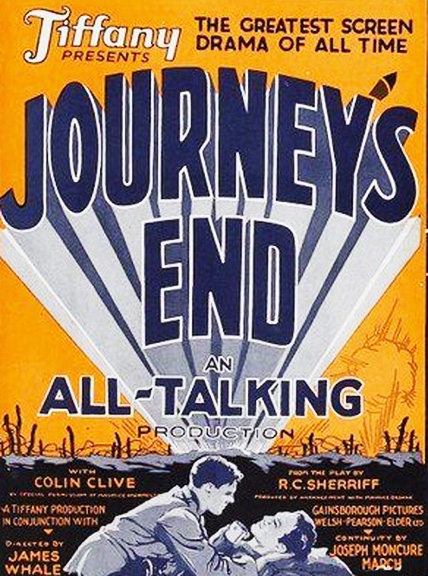
Director: James Whale

Cast: Colin Clive, Ian Maclaren, David Manners, Billy Bevan, Anthony Bushell, Robert Adair, Charles K Gerrard, Tom Whiteley

120 min

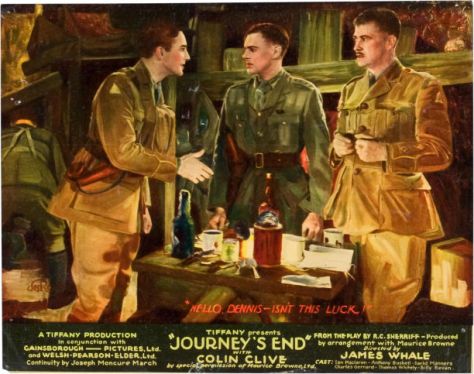
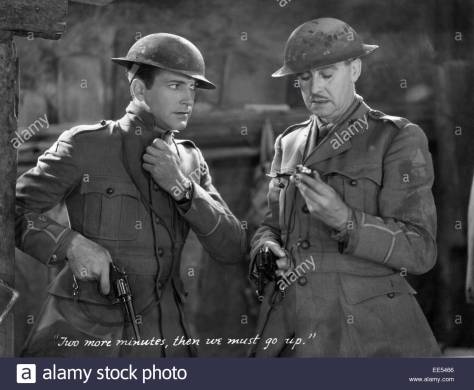
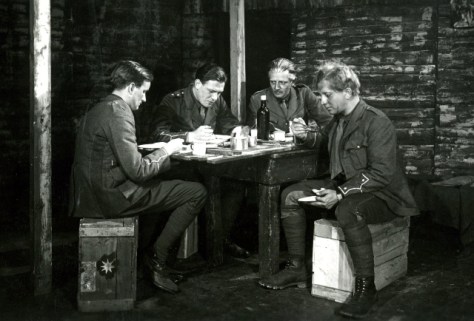
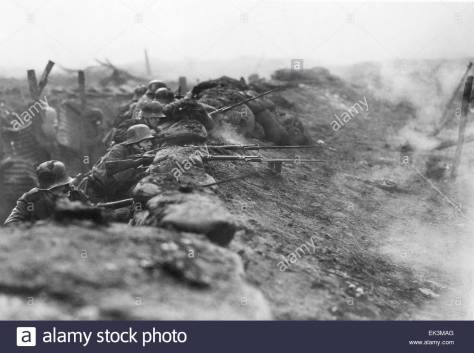
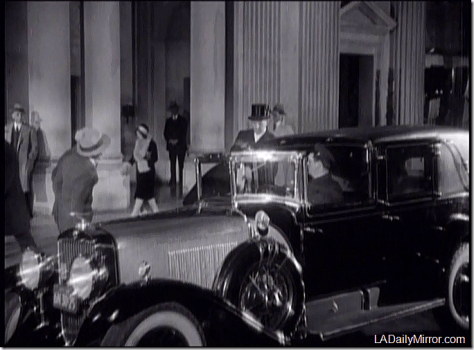
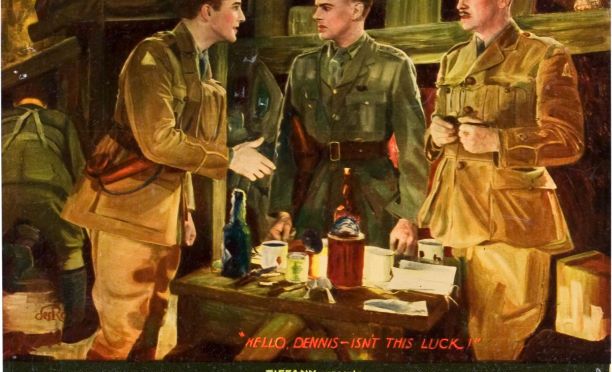
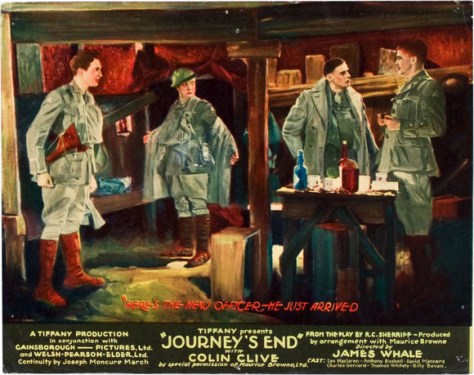
Journey’s End is a 1930 British-American war film directed by James Whale. Based on the play of the same name by R. C. Sherriff, the film tells the story of several British army officers involved in trench warfare during the First World War. The film, like the play before it, was an enormous critical and commercial success and launched the film careers of Whale and several of its stars.

The following year there was a German film version Die andere Seite directed by Heinz Paul starring Conrad Veidt as Stanhope and Wolfgang Liebeneiner as Raleigh. The film was banned just weeks after the Nazis took power in 1933.

In 1976, the play was adapted again as Aces High with the scenario shifted to the British Royal Flying Corps. The play was adapted for film again with its original title and scenario in 2017.
Journey's End 7

Plot

On the eve of a battle in 1918, a new officer, Second Lieutenant Raleigh (David Manners), joins Captain Stanhope’s (Colin Clive) company in the British trench lines in France. The two men knew each other at school: the younger Raleigh hero-worshipping Stanhope, while Stanhope has come to love Raleigh’s sister.

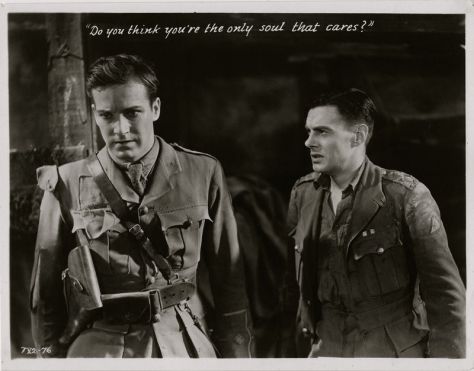
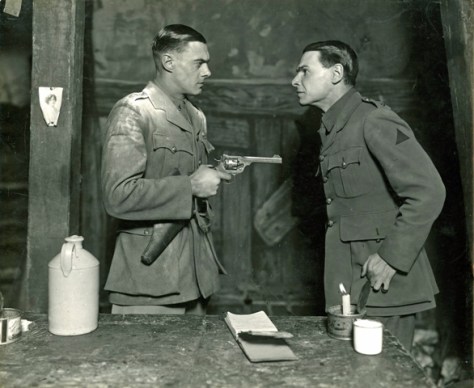
But the Stanhope whom Raleigh encounters now is a changed man who, after three years at the front, has turned to drink and seems close to a breakdown. Stanhope is terrified that Raleigh will betray Stanhope’s decline to his sister, whom Stanhope still hopes to marry after the war.

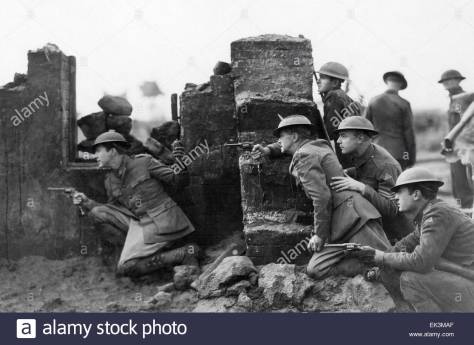
An older officer, the avuncular Lieutenant Osborne (Ian Maclaren), desperately tries to keep Stanhope from cracking. Osborne and Raleigh are selected to lead a raiding party on the German trenches where a number of the British forces are killed, including Osborne. Later, when Raleigh too is mortally wounded, Stanhope faces a desperate time as, grief-stricken and without close friends, he prepares to face another furious enemy attack.
Journey's End 3

Cast


Journey's End 4

Production

When Howard Hughes made the decision to turn Hell’s Angels into a talkie, he hired a then-unknown James Whale, who had just arrived in Hollywood following a successful turn directing the play Journey’s End in London and on Broadway, to direct the talking sequences; it was Whale’s film debut, and arguably prepared him for the later success he would have with the feature version of Journey’s EndWaterloo Bridge, and, most famously, the 1931 version of Frankenstein. Unhappy with the script, Whale brought in Joseph Moncure March to re-write it. Hughes later gave March the Luger pistol used in the film.[1]

With production delayed while Hughes tinkered with the flying scenes in Hell’s Angels, Whale managed to shoot his film adaptation of Journey’s End and have it come out a month before Hell’s Angels was released. The gap between completion of the dialogue scenes and completion of the aerial combat stunts allowed Whale to be paid, sail back to England, and begin work on the subsequent project, making Whale’s actual (albeit uncredited) cinema debut, his “second” film to be released.[citation needed]
Journey's End 5

References

Notes
  1. Jump up^ Curtis 1998, p. 86.
Bibliography
  • Curtis, James. James Whale: A New World of Gods and Monsters. Boston: Faber and Faber,1998. ISBN0-571-19285-8.
  • Dolan, Edward F. Jr. Hollywood Goes to War. London: Bison Books, 1985. ISBN0-86124-229-7.
  • Hardwick, Jack and Ed Schnepf. “A Viewer’s Guide to Aviation Movies”. The Making of the Great Aviation Films, General Aviation Series, Volume 2, 1989.
  • Orriss, Bruce. When Hollywood Ruled the Skies: The Aviation Film Classics of World War II. Hawthorne, California: Aero Associates Inc., 1984. ISBN0-9613088-0-X.
  • Osborne, Robert. 65 Years of the Oscar: The Official History of the Academy Awards London: Abbeville Press, 1994. ISBN1-55859-715-8.
  • “Production of ‘Hell’s Angels’ Cost the Lives of Three Aviators.” Syracuse Herald, December 28, 1930, p. 59.
  • Robertson, Patrick. Film Facts. New York: Billboard Books, 2001. ISBN0-8230-7943-0.
Journey's End 8

Journey's End 9

Journey's End 10

Journey's End 11

Film Collectors Corner

Watch Journey’s End Now – You Tube Instant Video


Blu Ray

Not released on Blu Ray


DVD

Not released on DVD


High Voltage (1929)


Pre Code Logo 1

Pre Code Hollywood Season: FD Cinematheque

High Voltage (1929)

High Voltage 6

Director: Howard Higgin

Cast: Carole Lombard, William Boyd, Diane Ellis, Owen Moore, Phillips Smalley, Billy Bevan

63 min

High Voltage 2

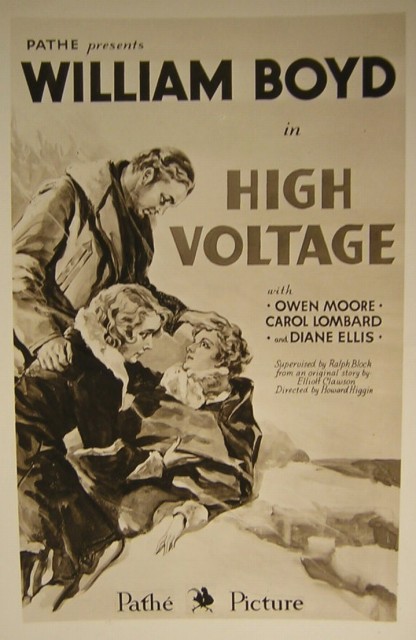
High Voltage (1929) is an American pre-Code film produced by Pathé Exchange and directed by Howard Higgin.

The film stars William Boyd, Diane Ellis, Owen Moore, Phillips Smalley, Billy Bevan, and Carole Lombard in her feature-length “talkie” debut, billed as “Carol Lombard.”

This film is in the public domain.

High Voltage 4

Plot

The film begins with a bus driving along a snow-covered roadway in the Sierra Nevada between Nevada City, California, and Reno, Nevada.

Soon the vehicle gets hopelessly stuck in deep snow forty miles from the nearest town.

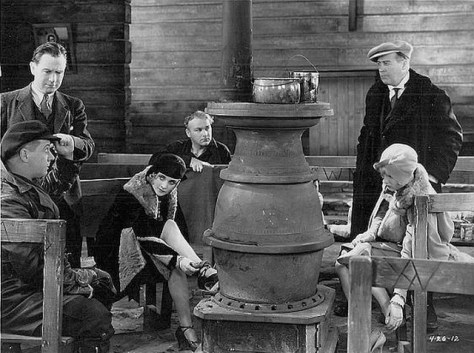
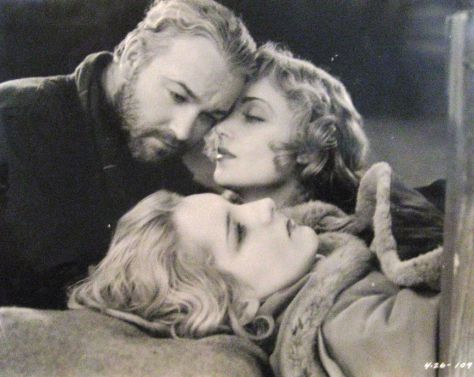
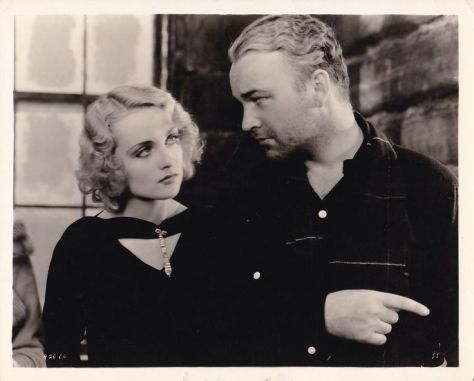
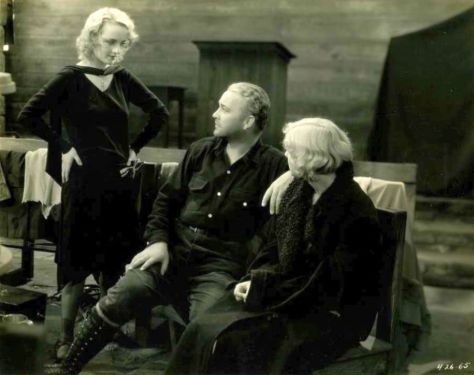
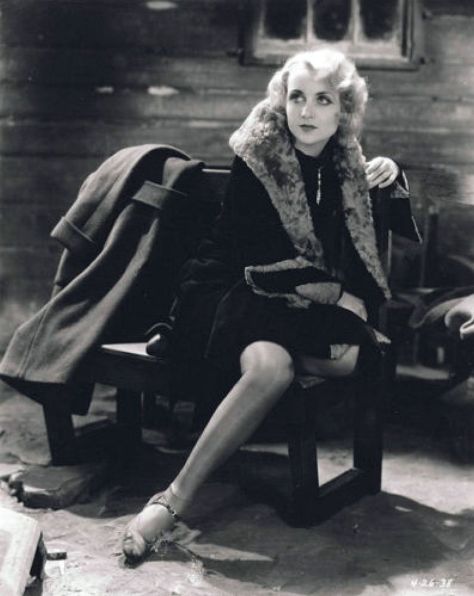
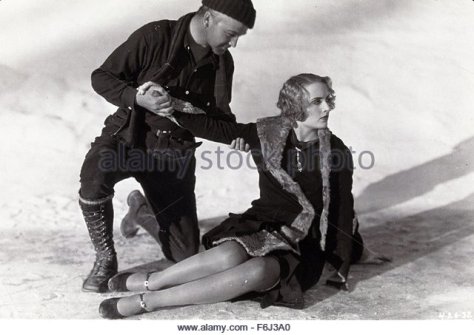
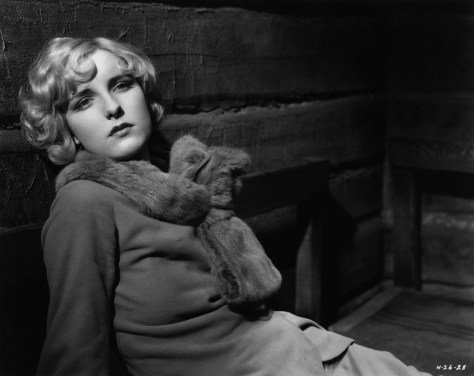
Needing shelter, the driver “Gus” (Billy Bevan) and his four passengers find refuge in an isolated one-room log church. The passengers include “Billie” (Carole Lombard), who is an escaped criminal being escorted back to jail in New York by a deputy sheriff, “Dan Egan” (Owen Moore); a young woman, “The Kid,” (Diane Ellis) on her way to Chicago to meet her boyfriend; and “Hickerson,” a pompous, ill-tempered banker. In the church the group finds “Bill” (William Boyd), a self-described “hobo,” who had found shelter there earlier. Tensions quickly arise in the group over their general plight, petty jealousies, and concerns about how six people are going to share the small supply of food that Bill had brought with him.

High Voltage 3

Tensions quickly arise in the group over their general plight, petty jealousies, and concerns about how six people are going to share the small supply of food that Bill had brought with him.

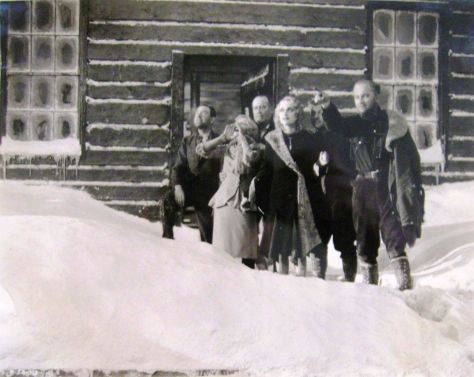
After a few days being stranded, the group sees a passing mail plane high in the sky. They try to attract the pilot’s attention, but he is too far away to see them. More days pass, and the group continues to ration their dwindling supplies and battle the subfreezing temperatures. To keep warm they begin to break up the church’s pews and other furnishings to use as firewood in the room’s potbelly stove.

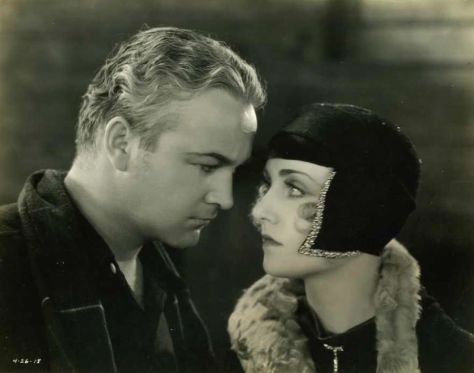
The group’s desperation intensifies, as does a romance between Bill and Billie. Soon Bill confides to her that he too is a wanted criminal, a fugitive from Saint Paul, Minnesota. As conditions worsen, The Kid collapses from hunger and become delirious; and the church’s interior becomes almost bare as more furnishings–even the church’s pulpit and pump organ–are consigned to the stove. Bill and Billie finally commit to leaving to avoid being imprisoned if the group is somehow rescued. They quietly depart during the night, hoping to reach a ranger station ten miles away.

High Voltage 5

Everyone else is sleeping except Dan, the deputy sheriff, who sees the two leaving; but he does nothing to stop them. After walking a short distance through snowdrifts, Bill and Billie hear and then see a search plane slowly circling overhead at low altitude. Realizing that the others inside the church will not hear the plane’s engine, they rush back and awaken them. The group hurriedly builds a signal fire, which the plane’s pilot sees. He parachutes a box of provisions to them with a note saying that help will be sent immediately.

The next day the group sees a rescue party heading toward the church. While awaiting their rescuers, Dan observes Bill and Billie sitting together on the floor. From his coat pocket Dan pulls out Billie’s extradition papers and a “wanted” notice that includes a photograph of Bill and information about his being a fugitive from Saint Paul. Dan walks over to the stove, now cold from no fires, and tosses both papers into it. Bill and Billie see him discard the papers, and they look at one another. Bill then gets up, retrieves the papers from the stove, gives them back to Dan, and asks him to drop him off in Saint Paul on his way back to New York with Billie.

High Voltage 7

Cast

William Boyd as “The Boy” (Bill)

“Carol” Lombard as “The Girl” (Billie Davis)

Owen Moore as “The Detective” (Dan Egan)

Phillips Smalley as “The Banker” (J. Milton Hendrickson)

Billy Bevan as “The Driver” (Gus)

Diane Ellis as “The Kid”

High Voltage 8

Cast notes

  • The opening credits of High Voltage give Carole Lombard’s first name as “Carol,” her preferred spelling for her name up until that time. However, the year after the release of High Voltage she performed in Paramount Pictures‘ production Fast and Loose. In her credits for that film, the studio mistakenly added an “e” to Carol. Lombard liked the spelling, so she decided to keep “Carole” permanently as her screen name.
  • In the screen credits of High Voltage, Owen Moore’s character “Dan Egan” is identified as “The Detective”; but early in the film Dan shows Bill his badge, which actually identifies him as a New York deputy sheriff.
  • Diane Ellis, who portrays “The Kid” in High Voltage, would die tragically the year after her performance in this film. In October 1930, she married Stephen C. Millett, a fellow American, in Paris, France. While on their extended honeymoon in India, she contracted an infection and died a week later in Chennai (then Madras) on December 15, 1930, just five days before her twenty-first birthday.

High Voltage 9

References

  1. Jump up^ “High Voltage”. The New York Times.
  2. Jump up^ The AFI Catalog of Feature Films: High Voltage
  3. Jump up^ High Voltage, “Free Public Domain Movies” listing; May 23, 2008. iMovies. Retrieved March 10, 2017.
  4. Jump up^ Several full 63-minute copies of High Voltage are available for viewing on YouTube.
  5. Jump up^ In the opening minutes of the film, the exterior signage and route destinations displayed on the bus identify the storyline’s setting as the Sierra Nevada.
  6. Jump up^ Gehring, Wes D. (2003). Carole Lombard: The Hoosier Tornado. Indianapolis, Indiana Historical Society Press, 78-79. ISBN 978-0-87195-167-0.
  7. Jump up^ “William Boyd,”, Internet Movie Database (IMDb). Retrieved March 10, 2017.
  8. Jump up^ The full 63-minute film High Voltage is available for viewing on YouTube.
  9. Jump up^ “Diane Ellis,” IMDb. Retrieved March 10, 2017.
  10. Jump up^ “Diane Ellis,” Redirectify. Retrieved March 10, 2017.

High Voltage 10

High Voltage 12

High Voltage 13

High Voltage 12

Film Collectors Corner

Watch High Voltage Now – You Tube Instant Video

Blu Ray

Not released on Blu Ray

DVD

For The Defense (1930)


Pre Code Logo 1

Pre Code Hollywood Season: FD Cinematheque

For The Defense (1930)

For the Defense 1

For the Defense 2

Director: John Cromwell

Cast: Kay Francis, William Powell, Scott Kolk, William B Davidson, Thomas E Jackson, Harry Walker, James Finlayson, Charles West, Bertram Marburgh, Billy Bevan, John Cromwell, Sidney D’Albrook

65 min

TCM ARCHIVE

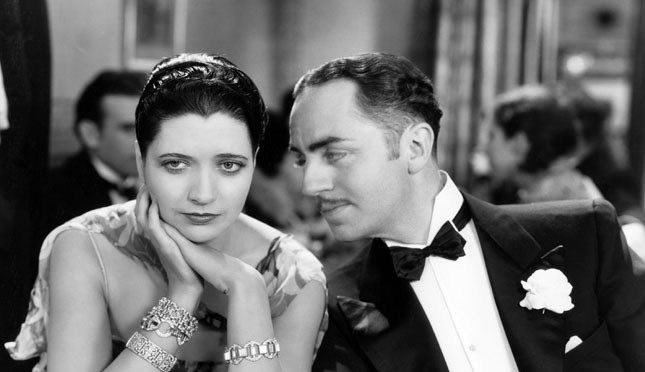
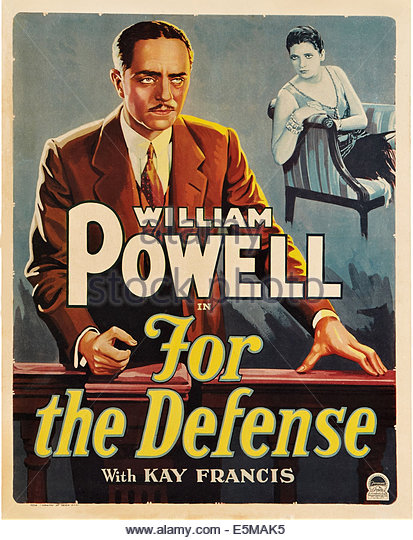
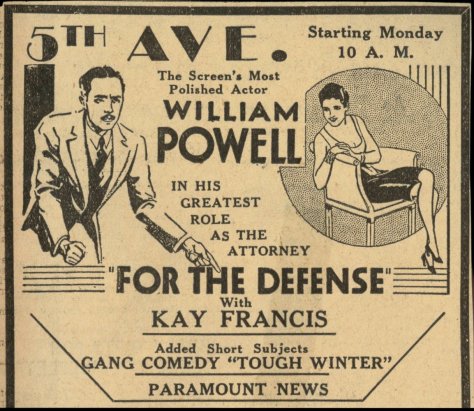
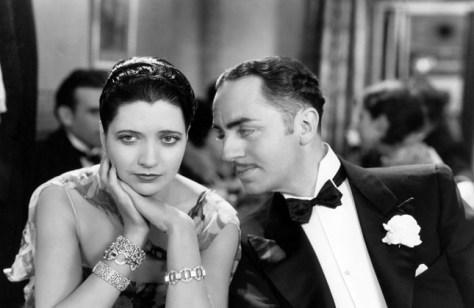
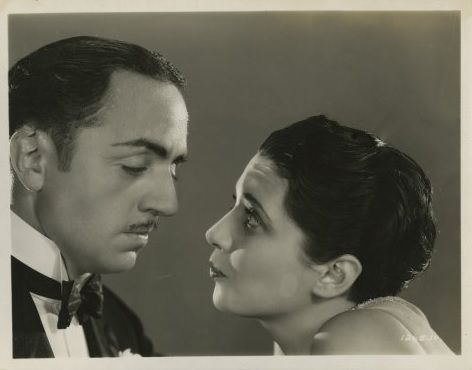
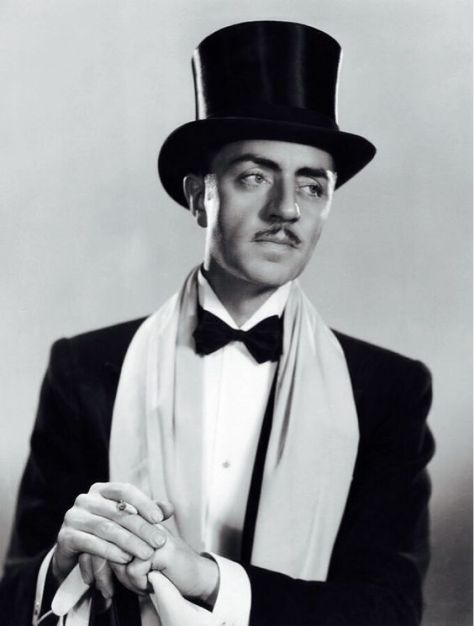
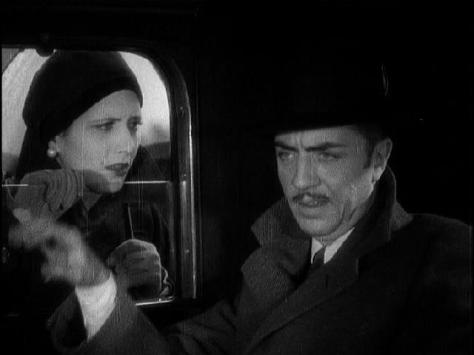
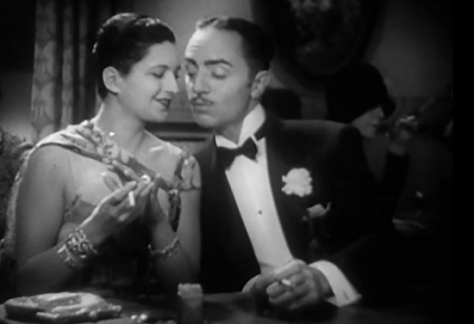
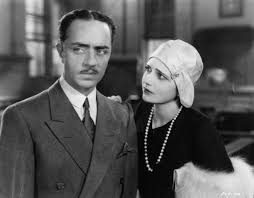
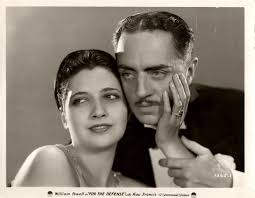
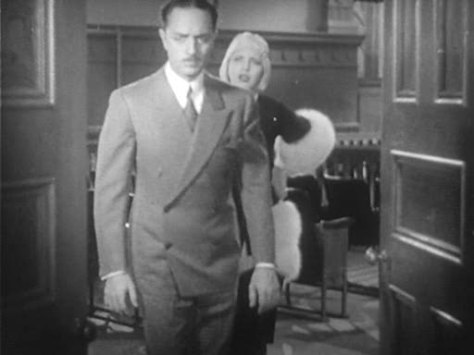
For the Defense is a 1930 Pre-Code crime drama film starring William Powell as a lawyer whose ethics are challenged when the woman he loves hits and kills a pedestrian while out driving with another suitor.

Plot

For the Defense 9

In New York City, William Foster (William Powell) is a criminal defense attorney so successful that prosecutors regard him as a menace. He holds himself to high ethical standards but is willing to mislead without actually lying.

Foster defends a man who planned a murder using explosives. District Attorney Stone (William B. Davidson) displays a vial and says chemical tests have shown that the liquid in it is sensitive nitroglycerin. Foster sniffs the liquid, questions him to verify the chain of custody, and then smashes the vial dramatically on the floor. When order is restored, he explains to the judge that he knew it was safe because nitro has a distinctive smell, and Stone says he had removed the actual nitro for safety after the chemical test. But Foster points out that only the liquid now in the bottle was entered into evidence, and wins his case.

For the Defense 7

Foster is in love with actress Irene Manners (Kay Francis), and she loves him, but she wants to be married and he does not. When another suitor, Jack Defoe (Scott Kolk), proposes to her, she says she needs to tell Foster about him before she can accept; but she finds she cannot do so. She stays out late enough at night with Defoe to leave only one implication of what they were doing, and while driving him home, she does agree to marry him. He suddenly hugs her and she loses control of the car, killing a bystander.

To protect Irene’s reputation, Defoe urges her to leave the scene, lying that the victim is not badly hurt. Presumed to have been driving while drunk, he is charged with manslaughter. They both still conceal her involvement, but she begs Foster to defend him. He asks why she cares enough about Defoe to insist; she says she and Defoe are just friends, but she had already promised him on Foster’s behalf, assuming Foster would be willing. Foster agrees, but finds that Defoe cannot tell a credible story at trial.

For the Defense 4

Then Foster finds out that Irene was at the accident scene and therefore must be much more than “just friends” with Defoe. Foster is crushed, but she still begs him to get Defoe acquitted, while Defoe fears Foster will throw the case and Irene will be charged and convicted as well. Foster eventually puts his love for Irene first and, for the first time in his life, bribes a juror to vote not guilty, hanging the jury.

Foster is quickly found out and arrested, and defends himself at trial. As he will not see Irene, she goes to Stone, admits what really happened at the accident, and says Foster was only trying to protect her. If Stone does not agree to recommend mercy, Irene says, she will tell her story in court. Stone says he will think about it.

Although his defense is going well, Foster then offers to plead guilty (and thus be disbarred, no doubt making life easier for prosecutors in future) if only Stone will agree not to retry Defoe; but Stone says he does not make deals. Back in court, Irene sends Foster a note pleading to let her testify and tell the truth. To protect her, Foster immediately changes his plea to guilty. Stone then tells Foster that neither Defoe nor Irene will be prosecuted.

As Foster arrives at Sing Sing to serve his sentence, Irene is there and says she will be waiting for him when he comes out. He says that if she does, then he will marry her.

For the Defense 10

Cast

For the Defense 5

For the Defense 3

For the Defense 11

For the Defense  12.jpg

Film Collectors Corner

Watch For The Defense Now – Instant Video on Internet Archive

Blu Ray

Not released on Blu Ray

DVD