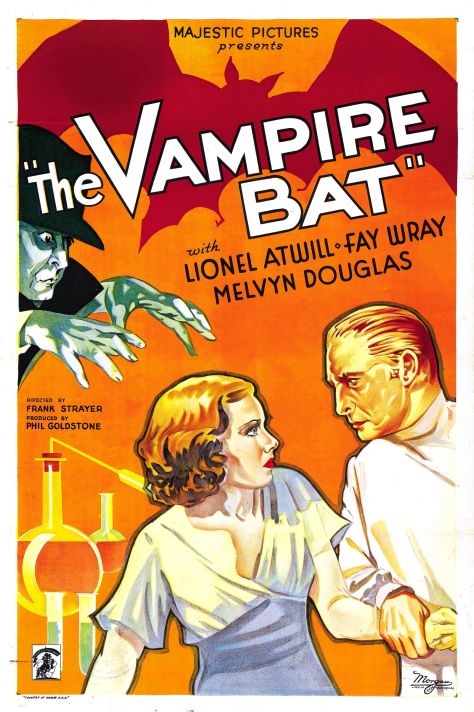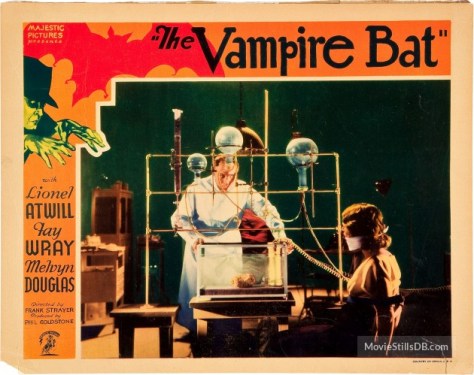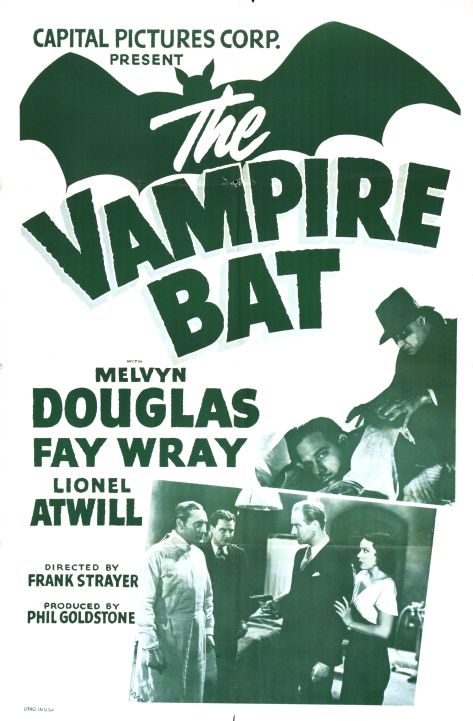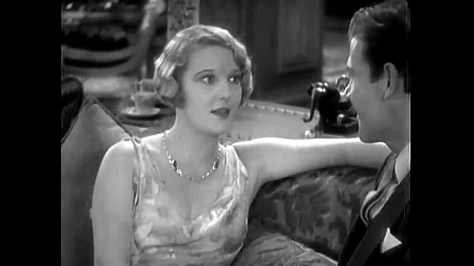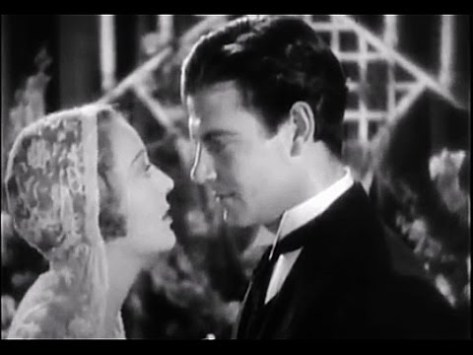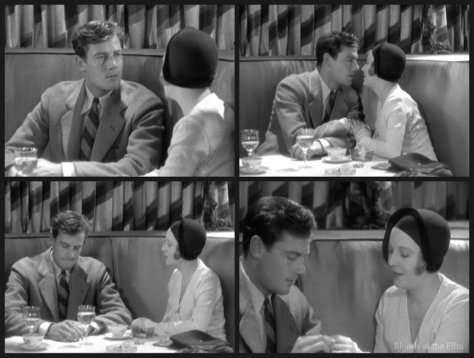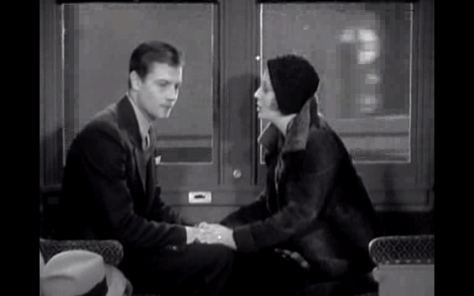
Tag Archives: Pre Code Films

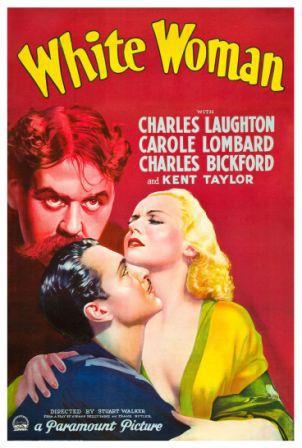
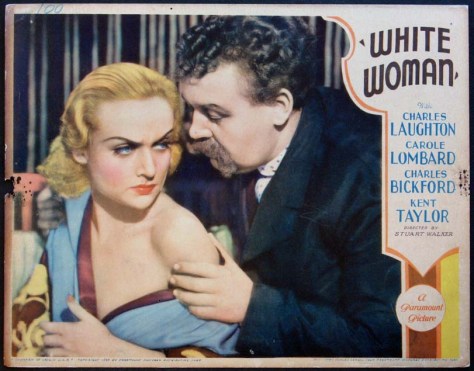
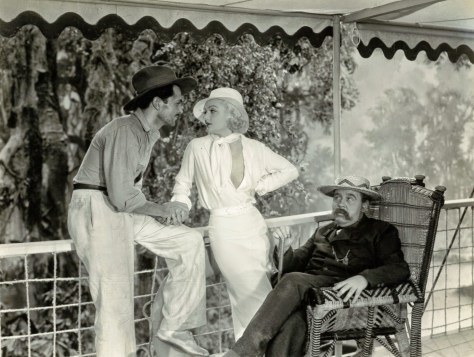
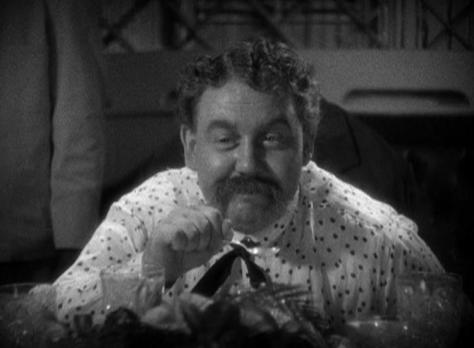
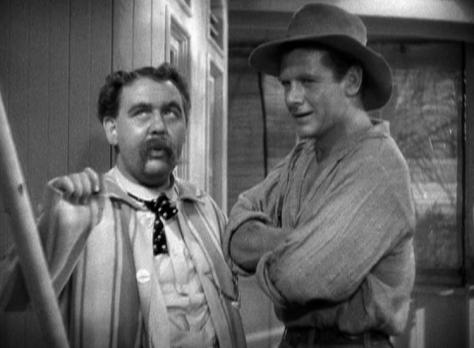
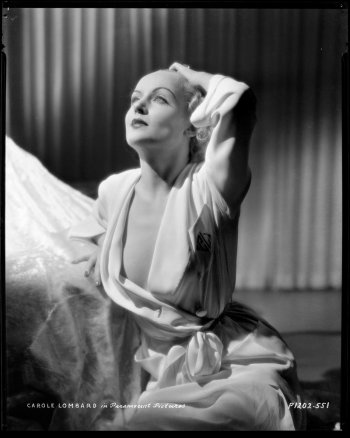
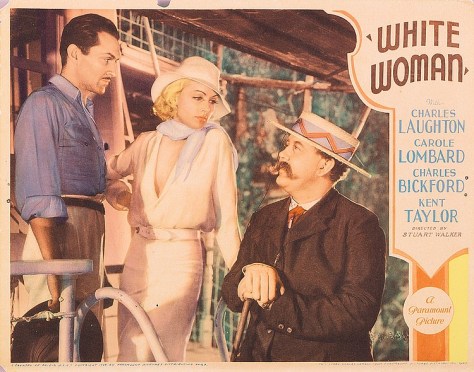
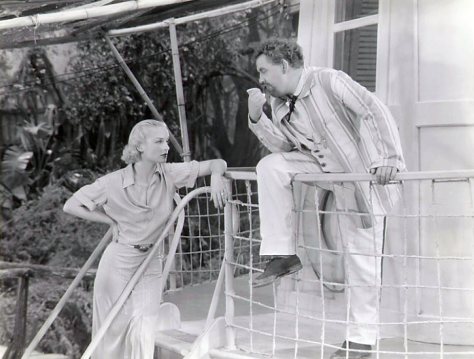
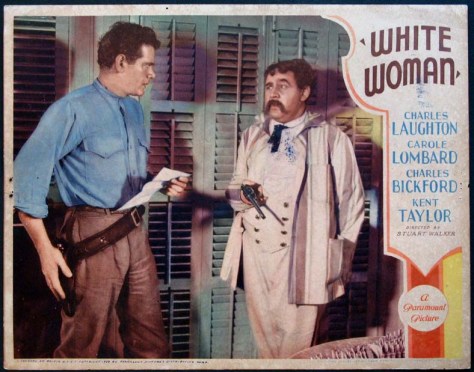
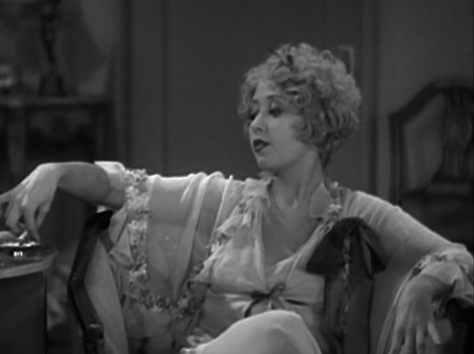
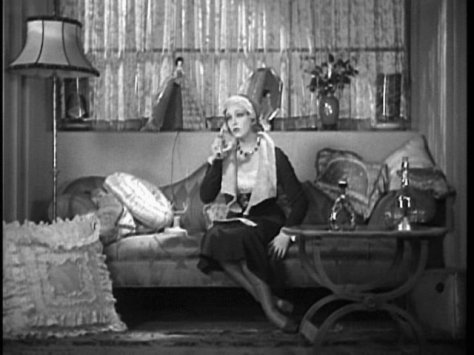
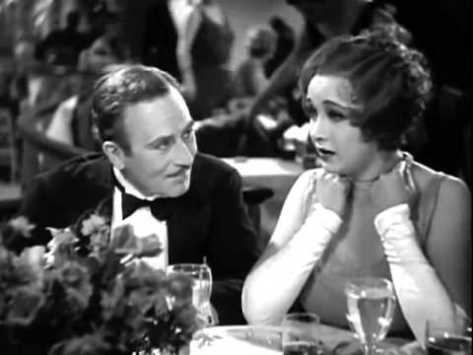
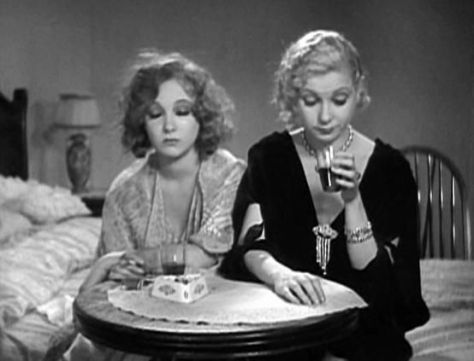
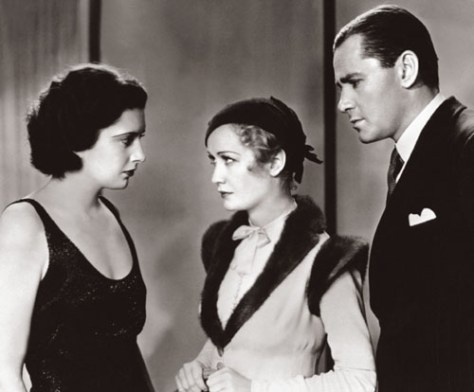
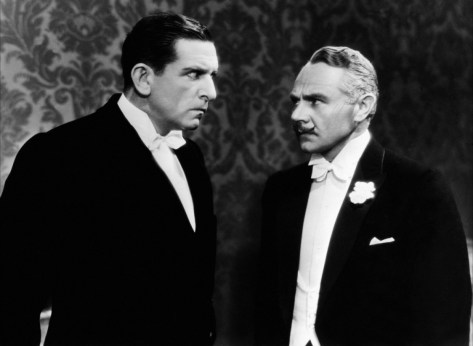
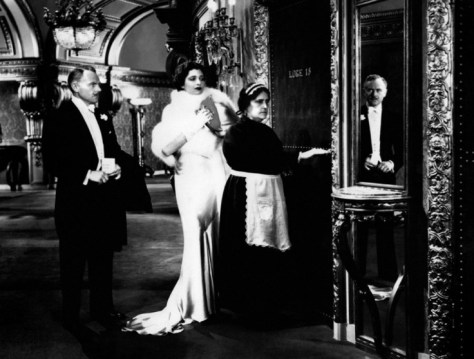
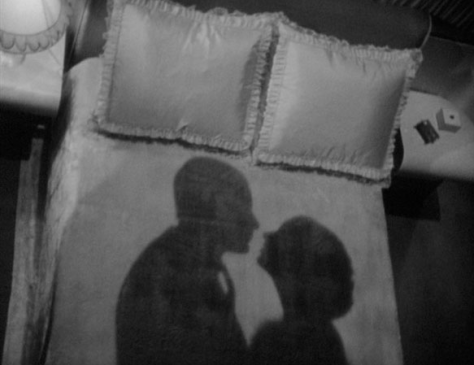
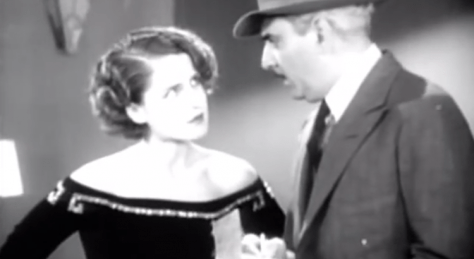
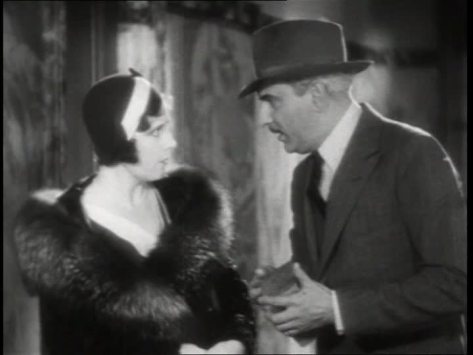
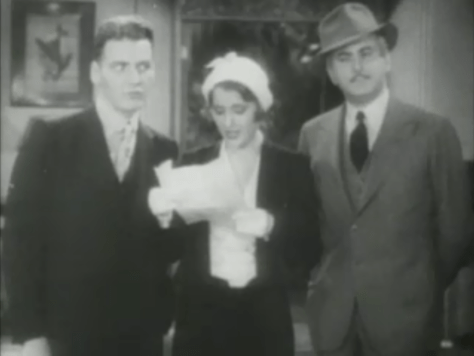
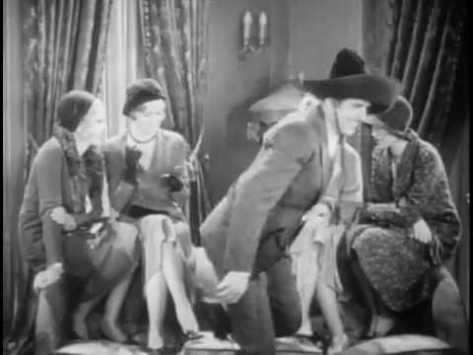
White Woman (1933)


Pre Code Logo 1

Pre Code Hollywood Season: FD Cinematheque

White Woman (1933)

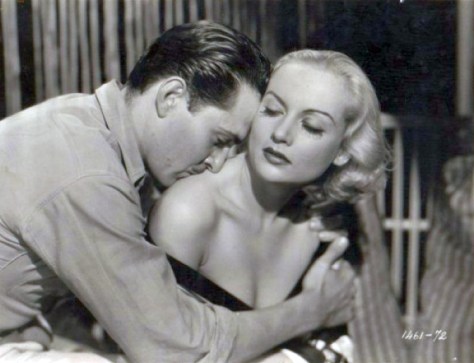
White Woman 1

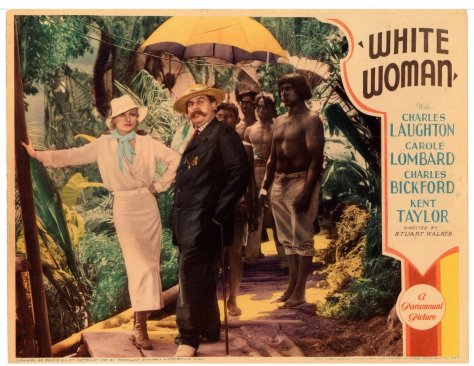
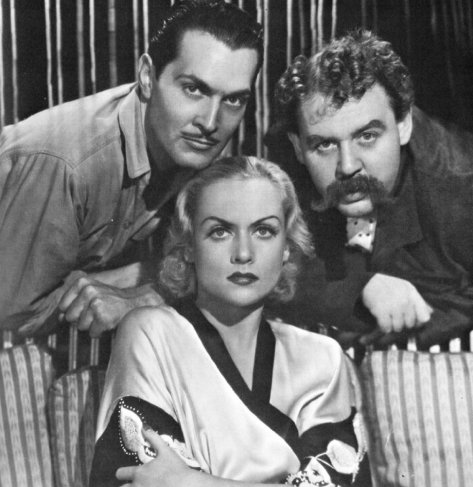
White Woman 4

Director: Stuart Walker

Cast: Carole Lombard, Charles Laughton, Charles Bickford, Kent Taylor,  Percy Kilbride, James Bell, Charles Middleton, Claude King, Ethel Griffies

68 min

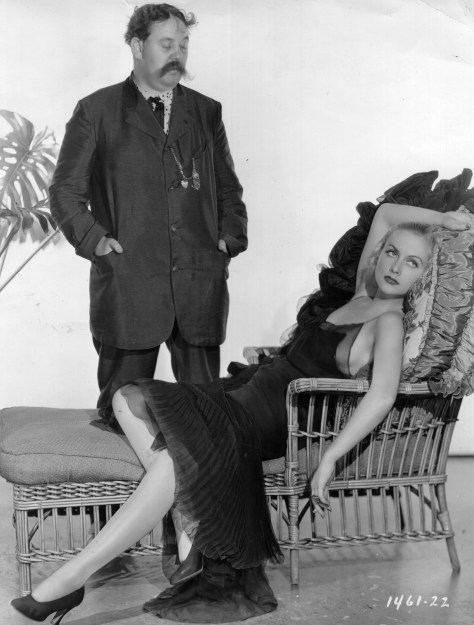
White Woman 5

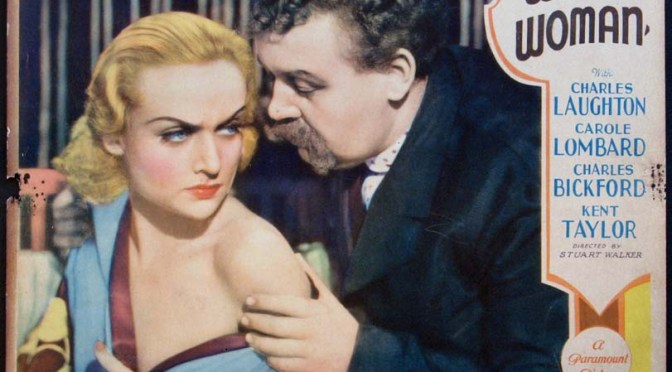
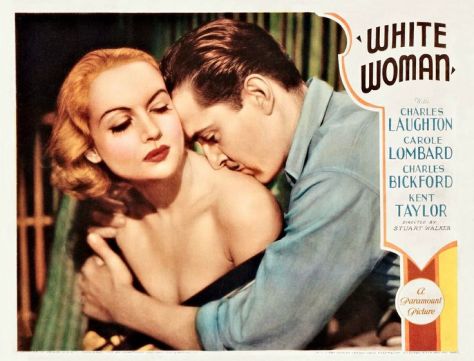
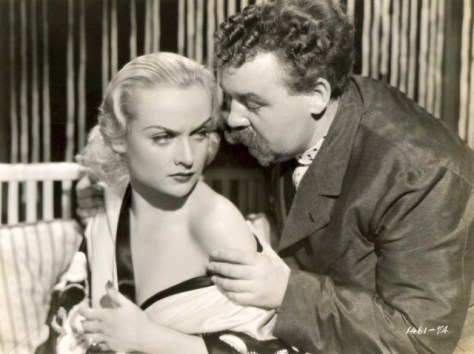
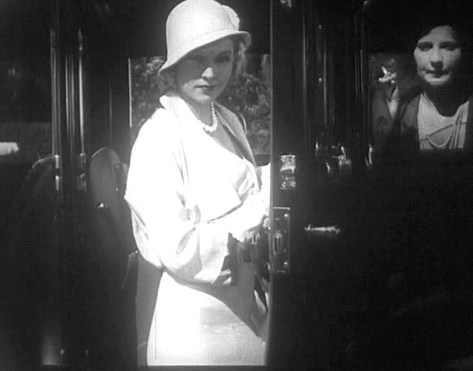
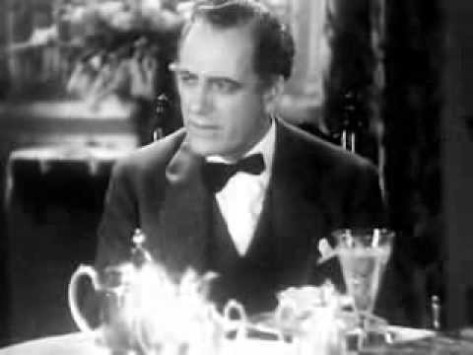
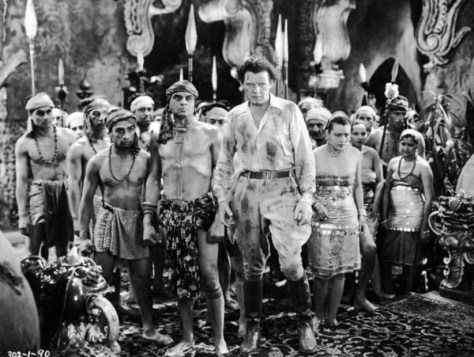
White Woman is a 1933 American pre-Code drama film directed by Stuart Walker and starring Carole LombardCharles Laughton, and Charles Bickford.[1] A young widow remarries and accompanies her husband to his remote jungle rubber plantation. The film was based on the Broadway play Hangman’s Whip by Norman Reilly Raine and Frank Butler.[2]

One of hundreds of Paramount films held in limbo by Universal Studios. Universal gained ownership of Paramount features produced between 1929 and 1949. Paramount remade the film in 1939 as Island of Lost Men, with Anna May WongJ. Carrol Naish and Broderick Crawford in the roles originated by Lombard, Laughton and Bickford. It was directed by Kurt Neumann.[3]

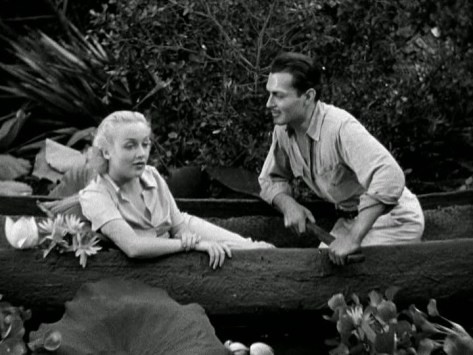
White Woman 3

Plot

Judith Denning, a beautiful cafe singer in Malay, has been forced to leave town after town because of gossip that says her husband’s suicide was on account of her infidelity. Upright British lawyer C. M. Chisholm accuses Judith of being a “loose white woman” who is tempting the natives and forces her to leave town by getting her fired.

Horace H. Prin, “King of the Jungle,” then offers to marry her. Prin takes Judith to his jungle home on the river, where he has been running a trading outfit for twenty years. Prin’s white management crew consists largely of criminal exiles whose secret pasts he uses as leverage to get them to remain under his ruthless tyranny.

White Woman 6

When Hambly, who runs a station up the river, insists that the poor diet Prin has been feeding the native workers is breeding insurrection among them, Prin has him killed. Overseer David von Elst, who has not seen a white woman in ten years, quickly falls in love with Judith. A month after Judith’s arrival, she and David decide to run away, but when they confront Prin, he refuses to give them a boat and sends David up the river to take Hambly’s place at Gubar.

David, meanwhile, has told Judith he deserted his regiment after natives decapitated his partner and threw his head through David’s window. Since then he has lacked the courage to fight Prin and return to society. Ballister, the new tough overseer, then arrives and immediately asks Judith for a “tumble,” undaunted by Prin’s eccentric tyranny. When two tribal chiefs request the right to deal with other traders, Prin foolishly refuses them, and they prepare for war against him.

The natives kill Connors, one of Prin’s men, and throw his head through David’s window, after which David finally regains his nerve and travels through the dangerous jungle to warn Judith. David and Judith prepare to leave, but Prin drains their boat of gas. Ballister, sympathetic to the lovers, warns them to take another boat. When Prin shoots his pet baby ape, “Duke,” Jakey, Prin’s most faithful white servant, throws his machine guns in the river and leaves with David and Judith. Ballister and Prin play poker and drink as the natives approach, armed with spears. After Ballister is killed, Prin declares he is forever king of the jungle and walks out into the onslaught of spears.

White Woman 9

Cast

White Woman 11

References

  1. Jump up^ The American Film Institute Catalog Feature Films: 1931-40 published by The American Film Institute c.1993
  2. Jump up^ Hangman’s Whip, St. James Theatre, February 24, 1933, IBDb.com; accessed August 5, 2015.
  3. Jump up^ The American Film Institute Catalog Feature Films: 1931-40 published by The American Film Institute, c. 1993

White Woman 13

White Woman 8

White Woman 12

White Woman 14

White Woman 7

White Woman 15

White Woman 16

White Woman 17

White Woman 18

White Woman 19

White Woman 20

Film Collectors Corner

Watch White Woman Now – Instant Video on You Tube

Blu Ray

Not released on Blu Ray

DVD

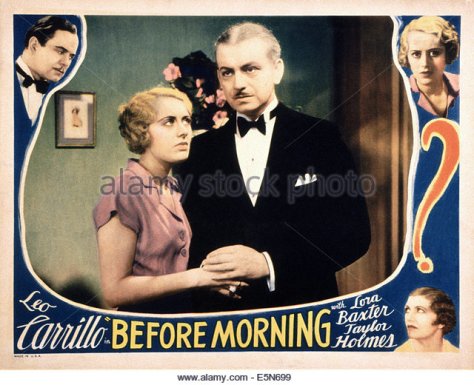
Before Morning (1933)


Pre Code Logo 1

Pre Code Hollywood Season: FD Cinematheque

Before Morning (1933)

Before Morning 1

Director: Arthur Hoerl

Cast: Leo Carillo, Lora Baxter, Taylor Holmes, Blaine Cordner, Louise Prussing, Russell Hicks, Louis Jean Heydt, Jules Epailly

56 min

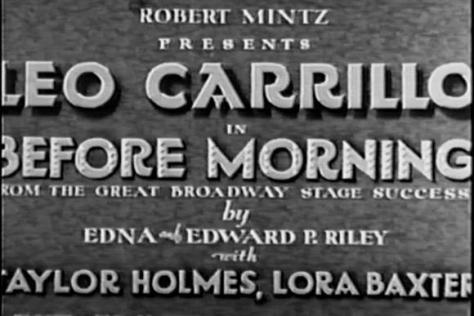
Before Morning is a 1933 American Pre-Code crime drama directed by Arthur Hoerl, and starring Leo Carrillo, Lora Baxter, and Taylor Holmes. The film was adapted for the screen by Arthur Hoerl, from the 1933 Broadway play of the same name by Edward and Edna Riley.[1]

Synopsis

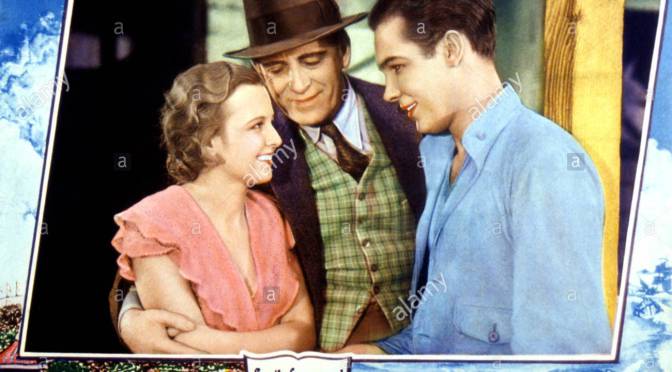
Actress Elsie Manning (Lora Baxter) is engaged to Horace Baker (Blaine Cordner), but has also been in a romantic relationship with James Nichols (Russell Hicks) who has named her as the beneficiary in his will. Not knowing about her engagement, Nichols asks his wife for a divorce and is refused. Nichols dies in Manning’s apartment after she tells him she’s engaged to Baker. When Baker arrives on the scene, he agrees to help her dispose of the body by having Nichols moved to a sanitarium. The owner, Dr. Gruelle (Leo Carrillo), tells them Nichols was murdered by poison and attempts to extort money from Manning for his statement that the death was of natural causes. Gruell tries the same scam on the widow of Nichols (Louise Prussing), who eventually agrees when the poison is found in her purse. It is revealed that Gruell is really a corrupt police inspector named Mr. Maitland.[2]

Before Morning 2

Cast

Before Morning 4

References

  1. Before Morning at the Internet Broadway Database
  2. Jump up^ “Before Morning”AFI Catalog of Feature Films. AFI. Retrieved July 20, 2015.

Before Morning 3


Film Collectors Corner

Watch Before Morning Now – Instant Video on You Tube


Blu Ray

Not released on Blu Ray


DVD

Not released on DVD


Lena Rivers (1932)


Pre Code Logo 1

Pre Code Hollywood Season: FD Cinematheque

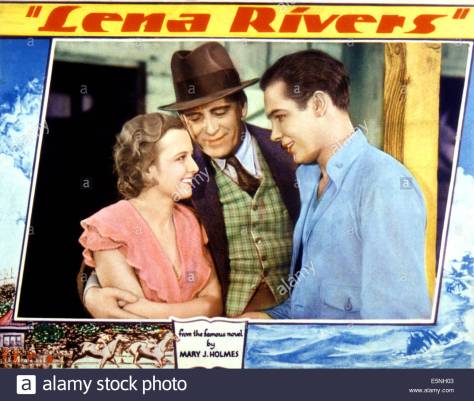
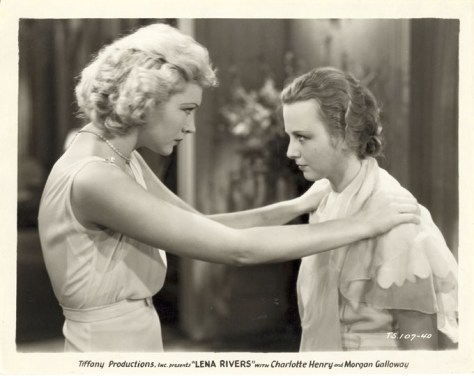
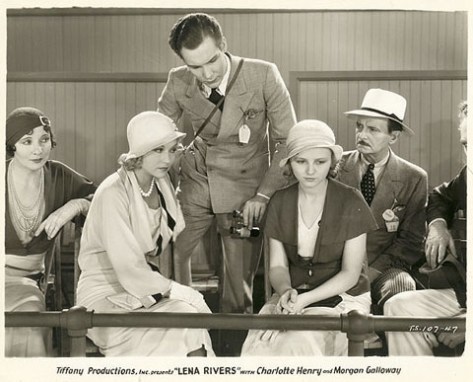
Lena Rivers AKA The Sin Of Lena Rivers (1932)

Lena Rivers 1

Director: Phil Rosen

Cast: Charlotte Henry, Morgan Galloway, Beryl Mercer, James Kirkwood, John St Polis, Betty Blythe, Joyce Compton, Russell Simpson, Clarence Muse, The Kentucky Singers

67 min

Lena Rivers 2 

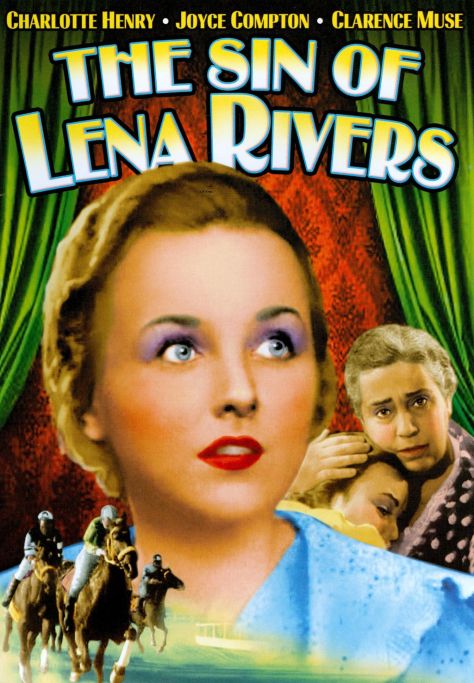
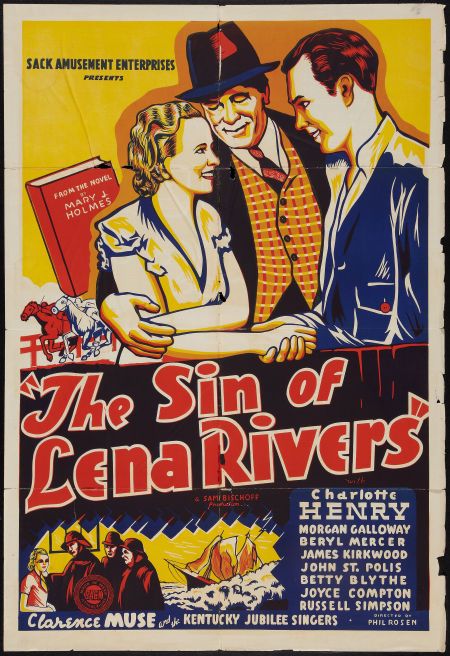
Lena Rivers, aka The Sin of Lena Rivers, is a 1932 American pre-Code drama film directed by Phil Rosen based on the 1856 novel by Mary Jane Holmes. Filmed on several occasions throughout the silent era.[1]

Plot

Lena Rivers’ mother dies in childbirth, and the child is left to be reared by her grandparents. Years later, her grandfather is reported lost at sea, and Lena and her grandmother go to live in Canterville, Kentucky with John Nichols, Lena’s uncle, despite the objections of John’s wife Mathilda and his daughter Caroline, who think that Lena is illegitimate.

Henry R. Graham, the owner of the plantation next to the Nichols’, seems bothered when he meets Lena. One day, Lena plays with a bunny on the Graham property, and she is horrified when Graham’s ward, Durrie Belmont, shoots it. Although she calls him a murderer, Durrie, who is courting Caroline, becomes attracted to Lena.

Graham takes a personal interest in Lena because she reminds him of a woman with whom he was in love, but who died while he was away, believing he had deserted her. When Lena shows a gift for calming the excitable horse Brimstone, Graham gives her the horse. After Graham introduces her to Durrie, the boy promises never to shoot another bunny and walks her home. Graham throws a party at his manor, but Lena does not come because she does not have a fancy dress, so Durrie goes to her house.

Lena Rivers 6

They take a walk, and he kisses her before she goes in. Caroline sees them together and calls Lena an “ungrateful sneak,” then says she takes after her mother, who never married. Lana slaps her and runs crying to her grandmother, who assures her that her mother was married, but that her father left her to die. Graham enters Brimstone in the races for Lena because she has made astonishing progress with the previously unmanageable horse.

When Lena’s grandmother has an attack, Graham, worried about the effect her possible death might have on Lena, mentions to Durrie that he would like to adopt her. Durrie’s jealousy is aroused, as Caroline had earlier implied that Graham and Lena were having an illicit affair. In reality, Graham is Lena’s father. He had married her mother in secret because of his tyrant father, using his middle name “Rivers” as their surname.

His father “shanghaied” Graham to Europe, and when he returned, he learned that his wife had died. Until Lena recently appeared, he had been unaware that he had a daughter. Brimstone wins the race, and Lena is awarded $5,000, but Durrie discovers that Graham told the jockey of his competing horse to let Brimstone win.

Lena Rivers 8

Still unaware of Graham’s real relationship to Lena, Durrie, jealous, angry and drunk, proposes to Caroline, who agrees to marry him. Lena’s grandmother dies after realizing that Lena now has enough money to support herself. Shaken by the death, Lena learns about Durrie and Caroline’s elopement and leaves town to make a new life for herself elsewhere after forgiving Graham, who has revealed his secret to her.

Meanwhile, Durrie drives recklessly and his car goes over an embankment. When Graham finds out that Durrie and Caroline are in the hospital, he sends for Lena. While Caroline flirts with a doctor, Durrie learns that Graham is Lena’s father and leaves the hospital to find her and marry her. He gets into a car to find Lena inside, and they hug and kiss.

Lena Rivers 5

Cast

Lena Rivers 7

References

  1. Jump up^ The AFI Catalog of Feature Films:..Lena Rivers

Lena Rivers 4

Lena Rivers 3

Film Collectors Corner

Watch Lena Rivers Now – Amazon Instant Video

Blu Ray

Not released on Blu Ray

DVD

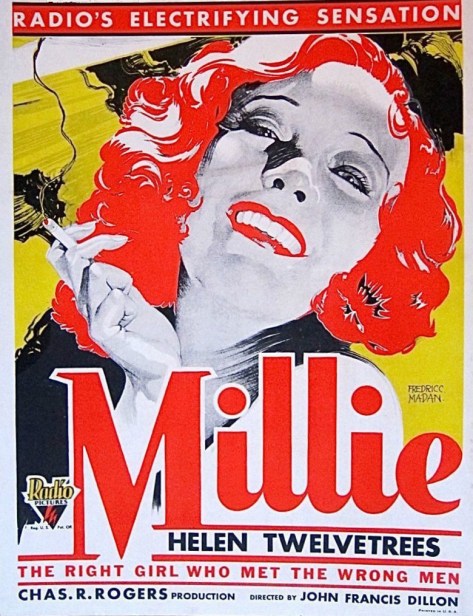
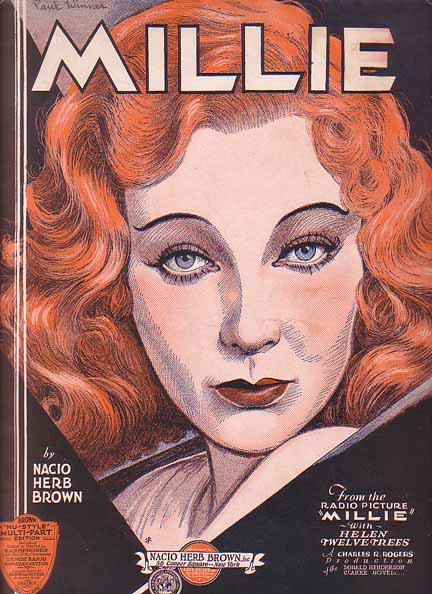
Millie (1931)


Pre Code Logo 1

Pre Code Hollywood Season: FD Cinematheque

Millie (1931)

Millie 2

Millie 3

Director: John Francis Dillon

Cast: Helen Twelvetrees, Lilyan Tashman, Robert Ames, James Hall, John Halliday, Joan Blondell, Anita Louise, Edmund Breese, Frank McHugh, Charlote Walker, Franklin Parker, Marie Astaire, Carmelita Geraghty

85 min

Millie 1

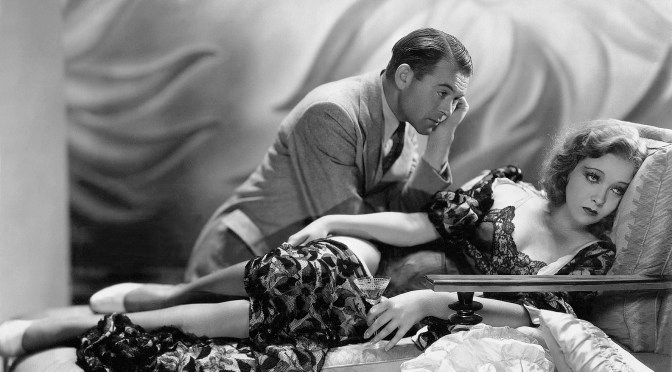
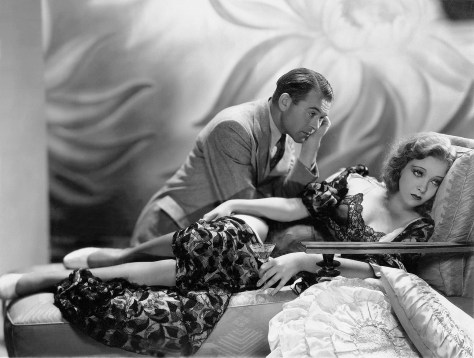
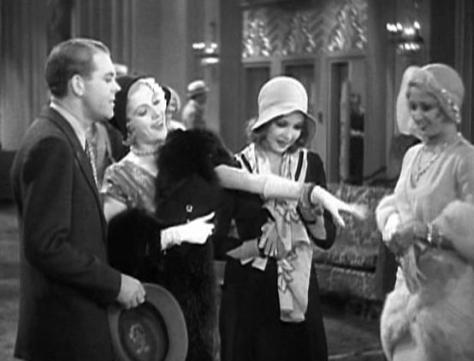
Millie (1931) is a pre-Code drama film directed by John Francis Dillon from a screenplay by Charles Kenyon and Ralph Morgan, based on a novel of the same name by Donald Henderson Clarke. The film was an independent production by Charles R. Rogers, distributed by RKO Radio Pictures, after their acquisition of Pathé Exchange. It starred Helen Twelvetrees in one of her best roles, with a supporting cast which included Lilyan TashmanJames HallJoan BlondellJohn Halliday and Anita Louise.

Plot

Millie (Helen Twelvetrees) is a naive young woman who marries a wealthy man from New York, Jack Maitland (James Hall). Three years later, unhappy in her marriage due to her husband’s continued infidelity, she asks for and receives a divorce. Because of her pride, she does not want his money, but she also does not want to deprive her daughter of a comfortable lifestyle. She allows Jack and his mother (Charlotte Walker) to retain custody of Millie’s daughter Connie (Anita Louise).

Millie 4

Focusing on her career, she rises through the hierarchy of the hotel where she is employed, shunning the attention of the rich banker Jimmy Damier (John Halliday), preferring the attentions of the reporter Tommy Rock (Robert Ames), although, due to her prior sour relationship, she refuses to marry him. Eventually, Millie is promoted to the head of operations for the hotel.

At the same time, Tommy is offered a lucrative position at the bank by Damier as a favor to Millie. However, at the celebration party, Millie discovers that Tommy, just like Maitland, is cheating on her.

Millie 5

Betrayed a second time, Millie becomes very bitter. With her female cohorts, Helen and Angie (Lilyan Tashman and Joan Blondell, respectively), she becomes a woman who loves a good time, floating from man to man. This goes on for several years, until she hears that Damier has taken an interest in her teen-age daughter, Connie, who bears a striking resemblance to her.

Millie warns Damier to leave her daughter alone, but, although he promises to stay away from Connie, he ignores Millie’s warning and takes Connie to a remote lodge to seduce her. Millie is tipped off, goes to the lodge with a gun, confronts Jimmy and kills him.

Millie 6

In the ensuing murder trial, Millie tries to keep her daughter’s name out of the press and claims not to remember why she shot Jimmy. She says that another woman ran out of the lodge after the shot, but claims that she did not see who the woman was and has no idea as to her identity.

The prosecution thus claims that Millie’s motive was jealousy of Jimmy’s romantic relationship with this unknown other woman. Millie’s friends, however, help to bring out the truth, and when the jury finds out that Millie’s true motive was to protect her daughter from Jimmy’s lascivious intentions, they acquit her. In the end, Millie is reunited with her daughter and her estranged husband’s family.

Millie 8

Cast

(Cast as per AFI‘s database)[2]

Millie 10

Production

Donald Henderson Clarke finished his novel, Millie, during summer 1930.[4] The novel was first offered to Metro-Goldwyn-Mayer, who passed on it due to its racy content.[5] In August of that year, it was reported that Charles R. Rogers had purchased the film rights to the novel, and had signed Charles Kenyon to adapt it into a screenplay, as well as selecting John Francis Dillon to direct.[6]

Although Rogers had signed an agreement to distribute his independent films through RKO, it was reported that he would be overseeing the production on the Universal lot.[7] Even though he was incorrectly identified as “Ralph Murphy”, Ralph Morgan was signed to collaborate with Kenyon on the screenplay adaptation in September.[8]

Millie 7

Less than a week later, Helen Twelvetrees signed on for the titular role;[9] and it was reported that the screenplay adaptation had been completed.[5] Rogers would choose Ernest Haller to shoot the film and sign him for the project in the beginning of October.[10]

In January RKO announced the film would be released in February,[11] and it was released on February 8, 1931.[2]

Millie 11

Notes

The film was an independent production by Charles Rogers, but became the property of RKO when he agreed to become their production chief.[12]

The theme song, “Millie”, had words and music by Nacio Herb Brown.[2]

In 1959, the film entered the public domain in the USA due to the copyright claimants failure to renew the copyright registration in the 28th year after publication.[13]

The film’s tagline was “Torn From Her Arms … Child Of Love A Woman Can Give But Once.”[1]

Millie 12

References

  1. Jump up to:a b “Millie: Technical Details”. theiapolis.com. Retrieved August 11, 2014.
  2. Jump up to:a b c d e f g “Millie: Detail View”. American Film Institute. Archived from the original on September 20, 2015. Retrieved December 30, 2016.
  3. Jump up to:a b “Millie, Credits”. Turner Classic Movies. Archived from the original on August 11, 2014. Retrieved August 11, 2014.
  4. Jump up^ Daly, Phil M. (April 17, 1930). “Along the Rialto”The Film Daily. p. 5.
  5. Jump up to:a b “Rogers Chances “Millie””Variety. September 24, 1930. p. 5.
  6. Jump up^ “Hollywood Flashes”The Film Daily. August 30, 1930. p. 3.
  7. Jump up^ “Don Clarke’s Story To Be First Rogers Film”Motion Picture News. August 23, 1930. p. 26.
  8. Jump up^ “Hollywood Activities”The Film Daily. September 21, 1930. p. 29.
  9. Jump up^ “Hollywood Happenings”The Film Daily. September 24, 1930. p. 6.
  10. Jump up^ Wilk, Ralph (October 12, 1930). “A Little from “Lots””The Film Daily. p. 4.
  11. Jump up^ “”Cimarron” and “Millie” Releases”The Film Daily. January 22, 1931. p. 3.
  12. Jump up^ Jewell, Richard B.; Harbin, Vernon (1982). The RKO Story. New York: Arlington House. p. 32. ISBN 0-517-546566.
  13. Jump up^ Pierce, David (June 2007). “Forgotten Faces: Why Some of Our Cinema Heritage Is Part of the Public Domain”. Film History: An International Journal19 (2): 125–43. ISSN 0892-2160JSTOR 25165419OCLC 15122313doi:10.2979/FIL.2007.19.2.125. See Note #60, pg. 143.

Millie 9

Millie 13

Film Collectors Corner

Watch Millie Now – Instant Video on You Tube

Blu Ray

Not released on Blu Ray

DVD

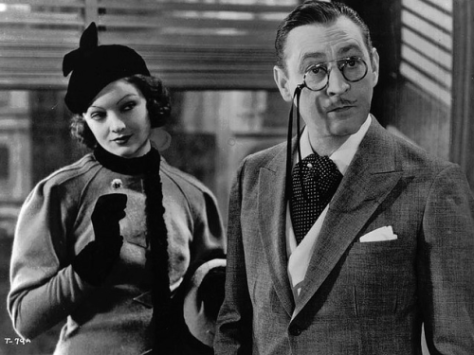
Topaze (1933)


Pre Code Logo 1

Pre Code Hollywood Season: FD Cinematheque

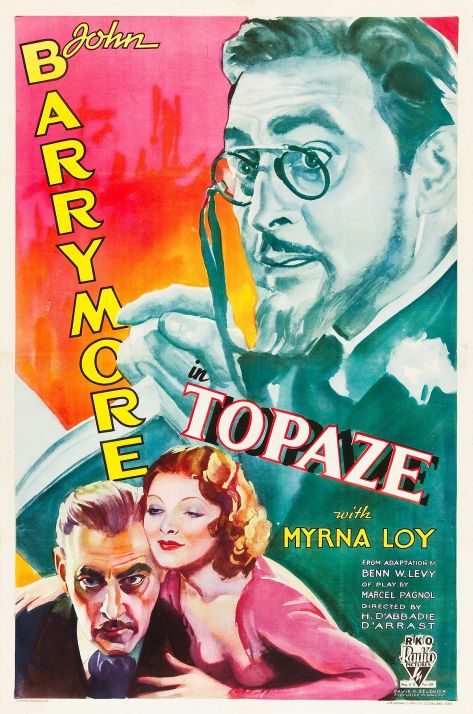
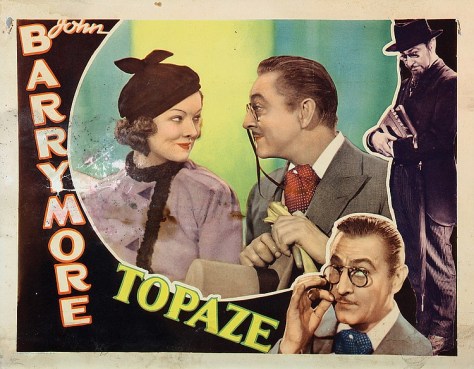
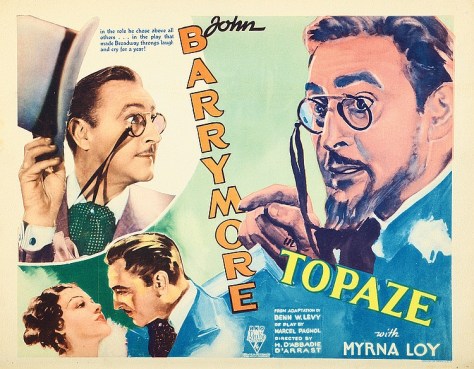
Topaze (1933)

Topaze 1

Director: Harry D’Abbadie D’Arrast

Cast: John Barrymore, Myrna Loy, Reginald Mason, Jobyna Howland, Jackie Searl, Albert Conti, Frank Reicher, Luis Alberini, Lowden Adams

78 min

Topaze 11

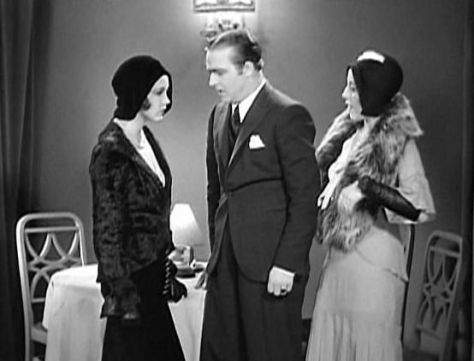
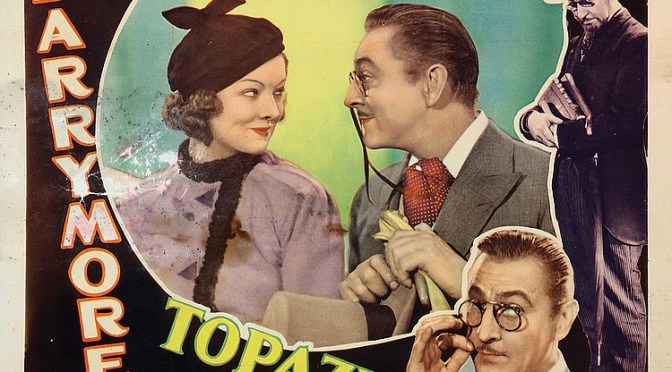
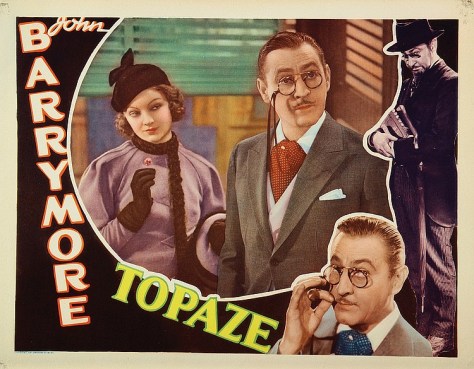
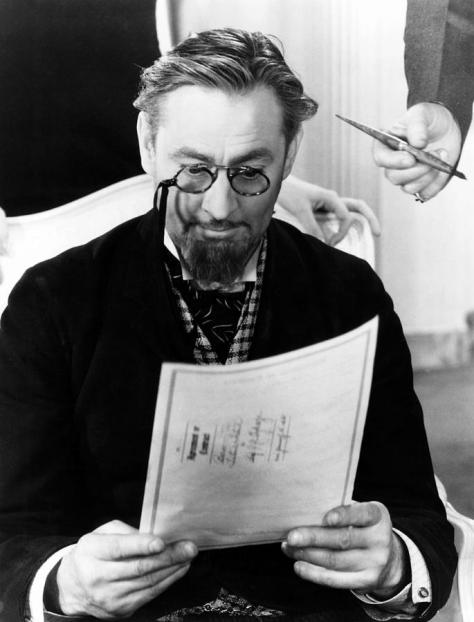
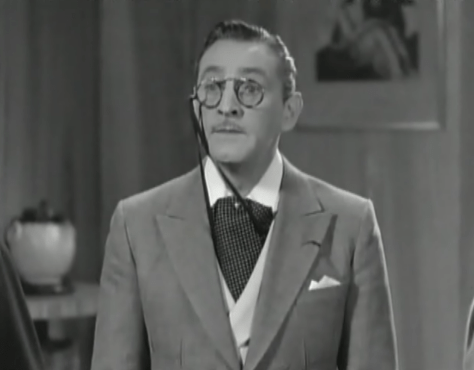
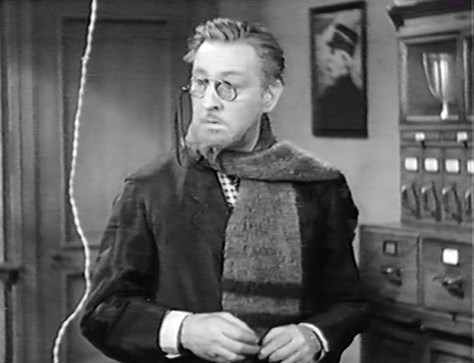
Topaze is a 1933 American Pre-Code film based on the French play of the same name by Marcel Pagnol. Another film version of Topaze, this one made in the original French was also released that year, starring Louis Jouvet in the title role. Subsequently Pagnol himself directed a 1936 adaptation.

Plot

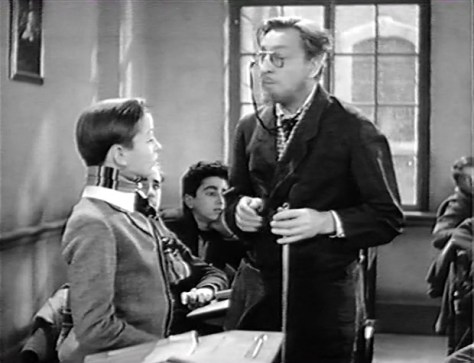
Prof. Auguste A. Topaze (John Barrymore), an honest, naive chemist and schoolteacher at the –  Stegg Academy in Paris, loses his job when he refuses to accede to a demand by the Baroness de La Tour-La Tour to alter the grades of her bratty son, Charlemagne.

Topaze 5

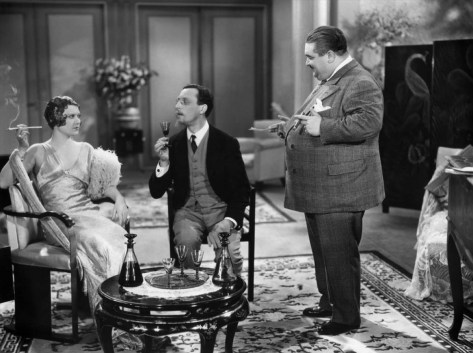
On the same day, Friday the 13th, Topaze calls on the Baron de La Tour-La Tour’s mistress, Coco (Myrna Loy), who is looking for a tutor for her sister’s son, Alphonse, and had gotten Topaze’s name from La Tour. Upon meeting and listening to the sincere remarks of Topaze, the baron, head of the La Tour Chemical Works, decides to employ him as a scientific front for his phony curative water.

After an encounter at a cafe, where the Baron narrowly avoids a scene with his wife by calling Coco “Madame Topaze”, Coco reveals the true nature of her relation to the Baron to the naive Professor. When they arrive late back to Coco’s apartment, the Baron is jealous, but soon realizes Topaze is entirely innocent.

Topaze 6

Unaware that the water, “Sparkling Topaze,” which is being sold all over Paris, does not contain the medicinal formula he invented for it, Topaze is shocked when Dr. Bomb (who had turned down the “honor” of having the fradulent water named for him) shows up, demanding 100,000 francs from the Baron or he will expose the fradulent product. But the Baron blackmails him in return with information about his previous identity, and Bomb is dragged out.

After confirming for himself, in the lab and in a local restaurant, that “Sparkling Topaze” is in fact phony, a dazed Topaze returns to Coco’s apartment the next morning, where Coco fusses over him. At first, he is ready to be arrested, but the men who are shown in are instead a delegation from the Bureau of Awards and Merits, who award him the Academic Palms. All are friends and business associates of the Baron, and the scales begin to fall from Professor Topaze’s eyes.

Topaze 7

His naivete thoroughly destroyed, declaring “Topaze lies dead in an alley”, Topaze decides to fight back by becoming more corrupt than his mentors. He remakes his image and, with Bomb as his assistant, he opens his own office, where he makes dignitaries wait to see him. One is Dr. Stegg, who now wants Topaze to preside at the graduation at the school. Topaze succeeds in blackmailing the Baron into a partnership in his company with a complete account of his relationship with Coco, which he threatens to show to the Baroness, whose name the shares in the company are in.

At the Stegg Academy graduation, Topaze, who has also garnered the romantic attention of Coco, is to distribute the prize, which he is told is to go to his former nemesis, Charlemagne de La Tour-La Tour. He gives a little speech about his experiences in the great world, that honesty isn’t always rewarded and that villainy often receives more applause than virtue. Declaring that he will not reward wrongdoers, he shows up Charlemagne’s ignorance relative to all his classmates, then awards the prize to them instead.

He is last seen escorting Coco into the cinema.

Topaze 8

Cast

Topaze 2

Reception

Topaze won the 1933 National Board of Review Award for Best Film.

Mordaunt Hall said “[I]t is an agreeable and effective film, and Mr. Barrymore lends no little artistry to the rôle of the benign Professor Auguste Topaze, a part played with rare skill on the stage by Frank Morgan.”[1]

In 1935, a planned reissue was rejected by Joseph Breen as the Production Code was now being strictly enforced and the relationship between Coco and Philippe lacked compensating moral values.[2]


Topaze 4

References

  1. Jump up^ New York Times review by Mordaunt Hall
  2. Jump up^ The Dame in the Kimono by Leonard Leff and Jerold Simmons (Weidenfeld and Nicolson: 1990)

Topaze 7

Topaze 9

Topaze 12

Topaze 10

Film Collectors Corner

Watch Topaze Now – Instant Video on You Tube

Blu Ray

Not released on Blu Ray


DVD

Not released on DVD


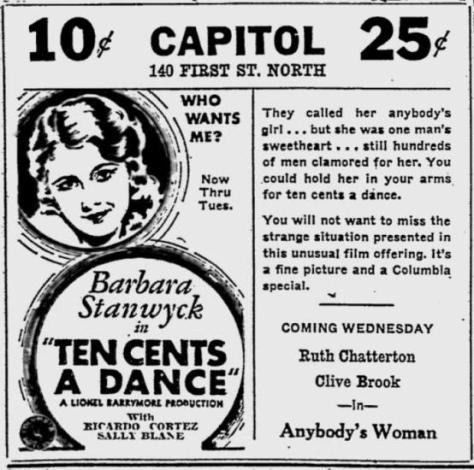
Ten Cents a Dance (1931)


Pre Code Logo 1

Pre Code Hollywood Season: FD Cinematheque

Ten Cents a Dance (1931)

Ten Cents a Dance 1

Ten Cents a Dance 3

Directors: Lionel Barrymore, Edward Buzzell

Cast: Barbara Stanwyck, Ricardo Cortez, Monroe Owsley, Sally Blane, Blanche Friderici, Phyllis Crane, Olive Tell, Victor Potel, Al Hill, Jack Byron

75 min

Ten Cents a Dance 2

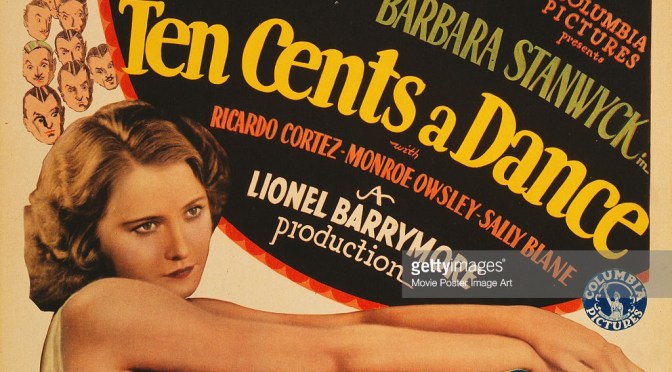
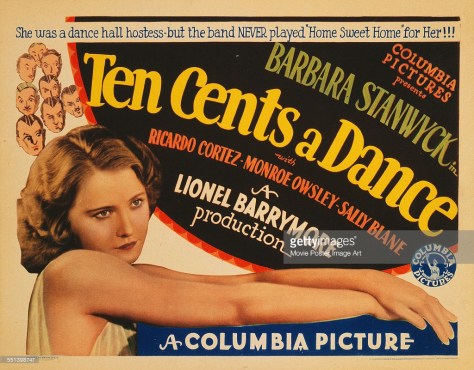
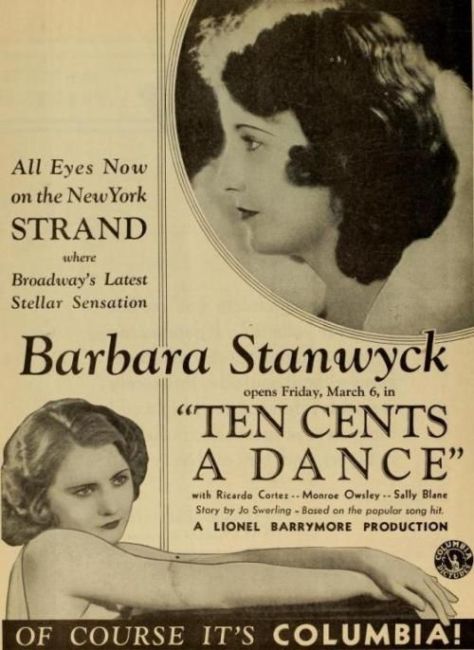
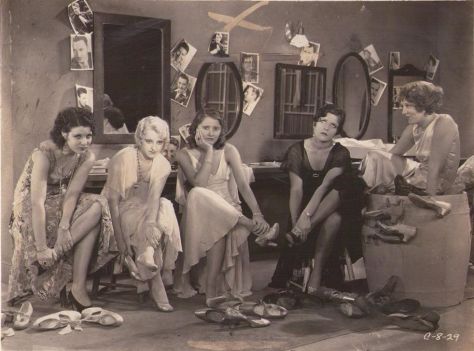
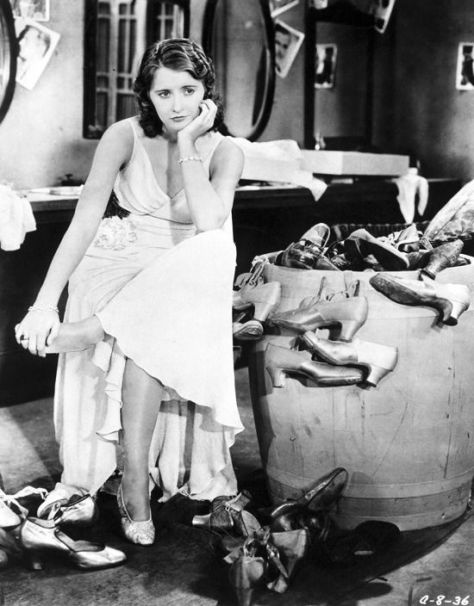
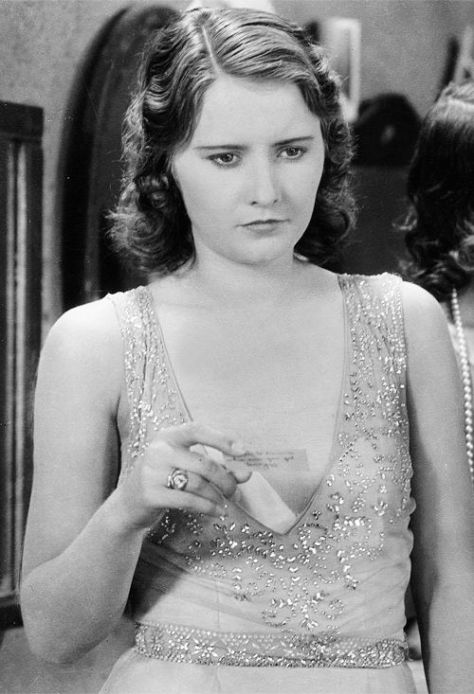
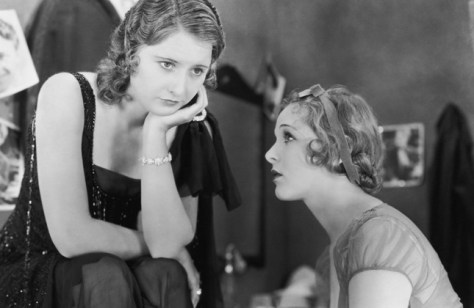
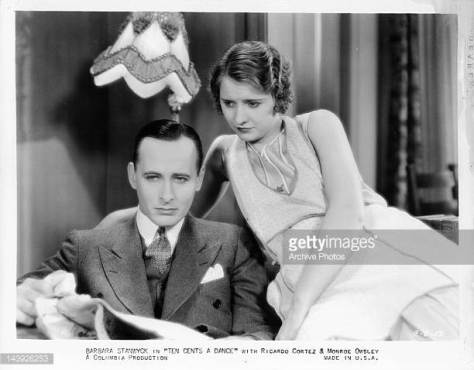
Ten Cents a Dance is a 1931 American pre-Code romance-drama film directed by Lionel Barrymore and starring Barbara Stanwyck as a married taxi dancer who falls in love with one of her customers. The film was inspired by the popular song of the same name, which is sung over the title sequence.[1]

Plot

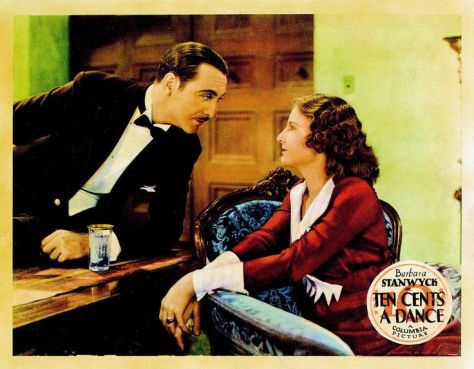
A beautiful streetwise taxi dancer named Barbara O’Neill (Barbara Stanwyck) works at a New York City dance hall called Palais de Dance. One of the dance hall’s wealthy patrons, Bradley Carlton (Ricardo Cortez), comes to the hall and gives Barbara $100.

Concerned about her unemployed friend and neighbor Eddie Miller (Monroe Owsley), Barbara asks Bradley to give him a job, and he agrees. That night they have dinner together.

Ten Cents a Dance 5

When Barbara gets home, Eddie is in the process of packing his bags; he can no longer afford to pay his rent. Barbara gives him the $100 she received from Bradley and tells him about his new job. Later, Eddie and Barbara meet in the park and realize that they are in love.

The next night at the dance hall, Barbara receives a gift of a new dress, but is disappointed when she sees that it was sent by Bradley. Eddie arrives at the dance hall and asks Barbara to marry him. Barbara accepts his proposal and soon quits her job.

Five months later, Eddie meets an old friend Ralph Sheridan and his sister Nancy, and does not reveal that he is now married. They play cards together and Eddie loses $240, something he does not tell his wife.

Ten Cents a Dance 18

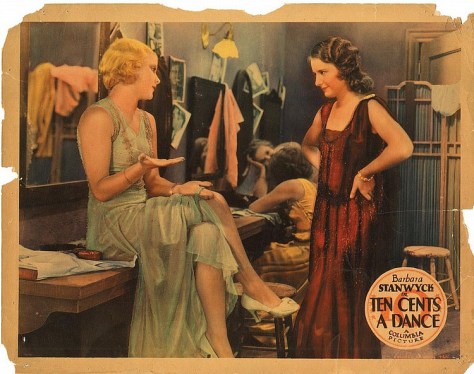
He claims to be at a convention, but in fact he meets a woman named Nancy. Later, Eddie returns to find the rent and utilities past due because he has spent his pay gambling. Meanwhile, Barbara returns to work at the dance hall, where she sees Bradley occasionally.

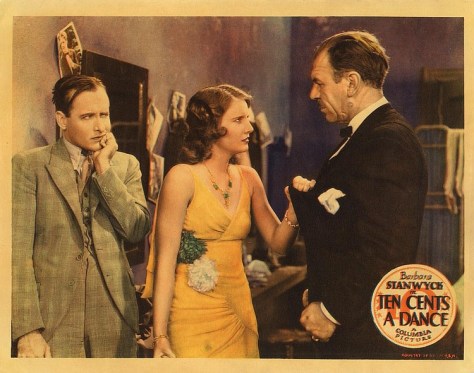
Later, Barbara returns home and discovers Eddie packing his bags. Admitting that he stole $5,000 from Bradley’s office safe, he tells her that he lost that money playing the stock market. Barbara is able to talk him into staying, and she visits Bradley and asks him for a $5,000 loan. Bradley agrees because he is in love with her.

Ten Cents a Dance 6

The next morning, Barbara presents the money to Eddie who accepts it immediately. When Eddie returns from work, he and Barbara engage in a jealous fight. Soon after, she packs her belongings and returns to the dance hall, where she is met by Bradley who has two tickets for the Ile de France, where Barbara can obtain a divorce and marry him.

Ten Cents a Dance 7

Cast

(Cast list as per AFI‘s database[2])

Ten Cents a Dance 9

References[edit]

  1. Jump up^ Hall, Mordaunt (March 7, 1931). “The $10,000 Kiss. Strange Temperaments. In a Dance Hall. Screen Notes.”The New York Times. Retrieved February 13, 2014.
  2. Jump up^ “Ten Cents a Dance: Detail View”. American Film Institute. Retrieved December 15, 2014.

Ten Cents a Dance 10

Ten Cents a Dance 11

Ten Cents a Dance 12

Ten Cents a Dance 14

Ten Cents a Dance 15

Ten Cents a Dance 16

Ten Cents a Dance 13

Film Collectors Corner

Watch Ten Cents a Dance Now – Instant Video on You Tube

Blu Ray

Not released on Blu Ray

DVD

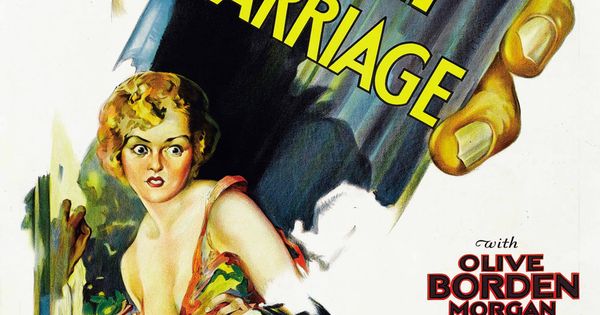
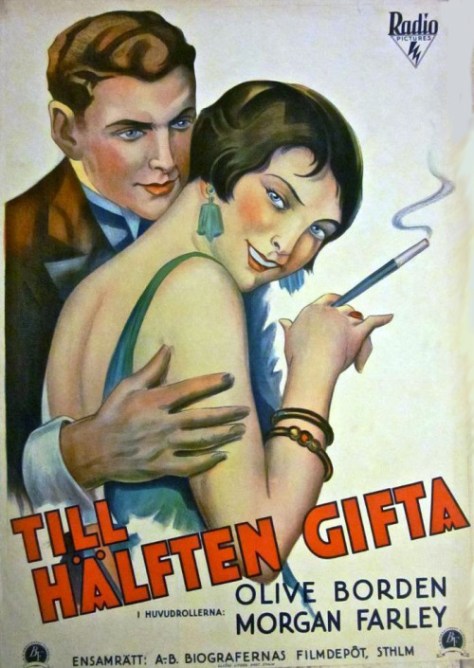
Half Marriage (1929)


Pre Code Logo 1

Pre Code Hollywood Season: FD Cinematheque

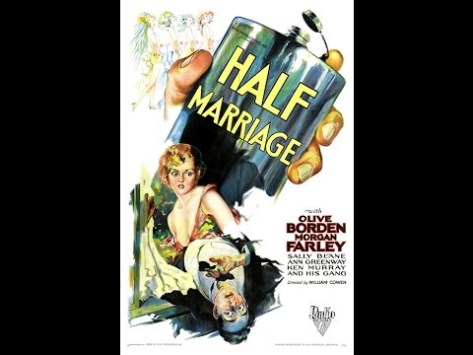
Half Marriage (1929)

Half Marriage 1

Director: William J Cohen

Cast: Olive Borden, Morgan Farley, Ken Murray, Ann Greenway, Anderson Lawler, Sally Blane, Hedda Hopper, Richard Tucker, Randolph Scott

68 min

Half Marriage 5

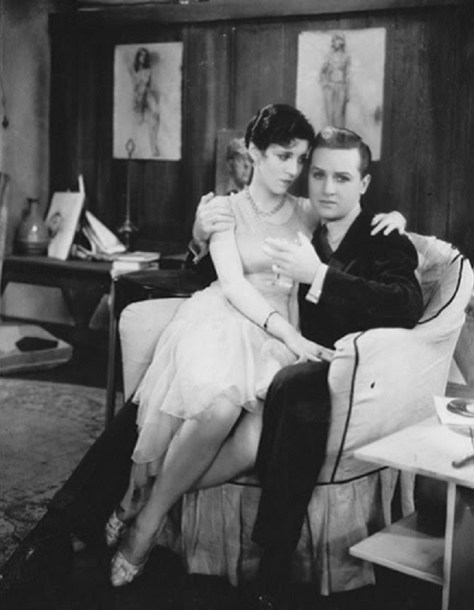
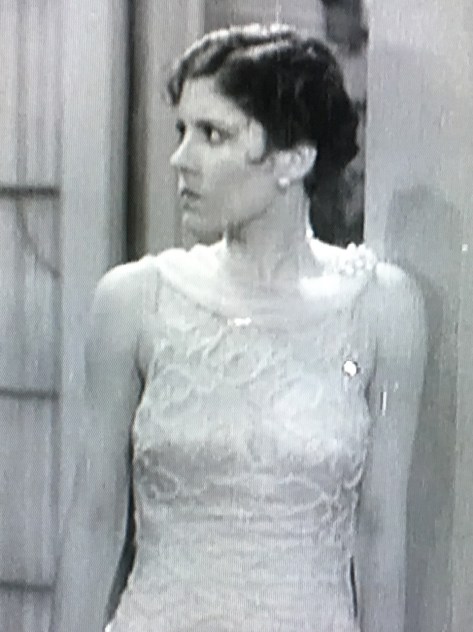
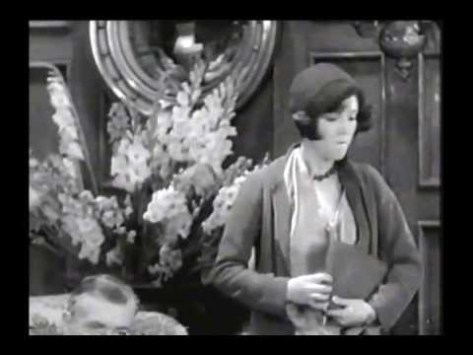
Half Marriage is an American melodramatic Pre-Code film directed by William J. Cohen from a script by Jane Murfin, based on the short story of the same name by George Kibbe Turner.[4] The film starred Olive Borden and Morgan Farley, while the later-famed gossip columnist, Hedda Hopper played Borden’s mother.

Half Marriage 8

Plot

Judy Page is a young society girl who falls in love with an architect who works in her father’s architectural firm, Dick Carroll. She lives in Greenwich Village in New York City, and one night after a party at her apartment, she runs off with Dick to get married.

They are intercepted by Judy’s mother at the apartment, who, not realizing they have already been married, insists that Judy return with her to their estate in the country. Dick remains behind in Judy’s apartment.

Half Marriage 6

In the country, Judy is being courted by Tom Stribbling, who has insinuated himself to be close to Judy, at the expense of all other suitors. Dick learns that Judy’s parents are going to be away, and visits Judy at her parents’ estate.

He has words with Stribbling, after which he makes plans to meet with Judy in the coming days at her apartment. When Tom learns of the meeting, he sends a telegram to Dick, forging that it is from Judy, cancelling the rendezvous.

At the appointed time of the meeting, Stribbling shows up, instead of Dick. When Judy makes it clear she wants nothing to do with him, Stribbling attempts to force himself on her. In the ensuing struggle, Stribbling trips, falling out of Judy’s window to his death.

Just as Stribbling trips, Dick has arrived at the apartment, to witness his fall. Afraid that Judy will be blamed for Stribbling’s death, Dick takes the blame, but the truth comes out during the brief police investigation, and Judy is cleared of any wrongdoing. Also during the investigation it is revealed that Judy and Dick are already married, much to the astonishment of her parents. After their initial shock, they give their blessing to the couple.

Half Marriage 4

Cast

Half Marriage 3

Songs

  • “After the Clouds Roll By” – Sidney Clare and Oscar Levant — performed by Ann Greenway[5]
  • “You’re Marvelous” – Written by Sidney Clare and Oscar Levant Performed by Gus Arnheim and His Ambassadors, with Ken Murray[5]

Notes

The film was also released in the USA in a silent version (at 5883 feet) by Radio-Keith-Orpheum Corporation [RKO] in 1929.[3]

References

  1. “Half Marriage: Full Credits”. Retrieved April 2, 2014.
  2. Jump up to:a b “Half Marriage: Detail View”. American Film Institute. Retrieved June 3, 2014.
  3. Jump up to:a b c d “Half Marriage”. Silent Era. Retrieved April 2, 2014.
  4. Jump up^ “Half Marriage: Screenplay Info”. Turner Classic Movies. Retrieved April 2, 2014.
  5. Jump up to:a b “Half Marriage: Technical Details”. theiapolis.com. Retrieved April 2, 2014.

Half Marriage 7


Film Collectors Corner

Watch Half Marriage Now – Instant Video on You Tube


Blu Ray

Not released on Blu Ray


DVD

Not released on DVD

Borrowed Wives (1930)


Pre Code Logo 1

Pre Code Hollywood Season: FD Cinematheque

Borrowed Wives (1930)

Borrowed Wives 1

Borrowed Wives 2

Director:  Frank R Strayer

Cast: Rex Lease, Vera Reynolds, Nita Martan, Paul Hurst, Robert Livingston, Charles Sellon, Dorothea Wolbert, Sam Hardy, Harry Todd, Tom London

62 min

Borrowed Wives 3

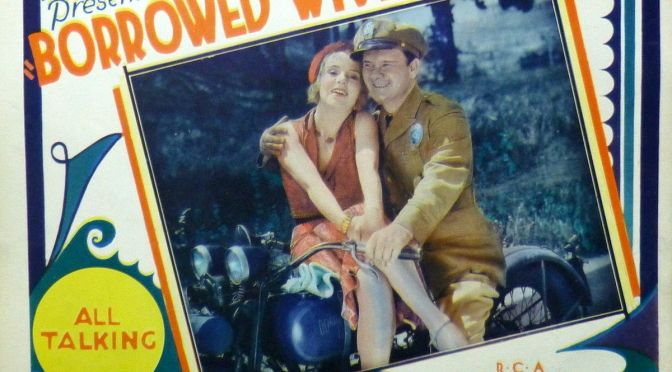
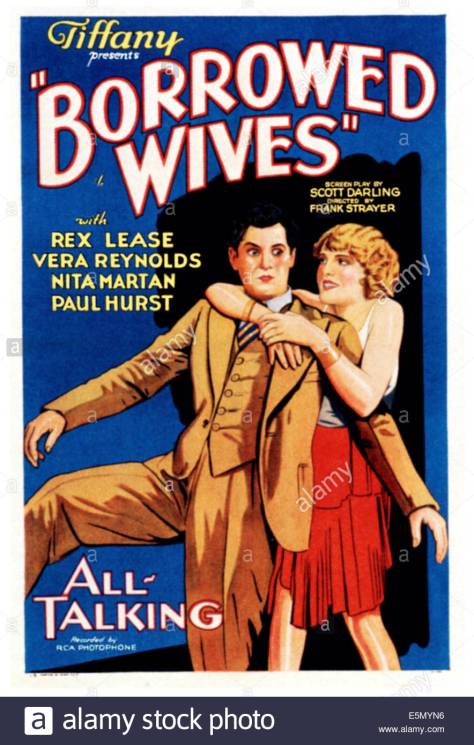
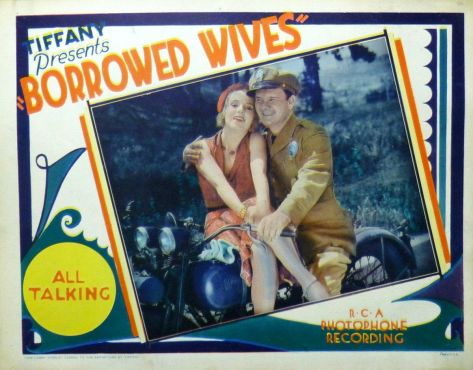
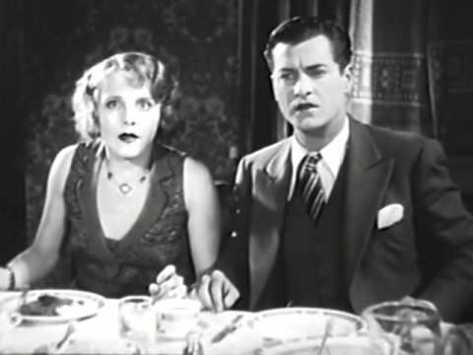
Borrowed Wives is a 1930 American Pre-Code film directed by Frank R. Strayer.

Plot summary

Peter Foley (Rex Lease) is a beneficiary of his grandfather, who leaves him $800,000 in his will. The condition for Peter getting the money is that he gets married. Peter is very interested in getting the money, especially since he has debts, and plans to marry Alice Blake (Vera Reynolds) as soon as she arrives from Kansas City.

Borrowed Wives 4

He plans to take her to his Uncle Henry’s (Charles Sellon) home before midnight to actually get the inheritance. The uncle needs to see the girl whom Peter is about to marry before he releases the money.

Alice’s airplane is delayed, though. The man to whom Peter is in debt, Parker (Sam Hardy), insists that his own girl friend, Julia (Nita Martan), pose as Peter’s wife in the meantime. Alice is informed by Joe Blair (Robert Livingston), a man who is secretly interested in marrying Alice himself, that Peter is actually married to Julia. Alice agrees to marry Joe if this is true.

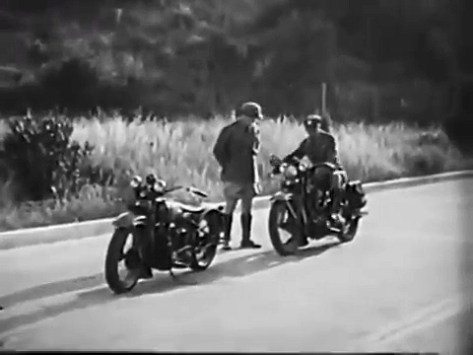
Borrowed Wives 7

Peter and Julia are pursued by Bull (Paul Hurst), a motorcycle policeman who loves Julia. Further complications arise at Uncle Henry’s, when Lawyer Winstead (Harry Todd), who is found bound and gagged, agrees to marry them. The uncle, revealed to be posing as a paralytic, is exposed as a villain, but Peter and Alice are ultimately married before the last hour appointed in the will.[1]

Borrowed Wives 8

Cast

  • Borrowed Wives 9

Borrowed Wives 10

Borrowed Wives 11

Film Collectors Corner

Watch Borrowed Wives Now – Instant Video on You Tube

Blu Ray

Not released on Blu Ray 

DVD

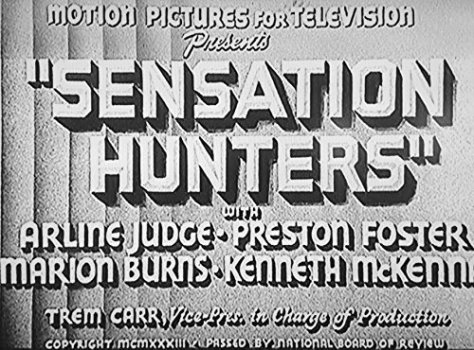
Sensation Hunters (1933)


Pre Code Logo 1

Pre Code Hollywood Season: FD Cinematheque

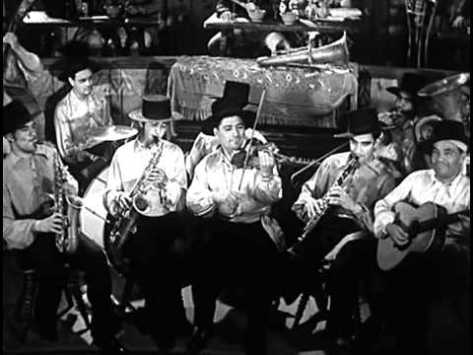
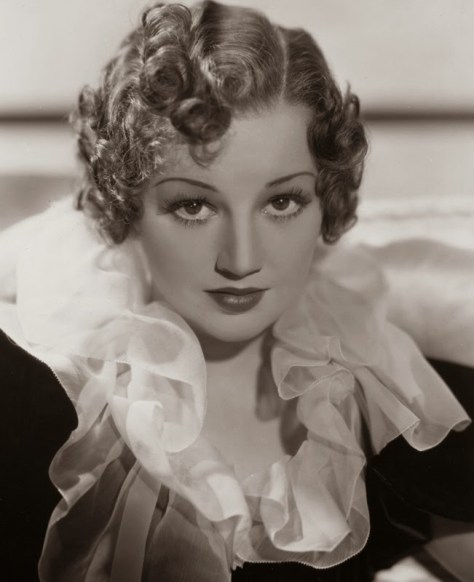
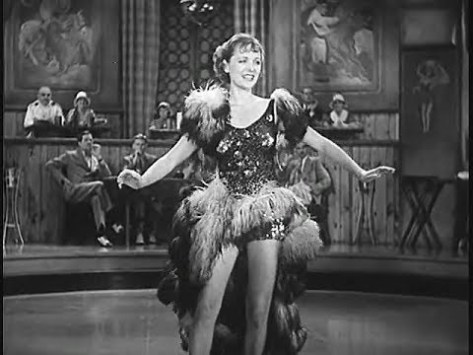
Sensation Hunters (1933)

Sensation Hunters 3

Director: Charles Vidor

Cast: Arline Judge, Preston Foster, Marion Burns, Kenneth MacKenna, Juanita Hansen, Creighton Hale, Cyril Chadwick, Nella Walker, Harold Minjir, Finis Barton, Zoila Conan

73 min

Sensation Hunters 6

Sensation Hunters is a 1933 American Pre-Code B-movie directed by Charles Vidor and released by Monogram Pictures.

Plot

Dale Jordon is on her way to Panama with Trixie Snell and Her Hotcha Girls to be a cabaret singer at the Bull Ring Cafe. Traveling by ship, Dale meets and falls in love with Tom Baylor, who owns copper interests near Panama. Baylor is concerned about Dale and they quarrel after he asks her to promise not to start drinking. Baylor sends Dale a bracelet with a note saying that they should part.

Sensation Hunters  11.jpg

After three months, Dale, who is rooming with friend and fellow singer Jerry Royal, is tired and frustrated with her job. She attracts the attention of a wealthy flier, Jimmy Crosby, who wants a more permanent relationship, but Dale is still in love with Baylor and refuses. After a fight with Trixie, Dale asks Crosby to take her away and promises to marry him. Crosby agrees and Dale spends her savings on a hotel room and clothes.

Sensation Hunters 13

Baylor returns to Panama and, meeting Dale in the hotel lobby, assumes that she is Crosby’s mistress. Dale, angered by his assumption, pretends it is true and Baylor leaves for San Francisco. Before they can leave for New York, Crosby makes a last test run. His wife has refused to give him a divorce to marry Dale, and, distraught, he commits suicide in a plane crash.

Trixie refuses to give Dale her old job back and also fires Jerry when she tries to intercede. The girls go to work in a seedy saloon to earn enough money for passage home. They almost have enough when Jerry is stabbed in a barfight. Dale spends all their money for Jerry’s medical expenses but still desperately short, prepares to become a prostitute; instead, Baylor arrives, summoned by a telegram from Jerry, and he and Dale reconcile.

Sensation Hunters 12

Cast

Sensation Hunters 10

Soundtrack

  • Arline Judge and chorus – “If It Ain’t One Man” (Written by Bernie Grossman and Harold Lewis)
  • Marion Burns – “There’s Something In the Air” (Written by Bernie Grossman and Harold Lewis)

Sensation Hunters 4

Sensation Hunters 8

Sensation Hunters 5

Sensation Hunters 9

Sensation Hunters 7

Film Collectors Corner

Watch Sensation Hunters Now – Instant Video on You Tube

Blu Ray

Not released on Blu Ray


DVD

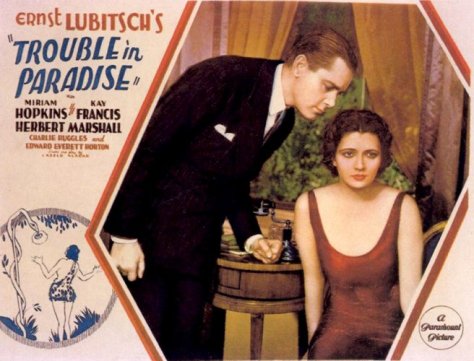
Trouble in Paradise (1932)


Pre Code Logo 1

Pre Code Hollywood Season: FD Cinematheque

Trouble in Paradise (1931)

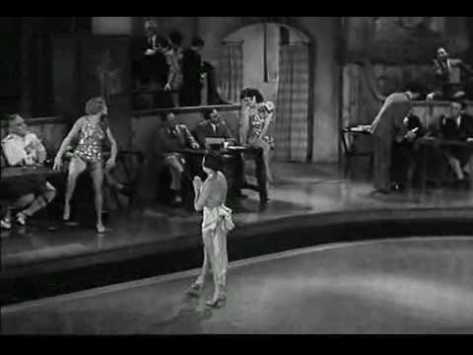
Trouble in Paradise  1.jpg

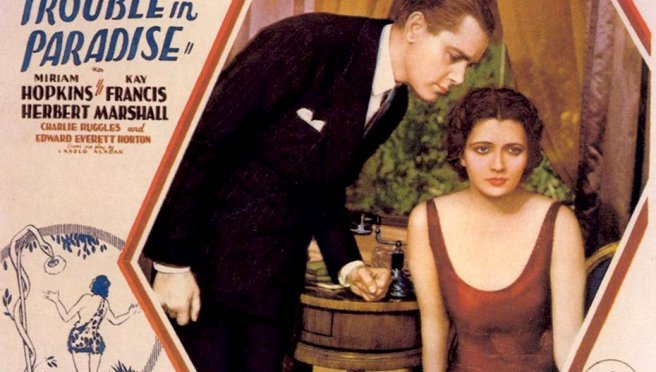
Trouble in Paradise 2

Director: Ernst Lubitsch

Cast: Miriam Hopkins, Kay Francis, Herbert Marshall, Charles Ruggles, Edward Everett Horton, C Aubrey Smith, Robert Greig, Luis Alberini

83 min

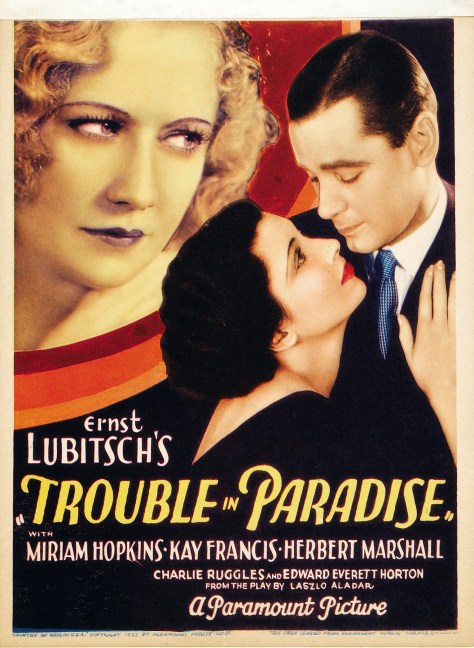
Trouble in Paradise 3

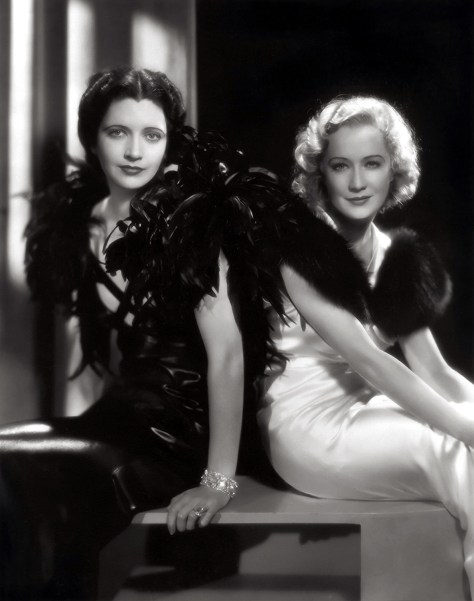
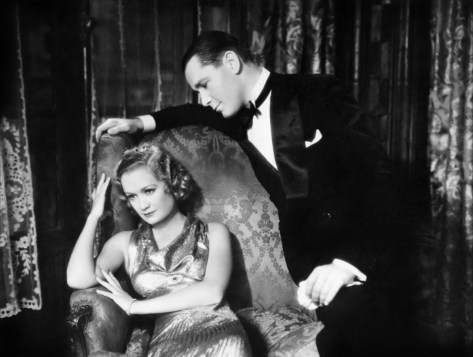
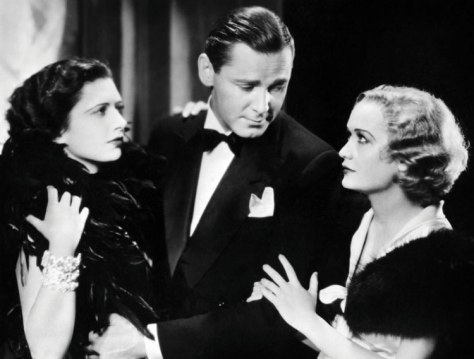
Kay Francis & Miriam Hopkins-The Trouble in Paradise 1932

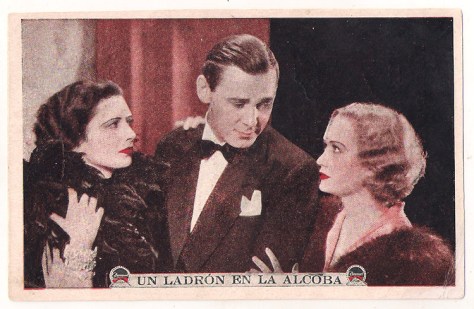
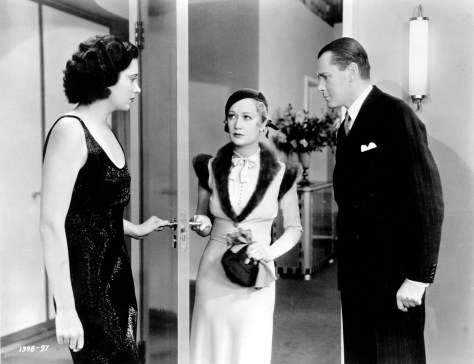
Trouble in Paradise is a 1932 American Pre-Code romantic comedy film directed by Ernst Lubitsch, starring Miriam HopkinsKay Francis, and Herbert Marshall and featuring Charles Ruggles and Edward Everett Horton.

Based on the 1931 play The Honest Finder (A Becsületes Megtaláló) by Hungarian playwright László Aladár,[2] the film is about a gentleman thief and a lady pickpocket who join forces to con a beautiful perfume company owner.

In 1991, Trouble in Paradise was selected for preservation by the United States National Film Registry by the Library of Congress as being “culturally, historically, or aesthetically significant”.[3]

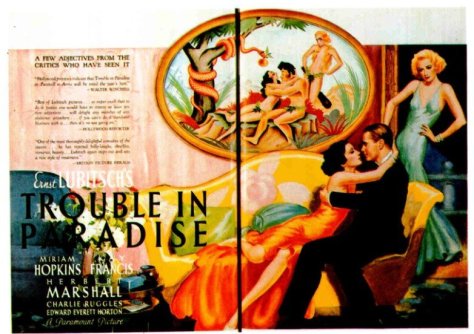
Trouble in Paradise 4

Plot

In Venice, Gaston Monescu (Herbert Marshall), a master thief masquerading as a baron, meets Lily (Miriam Hopkins), a beautiful thief and pickpocket also pretending to be of the nobility, and the two fall in love and decide to team up.

They leave Venice for Paris, and go to work for the famous perfume manufacturer Madame Mariette Colet (Kay Francis), with the intention of stealing a great sum of money from her safe, which Monescu, as her secretary, arranges to be diverted there. In the course of things, Colet begins to flirt with Monescu, and he begins to have feelings for her.

Trouble in Paradise 6

Unfortunately, the plan develops a hitch when François Filiba (Edward Everett Horton), one of Colet’s suitors, sees Monescu at a garden party. He is unable to remember where he knows him from, but when another of Colet’s suitors, The Major (Charles Ruggles), tells Filiba that he once mistook Monescu for a doctor, Filiba suddenly remembers that he knows Monescu from Venice, where the thief robbed him, pretending to be a doctor. Monescu and Lily plan an immediate getaway that night, after they take all the money in the safe.

Colet prepares to leave for a dinner party given by the Major, but cannot decide whether to go or to stay and have sex with Monescu. Eventually she goes, but not before Lily catches on that Monescu has fallen for her rival, and wants to back out of the plan – so she robs the safe herself after confronting her partner.

Trouble in Paradise 7

At the Major’s, Filiba tells Colet about Monescu, but she refuses to believe it’s true. She returns home and suggestively probes Monescu, who admits that the safe has been cleaned out, but claims that he himself took the cash. He also tells her that the manager of her business, Adolph J. Giron (C. Aubrey Smith), who has been suspicious of Monescu all along, has stolen millions of dollars from the firm over the years.

Lily then confronts Colet and Monescu, reporting that it was she who stole the money from the safe. An argument ensues, in which, eventually, Colet allows the two thieves to leave together. As a parting shot, Monescu steals a necklace from Colet that Lily had her eye on, and, in turn, Lily steals it from him, displaying it to him as the taxi takes them away, hugging each other.

Trouble in Paradise 8

Cast

Trouble in Paradise 9

Production

Working titles for Trouble in Paradise included “The Honest Finder,” “Thieves and Lovers,” and “The Golden Widow”; the latter was publicly announced to be the intended release title.[4] As with all the Lubitsch-Raphaelson collaborations, Lubitsch contributed to the writing and Raphaelson contributed ideas to the directing.[5]

Lubitsch did not receive screen credit for his writing, and Grover Jones, who was credited with the adaptation, did not contribute significantly:[5] although he was in the room, his credit was based on a contractual obligation, and he did little more than tell stories.[5][6]

Further, although supposedly based on László Aladár’s 1931 play The Honest Finder, Lubitsch suggested that Raphaelson not read the play, and instead the main character, Herbert Marshall’s master thief, was based on the exploits of a real person, George Manolescu, a Romanian con man whose memoir was published in 1905, and became the basis for two silent films.[5]

Trouble in Paradise 10

Made before effective enforcement of the Production Code, the film is an example of pre-code cinema containing adult themes and sexual innuendo that was not permitted under the Code. In 1935, when the Production Code was being enforced, the film was not approved for reissue[4] and was not seen again until 1968.[7]Paramount was again rejected in 1943, when the studio wanted to make a musical version of the film.[4]

The Art Deco sets for Trouble in Paradise were designed by the head of Paramount’s art department, Hans Dreier, and the gowns were designed by Travis Banton.[5]

Trouble in Paradise 11

Reception

Trouble in Paradise was the film that first had people talking about “the Lubitsch touch,” and it was, in fact, one of the director’s favorites.[5] Critic Dwight Macdonaldsaid of the film that it was “as close to perfection as anything I have ever seen in the movies.”[5]

The New York Times named the film as one of the ten best films of 1932. In 1998, Roger Ebert added it to his Great Movies collection.[8] Wes Anderson and Ralph Fiennes both said the movie was an inspiration for The Grand Budapest Hotel (2014). Review aggregation site Rotten Tomatoes reports 91% approval based on 23 critics.[9]

Trouble in Paradise 12

Awards and honors

Trouble in Paradise was named by the National Board of Review as one of the top ten films of 1932.[3][10]

References

  1. Jump up to:a b “Trouble in Paradise” at Kay Francis Films. Accessed 16 March 2014
  2. Jump up^ “Screenplay info” on TCM.com. Accessed=August 24, 2012
  3. Jump up to:a b “Awards”Allmovie.com. Retrieved August 24, 2012.
  4. Jump up to:a b c “Notes”TCM.com. Retrieved August 24, 2012.
  5. Jump up to:a b c d e f g Nixon, Rob. “Trouble in Paradise (article)”TCM.com. Retrieved August 24, 2012.
  6. Jump up^ Raphaelson, Samson. Three Screen Comedies Madison, Wisconsin: University of Wisconsin Press, 1983. ISBN 0-299-08780-8
  7. Jump up^ Osborne, Robert. Outro to the Turner Classic Movies showing of Trouble in Paradise (March 31, 2011)
  8. Jump up^ Ebert, Roger“Trouble in Paradise”. Retrieved July 30, 2013.
  9. Jump up^ Trouble in Paradise (1932)”. Rotten Tomatoes. Retrieved April 23, 2016.
  10. Jump up^ “Awards”Internet Movie Database. Retrieved August 24, 2012.

Trouble in Paradise 13

Trouble in Paradise 14

Trouble in Paradise 15

Trouble in Paradise 17

Trouble in Paradise 18

Trouble in Paradise 19

Trouble in Paradise 20

Trouble in Paradise 21

Film Collectors Corner

Watch Trouble in Paradise Now – Instant Video on Internet Archive

Blu Ray

Not released on Blu Ray


DVD

Dr Jekyll and Mr Hyde (1931)


Pre Code Logo 1

Pre Code Hollywood Season: FD Cinematheque

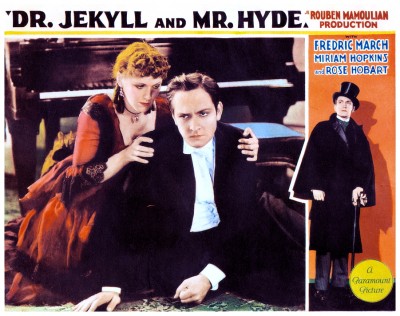
Dr Jekyll and Mr Hyde (1931)

Dr Jekyll and Mr Hyde 18

Dr Jekyll and Mr Hyde 1

Dr Jekyll and Mr Hyde 20

Director: Rouben Mamoulian

Cast: Fredric March, Miriam Hopkins, Rose Hobart, Holmes Herbert, Halliwell Hobbes, Edgar Norton, Tempe Pigott

98 min

Dr Jekyll and Mr Hyde 41

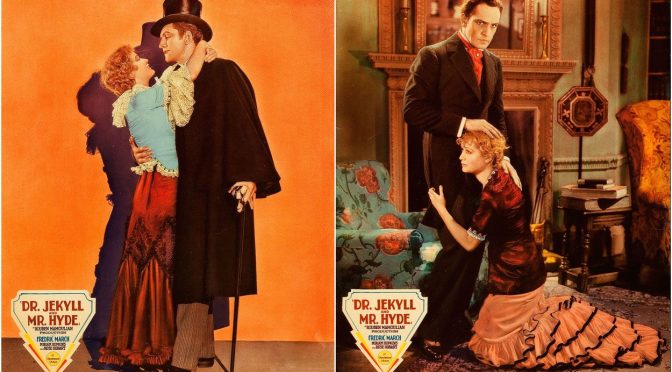
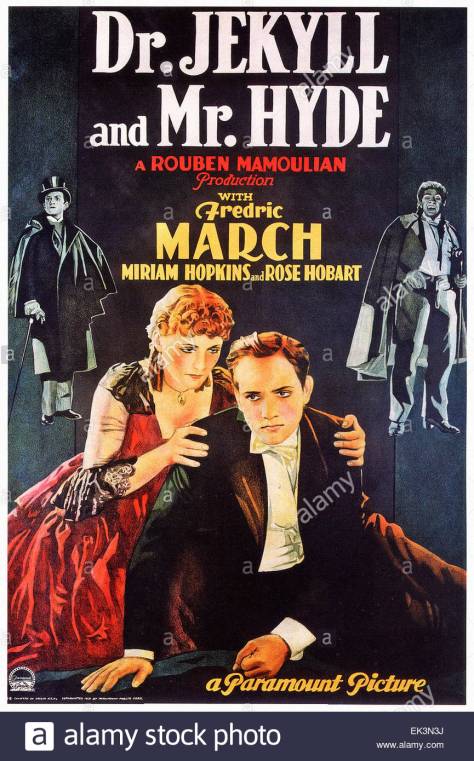
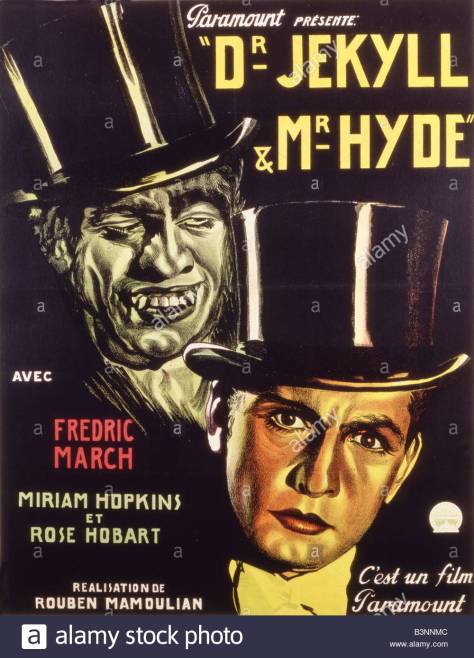
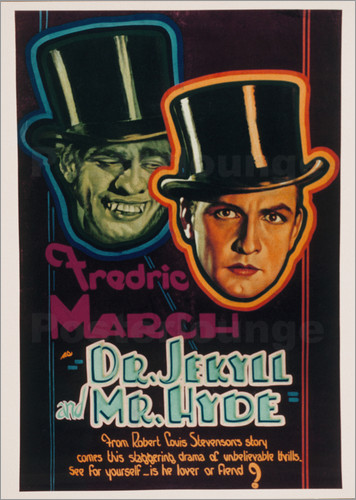
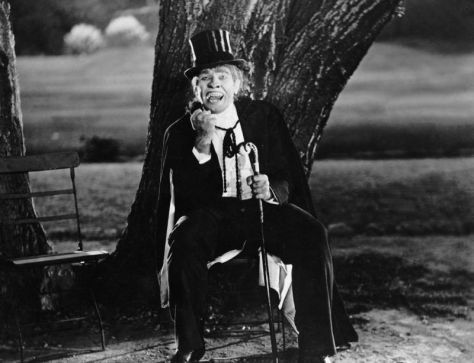
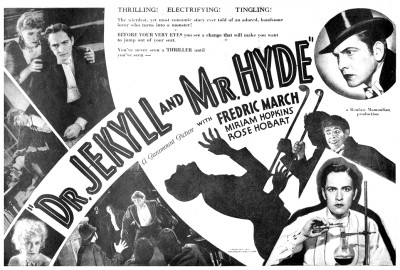
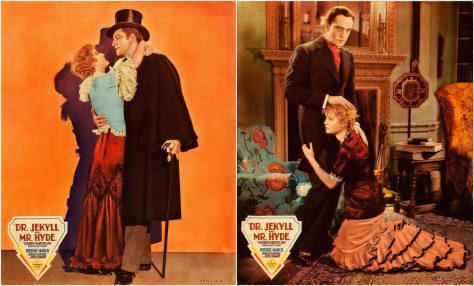
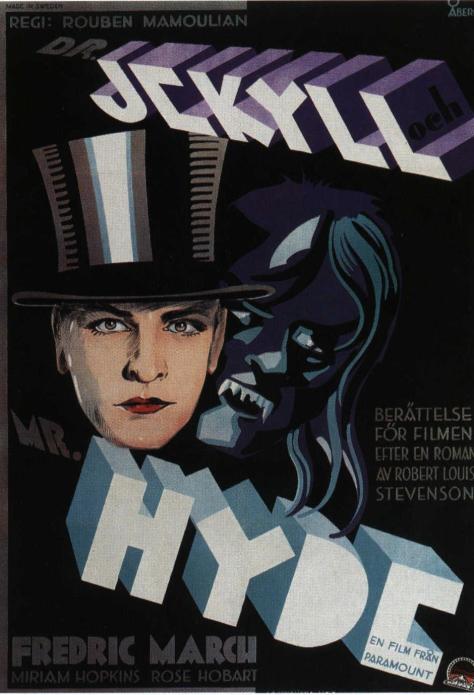
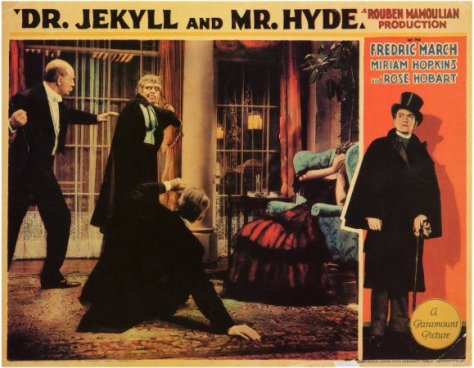
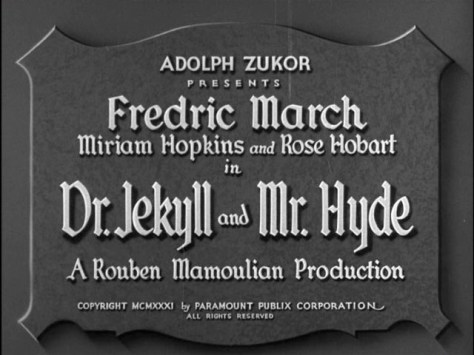
Dr. Jekyll and Mr. Hyde is a 1931 American pre-Code horror film, directed by Rouben Mamoulian and starring Fredric March, who plays a possessed doctor who tests his new formula that can unleash people’s inner demons.

The film is an adaptation of The Strange Case of Dr Jekyll and Mr Hyde, the 1886 Robert Louis Stevenson tale of a man who takes a potion which turns him from a mild-mannered man of science into a homicidal maniac. March’s performance has been much lauded, and earned him his first Academy Award.

Dr Jekyll and Mr Hyde 17

Plot

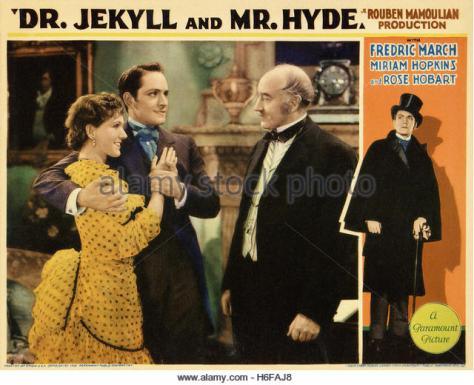
The film tells the story of Dr. Henry Jekyll (Fredric March), a kind English doctor in Victorian London, who is certain that within each man lurks impulses for both good and evil. One evening, Jekyll attends a party at the home of his fiancée Muriel Carew (Rose Hobart), the daughter of Brigadier General Sir Danvers Carew (Halliwell Hobbes). After the other guests have left, Jekyll informs Sir Danvers that, after speaking to Muriel, he wants Carew’s permission to push up their wedding date.

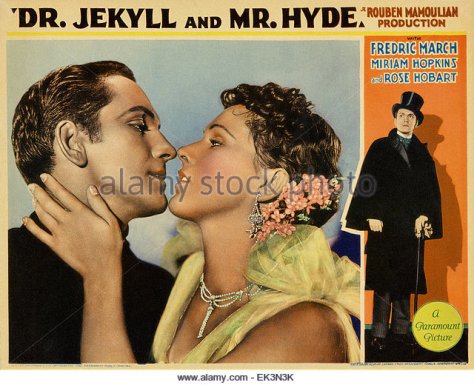
Sir Danvers sternly refuses Jekyll’s request. Later, while walking home with his colleague, Dr. John Lanyon (Holmes Herbert), Jekyll spots a bar singer, Ivy Pierson (Miriam Hopkins), being attacked by a man outside her boarding house. Jekyll drives the man away and carries Ivy up to her room to attend to her. Ivy begins flirting with Jekyll and feigning injury, but Jekyll fights temptation and leaves with Lanyon.

Dr Jekyll and Mr Hyde 4

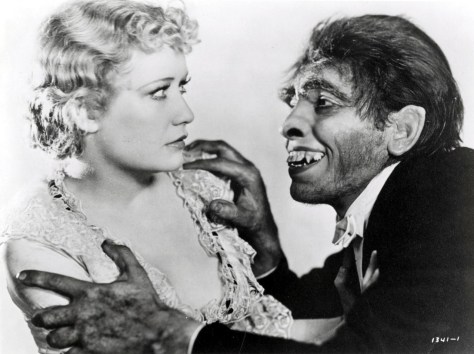
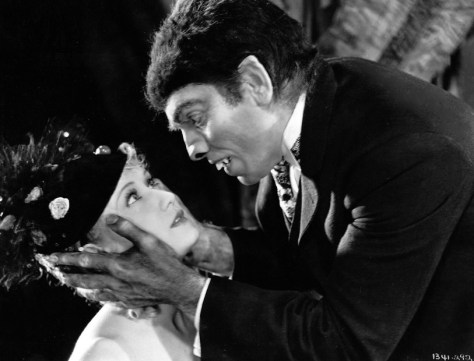
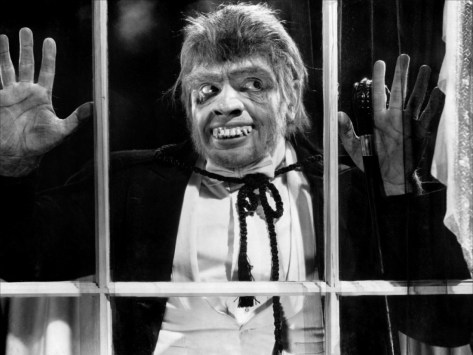
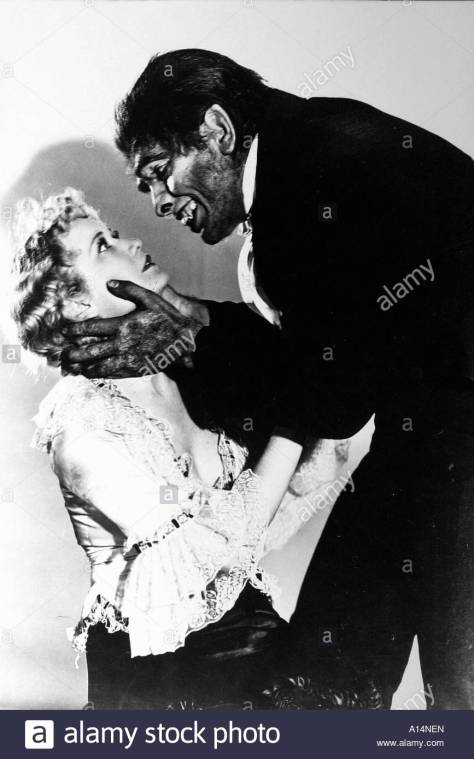
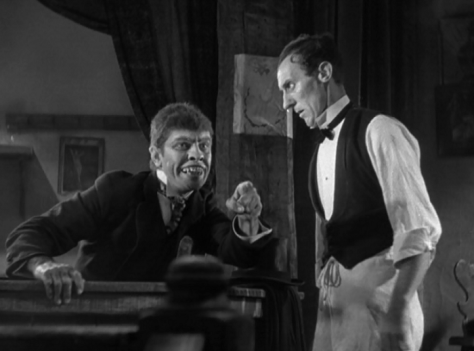
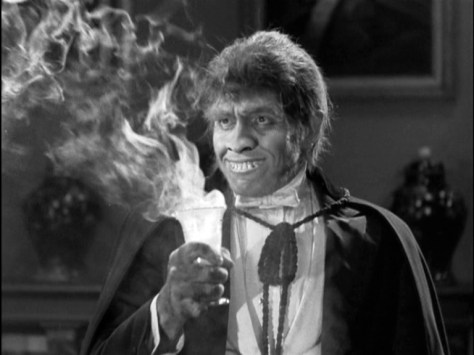
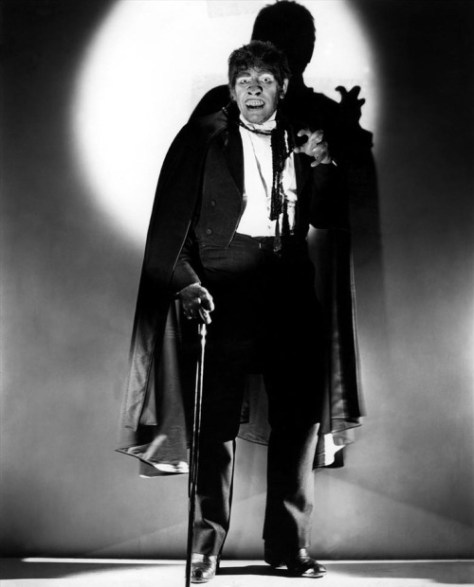
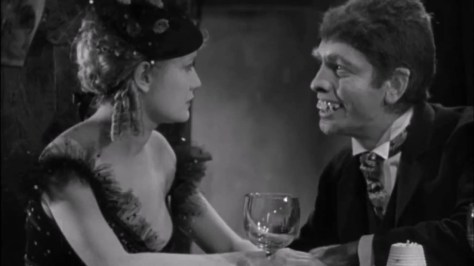
Muriel and Sir Danvers leave London for a few months. In the meantime, Jekyll develops a drug that releases the evil side in himself, thus becoming the violent Edward Hyde. Along with his behavior, Dr. Jekyll’s appearance changes as well. He transforms into something more menacing and primitive looking. Unlike Dr. Jekyll, Hyde has no conscience, no restrictions, no boundaries; he is free to do what he pleases. Hyde returns to the music hall where Ivy works, and offers to tend to her financial needs in return for her company.

Hyde manipulates Ivy into accompanying him by terrorizing her, being violent, controlling and torturing her psychologically. He remains at her boarding house until he finds out that Muriel and her father are returning to London, and leaves Ivy but threatens her that he’ll be back.

Dr Jekyll and Mr Hyde 5

On advice from her landlady Mrs. Hawkins (Tempe Pigott), Ivy goes to see Dr. Jekyll, hoping that he can free her of the abusive Hyde. When she arrives, Ivy sees that the celebrated Dr. Jekyll was the same man who saved her from abuse just months before. She breaks down in tears over her situation with Hyde. Jekyll is extremely distraught over the pain that he (Hyde) has caused her and promises Ivy that she will never have to worry about Hyde again.

While on his way to a party at the Carews’ home to celebrate their return and the announcement of a new wedding date to Muriel, Jekyll, without the use of his drugs, suddenly changes into Hyde. Ivy, who thought she was free of Hyde forever, is terrified when Hyde appears before her. Hyde angrily confronts her about seeing Jekyll and, just before murdering her, reveals that he and Jekyll are one and the same.

Dr Jekyll and Mr Hyde 7

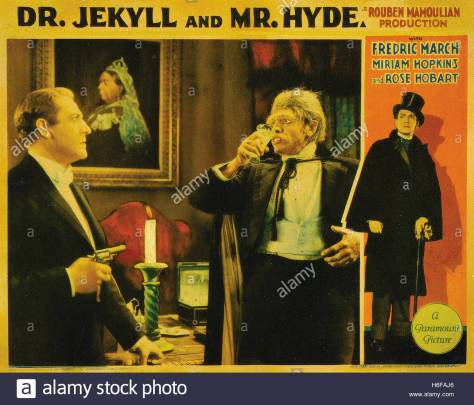
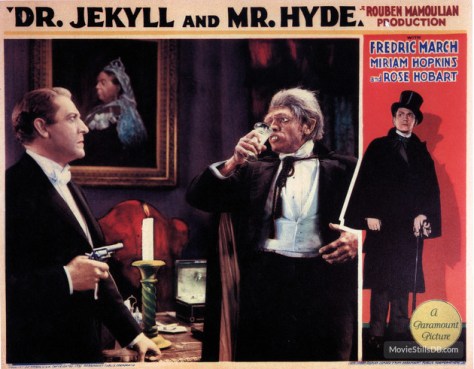
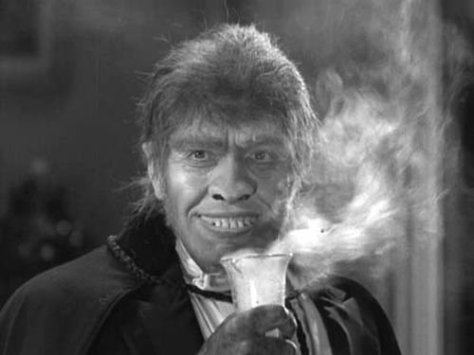
Hyde escapes and heads back to Jekyll’s house but his servant Poole refuses to open the door. Desperate, Hyde writes a letter to Lanyon from Jekyll instructing Lanyon to get certain chemicals and have them waiting for him at Lanyon’s home. When Hyde arrives, Lanyon pulls a gun on him and demands that Hyde take him to Jekyll. Hyde tells Lanyon that Jekyll is safe, but Lanyon doesn’t believe him and refuses to let him leave. Realizing there is not much time, Hyde drinks the formula in front of Lanyon.

Lanyon is shocked to witness the transformation and tells his friend that he has practically damned his soul for tampering with the laws of God. Lanyon also advises Jekyll that the transformation that happened that night will happen again eventually.

Dr Jekyll and Mr Hyde 13

With Ivy’s murder, Sir Danvers’ anger towards him for missing the party, and Hyde’s persona beginning to dominate his own, Henry Jekyll’s life continues to spiral out of control. He later goes to the Carews’ where Sir Danvers coldly rejects his visit but Muriel welcomes him. Jekyll, realizing the monster he really is, tells Muriel that he cannot be with her anymore. He feels that he is already damned and fears that he will harm her. He decides to leave. Standing out on the terrace and tearfully watching Muriel cry, Jekyll begins to change into Hyde once again.

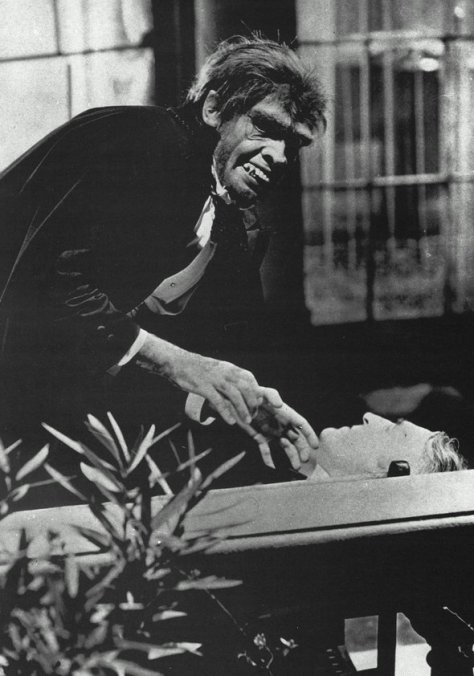
He then reenters the Carew house through the terrace door and assaults Muriel. Her screams bring her father and their butler, Hobson. Hyde then viciously murders Sir Danvers out in the garden by striking him repeatedly with Jekyll’s cane until it breaks, then runs off into the night towards Jekyll’s home and the lab to mix a new formula to change himself back.

Dr Jekyll and Mr Hyde 9

The police and Lanyon are standing over Carew’s body in the garden. Recognizing the broken cane found next to the body, Lanyon tells them that he knows whose cane that is and agrees to take them to its owner. The police later arrive at Jekyll’s lab looking for Hyde and find only Jekyll, who lies that Hyde has escaped. They begin to leave when Lanyon arrives and tells them that Jekyll is the man they’re searching for (because the man they are looking for is hiding inside him).

Just then a nervous Jekyll begins changing into Hyde before their shocked eyes. Outraged at Lanyon for betraying him, Hyde leaps from behind the table and attacks him. Hyde then tries to escape from the police but is fatally shot before he can again hurt Lanyon. As Hyde lies dead on the table full of Dr. Jekyll’s experiments and potions, he transforms one last time back into Henry Jekyll.

Dr Jekyll and Mr Hyde 11

Cast

Dr Jekyll and Mr Hyde 12

Production

The film was made prior to the full enforcement of the Production Code and is remembered today for its strong sexual content, embodied mostly in the character of the bar singer, Ivy Pierson, played by Miriam Hopkins. When it was re-released in 1936, the Code required 8 minutes to be removed before the film could be distributed to theaters. This footage was restored for the VHS and DVD releases.[3]

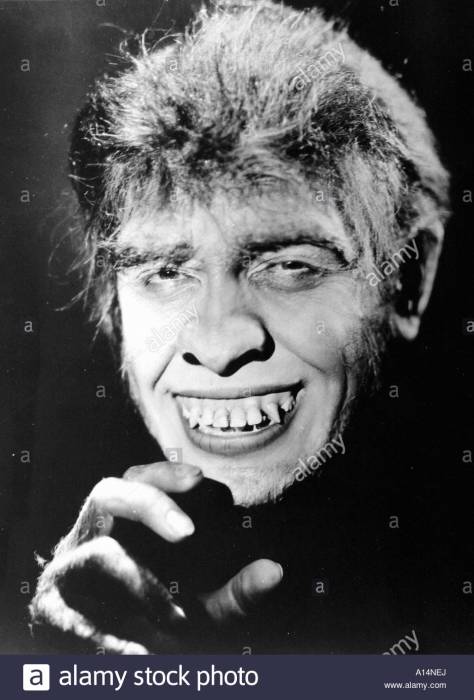
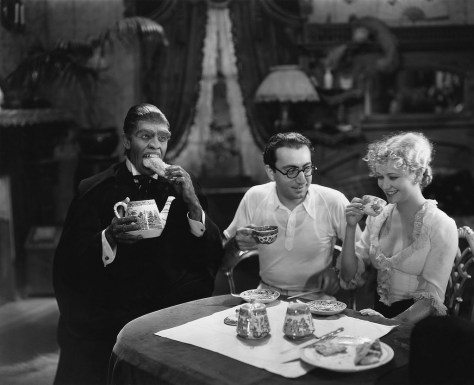
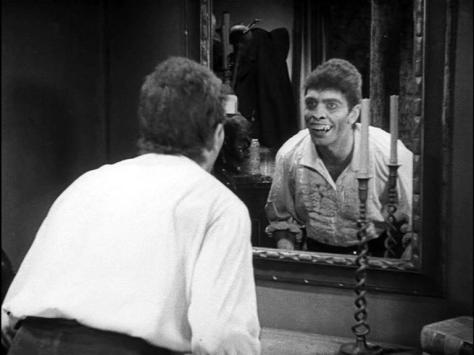
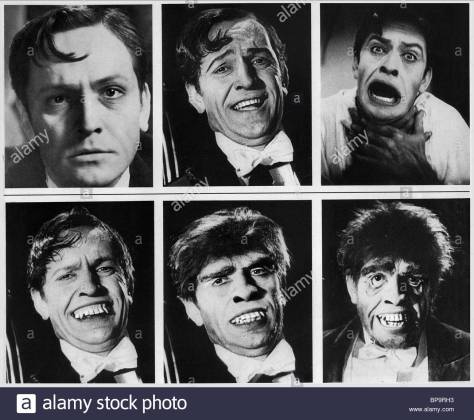
The secret of the transformation scenes was not revealed for decades (Mamoulian himself revealed it in a volume of interviews with Hollywood directors published under the title The Celluloid Muse). Make-up was applied in contrasting colors. A series of colored filters that matched the make-up was then used which enabled the make-up to be gradually exposed or made invisible. The change in color was not visible on the black-and-white film.[4]

Dr Jekyll and Mr Hyde 15

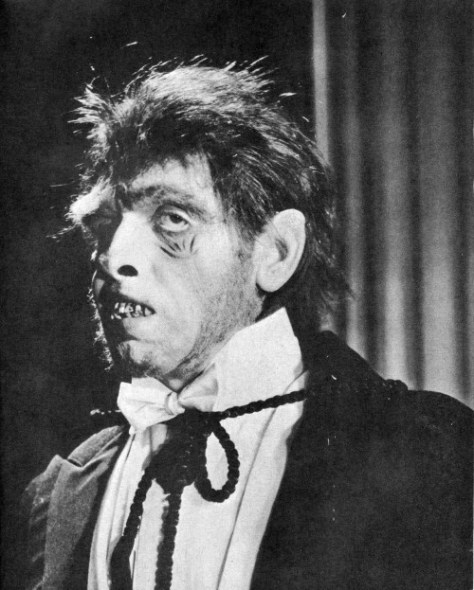
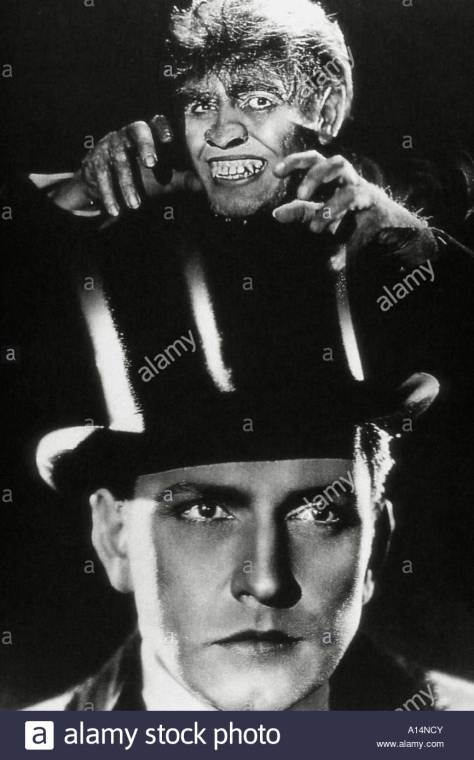
Wally Westmore‘s make-up for Hyde — simian and hairy with large canine teeth — influenced greatly the popular image of Hyde in media and comic books. In part this reflected the novella’s implication of Hyde as embodying repressed evil, and hence being semi-evolved or simian in appearance. The characters of Muriel Carew and Ivy Pierson do not appear in Stevenson’s original story but do appear in the 1887 stage version by playwright Thomas Russell Sullivan.[citation needed]

John Barrymore was originally asked by Paramount to play the lead role, in an attempt to recreate his role from the 1920 version of Jekyll and Hyde, but he was already under a new contract with Metro-Goldwyn-Mayer. Paramount then gave the part to March, who was under contract and who strongly resembled Barrymore. March had played a John Barrymore-like character in the Paramount film The Royal Family of Broadway (1930), a story about an acting family like the Barrymores. March would go on to win the Academy Award for Best Actor for his performance of the role.[4]

Dr Jekyll and Mr Hyde 16

When Metro-Goldwyn-Mayer remade the film 10 years later with Spencer Tracy in the lead, the studio bought the negative and the rights to both the Mamoulian version and the earlier 1920 version, paying $1,250,000. They then recalled every print of the film that they could locate and for decades most of the film was believed lost.[5]Ironically, the Tracy version was much less well received and March jokingly sent Tracy a telegram thanking him for the greatest boost to his reputation of his entire career.

The opening credits use Toccata and Fugue in D minor, BWV 565 by Johann Sebastian Bach.[6]

Dr Jekyll and Mr Hyde 22

Theatrical release

The film was the first film to be screened at the first edition of the Venice International Film Festival.[7]

Reception

Box office

Grossing $1.25 million,[2] the film was a box office hit on par with the Universal monster films of the era, even considering that its $535,000 budget was high for a horror film at the time.[1]

Dr Jekyll and Mr Hyde 23

Critical reception

Dr. Jekyll and Mr. Hyde was received mostly positive reviews upon its release. Mordaunt Hall of The New York Times wrote an enthusiastic review, comparing it favorably to the John Barrymore version as a “far more tense and shuddering affair” than that film. Hall called March “the stellar performer” in the title role while praising the acting of the entire supporting cast as well, and called the old-fashioned atmosphere created by the costumes and set designs “quite pleasing”.[8]

Film critic Leonard Maltin gave the film 3 out of a possible 4 stars, calling it “exciting”, and “floridly cinematic”, also praising March’s and Hopkins performances.[9]

Dr Jekyll and Mr Hyde 24

Variety ran a somewhat less favorable but still positive review. Alfred Rushford Greason wrote that “the picture doesn’t build to an effective climax” because it was too slow and labored in getting there, and that while the initial transformation sequence “carries a terrific punch”, its effect became lessened with successive uses. However, Greason credited March with “an outstanding bit of theatrical acting”, declared the makeup “a triumph”, and said that the sets and lighting alone made the film worth seeing “as models of atmospheric surroundings.”[10]

John Mosher of The New Yorker reported that the film “has its full storage of horror” and was “well acted”. March, he wrote, “gives us a Mr. Hyde as athletic and exuberant as might have been that of Douglas Fairbanks, Senior.”[11] Film Daily declared: “Gripping performance by Fredric March is highlight of strong drama, ace supporting cast and direction”.[12]

Film review aggregator Rotten Tomatoes reported an approval rating of 93%, based on 27 reviews, with a rating average of 8.3/10. The site’s critical consensus reads, “A classic. The definitive version of the Robert Louis Stevenson novella from 1931, with innovative special effects, atmospheric cinematography and deranged overacting.”[13]

Dr Jekyll and Mr Hyde 25

Awards and honors

Wins

Dr Jekyll and Mr Hyde 27

Nominations

  • Academy Awards: Oscar; Best Cinematography, Karl Struss; Best Adaptation Writing, Percy Heath and Samuel Hoffenstein; 1932.

Other honors

The film is recognized by American Film Institute in these lists:

Dr Jekyll and Mr Hyde 21

See also

Dr Jekyll and Mr Hyde 33

References

  1. Jump up to:a b Hall, Sheldon; Neale, Steve (2010). Epics, Spectacles and Blockbusters. Detroit: Wayne State University Press. p. 100. ISBN 978-0-8143-3008-1.
  2. Jump up to:a b “FILM WORLD.”The West Australian. Perth: National Library of Australia. 19 October 1934. p. 2. Retrieved 19 April 2014.
  3. Jump up^ Alternate versions for Dr. Jekyll and Mr. Hyde (1931)
  4. Jump up to:a b Miller, Frank “Dr. Jekyll and Mr. Hyde (1931)” (article) TCM.com
  5. Jump up^ McElwee, John (February 200y7) “More on Jekyll and Hyde” Greenbriar Picture Shows
  6. Jump up^ Reiter, Gershon (2014). The Shadow Self in Film: Projecting the Unconscious Other. p. 11.
  7. Jump up^ “Dr. Jekyll and Mr. Hyde”Film Affinity. Retrieved March 23, 2016.
  8. Jump up^ Hall, Mordaunt (January 2, 1932). “Movie Review – Dr. Jekyll and Mr. Hyde”The New York Times. Retrieved December 7, 2014.
  9. Jump up^ Maltin, Leonard; Sader, Luke; Carson, Darwyn. Leonard Maltin’s 2014 Movie Guide. Penguin Press. p. 390. ISBN 978-0-451-41810-4.
  10. Jump up^ Greason, Aldred Rushford (January 5, 1932). “Jekyll and Hyde”. Variety. New York. p. 19.
  11. Jump up^ Mosher, John (January 9, 1932). “The Current Cinema”. The New Yorker. p. 75.
  12. Jump up^ “Dr Jekyll and Hr. Hyde”. Film Daily. New York. January 3, 1932. p. 9.
  13. Jump up^ “Dr. Jekyll and Mr. Hyde (1931) – Rotten Tomatoes”Rotten Tomatoes.com. Rotten Tomatoes. Retrieved 24 October 2016.
  14. Jump up^ “Awards” All Movie Guide
  15. Jump up^ “AFI’s 100 Years…100 Thrills Nominees” (PDF). Retrieved August 20, 2016.
  16. Jump up^ “AFI’s 100 Years…100 Heroes & Villains Nominees” (PDF). Retrieved August 20, 2016.

Dr Jekyll and Mr Hyde 19

Dr Jekyll and Mr Hyde 14

Dr Jekyll and Mr Hyde 10

Dr Jekyll and Mr Hyde 28

Dr Jekyll and Mr Hyde 30

Dr Jekyll and Mr Hyde 31

Dr Jekyll and Mr Hyde 32

Dr Jekyll and Mr Hyde 34

Dr Jekyll and Mr Hyde 36

Dr Jekyll and Mr Hyde 38

Dr Jekyll and Mr Hyde 37

Dr Jekyll and Mr Hyde 40

Film Collectors Corner

Watch Dr Jekyll and Mr Hyde Now – Amazon Instant Video

Blu Ray

Not released on Blu Ray 

DVD

Stolen Jools, The (1931)


Pre Code Logo 1

Pre Code Hollywood Season: FD Cinematheque

The Stolen Jools AKA The Slippery Pearls (1931)

Stolen Jools 1

Directors: 

William C. McGannJohn G. Adolfi…(uncredited)Thomas Atkins…(uncredited)Harold S. Bucquet…(uncredited)Victor Heerman…(uncredited)Russell Mack…(uncredited)

Cast: 

Wallace Beery Wallace Beery
Police Sergeant
Buster Keaton Buster Keaton
Policeman
Jack Hill Jack Hill
Policeman
J. Farrell MacDonald J. Farrell MacDonald
Policeman
Edward G. Robinson Edward G. Robinson
Gangster (as Edward Robinson)
George E. Stone George E. Stone
Gangster
Eddie Kane Eddie Kane
Inspector Kane
Stan Laurel Stan Laurel
Policeman
Oliver Hardy Oliver Hardy
Police Driver
Allen 'Farina' Hoskins Allen ‘Farina’ Hoskins
Farina (as Farina)
Matthew 'Stymie' Beard Matthew ‘Stymie’ Beard
Stymie (as Stymie)
Norman 'Chubby' Chaney Norman ‘Chubby’ Chaney
Chubby (as Chubby)
Mary Ann Jackson Mary Ann Jackson
Shirley Jean Rickert Shirley Jean Rickert
Shirley Jean
Dorothy DeBorba Dorothy DeBorba
Echo (as Echo)
Bobby 'Wheezer' Hutchins Bobby ‘Wheezer’ Hutchins
Wheezer (as Wheezer)
Pete the Dog Pete the Dog
Pete (as Pete the Pup)
Polly Moran Polly Moran
Norma Shearer’s Maid
Norma Shearer Norma Shearer
Owner of Stolen Jewels
Hedda Hopper Hedda Hopper
Hedda – Norma’s Friend
Joan Crawford Joan Crawford
William Haines William Haines
Bill Haines
Dorothy Lee Dorothy Lee
Autograph Signer
Victor McLaglen Victor McLaglen
Edmund Lowe Edmund Lowe
El Brendel El Brendel
Swedish Waiter
Charles Murray Charles Murray
Kelly (as Charlie Murray)
George Sidney George Sidney
Cohen
Winnie Lightner Winnie Lightner
Winnie
Fifi D'Orsay Fifi D’Orsay
Fifi D’Orsay
Warner Baxter Warner Baxter
Irene Dunne Irene Dunne
Irene Dunne
Bert Wheeler Bert Wheeler
Bert Wheeler
Robert Woolsey Robert Woolsey
Robert Woolsey
Richard Dix Richard Dix
Richard Dix
Claudia Dell Claudia Dell
Claudia Dell
Lowell Sherman Lowell Sherman
Movie Director
Eugene Pallette Eugene Pallette
Reporter
Stuart Erwin Stuart Erwin
Reporter
Richard 'Skeets' Gallagher Richard ‘Skeets’ Gallagher
Reporter (as Skeets Gallagher)
Gary Cooper Gary Cooper
Newspaper Editor
Wynne Gibson Wynne Gibson
Reporter
Charles 'Buddy' Rogers Charles ‘Buddy’ Rogers
‘Buddy’ Rogers (as Buddy Rogers)
Maurice Chevalier Maurice Chevalier
Douglas Fairbanks Jr. Douglas Fairbanks Jr.
Douglas Fairbanks Jr.
Loretta Young Loretta Young
Loretta Young
Richard Barthelmess Richard Barthelmess
Richard Barthelmess
Charles Butterworth Charles Butterworth
Claiming to Be Louise Frazenda
Bebe Daniels Bebe Daniels
Mrs. Ben Lyon
Ben Lyon Ben Lyon
Ben Lyon
Barbara Stanwyck Barbara Stanwyck
Mrs. Frank Fay
Frank Fay Frank Fay
Frank Fay
Jack Oakie Jack Oakie
Jack Oakie
Fay Wray Fay Wray
Fay Wray
George 'Gabby' Hayes George ‘Gabby’ Hayes
Projectionist (as George Hayes)
'Little Billy' Rhodes ‘Little Billy’ Rhodes
Film Delivery Boy (as Little Billy)
Mitzi Green Mitzi Green
Little Mitzi – Mystery Solver
Rest of cast listed alphabetically:
Joe E. Brown Joe E. Brown
Robbery Suspect
Robert Ames Robert Ames
Robert Ames (uncredited)
Bert Lytell Bert Lytell
Bert Lytell (uncredited)

Stolen Jools 3

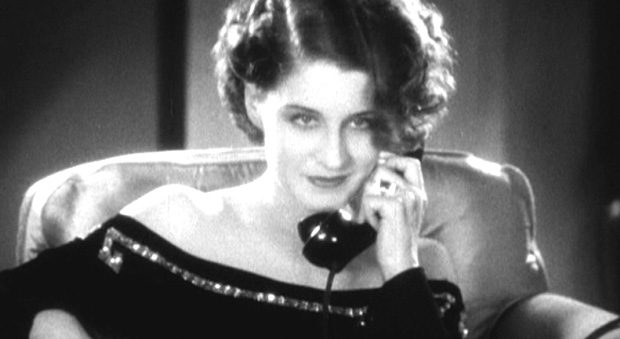
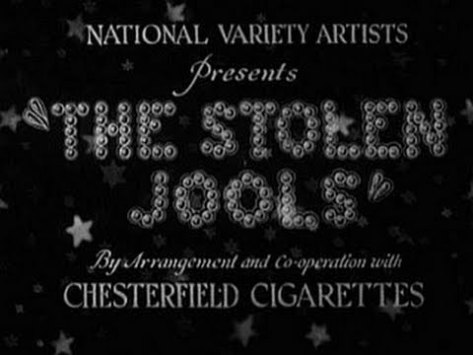
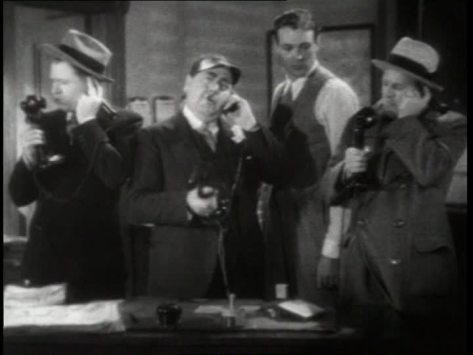
The Stolen Jools (1931) is a short comedy film produced by the Masquers Club of Hollywood, featuring many cameo appearances by film stars of the day. The stars appeared in the film, distributed by Paramount Pictures, to raise funds for the National Vaudeville Artists Tuberculosis Sanitarium. The UCLA Film and Television Archive entry for this film says—as do the credits—that the film was co-sponsored by Chesterfield cigarettes to support the “fine work” of the NVA sanitarium.

When the film was shown in theaters in 1931, a person would appear after the film to ask the audience for donations. Because the film was made for charity, it has an unusually large cast of actors from various studios in addition to Paramount, such as Warner Bros.RKOMGM, and Hal Roach Studios.

This film was retitled The Slippery Pearls in the United Kingdom. It was thought to have been lost until a print was found in the UK in the 1990s. Another print was later found in the US under the alternative title.

Stolen Jools 2

Plot

At the “Screen Stars Annual Ball”, Norma Shearer‘s jewels are stolen. The police must find them and return them to her.

Stolen Jools 5

Cast, as listed in end credits

The Detective
Under the Tree
Couples at Home
In a Movie Scene
Projectionist
The Midget
(Uncredited)
 Stolen Jools 4

See also

References

1. Transcribed from the DVD Best of Laurel & Hardy, Volumes 2–3. Brentwood Home Video, 2004.
Stolen Jools 7
Stolen Jools 8
Stolen Jools 9

Film Collectors Corner

Watch The Stolen Jools Now – Instant Video on You Tube 

Blu Ray

Not released on Blu Ray

DVD

Tangled Destinies (1932)


Pre Code Logo 1

Pre Code Hollywood Season: FD Cinematheque

Tangled Destinies AKA Who Killed Harry Forbes? (1932)

Tangled Destinies 2

Director: Frank R Strayer

Cast: Gene Morgan, Doris Hill, Glen Tryon, Vera Reynolds, Ethel Wales, Moanei Lindley, Syd Saylor, Sidney Bracey

Tangled Destinies 1 

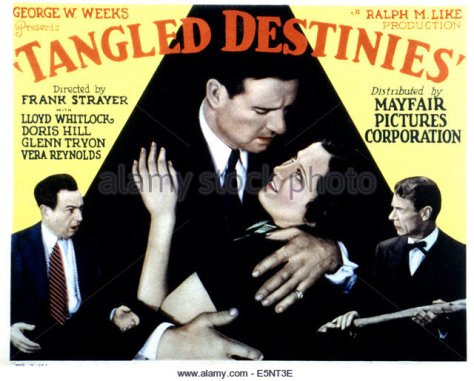
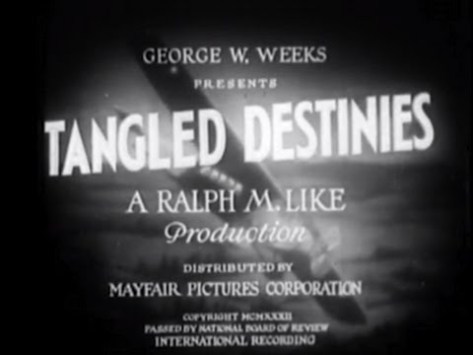
Tangled Destinies is a 1932 American film directed by Frank R. Strayer.

The film is also known as Who Killed Harvey Forbes? in the United Kingdom.

Plot summary

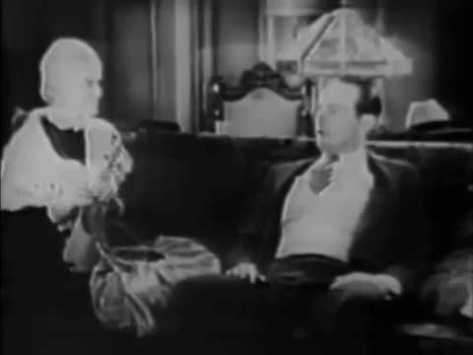
When a transcontinental airplane is forced to land in the desert in a thick fog, the crew and ten passengers find refuge in a deserted house, where they start up an electric generator and turn on the lights.

After the lights go out unexpectedly, one of the passengers is killed. Another passenger, a detective, claims he was guarding the deceased, who was carrying valuable diamonds, which are then discovered to be paste. Later, another person is murdered. Eventually, the murderer is found in the guise of a clergyman.

Tangled Destinies 3

Cast

Tangled Destinies 6

Tangled Destinies 7

Tangled Destinies 4

Film Collectors Corner

Watch Tangled Destinies Now – Instant Video on Internet Archive 

Blu Ray

Not released on Blu Ray


DVD

Framed (1930)


Pre Code Logo 1

Pre Code Hollywood Season: FD Cinematheque

Framed (1930)

Framed 5

Director: George Archainbaud

Cast: Evelyn Brent, Regis Toomey, Ralf Harolde, William Holden, Maurice Black, Robert Emmet O’Connor, Eddie Kane

65 min

Framed 4

Framed is an 1930 American pre-Code crime action film, directed by George Archainbaud, based on a screenplay by Paul Schofield and Wallace Smith. It starred Evelyn Brent, William Holden (no relation to the Oscar-winning actor, William Holden), Regis Toomey and Ralf Harolde.

Plot summary

When Rose Manning’s father is killed during a robbery by Inspector McArthur, Manning vows to avenge his death. Five years elapse, and Rose is now the owner of a nightclub, and her liquor supplier, the bootlegger Chuck Gaines is interested in her. Still plotting her revenge, she meets Jimmy McArthur, who she does not realize is the son of the inspector. Spurning Gaines’ advances, Rose becomes romantically involved with Jimmy. Her motivations waver as her emotional attachment to the young McArthur grows, until her relationship takes precedence over her revenge.

Framed 2

Chuck, jealous of the growing relationship between Rose and Jimmy, plots with his cohort, Bing Murdock, to murder both the inspector and his son. Uncovering the plan, Rose is attempting to warn Jimmy, when his father raids her club. In the ensuing chaos, Jimmy kills Gaines in order to protect Rose, after Gaines attacked her in a fit of jealous rage. When the inspector finally realizes that what Rose and Jimmy have is real affection for one another, he removes any objections over their relationship.

Framed 1

Cast

Framed 3

References

  1. Jump up to:a b c Framed: Detail View”. American Film Institute. Retrieved June 7, 2014.

Framed 6

Framed 7

Film Collectors Corner

Watch Framed Now – Instant Video on You Tube

Blu Ray

Not released on Blu Ray

DVD

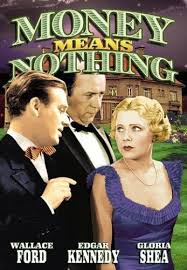
Money Means Nothing (1934)


Pre Code Logo 1

Pre Code Hollywood Season: FD Cinematheque

Money Means Nothing (1934)

Money Means Nothing 1

Director: Christy Cabanne

Cast: Wallace Ford, Edgar Kennedy, Gloria Shea, Vivien Oakland, Maidel Turner, Betty Blythe, Eddie Tamblyn, Richard Tucker, Tenen Holtz, Ann Brody

70 min

Money Means Nothing 2

Plot

When Julie Ferris, a wealthy young woman searching for excitement, goes slumming at Joe’s Roadside Inn, she notices a group of shady men and follows them in her car. After trailing them for a distance, Julie crashes into their car as they are hijacking two trucks carrying tires. In the ensuing scuffle, the thieves shoot one of the trucks’ drivers, Red Miller, and threaten Julie. Ken McKay, the other driver, protects and rescues Julie, and she immediately falls in love with him. Although her sister Helen and rich brother-in-law George disapprove, Julie marries Ken and moves to Brooklyn.

While determined to make the marriage work, Julie is nonetheless unprepared for her new neighbors, the boorish, nosy Greens. After the Greens crash Julie’s birthday dinner, Herbert Green, who is Ken’s boss at the auto parts store, is told by his overbearing wife that Julie’s snobbish family insulted him. As revenge, Herbert lies to his district manager that Ken has been tipping off the still active hijackers.

Money Means Nothing 3

Fired, Ken has no luck in finding another job and contemplates making the now pregnant but devoted Julie return to her family when Red Miller, who has opened his own tire store, hires him. In cahoots with the hijackers, Red forces an unsuspecting Ken to help him steal more tire shipments, but Herbert, on a tip from Julie, figures out the plan and calls the police. In the end, the thieves are caught, and a repentant Herbert promises Ken a new job. Thus saved, the newlyweds reaffirm their belief that money means nothing.

Money Means Nothing 4

Cast 

Wallace Ford Wallace Ford
Gloria Shea Gloria Shea
Julie Ferris McKay
Edgar Kennedy Edgar Kennedy
Herbert Green
Vivien Oakland Vivien Oakland
Helen Whitney (as Vivian Oakland)
Maidel Turner Maidel Turner
Mrs. Kerry Green
Betty Blythe Betty Blythe
Mrs. Ferris
Eddie Tamblyn Eddie Tamblyn
Robert ‘Robby’ Ferris (as Edward Tamblyn)
Richard Tucker Richard Tucker
George Whitney
Tenen Holtz Tenen Holtz
Mr. Silverman
Ann Brody Ann Brody
Mrs. Silverman
Rest of cast listed alphabetically:
Irving Bacon Irving Bacon
Navy Secretary (scenes deleted)
Ernie Adams Ernie Adams
Lead Hijacker (uncredited)
Sam Flint Sam Flint
Police Sergeant (uncredited)
Douglas Fowley Douglas Fowley
Red Miller (uncredited)
Olaf Hytten Olaf Hytten
Parsons – the Butler (uncredited)
Jack Kenney Jack Kenney
Hijacker-Driver (uncredited)
Jack Norton Jack Norton
Jack – Hijacker (uncredited)
Lee Phelps Lee Phelps
Chauffeur (uncredited)
Harry Semels Harry Semels
Toy Vendor (uncredited)
Bert Young Bert Young
Jim – Driver Shot in Leg (uncredited)

Film Collectors Corner

Watch Money Means Nothing Now – Amazon Instant Video

Blu Ray

Not released on Blu Ray

DVD

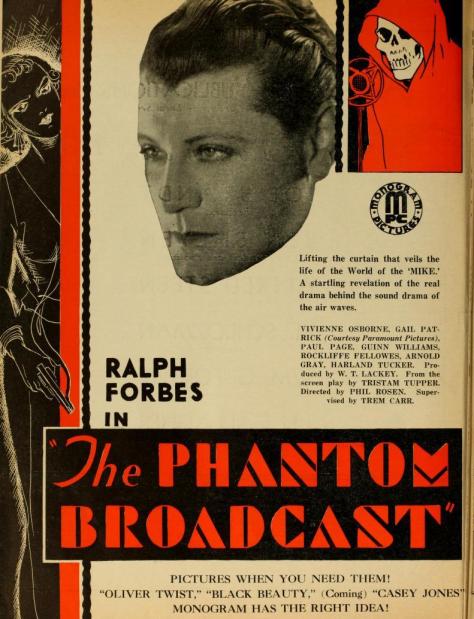
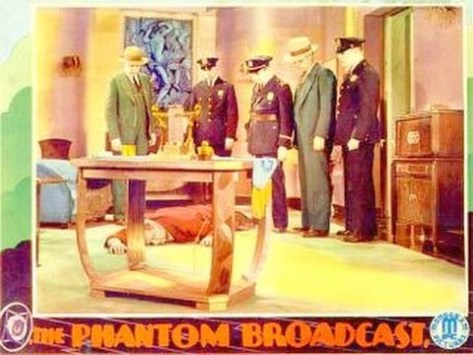
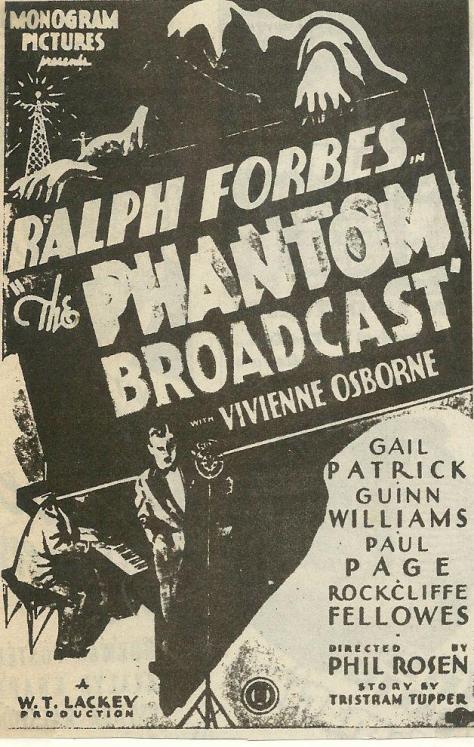
Phantom Broadcast, The (1933)


Pre Code Logo 1

Pre Code Hollywood Season: FD Cinematheque

Phantom Broadcast, The (1933)

Phantom Broadcast The 1

Phantom Broadcast The 2

Director: Phil Rosen

Cast: Ralph Forbes, Vivienne Osborne, Arnold Gray, Gail Patrick, Paul Page, Pauline Garon, Guinn Big Boy Williams, Rockliffe Fellowes

72 minutes

Phantom Broadcast The 4

Plot

As a delivery boy bestows flowers to girls about town, singer Grant Murdock states on his radio show that “Tonight I’m singing to you!” Joe Masetro, a gangster type, has set his sights on signing Grant to a big contract at the end of the week. Grant signs a new contract, however, with his old manager and conductor, Norman Wilder, a hunchback. Joe is upset with siren Elsa Evans, who was supposed to seduce Grant into signing with him. When Joe threatens to cut her out of the action, Elsa tells him she plans to marry Grant.

After the broadcast, Grant makes dates with a number of the girls and heads for Elsa, telling Wilder’s driver, Sandy Higgins, that he will not be rehearsing tonight. Lefty, Joe’s chief henchman and Elsa’s ex-lover, arrives with his gang to kill Norman. Norman meets Laura Hamilton, a young singer, and offers to test her the next day. Getting into his car, Sandy warns Norman about Lefty’s presence and the danger from Joe. Norman laughs off Sandy’s concern, but agrees to take a taxi, after which his car is shot up by Lefty and company. Joe calls Elsa at Grant’s apartment and tells her that Norman was “killed in a gang fight.” Norman, using his key, enters Grant’s apartment, frightening Elsa.

Phantom Broadcast The 5

Told of the attack, Grant assumes the murderers were after him, and after refusing to rehearse, he and Elsa leave. While Laura washes dishes with her fiancée, Dr. Robert Brooks, Norman calls and offers to test her in his studio that night. After the tryout, Norman tells Laura that she has real talent, but insists that a singing career and marriage do not mix. After she leaves, Norman looks in the mirror and imagines what he might have been like if he had not been born a hunchback. The next day, Grant and Norman rehearse. It turns out that Norman is the real singer and that Grant is no more than a ventriloquist’s dummy, mouthing the words and accepting the praise and glory.

When Grant leaves, he bumps into Laura and breaks her compact. Impressed by her looks, he promises to sing “My Good Bye to You” just for her, but Norman warns Laura about Grant, then refuses to sing the song on the broadcast. After the radio show, Norman tells Grant to stay away from Laura, but Grant calls her and makes a date for five o’clock to “hear him sing.” Grant strikes Norman and leaves. Norman tries to call Laura but she has already left. Back at his apartment, Elsa finds Laura’s compact and confronts Grant.

Phantom Broadcast The 6

She talks about marriage, but Grant strikes her and throws her out. While Elsa takes out her gun, Norman buys one of his own. Arriving at Grant’s, Norman finds the performer dead, with Laura’s compact next to him. Thinking Laura killed Grant, Norman switches guns, calls the police and confesses to the murder. Laura arrives, and realizing his mistake, Norman orders her to leave. When the police arrive, Norman escapes through the roof, but is mortally wounded.

Elsa calls Joe seeking help, but it is Lefty, who is still in love with her, who agrees to give her money. At the radio station, word of Grant’s murder arrives. At seven o’clock, right on schedule, the “voice” of Grant Murdock is heard on the air. The studio curtain is pulled back to show Norman singing “My Good Bye to You.” As he dies in her arms, Norman tells Laura that “love and music do mix.” On a ship, Laura honeymoons with Robert, as nearby Elsa wonders aloud to Lefty why Norman took the “rap” for her.

Phantom Broadcast The 8

Cast

Ralph Forbes Ralph Forbes
Vivienne Osborne Vivienne Osborne
Elsa Evans
Arnold Gray Arnold Gray
Grant Murdock
Gail Patrick Gail Patrick
Laura Hamilton
Paul Page Paul Page
Dr. Robert Brooks
Pauline Garon Pauline Garon
Nancy
Guinn 'Big Boy' Williams Guinn ‘Big Boy’ Williams
Sandy Higgins (as Big Boy Williams)
Rockliffe Fellowes Rockliffe Fellowes
Joe Maestro
Harland Tucker Harland Tucker
Program Manager (as Harlan Tucker)
Carl Miller Carl Miller
Lefty
Mary MacLaren Mary MacLaren
Beth
George Nash George Nash
Artist
Althea Henley Althea Henley
Model
George 'Gabby' Hayes George ‘Gabby’ Hayes
Police Lieutenant (as George Hayes)
Rest of cast listed alphabetically:
Louise Beavers Louise Beavers
Penny (uncredited)
Kit Guard Kit Guard
Thug (uncredited)
Henry Hall Henry Hall
Thornton–Radio Station Manager (uncredited)
Dick Rush Dick Rush
Policeman (uncredited)

Phantom Broadcast The 9

Film Collectors Corner

Watch The Phantom Broadcast Now – Instant Video on You Tube

Blu Ray

Not released on Blu Ray


DVD

Vampire Bat, The (1933)


Pre Code Logo 1

Pre Code Hollywood Season: FD Cinematheque

The Vampire Bat (1933)

Vampire Bat The 1

Vampire Bat The 2

Vampire Bat The 3

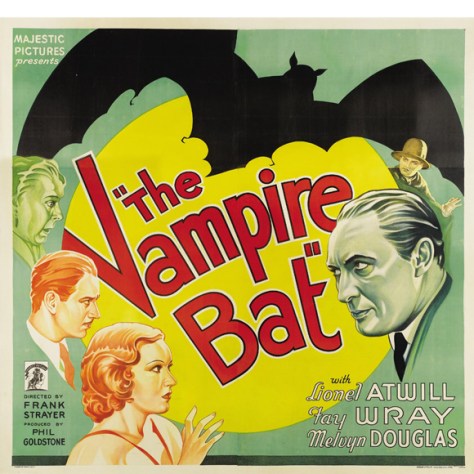
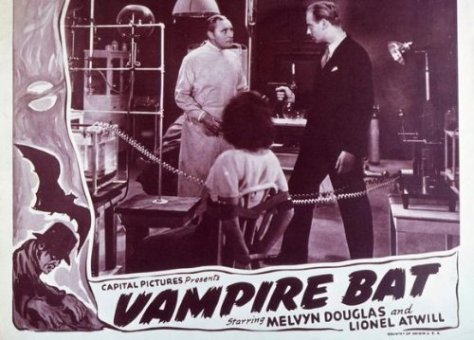
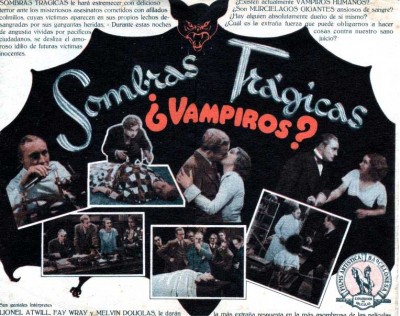
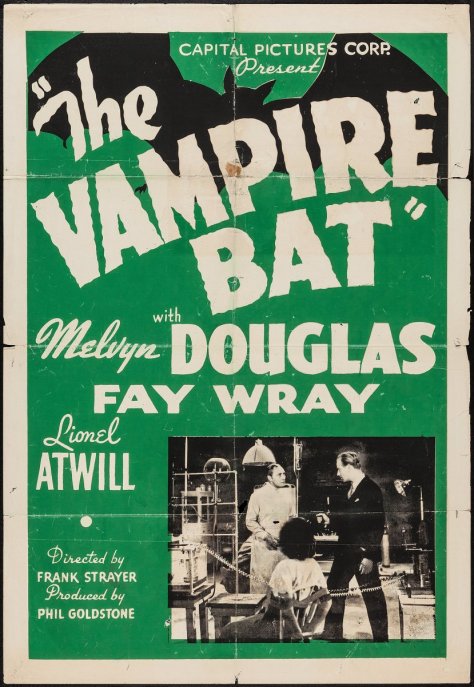
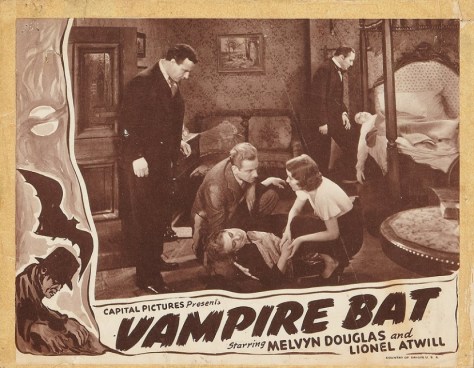
The Vampire Bat is a 1933 American pre-Code horror film starring Lionel AtwillFay WrayMelvyn Douglas, and Dwight Frye.

Plot outline

When the villagers of Kleinschloss start dying of blood loss, the town fathers suspect a resurgence of vampirism, but police inspector Karl Breettschneider remains skeptical. Scientist Dr. Otto von Niemann, who cares for the victims, visits a patient who was attacked by a bat, Martha Mueller.

Vampire Bat The 5

Martha is visited by a mentally challenged man named Herman, who claims he likes bats because they are “soft like cat” and “nice”. On the doctor’s journey home, he meets Kringen, one of the townsfolk, who claims to have been attacked by the vampire in the form of a bat, but withheld his story from the town to not spread fear. Dr. von Niemann encourages Kringen to tell the townsfolk of his story.

Kringen becomes suspicious that Herman Glieb may be the vampire due to his obsession with bats. Herman lives with bats and collects them off the street.

Dr. von Niemann returns to his home, which also houses Breettschneider’s love Ruth Bertin, Ruth’s hypochondriac aunt Gussie Schnappmann, and servants Emil Borst and Gorgiana. Fear of the vampire and suspicion of Glieb quickly spread around the town, and people start fearing him.

Vampire Bat The 4

Ms Mueller is killed that night. The analyses of Dr. von Niemann and another doctor, Dr. Haupt, conclude that the death is the same as all of the previous deaths – blood loss, with two punctures in the neck caused by needle-sharp teeth. Gleib enters the examination, and upon seeing the dead body, runs away screaming.

Next morning, Glieb enters Dr. von Niemann’s garden, where Dr. von Niemann, Breettschneider, and Bertin are discussing vampires inside the house. The town fathers enter the house and announce that Kringen is dead and Gleib is missing. An angry mob hunts down Gleib and chases him through the countryside and into a cave, where he falls to his death.

That night, Dr. von Niemann is seen telepathically controlling Emil Borst, as he picks up sleeping Gorgiana and takes her down to Dr. von Niemann’s laboratory, where a strange organism is seen. They then drain her blood from her neck.

Vampire Bat The 6

Schnappmann then discovers Gorgiana’s body in her bed. Dr. von Niemann and Breettschneider investigate and find Ms Mueller’s crucifix, which Glieb handled the night Dr. von Niemann visited her. Breettschneider is becoming more convinced of the presence of vampires in the village as no other plausible explanations for the deaths can be found. As Glieb was seen in the garden that morning, the two conclude he is guilty.

Upon hearing of Glieb’s death, however, Breettschneider’s conviction is erased. Dr. von Niemann tells Breettschneider to go home and take sleeping pills, but gives him poison instead, intent on draining his blood. Bertin discovers Dr. von Niemann telepathically controlling Borst, who is at Breettschneider’s house.

It is revealed that Dr. von Niemann has created life, and is using the blood to fuel his organism. He ties Bertin up in his lab. Borst supposedly enters with Breettschneider’s body on a trolley. Dr. von Niemann walks over to Borst, who is revealed to be Breettschneider (who did not take the pills) in costume, with the real Borst on the trolley. Breettschneider pulls a gun on Dr. von Niemann, and walks over to untie Bertin. Dr. von Niemann then wrestles Breettschneider, who drops the gun. As the two fight, Borst picks up the gun and shoots Dr. von Niemann.

Vampire Bat The 7

Production

Fay Wray and Lionel Atwill had been in the successful film Doctor X the previous year, and had already wrapped up work on Mystery of the Wax Museum for Warner Bros. This was quite a large-scale release and would have a lengthy post-production process. Seeing a chance to exploit all the advance press, poverty row studio Majestic Pictures Inc. contracted Wray and Atwill for their own “quickie” horror film, rushing The Vampire Bat into production and releasing it in January 1933.

Vampire Bat The 8

Majestic Pictures had lower overheads than the larger studios, which were struggling at the time during the Great Depression. Part of the reason that The Vampire Batlooked almost as good as any Universal Pictures horror film is because Majestic leased James Whale‘s castoffs, the “German Village” backlot sets left over from Frankenstein (1931) and the interior sets from his film The Old Dark House (1932), plus some location shooting at Bronson Caves.

Vampire Bat The 9

Completing the illusion that this was a film from a much bigger studio, Majestic hired actor Dwight Frye to populate scenes with Wray and Atwill. A stock musical theme by Charles Dunworth, “Stealthy Footsteps”, was used to accompany the opening credits.[1]

The Vampire Bat ruse worked well for Majestic, which was able to rush the quickie film into theaters less than a month before Warner’s release of Mystery of the Wax Museum. According to The Film Daily (January 10, 1933), the film’s running time was 63 minutes, like most extant prints.

Cast

Vampire Bat The 10

See also

References

  1. Jump up^ Larson, Randall D. (1985). Musique fantastique: a survey of film music in the fantastic cinema. Scarecrow Press. p. 32; ISBN 0810817284.
  2. Jump up^ “Scientific Horror”. New York Times. January 23, 1933. Retrieved 2013-05-14

Vampire Bat The 12

Vampire Bat The 13

Vampire Bat The 14Vampire Bat The 15

Film Collectors Corner

Watch The Vampire Bat Now – Instant Video on You Tube


Blu Ray

Not released on Blu Ray


DVD

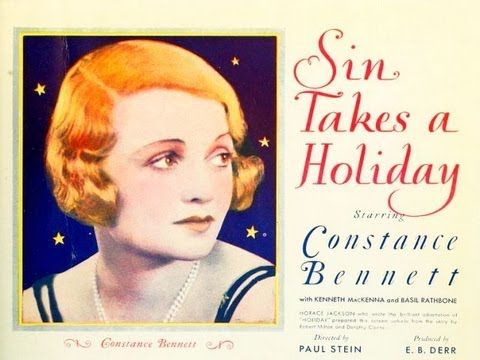
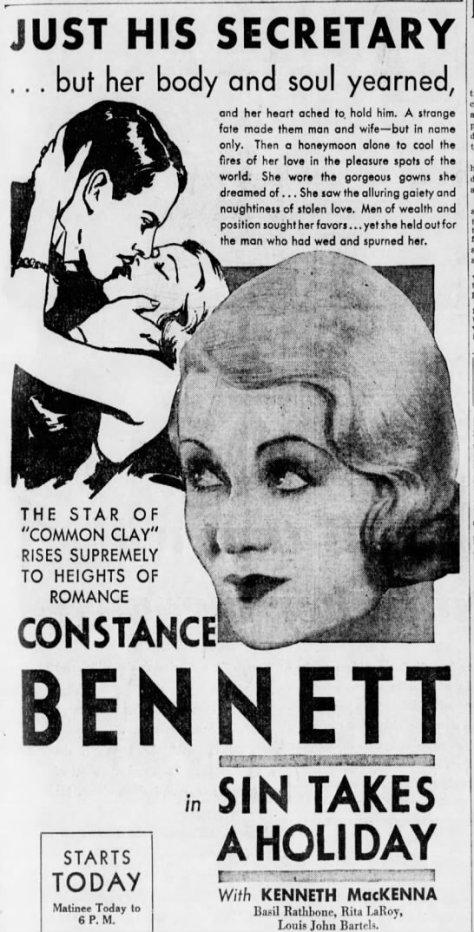
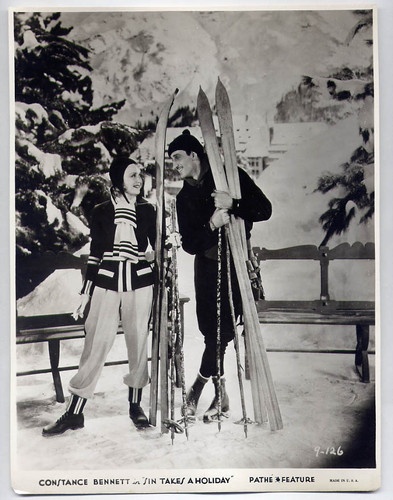
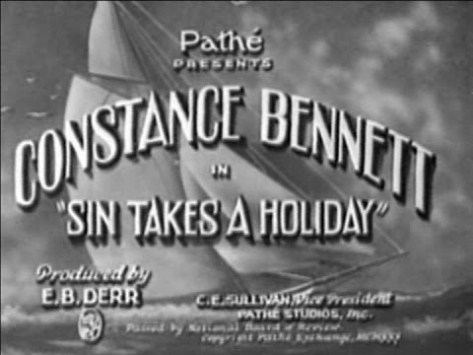
Sin Takes a Holiday (1930)


Pre Code Logo 1

Pre Code Hollywood Season: FD Cinematheque

Sin Takes a Holiday (1930)

Sin Takes a Holiday 2

Director: Paul L Stein

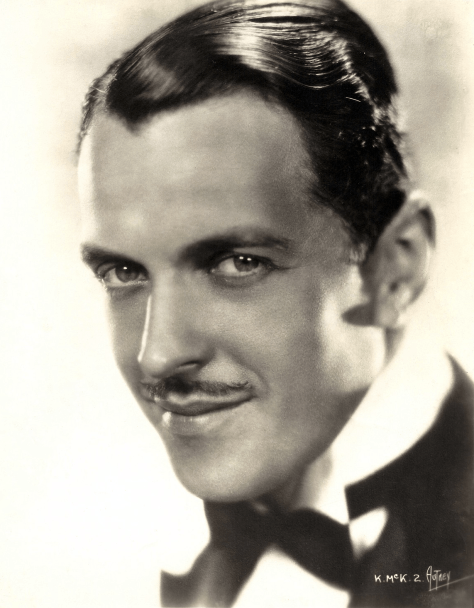
Cast: Constance Bennett, Kenneth McKenna, Basil Rathbone, Rita La Roy, Louis John Bartels, John Roche, Zasu Pitts, Kendall Lee, Muriel Finley, Judith Wood

81 min

 Sin Takes a Holiday 5

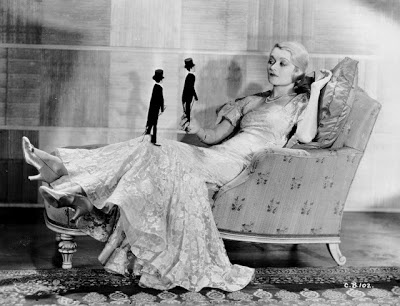
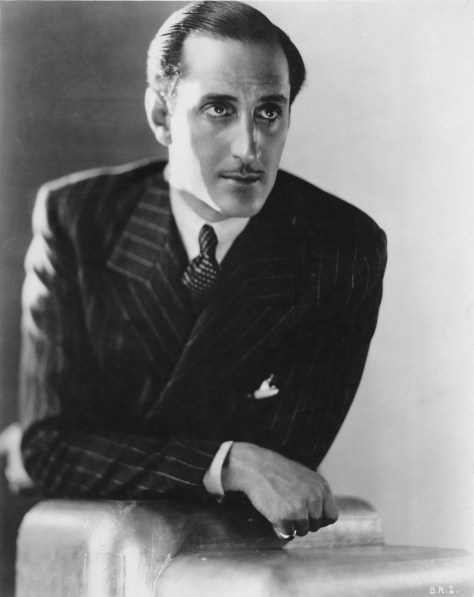
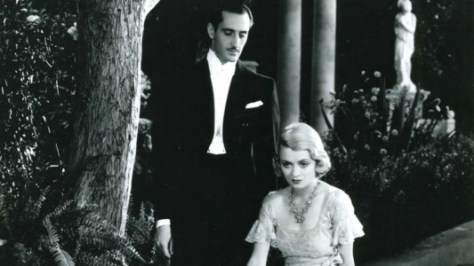
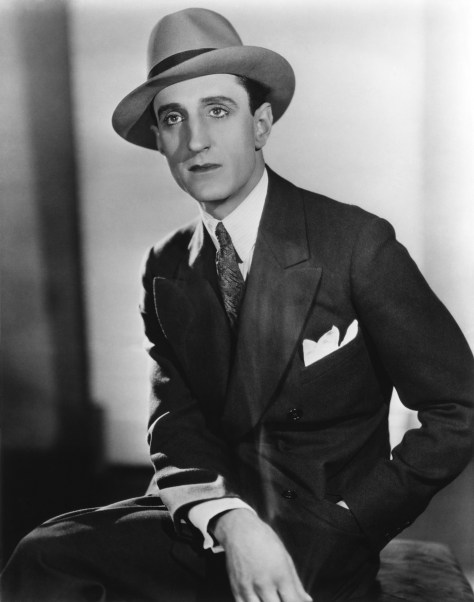
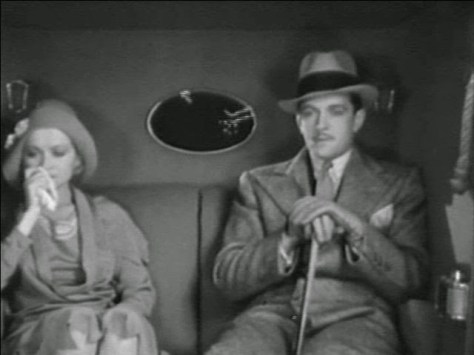
Sin Takes a Holiday is a 1930 American pre-Code romantic comedy film, directed by Paul L. Stein, from a screenplay by Horace Jackson, based on a story by Robert Milton and Dorothy Cairns. It starred Constance BennettKenneth MacKenna, and Basil Rathbone. Originally produced by Pathé Exchange and released in 1930, it was part of the takeover package when RKO Pictures acquired Pathe that year; it was re-released by RKO in 1931.

Sin Takes a Holiday 4

Plot

Basil Rathbone and Constance Bennett in a screen capture from the film

Sylvia Brenner (Constance Bennett) is a plain secretary sharing an apartment with two other girls, one of whom is her friend Annie (ZaSu Pitts). Her economic condition is meager, but she makes do with what she has.

She works for a womanizing divorce attorney, Gaylord Stanton (Kenneth MacKenna), who only dates married women; he has no intention of ever getting married and sees wives as safe, since they already have husbands. But Sylvia is secretly in love with Gaylord. When the woman he is fooling around with, Grace Lawrence (Rita La Roy), decides to leave her husband in order to marry Gaylord, he panics.

Sin Takes a Holiday 10

In order to avoid having to deal with the matrimonial pursuits of any of his potential dalliances, he offers a business proposal to Sylvia whereby he will provide her with financial remuneration if she will marry him in name only. She agrees.

After the sham wedding, Sylvia is sent off to Paris by Gaylord, to get her out of the way so he can continue his nightly debauchery. In Paris, she uses her money to do a serious makeover of herself. While there, she also meets her boss’s old friend, Reggie Durant (Basil Rathbone), who falls in love with her. Reggie is a sophisticated European, who introduces Sylvia to the enticements of the European lifestyle, to which she is attracted. When Reggie asks Sylvia to divorce Gaylord so that she can marry him, she is tempted, but confused, and returns home. Returning to the States, everyone takes notice of the transformed Sylvia.

Although there is a brief hiccup, as Grace puts forth a full-court offensive to win over Gaylord, Gaylord and Sylvia end up realizing that they are in love with each other.

Sin Takes a Holiday 7

Cast

(Cast list as per the AFI database)[1]

Sin Takes a Holiday 11

Notes

On its original release, the movie recorded a loss of $40,000.[2]

In 1958, the film entered the public domain in the USA due to the copyright claimants failure to renew the copyright registration in the 28th year after publication.[3]

The film was recorded using the RCA Photophone System.[4]

Tag line for the film, was, “Oh lady – what clothes!”[5]

Sin Takes a Holiday 6

References

  1. Jump up to:a b “Sin Takes a Holiday: Detail View”. American Film Institute. Retrieved April 16, 2014.
  2. Jump up to:a b c Richard Jewel, ‘RKO Film Grosses: 1931-1951’, Historical Journal of Film Radio and Television, Vol 14 No 1, 1994 p57
  3. Jump up^ Pierce, David (June 2007). “Forgotten Faces: Why Some of Our Cinema Heritage Is Part of the Public Domain”. Film History: An International Journal19 (2): 125–43. ISSN 0892-2160JSTOR 25165419OCLC 15122313doi:10.2979/FIL.2007.19.2.125. See Note #60, pg. 143
  4. Jump up^ “Theiapolis: Technical Details”. theiapolis.com. Retrieved August 5, 2014.
  5. Jump up^ “Sin Takes a Holiday, Articles”. Turner Classic Movies. Retrieved August 5, 2014.

Sin Takes a Holiday 8

Sin Takes a Holiday 12

Sin Takes a Holiday 9

Film Collectors Corner

Watch Sin Takes A Holiday Now – Instant Video on You Tube

Blu Ray

Not released on Blu Ray

DVD

Twin Husbands (1933)


Pre Code Logo 1

Pre Code Hollywood Season: FD Cinematheque

Twin Husbands (1933)

Twin Husbands 3

Director: Frank R Strayer

Cast: John Miljan, Shirley Grey, Monroe Owsley, Hale Hamilton, Robert Elliott, Wilson Benge, Maurice Black, Robert Walker

68 min

Twin Husbands 9


Twin Husbands is a 1933 American Pre-Code film directed by Frank R. Strayer.

Plot summary

After he wakes from a deep sleep in a strange Long Island mansion, a dazed man finds a calendar dated 1938, four years later than his last recollection, and evidence that his name is Jerome “Jerry” Peyton Werrenden. Greyson, a butler, tells Jerry that he is the mansion’s owner and that he has been ailing mentally for months.

Jerry, however, quickly deduces that he has been kidnapped and drugged and that Greyson was hired to pose as a longtime servant as part of a scheme to convince him that he is suffering from amnesia.

Twin Husbands 5

Curious about the scheme, Jerry pays Greyson to continue his part, while he pretends to be Werrenden with Chloe, his supposed wife, and with Colton Drain, his supposed secretary. When Chloe and Colton realize that Jerry is wise to the plot, they offer him $10,000 to impersonate Werrenden, who is living in Europe, in a meeting with Colonel Gordon Lewis, the estate trustee, who has been asked to deliver $200,000 in bonds. Jerry accepts the offer and, while waiting for the colonel, overhears Chloe and Colton discussing plans to leave for South America.

After requesting a signed receipt, Lewis, apparently fooled by the impersonation, gives Jerry the bonds, which Jerry then places in a safe, the combination to which only the real Werrenden knows. Later that night, Colton and Chloe discover two thugs, Feets and Chuck, breaking into the safe.

Twin Husbands 2

When the thugs see Jerry, they identify him as The Sparrow, a master “cracksman,” and as a favor to his fellow crooks, Jerry allows them to escape before the police arrive. After a confused interrogation of Chloe, Colton, Lewis and Greyson about Jerry’s identity, Sergeant Kerrigan orders Jerry and Chloe to police headquarters. To Chloe’s surprise, however, Jerry takes her to his house, explaining that Greyson had telephoned his minion, Kerrigan, with orders to impersonate a police sergeant.

After Jerry determines that Chloe was actually trying to save her ne’er-do-well husband from the financial scheming of Colton, he confronts Lewis about the bonds. Cornered, Lewis confesses that he had hired Feets and Chuck to steal the bonds because he needed the money to cover his own overdraughts.

Twin Husbands 4

Jerry then breaks into Colton’s private vaults and unearths several documents that reveal that Colton had covered up news of Werrenden’s death and had stolen his securities. Jerry returns to the Werrenden mansion and shows Chloe, with whom he has fallen in love, his evidence. Supported by Chloe, a repentant Lewis and Greyson, Jerry convinces the police that he is Werrenden and that Colton is suffering a nervous breakdown.

Unable to expose Colton to the police because of his own criminal activities, Jerry nonetheless satisfies Chloe by forcing Colton to agree to leave immediately for South America. Chloe then convinces a reformed Jerry not to run away, but to stay with her indefinitely.

Twin Husbands 6

Cast

External links

Twin Husbands 7

Film Collectors Corner

Watch Twin Husbands Now – Instant Video on You Tube

Blu Ray

Not released on Blu Ray


DVD

Not released on DVD


Woman Between, The (1931)


Pre Code Logo 1

Pre Code Hollywood Season: FD Cinematheque

The Woman Between (1931)

Woman Between The 1

Director: Victor Schertzinger

Cast: Lilli Damita, Lester Vail, O P Heggie, Miriam Seegar, Anita Louise, Ruth Weston, Lincoln Steadman, Blanche Friderici, William Morris, Halliwell Hobbes, Ellinor Vanderveer

73 min 

Woman Between The 2

The Woman Between is a 1931 American pre-Code drama film directed by Victor Schertzinger and written by Howard Estabrook. The film stars Lili DamitaLester VailO.P. HeggieMiriam Seegar and Anita Louise.[1][2] The film was released on August 8, 1931, by RKO Pictures.

Woman Between The 8

Plot

A young man returns from Europe after several years’ estrangement from his family caused by his disapproval of his father’s remarrying after his mother’s death. At the family reunion he learns that his stepmother is the woman with whom he had a shipboard romance on the voyage home.

Cast

Woman Between The 5

References

  1. Jump up^ “The Woman Between (1931) – Overview”Turner Classic Movies. Retrieved September 9, 2014.
  2. Jump up^ “Woman Between – Rotten Tomatoes”. Retrieved September 9, 2014.

Woman Between The 4

Film Collectors Corner

Watch The Woman Between Now – Instant Video on You Tube

Blu Ray

Not released on Blu Ray


DVD

Hearts of Humanity (1932)


Pre Code Logo 1

Pre Code Hollywood Season: FD Cinematheque

Hearts of Humanity (1932)

Hearts of Humanity 1

Hearts of Humanity 2

Director: Christy Cabanne

Cast: Jean Hersholt, Jackie Searl, J Farrell Macdonald, Claudia Dell, Charles Delaney, Lucille LaVerne, Richard Vallace, George Humbert, Betty Jane Graham

56 min

Plot

Irish policeman Tom O’Hara is killed by a thief in Sol Bloom’s antique store, but before he dies, he asks widower Sol to take care of his son Shandy, who will be arriving soon from Europe.

Sol’s own son Joey is streetwise and uncontrollable, although Sol has reared him lovingly. Sol adopts Shandy and treats him like his own son, and Shandy reciprocates with love and helpfulness. Shandy looks after Joey, who is continually getting into trouble.

Hearts of Humanity 3

When Joey steals a dollar from his father’s cash register, Shandy pawns the harp his mother gave him to replace the money so Joey will not get into trouble. When Joey breaks a neighbor’s window, Shandy offers to pay the owner ten dollars so he will not tell Sol, however he is unable to get his harp back because it has been sold.

Desperate, Shandy asks the new owner to lend it to him, and then steals it when the owner refuses. He wins a ten dollar prize performing in an amateur night contest, but is so guilt-ridden about having stolen the harp that he wanders aimlessly in the rain. Shandy takes ill and is brought home by a policeman. Joey reforms and prays for Shandy’s recovery. Joey’s improvement bolsters Shandy, who recovers, and the harp’s owner returns the harp to Shandy.

Hearts of Humanity 4

Cast (in credits order)

Jean Hersholt Jean Hersholt
Jackie Searl Jackie Searl
Shandy O’Hara
J. Farrell MacDonald J. Farrell MacDonald
Tom O’Hara
Claudia Dell Claudia Dell
Ruth Sneider
Charles Delaney Charles Delaney
Tom Varney
Lucille La Verne Lucille La Verne
Mrs. Sneider
Richard Wallace Richard Wallace
Joey Bloom (as Dick Wallace)
George Humbert George Humbert
Tony
Betty Jane Graham Betty Jane Graham
Hilda
John Vosper John Vosper
Dave Haller (as John Vosburgh)
Tom McGuire Tom McGuire
Mr. Wells
Rest of cast listed alphabetically:
Suzanne Wood Suzanne Wood
(uncredited)

Film Collectors Corner

Watch Hearts of Humanity Now – Instant Video on You Tube


Blu Ray

Not released on Blu Ray 


DVD

East of Borneo (1931)


Pre Code Logo 1

Pre Code Hollywood Season: FD Cinematheque

East of Borneo (1931)

East of Borneo 1

East of Borneo 3

Director: George Melford

Cast: Rose Hobart, Charles Bickford, Georges Renavent, Lupita Tovar, Noble Johnson, Tom London

77 min

East of Borneo 6

East of Borneo (1931) is an American Pre-Code adventure film directed by George Melford, co-written by Edwin H. Knopf and Dale Van Every, starring Rose HobartCharles BickfordGeorges RenaventLupita Tovar, and Noble Johnson, and released by Universal Studios.

In 1936, artist Joseph Cornell edited this feature film into his short experimental film Rose Hobart which runs about 19 minutes.

East of Borneo 7

Plot

Linda Randolph (Hobart) looks for her husband on the island of Marado just east of Borneo. Although Linda is warned that Marado’s jungles are “entirely too dangerous” for a woman, she persists through dangerous raft rides and wild crocodiles. She discovers that her husband is now the personal physician to the island’s enigmatic prince. The prince lusts for Linda, and a love triangle ensues.

East of Borneo 5

Production

The film was shot largely at Universal Studios. Despite being essentially a b-picture, East of Borneo featured elaborate sets. Props and set dressing used in the film were reportedly valued at $100,000; this figure includes a large $25,000 Buddha statue, a very rare small white Buddha and a long mother-of-pearl inlaid bench, silver dinner utensils and Oriental rugs and drapery.[1]

References

  1. Jump up^ “East of Borneo” Set Cost $100,000. The Florence Times Vol VIII. Number 252. 29 April 1932. p 6. Retrieved 29 February 2016

East of Borneo 9

East of Borneo 11

East of Borneo 12

East of Borneo 13

Film Collectors Corner

Watch East of Borneo Now – Instant Video on Internet Archive 


Blu Ray

Not released on Blu Ray 


DVD

Kept Husbands (1931)


Pre Code Logo 1

Pre Code Hollywood Season: FD Cinematheque

Kept Husbands (1931)

Kept Husbands 3

Director: Lloyd Bacon

Cast: Dorothy Mackaill, Joel McCrea, Ned Sparks, Mary Carr, Clara Kimball Young, Robert McWade, Bryant Washburn, Florence Roberts, Freeman Wood, Lita Chevret

76 min

Kept Husbands 6

Kept Husbands is a 1931 American pre-Code drama film directed by Lloyd Bacon, starring Dorothy Mackaill and Joel McCrea, with major supporting roles filled by Robert McWadeFlorence Roberts and Mary Carr.

The original story was written by the film’s associate producer, Louis Sarecky, and adapted for the screen by Forrest Halsey and Alfred Jackson. Although primarily a drama, the film has many comedic touches to it.

The film centers around the class struggles and stereotypes between the working class and the wealthy, which was particularly striking during the Depression era when this film was made. The film also points out the stereotypical gender roles which were prevalent at that time.

Kept Husbands 2

Plot summary

Arthur Parker (Robert McWade) is a wealthy steel magnate who is relating the story to his snobbish wife and spoiled daughter of one of his plant supervisors who fearlessly rushed in and saved the lives of two of his fellow co-workers.

When his wife, Henrietta (Florence Roberts), asks if he rewarded the young man, Parker shows his astonishment by saying that the hero had refused the thousand dollars he had offered.

Kept Husbands 4

When the daughter, Dot (Dorothy Mackaill), remarks that she would like to meet a man like that, the father tells her not to worry, she will, for he is coming to dinner that very evening. Henrietta is aghast at having to socialize with someone not of their class, but Parker, who is a better judge of character, assures her that all will be well.

During dinner, Dot is smitten with the young man, Dick Brunton (Joel McCrea). So smitten she makes a bet with her father that she can get him to marry her within four weeks, by December 20. The father takes that bet, and lo and behold she wins Dick’s heart and gets him to accept her proposal of marriage by the deadline, despite his fears of their different social circumstances.

After the wedding, Parker sends the newlyweds on an expensive honeymoon to Europe, after which they return to their lavish home, also supplied by Parker. Parker also promotes Dick, but within six months, his new lifestyle threatens to emasculate Dick, who loses interest in his career and finds himself dominated by Dot’s vapid, social whirl of bridge games, cocktail parties and passive acceptance of life as a “kept husband”.

Kept Husbands 5

This does not sit well with the proud husband, and when Parker offers him a chance to prove himself with a new position in St. Louis, he jumps at the chance. When told of the opportunity however, Dot is less than enthusiastic, not wanting to leave her friends and social circle. She refuses to agree to accompany Dick.

Dick decides to go to St. Louis, with or without Dot, making her incredibly upset. Not knowing what to do, he goes to ask advice from his mother (Mary Carr), who tells him that he needs to reconcile with Dot before he leaves for St. Louis. Meanwhile, Dot has agreed to meet with a former beau, Charles Bates (Bryant Washburn), who attempts to seduce her.

Kept Husbands 7

When she returns to their house the following morning, Dick questions her regarding her whereabouts. She lies to him, and he knows it, since he had seen her with Washburn the prior evening. Furious, he storms out, saying their marriage is over, and intending to resign from Parker’s company.

Realizing her love for him, Dot eventually finds Dick at the rail station, about to leave for St. Louis. He has decided to take Parker’s position after all. The husband and wife reconcile, with Dot agreeing to live within the means that Dick’s salary can provide.

Kept Husbands 8

Cast

Kept Husbands 11

(Cast list as per AFI database)[2]

Soundtrack

Kept Husbands 10

Notes

In 1959, the film entered the public domain in the USA due to the copyright claimants failure to renew the copyright registration in the 28th year after publication.[5]

The tag line for the film was “Every Inch a Man – Bought Body and Soul by His Wife”.[6]

This film marked the debut in sound films of Clara Kimball Young, who had been a major star during the silent film era. She came back after a six-year hiatus from making films.[7]

Kept Husbands 13

References

  1. Jump up to:a b “Kept Husband: Details”New York Times. Archived from the original on August 16, 2014. Retrieved August 16, 2014.
  2. Jump up to:a b c d Kept Husbands: Detail View”. American Film Institute. Archived from the original on March 6, 2013. Retrieved October 5, 2016.
  3. Jump up^ “Max Steiner: Film Scores”. Songwriter Hall of Fame. Retrieved April 1, 2016.
  4. Jump up to:a b c “Kept Husbands, Technical Details”. theiapolis.com. Retrieved August 16, 2014.[permanent dead link]
  5. Jump up^ Pierce, David (June 2007). “Forgotten Faces: Why Some of Our Cinema Heritage Is Part of the Public Domain”. Film History: An International Journal19 (2): 125–43. ISSN 0892-2160JSTOR 25165419OCLC 15122313doi:10.2979/FIL.2007.19.2.125. See Note #60, p. 143.
  6. Jump up^ Jewell, Richard B.; Harbin, Vernon (1982). The RKO Story. New York: Arlington House. p. 34. ISBN 0-517-546566.
  7. Jump up^ “Kept Husbands, Notes”. Turner Classic Movies. Archived from the original on August 16, 2014. Retrieved August 16, 2014.

Kept Husbands 9

Kept Husbands 12

Kept Husbands 18

Kept Husbands 15

Film Collectors Corner

Watch Kept Husbands Now – Amazon Instant Video


Blu Ray

Not released on Blu Ray as yet


DVD


Reckoning, The (1932)


Pre Code Logo 1

Pre Code Hollywood Season: FD Cinematheque

The Reckoning (1932)

Reckoning The 1

Director: Harry L Fraser

Cast: Sally Blane, James Murray, Edmund Breese, Bryant Washburn, Pat O’Malley, Thomas E Jackson,  Mildred Golden, Douglas Scott

63 min

The Reckoning (also known as Crooked Streets) is a 1932 Pre-code talking film crime-drama directed by Harry L. Fraser and starring Sally Blane and James Murray. It was released on state rights and through a company called Peerless.[1]

Preserved by the Library of Congress.[2]

Reckoning The 2

Cast

References

  1. Jump up^ The AFI Catalog of Feature Films:..The Reckoning
  2. Jump up^ Catalog of Holdings The American Film Institute Collection and The United Artists Collection at The Library of Congress, (<-book title) p.150 c.1978 the American Film Institute

Reckoning The 3

Film Collectors Corner

Watch Rain Now – Amazon Instant Video

Blu Ray

Not released on Blu Ray 


DVD

All Quiet on the Western Front (1929)


Pre Code Logo 1

Pre Code Hollywood Season: FD Cinematheque

All Quiet on the Western Front (1929)
All Quiet on the Western Front 9

All Quiet on the Western Front 10

All Quiet on the Western Front 6

Director: Lewis Milestone

Cast: Lew Ayres, Louis Wolheim, John Wray, Arnold Lucy, Ben Alexander, Scott Kolk, Owen Davis Jr, Walter Rogers, William Bakewell, Russell Gleason, Richard Alexander, Harold Goodwin, Slim Summerville, G Pat Collins, Beryl Mercer, Edmund Breese, Zasu Pitts ( silent version only ), Raymond Griffith, Joan Marsh, Fred Zinnemann, Dorothy Vernon, Wolfgang Staudte, Robert Parrish, Yola D’Avril

136 min
All Quiet on the Western Front 4

All Quiet on the Western Front (GermanIm Westen nichts Neueslit. ‘In the West Nothing New’) is a novel by Erich Maria Remarque, a German veteran of World War I. The book describes the German soldiers’ extreme physical and mental stress during the war, and the detachment from civilian life felt by many of these soldiers upon returning home from the front.

The novel was first published in November and December 1928 in the German newspaper Vossische Zeitung and in book form in late January 1929. The book and its sequel, The Road Back (1930), were among the books banned and burned in Nazi GermanyAll Quiet on the Western Front sold 2.5 million copies in 22 languages in its first 18 months in print.[1]

In 1930, the book was adapted as an Academy-Award-winning film of the same name, directed by Lewis Milestone. It was adapted again in 1979 by Delbert Mann, this time as a television film starring Richard Thomas and Ernest Borgnine.
All Quiet on the Western Front 12

Title and translation

All Quiet on the Western Front 23

The English translation by Arthur Wesley Wheen gives the title as All Quiet on the Western Front. The literal translation of “Im Westen nichts Neues” is “In the West Nothing New,” with “West” being the Western Front; the phrase refers to the content of an official communiqué at the end of the novel.

Brian Murdoch’s 1993 translation would render the phrase as “there was nothing new to report on the Western Front” within the narrative. Explaining his retention of the original book-title, he says:

Although it does not match the German exactly, Wheen’s title has justly become part of the English language and is retained here with gratitude.

The phrase “all quiet on the Western Front” has become a colloquial expression meaning stagnation, or lack of visible change, in any context.[citation needed]
All Quiet on the Western Front 13

Plot summary

The book tells the story of Paul Bäumer, a German soldier who—urged on by his school teacher—joins the German army shortly after the start of World War I. His class was “scattered over the platoons amongst Frisian fishermen, peasants, and labourers.” Bäumer arrives at the Western Front with his friends and schoolmates (Leer, Müller, Kropp and a number of other characters). There they meet Stanislaus Katczinsky, an older soldier, nicknamed Kat, who becomes Paul’s mentor. While fighting at the front, Bäumer and his comrades have to engage in frequent battles and endure the treacherous and filthy conditions of trench warfare.
All Quiet on the Western Front 14

At the very beginning of the book, Erich Maria Remarque says “This book is to be neither an accusation nor a confession, and least of all an adventure, for death is not an adventure to those who stand face to face with it. It will try simply to tell of a generation of men who, even though they may have escaped (its) shells, were destroyed by the war.”[2] The book does not focus on heroic stories of bravery, but rather gives a view of the conditions in which the soldiers find themselves. The monotony between battles, the constant threat of artillery fire and bombardments, the struggle to find food, the lack of training of young recruits (meaning lower chances of survival), and the overarching role of random chance in the lives and deaths of the soldiers are described in detail.
All Quiet on the Western Front 15

The battles fought here have no names and seem to have little overall significance, except for the impending possibility of injury or death for Bäumer and his comrades. Only pitifully small pieces of land are gained, about the size of a football field, which are often lost again later. Remarque often refers to the living soldiers as old and dead, emotionally drained and shaken. “We are not youth any longer. We don’t want to take the world by storm. We are fleeing from ourselves, from our life. We were eighteen and had begun to love life and the world; and we had to shoot it to pieces.”

Paul’s visit on leave to his home highlights the cost of the war on his psyche. The town has not changed since he went off to war; however, he finds that he does “not belong here anymore, it is a foreign world.” He feels disconnected from most of the townspeople. His father asks him “stupid and distressing” questions about his war experiences, not understanding “that a man cannot talk of such things.” An old schoolmaster lectures him about strategy and advancing to Paris while insisting that Paul and his friends know only their “own little sector” of the war but nothing of the big picture.
All Quiet on the Western Front 16

Indeed, the only person he remains connected to is his dying mother, with whom he shares a tender, yet restrained relationship. The night before he is to return from leave, he stays up with her, exchanging small expressions of love and concern for each other. He thinks to himself, “Ah! Mother, Mother! How can it be that I must part from you? Here I sit and there you are lying; we have so much to say, and we shall never say it.” In the end, he concludes that he “ought never to have come [home] on leave.”

Paul feels glad to be reunited with his comrades. Soon after, he volunteers to go on a patrol and kills a man for the first time in hand-to-hand combat. He watches the man die, in pain for hours. He feels remorse and asks forgiveness from the man’s corpse. He is devastated and later confesses to Kat and Albert, who try to comfort him and reassure him that it is only part of the war.

They are then sent on what Paul calls a “good job.” They must guard a supply depot in a village that was evacuated due to being shelled too heavily. During this time, the men are able to adequately feed themselves, unlike the near-starvation conditions in the German trenches. In addition, the men enjoy themselves while living off the spoils from the village and officers’ luxuries from the supply depot (such as fine cigars). While evacuating the villagers (enemy civilians), Paul and Albert are taken by surprise by artillery fired at the civilian convoy and wounded by a shell.
All Quiet on the Western Front 18

On the train back home, Albert takes a turn for the worse and cannot complete the journey, instead being sent off the train to recuperate in a Catholic hospital. Paul uses a combination of bartering and manipulation to stay by Albert’s side. Albert eventually has his leg amputated, while Paul is deemed fit for service and returned to the front.

By now, the war is nearing its end and the German Army is retreating. In despair, Paul watches as his friends fall one by one. It is the death of Kat that eventually makes Paul careless about living. In the final chapter, he comments that peace is coming soon, but he does not see the future as bright and shining with hope. Paul feels that he has no aims or goals left in life and that their generation will be different and misunderstood. When he dies at the end of the novel, the situation report from the frontline states, “All is Quiet on the Western Front.”
All Quiet on the Western Front 19

Themes

One of the major themes of the novel is the difficulty of soldiers to revert to civilian life after having experienced extreme combat situations. Remarque comments in the preface that “[This book] will try simply to tell of a generation of men who, even though they may have escaped its shells, were destroyed by the war.”[2]

This internal destruction can be found as early as the first chapter as Paul comments that, although all the boys are young, their youth has left them. In addition, the massive loss of life and negligible gains from the fighting are constantly emphasized. Soldiers’ lives are thrown away by their commanding officers who are stationed comfortably away from the front, ignorant of the daily terrors of the front line.
All Quiet on the Western Front 20

Main characters

Cover of first English language edition. The design is based upon a German war bonds poster by Fritz Erler.

Paul Bäumer
All Quiet on the Western Front 25

Paul Bäumer is the main character and narrator. At 19 years of age, Paul enlists in the German Army and is deployed to the Western Front where he experiences the severe psychological and physical effects of the war. Before the war, Paul was a creative, sensitive and passionate person, writing poems and having a clear love for his family. But as the war changed his attitude and personality, poems and other aspects of his past life become something Paul was no longer linked to, since the horrors of war trained him to disconnect himself from his feelings. He feels he can’t tell anyone about his experiences and feels like an outsider where his family is concerned.

By the end of the book, Paul realises that he no longer knows what to do with himself and decides that he has nothing more to lose. The war appears to have snuffed out his hopes and dreams, which he feels he can never regain. After years of fighting in the war, Paul is finally killed in October 1918, on an extraordinarily quiet, peaceful day. The army report that day contains only one phrase: “All quiet on the Western Front.” As Paul dies, his face is calm, “as though almost glad the end had come.”

Albert Kropp
All Quiet on the Western Front 26

Kropp was in Paul’s class at school and is described as the clearest thinker of the group as well as the smallest. Kropp is wounded towards the end of the novel and undergoes a leg amputation. Both he and Bäumer end up spending time in a Catholic hospital together, Bäumer suffering from shrapnel wounds to the leg and arm. Though Kropp initially plans to commit suicide if he requires an amputation, the book suggests he postponed suicide because of the strength of military camaraderie. Kropp and Bäumer part ways when Bäumer is recalled to his regiment after recovering. Paul comments that saying farewell was “very hard, but it is something a soldier learns to deal with.”[3]

Haie Westhus
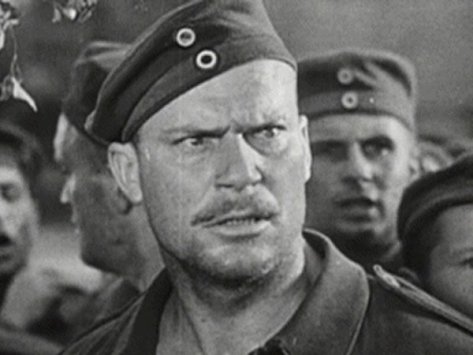
All Quiet on the Western Front 27

Haie is described as being tall and strong, and a peat-digger by profession. Overall, his size and behavior make him seem older than Paul, yet he is the same age as Paul and his school-friends (roughly 19 at the start of the book). Haie, in addition, has a good sense of humor. During combat, he is injured in his back, fatally (Chapter 6)—the resulting wound is large enough for Paul to see Haie’s breathing lung when Himmelstoß (Himmelstoss) carries him to safety.

Fredrich Müller
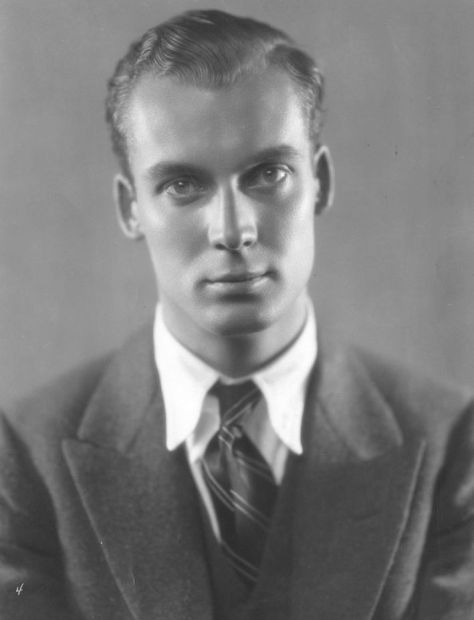
All Quiet on the Western Front 28

Müller is about 18 and a half years of age, one of Bäumer’s classmates, when he also joins the German army as a volunteer to go to the war. Carrying his old school books with him to the battlefield, he constantly reminds himself of the importance of learning and education. Even while under enemy fire, he “mutters propositions in physics”. He became interested in Kemmerich’s boots and inherits them when Kemmerich dies early in the novel. He is killed later in the book after being shot point-blank in the stomach with a “light pistol” (flare gun). As he was dying “quite conscious and in terrible pain”, he gave his boots which he inherited from Kemmerich to Paul.

Stanislaus “Kat” Katczinsky
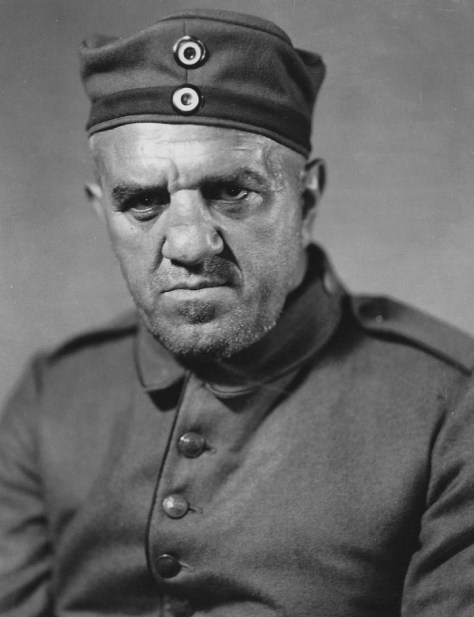
All Quiet on the Western Front 29

Kat has the most positive influence on Paul and his comrades on the battlefield. Katczinsky was a cobbler (shoemaker) in civilian life; he is older than Paul Bäumer and his comrades, about 40 years old, and serves as their leadership figure. He also represents a literary model highlighting the differences between the younger and older soldiers. While the older men have already had a life of professional and personal experience before the war, Bäumer and the men of his age have had little life experience or time for personal growth.

Kat is also well known for his ability to scavenge nearly any item needed, especially food. At one point he secures four boxes of lobster. Bäumer describes Kat as possessing a sixth sense. One night, Bäumer along with a group of other soldiers are holed up in a factory with neither rations nor comfortable bedding. Katczinsky leaves for a short while, returning with straw to put over the bare wires of the beds. Later, to feed the hungry men, Kat brings bread, a bag of horse flesh, a lump of fat, a pinch of salt and a pan in which to cook the food.

Kat is hit by shrapnel at the end of the story, leaving him with a smashed shin. Paul carries him back to camp on his back, only to discover upon their arrival that a stray splinter had hit Kat in the back of the head and killed him on the way. He is thus the last of Paul’s close friends to die in battle. It is Kat’s death that eventually makes Bäumer careless whether he survives the war or not, but that he can face the rest of his life without fear. “Let the months and the years come, they can take nothing from me, they can take nothing more. I am so alone, and so without hope that I can confront them without fear.”

Tjaden
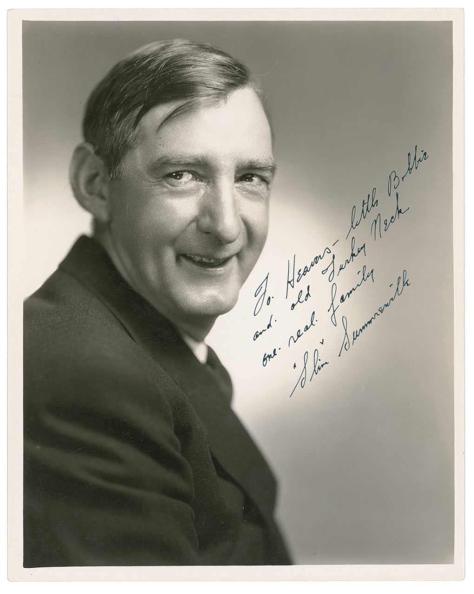
All Quiet on the Western Front 30

One of Bäumer’s non-schoolmate friends. Before the war, Tjaden was a locksmith. A big eater with a grudge against the former postman-turned corporal Himmelstoß (thanks to his strict ‘disciplinary actions’), he manages to forgive Himmelstoß later in the book. Throughout the book, Paul frequently remarks on how much of an eater he is, yet somehow manages to stay as “thin as a rake”. The fate of Tjaden is unknown but he appears in the sequel, The Road Back.

Minor characters

Kantorek
All Quiet on the Western Front 31

Kantorek was the schoolmaster of Paul and his friends, including Kropp, Leer, Müller, and Behm. Behaving “in a way that cost [him] nothing,” Kantorek is a strong supporter of the war and encourages Bäumer and other students in his class to join the war effort. Among twenty enlistees was Joseph Behm, the first of the class to die in battle. In an example of tragic irony, Behm was the only one who did not want to enter the war.

Kantorek is a hypocrite, urging the young men he teaches to fight in the name of patriotism, while not voluntarily enlisting himself. In a twist of fate, Kantorek is later called up as a soldier as well. He very reluctantly joins the ranks of his former students, only to be drilled and taunted by Mittelstädt, one of the students he had earlier persuaded to enlist.

Peter Leer
All Quiet on the Western Front 32

Leer is an intelligent soldier in Bäumer’s company, and one of his classmates. He is very popular with women; when he and his comrades meet three French women, he is the first to seduce one of them. Bäumer describes Leer’s ability to attract women by saying “Leer is an old hand at the game”. In chapter 11, Leer is hit by a shell fragment, which also hits Bertinck. The shrapnel tears open Leer’s hip, causing him to bleed to death quickly. His death causes Paul to ask himself, “What use is it to him now that he was such a good mathematician in school?”[4]

Bertinck
All Quiet on the Western Front 33

Lieutenant Bertinck is the leader of Bäumer’s company. His men have a great respect for him, and Bertinck has great respect for his men. He permits them to eat the rations of the men that had been killed in action, standing up to the chef Ginger who would only allow them their allotted share. Bertinck is genuinely despondent when he learns that few of his men had survived an engagement.

When he and the other characters are trapped in a trench under heavy attack, Bertinck, who has been injured in the firefight, spots a flamethrower team advancing on them. He gets out of cover and takes aim on the flamethrower but misses, and gets hit by enemy fire. With his next shot he kills the flamethrower, and immediately afterwards an enemy shell explodes on his position blowing off his chin. The same explosion also fatally wounds Leer.

Himmelstoss
All Quiet on the Western Front 34

Corporal Himmelstoss (spelled Himmelstoß in some editions) was a postman before enlisting in the war. He is a power-hungry corporal with special contempt for Paul and his friends, taking sadistic pleasure in punishing the minor infractions of his trainees during their basic training in preparation for their deployment.

Paul later figures that the training taught by Himmelstoss made them “hard, suspicious, pitiless, and tough” but most importantly it taught them comradeship. However, Bäumer and his comrades have a chance to get back at Himmelstoss because of his punishments, mercilessly whipping him on the night before they board trains to go to the front.

Himmelstoss later joins them at the front, revealing himself as a coward who shirks his duties for fear of getting hurt or killed, and pretends to be wounded because of a scratch on his face. Paul Bäumer beats him because of it and when a lieutenant comes along looking for men for a trench charge, Himmelstoss joins and leads the charge. He carries Haie Westhus’s body to Bäumer after he is fatally wounded. Matured and repentant through his experiences Himmelstoß later asks for forgiveness from his previous charges. As he becomes the new staff cook, to prove his friendship he secures two pounds of sugar for Bäumer and half a pound of butter for Tjaden.

Detering
All Quiet on the Western Front 35

Detering is a farmer who constantly longs to return to his wife and farm. He is also fond of horses and is angered when he sees them used in combat. He says, “It is of the vilest baseness to use horses in the war,” when the group hears several wounded horses writhe and scream for a long time before dying during a bombardment. He tries to shoot them to put them out of misery, but is stopped by Kat to keep their current position hidden. He is driven to desert when he sees a cherry tree in blossom, which reminds him of home too much and inspires him to leave. He is found by military police and court-martialed, and is never heard from again.

Josef Hamacher
All Quiet on the Western Front 36

Hamacher is a patient at the Catholic hospital where Paul and Albert Kropp are temporarily stationed. He has an intimate knowledge of the workings of the hospital. He also has a “Special Permit,” certifying him as sporadically not responsible for his actions due to a head wound, though he is clearly quite sane and exploiting his permit so he can stay in the hospital and away from the war as long as possible.

Franz Kemmerich
All Quiet on the Western Front 37

A young boy of only 19 years. Franz Kemmerich had enlisted in the army for World War I along with his best friend and classmate, Bäumer. Kemmerich is shot in the leg early in the story; his injured leg has to be amputated, and he dies shortly after. In anticipation of Kemmerich’s imminent death, Müller was eager to get his boots. While in the hospital, someone steals Kemmerich’s watch that he intended to give to his mother, causing him great distress and prompting him to ask about his watch every time his friends visit him in the hospital. Paul later finds the watch and hands it over to Kemmerich’s mother, only to lie and say Franz died instantly and painlessly when questioned.

Joseph Behm
All Quiet on the Western Front 38

A student in Paul’s class who is described as youthful and overweight. Behm was the only student that was not quickly influenced by Kantorek’s patriotism to join the war, but eventually, due to pressure from friends and Kantorek, he joins the war. He is the first of Paul’s friends to die. He is blinded in no man’s land and believed to be dead by his friends. The next day, when he is seen walking blindly around no-man’s-land, it is discovered that he was only unconscious. However, he is killed before he can be rescued.

Publication and reception
All Quiet on the Western Front 17

Erich Maria Remarque

From November 10 to December 9, 1928, All Quiet on the Western Front was published in serial form in Vossische Zeitung magazine. It was released in book form the following year to smashing success, selling one and a half million copies that same year. Although publishers had worried that interest in World War I had waned more than 10 years after the armistice, Remarque’s realistic depiction of trench warfare from the perspective of young soldiers struck a chord with the war’s survivors—soldiers and civilians alike—and provoked strong reactions, both positive and negative, around the world.

With All Quiet on the Western Front, Remarque emerged as an eloquent spokesman for a generation that had been, in his own words, “destroyed by war, even though it might have escaped its shells.” Remarque’s harshest critics, in turn, were his countrymen, many of whom felt the book denigrated the German war effort, and that Remarque had exaggerated the horrors of war to further his pacifist agenda. The strongest voices against Remarque came from the emerging National Socialist Party and its ideological allies. In 1933, when the Nazis rose to power, All Quiet on the Western Front became one of the first degenerate books to be publicly burnt;[5] in 1930 screenings of the Academy Award-winning film based on the book were met with Nazi-organized protests and mob attacks on both movie theatres and audience members.[6]
All Quiet on the Western Front 24

However, objections to Remarque’s portrayal of the German army personnel during World War I were not limited to the Nazis. Dr. Karl Kroner (de) objected to Remarque’s depiction of the medical personnel as being inattentive, uncaring, or absent from frontline action. Dr. Kroner was specifically worried that the book would perpetuate German stereotypes abroad that had subsided since the First World War. He offered the following clarification: “People abroad will draw the following conclusions: if German doctors deal with their own fellow countrymen in this manner, what acts of inhumanity will they not perpetuate against helpless prisoners delivered up into their hands or against the populations of occupied territory?” [7][8]

A fellow patient of Remarque’s in the military hospital in Duisburg objected to the negative depictions of the nuns and patients, and of the general portrayal of soldiers: “There were soldiers to whom the protection of homeland, protection of house and homestead, protection of family were the highest objective, and to whom this will to protect their homeland gave the strength to endure any extremities.”[8]
All Quiet on the Western Front 39

These criticisms suggest that perhaps experiences of the war and the personal reactions of individual soldiers to their experiences may be more diverse than Remarque portrays them; however, it is beyond question that Remarque gives voice to a side of the war and its experience that was overlooked or suppressed at the time. This perspective is crucial to understanding the true effects of World War I. The evidence can be seen in the lingering depression that Remarque and many of his friends and acquaintances were suffering a decade later.[7]

In contrast, All Quiet on the Western Front was trumpeted by pacifists as an anti-war book.[8] Remarque makes a point in the opening statement that the novel does not advocate any political position, but is merely an attempt to describe the experiences of the soldier.[9]
LEAD Technologies Inc. V1.01

The main artistic criticism was that it was a mediocre attempt to cash in on public sentiment.[citation needed] The enormous popularity the work received was a point of contention for some literary critics, who scoffed at the fact that such a simple work could be so earth-shattering.[citation needed]

Much of this literary criticism came from Salomo Friedlaender, who wrote a book Hat Erich Maria Remarque wirklich gelebt? “Did Erich Maria Remarque really live?” (under pen name Mynona), which was, it its turn, criticized in: Hat Mynona wirklich gelebt? “Did Mynona really live?” by Kurt Tucholsky.[10]

Friedlaender’s criticism was mainly personal in nature—he attacked Remarque as being ego-centric and greedy. Remarque publicly stated that he wrote All Quiet on the Western Front for personal reasons, not for profit, as Friedlaender had claimed.[7][8] Max Joseph Wolff (de) wrote a parody titled Vor Troja nichts Neues (Compared to Troy, Nothing New) under the pseudonym Emil Marius Requark.[11]
All Quiet on the Western Front 42

Adaptations

Film

Poster for the movie All Quiet on the Western Front (1930), featuring star Lew Ayres

In 1930, an American film of the novel was made, directed by Lewis Milestone; with a screenplay by Maxwell AndersonGeorge AbbottDel AndrewsC. Gardner Sullivan; and with uncredited work by Walter Anthony and Milestone. It stars Louis WolheimLew AyresJohn WrayArnold Lucy, and Ben Alexander.

The film won the Academy Award for Best Picture in 1930 for its producer Carl Laemmle Jr., the Academy Award for Directing for Lewis Milestone, and the Academy Award for Outstanding Production. It was the first all-talking non-musical film to win the Best Picture Oscar. It also received two further nominations: Best Cinematography, for Arthur Edeson, and Best Writing Achievement for Abbott, Anderson, and Andrews.[12]
All Quiet on the Western Front 45

In 2016, it was confirmed that Roger Donaldson will direct a remake of All Quiet on the Western Front starring Travis Fimmel as Katczinsky.[13]

TV film

In 1979, the film was remade for CBS television by Delbert Mann, starring Richard Thomas of The Waltons as Paul Bäumer and Ernest Borgnine as Kat. The movie was filmed in Czechoslovakia.[14]

Music

Elton John‘s album Jump Up! (1982) features the song, “All Quiet on the Western Front” (written by Elton and Bernie Taupin). The song is a sorrowful rendition of the novel’s story (“It’s gone all quiet on the Western Front / Male Angels sigh / ghosts in a flooded trench / As Germany dies”).

Bob Dylan, during his Nobel Laureate lecture, cited this book as one that had a profound effect on this songwriting.
All Quiet on the Western Front 46

Radio

On November 9, 2008, a radio adaptation of the novel was broadcast on BBC Radio 3, starring Robert Lonsdale as Paul Bäumer and Shannon Graney as Katczinsky. Its screenplay was written by Dave Sheasby, and the show was directed by David Hunter.[15]

Audiobook

In 2010, Hachette Audio UK published an audiobook adaptation of the novel, narrated by Tom Lawrence. It was well received by critics[16] and listeners.
All Quiet on the Western Front 47

See also

References

  1. Jump up^ Eksteins, Modris (April 1980). “All Quiet on the Western Front and the Fate of a War”. Journal of Contemporary HistorySAGE Publications15 (2): 353. doi:10.1177/002200948001500207.
  2. Jump up to:a b Erich Maria Remarque’s All Quiet on the Western Front. 2009. p. 48.
  3. Jump up^ Chapter Ten of All Quiet on the Western Front
  4. Jump up^ All Quiet on the Western Front (London: Putnam & Company Ltd, 1970 reprint), page 240.
  5. Jump up^ “Nov 10, 1928: Remarque publishes All Quiet on the Western Front”History.com. Retrieved June 3, 2013.
  6. Jump up^ Sauer, Patrick (June 16, 2015). “The Most Loved and Hated Novel About World War I”Smithsonian.com. Smithsonian Institution. Retrieved June 21, 2015.
  7. Jump up to:a b c Patrick Clardy. “All Quiet on the Western Front: Reception”Yale Modernism Lab. Retrieved June 3, 2013.
  8. Jump up to:a b c d Barker, Christine R.; Last, Rex William (1979). Erich Maria Remarque. New York: Barnes & Noble Books.
  9. Jump up^ Wagner, Hans (1991). Understanding Erich Maria Remarque. Columbia, SC: University of South Carolina Press.
  10. Jump up^ Kurt Tucholsky (under pen name Ignaz Wrobel), Hat Mynona wirklich gelebt?Die Weltbühne, December 31, 1929, No. 1, p. 15
  11. Jump up^ Catalogue entry for Vor Troja nichts Neues in the German National Library, retrieved January 29, 2014
  12. Jump up^ “The 3rd Academy Awards – 1931”Oscars. Academy of Motion Picture Arts and Sciences. Retrieved 1 September 2016.
  13. Jump up^ Kay, Jeremy. “‘Warcraft’ star Travis Fimmel to lead ‘All Quiet On The Western Front'”ScreenDaily. MBI Ltd. Retrieved 1 September 2016.
  14. Jump up^ “All Quiet on the Western Front (1979)”IMDb. IMDb.com, Inc. Retrieved 1 September 2016.
  15. Jump up^ “BBC Radio 3 – Drama on 3, All Quiet on the Western Front”. Bbc.co.uk. November 9, 2008. Retrieved February 7, 2013.
  16. Jump up^ “All Quiet on the Western Front Audiobook Review – Audiobook Jungle – Audiobook Reviews In All Genres”audiobookjungle.com. Retrieved April 10, 2016.
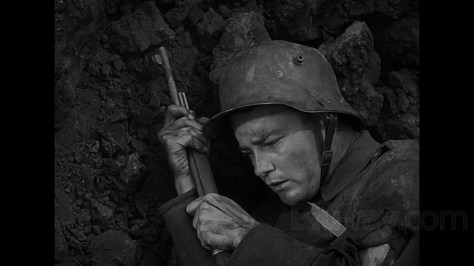
All Quiet on the Western Front 48

All Quiet on the Western Front 5

Film Collectors Corner

Watch All Quiet on the Western Front Now – Instant Video on Internet Archive

Blu Ray


DVD