Tag Archives: harry d’abbadie d’arrast

Laughter (1930)


Pre Code Logo 1

Pre Code Hollywood Season: FD Cinematheque

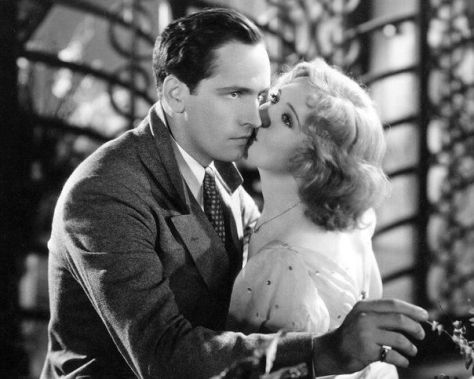
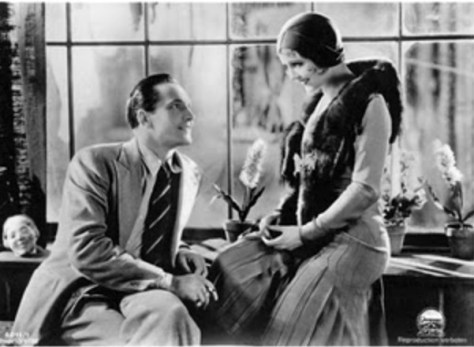
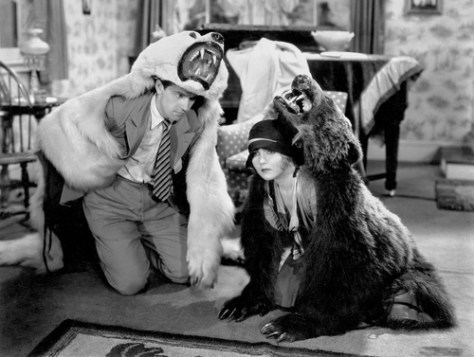
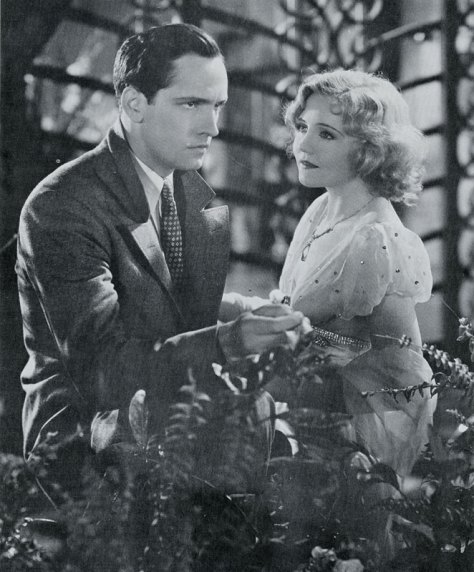
Laughter (1930)
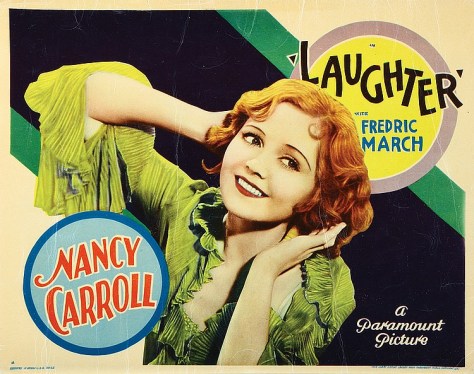
 

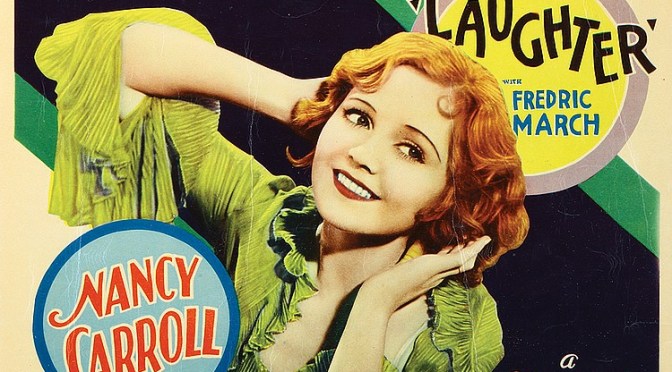
Laughter 1

Laughter 7

Director: Harry d’Abbadie d’Arrast

Cast: Nancy Carroll, Fredric March, Frank Morgan, Glenn Anders, Diane Ellis, Ollie Burgoyne, Leonard Carey, Eric Blore

85 min 

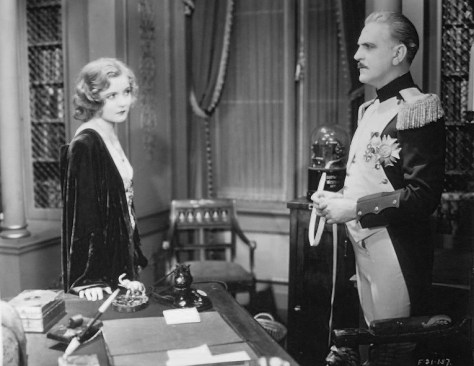
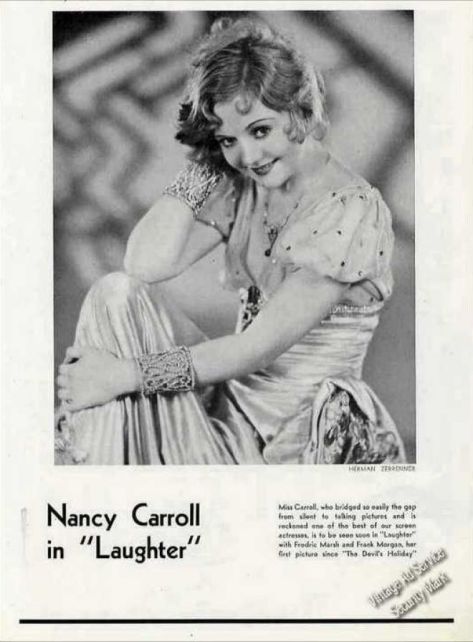
Laughter is a 1930 American pre-Code film directed by Harry d’Abbadie d’Arrast and starring Nancy CarrollFredric March and Frank Morgan.[1]

The film was nominated for an Academy Award for Best Story.[2]

A copy has been preserved at the Library of Congress.[3]

In 1931, a German-language version called Die Männer um Lucie was released starring Liane Haid and Lien Deyers. This film is considered lost.
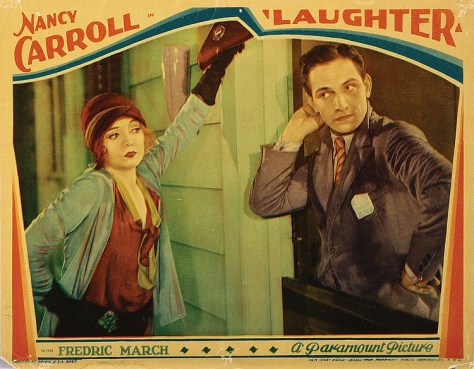
Laughter 4

Plot

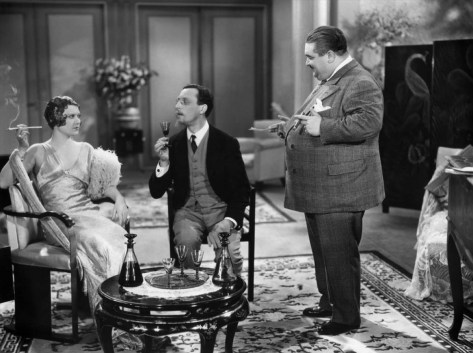
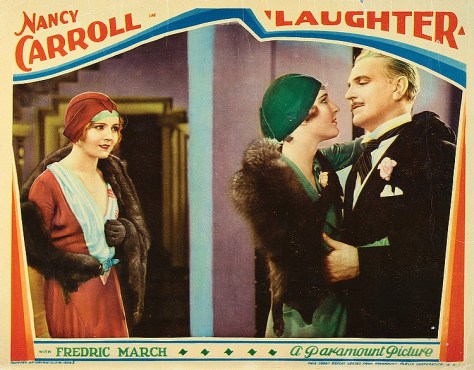
Peggy is a Follies dancer who forsakes her life of carefree attachments in order to meet her goal of marrying a millionaire. Alas, her elderly husband, broker C. Morton Gibson, is a well-meaning bore, and soon Peggy begins seeking entertainment elsewhere.

A year after their marriage, three significant events occur almost simultaneously. Peggy’s former boyfriend, Paul Lockridge, a composer and pianist who is in love with her and seems to have a funny quip for every occasion, returns from Paris.
Laughter 6

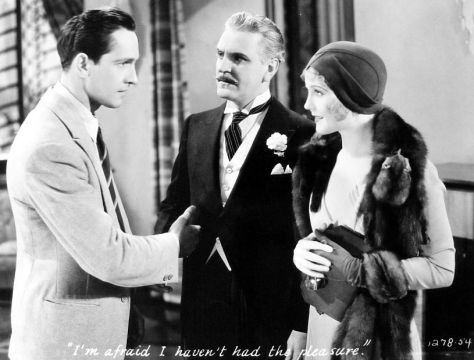
She reunites with him as he offers her his companionship as a diversion from her stuffy life. Also, Ralph Le Saint, a young devil-may-care sculptor who is still in love with Peggy, plans his suicide in a mood of bitterness, and Gibson’s daughter, Marjorie, returns from schooling abroad. Marjorie is soon paired with Ralph, and the romance that develops between them is paralleled by the adult affair between Peggy and Paul.

Ralph and Marjorie’s escapades result in considerable trouble for Morton, while Paul implores Peggy to go to Paris with him, declaring “You are rich–dirty rich. You are dying. You need laughter to make you clean,” but she refuses. When Marjorie plans to elope with Ralph, Peggy exposes the sculptor as a fortune hunter; and, dejected, he commits suicide. As a result, Peggy confesses her unhappiness to Gibson, then joins Paul and laughter in Paris.
Laughter 9

References

  1. The AFI Catalog of Feature Films:Laughter
  2. Jump up^ Osborne, Robert (1994). 65 Years of the Oscar: The Official History of the Academy Awards. London: Abbeville Press. p. 27. ISBN 1-55859-715-8.
  3. Jump up^ Catalog of Holdings The American Film Institute Collection and The United Artists Collection at The Library of Congressp.101 c.1978 by the American Film Institute
 

Laughter 11

Laughter 10

Laughter 5

Laughter 3

Laughter 2


Film Collectors Corner

Watch Laughter Now – You Tube Instant Video


Blu Ray

Not released on Blu Ray


DVD

Not released on DVD
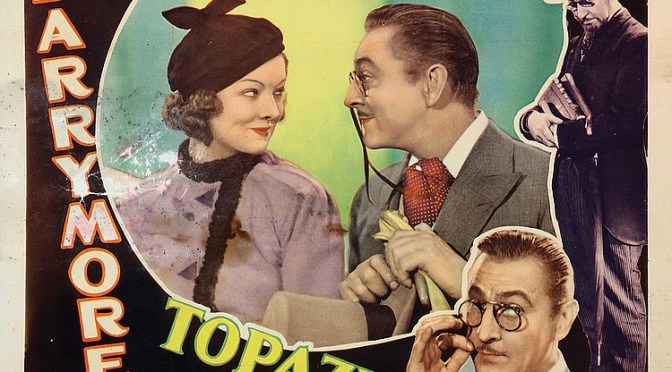
 

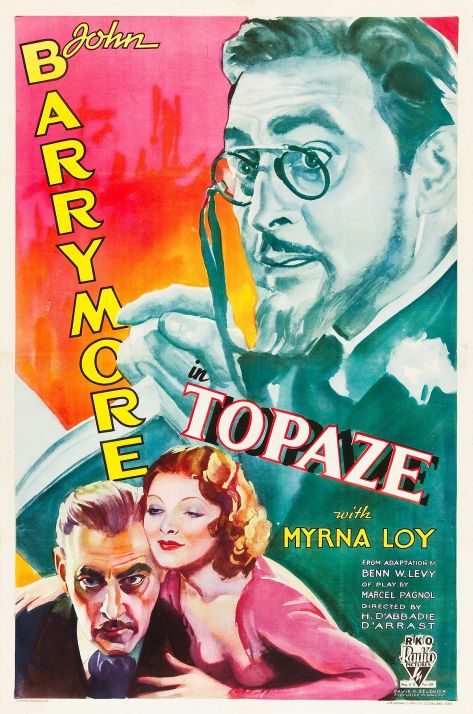
Topaze (1933)


Pre Code Logo 1

Pre Code Hollywood Season: FD Cinematheque

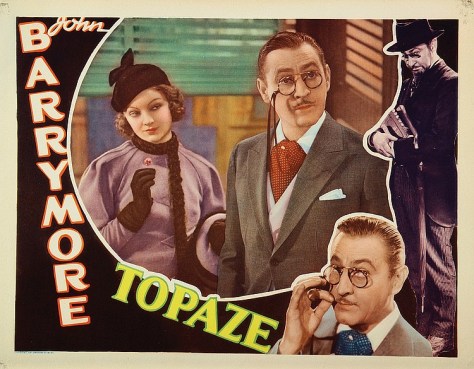
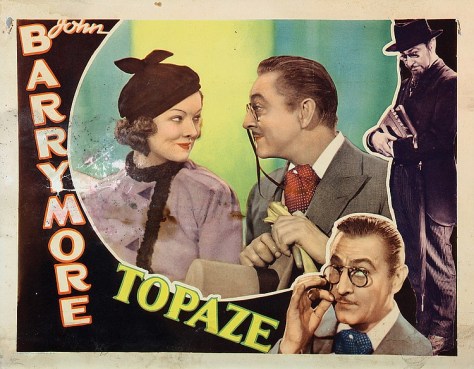
Topaze (1933)

Topaze 1

Director: Harry D’Abbadie D’Arrast

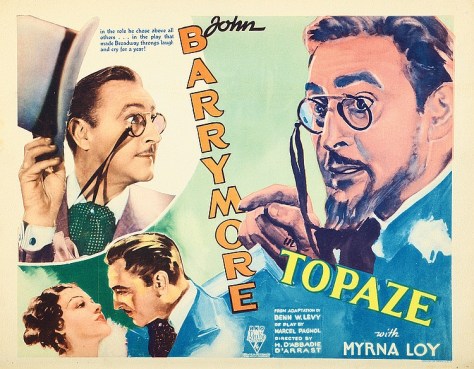
Cast: John Barrymore, Myrna Loy, Reginald Mason, Jobyna Howland, Jackie Searl, Albert Conti, Frank Reicher, Luis Alberini, Lowden Adams

78 min

Topaze 11

Topaze is a 1933 American Pre-Code film based on the French play of the same name by Marcel Pagnol. Another film version of Topaze, this one made in the original French was also released that year, starring Louis Jouvet in the title role. Subsequently Pagnol himself directed a 1936 adaptation.

Plot

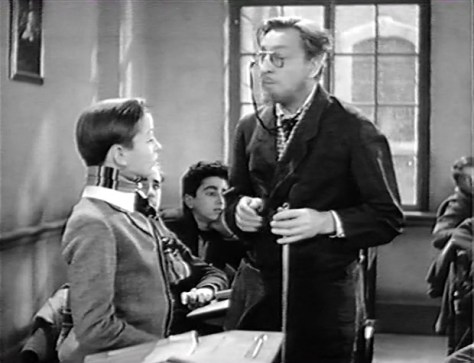
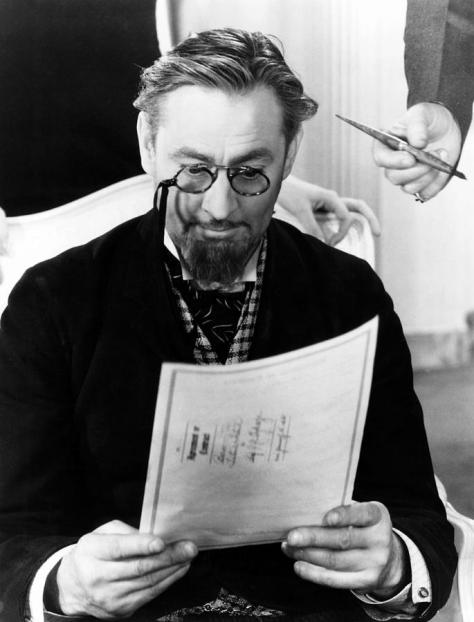
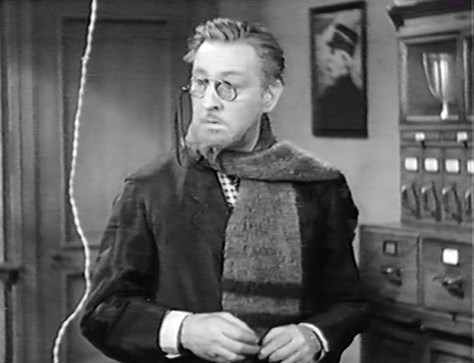
Prof. Auguste A. Topaze (John Barrymore), an honest, naive chemist and schoolteacher at the –  Stegg Academy in Paris, loses his job when he refuses to accede to a demand by the Baroness de La Tour-La Tour to alter the grades of her bratty son, Charlemagne.

Topaze 5

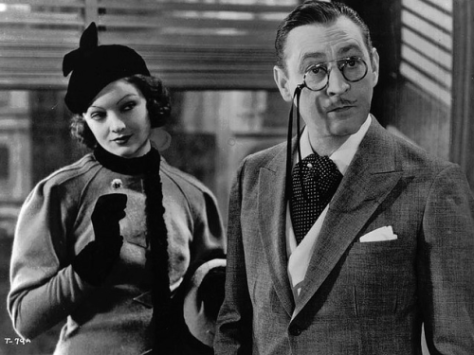
On the same day, Friday the 13th, Topaze calls on the Baron de La Tour-La Tour’s mistress, Coco (Myrna Loy), who is looking for a tutor for her sister’s son, Alphonse, and had gotten Topaze’s name from La Tour. Upon meeting and listening to the sincere remarks of Topaze, the baron, head of the La Tour Chemical Works, decides to employ him as a scientific front for his phony curative water.

After an encounter at a cafe, where the Baron narrowly avoids a scene with his wife by calling Coco “Madame Topaze”, Coco reveals the true nature of her relation to the Baron to the naive Professor. When they arrive late back to Coco’s apartment, the Baron is jealous, but soon realizes Topaze is entirely innocent.

Topaze 6

Unaware that the water, “Sparkling Topaze,” which is being sold all over Paris, does not contain the medicinal formula he invented for it, Topaze is shocked when Dr. Bomb (who had turned down the “honor” of having the fradulent water named for him) shows up, demanding 100,000 francs from the Baron or he will expose the fradulent product. But the Baron blackmails him in return with information about his previous identity, and Bomb is dragged out.

After confirming for himself, in the lab and in a local restaurant, that “Sparkling Topaze” is in fact phony, a dazed Topaze returns to Coco’s apartment the next morning, where Coco fusses over him. At first, he is ready to be arrested, but the men who are shown in are instead a delegation from the Bureau of Awards and Merits, who award him the Academic Palms. All are friends and business associates of the Baron, and the scales begin to fall from Professor Topaze’s eyes.

Topaze 7

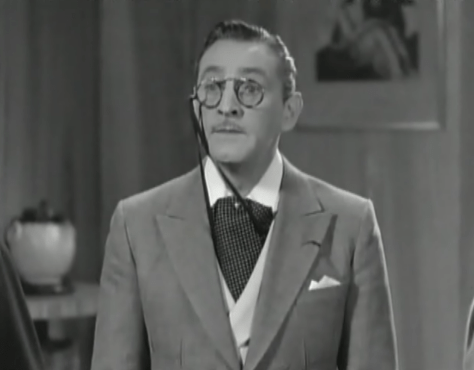
His naivete thoroughly destroyed, declaring “Topaze lies dead in an alley”, Topaze decides to fight back by becoming more corrupt than his mentors. He remakes his image and, with Bomb as his assistant, he opens his own office, where he makes dignitaries wait to see him. One is Dr. Stegg, who now wants Topaze to preside at the graduation at the school. Topaze succeeds in blackmailing the Baron into a partnership in his company with a complete account of his relationship with Coco, which he threatens to show to the Baroness, whose name the shares in the company are in.

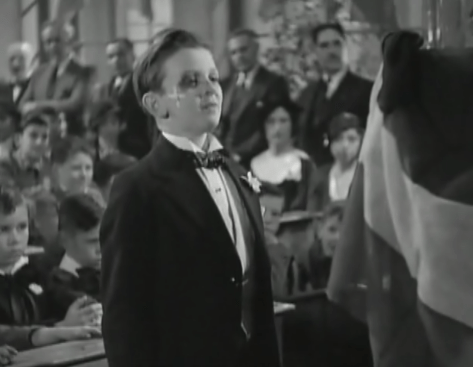
At the Stegg Academy graduation, Topaze, who has also garnered the romantic attention of Coco, is to distribute the prize, which he is told is to go to his former nemesis, Charlemagne de La Tour-La Tour. He gives a little speech about his experiences in the great world, that honesty isn’t always rewarded and that villainy often receives more applause than virtue. Declaring that he will not reward wrongdoers, he shows up Charlemagne’s ignorance relative to all his classmates, then awards the prize to them instead.

He is last seen escorting Coco into the cinema.

Topaze 8

Cast

Topaze 2

Reception

Topaze won the 1933 National Board of Review Award for Best Film.

Mordaunt Hall said “[I]t is an agreeable and effective film, and Mr. Barrymore lends no little artistry to the rôle of the benign Professor Auguste Topaze, a part played with rare skill on the stage by Frank Morgan.”[1]

In 1935, a planned reissue was rejected by Joseph Breen as the Production Code was now being strictly enforced and the relationship between Coco and Philippe lacked compensating moral values.[2]


Topaze 4

References

  1. Jump up^ New York Times review by Mordaunt Hall
  2. Jump up^ The Dame in the Kimono by Leonard Leff and Jerold Simmons (Weidenfeld and Nicolson: 1990)

Topaze 7

Topaze 9

Topaze 12

Topaze 10

Film Collectors Corner

Watch Topaze Now – Instant Video on You Tube

Blu Ray

Not released on Blu Ray


DVD

Not released on DVD