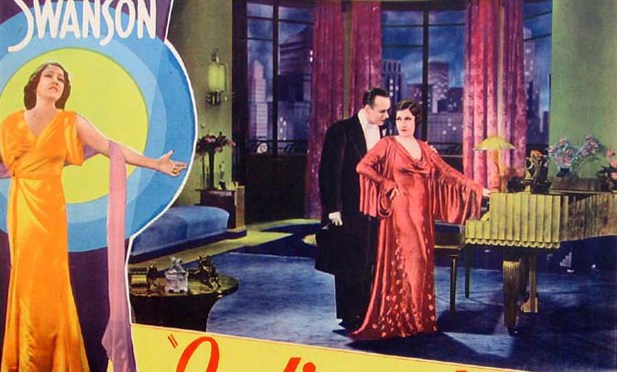
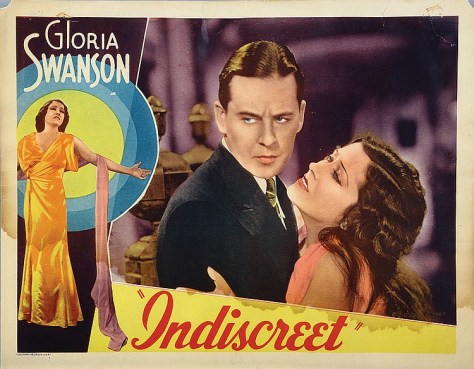
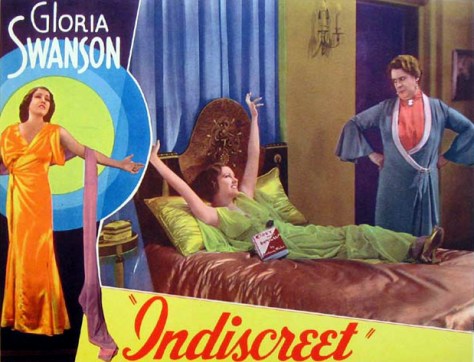
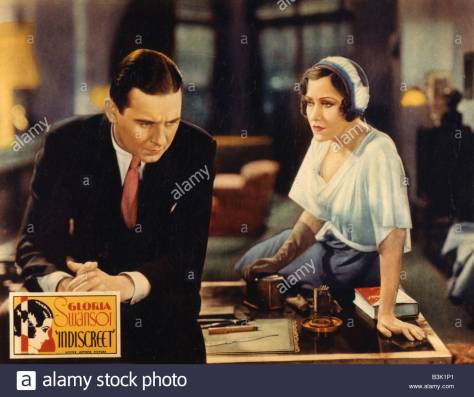
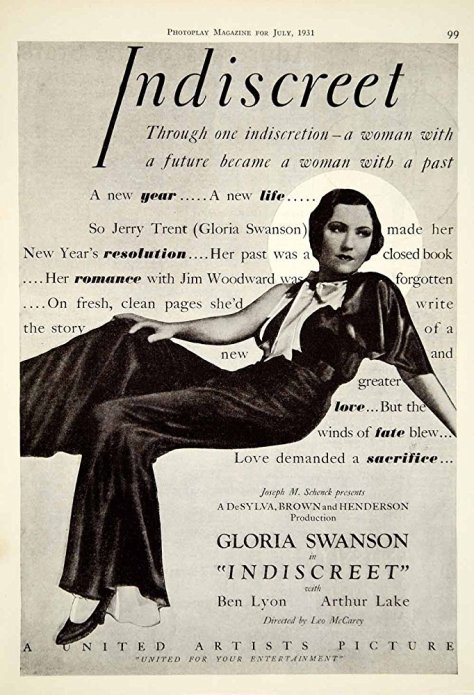
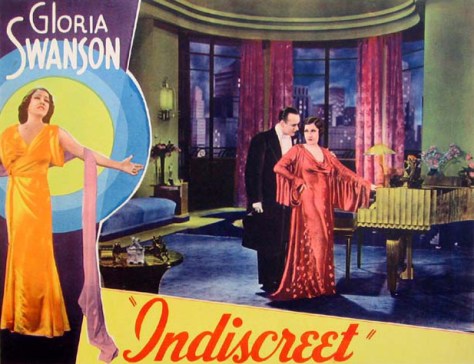
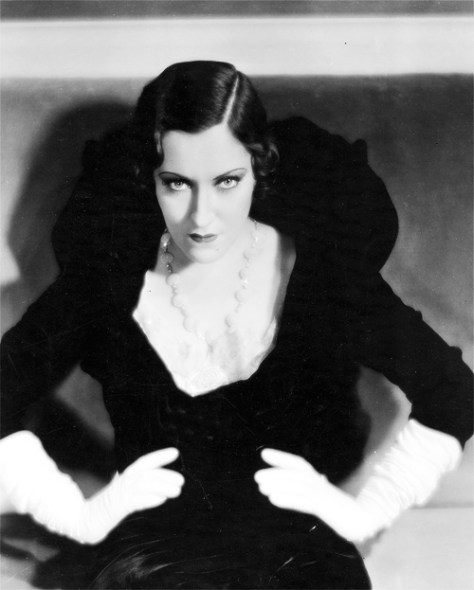
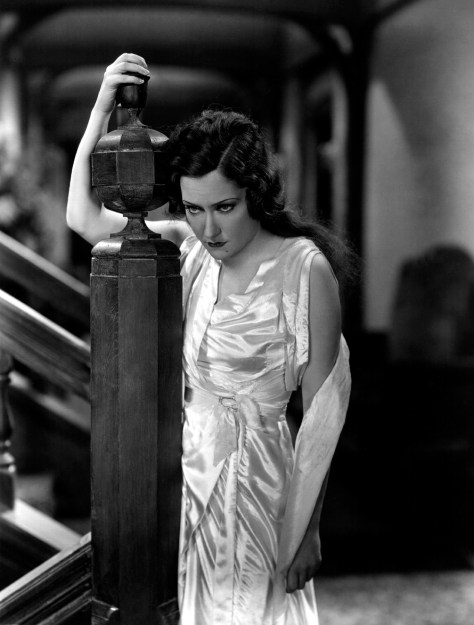
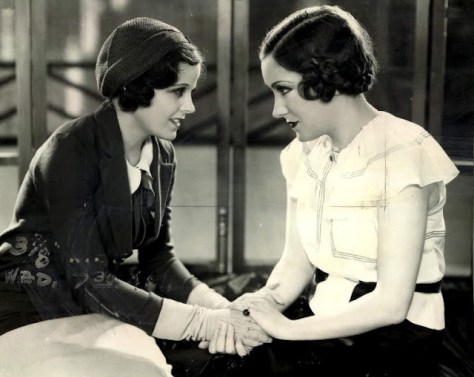
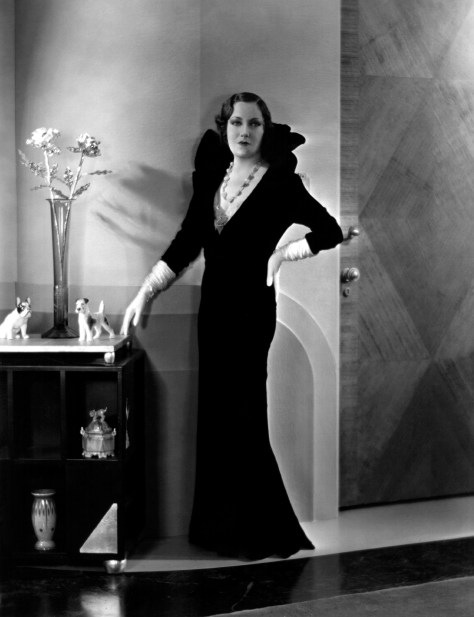
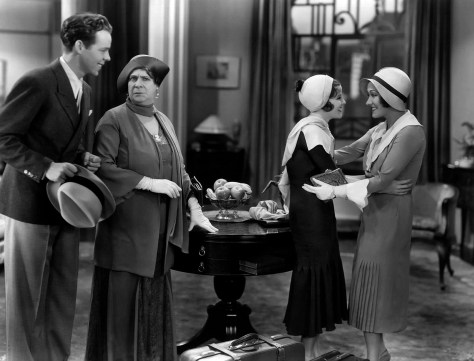
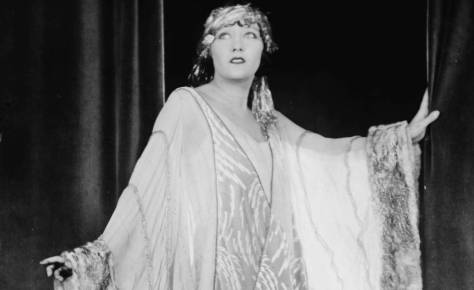
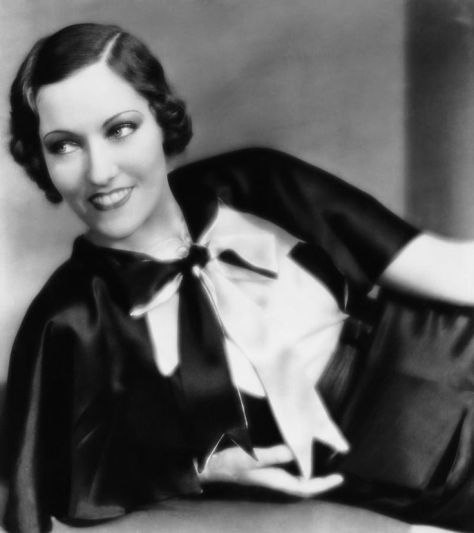
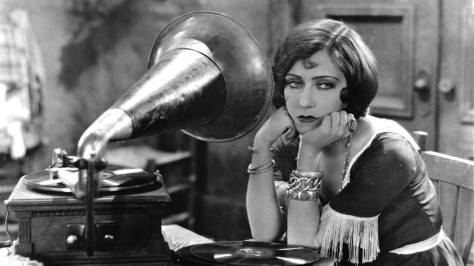
The plot of the United Artists release centers on fashion designer Geraldine Trent (Swanson), who takes up with novelistTony Blake (Lyon) after leaving her former beau Jim Woodward because of his many indiscretions with other women.
Tony has indicated he has no interest in dating a woman with a past, so Geraldine remains mum about her affair with Jim, until her younger sister Joan arrives and announces she’s engaged—to Jim. Madcap complications ensue as Geraldine tries to keep her secret from Tony while convincing her sister to rid herself of her womanizing fiancé in favor of simple country boy Buster Collins.[2]
It may have its off moments so far as the few serious incidents are concerned, but when it stoops to farce, there is no denying its jollity . . . on the whole, it is a well-worked out entertainment, wherein gusts of merriment cause one to overlook its occasional flaws . . . Now and again the film sobers up, but the director and the authors have solved a way of inoculating it with further mirth, and even at the end there is a streak of fun that is almost Chaplinesque.[3]
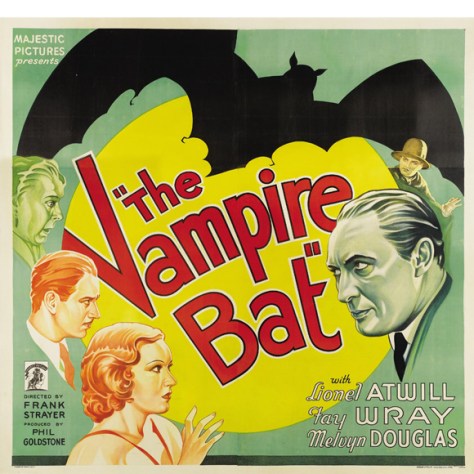
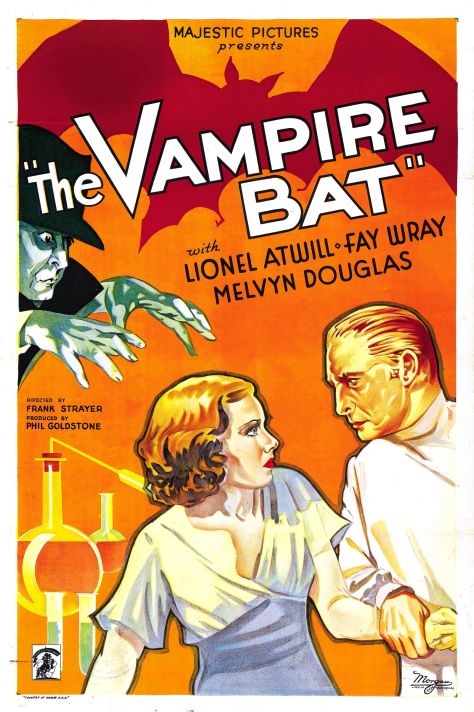
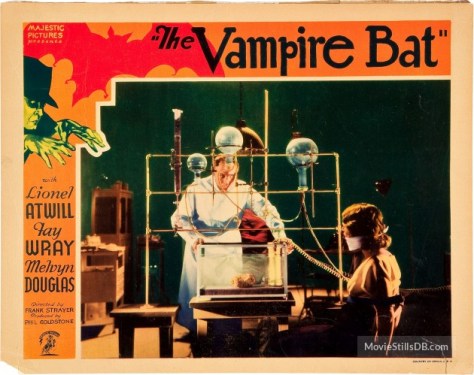
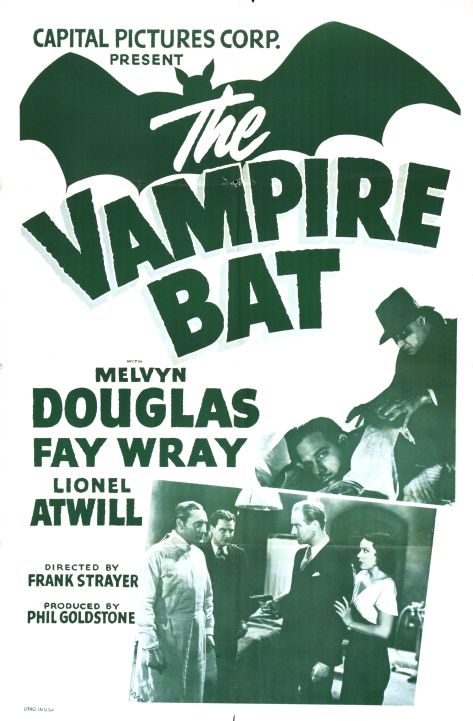
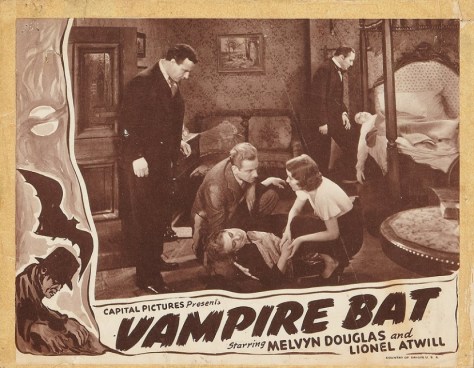
When the villagers of Kleinschloss start dying of blood loss, the town fathers suspect a resurgence of vampirism, but police inspector Karl Breettschneider remains skeptical. Scientist Dr. Otto von Niemann, who cares for the victims, visits a patient who was attacked by a bat, Martha Mueller.
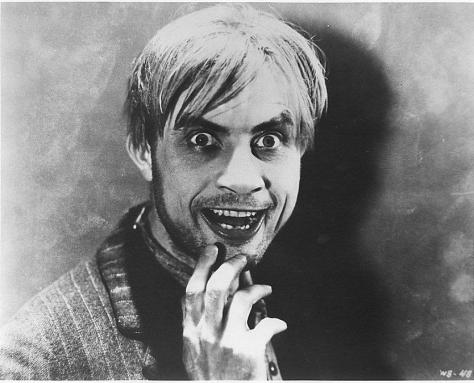
Martha is visited by a mentally challenged man named Herman, who claims he likes bats because they are “soft like cat” and “nice”. On the doctor’s journey home, he meets Kringen, one of the townsfolk, who claims to have been attacked by the vampire in the form of a bat, but withheld his story from the town to not spread fear. Dr. von Niemann encourages Kringen to tell the townsfolk of his story.
Kringen becomes suspicious that Herman Glieb may be the vampire due to his obsession with bats. Herman lives with bats and collects them off the street.
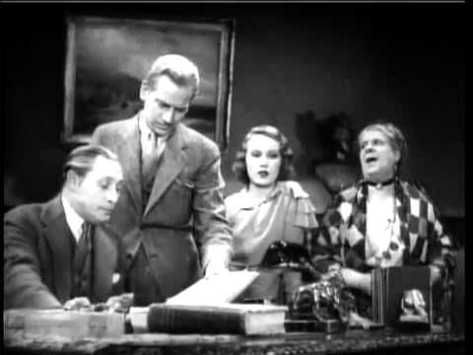
Dr. von Niemann returns to his home, which also houses Breettschneider’s love Ruth Bertin, Ruth’s hypochondriac aunt Gussie Schnappmann, and servants Emil Borst and Gorgiana. Fear of the vampire and suspicion of Glieb quickly spread around the town, and people start fearing him.
Ms Mueller is killed that night. The analyses of Dr. von Niemann and another doctor, Dr. Haupt, conclude that the death is the same as all of the previous deaths – blood loss, with two punctures in the neck caused by needle-sharp teeth. Gleib enters the examination, and upon seeing the dead body, runs away screaming.
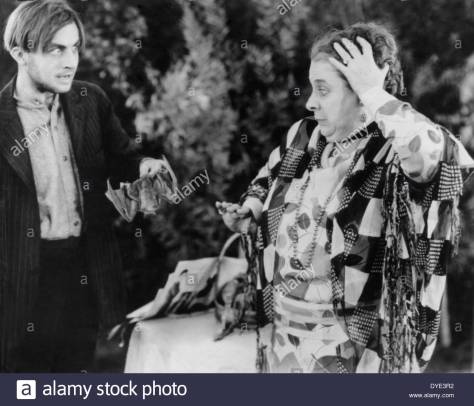
Next morning, Glieb enters Dr. von Niemann’s garden, where Dr. von Niemann, Breettschneider, and Bertin are discussing vampires inside the house. The town fathers enter the house and announce that Kringen is dead and Gleib is missing. An angry mob hunts down Gleib and chases him through the countryside and into a cave, where he falls to his death.
That night, Dr. von Niemann is seen telepathically controlling Emil Borst, as he picks up sleeping Gorgiana and takes her down to Dr. von Niemann’s laboratory, where a strange organism is seen. They then drain her blood from her neck.
Schnappmann then discovers Gorgiana’s body in her bed. Dr. von Niemann and Breettschneider investigate and find Ms Mueller’s crucifix, which Glieb handled the night Dr. von Niemann visited her. Breettschneider is becoming more convinced of the presence of vampires in the village as no other plausible explanations for the deaths can be found. As Glieb was seen in the garden that morning, the two conclude he is guilty.
Upon hearing of Glieb’s death, however, Breettschneider’s conviction is erased. Dr. von Niemann tells Breettschneider to go home and take sleeping pills, but gives him poison instead, intent on draining his blood. Bertin discovers Dr. von Niemann telepathically controlling Borst, who is at Breettschneider’s house.
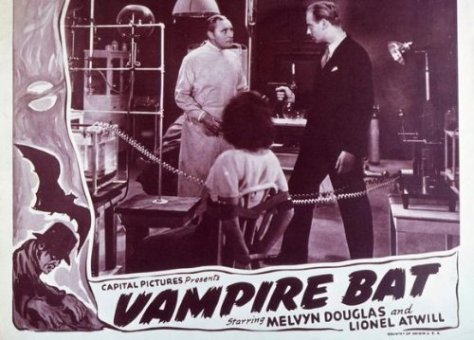
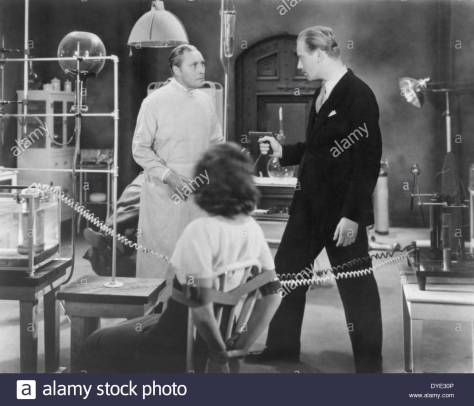
It is revealed that Dr. von Niemann has created life, and is using the blood to fuel his organism. He ties Bertin up in his lab. Borst supposedly enters with Breettschneider’s body on a trolley. Dr. von Niemann walks over to Borst, who is revealed to be Breettschneider (who did not take the pills) in costume, with the real Borst on the trolley. Breettschneider pulls a gun on Dr. von Niemann, and walks over to untie Bertin. Dr. von Niemann then wrestles Breettschneider, who drops the gun. As the two fight, Borst picks up the gun and shoots Dr. von Niemann.
Production
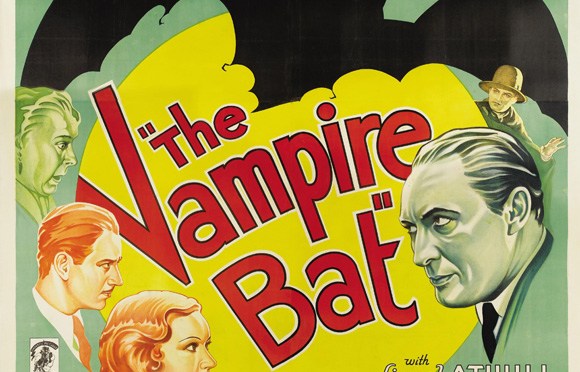
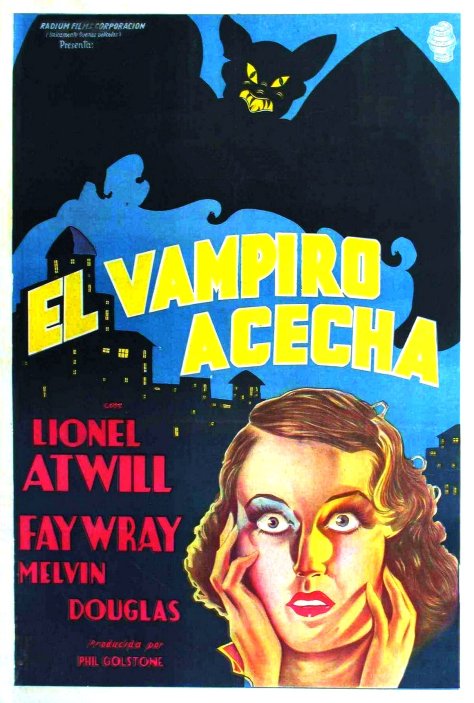
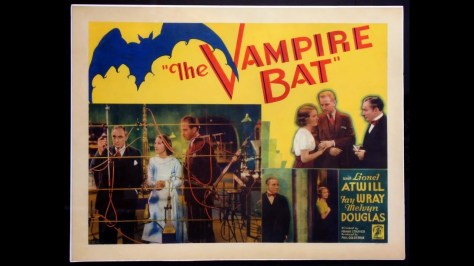
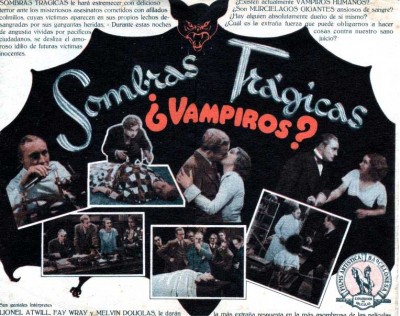
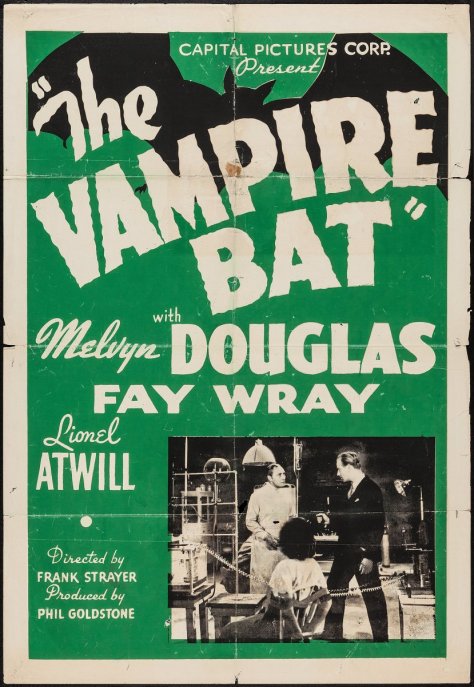
Fay Wray and Lionel Atwill had been in the successful film Doctor X the previous year, and had already wrapped up work on Mystery of the Wax Museum for Warner Bros. This was quite a large-scale release and would have a lengthy post-production process. Seeing a chance to exploit all the advance press, poverty row studio Majestic Pictures Inc. contracted Wray and Atwill for their own “quickie” horror film, rushing The Vampire Bat into production and releasing it in January 1933.
Majestic Pictures had lower overheads than the larger studios, which were struggling at the time during the Great Depression. Part of the reason that The Vampire Batlooked almost as good as any Universal Pictures horror film is because Majestic leased James Whale‘s castoffs, the “German Village” backlot sets left over from Frankenstein (1931) and the interior sets from his film The Old Dark House (1932), plus some location shooting at Bronson Caves.
Completing the illusion that this was a film from a much bigger studio, Majestic hired actor Dwight Frye to populate scenes with Wray and Atwill. A stock musical theme by Charles Dunworth, “Stealthy Footsteps”, was used to accompany the opening credits.[1]
The Vampire Bat ruse worked well for Majestic, which was able to rush the quickie film into theaters less than a month before Warner’s release of Mystery of the Wax Museum. According to The Film Daily (January 10, 1933), the film’s running time was 63 minutes, like most extant prints.
The screenplay was written by Walter DeLeon, based upon a successful German Vaudeville act entitled Tanzanwaltz, penned by Pordes Milo, Walter Schütt, and Dr. Eric Urban. The German production had been translated for the American stage by DeLeon and Mark Swan and, under the same title as the film.
Edward Everett Horton, in dual roles as Richard and Felix, the Great Zero.
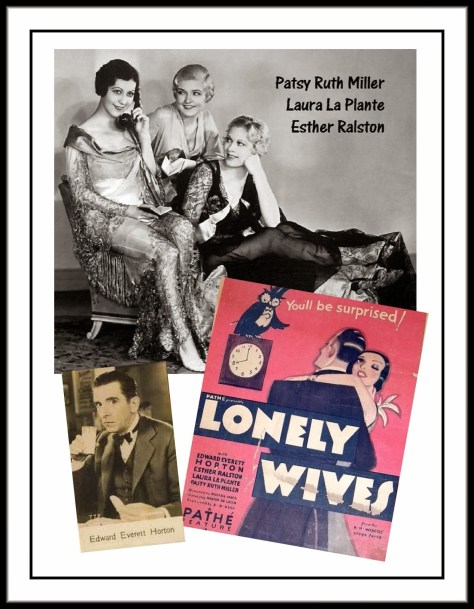
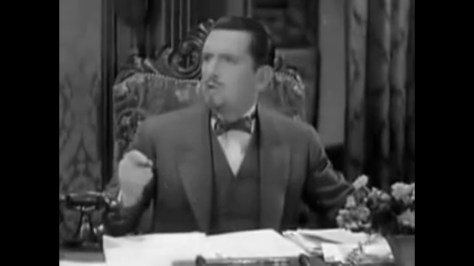
Richard “Dickie” Smith (Edward Everett Horton), is a seemingly respectable defense attorney by day, who turns into a philandering Don Juan when the clock strikes 8 o’clock.
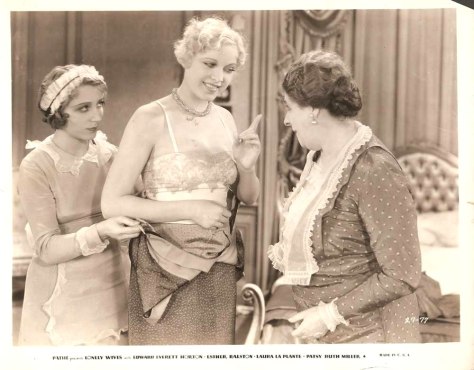
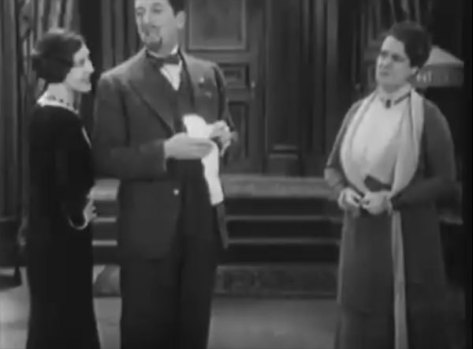
His wife, Madeline (Esther Ralston), has been away for several months, and is not expected back anytime soon. However, Madeline’s mother, Mrs. Mantel (Maude Eburne) is staying with the Smiths, in an effort to curtail the possibility of any straying by Richard.
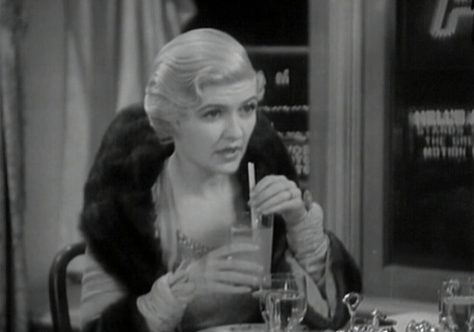
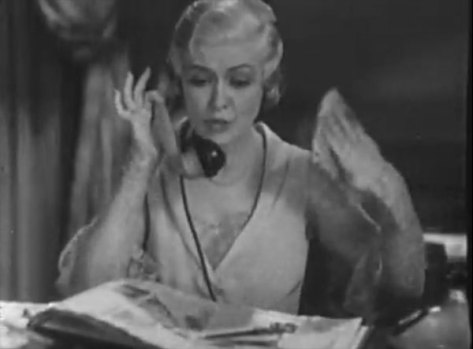
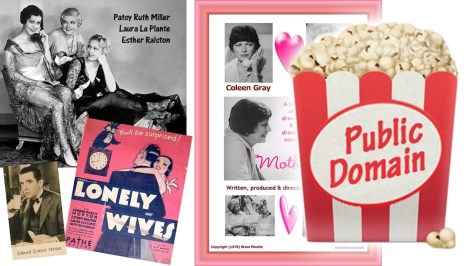
Unbeknownst to her, he has made plans to go out on the town that night with his new, sultry secretary Kitty Minter (Patsy Ruth Miller), and his new sexy client, Diane O’Dare (Laura La Plante), who, a lonely wife herself, wishes to divorce her husband for neglect.
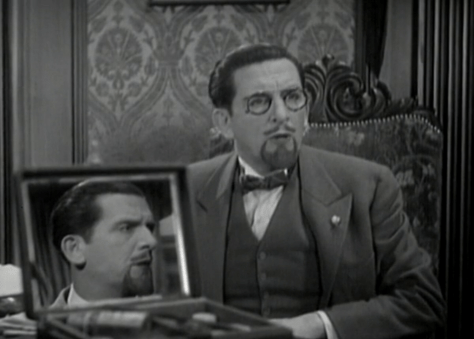
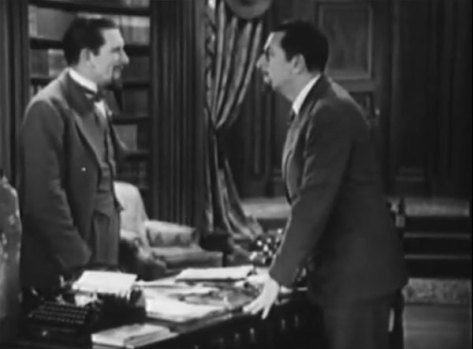
The issue is how can he go out on the town without alerting his mother-in-law. An issue which is seemingly resolved by the arrival at his home of a vaudeville impersonator: Felix, the Great Zero (also played by Edward Everett Horton). Felix is seeking permission to impersonate the famous lawyer on-stage. At first reluctant, Richard, noticing the striking resemblance between himself and the actor, realizes he might have a way to deceive Mrs. Mantel. In order to obtain his approval, Felix must agree to impersonate him at his house that evening, while he goes out.
While Richard goes out on the town, he discovers that Diane’s husband is none other than Felix. Meanwhile, Madeline arrives home unannounced and early.Thinking that he is about to be exposed, Felix phones the nightclub where Richard has taken the two women for dinner and drinks. As he waits for the return phone call, much to his surprise, rather than exposing him as an imposter, Madeline begins to come on to him. He attempts to resist, trying to hold out until he can speak to Richard, but he succumbs to her charms just as the phone begins ringing.
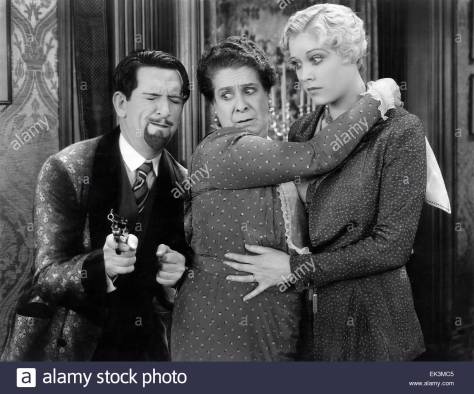
When Richard returns home the next morning, Felix is still there. He is followed closely by a very inebriated Diane, with whom it seems he has spent his time away from home. When Felix recognizes Diane, and Richard understands that Felix has spent the night at his house, both men believe that his look-a-like has slept with the others’ wife. After a series of events, Smith ends up chasing Zero with a loaded gun. Meanwhile, Andrews, the Butler, (Spencer Charters), thinks he must have the DT’s, seeing double of his employer.
The truth comes out when Madeline admits that she knew it wasn’t Richard all along, and other than the kissing, nothing happened between the two of them. Diane admits that she spent the night in the cab, riding around, and not with Richard. Reconciled, Richard is cured of his wandering ways and Felix and Diane are reunited.
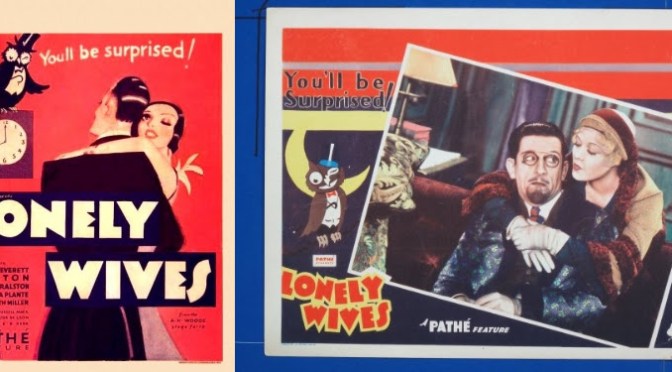
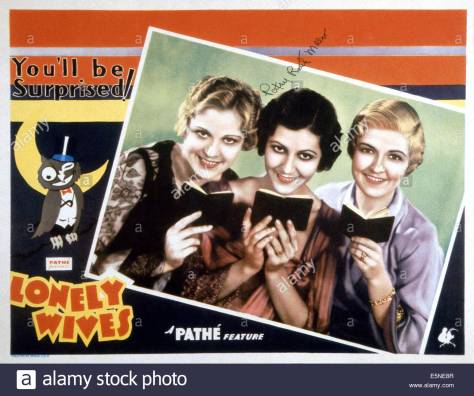
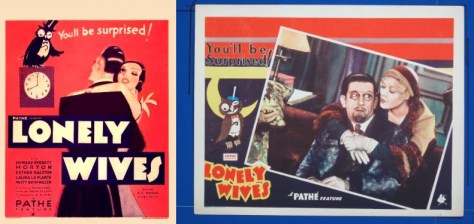
Tie-in advertisement for Jo-Cur Beauty Products and Lonely Wives.
Pathé announced that the film was going into production in mid-November 1930, with Russell Mack at the helm.[6] Shortly after, it was reported that La Plante had been attached to the cast;[7] La Plante was returning to films after a brief seven-month hiatus, during which time speculation arose that her career might be over.
Her appearance in this film, and its success, would re-ignite her career.[8] On December 7, it was learned that DeLeon would be adapting the story into a screenplay,[9] and on the 10th the announcement came that Esther Ralston and Patsy Ruth Miller would be added to the list of cast members, along with Edward Everett Horton.[10]
Horton and Miller had co-starred the prior year in four films together for Warner Brothers.[11] The following day, December 11, The Film Daily announced that the film had begun production.[12]Included in the cast was Spencer Charters, who had acted with Mack in several Broadway plays.[13]
Pathe announced that the film would be part of its 1931 schedule, and it began to appear on its list of upcoming releases in the trades, but without a specific release date.[14] The release was held up in late January due to the sale of Pathe to RKO Pictures. By the end of the month the go-ahead was given to release the film.[15] Finally on February 16 RKO announced they would be releasing the film the following week.[16]
Several days prior to its release, Pathe announced that the marketing campaign for the film would include “tie-ins” with a coterie of manufacturers and retail stores. The campaign would include drug stores and department stores, and have advertising material supplied by manufacturers such as Underwood (typewriters), John H. Woodbury (toiletries), and Jo-Cur Laboratories (beauty products).[17]Lonely Wives was released by RKO on February 22, 1931.[5]
Soundtrack
“Madeline”, unknown composer
“Baby Feet”, unknown composer, sung by Maude Eburne[1]
Reception
Mordaunt Hall, the film critic for the New York Times, gave the film a positive review, calling the direction “skillful”, and singles out the performance of several of the actors, including Esther Ralston, Maude Eburne, Patsy Ruth Miller, and Spencer Charters.
He was especially impressed with Horton, stating that he “delivers a wonderfully clever dual impersonation …”, and is “wonderfully amusing”.[18]The Film Daily also gave the film a nod of approval, calling it “… one of the cleverest and most entertaining comedies of the season”.
They particularly highlighted the direction of Mack, Horton’s performance in his dual role, as well as complimenting the rest of the cast. The trade paper also gave the highest marks to the cinematography of Edward Snyder.[19]
Photoplay listed it as one of the best films of the month in February 1931, singling out the acting talents of Horton, Ralston, La Plante, and Miller.[20]Picture Play Magazine was a bit more reserved in their review of the film.
While they called it “… the most consistently broad comedy of any film since “The Cock-eyed World”,” they also stated that it was “supposedly hilarious”.[21]
Other positive reviews came from: Billboard, “… destined to be one of the laugh highlights of the screen year”; Motion Picture Herald, “Highly sophisticated comedy, goes over with a great laugh”; Los Angeles Express, “Fast, furious, frothy farce. Lonely Wives is a laugh riot”; and Motion Picture Daily, “Laughs keep rolling out in a steady deluge of ultra-sophisticated wise cracks.”[22]
It was released on DVD by Roan/Troma Entertainment in 2001.[24]
The English translation of the 1912 German vaudeville act, Tanzanwaltz, entitled Lonely Wives, written by DeLeon and Mark Swan, was produced by A.H. Woods in Stamford, Connecticut on August 11, 1922.[2] The play was scheduled to open in New York in August 1922, starring a well-known female impersonator of that time, Julian Eltinge as its star, but was never produced, apparently because while humorous, it had no value or integrity.[25]
The film was acquired by RKO when they purchased Pathé Exchange in January 1931.[25]








 Film Dialogue
You must be logged in to post a comment.