Tag Archives: archive gems

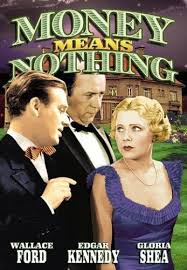
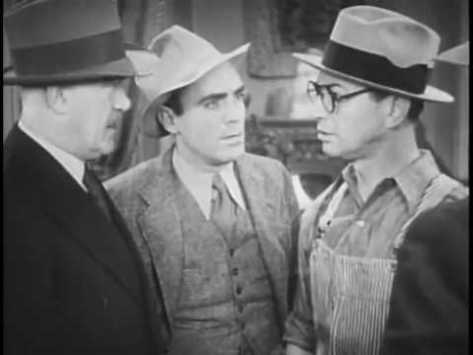
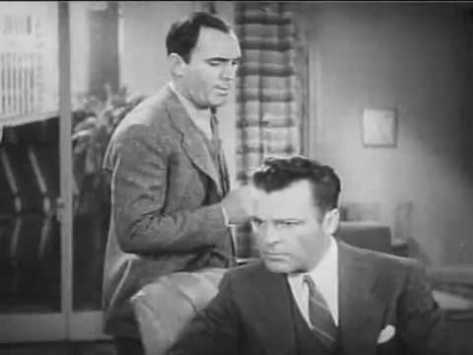
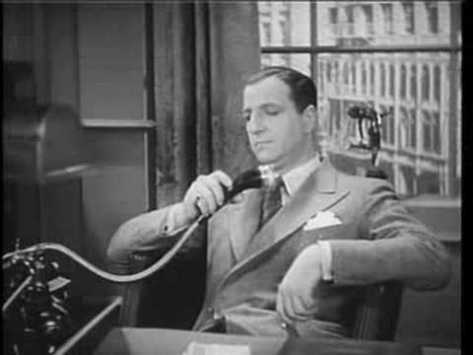
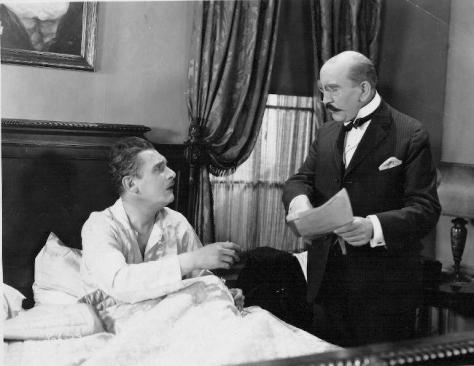
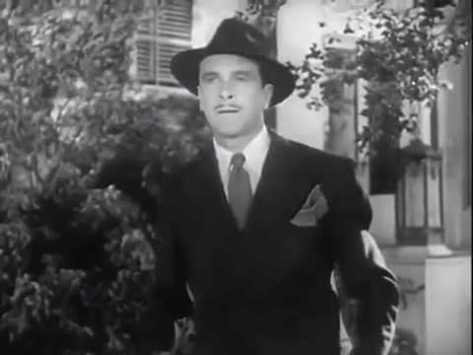
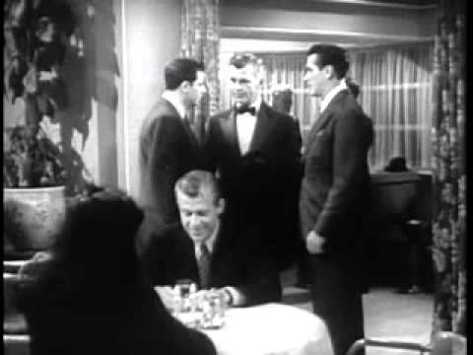
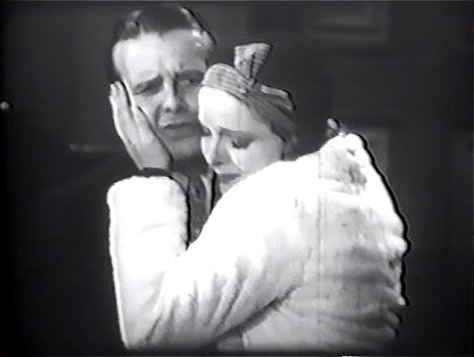
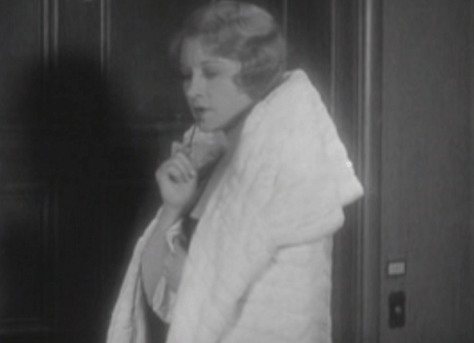
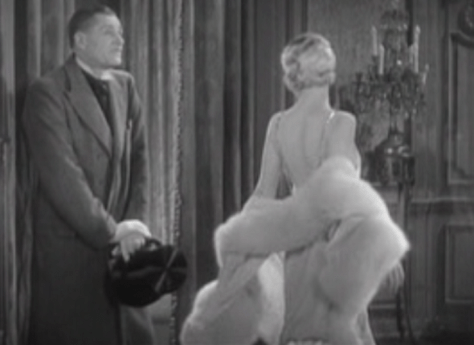
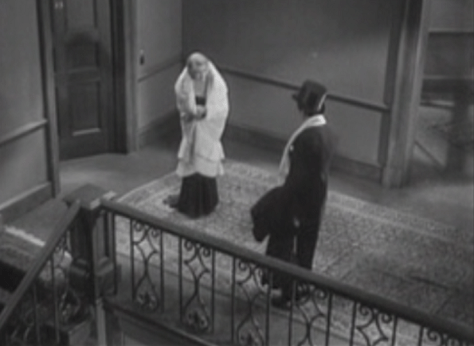
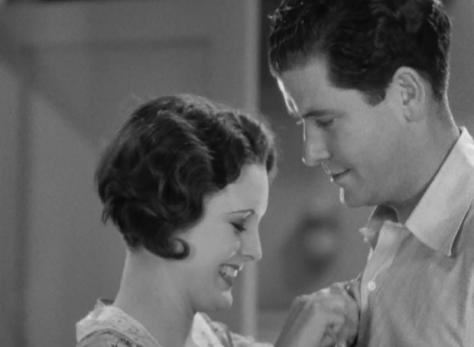
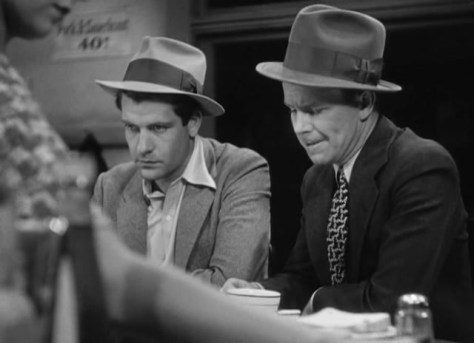
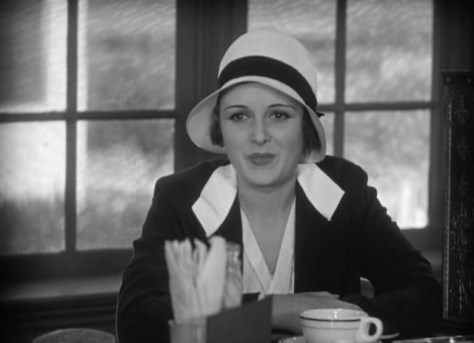
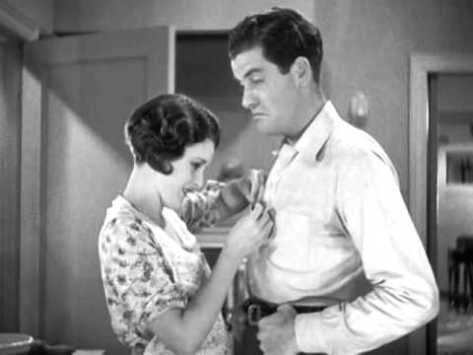
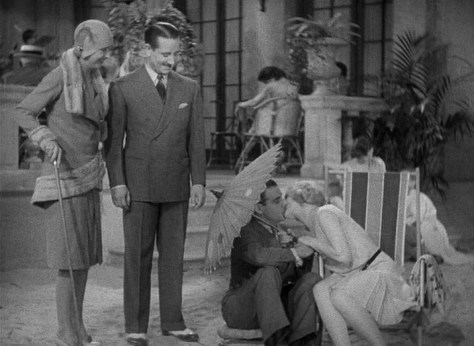
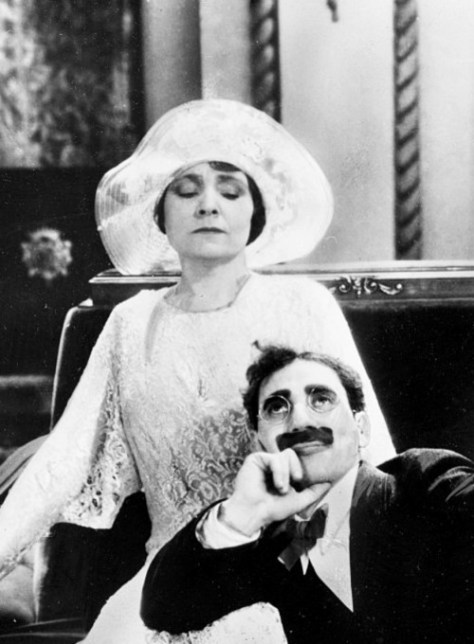
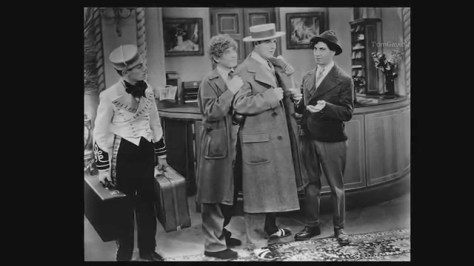
Money Means Nothing (1934)


Pre Code Logo 1

Pre Code Hollywood Season: FD Cinematheque

Money Means Nothing (1934)

Money Means Nothing 1

Director: Christy Cabanne

Cast: Wallace Ford, Edgar Kennedy, Gloria Shea, Vivien Oakland, Maidel Turner, Betty Blythe, Eddie Tamblyn, Richard Tucker, Tenen Holtz, Ann Brody

70 min

Money Means Nothing 2

Plot

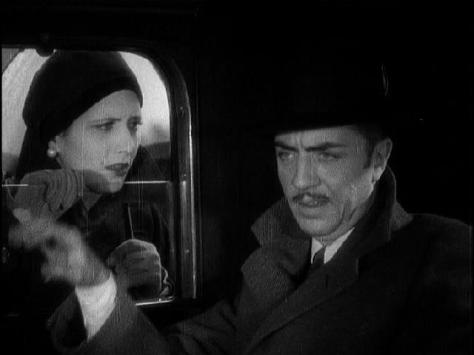
When Julie Ferris, a wealthy young woman searching for excitement, goes slumming at Joe’s Roadside Inn, she notices a group of shady men and follows them in her car. After trailing them for a distance, Julie crashes into their car as they are hijacking two trucks carrying tires. In the ensuing scuffle, the thieves shoot one of the trucks’ drivers, Red Miller, and threaten Julie. Ken McKay, the other driver, protects and rescues Julie, and she immediately falls in love with him. Although her sister Helen and rich brother-in-law George disapprove, Julie marries Ken and moves to Brooklyn.

While determined to make the marriage work, Julie is nonetheless unprepared for her new neighbors, the boorish, nosy Greens. After the Greens crash Julie’s birthday dinner, Herbert Green, who is Ken’s boss at the auto parts store, is told by his overbearing wife that Julie’s snobbish family insulted him. As revenge, Herbert lies to his district manager that Ken has been tipping off the still active hijackers.

Money Means Nothing 3

Fired, Ken has no luck in finding another job and contemplates making the now pregnant but devoted Julie return to her family when Red Miller, who has opened his own tire store, hires him. In cahoots with the hijackers, Red forces an unsuspecting Ken to help him steal more tire shipments, but Herbert, on a tip from Julie, figures out the plan and calls the police. In the end, the thieves are caught, and a repentant Herbert promises Ken a new job. Thus saved, the newlyweds reaffirm their belief that money means nothing.

Money Means Nothing 4

Cast 

Wallace Ford Wallace Ford
Gloria Shea Gloria Shea
Julie Ferris McKay
Edgar Kennedy Edgar Kennedy
Herbert Green
Vivien Oakland Vivien Oakland
Helen Whitney (as Vivian Oakland)
Maidel Turner Maidel Turner
Mrs. Kerry Green
Betty Blythe Betty Blythe
Mrs. Ferris
Eddie Tamblyn Eddie Tamblyn
Robert ‘Robby’ Ferris (as Edward Tamblyn)
Richard Tucker Richard Tucker
George Whitney
Tenen Holtz Tenen Holtz
Mr. Silverman
Ann Brody Ann Brody
Mrs. Silverman
Rest of cast listed alphabetically:
Irving Bacon Irving Bacon
Navy Secretary (scenes deleted)
Ernie Adams Ernie Adams
Lead Hijacker (uncredited)
Sam Flint Sam Flint
Police Sergeant (uncredited)
Douglas Fowley Douglas Fowley
Red Miller (uncredited)
Olaf Hytten Olaf Hytten
Parsons – the Butler (uncredited)
Jack Kenney Jack Kenney
Hijacker-Driver (uncredited)
Jack Norton Jack Norton
Jack – Hijacker (uncredited)
Lee Phelps Lee Phelps
Chauffeur (uncredited)
Harry Semels Harry Semels
Toy Vendor (uncredited)
Bert Young Bert Young
Jim – Driver Shot in Leg (uncredited)

Film Collectors Corner

Watch Money Means Nothing Now – Amazon Instant Video

Blu Ray

Not released on Blu Ray

DVD

World Gone Mad, The (1933)


Pre Code Logo 1

Pre Code Hollywood Season: FD Cinematheque

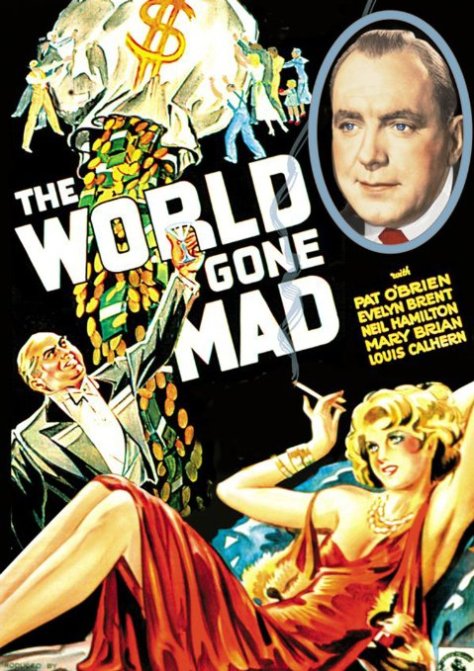
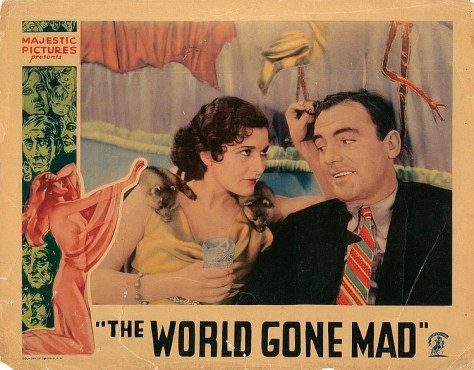
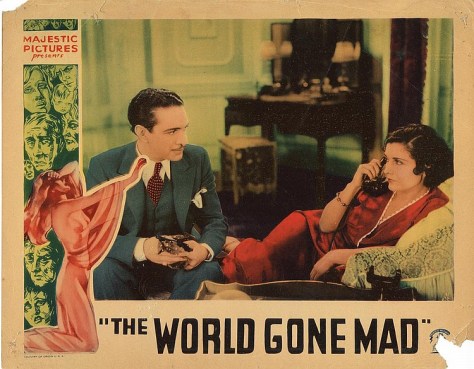
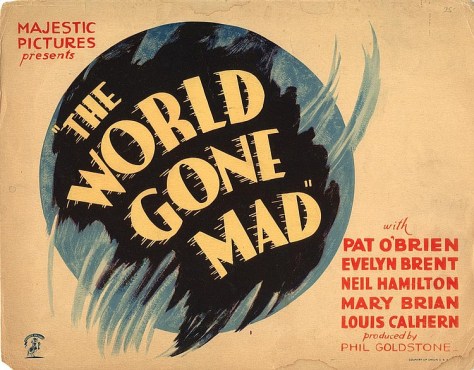
The World Gone Mad AKA The Public Be Hanged (1933)

World Gone Mad The 1

Director: Christy Cabanne

Cast: Pat O’Brien, Evelyn Brent, Neil Hamilton, Mary Brian, Louis Calhern, J Carrol Naish, Buster Phelps, Richard Tucker, Edward Van Sloan

80 min

The World Gone Mad (also released as The Public Be Hanged) is a 1933 American Pre-Code crime film directed by Christy Cabanne and starring Pat O’BrienEvelyn Brent and Neil Hamilton.[1] It was made on a low-budget by the independent Majestic Pictures, a Poverty Row forerunner of Republic Pictures.[2]

World Gone Mad The 2

World Gone Mad The 3

Plot

When a district attorney who has been investigating a utility company’s directors for fraud is suddenly killed, his wisecracking newspaperman friend (Pat O’Brien) gets curious. He and the upstanding new district attorney (Neil Hamilton) separately pursue the case. Cultivated but sinister businessmen, a shady nightclub owner specializing in “import and export”, several beautiful young women always seen in evening gowns, a “Latin lover” type who reads Casanova and an abundance of suave men in evening dress provide eye-candy for the duration.

World Gone Mad The 4

Cast

World Gone Mad The 5

References

World Gone Mad The 6

World Gone Mad The 7

World Gone Mad The 8

Film Collectors Corner

Watch The World Gone Mad Now – Amazon Instant Video

Blu Ray

Not released on Blu Ray

DVD

Phantom Broadcast, The (1933)


Pre Code Logo 1

Pre Code Hollywood Season: FD Cinematheque

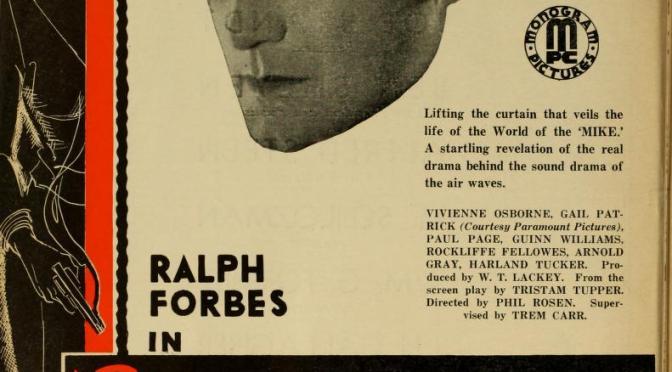
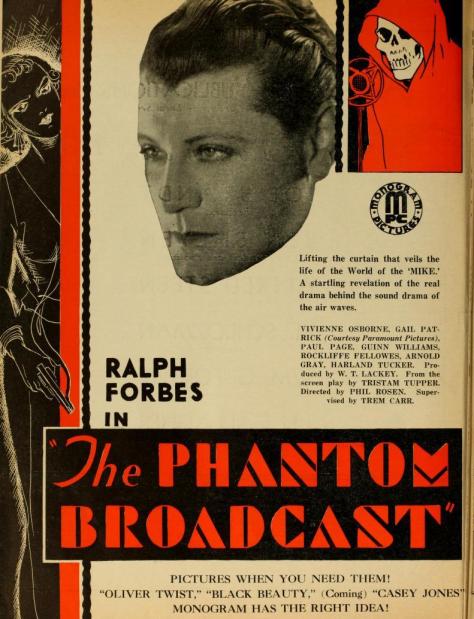
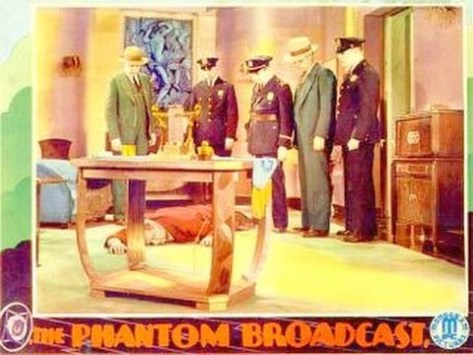
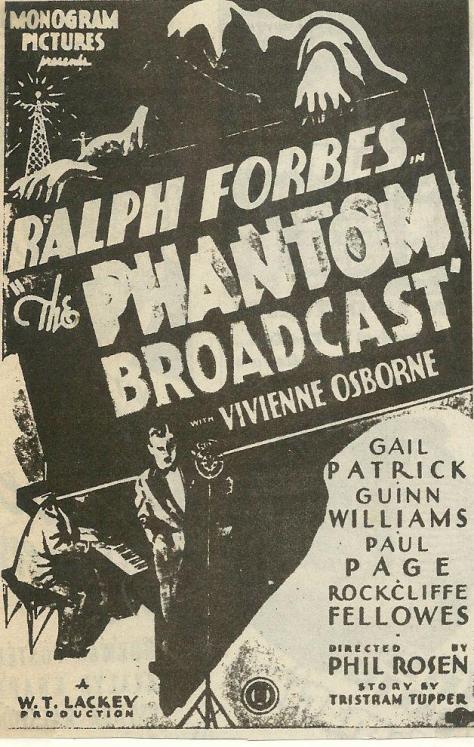
Phantom Broadcast, The (1933)

Phantom Broadcast The 1

Phantom Broadcast The 2

Director: Phil Rosen

Cast: Ralph Forbes, Vivienne Osborne, Arnold Gray, Gail Patrick, Paul Page, Pauline Garon, Guinn Big Boy Williams, Rockliffe Fellowes

72 minutes

Phantom Broadcast The 4

Plot

As a delivery boy bestows flowers to girls about town, singer Grant Murdock states on his radio show that “Tonight I’m singing to you!” Joe Masetro, a gangster type, has set his sights on signing Grant to a big contract at the end of the week. Grant signs a new contract, however, with his old manager and conductor, Norman Wilder, a hunchback. Joe is upset with siren Elsa Evans, who was supposed to seduce Grant into signing with him. When Joe threatens to cut her out of the action, Elsa tells him she plans to marry Grant.

After the broadcast, Grant makes dates with a number of the girls and heads for Elsa, telling Wilder’s driver, Sandy Higgins, that he will not be rehearsing tonight. Lefty, Joe’s chief henchman and Elsa’s ex-lover, arrives with his gang to kill Norman. Norman meets Laura Hamilton, a young singer, and offers to test her the next day. Getting into his car, Sandy warns Norman about Lefty’s presence and the danger from Joe. Norman laughs off Sandy’s concern, but agrees to take a taxi, after which his car is shot up by Lefty and company. Joe calls Elsa at Grant’s apartment and tells her that Norman was “killed in a gang fight.” Norman, using his key, enters Grant’s apartment, frightening Elsa.

Phantom Broadcast The 5

Told of the attack, Grant assumes the murderers were after him, and after refusing to rehearse, he and Elsa leave. While Laura washes dishes with her fiancée, Dr. Robert Brooks, Norman calls and offers to test her in his studio that night. After the tryout, Norman tells Laura that she has real talent, but insists that a singing career and marriage do not mix. After she leaves, Norman looks in the mirror and imagines what he might have been like if he had not been born a hunchback. The next day, Grant and Norman rehearse. It turns out that Norman is the real singer and that Grant is no more than a ventriloquist’s dummy, mouthing the words and accepting the praise and glory.

When Grant leaves, he bumps into Laura and breaks her compact. Impressed by her looks, he promises to sing “My Good Bye to You” just for her, but Norman warns Laura about Grant, then refuses to sing the song on the broadcast. After the radio show, Norman tells Grant to stay away from Laura, but Grant calls her and makes a date for five o’clock to “hear him sing.” Grant strikes Norman and leaves. Norman tries to call Laura but she has already left. Back at his apartment, Elsa finds Laura’s compact and confronts Grant.

Phantom Broadcast The 6

She talks about marriage, but Grant strikes her and throws her out. While Elsa takes out her gun, Norman buys one of his own. Arriving at Grant’s, Norman finds the performer dead, with Laura’s compact next to him. Thinking Laura killed Grant, Norman switches guns, calls the police and confesses to the murder. Laura arrives, and realizing his mistake, Norman orders her to leave. When the police arrive, Norman escapes through the roof, but is mortally wounded.

Elsa calls Joe seeking help, but it is Lefty, who is still in love with her, who agrees to give her money. At the radio station, word of Grant’s murder arrives. At seven o’clock, right on schedule, the “voice” of Grant Murdock is heard on the air. The studio curtain is pulled back to show Norman singing “My Good Bye to You.” As he dies in her arms, Norman tells Laura that “love and music do mix.” On a ship, Laura honeymoons with Robert, as nearby Elsa wonders aloud to Lefty why Norman took the “rap” for her.

Phantom Broadcast The 8

Cast

Ralph Forbes Ralph Forbes
Vivienne Osborne Vivienne Osborne
Elsa Evans
Arnold Gray Arnold Gray
Grant Murdock
Gail Patrick Gail Patrick
Laura Hamilton
Paul Page Paul Page
Dr. Robert Brooks
Pauline Garon Pauline Garon
Nancy
Guinn 'Big Boy' Williams Guinn ‘Big Boy’ Williams
Sandy Higgins (as Big Boy Williams)
Rockliffe Fellowes Rockliffe Fellowes
Joe Maestro
Harland Tucker Harland Tucker
Program Manager (as Harlan Tucker)
Carl Miller Carl Miller
Lefty
Mary MacLaren Mary MacLaren
Beth
George Nash George Nash
Artist
Althea Henley Althea Henley
Model
George 'Gabby' Hayes George ‘Gabby’ Hayes
Police Lieutenant (as George Hayes)
Rest of cast listed alphabetically:
Louise Beavers Louise Beavers
Penny (uncredited)
Kit Guard Kit Guard
Thug (uncredited)
Henry Hall Henry Hall
Thornton–Radio Station Manager (uncredited)
Dick Rush Dick Rush
Policeman (uncredited)

Phantom Broadcast The 9

Film Collectors Corner

Watch The Phantom Broadcast Now – Instant Video on You Tube

Blu Ray

Not released on Blu Ray


DVD

X Marks The Spot (1931)


Pre Code Logo 1

Pre Code Hollywood Season: FD Cinematheque

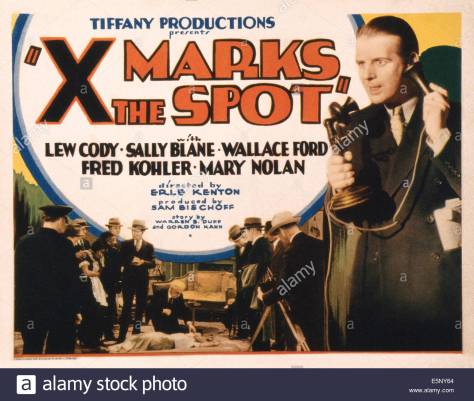
X Marks The Spot (1931)

X Marks the Spot 1

X Marks the Spot 9

Director: Erle C Kenton

Cast: Lew Cody, Sally Blane, Wallace Ford, Mary Nolan, Fred Kohler, Charles Middleton, Virginial Lee Corbin, Joyce Coad, Richard Tucker, Hank Mann, Helen Parrish

72 minutes

X Marks the Spot 7

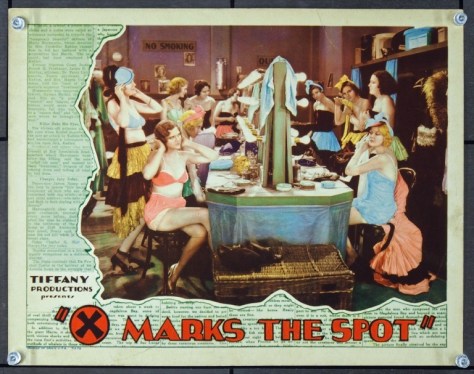
X Marks the Spot is a 1931 American pre-Code crime drama film, directed by Erle C. Kenton and released by Tiffany Pictures, which operated from 1921 to 1932.

The story concerns a newspaper reporter indebted to a gangster for raising the money to save his little girl’s life. The source material was remade into a 1942 film of the same name. Helen Parrish appeared in both versions.

Plot

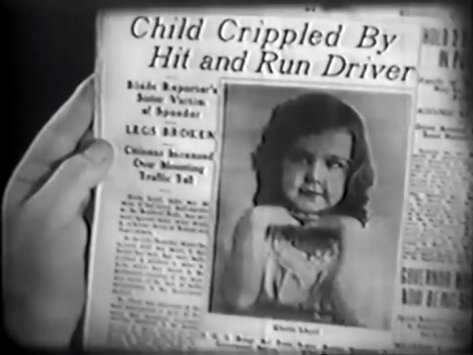
Ted Lloyd, a reporter for a small-town newspaper, follows an ambulance to the scene of an accident where he discovers that his young sister Gloria is the victim. Gloria’s doctor tells Ted that if she is ever to walk again, Ted must find the money to send her to Germany for an operation.

Ted asks all his friends, including his editor George Howard, for help, but although they are sympathetic, none has the necessary money. Desperately, Ted approaches Riggs, a local gangster. At first, Riggs flatly refuses to make the loan. Ted then offers to exchange secret information about the District Attorney for the money. Riggs angrily denounces Ted as an informer, then unexpectedly decides to give him the money for the operation. Ted promises never to forget Riggs’ kindness.

X Marks the Spot 4

Eight years later, George has become the editor of the New York Gazette and Ted works as the Broadway gossip columnist. When Ted writes an item about showgirl Vivyan Parker, implying that she is being kept by a wealthy man, she sues the paper for libel. Eager to avoid the suit, George sends Ted to Vivyan’s apartment to obtain a release. Ted sneaks into her apartment with the help of the doorman, but Vivyan refuses to sign the release and orders him out of her apartment. When she is later found murdered, Ted is the primary suspect.

In order to clear his name, Ted, who believes that robbery was the motive for Vivyan’s murder, obtains a list of her jewelry from her lover, E. T. Barnes. He contacts several fences and, with the help of one of them, discovers that the murderer is Riggs. Remembering that Riggs once did him a favor, Ted does not reveal his name, but George, suspecting that Ted knows who committed the murder, follows him to his meeting with Riggs and Riggs is arrested.

X Marks the Spot 5

Believing that Ted betrayed him, Riggs swears vengeance. During the trial, one of Riggs’ cronies tapes a gun beneath the table where Riggs waits for sentencing. When a guilty verdict is returned, Riggs uses the gun to shoot a guard and abduct one of the jurors. Riggs holds the man hostage, insisting that he will release him in exchange for Ted. Ted agrees, entering the room where Riggs waits at the same time the police release a smoke bomb. In the following gun battle, Riggs is killed and Ted is wounded. While Ted is in the hospital, George takes over his column. His final effort announces Ted’s engagement to his secretary, Sue.

X Marks the Spot 6

Cast

X Marks the Spot 3

X Marks the Spot 8

Film Collectors Corner

Watch X Marks the Spot Now – Instant Video on You Tube

Blu Ray

Not released on Blu Ray


DVD

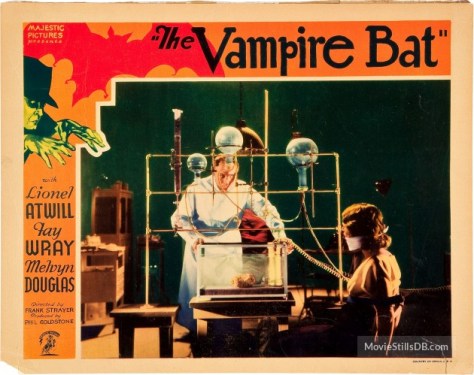
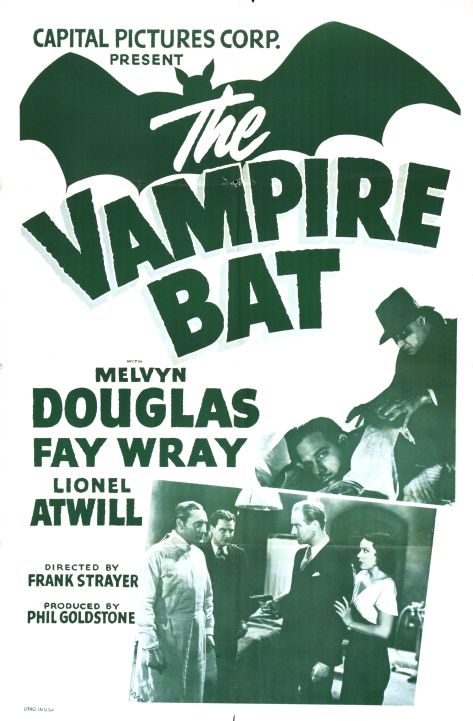
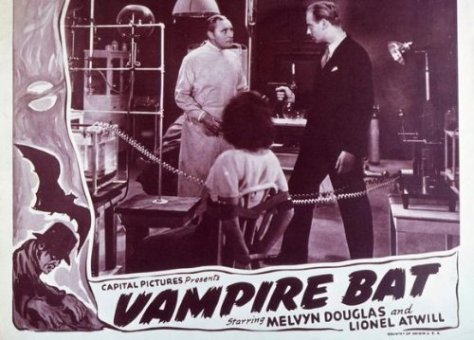
Vampire Bat, The (1933)


Pre Code Logo 1

Pre Code Hollywood Season: FD Cinematheque

The Vampire Bat (1933)

Vampire Bat The 1

Vampire Bat The 2

Vampire Bat The 3

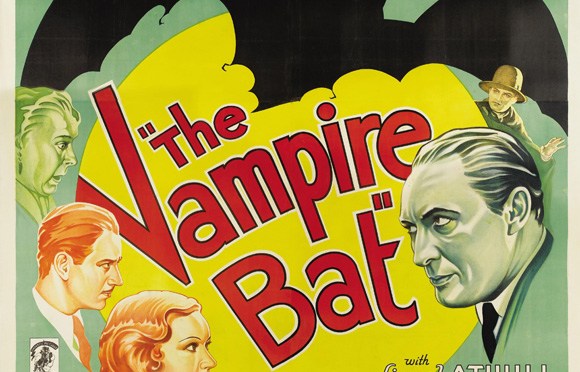
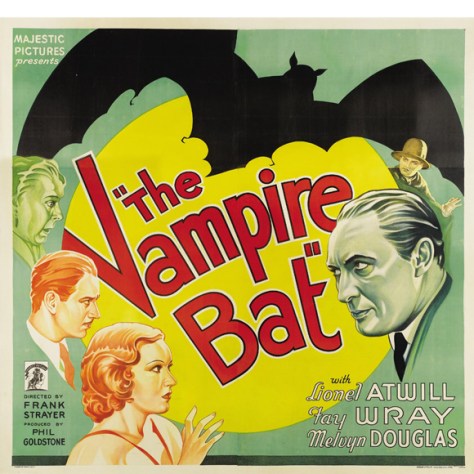
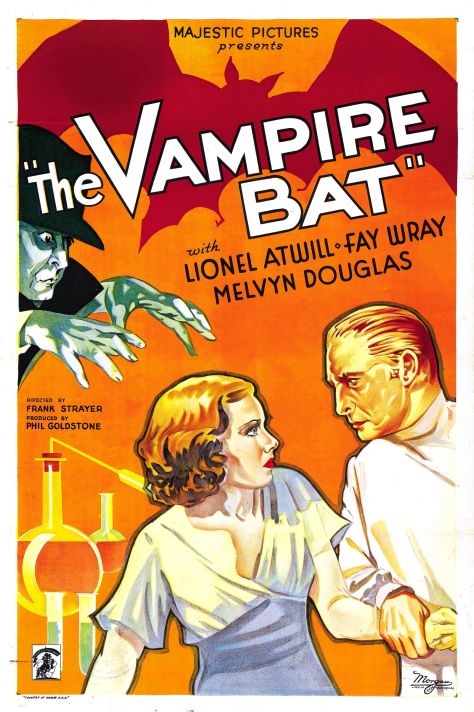
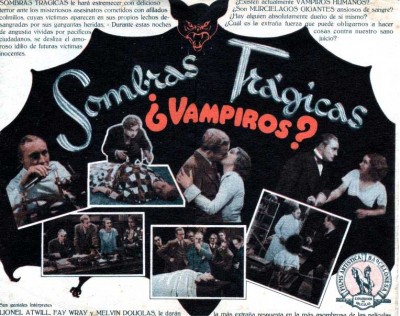
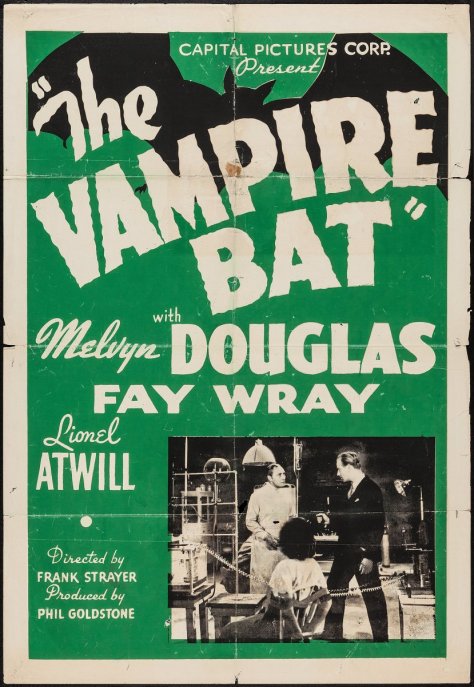
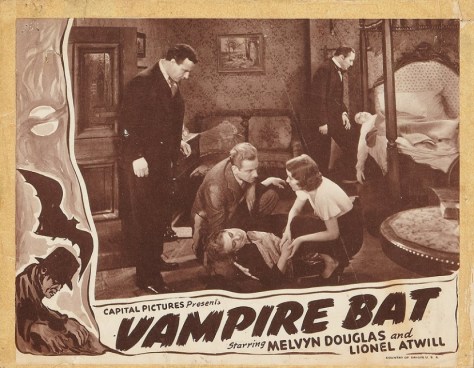
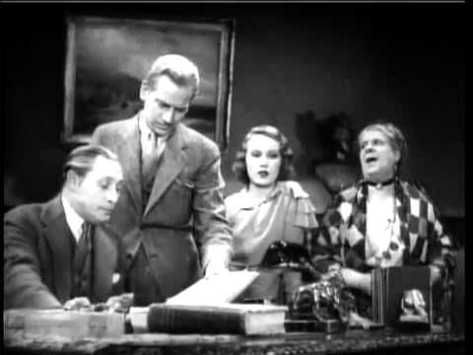
The Vampire Bat is a 1933 American pre-Code horror film starring Lionel AtwillFay WrayMelvyn Douglas, and Dwight Frye.

Plot outline

When the villagers of Kleinschloss start dying of blood loss, the town fathers suspect a resurgence of vampirism, but police inspector Karl Breettschneider remains skeptical. Scientist Dr. Otto von Niemann, who cares for the victims, visits a patient who was attacked by a bat, Martha Mueller.

Vampire Bat The 5

Martha is visited by a mentally challenged man named Herman, who claims he likes bats because they are “soft like cat” and “nice”. On the doctor’s journey home, he meets Kringen, one of the townsfolk, who claims to have been attacked by the vampire in the form of a bat, but withheld his story from the town to not spread fear. Dr. von Niemann encourages Kringen to tell the townsfolk of his story.

Kringen becomes suspicious that Herman Glieb may be the vampire due to his obsession with bats. Herman lives with bats and collects them off the street.

Dr. von Niemann returns to his home, which also houses Breettschneider’s love Ruth Bertin, Ruth’s hypochondriac aunt Gussie Schnappmann, and servants Emil Borst and Gorgiana. Fear of the vampire and suspicion of Glieb quickly spread around the town, and people start fearing him.

Vampire Bat The 4

Ms Mueller is killed that night. The analyses of Dr. von Niemann and another doctor, Dr. Haupt, conclude that the death is the same as all of the previous deaths – blood loss, with two punctures in the neck caused by needle-sharp teeth. Gleib enters the examination, and upon seeing the dead body, runs away screaming.

Next morning, Glieb enters Dr. von Niemann’s garden, where Dr. von Niemann, Breettschneider, and Bertin are discussing vampires inside the house. The town fathers enter the house and announce that Kringen is dead and Gleib is missing. An angry mob hunts down Gleib and chases him through the countryside and into a cave, where he falls to his death.

That night, Dr. von Niemann is seen telepathically controlling Emil Borst, as he picks up sleeping Gorgiana and takes her down to Dr. von Niemann’s laboratory, where a strange organism is seen. They then drain her blood from her neck.

Vampire Bat The 6

Schnappmann then discovers Gorgiana’s body in her bed. Dr. von Niemann and Breettschneider investigate and find Ms Mueller’s crucifix, which Glieb handled the night Dr. von Niemann visited her. Breettschneider is becoming more convinced of the presence of vampires in the village as no other plausible explanations for the deaths can be found. As Glieb was seen in the garden that morning, the two conclude he is guilty.

Upon hearing of Glieb’s death, however, Breettschneider’s conviction is erased. Dr. von Niemann tells Breettschneider to go home and take sleeping pills, but gives him poison instead, intent on draining his blood. Bertin discovers Dr. von Niemann telepathically controlling Borst, who is at Breettschneider’s house.

It is revealed that Dr. von Niemann has created life, and is using the blood to fuel his organism. He ties Bertin up in his lab. Borst supposedly enters with Breettschneider’s body on a trolley. Dr. von Niemann walks over to Borst, who is revealed to be Breettschneider (who did not take the pills) in costume, with the real Borst on the trolley. Breettschneider pulls a gun on Dr. von Niemann, and walks over to untie Bertin. Dr. von Niemann then wrestles Breettschneider, who drops the gun. As the two fight, Borst picks up the gun and shoots Dr. von Niemann.

Vampire Bat The 7

Production

Fay Wray and Lionel Atwill had been in the successful film Doctor X the previous year, and had already wrapped up work on Mystery of the Wax Museum for Warner Bros. This was quite a large-scale release and would have a lengthy post-production process. Seeing a chance to exploit all the advance press, poverty row studio Majestic Pictures Inc. contracted Wray and Atwill for their own “quickie” horror film, rushing The Vampire Bat into production and releasing it in January 1933.

Vampire Bat The 8

Majestic Pictures had lower overheads than the larger studios, which were struggling at the time during the Great Depression. Part of the reason that The Vampire Batlooked almost as good as any Universal Pictures horror film is because Majestic leased James Whale‘s castoffs, the “German Village” backlot sets left over from Frankenstein (1931) and the interior sets from his film The Old Dark House (1932), plus some location shooting at Bronson Caves.

Vampire Bat The 9

Completing the illusion that this was a film from a much bigger studio, Majestic hired actor Dwight Frye to populate scenes with Wray and Atwill. A stock musical theme by Charles Dunworth, “Stealthy Footsteps”, was used to accompany the opening credits.[1]

The Vampire Bat ruse worked well for Majestic, which was able to rush the quickie film into theaters less than a month before Warner’s release of Mystery of the Wax Museum. According to The Film Daily (January 10, 1933), the film’s running time was 63 minutes, like most extant prints.

Cast

Vampire Bat The 10

See also

References

  1. Jump up^ Larson, Randall D. (1985). Musique fantastique: a survey of film music in the fantastic cinema. Scarecrow Press. p. 32; ISBN 0810817284.
  2. Jump up^ “Scientific Horror”. New York Times. January 23, 1933. Retrieved 2013-05-14

Vampire Bat The 12

Vampire Bat The 13

Vampire Bat The 14Vampire Bat The 15

Film Collectors Corner

Watch The Vampire Bat Now – Instant Video on You Tube


Blu Ray

Not released on Blu Ray


DVD

Twin Husbands (1933)


Pre Code Logo 1

Pre Code Hollywood Season: FD Cinematheque

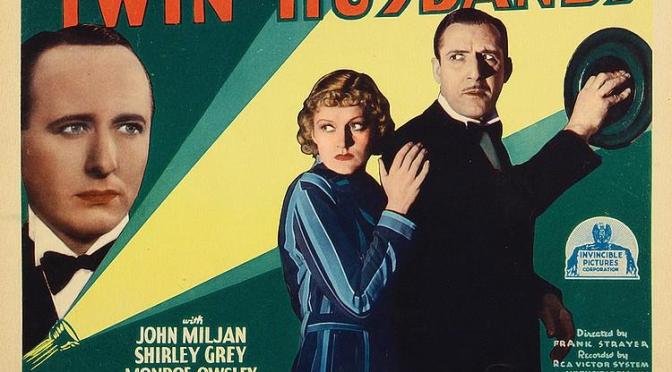
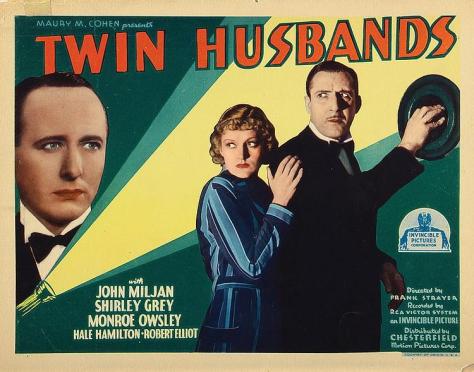
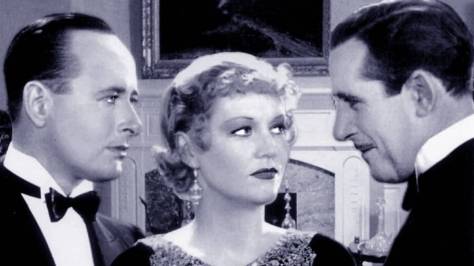
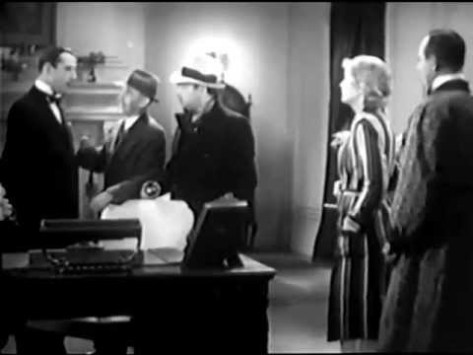
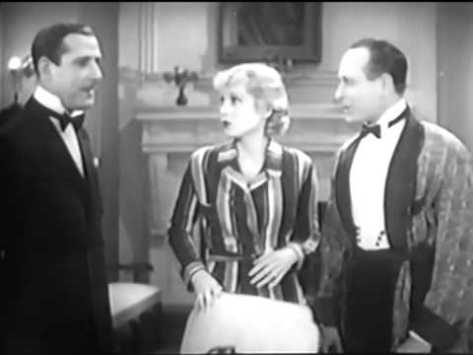
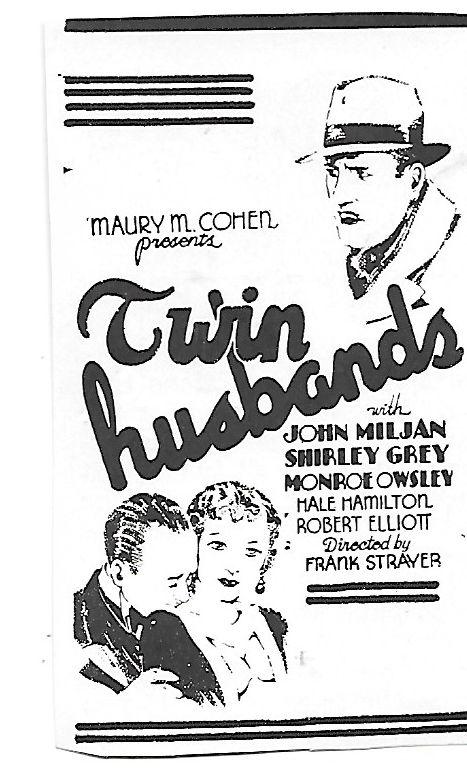
Twin Husbands (1933)

Twin Husbands 3

Director: Frank R Strayer

Cast: John Miljan, Shirley Grey, Monroe Owsley, Hale Hamilton, Robert Elliott, Wilson Benge, Maurice Black, Robert Walker

68 min

Twin Husbands 9


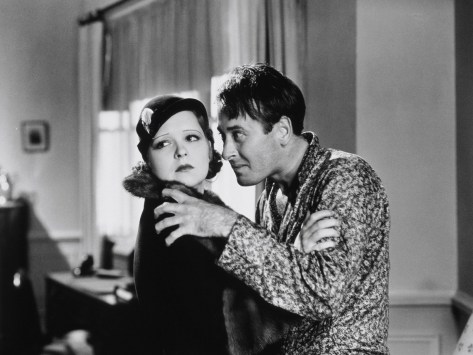
Twin Husbands is a 1933 American Pre-Code film directed by Frank R. Strayer.

Plot summary

After he wakes from a deep sleep in a strange Long Island mansion, a dazed man finds a calendar dated 1938, four years later than his last recollection, and evidence that his name is Jerome “Jerry” Peyton Werrenden. Greyson, a butler, tells Jerry that he is the mansion’s owner and that he has been ailing mentally for months.

Jerry, however, quickly deduces that he has been kidnapped and drugged and that Greyson was hired to pose as a longtime servant as part of a scheme to convince him that he is suffering from amnesia.

Twin Husbands 5

Curious about the scheme, Jerry pays Greyson to continue his part, while he pretends to be Werrenden with Chloe, his supposed wife, and with Colton Drain, his supposed secretary. When Chloe and Colton realize that Jerry is wise to the plot, they offer him $10,000 to impersonate Werrenden, who is living in Europe, in a meeting with Colonel Gordon Lewis, the estate trustee, who has been asked to deliver $200,000 in bonds. Jerry accepts the offer and, while waiting for the colonel, overhears Chloe and Colton discussing plans to leave for South America.

After requesting a signed receipt, Lewis, apparently fooled by the impersonation, gives Jerry the bonds, which Jerry then places in a safe, the combination to which only the real Werrenden knows. Later that night, Colton and Chloe discover two thugs, Feets and Chuck, breaking into the safe.

Twin Husbands 2

When the thugs see Jerry, they identify him as The Sparrow, a master “cracksman,” and as a favor to his fellow crooks, Jerry allows them to escape before the police arrive. After a confused interrogation of Chloe, Colton, Lewis and Greyson about Jerry’s identity, Sergeant Kerrigan orders Jerry and Chloe to police headquarters. To Chloe’s surprise, however, Jerry takes her to his house, explaining that Greyson had telephoned his minion, Kerrigan, with orders to impersonate a police sergeant.

After Jerry determines that Chloe was actually trying to save her ne’er-do-well husband from the financial scheming of Colton, he confronts Lewis about the bonds. Cornered, Lewis confesses that he had hired Feets and Chuck to steal the bonds because he needed the money to cover his own overdraughts.

Twin Husbands 4

Jerry then breaks into Colton’s private vaults and unearths several documents that reveal that Colton had covered up news of Werrenden’s death and had stolen his securities. Jerry returns to the Werrenden mansion and shows Chloe, with whom he has fallen in love, his evidence. Supported by Chloe, a repentant Lewis and Greyson, Jerry convinces the police that he is Werrenden and that Colton is suffering a nervous breakdown.

Unable to expose Colton to the police because of his own criminal activities, Jerry nonetheless satisfies Chloe by forcing Colton to agree to leave immediately for South America. Chloe then convinces a reformed Jerry not to run away, but to stay with her indefinitely.

Twin Husbands 6

Cast

External links

Twin Husbands 7

Film Collectors Corner

Watch Twin Husbands Now – Instant Video on You Tube

Blu Ray

Not released on Blu Ray


DVD

Not released on DVD


Gay Nighties, The (1933)


Pre Code Logo 1

Pre Code Hollywood Season: FD Cinematheque

The Gay Nighties (1933)

Gay Nighties The 2Gay Nighties The 2

Director: Mark Sandrich

Cast: Bobby Clark, Paul McCullough, James Finlayson, Dorothy Granger, John Sheehan, Monte Collins

20 min 

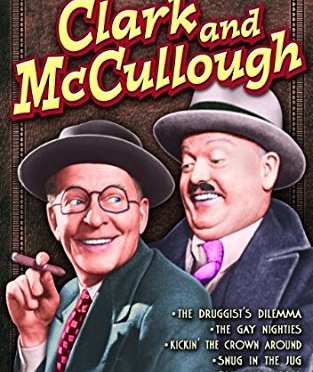
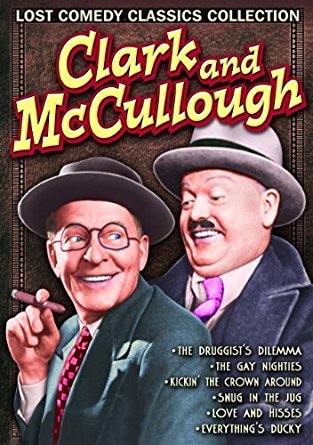
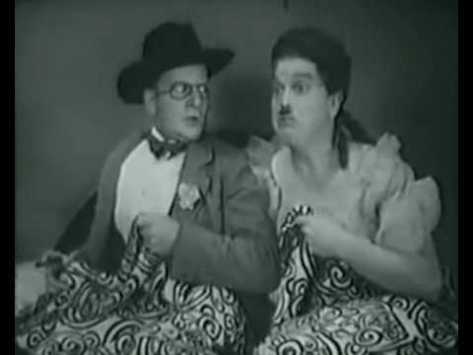
The Gay Nighties is a 1933 American Pre-Code comedy film featuring Clark & McCullough and directed by Mark Sandrich.

Plot summary

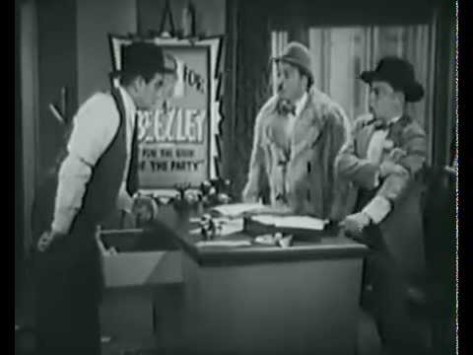
Clark & McCullough, as Hives and Blodgett, are campaign managers for political candidate Oliver Beezley. They plan to defeat Beezley’s political rival, Commodore Amos Pipp (James Finlayson), by exploiting his weakness for women.

Blodgett is to be disguised as a beautiful woman to entrap Pipp, but with his moustache he proves unconvincing in drag—Hives declares, “Even the Commodore wouldn’t fall for a buzzard like you!”—and Hives instead enlists the help of Mrs. Beezley (Dorothy Granger) to carry out the scheme.

Gay Nighties The 4

First, though, they have to stay out of the line of fire, and ahead of the police, the nearsighted house detective (Monte Collins), a sleepy man with a cot (Charles Williams), and a somnambulist Countess (Sandra Shaw) with her afghan hound.

Gay Nighties The 3

Cast

Gay Nighties The 1

External links

Gay Nighties The 5

Film Collectors Corner

Watch The Gay Nighties Now – Instant Video on Internet Archive

Blu Ray

Not released on Blu Ray


DVD

Woman Between, The (1931)


Pre Code Logo 1

Pre Code Hollywood Season: FD Cinematheque

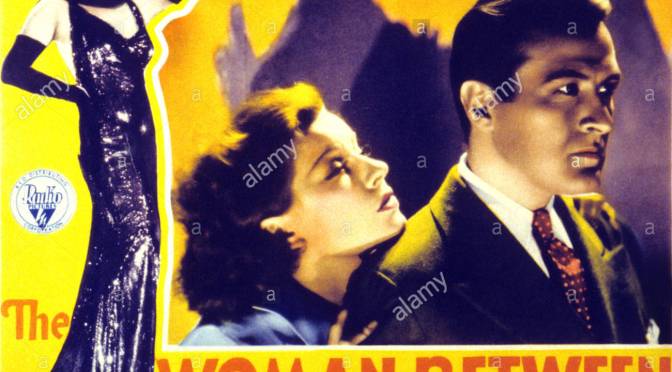
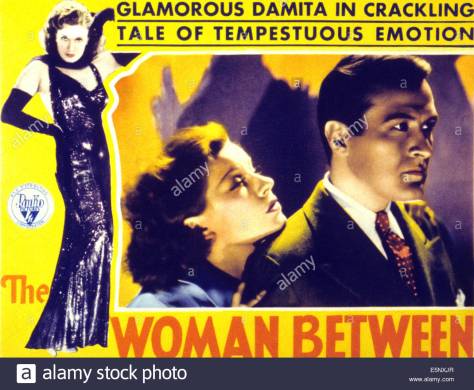
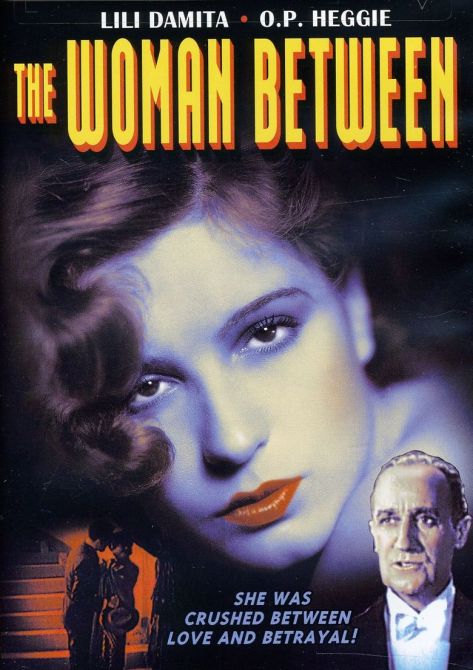
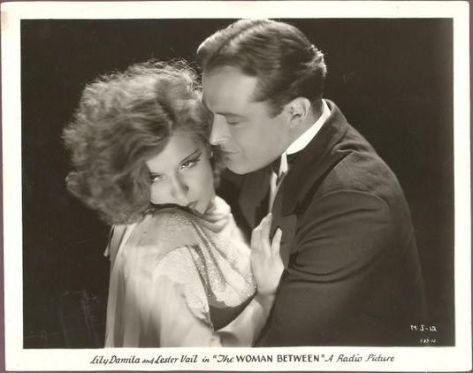
The Woman Between (1931)

Woman Between The 1

Director: Victor Schertzinger

Cast: Lilli Damita, Lester Vail, O P Heggie, Miriam Seegar, Anita Louise, Ruth Weston, Lincoln Steadman, Blanche Friderici, William Morris, Halliwell Hobbes, Ellinor Vanderveer

73 min 

Woman Between The 2

The Woman Between is a 1931 American pre-Code drama film directed by Victor Schertzinger and written by Howard Estabrook. The film stars Lili DamitaLester VailO.P. HeggieMiriam Seegar and Anita Louise.[1][2] The film was released on August 8, 1931, by RKO Pictures.

Woman Between The 8

Plot

A young man returns from Europe after several years’ estrangement from his family caused by his disapproval of his father’s remarrying after his mother’s death. At the family reunion he learns that his stepmother is the woman with whom he had a shipboard romance on the voyage home.

Cast

Woman Between The 5

References

  1. Jump up^ “The Woman Between (1931) – Overview”Turner Classic Movies. Retrieved September 9, 2014.
  2. Jump up^ “Woman Between – Rotten Tomatoes”. Retrieved September 9, 2014.

Woman Between The 4

Film Collectors Corner

Watch The Woman Between Now – Instant Video on You Tube

Blu Ray

Not released on Blu Ray


DVD

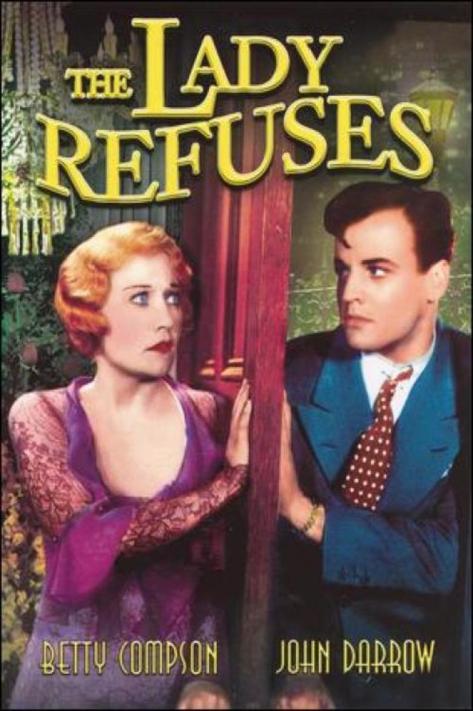
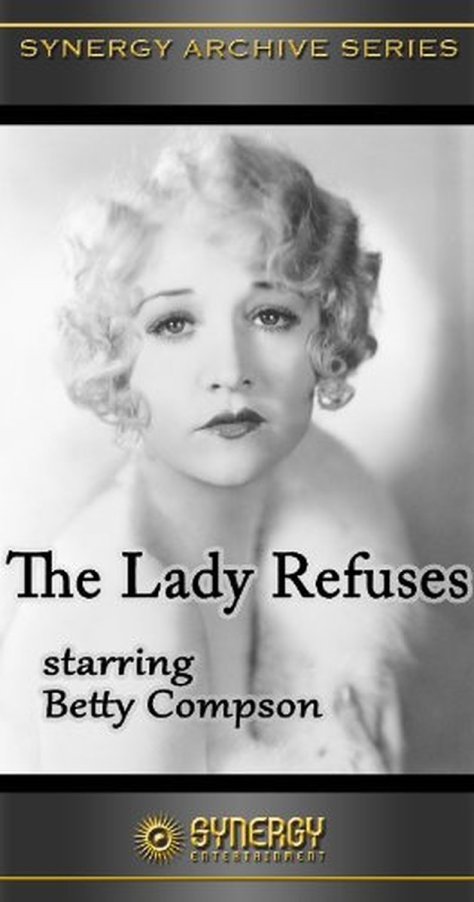
Lady Refuses, The (1931)


Pre Code Logo 1

Pre Code Hollywood Season: FD Cinematheque

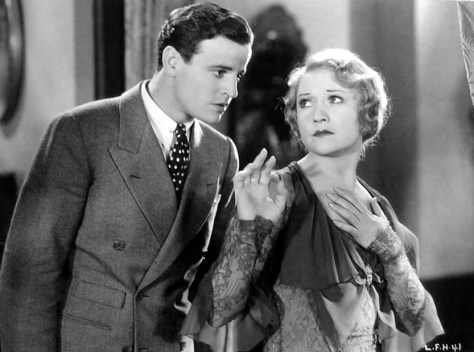
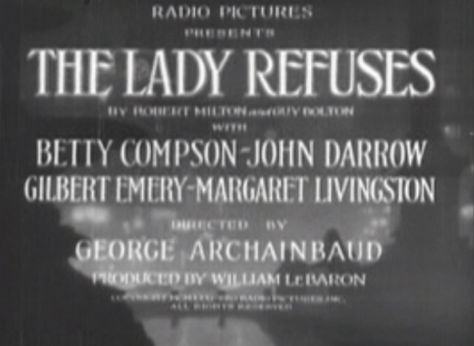
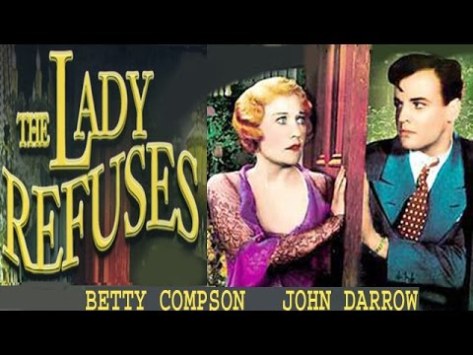
The Lady Refuses (1931)

Lady Refuses The 1

Lady Refuses The 2

Director: George Archainbaud

Cast: Betty Compson, John Darrow, Gilbert Emery, Margaret Livingston, Ivan Lebedeff, Edgar Norton, Daphne Pollard

72 min

Lady Refuses The 7

The Lady Refuses is a 1931 American pre-Code melodrama film, directed by George Archainbaud, from a screenplay by Wallace Smith, based on an original story by Guy Bolton and Robert Milton. It stars Betty Compson as a destitute young woman on the verge of becoming a prostitute, who is hired by a wealthy man to woo his never-do-well son away from the clutches of a gold-digger (Margaret Livingston). The plot is regarded as risqué enough to appear in at least one collection of pre-Code Hollywood films.[3]

Lady Refuses The 13

Plot

Sir Gerald Courtney (Gilbert Emery) is an aristocrat whose son, Russell (John Darrow), prefers to spend his time partying with young women rather than focusing on the promising career he has in architecture. When Russell leaves one evening to revel with the gold-digging Berthine Waller (Margaret Livingston) rather than spending it dining with his father, Sir Gerald is a bit despondent. As he ponders what to do about his wayward son, providence takes a hand.

A beautiful destitute young woman, June (Betty Compson), on the verge of entering into the oldest of professions due to her desperation, is being pursued by the London police. Sir Gerald, who was at the window in the first floor watching his son leaving with Berthine Waller, observes how June leaves a taxi on the other side of the street, and is being cornered by the police.

Lady Refuses The 8

As she comes over to his house to knock, he opens the door and welcomes her as an old friend he was expecting, reassuring the Policemen that she is a respectable citizen. After they leave, Sir Gerald invites her to dinner, after she told him her situation. Then he proposes to hire June for a 1000 Pounds to prevent his son to fall into the clutches of Berthine.

June does her job beautifully, as Russell leaves Berthine and begins to concentrate on his architectural career, much to his father’s delight. There’s a slight hitch however: June has fallen in love with Sir Gerald, rather than Russell. Devastated, Russell calls Berthine to meet him at his apartment (which is upstairs in the same building where June lives). Seeing all of her work being unwound in a single evening, June lures Russell down to her apartment, where she gets him so drunk that he passes out and spends the night.

Lady Refuses The 9

When Berthine arrives at Russel’s apartment, she has been followed by an ex-lover, Nikolai Rabinoff (Ivan Lebedeff). In a jealous rage, Nikolai kills Berthine. The following morning Russell awakes to find June gone, having vowed to not come between the son and the father. He is also the main suspect in Berthine’s murder. Seeking shelter from his father, Russell refuses to invoke June as his alibi. In order to save him, June steps forward and admits that Russell spent the night in her apartment. Sir Gerald, thinking the worst, renounces his devotion for June, which devastates her, but confirmed what she always feared: that he would never rely on her. June leaves his house, but when Sir Gerald discovers the innocence of Russell’s night spent in her apartment short after, he understands his own mistake and vows to track her down and spend the rest of his life with her.

Lady Refuses The 10

Cast

(cast list as per AFI database)[3]

Notes

In 1959, the film entered the public domain in the United States due to the copyright claimants’ failure to renew the copyright registration in the 28th year after publication.[5]

During production, this film was known by several titles, including Children of the StreetsLadies for HireA Lady for Hire and Forgotten Women.[6] According to several sources at the time, the noted screenwriter, Jane Murfin was supposed to have done work in the adaptation of the Milton/Bolton story for the screen, however, no sources give her credit for any writing work on the film.[3]

Lady Refuses The 12

References

  1. Jump up^ “The Lady Refuses”. New York Times. Archived from the original on August 17, 2014. Retrieved August 16, 2014.
  2. Jump up to:a b “The Lady Refuses: Technical Details”. theiapolis.com. Retrieved August 16, 2014.
  3. Jump up to:a b c d e f g h “The Lady Refuses: Detail View”. American Film Institute. Archived from the original on March 29, 2014. Retrieved June 28, 2017.
  4. Jump up^ Jewell, Richard B.; Harbin, Vernon (1982). The RKO Story. New York: Arlington House. p. 34. ISBN 0-517-546566.
  5. Jump up^ Pierce, David (June 2007). “Forgotten Faces: Why Some of Our Cinema Heritage Is Part of the Public Domain”. Film History: An International Journal19 (2): 125–43. ISSN 0892-2160JSTOR 25165419OCLC 15122313doi:10.2979/FIL.2007.19.2.125. See Note 60, pg. 143.
  6. Jump up^ “The Lady Refuses, Notes”. Turner Classic Movies. Archived from the original on August 17, 2014. Retrieved August 16, 2014.

Lady Refuses The 11

Lady Refuses The 3

Film Collectors Corner

Watch The Lady Refuses Now – You Tube Instant Video

Blu Ray

Not released on Blu Ray

DVD

Hearts of Humanity (1932)


Pre Code Logo 1

Pre Code Hollywood Season: FD Cinematheque

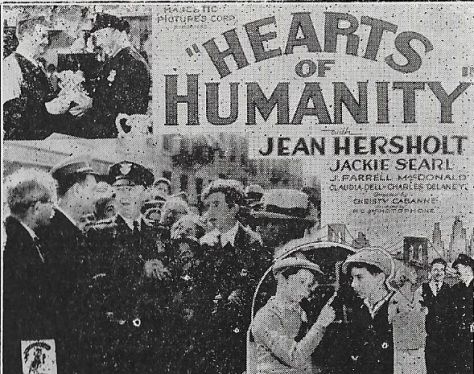
Hearts of Humanity (1932)

Hearts of Humanity 1

Hearts of Humanity 2

Director: Christy Cabanne

Cast: Jean Hersholt, Jackie Searl, J Farrell Macdonald, Claudia Dell, Charles Delaney, Lucille LaVerne, Richard Vallace, George Humbert, Betty Jane Graham

56 min

Plot

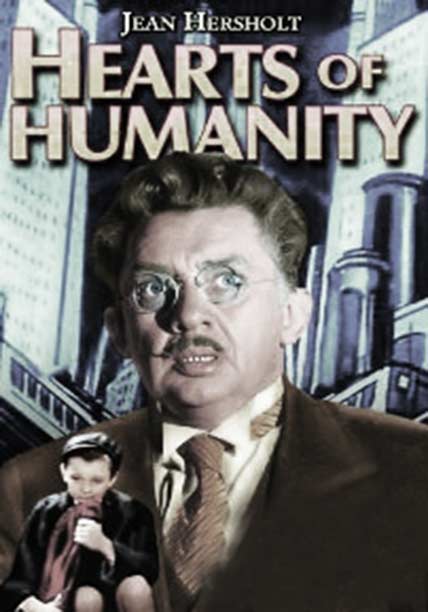
Irish policeman Tom O’Hara is killed by a thief in Sol Bloom’s antique store, but before he dies, he asks widower Sol to take care of his son Shandy, who will be arriving soon from Europe.

Sol’s own son Joey is streetwise and uncontrollable, although Sol has reared him lovingly. Sol adopts Shandy and treats him like his own son, and Shandy reciprocates with love and helpfulness. Shandy looks after Joey, who is continually getting into trouble.

Hearts of Humanity 3

When Joey steals a dollar from his father’s cash register, Shandy pawns the harp his mother gave him to replace the money so Joey will not get into trouble. When Joey breaks a neighbor’s window, Shandy offers to pay the owner ten dollars so he will not tell Sol, however he is unable to get his harp back because it has been sold.

Desperate, Shandy asks the new owner to lend it to him, and then steals it when the owner refuses. He wins a ten dollar prize performing in an amateur night contest, but is so guilt-ridden about having stolen the harp that he wanders aimlessly in the rain. Shandy takes ill and is brought home by a policeman. Joey reforms and prays for Shandy’s recovery. Joey’s improvement bolsters Shandy, who recovers, and the harp’s owner returns the harp to Shandy.

Hearts of Humanity 4

Cast (in credits order)

Jean Hersholt Jean Hersholt
Jackie Searl Jackie Searl
Shandy O’Hara
J. Farrell MacDonald J. Farrell MacDonald
Tom O’Hara
Claudia Dell Claudia Dell
Ruth Sneider
Charles Delaney Charles Delaney
Tom Varney
Lucille La Verne Lucille La Verne
Mrs. Sneider
Richard Wallace Richard Wallace
Joey Bloom (as Dick Wallace)
George Humbert George Humbert
Tony
Betty Jane Graham Betty Jane Graham
Hilda
John Vosper John Vosper
Dave Haller (as John Vosburgh)
Tom McGuire Tom McGuire
Mr. Wells
Rest of cast listed alphabetically:
Suzanne Wood Suzanne Wood
(uncredited)

Film Collectors Corner

Watch Hearts of Humanity Now – Instant Video on You Tube


Blu Ray

Not released on Blu Ray 


DVD

All Quiet on the Western Front (1929)


Pre Code Logo 1

Pre Code Hollywood Season: FD Cinematheque

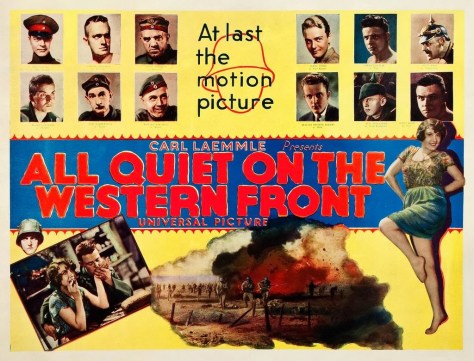
All Quiet on the Western Front (1929)
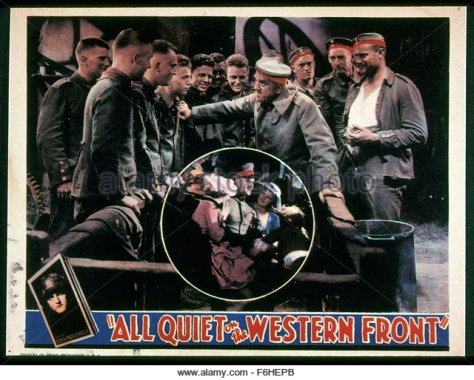
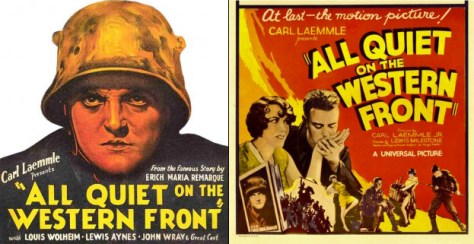
All Quiet on the Western Front 9

All Quiet on the Western Front 10

All Quiet on the Western Front 6

Director: Lewis Milestone

Cast: Lew Ayres, Louis Wolheim, John Wray, Arnold Lucy, Ben Alexander, Scott Kolk, Owen Davis Jr, Walter Rogers, William Bakewell, Russell Gleason, Richard Alexander, Harold Goodwin, Slim Summerville, G Pat Collins, Beryl Mercer, Edmund Breese, Zasu Pitts ( silent version only ), Raymond Griffith, Joan Marsh, Fred Zinnemann, Dorothy Vernon, Wolfgang Staudte, Robert Parrish, Yola D’Avril

136 min
All Quiet on the Western Front 4

All Quiet on the Western Front (GermanIm Westen nichts Neueslit. ‘In the West Nothing New’) is a novel by Erich Maria Remarque, a German veteran of World War I. The book describes the German soldiers’ extreme physical and mental stress during the war, and the detachment from civilian life felt by many of these soldiers upon returning home from the front.

The novel was first published in November and December 1928 in the German newspaper Vossische Zeitung and in book form in late January 1929. The book and its sequel, The Road Back (1930), were among the books banned and burned in Nazi GermanyAll Quiet on the Western Front sold 2.5 million copies in 22 languages in its first 18 months in print.[1]

In 1930, the book was adapted as an Academy-Award-winning film of the same name, directed by Lewis Milestone. It was adapted again in 1979 by Delbert Mann, this time as a television film starring Richard Thomas and Ernest Borgnine.
All Quiet on the Western Front 12

Title and translation

All Quiet on the Western Front 23

The English translation by Arthur Wesley Wheen gives the title as All Quiet on the Western Front. The literal translation of “Im Westen nichts Neues” is “In the West Nothing New,” with “West” being the Western Front; the phrase refers to the content of an official communiqué at the end of the novel.

Brian Murdoch’s 1993 translation would render the phrase as “there was nothing new to report on the Western Front” within the narrative. Explaining his retention of the original book-title, he says:

Although it does not match the German exactly, Wheen’s title has justly become part of the English language and is retained here with gratitude.

The phrase “all quiet on the Western Front” has become a colloquial expression meaning stagnation, or lack of visible change, in any context.[citation needed]
All Quiet on the Western Front 13

Plot summary

The book tells the story of Paul Bäumer, a German soldier who—urged on by his school teacher—joins the German army shortly after the start of World War I. His class was “scattered over the platoons amongst Frisian fishermen, peasants, and labourers.” Bäumer arrives at the Western Front with his friends and schoolmates (Leer, Müller, Kropp and a number of other characters). There they meet Stanislaus Katczinsky, an older soldier, nicknamed Kat, who becomes Paul’s mentor. While fighting at the front, Bäumer and his comrades have to engage in frequent battles and endure the treacherous and filthy conditions of trench warfare.
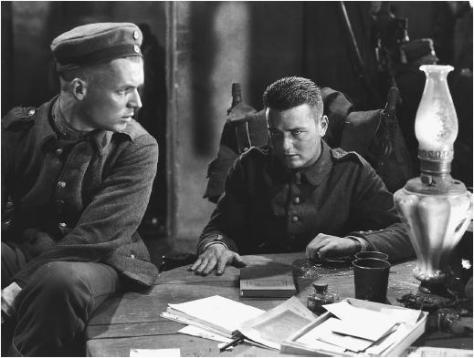
All Quiet on the Western Front 14

At the very beginning of the book, Erich Maria Remarque says “This book is to be neither an accusation nor a confession, and least of all an adventure, for death is not an adventure to those who stand face to face with it. It will try simply to tell of a generation of men who, even though they may have escaped (its) shells, were destroyed by the war.”[2] The book does not focus on heroic stories of bravery, but rather gives a view of the conditions in which the soldiers find themselves. The monotony between battles, the constant threat of artillery fire and bombardments, the struggle to find food, the lack of training of young recruits (meaning lower chances of survival), and the overarching role of random chance in the lives and deaths of the soldiers are described in detail.
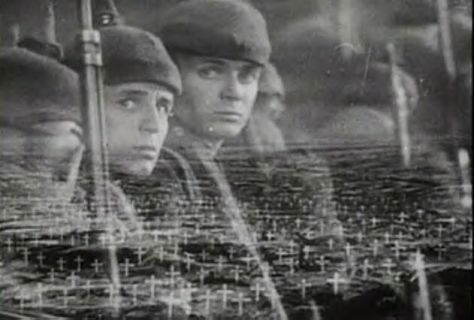
All Quiet on the Western Front 15

The battles fought here have no names and seem to have little overall significance, except for the impending possibility of injury or death for Bäumer and his comrades. Only pitifully small pieces of land are gained, about the size of a football field, which are often lost again later. Remarque often refers to the living soldiers as old and dead, emotionally drained and shaken. “We are not youth any longer. We don’t want to take the world by storm. We are fleeing from ourselves, from our life. We were eighteen and had begun to love life and the world; and we had to shoot it to pieces.”

Paul’s visit on leave to his home highlights the cost of the war on his psyche. The town has not changed since he went off to war; however, he finds that he does “not belong here anymore, it is a foreign world.” He feels disconnected from most of the townspeople. His father asks him “stupid and distressing” questions about his war experiences, not understanding “that a man cannot talk of such things.” An old schoolmaster lectures him about strategy and advancing to Paris while insisting that Paul and his friends know only their “own little sector” of the war but nothing of the big picture.
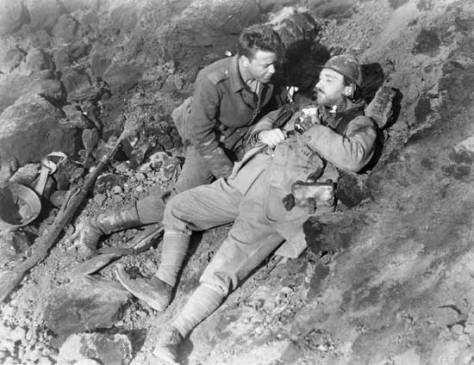
All Quiet on the Western Front 16

Indeed, the only person he remains connected to is his dying mother, with whom he shares a tender, yet restrained relationship. The night before he is to return from leave, he stays up with her, exchanging small expressions of love and concern for each other. He thinks to himself, “Ah! Mother, Mother! How can it be that I must part from you? Here I sit and there you are lying; we have so much to say, and we shall never say it.” In the end, he concludes that he “ought never to have come [home] on leave.”

Paul feels glad to be reunited with his comrades. Soon after, he volunteers to go on a patrol and kills a man for the first time in hand-to-hand combat. He watches the man die, in pain for hours. He feels remorse and asks forgiveness from the man’s corpse. He is devastated and later confesses to Kat and Albert, who try to comfort him and reassure him that it is only part of the war.

They are then sent on what Paul calls a “good job.” They must guard a supply depot in a village that was evacuated due to being shelled too heavily. During this time, the men are able to adequately feed themselves, unlike the near-starvation conditions in the German trenches. In addition, the men enjoy themselves while living off the spoils from the village and officers’ luxuries from the supply depot (such as fine cigars). While evacuating the villagers (enemy civilians), Paul and Albert are taken by surprise by artillery fired at the civilian convoy and wounded by a shell.
All Quiet on the Western Front 18

On the train back home, Albert takes a turn for the worse and cannot complete the journey, instead being sent off the train to recuperate in a Catholic hospital. Paul uses a combination of bartering and manipulation to stay by Albert’s side. Albert eventually has his leg amputated, while Paul is deemed fit for service and returned to the front.

By now, the war is nearing its end and the German Army is retreating. In despair, Paul watches as his friends fall one by one. It is the death of Kat that eventually makes Paul careless about living. In the final chapter, he comments that peace is coming soon, but he does not see the future as bright and shining with hope. Paul feels that he has no aims or goals left in life and that their generation will be different and misunderstood. When he dies at the end of the novel, the situation report from the frontline states, “All is Quiet on the Western Front.”
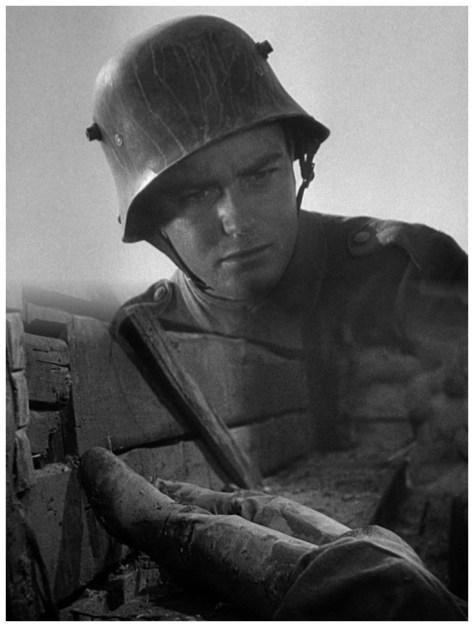
All Quiet on the Western Front 19

Themes

One of the major themes of the novel is the difficulty of soldiers to revert to civilian life after having experienced extreme combat situations. Remarque comments in the preface that “[This book] will try simply to tell of a generation of men who, even though they may have escaped its shells, were destroyed by the war.”[2]

This internal destruction can be found as early as the first chapter as Paul comments that, although all the boys are young, their youth has left them. In addition, the massive loss of life and negligible gains from the fighting are constantly emphasized. Soldiers’ lives are thrown away by their commanding officers who are stationed comfortably away from the front, ignorant of the daily terrors of the front line.
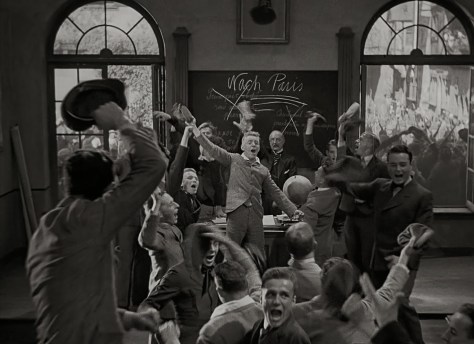
All Quiet on the Western Front 20

Main characters

Cover of first English language edition. The design is based upon a German war bonds poster by Fritz Erler.

Paul Bäumer
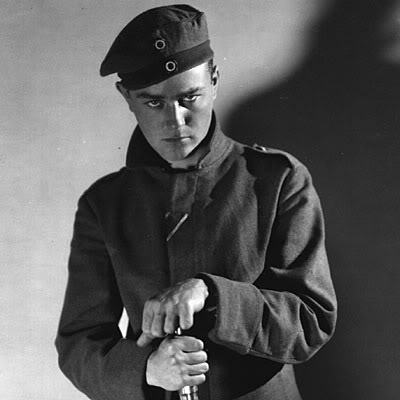
All Quiet on the Western Front 25

Paul Bäumer is the main character and narrator. At 19 years of age, Paul enlists in the German Army and is deployed to the Western Front where he experiences the severe psychological and physical effects of the war. Before the war, Paul was a creative, sensitive and passionate person, writing poems and having a clear love for his family. But as the war changed his attitude and personality, poems and other aspects of his past life become something Paul was no longer linked to, since the horrors of war trained him to disconnect himself from his feelings. He feels he can’t tell anyone about his experiences and feels like an outsider where his family is concerned.

By the end of the book, Paul realises that he no longer knows what to do with himself and decides that he has nothing more to lose. The war appears to have snuffed out his hopes and dreams, which he feels he can never regain. After years of fighting in the war, Paul is finally killed in October 1918, on an extraordinarily quiet, peaceful day. The army report that day contains only one phrase: “All quiet on the Western Front.” As Paul dies, his face is calm, “as though almost glad the end had come.”

Albert Kropp
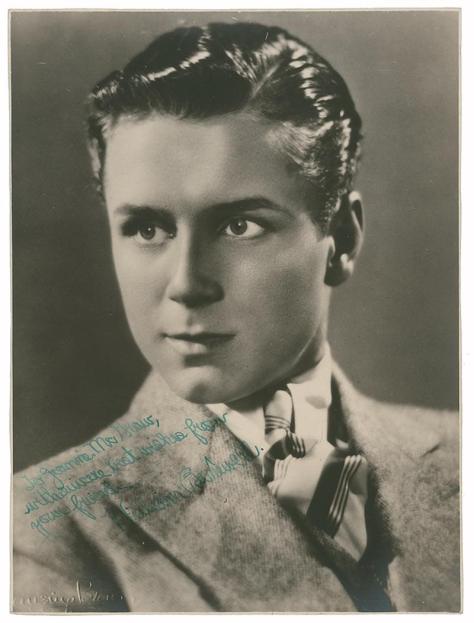
All Quiet on the Western Front 26

Kropp was in Paul’s class at school and is described as the clearest thinker of the group as well as the smallest. Kropp is wounded towards the end of the novel and undergoes a leg amputation. Both he and Bäumer end up spending time in a Catholic hospital together, Bäumer suffering from shrapnel wounds to the leg and arm. Though Kropp initially plans to commit suicide if he requires an amputation, the book suggests he postponed suicide because of the strength of military camaraderie. Kropp and Bäumer part ways when Bäumer is recalled to his regiment after recovering. Paul comments that saying farewell was “very hard, but it is something a soldier learns to deal with.”[3]

Haie Westhus
All Quiet on the Western Front 27

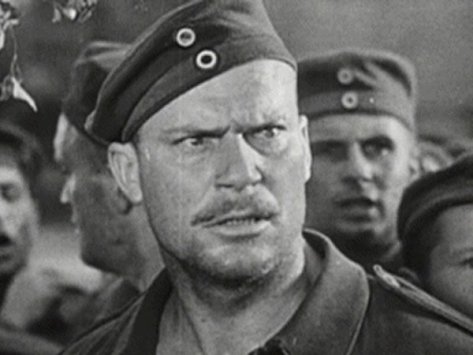
Haie is described as being tall and strong, and a peat-digger by profession. Overall, his size and behavior make him seem older than Paul, yet he is the same age as Paul and his school-friends (roughly 19 at the start of the book). Haie, in addition, has a good sense of humor. During combat, he is injured in his back, fatally (Chapter 6)—the resulting wound is large enough for Paul to see Haie’s breathing lung when Himmelstoß (Himmelstoss) carries him to safety.

Fredrich Müller
All Quiet on the Western Front 28

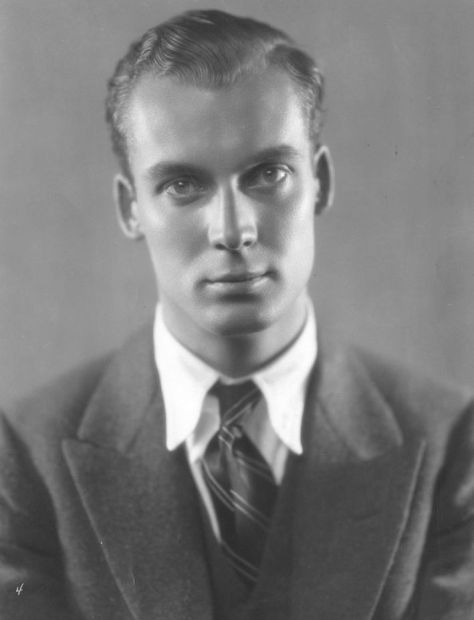
Müller is about 18 and a half years of age, one of Bäumer’s classmates, when he also joins the German army as a volunteer to go to the war. Carrying his old school books with him to the battlefield, he constantly reminds himself of the importance of learning and education. Even while under enemy fire, he “mutters propositions in physics”. He became interested in Kemmerich’s boots and inherits them when Kemmerich dies early in the novel. He is killed later in the book after being shot point-blank in the stomach with a “light pistol” (flare gun). As he was dying “quite conscious and in terrible pain”, he gave his boots which he inherited from Kemmerich to Paul.

Stanislaus “Kat” Katczinsky
All Quiet on the Western Front 29

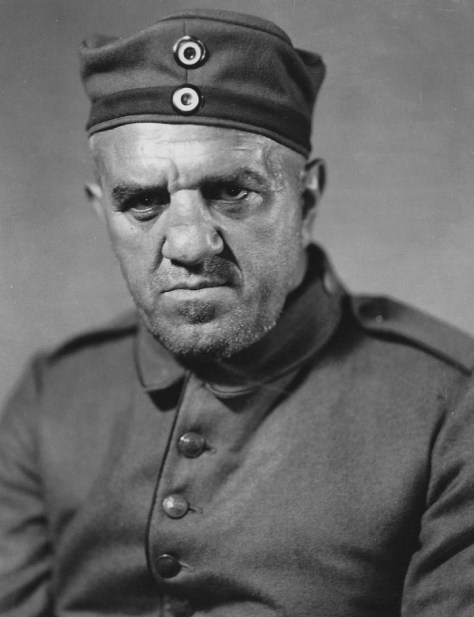
Kat has the most positive influence on Paul and his comrades on the battlefield. Katczinsky was a cobbler (shoemaker) in civilian life; he is older than Paul Bäumer and his comrades, about 40 years old, and serves as their leadership figure. He also represents a literary model highlighting the differences between the younger and older soldiers. While the older men have already had a life of professional and personal experience before the war, Bäumer and the men of his age have had little life experience or time for personal growth.

Kat is also well known for his ability to scavenge nearly any item needed, especially food. At one point he secures four boxes of lobster. Bäumer describes Kat as possessing a sixth sense. One night, Bäumer along with a group of other soldiers are holed up in a factory with neither rations nor comfortable bedding. Katczinsky leaves for a short while, returning with straw to put over the bare wires of the beds. Later, to feed the hungry men, Kat brings bread, a bag of horse flesh, a lump of fat, a pinch of salt and a pan in which to cook the food.

Kat is hit by shrapnel at the end of the story, leaving him with a smashed shin. Paul carries him back to camp on his back, only to discover upon their arrival that a stray splinter had hit Kat in the back of the head and killed him on the way. He is thus the last of Paul’s close friends to die in battle. It is Kat’s death that eventually makes Bäumer careless whether he survives the war or not, but that he can face the rest of his life without fear. “Let the months and the years come, they can take nothing from me, they can take nothing more. I am so alone, and so without hope that I can confront them without fear.”

Tjaden
All Quiet on the Western Front 30

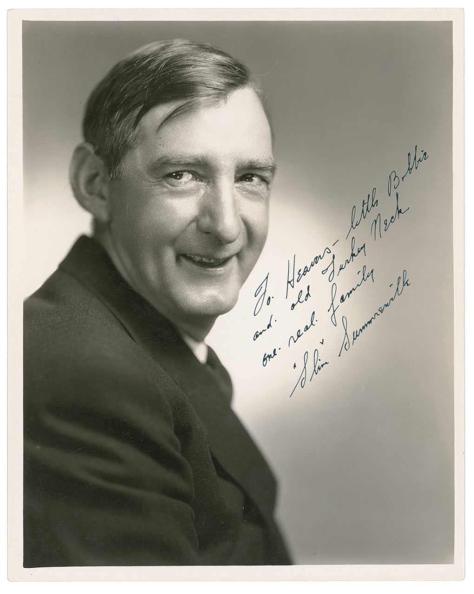
One of Bäumer’s non-schoolmate friends. Before the war, Tjaden was a locksmith. A big eater with a grudge against the former postman-turned corporal Himmelstoß (thanks to his strict ‘disciplinary actions’), he manages to forgive Himmelstoß later in the book. Throughout the book, Paul frequently remarks on how much of an eater he is, yet somehow manages to stay as “thin as a rake”. The fate of Tjaden is unknown but he appears in the sequel, The Road Back.

Minor characters

Kantorek
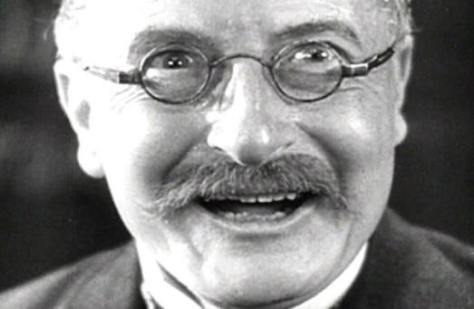
All Quiet on the Western Front 31

Kantorek was the schoolmaster of Paul and his friends, including Kropp, Leer, Müller, and Behm. Behaving “in a way that cost [him] nothing,” Kantorek is a strong supporter of the war and encourages Bäumer and other students in his class to join the war effort. Among twenty enlistees was Joseph Behm, the first of the class to die in battle. In an example of tragic irony, Behm was the only one who did not want to enter the war.

Kantorek is a hypocrite, urging the young men he teaches to fight in the name of patriotism, while not voluntarily enlisting himself. In a twist of fate, Kantorek is later called up as a soldier as well. He very reluctantly joins the ranks of his former students, only to be drilled and taunted by Mittelstädt, one of the students he had earlier persuaded to enlist.

Peter Leer
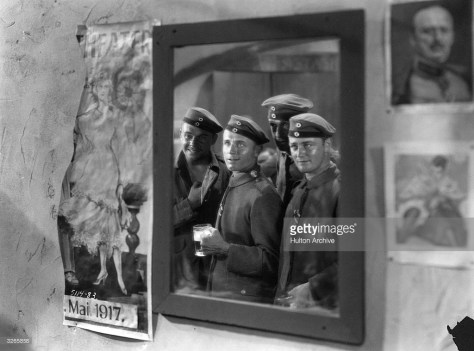
All Quiet on the Western Front 32

Leer is an intelligent soldier in Bäumer’s company, and one of his classmates. He is very popular with women; when he and his comrades meet three French women, he is the first to seduce one of them. Bäumer describes Leer’s ability to attract women by saying “Leer is an old hand at the game”. In chapter 11, Leer is hit by a shell fragment, which also hits Bertinck. The shrapnel tears open Leer’s hip, causing him to bleed to death quickly. His death causes Paul to ask himself, “What use is it to him now that he was such a good mathematician in school?”[4]

Bertinck
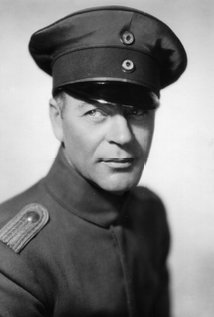
All Quiet on the Western Front 33

Lieutenant Bertinck is the leader of Bäumer’s company. His men have a great respect for him, and Bertinck has great respect for his men. He permits them to eat the rations of the men that had been killed in action, standing up to the chef Ginger who would only allow them their allotted share. Bertinck is genuinely despondent when he learns that few of his men had survived an engagement.

When he and the other characters are trapped in a trench under heavy attack, Bertinck, who has been injured in the firefight, spots a flamethrower team advancing on them. He gets out of cover and takes aim on the flamethrower but misses, and gets hit by enemy fire. With his next shot he kills the flamethrower, and immediately afterwards an enemy shell explodes on his position blowing off his chin. The same explosion also fatally wounds Leer.

Himmelstoss
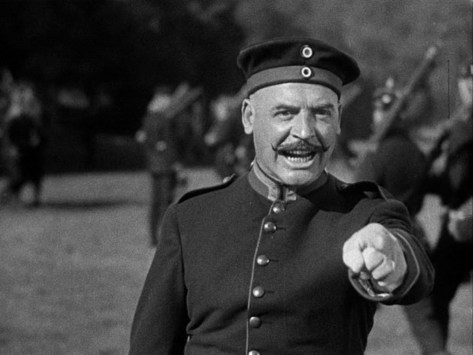
All Quiet on the Western Front 34

Corporal Himmelstoss (spelled Himmelstoß in some editions) was a postman before enlisting in the war. He is a power-hungry corporal with special contempt for Paul and his friends, taking sadistic pleasure in punishing the minor infractions of his trainees during their basic training in preparation for their deployment.

Paul later figures that the training taught by Himmelstoss made them “hard, suspicious, pitiless, and tough” but most importantly it taught them comradeship. However, Bäumer and his comrades have a chance to get back at Himmelstoss because of his punishments, mercilessly whipping him on the night before they board trains to go to the front.

Himmelstoss later joins them at the front, revealing himself as a coward who shirks his duties for fear of getting hurt or killed, and pretends to be wounded because of a scratch on his face. Paul Bäumer beats him because of it and when a lieutenant comes along looking for men for a trench charge, Himmelstoss joins and leads the charge. He carries Haie Westhus’s body to Bäumer after he is fatally wounded. Matured and repentant through his experiences Himmelstoß later asks for forgiveness from his previous charges. As he becomes the new staff cook, to prove his friendship he secures two pounds of sugar for Bäumer and half a pound of butter for Tjaden.

Detering
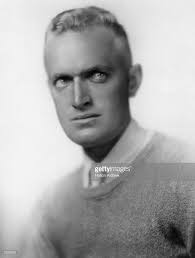
All Quiet on the Western Front 35

Detering is a farmer who constantly longs to return to his wife and farm. He is also fond of horses and is angered when he sees them used in combat. He says, “It is of the vilest baseness to use horses in the war,” when the group hears several wounded horses writhe and scream for a long time before dying during a bombardment. He tries to shoot them to put them out of misery, but is stopped by Kat to keep their current position hidden. He is driven to desert when he sees a cherry tree in blossom, which reminds him of home too much and inspires him to leave. He is found by military police and court-martialed, and is never heard from again.

Josef Hamacher
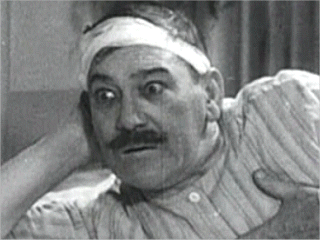
All Quiet on the Western Front 36

Hamacher is a patient at the Catholic hospital where Paul and Albert Kropp are temporarily stationed. He has an intimate knowledge of the workings of the hospital. He also has a “Special Permit,” certifying him as sporadically not responsible for his actions due to a head wound, though he is clearly quite sane and exploiting his permit so he can stay in the hospital and away from the war as long as possible.

Franz Kemmerich

All Quiet on the Western Front 37

A young boy of only 19 years. Franz Kemmerich had enlisted in the army for World War I along with his best friend and classmate, Bäumer. Kemmerich is shot in the leg early in the story; his injured leg has to be amputated, and he dies shortly after. In anticipation of Kemmerich’s imminent death, Müller was eager to get his boots. While in the hospital, someone steals Kemmerich’s watch that he intended to give to his mother, causing him great distress and prompting him to ask about his watch every time his friends visit him in the hospital. Paul later finds the watch and hands it over to Kemmerich’s mother, only to lie and say Franz died instantly and painlessly when questioned.

Joseph Behm
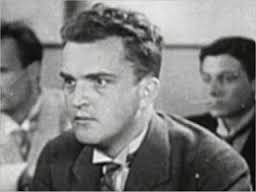
All Quiet on the Western Front 38

A student in Paul’s class who is described as youthful and overweight. Behm was the only student that was not quickly influenced by Kantorek’s patriotism to join the war, but eventually, due to pressure from friends and Kantorek, he joins the war. He is the first of Paul’s friends to die. He is blinded in no man’s land and believed to be dead by his friends. The next day, when he is seen walking blindly around no-man’s-land, it is discovered that he was only unconscious. However, he is killed before he can be rescued.

Publication and reception
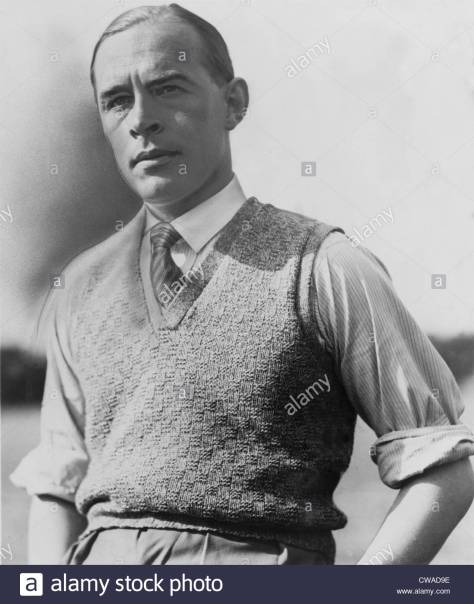
All Quiet on the Western Front 17

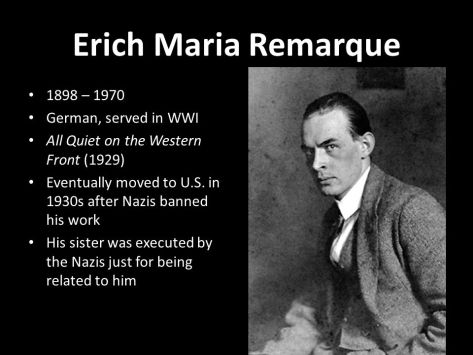
Erich Maria Remarque

From November 10 to December 9, 1928, All Quiet on the Western Front was published in serial form in Vossische Zeitung magazine. It was released in book form the following year to smashing success, selling one and a half million copies that same year. Although publishers had worried that interest in World War I had waned more than 10 years after the armistice, Remarque’s realistic depiction of trench warfare from the perspective of young soldiers struck a chord with the war’s survivors—soldiers and civilians alike—and provoked strong reactions, both positive and negative, around the world.

With All Quiet on the Western Front, Remarque emerged as an eloquent spokesman for a generation that had been, in his own words, “destroyed by war, even though it might have escaped its shells.” Remarque’s harshest critics, in turn, were his countrymen, many of whom felt the book denigrated the German war effort, and that Remarque had exaggerated the horrors of war to further his pacifist agenda. The strongest voices against Remarque came from the emerging National Socialist Party and its ideological allies. In 1933, when the Nazis rose to power, All Quiet on the Western Front became one of the first degenerate books to be publicly burnt;[5] in 1930 screenings of the Academy Award-winning film based on the book were met with Nazi-organized protests and mob attacks on both movie theatres and audience members.[6]
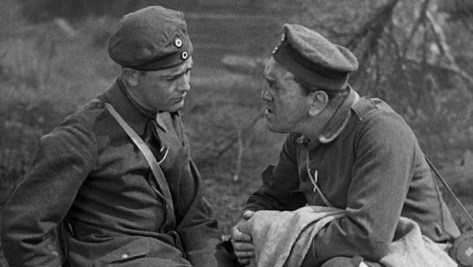
All Quiet on the Western Front 24

However, objections to Remarque’s portrayal of the German army personnel during World War I were not limited to the Nazis. Dr. Karl Kroner (de) objected to Remarque’s depiction of the medical personnel as being inattentive, uncaring, or absent from frontline action. Dr. Kroner was specifically worried that the book would perpetuate German stereotypes abroad that had subsided since the First World War. He offered the following clarification: “People abroad will draw the following conclusions: if German doctors deal with their own fellow countrymen in this manner, what acts of inhumanity will they not perpetuate against helpless prisoners delivered up into their hands or against the populations of occupied territory?” [7][8]

A fellow patient of Remarque’s in the military hospital in Duisburg objected to the negative depictions of the nuns and patients, and of the general portrayal of soldiers: “There were soldiers to whom the protection of homeland, protection of house and homestead, protection of family were the highest objective, and to whom this will to protect their homeland gave the strength to endure any extremities.”[8]
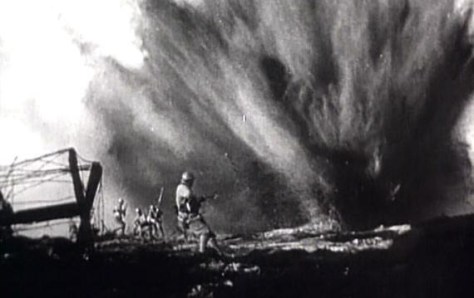
All Quiet on the Western Front 39

These criticisms suggest that perhaps experiences of the war and the personal reactions of individual soldiers to their experiences may be more diverse than Remarque portrays them; however, it is beyond question that Remarque gives voice to a side of the war and its experience that was overlooked or suppressed at the time. This perspective is crucial to understanding the true effects of World War I. The evidence can be seen in the lingering depression that Remarque and many of his friends and acquaintances were suffering a decade later.[7]

In contrast, All Quiet on the Western Front was trumpeted by pacifists as an anti-war book.[8] Remarque makes a point in the opening statement that the novel does not advocate any political position, but is merely an attempt to describe the experiences of the soldier.[9]
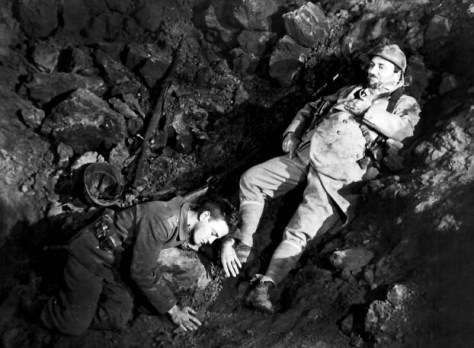
LEAD Technologies Inc. V1.01

The main artistic criticism was that it was a mediocre attempt to cash in on public sentiment.[citation needed] The enormous popularity the work received was a point of contention for some literary critics, who scoffed at the fact that such a simple work could be so earth-shattering.[citation needed]

Much of this literary criticism came from Salomo Friedlaender, who wrote a book Hat Erich Maria Remarque wirklich gelebt? “Did Erich Maria Remarque really live?” (under pen name Mynona), which was, it its turn, criticized in: Hat Mynona wirklich gelebt? “Did Mynona really live?” by Kurt Tucholsky.[10]

Friedlaender’s criticism was mainly personal in nature—he attacked Remarque as being ego-centric and greedy. Remarque publicly stated that he wrote All Quiet on the Western Front for personal reasons, not for profit, as Friedlaender had claimed.[7][8] Max Joseph Wolff (de) wrote a parody titled Vor Troja nichts Neues (Compared to Troy, Nothing New) under the pseudonym Emil Marius Requark.[11]
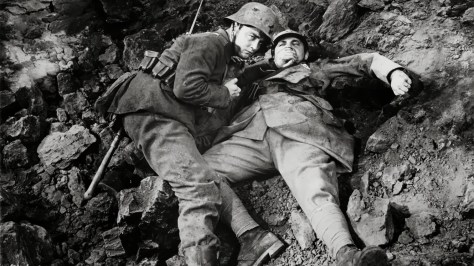
All Quiet on the Western Front 42

Adaptations

Film

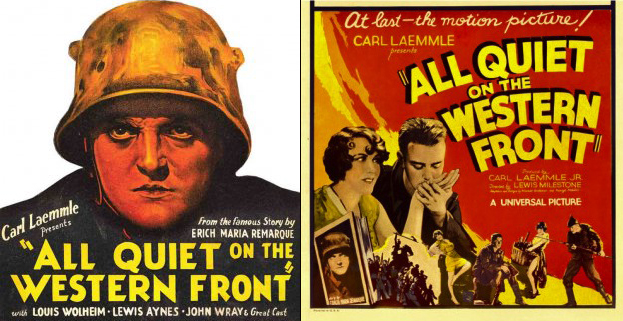
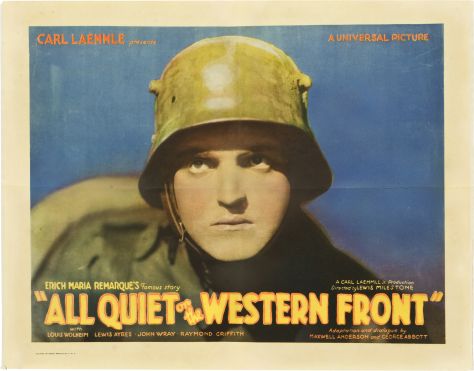
Poster for the movie All Quiet on the Western Front (1930), featuring star Lew Ayres

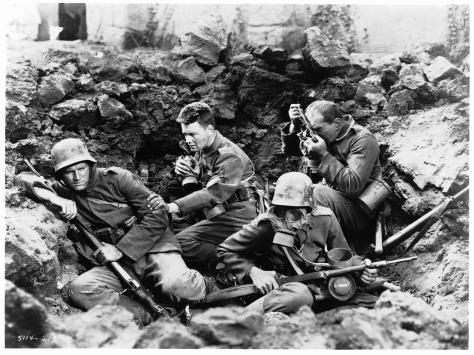
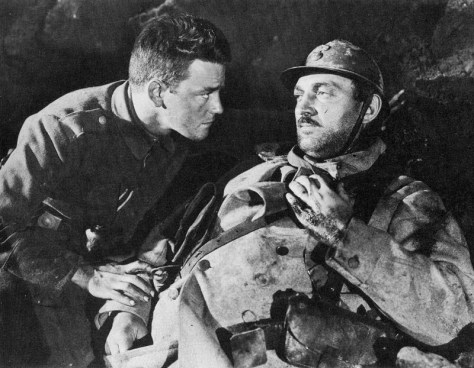
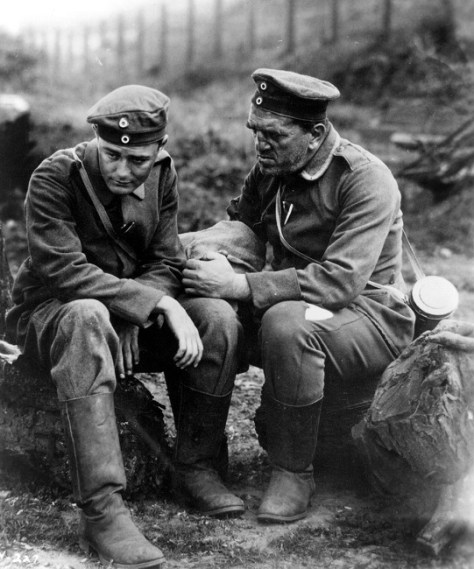
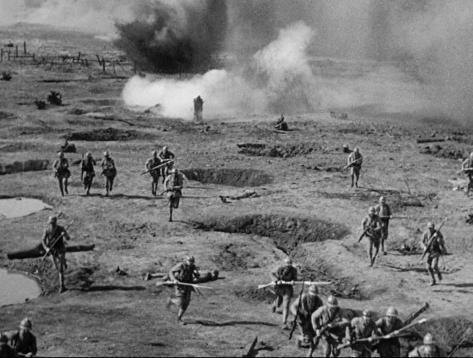
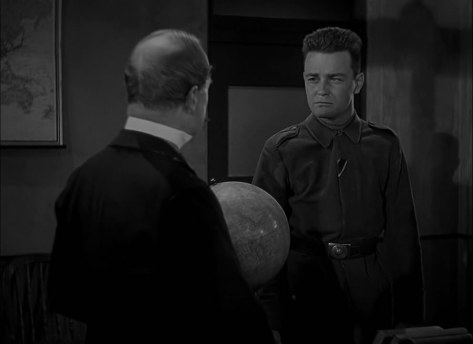
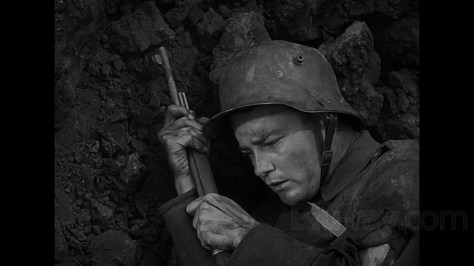
In 1930, an American film of the novel was made, directed by Lewis Milestone; with a screenplay by Maxwell AndersonGeorge AbbottDel AndrewsC. Gardner Sullivan; and with uncredited work by Walter Anthony and Milestone. It stars Louis WolheimLew AyresJohn WrayArnold Lucy, and Ben Alexander.

The film won the Academy Award for Best Picture in 1930 for its producer Carl Laemmle Jr., the Academy Award for Directing for Lewis Milestone, and the Academy Award for Outstanding Production. It was the first all-talking non-musical film to win the Best Picture Oscar. It also received two further nominations: Best Cinematography, for Arthur Edeson, and Best Writing Achievement for Abbott, Anderson, and Andrews.[12]
All Quiet on the Western Front 45

In 2016, it was confirmed that Roger Donaldson will direct a remake of All Quiet on the Western Front starring Travis Fimmel as Katczinsky.[13]

TV film

In 1979, the film was remade for CBS television by Delbert Mann, starring Richard Thomas of The Waltons as Paul Bäumer and Ernest Borgnine as Kat. The movie was filmed in Czechoslovakia.[14]

Music

Elton John‘s album Jump Up! (1982) features the song, “All Quiet on the Western Front” (written by Elton and Bernie Taupin). The song is a sorrowful rendition of the novel’s story (“It’s gone all quiet on the Western Front / Male Angels sigh / ghosts in a flooded trench / As Germany dies”).

Bob Dylan, during his Nobel Laureate lecture, cited this book as one that had a profound effect on this songwriting.
All Quiet on the Western Front 46

Radio

On November 9, 2008, a radio adaptation of the novel was broadcast on BBC Radio 3, starring Robert Lonsdale as Paul Bäumer and Shannon Graney as Katczinsky. Its screenplay was written by Dave Sheasby, and the show was directed by David Hunter.[15]

Audiobook

In 2010, Hachette Audio UK published an audiobook adaptation of the novel, narrated by Tom Lawrence. It was well received by critics[16] and listeners.
All Quiet on the Western Front 47

See also

References

  1. Jump up^ Eksteins, Modris (April 1980). “All Quiet on the Western Front and the Fate of a War”. Journal of Contemporary HistorySAGE Publications15 (2): 353. doi:10.1177/002200948001500207.
  2. Jump up to:a b Erich Maria Remarque’s All Quiet on the Western Front. 2009. p. 48.
  3. Jump up^ Chapter Ten of All Quiet on the Western Front
  4. Jump up^ All Quiet on the Western Front (London: Putnam & Company Ltd, 1970 reprint), page 240.
  5. Jump up^ “Nov 10, 1928: Remarque publishes All Quiet on the Western Front”History.com. Retrieved June 3, 2013.
  6. Jump up^ Sauer, Patrick (June 16, 2015). “The Most Loved and Hated Novel About World War I”Smithsonian.com. Smithsonian Institution. Retrieved June 21, 2015.
  7. Jump up to:a b c Patrick Clardy. “All Quiet on the Western Front: Reception”Yale Modernism Lab. Retrieved June 3, 2013.
  8. Jump up to:a b c d Barker, Christine R.; Last, Rex William (1979). Erich Maria Remarque. New York: Barnes & Noble Books.
  9. Jump up^ Wagner, Hans (1991). Understanding Erich Maria Remarque. Columbia, SC: University of South Carolina Press.
  10. Jump up^ Kurt Tucholsky (under pen name Ignaz Wrobel), Hat Mynona wirklich gelebt?Die Weltbühne, December 31, 1929, No. 1, p. 15
  11. Jump up^ Catalogue entry for Vor Troja nichts Neues in the German National Library, retrieved January 29, 2014
  12. Jump up^ “The 3rd Academy Awards – 1931”Oscars. Academy of Motion Picture Arts and Sciences. Retrieved 1 September 2016.
  13. Jump up^ Kay, Jeremy. “‘Warcraft’ star Travis Fimmel to lead ‘All Quiet On The Western Front'”ScreenDaily. MBI Ltd. Retrieved 1 September 2016.
  14. Jump up^ “All Quiet on the Western Front (1979)”IMDb. IMDb.com, Inc. Retrieved 1 September 2016.
  15. Jump up^ “BBC Radio 3 – Drama on 3, All Quiet on the Western Front”. Bbc.co.uk. November 9, 2008. Retrieved February 7, 2013.
  16. Jump up^ “All Quiet on the Western Front Audiobook Review – Audiobook Jungle – Audiobook Reviews In All Genres”audiobookjungle.com. Retrieved April 10, 2016.
All Quiet on the Western Front 48

All Quiet on the Western Front 5

Film Collectors Corner

Watch All Quiet on the Western Front Now – Instant Video on Internet Archive

Blu Ray


DVD

Other Men’s Women (1931)


Pre Code Logo 1

Pre Code Hollywood Season: FD Cinematheque

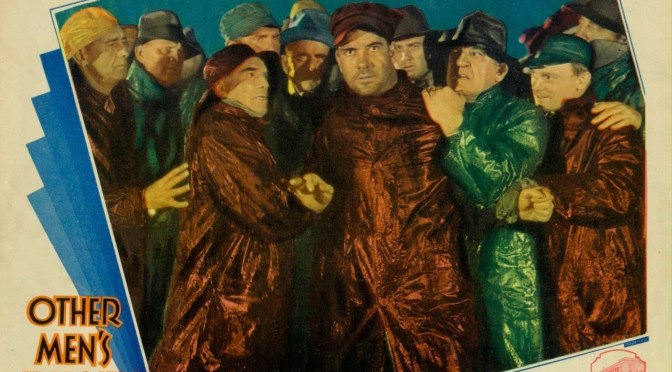
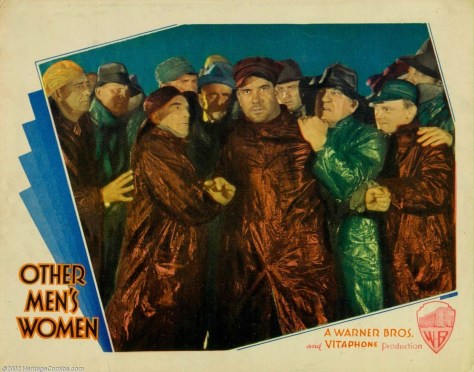
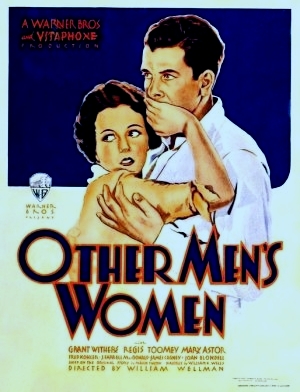
Other Men’s Women (1931)

Other Men's Women 3

Other Men's Women 4

Other Men's Women 1

Director: William A Wellman

Cast: Grant Withers, Mary Astor, Regis Toomey, James Cagney, Fred Kohler, J Farrell Macdonald, Joan Blondell, Lillian Worth, Walter Long, Pat Harmon, Lucille Ward

71 min

Other Men's Women 5

Other Men’s Women is a 1931 American pre-Code drama film directed by William A. Wellman and written by Maude Fulton. The film stars Regis Toomey, Grant Withers, and Mary Astor and features Joan Blondell. It was produced and distributed by Warner Bros.

It was first previewed, released and reviewed in 1930 under the title The Steel Highway. By the time of the film’s release in New York City the title had been changed to Other Men’s Women.[1]

Plot

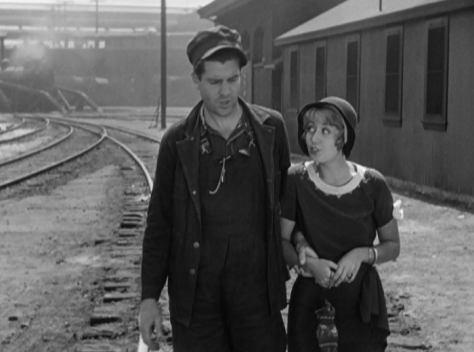
In 1929, Bill White (Grant Withers), is a railroad engineer and boozing womanizer who is evicted from his boarding house for excessive drinking and late rental payments.

Needing a new place to live, he accepts the invitation from his longtime friend and fellow engineer, Jack Kulper (Regis Toomey), to move into his home, where he resides happily with his wife Lily (Mary Astor). This new living arrangement brings changes to relationships as the months pass.

Other Men's Women 6

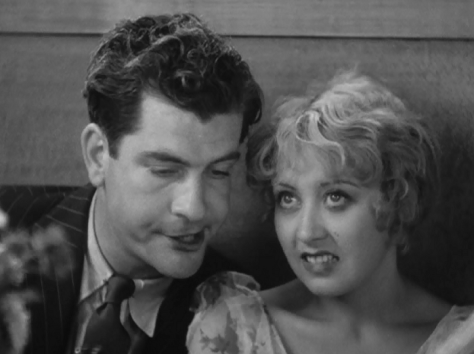
Bill and Lily’s own friendship, which at first is playful and innocent, evolves into a passionate love between them. Hesitant to hurt Jack, they try to keep their feelings secret, at least for a while; but Jack begins to notice differences in his wife’s demeanor and becomes suspicious when he finds that Bill has suddenly moved out of their house. Jack initially thinks Lily and his friend have had a quarrel, but he later confronts Bill inside the cab of the coal-fired

Bill and Lily’s own friendship, which at first is playful and innocent, evolves into a passionate love between them. Hesitant to hurt Jack, they try to keep their feelings secret, at least for a while; but Jack begins to notice differences in his wife’s demeanor and becomes suspicious when he finds that Bill has suddenly moved out of their house.

Other Men's Women 7

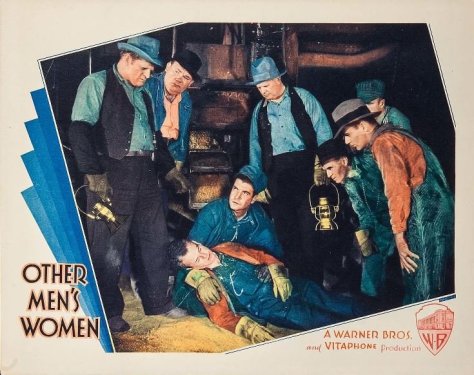
Jack initially thinks Lily and his friend have had a quarrel, but he later confronts Bill inside the cab of the coal-fired steam locomotive that the two men operate together at the nearby rail yard. There Bill finally admits to Jack that Lily and he have fallen in love. In the fistfight that ensues, Jack falls during the struggle, strikes his head, and is permanently blinded by the injury.

During his convalescence at home, Lily tries to rededicate herself to her marriage; however, Jack resents his dependency on his wife. Increasingly frustrated by his situation, he insists that Lily leave town for a few weeks to visit her parents, explaining that he needs emotional space and that he also wants her away from the dangers of expected floods due to rainstorms in the area.

Other Men's Women 8

Shortly after Lily’s departure, Jack learns from rail workers that Bill plans to drive a train of flatcars stacked with bags of cement onto a vital river bridge, the desperate hope being that the combined weight of the train and its load will bolster the bridge and prevent it from being swept away by the rising floodwaters. Stumbling that night through a heavy downpour and literally feeling his way to the rail line, sightless Jack manages to locate Bill and knock him unconscious before he begins what everyone deems a suicidal mission.

Jack then takes charge of the engine’s controls, but before moving onto the wavering bridge, he pushes Bill off the locomotive to safety. Once on the bridge, the entire train plummets into the river as the structure collapses, and Jack drowns in the raging river.

Other Men's Women 9

Months after the tragedy, Bill, still as an engineer, goes into the depot’s diner for some quick food before returning to his train. Nearby, Lily arrives on another train and enters the same restaurant carrying her luggage. The two see one another and engage in some awkward small talk before Lily remarks that she intends to remain in the community, fix up her house and yard, and plant a new spring garden.

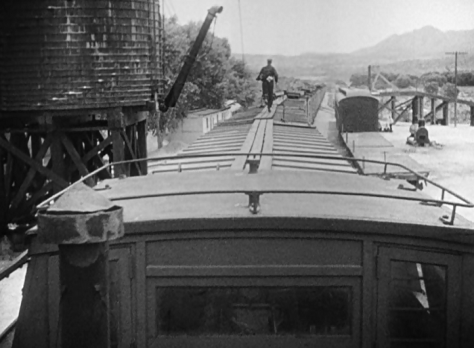
Then, with a warm smile, she invites Bill to drop by to help her with the work. Bill runs out of the diner to re-board his moving train. Lily stands in the restaurant’s doorway watching Bill climb to the top of a long line of freight cars and then running forward toward the engine. As he jumps from one car’s roof to the next he raises his arms skyward.

Then, with a warm smile, she invites Bill to drop by to help her with the work. Bill runs out of the diner to re-board his moving train. Lily stands in the restaurant’s doorway watching Bill climb to the top of a long line of freight cars and then running forward toward the engine. As he jumps from one car’s roof to the next he raises his arms skyward.

Other Men's Women 10

Cast

Other Men's Women 11

Cast notes

  • Other Men’s Women was James Cagney’s third film, although Cagney does not mention it in his autobiography, Cagney by Cagney. He and Joan Blondell went on to sign long-term contracts with Warners.[2]
  • Mary Astor dismissed the film as “a piece of cheese”, although praising Cagney and Blondell.[2]

Songs

  • “Leave A Little Smile” – sung by Grant Withers, J. Farrell MacDonald and Mary Astor (from the Warner Bros. musical Oh Sailor Behave)
  • “The Kiss Waltz” – played on the phonograph (from the Warner Bros. musical Dancing Sweeties)
  • “Tomorrow Is Another Day” – played at the restaurant/dance hall (from the Warner Bros. musical Big Boy)

Other Men's Women 12

Release and reception

According to Film Daily, the film’s original title was “The Steel Highway”, under which title it was reviewed by Motion Picture Herald, but by the time of its New York City premiere, the current title had been adopted.[1]

The name change was announced around December 1930.[3] According to an article in The New York Times published in 1936, film studio employees were routinely asked to submit the best possible name for each of the studio’s releases, and one employee had submitted “Other Men’s Women”, along with nine others, for every film, until it was finally chosen as the new name for The Steel Highway. The employees whose titles were chosen generally received $25 or $50 as a reward.

Other Men's Women 13

The employees whose titles were chosen generally received $25 or $50 as a reward.[4]

Variety called it “a good program picture,” but The New York Times described the film on its release as “an unimportant little drama of the railroad yards”.[2] Years later, in a review of a DVD of Wellman’s films, Dave Kehr wrote in the Times that “freed from the constraints of studio-bound early-sound technology, Wellman seems almost giddy with the possibilities of location shooting, moving his camera with abandon, staging dialogue scenes atop moving trains, constructing at least one live sound set … in the middle of a busy switchyard, where freight trains rumble past,” although he did comment that Wellman’s major flaw of “a simplistic, often inconsistent sense of character” was present in the film.[5]

In 1937, a remake of the film under the title “The Steel Highway” was announced, to be directed by Reeves Eason, but there is no indication that the film was made.[6]

Other Men's Women 14

Home media

Other Men’s Women was released on DVD by the Warner Archive in 2010.

References

Other Men's Women 16

Other Men's Women 17

Other Men's Women 18

Other Men's Women 19

Film Collectors Corner

Watch Other Men’s Women Now – Amazon Instant Video

Blu Ray

Not released on Blu Ray


DVD

Morals for Women (1931)


Pre Code Logo 1

Pre Code Hollywood Season: FD Cinematheque

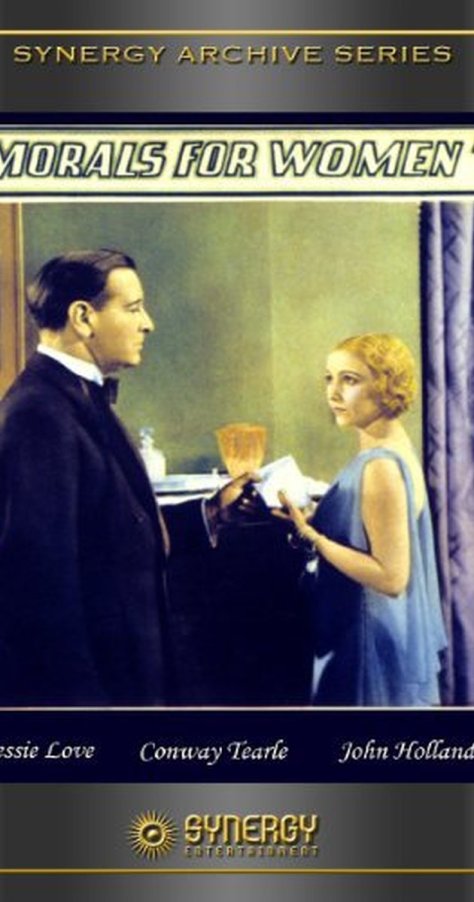
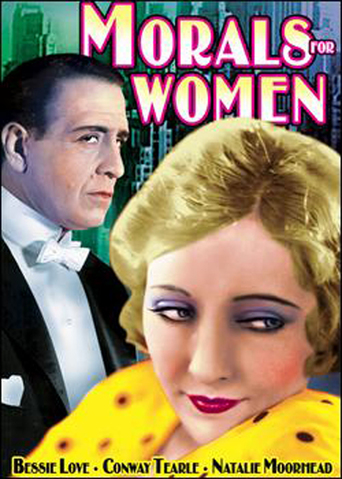
Morals for Women (1931)

Morals for Women 1

Morals for Women 2

Director: Mort Blumenstock

Cast: Bessie Love, Conway Tearle, John Holland, Natalie Moorhead, Emma Dunn, June Clyde, Edmund Breese, David Rollins, Lina Basquette, Virginia Lee Corbin, Otis Harlan

65 min

Morals for Women 5

Plot

Helen Hutson, the secretary and mistress of New York businessman Van Dyne, is initially upset when her childhood sweetheart, Paul Cooper, comes to her office to visit. However, she agrees to have dinner with him after he says he is leaving town that night and, feigning a headache, breaks a date with Van.

They go dancing, and Paul, whom Helen once told not to come back into her life until he made good, proposes by the end of the evening. Helen avoids giving an answer, and at the train

They go dancing, and Paul, whom Helen once told not to come back into her life until he made good, proposes by the end of the evening. Helen avoids giving an answer, and at the train station before he leaves, she tries but fails to confess her involvement with Van.

Morals for Women 6

Despite advice from her friend Katherine, Helen, now in love with Paul, plans to return to her hometown of Greenfield, New York and tell him everything before they marry. In Greenfield, Helen finds that her younger sister Lorraine is infatuated with a wealthy boy from the southern school she is attending.

Her father, who has lost his job as a newspaperman, comes in drunk with friends, one of whom asks Helen to repay $200 that her father borrowed. When a boy in town makes insulting innuendos about Helen, her brother Bud defends her reputation, breaking a bottle over the boy’s head. After the sheriff tells Helen that the injured boy’s father will not press charges if he is paid for the hospital expenses, Helen reveals to Bud that the rumors are true.

He embraces her nonetheless, and Helen returns to New York where she placates Van by saying that Paul means nothing to her, and gets the money to bail Bud out of jail. Sometime later, on the night of a party Van demands she hold for some drunken business associates, Helen’s mother and father visit her apartment. That same day, Paul, who has come back from his trip, looks for her at the office, and meets Van instead.

Morals for Women 7

When Paul announces their impending marriage, Van maliciously brings Paul to the party. Meanwhile, Helen’s mother has made lemonade for the surprised guests, while her father gets drunk with two of Van’s associates. When Van, in front of Paul, orders Helen to get him handkerchiefs from his drawer, Paul leaves in disgust. Helen leaves town the next day with her parents. They receive a telegram from Lorraine announcing her marriage, and Helen is happy that her sister is “safe.” Paul comes to the house, and as Bud and his mother watch from the window, Helen and Paul embrace and reconcile.

Morals for Women 4


Cast 

Bessie Love Bessie Love
Helen Huston
Conway Tearle Conway Tearle
Van Dyne
John Holland John Holland
Natalie Moorhead Natalie Moorhead
Flora
Emma Dunn Emma Dunn
Mrs. Huston
June Clyde June Clyde
Lorraine Huston
Edmund Breese Edmund Breese
Mr. Huston
David Rollins David Rollins
Bill Huston
Lina Basquette Lina Basquette
Claudia
Virginia Lee Corbin Virginia Lee Corbin
Maybelle
Crauford Kent Crauford Kent
Mr. Marston
Otis Harlan Otis Harlan
Mr. Johnston
Rest of cast listed alphabetically:
George Olsen George Olsen
Orchestra Leader (archive footage)
Ethan Allen Ethan Allen
(uncredited)
Norman Budd Norman Budd
(uncredited)
Wilbur Higby Wilbur Higby
(uncredited)
John Hyams John Hyams
(uncredited)
Walter Perry Walter Perry
(uncredited)
Lillian Rich Lillian Rich
(uncredited)

Morals for Women 8

circa 1920: Bessie Love (1898 - 1986), the Hollywood film actress.

Morals for Women 10

Film Collectors Corner

Watch Morals For Women Now – Instant Video on You Tube

Blu Ray

Not released on Blu Ray


DVD

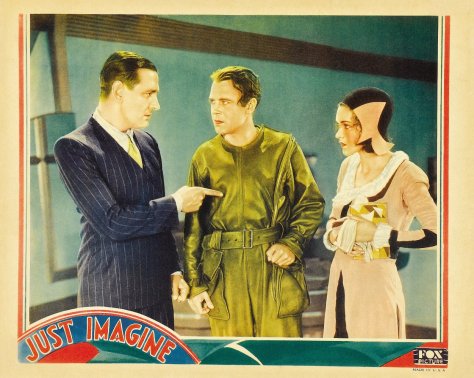
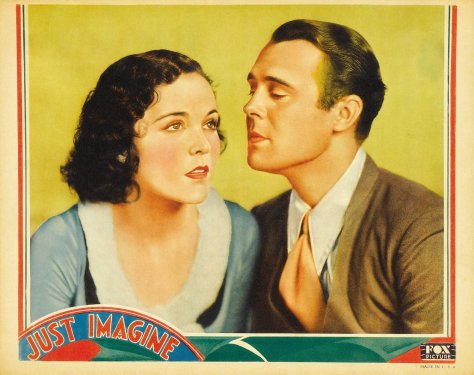
Just Imagine (1933)


Pre Code Logo 1

Pre Code Hollywood Season: FD Cinematheque

Just Imagine (1930)

Just Imagine 1

Just Imagine 3

Just Imagine 6

Director: David Butler

Cast: El Brendel, Maureen O’Sullivan, John Garrick, Marjorie White, Frank Albertson, Hobart Bosworth, Kenneth Thomson, Micha Auer, Ivan Linow, Joyzelle Joyner, Wilfred Lucas

113 min

Just Imagine 5

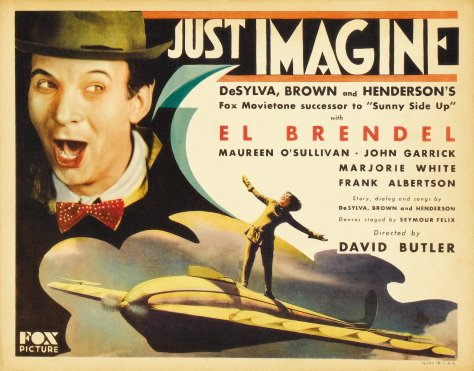
Just Imagine is a 1930 American pre-Code science fiction musicalcomedy film, directed by David Butler.

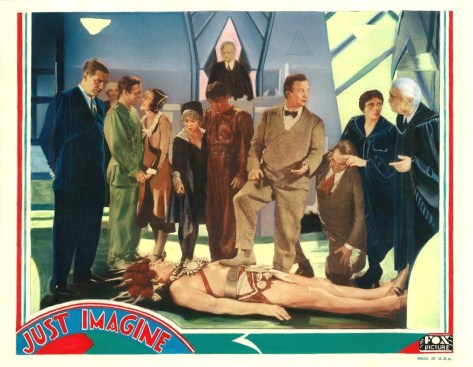
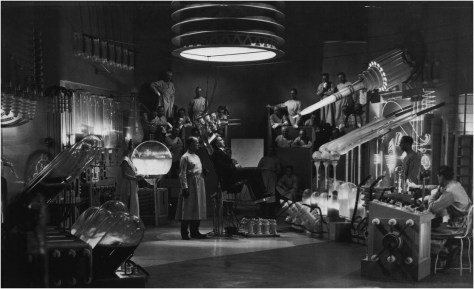
The film is known for its art direction and special effects in its portrayal of New York City in an imagined 1980. Just Imagine stars El Brendel, Maureen O’Sullivan, John Garrick and Marjorie White. The “man from 1930” was played by El Brendel, an ethnic vaudeville comedian of a forgotten type: the Swedish immigrant.

The film starts with a preamble showing life in 1880, where the people believed themselves the “last word in speed”. It switches to 1930, with the streets crowded with automobiles and lined with electric lights and telephone wires. It then switches to 1980, where the tenement houses have morphed into 250-story buildings, connected by suspension bridges and multi-lane elevated roads.

Just Imagine 7

Plot

In 1980, J-21 (John Garrick) sets his aircraft on “hover” mode in New York, lands and converses with the beautiful LN-18 (Maureen O’Sullivan). He describes how the marriage tribunal had refused to consider J-21’s marital filing and applications, and LN-18 is going to be forced to marry the conceited and mean MT-3 (Kenneth Thomson). J-21 plans to visit LN-18 that night.

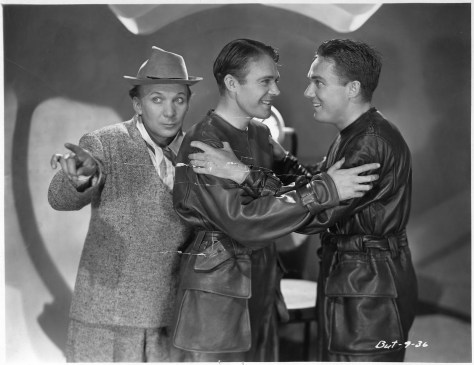
RT-42 (Frank Albertson) tries to cheer him up by taking him to see a horde of surgeons experimentally revive a man from 1930, who was struck by lightning while playing golf, and was killed. The man (originally named Peterson now is called Single O) is taken in hand by RT-42 and J-21, where it is revealed that aircraft have replaced cars, numbers have replaced names, pills have replaced food and liquor, and the only legal babies come from vending machines.

Just Imagine 8

That night, LN-18 feigns a headache, and her father and the despicable MT-3 decide to go to “the show” without her. The second they are gone, RT-42 and J-21 appear and woo B-27 and LN-18 respectively. MT-3 and LN-18’s father return quite early, as MT-3 was highly suspicious, and RT-42 and J-21 hide. However, the game is foiled by the moronic Single O (El Brendel), the man from 1930, becoming addicted to pill-highballs, getting drunk, and trying to get some more pill-highballs from J-21.

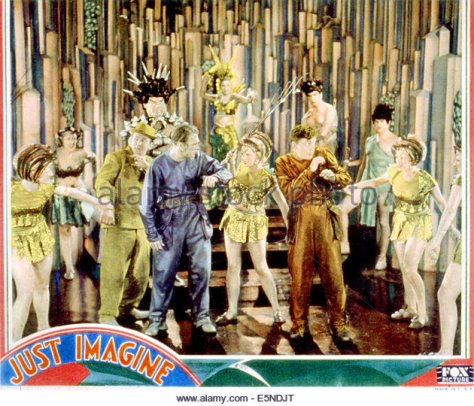
J-21 is depressed, but is contacted by Z-4, the scientist. He is told that Z-4 (Hobart Bosworth) has built a “rocket plane” that can carry three men to Mars. After a farewell party where J-21 works, on the Pegasus, a dirigible they call an “air-liner,” the rocket blasts off, carrying J-21, RT-42 and Single O, who has stowed away for the synthetic rum. Landing on Mars, they are received by the Queen, Looloo and the King, Loko. That night, Looloo and Loko take them to see a “show,” a Martian opera, where a horde of trained Martian ourang-outangs dance about.

They are suddenly attacked by Booboo and Boko, the evil twins (everyone on Mars is a twin) of the King and Queen. They escape and return to Earth, and as one of the first men on another planet, J-21 is permitted to marry LN-18. Finally, Single O is reunited with his aged son, Axel.

Just Imagine 13

Cast

Just Imagine 14

Production

Art/cinematography

The massive, distinctive Art Deco city-scape, for which Just Imagine has come to be best remembered, was built in a former Army balloon hangar by a team of 205 technicians over a five-month period.

The giant miniature cost $168,000 to build and was wired with 15,000 miniature lightbulbs (an additional 74 arc lights were used to light the city from above). Other production credits include costumes by Alice O’Neil and Dolly Tree with graphics by Post Amazers.[1]

Just Imagine 9

Special effects

The sequence in which the El Brendel character is revived from the dead features the first screen appearance of the spectacular electrical equipment assembled by Kenneth Strickfaden, seen again and more famously in James Whale‘s Frankenstein (1931).

Over 50 special effects shots combining previously photographed backgrounds with live foreground action were accomplished using the Dunning Process.[2] Rear projection technology of the scale and quality required was not available at the time.

The set design in the form of glass pictures and miniatures was done by Stephen Goosson, Ralph Hammeras, SPFX-guru Willis O’Brien, and Marcel Delgado (all uncredited).[3]

Just Imagine 10

Music

Of the DeSylva, Brown and Henderson songs introduced in the film, “Never Swat a Fly” was covered as the classic 1930 recording by McKinney’s Cotton Pickers, the 1967 revival by Jim Kweskin & The Jug Band, and more recent recordings by Doc Cheatham among others.

Just Imagine 11

Reception

Mordaunt Hall called Just Imagine, “clever”, “highly imaginative” and “intriguing” and praised the costumes and set design.[4] This expensive film was a one-time-only novelty stunt, bolstered by the short-lived popularity of El Brendel.[5] Wonder Stories “cordially recommended” the film, saying it “shows us many of the wonders that our science fiction authors have been writing about”.[6]

Although a box-office flop, however, it was eventually able to make back some of its production costs in the studio shopping out clips of the futuristic sets for other films of the period. Clips of the cityscape from this movie were later used in the Universal serials Flash Gordon and Buck Rogers; the mock-up Mars spaceship was reused in the former as Dr. Zarkov’s spaceship.

Just Imagine 12

Also seen in the first Flash Gordon serial are the strange hand-weapons carried by J21 and RT42 on Mars, which are held under rather than over the fist, and re-used footage of dancing girls cavorting about and on a Martian idol with moving arms.[7]

By the time Just Imagine was released, movie musicals had greatly declined in popularity.[8] As a result, major American studios would not back another big budget science fiction film until 1951. There was to be only one other American science-fiction musical in that period, It’s Great to Be Alive (1933), which failed at the box-office. Film serials were an exception to this general trend, however.

The first Flash Gordon serial from 1936 had an unusually large budget for a serial of the time, and Gene Autry’s The Phantom Empire from 1935 can loosely be considered a science fiction musical serial.

Just Imagine 15

Awards

Just Imagine was nominated for an Academy Award for Best Art Direction by Stephen Goosson and Ralph Hammeras.[9] It is notable as the first film of the science fiction genre to be nominated for an Oscar.

See also

References

Notes

  1. Jump up^ Kreuger 1974, p. 241.
  2. Jump up^ The International Photographer, December 1930. p. 40.
  3. Jump up^ German 2010 DVD of movie Behemoth, the Sea Monster titled “Das Ungeheuer von Loch Ness”: Extras: Willis O’Brien-filmography: card 12 (Just Imagine (1930))
  4. Jump up^ Hall, Mourdant. “Derelict (1930).” The New York Times, November 22, 1930.
  5. Jump up^ Westphal, Kyle. “Early talkies: A Primer.” Northwest Chicago Film Society, September 30, 2012. Retrieved: May 2, 2015.
  6. Jump up^ “Book Reviews”, Wonder Stories, February 1931, p. 1054
  7. Jump up^ “Just Imagine (1930).” Movie Diva. Retrieved: May 2, 2015.
  8. Jump up^ Altman 1987, p. 186.
  9. Jump up^ “Details: ‘Just Imagine’.” The New York Times. Retrieved: May 2, 2015.

Bibliography

Altman, Rick. The American Film Musical. Bloomington Indiana: Indiana University Press, 1987. ISBN 978-0-253-20514-8.
Kreuger, Miles ed. The Movie Musical from Vitaphone to 42nd Street as Reported in a Great Fan Magazine. New York: Dover Publications, 1974. ISBN 0-486-23154-2.

Film Collectors Corner

Watch Just Imagine Now – Instant Video on You Tube

Blu Ray

Not released on Blu Ray


DVD

Not released on DVD

Gigolettes of Paris (1933)


Pre Code Logo 1

Pre Code Hollywood Season: FD Cinematheque

Gigolettes of Paris (1933)

Gigolettes of Paris 11

Gigolettes of Paris 12

Director: Alphonse Martell

Cast: Madge Bellamy, Gilbert Roland, Natalie Moorhead, Theodore Von Eltz, Molly O’Day, Henry Kolker, Paul Porcasi, Robert Bolder, Ellinor Vanderveer

64 min

Gigolettes of Paris 5

Plot

Suzanne Ricord, the prettiest salesgirl at the Parfumerie Parisienne, attracts the attention of wealthy Albert Valraine, who purchases all the expensive perfumes that she recommends.

After work, Suzanne and her roommate Paulette find Valraine waiting. He insists on giving the demure Suzanne a ride home and puts Paulette in the rear outdoor seat, where she still manages to hear Valraine offer Suzanne both the perfumes that he bought and to be her “fairy godfather.”

Gigolettes of Paris 4

Suzanne refuses, but after she finds no mail from her lover, Paulette talks her into accepting Valraine’s offer. She removes the ring that her lover gave her, and it is soon replaced by Valraine’s. Suzanne and Paulette now live in a nicely-furnished apartment paid for by Valraine, and Suzanne is his mistress.

However, when she begins to talk about their planned honeymoon, Valraine takes back his ring and, accusing her of not having learned the rules of the game, says that everything has to end sometime.

Suzanne cries in disappointment. Valraine then promises his fiancée Diane that he is finished with his mistress and gives her the ring he took back from Suzanne.

Gigolettes of Paris 6

Sometime later, Suzanne sings at a cabaret and accepts gifts from the many wealthy men who come to see her. Her friend, Antoine “Tony” Ferand, a gigolo, dances with Diane, now Valraine’s wife, and Suzanne notices the ring on her finger. When Tony tells Suzanne that Diane is Mrs. Albert Valraine, Suzanne reveals that the ring was her engagement ring and says she wants it back.

Diane gives the ring to Tony supposedly to help finance his business, and when Tony, who really loves Suzanne, gives her the ring, she reveals that her plan is to show Valraine how it feels to be at the losing end of the game. When Tony says that he is sick of their life and has no self-respect, Suzanne refuses to listen.

Valraine, who has just returned from a trip, accompanies his wife to the cabaret, and he notices that her ring is gone. Seeing the ring on a hand holding the curtain leading to the telephone, Valraine grabs it only to find Suzanne waiting for his approach.

Gigolettes of Paris 7

When he questions her about the ring, she obliquely threatens to reveal their affair if his inquiries go too far. Back at the table with his wife, after Valraine, noticing Tony staring at Diane, accuses her of humiliating him with a common gigolo, Diane leaves with Tony, who is frustrated with Suzanne’s schemes. In their cab, Tony reveals to Diane that Suzanne had been engaged to Valraine and apologizes.

Although disappointed, Diane refuses his offer to return the ring. Tony goes to Monte Carlo, where he is arrested after he leaves a watch that had been given to Suzanne by a man at the cabaret, at a repair shop. The watch turns out to be stolen property.

The next night, Suzanne, upset that Tony has not come to the club, rebukes Valraine when he apologetically asks if she could ever care for him again. In front of Valraine, she gives the ring as a present to Louie, her waiter.

Gigolettes of Paris 9

Meanwhile, Tony, in jail, refuses to say who gave him the watch. Realizing that she really loves Tony, Suzanne goes with Paulette to Monte Carlo to get away. She sees Diane at a table but her fears at finding her with Tony are relieved when her new husband joins her.

After Paulette shows her a newspaper article about the stolen watch, she tells her story to the police. Tony is released and the man who gave her the watch is picked up in Marseilles. Tony and Suzanne plan to marry, and he plans to return to his father’s textile producing business. To their surprise, they find that with the ring, Louie has married Paulette.

Tony is released and the man who gave her the watch is picked up in Marseilles. Tony and Suzanne plan to marry, and he plans to return to his father’s textile producing business. To their surprise, they find that with the ring, Louie has married Paulette.

Gigolettes of Paris 8

Madge Bellamy Madge Bellamy
Suzanne Ricord
Gilbert Roland Gilbert Roland
Antoine ‘Tony’ Ferrand
Natalie Moorhead Natalie Moorhead
Diane Valraine
Theodore von Eltz Theodore von Eltz
Albert Valraine
Molly O'Day Molly O’Day
Paulette
Henry Kolker Henry Kolker
Police Interrogator
Paul Porcasi Paul Porcasi
Albert Conti Albert Conti
Ferdinand Schumann-Heink Ferdinand Schumann-Heink
(as F. Schumann-Heink)
Maude Truax Maude Truax
Lester New Lester New
Robert Bolder Robert Bolder
Rest of cast listed alphabetically:
Ellinor Vanderveer Ellinor Vanderveer
Diane’s Friend (uncredited)

Gigolettes of Paris 10

Film Collectors Corner

Watch Gigolettes of Paris Now – Instant Video on You Tube

Blu Ray

Not released on Blu Ray

DVD

Canary Murder Case, The (1929)


Pre Code Logo 1

Pre Code Hollywood Season: FD Cinematheque

The Canary Murder Case (1929)

Canary Murder Case The 2

Canary Murder Case The 3

Director: Malcolm St Claire, Frank Tuttle (scenes for talkie version)

Cast: William Powell, Jean Arthur, James Hall, Louise Brooks, Charles Lane, Lawrence Grant, Gustav Von Seyfertitz, E H Calvert, Eugene Pallette, Ned Sparks, Margaret Livingston

82 min

Canary Murder Case The 4

The Canary Murder Case is a 1929 American Pre-Code crimemystery film made by Paramount Pictures, directed by Malcolm St. Clair and Frank Tuttle.

The screenplay was written by Willard Huntington Wright (as S.S. Van Dine), Albert S. Le Vino, and Florence Ryerson, based on novel The Canary Murder Case by S.S. Van Dine.

It was the first film in the series of Philo Vance films adapted from the novels, starring William Powell as Philo Vance, Jean Arthur, James Hall and Louise Brooks as “the Canary”.

Canary Murder Case The 21

Canary Murder Case The 22

Plot

Charles Spotswoode’s son Jimmy became involved with “the Canary”, a conniving star showgirl. Fortunately, Jimmy has regained his senses and reconciled with Alyce LaFosse. However, the Canary is determined to force Jimmy to marry her so she can join the social elite, threatening to reveal that Jimmy was embezzling from his father.

She turns down the elder Spotswoode’s offer of money to leave Jimmy alone. She also telephones two men she has been blackmailing, Cleaver and Mannix, and demands one final generous gift from each of them by the next day.

Canary Murder Case The 5

She also informs “creepy” admirer Dr. Lindquist. Her ex-husband Tony Sheel eavesdrops and wants half, but she refuses to give him anything, even after he hits her. Cleaver, Mannix and Lindquist are all shown lurking about her apartment building late that night.

Spotswoode visits her at her apartment around midnight, but cannot get her to change her mind. After he reaches the lobby of her building, he and another person hear screams from her place. They knock on the door, but she assures them that she is fine.

The next day, she is found strangled to death. The coroner places the time of death around midnight. District Attorney Markham investigates, aided by Philo Vance (a close friend of Charles Spotswoode) and Police Sergeant Heath. After all the prime suspects are questioned, Vance asks Markham to keep them waiting for a few hours.

William Powell and Louise Brooks

Markham agrees, as Vance has helped solve another case. Vance subtly maneuvers Cleaver, Mannix, Lindquist and the two Spotswoodes into playing poker to pass the time so he can observe their personality traits.

Only one shows the daring, imagination and discipline required for the crime; that man bluffs Vance, betting everything with just a pair of deuces. The suspects are then released.

Only one shows the daring, imagination and discipline required for the crime; that man bluffs Vance, betting everything with just a pair of deuces. The suspects are then released.

Canary Murder Case The 7

Sheel, who was hiding the closet and witnessed the murder, sends the killer several blackmail letters. For his trouble, he too is strangled. A pen found at the scene has Jimmy’s name on it, so Heath arrests him for the murder. Jimmy then confesses to both murders, but Vance knows better.

He telephones Charles Spotswoode with the news and suggests they meet in an hour. Spotswoode speeds to the city from his country estate to confess, but his chauffeur makes a fatal mistake by trying to beat a train to a crossing, and Spotswoode is killed.

Now Vance has to show how he murdered the Canary in order to free Jimmy. Fortunately, he is able to figure out that the Canary was dead before Spotswoode left her apartment that night. Spotswoode had made a recording (Vance speculates it was Spotswoode himself pretending to be the woman) to fool a stuttering witness into believing she was alive and well. The record is still in the apartment, so Jimmy is released.

Canary Murder Case The 9

Cast

Canary Murder Case The 18

Production

This film was initially made as a silent picture, then reworked as a sound film. Louise Brooks’ refusal to cooperate in the sound version had a major impact on her career.

After filming the silent version, Brooks left for Germany to make two films for director G. W. Pabst. Her option with Paramount Pictures was up, and since the studio would not give her a raise, she saw no reason to remain in Hollywood.

the canary murder case

Months later, Paramount decided to re-shoot some scenes of Canary with recorded dialogue. The studio cabled Brooks in Berlin, demanding that she return to record her lines. She refused, taking the position that she no longer had an obligation to Paramount. Under the purported threat that she would never work in Hollywood again after such open defiance, she bluntly replied, “Who wants to work in Hollywood?”

Paramount spent considerable money to hire actress Margaret Livingston (the “Woman from the City” in F.W. Murnau‘s Sunrise: A Song of Two Humans) to dub the dialogue for Brooks where possible, as well as to re-shoot some scenes, with Livingston seen only in profile or from behind. The golden age of German cinema soon ended with the rise of Nazism, and Brooks found herself back in Hollywood. She was never able to get good roles there again and soon retired. Though her time as a star was over, her battle with studio moguls helped add to her eventual legend.

Canary Murder Case The 15

Accolades

The film is recognized by American Film Institute in these lists:

References

  1. Jump up^ “AFI’s 100 Years…100 Heroes & Villains Nominees” (PDF). Retrieved 2016-08-05.

Canary Murder Case The 11

Canary Murder Case The 8

Canary Murder Case The 10

Canary Murder Case The 14

Canary Murder Case The 16

Canary Murder Case The 19

Canary Murder Case The 20

Film Collectors Corner

Watch The Canary Murder Case Now – Amazon Instant Video

Blu Ray

Not released on Blu Ray

DVD

Interference (1928)


Pre Code Logo 1

Pre Code Hollywood Season: FD Cinematheque

Interference (1928)

Interference 1

Interference 2

Interference 3

Interference 14

Director: Lothar Mendes (silent version), Roy Pomeroy ( sound version)

Cast: Evelyn Brent, Clive Brook, William Powell, Doris Kenyon, Brandon Hurst, Tom Ricketts, Louis Payne, Wilfred Noy, Donald Stuart, Raymond Lawrence, Clyde Cook

84 min

Interference 10

Interference is an early sound film drama released in 1928 and starring William Powell and Evelyn Brent.

This was Paramount Pictures‘ first ever full talking movie. It was also simultaneously filmed as a silent.

The film was based on the play Interference, a Play in Three Acts by Roland Pertwee and Howard Dearden. When a first husband turns out not to be dead, blackmail leads to murder.[1]

Interference 4

Cast

Interference 6

Interference 5

References

  1. Jump up^ Interference at silentera.com database (released in silent and sound versions)

Interference 8

Interference 9

Interference 12

Interference 13

Film Collectors Corner

Watch Interference Now – Instant Video on Internet Archive


Blu Ray

Not released on Blu Ray


DVD

Not released on DVD


Four Feathers, The (1929)


Pre Code Logo 1

Pre Code Hollywood Season: FD Cinematheque

The Four Feathers (1929)

Four Feathers The 1

Four Feathers The 5

Four Feathers The 6

Directors: Merian C Cooper, Ernest B Shoedsack

Cast: Richard Arlen, Fay Wray, Clive Brook, William Powell, Theodore von Eltz, Noah Beery Sr., Zack Williams, Noble Johnson, Phillippe De Lacy, Harold Hightower, Rex Ingram

81 min

The Four Feathers is a 1929 American war film directed by Merian C. Cooper and starring Fay Wray.[1] The picture has the distinction of being one of the last major Hollywood pictures of the silent era.

It was also released by Paramount Pictures in a version with a Movietone soundtrack with music and sound effects only.[2] The film is the third of numerous film versions of the 1902 novel The Four Feathers written by A. E. W. Mason, and the cast features Richard Arlen, Clive Brook, William Powell and Noah Beery, Sr.

Four Feathers The 8

Four Feathers The 9

Cast

Four Feathers The 7

Accolades

The film is recognized by American Film Institute in these lists:

References

  1. Jump up^ Hall, Mordaunt. “New York Times: The Four Feathers”. NY Times. Retrieved July 22, 2008.
  2. Jump up^ IMDB entry
  3. Jump up^ “AFI’s 100 Years…100 Cheers Nominees” (PDF). Retrieved August 14, 2016

Four Feathers The 10

Four Feathers The 11

Four Feathers The 12

Four Feathers The 13

Four Feathers The 14

Four Feathers The 15

Four Feathers The 16

Four Feathers The 17

Film Collectors Corner

Watch The Four Feathers Now – Instant Video on Internet Archives

Blu Ray

Not released on Blu Ray

DVD

Benson Murder Case, The (1930)


Pre Code Logo 1

Pre Code Hollywood Season: FD Cinematheque

The Benson Murder Case (1930)

Benson Murder Case the 11

Benson Murder Case the 5

Benson Murder Case the 6

Director: Frank Tuttle

Cast: William Powell, William Stage Boyd, Eugene Pallette, Paul Lukas, Natalie Moorhead, Richard Tucker, May Beatty, E H Calvert, Mischa Auer, Guy Oliver

65 min

The Benson Murder Case is the first novel in the Philo Vance series of mystery novels by S. S. Van Dine, which became a best-seller.

Benson Murder Case the 8

Plot outline

New York dilettante Philo Vance decides to assist the police in investigating the death of another man-about-town because he finds the psychological aspects of the crime of interest, and feels that they would be beyond the capacities of the police, even those of his friend District Attorney Markham.

Benson Murder Case the 9

Vance investigates the circumstances under which the body was found and reconstructs the crime sufficiently to determine that the murderer is five feet, ten and a half inches in height. Together, Vance and Markham investigate Benson’s business associates and romantic interests until Vance manages to pierce the murderer’s alibi for the time of the murder and force a confession.

Benson Murder Case the 10

Literary significance and criticism

The novel was very loosely based upon a real-life case that had made headlines, the unsolved 1920 murder of bridge expert Joseph Bowne Elwell.

It was considered a roman à clef because the circumstances under which Elwell’s body was found—he was shot to death in a room in his home which was found to be locked from the inside, and he was not wearing his toupee—are duplicated in the novel. Modern knowledge of ballistics reveals that one of the central premises of the novel is fanciful, because the reconstruction of the height of the murderer is impossible (Dashiell Hammett had said as much at the time, in a 1927 book review).

Benson Murder Case the 12

“The first and best, partly because Van Dine had the real-life model of the Joseph Elwell murder (1920) to hold his fancy in check.”[1]

“Vance spots the murderer almost immediately but doesn’t reveal him, allowing Markham and Sergeant Heath to fix the guilt on five successive persons by circumstantial evidence.”[2]

Benson Murder Case the 13

Film adaptations

Paramount Pictures released The Benson Murder Case (1930) a film version directed by Frank Tuttle and starring William Powell as Philo Vance. The film was moderately faithful to the plot of the novel. Paramount also released a Spanish-language version, El Cuerpo del Delito, written by Catalan writer Josep Carner Ribalta (1898–1988), and co-directed by Cyril Gardner and A. Washington Pezet.

Benson Murder Case the 14

References

  1. Jump up^ Barzun, Jacques and Taylor, Wendell Hertig. A Catalogue of Crime. New York: Harper & Row. 1971, revised and enlarged edition 1989. ISBN 0-06-015796-8
  2. Jump up^ Roseman, Mill et al.. Detectionary. New York: Overlook Press, 1971. ISBN 0-87951-041-2

Benson Murder Case the 15

Benson Murder Case the 16

Benson Murder Case the 17

Film Collectors Corner

Watch The Benson Murder Case Now – Instant Video on Internet Archive

Blu Ray

Not released on Blu Ray

DVD

Not released on DVD


Behind the Make Up (1930)


Pre Code Logo 1

Pre Code Hollywood Season: FD Cinematheque

Behind the Make Up (1930)

Behind the Make Up 2

Behind the Make Up 1

Behind the Make Up 3

Behind the Make Up 4

Director: Robert Milton, Dorothy Arzner, Henry Hathaway

Cast: Hal Skelly, William Powell, Fay Wray, Kay Francis, Paul Lukas, E H Calvert, Torben Meyer, Bob Perry, Walter Huston

70 min

Behind the Make Up 6

Behind the Make-Up (1930) is an American Pre-Code drama film starring Hal Skelly, William Powell, Kay Francis, and Fay Wray, and based on the short story “The Feeder” by Mildred Cram.

This was the first of seven in which Powell and Francis co-starred, the others being Street of Chance (1930), Paramount on Parade (1930), For the Defense (1930), Ladies’ Man (1931), Jewel Robbery (1932), and One Way Passage (1932).

Plot Summary

Gardoni, a down-on-his-luck vaudeville performer, is taken in by a fellow performer, a clown who has a bicycle riding act. Gardoni shows his appreciation by stealing the clown’s act and his girlfriend, whom he marries.

Behind the Make Up 7

Cast

Behind the Make Up 12

Critical reception

Mordaunt Hall, film critic of the New York Times, praised the performances of Powell (“excellent”), Wray (“pleasing”), Skelly (“goes about his part with earnestness and intelligence”), and Francis (“does nicely”), but noted “the story is rather limp and disappointing.”[1]

Behind the Make Up 10

References

  1. ^ Jump up to:a b Mordaunt Hall (January 18, 1930). “Behind the Makeup (1930)”. New York Times.

Behind the Make Up 13

Behind the Make Up 11

Film Collectors Corner

Watch Behin the Make Up Now – Instant Video on Internet Archive

Blu Ray

Not released on Blu Ray

DVD

Cocoanuts, The (1929)


Pre Code Logo 1

Pre Code Hollywood Season: FD Cinematheque

The Cocoanuts (1929)

Coconuts the 1

Coconuts the 3

Coconuts the 5

Director: Robert Florey, Joseph Santley

Cast: Zeppo Marx, Groucho Marx, Harpo Marx, Chico Marx, Mary Eaton, Kay Francis, Oscar Shaw, Margaret Dumont, Cyril Ring, Barton MacLane

96 min

Coconuts the 6

The Cocoanuts (1929) is the Marx Brothers‘ first feature-length film. Produced for Paramount Pictures by Walter Wanger, who is not credited, the musical comedy stars the four Marx Brothers, Oscar Shaw, Mary Eaton, and Margaret Dumont.

It was the first sound film to credit more than one director (Robert Florey and Joseph Santley), and was adapted to the screen by Morrie Ryskind from the George S. Kaufman Broadway musical play. Five of the film’s tunes were composed by Irving Berlin, including “When My Dreams Come True”, sung by Oscar Shaw and Mary Eaton.

Coconuts the 7

Plot

The Cocoanuts is set in the Hotel de Cocoanut, a resort hotel, during the Florida land boom of the 1920s. Mr. Hammer (Groucho Marx) runs the place, assisted by Jamison (Zeppo Marx), who would rather sleep at the front desk than actually help him run it. Chico and Harpo arrive with empty luggage, which they apparently plan to fill by robbing and conning the guests.

Mrs. Potter (Margaret Dumont, in the first of seven film appearances with the Marxes) is one of the few paying customers. Her daughter Polly (Mary Eaton) is in love with struggling young architect Bob Adams (Oscar Shaw).

He works to support himself as a clerk at the hotel, but has plans for the development of the entire area as Cocoanut Manor. Mrs. Potter wants her daughter to marry Harvey Yates (Cyril Ring), whom she believes to be of higher social standing than the clerk. This suitor is actually a con man out to steal the dowager’s diamond necklace with the help of his conniving partner Penelope (Kay Francis).

Coconuts the 9

The plot is almost beside the point, and the story and setting are little more than an excuse for the brothers to run amok. The film is notable for its musical “production numbers”, including techniques which were soon to become standard, such as overhead shots of dancing girls imitating the patterns of a kaleidoscope.

The musical numbers were recorded live on the soundstage as they were shot, rather than pre-recorded, using an off-camera orchestra. The main titles are superimposed over a negative image of the “Monkey-Doodle-Do” number photographed from an angle that does not appear in the body of the film.

Coconuts the 8

One of the more famous gags in the film has Groucho giving directions to Chico, who keeps misunderstanding “viaduct” as “why-a-duck“. In another sequence Groucho is the auctioneer for some land of possibly questionable value (“You can have any kind of a home you want to; you can even get stucco!

Oh, how you can get stuck-oh!”) He has hired Chico to inflate the sale prices by making phony bids. To Groucho’s frustration, Chico keeps outbidding everyone, even himself. During the auction, Mrs. Potter announces that her necklace has been stolen and offers a thousand dollar reward, whereupon Chico offers two thousand. Still another sequence has Groucho, Mrs. Potter and Harvey Yates (the necklace thief) make formal speeches. Harpo repeatedly walks off, with a grimace on his face, to the punch bowl. (His staggering implies that the fruit punch has been spiked with alcohol.) Another highlight is when the cast, already dressed in traditional Spanish garb for a theme party, erupts into an operatic treatment about a lost shirt to music from Carmen (specifically, Habanera and the song of the Toreador). An earlier scene shows Harpo and Chico abusing a cash register while whistling the Anvil Chorus from Il trovatore, a piece also referenced in several other Marx Brothers films.

Coconuts the 11

Cast

The Cocoanuts (1929)
Zeppo Marx, Groucho Marx, Chico Marx & Harpo Marx Film: The Cocoanuts (USA 1929) Character(s): Jamison, Hammer, Chico, Harpo Director: Robert Florey & Joseph Santley 03 May 1929 AFF20867 AF Archive Picture Library/PARAMOUNT PICTURES **Warning** This Photograph is for editorial use only and is the copyright of PARAMOUNT PICTURES and/or the Photographer assigned by the Film or Production Company & can only be reproduced by publications in conjunction with the promotion of the above Film. A Mandatory Credit To PARAMOUNT PICTURES is required. The Photographer should also be credited when known. No commercial use can be granted without written authority from the Film Company.

Production

Referring to directors Robert Florey and Joseph Santley, Groucho Marx remarked, “One of them didn’t understand English and the other didn’t understand comedy.”[2]

As was common in the early days of sound film, to eliminate the sound of the camera motors the cameras and the cameramen were enclosed in large soundproof booths with glass fronts to allow filming, hence the largely static camera work. For many years, Marxian legend had it that Florey, who had never seen the Marxes’ work before, was put in the soundproof booth because he could not contain his laughter at the brothers’ spontaneous antics.[3]

Coconuts the 13

Every piece of paper in the movie is soaking wet, to keep crackling paper sounds from overloading the primitive recording equipment of the time. In fact, this did not occur to director Florey until 27 takes had been made (of the “Viaduct” scene) and disposed of because of the noise made by the paper. Florey finally got the idea to soak the paper in water; the 28th take of the “Viaduct” scene used soaked paper, and this take was quiet and used in the film.[4]

The “ink” that Harpo drank from the hotel lobby inkwell was actually Coca-Cola, and the “telephone mouthpiece” that he nibbled was made of chocolate, both inventions of Robert Florey.

Filming took place at Paramount’s Astoria Studios in Astoria, Queens. Their second film, Animal Crackers, was also shot there. After that, production of all Marx films moved to Hollywood.

Coconuts the 12

Songs

  • “Florida by the Sea” (instrumental with brief vocal by chorus during opening montage)
  • “When My Dreams Come True” (theme song, Mary Eaton and Oscar Shaw variously, several reprises)
  • “The Bell-Hops” (instrumental, dance number)
  • “Monkey Doodle Doo” (vocal by Mary Eaton and dance number)
  • “Ballet Music” (instrumental, dance number)
  • “Tale of the Shirt” (vocal by Basil Ruysdael, words set to music from Carmen by Georges Bizet)
  • “Tango Melody” (vocal included in the stage production, used in the film as background music only)
  • “Gypsy Love Song” (by Victor Herbert, piano solo by Chico Marx)

The Cocoanuts is one of the few Irving Berlin vehicles that did not yield any particularly memorable songs. Several songs from the stage play were omitted from the film: “Lucky Boy”, sung by the chorus to congratulate Bob on his engagement to Polly and “A Little Bungalow”, a love duet sung by Bob and Polly that was replaced with “When My Dreams Come True” in the film.

Coconuts the 14

Irving Berlin wrote two songs entitled “Monkey Doodle Doo”. The first was published in 1913, the second introduced in the 1925 stage production and featured in the film. They are very different songs.

Although legend claims Berlin wrote the song “Always” for The Cocoanuts, he never meant for the song to be included, writing it, instead, as a gift for his fiancee.[5]

Reception

When the Marx Brothers were shown the final cut of the film, they were so horrified they tried to buy the negative back and prevent its release.[6] Paramount wisely resisted — the movie turned out to be a big box office hit, with a $1,800,000 gross making it one of the most successful early talking films.[1]

It received mostly positive reviews from critics, with the Marx Brothers themselves earning most of the praise while other aspects of the film drew a more mixed reaction. Mordaunt Hall of The New York Times reported that the film “aroused considerable merriment” among the viewing audience, and that a sequence using an overhead shot was “so engaging that it elicited plaudits from many in the jammed theatre.”

Coconuts the 16

However, he found the audio quality during some of the singing to be “none too good”, adding, “a deep-voiced bass’s tones almost fade into a whisper in a close-up. Mary Eaton is charming, but one obtains little impression of her real ability as a singer.”[7]

Variety called it “a comedy hit for the regular picture houses. That’s all it has – comedy – but that’s enough.” It reported the sound had “a bit of muffling now and then” and that the dancers weren’t always filmed well: “When the full 48 were at work only 40 could be seen and those behind the first line could be seen but dimly.”[8]

“It is as a funny picture and not as a musical comedy, not for its songs, pretty girls, or spectacular scenes, that The Cocoanuts succeeds”, wrote John Mosher in The New Yorker. “Neither Mary Eaton, nor Oscar Shaw, who contribute the “love interest”, is effective, nor are the chorus scenes in the least superior to others of the same sort in various musical-comedy-movies now running in town. To the Marxes belongs the success of the show, and their peculiar talents seem, surprisingly enough, even more manifest on the screen than on the stage.”[9]

Film Daily called it “a good amount of fun, although some of it proves tiresome. This is another case of a musical comedy transferred almost bodily to the screen and motion picture treatment forgotten. The result is a good many inconsistencies which perhaps may be overlooked provided the audience accepts the offering for what it is.”[10]

Coconuts the 17

Awards and honors

American Film Institute recognition

• AFI’s 100 Years… 100 Laughs – Nominated

See also

Coconuts the 18

References

  1. ^ Jump up to:a b “Big Sound Grosses”. Variety. New York. June 21, 1932. p. 62.
  2. Jump up^ Bowen, Peter (August 3, 2010). “The Cocoanuts Released”. Focus Features. Retrieved December 9, 2014.
  3. Jump up^ Paul Zimmerman, The Marx Brothers At The Movies. Putnam, 1968.
  4. Jump up^ Paul D. Zimmerman and Burt Goldblatt The Marx Brothers at the Movies,[page needed]
  5. Jump up^ Bader, Robert S. (2016). Four of the Three Musketeers: The Marx Brothers on Stage. Evanston, IL: Northwestern University Press. p. 309. ISBN 9780810134164.
  6. Jump up^ Nixon, Rob. “The Cocoanuts”. TCM.com. Turner Entertainment Networks, Inc. Retrieved December 9, 2014.
  7. Jump up^ Hall, Mordaunt (May 25, 1929). “Movie Review – The Cocoanuts”. The New York Times. Retrieved December 9, 2014.
  8. Jump up^ “The Cocoanuts”. Variety. New York: 14. May 29, 1929.
  9. Jump up^ Mosher, John (June 1, 1929). “The Current Cinema”. The New Yorker. p. 74.
  10. Jump up^ “The Cocoanuts”. Film Daily. New York: Wid’s Films and Film Folk, Inc. June 2, 1929. p. 9.

Coconuts the 19

Coconuts the 20

Film Collectors Corner

Watch The Coconuts Now – Instant Video on Internet Archive

Blu Ray

DVD

Gentlemen of the Press (1929)


Pre Code Logo 1

Pre Code Hollywood Season: FD Cinematheque

Gentlemen of the Press (1929)


Gentlemen of the Press 3

Gentlemen of the Press 2

Director: Millard Webb

Cast: Walter Huston, Kay Francis, Charles Ruggles, Betty Lawford, Norman Foster, Duncan Penwarden, Lawrence Leslie, Harry Lee, Brian Donlevy, Victor Killian

80 min

Gentlemen of the Press is a 1929 all-talking film starring Walter Huston in his first feature film role and Kay Francis in her first film role. The film still survives. This film’s copyright has expired and it is now in the public domain. It survives in a copy sold to MCA for television distribution.[1]

The film is based on Ward Morehouse’s 1928 Broadway play Gentlemen of the Press.[2]

Gentlemen of the Press 5

Cast

uncredited

Gentlemen of the Press 4

References


DVD

Not released on DVD


Virtuous Sin, The (1930)


Pre Code Logo 1

Pre Code Hollywood Season: FD Cinematheque

The Virtuous Sin (1930)


Virtuous Sin The 2

Virtuous Sin The 4

Virtuous Sin The 5

Virtuous Sin The 3

Virtuous Sin The 13

Director: George Cukor, Louis J Gasnier

Cast: Walter Huston, Kay Francis, Kenneth MacKenna, Jobyna Howland, Paul Cavanagh, Eric Kalkhurst, Oscar Apfel, Gordon McLeod, Victor Potel

80 min

The Virtuous Sin is a 1930 American Pre-Code comedy-drama film directed by George Cukor and Louis J. Gasnier. The screenplay by Martin Brown and Louise Long is based on the play The General by Lajos Zilahy.

Plot

Marya is the wife of medical student Victor Sablin, who finds it impossible to deal with military life when he is inducted into the Russian army during World War I. With her husband is sentenced to death by firing squad due to his insubordination, Marya offers herself to General Gregori Platoff in order to save him. When the two unexpectedly fall in love, Victor — not caring that his life has been spared — threatens to kill his rival. His determination to eliminate the general falters when Marya confesses she is not in love with her husband — and never was.

Virtuous Sin The 7

Cast

Virtuous Sin The 10

Critical reception

Mordaunt Hall of the New York Times called the film “a clever comedy with a splendid performance by Walter Huston” and added, “There is a constant fund of interest in this picture’s action. It is one of those rare offerings in which youth takes a back seat.[1]

Virtuous Sin The 11

George Cukor’s reflection in 1972

In the book On Cukor, director George Cukor confided to biographer Gavin Lambert: “It wasn’t much good. I’d be in great shock if they [film restorationists & historians] rescued this one. I remember that I enjoyed working with Kay Francis and Walter Huston, though.”[2]

Virtuous Sin The 9

Preservation status

A complete print of this film is held by the UCLA Film and Television Archive. However, the UCLA archive’s website says the print is too shrunken for projection.[3]

Virtuous Sin The 10

See also

Virtuous Sin The 12

References

  1. Jump up^ “Review”, The New York Times.
  2. Jump up^ Parish, James Robert; Mank, Gregory W.; Stanke, Don E. (1978), The Hollywood Beauties, New Rochelle, New York: Arlington House Publishers, p. 73, ISBN 0-87000-412-3
  3. Jump up^ UCLA Film and Television Archive website

Virtuous Sin The 1

Film Collectors Corner

Watch The Virtuous Sin Now – Instant Video on Internet Archive


Blu Ray

Not released on Blu Ray


DVD

Not released on DVD

For The Defense (1930)


Pre Code Logo 1

Pre Code Hollywood Season: FD Cinematheque

For The Defense (1930)

For the Defense 1

For the Defense 2

Director: John Cromwell

Cast: Kay Francis, William Powell, Scott Kolk, William B Davidson, Thomas E Jackson, Harry Walker, James Finlayson, Charles West, Bertram Marburgh, Billy Bevan, John Cromwell, Sidney D’Albrook

65 min

TCM ARCHIVE

For the Defense is a 1930 Pre-Code crime drama film starring William Powell as a lawyer whose ethics are challenged when the woman he loves hits and kills a pedestrian while out driving with another suitor.

Plot

For the Defense 9

In New York City, William Foster (William Powell) is a criminal defense attorney so successful that prosecutors regard him as a menace. He holds himself to high ethical standards but is willing to mislead without actually lying.

Foster defends a man who planned a murder using explosives. District Attorney Stone (William B. Davidson) displays a vial and says chemical tests have shown that the liquid in it is sensitive nitroglycerin. Foster sniffs the liquid, questions him to verify the chain of custody, and then smashes the vial dramatically on the floor. When order is restored, he explains to the judge that he knew it was safe because nitro has a distinctive smell, and Stone says he had removed the actual nitro for safety after the chemical test. But Foster points out that only the liquid now in the bottle was entered into evidence, and wins his case.

For the Defense 7

Foster is in love with actress Irene Manners (Kay Francis), and she loves him, but she wants to be married and he does not. When another suitor, Jack Defoe (Scott Kolk), proposes to her, she says she needs to tell Foster about him before she can accept; but she finds she cannot do so. She stays out late enough at night with Defoe to leave only one implication of what they were doing, and while driving him home, she does agree to marry him. He suddenly hugs her and she loses control of the car, killing a bystander.

To protect Irene’s reputation, Defoe urges her to leave the scene, lying that the victim is not badly hurt. Presumed to have been driving while drunk, he is charged with manslaughter. They both still conceal her involvement, but she begs Foster to defend him. He asks why she cares enough about Defoe to insist; she says she and Defoe are just friends, but she had already promised him on Foster’s behalf, assuming Foster would be willing. Foster agrees, but finds that Defoe cannot tell a credible story at trial.

For the Defense 4

Then Foster finds out that Irene was at the accident scene and therefore must be much more than “just friends” with Defoe. Foster is crushed, but she still begs him to get Defoe acquitted, while Defoe fears Foster will throw the case and Irene will be charged and convicted as well. Foster eventually puts his love for Irene first and, for the first time in his life, bribes a juror to vote not guilty, hanging the jury.

Foster is quickly found out and arrested, and defends himself at trial. As he will not see Irene, she goes to Stone, admits what really happened at the accident, and says Foster was only trying to protect her. If Stone does not agree to recommend mercy, Irene says, she will tell her story in court. Stone says he will think about it.

Although his defense is going well, Foster then offers to plead guilty (and thus be disbarred, no doubt making life easier for prosecutors in future) if only Stone will agree not to retry Defoe; but Stone says he does not make deals. Back in court, Irene sends Foster a note pleading to let her testify and tell the truth. To protect her, Foster immediately changes his plea to guilty. Stone then tells Foster that neither Defoe nor Irene will be prosecuted.

As Foster arrives at Sing Sing to serve his sentence, Irene is there and says she will be waiting for him when he comes out. He says that if she does, then he will marry her.

For the Defense 10

Cast

For the Defense 5

For the Defense 3

For the Defense 11

For the Defense  12.jpg

Film Collectors Corner

Watch For The Defense Now – Instant Video on Internet Archive

Blu Ray

Not released on Blu Ray

DVD

Girls About Town (1931)


Pre Code Logo 1

Pre Code Hollywood Season: FD Cinematheque

Girls About Town (1931)

Girls About Town 1

Girls About Town 2

Girls About Town 4

Girls About Town 3

Director: George Cukor

Cast: Kay Francis, Joel McCrea, Lilyan Tashman, Eugene Palette, Alan Dinehart, Lucile Gleason, Anderson Lawler, Lucile Browne, George Barbier, Robert McWade, Louise Beavers, Judith Wood, Adrienne Ames

80 min

Girls About Town 8

Girls About Town is a 1931 American pre-Code romantic comedy film directed by George Cukor and starring Kay Francis and Joel McCrea.

Contents

Girls About Town 15

Plot

Wanda Howard (Kay Francis) and Marie Bailey (Lilyan Tashman) go out with two balding, middle-aged businessmen from out of town (for $500 apiece) to help Jerry Chase (Alan Dinehart) close a sale. However, the women, who share a luxurious suite in an apartment building, have their African-American maid Hattie (Louise Beavers) disguise herself as their mother, waiting at the window, to avoid having to invite the men inside.

Wanda is getting tired of how she makes a living, but she and Marie go aboard a yacht the next night to divert rich practical joker Benjamin Thomas (Eugene Pallette) and his handsome business associate Jim Baker (Joel McCrea).

Girls About Town 10

Jim knows that the women are paid “entertainment”, but quickly finds himself falling for Wanda anyway, and vice versa. (When Jerry pays her for her efforts, Wanda tears up the check.) Once Jim realizes she genuinely loves him, he asks her to marry him. Although she is initially reluctant, she agrees. However, she informs Jim that there is one complication: her estranged husband Alex (Anderson Lawler). She asks him for a divorce, and he agrees.

Meanwhile, Benjamin’s wife, who is divorcing him because of his stinginess, shows up and asks Marie to stop making a fool of him. Marie realizes that Mrs Thomas (Lucille Gleason) is still in love with her husband, and comes up with a plan to cure him of his tightfisted ways. The next day, Marie steers Benjamin to the jewelry store where Mrs Thomas is waiting. Mrs Thomas, pretending not to see him, complains (in a loud voice) how cheap her husband is. Benjamin becomes so angry he buys Marie lots of expensive items for about $50,000.

GIRLS ABOUT TOWN

That night, Alex crashes the birthday party Marie has arranged for Benjamin. He tells Jim that he wants $10,000 or he will name Jim as the co-respondent in the divorce. Alex insinuates that Wanda is part of the blackmail scheme. Believing the lie, Jim breaks up with Wanda.

Wanda visits Alex in Brooklyn and demands he give the money back. He introduces her (as “cousin Wanda”) to the ailing Mrs. Howard and their baby, the reasons he needs the money so desperately. He confesses that he got a divorce in Mexico 2 years before, and promises to pay her back once he is back on his feet financially. Touched, Wanda leaves without the check.

Wanda decides to auction off enough of her possessions to her friends to raise $10,000 and pay Jim back. She also asks Marie to return her jewelry. Wanda gives Jim the proceeds; even before that, however, he has come to his senses, and the couple reconcile. Marie gives Benjamin’s gifts to his wife and reunites that couple.

Girls About Town 12

Cast

Uncredited:

Girls About Town 13

Reception

Mordaunt Hall, The New York Times film critic, gave Girls About Town a qualified favorable review, writing, “This handsomely staged and ably directed production is one that affords no little laughter, but unfortunately it is burdened in the latter stages by highly improbable serious sequences.”

Girls About Town 11

See also

References

  1. Jump up^ Hall, Mordaunt (November 2, 1931). “The Screen; Movietone News.”. The New York Times. Retrieved July 24, 2008.

Girls About Town 18

Girls About Town 14

Girls About Town 7

Girls About Town 6

Girls About Town 17

Film Collectors Corner

Watch Girls About Town Now – Instant Video on You Tube

Blu Ray

Not released on Blu Ray

DVD

Not released on DVD