Cast: Clara Bow, Jean Arthur, James Hall, Jean Arthur, Edna May Arthur, Charles Sellon, Ethel Wales, Jean Harlow
63 min
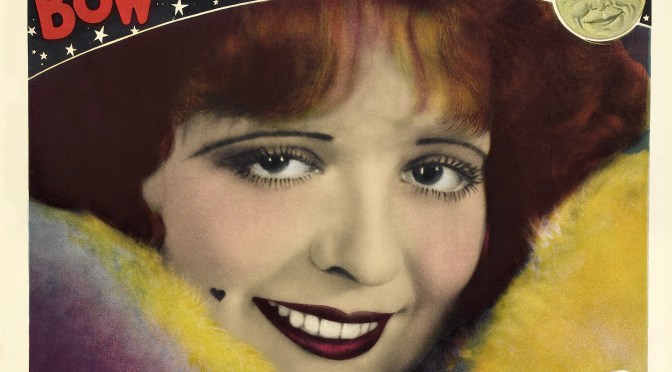
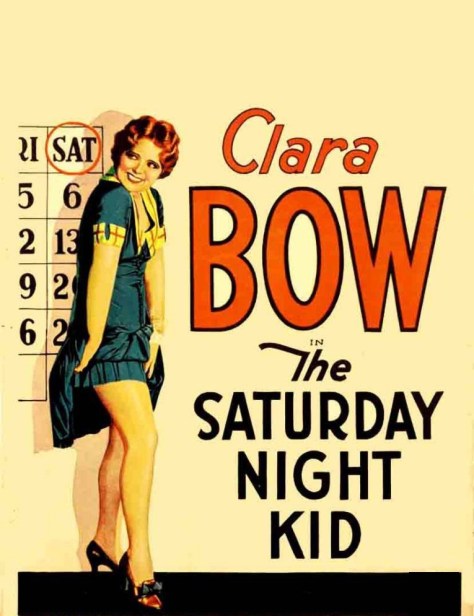
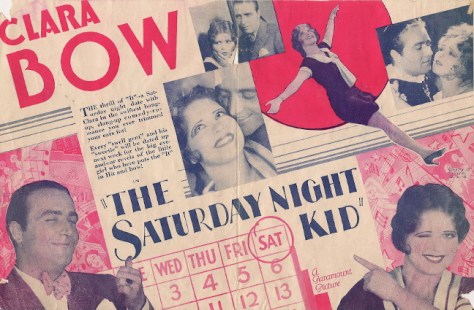
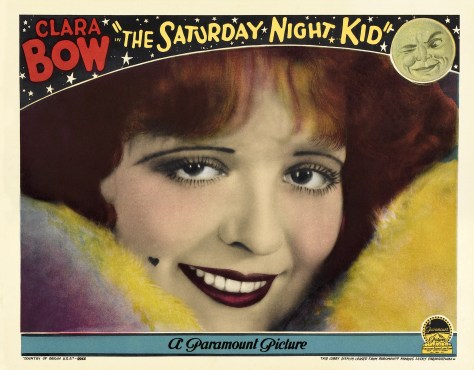
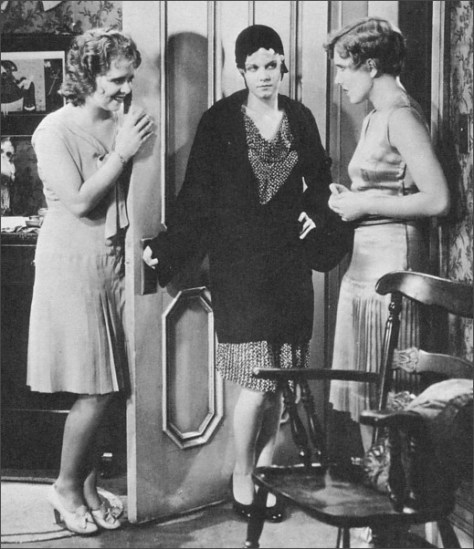
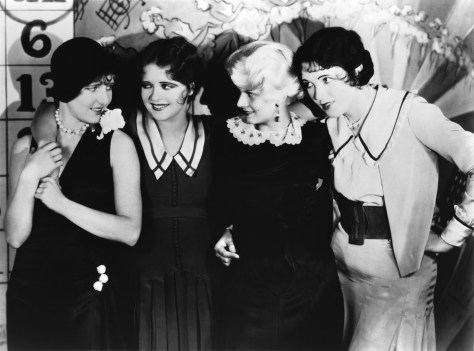
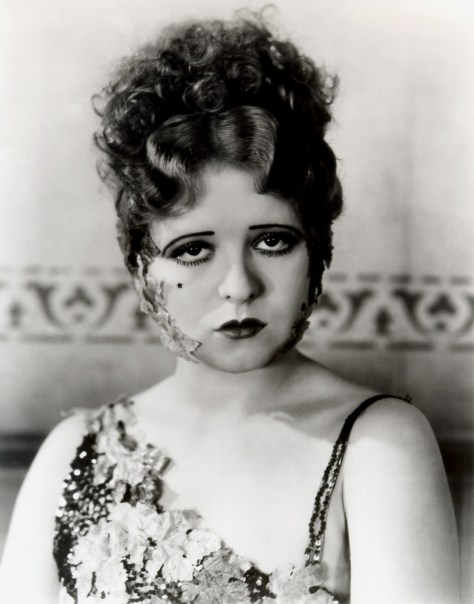
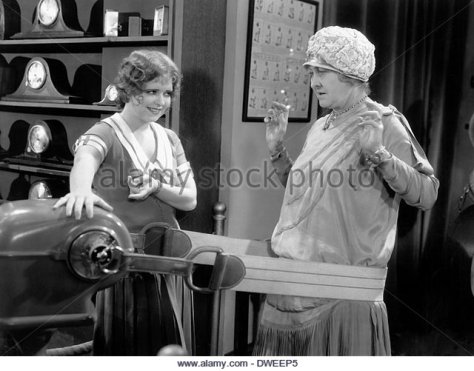
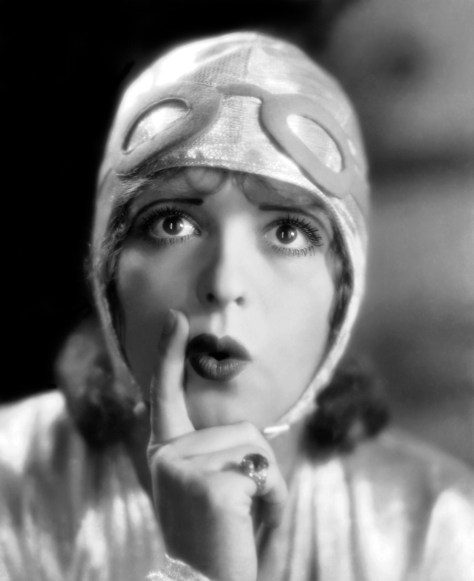
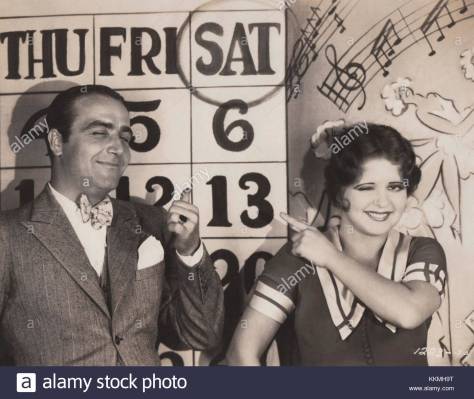
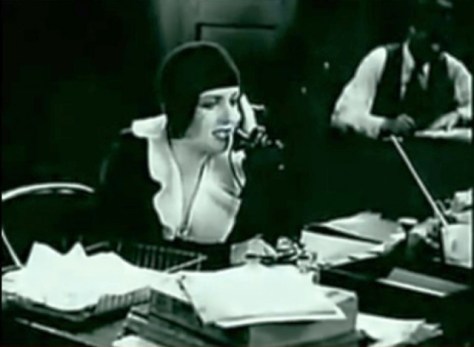
The Saturday Night Kid is a 1929 American Pre-Coderomantic comedy film about two sisters and the man they both want. It stars Clara Bow, Jean Arthur, James Hall, and in her first credited role, Jean Harlow. The film was based on the play Love ‘Em and Leave ‘Em (1926) by George Abbott and John V. A. Weaver. The movie still survives. The film was preserved by the UCLA Film & Television Archive with funding by Clara Bow biographer David Stenn.
Plot
Set in May 1929, the film focuses on two sisters – Mayme (Clara Bow) and Janie (Jean Arthur) – as they share an apartment in New York City. In daytime, they work as salesgirls at the Ginsberg’s department store, and at night they vie for the attention of their colleague Bill (James Hall) and fight over Janie’s selfish and reckless behavior, such as stealing Mayme’s clothes and hitchhiking to work with strangers.
Bill prefers Mayme over Janie and constantly shows his affection for her. This upsets Janie, who schemes to break up the couple.
One day at work, Bill is promoted to floorwalker, while Janie is made treasurer of the benefit pageant. Mayme, however, is not granted a promotion, but gets heavily criticized for constantly being late at work by the head of personnel, Miss Streeter (Edna May Oliver).
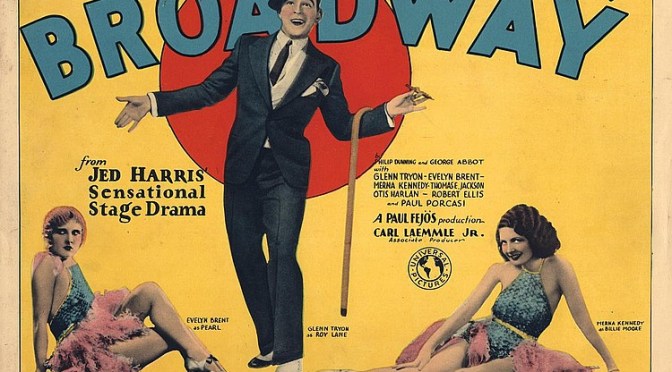
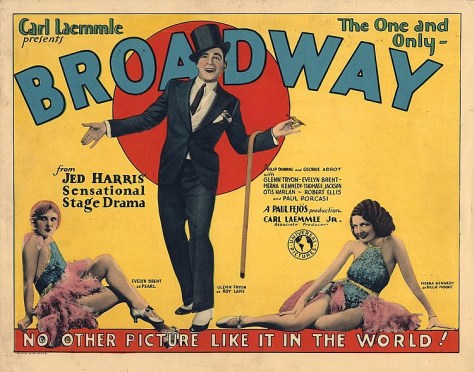
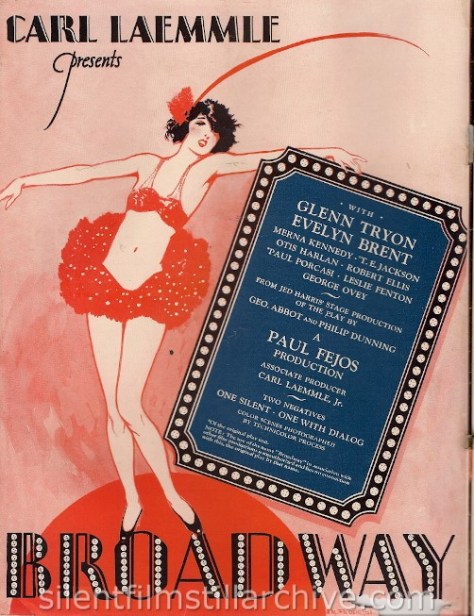
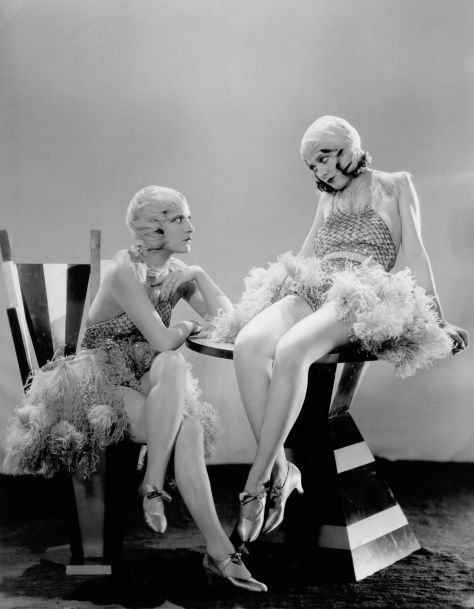
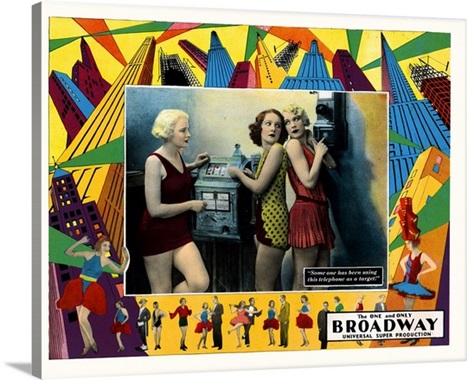
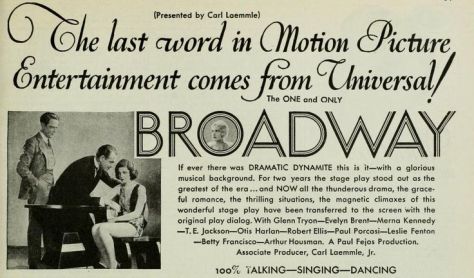
Cast: Glenn Tryon, Evelyn Brent, Merna Kennedy, Thomas E Jackson, Robert Ellis, Otis Harlan, Paul Porcasi, Marion Lord, Fritz Field, Leslie Fenton, Arthur Housman
This was Universal’s first talking picture with Technicolor sequences. The film was released by the Criterion Collection on Blu-ray and DVD with Paul Fejo’s Lonesome on August 2012.
Roy Lane and Billie Moore, entertainers at the Paradise Nightclub, are in love and are rehearsing an act together. Late to work one evening, Billie is saved from dismissal by Nick Verdis, the club proprietor, through the intervention of Steve Crandall, a bootlegger, who desires a liaison with the girl.
“Scar” Edwards, robbed of a truckload of contraband liquor by Steve’s gang, arrives at the club for a showdown with Steve and is shot in the back. Steve gives Billie a bracelet to forget that she has seen him helping a “drunk” from the club. Though Roy is arrested by Dan McCorn, he is later released on Billie’s testimony.
Nick is murdered by Steve. Billie witnesses the killing, but keeps quiet about the dirty business until she finds out Steve’s next target is Roy. Billie is determined to tell her story to the police before Roy winds up dead, but Steve isn’t about to let that happen and kidnaps her. Steve, in his car, is fired at from a taxi, and overheard by Pearl, he confesses to killing Edwards. Pearl confronts Steve in Nick’s office and kills him; and McCorn, finding Steve’s body, insists that he committed suicide, exonerating Pearl and leaving Roy and Billie to the success of their act.
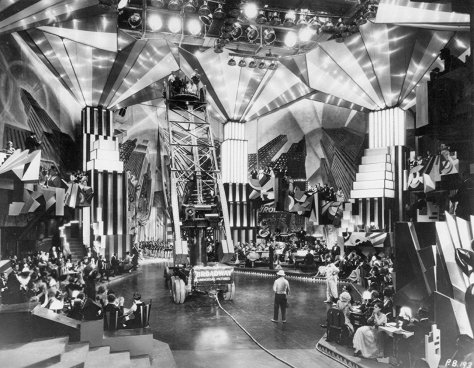
Director Fejos designed the camera crane specifically for use on this movie, allowing unusually fluid movement and access to nearly every conceivable angle. It could travel at 600 feet per minute and enlivened the visual style of this film and others that followed.
Preservation status
Both the silent version and the talking version of Broadway are extant, but the surviving talking version is incomplete. The color sequence at the end survives in color and in sound. In 2013, Broadway was restored by The Criterion Collection and released on DVD and Blu-ray.
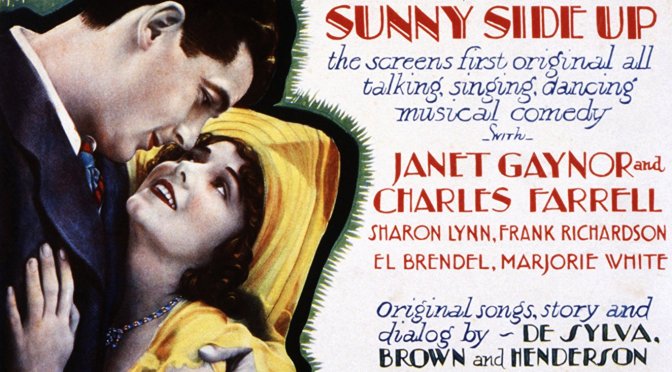
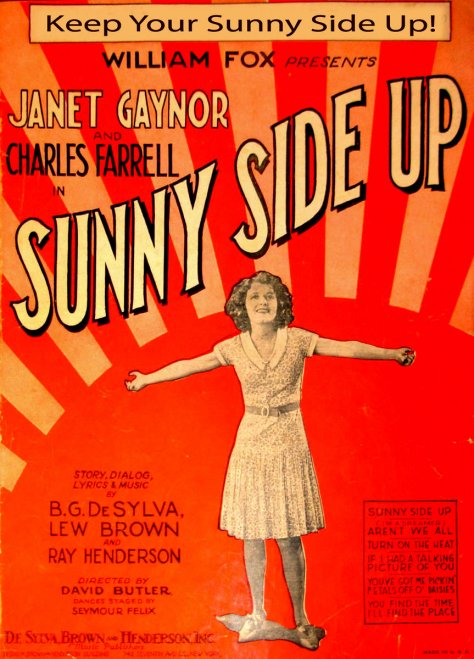
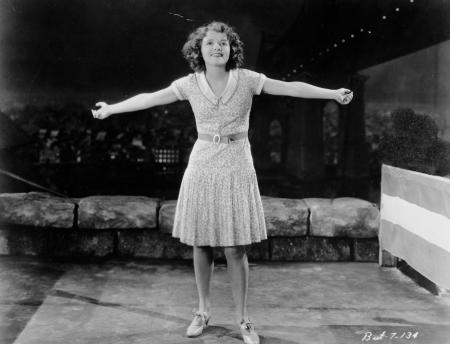
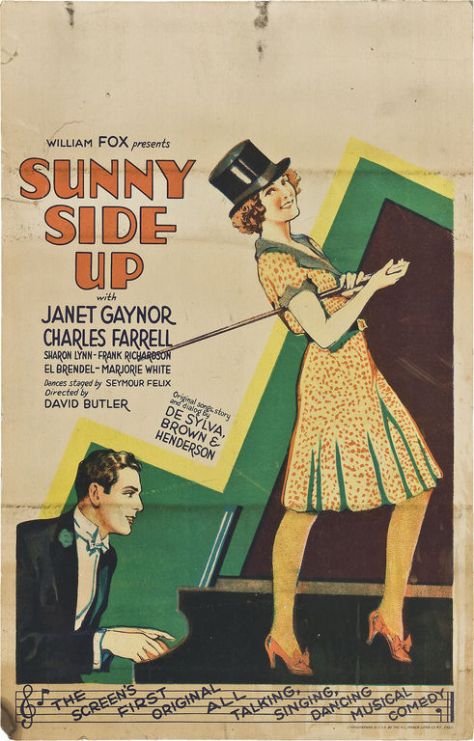
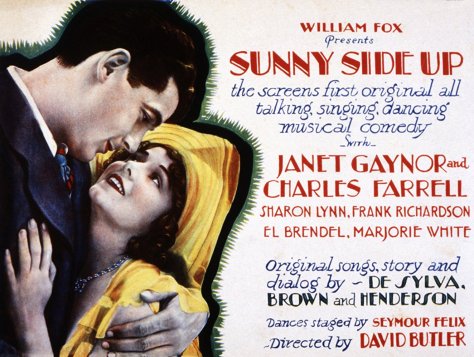
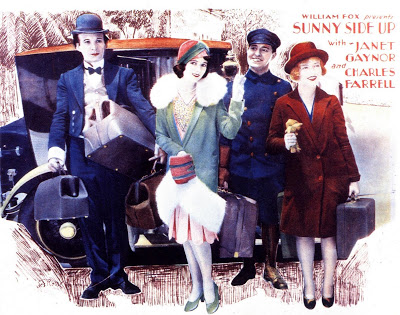
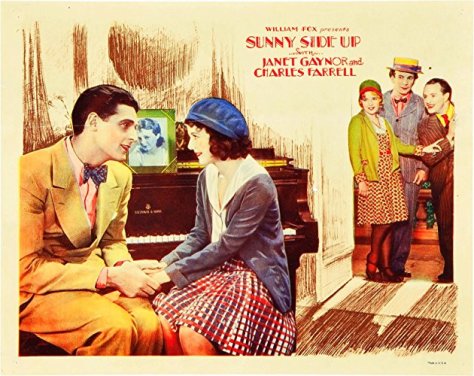
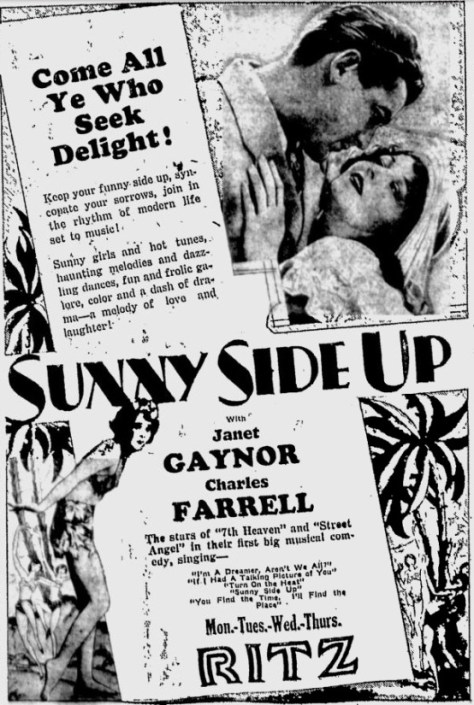
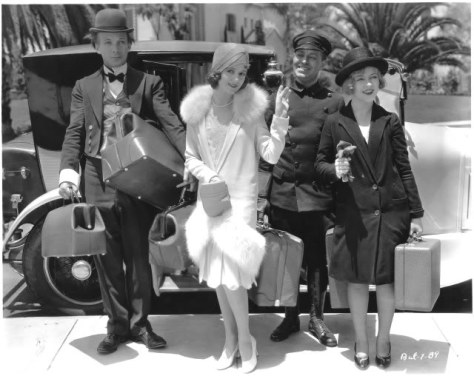
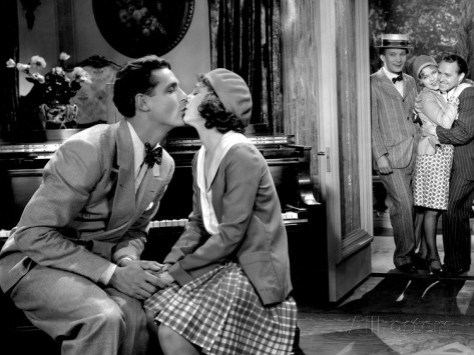
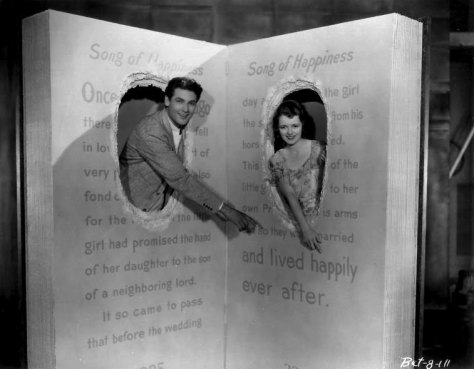
Cast: Janet Gaynor, Charles Farrell, Marjorie White, El Brendel, Mary Forbes, Peter Gawthorne, Sharon Lynn, Frank Richardson, Joe Brown, Henry Armetta, Sherwood Bailey, Jay Berger
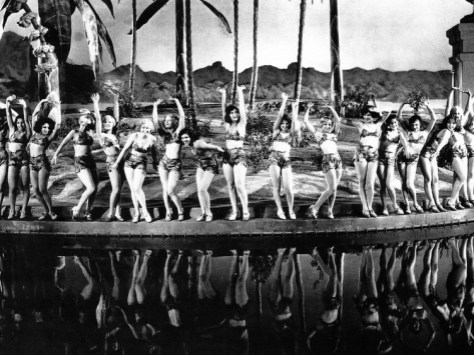
Comic relief is provided by grocer Eric Swenson (El Brendel), above whose shop Molly and her flatmate, Bea Nichols (Marjorie White), live.[3][4] Gaynor performs a charming singing and dancing version of the song “(Keep Your) Sunny Side Up” for a crowd of her neighbors, complete with top hat and cane. Later in the film, a lavish pre-Code dance sequence for the song “Turn on the Heat,” including scantily clad and gyrating island women enticing bananas on trees to abruptly grow and stiffen, with the graphic metaphor lost on no one, occurs without Gaynor’s participation.
The Times and The New York Times both express the opinion that the film, and the singing voices of Gaynor and Farrell, are all tolerable if not exactly worthy of praise. Despite the sugary sentimentality, the film is engaging, while the cinematography and special effects are impressive.[3][4]
Several times throughout the film Gaynor sings the tune “I’m a Dreamer, Aren’t We All?” and, on one occasion, sings it impressively, according to the New York Times.[3] The credits are: words, De Sylva & Brown; music, Ray Henderson.
An early popular recording was by Paul Whiteman and His Orchestra on October 16, 1929 with a vocal group including Bing Crosby[8] and this reached the charts in 1929.[9] The tune was also recorded by John Coltrane in 1958 [10] and included on his album Bahia (1964).
Another song in the film that would later be used as the theme song to the 1988 British sitcom Clarence.
In the 1950s, the song was used as the theme song for Sunnyside Up, a variety program produced by HSV-7 (a television station in Melbourne, Australia_. The song’s melody was later adapted by the Essendon Football Club for its club song, “See the Bombers Fly Up”, written by Kevin Andrews in 1959.[12]
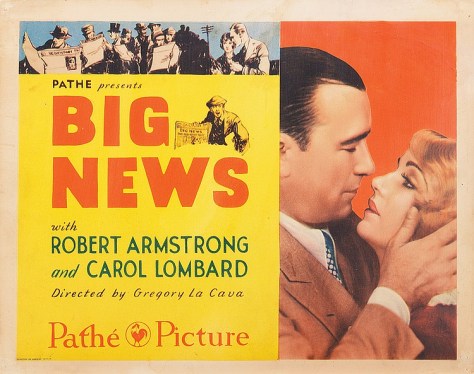
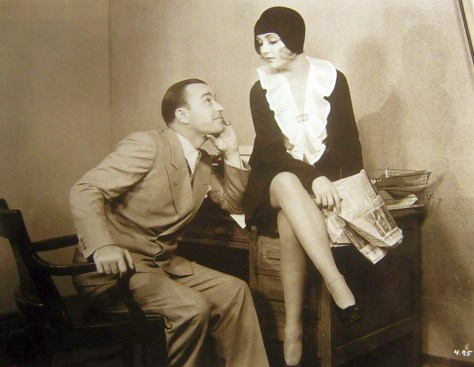
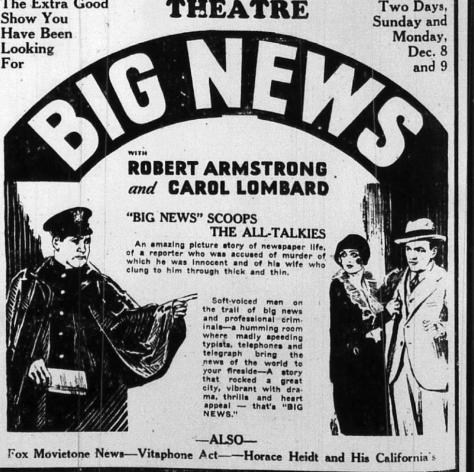
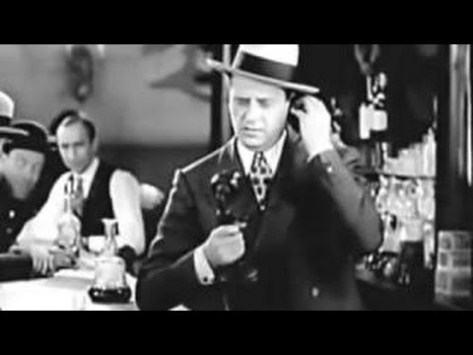
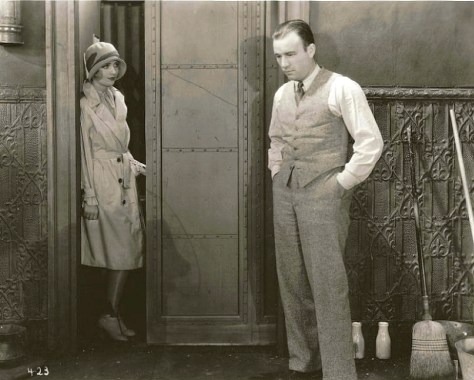
Cast: Robert Armstrong, Carole Lombard, Louis Payne, Wade Boteler, Charles Sellon, Sam Hardy, Tom Kennedy, Warner Richmond, Helen Ainsworth, Herbert Clark, George Gabby Hayes, Vernon Steele, Lew Ayres, Lynton Brent
Steve Banks (Armstrong) is a hard-drinking newspaper reporter. His wife Margaret (Lombard), a reporter for a rival paper, threatens to divorce him if he doesn’t quit the drinking that is compromising his career. Steve pursues a story about drug dealers even when his editor fires him. When the editor is murdered, Steve is accused of the killing.
Cast: Carole Lombard, Robert Armstrong, Roland Drew, Paul Hurst, Kit Guard, Al Hill, Robby Dunn, Budd Fine, Hedda Hopper, Jeanette Loff, John Loder, Winter Hall, Robert Parrish
68 min
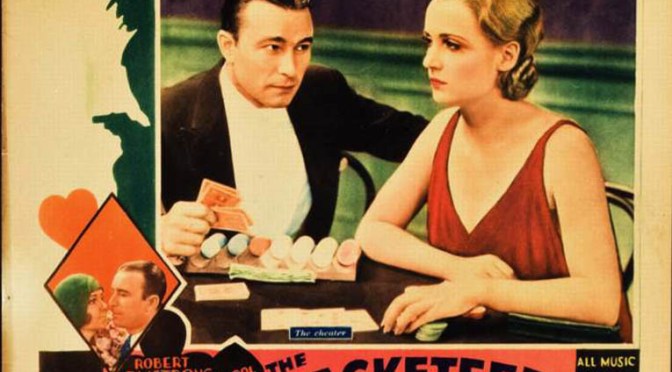
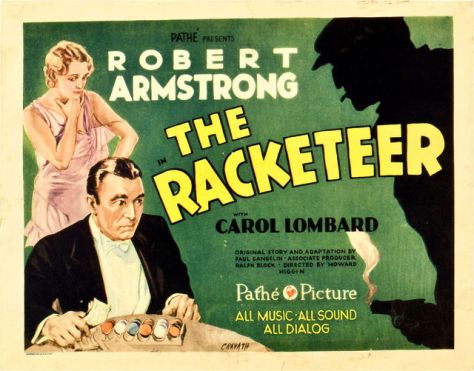
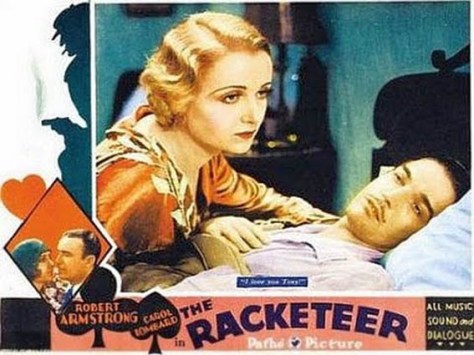
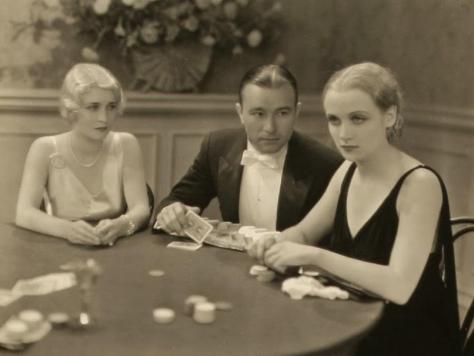
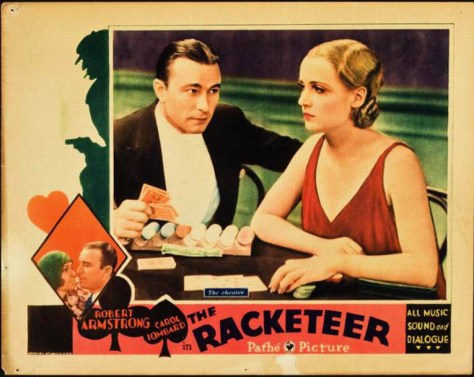
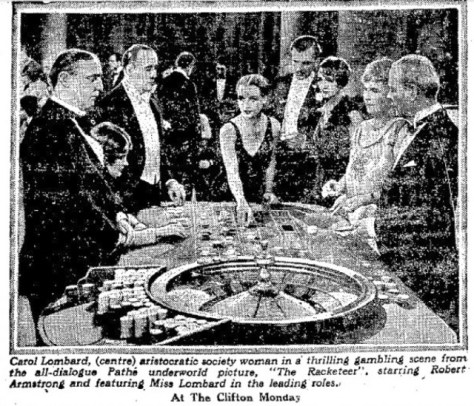
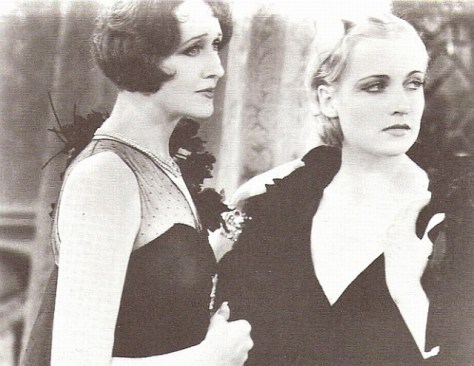
The Racketeer is a 1929 American Pre-Codedrama film. Directed by Howard Higgin, the film is also known as Love’s Conquest in the United Kingdom. It tells the tale of some members of the criminal class in 1920s America, and in particular one man and one woman’s attempts to help him. Gossip columnist Hedda Hopper appears in a minor role. The film is one of the early talkies, and as a result, dialogue is very sparse.
Plot
Mahlon Keene, a suave racketeer, notices Mehaffy, a policeman, arrest a shabby, drunken violinist for vagrancy and bribes him to forget the charge; after Keene and his henchman depart, Rhoda Philbrook appears in a taxi, addresses the musician as “Tony,” and has him driven away. Meanwhile, Keene arranges for a planned robbery to be delayed.
At a charity function, Keene takes an interest in Rhoda when he detects her cheating at cards; she reveals that she has left her husband for the violinist, whom she hopes to regenerate; and for Rhoda’s sake Keene arranges for Tony’s appearance at a concert. When threatened by Weber, a rival, Keene shoots him and, after the concert, bids farewell to Rhoda. The rival gang take revenge on Keene, leaving Tony and Rhoda to a new life together.








 Film Dialogue
You must be logged in to post a comment.