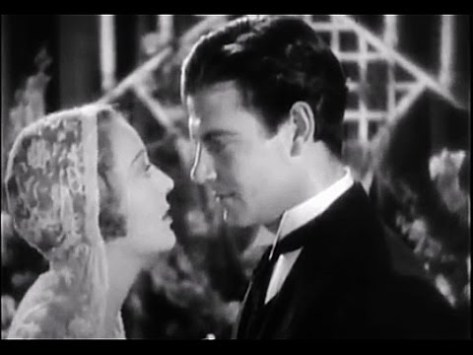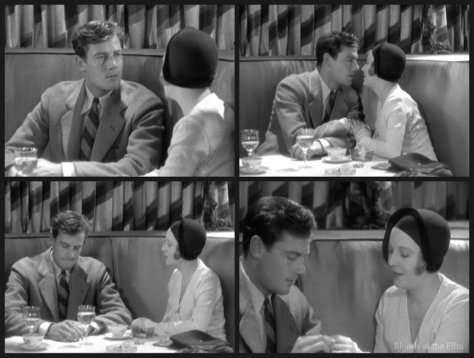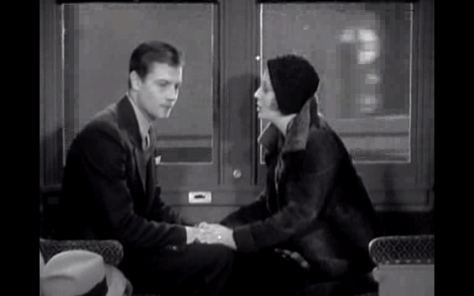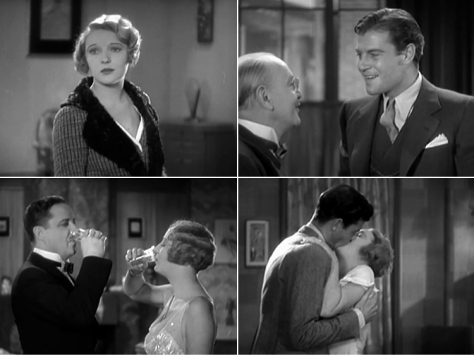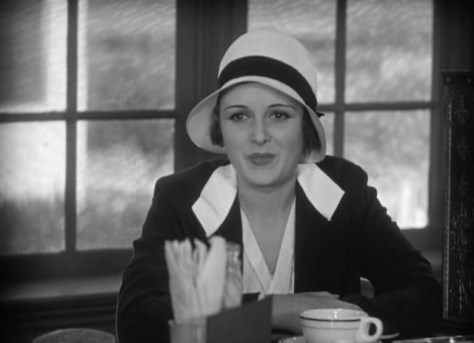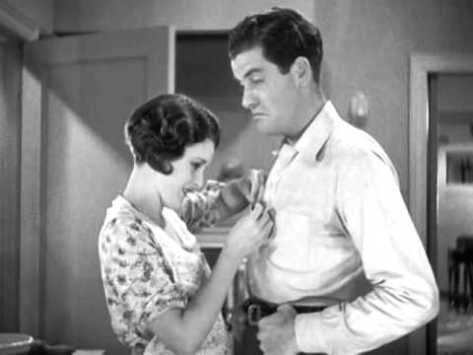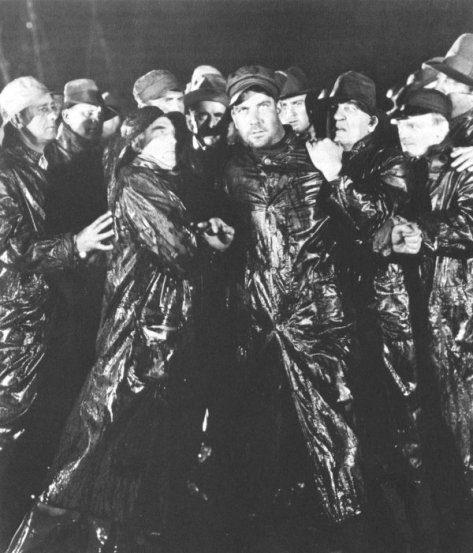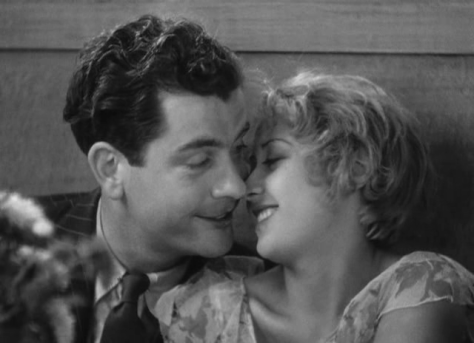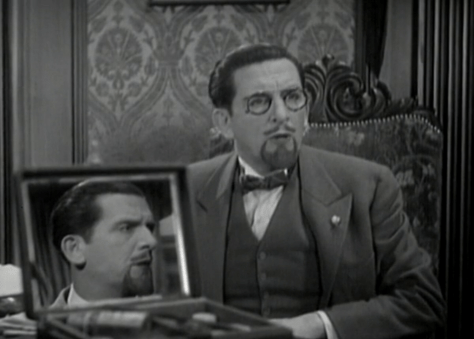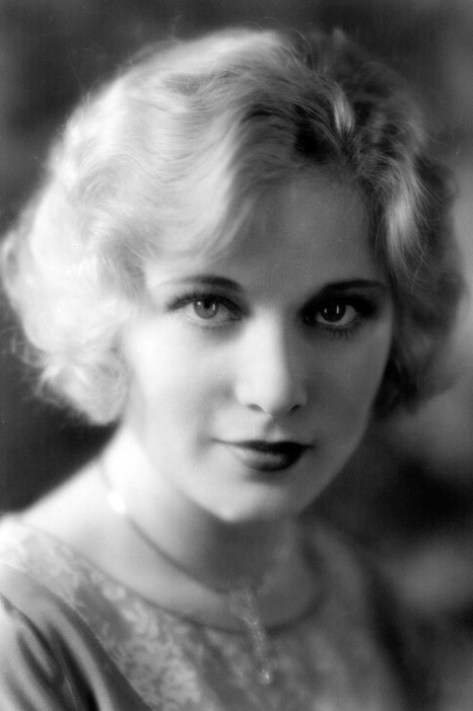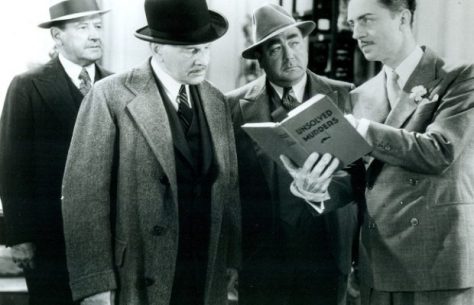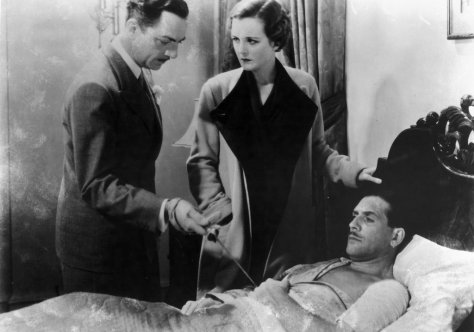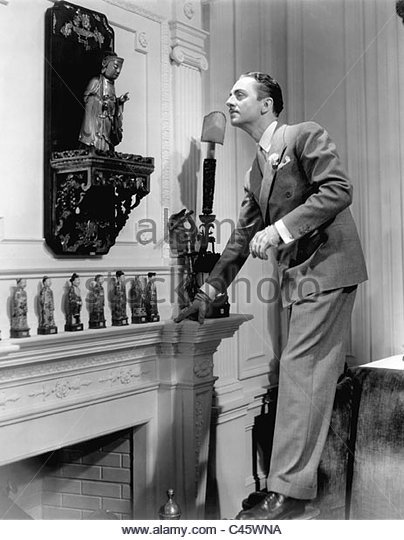
Tag Archives: 1930s hollywood

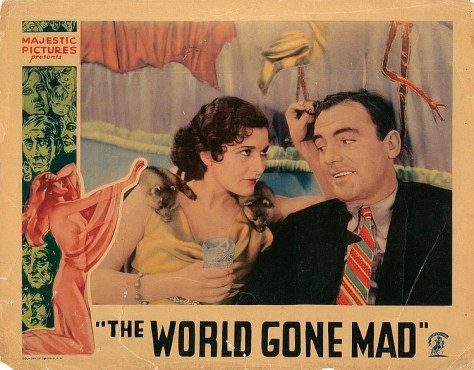
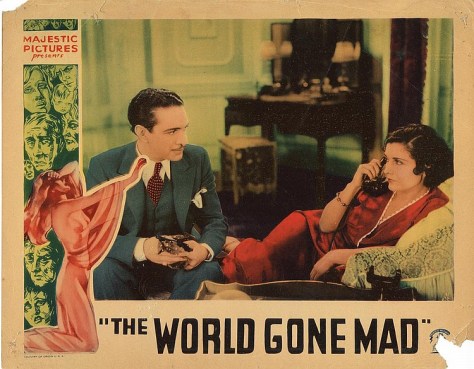
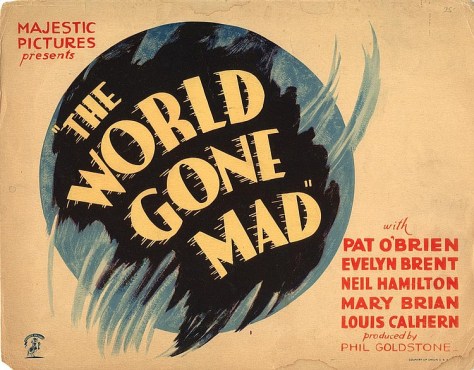
World Gone Mad, The (1933)


Pre Code Logo 1

Pre Code Hollywood Season: FD Cinematheque

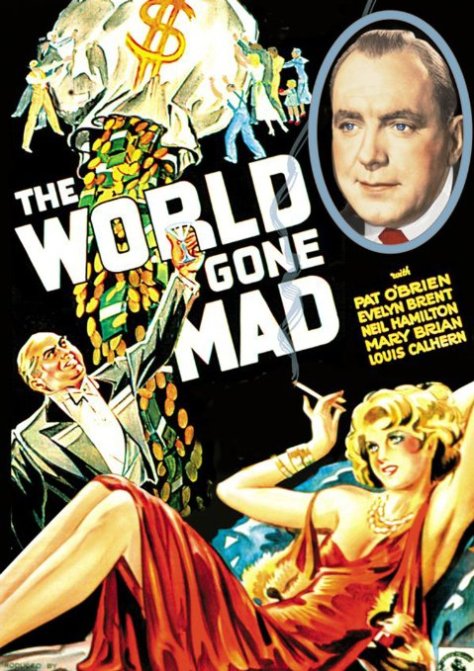
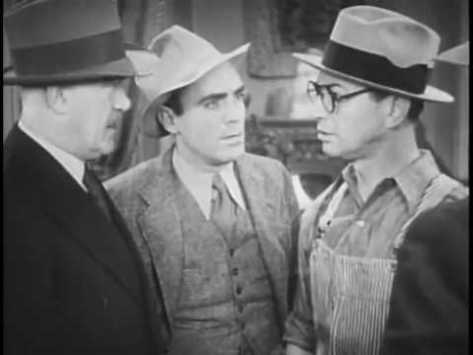
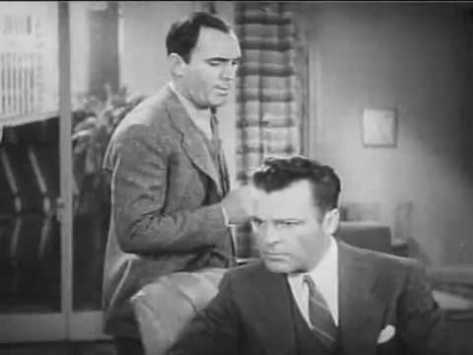
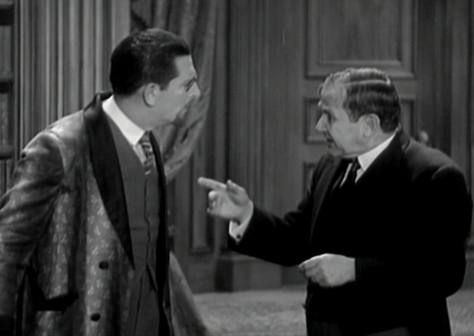
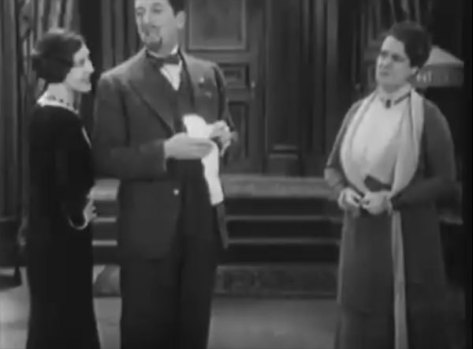
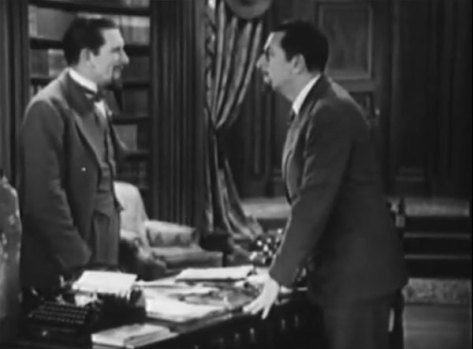
The World Gone Mad AKA The Public Be Hanged (1933)

World Gone Mad The 1

Director: Christy Cabanne

Cast: Pat O’Brien, Evelyn Brent, Neil Hamilton, Mary Brian, Louis Calhern, J Carrol Naish, Buster Phelps, Richard Tucker, Edward Van Sloan

80 min

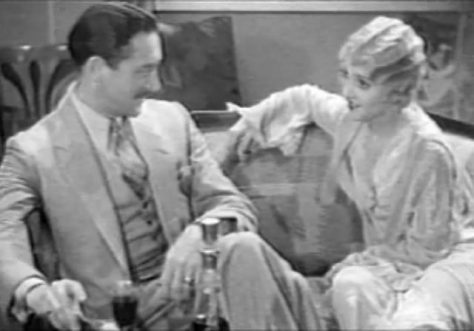
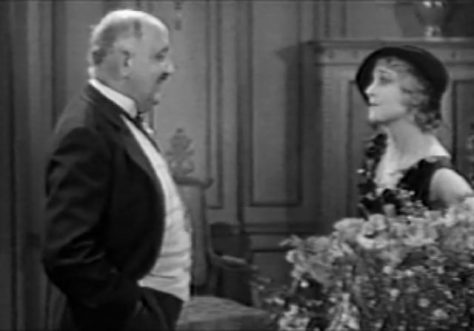
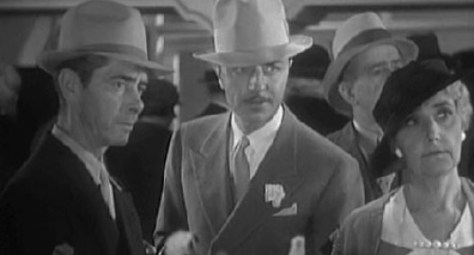
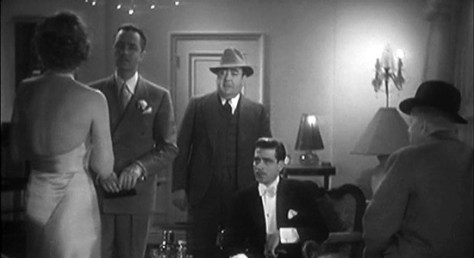
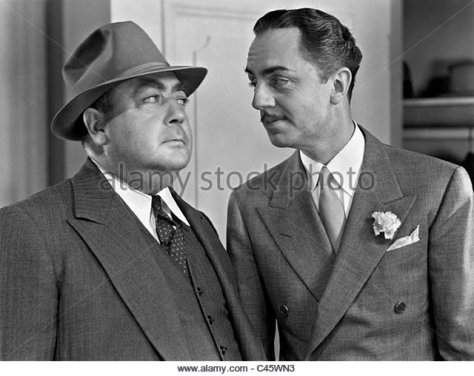
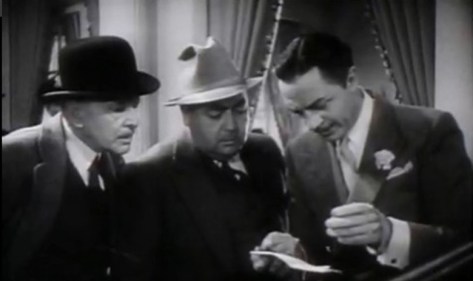
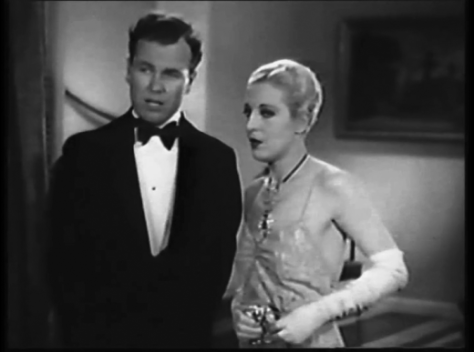
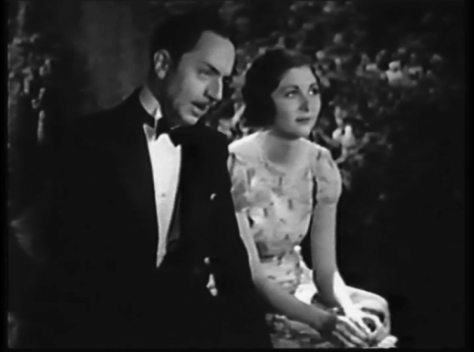
The World Gone Mad (also released as The Public Be Hanged) is a 1933 American Pre-Code crime film directed by Christy Cabanne and starring Pat O’BrienEvelyn Brent and Neil Hamilton.[1] It was made on a low-budget by the independent Majestic Pictures, a Poverty Row forerunner of Republic Pictures.[2]

World Gone Mad The 2

World Gone Mad The 3

Plot

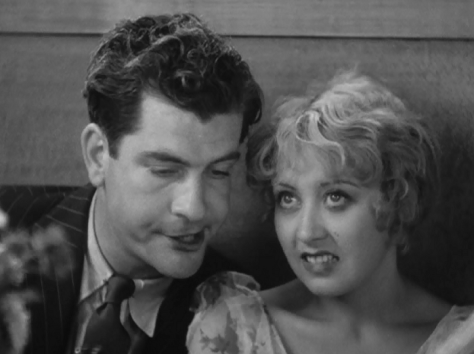
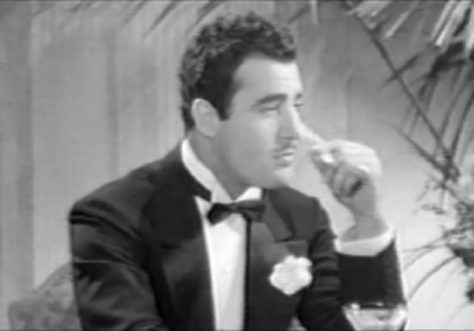
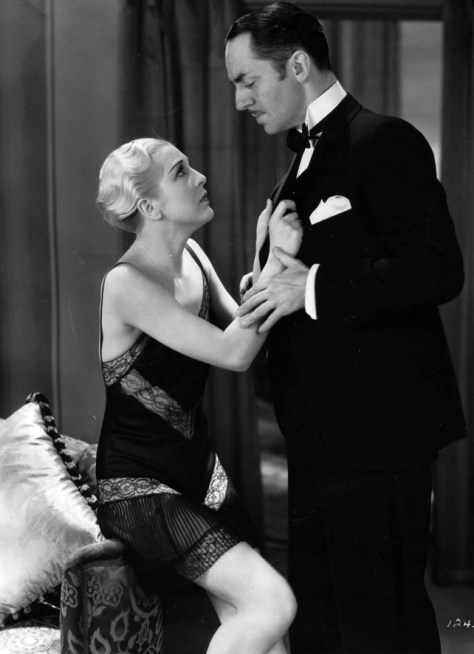
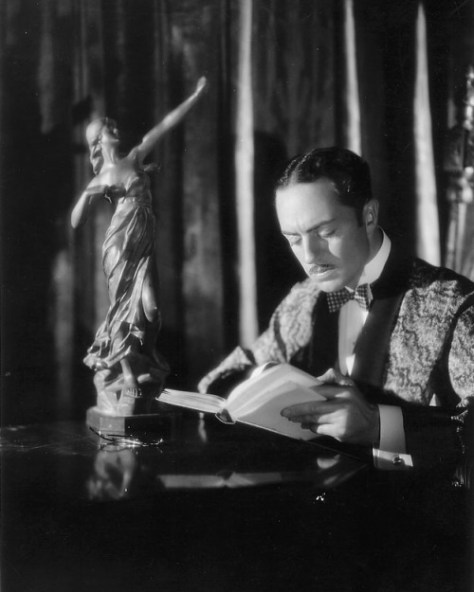
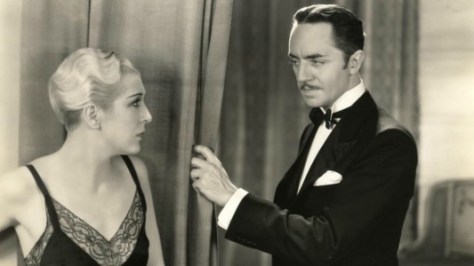
When a district attorney who has been investigating a utility company’s directors for fraud is suddenly killed, his wisecracking newspaperman friend (Pat O’Brien) gets curious. He and the upstanding new district attorney (Neil Hamilton) separately pursue the case. Cultivated but sinister businessmen, a shady nightclub owner specializing in “import and export”, several beautiful young women always seen in evening gowns, a “Latin lover” type who reads Casanova and an abundance of suave men in evening dress provide eye-candy for the duration.

World Gone Mad The 4

Cast

World Gone Mad The 5

References

World Gone Mad The 6

World Gone Mad The 7

World Gone Mad The 8

Film Collectors Corner

Watch The World Gone Mad Now – Amazon Instant Video

Blu Ray

Not released on Blu Ray

DVD

X Marks The Spot (1931)


Pre Code Logo 1

Pre Code Hollywood Season: FD Cinematheque

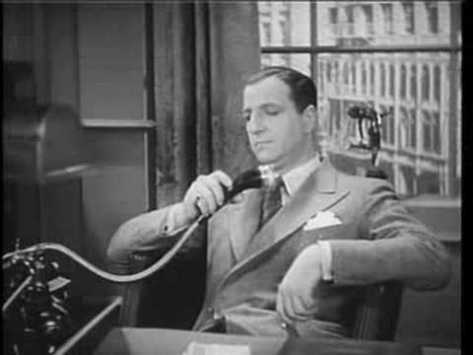
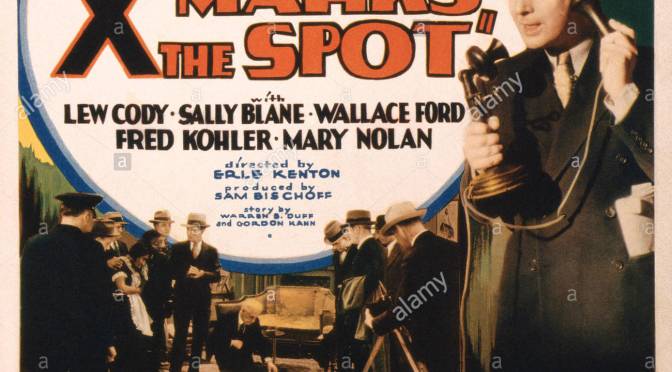
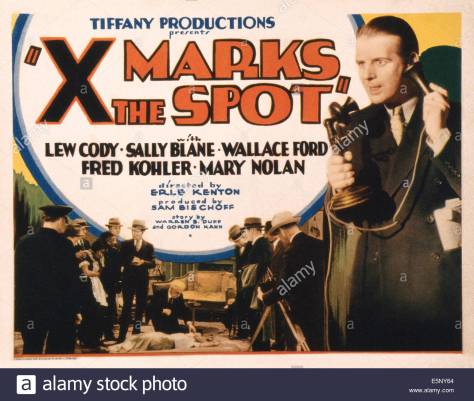
X Marks The Spot (1931)

X Marks the Spot 1

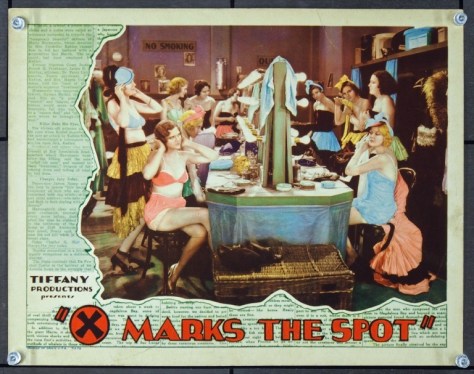
X Marks the Spot 9

Director: Erle C Kenton

Cast: Lew Cody, Sally Blane, Wallace Ford, Mary Nolan, Fred Kohler, Charles Middleton, Virginial Lee Corbin, Joyce Coad, Richard Tucker, Hank Mann, Helen Parrish

72 minutes

X Marks the Spot 7

X Marks the Spot is a 1931 American pre-Code crime drama film, directed by Erle C. Kenton and released by Tiffany Pictures, which operated from 1921 to 1932.

The story concerns a newspaper reporter indebted to a gangster for raising the money to save his little girl’s life. The source material was remade into a 1942 film of the same name. Helen Parrish appeared in both versions.

Plot

Ted Lloyd, a reporter for a small-town newspaper, follows an ambulance to the scene of an accident where he discovers that his young sister Gloria is the victim. Gloria’s doctor tells Ted that if she is ever to walk again, Ted must find the money to send her to Germany for an operation.

Ted asks all his friends, including his editor George Howard, for help, but although they are sympathetic, none has the necessary money. Desperately, Ted approaches Riggs, a local gangster. At first, Riggs flatly refuses to make the loan. Ted then offers to exchange secret information about the District Attorney for the money. Riggs angrily denounces Ted as an informer, then unexpectedly decides to give him the money for the operation. Ted promises never to forget Riggs’ kindness.

X Marks the Spot 4

Eight years later, George has become the editor of the New York Gazette and Ted works as the Broadway gossip columnist. When Ted writes an item about showgirl Vivyan Parker, implying that she is being kept by a wealthy man, she sues the paper for libel. Eager to avoid the suit, George sends Ted to Vivyan’s apartment to obtain a release. Ted sneaks into her apartment with the help of the doorman, but Vivyan refuses to sign the release and orders him out of her apartment. When she is later found murdered, Ted is the primary suspect.

In order to clear his name, Ted, who believes that robbery was the motive for Vivyan’s murder, obtains a list of her jewelry from her lover, E. T. Barnes. He contacts several fences and, with the help of one of them, discovers that the murderer is Riggs. Remembering that Riggs once did him a favor, Ted does not reveal his name, but George, suspecting that Ted knows who committed the murder, follows him to his meeting with Riggs and Riggs is arrested.

X Marks the Spot 5

Believing that Ted betrayed him, Riggs swears vengeance. During the trial, one of Riggs’ cronies tapes a gun beneath the table where Riggs waits for sentencing. When a guilty verdict is returned, Riggs uses the gun to shoot a guard and abduct one of the jurors. Riggs holds the man hostage, insisting that he will release him in exchange for Ted. Ted agrees, entering the room where Riggs waits at the same time the police release a smoke bomb. In the following gun battle, Riggs is killed and Ted is wounded. While Ted is in the hospital, George takes over his column. His final effort announces Ted’s engagement to his secretary, Sue.

X Marks the Spot 6

Cast

X Marks the Spot 3

X Marks the Spot 8

Film Collectors Corner

Watch X Marks the Spot Now – Instant Video on You Tube

Blu Ray

Not released on Blu Ray


DVD

Vampire Bat, The (1933)


Pre Code Logo 1

Pre Code Hollywood Season: FD Cinematheque

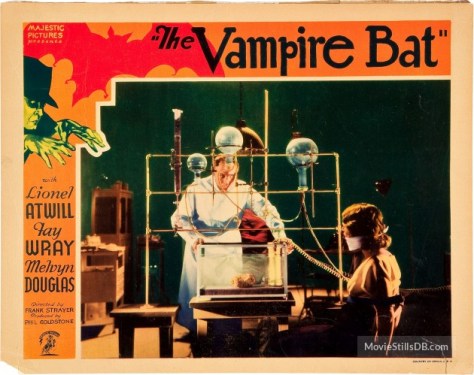
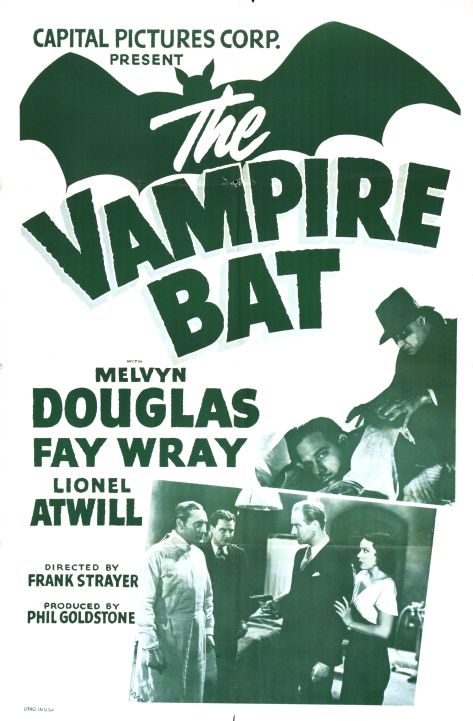
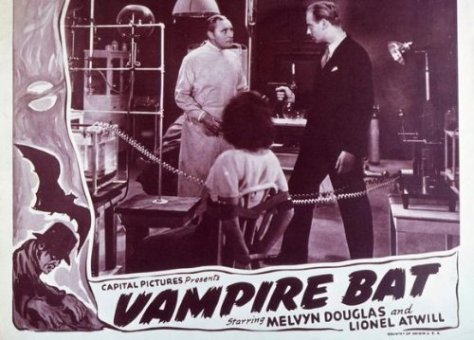
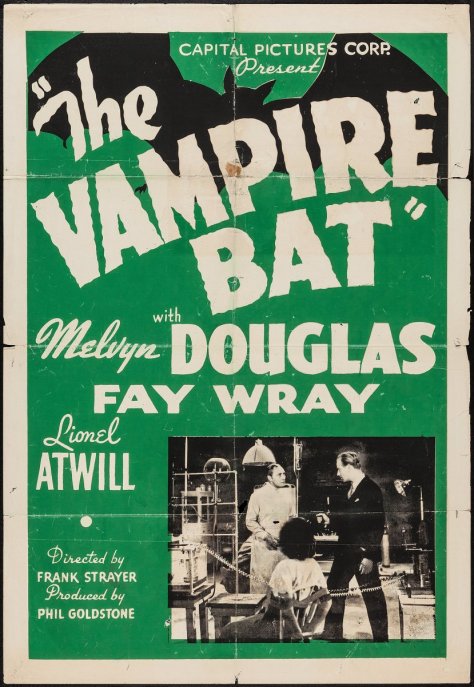
The Vampire Bat (1933)

Vampire Bat The 1

Vampire Bat The 2

Vampire Bat The 3

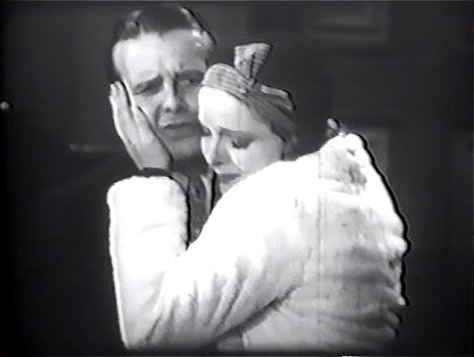
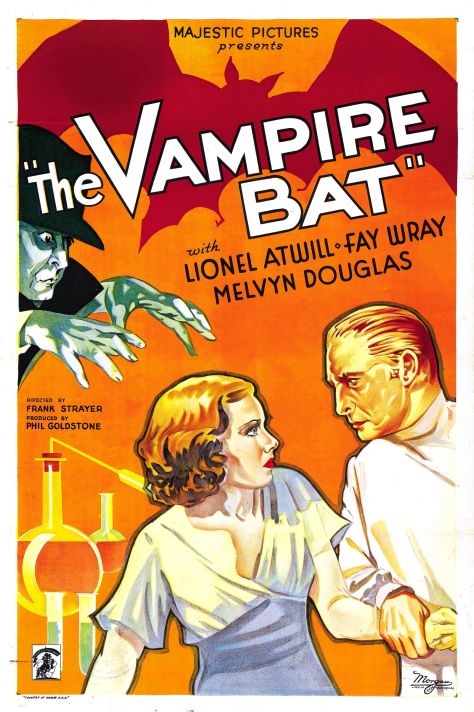
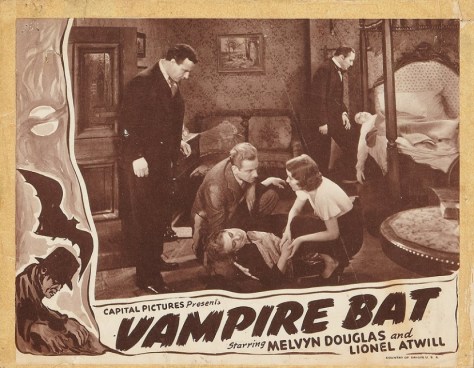
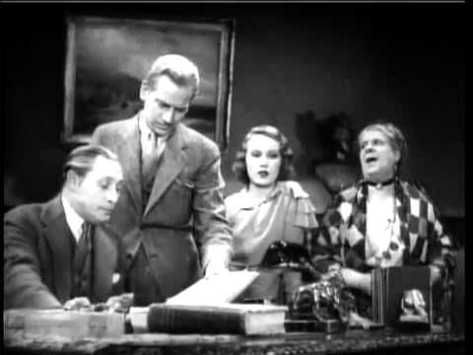
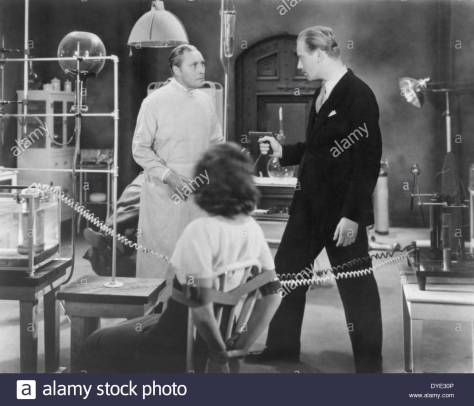
The Vampire Bat is a 1933 American pre-Code horror film starring Lionel AtwillFay WrayMelvyn Douglas, and Dwight Frye.

Plot outline

When the villagers of Kleinschloss start dying of blood loss, the town fathers suspect a resurgence of vampirism, but police inspector Karl Breettschneider remains skeptical. Scientist Dr. Otto von Niemann, who cares for the victims, visits a patient who was attacked by a bat, Martha Mueller.

Vampire Bat The 5

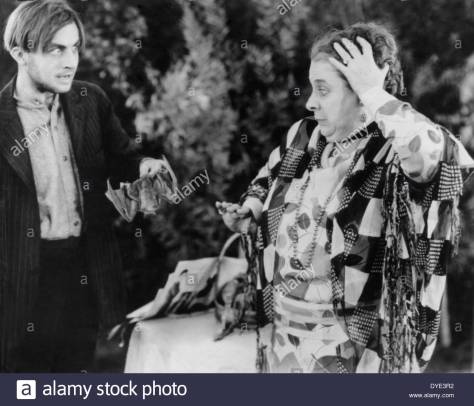
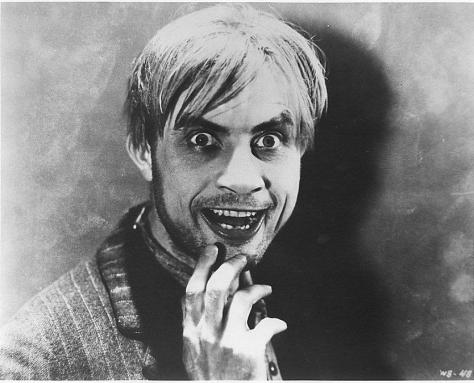
Martha is visited by a mentally challenged man named Herman, who claims he likes bats because they are “soft like cat” and “nice”. On the doctor’s journey home, he meets Kringen, one of the townsfolk, who claims to have been attacked by the vampire in the form of a bat, but withheld his story from the town to not spread fear. Dr. von Niemann encourages Kringen to tell the townsfolk of his story.

Kringen becomes suspicious that Herman Glieb may be the vampire due to his obsession with bats. Herman lives with bats and collects them off the street.

Dr. von Niemann returns to his home, which also houses Breettschneider’s love Ruth Bertin, Ruth’s hypochondriac aunt Gussie Schnappmann, and servants Emil Borst and Gorgiana. Fear of the vampire and suspicion of Glieb quickly spread around the town, and people start fearing him.

Vampire Bat The 4

Ms Mueller is killed that night. The analyses of Dr. von Niemann and another doctor, Dr. Haupt, conclude that the death is the same as all of the previous deaths – blood loss, with two punctures in the neck caused by needle-sharp teeth. Gleib enters the examination, and upon seeing the dead body, runs away screaming.

Next morning, Glieb enters Dr. von Niemann’s garden, where Dr. von Niemann, Breettschneider, and Bertin are discussing vampires inside the house. The town fathers enter the house and announce that Kringen is dead and Gleib is missing. An angry mob hunts down Gleib and chases him through the countryside and into a cave, where he falls to his death.

That night, Dr. von Niemann is seen telepathically controlling Emil Borst, as he picks up sleeping Gorgiana and takes her down to Dr. von Niemann’s laboratory, where a strange organism is seen. They then drain her blood from her neck.

Vampire Bat The 6

Schnappmann then discovers Gorgiana’s body in her bed. Dr. von Niemann and Breettschneider investigate and find Ms Mueller’s crucifix, which Glieb handled the night Dr. von Niemann visited her. Breettschneider is becoming more convinced of the presence of vampires in the village as no other plausible explanations for the deaths can be found. As Glieb was seen in the garden that morning, the two conclude he is guilty.

Upon hearing of Glieb’s death, however, Breettschneider’s conviction is erased. Dr. von Niemann tells Breettschneider to go home and take sleeping pills, but gives him poison instead, intent on draining his blood. Bertin discovers Dr. von Niemann telepathically controlling Borst, who is at Breettschneider’s house.

It is revealed that Dr. von Niemann has created life, and is using the blood to fuel his organism. He ties Bertin up in his lab. Borst supposedly enters with Breettschneider’s body on a trolley. Dr. von Niemann walks over to Borst, who is revealed to be Breettschneider (who did not take the pills) in costume, with the real Borst on the trolley. Breettschneider pulls a gun on Dr. von Niemann, and walks over to untie Bertin. Dr. von Niemann then wrestles Breettschneider, who drops the gun. As the two fight, Borst picks up the gun and shoots Dr. von Niemann.

Vampire Bat The 7

Production

Fay Wray and Lionel Atwill had been in the successful film Doctor X the previous year, and had already wrapped up work on Mystery of the Wax Museum for Warner Bros. This was quite a large-scale release and would have a lengthy post-production process. Seeing a chance to exploit all the advance press, poverty row studio Majestic Pictures Inc. contracted Wray and Atwill for their own “quickie” horror film, rushing The Vampire Bat into production and releasing it in January 1933.

Vampire Bat The 8

Majestic Pictures had lower overheads than the larger studios, which were struggling at the time during the Great Depression. Part of the reason that The Vampire Batlooked almost as good as any Universal Pictures horror film is because Majestic leased James Whale‘s castoffs, the “German Village” backlot sets left over from Frankenstein (1931) and the interior sets from his film The Old Dark House (1932), plus some location shooting at Bronson Caves.

Vampire Bat The 9

Completing the illusion that this was a film from a much bigger studio, Majestic hired actor Dwight Frye to populate scenes with Wray and Atwill. A stock musical theme by Charles Dunworth, “Stealthy Footsteps”, was used to accompany the opening credits.[1]

The Vampire Bat ruse worked well for Majestic, which was able to rush the quickie film into theaters less than a month before Warner’s release of Mystery of the Wax Museum. According to The Film Daily (January 10, 1933), the film’s running time was 63 minutes, like most extant prints.

Cast

Vampire Bat The 10

See also

References

  1. Jump up^ Larson, Randall D. (1985). Musique fantastique: a survey of film music in the fantastic cinema. Scarecrow Press. p. 32; ISBN 0810817284.
  2. Jump up^ “Scientific Horror”. New York Times. January 23, 1933. Retrieved 2013-05-14

Vampire Bat The 12

Vampire Bat The 13

Vampire Bat The 14Vampire Bat The 15

Film Collectors Corner

Watch The Vampire Bat Now – Instant Video on You Tube


Blu Ray

Not released on Blu Ray


DVD

Twin Husbands (1933)


Pre Code Logo 1

Pre Code Hollywood Season: FD Cinematheque

Twin Husbands (1933)

Twin Husbands 3

Director: Frank R Strayer

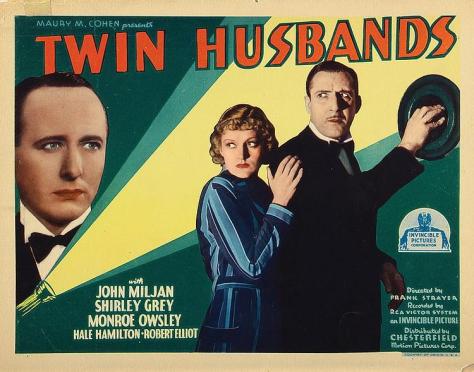
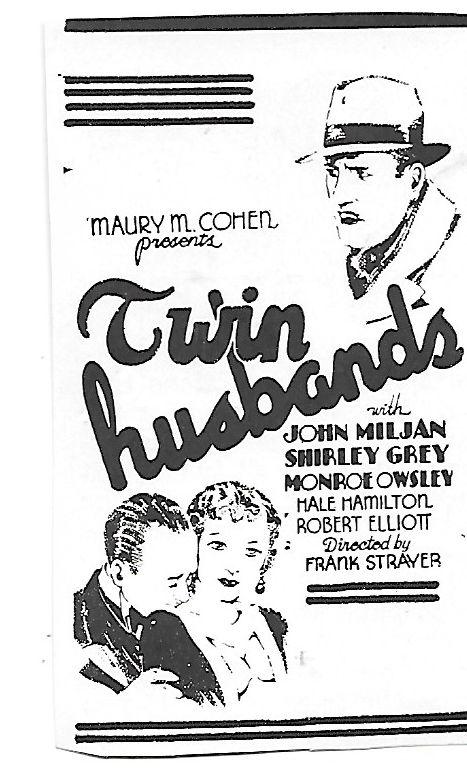
Cast: John Miljan, Shirley Grey, Monroe Owsley, Hale Hamilton, Robert Elliott, Wilson Benge, Maurice Black, Robert Walker

68 min

Twin Husbands 9


Twin Husbands is a 1933 American Pre-Code film directed by Frank R. Strayer.

Plot summary

After he wakes from a deep sleep in a strange Long Island mansion, a dazed man finds a calendar dated 1938, four years later than his last recollection, and evidence that his name is Jerome “Jerry” Peyton Werrenden. Greyson, a butler, tells Jerry that he is the mansion’s owner and that he has been ailing mentally for months.

Jerry, however, quickly deduces that he has been kidnapped and drugged and that Greyson was hired to pose as a longtime servant as part of a scheme to convince him that he is suffering from amnesia.

Twin Husbands 5

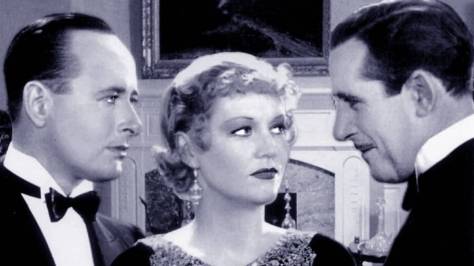
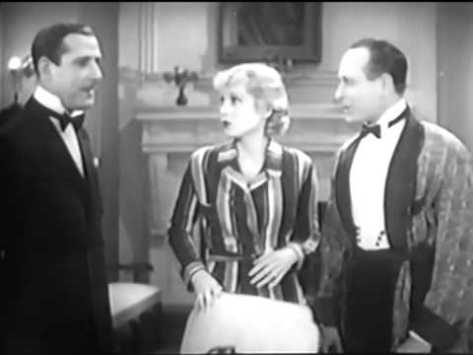
Curious about the scheme, Jerry pays Greyson to continue his part, while he pretends to be Werrenden with Chloe, his supposed wife, and with Colton Drain, his supposed secretary. When Chloe and Colton realize that Jerry is wise to the plot, they offer him $10,000 to impersonate Werrenden, who is living in Europe, in a meeting with Colonel Gordon Lewis, the estate trustee, who has been asked to deliver $200,000 in bonds. Jerry accepts the offer and, while waiting for the colonel, overhears Chloe and Colton discussing plans to leave for South America.

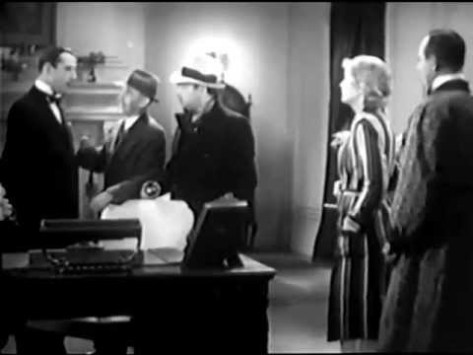
After requesting a signed receipt, Lewis, apparently fooled by the impersonation, gives Jerry the bonds, which Jerry then places in a safe, the combination to which only the real Werrenden knows. Later that night, Colton and Chloe discover two thugs, Feets and Chuck, breaking into the safe.

Twin Husbands 2

When the thugs see Jerry, they identify him as The Sparrow, a master “cracksman,” and as a favor to his fellow crooks, Jerry allows them to escape before the police arrive. After a confused interrogation of Chloe, Colton, Lewis and Greyson about Jerry’s identity, Sergeant Kerrigan orders Jerry and Chloe to police headquarters. To Chloe’s surprise, however, Jerry takes her to his house, explaining that Greyson had telephoned his minion, Kerrigan, with orders to impersonate a police sergeant.

After Jerry determines that Chloe was actually trying to save her ne’er-do-well husband from the financial scheming of Colton, he confronts Lewis about the bonds. Cornered, Lewis confesses that he had hired Feets and Chuck to steal the bonds because he needed the money to cover his own overdraughts.

Twin Husbands 4

Jerry then breaks into Colton’s private vaults and unearths several documents that reveal that Colton had covered up news of Werrenden’s death and had stolen his securities. Jerry returns to the Werrenden mansion and shows Chloe, with whom he has fallen in love, his evidence. Supported by Chloe, a repentant Lewis and Greyson, Jerry convinces the police that he is Werrenden and that Colton is suffering a nervous breakdown.

Unable to expose Colton to the police because of his own criminal activities, Jerry nonetheless satisfies Chloe by forcing Colton to agree to leave immediately for South America. Chloe then convinces a reformed Jerry not to run away, but to stay with her indefinitely.

Twin Husbands 6

Cast

External links

Twin Husbands 7

Film Collectors Corner

Watch Twin Husbands Now – Instant Video on You Tube

Blu Ray

Not released on Blu Ray


DVD

Not released on DVD


East of Borneo (1931)


Pre Code Logo 1

Pre Code Hollywood Season: FD Cinematheque

East of Borneo (1931)

East of Borneo 1

East of Borneo 3

Director: George Melford

Cast: Rose Hobart, Charles Bickford, Georges Renavent, Lupita Tovar, Noble Johnson, Tom London

77 min

East of Borneo 6

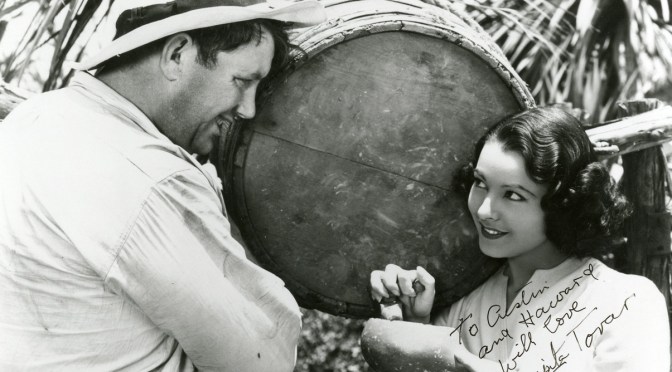
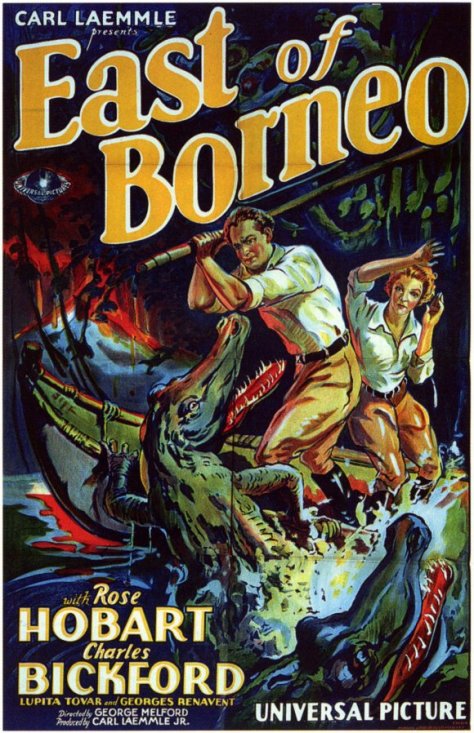
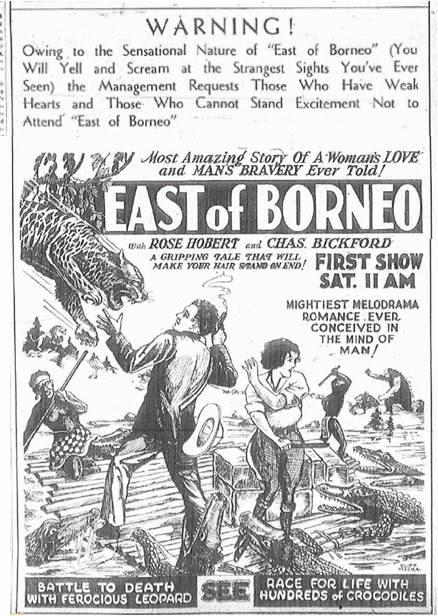
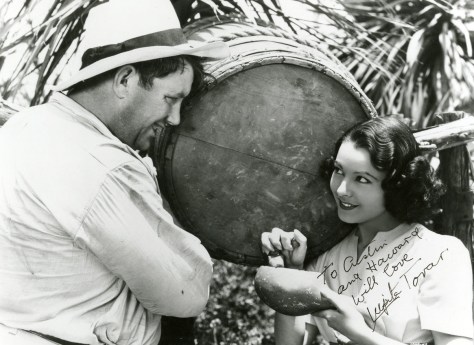
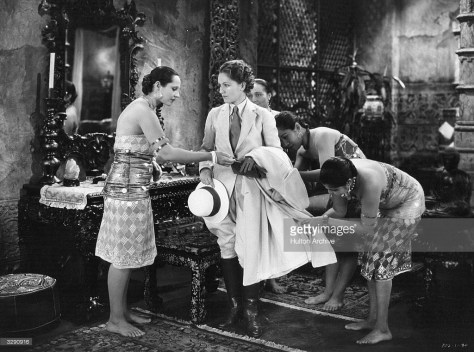
East of Borneo (1931) is an American Pre-Code adventure film directed by George Melford, co-written by Edwin H. Knopf and Dale Van Every, starring Rose HobartCharles BickfordGeorges RenaventLupita Tovar, and Noble Johnson, and released by Universal Studios.

In 1936, artist Joseph Cornell edited this feature film into his short experimental film Rose Hobart which runs about 19 minutes.

East of Borneo 7

Plot

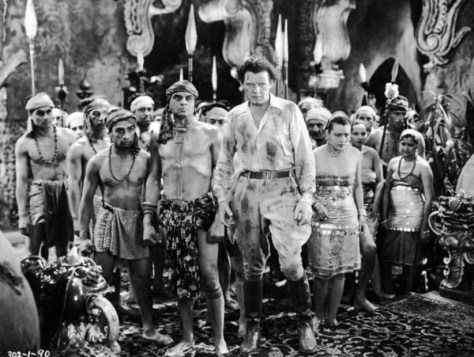
Linda Randolph (Hobart) looks for her husband on the island of Marado just east of Borneo. Although Linda is warned that Marado’s jungles are “entirely too dangerous” for a woman, she persists through dangerous raft rides and wild crocodiles. She discovers that her husband is now the personal physician to the island’s enigmatic prince. The prince lusts for Linda, and a love triangle ensues.

East of Borneo 5

Production

The film was shot largely at Universal Studios. Despite being essentially a b-picture, East of Borneo featured elaborate sets. Props and set dressing used in the film were reportedly valued at $100,000; this figure includes a large $25,000 Buddha statue, a very rare small white Buddha and a long mother-of-pearl inlaid bench, silver dinner utensils and Oriental rugs and drapery.[1]

References

  1. Jump up^ “East of Borneo” Set Cost $100,000. The Florence Times Vol VIII. Number 252. 29 April 1932. p 6. Retrieved 29 February 2016

East of Borneo 9

East of Borneo 11

East of Borneo 12

East of Borneo 13

Film Collectors Corner

Watch East of Borneo Now – Instant Video on Internet Archive 


Blu Ray

Not released on Blu Ray 


DVD

Kept Husbands (1931)


Pre Code Logo 1

Pre Code Hollywood Season: FD Cinematheque

Kept Husbands (1931)

Kept Husbands 3

Director: Lloyd Bacon

Cast: Dorothy Mackaill, Joel McCrea, Ned Sparks, Mary Carr, Clara Kimball Young, Robert McWade, Bryant Washburn, Florence Roberts, Freeman Wood, Lita Chevret

76 min

Kept Husbands 6

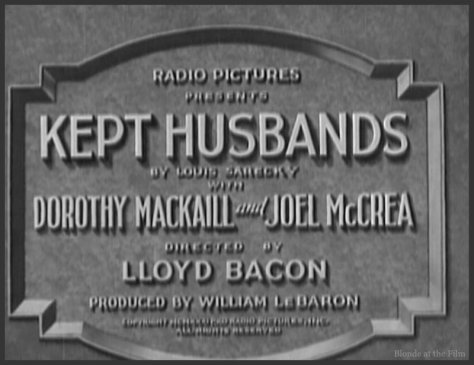
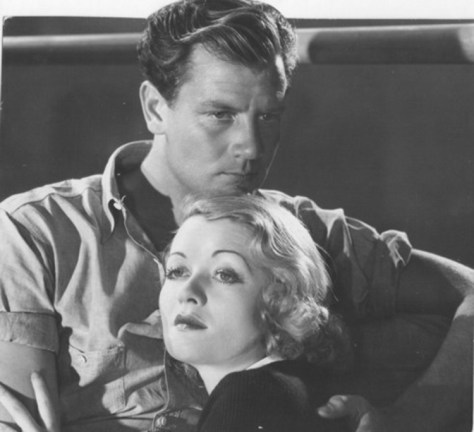
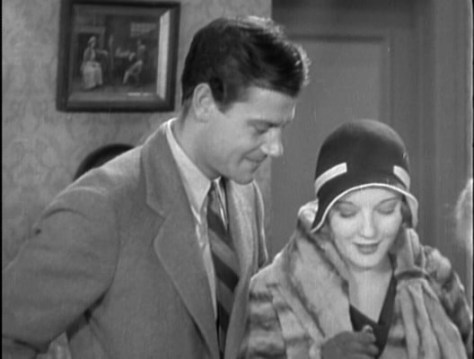
Kept Husbands is a 1931 American pre-Code drama film directed by Lloyd Bacon, starring Dorothy Mackaill and Joel McCrea, with major supporting roles filled by Robert McWadeFlorence Roberts and Mary Carr.

The original story was written by the film’s associate producer, Louis Sarecky, and adapted for the screen by Forrest Halsey and Alfred Jackson. Although primarily a drama, the film has many comedic touches to it.

The film centers around the class struggles and stereotypes between the working class and the wealthy, which was particularly striking during the Depression era when this film was made. The film also points out the stereotypical gender roles which were prevalent at that time.

Kept Husbands 2

Plot summary

Arthur Parker (Robert McWade) is a wealthy steel magnate who is relating the story to his snobbish wife and spoiled daughter of one of his plant supervisors who fearlessly rushed in and saved the lives of two of his fellow co-workers.

When his wife, Henrietta (Florence Roberts), asks if he rewarded the young man, Parker shows his astonishment by saying that the hero had refused the thousand dollars he had offered.

Kept Husbands 4

When the daughter, Dot (Dorothy Mackaill), remarks that she would like to meet a man like that, the father tells her not to worry, she will, for he is coming to dinner that very evening. Henrietta is aghast at having to socialize with someone not of their class, but Parker, who is a better judge of character, assures her that all will be well.

During dinner, Dot is smitten with the young man, Dick Brunton (Joel McCrea). So smitten she makes a bet with her father that she can get him to marry her within four weeks, by December 20. The father takes that bet, and lo and behold she wins Dick’s heart and gets him to accept her proposal of marriage by the deadline, despite his fears of their different social circumstances.

After the wedding, Parker sends the newlyweds on an expensive honeymoon to Europe, after which they return to their lavish home, also supplied by Parker. Parker also promotes Dick, but within six months, his new lifestyle threatens to emasculate Dick, who loses interest in his career and finds himself dominated by Dot’s vapid, social whirl of bridge games, cocktail parties and passive acceptance of life as a “kept husband”.

Kept Husbands 5

This does not sit well with the proud husband, and when Parker offers him a chance to prove himself with a new position in St. Louis, he jumps at the chance. When told of the opportunity however, Dot is less than enthusiastic, not wanting to leave her friends and social circle. She refuses to agree to accompany Dick.

Dick decides to go to St. Louis, with or without Dot, making her incredibly upset. Not knowing what to do, he goes to ask advice from his mother (Mary Carr), who tells him that he needs to reconcile with Dot before he leaves for St. Louis. Meanwhile, Dot has agreed to meet with a former beau, Charles Bates (Bryant Washburn), who attempts to seduce her.

Kept Husbands 7

When she returns to their house the following morning, Dick questions her regarding her whereabouts. She lies to him, and he knows it, since he had seen her with Washburn the prior evening. Furious, he storms out, saying their marriage is over, and intending to resign from Parker’s company.

Realizing her love for him, Dot eventually finds Dick at the rail station, about to leave for St. Louis. He has decided to take Parker’s position after all. The husband and wife reconcile, with Dot agreeing to live within the means that Dick’s salary can provide.

Kept Husbands 8

Cast

Kept Husbands 11

(Cast list as per AFI database)[2]

Soundtrack

Kept Husbands 10

Notes

In 1959, the film entered the public domain in the USA due to the copyright claimants failure to renew the copyright registration in the 28th year after publication.[5]

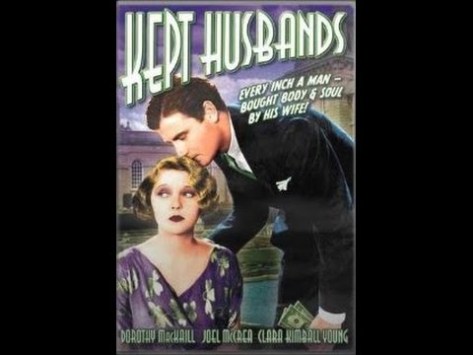
The tag line for the film was “Every Inch a Man – Bought Body and Soul by His Wife”.[6]

This film marked the debut in sound films of Clara Kimball Young, who had been a major star during the silent film era. She came back after a six-year hiatus from making films.[7]

Kept Husbands 13

References

  1. Jump up to:a b “Kept Husband: Details”New York Times. Archived from the original on August 16, 2014. Retrieved August 16, 2014.
  2. Jump up to:a b c d Kept Husbands: Detail View”. American Film Institute. Archived from the original on March 6, 2013. Retrieved October 5, 2016.
  3. Jump up^ “Max Steiner: Film Scores”. Songwriter Hall of Fame. Retrieved April 1, 2016.
  4. Jump up to:a b c “Kept Husbands, Technical Details”. theiapolis.com. Retrieved August 16, 2014.[permanent dead link]
  5. Jump up^ Pierce, David (June 2007). “Forgotten Faces: Why Some of Our Cinema Heritage Is Part of the Public Domain”. Film History: An International Journal19 (2): 125–43. ISSN 0892-2160JSTOR 25165419OCLC 15122313doi:10.2979/FIL.2007.19.2.125. See Note #60, p. 143.
  6. Jump up^ Jewell, Richard B.; Harbin, Vernon (1982). The RKO Story. New York: Arlington House. p. 34. ISBN 0-517-546566.
  7. Jump up^ “Kept Husbands, Notes”. Turner Classic Movies. Archived from the original on August 16, 2014. Retrieved August 16, 2014.

Kept Husbands 9

Kept Husbands 12

Kept Husbands 18

Kept Husbands 15

Film Collectors Corner

Watch Kept Husbands Now – Amazon Instant Video


Blu Ray

Not released on Blu Ray as yet


DVD


Reckoning, The (1932)


Pre Code Logo 1

Pre Code Hollywood Season: FD Cinematheque

The Reckoning (1932)

Reckoning The 1

Director: Harry L Fraser

Cast: Sally Blane, James Murray, Edmund Breese, Bryant Washburn, Pat O’Malley, Thomas E Jackson,  Mildred Golden, Douglas Scott

63 min

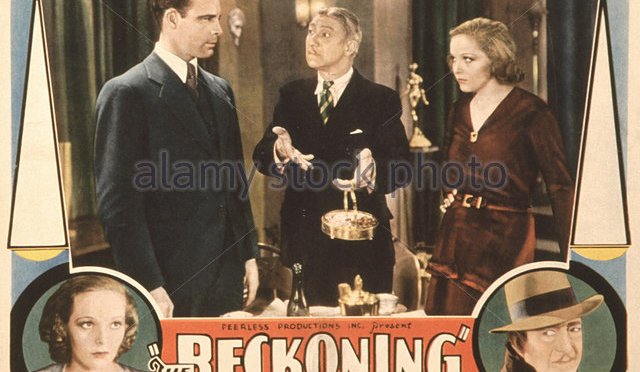
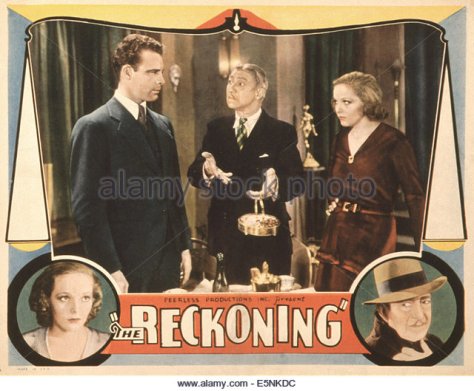
The Reckoning (also known as Crooked Streets) is a 1932 Pre-code talking film crime-drama directed by Harry L. Fraser and starring Sally Blane and James Murray. It was released on state rights and through a company called Peerless.[1]

Preserved by the Library of Congress.[2]

Reckoning The 2

Cast

References

  1. Jump up^ The AFI Catalog of Feature Films:..The Reckoning
  2. Jump up^ Catalog of Holdings The American Film Institute Collection and The United Artists Collection at The Library of Congress, (<-book title) p.150 c.1978 the American Film Institute

Reckoning The 3

Film Collectors Corner

Watch Rain Now – Amazon Instant Video

Blu Ray

Not released on Blu Ray 


DVD

All Quiet on the Western Front (1929)


Pre Code Logo 1

Pre Code Hollywood Season: FD Cinematheque

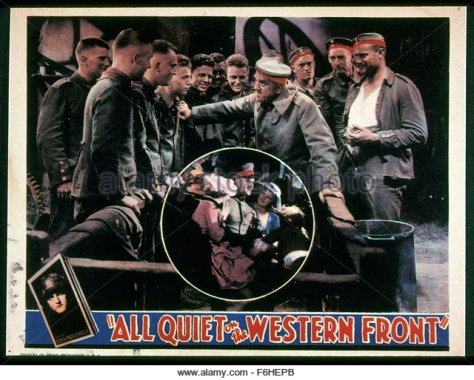
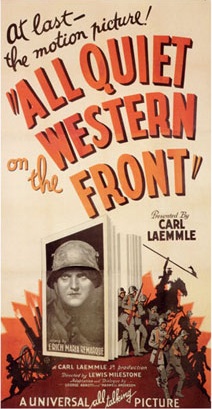
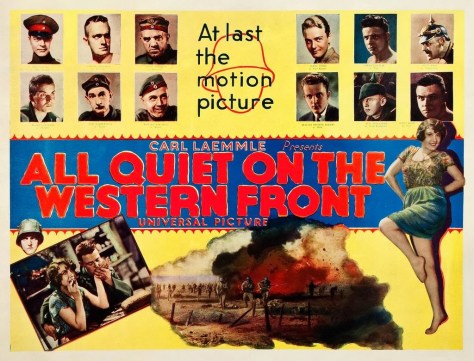
All Quiet on the Western Front (1929)
All Quiet on the Western Front 9

All Quiet on the Western Front 10

All Quiet on the Western Front 6

Director: Lewis Milestone

Cast: Lew Ayres, Louis Wolheim, John Wray, Arnold Lucy, Ben Alexander, Scott Kolk, Owen Davis Jr, Walter Rogers, William Bakewell, Russell Gleason, Richard Alexander, Harold Goodwin, Slim Summerville, G Pat Collins, Beryl Mercer, Edmund Breese, Zasu Pitts ( silent version only ), Raymond Griffith, Joan Marsh, Fred Zinnemann, Dorothy Vernon, Wolfgang Staudte, Robert Parrish, Yola D’Avril

136 min
All Quiet on the Western Front 4

All Quiet on the Western Front (GermanIm Westen nichts Neueslit. ‘In the West Nothing New’) is a novel by Erich Maria Remarque, a German veteran of World War I. The book describes the German soldiers’ extreme physical and mental stress during the war, and the detachment from civilian life felt by many of these soldiers upon returning home from the front.

The novel was first published in November and December 1928 in the German newspaper Vossische Zeitung and in book form in late January 1929. The book and its sequel, The Road Back (1930), were among the books banned and burned in Nazi GermanyAll Quiet on the Western Front sold 2.5 million copies in 22 languages in its first 18 months in print.[1]

In 1930, the book was adapted as an Academy-Award-winning film of the same name, directed by Lewis Milestone. It was adapted again in 1979 by Delbert Mann, this time as a television film starring Richard Thomas and Ernest Borgnine.
All Quiet on the Western Front 12

Title and translation

All Quiet on the Western Front 23

The English translation by Arthur Wesley Wheen gives the title as All Quiet on the Western Front. The literal translation of “Im Westen nichts Neues” is “In the West Nothing New,” with “West” being the Western Front; the phrase refers to the content of an official communiqué at the end of the novel.

Brian Murdoch’s 1993 translation would render the phrase as “there was nothing new to report on the Western Front” within the narrative. Explaining his retention of the original book-title, he says:

Although it does not match the German exactly, Wheen’s title has justly become part of the English language and is retained here with gratitude.

The phrase “all quiet on the Western Front” has become a colloquial expression meaning stagnation, or lack of visible change, in any context.[citation needed]
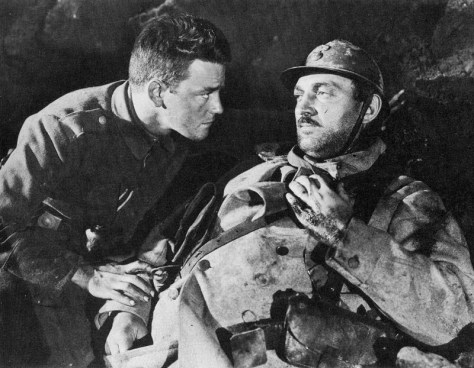
All Quiet on the Western Front 13

Plot summary

The book tells the story of Paul Bäumer, a German soldier who—urged on by his school teacher—joins the German army shortly after the start of World War I. His class was “scattered over the platoons amongst Frisian fishermen, peasants, and labourers.” Bäumer arrives at the Western Front with his friends and schoolmates (Leer, Müller, Kropp and a number of other characters). There they meet Stanislaus Katczinsky, an older soldier, nicknamed Kat, who becomes Paul’s mentor. While fighting at the front, Bäumer and his comrades have to engage in frequent battles and endure the treacherous and filthy conditions of trench warfare.
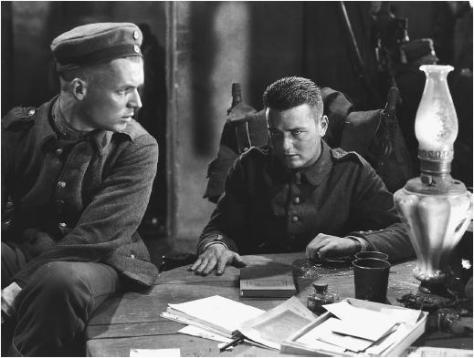
All Quiet on the Western Front 14

At the very beginning of the book, Erich Maria Remarque says “This book is to be neither an accusation nor a confession, and least of all an adventure, for death is not an adventure to those who stand face to face with it. It will try simply to tell of a generation of men who, even though they may have escaped (its) shells, were destroyed by the war.”[2] The book does not focus on heroic stories of bravery, but rather gives a view of the conditions in which the soldiers find themselves. The monotony between battles, the constant threat of artillery fire and bombardments, the struggle to find food, the lack of training of young recruits (meaning lower chances of survival), and the overarching role of random chance in the lives and deaths of the soldiers are described in detail.
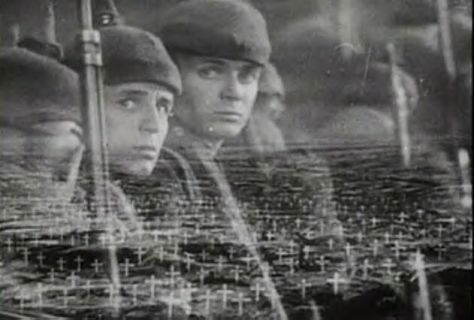
All Quiet on the Western Front 15

The battles fought here have no names and seem to have little overall significance, except for the impending possibility of injury or death for Bäumer and his comrades. Only pitifully small pieces of land are gained, about the size of a football field, which are often lost again later. Remarque often refers to the living soldiers as old and dead, emotionally drained and shaken. “We are not youth any longer. We don’t want to take the world by storm. We are fleeing from ourselves, from our life. We were eighteen and had begun to love life and the world; and we had to shoot it to pieces.”

Paul’s visit on leave to his home highlights the cost of the war on his psyche. The town has not changed since he went off to war; however, he finds that he does “not belong here anymore, it is a foreign world.” He feels disconnected from most of the townspeople. His father asks him “stupid and distressing” questions about his war experiences, not understanding “that a man cannot talk of such things.” An old schoolmaster lectures him about strategy and advancing to Paris while insisting that Paul and his friends know only their “own little sector” of the war but nothing of the big picture.
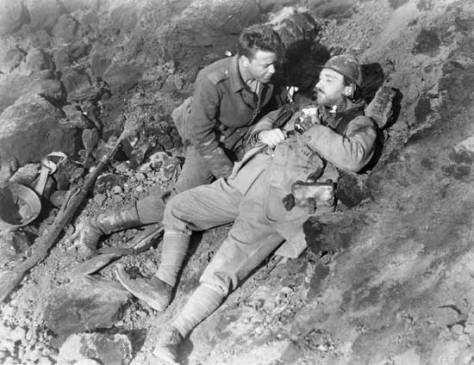
All Quiet on the Western Front 16

Indeed, the only person he remains connected to is his dying mother, with whom he shares a tender, yet restrained relationship. The night before he is to return from leave, he stays up with her, exchanging small expressions of love and concern for each other. He thinks to himself, “Ah! Mother, Mother! How can it be that I must part from you? Here I sit and there you are lying; we have so much to say, and we shall never say it.” In the end, he concludes that he “ought never to have come [home] on leave.”

Paul feels glad to be reunited with his comrades. Soon after, he volunteers to go on a patrol and kills a man for the first time in hand-to-hand combat. He watches the man die, in pain for hours. He feels remorse and asks forgiveness from the man’s corpse. He is devastated and later confesses to Kat and Albert, who try to comfort him and reassure him that it is only part of the war.

They are then sent on what Paul calls a “good job.” They must guard a supply depot in a village that was evacuated due to being shelled too heavily. During this time, the men are able to adequately feed themselves, unlike the near-starvation conditions in the German trenches. In addition, the men enjoy themselves while living off the spoils from the village and officers’ luxuries from the supply depot (such as fine cigars). While evacuating the villagers (enemy civilians), Paul and Albert are taken by surprise by artillery fired at the civilian convoy and wounded by a shell.
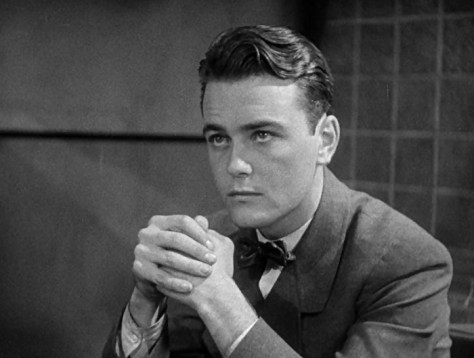
All Quiet on the Western Front 18

On the train back home, Albert takes a turn for the worse and cannot complete the journey, instead being sent off the train to recuperate in a Catholic hospital. Paul uses a combination of bartering and manipulation to stay by Albert’s side. Albert eventually has his leg amputated, while Paul is deemed fit for service and returned to the front.

By now, the war is nearing its end and the German Army is retreating. In despair, Paul watches as his friends fall one by one. It is the death of Kat that eventually makes Paul careless about living. In the final chapter, he comments that peace is coming soon, but he does not see the future as bright and shining with hope. Paul feels that he has no aims or goals left in life and that their generation will be different and misunderstood. When he dies at the end of the novel, the situation report from the frontline states, “All is Quiet on the Western Front.”
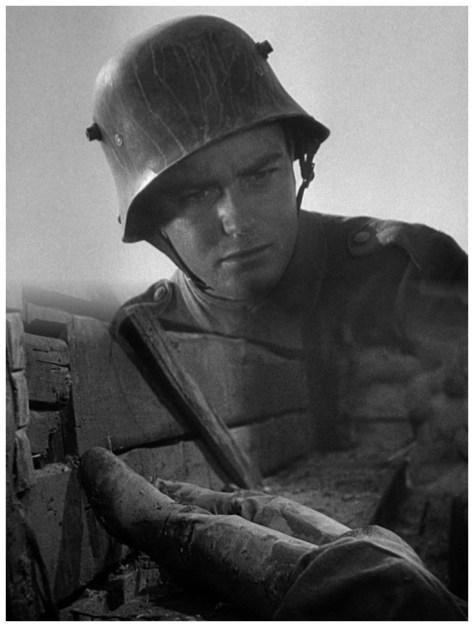
All Quiet on the Western Front 19

Themes

One of the major themes of the novel is the difficulty of soldiers to revert to civilian life after having experienced extreme combat situations. Remarque comments in the preface that “[This book] will try simply to tell of a generation of men who, even though they may have escaped its shells, were destroyed by the war.”[2]

This internal destruction can be found as early as the first chapter as Paul comments that, although all the boys are young, their youth has left them. In addition, the massive loss of life and negligible gains from the fighting are constantly emphasized. Soldiers’ lives are thrown away by their commanding officers who are stationed comfortably away from the front, ignorant of the daily terrors of the front line.
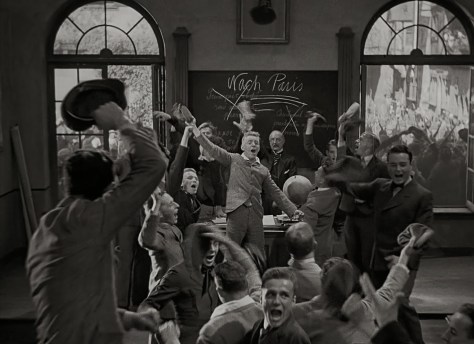
All Quiet on the Western Front 20

Main characters

Cover of first English language edition. The design is based upon a German war bonds poster by Fritz Erler.

Paul Bäumer
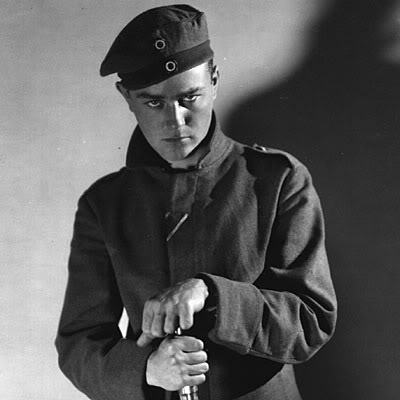
All Quiet on the Western Front 25

Paul Bäumer is the main character and narrator. At 19 years of age, Paul enlists in the German Army and is deployed to the Western Front where he experiences the severe psychological and physical effects of the war. Before the war, Paul was a creative, sensitive and passionate person, writing poems and having a clear love for his family. But as the war changed his attitude and personality, poems and other aspects of his past life become something Paul was no longer linked to, since the horrors of war trained him to disconnect himself from his feelings. He feels he can’t tell anyone about his experiences and feels like an outsider where his family is concerned.

By the end of the book, Paul realises that he no longer knows what to do with himself and decides that he has nothing more to lose. The war appears to have snuffed out his hopes and dreams, which he feels he can never regain. After years of fighting in the war, Paul is finally killed in October 1918, on an extraordinarily quiet, peaceful day. The army report that day contains only one phrase: “All quiet on the Western Front.” As Paul dies, his face is calm, “as though almost glad the end had come.”

Albert Kropp
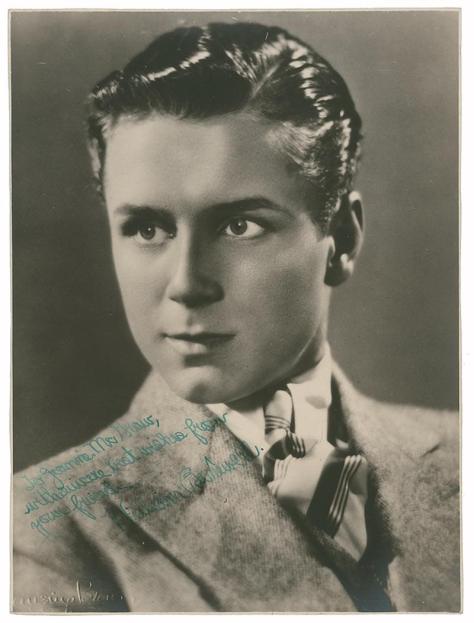
All Quiet on the Western Front 26

Kropp was in Paul’s class at school and is described as the clearest thinker of the group as well as the smallest. Kropp is wounded towards the end of the novel and undergoes a leg amputation. Both he and Bäumer end up spending time in a Catholic hospital together, Bäumer suffering from shrapnel wounds to the leg and arm. Though Kropp initially plans to commit suicide if he requires an amputation, the book suggests he postponed suicide because of the strength of military camaraderie. Kropp and Bäumer part ways when Bäumer is recalled to his regiment after recovering. Paul comments that saying farewell was “very hard, but it is something a soldier learns to deal with.”[3]

Haie Westhus
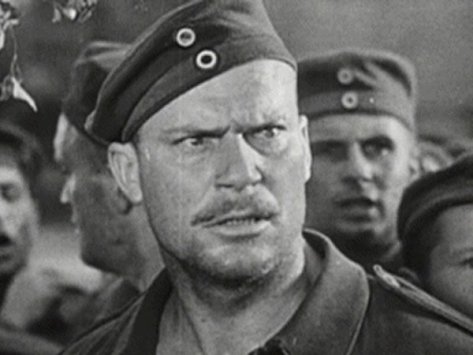
All Quiet on the Western Front 27

Haie is described as being tall and strong, and a peat-digger by profession. Overall, his size and behavior make him seem older than Paul, yet he is the same age as Paul and his school-friends (roughly 19 at the start of the book). Haie, in addition, has a good sense of humor. During combat, he is injured in his back, fatally (Chapter 6)—the resulting wound is large enough for Paul to see Haie’s breathing lung when Himmelstoß (Himmelstoss) carries him to safety.

Fredrich Müller
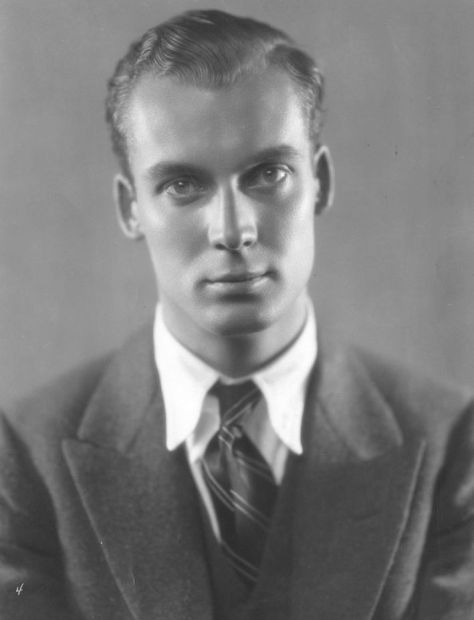
All Quiet on the Western Front 28

Müller is about 18 and a half years of age, one of Bäumer’s classmates, when he also joins the German army as a volunteer to go to the war. Carrying his old school books with him to the battlefield, he constantly reminds himself of the importance of learning and education. Even while under enemy fire, he “mutters propositions in physics”. He became interested in Kemmerich’s boots and inherits them when Kemmerich dies early in the novel. He is killed later in the book after being shot point-blank in the stomach with a “light pistol” (flare gun). As he was dying “quite conscious and in terrible pain”, he gave his boots which he inherited from Kemmerich to Paul.

Stanislaus “Kat” Katczinsky
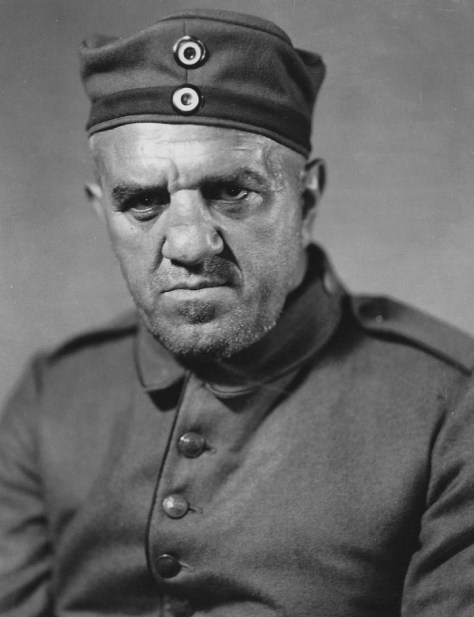
All Quiet on the Western Front 29

Kat has the most positive influence on Paul and his comrades on the battlefield. Katczinsky was a cobbler (shoemaker) in civilian life; he is older than Paul Bäumer and his comrades, about 40 years old, and serves as their leadership figure. He also represents a literary model highlighting the differences between the younger and older soldiers. While the older men have already had a life of professional and personal experience before the war, Bäumer and the men of his age have had little life experience or time for personal growth.

Kat is also well known for his ability to scavenge nearly any item needed, especially food. At one point he secures four boxes of lobster. Bäumer describes Kat as possessing a sixth sense. One night, Bäumer along with a group of other soldiers are holed up in a factory with neither rations nor comfortable bedding. Katczinsky leaves for a short while, returning with straw to put over the bare wires of the beds. Later, to feed the hungry men, Kat brings bread, a bag of horse flesh, a lump of fat, a pinch of salt and a pan in which to cook the food.

Kat is hit by shrapnel at the end of the story, leaving him with a smashed shin. Paul carries him back to camp on his back, only to discover upon their arrival that a stray splinter had hit Kat in the back of the head and killed him on the way. He is thus the last of Paul’s close friends to die in battle. It is Kat’s death that eventually makes Bäumer careless whether he survives the war or not, but that he can face the rest of his life without fear. “Let the months and the years come, they can take nothing from me, they can take nothing more. I am so alone, and so without hope that I can confront them without fear.”

Tjaden
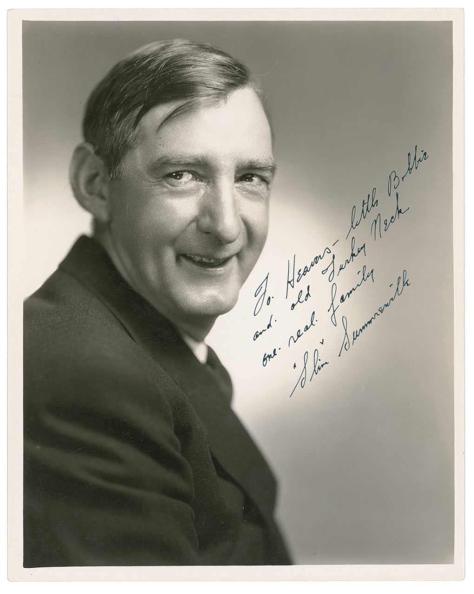
All Quiet on the Western Front 30

One of Bäumer’s non-schoolmate friends. Before the war, Tjaden was a locksmith. A big eater with a grudge against the former postman-turned corporal Himmelstoß (thanks to his strict ‘disciplinary actions’), he manages to forgive Himmelstoß later in the book. Throughout the book, Paul frequently remarks on how much of an eater he is, yet somehow manages to stay as “thin as a rake”. The fate of Tjaden is unknown but he appears in the sequel, The Road Back.

Minor characters

Kantorek
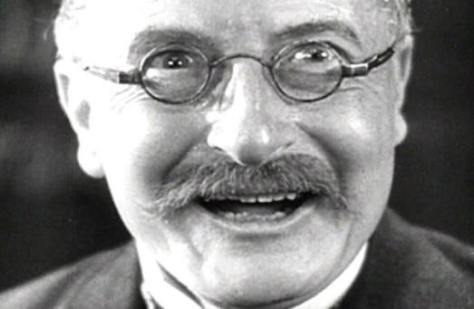
All Quiet on the Western Front 31

Kantorek was the schoolmaster of Paul and his friends, including Kropp, Leer, Müller, and Behm. Behaving “in a way that cost [him] nothing,” Kantorek is a strong supporter of the war and encourages Bäumer and other students in his class to join the war effort. Among twenty enlistees was Joseph Behm, the first of the class to die in battle. In an example of tragic irony, Behm was the only one who did not want to enter the war.

Kantorek is a hypocrite, urging the young men he teaches to fight in the name of patriotism, while not voluntarily enlisting himself. In a twist of fate, Kantorek is later called up as a soldier as well. He very reluctantly joins the ranks of his former students, only to be drilled and taunted by Mittelstädt, one of the students he had earlier persuaded to enlist.

Peter Leer
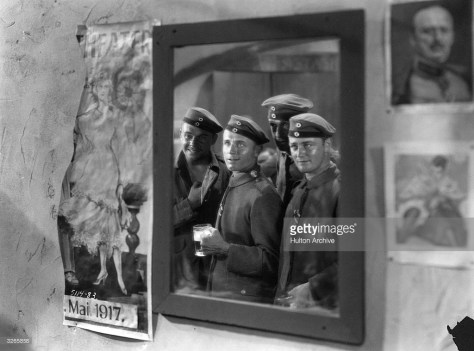
All Quiet on the Western Front 32

Leer is an intelligent soldier in Bäumer’s company, and one of his classmates. He is very popular with women; when he and his comrades meet three French women, he is the first to seduce one of them. Bäumer describes Leer’s ability to attract women by saying “Leer is an old hand at the game”. In chapter 11, Leer is hit by a shell fragment, which also hits Bertinck. The shrapnel tears open Leer’s hip, causing him to bleed to death quickly. His death causes Paul to ask himself, “What use is it to him now that he was such a good mathematician in school?”[4]

Bertinck
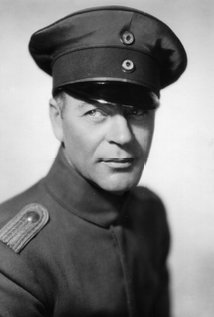
All Quiet on the Western Front 33

Lieutenant Bertinck is the leader of Bäumer’s company. His men have a great respect for him, and Bertinck has great respect for his men. He permits them to eat the rations of the men that had been killed in action, standing up to the chef Ginger who would only allow them their allotted share. Bertinck is genuinely despondent when he learns that few of his men had survived an engagement.

When he and the other characters are trapped in a trench under heavy attack, Bertinck, who has been injured in the firefight, spots a flamethrower team advancing on them. He gets out of cover and takes aim on the flamethrower but misses, and gets hit by enemy fire. With his next shot he kills the flamethrower, and immediately afterwards an enemy shell explodes on his position blowing off his chin. The same explosion also fatally wounds Leer.

Himmelstoss
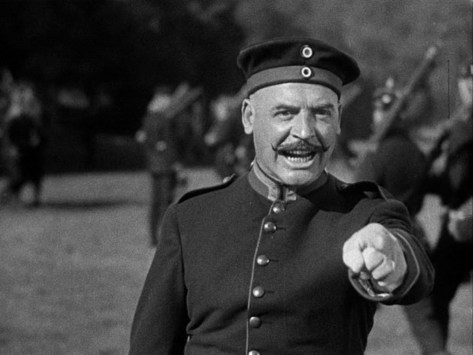
All Quiet on the Western Front 34

Corporal Himmelstoss (spelled Himmelstoß in some editions) was a postman before enlisting in the war. He is a power-hungry corporal with special contempt for Paul and his friends, taking sadistic pleasure in punishing the minor infractions of his trainees during their basic training in preparation for their deployment.

Paul later figures that the training taught by Himmelstoss made them “hard, suspicious, pitiless, and tough” but most importantly it taught them comradeship. However, Bäumer and his comrades have a chance to get back at Himmelstoss because of his punishments, mercilessly whipping him on the night before they board trains to go to the front.

Himmelstoss later joins them at the front, revealing himself as a coward who shirks his duties for fear of getting hurt or killed, and pretends to be wounded because of a scratch on his face. Paul Bäumer beats him because of it and when a lieutenant comes along looking for men for a trench charge, Himmelstoss joins and leads the charge. He carries Haie Westhus’s body to Bäumer after he is fatally wounded. Matured and repentant through his experiences Himmelstoß later asks for forgiveness from his previous charges. As he becomes the new staff cook, to prove his friendship he secures two pounds of sugar for Bäumer and half a pound of butter for Tjaden.

Detering
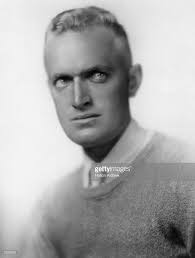
All Quiet on the Western Front 35

Detering is a farmer who constantly longs to return to his wife and farm. He is also fond of horses and is angered when he sees them used in combat. He says, “It is of the vilest baseness to use horses in the war,” when the group hears several wounded horses writhe and scream for a long time before dying during a bombardment. He tries to shoot them to put them out of misery, but is stopped by Kat to keep their current position hidden. He is driven to desert when he sees a cherry tree in blossom, which reminds him of home too much and inspires him to leave. He is found by military police and court-martialed, and is never heard from again.

Josef Hamacher
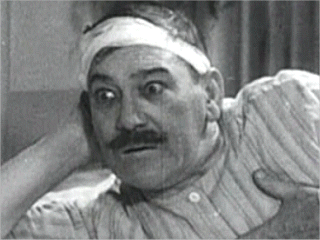
All Quiet on the Western Front 36

Hamacher is a patient at the Catholic hospital where Paul and Albert Kropp are temporarily stationed. He has an intimate knowledge of the workings of the hospital. He also has a “Special Permit,” certifying him as sporadically not responsible for his actions due to a head wound, though he is clearly quite sane and exploiting his permit so he can stay in the hospital and away from the war as long as possible.

Franz Kemmerich

All Quiet on the Western Front 37

A young boy of only 19 years. Franz Kemmerich had enlisted in the army for World War I along with his best friend and classmate, Bäumer. Kemmerich is shot in the leg early in the story; his injured leg has to be amputated, and he dies shortly after. In anticipation of Kemmerich’s imminent death, Müller was eager to get his boots. While in the hospital, someone steals Kemmerich’s watch that he intended to give to his mother, causing him great distress and prompting him to ask about his watch every time his friends visit him in the hospital. Paul later finds the watch and hands it over to Kemmerich’s mother, only to lie and say Franz died instantly and painlessly when questioned.

Joseph Behm
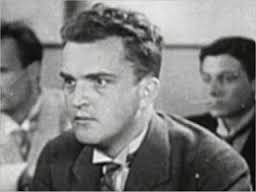
All Quiet on the Western Front 38

A student in Paul’s class who is described as youthful and overweight. Behm was the only student that was not quickly influenced by Kantorek’s patriotism to join the war, but eventually, due to pressure from friends and Kantorek, he joins the war. He is the first of Paul’s friends to die. He is blinded in no man’s land and believed to be dead by his friends. The next day, when he is seen walking blindly around no-man’s-land, it is discovered that he was only unconscious. However, he is killed before he can be rescued.

Publication and reception
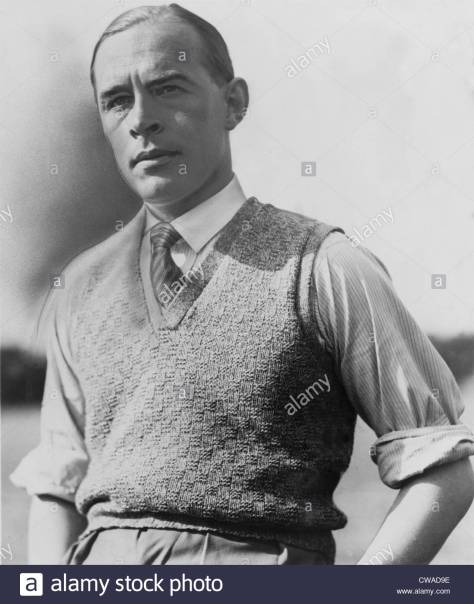
All Quiet on the Western Front 17

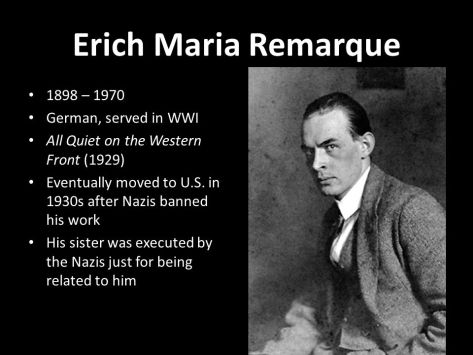
Erich Maria Remarque

From November 10 to December 9, 1928, All Quiet on the Western Front was published in serial form in Vossische Zeitung magazine. It was released in book form the following year to smashing success, selling one and a half million copies that same year. Although publishers had worried that interest in World War I had waned more than 10 years after the armistice, Remarque’s realistic depiction of trench warfare from the perspective of young soldiers struck a chord with the war’s survivors—soldiers and civilians alike—and provoked strong reactions, both positive and negative, around the world.

With All Quiet on the Western Front, Remarque emerged as an eloquent spokesman for a generation that had been, in his own words, “destroyed by war, even though it might have escaped its shells.” Remarque’s harshest critics, in turn, were his countrymen, many of whom felt the book denigrated the German war effort, and that Remarque had exaggerated the horrors of war to further his pacifist agenda. The strongest voices against Remarque came from the emerging National Socialist Party and its ideological allies. In 1933, when the Nazis rose to power, All Quiet on the Western Front became one of the first degenerate books to be publicly burnt;[5] in 1930 screenings of the Academy Award-winning film based on the book were met with Nazi-organized protests and mob attacks on both movie theatres and audience members.[6]
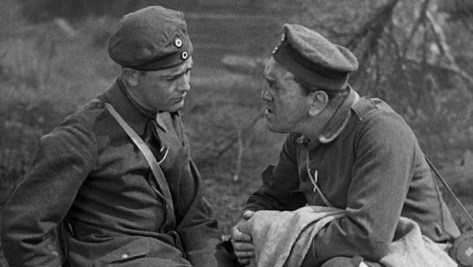
All Quiet on the Western Front 24

However, objections to Remarque’s portrayal of the German army personnel during World War I were not limited to the Nazis. Dr. Karl Kroner (de) objected to Remarque’s depiction of the medical personnel as being inattentive, uncaring, or absent from frontline action. Dr. Kroner was specifically worried that the book would perpetuate German stereotypes abroad that had subsided since the First World War. He offered the following clarification: “People abroad will draw the following conclusions: if German doctors deal with their own fellow countrymen in this manner, what acts of inhumanity will they not perpetuate against helpless prisoners delivered up into their hands or against the populations of occupied territory?” [7][8]

A fellow patient of Remarque’s in the military hospital in Duisburg objected to the negative depictions of the nuns and patients, and of the general portrayal of soldiers: “There were soldiers to whom the protection of homeland, protection of house and homestead, protection of family were the highest objective, and to whom this will to protect their homeland gave the strength to endure any extremities.”[8]
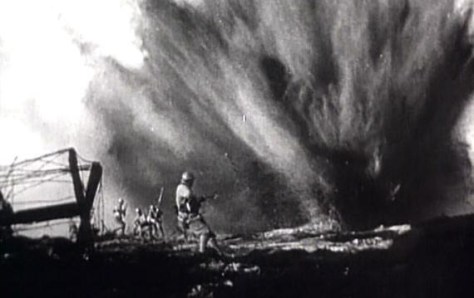
All Quiet on the Western Front 39

These criticisms suggest that perhaps experiences of the war and the personal reactions of individual soldiers to their experiences may be more diverse than Remarque portrays them; however, it is beyond question that Remarque gives voice to a side of the war and its experience that was overlooked or suppressed at the time. This perspective is crucial to understanding the true effects of World War I. The evidence can be seen in the lingering depression that Remarque and many of his friends and acquaintances were suffering a decade later.[7]

In contrast, All Quiet on the Western Front was trumpeted by pacifists as an anti-war book.[8] Remarque makes a point in the opening statement that the novel does not advocate any political position, but is merely an attempt to describe the experiences of the soldier.[9]
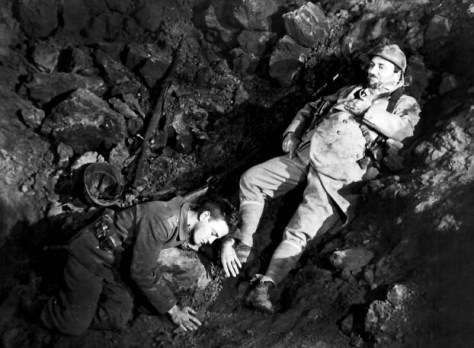
LEAD Technologies Inc. V1.01

The main artistic criticism was that it was a mediocre attempt to cash in on public sentiment.[citation needed] The enormous popularity the work received was a point of contention for some literary critics, who scoffed at the fact that such a simple work could be so earth-shattering.[citation needed]

Much of this literary criticism came from Salomo Friedlaender, who wrote a book Hat Erich Maria Remarque wirklich gelebt? “Did Erich Maria Remarque really live?” (under pen name Mynona), which was, it its turn, criticized in: Hat Mynona wirklich gelebt? “Did Mynona really live?” by Kurt Tucholsky.[10]

Friedlaender’s criticism was mainly personal in nature—he attacked Remarque as being ego-centric and greedy. Remarque publicly stated that he wrote All Quiet on the Western Front for personal reasons, not for profit, as Friedlaender had claimed.[7][8] Max Joseph Wolff (de) wrote a parody titled Vor Troja nichts Neues (Compared to Troy, Nothing New) under the pseudonym Emil Marius Requark.[11]
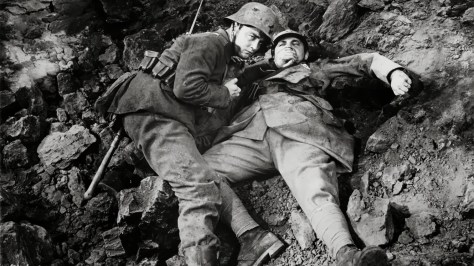
All Quiet on the Western Front 42

Adaptations

Film

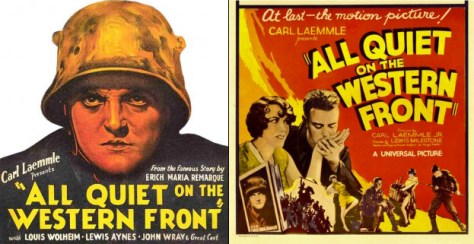
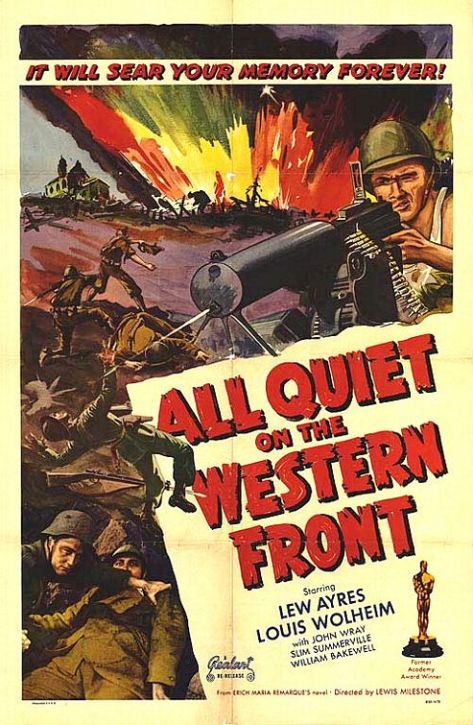
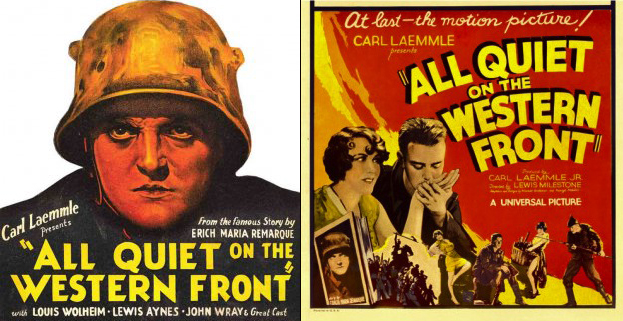
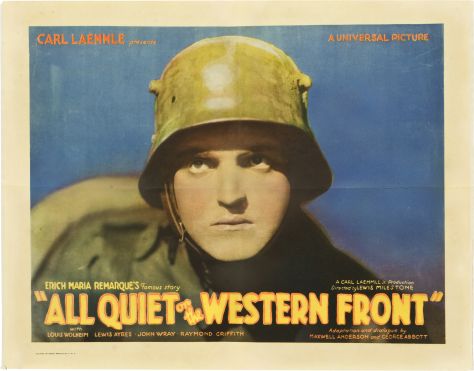
Poster for the movie All Quiet on the Western Front (1930), featuring star Lew Ayres

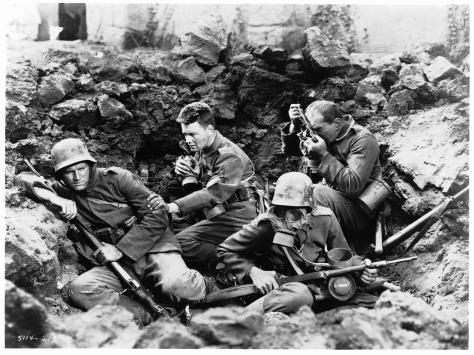
In 1930, an American film of the novel was made, directed by Lewis Milestone; with a screenplay by Maxwell AndersonGeorge AbbottDel AndrewsC. Gardner Sullivan; and with uncredited work by Walter Anthony and Milestone. It stars Louis WolheimLew AyresJohn WrayArnold Lucy, and Ben Alexander.

The film won the Academy Award for Best Picture in 1930 for its producer Carl Laemmle Jr., the Academy Award for Directing for Lewis Milestone, and the Academy Award for Outstanding Production. It was the first all-talking non-musical film to win the Best Picture Oscar. It also received two further nominations: Best Cinematography, for Arthur Edeson, and Best Writing Achievement for Abbott, Anderson, and Andrews.[12]
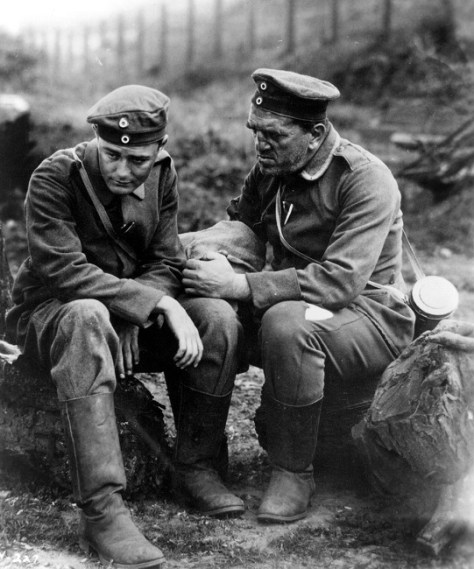
All Quiet on the Western Front 45

In 2016, it was confirmed that Roger Donaldson will direct a remake of All Quiet on the Western Front starring Travis Fimmel as Katczinsky.[13]

TV film

In 1979, the film was remade for CBS television by Delbert Mann, starring Richard Thomas of The Waltons as Paul Bäumer and Ernest Borgnine as Kat. The movie was filmed in Czechoslovakia.[14]

Music

Elton John‘s album Jump Up! (1982) features the song, “All Quiet on the Western Front” (written by Elton and Bernie Taupin). The song is a sorrowful rendition of the novel’s story (“It’s gone all quiet on the Western Front / Male Angels sigh / ghosts in a flooded trench / As Germany dies”).

Bob Dylan, during his Nobel Laureate lecture, cited this book as one that had a profound effect on this songwriting.
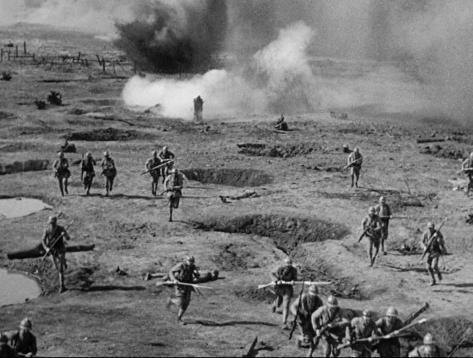
All Quiet on the Western Front 46

Radio

On November 9, 2008, a radio adaptation of the novel was broadcast on BBC Radio 3, starring Robert Lonsdale as Paul Bäumer and Shannon Graney as Katczinsky. Its screenplay was written by Dave Sheasby, and the show was directed by David Hunter.[15]

Audiobook

In 2010, Hachette Audio UK published an audiobook adaptation of the novel, narrated by Tom Lawrence. It was well received by critics[16] and listeners.
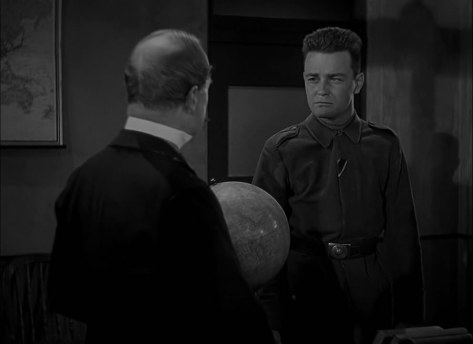
All Quiet on the Western Front 47

See also

References

  1. Jump up^ Eksteins, Modris (April 1980). “All Quiet on the Western Front and the Fate of a War”. Journal of Contemporary HistorySAGE Publications15 (2): 353. doi:10.1177/002200948001500207.
  2. Jump up to:a b Erich Maria Remarque’s All Quiet on the Western Front. 2009. p. 48.
  3. Jump up^ Chapter Ten of All Quiet on the Western Front
  4. Jump up^ All Quiet on the Western Front (London: Putnam & Company Ltd, 1970 reprint), page 240.
  5. Jump up^ “Nov 10, 1928: Remarque publishes All Quiet on the Western Front”History.com. Retrieved June 3, 2013.
  6. Jump up^ Sauer, Patrick (June 16, 2015). “The Most Loved and Hated Novel About World War I”Smithsonian.com. Smithsonian Institution. Retrieved June 21, 2015.
  7. Jump up to:a b c Patrick Clardy. “All Quiet on the Western Front: Reception”Yale Modernism Lab. Retrieved June 3, 2013.
  8. Jump up to:a b c d Barker, Christine R.; Last, Rex William (1979). Erich Maria Remarque. New York: Barnes & Noble Books.
  9. Jump up^ Wagner, Hans (1991). Understanding Erich Maria Remarque. Columbia, SC: University of South Carolina Press.
  10. Jump up^ Kurt Tucholsky (under pen name Ignaz Wrobel), Hat Mynona wirklich gelebt?Die Weltbühne, December 31, 1929, No. 1, p. 15
  11. Jump up^ Catalogue entry for Vor Troja nichts Neues in the German National Library, retrieved January 29, 2014
  12. Jump up^ “The 3rd Academy Awards – 1931”Oscars. Academy of Motion Picture Arts and Sciences. Retrieved 1 September 2016.
  13. Jump up^ Kay, Jeremy. “‘Warcraft’ star Travis Fimmel to lead ‘All Quiet On The Western Front'”ScreenDaily. MBI Ltd. Retrieved 1 September 2016.
  14. Jump up^ “All Quiet on the Western Front (1979)”IMDb. IMDb.com, Inc. Retrieved 1 September 2016.
  15. Jump up^ “BBC Radio 3 – Drama on 3, All Quiet on the Western Front”. Bbc.co.uk. November 9, 2008. Retrieved February 7, 2013.
  16. Jump up^ “All Quiet on the Western Front Audiobook Review – Audiobook Jungle – Audiobook Reviews In All Genres”audiobookjungle.com. Retrieved April 10, 2016.
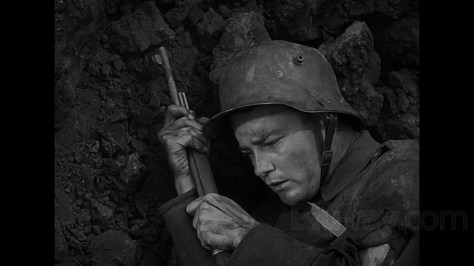
All Quiet on the Western Front 48

All Quiet on the Western Front 5

Film Collectors Corner

Watch All Quiet on the Western Front Now – Instant Video on Internet Archive

Blu Ray


DVD

Other Men’s Women (1931)


Pre Code Logo 1

Pre Code Hollywood Season: FD Cinematheque

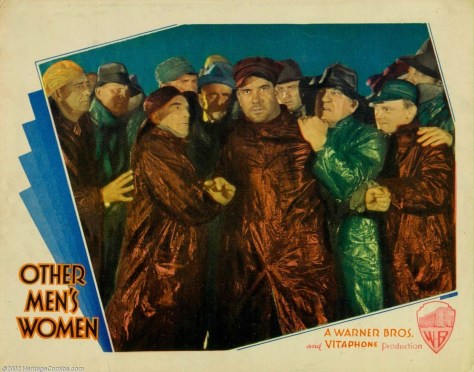
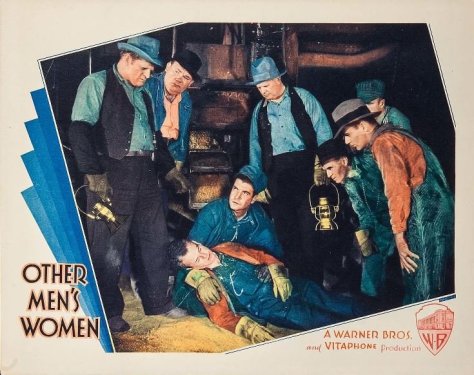
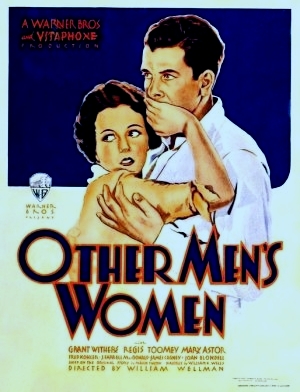
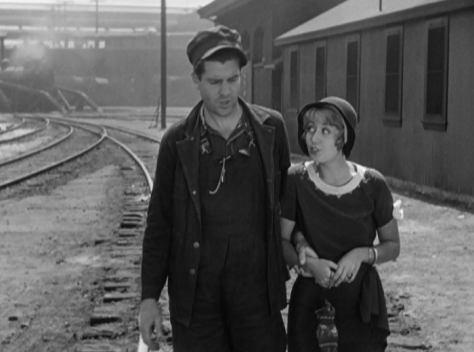
Other Men’s Women (1931)

Other Men's Women 3

Other Men's Women 4

Other Men's Women 1

Director: William A Wellman

Cast: Grant Withers, Mary Astor, Regis Toomey, James Cagney, Fred Kohler, J Farrell Macdonald, Joan Blondell, Lillian Worth, Walter Long, Pat Harmon, Lucille Ward

71 min

Other Men's Women 5

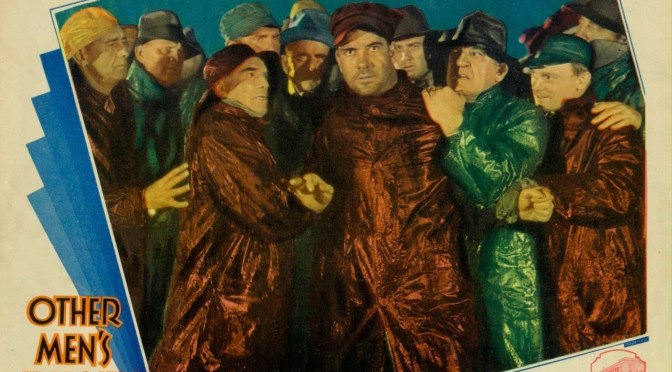
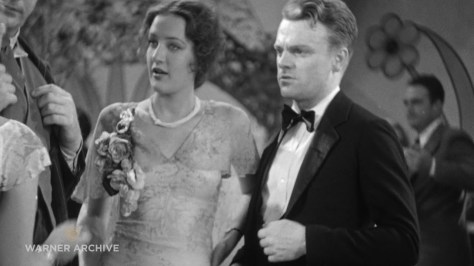
Other Men’s Women is a 1931 American pre-Code drama film directed by William A. Wellman and written by Maude Fulton. The film stars Regis Toomey, Grant Withers, and Mary Astor and features Joan Blondell. It was produced and distributed by Warner Bros.

It was first previewed, released and reviewed in 1930 under the title The Steel Highway. By the time of the film’s release in New York City the title had been changed to Other Men’s Women.[1]

Plot

In 1929, Bill White (Grant Withers), is a railroad engineer and boozing womanizer who is evicted from his boarding house for excessive drinking and late rental payments.

Needing a new place to live, he accepts the invitation from his longtime friend and fellow engineer, Jack Kulper (Regis Toomey), to move into his home, where he resides happily with his wife Lily (Mary Astor). This new living arrangement brings changes to relationships as the months pass.

Other Men's Women 6

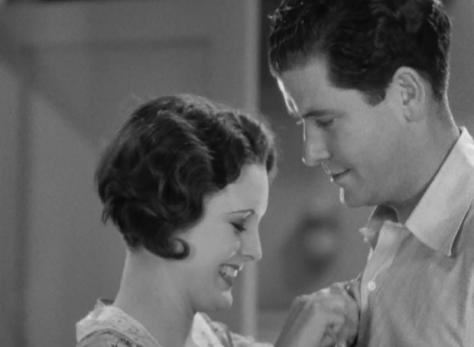
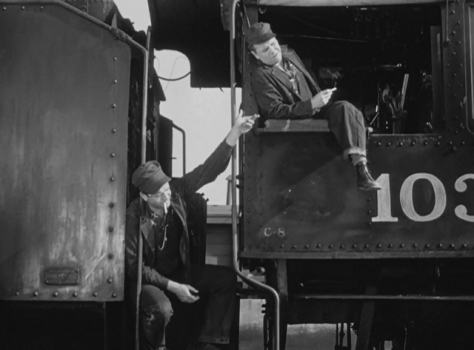
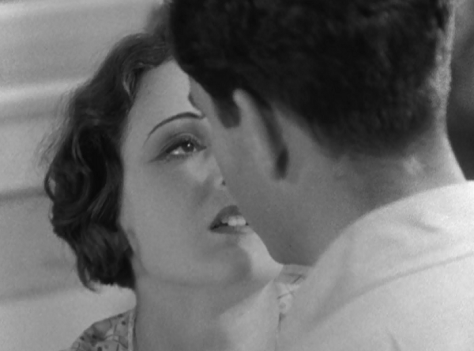
Bill and Lily’s own friendship, which at first is playful and innocent, evolves into a passionate love between them. Hesitant to hurt Jack, they try to keep their feelings secret, at least for a while; but Jack begins to notice differences in his wife’s demeanor and becomes suspicious when he finds that Bill has suddenly moved out of their house. Jack initially thinks Lily and his friend have had a quarrel, but he later confronts Bill inside the cab of the coal-fired

Bill and Lily’s own friendship, which at first is playful and innocent, evolves into a passionate love between them. Hesitant to hurt Jack, they try to keep their feelings secret, at least for a while; but Jack begins to notice differences in his wife’s demeanor and becomes suspicious when he finds that Bill has suddenly moved out of their house.

Other Men's Women 7

Jack initially thinks Lily and his friend have had a quarrel, but he later confronts Bill inside the cab of the coal-fired steam locomotive that the two men operate together at the nearby rail yard. There Bill finally admits to Jack that Lily and he have fallen in love. In the fistfight that ensues, Jack falls during the struggle, strikes his head, and is permanently blinded by the injury.

During his convalescence at home, Lily tries to rededicate herself to her marriage; however, Jack resents his dependency on his wife. Increasingly frustrated by his situation, he insists that Lily leave town for a few weeks to visit her parents, explaining that he needs emotional space and that he also wants her away from the dangers of expected floods due to rainstorms in the area.

Other Men's Women 8

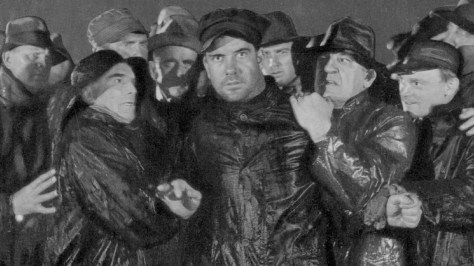
Shortly after Lily’s departure, Jack learns from rail workers that Bill plans to drive a train of flatcars stacked with bags of cement onto a vital river bridge, the desperate hope being that the combined weight of the train and its load will bolster the bridge and prevent it from being swept away by the rising floodwaters. Stumbling that night through a heavy downpour and literally feeling his way to the rail line, sightless Jack manages to locate Bill and knock him unconscious before he begins what everyone deems a suicidal mission.

Jack then takes charge of the engine’s controls, but before moving onto the wavering bridge, he pushes Bill off the locomotive to safety. Once on the bridge, the entire train plummets into the river as the structure collapses, and Jack drowns in the raging river.

Other Men's Women 9

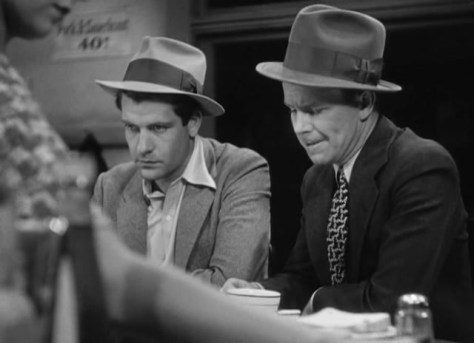
Months after the tragedy, Bill, still as an engineer, goes into the depot’s diner for some quick food before returning to his train. Nearby, Lily arrives on another train and enters the same restaurant carrying her luggage. The two see one another and engage in some awkward small talk before Lily remarks that she intends to remain in the community, fix up her house and yard, and plant a new spring garden.

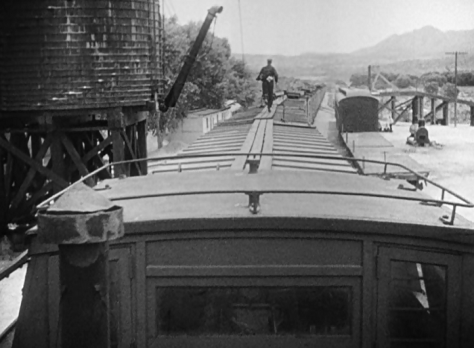
Then, with a warm smile, she invites Bill to drop by to help her with the work. Bill runs out of the diner to re-board his moving train. Lily stands in the restaurant’s doorway watching Bill climb to the top of a long line of freight cars and then running forward toward the engine. As he jumps from one car’s roof to the next he raises his arms skyward.

Then, with a warm smile, she invites Bill to drop by to help her with the work. Bill runs out of the diner to re-board his moving train. Lily stands in the restaurant’s doorway watching Bill climb to the top of a long line of freight cars and then running forward toward the engine. As he jumps from one car’s roof to the next he raises his arms skyward.

Other Men's Women 10

Cast

Other Men's Women 11

Cast notes

  • Other Men’s Women was James Cagney’s third film, although Cagney does not mention it in his autobiography, Cagney by Cagney. He and Joan Blondell went on to sign long-term contracts with Warners.[2]
  • Mary Astor dismissed the film as “a piece of cheese”, although praising Cagney and Blondell.[2]

Songs

  • “Leave A Little Smile” – sung by Grant Withers, J. Farrell MacDonald and Mary Astor (from the Warner Bros. musical Oh Sailor Behave)
  • “The Kiss Waltz” – played on the phonograph (from the Warner Bros. musical Dancing Sweeties)
  • “Tomorrow Is Another Day” – played at the restaurant/dance hall (from the Warner Bros. musical Big Boy)

Other Men's Women 12

Release and reception

According to Film Daily, the film’s original title was “The Steel Highway”, under which title it was reviewed by Motion Picture Herald, but by the time of its New York City premiere, the current title had been adopted.[1]

The name change was announced around December 1930.[3] According to an article in The New York Times published in 1936, film studio employees were routinely asked to submit the best possible name for each of the studio’s releases, and one employee had submitted “Other Men’s Women”, along with nine others, for every film, until it was finally chosen as the new name for The Steel Highway. The employees whose titles were chosen generally received $25 or $50 as a reward.

Other Men's Women 13

The employees whose titles were chosen generally received $25 or $50 as a reward.[4]

Variety called it “a good program picture,” but The New York Times described the film on its release as “an unimportant little drama of the railroad yards”.[2] Years later, in a review of a DVD of Wellman’s films, Dave Kehr wrote in the Times that “freed from the constraints of studio-bound early-sound technology, Wellman seems almost giddy with the possibilities of location shooting, moving his camera with abandon, staging dialogue scenes atop moving trains, constructing at least one live sound set … in the middle of a busy switchyard, where freight trains rumble past,” although he did comment that Wellman’s major flaw of “a simplistic, often inconsistent sense of character” was present in the film.[5]

In 1937, a remake of the film under the title “The Steel Highway” was announced, to be directed by Reeves Eason, but there is no indication that the film was made.[6]

Other Men's Women 14

Home media

Other Men’s Women was released on DVD by the Warner Archive in 2010.

References

Other Men's Women 16

Other Men's Women 17

Other Men's Women 18

Other Men's Women 19

Film Collectors Corner

Watch Other Men’s Women Now – Amazon Instant Video

Blu Ray

Not released on Blu Ray


DVD

Flaming Signal, The (1933)


Pre Code Logo 1

Pre Code Hollywood Season: FD Cinematheque

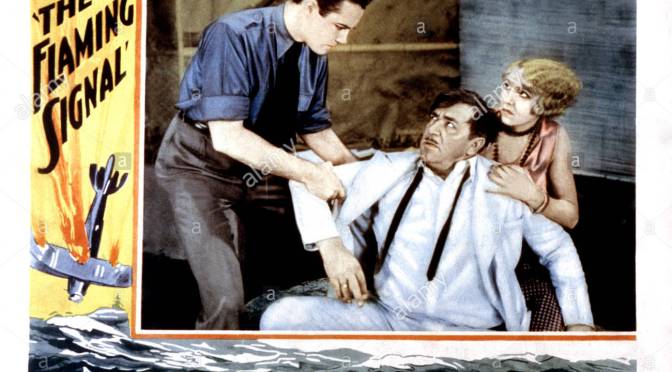
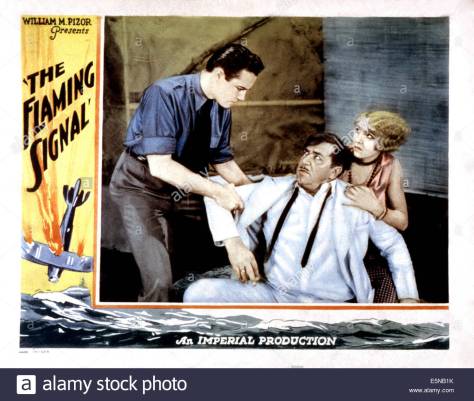
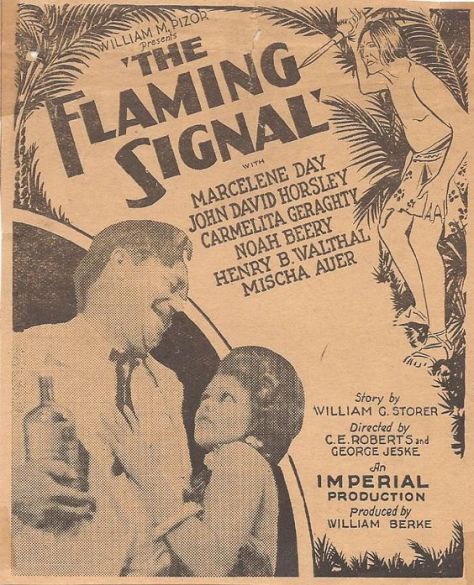
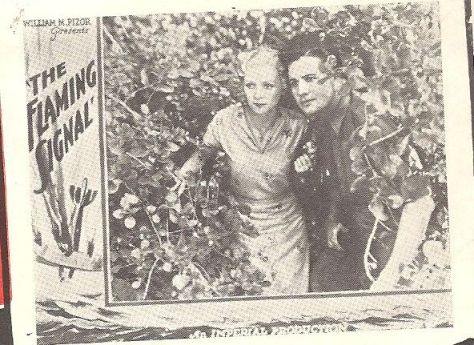
The Flaming Signal (1933)

Flaming Signal The 3

Flaming Signal The 2

Flaming Signal The 7

Director: George Jeske, Charles E Roberts

Cast: Marceline Day, John David Horsley, Noah Beery, Henry B Walthall, Carmelita Geraghty, Mischa Auer, Francisco Alonso, Anya Gramina

64 min

Flaming Signal The 15

A pilot and his dog crash-land on an island run by a psycho who owns a motel–and most of the locals. With Marceline Day and John David Horsley.

Plot

While aviator Lieutenant James Robbins signs his autograph on the leg of an attractive, admiring French girl at a crowded airfield as he prepares to fly from Los Angeles to Hawaii, Flash, his German shepherd, grabs a parachute and sneaks into the plane.

Thirty hours later, Jim survives a fierce lightning storm, but afterward his engine catches fire. Flash parachutes to Tabu Island, just south of Hawaii, and Jim crashes in the ocean. The dog finds Jim unconscious hanging onto a broken wing and pushes him to shore.

Flaming Signal The 6

After Flash finds Sally James, daughter of a missionary, swimming nude in a lake, she and her father take Jim and Flash to the trading post and bar run by drunken Otto Von Krantz, who exploits the natives and, with his blonde barmaid Molly, encourages them to drink and spend the money that he pays them for the pearls they find. Jim and Flash wait for the weekly boat to come, and three days later, while Sally and Jim hold hands and watch the natives dance, Von Krantz rapes chief Manu’s daughter Rari.

When Manu orders Von Krantz to leave the island, Von Krantz shoots him. The natives hold a ritual to bring Manu back to life and keep the white people captive in Von Krantz’s bar, but Flash sneaks out with a torch and lights a pyre to signal search planes. Manu rises and Reverend James goes to speak with him, but Von Krantz shoots Manu and a native knifes the reverend.

Flaming Signal The 8

After Jim knocks out Von Krantz and escapes from the bar with Sally, Flash bites Von Krantz to death as Molly watches. After Jim and Sally bury her father, Flash attacks a native about to spear them from above and falls with the native over a cliff. A plane lands in the water, and as natives approach, Jim, Sally and a limping Flash escape to the plane.

Flaming Signal The 5

Cast

Flash the Dog Flash the Dog
Flash (as Flash)
John David Horsley John David Horsley
Lt. Jim Robbins (as John Horsley)
Marceline Day Marceline Day
Molly James
Noah Beery Noah Beery
Otto Von Krantz
Henry B. Walthall Henry B. Walthall
Rev. Mr. James
Carmelita Geraghty Carmelita Geraghty
Molly
Mischa Auer Mischa Auer
Manu–High Priest
Francisco Alonso Francisco Alonso
Taku
Jane'e Olmes Jane’e Olmes
Rari
Anya Gramina Anya Gramina
French Girl

Flaming Signal The 9

Flaming Signal The 4

Flaming Signal The 12

Flaming Signal The 14

Flaming Signal The 11

Flaming Signal The 13

Film Collectors Corner

Watch The Flaming Signal Now – Instant Video on You Tube

Blu Ray

Not released on Blu Ray

DVD

Morals for Women (1931)


Pre Code Logo 1

Pre Code Hollywood Season: FD Cinematheque

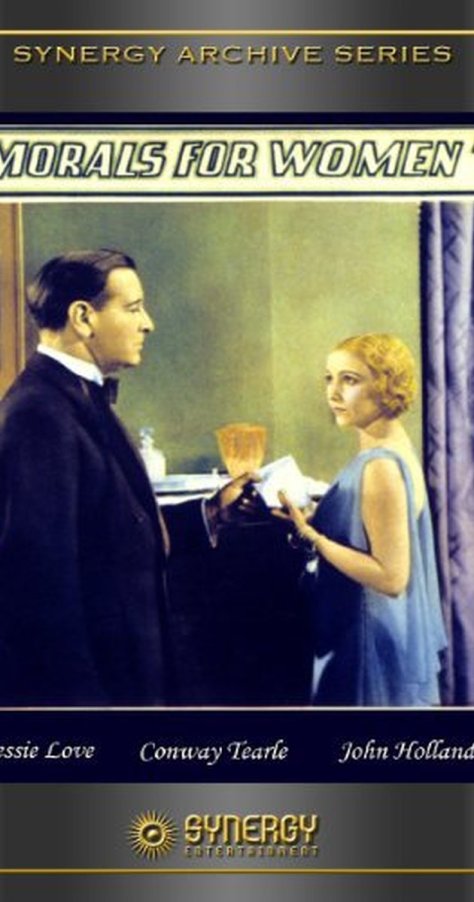
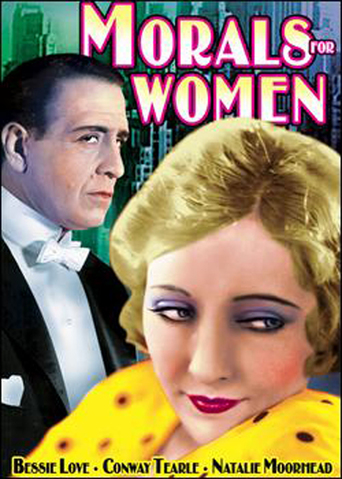
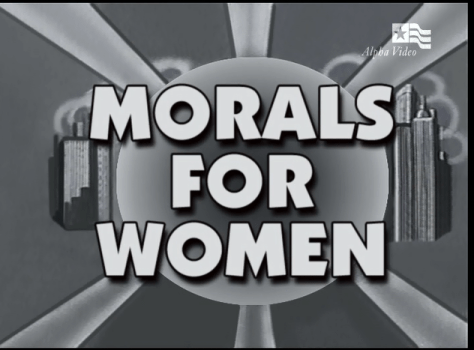
Morals for Women (1931)

Morals for Women 1

Morals for Women 2

Director: Mort Blumenstock

Cast: Bessie Love, Conway Tearle, John Holland, Natalie Moorhead, Emma Dunn, June Clyde, Edmund Breese, David Rollins, Lina Basquette, Virginia Lee Corbin, Otis Harlan

65 min

Morals for Women 5

Plot

Helen Hutson, the secretary and mistress of New York businessman Van Dyne, is initially upset when her childhood sweetheart, Paul Cooper, comes to her office to visit. However, she agrees to have dinner with him after he says he is leaving town that night and, feigning a headache, breaks a date with Van.

They go dancing, and Paul, whom Helen once told not to come back into her life until he made good, proposes by the end of the evening. Helen avoids giving an answer, and at the train

They go dancing, and Paul, whom Helen once told not to come back into her life until he made good, proposes by the end of the evening. Helen avoids giving an answer, and at the train station before he leaves, she tries but fails to confess her involvement with Van.

Morals for Women 6

Despite advice from her friend Katherine, Helen, now in love with Paul, plans to return to her hometown of Greenfield, New York and tell him everything before they marry. In Greenfield, Helen finds that her younger sister Lorraine is infatuated with a wealthy boy from the southern school she is attending.

Her father, who has lost his job as a newspaperman, comes in drunk with friends, one of whom asks Helen to repay $200 that her father borrowed. When a boy in town makes insulting innuendos about Helen, her brother Bud defends her reputation, breaking a bottle over the boy’s head. After the sheriff tells Helen that the injured boy’s father will not press charges if he is paid for the hospital expenses, Helen reveals to Bud that the rumors are true.

He embraces her nonetheless, and Helen returns to New York where she placates Van by saying that Paul means nothing to her, and gets the money to bail Bud out of jail. Sometime later, on the night of a party Van demands she hold for some drunken business associates, Helen’s mother and father visit her apartment. That same day, Paul, who has come back from his trip, looks for her at the office, and meets Van instead.

Morals for Women 7

When Paul announces their impending marriage, Van maliciously brings Paul to the party. Meanwhile, Helen’s mother has made lemonade for the surprised guests, while her father gets drunk with two of Van’s associates. When Van, in front of Paul, orders Helen to get him handkerchiefs from his drawer, Paul leaves in disgust. Helen leaves town the next day with her parents. They receive a telegram from Lorraine announcing her marriage, and Helen is happy that her sister is “safe.” Paul comes to the house, and as Bud and his mother watch from the window, Helen and Paul embrace and reconcile.

Morals for Women 4


Cast 

Bessie Love Bessie Love
Helen Huston
Conway Tearle Conway Tearle
Van Dyne
John Holland John Holland
Natalie Moorhead Natalie Moorhead
Flora
Emma Dunn Emma Dunn
Mrs. Huston
June Clyde June Clyde
Lorraine Huston
Edmund Breese Edmund Breese
Mr. Huston
David Rollins David Rollins
Bill Huston
Lina Basquette Lina Basquette
Claudia
Virginia Lee Corbin Virginia Lee Corbin
Maybelle
Crauford Kent Crauford Kent
Mr. Marston
Otis Harlan Otis Harlan
Mr. Johnston
Rest of cast listed alphabetically:
George Olsen George Olsen
Orchestra Leader (archive footage)
Ethan Allen Ethan Allen
(uncredited)
Norman Budd Norman Budd
(uncredited)
Wilbur Higby Wilbur Higby
(uncredited)
John Hyams John Hyams
(uncredited)
Walter Perry Walter Perry
(uncredited)
Lillian Rich Lillian Rich
(uncredited)

Morals for Women 8

circa 1920: Bessie Love (1898 - 1986), the Hollywood film actress.

Morals for Women 10

Film Collectors Corner

Watch Morals For Women Now – Instant Video on You Tube

Blu Ray

Not released on Blu Ray


DVD

Man of Sentiment, A (1933)


Pre Code Logo 1

Pre Code Hollywood Season: FD Cinematheque

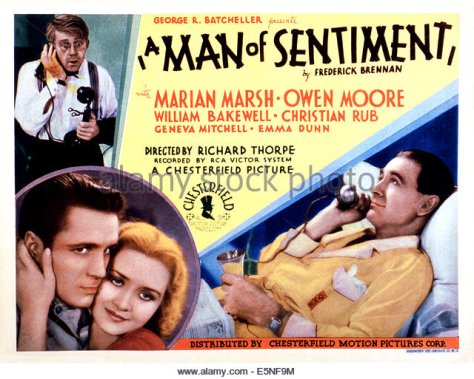
A Man of Sentiment (1933)

Man of Sentiment A 1

Director: Richard Thorpe

Cast: Marian Marsh, Owen Moore, Christian Rub, William Bakewell, Emma Dunn, Edmund Breese, Geneve Mitchell, Pat O’Malley, Syd Saylor

62 min

Plot

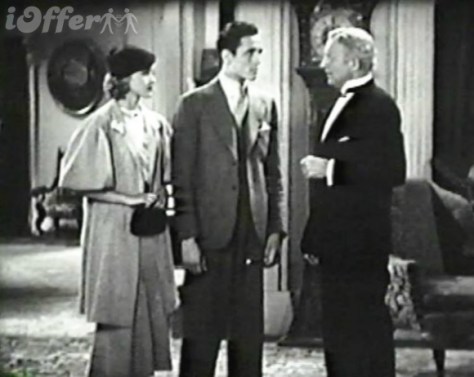
Herman Heupelkossel, a kindhearted orderly at a New York hospital, is teased by his fellow workers for the sympathy he gives patients. An unconscious, badly bleeding girl under twenty, the victim of a speeding, drunk driver, is brought in by the driver, twenty-four-year-old John Russell, who wants to be punished for his offense.

Herman sees that the girl, Julia Wilkins, will be alright in a few days and convinces John to hide his drunkenness so that he will be able to help Julia, rather than go to jail. With the aid of Limburger cheese, black coffee and Herman’s old pipe, John reluctantly covers up his alcoholic breath.

Man of Sentiment A 2

As Julia gets better, she and John fall in love, and when he brings her home to her roominghouse, he proposes. When the accident occurred, Julia had been on her way to meet her former suitor Stanley Colton, a wealthy playboy, and accept his offer to become his mistress in exchange for luxurious rooms, a piano, musical instruction and eventually a trip to Europe to study.

She now tells Colton, who is waiting at her room, that she only kidded herself into believing that she was a musical genius. Colton still extends an offer to help her, which John rebuffs. John, who has hidden from Julia the fact that he is the black sheep son of wealthy parents, takes her to his home, where his family, especially his snooty sister Doris, make the meeting unpleasant because they think she is after his money. As a result, Julia breaks off the engagement, which leads John to go on a drinking binge. When Herman learns of this, he calls Julia, who brings John to her room.

Man of Sentiment A 7

They plan to marry without financial help from his family, and this time, Julia, anxious to leave before anything else goes wrong, calls Colton to ask him for money. She goes to have dinner at his apartment, and after she refuses his entreaties that she break with John, he has her wait in his bedroom while he answers the door. John, whom Colton craftily had called and asked to visit after he heard from Julia, enters and accuses Julia of selling herself to Colton.

Their engagement broken again, Julia soon is kicked out of her room for non-payment of rent. After two weeks, she is taken to the hospital, suffering from pneumonia. Herman, thinking that John’s presence when she regains consciousness could determine whether she lives or dies, leaves the hospital to find him, at the risk of losing his job, but arrives at John’s house just after John has left to take a steamer to Europe.

Herman convinces John’s father of the urgency of the situation and they find John. As Mr. Russell is the hospital’s heaviest donor, Herman is not fired. Julia recovers and the couple are reconciled.

Man of Sentiment A 4

Cast

Marian Marsh Marian Marsh
Julia Wilkens
Owen Moore Owen Moore
Stanley Colton
Christian Rub Christian Rub
Herman Heupelkossel
William Bakewell William Bakewell
John Russell
Emma Dunn Emma Dunn
Mrs. John Russell Sr.
Edmund Breese Edmund Breese
John Russell Sr.
Geneva Mitchell Geneva Mitchell
Doris Russell
Pat O'Malley Pat O’Malley
Officer Ryan
Syd Saylor Syd Saylor
Swede – Orderly
Lucille Ward Lucille Ward
Miss Tracy
Cornelius Keefe Cornelius Keefe
Dr. Jordan
Otto Hoffman Otto Hoffman
Landlord
Matt McHugh Matt McHugh
Alex (Willie) Moran – Orderly
William Bailey William Bailey
Doctor
Mildred Washington Mildred Washington
Mildred – the Maid
Rest of cast listed alphabetically:
Lionel Backus Lionel Backus
Superintendent Orderly (uncredited)
John Beck John Beck
Beck – the Butler (uncredited)
Almeda Fowler Almeda Fowler
Nurse (uncredited)
Frank LaRue Frank LaRue
Sergeant Muldoon (uncredited)
Arthur Millett Arthur Millett
Bill Collector (uncredited)
Dick Rush Dick Rush
Barney – Ambulance Driver (uncredited)


Film Collectors Corner

Watch A Man of Sentiment Now – Instant Video on You Tube

Blu Ray

Not released on Blu Ray


DVD

Not released on DVD


Just Imagine (1933)


Pre Code Logo 1

Pre Code Hollywood Season: FD Cinematheque

Just Imagine (1930)

Just Imagine 1

Just Imagine 3

Just Imagine 6

Director: David Butler

Cast: El Brendel, Maureen O’Sullivan, John Garrick, Marjorie White, Frank Albertson, Hobart Bosworth, Kenneth Thomson, Micha Auer, Ivan Linow, Joyzelle Joyner, Wilfred Lucas

113 min

Just Imagine 5

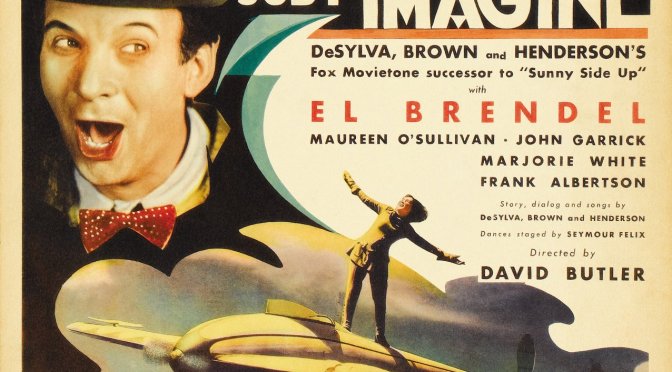
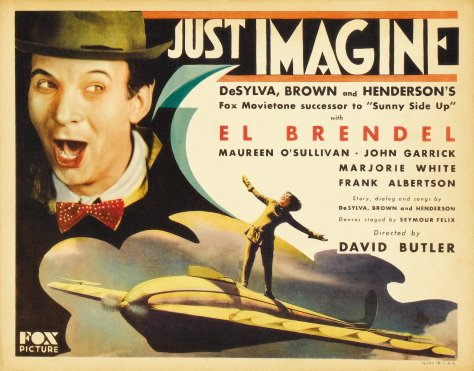
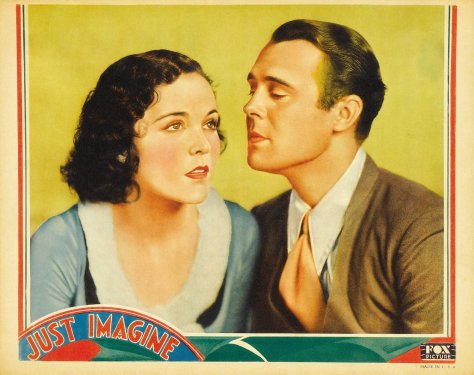
Just Imagine is a 1930 American pre-Code science fiction musicalcomedy film, directed by David Butler.

The film is known for its art direction and special effects in its portrayal of New York City in an imagined 1980. Just Imagine stars El Brendel, Maureen O’Sullivan, John Garrick and Marjorie White. The “man from 1930” was played by El Brendel, an ethnic vaudeville comedian of a forgotten type: the Swedish immigrant.

The film starts with a preamble showing life in 1880, where the people believed themselves the “last word in speed”. It switches to 1930, with the streets crowded with automobiles and lined with electric lights and telephone wires. It then switches to 1980, where the tenement houses have morphed into 250-story buildings, connected by suspension bridges and multi-lane elevated roads.

Just Imagine 7

Plot

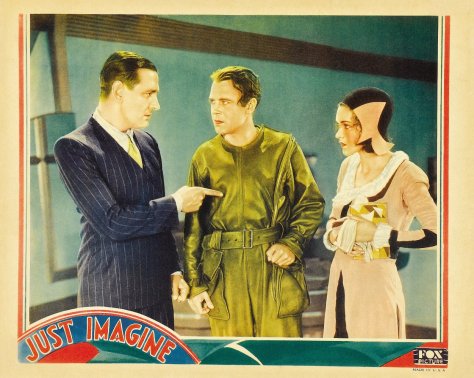
In 1980, J-21 (John Garrick) sets his aircraft on “hover” mode in New York, lands and converses with the beautiful LN-18 (Maureen O’Sullivan). He describes how the marriage tribunal had refused to consider J-21’s marital filing and applications, and LN-18 is going to be forced to marry the conceited and mean MT-3 (Kenneth Thomson). J-21 plans to visit LN-18 that night.

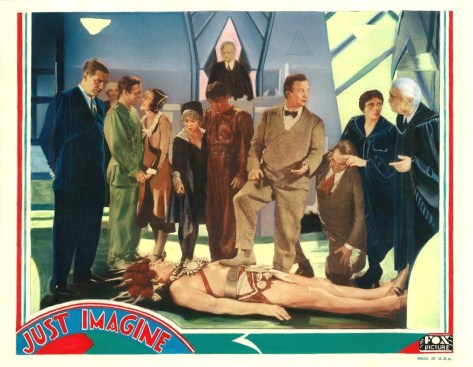
RT-42 (Frank Albertson) tries to cheer him up by taking him to see a horde of surgeons experimentally revive a man from 1930, who was struck by lightning while playing golf, and was killed. The man (originally named Peterson now is called Single O) is taken in hand by RT-42 and J-21, where it is revealed that aircraft have replaced cars, numbers have replaced names, pills have replaced food and liquor, and the only legal babies come from vending machines.

Just Imagine 8

That night, LN-18 feigns a headache, and her father and the despicable MT-3 decide to go to “the show” without her. The second they are gone, RT-42 and J-21 appear and woo B-27 and LN-18 respectively. MT-3 and LN-18’s father return quite early, as MT-3 was highly suspicious, and RT-42 and J-21 hide. However, the game is foiled by the moronic Single O (El Brendel), the man from 1930, becoming addicted to pill-highballs, getting drunk, and trying to get some more pill-highballs from J-21.

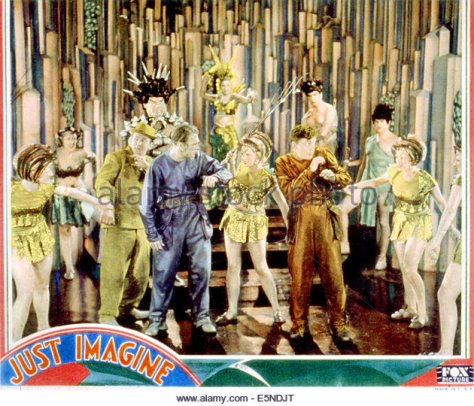
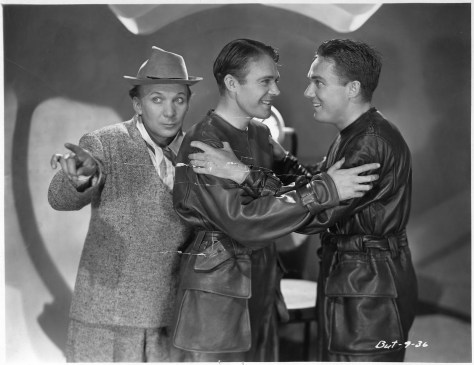
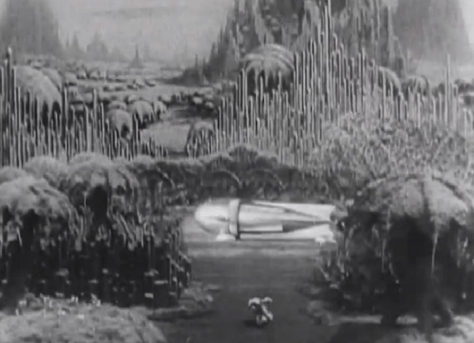
J-21 is depressed, but is contacted by Z-4, the scientist. He is told that Z-4 (Hobart Bosworth) has built a “rocket plane” that can carry three men to Mars. After a farewell party where J-21 works, on the Pegasus, a dirigible they call an “air-liner,” the rocket blasts off, carrying J-21, RT-42 and Single O, who has stowed away for the synthetic rum. Landing on Mars, they are received by the Queen, Looloo and the King, Loko. That night, Looloo and Loko take them to see a “show,” a Martian opera, where a horde of trained Martian ourang-outangs dance about.

They are suddenly attacked by Booboo and Boko, the evil twins (everyone on Mars is a twin) of the King and Queen. They escape and return to Earth, and as one of the first men on another planet, J-21 is permitted to marry LN-18. Finally, Single O is reunited with his aged son, Axel.

Just Imagine 13

Cast

Just Imagine 14

Production

Art/cinematography

The massive, distinctive Art Deco city-scape, for which Just Imagine has come to be best remembered, was built in a former Army balloon hangar by a team of 205 technicians over a five-month period.

The giant miniature cost $168,000 to build and was wired with 15,000 miniature lightbulbs (an additional 74 arc lights were used to light the city from above). Other production credits include costumes by Alice O’Neil and Dolly Tree with graphics by Post Amazers.[1]

Just Imagine 9

Special effects

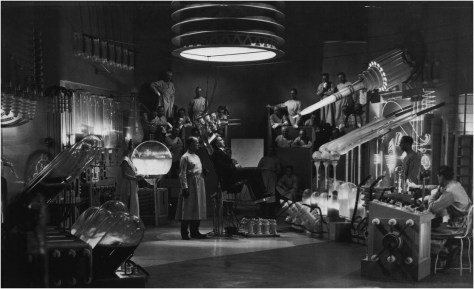
The sequence in which the El Brendel character is revived from the dead features the first screen appearance of the spectacular electrical equipment assembled by Kenneth Strickfaden, seen again and more famously in James Whale‘s Frankenstein (1931).

Over 50 special effects shots combining previously photographed backgrounds with live foreground action were accomplished using the Dunning Process.[2] Rear projection technology of the scale and quality required was not available at the time.

The set design in the form of glass pictures and miniatures was done by Stephen Goosson, Ralph Hammeras, SPFX-guru Willis O’Brien, and Marcel Delgado (all uncredited).[3]

Just Imagine 10

Music

Of the DeSylva, Brown and Henderson songs introduced in the film, “Never Swat a Fly” was covered as the classic 1930 recording by McKinney’s Cotton Pickers, the 1967 revival by Jim Kweskin & The Jug Band, and more recent recordings by Doc Cheatham among others.

Just Imagine 11

Reception

Mordaunt Hall called Just Imagine, “clever”, “highly imaginative” and “intriguing” and praised the costumes and set design.[4] This expensive film was a one-time-only novelty stunt, bolstered by the short-lived popularity of El Brendel.[5] Wonder Stories “cordially recommended” the film, saying it “shows us many of the wonders that our science fiction authors have been writing about”.[6]

Although a box-office flop, however, it was eventually able to make back some of its production costs in the studio shopping out clips of the futuristic sets for other films of the period. Clips of the cityscape from this movie were later used in the Universal serials Flash Gordon and Buck Rogers; the mock-up Mars spaceship was reused in the former as Dr. Zarkov’s spaceship.

Just Imagine 12

Also seen in the first Flash Gordon serial are the strange hand-weapons carried by J21 and RT42 on Mars, which are held under rather than over the fist, and re-used footage of dancing girls cavorting about and on a Martian idol with moving arms.[7]

By the time Just Imagine was released, movie musicals had greatly declined in popularity.[8] As a result, major American studios would not back another big budget science fiction film until 1951. There was to be only one other American science-fiction musical in that period, It’s Great to Be Alive (1933), which failed at the box-office. Film serials were an exception to this general trend, however.

The first Flash Gordon serial from 1936 had an unusually large budget for a serial of the time, and Gene Autry’s The Phantom Empire from 1935 can loosely be considered a science fiction musical serial.

Just Imagine 15

Awards

Just Imagine was nominated for an Academy Award for Best Art Direction by Stephen Goosson and Ralph Hammeras.[9] It is notable as the first film of the science fiction genre to be nominated for an Oscar.

See also

References

Notes

  1. Jump up^ Kreuger 1974, p. 241.
  2. Jump up^ The International Photographer, December 1930. p. 40.
  3. Jump up^ German 2010 DVD of movie Behemoth, the Sea Monster titled “Das Ungeheuer von Loch Ness”: Extras: Willis O’Brien-filmography: card 12 (Just Imagine (1930))
  4. Jump up^ Hall, Mourdant. “Derelict (1930).” The New York Times, November 22, 1930.
  5. Jump up^ Westphal, Kyle. “Early talkies: A Primer.” Northwest Chicago Film Society, September 30, 2012. Retrieved: May 2, 2015.
  6. Jump up^ “Book Reviews”, Wonder Stories, February 1931, p. 1054
  7. Jump up^ “Just Imagine (1930).” Movie Diva. Retrieved: May 2, 2015.
  8. Jump up^ Altman 1987, p. 186.
  9. Jump up^ “Details: ‘Just Imagine’.” The New York Times. Retrieved: May 2, 2015.

Bibliography

Altman, Rick. The American Film Musical. Bloomington Indiana: Indiana University Press, 1987. ISBN 978-0-253-20514-8.
Kreuger, Miles ed. The Movie Musical from Vitaphone to 42nd Street as Reported in a Great Fan Magazine. New York: Dover Publications, 1974. ISBN 0-486-23154-2.

Film Collectors Corner

Watch Just Imagine Now – Instant Video on You Tube

Blu Ray

Not released on Blu Ray


DVD

Not released on DVD

Ladies in Love (1930)


Pre Code Logo 1

Pre Code Hollywood Season: FD Cinematheque

Ladies in Love (1930)

Ladies in Love 1

Ladies in Love is a 1930 Pre-code talking film romance drama directed by Edgar Lewis and starring Alice Day and Johnnie Walker. A B-movie, it was produced independently by Hollywood Pictures and distributed by Chesterfield Motion Pictures Corporation.[1]

Cast

Ladies in Love 3

Film Collectors Corner

Watch Ladies in Love Now – Instant Video on You Tube

Blu Ray

Not released on Blu Ray


DVD

Constant Woman,The (1933)


Pre Code Logo 1

Pre Code Hollywood Season: FD Cinematheque

The Constant Woman AKA Hell In a Circus (1933)

Constant Woman The 2

Director: Victor Scherzinger

Cast: Conrad Nagel, Leila Hyams, Tommy Conlon, Claire Windsor, Stanley Fields, Fred Kohler, Alexander Carr, Robert Ellis, Lionel Belmore, Ruth Clifford, Mickey Daniels

76 min


Constant Woman The 1

The Constant Woman (1933), also known as Auction in Souls and Hell in a Circus, is an American Pre-Code film directed by Victor Schertzinger. It is based on an early Eugene O’Neill play called Recklessness.

Plot

Marlene Underwood is a star circus performer, whose husband Walt buys the circus while their son Jimmie worships everything his mother does. Marlene leaves them both to go join a larger show, then is killed in a fire, resulting in Walt going into a downward spiral of alcohol and sorrow.

A woman called Lou helps restore Walt’s faith in human nature, but she is resented by young Jimmie, who feels she is trying to take his mother’s place. Walt gets back on his feet, but now must try to stop Jimmie from joining the circus himself.

Constant Woman The 8

Cast

Constant Woman The 3

Constant Woman The 5

Constant Woman The 6

Constant Woman The 7

External links[edit]

Constant Woman The 9

Film Collectors Corner

Watch The Constant Woman Now – Instant Video on You Tube


Blu Ray

Not released on Blu Ray


DVD

Not released on DVD


Flirtation (1934)


Pre Code Logo 1

Pre Code Hollywood Season: FD Cinematheque

Flirtation (1934)

Flirtation 1

Flirtation 2

Director: Leo Birinsky

Cast: Jeanette Loff, Ben Alexander, Arthur Tracy, Emma Dunn, Franklin Pangborn, Al K Hall, Cissy Fitzgerald, Helen McKellar, William Pawley, Corky

58 min

Flirtation 3

Plot

When Dudley, a young man from the country, comes to the city with his dog “Corky,” he falls in love with an actress named Nancy.

Dudley loses Corky, but when the dog shows up and causes a disruption while Nancy is singing onstage, she is fired. A short time later, Nancy discovers that her mother, who has been led to believe that Nancy is happily married with a baby, is coming to town. To maintain the deception, Nancy convinces Dudley to pretend to be her husband and “borrows” a baby.

The ruse is soon discovered, but by then Nancy and Dudley have fallen in love. Nancy then marries Dudley and they move to his home in the country.

Flirtation 4

Jeanette Loff Jeanette Loff
Ben Alexander Ben Alexander
Arthur Tracy Arthur Tracy
Emma Dunn Emma Dunn
Franklin Pangborn Franklin Pangborn
Al K. Hall Al K. Hall
Cissy Fitzgerald Cissy Fitzgerald
Helen MacKellar Helen MacKellar
Mrs. Smith – the Baby’s Mother
William Pawley William Pawley
Corky Corky
Dudley’s Dog
Rest of cast listed alphabetically:
Ernie Adams Ernie Adams
The Crook (uncredited)
Tommy Bupp Tommy Bupp
The Baby (uncredited)
Billy Franey Billy Franey
Minor Role (uncredited)
Mary Gordon Mary Gordon
Woman on a Window (uncredited)
Kit Guard Kit Guard
Man Outside Theatre (uncredited)
Fay Holderness Fay Holderness
Woman on a Window (uncredited)
Hattie McDaniel Hattie McDaniel
Minor Role (uncredited)
Lee Moran Lee Moran
Stage Manager (uncredited)
Tempe Pigott Tempe Pigott
Flower Woman (uncredited)

Flirtation 6

Flirtation 5

Film Collectors Corner

Watch Flirtation Now – Instant Video on You Tube

Blu Ray

Not released on Blu Ray

DVD

Gigolettes of Paris (1933)


Pre Code Logo 1

Pre Code Hollywood Season: FD Cinematheque

Gigolettes of Paris (1933)

Gigolettes of Paris 11

Gigolettes of Paris 12

Director: Alphonse Martell

Cast: Madge Bellamy, Gilbert Roland, Natalie Moorhead, Theodore Von Eltz, Molly O’Day, Henry Kolker, Paul Porcasi, Robert Bolder, Ellinor Vanderveer

64 min

Gigolettes of Paris 5

Plot

Suzanne Ricord, the prettiest salesgirl at the Parfumerie Parisienne, attracts the attention of wealthy Albert Valraine, who purchases all the expensive perfumes that she recommends.

After work, Suzanne and her roommate Paulette find Valraine waiting. He insists on giving the demure Suzanne a ride home and puts Paulette in the rear outdoor seat, where she still manages to hear Valraine offer Suzanne both the perfumes that he bought and to be her “fairy godfather.”

Gigolettes of Paris 4

Suzanne refuses, but after she finds no mail from her lover, Paulette talks her into accepting Valraine’s offer. She removes the ring that her lover gave her, and it is soon replaced by Valraine’s. Suzanne and Paulette now live in a nicely-furnished apartment paid for by Valraine, and Suzanne is his mistress.

However, when she begins to talk about their planned honeymoon, Valraine takes back his ring and, accusing her of not having learned the rules of the game, says that everything has to end sometime.

Suzanne cries in disappointment. Valraine then promises his fiancée Diane that he is finished with his mistress and gives her the ring he took back from Suzanne.

Gigolettes of Paris 6

Sometime later, Suzanne sings at a cabaret and accepts gifts from the many wealthy men who come to see her. Her friend, Antoine “Tony” Ferand, a gigolo, dances with Diane, now Valraine’s wife, and Suzanne notices the ring on her finger. When Tony tells Suzanne that Diane is Mrs. Albert Valraine, Suzanne reveals that the ring was her engagement ring and says she wants it back.

Diane gives the ring to Tony supposedly to help finance his business, and when Tony, who really loves Suzanne, gives her the ring, she reveals that her plan is to show Valraine how it feels to be at the losing end of the game. When Tony says that he is sick of their life and has no self-respect, Suzanne refuses to listen.

Valraine, who has just returned from a trip, accompanies his wife to the cabaret, and he notices that her ring is gone. Seeing the ring on a hand holding the curtain leading to the telephone, Valraine grabs it only to find Suzanne waiting for his approach.

Gigolettes of Paris 7

When he questions her about the ring, she obliquely threatens to reveal their affair if his inquiries go too far. Back at the table with his wife, after Valraine, noticing Tony staring at Diane, accuses her of humiliating him with a common gigolo, Diane leaves with Tony, who is frustrated with Suzanne’s schemes. In their cab, Tony reveals to Diane that Suzanne had been engaged to Valraine and apologizes.

Although disappointed, Diane refuses his offer to return the ring. Tony goes to Monte Carlo, where he is arrested after he leaves a watch that had been given to Suzanne by a man at the cabaret, at a repair shop. The watch turns out to be stolen property.

The next night, Suzanne, upset that Tony has not come to the club, rebukes Valraine when he apologetically asks if she could ever care for him again. In front of Valraine, she gives the ring as a present to Louie, her waiter.

Gigolettes of Paris 9

Meanwhile, Tony, in jail, refuses to say who gave him the watch. Realizing that she really loves Tony, Suzanne goes with Paulette to Monte Carlo to get away. She sees Diane at a table but her fears at finding her with Tony are relieved when her new husband joins her.

After Paulette shows her a newspaper article about the stolen watch, she tells her story to the police. Tony is released and the man who gave her the watch is picked up in Marseilles. Tony and Suzanne plan to marry, and he plans to return to his father’s textile producing business. To their surprise, they find that with the ring, Louie has married Paulette.

Tony is released and the man who gave her the watch is picked up in Marseilles. Tony and Suzanne plan to marry, and he plans to return to his father’s textile producing business. To their surprise, they find that with the ring, Louie has married Paulette.

Gigolettes of Paris 8

Madge Bellamy Madge Bellamy
Suzanne Ricord
Gilbert Roland Gilbert Roland
Antoine ‘Tony’ Ferrand
Natalie Moorhead Natalie Moorhead
Diane Valraine
Theodore von Eltz Theodore von Eltz
Albert Valraine
Molly O'Day Molly O’Day
Paulette
Henry Kolker Henry Kolker
Police Interrogator
Paul Porcasi Paul Porcasi
Albert Conti Albert Conti
Ferdinand Schumann-Heink Ferdinand Schumann-Heink
(as F. Schumann-Heink)
Maude Truax Maude Truax
Lester New Lester New
Robert Bolder Robert Bolder
Rest of cast listed alphabetically:
Ellinor Vanderveer Ellinor Vanderveer
Diane’s Friend (uncredited)

Gigolettes of Paris 10

Film Collectors Corner

Watch Gigolettes of Paris Now – Instant Video on You Tube

Blu Ray

Not released on Blu Ray

DVD

Lonely Wives (1931)


Pre Code Logo 1

Pre Code Hollywood Season: FD Cinematheque

Lonely Wives (1931)

Lonely Wives 3

Lonely Wives 2

Lonely Wives 1

Director: Russell Mack 

Cast: Edward Everett Horton, Esther Ralston, Laura La Plante, Patsy Ruth Miller, Spencer Charters, Maude Eburne, Maurice Black

85 min

Lonely Wives 5

Lonely Wives is a 1931 American comedy film directed by Russell Mack and produced by E.B. Derr for Pathé Exchange, and was distributed by RKO Pictures after the merger of the two studios; it starred Edward Everett Horton, Esther Ralston, Laura La Plante, and Patsy Ruth Miller.

The screenplay was written by Walter DeLeon, based upon a successful German Vaudeville act entitled Tanzanwaltz, penned by Pordes Milo, Walter Schütt, and Dr. Eric Urban. The German production had been translated for the American stage by DeLeon and Mark Swan and, under the same title as the film.

Lonely Wives 6

Plot summary

Edward Everett Horton, in dual roles as Richard and Felix, the Great Zero.

Richard “Dickie” Smith (Edward Everett Horton), is a seemingly respectable defense attorney by day, who turns into a philandering Don Juan when the clock strikes 8 o’clock.

His wife, Madeline (Esther Ralston), has been away for several months, and is not expected back anytime soon. However, Madeline’s mother, Mrs. Mantel (Maude Eburne) is staying with the Smiths, in an effort to curtail the possibility of any straying by Richard.

Lonely Wives 7

Unbeknownst to her, he has made plans to go out on the town that night with his new, sultry secretary Kitty Minter (Patsy Ruth Miller), and his new sexy client, Diane O’Dare (Laura La Plante), who, a lonely wife herself, wishes to divorce her husband for neglect.

The issue is how can he go out on the town without alerting his mother-in-law. An issue which is seemingly resolved by the arrival at his home of a vaudeville impersonator: Felix, the Great Zero (also played by Edward Everett Horton). Felix is seeking permission to impersonate the famous lawyer on-stage. At first reluctant, Richard, noticing the striking resemblance between himself and the actor, realizes he might have a way to deceive Mrs. Mantel. In order to obtain his approval, Felix must agree to impersonate him at his house that evening, while he goes out.

Lonely Wives 8

While Richard goes out on the town, he discovers that Diane’s husband is none other than Felix. Meanwhile, Madeline arrives home unannounced and early.Thinking that he is about to be exposed, Felix phones the nightclub where Richard has taken the two women for dinner and drinks. As he waits for the return phone call, much to his surprise, rather than exposing him as an imposter, Madeline begins to come on to him. He attempts to resist, trying to hold out until he can speak to Richard, but he succumbs to her charms just as the phone begins ringing.

When Richard returns home the next morning, Felix is still there. He is followed closely by a very inebriated Diane, with whom it seems he has spent his time away from home. When Felix recognizes Diane, and Richard understands that Felix has spent the night at his house, both men believe that his look-a-like has slept with the others’ wife. After a series of events, Smith ends up chasing Zero with a loaded gun. Meanwhile, Andrews, the Butler, (Spencer Charters), thinks he must have the DT’s, seeing double of his employer.

Lonely Wives 12

The truth comes out when Madeline admits that she knew it wasn’t Richard all along, and other than the kissing, nothing happened between the two of them. Diane admits that she spent the night in the cab, riding around, and not with Richard. Reconciled, Richard is cured of his wandering ways and Felix and Diane are reunited.

Cast

(Cast as per AFI database)[5]

Lonely Wives 10

Production

Tie-in advertisement for Jo-Cur Beauty Products and Lonely Wives.

Pathé announced that the film was going into production in mid-November 1930, with Russell Mack at the helm.[6] Shortly after, it was reported that La Plante had been attached to the cast;[7] La Plante was returning to films after a brief seven-month hiatus, during which time speculation arose that her career might be over.

Her appearance in this film, and its success, would re-ignite her career.[8] On December 7, it was learned that DeLeon would be adapting the story into a screenplay,[9] and on the 10th the announcement came that Esther Ralston and Patsy Ruth Miller would be added to the list of cast members, along with Edward Everett Horton.[10]

Horton and Miller had co-starred the prior year in four films together for Warner Brothers.[11] The following day, December 11, The Film Daily announced that the film had begun production.[12]Included in the cast was Spencer Charters, who had acted with Mack in several Broadway plays.[13]

Lonely Wives 11

Pathe announced that the film would be part of its 1931 schedule, and it began to appear on its list of upcoming releases in the trades, but without a specific release date.[14] The release was held up in late January due to the sale of Pathe to RKO Pictures. By the end of the month the go-ahead was given to release the film.[15] Finally on February 16 RKO announced they would be releasing the film the following week.[16]

Several days prior to its release, Pathe announced that the marketing campaign for the film would include “tie-ins” with a coterie of manufacturers and retail stores. The campaign would include drug stores and department stores, and have advertising material supplied by manufacturers such as Underwood (typewriters), John H. Woodbury (toiletries), and Jo-Cur Laboratories (beauty products).[17] Lonely Wives was released by RKO on February 22, 1931.[5]

Lonely Wives 13

Soundtrack

  • “Madeline”, unknown composer
  • “Baby Feet”, unknown composer, sung by Maude Eburne[1]

 Lonely Wives 14

Reception

Mordaunt Hall, the film critic for the New York Times, gave the film a positive review, calling the direction “skillful”, and singles out the performance of several of the actors, including Esther Ralston, Maude Eburne, Patsy Ruth Miller, and Spencer Charters.

He was especially impressed with Horton, stating that he “delivers a wonderfully clever dual impersonation …”, and is “wonderfully amusing”.[18] The Film Daily also gave the film a nod of approval, calling it “… one of the cleverest and most entertaining comedies of the season”.

Lonely Wives 15

They particularly highlighted the direction of Mack, Horton’s performance in his dual role, as well as complimenting the rest of the cast. The trade paper also gave the highest marks to the cinematography of Edward Snyder.[19]

Photoplay listed it as one of the best films of the month in February 1931, singling out the acting talents of Horton, Ralston, La Plante, and Miller.[20] Picture Play Magazine was a bit more reserved in their review of the film.

While they called it “… the most consistently broad comedy of any film since “The Cock-eyed World”,” they also stated that it was “supposedly hilarious”.[21]

Other positive reviews came from: Billboard, “… destined to be one of the laugh highlights of the screen year”; Motion Picture Herald, “Highly sophisticated comedy, goes over with a great laugh”; Los Angeles Express, “Fast, furious, frothy farce. Lonely Wives is a laugh riot”; and Motion Picture Daily, “Laughs keep rolling out in a steady deluge of ultra-sophisticated wise cracks.”[22]

Lonely Wives 16

Notes

In 1959, the film entered the public domain in the USA due to the copyright claimants failure to renew the copyright registration in the 28th year after publication.[23]

It was released on DVD by Roan/Troma Entertainment in 2001.[24]

The English translation of the 1912 German vaudeville act, Tanzanwaltz, entitled Lonely Wives, written by DeLeon and Mark Swan, was produced by A.H. Woods in Stamford, Connecticut on August 11, 1922.[2] The play was scheduled to open in New York in August 1922, starring a well-known female impersonator of that time, Julian Eltinge as its star, but was never produced, apparently because while humorous, it had no value or integrity.[25]

The film was acquired by RKO when they purchased Pathé Exchange in January 1931.[25]

Lonely Wives 17

References

  1. ^ Jump up to:a b “Lonely Wives: Technical Details”. theiapolis.com. Retrieved August 15, 2014.
  2. ^ Jump up to:a b “Lonely Wives: Screenplay Info”. Turner Classic Movies. Archived from the original on August 20, 2014. Retrieved October 20, 2014.
  3. Jump up^ “Lonely Wives, Credits”. Turner Classic Movies. Archived from the original on August 19, 2014. Retrieved August 15, 2014.
  4. Jump up^ Jewell, Richard B.; Harbin, Vernon (1982). The RKO Story. New York: Arlington House. p. 34. ISBN 0-517-546566.
  5. ^ Jump up to:a b c “Lonely Wives: Detail View”. American Film Institute. Retrieved August 15, 2014.
  6. Jump up^ Wilk, Ralph (November 12, 1930). “Hollywood Flashes”. The Film Daily. p. 5.
  7. Jump up^ Wilk, Ralph (November 25, 1930). “Hollywood Flashes”. The Film Daily. p. 6.
  8. Jump up^ “News And Gossip”. Motion Picture Magazine. April 1931. p. 94.
  9. Jump up^ “6 Features And 6 Shorts In The Works At Pathe”. The Film Daily. December 7, 1930. p. 4.
  10. Jump up^ Wilk, Ralph (December 10, 1930). “Hollywood Flashes”. The Film Daily. p. 8.
  11. Jump up^ “A Little From “Lots””. The Film Daily. December 21, 1930. p. 4.
  12. Jump up^ Wilk, Ralph (December 11, 1930). “Hollywood Flashes”. The Film Daily. p. 6.
  13. Jump up^ “A Little From “Lots””. The Film Daily. December 26, 1930. p. 7.
  14. Jump up^ “Complete Release Chart:Pathe Coming Feature Attractions”. Motion Picture News. December 6, 1930. p. 125.
  15. Jump up^ “Pathe-RKO Deal Still Awaiting Signatures”. The Film Daily. January 30, 1931. p. 1.
  16. Jump up^ “”Lonely Wives” Release Feb. 22″. The Film Daily. February 16, 1931. p. 2.
  17. Jump up^ “Exploitettes:Three Big Tie-ups On “Lonely Wives””. The Film Daily. February 18, 1931. p. 3.
  18. Jump up^ Hall, Mordaunt (March 16, 1931). “Lonely Wives: The Lawyer and His Double”. New York Times. Archived from the original on August 15, 2014. Retrieved August 15, 2014.
  19. Jump up^ “Lonely Wives”. The Film Daily. February 15, 1931. p. 10.
  20. Jump up^ “The Shadow Stage: The Best Pictures of the Month”. Photoplay. May 1931. p. 49.
  21. Jump up^ “The Screen In Review: Lonely Wives”. Picture Play Magazine. June 1931. p. 98.
  22. Jump up^ “Sell Laughs and You’ll Sell Seats!”. Variety. February 25, 1931. pp. 14–15.
  23. Jump up^ Pierce, David (June 2007). “Forgotten Faces: Why Some of Our Cinema Heritage Is Part of the Public Domain”. Film History: An International Journal. 19 (2): 125–43. ISSN 0892-2160. JSTOR 25165419. OCLC 15122313. doi:10.2979/FIL.2007.19.2.125. See Note #60, pg. 143
  24. Jump up^ “The Troma Shop”. Troma Entertainment. Archived from the original on October 20, 2014. Retrieved October 20, 2014.
  25. ^ Jump up to:a b “Lonely Wives, Notes”. Turner Classic Movies. Archived from the originalon August 15, 2014. Retrieved August 15, 2014.

Lonely Wives  18.jpg

Lonely Wives 4

Film Collectors Corner

Watch Lonely Wives Now – Instant Video on You Tube

Blu Ray

Not released on Blu Ray

DVD

Kennel Murder Case, The (1933)


Pre Code Logo 1

Pre Code Hollywood Season: FD Cinematheque

The Kennel Murder Case (1933)

Kennel Murder Case The 2

Kennel Murder Case The 1

Kennel Murder Case The 4

Director: Michael Curtiz

Cast: William Powell, Mary Astor, Eugene Pallette, Ralph Morgan, Robert McVade, Robert Barratt, Frank Conroy, Etienne Giradot, James Lee, Helen Winson, Paul Cavanagh, Jack La Rue

73 min

Kennel Murder Case The 14

The Kennel Murder Case is a 1933 American pre-Code mystery film directed by Michael Curtiz and starring William Powell as Philo Vance, reprising the role for Warner Bros. after appearing as Vance in three films for Paramount.

Plot

Philo Vance’s dog does not make it into the final of the Long Island Kennel Club’s dog show.

Fellow competitor Archer Coe (Robert Barrat) is disappointed, having hoped to savor a victory over Vance. Coe is found dead the next morning in his bedroom, locked from the inside. District Attorney Markham (Robert McWade) and Police Sergeant Heath (Eugene Pallette) assume it was suicide, because he was shot through the head and was found holding a pistol.

Kennel Murder Case The 6

Vance is not convinced. He soon finds evidence that Coe was murdered. Coroner Dr. Doremus (Etienne Girardot) determines the victim died of a stab wound.

There is no shortage of suspects; Coe was very much disliked. His niece Hilda Lake (Mary Astor) resented her uncle’s tight control of her finances and jealousy of any men who showed interest in her.

Her boyfriend, Sir Thomas MacDonald (Paul Cavanagh), suspected Coe of killing his dog to ensure winning the competition. Raymond Wrede (Ralph Morgan), the dead man’s secretary, was in love with Miss Lake, but had been laughed at when he sought Coe’s support.

Kennel Murder Case The 7

Coe’s next-door neighbor and lover Doris Delafield (Helen Vinson) had been cheating on him with Eduardo Grassi (Jack La Rue). When Coe found out, he cancelled a contract to sell his collection of Chinese artworks to the Milan museum for which Grassi worked.

Liang (James Lee), the cook, had worked long, hard, and illegally to help Coe amass his collection. He warned his employer against the proposed sale and was fired as a result. Even Coe’s own brother Brisbane (Frank Conroy) despised Coe. Finally, Gamble (Arthur Hohl), the head servant, had concealed his criminal past.

Kennel Murder Case The 8

Brisbane Coe becomes Vance’s prime suspect. His alibi of taking a train at the time of the murder is disproved. When he is found dead in a closet, Vance is both puzzled and enlightened. Among Brisbane’s effects, Vance finds a book titled Unsolved Murders; a bookmarked page details a method of using string to lock a door through the keyhole without leaving a trace. Part of the mystery is solved.

Later, an attempt is made on the life of Sir Thomas using the same dagger used to kill Coe. Finally, a Doberman Pinscher belonging to Miss Delafield is found seriously injured, apparently struck with a fireside poker. From these and other clues, Vance finally solves the crime.

Kennel Murder Case The 9

It turns out that two men sought Coe’s life that night. The successful murderer struggled with Coe and stabbed him, leaving him for dead. Coe awakened soon after. Too dazed to recall the fight or notice that he was mortally wounded, he went upstairs to his bedroom and opened his window before dying.

Brisbane entered the chamber, saw his brother apparently asleep in his chair. He shot the corpse and arranged the scene to look like a suicide. Downstairs, he ran into the actual killer, who had seen that Archer Coe was still alive and came back to finish the job. In the darkness, he mistook Brisbane for Archer and killed the wrong man. Delafield’s dog then wandered in, attracted by the commotion, and attacked the murderer.

While sure of the killer’s identity, Vance has no proof. He therefore arranges for Sir Thomas and Wrede to quarrel over Hilda Lake. When Wrede instinctively reaches for the poker to strike his rival, the Doberman recognizes its attacker and leaps on him. Wrede confesses he became enraged when Coe refused to assist his courtship of Miss Lake, precipitating the stabbing.

Kennel Murder Case The 10

Cast

Kennel Murder Case The 11

Reception

Many film historians (including William K. Everson, who pronounced it a “masterpiece” in the August 1984 issue of Films in Review) consider it one of the greatest screen adaptations of a Golden Age mystery novel, and rank it with the 1946 film Green for Danger.

Kennel Murder Case The 12

Kennel Murder Case The 13

Kennel Murder Case The 15

Kennel Murder Case The 16

Kennel Murder Case The 17

Film Collectors Corner

Watch The Kennel Murder Case Now – Amazon Instant Video

Blu Ray

Not released on Blu Ray


DVD

Shadow of the Law (1930)


Pre Code Logo 1

Pre Code Hollywood Season: FD Cinematheque

Shadow of the Law (1930)

Shadow of the Law 2

Shadow of the Law 3

Director: Louis J Gasnier

Cast: William Powell, Marion Shilling, Natalie Moorhead, Regis Toomey, Paul Hurst, George Irving, Frederick Burt, James Durkin, Richard Tucker, Walter James, Broderick O Farrell

69 min

Shadow of the Law 12

Shadow of the Law is a 1930 film directed by Louis Gasnier and starring William Powell.

Plot

A woman being pursued by an intoxicated man breaks into John Nelson’s apartment, imploring his help. Nelson, a young engineer, confronts the man, who accidentally topples through a window to his death.

Unable to prove the circumstances, Nelson is convicted of murder and sentenced to life imprisonment. With the aid of his cellmate, he escapes and under an assumed name becomes manager of a textile mill in North Carolina.

Shadow of the Law 4

Later, his former cellmate, Pete, is commissioned to find Ethel Barry, the woman who can clear him so that he may marry Edith, the mill owner’s daughter; but Ethel forces his hand through blackmail.

Detective Mike Kearney tracks him down, but when Montgomery (Nelson) mutilates his hands in a machine to erase his fingerprint identity, Kearney decides to force Ethel to clear him.

Shadow of the Law 7

Cast

William Powell William Powell
Marion Shilling Marion Shilling
Edith Wentworth
Natalie Moorhead Natalie Moorhead
Ethel Barry aka Ethel George
Regis Toomey Regis Toomey
Tom Owens
Paul Hurst Paul Hurst
Pete Shore
George Irving George Irving
Colonel Wentworth
Frederick Burt Frederick Burt
Detective Lt. Mike Kearney
James Durkin James Durkin
Prison Warden
Richard Tucker Richard Tucker
Lew Durkin
Walter James Walter James
Captain of the Guards

Shadow of the Law 6

Shadow of the Law 5

Shadow of the Law 8

Shadow of the Law 9

Shadow of the Law 10

Shadow of the Law 11

Film Collectors Corner

Watch Shadow of the Law  Now – Instant Video on Internet Archive

Blu Ray

Not released on Blu Ray


DVD

Not released on DVD

Benson Murder Case, The (1930)


Pre Code Logo 1

Pre Code Hollywood Season: FD Cinematheque

The Benson Murder Case (1930)

Benson Murder Case the 11

Benson Murder Case the 5

Benson Murder Case the 6

Director: Frank Tuttle

Cast: William Powell, William Stage Boyd, Eugene Pallette, Paul Lukas, Natalie Moorhead, Richard Tucker, May Beatty, E H Calvert, Mischa Auer, Guy Oliver

65 min

The Benson Murder Case is the first novel in the Philo Vance series of mystery novels by S. S. Van Dine, which became a best-seller.

Benson Murder Case the 8

Plot outline

New York dilettante Philo Vance decides to assist the police in investigating the death of another man-about-town because he finds the psychological aspects of the crime of interest, and feels that they would be beyond the capacities of the police, even those of his friend District Attorney Markham.

Benson Murder Case the 9

Vance investigates the circumstances under which the body was found and reconstructs the crime sufficiently to determine that the murderer is five feet, ten and a half inches in height. Together, Vance and Markham investigate Benson’s business associates and romantic interests until Vance manages to pierce the murderer’s alibi for the time of the murder and force a confession.

Benson Murder Case the 10

Literary significance and criticism

The novel was very loosely based upon a real-life case that had made headlines, the unsolved 1920 murder of bridge expert Joseph Bowne Elwell.

It was considered a roman à clef because the circumstances under which Elwell’s body was found—he was shot to death in a room in his home which was found to be locked from the inside, and he was not wearing his toupee—are duplicated in the novel. Modern knowledge of ballistics reveals that one of the central premises of the novel is fanciful, because the reconstruction of the height of the murderer is impossible (Dashiell Hammett had said as much at the time, in a 1927 book review).

Benson Murder Case the 12

“The first and best, partly because Van Dine had the real-life model of the Joseph Elwell murder (1920) to hold his fancy in check.”[1]

“Vance spots the murderer almost immediately but doesn’t reveal him, allowing Markham and Sergeant Heath to fix the guilt on five successive persons by circumstantial evidence.”[2]

Benson Murder Case the 13

Film adaptations

Paramount Pictures released The Benson Murder Case (1930) a film version directed by Frank Tuttle and starring William Powell as Philo Vance. The film was moderately faithful to the plot of the novel. Paramount also released a Spanish-language version, El Cuerpo del Delito, written by Catalan writer Josep Carner Ribalta (1898–1988), and co-directed by Cyril Gardner and A. Washington Pezet.

Benson Murder Case the 14

References

  1. Jump up^ Barzun, Jacques and Taylor, Wendell Hertig. A Catalogue of Crime. New York: Harper & Row. 1971, revised and enlarged edition 1989. ISBN 0-06-015796-8
  2. Jump up^ Roseman, Mill et al.. Detectionary. New York: Overlook Press, 1971. ISBN 0-87951-041-2

Benson Murder Case the 15

Benson Murder Case the 16

Benson Murder Case the 17

Film Collectors Corner

Watch The Benson Murder Case Now – Instant Video on Internet Archive

Blu Ray

Not released on Blu Ray

DVD

Not released on DVD


Paramount on Parade (1930)


Pre Code Logo 1

Pre Code Hollywood Season: FD Cinematheque

Paramount on Parade (1930)

Paramount on Parade 7

Paramount on Parade 2

Paramount on Parade 4

Paramount on Parade 5

Directors: Dorothy Arzner, Otto Brower, Edmund Goulding, Victor Heerman, Edwin H Knopf, Rowland V Lee, Ernst Lubitsch, Lothar Mendes, Victor Schertzinger, A Edward Sutherland, Frank Tuttle

Cast: Maurice Chevalier, Richard Arlen, Jean Arthur, William Austin, George Bancroft, Clara Bow, Evelyn Brent, Mary Brian, Clive Brook, Nancy Carroll, Kay Francis, Richard Skeets Gallagher, Gary Cooper, Ruth Chatterton, Mitzi Green, Fredric March and many others

102 min

Paramount on Parade 3


Paramount on Parade is a 1930 all-star American Pre-Code revue released by Paramount Pictures, directed by several directors including Edmund Goulding, Dorothy Arzner, Ernst Lubitsch, Rowland V. Lee, A. Edward Sutherland, Lothar Mendes, Otto Brower, Edwin H. Knopf, Frank Tuttle, and Victor Schertzinger—all supervised by the production supervisor, singer, actress, and songwriter Elsie Janis.

Featured stars included Jean Arthur, Richard Arlen, Clara Bow, Evelyn Brent, Buddy Rogers, Jack Oakie, Helen Kane, Maurice Chevalier, Nancy Carroll, George Bancroft, Kay Francis, Richard “Skeets” Gallagher, Gary Cooper, Fay Wray, Lillian Roth and other Paramount stars. The screenplay was written by Joseph L. Mankiewicz, produced by Adolph Zukor and Jesse L. Lasky, with cinematography by Victor Milner and Harry Fischbeck.

Paramount on Parade 8

Production

Paramount on Parade, released on April 22, 1930, was Paramount’s answer to all-star revues like Hollywood Revue of 1929 from Metro-Goldwyn-Mayer, The Show of Shows from Warner Brothers, and King of Jazz from Universal Studios.[1][2] The film had 20 individual segments—several of them in two-color Technicolor — directed by 11 directors, and almost every star on the Paramount roster except Claudette Colbert and the Marx Brothers. (Colbert became a star in May 1930 with the release of The Big Pond, also with Chevalier and also released in a French-language version.)

Paramount on Parade 9

International versions

Paramount also produced a French-language version Paramount en Parade directed by Charles de Rochefort and a Romanian-language version Parada Paramount (Chevalier and Martini also starred in the French version, and Romanian actress Pola Illéry starred in the Romanian version. There was also a Dutch version, Paramount op Parade with Theo Frenkel. The Scandinavian version starred Ernst Rolf and his wife, Tutta Rolf.

Paramount on Parade 11

Preservation status

Paramount on Parade 20

Paramount on Parade featured in a 1930 advertisement for Technicolor

The film, including some of its Technicolor sequences, has been restored by the UCLA Film and Television Archive. The original title sequence and chorus girl number immediately following it, however, are still lost. The sound for two of the Technicolor sequences (“Gallows Song” and “Dream Girl”) are also missing.

Paramount on Parade 13

According to Robert Gitt, film archivist now retired from UCLA, in a lecture at Pacific Film Archive at UC Berkeley, the film was also released with sound-on-disc for those theaters not equipped for sound-on-film. The archive had a report of the soundtrack for this film still existing on disc until the 1994 Northridge earthquake destroyed a set of discs that a collector was planning to donate.

In August 2010, CapitolFest in Rome, New York showed a 102-minute version restored by UCLA Film and Television Archive. Some sequences are still missing the sound, for some sequences only the soundtrack exists.

Paramount on Parade 12

List of sequences

Paramount on Parade 14

Paramount on Parade 15

Paramount on Parade 18

Paramount on Parade 19

Foreign-language versions

A large number of foreign-language versions were shot including:

Paramount on Parade 21

  • Parada Paramount (Romanian) with Pola Illéry; directed by Rochefort
  • Paramount op Parade (Dutch) with Theo Frenkel Jr., Mien Duymaer van Twist, and Louis Davids; directed by Job Weening

At Paramount’s Hollywood studio, Ernst Rolf and his Norwegian wife, Tutta Rolf, filmed introductions and sequences for the Scandinavian version. Japanese comedian Suisei Matsui introduced the film in Japan. Mira Zimińska and Mariusz Maszynski appeared in the Polish version, and Dina Gralla and Eugen Rex appeared in the German version. Paramount filmed most of the above versions, along with Czech, Hungarian, Serbian, and Italian versions, at their Joinville Studios in Paris.

Paramount on Parade 22

See also

References[edit]

  1. Jump up^ “Paramount on Parade”. IMDb.com. Retrieved 2016-02-06.
  2. Jump up^ “Paramount on Parade (1930) – Overview”. TCM.com. Retrieved 2016-02-06.
  3. ^ Jump up to:a b c d e Lynn Kear; James King (2009-07-31). Evelyn Brent: The Life and Films of Hollywood’s Lady Crook. Books.google.com.pe. p. 188. Retrieved 2016-02-06.

Paramount on Parade 23

Paramount on Parade 24

Paramount on Parade 25


Film Collectors Corner

Watch Paramount on Parade Now – Instant Video on Internet Archive

Blu Ray

Not released on Blu Ray


DVD
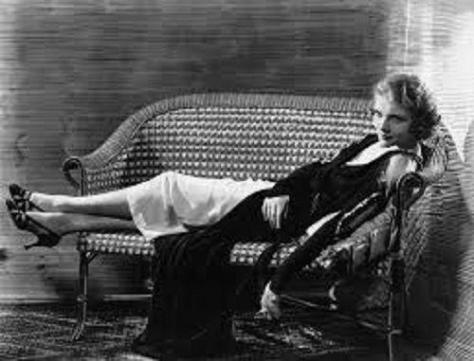
Not released on DVD


Behind the Make Up (1930)


Pre Code Logo 1

Pre Code Hollywood Season: FD Cinematheque

Behind the Make Up (1930)

Behind the Make Up 2

Behind the Make Up 1

Behind the Make Up 3

Behind the Make Up 4

Director: Robert Milton, Dorothy Arzner, Henry Hathaway

Cast: Hal Skelly, William Powell, Fay Wray, Kay Francis, Paul Lukas, E H Calvert, Torben Meyer, Bob Perry, Walter Huston

70 min

Behind the Make Up 6

Behind the Make-Up (1930) is an American Pre-Code drama film starring Hal Skelly, William Powell, Kay Francis, and Fay Wray, and based on the short story “The Feeder” by Mildred Cram.

This was the first of seven in which Powell and Francis co-starred, the others being Street of Chance (1930), Paramount on Parade (1930), For the Defense (1930), Ladies’ Man (1931), Jewel Robbery (1932), and One Way Passage (1932).

Plot Summary

Gardoni, a down-on-his-luck vaudeville performer, is taken in by a fellow performer, a clown who has a bicycle riding act. Gardoni shows his appreciation by stealing the clown’s act and his girlfriend, whom he marries.

Behind the Make Up 7

Cast

Behind the Make Up 12

Critical reception

Mordaunt Hall, film critic of the New York Times, praised the performances of Powell (“excellent”), Wray (“pleasing”), Skelly (“goes about his part with earnestness and intelligence”), and Francis (“does nicely”), but noted “the story is rather limp and disappointing.”[1]

Behind the Make Up 10

References

  1. ^ Jump up to:a b Mordaunt Hall (January 18, 1930). “Behind the Makeup (1930)”. New York Times.

Behind the Make Up 13

Behind the Make Up 11

Film Collectors Corner

Watch Behin the Make Up Now – Instant Video on Internet Archive

Blu Ray

Not released on Blu Ray

DVD
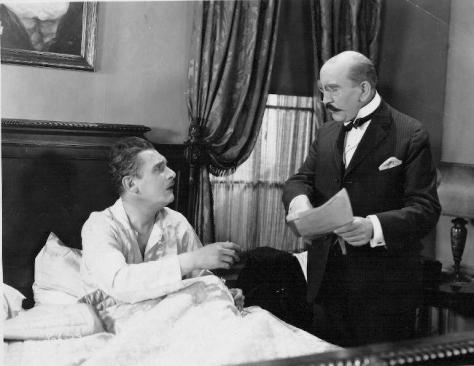
Virtuous Sin, The (1930)


Pre Code Logo 1

Pre Code Hollywood Season: FD Cinematheque

The Virtuous Sin (1930)


Virtuous Sin The 2

Virtuous Sin The 4

Virtuous Sin The 5

Virtuous Sin The 3

Virtuous Sin The 13

Director: George Cukor, Louis J Gasnier

Cast: Walter Huston, Kay Francis, Kenneth MacKenna, Jobyna Howland, Paul Cavanagh, Eric Kalkhurst, Oscar Apfel, Gordon McLeod, Victor Potel

80 min

The Virtuous Sin is a 1930 American Pre-Code comedy-drama film directed by George Cukor and Louis J. Gasnier. The screenplay by Martin Brown and Louise Long is based on the play The General by Lajos Zilahy.

Plot

Marya is the wife of medical student Victor Sablin, who finds it impossible to deal with military life when he is inducted into the Russian army during World War I. With her husband is sentenced to death by firing squad due to his insubordination, Marya offers herself to General Gregori Platoff in order to save him. When the two unexpectedly fall in love, Victor — not caring that his life has been spared — threatens to kill his rival. His determination to eliminate the general falters when Marya confesses she is not in love with her husband — and never was.

Virtuous Sin The 7

Cast

Virtuous Sin The 10

Critical reception

Mordaunt Hall of the New York Times called the film “a clever comedy with a splendid performance by Walter Huston” and added, “There is a constant fund of interest in this picture’s action. It is one of those rare offerings in which youth takes a back seat.[1]

Virtuous Sin The 11

George Cukor’s reflection in 1972

In the book On Cukor, director George Cukor confided to biographer Gavin Lambert: “It wasn’t much good. I’d be in great shock if they [film restorationists & historians] rescued this one. I remember that I enjoyed working with Kay Francis and Walter Huston, though.”[2]

Virtuous Sin The 9

Preservation status

A complete print of this film is held by the UCLA Film and Television Archive. However, the UCLA archive’s website says the print is too shrunken for projection.[3]

Virtuous Sin The 10

See also

Virtuous Sin The 12

References

  1. Jump up^ “Review”, The New York Times.
  2. Jump up^ Parish, James Robert; Mank, Gregory W.; Stanke, Don E. (1978), The Hollywood Beauties, New Rochelle, New York: Arlington House Publishers, p. 73, ISBN 0-87000-412-3
  3. Jump up^ UCLA Film and Television Archive website

Virtuous Sin The 1

Film Collectors Corner

Watch The Virtuous Sin Now – Instant Video on Internet Archive


Blu Ray

Not released on Blu Ray


DVD
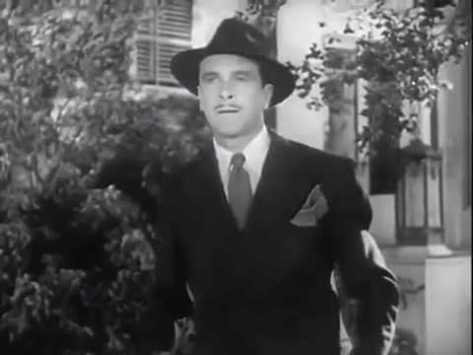
Not released on DVD
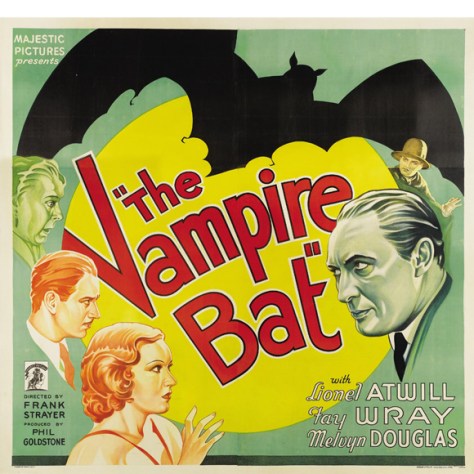
Let’s Go Native (1930)


Pre Code Logo 1

Pre Code Hollywood Season: FD Cinematheque
Let’s Go Native (1930)

LET'S GO NATIVE, Jeanette MacDonald, 1930

Lets Go Native 3

Lets Go Native 4

Director: Leo McCarey

Cast: Jack Oakie, Jeanette MacDonald, Kay Francis, Richard Skeets Gallagher, James Hall, William Austin, David Newell, Charles Sellon, Eugene Pallette, Virginia Bruce, John Elliott, Douglas Haig

77 min

Lets Go Native 5

Let’s Go Native is a 1930 American Pre-Code black-and-white musical comedy film, directed by Leo McCarey and released by Paramount Pictures.

Jerry comments on being the only man on an island populated by women, “It was one of the Virgin Islands, but it drifted.” The tagline was: “Paramount’s wild, merry, mad hilarious farce!”

Cast

Lets Go Native 6

Lets Go Native 10

Lets Go Native 13

Lets Go Native 15

Lets Go Native 16

Soundtrack

  • “It Seems To Be Spring”
Lyrics by George Marion Jr.
Music by Richard A. Whiting
Copyright 1930 by Famous Music Corp.
  • “Let’s Go Native”
Lyrics by George Marion Jr.
Music by Richard A. Whiting
Copyright 1930 by Famous Music Corp.
  • “My Mad Moment”
Lyrics by George Marion Jr.
Music by Richard A. Whiting
Copyright 1930 by Famous Music Corp.
  • “I’ve Gotta Yen For You”
Lyrics by George Marion Jr.
Music by Richard A. Whiting
Copyright 1930 by Famous Music Corp.
Sung by Jack Oakie
  • “Joe Jazz”
Lyrics by George Marion Jr.
Music by Richard A. Whiting
Copyright 1930 by Famous Music Corp.
Sung by Jack Oakie
  • “Pampa Rose”
Lyrics by George Marion Jr.
Music by Richard A. Whiting
Copyright 1930 by Famous Music Corp.
  • “Don’t I Do?”
Lyrics by George Marion Jr.
Music by Richard A. Whiting
Copyright 1930 by Famous Music Corp.

Lets Go Native 7

Lets Go Native 8

Lets Go Native 9

Lets Go Native 12

Lets Go Native 14

Lets Go Native 18

Lets Go Native 17

Film Collectors Corner

Watch Let’s Go Native Now – Instant Video On Internet Archive

Blu Ray

Not released on Blu Ray

DVD