Film Dialogue is a forum for anyone with interest in cinema and film history.
Film Dialogue is run and moderated by Daniel B Miller.
Daniel B Miller is a clinical psychotherapist, entrepreneur, and writer.
Cast: Mary Pickford, Charles Avery, Robert Harron, Arthur V Johnson, James Kirkwood, Owen Moore, Lottie Pickford, Mack Sennett, Billy Quirk, Anthony O’Sullivan
3 min
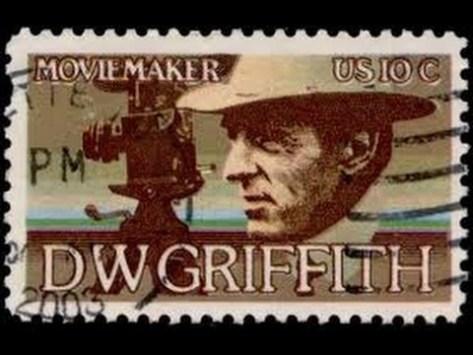
D W Griffith
The Little Darling is a 1909 short film directed by D. W. Griffith. Released in split-reel for with Griffith’s The Sealed Room.[1]
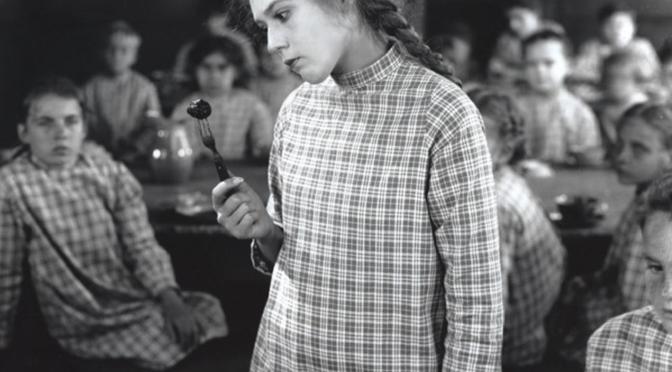
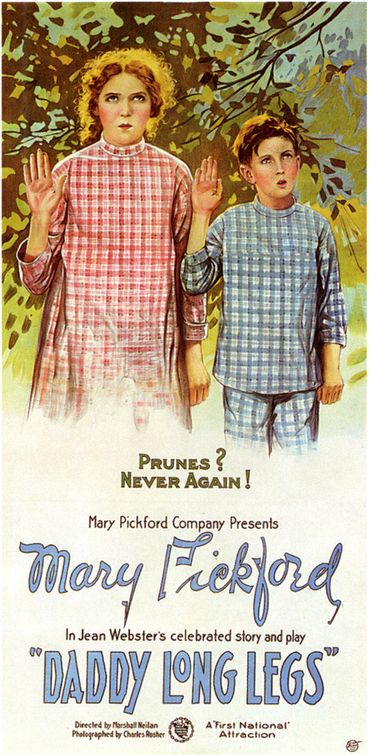
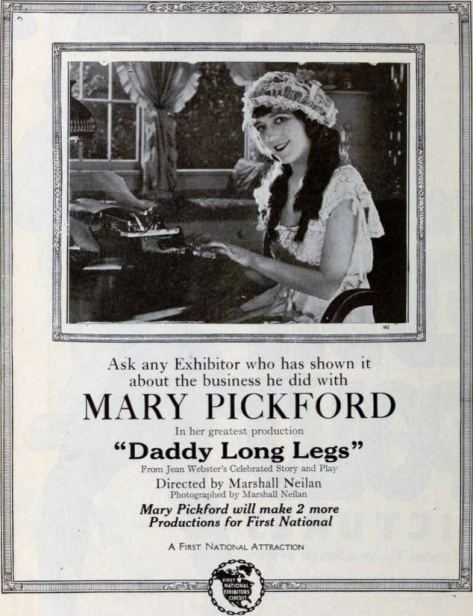
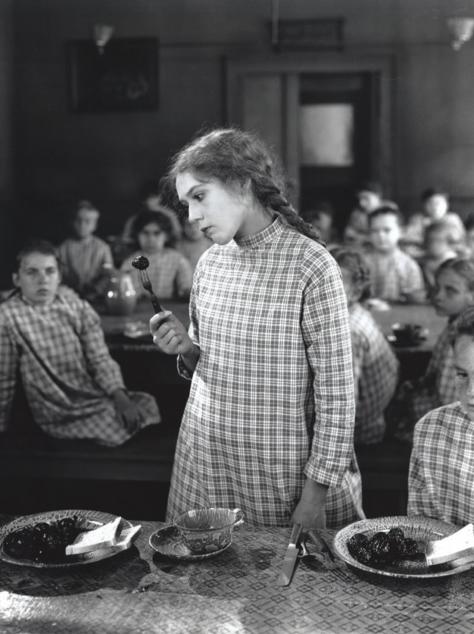
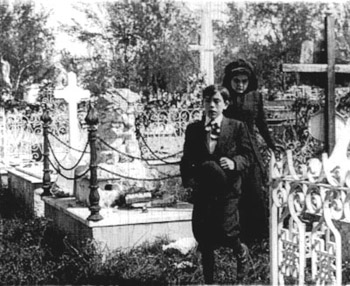
A police officer finds a baby in a trash can, and Mrs. Lippett, the cruel matron at an orphanage where children are made to work, names her “Jerusha Abbott” (she picks “Abbott” out of a phone book and gets “Jerusha” from a tombstone). The orphan, who comes to be called Judy, does what she can to stand up for the younger children, frequently clashing with both Mrs. Lippett and the cold hearted trustees. At one point she leads a rebellion against being served prunes with every meal and at another, steals a doll from a selfish rich girl to lend to a dying orphan.
Years later, wealthy Jervis Pendleton, a mysterious benefactor, pays to send Judy, now the oldest and most talented child in the orphanage, to college. He insists, however, that Judy must never try to contact him in person. Judy calls him “Daddy-Long-Legs,” and writes to him, however. Judy proves popular with her wealthier and more “aristocratic” classmates, and writes a successful book to repay “Daddy-Long-Legs” the money he spent on her. She is generally happy but misses not having any real family members to take pride in her accomplishments. Judy also finds herself caught up in a romantic triangle with the older brother of a classmate and an older man (who is, unknown to her, her mysterious benefactor). She eventually chooses the older suitor and is delighted to learn that he is her “Daddy-Long-Legs.”
Cast: Mary Pickford, Owen Moore, Frank Powell, Arthur V Johnson, James Kirkwood, Marion Leonard, Lottie Pickford, Mack Sennett
11 min
D W Griffith
An Indian comforts a dying prospector in his last moments. In exchange, the prospector tells him the location of his gold claim. A group of cowboys tries to get the information and go as far as kidnapping the Indian’s wife.
D W Griffith made this film in 1909 for Biograph Productions.
Cast: Mary Pickford, George Nichols, Grace Henderson, Mack Sennett, Edward Dillon, Anthony O’Sullivan, Alfred Paget, Kate Bruce, Henry B Walthall, Claire McDowell, Linda Arvidson, Florence Barker, Dorothy West
Griffith employs many of his favorite actors of that period: Linda Arvidson (wife of Griffith), George Nichols (in the title role), Jeanie Macpherson , who three years later will start a successful career as a screenwriter and the young Mary Pickford in a young girl invalid role.
A wealthy, callous moneylender finds a terrifying way to learn about money’s limitations.
Production
The short film was produced by the Biograph Company . It was shot – from 10 to 15 July 1910 – in New York, at the Biograph studios on Fourteenth Street [1] .
Distribution
Distributed by the Biograph Company , this film was released in US cinemas on August 15, 1910. A copy of the film is kept in the archives of the Library of Congress and Museum of Modern Art . The rights of the film are in the public domain [1] .
In 2002, Kino on Video published an anthology on DVD entitled Griffith Masterworks: Biograph Shorts (1908-1914) lasting 362 minutes which also contained this film in a version of 18 minutes [2] .
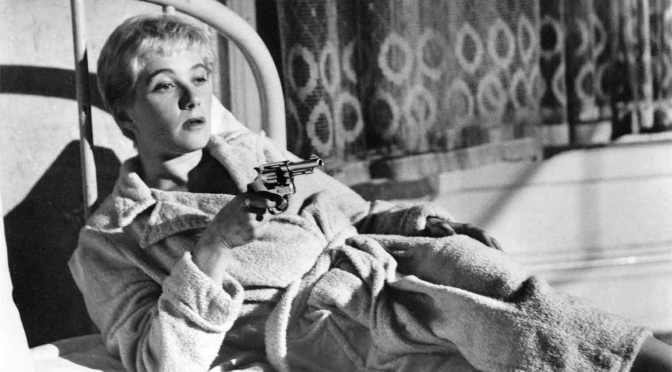
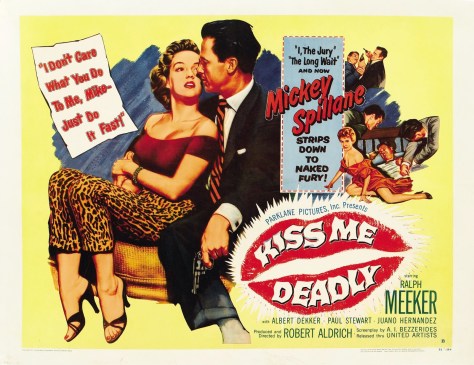
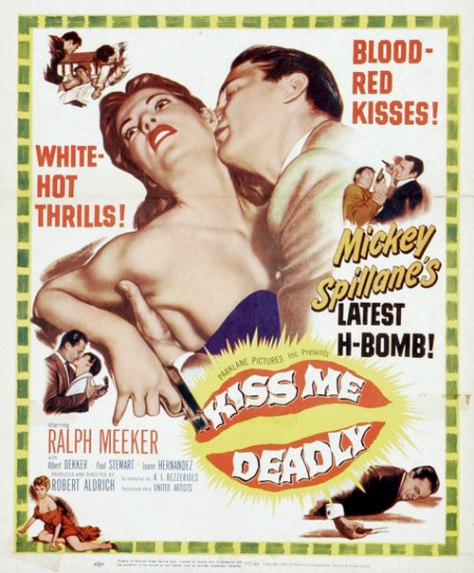
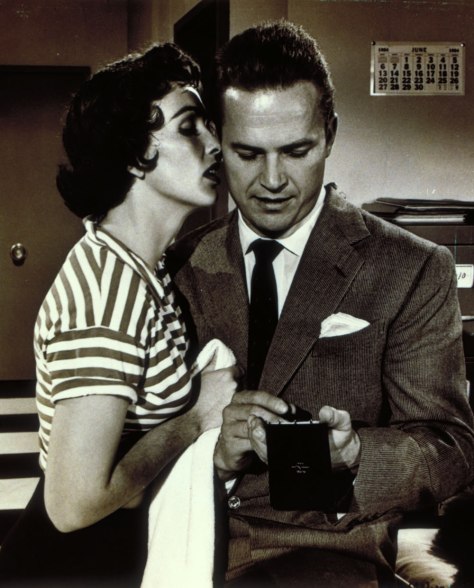
Kiss Me Deadly grossed $726,000 in the United States and a total of $226,000 overseas. The film also withstood scrutiny from the Kefauver Commission, which called it a film “designed to ruin young viewers”, leading director Aldrich to protest the Commission’s conclusions.
Kiss Me Deadly is often considered a classic of the noir genre. In 1999, Kiss Me Deadly was selected for preservation in the United States National Film Registry by the Library of Congress as being “culturally, historically, or aesthetically significant”.
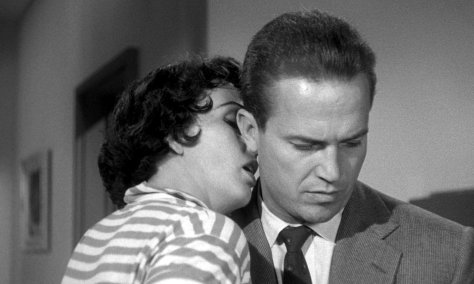
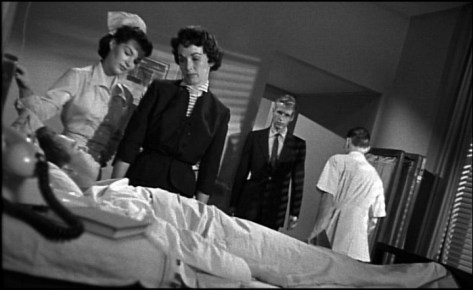
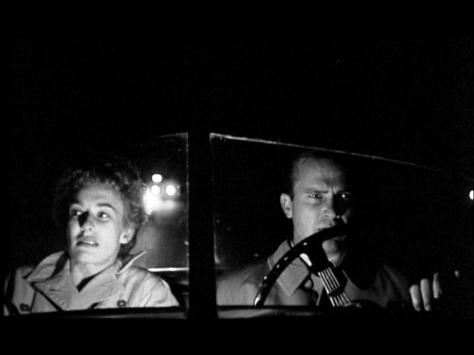
One evening on a lonely country road, Hammer gives a ride to Christina (Cloris Leachman), an attractive hitchhiker wearing nothing but a trench coat. She has escaped from a mental institution, most probably the nearby Camarillo State Mental Hospital. Thugs waylay them and Hammer awakens in some unknown location where he hears Christina screaming and being tortured to death. The thugs then push Hammer’s car off a cliff with Christina’s body and an unconscious Hammer inside. Hammer next awakens in a hospital with Velda by his bedside. He decides to pursue the case, for vengeance, a sense of guilt (as Christina had asked him to “remember me” if she got killed), and because “she (Christina) must be connected with something big” behind it all.
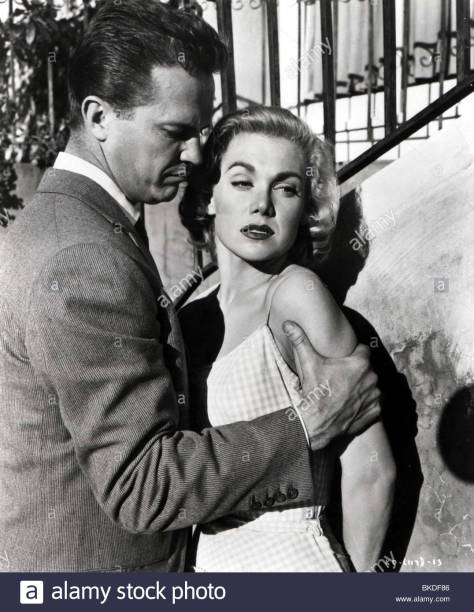
The twisting plot takes Hammer to the apartment of Lily Carver (Gaby Rodgers), a sexy, waif-like woman who is posing as Christina’s ex-roommate. Lily tells Hammer she has gone into hiding and asks Hammer to protect her. It turns out that she is after a mysterious box that, she believes, has contents worth a fortune.
“The great whatsit”, as Velda calls it, at the center of Hammer’s quest is a small, mysterious valise that is hot to the touch and contains a dangerous, glowing substance. (It comes to represent the 1950s Cold War fear and paranoia about the atomic bomb that permeated American culture.)
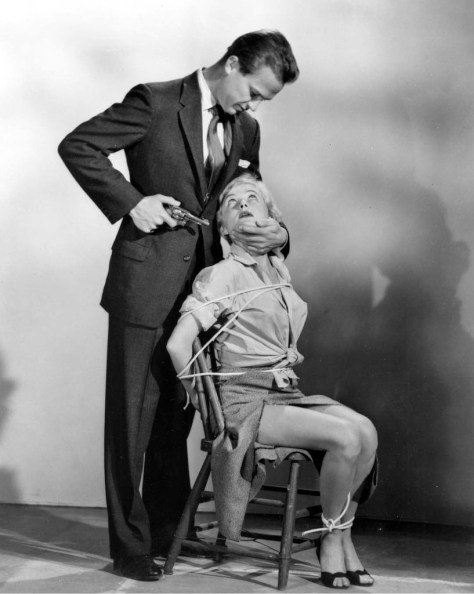
Later, at an isolated beach house, Hammer finds “Lily”, who is revealed to be an imposter named Gabrielle, with her evil boss, Dr. Soberin (Albert Dekker). Velda is their hostage, tied up in a bedroom. Soberin and Gabrielle are vying for the contents of the box. Gabrielle shoots Soberin, believing that she can keep the mysterious contents for herself. She also shoots and wounds Hammer, who manages to find Velda. As Gabrielle slyly opens the case, it is ultimately revealed to be stolen radionuclide material, which reaches explosive criticality when the box is fully opened. Horrifying sounds emanate from the nuclear material as Gabrielle and the house burst into flames, just as Hammer and Velda escape.
Alternative Ending
The original American release of the film shows Hammer and Velda escaping from the burning house at the end, staggering into the ocean as the words “The End” come over them on the screen. Sometime after its first release, the ending was altered on the film’s original negative, removing more than a minute’s worth of shots where Hammer and Velda escape and superimposing the words “The End” over the burning house. This implied that Hammer and Velda perished in the atomic blaze, and was often interpreted to represent the apocalypse. In 1997 the original conclusion was restored, where Velda and Mike survive. The DVD release has the original ending, and offers the truncated ending as an extra.
The film is described as “the definitive, apocalyptic, nihilistic, science-fictionfilm noir of all time – at the close of the classic noir period”.[4]
Kiss Me Deadly remains one of the great time capsules of Los Angeles. The Bunker Hill locations were all destroyed when the downtown neighborhood was razed in the late 1960s.
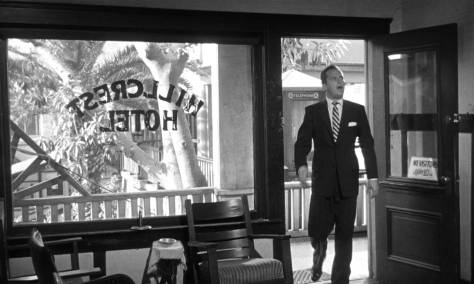
Hill Crest Hotel, NE corner of Third and Olive Streets, Bunker Hill (Italian opera singer’s home)
The Donigan ‘Castle’, a Victorian mansion at 325 S. Bunker Hill Avenue (where Cloris Leachman’s character lived; it was used for interiors and exteriors).
Apartment Building, 10401 Wilshire Blvd, NW corner of Wilshire and Beverly Glen (Hammer’s apartment building; still standing)
Carl Evello’s Mansion, 603 Doheny Road, Beverly Hills, California
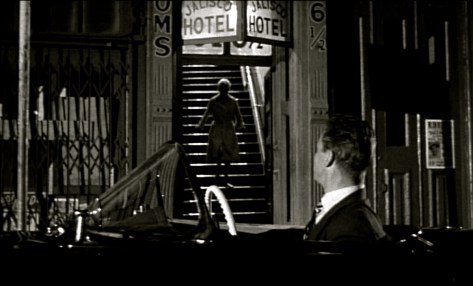
Clay Street, an alley beneath Angels Flight incline railway, on Bunker Hill, where Hammer parks his Corvette and then takes the back steps up to the Hill Crest Hotel, but when we cut to him approaching the hotel’s large porch, he’s on the Third Street steps opposite Angels Flight.
Club Pigalle, 4800 block of Figueroa Avenue (the black jazz nightclub where Hammer hangs out)
Hollywood Athletic Club, 6525 W. Sunset Blvd. (where Hammer finds the radioactive box; still standing)
Reception
Critical response
Critical commentary generally views it as a metaphor for the paranoia and nuclear fears of the Cold War era in which it was filmed.[5]
Although a leftist at the time of the Hollywood blacklist, Bezzerides denied any conscious intention for this meaning in his script. About the topic, he said, “I was having fun with it. I wanted to make every scene, every character, interesting.”[6]
Film critic Nick Schager wrote, “Never was Mike Hammer’s name more fitting than in Kiss Me Deadly, Robert Aldrich’s blisteringly nihilistic noir in which star Ralph Meeker embodies Mickey Spillane’s legendary P.I. with brute force savagery… The gumshoe’s subsequent investigation into the woman’s death doubles as a lacerating indictment of modern society’s dissolution into physical/moral/spiritual degeneracy – a reversion that ultimately leads to nuclear apocalypse and man’s return to the primordial sea – with the director’s knuckle-sandwich cynicism pummeling the genre’s romantic fatalism into a bloody pulp. ‘Remember me’? Aldrich’s sadistic, fatalistic masterpiece is impossible to forget.”[7]
In 1999, Kiss Me Deadly was selected for preservation in the United States National Film Registry by the Library of Congress as being “culturally, historically, or aesthetically significant.”
CHRISTINA: “Get me to that bus stop and forget you ever saw me. If we don’t make that bus stop…” MIKE HAMMER: “We will.” CHRISTINA: “If we don’t, remember me.” – Nominated
Homage is paid to the glowing suitcase MacGuffin in the 1984 cult film Repo Man, the film Ronin, and in Tarantino’s film Pulp Fiction. The “shiny blue suitcase” is mentioned with other famous MacGuffins in Guardians of the Galaxy. In the film Southland Tales, Richard Kelly pays homage to the film, showing the main characters watching the beginning on their television and later the opening of the case is shown on screens on board the mega-Zeppelin.
Differences from the novel
The original novel, while providing much of the plot, is about a mafia conspiracy and does not feature espionage and the nuclear suitcase, elements added to the film version by the scriptwriter, A.I. Bezzerides.
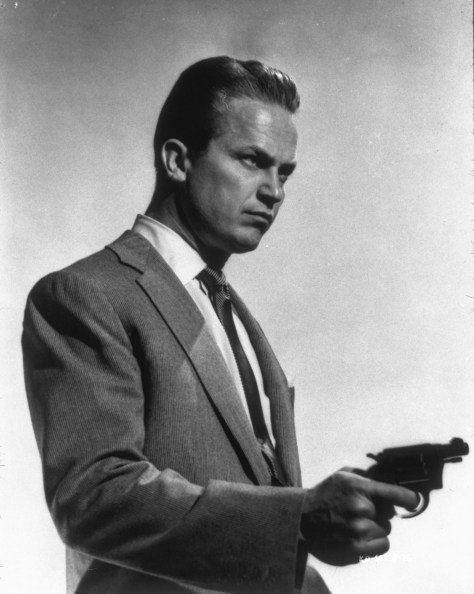
It further subverted Spillane’s book by portraying the already tough Hammer as a narcissistic bully, the darkest anti-hero private detective in the film noir genre. He apparently makes most of his living by blackmailing adulterous husbands and wives, and he takes an obvious sadistic pleasure in violence, whether he’s beating up thugs sent to kill him, breaking a contact’s treasured record to get him to talk, or roughing up a coroner who’s slow to part with a piece of information. He also apparently has no compunction about engaging in nefarious acts such as pimping his secretary. Bezzerides wrote of the script: “I wrote it fast because I had contempt for it … I tell you Spillane didn’t like what I did with his book. I ran into him at a restaurant and, boy, he didn’t like me”.[9]
Home media
A digitally restored version of the film was released on DVD and Blu-ray by The Criterion Collection in June 2011 and has the alternative ending as a bonus feature.[10]
Jump up^Prince, Stephen, Visions of Empire: Political Imagery in Contemporary American Film, Praeger/Greenwood, 1992, ISBN 0-275-93662-7.
Jump up^Vallance, TomArchived 2007-10-01 at the Wayback Machine.. The Independent, Obituary, “A. I. Bezzerides. No-nonsense novelist/screenwriter,” January 20, 2007. Last accessed: March 25, 2008.
Jump up^Bergan, Ronald The Guardian, Obituary, “A.I. Bezzerides: Screenwriter victim of the Hollywood blacklist, he is renowned for three classic American film noirs,” February 6, 2007.
Parish, James Robert and Michael R. Pitts. The Great Science Fiction Pictures. Jefferson, North Carolina: McFarland & Company, 1977. ISBN 0-8108-1029-8.
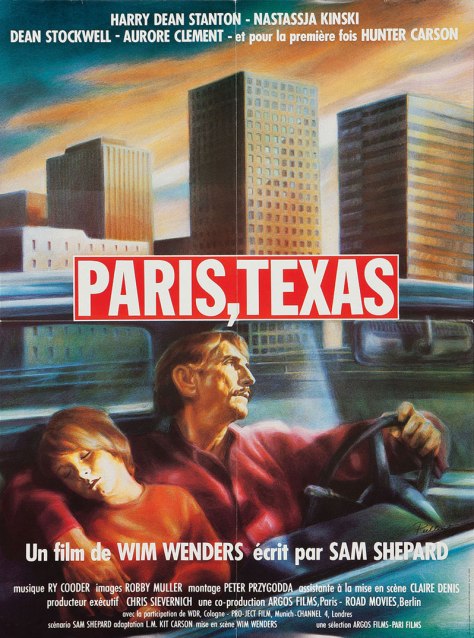
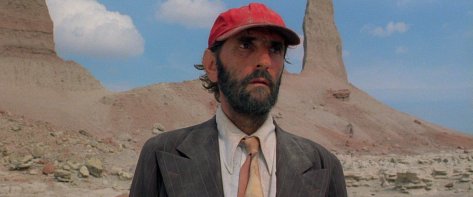
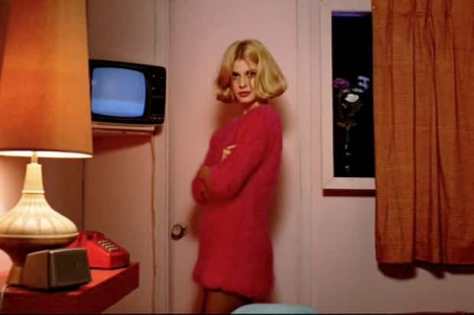
The plot focuses on an amnesiac (Stanton) who, after mysteriously wandering out of the desert, attempts to reconnect with his brother (Stockwell) and seven-year-old son (Carson). He and his son end up embarking on a voyage through the American Southwest to track down his long-missing wife (Kinski).
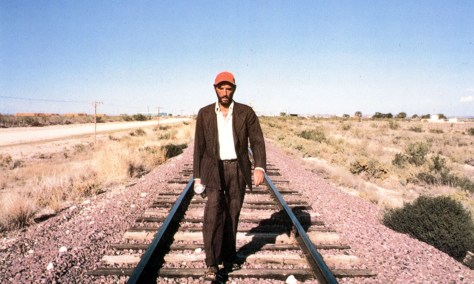
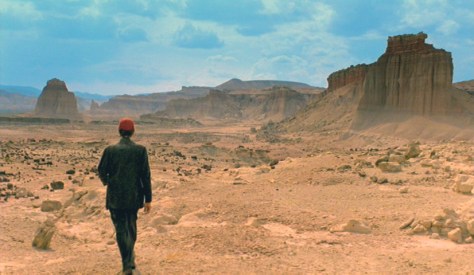
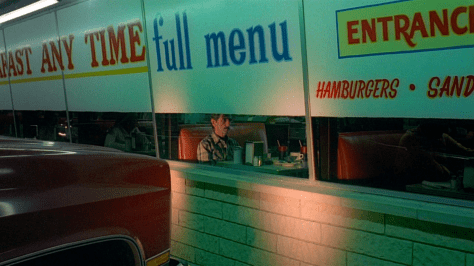
Travis Henderson (Harry Dean Stanton) is walking alone across a vast South Texas desert landscape. Looking for water, he enters a saloon and collapses. He is treated by a doctor (Bernhard Wicki), but does not speak or respond to questions. The doctor finds a phone number on Travis, calls the Los Angeles number, and reaches his brother, Walt Henderson (Dean Stockwell), who agrees to pick him up. When Walt arrives in Texas, he discovers that Travis is gone. When he finds him wandering alone, Walt tells his silent brother that he will take him back to Los Angeles. They stop at a motel, but Travis wanders off again. Walt finds him, and the two drive to a diner, where Walt begins to question the still silent Travis more forcefully about his disappearance. Walt and his wife, Anne (Aurore Clément), have not heard from Travis in four years. After Travis abandoned his son Hunter (Hunter Carson), Walt and Anne took care of him for four years. Travis is visibly moved by the mention of his son, and tears flow from his eyes.
Travis finally breaks his silence when he is looking at a map and remarks “Paris,” talking about how he’d like to go there, although Walt mistakenly thinks that he is talking about France, telling him that it is a little out of the way. When Travis refuses to fly, Walt rents a car, and the brothers begin a two-day road trip back to Los Angeles. The next day, as the two brothers continue their journey, Travis shows Walt a weathered photograph of a vacant lot. He explains that he purchased the property in Paris, Texas, a town he believes is the place where he was conceived, based on a story told by their mother.
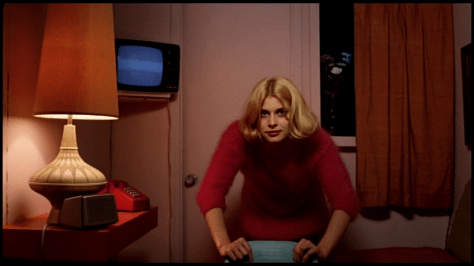
When they arrive in Los Angeles, Travis meets Anne and the son whom he abandoned four years earlier. Hunter is uncomfortable around this stranger who is his father. Walt shows some old home movies, hoping to evoke good memories and help break the ice between the father and son. The movies show Travis with his wife, Jane (Nastassja Kinski), and their young son, sharing a day at the beach.
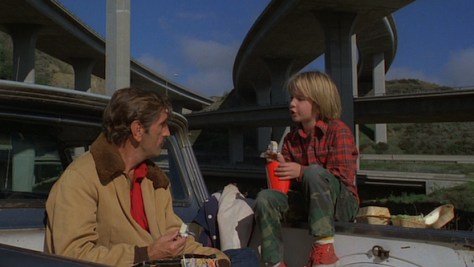
In the coming days, the relationship between Travis and his son slowly grows, and a bond of trust between the two starts to develop. Anne tells Travis that although she has not heard from Hunter’s mother for a long time, she still deposits money into a bank account for her son on the same day each month. She reveals the name of the bank in Houston, where the deposits are made. Travis becomes determined to find his lost wife, and when he tells his son that he plans to travel to Houston to find his mother, the boy says he will accompany him.
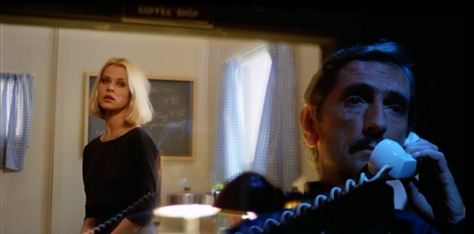
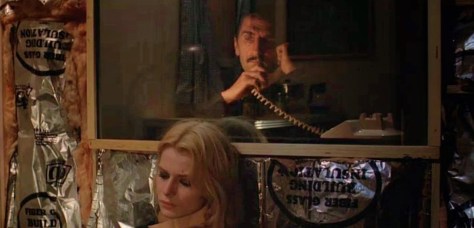
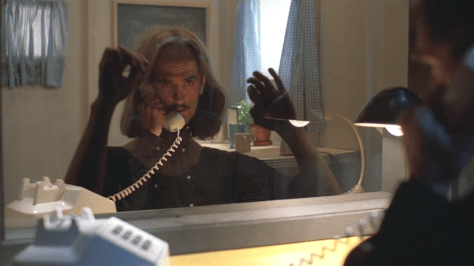
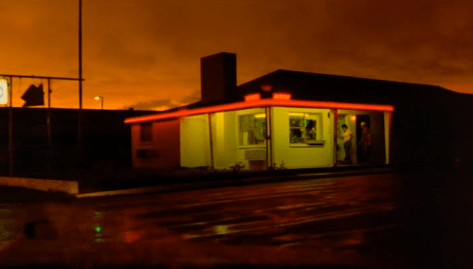
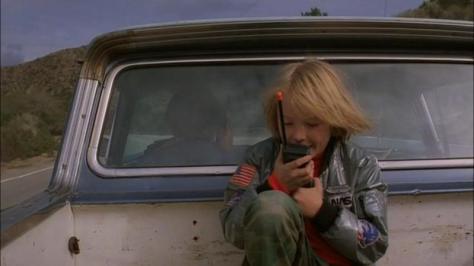
Travis and Hunter leave for Texas without telling Walt and Anne. During their journey, Travis and Hunter grow closer, with Hunter sharing things he learned in school, and Travis sharing his memories. When they arrive in Houston on the expected day of deposit, Hunter spots his mother leaving the bank. They follow her to a parking lot of a peep show club. Telling Hunter to wait in the car, Travis enters the club, containing rooms where customers sit behind one-way mirrors and tell the strippers what they want to see via telephone. The women cannot see the customers. Travis is shocked, but ends up in a room opposite Jane. After several minutes of awkward silence, Travis walks out, returns to the car, and drives to a bar, where he begins to drink.
The next day, Travis drops Hunter off at the Méridien Hotel in downtown Houston, and heads back to the club. Travis enters a room with Jane on the other side of the one-way mirror. He picks up the phone, turns his chair away from her, and tells her a story of a man and a young girl who fell in love, married, and had a child, probably before they were ready. At first, Jane is confused by the story, but she soon realizes who is on the other side of the glass, and that the story is that of their relationship. Travis describes how the couple’s love turned from being joyful to stifling, explains how the drunken man suffocated the young girl with his jealousy and control, and tells how he came to loathe himself and why he disappeared to a place “without language or streets” — never wanting to see anyone again.
When Travis prepares to leave, Jane urges him to stay. She tells how hard it was to leave him, that for years she thought of him often. Travis finally faces the glass, turns a lamp on his face so Jane can see him, and tells her where she can find Hunter, asking her to go there and reunite with her son. Jane agrees and Travis leaves the room. Later that night, Jane enters the hotel room where Hunter is waiting, and they reunite at last. Travis watches from the parking lot and then leaves Houston behind him, driving alone.
Wenders said the film shot in only four to five weeks, with only a small group working the last weeks, very short and fast. There was a break in shooting during which time the script was completed.[5]
Filming commenced with the story and script only half written, the intention being that they would shoot chronologically and writer Sam Shepard would, once he had watched how the actors interpreted the roles, write the second half accordingly. Shepard left to work on another project, however, resulting in the second half of the film being written by Shepard remotely with notes sent by Wenders.[6]
Filmmaker Allison Anders worked as a production assistant on the film.[5]
Title
The film is named for the Texas town of Paris, but no footage was shot there: filming largely took place in Fort Stockton and Marathon in the Trans-Pecos region of west Texas; and Nordheim, southeast of San Antonio. Instead, Paris is referred to as the location of a vacant lot owned by Travis that is seen in a photograph. His obsession with the town is based on the notion that he may have been conceived there. The photograph shows a desert landscape, although in reality Paris lies on the edge of the forests in Northeast Texas and the flat to gently-rolling humid farmland of the north-central part of that state, far from any desert. Paris, Texas, is mentioned on page 123 of W.H. Davies‘ cult classic The Autobiography of a Supertramp, 1908, a possible source for the title of the film.
Style
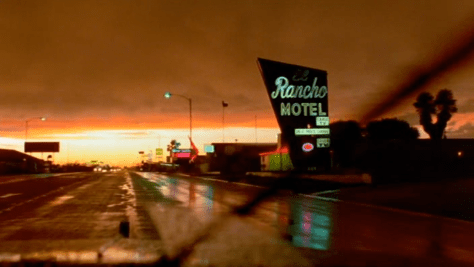
Paris, Texas is notable for its images of the Texas landscape and climate. The first shot is a bird’s eye-view of the desert, a bleak, dry, alien landscape. Shots follow of old advertisement billboards, placards, graffiti, rusty iron carcasses, old railway lines, neon signs, motels, seemingly never-ending roads, and Los Angeles, finally culminating in some famous scenes shot outside a drive-through bank in Downtown Houston. The film’s production design was by Kate Altman. The cinematography is typical of Robby Müller‘s work, a long-time collaborator of Wim Wenders.
Paris, Texas was released in West Germany at the Hof, Internationale Filmtage on 24 October 1984.[1] It was distributed in West Germany by Filmverlag der Autoren GmbH & Co. Vertriebs KG.[1]
Paris, Texas currently has a score of 100% on Rotten Tomatoes, a review aggregator, based on 28 reviews with an average rating of 8.3 out of 10.[8] Critic Roger Ebert gave the film four stars, particularly praising the performance of Hunter Carson.
Summarizing his review of the film, Ebert wrote “Paris, Texas is a movie with the kind of passion and willingness to experiment that was more common fifteen years ago than it is now. It has more links with films like Five Easy Pieces and Easy Rider and Midnight Cowboy, than with the slick arcade games that are the box-office winners of the 1980s. It is true, deep, and brilliant.”[9]
Newsweek referred to the film as “a story of the United States, a grim portrait of a land where people like Travis and Jane cannot put down roots, a story of a sprawling, powerful, richly endowed land where people can get desperately lost.”[10]Vincent Canby of The New York Times gave the film a mixed review, writing, “The film is wonderful and funny and full of real emotion as it details the means by which Travis and the boy become reconciled. Then it goes flying out the car window when father and son decide to take off for Texas in search of Jane.”[11]
The film has had an enduring legacy, where it has been a favorite film of critics like Guy Lodge of The Guardian.[12]
Musician/Writer Matt Selou believes there are many similarities to the film Harry and Tonto – especially with the protagonist trying to fly but for some reason having to turn back at the airport and taking a car for the long distance. There’s also the similarity of the young, new person in the protagonist’s life to seek out someone they hadn’t seen in years.
In popular culture
Irish rock group U2 cite Paris, Texas as an inspiration for their album The Joshua Tree.[13]
Scottish bands Travis and Texas both took their names from this film.[14][15]
Defunct instrumental rock band The Six Parts Seven used samples from the film at the beginning of the song “From California to Houston, on Lightspeed”. The song’s title is also an homage to the film.
Jane Henderson’s line “Yep, I know that feeling” is sampled on Primal Scream‘s 1991 album Screamadelica, at the end of the song “I’m Comin’ Down”; it is also repeated in the song “Space Angel Station” on the 1994 Drum Club album Drums Are Dangerous.
Dialogue from the film is sampled during the song “O.O.B.E.” on the album Live 93 by The Orb.
Dialogue “Do you think he still loves her? How would I know that Hunter? I think he does.” is sampled during the song “She Stands Up” on M83 by the band M83.
Cast: Mary Pickford, Billy Quirk, James Kirkwood, Edwin August, Florence Barker, Kate Bruce, Arthur V Johnson, Florence La Badie, George Nichols, Lottie Pickford, Henry B Walthall, Mack Sennett
Cast: Mary Pickford, Charles West, Herbert Prior, Anita Hendrie, Harry Solter, Arthur V Johnson, David Miles, Frank Powell, Billy Quirk, Edwin August, Charles Avery
11 min
D W Griffith
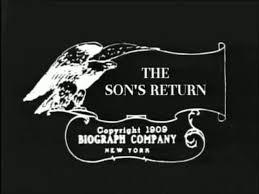
The Son’s Return is a silent short film made in 1909 and directed by D W. Griffith . Produced and distributed by the Biograph Company , the film – shot in Coytesville, New Jersey – was released in theaters June 14, 1909.
The son leaves home to go to town to seek his fortune. After many years, back in the parents’ inn that did not recognize him but, noting his bulging portfolio of notes, plan to rob the unknown customer.
Distributed by the Biograph Company, the film – a short film in a coil – was released in US theaters on June 14, 1909. The film was mastered and poured on DVD. Released in 2006 by Grapevine, it has been included in an anthology titled DW Griffith, Director – Volume 3 (1909) which has a dozen titles for a total of 112 minutes [2] .
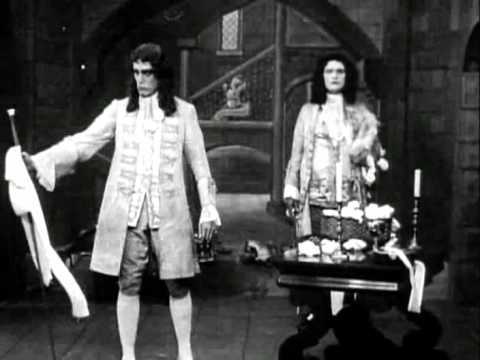
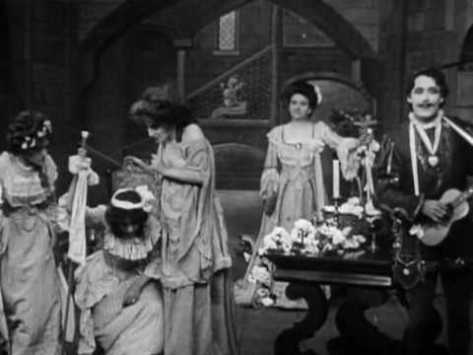
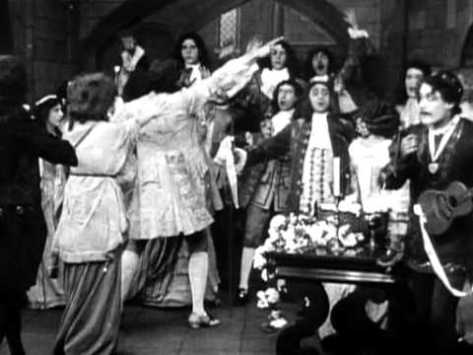
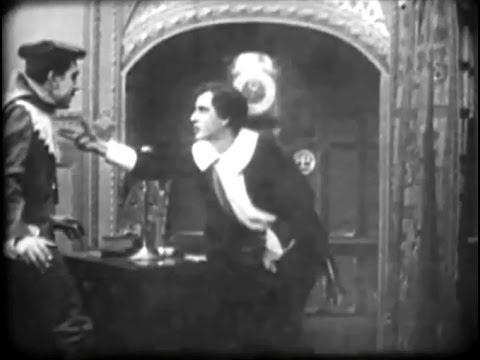
The film’s theme of immurement draws inspiration from Balzac‘s “La Grande Bretêche“,[2] and Edgar Allan Poe‘s “The Cask of Amontillado“. The king constructs a cozy, windowless love-nest for himself and his concubine. However, she is not faithful to her sovereign, but consorts with the court troubadour. In fact, they use the king’s new play chamber for their trysts. When the king discovers this, he sends for his masons. With the faithless duo still inside, the masons use stone and mortar to quietly seal the only door to the vault. The two lovers suffocate and the film ends.
Cast: Mary Pickford, Edwin August, Alfred Paget, Mae Marsh, Marguerite Marsh, Robert Harron, Henry Lehrman, Lottie Pickford, Charles West, Francis J Grandon
Jump up^Catalog of Holdings The American Film Institute Collections and The United Artists Collection at The Library of Congress (<-book title) p.13 c.1978 by the American Film Institute
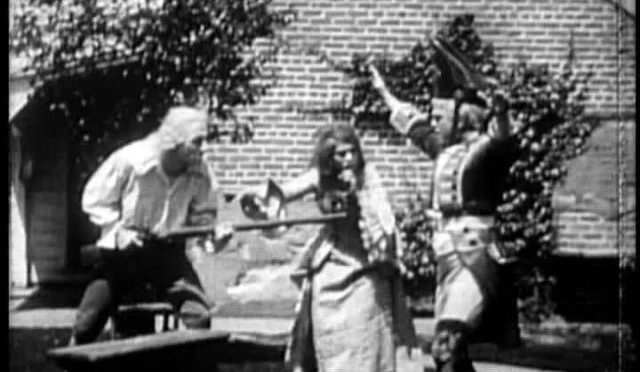
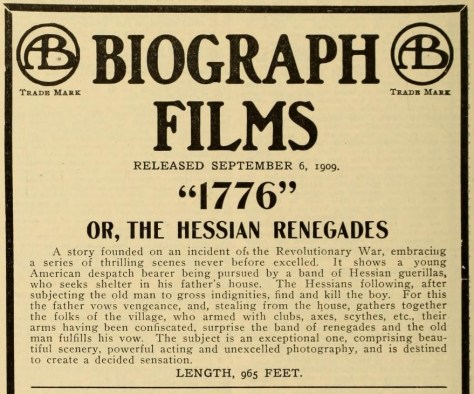
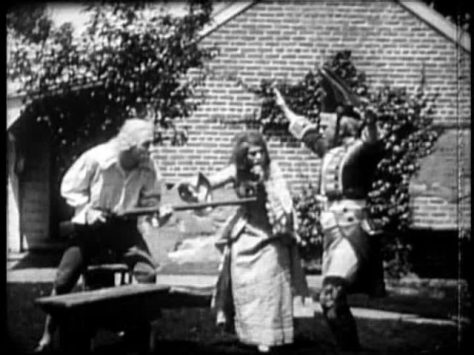
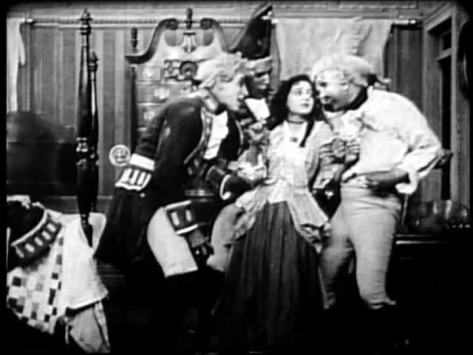
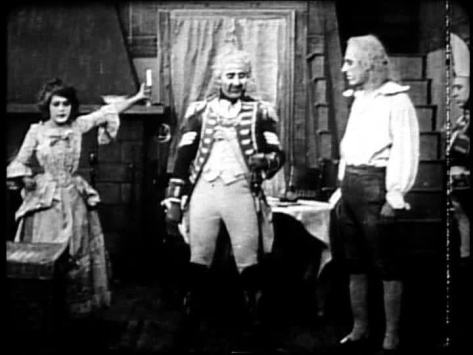
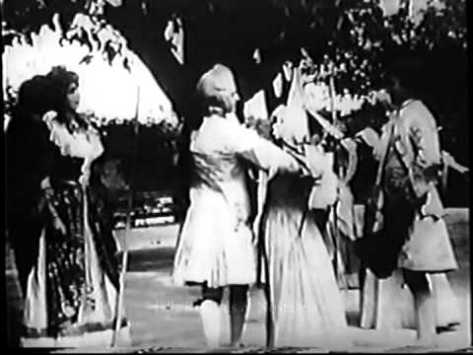
A young soldier during the American Revolution has the mission to carry a crucial message to General Washington but he is spotted by a group of enemy soldiers called Hessians. He finds refuge with a family, but the enemies soon discover him. After that the family and neighbors plan to find out a way to send the important message.
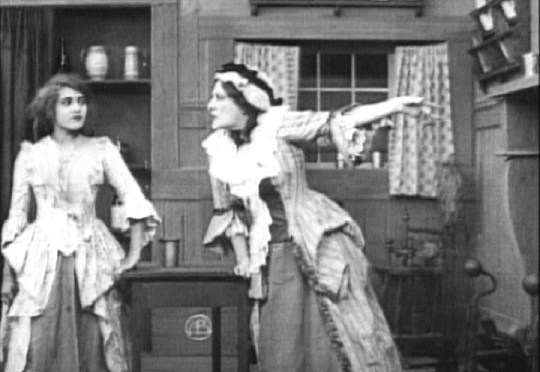
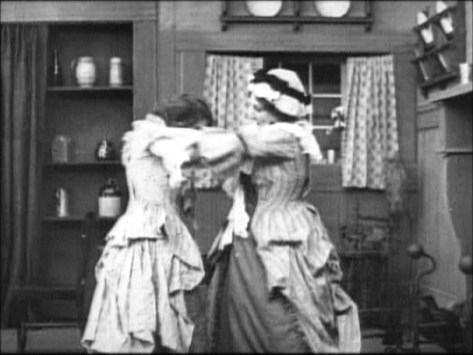
Peggy is a feisty peasant girl who catches the eye of a wealthy lord. Enamored with her, he proposes, but she harshly refuses. Her mother pushes her into the marriage against her will. After their marriage, she makes a fool of herself among the socialites at her husband’s party. In the height of her embarrassment, her husband’s nephew convinces her to run away with him. She innocently agrees, but it soon becomes obvious what the nephew’s true intentions were.
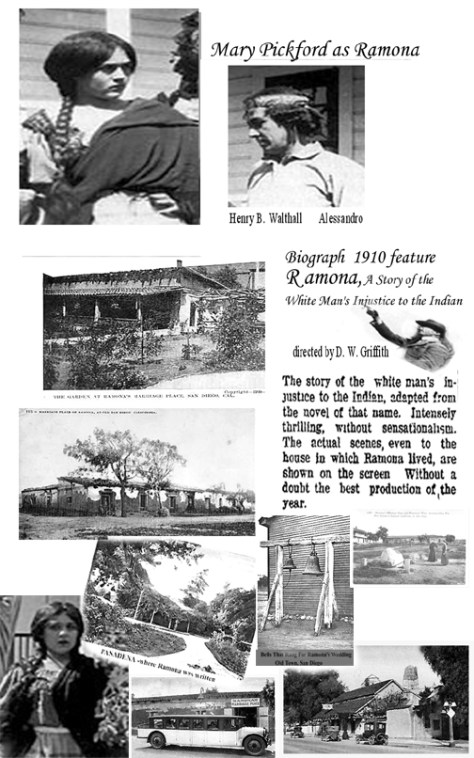
Cast: Mary Pickford, Henry B Walthall, Francis J Grandon, Kate Bruce, W Chrystie Miller, Dorothy Bernard, Robert Harron, Mae Marsh, Jack Pickford, Mack Sennett, Charles West, Dotothy West
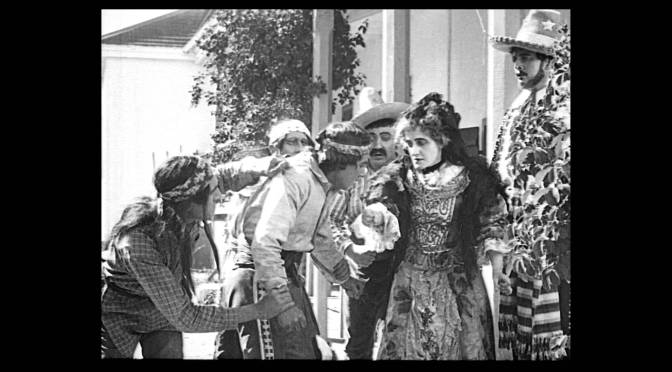
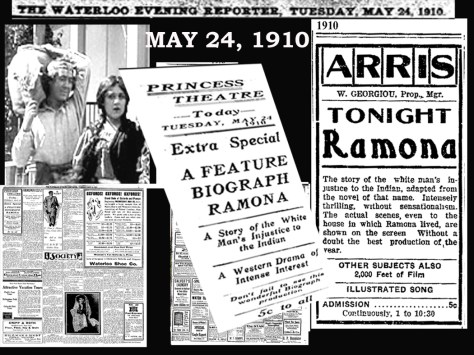
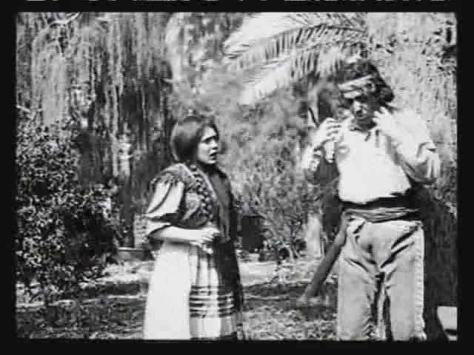
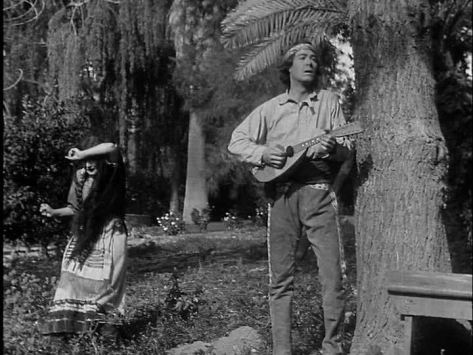
Ramona chronicles the romance between Ramona (Mary Pickford), a Spanish orphan from the prestigious Moreno family, and Alessandro (Henry B. Walthall), an Indian who appears on her family’s ranch one day. A man named Felipe (Francis J. Grandon) proclaims his love for Ramona, but she rejects him because she has fallen for Alessandro.
They fall deeply in love, yet their desire to wed is denied by Ramona’s stepmother, who reacts by exiling Alessandro from her ranch. He returns to his village, only to find that it has been demolished by white men. Meanwhile, Ramona is informed that she also has “Indian blood”, which leads her to abandon everything she has to be with Alessandro.
They marry, and live among the wreckage of Alessandro’s devastated village. They have a child together and live at peace until the white men come to force them from their home as they claim the land. Their baby perishes, and then Alessandro is then killed by the white men. Ramona is then rescued by Felipe and returned to her family back on the ranch.[3]
Cast: Herbert Prior, Mary Pickford, Owen Moore, David Miles, Harry Solter, Marion Leonard, Charles Avery, Mack Sennett
D W Griffith
The Violin Maker of Cremona is an American silentshort film made in 1909 and directed by DW Griffith . This is Pickford’s first fully credited film. However, it is presently still unclear whether she had extras roles in previous Biograph films.
Story
Cremona held a competition on the best violin. If you win this game, you may marry the beautiful Gianinna. Two people start fighting for her hand.
A girl wants to go to a ball, admission one Liberty Bond, but rather than go herself, she loans the bond to a girlfriend. A soldier and a sailor find out and take her to the ball with them.
Distributed by Famous Players-Lasky even with the alternative title 100% American , the short film was released in US theaters on October 5, 1918. Since the star Mary Pickford at the time was still a Canadian citizen, in Canada the film was given the title 100% Canadian [1] .
The film has been included in an anthology distributed in October 2007 by the National Film Preservation Foundation.
On NTSC , the DVD box set offers a total of 739 minutes entitled Treasures III: Social Issues in American Film (1900-1934) [2] .
Cast: Mary Pickford, Norman Kerry, Katherine Griffith, Anne Schaefer, Zasu Pitts, WE Lawrence, Theodore Roberts, Gertrude Short, Gustav von Seyffertitz, Loretta Blake, George A McDaniel, Edythe Chapman, Josephine Hutchinson, Joan Marsh, Joe Murphy
As described in a film magazine,[2] Sara Crewe (Pickford) is treated as a little princess at the Minchin boarding school for children until it is learned that her father has lost his entire fortune, and she is made a slavey (a household servant). She and Becky (Pitts), another slavey, become close friends who share their joys and sorrows.
Christmastime draws near and the girls watch the preparations wistfully. Their loneliness arouses the sympathy of a servant of the rich Mr. Carrisford. On the night before Christmas he prepares a spread for the slaveys in their attic. He calls his master Mr. Carrisford (von Seyffertitz) to watch their joy, but both are witness to the slaveys being abused and whipped by Miss Minchin (Griffith). Carrisford interferes and learns that Sara is the daughter of his best friend. He adopts Sara and Becky and in their new home they have a real Christmas.
The film opens with Sarah’s father moving back to London after serving in the British Army in India. She is opposed to leaving the luxurious life of an officer’s child with a large house and many servants, and is initially shy when enrolled in Miss Minchin’s School. Her reputation as “the little princess” precedes her and the other girls are fascinated with her tales of life in India. The girls sneak into Sarah’s room at night to listen to her stories. One night, she tells “Ali Baba and the Forty Thieves” which becomes a story within a story with elaborate exotic sets and costumes.
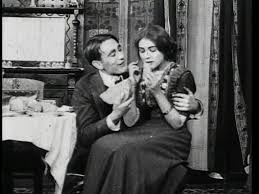
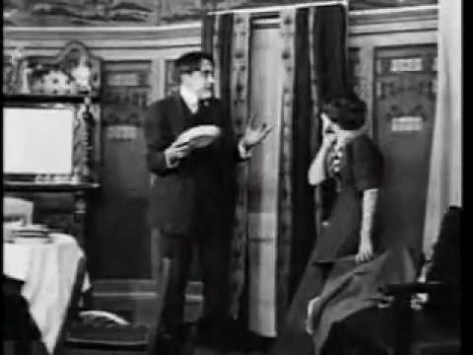
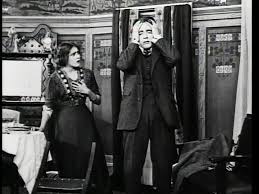
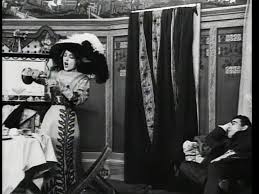
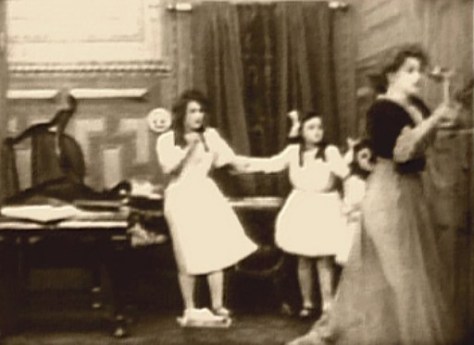
The film opens in a fancy restaurant where the husband and a woman who is not his wife are polishing off a bottle of wine. Cut to home, where a dejected wife sits at the dining room table waiting for her husband. She briefly nods off before rousing and checking the wall clock indicating that it’s getting late. Cut back to the fancy restaurant, where the husband settles the check with a large wad of bills. The waiter obliges by helping the husband and his lady companion with their hats and coats. The other woman kicks the husbands hat out of his hand.
Six hours later, the husband strides through the door awakening his wife who is still sitting by the dining room table. He rebuffs her attempt to take his hat, whereupon she points to the wall clock. She draws his attention to dinner, which still sits on the dining table. He upends a few dishes then overturns a chair before collapsing on the sofa, cigarette in hand. Upset, the wife walks off camera and the scene fades to black.
In the next scene, introduced by a title card stating “HIS DREAM”, the wife returns, clad in a form-fitting dress and a plumed hat. She awakens the husband by jostling his head. Talking animatedly, she downs a couple of glasses of wine from a decanter on the sideboard and tosses the wineglass on the floor. She drop-kicks a plate, lights up a cigarette, flicks the match at her husband, and blows smoke in his face. She pelts him with a pillow that has been lying on the floor, slings her coat over her arm, pulls down the curtains covering the door, and blows the husband a kiss goodbye. A well-appointed gentleman arrives at the front steps to their house a second or two before the wife steps out the front door and they leave together.
Confounded by what he has just witnessed, the husband grabs his hat and coat and leaves. The wife and her gentleman caller arrive by taxi at the fancy restaurant where they are shown to the same table the husband had occupied earlier. The husband arrives hot on their heels, briefly considers confronting them, but then flees, distressed by the whole affair. He stumbles out into the street before returning home. There he rants wildly, repeatedly grasping his forehead before settling down to compose a letter which reads in part “You’re not the woman I supposed you were.” Stumbling to the sideboard, he pulls out a small revolver from a drawer, points it at his abdomen, pulls the trigger, and collapses spasmodically on the sofa.
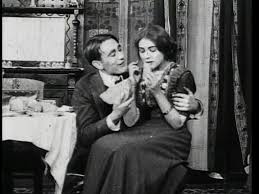
In the next scene, introduced by a title card stating “HIS AWAKENING”, he falls off the sofa and stands up, clutching his abdomen. His wife enters the scene, this time reclad in her modest attire, and startles him. He recounts his vivid experience, she comforts him and helps him realize it was all just a dream. While she turns her attention to preparing dessert on the dining room table, he pulls his address book from his suitcoat pocket and shreds it. Reconciled, they embrace and then settle down to eat the confection.
Polly Biblett (Mary Pickford), a young lady, tells her grandmother Lettie about her new boyfriend. The news provokes the elderly woman to reminisce about her own sweetheart, long time before. The touching sequence expresses the power of lives going on, the older woman aging as her grandchildren grow and knowing they will soon have children of their own.
In Old Madrid (1911) is a Mary Pickford film directed by Thomas H Ince.
Thomas H Ince
Synopsis
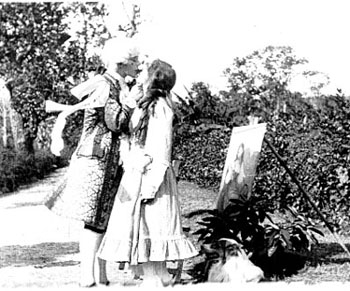
Don Gomez writes a letter to the parents of Zelda, a young Spanish girl, regretting his inability to pay them a visit, but sends his son, Jose, instead. Jose arrives and is immediately smitten by the charms of Zelda. Zelda indulges in a little flirtation.
Her mother inaugurates a system of espionage that is very inconvenient for the lovers. They are surprised by the duenna-like mother and are driven to desperation.
Zelda has a girlfriend about her age who resembles her and is attired to represent a clever counterpart of Zelda. The mother walks in the garden accompanied by Zelda. Seating herself on a bench, she commands the girl to repose beside her. Finding the vigil rather tiresome, the elder woman lapses into a state of drowsiness, and the companions of Zelda beckon her to join them.
So clever is the disguise of Rosa that Jose is deceived and he kisses her. The father of Zelda discovers the act and hastens to the mother to inform her only to see Zelda yawning beside his wife on the bench. Exhausted, the guardian falls asleep, and Rosa exchanges places with Zelda, who joins her lover. Jose induces Zelda to accompany him to the seashore.
He gathers the girl in his arms, and wades across a stretch of water, and they take a perilous position on the rocks. A search is instituted and Zelda and Jose are discovered on the rocks. Jose has a scheme which he quickly imparts to Zelda and she acquiesces. The irate parents see the daughter and her lover.
Jose is firm and threatens to throw Zelda into the roaring torrent, unless the parents consent to their immediate marriage. The agonized parents relent. The obdurate parents have been outwitted by the scheming lovers.
This is one of the earliest surviving prints from the beginning of Mary Pickford’s career. It is assumed to have been her 9th film.
Director: D W Griffith
Cast: David Miles, Marion Leonard, Mary Pickford, Gladys Egan, Adele DeGarde, Robert Harron, James Kirkwood, Florence Lawrence, Owen Moore, Mack Sennett
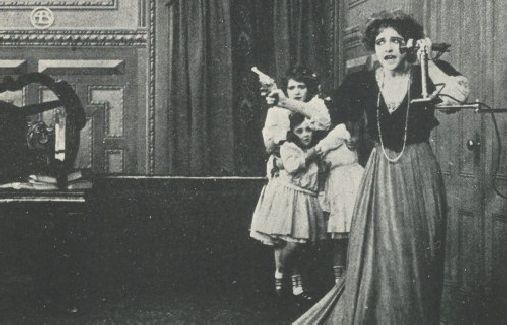
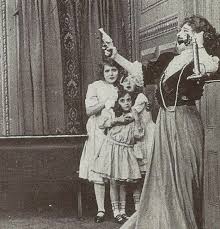
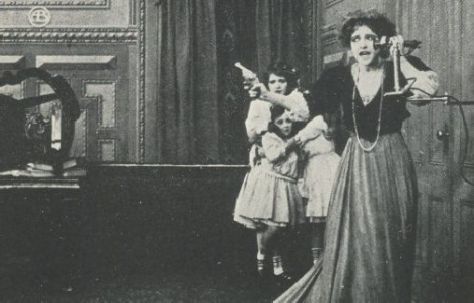
A group of criminals waits until a wealthy man goes out to break into his house and threaten his wife and daughters. They refuge themselves inside one of the rooms, but the thieves break in. The father finds out what is happening and runs back home to try to save his family.
The Lonely Villa was produced by the Biograph Company and shot in Fort Lee, New Jersey.[3][4] It was released on June 10, 1909 along with another D.W. Griffith split-reel film, A New Trick.[2]
Jump up^Choi, Jinhee; Wada-Marciano, Mitsuyo, eds. (2001). Horror to the Extreme: Changing Boundaries in Asian Cinema. Hong Kong University Press. p. 111. ISBN962-209-973-4.
Cast: Mary Pickford, Charles Hill Mailes, Kate Bruce, Lionel Barrymore, Alfred Paget, Claire McDowell, Mae Marsh, Madge Kirby, Lillian Gish, Jack Pickford, Robert Harron, Dorothy Gish, Mack Sennett
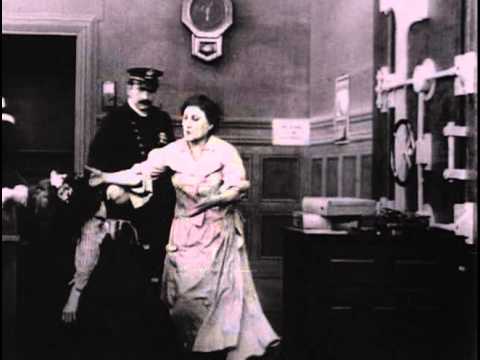
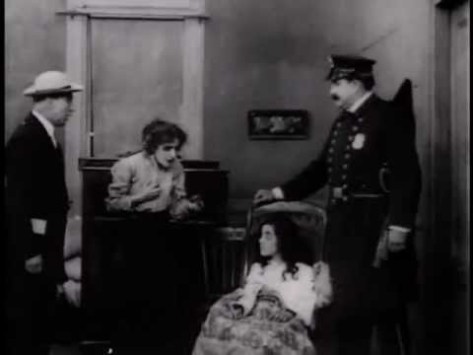
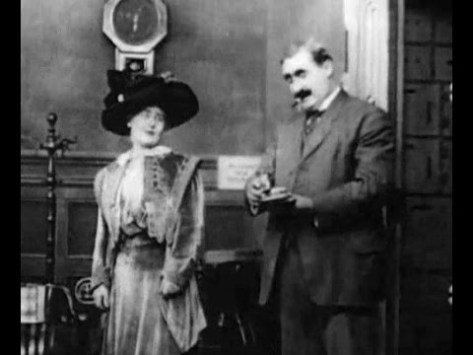
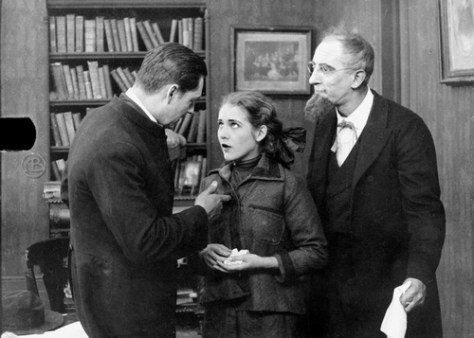
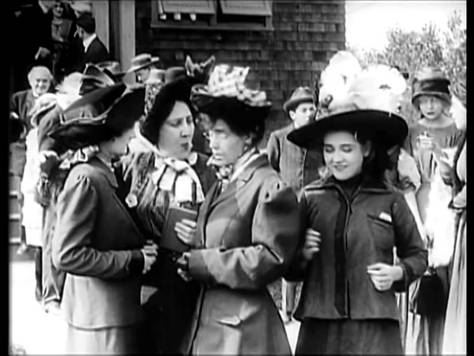
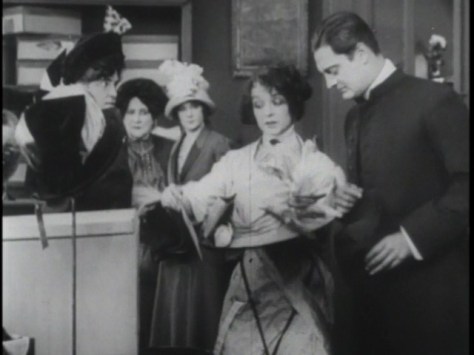
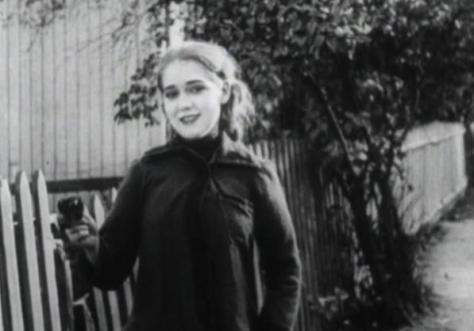
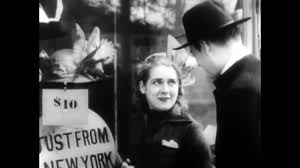
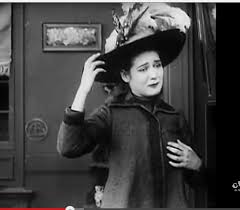
The New York Hat is one of the most notable of the Biograph Studios short films and is perhaps the best known example of Pickford’s early work, and an example of Anita Loos‘s witty writing. The film was made by Biograph when it and many other early U.S. movie studios were based in Fort Lee, New Jersey at the beginning of the 20th century.[1][2][3]
Plot
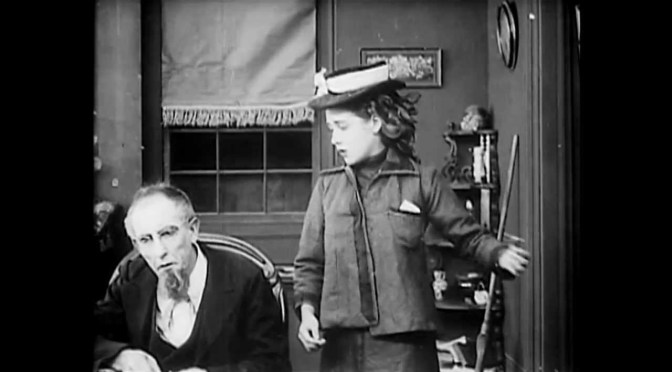
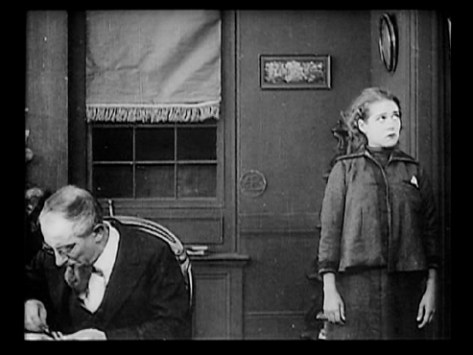
Mollie Goodhue leads a cheerless, impoverished life, largely because of her stern, miserly father. Mrs. Goodhue is mortally ill, but before dying, she gives the minister, Preacher Bolton, some money with which to buy her daughter the “finery” her father always forbade her.
Mollie is delighted when the minister presents her with a fashionable New York hat she has been longing for, but village gossips misinterpret the minister’s intentions and spread malicious rumors. Mollie becomes a social pariah, and her father tears up the beloved hat in a rage.
All ends well, however, after the minister produces a letter from Mollie’s mother about the money she left the minister to spend on Mollie. Soon afterwards, he proposes to Mollie, who accepts his offer of marriage.


























 Howard Hawks
 Film Dialogue
You must be logged in to post a comment.