The studio originally wanted actress Jean Harlow for the lead after her success in Red-Headed Woman (1932), but she was under contract to Howard Hughes, and he refused to loan her out.
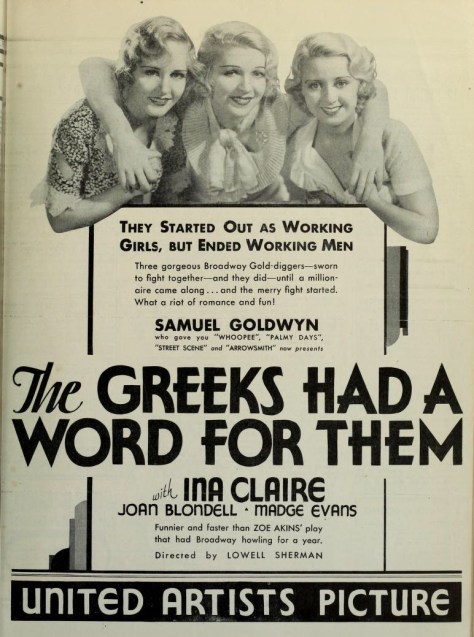
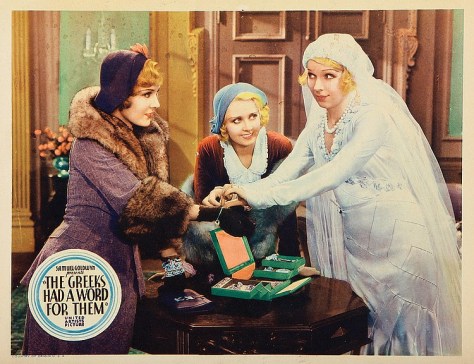
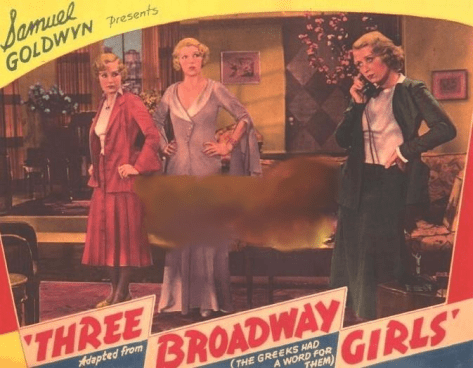
Jean, Polaire, and Schatze are ex-showgirls who put their money together in order to rent a luxurious penthouse apartment. They are out to get wealthy boyfriends by dressing and acting like millionaires themselves. Jean shows herself to be determined and ruthless, leaving the other girls behind. The other two are more sensitive and trustworthy but only one woman will be able to find a rich husband. Which is she?
Soon the vehicle gets hopelessly stuck in deep snow forty miles from the nearest town.
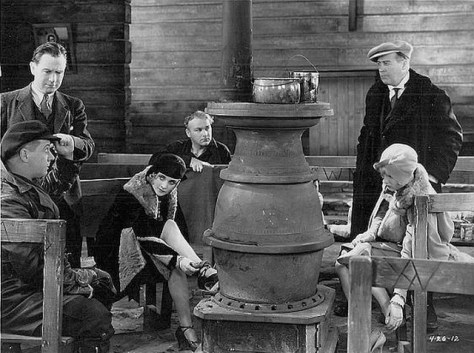
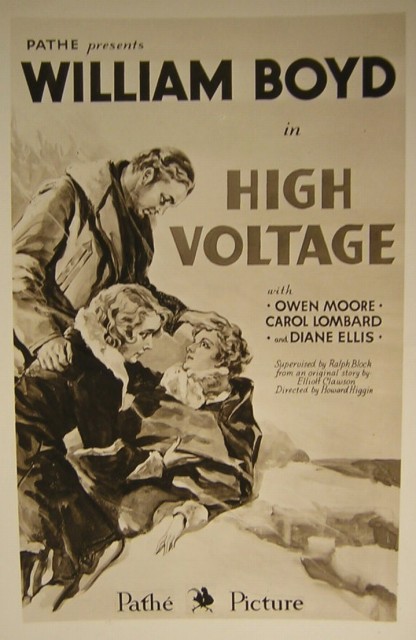
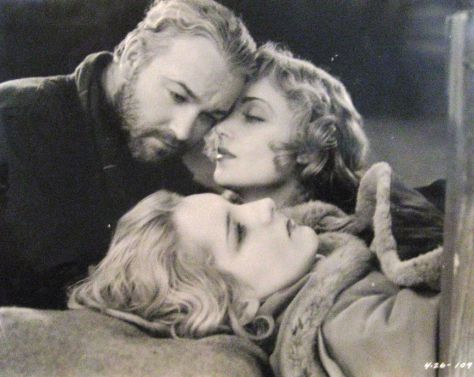
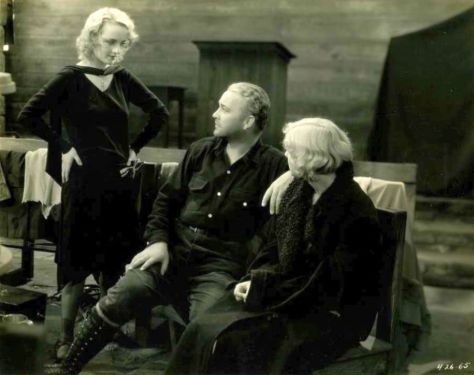
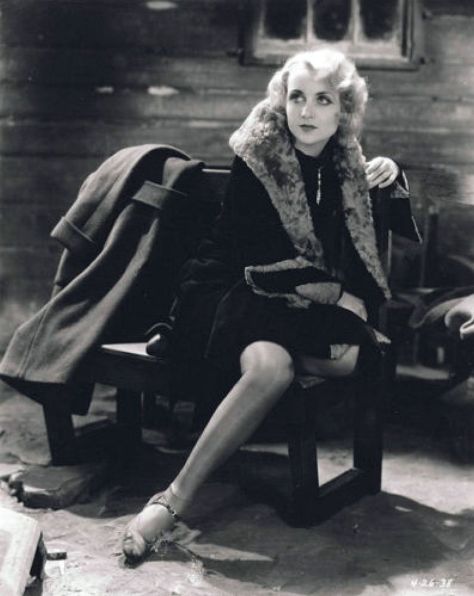
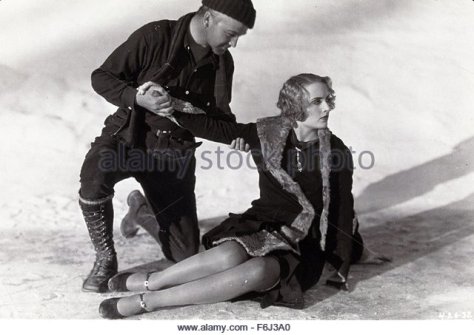
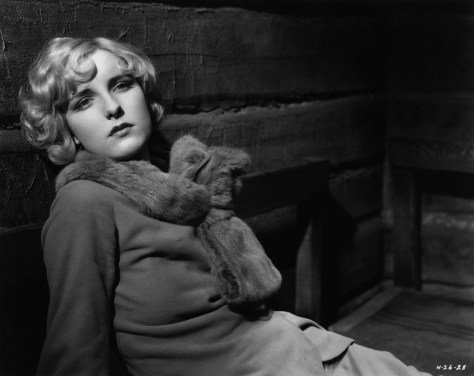
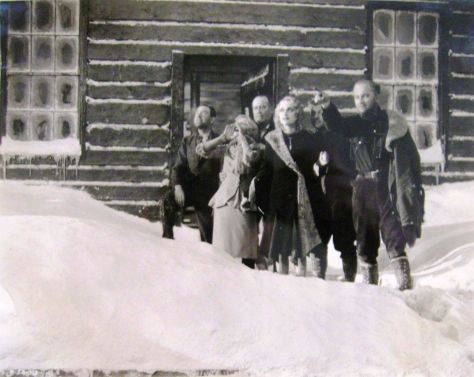
Needing shelter, the driver “Gus” (Billy Bevan) and his four passengers find refuge in an isolated one-room log church. The passengers include “Billie” (Carole Lombard), who is an escaped criminal being escorted back to jail in New York by a deputy sheriff, “Dan Egan” (Owen Moore); a young woman, “The Kid,” (Diane Ellis) on her way to Chicago to meet her boyfriend; and “Hickerson,” a pompous, ill-tempered banker. In the church the group finds “Bill” (William Boyd), a self-described “hobo,” who had found shelter there earlier. Tensions quickly arise in the group over their general plight, petty jealousies, and concerns about how six people are going to share the small supply of food that Bill had brought with him.
Tensions quickly arise in the group over their general plight, petty jealousies, and concerns about how six people are going to share the small supply of food that Bill had brought with him.
After a few days being stranded, the group sees a passing mail plane high in the sky. They try to attract the pilot’s attention, but he is too far away to see them. More days pass, and the group continues to ration their dwindling supplies and battle the subfreezing temperatures. To keep warm they begin to break up the church’s pews and other furnishings to use as firewood in the room’s potbelly stove.
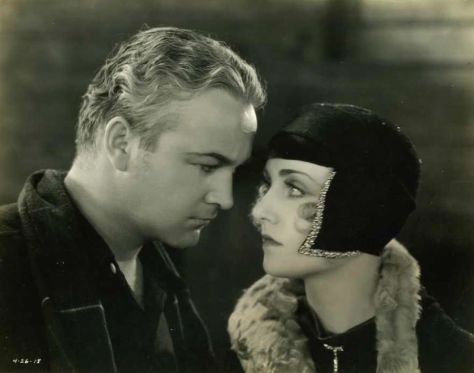
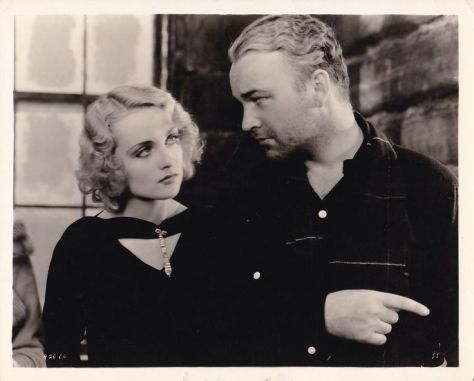
The group’s desperation intensifies, as does a romance between Bill and Billie. Soon Bill confides to her that he too is a wanted criminal, a fugitive from Saint Paul, Minnesota. As conditions worsen, The Kid collapses from hunger and become delirious; and the church’s interior becomes almost bare as more furnishings–even the church’s pulpit and pump organ–are consigned to the stove. Bill and Billie finally commit to leaving to avoid being imprisoned if the group is somehow rescued. They quietly depart during the night, hoping to reach a ranger station ten miles away.
Everyone else is sleeping except Dan, the deputy sheriff, who sees the two leaving; but he does nothing to stop them. After walking a short distance through snowdrifts, Bill and Billie hear and then see a search plane slowly circling overhead at low altitude. Realizing that the others inside the church will not hear the plane’s engine, they rush back and awaken them. The group hurriedly builds a signal fire, which the plane’s pilot sees. He parachutes a box of provisions to them with a note saying that help will be sent immediately.
The next day the group sees a rescue party heading toward the church. While awaiting their rescuers, Dan observes Bill and Billie sitting together on the floor. From his coat pocket Dan pulls out Billie’s extradition papers and a “wanted” notice that includes a photograph of Bill and information about his being a fugitive from Saint Paul. Dan walks over to the stove, now cold from no fires, and tosses both papers into it. Bill and Billie see him discard the papers, and they look at one another. Bill then gets up, retrieves the papers from the stove, gives them back to Dan, and asks him to drop him off in Saint Paul on his way back to New York with Billie.
The opening credits of High Voltage give Carole Lombard’s first name as “Carol,” her preferred spelling for her name up until that time. However, the year after the release of High Voltage she performed in Paramount Pictures‘ production Fast and Loose. In her credits for that film, the studio mistakenly added an “e” to Carol. Lombard liked the spelling, so she decided to keep “Carole” permanently as her screen name.
High Voltage is only one of five films released in 1929 in which William Boyd starred or is featured. His other films that year include Lady of the Pavements,The Leatherneck, The Flying Fool, and His First Command
In the screen credits of High Voltage, Owen Moore’s character “Dan Egan” is identified as “The Detective”; but early in the film Dan shows Bill his badge, which actually identifies him as a New York deputy sheriff.
Diane Ellis, who portrays “The Kid” in High Voltage, would die tragically the year after her performance in this film. In October 1930, she married Stephen C. Millett, a fellow American, in Paris, France. While on their extended honeymoon in India, she contracted an infection and died a week later in Chennai (then Madras) on December 15, 1930, just five days before her twenty-first birthday.
Jump up^High Voltage, “Free Public Domain Movies” listing; May 23, 2008. iMovies. Retrieved March 10, 2017.
Jump up^Several full 63-minute copies of High Voltage are available for viewing on YouTube.
Jump up^In the opening minutes of the film, the exterior signage and route destinations displayed on the bus identify the storyline’s setting as the Sierra Nevada.
Jump up^Gehring, Wes D. (2003). Carole Lombard: The Hoosier Tornado. Indianapolis, Indiana Historical Society Press, 78-79. ISBN978-0-87195-167-0.








 Film Dialogue
You must be logged in to post a comment.