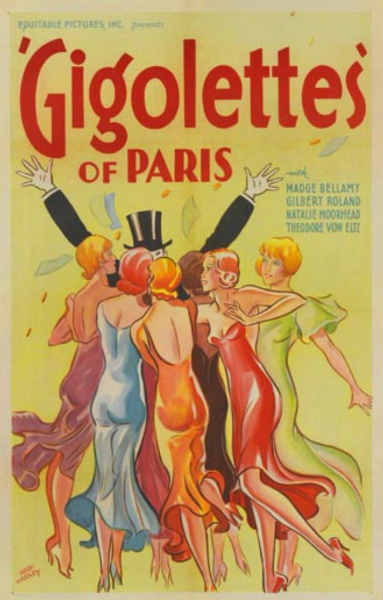
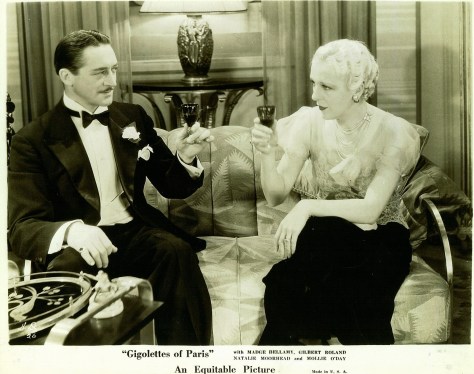
Cast: Madge Bellamy, Gilbert Roland, Natalie Moorhead, Theodore Von Eltz, Molly O’Day, Henry Kolker, Paul Porcasi, Robert Bolder, Ellinor Vanderveer
64 min
Plot
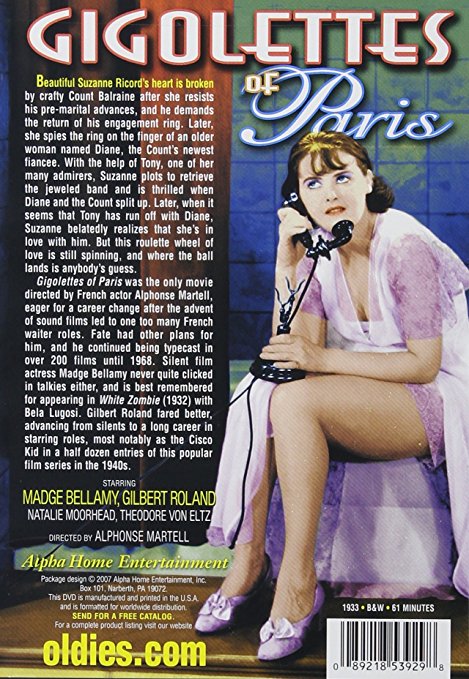
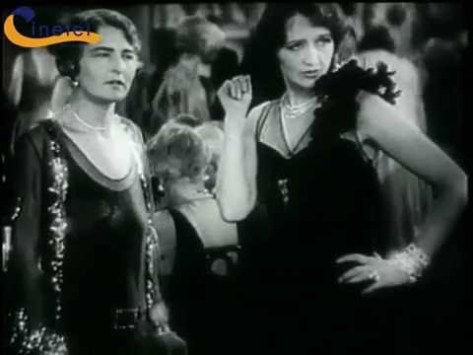
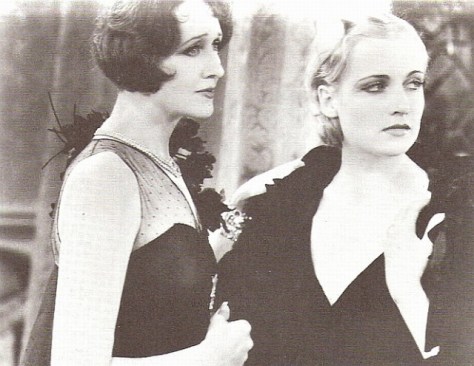
Suzanne Ricord, the prettiest salesgirl at the Parfumerie Parisienne, attracts the attention of wealthy Albert Valraine, who purchases all the expensive perfumes that she recommends.
After work, Suzanne and her roommate Paulette find Valraine waiting. He insists on giving the demure Suzanne a ride home and puts Paulette in the rear outdoor seat, where she still manages to hear Valraine offer Suzanne both the perfumes that he bought and to be her “fairy godfather.”
Suzanne refuses, but after she finds no mail from her lover, Paulette talks her into accepting Valraine’s offer. She removes the ring that her lover gave her, and it is soon replaced by Valraine’s. Suzanne and Paulette now live in a nicely-furnished apartment paid for by Valraine, and Suzanne is his mistress.
However, when she begins to talk about their planned honeymoon, Valraine takes back his ring and, accusing her of not having learned the rules of the game, says that everything has to end sometime.
Suzanne cries in disappointment. Valraine then promises his fiancée Diane that he is finished with his mistress and gives her the ring he took back from Suzanne.
Sometime later, Suzanne sings at a cabaret and accepts gifts from the many wealthy men who come to see her. Her friend, Antoine “Tony” Ferand, a gigolo, dances with Diane, now Valraine’s wife, and Suzanne notices the ring on her finger. When Tony tells Suzanne that Diane is Mrs. Albert Valraine, Suzanne reveals that the ring was her engagement ring and says she wants it back.
Diane gives the ring to Tony supposedly to help finance his business, and when Tony, who really loves Suzanne, gives her the ring, she reveals that her plan is to show Valraine how it feels to be at the losing end of the game. When Tony says that he is sick of their life and has no self-respect, Suzanne refuses to listen.
Valraine, who has just returned from a trip, accompanies his wife to the cabaret, and he notices that her ring is gone. Seeing the ring on a hand holding the curtain leading to the telephone, Valraine grabs it only to find Suzanne waiting for his approach.
When he questions her about the ring, she obliquely threatens to reveal their affair if his inquiries go too far. Back at the table with his wife, after Valraine, noticing Tony staring at Diane, accuses her of humiliating him with a common gigolo, Diane leaves with Tony, who is frustrated with Suzanne’s schemes. In their cab, Tony reveals to Diane that Suzanne had been engaged to Valraine and apologizes.
Although disappointed, Diane refuses his offer to return the ring. Tony goes to Monte Carlo, where he is arrested after he leaves a watch that had been given to Suzanne by a man at the cabaret, at a repair shop. The watch turns out to be stolen property.
The next night, Suzanne, upset that Tony has not come to the club, rebukes Valraine when he apologetically asks if she could ever care for him again. In front of Valraine, she gives the ring as a present to Louie, her waiter.
Meanwhile, Tony, in jail, refuses to say who gave him the watch. Realizing that she really loves Tony, Suzanne goes with Paulette to Monte Carlo to get away. She sees Diane at a table but her fears at finding her with Tony are relieved when her new husband joins her.
After Paulette shows her a newspaper article about the stolen watch, she tells her story to the police. Tony is released and the man who gave her the watch is picked up in Marseilles. Tony and Suzanne plan to marry, and he plans to return to his father’s textile producing business. To their surprise, they find that with the ring, Louie has married Paulette.
Tony is released and the man who gave her the watch is picked up in Marseilles. Tony and Suzanne plan to marry, and he plans to return to his father’s textile producing business. To their surprise, they find that with the ring, Louie has married Paulette.
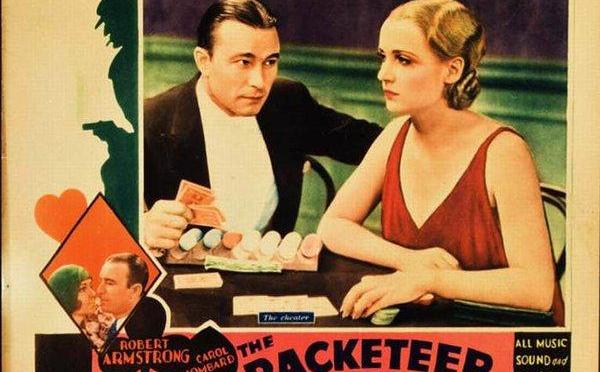
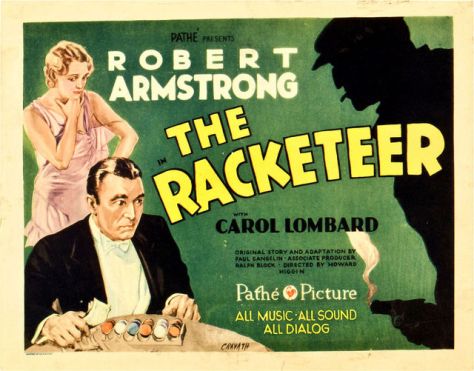
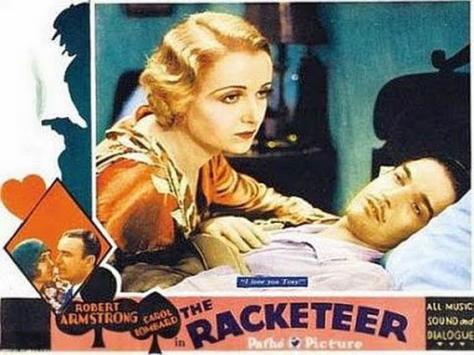
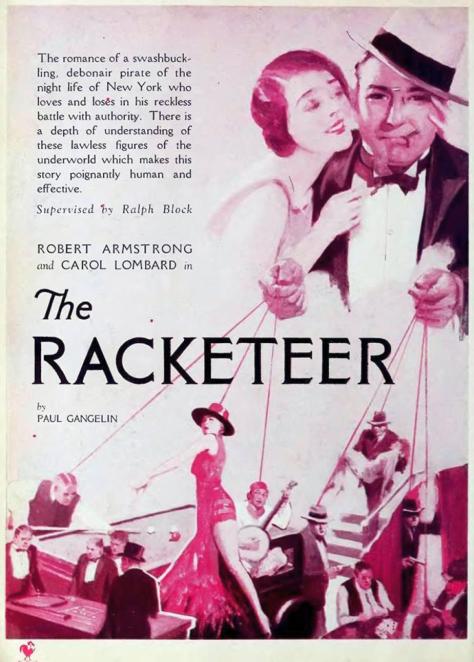
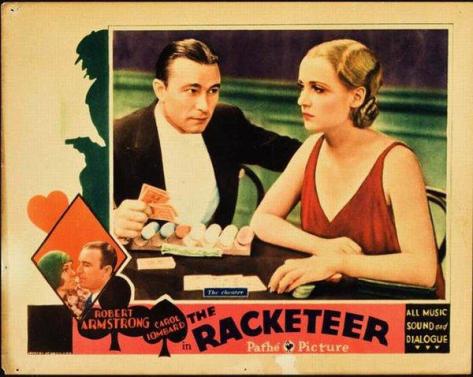
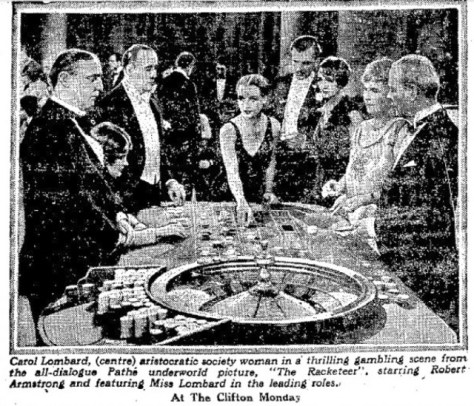
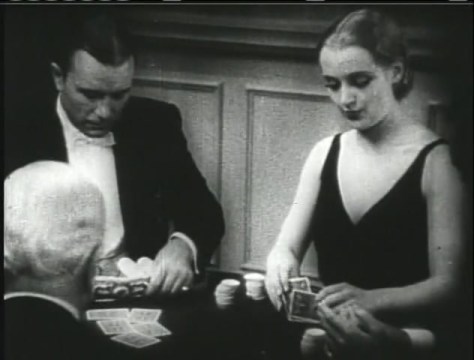
Cast: Robert Armstrong, Carole Lombard, Roland Drew, Paul Hurst, Kit Guard, Al Hill, Hedda Hopper, John Loder, Jeanette Loff, Winter Hall, Winifred Harris, Robert Parrish
It tells the tale of some members of the criminal class in 1920s America, and in particular one man and one woman’s attempts to help him. Gossip columnist Hedda Hopper appears in a minor role. The film is one of the early talkies, and as a result, dialogue is very sparse.
Plot
New York City gangster Mahlon Keene (Robert Armstrong) melts when he meets down-on-her-luck beauty Rhoda (Carole Lombard), a society gal who’s in desperate need of dough to support herself and her boyfriend, Tony (Roland Drew), a brilliant violinist with a serious drinking problem.
Mahlon pulls some strings to help Tony get back on top; in return, Rhoda is to dump the musician and marry the mobster.
The already heated situation is further complicated when the cops decide to crack down on Mahlon.
The screenplay was written by Walter DeLeon, based upon a successful German Vaudeville act entitled Tanzanwaltz, penned by Pordes Milo, Walter Schütt, and Dr. Eric Urban. The German production had been translated for the American stage by DeLeon and Mark Swan and, under the same title as the film.
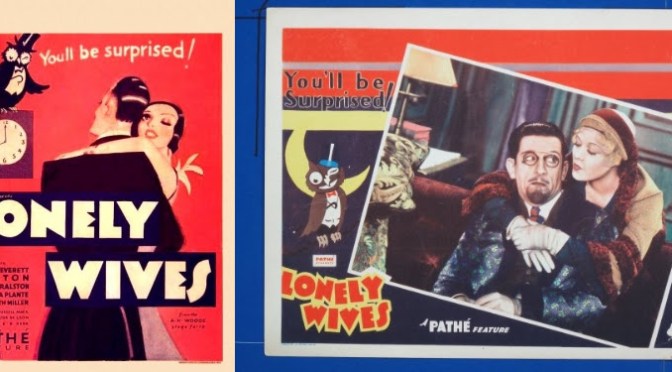
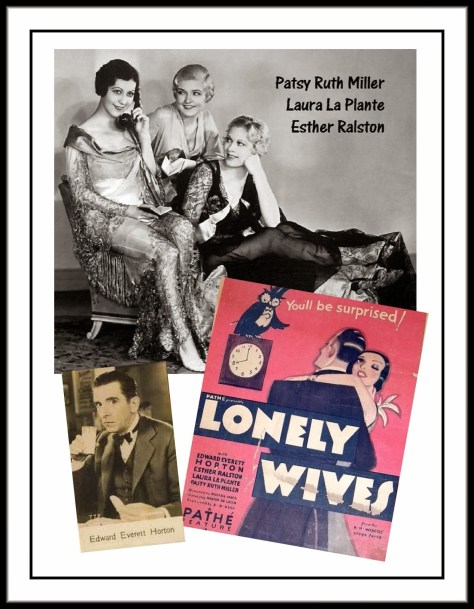
Edward Everett Horton, in dual roles as Richard and Felix, the Great Zero.
Richard “Dickie” Smith (Edward Everett Horton), is a seemingly respectable defense attorney by day, who turns into a philandering Don Juan when the clock strikes 8 o’clock.
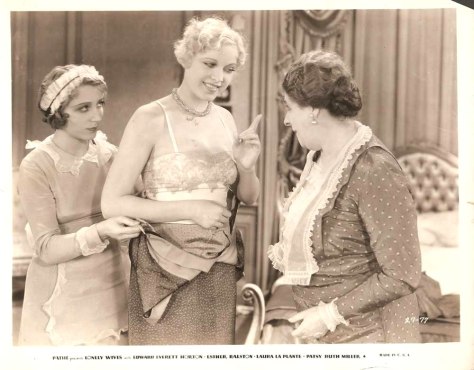
His wife, Madeline (Esther Ralston), has been away for several months, and is not expected back anytime soon. However, Madeline’s mother, Mrs. Mantel (Maude Eburne) is staying with the Smiths, in an effort to curtail the possibility of any straying by Richard.
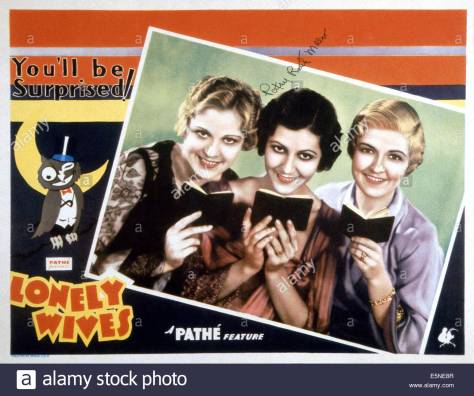
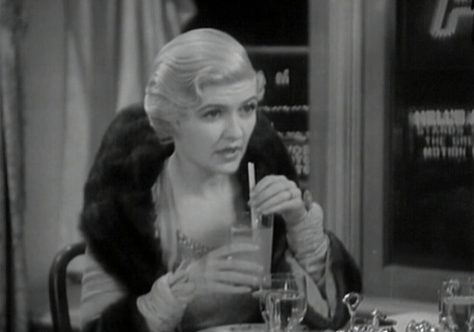
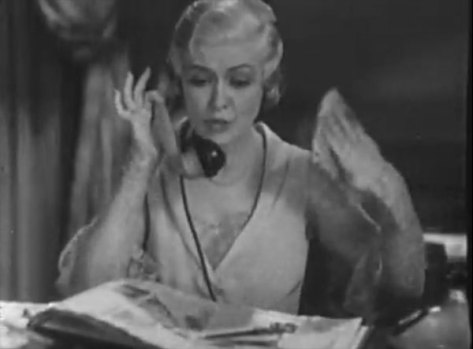
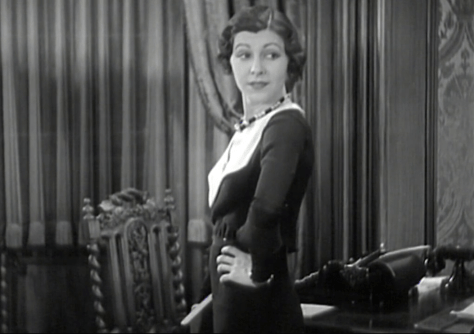
Unbeknownst to her, he has made plans to go out on the town that night with his new, sultry secretary Kitty Minter (Patsy Ruth Miller), and his new sexy client, Diane O’Dare (Laura La Plante), who, a lonely wife herself, wishes to divorce her husband for neglect.
The issue is how can he go out on the town without alerting his mother-in-law. An issue which is seemingly resolved by the arrival at his home of a vaudeville impersonator: Felix, the Great Zero (also played by Edward Everett Horton). Felix is seeking permission to impersonate the famous lawyer on-stage. At first reluctant, Richard, noticing the striking resemblance between himself and the actor, realizes he might have a way to deceive Mrs. Mantel. In order to obtain his approval, Felix must agree to impersonate him at his house that evening, while he goes out.
While Richard goes out on the town, he discovers that Diane’s husband is none other than Felix. Meanwhile, Madeline arrives home unannounced and early.Thinking that he is about to be exposed, Felix phones the nightclub where Richard has taken the two women for dinner and drinks. As he waits for the return phone call, much to his surprise, rather than exposing him as an imposter, Madeline begins to come on to him. He attempts to resist, trying to hold out until he can speak to Richard, but he succumbs to her charms just as the phone begins ringing.
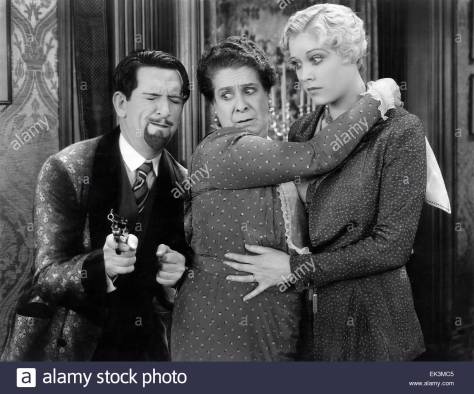
When Richard returns home the next morning, Felix is still there. He is followed closely by a very inebriated Diane, with whom it seems he has spent his time away from home. When Felix recognizes Diane, and Richard understands that Felix has spent the night at his house, both men believe that his look-a-like has slept with the others’ wife. After a series of events, Smith ends up chasing Zero with a loaded gun. Meanwhile, Andrews, the Butler, (Spencer Charters), thinks he must have the DT’s, seeing double of his employer.
The truth comes out when Madeline admits that she knew it wasn’t Richard all along, and other than the kissing, nothing happened between the two of them. Diane admits that she spent the night in the cab, riding around, and not with Richard. Reconciled, Richard is cured of his wandering ways and Felix and Diane are reunited.
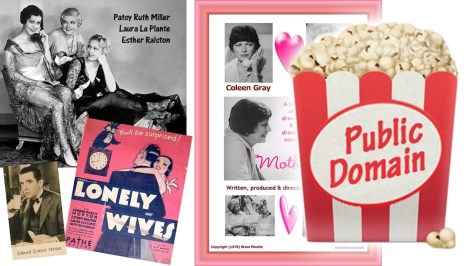
Tie-in advertisement for Jo-Cur Beauty Products and Lonely Wives.
Pathé announced that the film was going into production in mid-November 1930, with Russell Mack at the helm.[6] Shortly after, it was reported that La Plante had been attached to the cast;[7] La Plante was returning to films after a brief seven-month hiatus, during which time speculation arose that her career might be over.
Her appearance in this film, and its success, would re-ignite her career.[8] On December 7, it was learned that DeLeon would be adapting the story into a screenplay,[9] and on the 10th the announcement came that Esther Ralston and Patsy Ruth Miller would be added to the list of cast members, along with Edward Everett Horton.[10]
Horton and Miller had co-starred the prior year in four films together for Warner Brothers.[11] The following day, December 11, The Film Daily announced that the film had begun production.[12]Included in the cast was Spencer Charters, who had acted with Mack in several Broadway plays.[13]
Pathe announced that the film would be part of its 1931 schedule, and it began to appear on its list of upcoming releases in the trades, but without a specific release date.[14] The release was held up in late January due to the sale of Pathe to RKO Pictures. By the end of the month the go-ahead was given to release the film.[15] Finally on February 16 RKO announced they would be releasing the film the following week.[16]
Several days prior to its release, Pathe announced that the marketing campaign for the film would include “tie-ins” with a coterie of manufacturers and retail stores. The campaign would include drug stores and department stores, and have advertising material supplied by manufacturers such as Underwood (typewriters), John H. Woodbury (toiletries), and Jo-Cur Laboratories (beauty products).[17]Lonely Wives was released by RKO on February 22, 1931.[5]
Soundtrack
“Madeline”, unknown composer
“Baby Feet”, unknown composer, sung by Maude Eburne[1]
Reception
Mordaunt Hall, the film critic for the New York Times, gave the film a positive review, calling the direction “skillful”, and singles out the performance of several of the actors, including Esther Ralston, Maude Eburne, Patsy Ruth Miller, and Spencer Charters.
He was especially impressed with Horton, stating that he “delivers a wonderfully clever dual impersonation …”, and is “wonderfully amusing”.[18]The Film Daily also gave the film a nod of approval, calling it “… one of the cleverest and most entertaining comedies of the season”.
They particularly highlighted the direction of Mack, Horton’s performance in his dual role, as well as complimenting the rest of the cast. The trade paper also gave the highest marks to the cinematography of Edward Snyder.[19]
Photoplay listed it as one of the best films of the month in February 1931, singling out the acting talents of Horton, Ralston, La Plante, and Miller.[20]Picture Play Magazine was a bit more reserved in their review of the film.
While they called it “… the most consistently broad comedy of any film since “The Cock-eyed World”,” they also stated that it was “supposedly hilarious”.[21]
Other positive reviews came from: Billboard, “… destined to be one of the laugh highlights of the screen year”; Motion Picture Herald, “Highly sophisticated comedy, goes over with a great laugh”; Los Angeles Express, “Fast, furious, frothy farce. Lonely Wives is a laugh riot”; and Motion Picture Daily, “Laughs keep rolling out in a steady deluge of ultra-sophisticated wise cracks.”[22]
It was released on DVD by Roan/Troma Entertainment in 2001.[24]
The English translation of the 1912 German vaudeville act, Tanzanwaltz, entitled Lonely Wives, written by DeLeon and Mark Swan, was produced by A.H. Woods in Stamford, Connecticut on August 11, 1922.[2] The play was scheduled to open in New York in August 1922, starring a well-known female impersonator of that time, Julian Eltinge as its star, but was never produced, apparently because while humorous, it had no value or integrity.[25]
The film was acquired by RKO when they purchased Pathé Exchange in January 1931.[25]
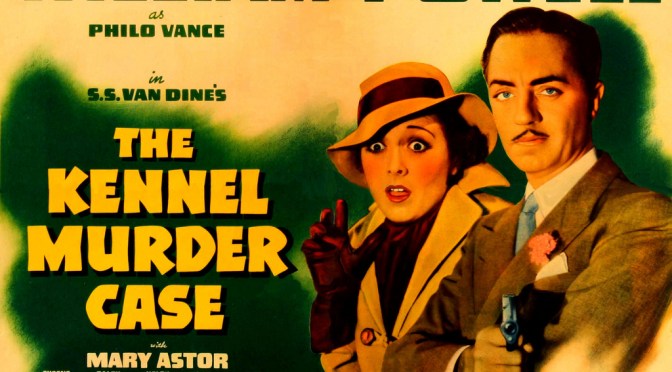
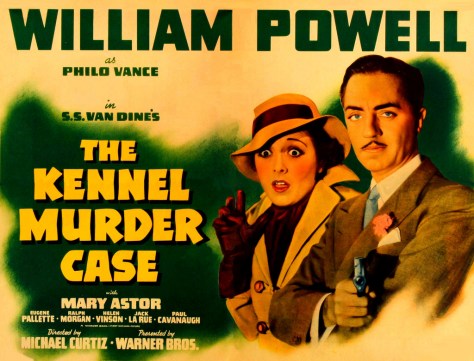
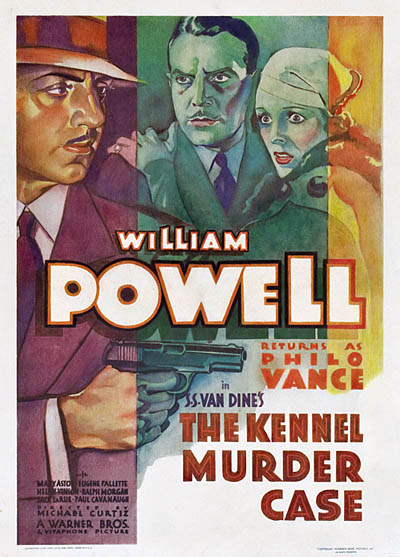
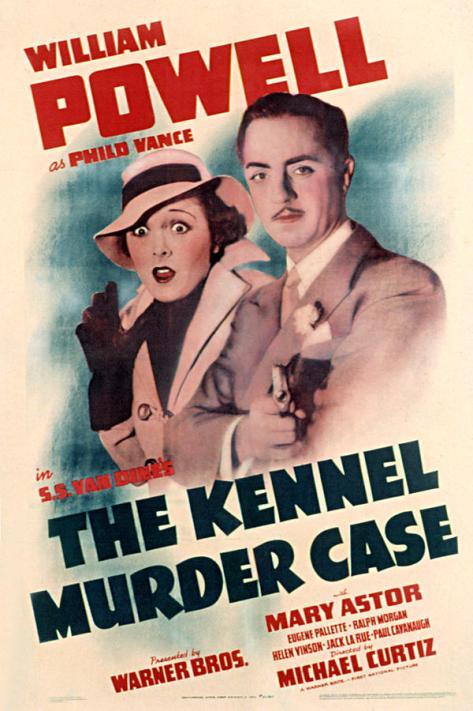
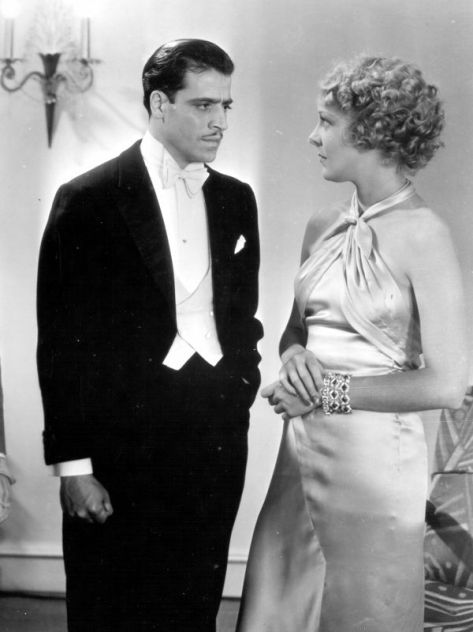
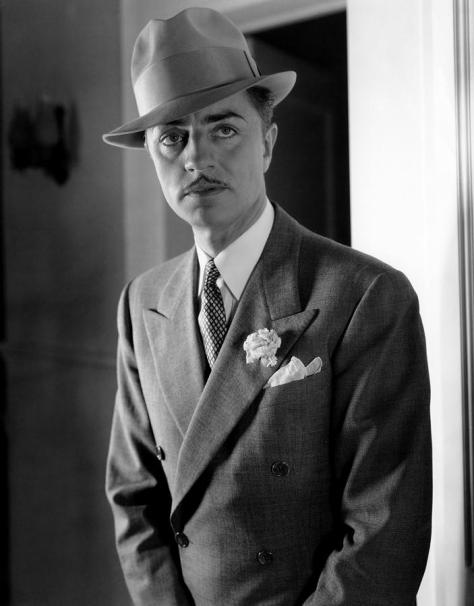
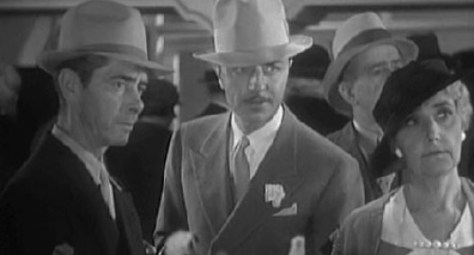
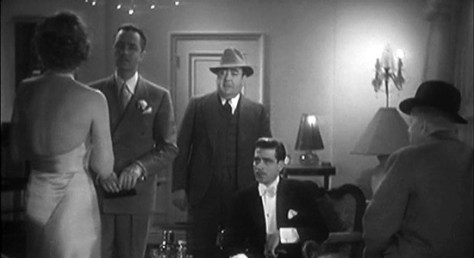
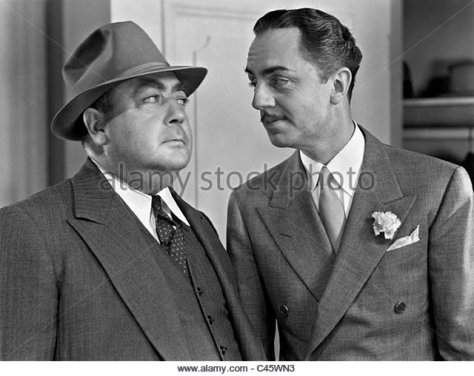
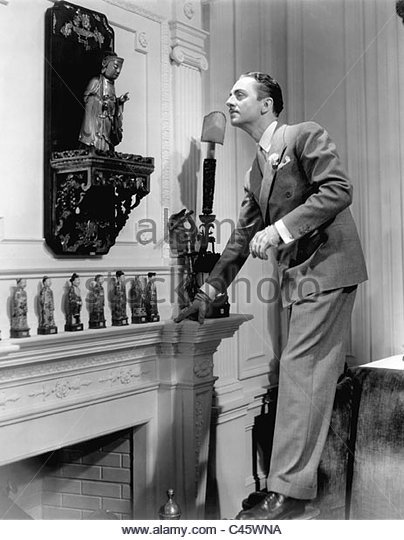
Cast: William Powell, Mary Astor, Eugene Pallette, Ralph Morgan, Robert McVade, Robert Barratt, Frank Conroy, Etienne Giradot, James Lee, Helen Winson, Paul Cavanagh, Jack La Rue
Philo Vance’s dog does not make it into the final of the Long Island Kennel Club’s dog show.
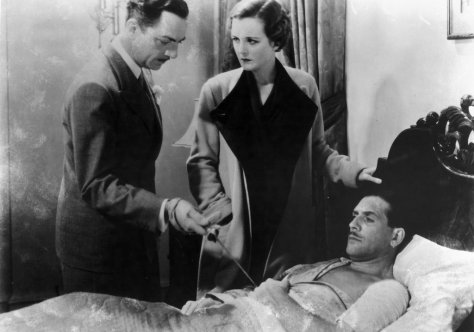
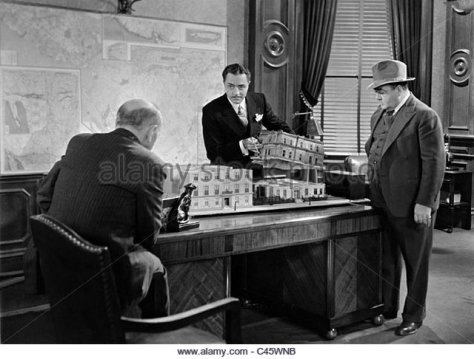
Fellow competitor Archer Coe (Robert Barrat) is disappointed, having hoped to savor a victory over Vance. Coe is found dead the next morning in his bedroom, locked from the inside. District Attorney Markham (Robert McWade) and Police Sergeant Heath (Eugene Pallette) assume it was suicide, because he was shot through the head and was found holding a pistol.
Vance is not convinced. He soon finds evidence that Coe was murdered. Coroner Dr. Doremus (Etienne Girardot) determines the victim died of a stab wound.
There is no shortage of suspects; Coe was very much disliked. His niece Hilda Lake (Mary Astor) resented her uncle’s tight control of her finances and jealousy of any men who showed interest in her.
Her boyfriend, Sir Thomas MacDonald (Paul Cavanagh), suspected Coe of killing his dog to ensure winning the competition. Raymond Wrede (Ralph Morgan), the dead man’s secretary, was in love with Miss Lake, but had been laughed at when he sought Coe’s support.
Coe’s next-door neighbor and lover Doris Delafield (Helen Vinson) had been cheating on him with Eduardo Grassi (Jack La Rue). When Coe found out, he cancelled a contract to sell his collection of Chinese artworks to the Milan museum for which Grassi worked.
Liang (James Lee), the cook, had worked long, hard, and illegally to help Coe amass his collection. He warned his employer against the proposed sale and was fired as a result. Even Coe’s own brother Brisbane (Frank Conroy) despised Coe. Finally, Gamble (Arthur Hohl), the head servant, had concealed his criminal past.
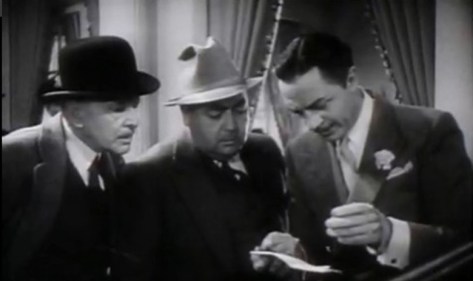
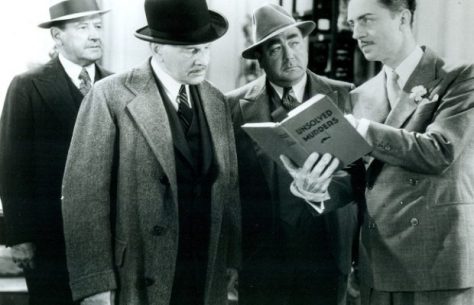
Brisbane Coe becomes Vance’s prime suspect. His alibi of taking a train at the time of the murder is disproved. When he is found dead in a closet, Vance is both puzzled and enlightened. Among Brisbane’s effects, Vance finds a book titled Unsolved Murders; a bookmarked page details a method of using string to lock a door through the keyhole without leaving a trace. Part of the mystery is solved.
Later, an attempt is made on the life of Sir Thomas using the same dagger used to kill Coe. Finally, a Doberman Pinscher belonging to Miss Delafield is found seriously injured, apparently struck with a fireside poker. From these and other clues, Vance finally solves the crime.
It turns out that two men sought Coe’s life that night. The successful murderer struggled with Coe and stabbed him, leaving him for dead. Coe awakened soon after. Too dazed to recall the fight or notice that he was mortally wounded, he went upstairs to his bedroom and opened his window before dying.
Brisbane entered the chamber, saw his brother apparently asleep in his chair. He shot the corpse and arranged the scene to look like a suicide. Downstairs, he ran into the actual killer, who had seen that Archer Coe was still alive and came back to finish the job. In the darkness, he mistook Brisbane for Archer and killed the wrong man. Delafield’s dog then wandered in, attracted by the commotion, and attacked the murderer.
While sure of the killer’s identity, Vance has no proof. He therefore arranges for Sir Thomas and Wrede to quarrel over Hilda Lake. When Wrede instinctively reaches for the poker to strike his rival, the Doberman recognizes its attacker and leaps on him. Wrede confesses he became enraged when Coe refused to assist his courtship of Miss Lake, precipitating the stabbing.
Many film historians (including William K. Everson, who pronounced it a “masterpiece” in the August 1984 issue of Films in Review) consider it one of the greatest screen adaptations of a Golden Age mystery novel, and rank it with the 1946 film Green for Danger.
Film Collectors Corner
Watch The Kennel Murder Case Now – Amazon Instant Video











 Film Dialogue
You must be logged in to post a comment.