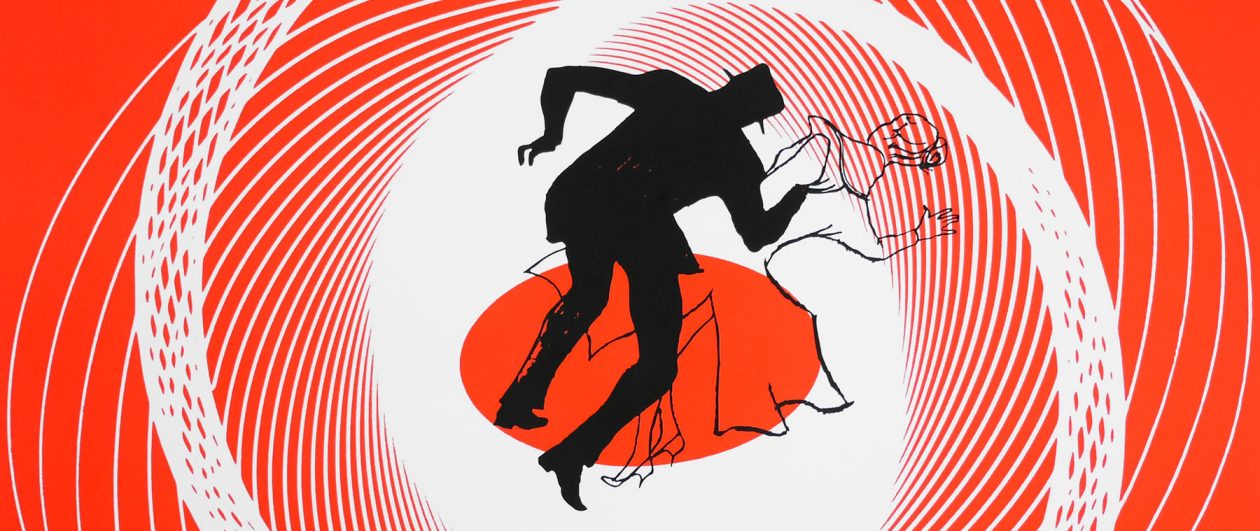


Bigger Than Life is an American DeLuxe Color CinemaScope film made in 1956 directed by Nicholas Ray and starring James Mason, who also co-wrote and produced the film, about a school teacher and family man whose life spins out of control upon becoming addicted to cortisone.
The film co-stars Barbara Rush as his wife and Walter Matthau as his closest friend, a fellow teacher. Though it was a box-office flop upon its initial release,[2] many modern critics hail it as a masterpiece and brilliant indictment of contemporary attitudes towards mental illness and addiction.[3]

In 1963, Jean-Luc Godard named it one of the ten best American sound films ever made.[4]
Bigger Than Life was based on a 1955 article by medical writer Berton Roueché in The New Yorker, titled “Ten Feet Tall”.[5]
Contents

Plot summary
Schoolteacher and family man Ed Avery (James Mason), who has been suffering bouts of severe pain and even blackouts, is hospitalized with what is diagnosed as polyarteritis nodosa, a rare inflammation of the arteries. Told by doctors that he probably has only months to live, Ed agrees to an experimental treatment: doses of the hormone cortisone.
Ed makes a remarkable recovery. He returns home to his wife, Lou (Barbara Rush), and their son, Richie (Christopher Olsen). He must keep taking cortisone tablets regularly to prevent a recurrence of his illness. But the “miracle” cure turns into a nightmare when Ed begins to misuse the tablets, causing him to experience wild mood swings and, ultimately, a psychotic episode which threatens the safety of his family.

Cast
- James Mason as Ed Avery
- Barbara Rush as Lou Avery
- Walter Matthau as Wally Gibbs
- Robert F. Simon as Dr. Norton
- Christopher Olsen as Richie Avery
- Roland Winters as Dr. Ruric
- Rusty Lane as Bob LaPorte
- Rachel Stephens as Nurse
- Kipp Hamilton as Pat Wade

Reception
Bigger Than Life was extremely controversial upon its release,[citation needed] and it was not a financial success. Mason, who produced the film as well as starring in it, blamed its failure on its use of the then-novel widescreen CinemaScope format.[2]
American critics panned the film, considering it melodramatic and heavyhanded.[6] Bosley Crowther of The New York Times called it tedious, “dismal”, and “more pitiful than terrifying to watch”.[7]

However, the film was popular with critics at the influential magazine Cahiers du cinéma. Jean-Luc Godard called it one of the ten best American sound films.[4] Likewise, François Truffaut praised the film, noting the “intelligent, subtle” script, the “extraordinary precision” of Mason’s performance, and the beauty of the film’s CinemaScope photography.[8]
Modern critics have pointed out Ray’s use of widescreen cinematography to depict the interior spaces of a family drama, rather than the open vistas typically associated with the format, as well as his use of extreme close-ups in portraying the main character’s psychosis and megalomania.[9]
The film is also recognized for its multi-layered examination of the American nuclear family in the Eisenhower era. While the film can be read as a straightforward exposé on medical malpractice and the overuse of prescription drugs in modern American society,[10] it has also been seen as a critique of consumerism, the male-dominated traditional family structure, and the claustrophobic conformism of suburban life.[3][11][12]
Truffaut saw Ed’s drug-influenced speech to the parents of the parent-teacher association as having fascist overtones.[13] The film has also been interpreted as an examination of masculinity and a leftist critique of the low salaries of public school teachers in the United States.[14]

Notes
- Jump up^ Solomon 1989, p. 250.
- ^ Jump up to:a b Cossar 2011, p. 273.
- ^ Jump up to:a b Halliwell 2013, pp. 159-162.
- ^ Jump up to:a b Marshall, Colin (December 2, 2013). “A Young Jean-Luc Godard Picks the 10 Best American Films Ever Made (1963)”. Open Culture.
- Jump up^ Roueché, Berton (September 10, 1955). “Ten Feet Tall”. The New Yorker: 47–77.
- Jump up^ Schiebel 2014, p. 183.
- Jump up^ Crowther, Bosley (August 3, 1956). “Screen: Tax of Tedium; ‘Bigger Than Life’ Has Debut at Victoria”. The New York Times.
- Jump up^ Truffaut 2009, pp. 143-147.
- Jump up^ Cossar 2011, pp. 120-123.
- Jump up^ Truffaut 2009, pp. 145–146. Truffaut noted Nicholas Ray’s low opinion of the medical profession, and of so-called “miracle drugs”. His discussion of Bigger Than Life points out the visual similarity between the doctors in the film and “gangsters in crime films”.
- Jump up^ Basinger 2013, pp. 231-234.
- Jump up^ Rosenbaum 1997, pp. 131-133.
- Jump up^ Truffaut & pp-145-146.
- Jump up^ Schiebel 2014, p. 182.

See also
References
- Basinger, Jeanine (2013). I Do and I Don’t: A History of Marriage in the Movies. Knopf Doubleday Publishing Group. ISBN 9780307962225.
- Cossar, Harper (2011). Letterboxed: The Evolution of Widescreen Cinema. University Press of Kentucky. ISBN 9780813126517.
- Halliwell, Martin (2013). Therapeutic Revolutions: Medicine, Psychiatry, and American Culture, 1945-1970. Rutgers University Press. ISBN 9780813560663.
- Schiebel, Will (2014). “Bigger Than Life: Melodrama, Masculinity, and the American Dream”. In Rybin, Steven; Schiebel, Will. Lonely Places, Dangerous Ground: Nicholas Ray in American Cinema. SUNY Press. ISBN 9781438449814.
- Solomon, Aubrey (1989). Twentieth Century Fox: A Corporate and Financial History. Scarecrow Press.


You must be logged in to post a comment.