
Charles Chaplin
Prepared by Daniel B Miller
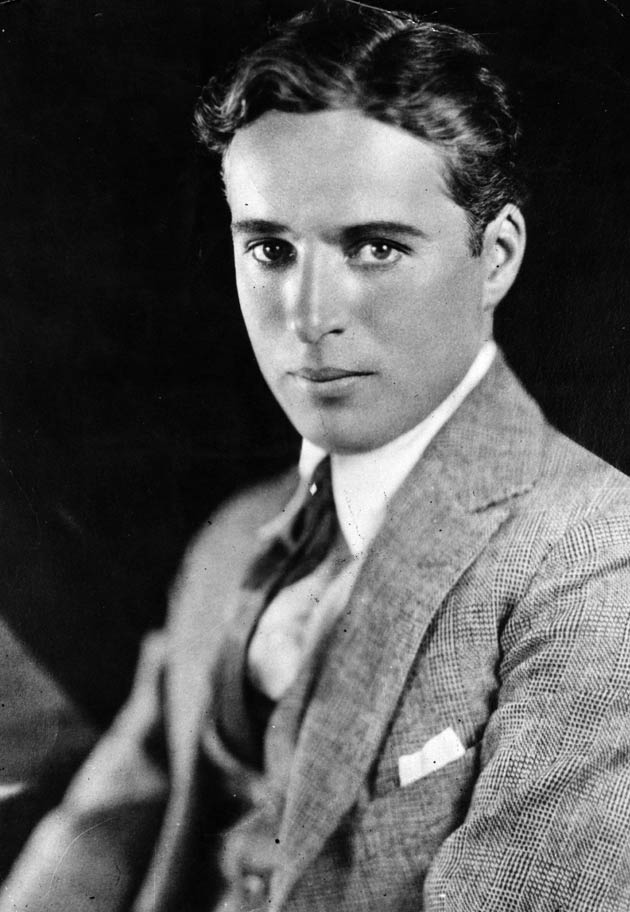
Sir Charles Spencer Chaplin, KBE (16 April 1889 – 25 December 1977) was an English comic actor, filmmaker, and composer who rose to fame in the era of silent film. Chaplin became a worldwide icon through his screen persona “the Tramp” and is considered one of the most important figures in the history of the film industry.
His career spanned more than 75 years, from childhood in the Victorian era until a year before his death in 1977, and encompassed both adulation and controversy.
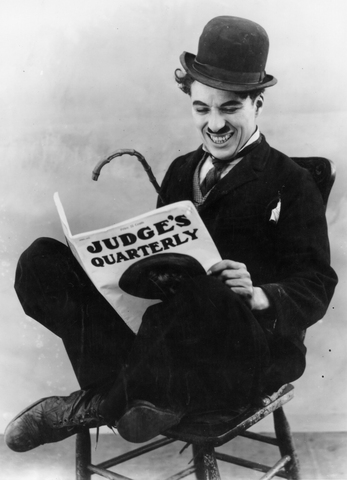
The Tramp – Charles Chaplin
Chaplin’s childhood in London was one of poverty and hardship. As his father was absent and his mother struggled financially, he was sent to a workhouse twice before the age of nine.
When he was 14, his mother was committed to a mental asylum. Chaplin began performing at an early age, touring music halls and later working as a stage actor and comedian. At 19, he was signed to the prestigious Fred Karno company, which took him to America. Chaplin was scouted for the film industry and began appearing in 1914 for Keystone Studios.
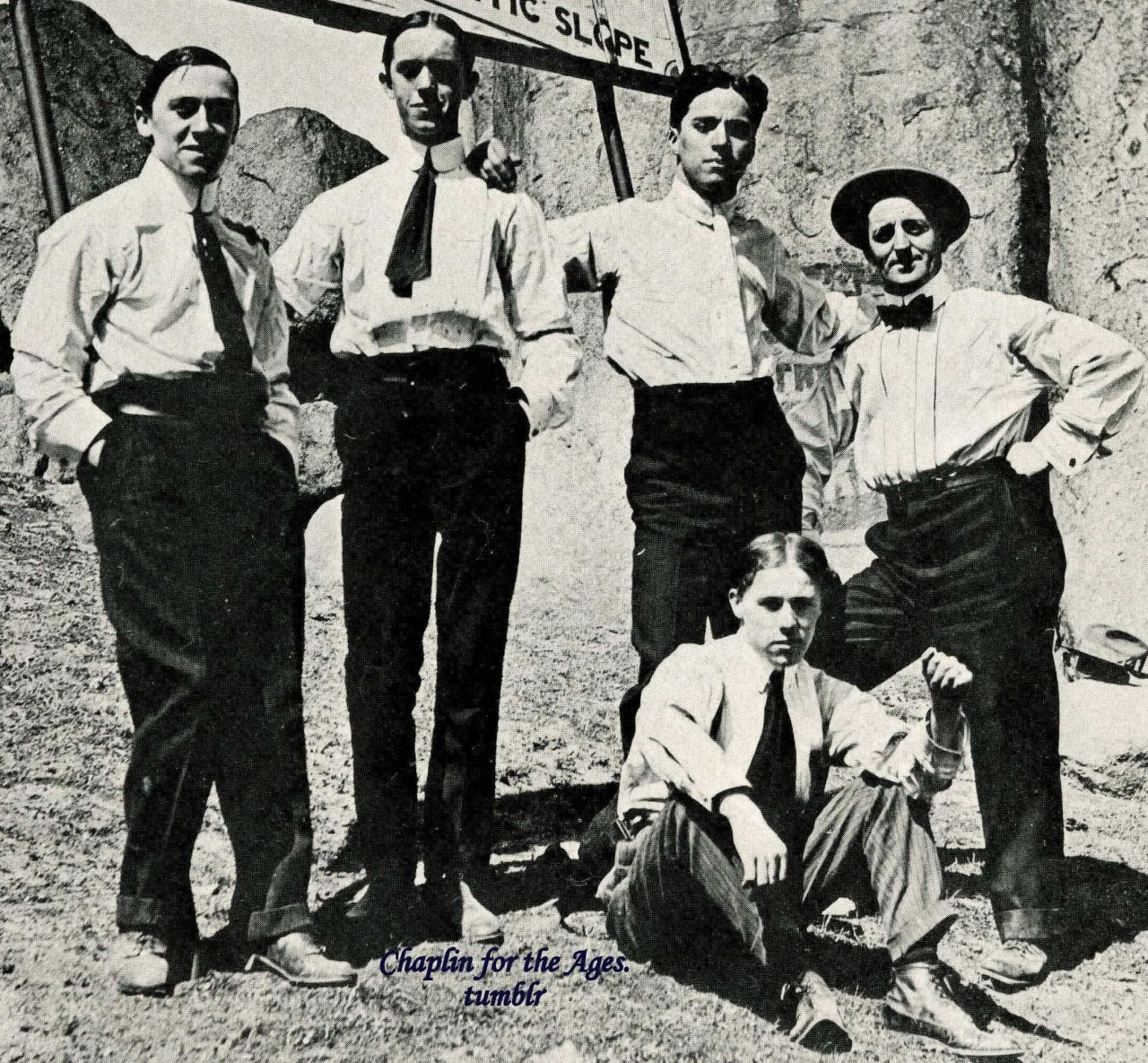
Charles Chaplin and Stan Jefferson Laurel with Fred Karno Company c.1913
He soon developed the Tramp persona and formed a large fan base. Chaplin directed his own films from an early stage and continued to hone his craft as he moved to the Essanay, Mutual, and First National corporations. By 1918, he was one of the best-known figures in the world.
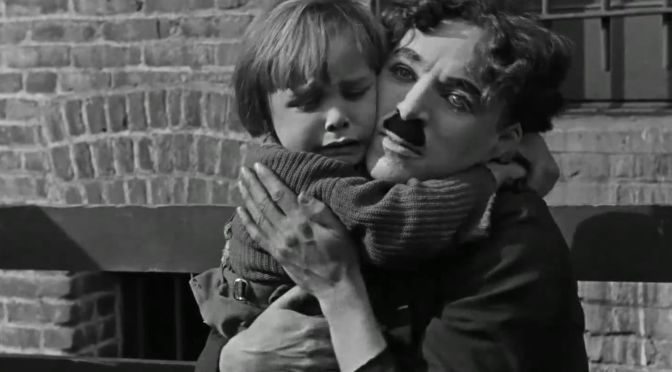
In 1919, Chaplin co-founded the distribution company United Artists, which gave him complete control over his films. His first feature-length was The Kid (1921), followed by A Woman of Paris (1923), The Gold Rush (1925), and The Circus(1928).
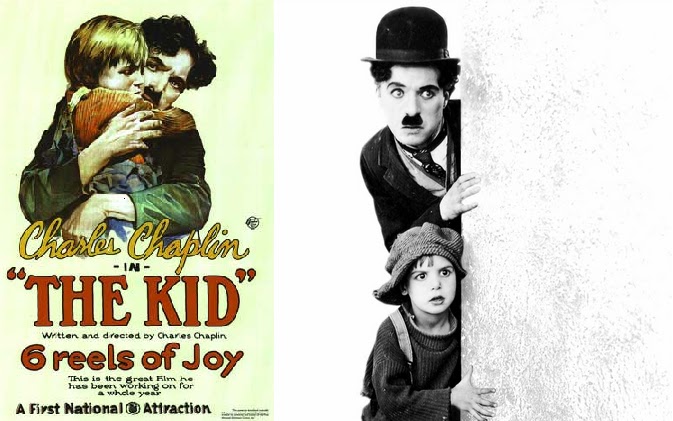
The Kid (Charles Chaplin, 1921) Poster
He refused to move to sound films in the 1930s, instead producing City Lights (1931) and Modern Times (1936) without dialogue. Chaplin became increasingly political, and his next film, The Great Dictator (1940), satirised Adolf Hitler.
The 1940s were a decade marked with controversy for Chaplin, and his popularity declined rapidly. He was accused of communist sympathies, while his involvement in a paternity suit and marriages to much younger women caused scandal.
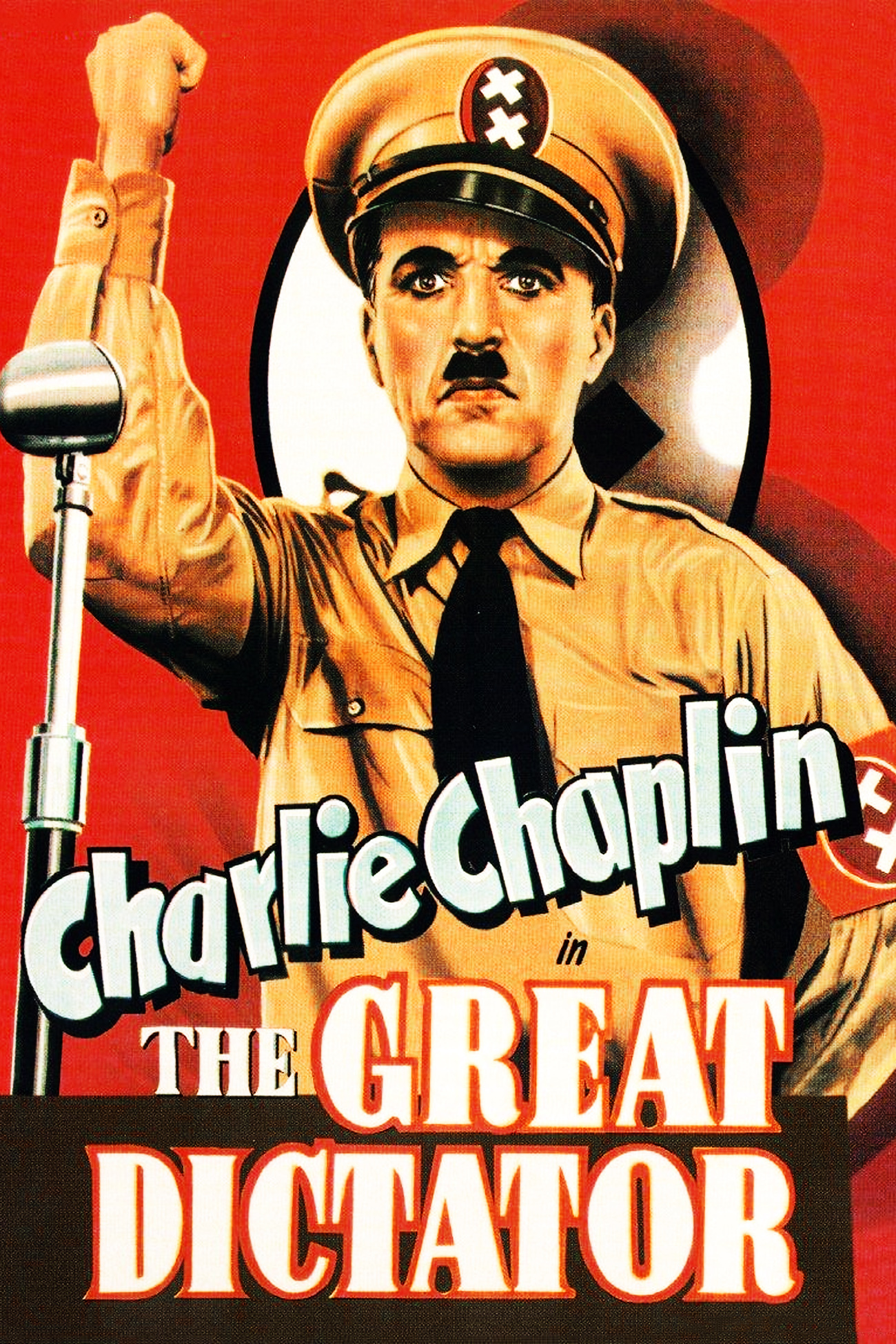
The Great Dictator (Charles Chaplin, 1940) Poster
An FBI investigation was opened, and Chaplin was forced to leave the United States and settle in Switzerland. He abandoned the Tramp in his later films, which include Monsieur Verdoux (1947), Limelight (1952), A King in New York(1957), and A Countess from Hong Kong (1967).
Chaplin wrote, directed, produced, edited, starred in, and composed the music for most of his films. He was a perfectionist, and his financial independence enabled him to spend years on the development and production of a picture.
His films are characterised by slapstick combined with pathos, typified in the Tramp’s struggles against adversity. Many contain social and political themes, as well as autobiographical elements. In 1972, as part of a renewed appreciation for his work, Chaplin received an Honorary Academy Award for “the incalculable effect he has had in making motion pictures the art form of this century”.
He continues to be held in high regard, with The Gold Rush, City Lights, Modern Times, and The Great Dictator often ranked on industry lists of the greatest films of all time.
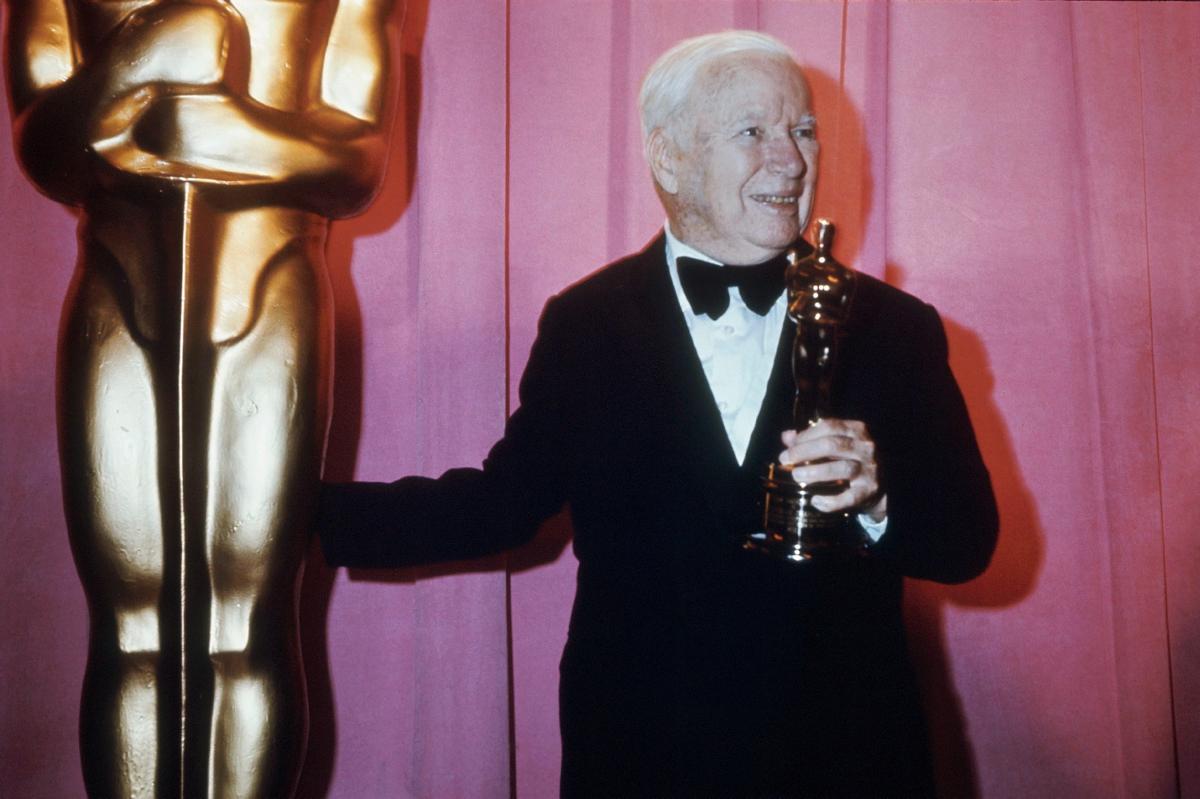
Charlie Chaplin receives an Honorary Academy Award (1972)
Contents
- 1 – Biography
- 2 – Filmmaking
- 3 – Legacy
- 4 – Awards and recognition
- 5 – Filmography
- 6 – See also
- 7 – Notes
- 8 – References
- 9 – External links
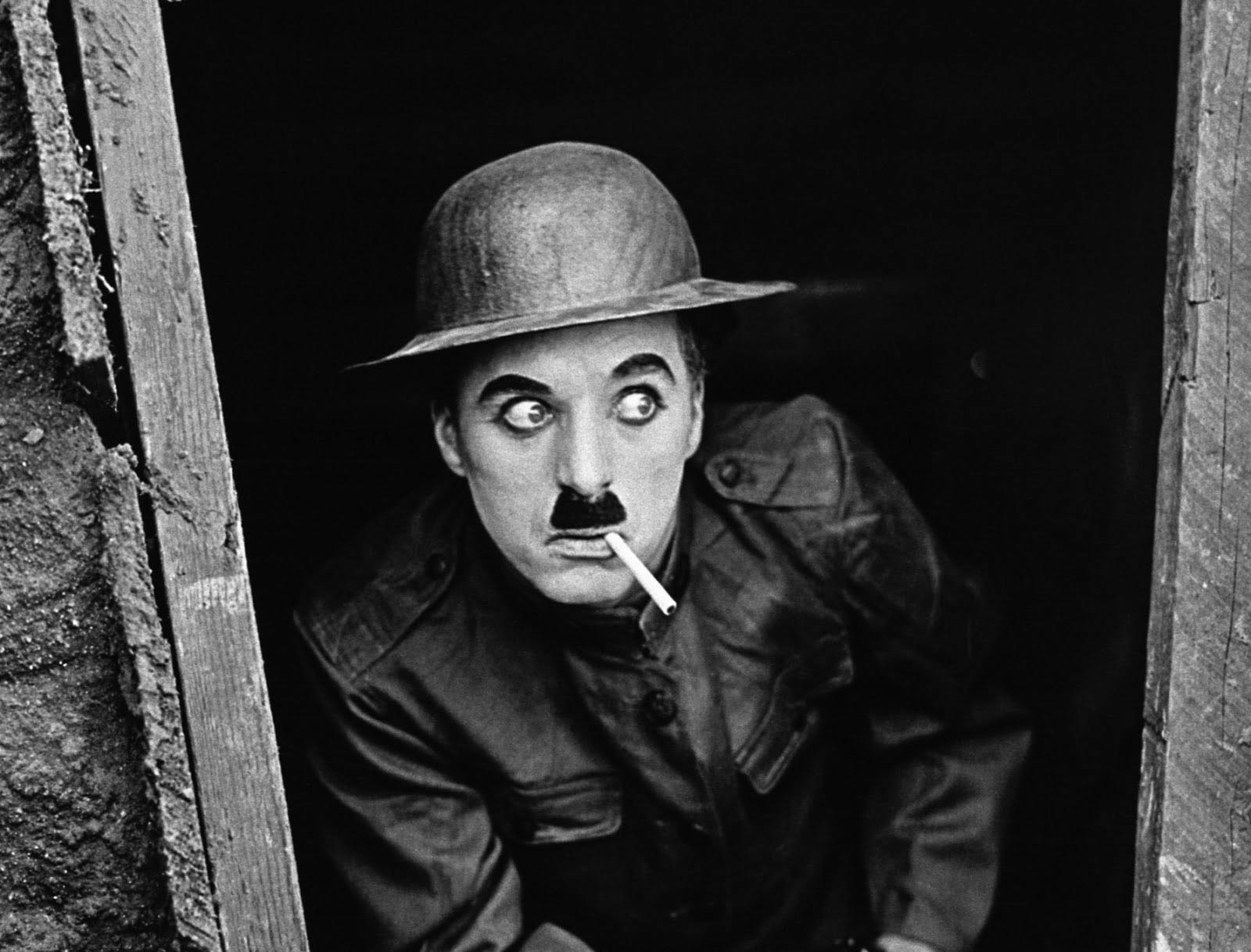
Charles Chaplin in Shoulder Arms ( Charles Chaplin, 1918)
Biography
1889–1913: Early years
Background and childhood hardship
Charles Spencer Chaplin was born on 16 April 1889 to Hannah Chaplin (born Hannah Harriet Pedlingham Hill) and Charles Chaplin Sr.
There is no official record of his birth, although Chaplin believed he was born at East Street, Walworth, in South London. His mother and father had married four years previously, at which time Charles Sr. became the legal carer of Hannah’s illegitimate son, Sydney John Hill.
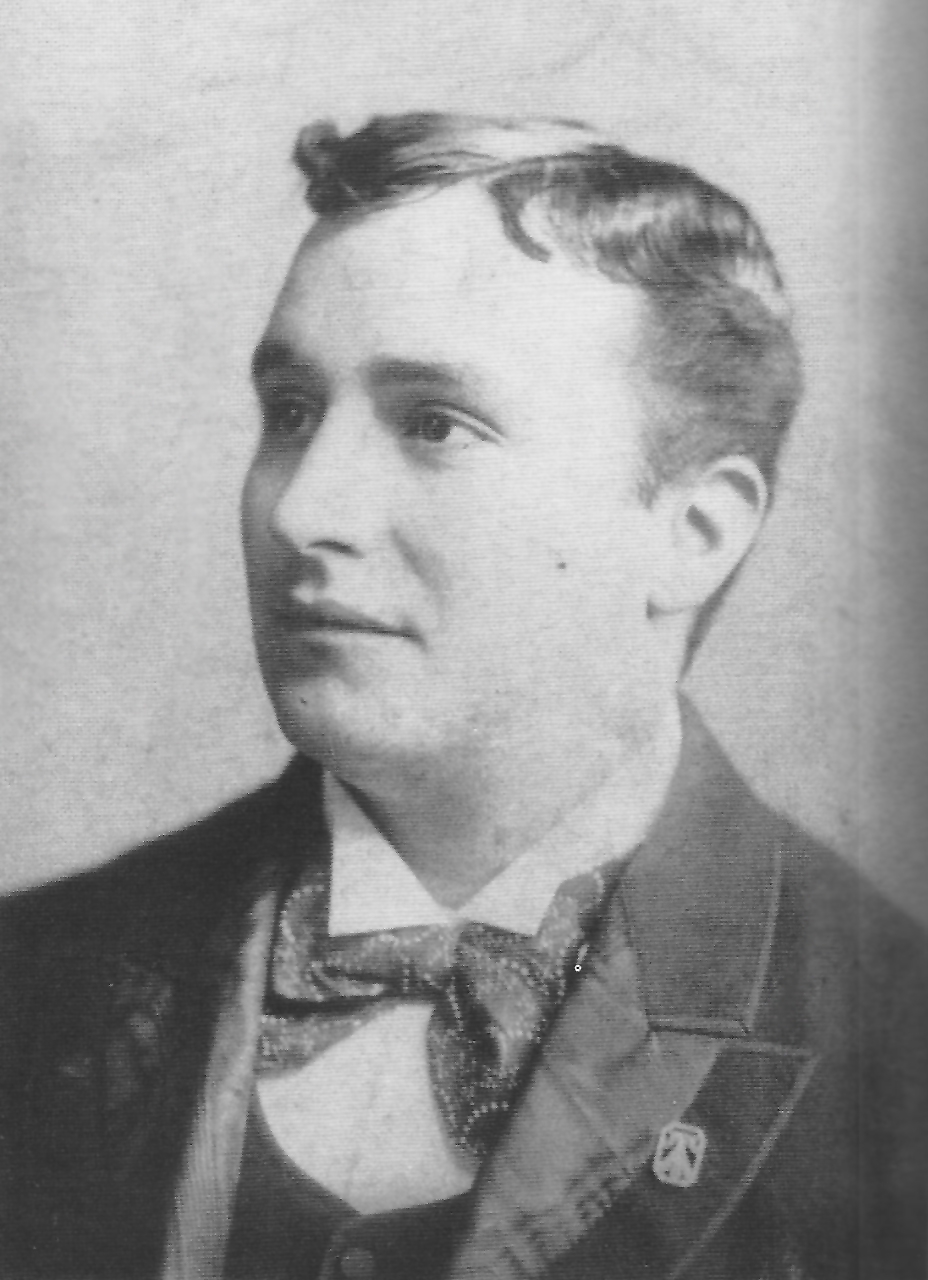
Charles Chaplin Sr
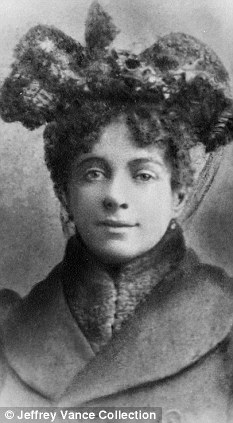
Hannah Chaplin
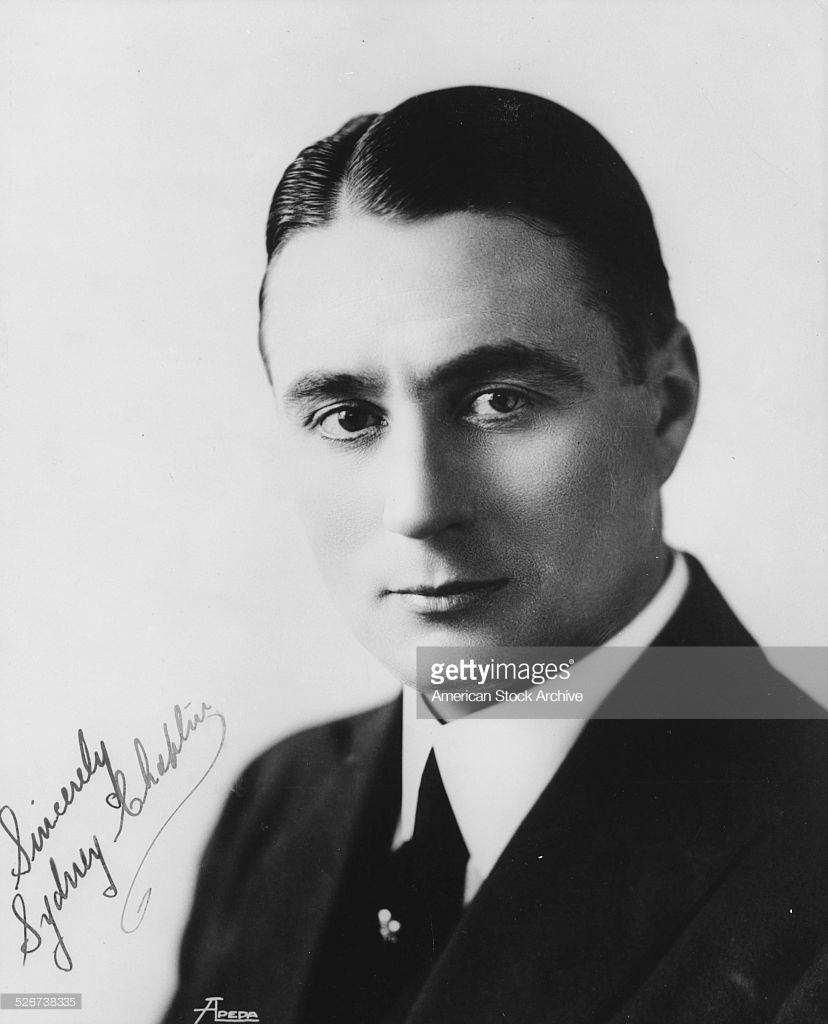
Sidney Chaplin
At the time of his birth, Chaplin’s parents were both music hall entertainers. Hannah, the daughter of a shoemaker, had a brief and unsuccessful career under the stage name Lily Harley, while Charles Sr., a butcher’s son, was a popular singer.
Although they never divorced, Chaplin’s parents were estranged by around 1891. The following year, Hannah gave birth to a third son – George Wheeler Dryden – fathered by the music hall entertainer Leo Dryden. The child was taken by Dryden at six months old, and did not re-enter Chaplin’s life for 30 years.
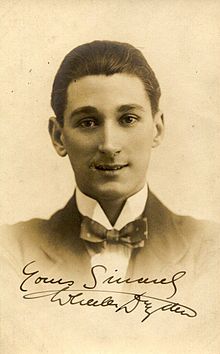
George Wheeler Dryden
Chaplin’s childhood was fraught with poverty and hardship, making his eventual trajectory “the most dramatic of all the rags to riches stories ever told” according to his authorised biographer David Robinson.
Chaplin’s early years were spent with his mother and brother Sydney in the London district of Kennington; Hannah had no means of income, other than occasional nursing and dressmaking, and Chaplin Sr. provided no financial support.
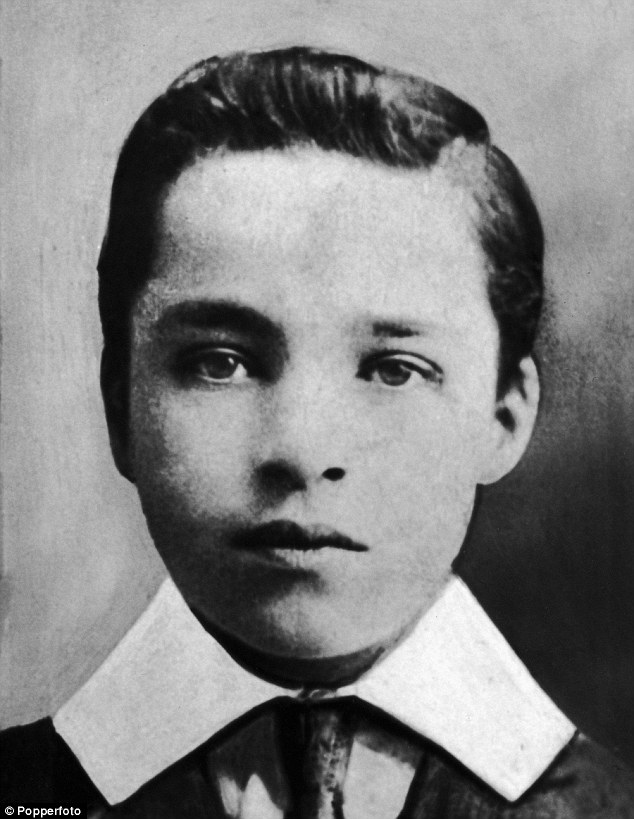
Young Charles Chaplin c 1901
As the situation deteriorated, Chaplin was sent to Lambeth Workhouse when he was seven years old. The council housed him at the Central London District School for paupers, which Chaplin remembered as “a forlorn existence”.
He was briefly reunited with his mother 18 months later, before Hannah was forced to readmit her family to the workhouse in July 1898. The boys were promptly sent to Norwood Schools, another institution for destitute children.
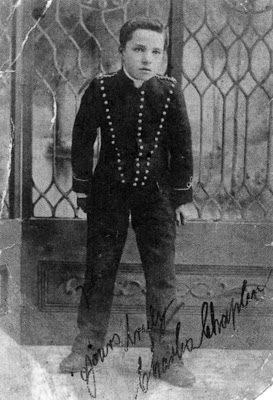
Young Charlie as Billy, the page boy, in Sherlock Holmes, 1903
– Chaplin on his childhood
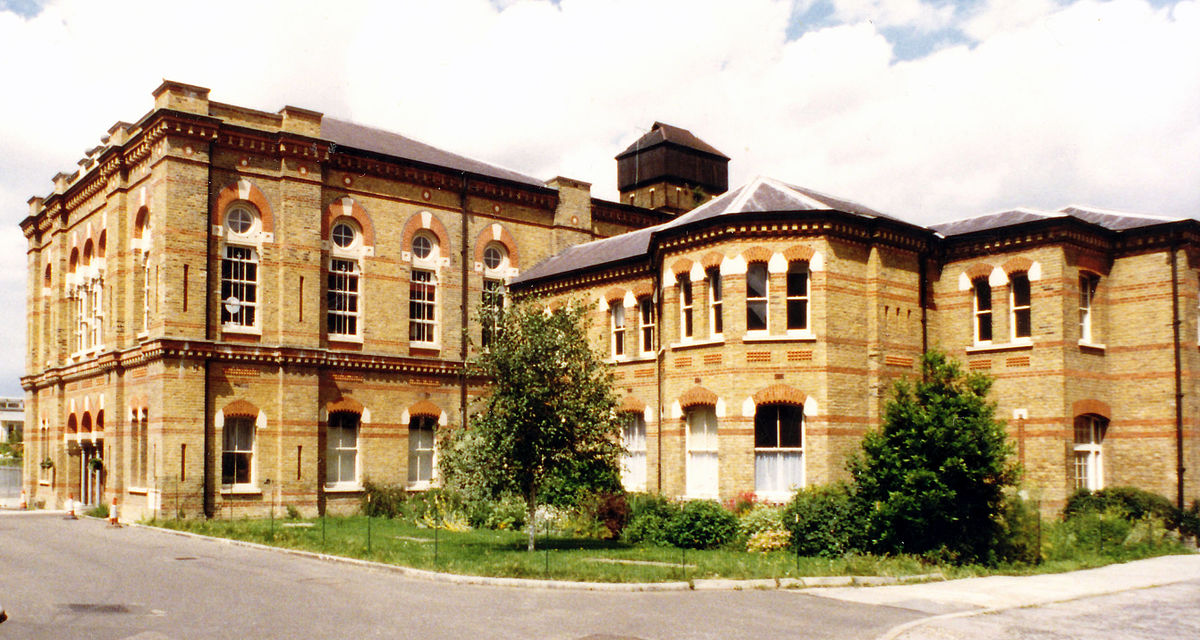
Lambeth Workhouse – The Cinema Museum is located there today
In September 1898, Hannah was committed to Cane Hill mental asylum – she had developed a psychosis seemingly brought on by an infection of syphilis and malnutrition. For the two months she was there, Chaplin and his brother Sydney were sent to live with their father, whom the young boys scarcely knew.
Charles Sr. was by then a severe alcoholic, and life there was bad enough to provoke a visit from the National Society for the Prevention of Cruelty to Children. Chaplin’s father died two years later, at 38 years old, from cirrhosis of the liver.
Hannah entered a period of remission but, in May 1903, became ill again. Chaplin, then 14, had the task of taking his mother to the infirmary, from where she was sent back to Cane Hill.
He lived alone for several days, searching for food and occasionally sleeping rough, until Sydney – who had enrolled in the Navy two years earlier – returned. Hannah was released from the asylum eight months later, but in March 1905, her illness returned, this time permanently. “There was nothing we could do but accept poor mother’s fate”, Chaplin later wrote, and she remained in care until her death in 1928.
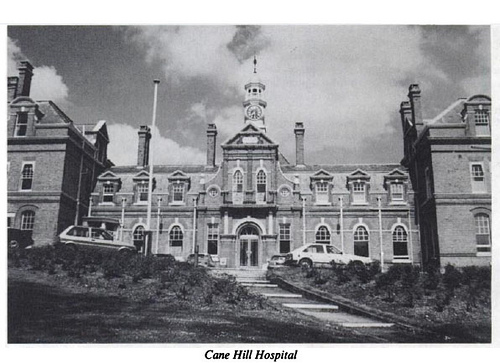
Cane Hill Hospital
Young performer
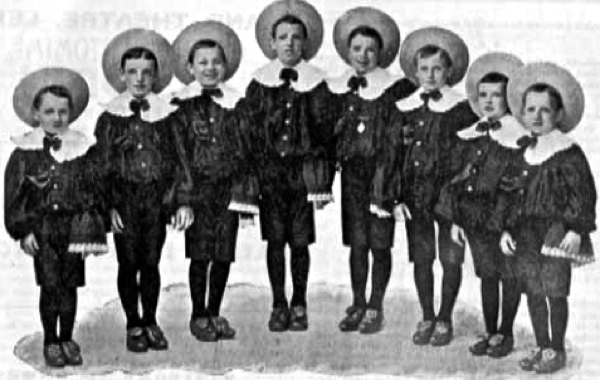
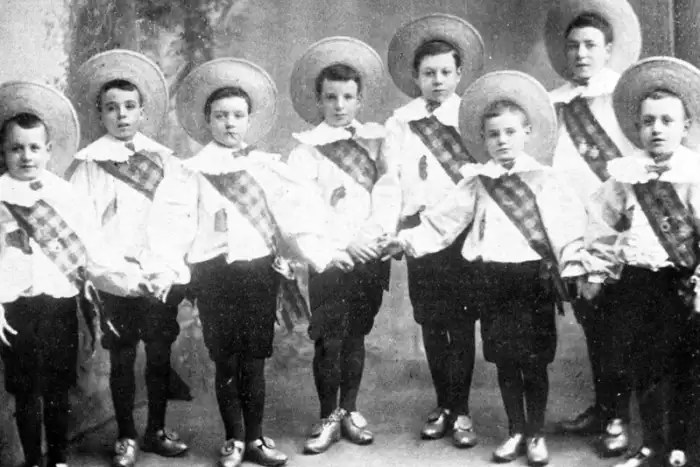
In the years Chaplin was touring with the Eight Lancashire Lads, his mother ensured that he still attended school but, by age 13, he had abandoned education. He supported himself with a range of jobs, while nursing his ambition to become an actor.
At 14, shortly after his mother’s relapse, he registered with a theatrical agency in London’s West End. The manager sensed potential in Chaplin, who was promptly given his first role as a newsboy in Harry Arthur Saintsbury‘s Jim, a Romance of Cockayne. It opened in July 1903, but the show was unsuccessful and closed after two weeks. Chaplin’s comic performance, however, was singled out for praise in many of the reviews.
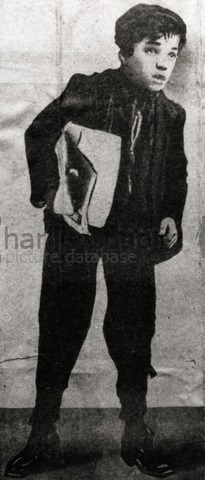
Charles Chaplin as Sammy in Jim A Romance of Cockayne c 1903
Saintsbury secured a role for Chaplin in Charles Frohman‘s production of Sherlock Holmes, where he played Billy the pageboy in three nationwide tours. His performance was so well received that he was called to London to play the role alongside William Gillette, the original Holmes.
“It was like tidings from heaven”, Chaplin recalled. At 16 years old, Chaplin starred in the play’s West End production at the Duke of York’s Theatre from October to December 1905. He completed one final tour of Sherlock Holmes in early 1906, before leaving the play after more than two-and-a-half years.
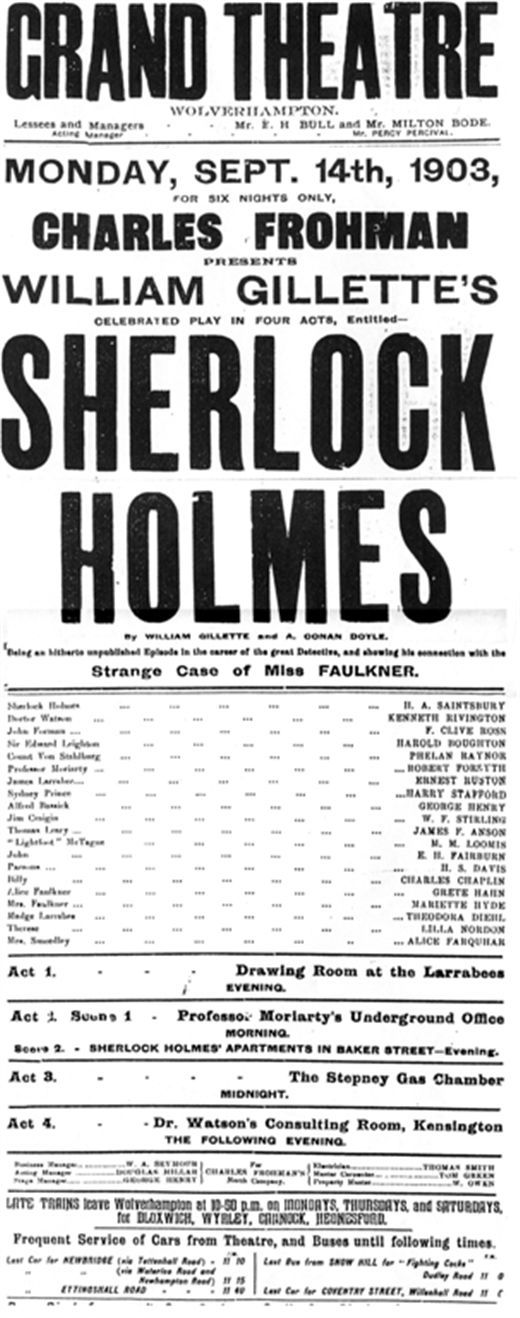
Charlie Chaplin 1903. Sherlock Holmes poster
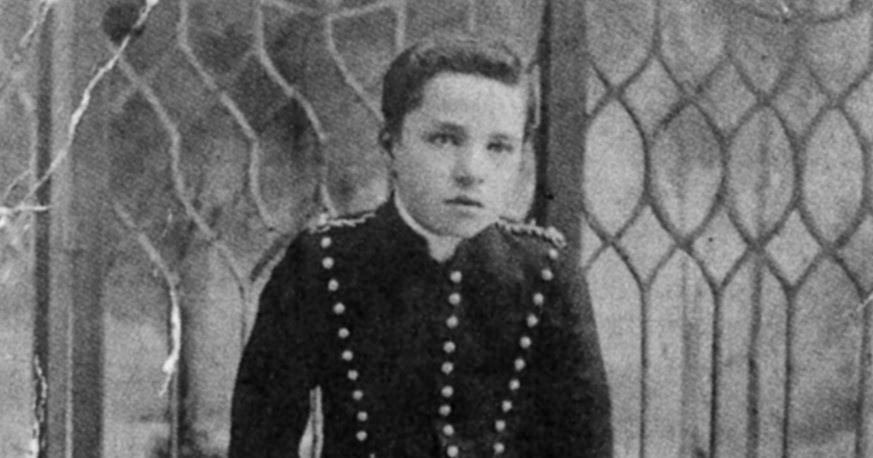
Young Charlie as Billy, the page boy, in Sherlock Holmes, 1903
Stage comedy and vaudeville
Chaplin soon found work with a new company, and went on tour with his brother – who was also pursuing an acting career – in a comedy sketch called Repairs.
In May 1906, Chaplin joined the juvenile act Casey’s Circus, where he developed popular burlesque pieces and was soon the star of the show. By the time the act finished touring in July 1907, the 18-year-old had become an accomplished comedic performer. He struggled to find more work, however, and a brief attempt at a solo act was a failure.
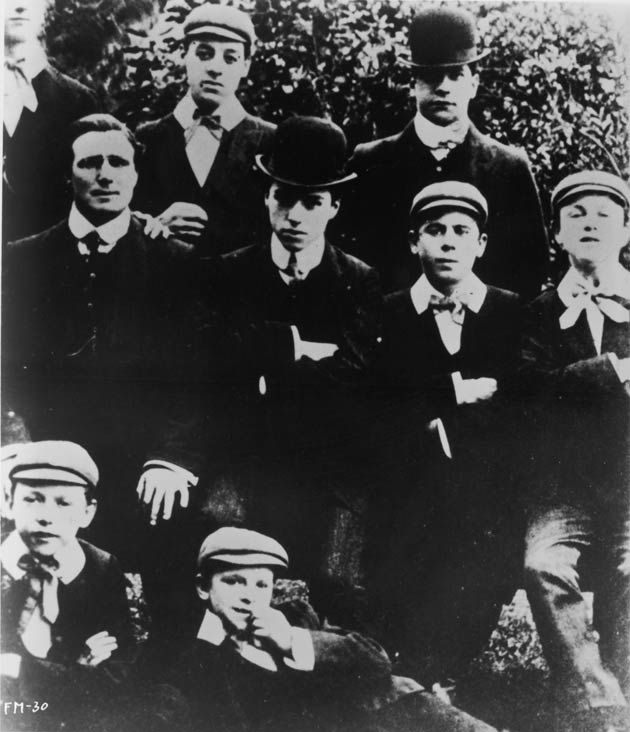
Image of the vaudeville troupe Casey’s Court Circus, with a young Charlie Chaplin
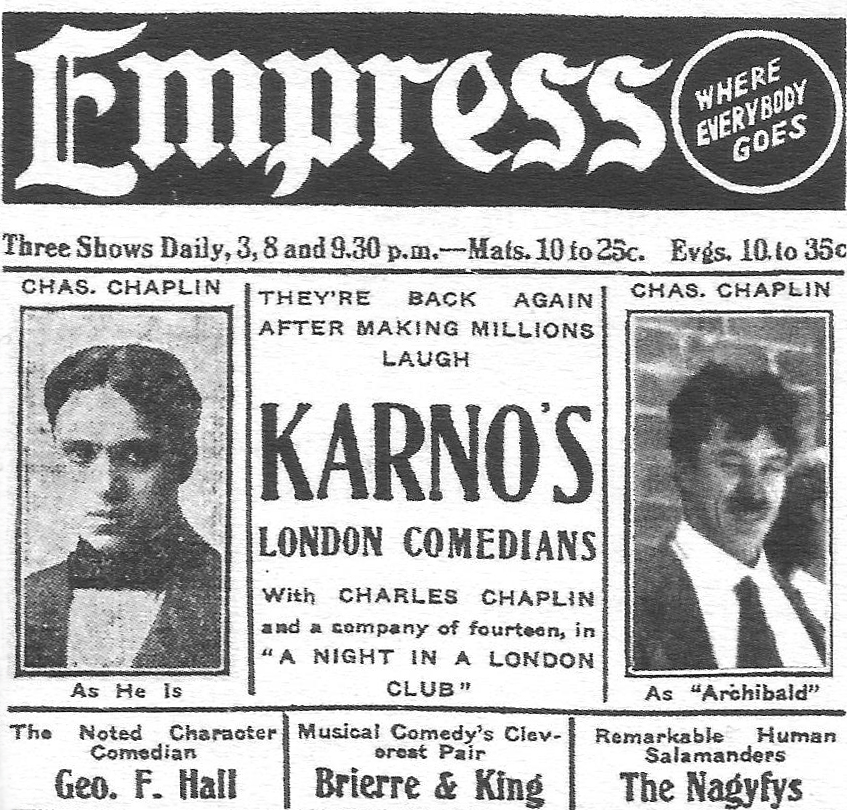
Karno selected his new star to join the section of the company, one that also included Stan Laurel, that toured North America’s vaudeville circuit.
The young comedian headed the show and impressed reviewers, being described as “one of the best pantomime artists ever seen here”.
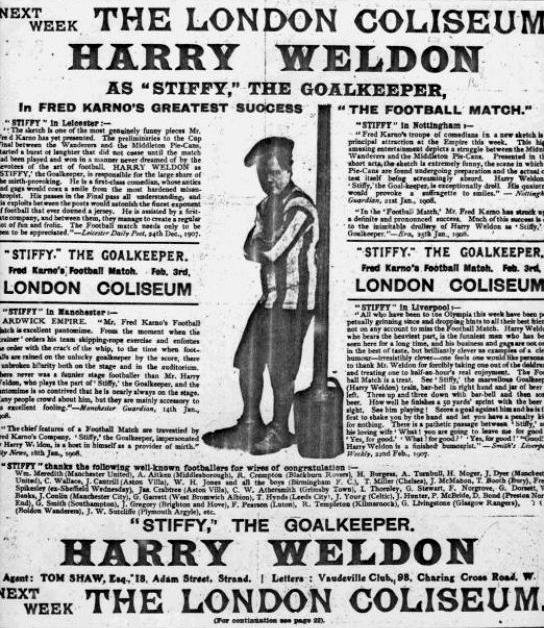
Fred Karno Comedy Company Poster – The London Coliseum
His most successful role was a drunk called the “Inebriate Swell”, which drew him significant recognition. The tour lasted 21 months, and the troupe returned to England in June 1912.
Chaplin recalled that he “had a disquieting feeling of sinking back into a depressing commonplaceness” and was, therefore, delighted when a new tour began in October.
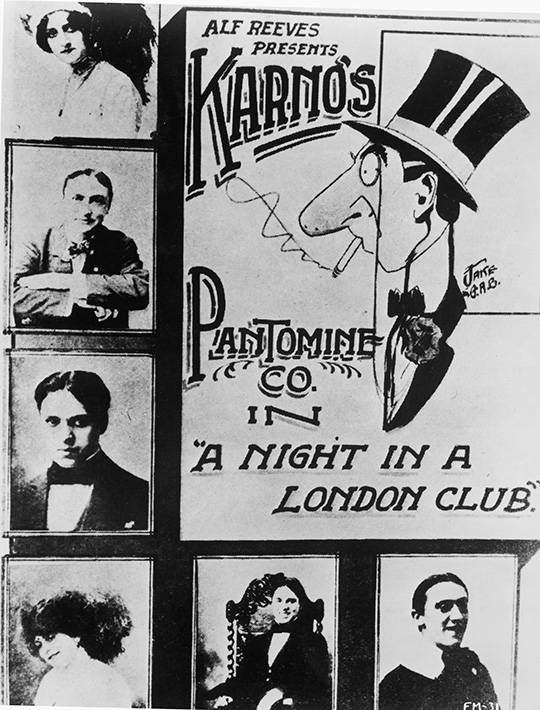
Fred Karno’s A Night In A London Club with Charles Chaplin
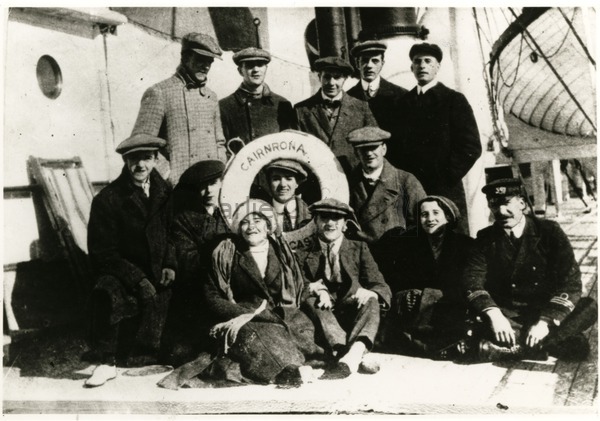
Charles Chaplin with Fred Karno’s Comedy Company
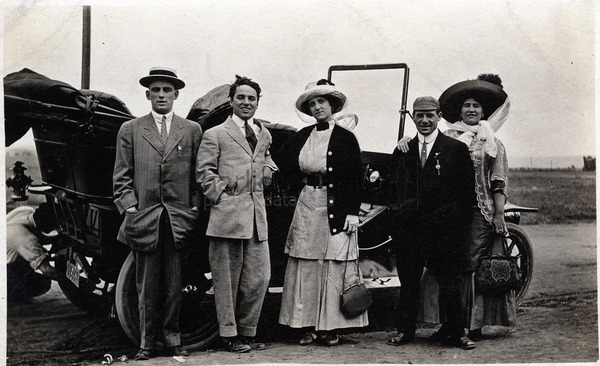
Charles Chaplin with Fred Karno’s Comedy Company

Fred Karno, Jr., Chaplin, Arthur Dando, Albert Austin, and Stan Laurel
1914–1917: Entering films
Keystone
Six months into the second American tour, Chaplin was invited to join the New York Motion Picture Company. A representative who had seen his performances thought he could replace Fred Mace, a star of their Keystone Studios who intended to leave.
Chaplin thought the Keystone comedies “a crude mélange of rough and rumble”, but liked the idea of working in films and rationalised: “Besides, it would mean a new life.”
He met with the company and signed a $150-per-week ($3,714 in 2017 dollars) contract in September 1913.
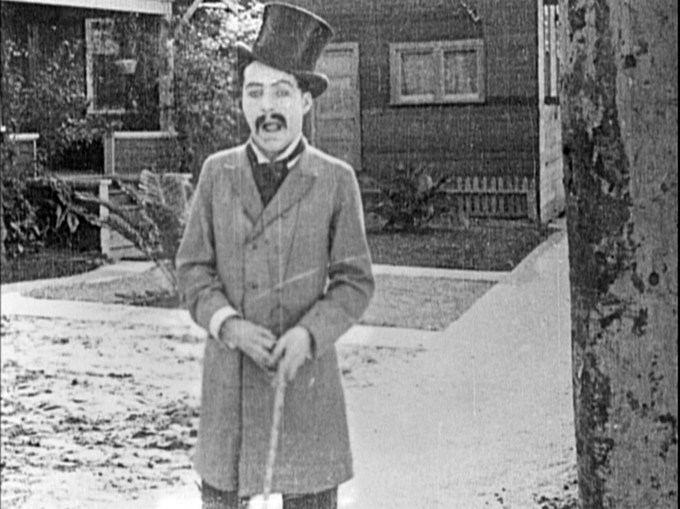
Chaplin arrived in Los Angeles, home of the Keystone studio, in early December 1913. His boss was Mack Sennett, who initially expressed concern that the 24-year-old looked too young.
He was not used in a picture until late January, during which time Chaplin attempted to learn the processes of filmmaking. The one-reeler Making a Living marked his film acting debut and was released on 2 February 1914. Chaplin strongly disliked the picture, but one review picked him out as “a comedian of the first water”. For his second appearance in front of the camera, Chaplin selected the costume with which he became identified. He described the process in his autobiography:
“I wanted everything to be a contradiction: the pants baggy, the coat tight, the hat small and the shoes large … I added a small moustache, which, I reasoned, would add age without hiding my expression. I had no idea of the character. But the moment I was dressed, the clothes and the makeup made me feel the person he was. I began to know him, and by the time I walked on stage he was fully born.”
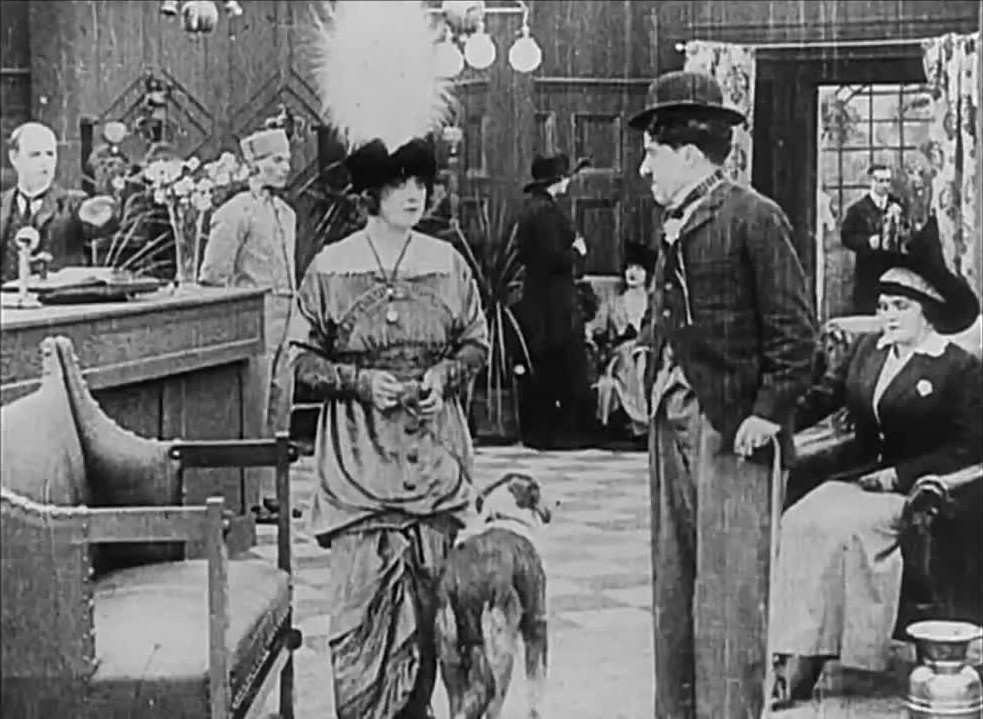
Charles Chaplin and Mabel Normand in Mabel’s Strange Predicament (Mabel Normand, 1914)
The film was Mabel’s Strange Predicament, but “the Tramp” character, as it became known, debuted to audiences in Kid Auto Races at Venice – shot later than Mabel’s Strange Predicament but released two days earlier.
Chaplin adopted the character as his screen persona and attempted to make suggestions for the films he appeared in. These ideas were dismissed by his directors. During the filming of his eleventh picture, Mabel at the Wheel, he clashed with director Mabel Normand and was almost released from his contract.
Sennett kept him on, however, when he received orders from exhibitors for more Chaplin films. Sennett also allowed Chaplin to direct his next film himself after Chaplin promised to pay $1,500 ($37,141 in 2017 dollars) if the film was unsuccessful.
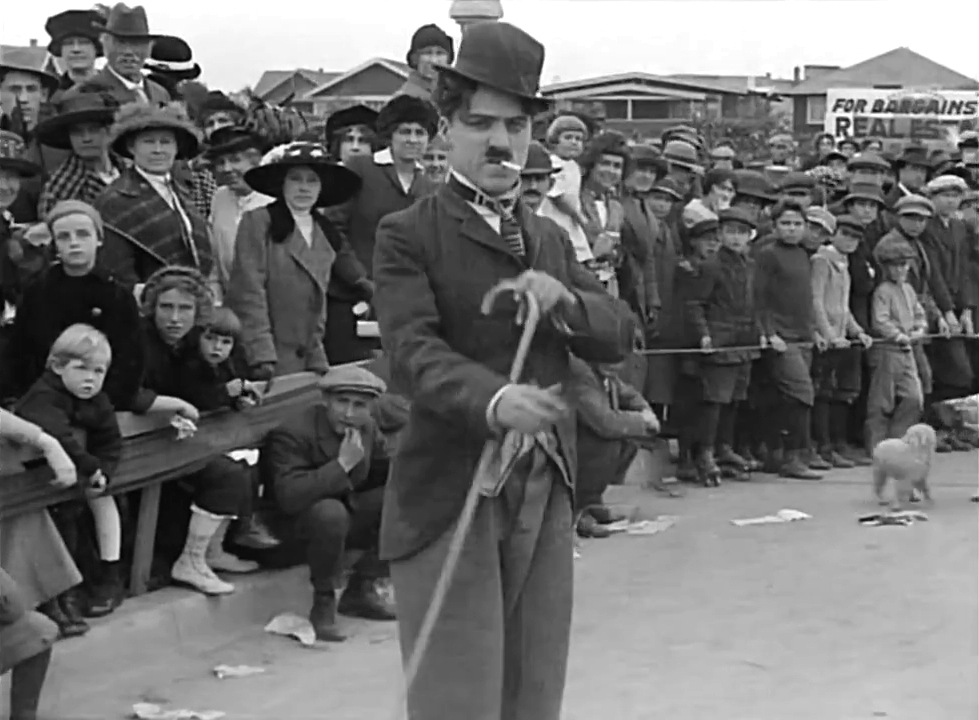
Charles Chaplin in Kid Auto Races at Venice (Henry Lehrman, 1914) The Tramp’s first screen appearance
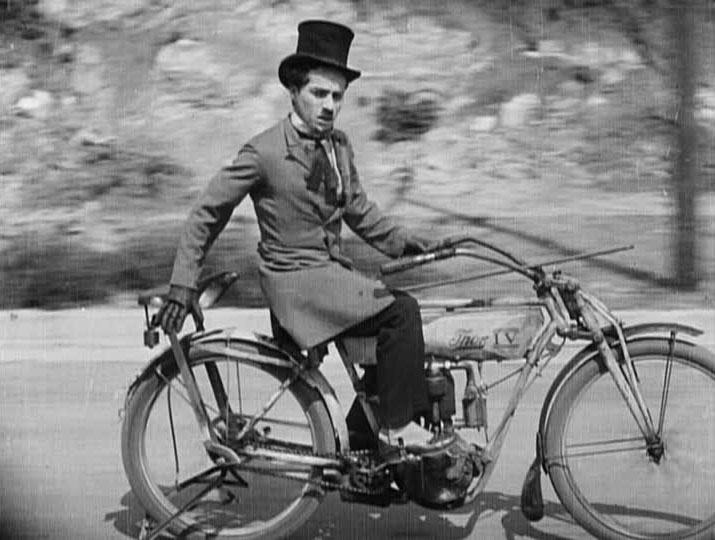
Charles Chaplin in Mabel at the Wheel (Mabel Normand and Mack Sennett, 1914)
Caught in the Rain, issued 4 May 1914, was Chaplin’s directorial debut and was highly successful.
Thereafter he directed almost every short film in which he appeared for Keystone, at the rate of approximately one per week, a period which he later remembered as the most exciting time of his career. Chaplin’s films introduced a slower form of comedy than the typical Keystone farce, and he developed a large fan base.
In November 1914, he had a supporting role in the first feature length comedy film, Tillie’s Punctured Romance, directed by Sennett and starring Marie Dressler, which was a commercial success and increased his popularity. When Chaplin’s contract came up for renewal at the end of the year, he asked for $1,000 a week ($24,761 in 2017 dollars) – an amount Sennett refused as too large.
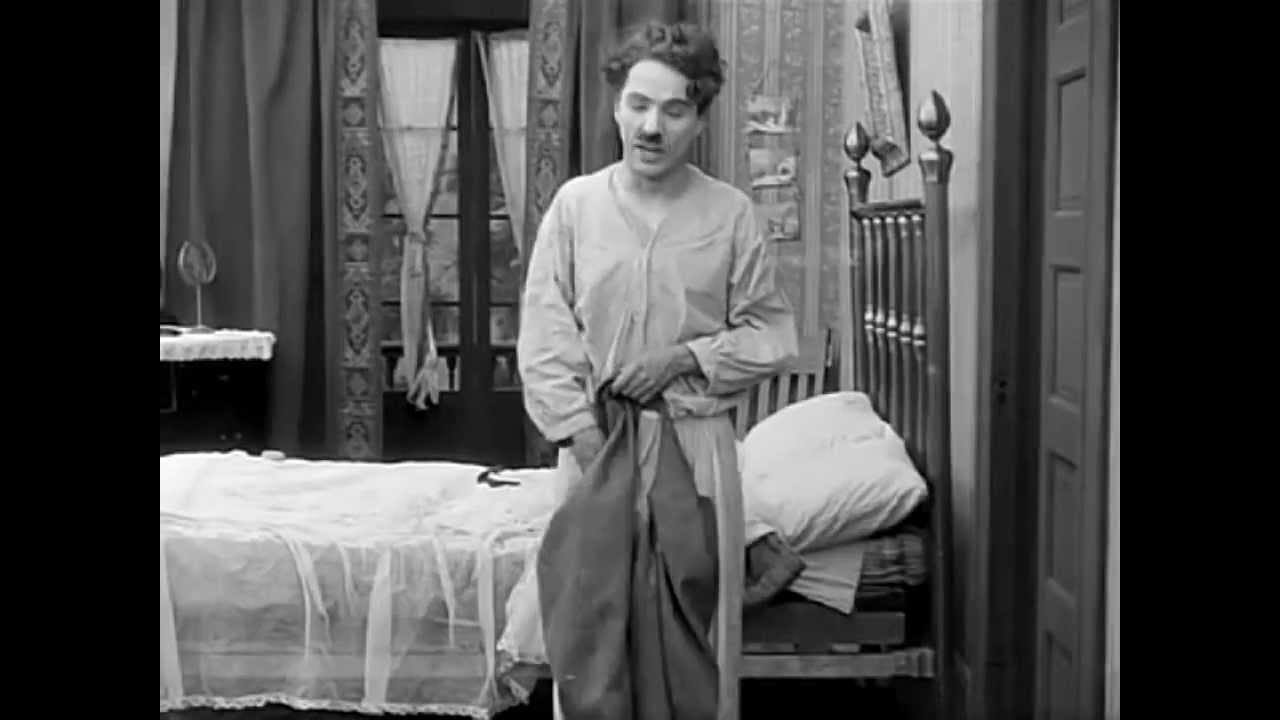
Charles Chaplin in Caught in the Rain (Charles Chaplin, 1914) – Chaplin’s Directorial Debut
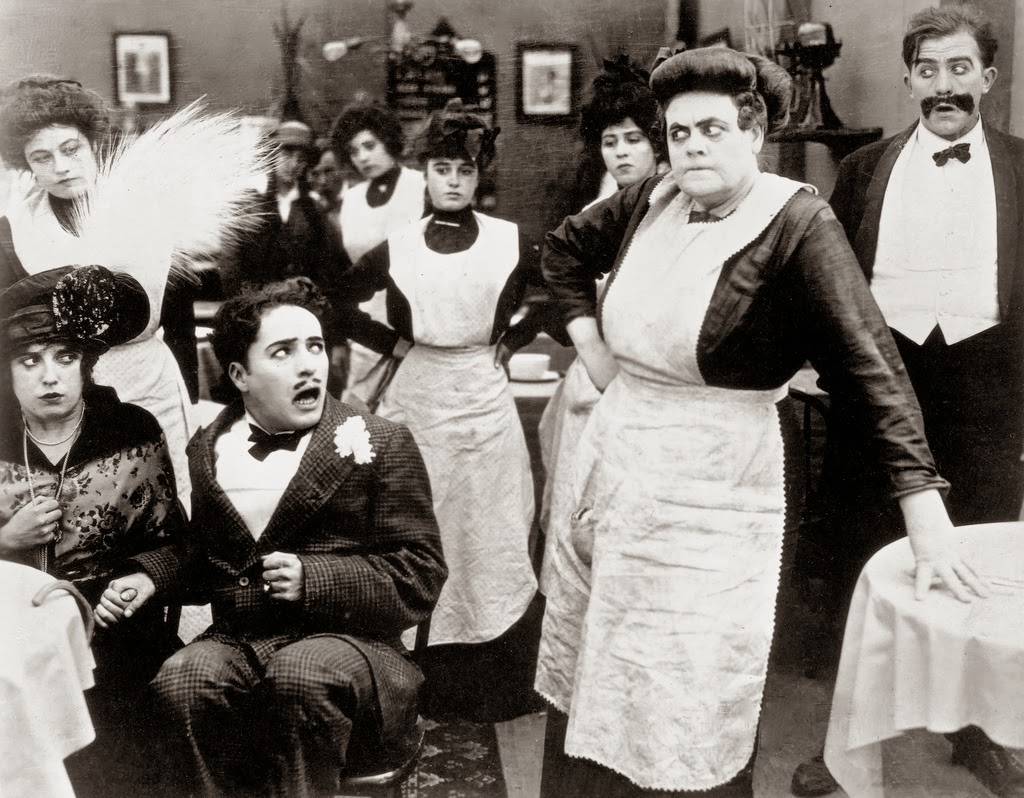
Charles Chaplin and Marie Dressler in Tillie’s Punctured Romance (Mack Sennett, Charles Bennett, 1914) – Chaplin’s First Feature Film
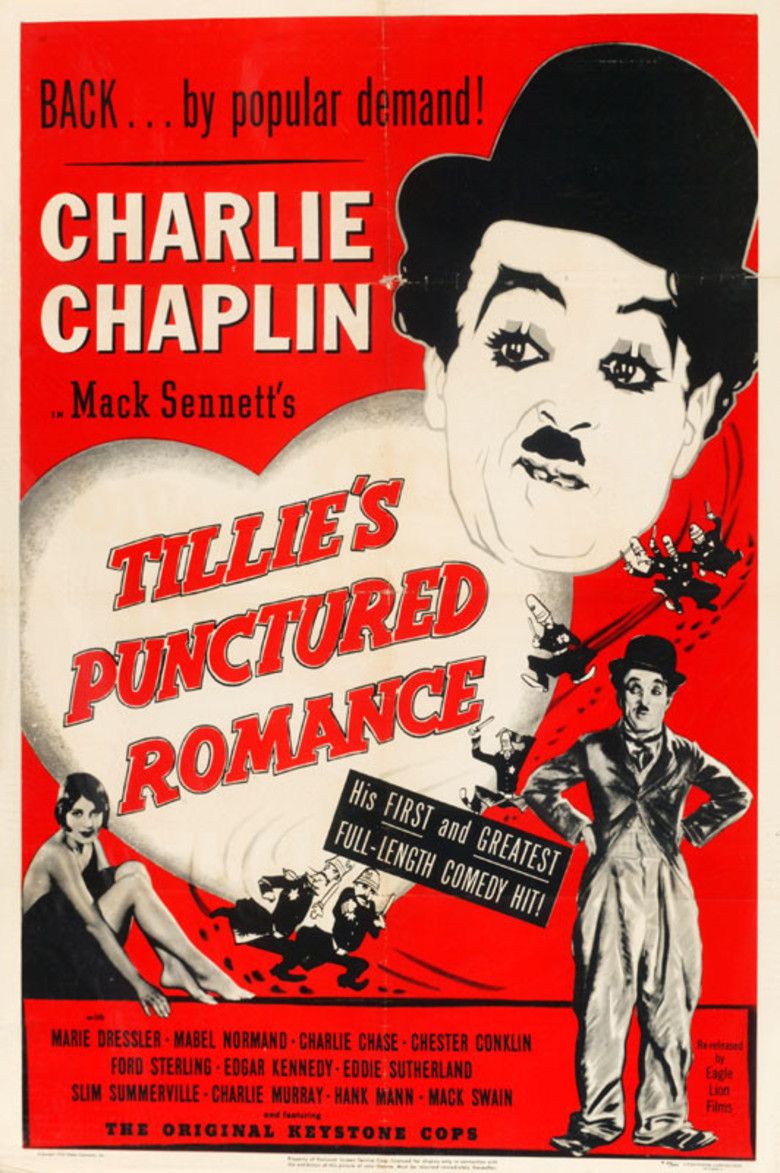
Poster for Tillie’s Punctured Romance (Mack Sennett, Charles Bennett, 1914) – Chaplin’s First Feature Film
Essanay
The Essanay Film Manufacturing Company of Chicago sent Chaplin an offer of $1,250 a week with a signing bonus of $10,000.
He joined the studio in late December 1914, where he began forming a stock company of regular players, including Leo White, Bud Jamison, Paddy McGuire and Billy Armstrong. He soon recruited a leading lady – Edna Purviance, whom Chaplin met in a cafe and hired on account of her beauty.
She went on to appear in 35 films with Chaplin over eight years; the pair also formed a romantic relationship that lasted into 1917.
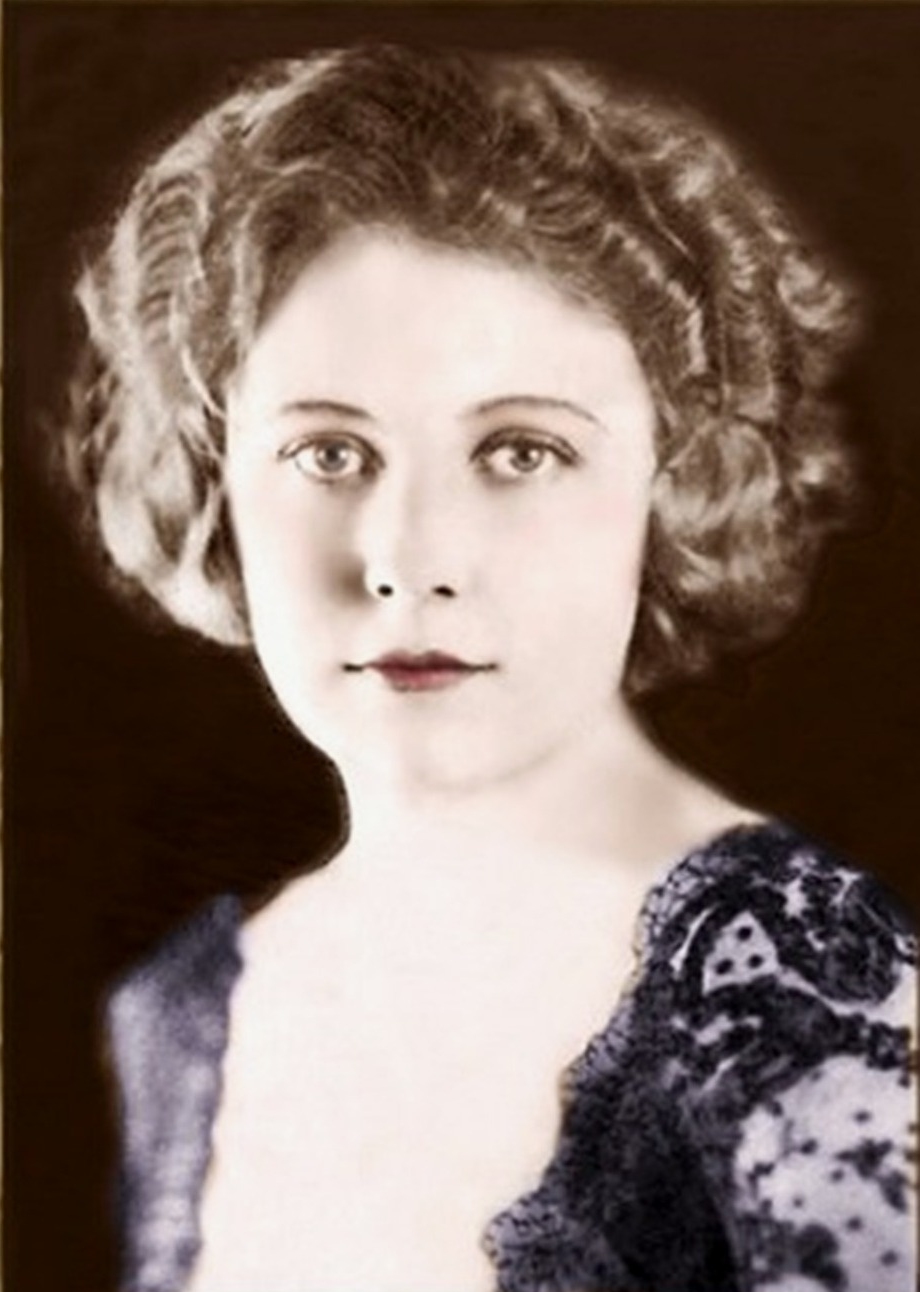
Edna Purviance
Chaplin asserted a high level of control over his pictures and started to put more time and care into each film.
There was a month-long interval between the release of his second production, A Night Out, and his third, The Champion. The final seven of Chaplin’s 14 Essanay films were all produced at this slower pace.
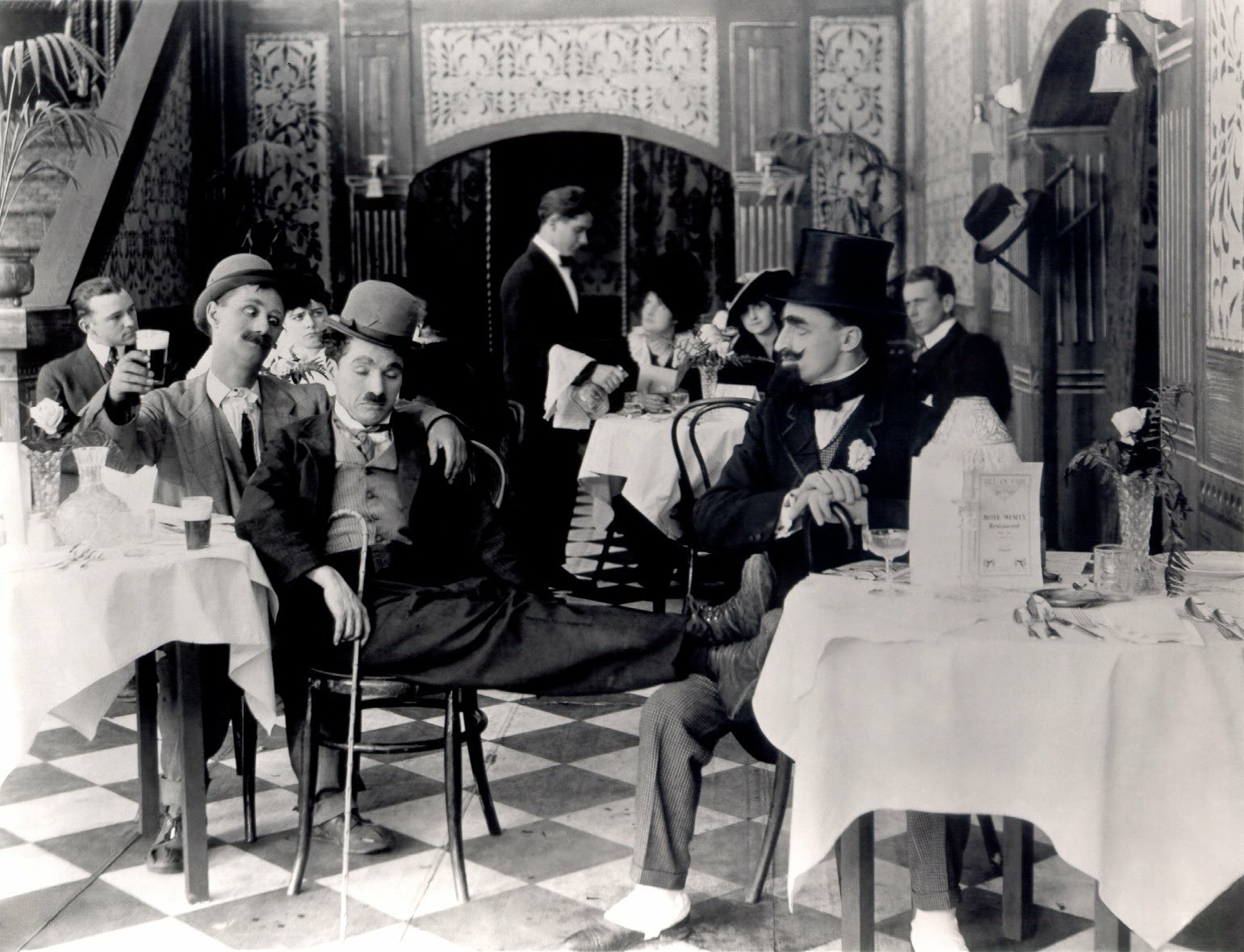
Charles Chaplin in A Night Out (Charles Chaplin, 1915)
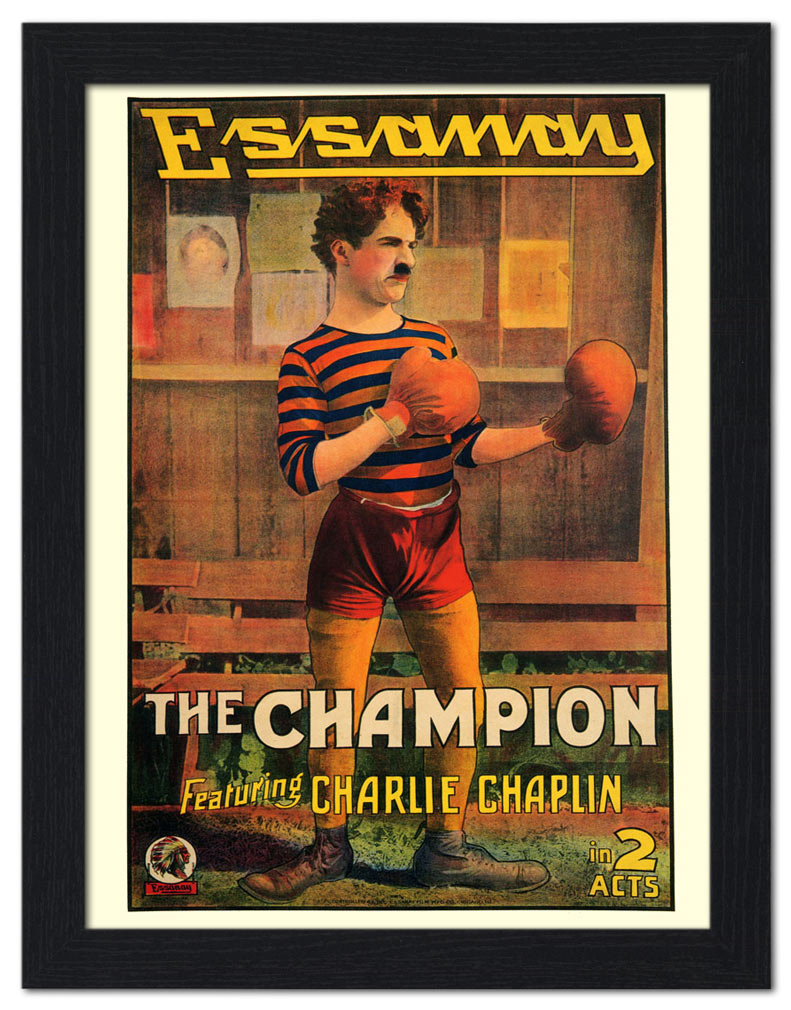
Poster for The Champion (Charles Chaplin, 1915)
Chaplin also began to alter his screen persona, which had attracted some criticism at Keystone for its “mean, crude, and brutish” nature. The character became more gentle and romantic; The Tramp (April 1915) was considered a particular turning point in his development.
The use of pathos was developed further with The Bank, in which Chaplin created a sad ending. Robinson notes that this was an innovation in comedy films, and marked the time when serious critics began to appreciate Chaplin’s work. At Essanay, writes film scholar Simon Louvish, Chaplin “found the themes and the settings that would define the Tramp’s world.”
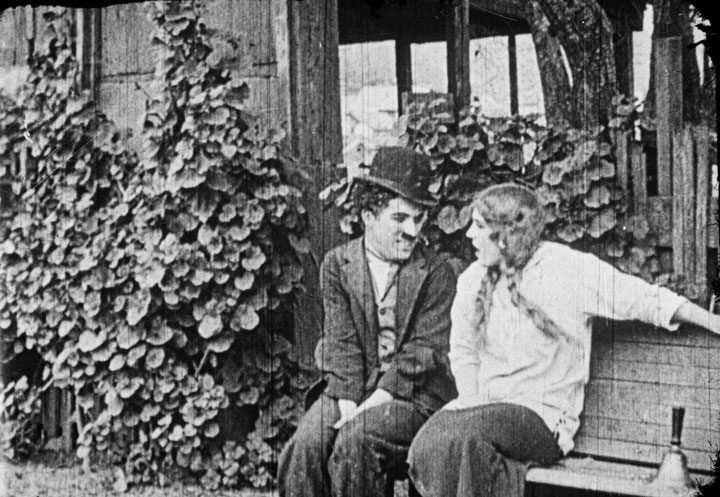
Charles Chaplin and Edna Purviance in The Tramp (Charles Chaplin, 1915)
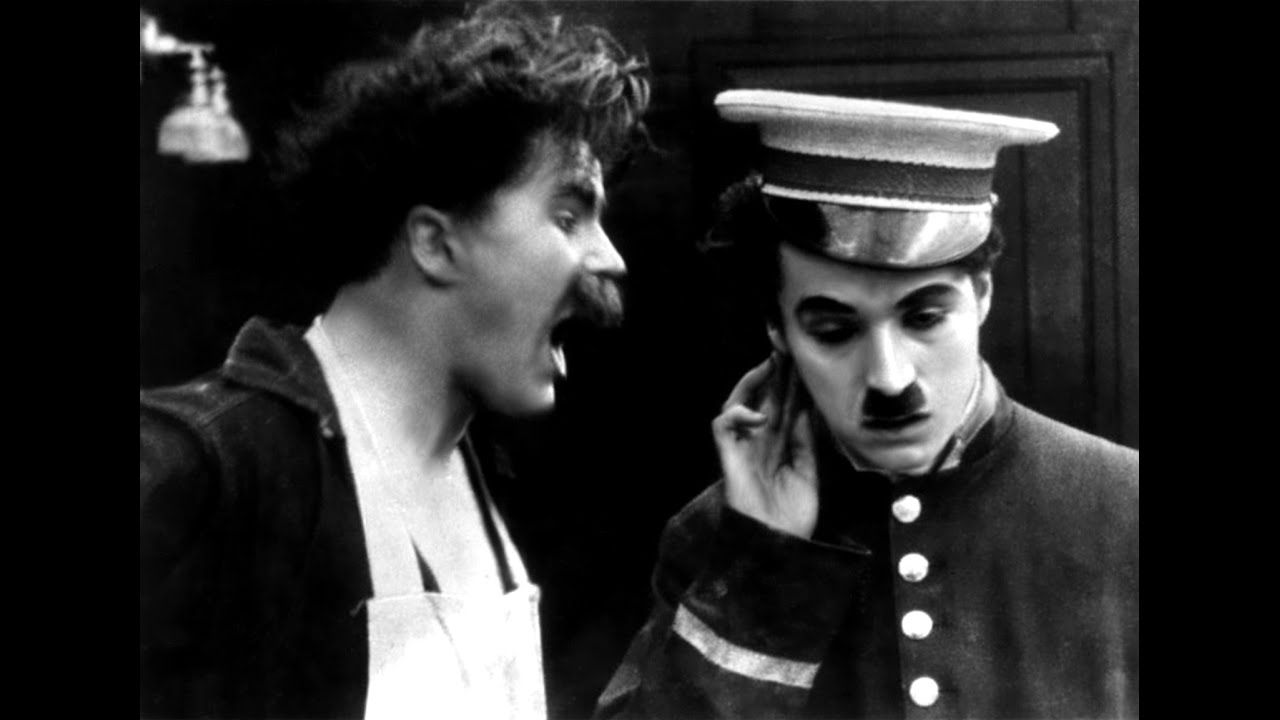
Charles Chaplin in The Bank (Charles Chaplin, 1915)
During 1915, Chaplin became a cultural phenomenon. Shops were stocked with Chaplin merchandise, he was featured in cartoons and comic strips, and several songs were written about him. In July, a journalist for Motion Picture Magazine wrote that “Chaplinitis” had spread across America.
As his fame grew worldwide, he became the film industry’s first international star. When the Essanay contract ended in December 1915, Chaplin – fully aware of his popularity – requested a $150,000 signing bonus from his next studio. He received several offers, including Universal, Fox, and Vitagraph, the best of which came from the Mutual Film Corporation at $10,000 a week.
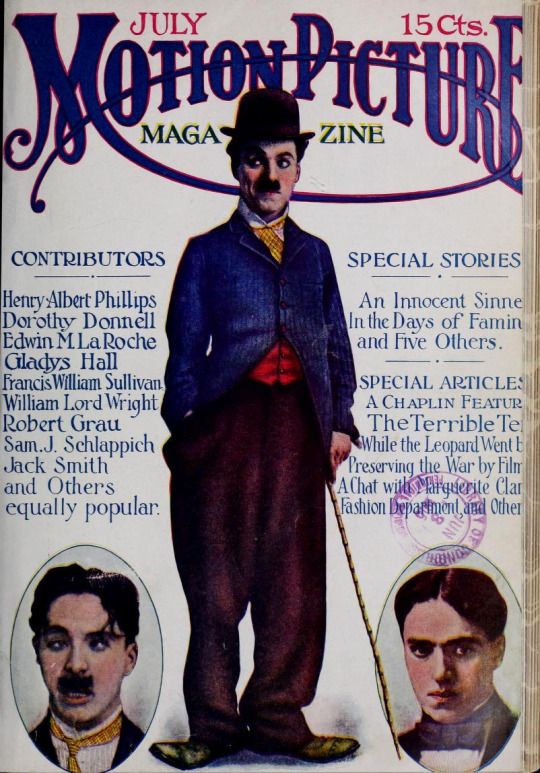
Charles Chaplin on the cover of Motion Pictures Magazine
Mutual
A contract was negotiated with Mutual that amounted to $670,000 a year, which Robinson says made Chaplin – at 26 years old – one of the highest paid people in the world.
The high salary shocked the public and was widely reported in the press. John R. Freuler, the studio president, explained: “We can afford to pay Mr. Chaplin this large sum annually because the public wants Chaplin and will pay for him.”
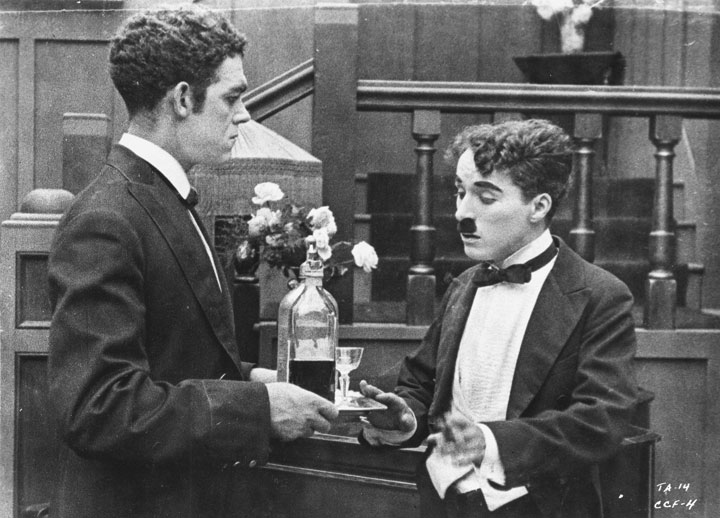
Albert Austin and Charles Chaplin in The Adventurer (Charles Chaplin, 1917)
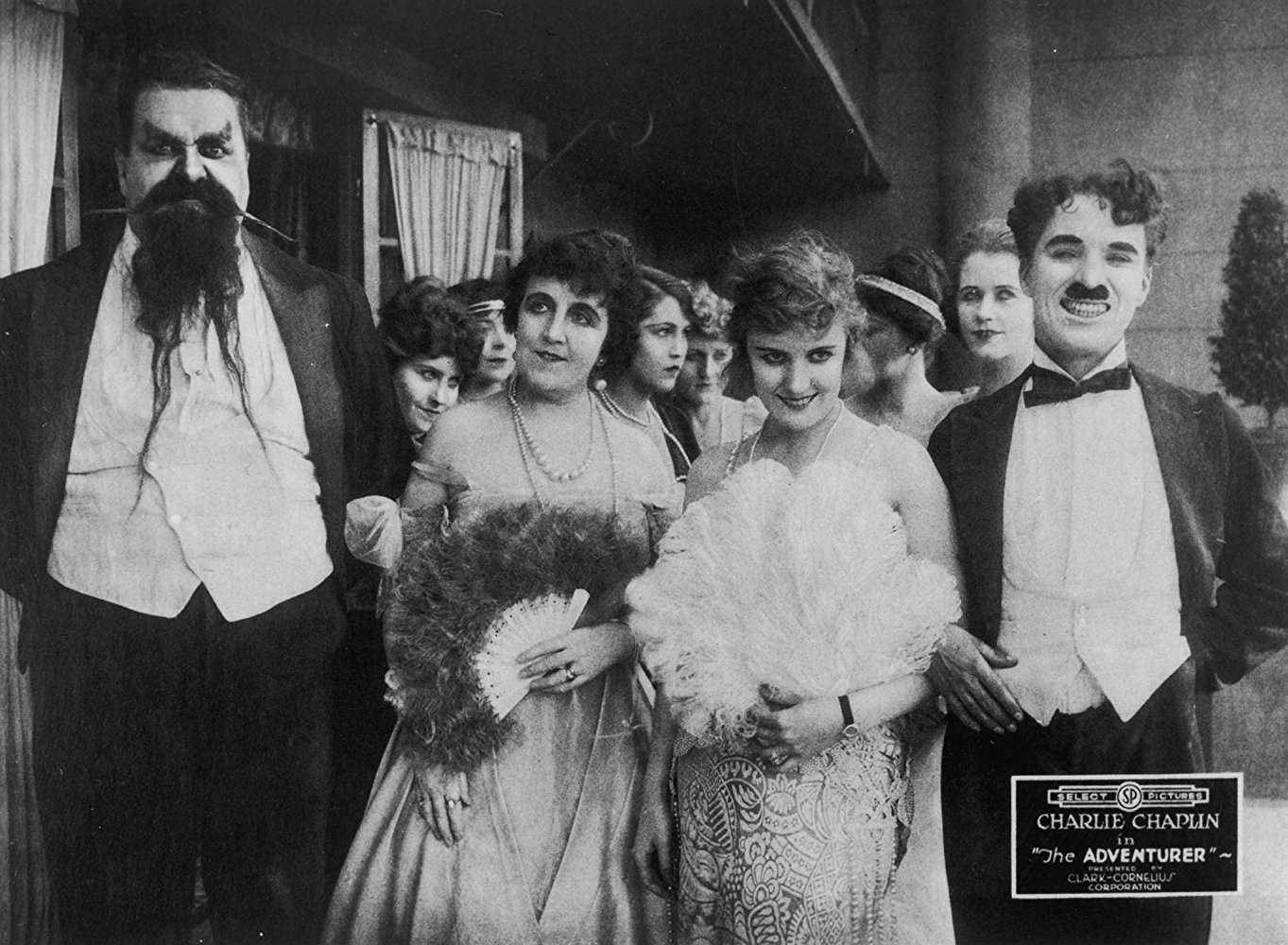
Eric Campbell and Charles Chaplin in The Adventurer (Charles Chaplin, 1917)
Mutual gave Chaplin his own Los Angeles studio to work in, which opened in March 1916. He added two key members to his stock company, Albert Austin and Eric Campbell, and produced a series of elaborate two-reelers: The Floorwalker, The Fireman, The Vagabond, One A.M., and The Count. For The Pawnshop, he recruited the actor Henry Bergman, who was to work with Chaplin for 30 years.
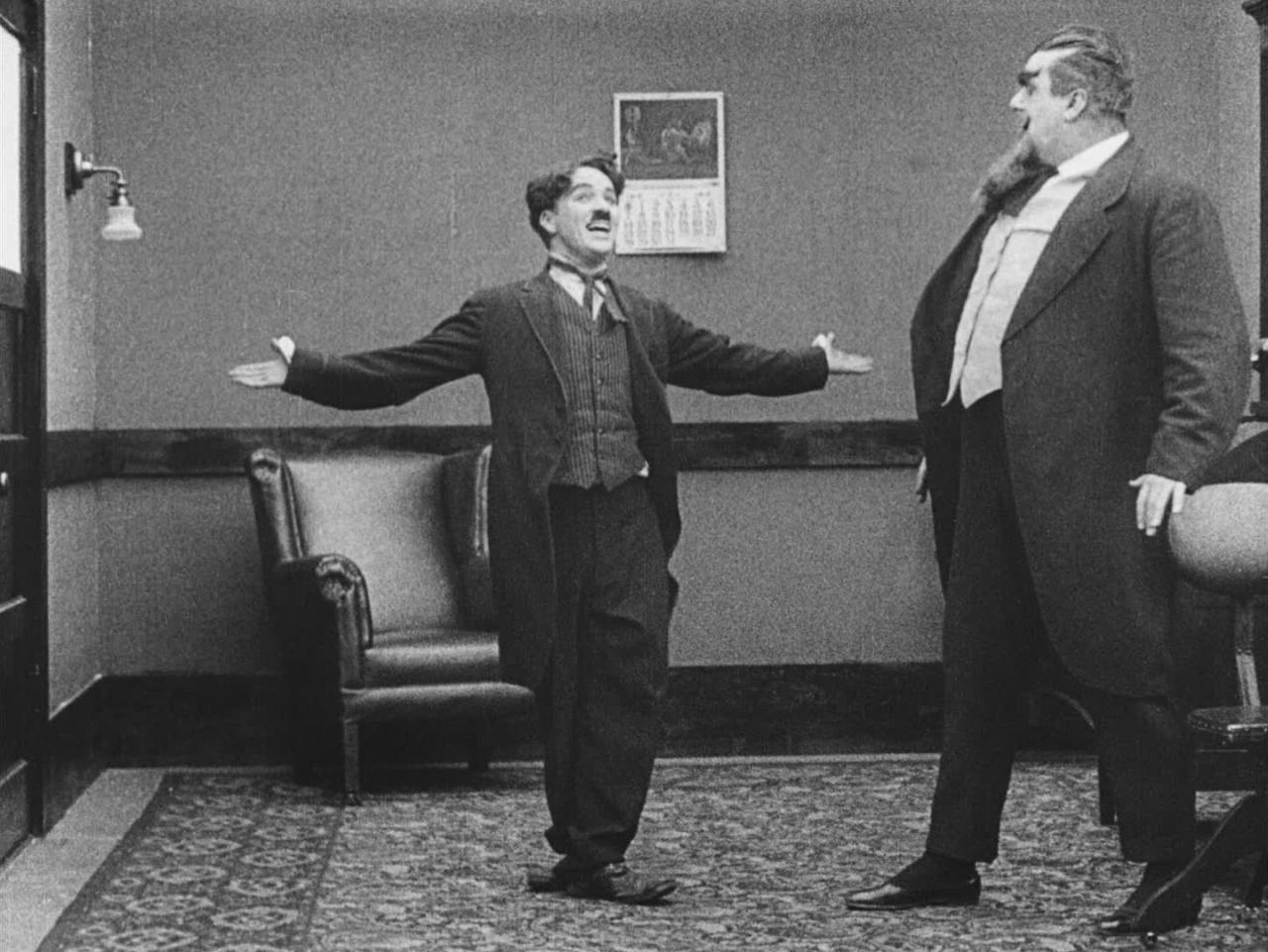
Charles Chaplin and Eric Campbell in The Floorwalker (Charles Chaplin, 1916)
Behind the Screen and The Rink completed Chaplin’s releases for 1916. The Mutual contract stipulated that he release a two-reel film every four weeks, which he had managed to achieve. With the new year, however, Chaplin began to demand more time. He made only four more films for Mutual over the first ten months of 1917: Easy Street, The Cure, The Immigrant, and The Adventurer.
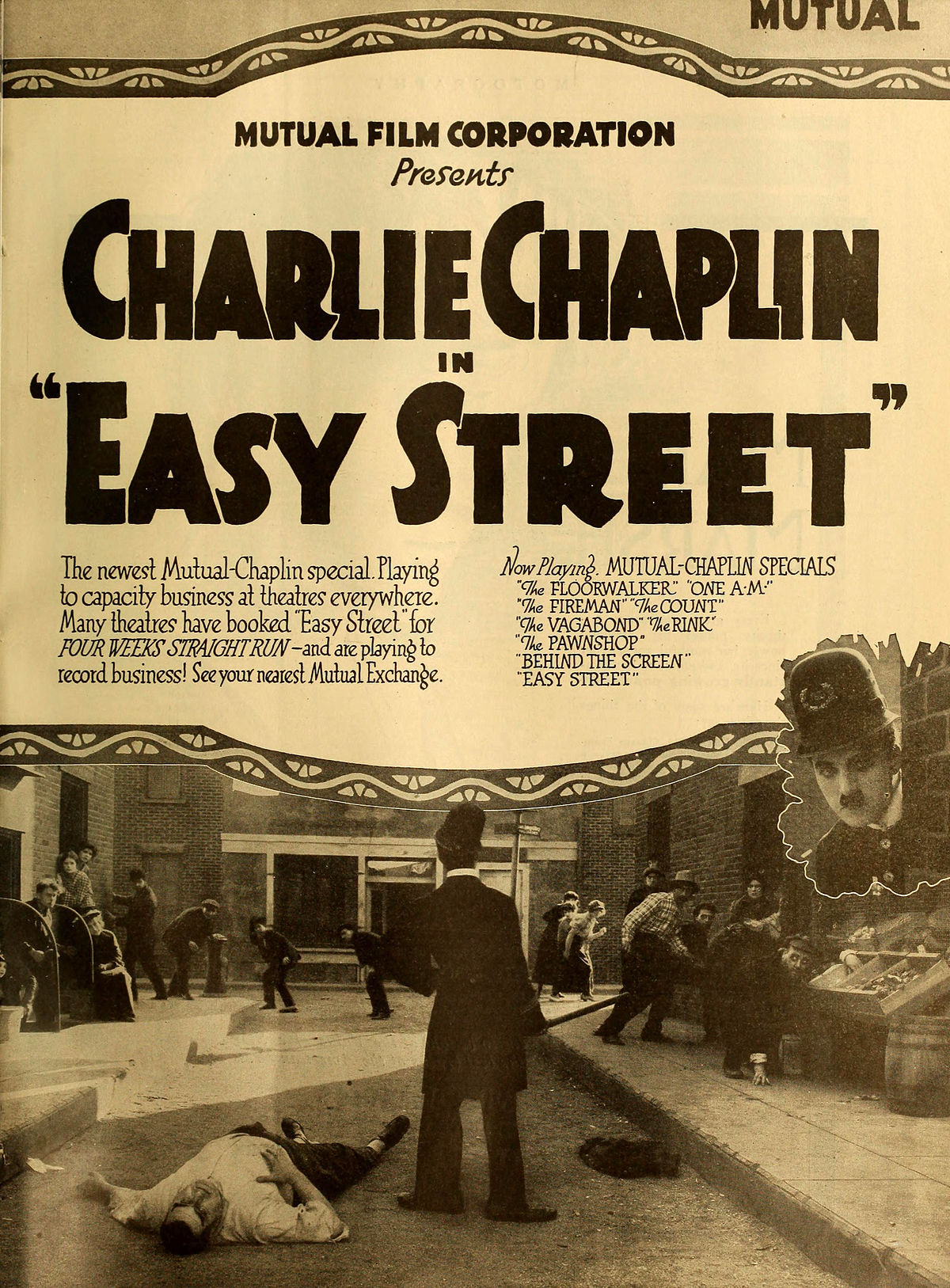
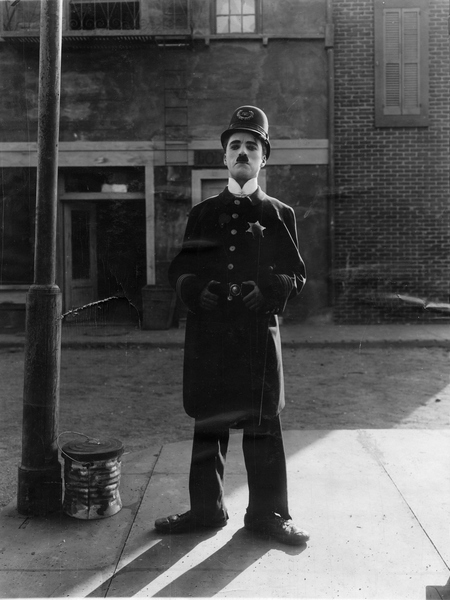
Charles Chaplin in Easy Street (1917)
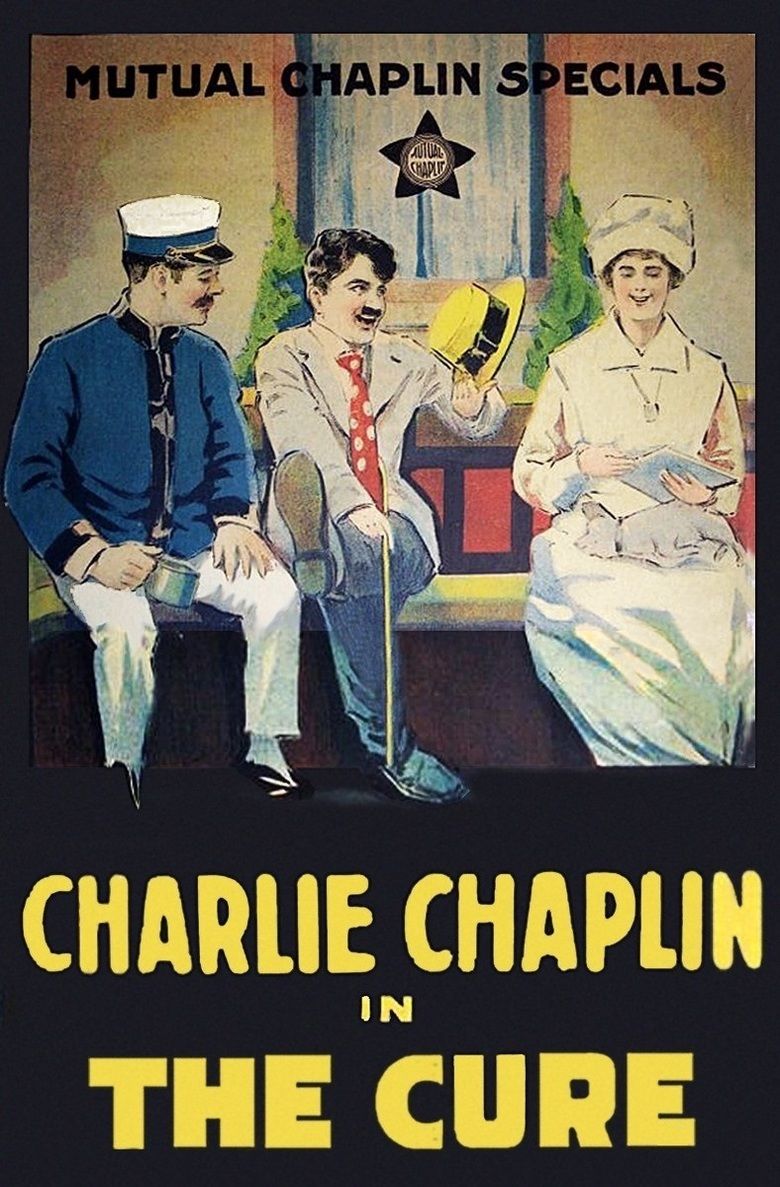
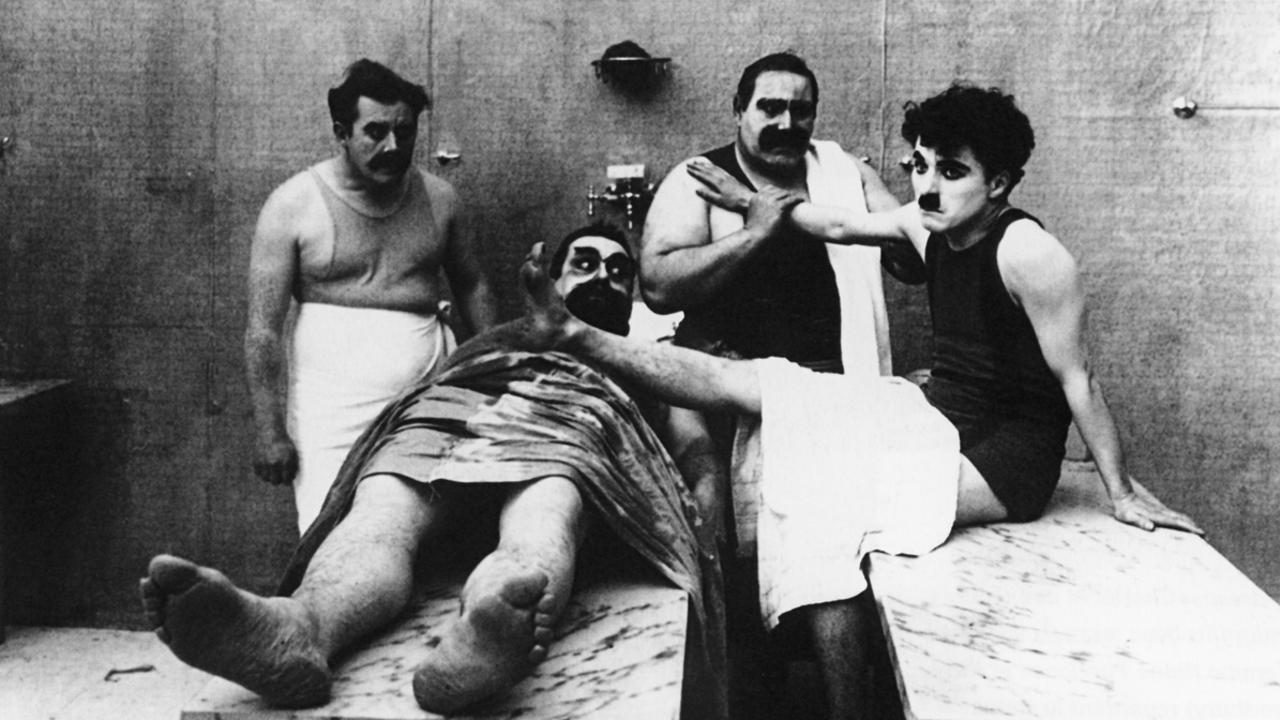
Charles Chaplin in The Cure (1917)
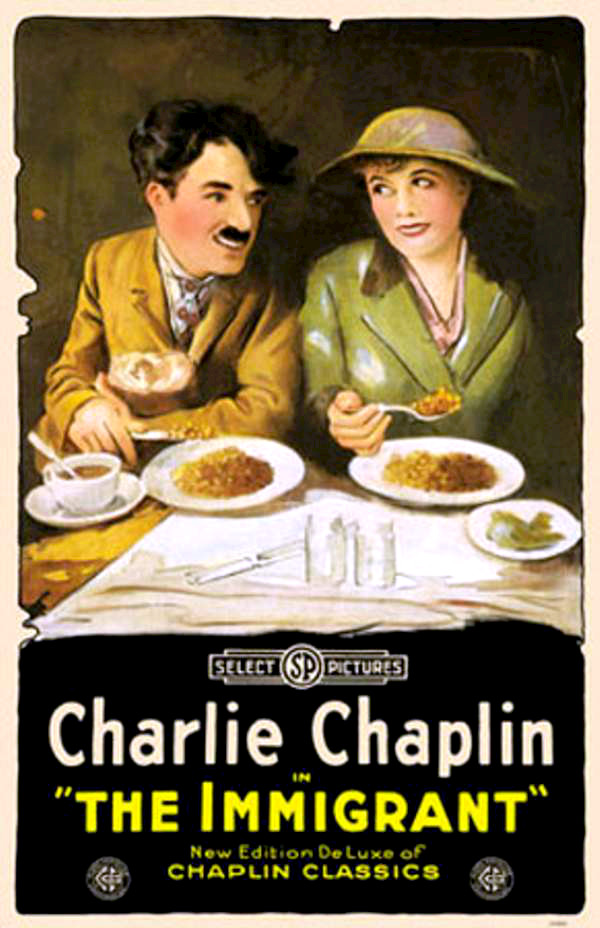
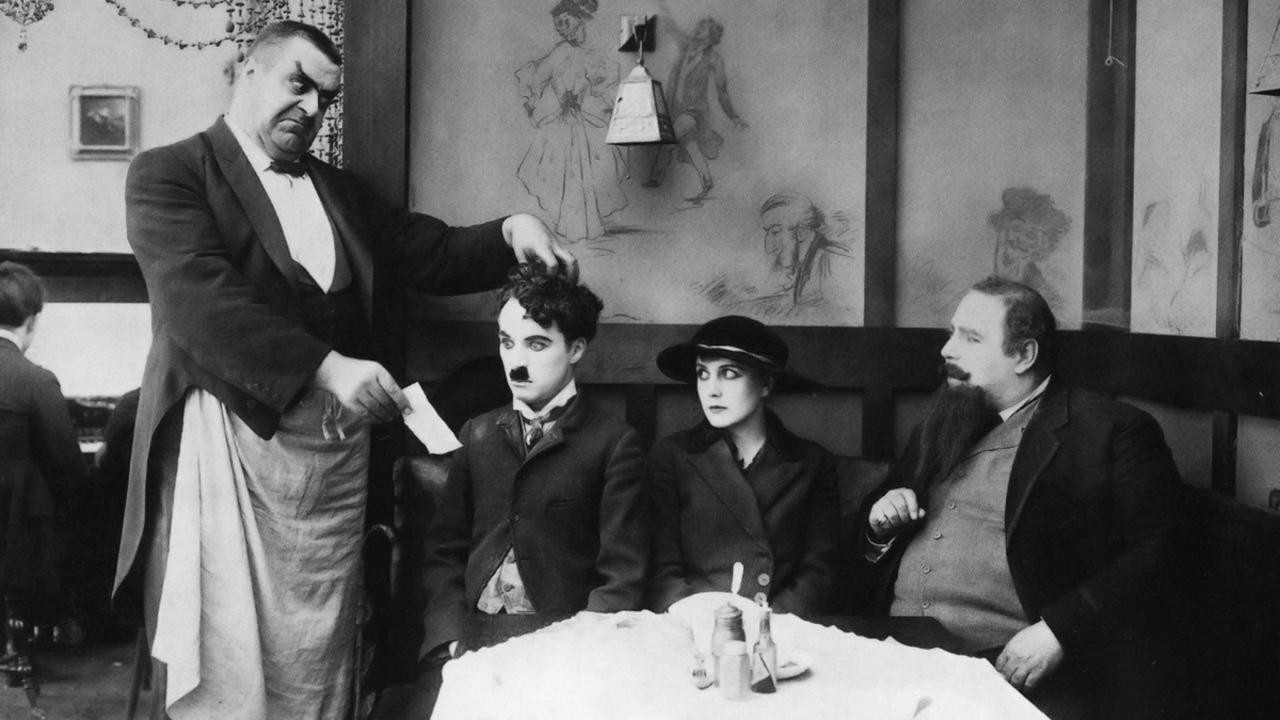
Charles Chaplin in The Immigrant (1917)
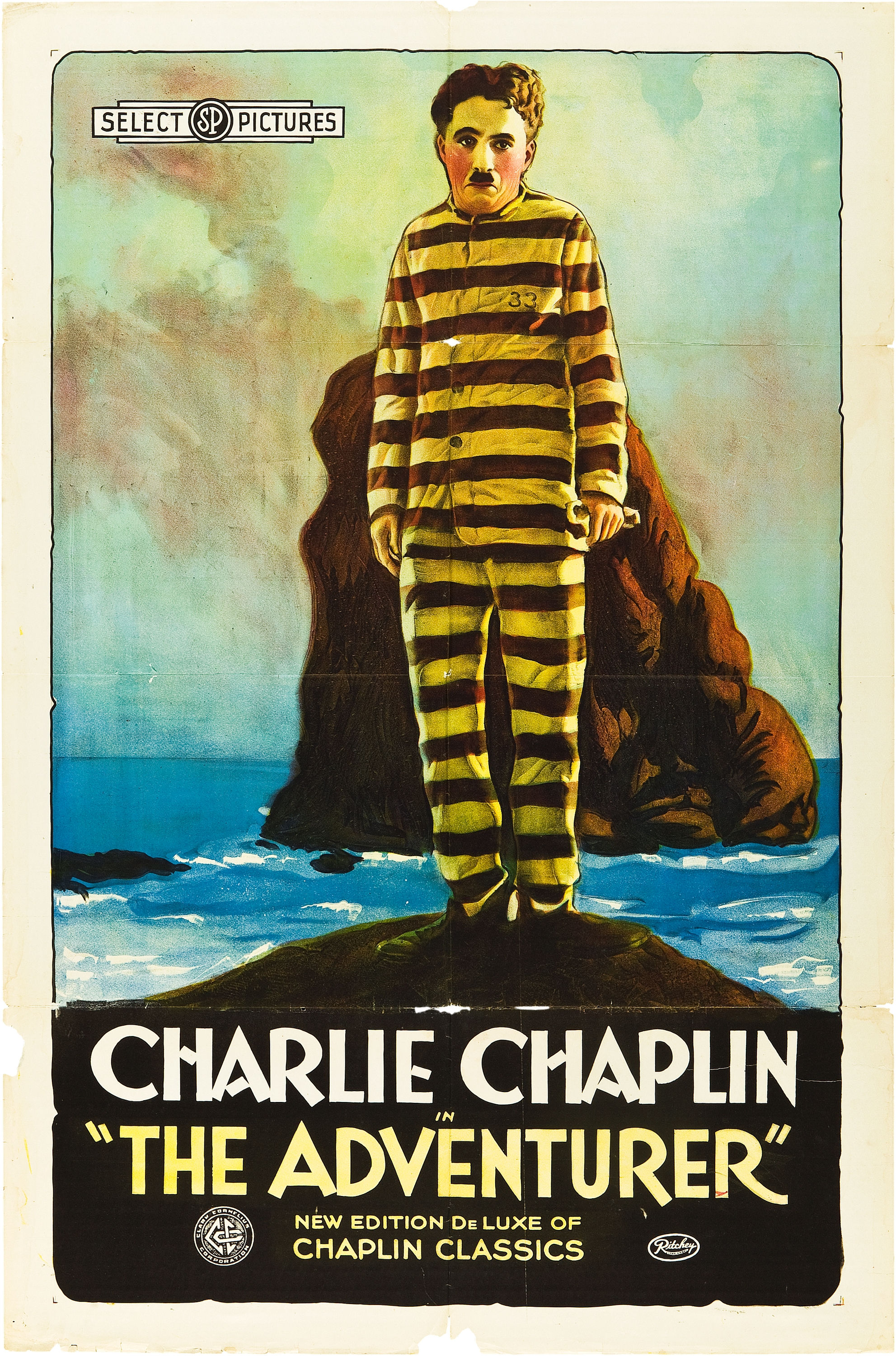
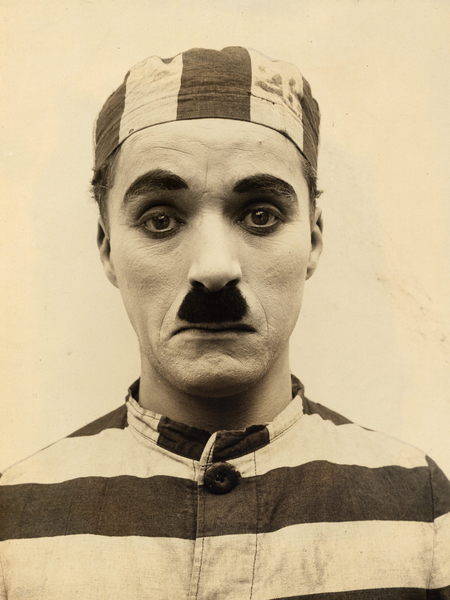
Charles Chaplin in The Adventurer (1917)
With their careful construction, these films are considered by Chaplin scholars to be among his finest work. Later in life, Chaplin referred to his Mutual years as the happiest period of his career. However, Chaplin also felt that those films became increasingly formulaic over the period of the contract and he was increasingly dissatisfied with the working conditions encouraging that.
Chaplin was attacked in the British media for not fighting in the First World War. He defended himself, revealing that he would fight for Britain if called and had registered for the American draft, but he was not summoned by either country.
Despite this criticism Chaplin was a favourite with the troops, and his popularity continued to grow worldwide. Harper’s Weekly reported that the name of Charlie Chaplin was “a part of the common language of almost every country”, and that the Tramp image was “universally familiar”.
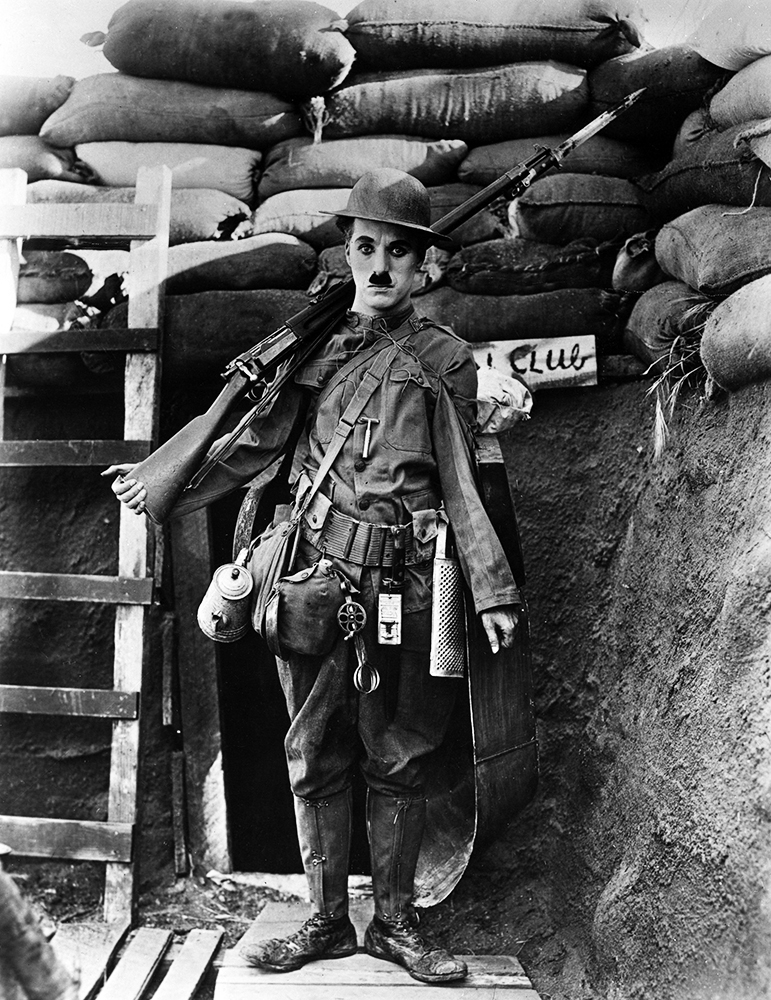
Charles Chaplin in Shoulder Arms (1918)
In 1917, professional Chaplin imitators were so widespread that he took legal action, and it was reported that nine out of ten men who attended costume parties dressed as the Tramp. The same year, a study by the Boston Society for Psychical Research concluded that Chaplin was “an American obsession”.
The actress Minnie Maddern Fiske wrote that “a constantly increasing body of cultured, artistic people are beginning to regard the young English buffoon, Charles Chaplin, as an extraordinary artist, as well as a comic genius”.
1918–1922: First National
Mutual were patient with Chaplin’s decreased rate of output, and the contract ended amicably. With his aforementioned concern about the declining quality of his films because of contract scheduling stipulations, Chaplin’s primary concern in finding a new distributor was independence; Sydney Chaplin, then his business manager, told the press, “Charlie [must] be allowed all the time he needs and all the money for producing [films] the way he wants … It is quality, not quantity, we are after.”
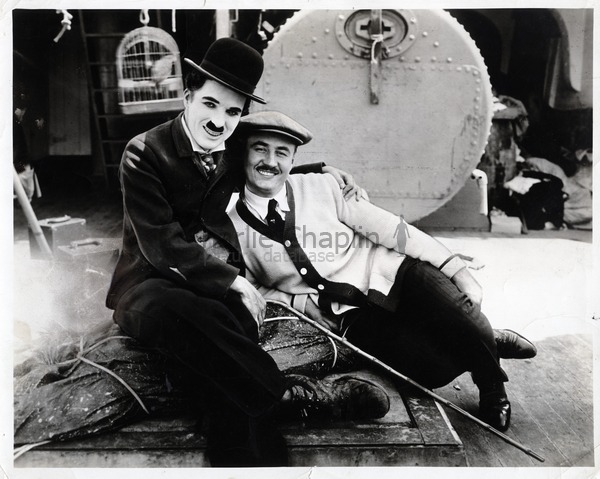
Sidney and Charles Chaplin
In June 1917, Chaplin signed to complete eight films for First National Exhibitors’ Circuit in return for $1 million. He chose to build his own studio, situated on five acres of land off Sunset Boulevard, with production facilities of the highest order. It was completed in January 1918, and Chaplin was given freedom over the making of his pictures.
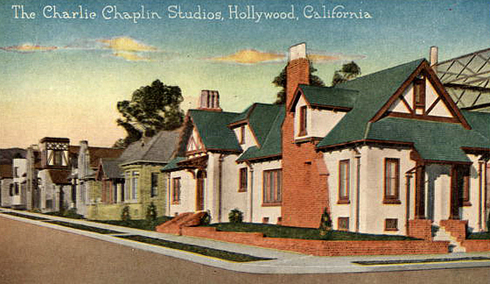
Chaplin built this English cottage-style studio in three months beginning in November 1917
A Dog’s Life, released April 1918, was the first film under the new contract. In it, Chaplin demonstrated his increasing concern with story construction and his treatment of the Tramp as “a sort of Pierrot“. The film was described by Louis Delluc as “cinema’s first total work of art”.
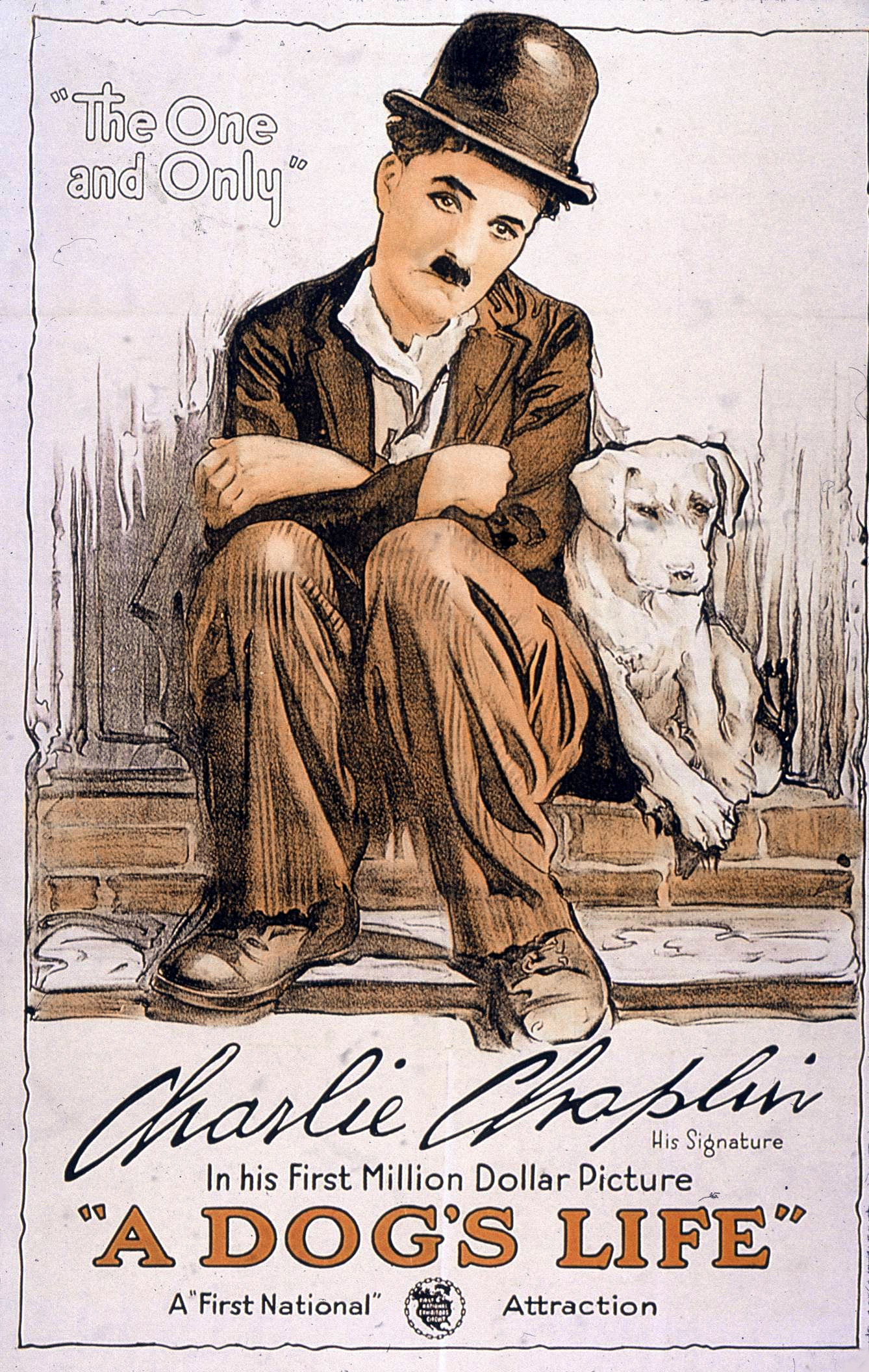
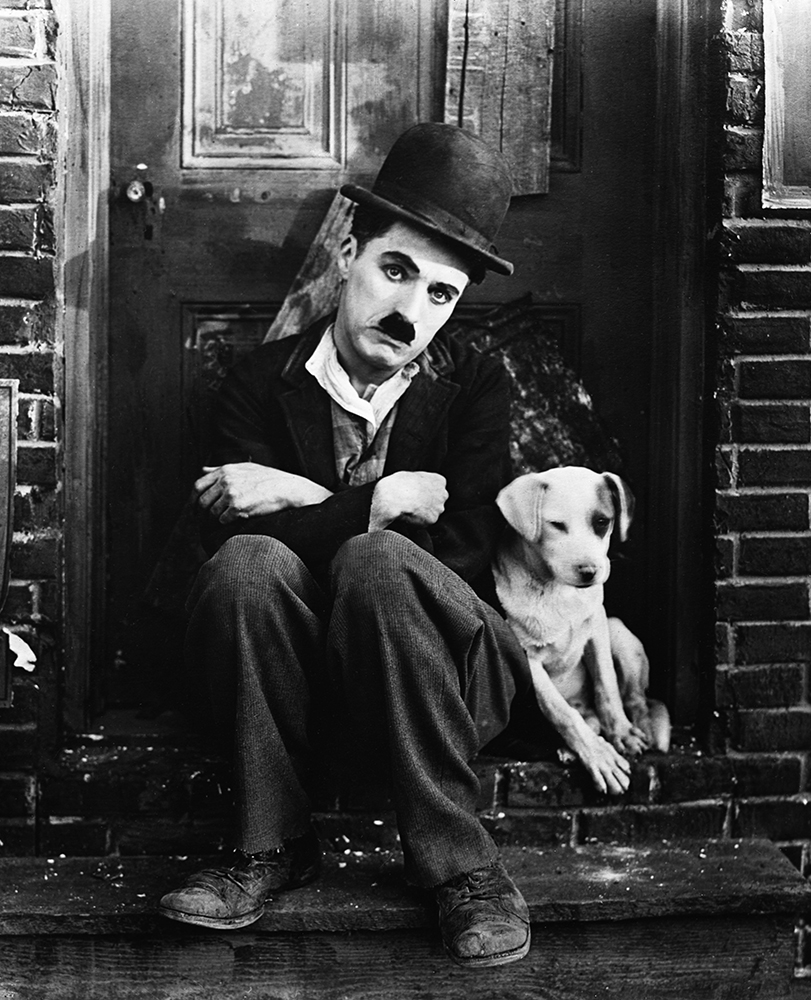
Charles Chaplin in A Dog’s Life (1918)
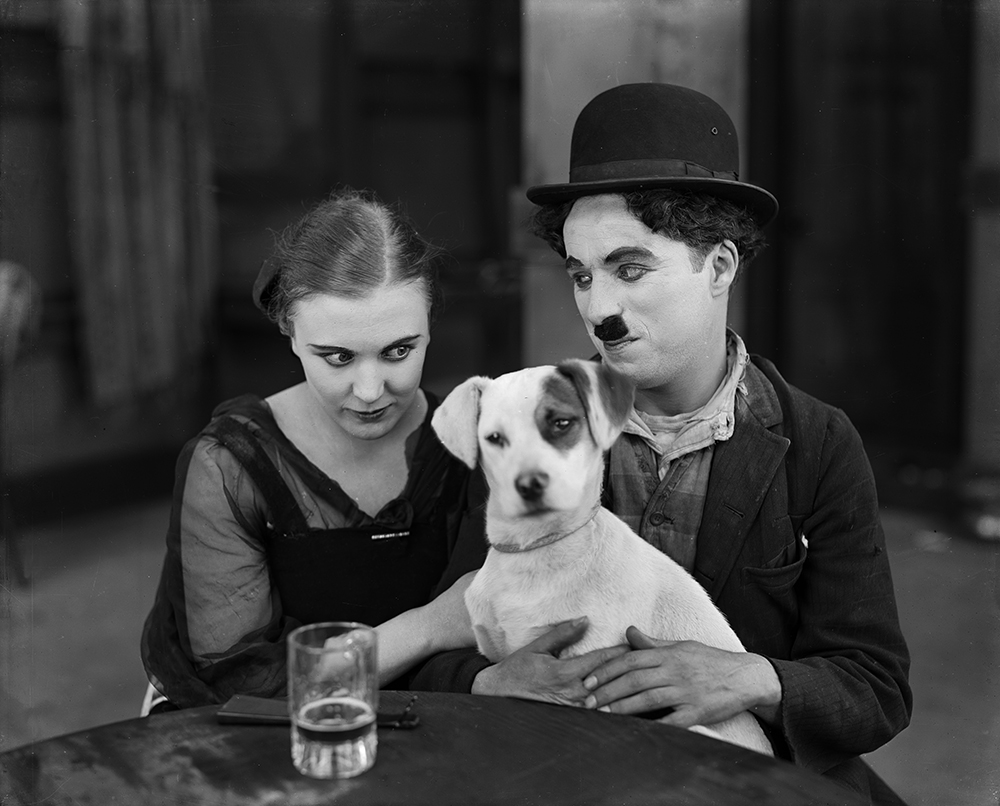
A Dog’s Life (1918) – Chaplin with Edna Purviance
Chaplin then embarked on the Third Liberty Bond campaign, touring the United States for one month to raise money for the Allies of the First World War.
He also produced a short propaganda film, donated to the government for fund-raising, called The Bond.
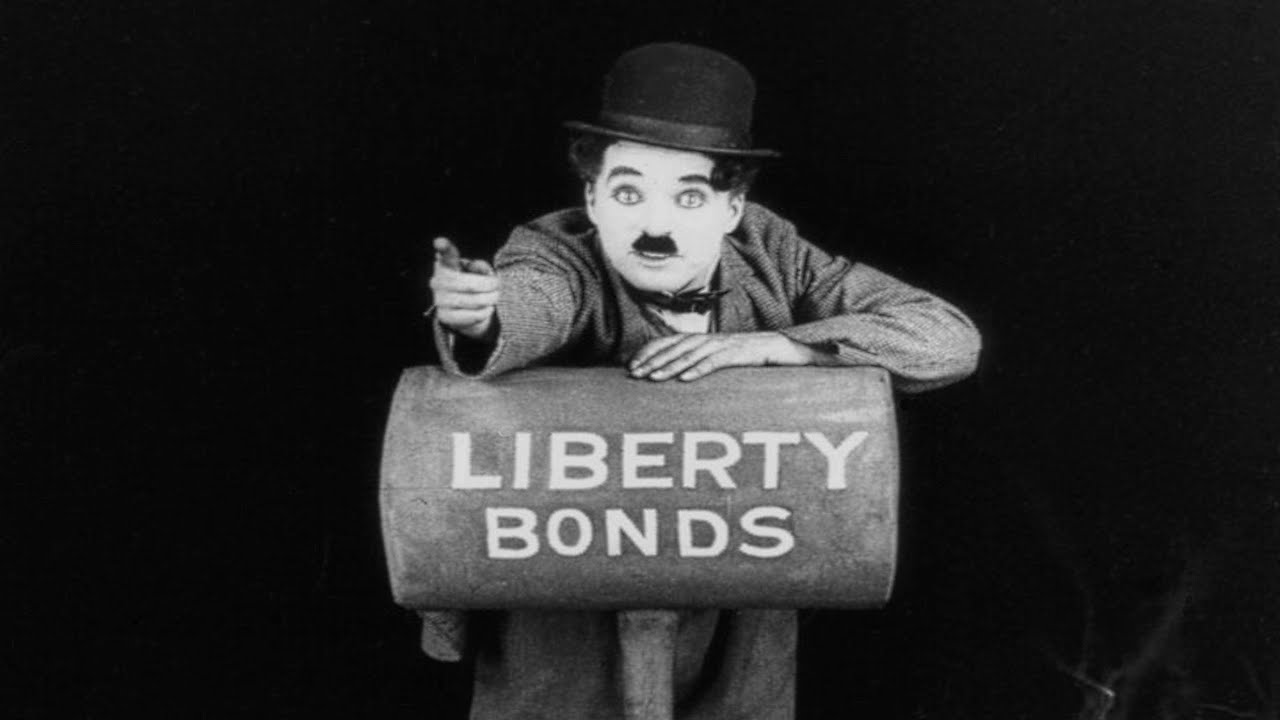
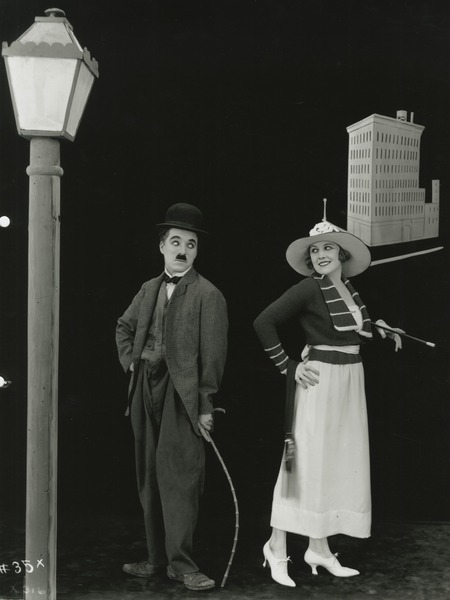
The Bond (1918) – Chaplin with Edna Purviance
Chaplin’s next release was war-based, placing the Tramp in the trenches for Shoulder Arms. Associates warned him against making a comedy about the war but, as he later recalled: “Dangerous or not, the idea excited me.”
He spent four months filming the 45-minute-long picture, which was released in October 1918 with great success.
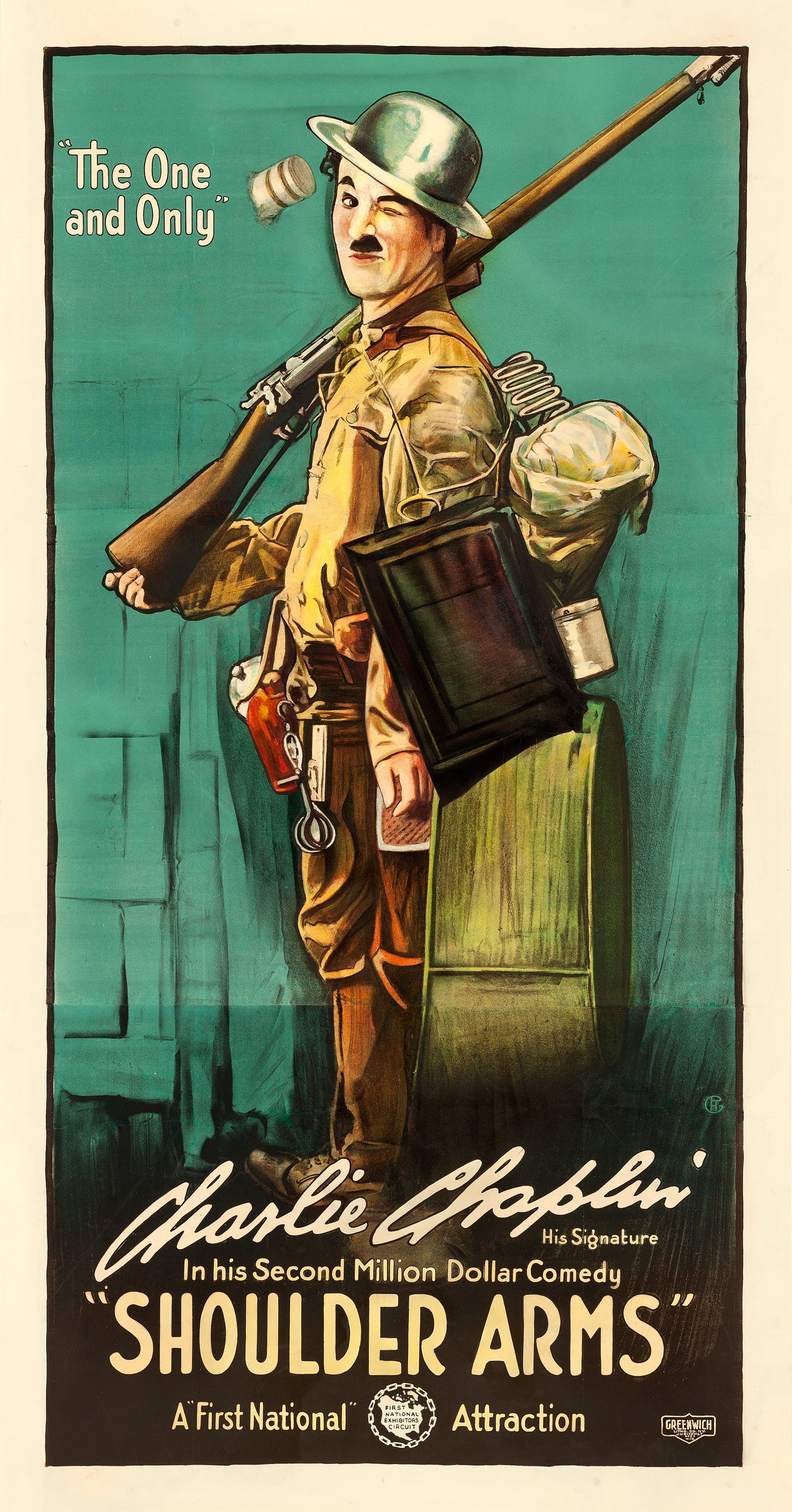
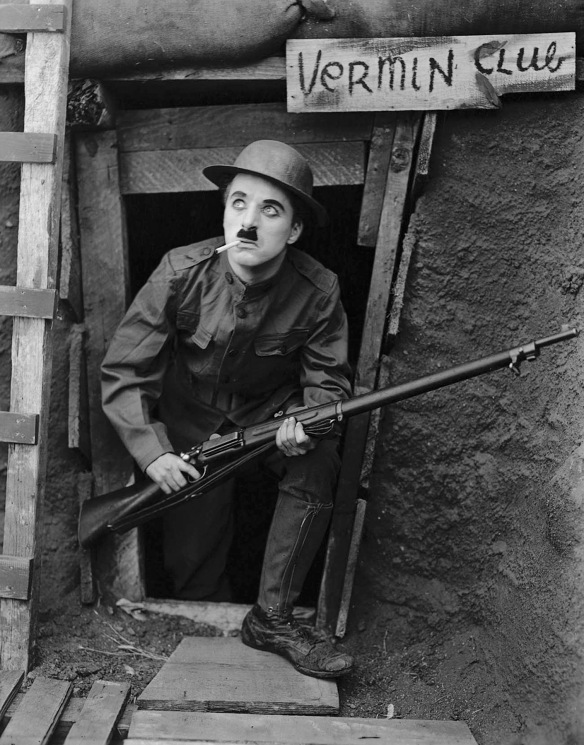
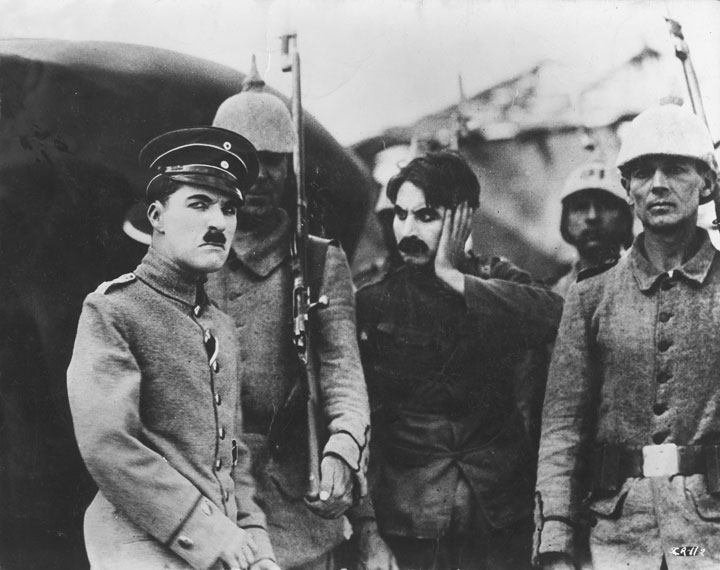
Charles Chaplin in Shoulder Arms (1918)
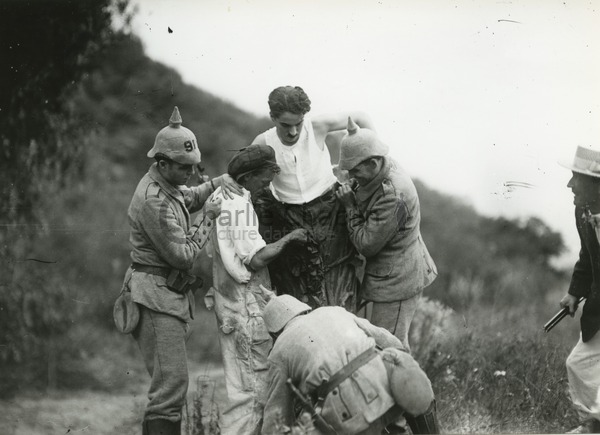
Charles Chaplin on the set of Shoulder Arms (1918)
United Artists, Mildred Harris, and The Kid
After the release of Shoulder Arms, Chaplin requested more money from First National, which was refused.
Frustrated with their lack of concern for quality, and worried about rumours of a possible merger between the company and Famous Players-Lasky, Chaplin joined forces with Douglas Fairbanks, Mary Pickford, and D. W. Griffith to form a new distribution company – United Artists, established in January 1919.
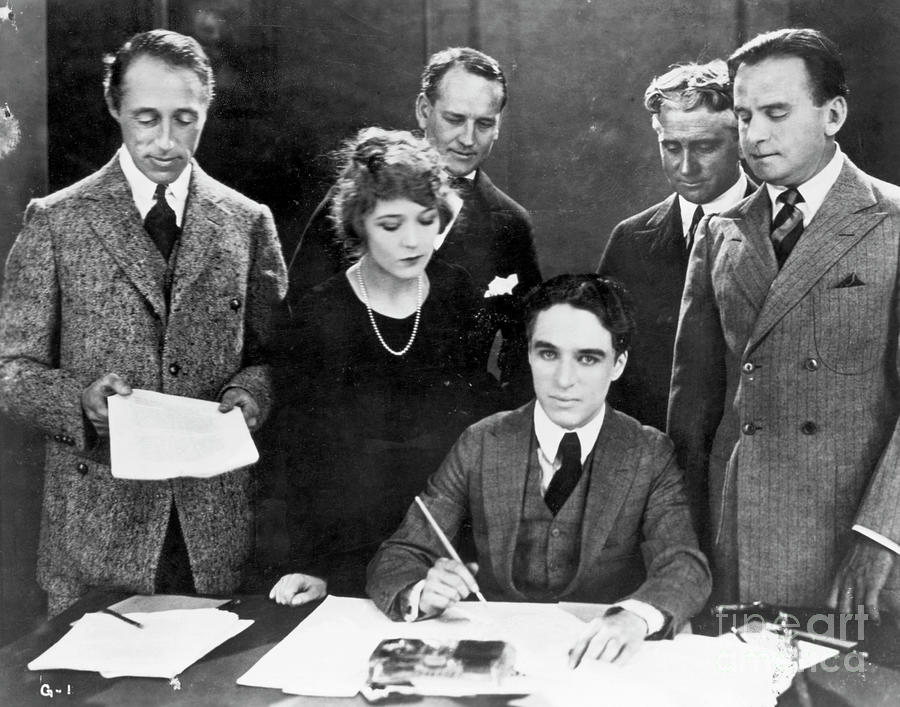
Chaplin, Pickford, Fairbanks and Griffith – the signing ceremony
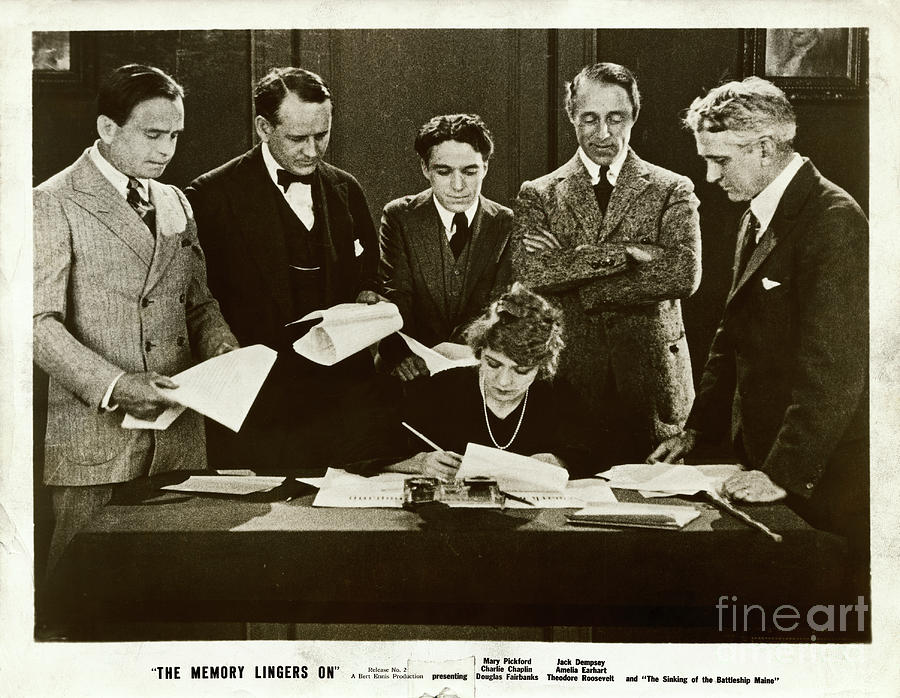
The arrangement was revolutionary in the film industry, as it enabled the four partners – all creative artists – to personally fund their pictures and have complete control. Chaplin was eager to start with the new company and offered to buy out his contract with First National. They refused and insisted that he complete the final six films owed.
Before the creation of United Artists, Chaplin married for the first time. The 16-year-old actress Mildred Harris had revealed that she was pregnant with his child, and in September 1918, he married her quietly in Los Angeles to avoid controversy.
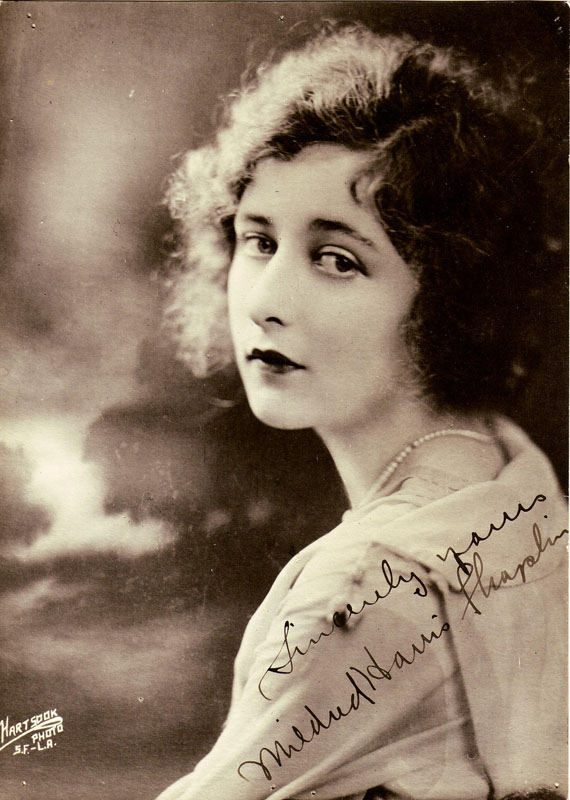
Mildred Harris
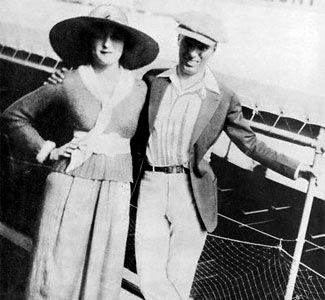
Charles Chaplin with Mildred Harris
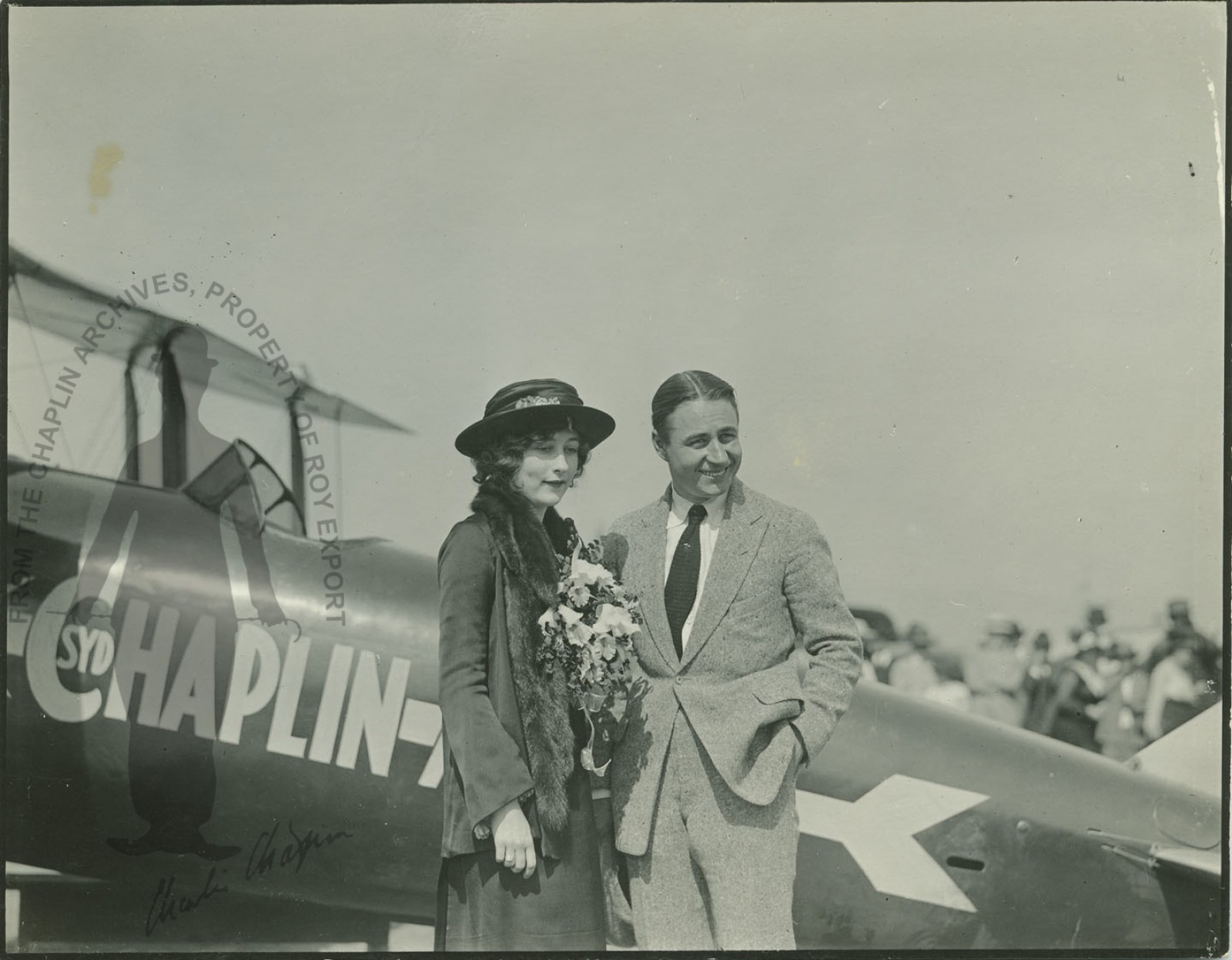
Sidney Chaplin with Mildred Harris 1929
Soon after, the pregnancy was found to be false. Chaplin was unhappy with the union and, feeling that marriage stunted his creativity, struggled over the production of his film Sunnyside. Harris was by then legitimately pregnant, and on 7 July 1919, gave birth to a son. Norman Spencer Chaplin was born malformed and died three days later. The marriage ended in April 1920, with Chaplin explaining in his autobiography that they were “irreconcilably mismated”.
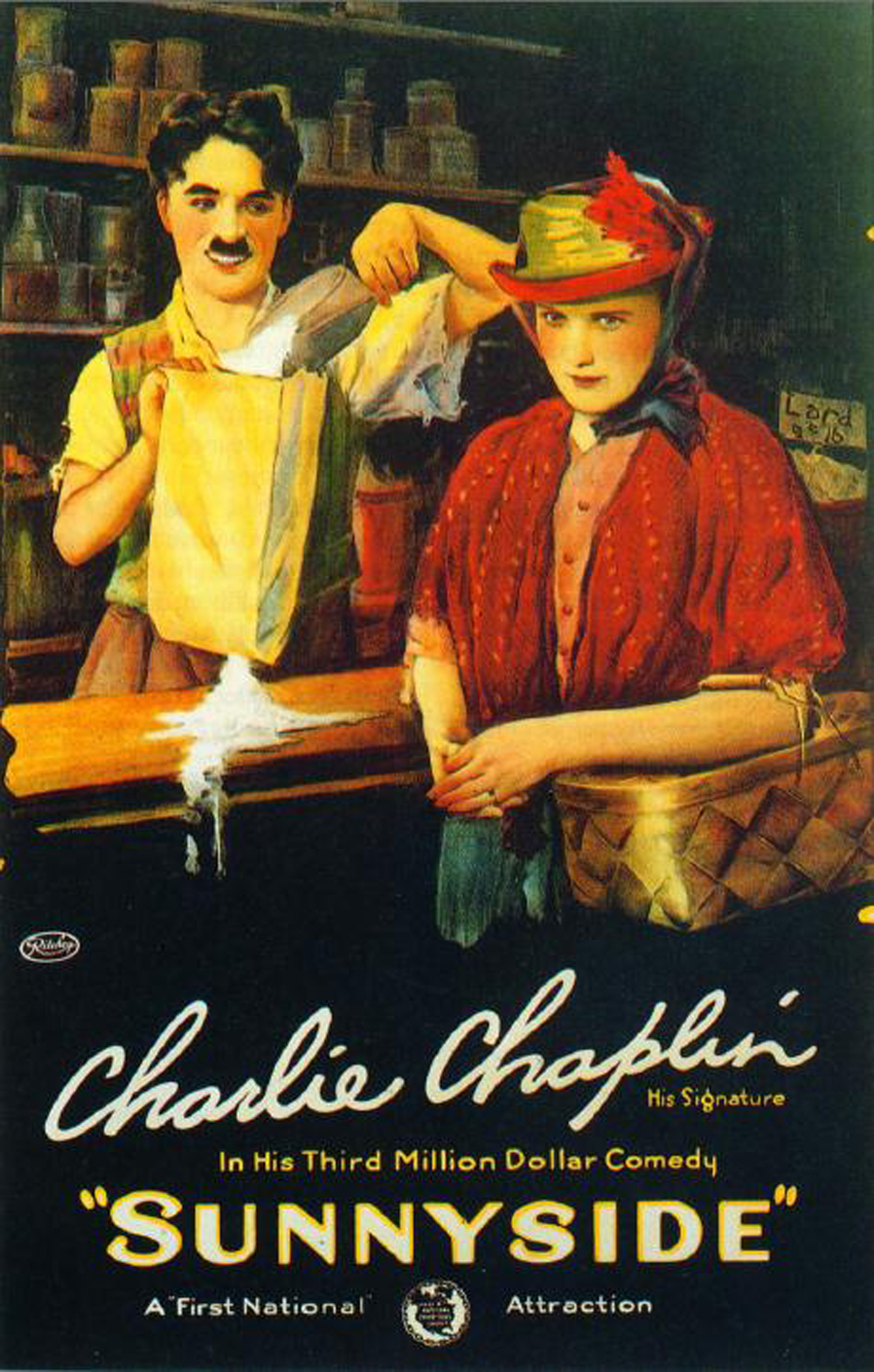
Sunnyside (1919) Poster
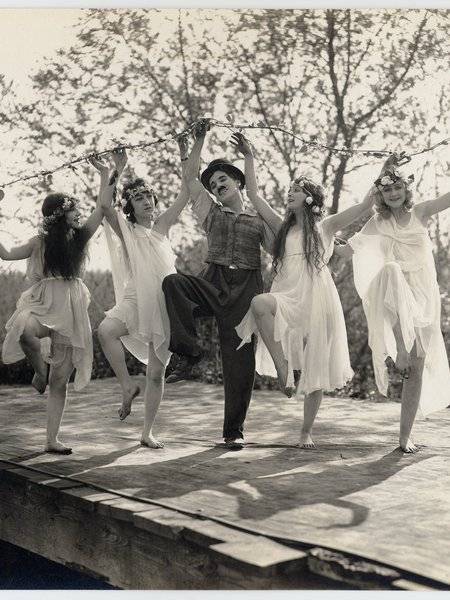
Charles Chaplin in Sunnyside (1919)
Losing the child, plus his own childhood experiences, are thought to have influenced Chaplin’s film, which turned the Tramp into the caretaker of a young boy.
For this new venture, Chaplin also wished to do more than comedy and, according to Louvish, “make his mark on a changed world.” Filming on The Kid began in August 1919, with four-year-old Jackie Coogan his co-star.
It was developing into a long project, so to placate First National, he halted production and quickly filmed A Day’s Pleasure. The Kid was in production for nine months until May 1920 and, at 68 minutes, it was Chaplin’s longest picture to date. Dealing with issues of poverty and parent–child separation, The Kid was one of the earliest films to combine comedy and drama. It was released in January 1921 with instant success, and, by 1924, had been screened in over 50 countries.
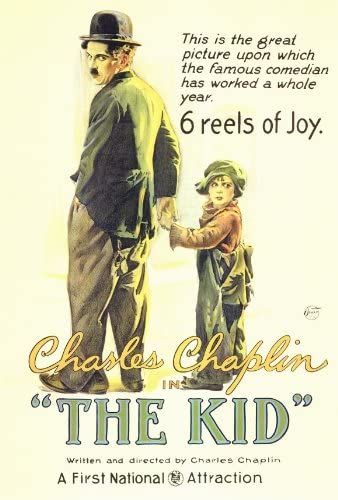
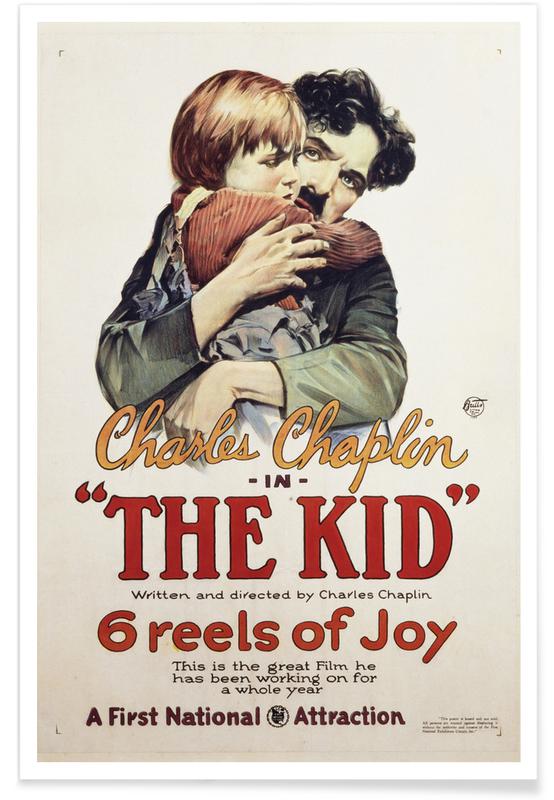
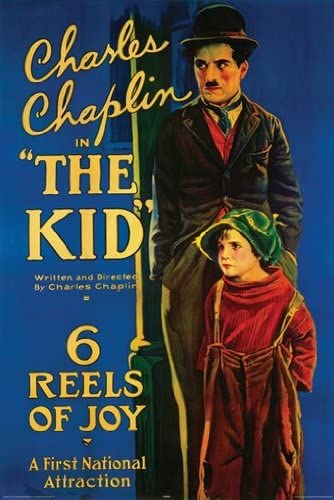
The Kid (1921) Posters
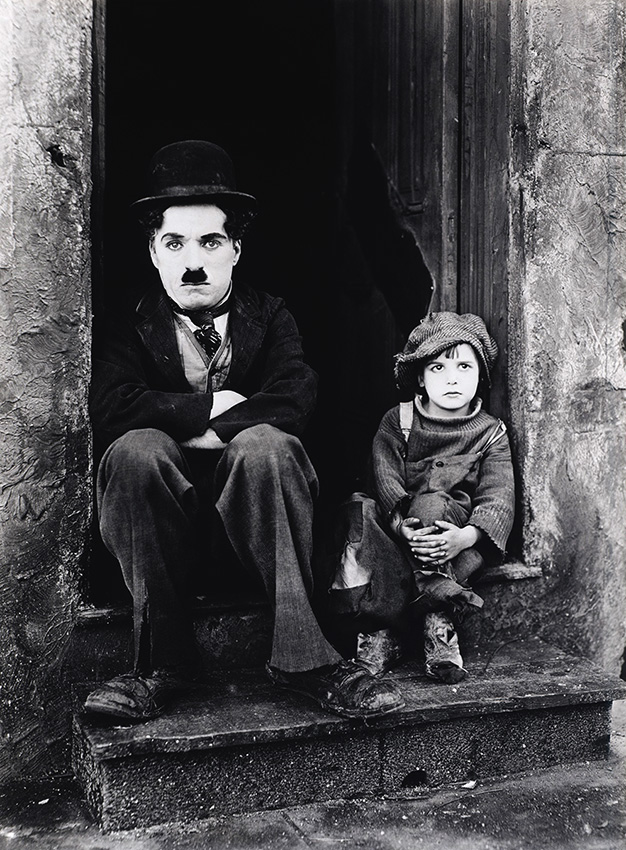
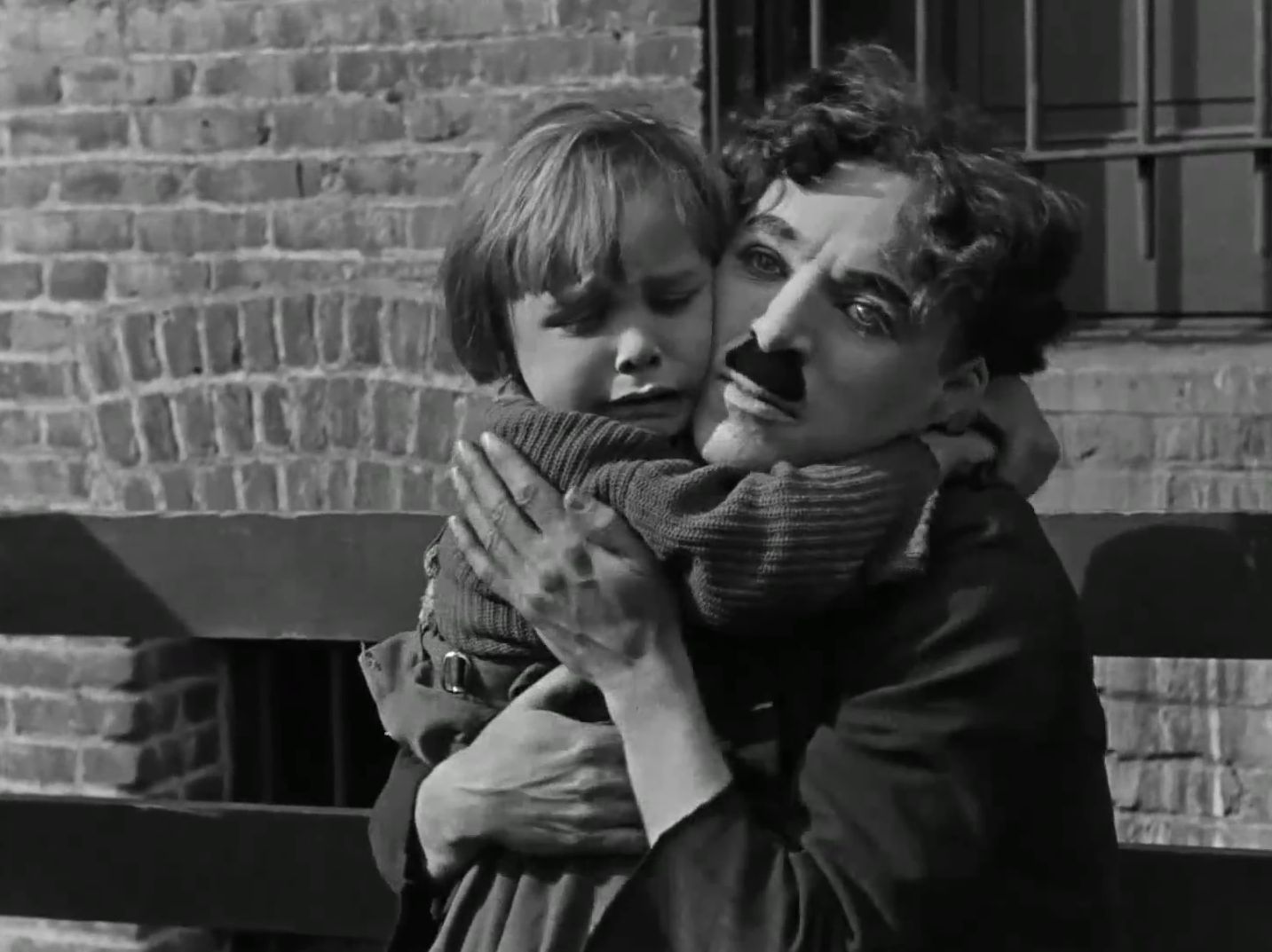
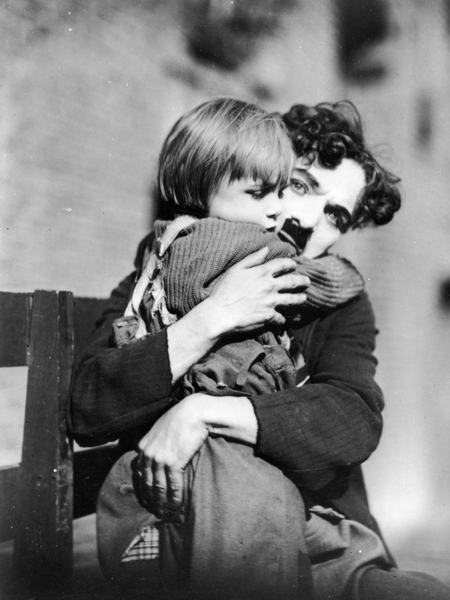
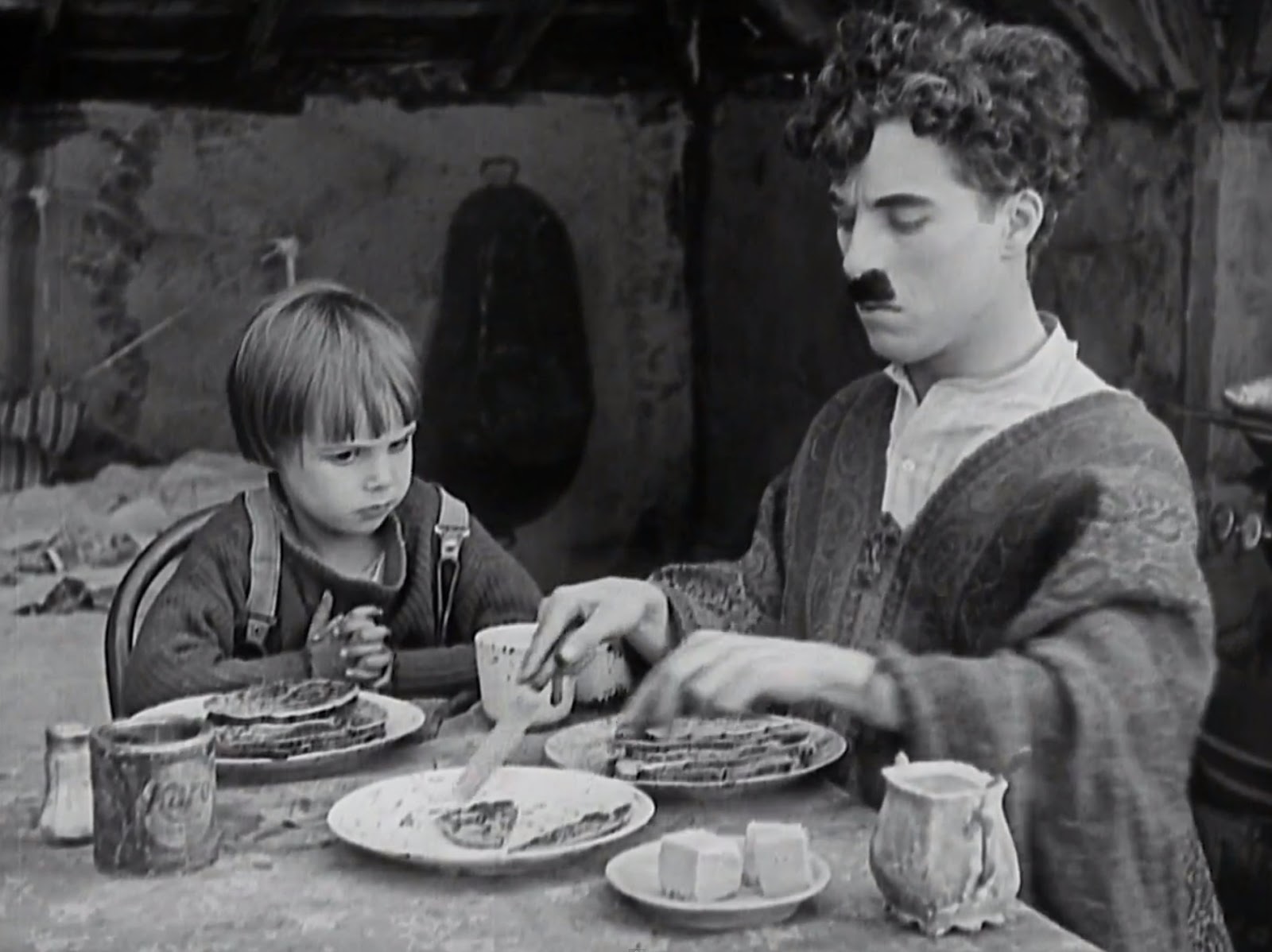
Charles Chaplin and Jackie Coogan in The Kid (1921)
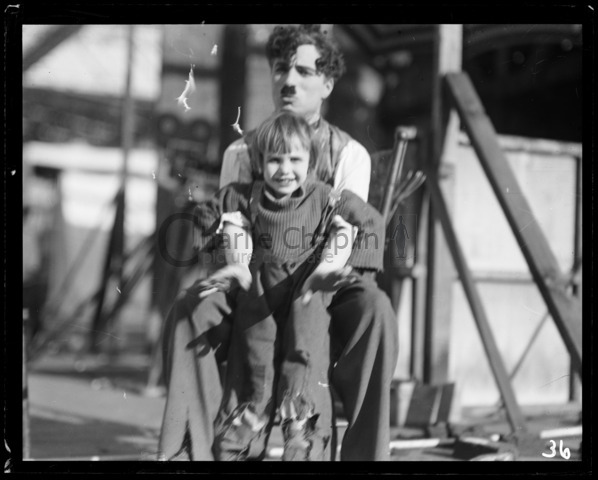
Charles Chaplin and Jackie Coogan on the set of The Kid (1921)
Chaplin spent five months on his next film, the two-reeler The Idle Class. Following its September 1921 release, he chose to return to England for the first time in almost a decade. He then worked to fulfil his First National contract, releasing Pay Day in February 1922. The Pilgrim – his final short film – was delayed by distribution disagreements with the studio, and released a year later.
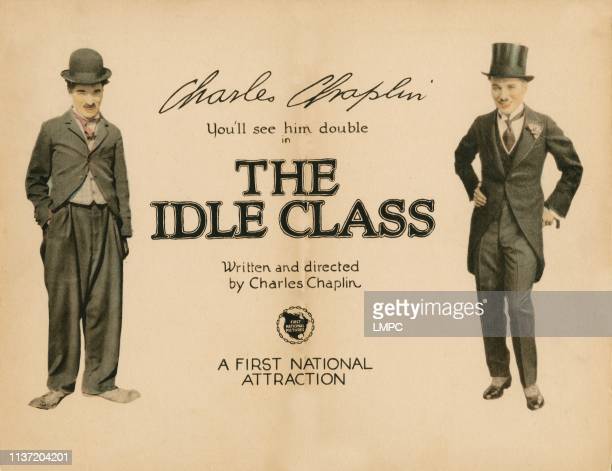
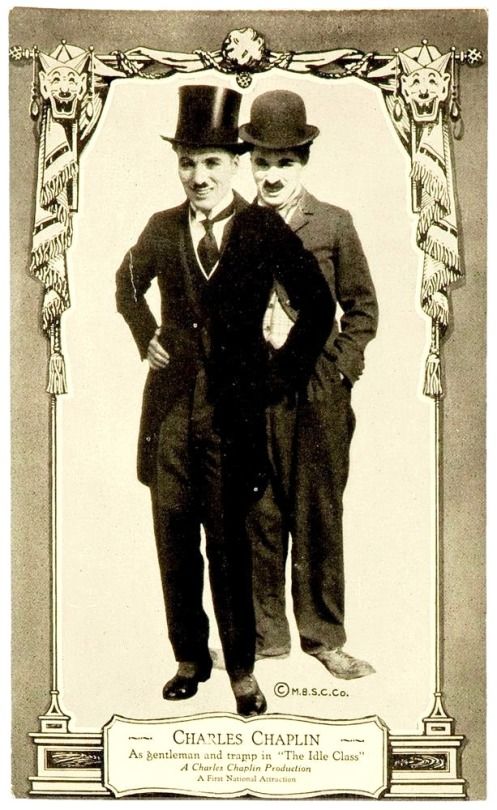
The Idle Class (1921) Poster
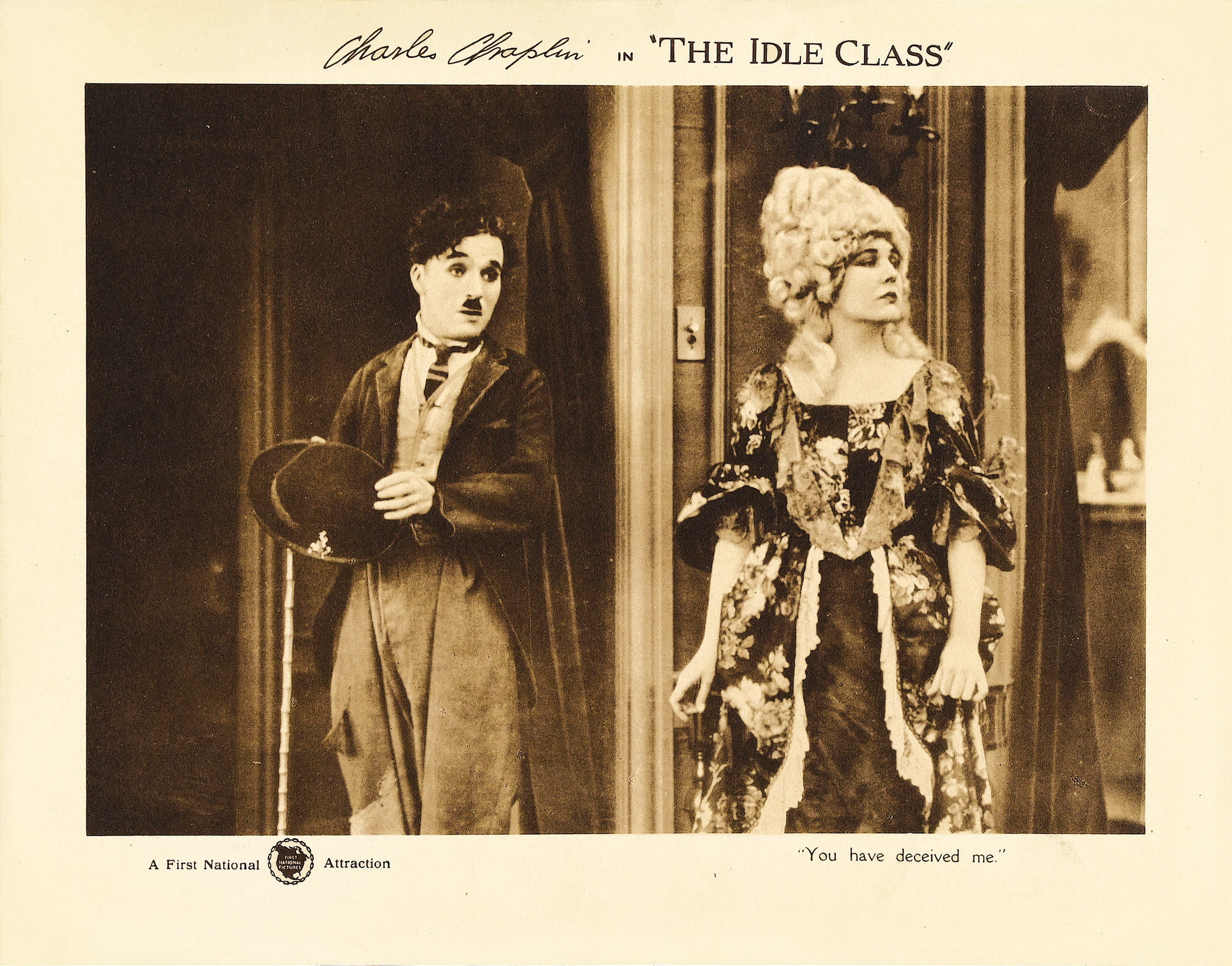
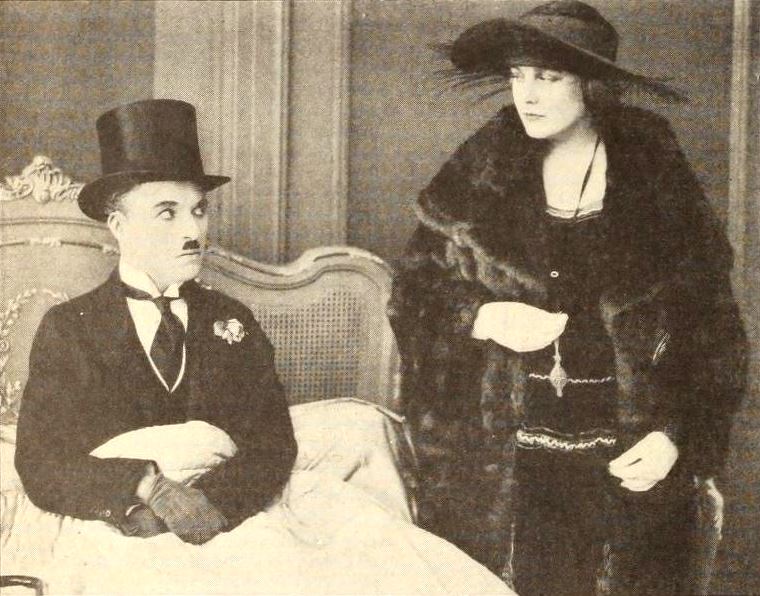
Charles Chaplin and Edna Purviance in The Idle Class (1921)
1923–1938: Silent features
A Woman of Paris and The Gold Rush
Having fulfilled his First National contract, Chaplin was free to make his first picture as an independent producer. In November 1922, he began filming A Woman of Paris, a romantic drama about ill-fated lovers.
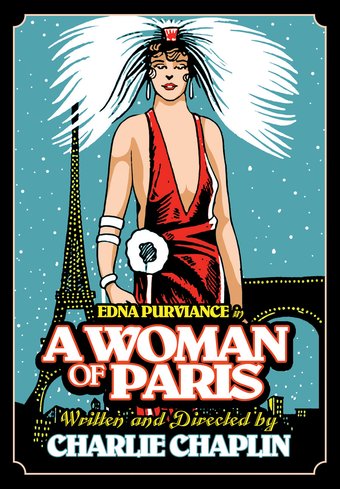
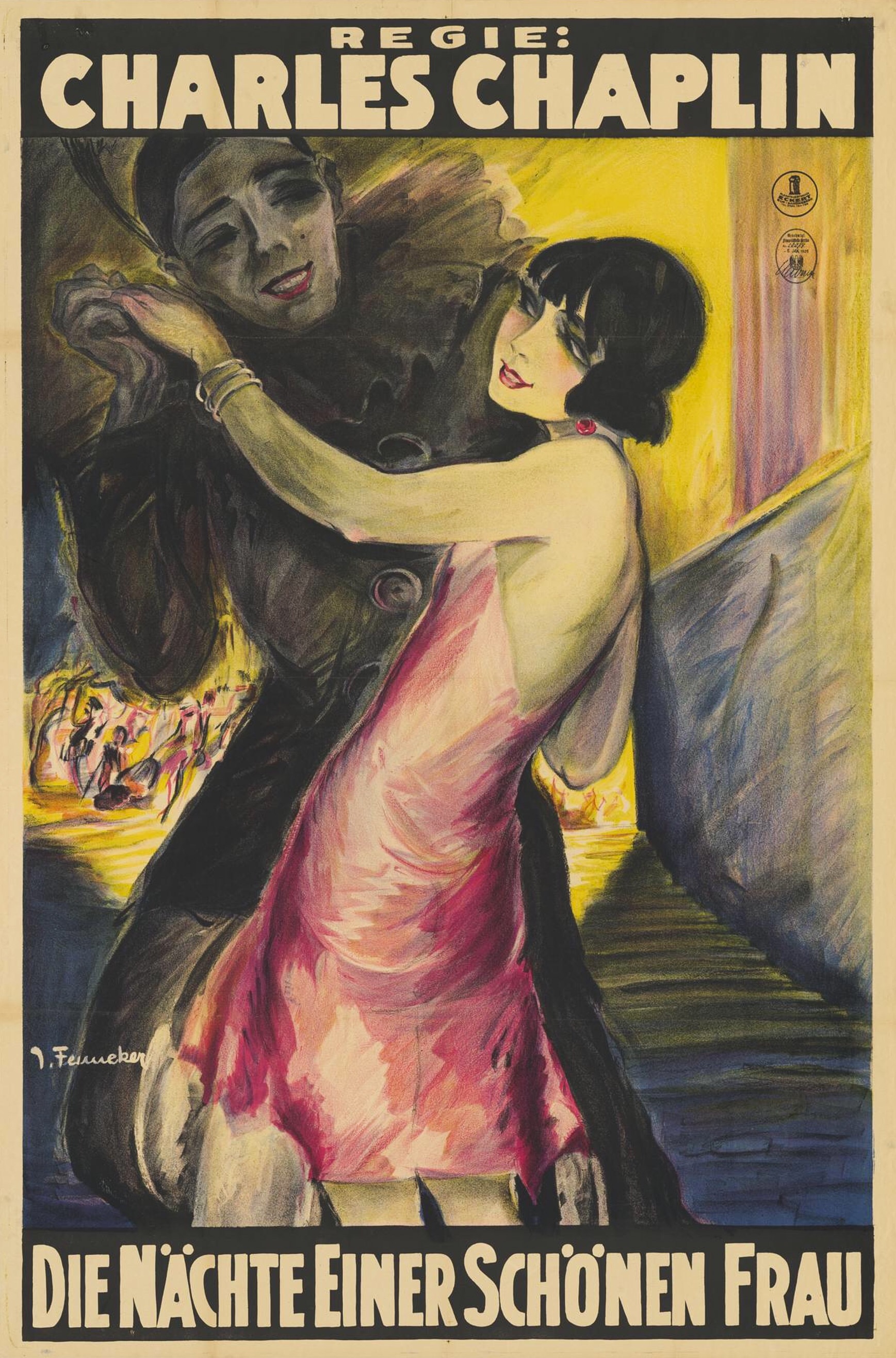
A Woman of Paris (1923) Posters
Chaplin intended it to be a star-making vehicle for Edna Purviance, and did not appear in the picture himself other than in a brief, uncredited cameo.
He wished the film to have a realistic feel and directed his cast to give restrained performances. In real life, he explained, “men and women try to hide their emotions rather than seek to express them”.
A Woman of Paris premiered in September 1923 and was acclaimed for its innovative, subtle approach. The public, however, seemed to have little interest in a Chaplin film without Chaplin, and it was a box office disappointment. The filmmaker was hurt by this failure – he had long wanted to produce a dramatic film and was proud of the result – and soon withdrew A Woman of Paris from circulation.
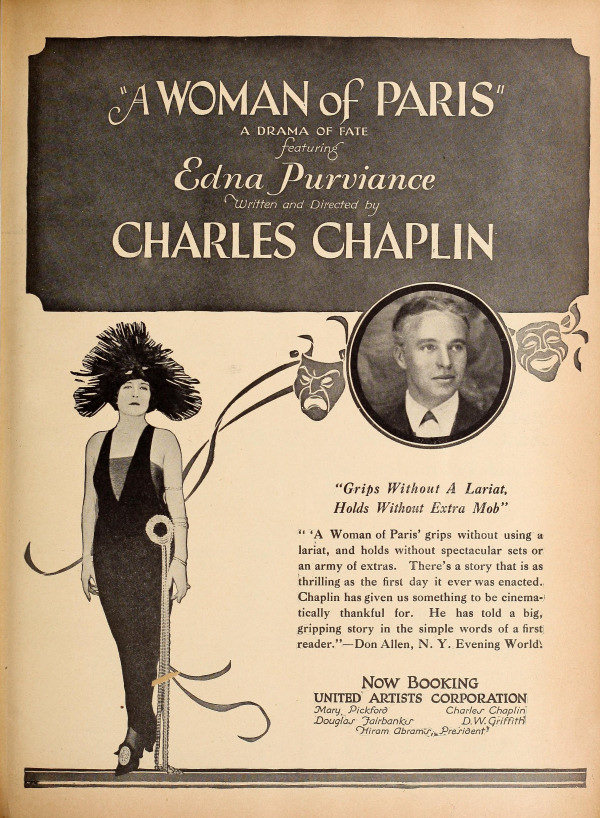
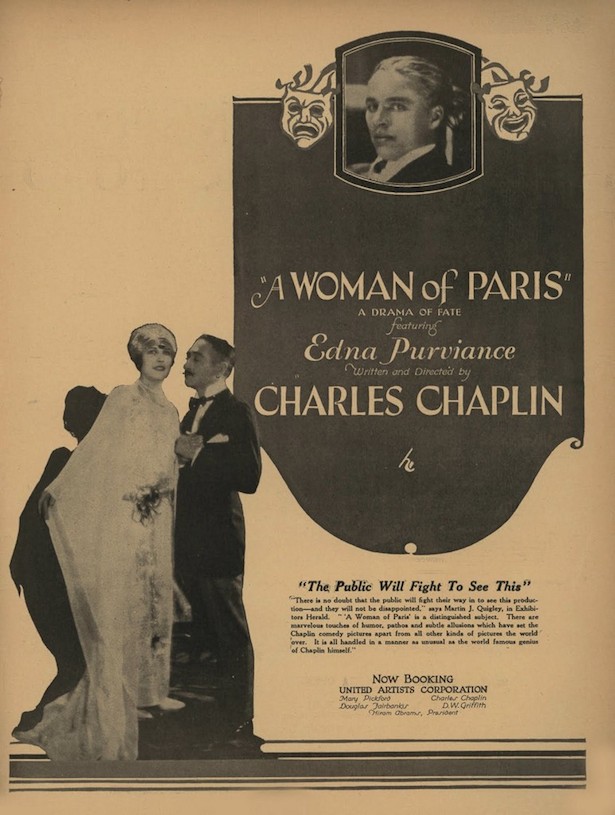
A Woman of Paris (1923) magazine promotion
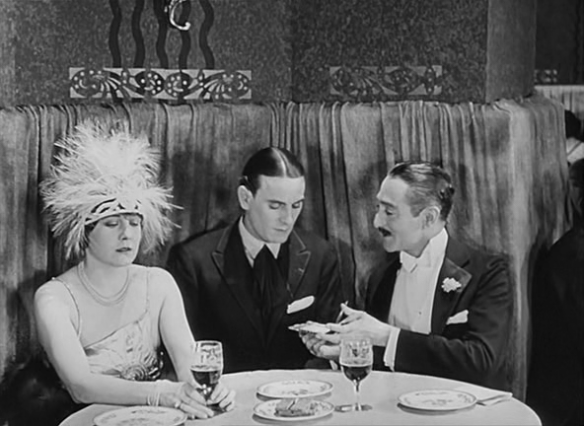
Edna Purviance, Carl Miller and Adolphe Menjou in A Woman of Paris (1923)
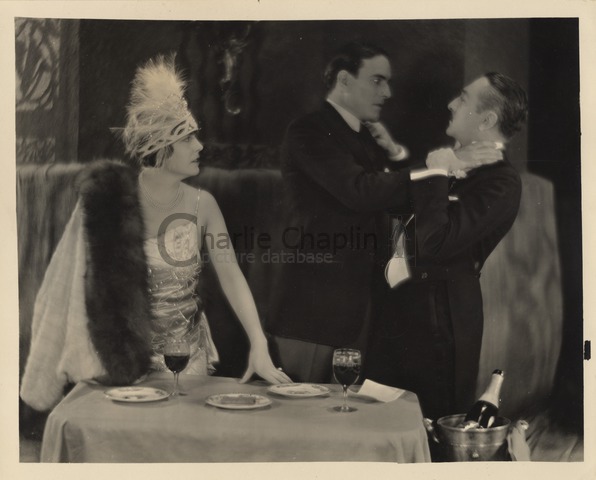
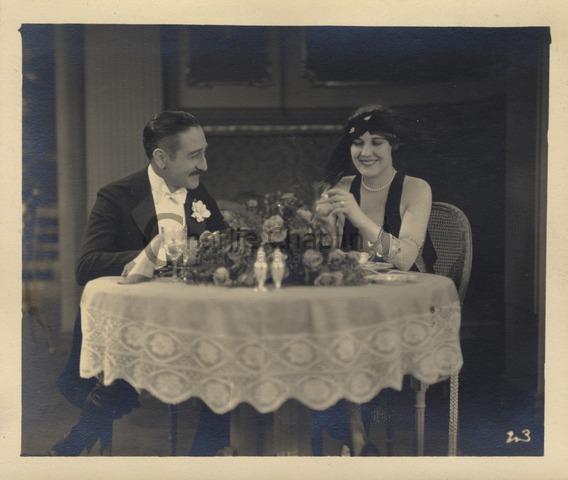
Edna Purviance and Adolphe Menjou in A Woman of Paris (1923)
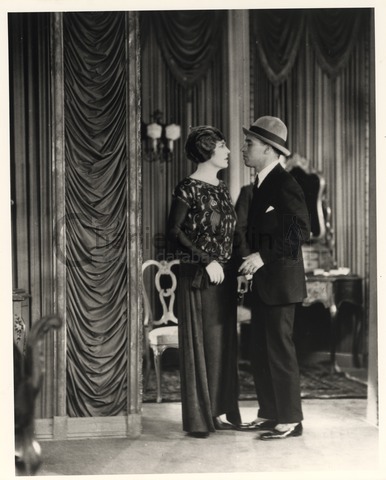
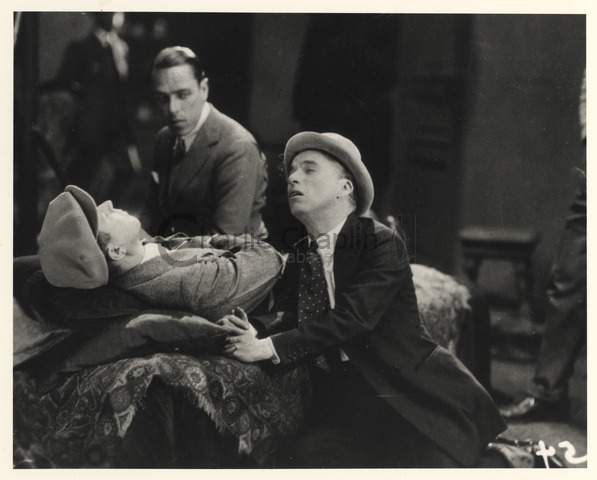
Charles Chaplin directing A Woman of Paris (1923)
Chaplin returned to comedy for his next project. Setting his standards high, he told himself “This next film must be an epic! The Greatest!” Inspired by a photograph of the 1898 Klondike Gold Rush, and later the story of the Donner Party of 1846–47, he made what Geoffrey Macnab calls “an epic comedy out of grim subject matter.”
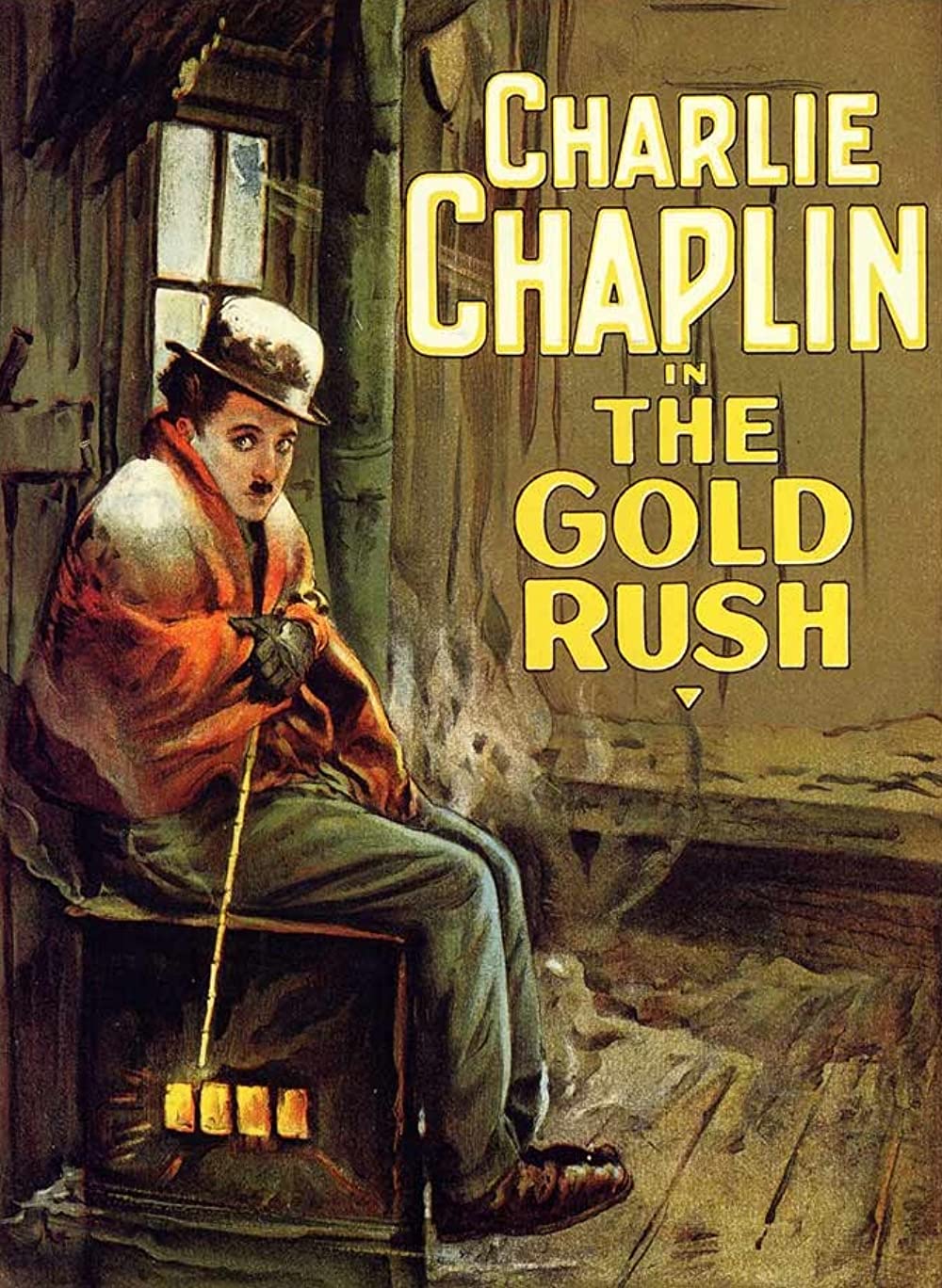
The Gold Rush (1925) Poster
In The Gold Rush, the Tramp is a lonely prospector fighting adversity and looking for love. With Georgia Hale as his new leading lady, Chaplin began filming the picture in February 1924. Its elaborate production, costing almost $1 million, included location shooting in the Truckee mountains with 600 extras, extravagant sets, and special effects. The last scene was shot May 1925 after 15 months of filming.
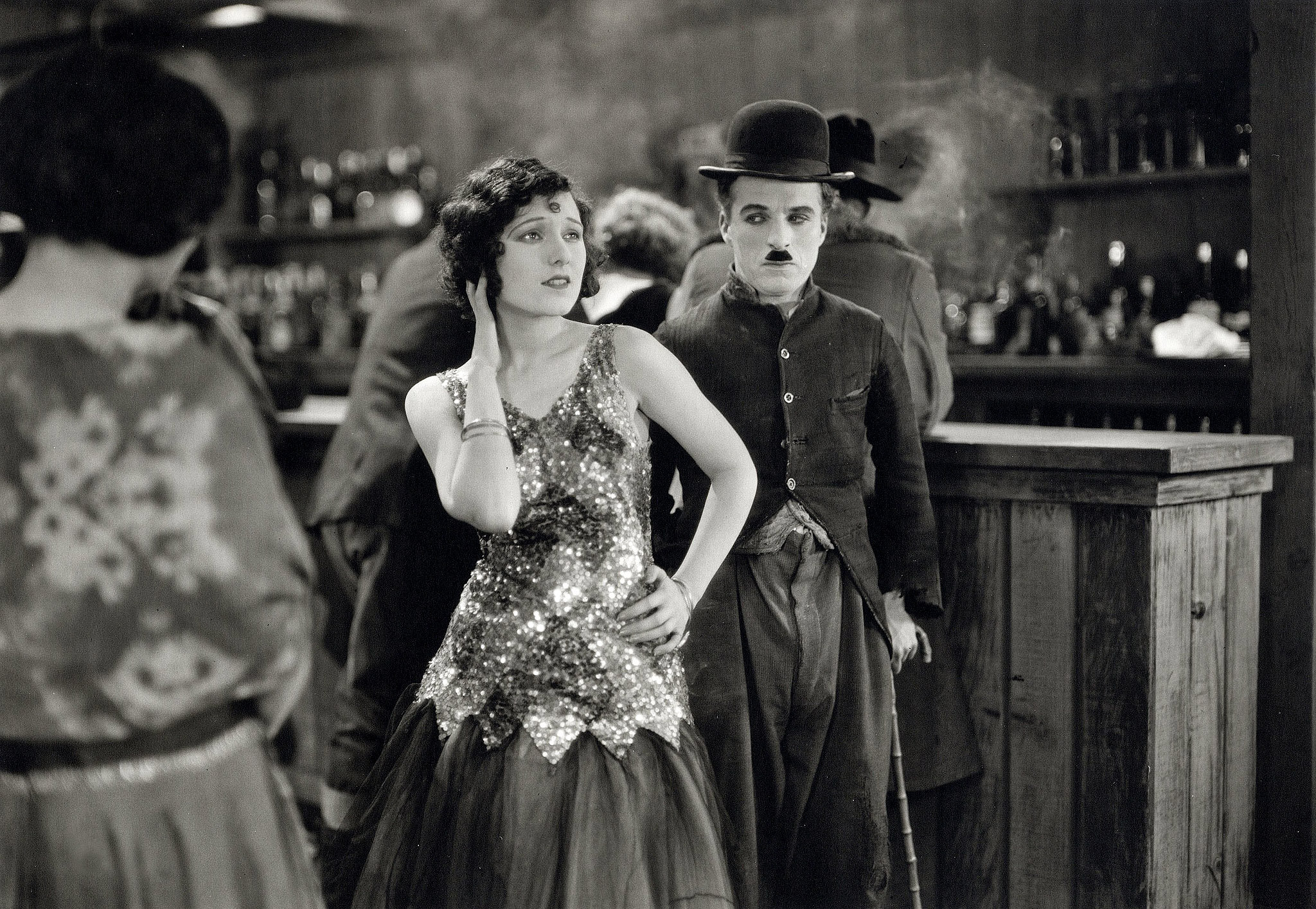
Charles Chaplin and Georgia Hale in The Gold Rush (1925)
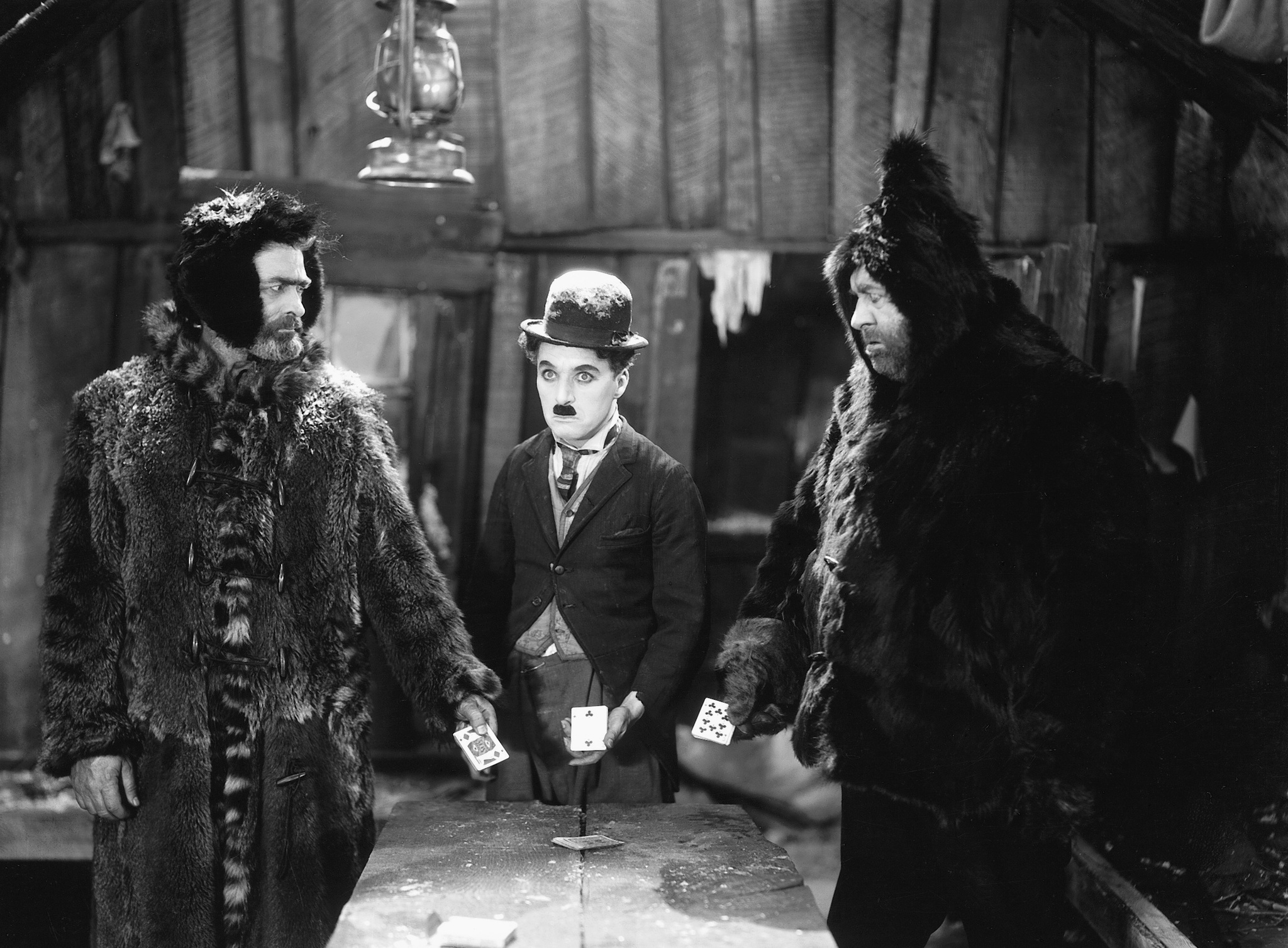
Tom Murray, Charles Chaplin and Mack Swain in The Gold Rush (1925)
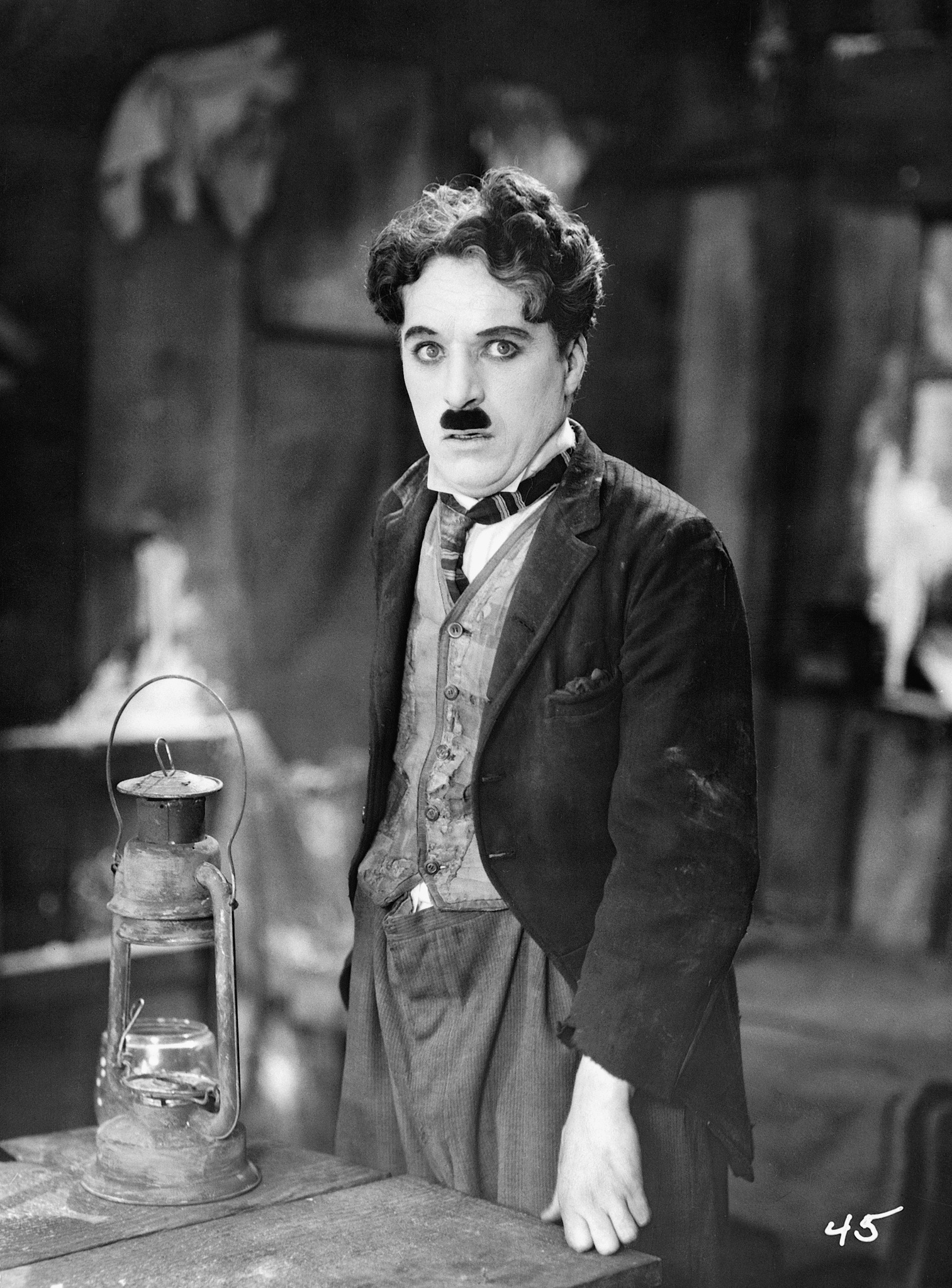
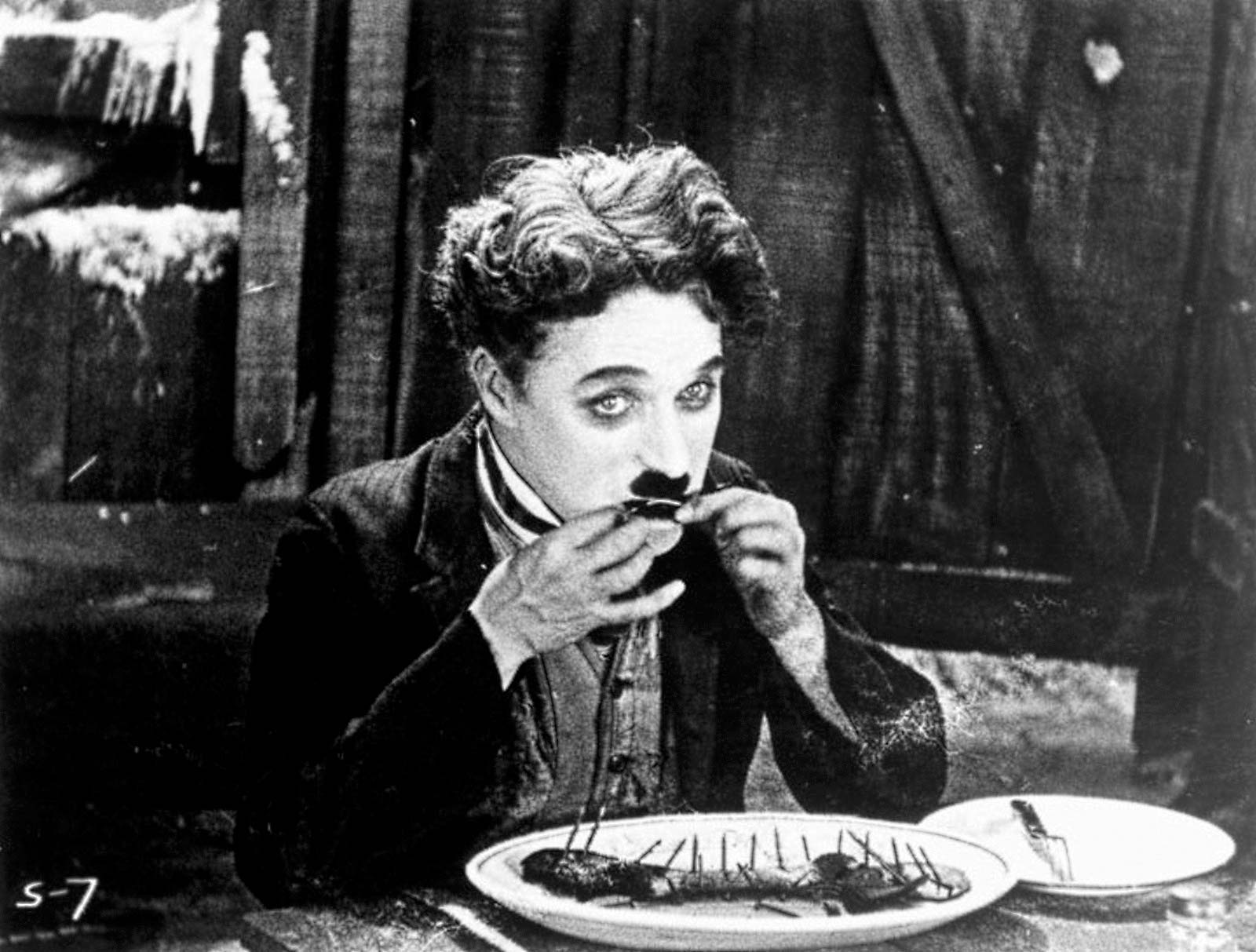
Charles Chaplin in The Gold Rush (1925)
Chaplin felt The Gold Rush was the best film he had made. It opened in August 1925 and became one of the highest-grossing films of the silent era with a U.S. box-office of $5 million.
The comedy contains some of Chaplin’s most famous sequences, such as the Tramp eating his shoe and the “Dance of the Rolls”. Macnab has called it “the quintessential Chaplin film”. Chaplin stated at its release, “This is the picture that I want to be remembered by”.
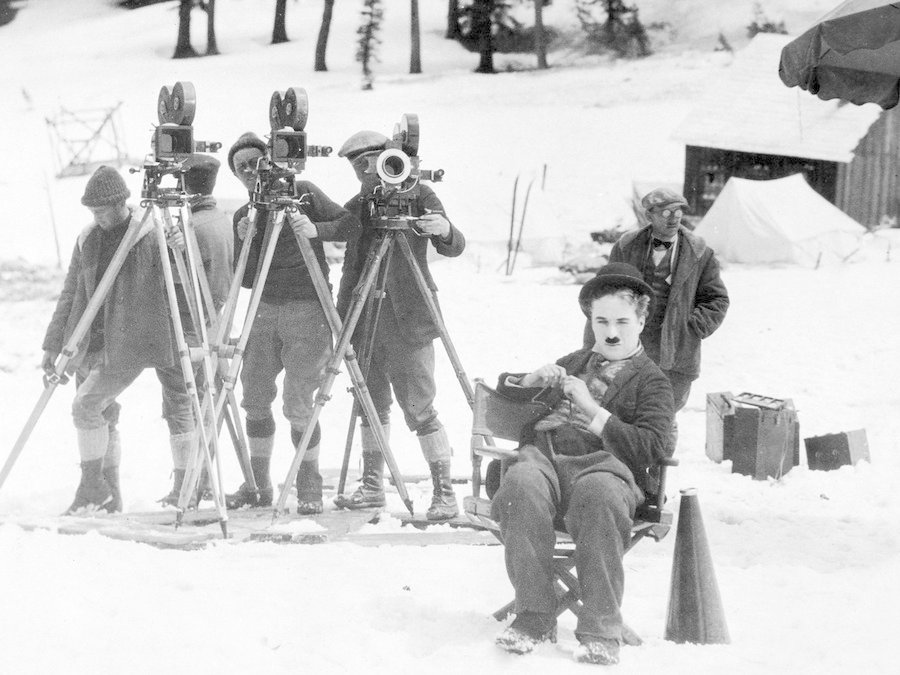
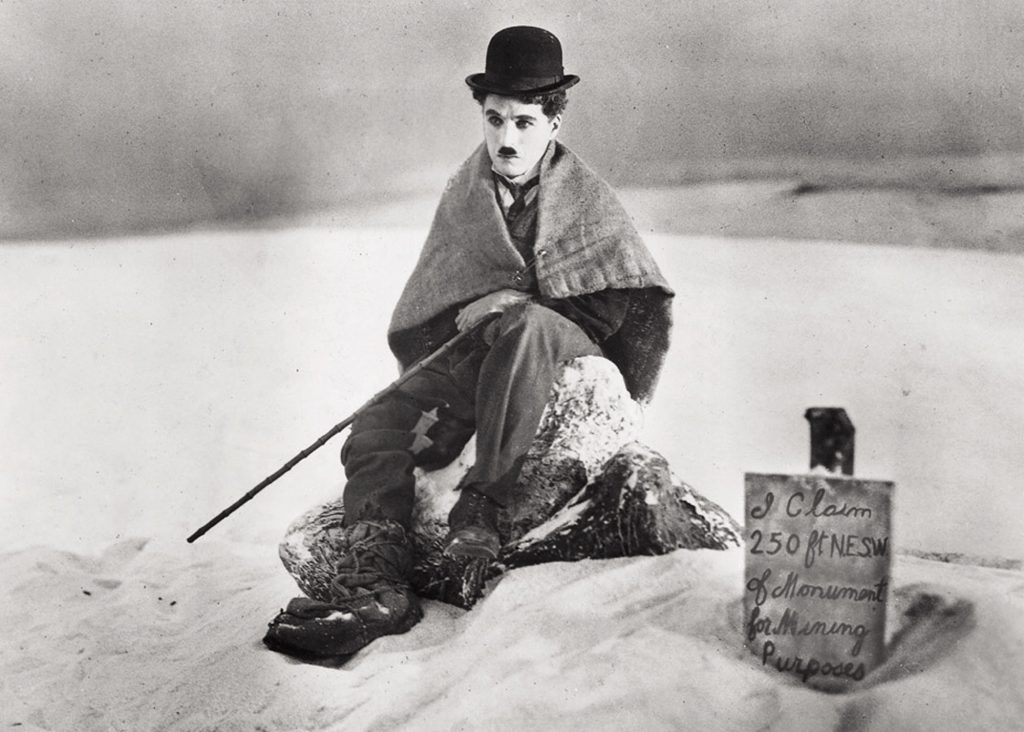
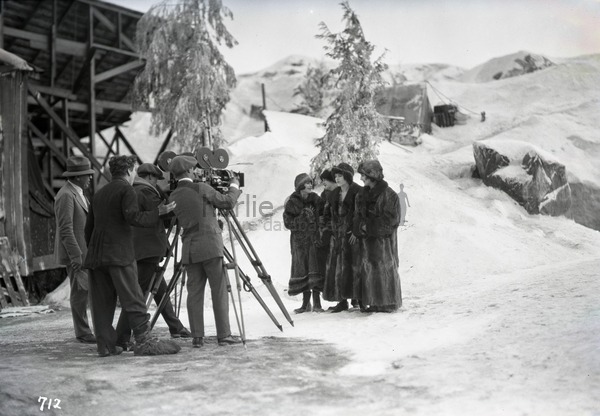
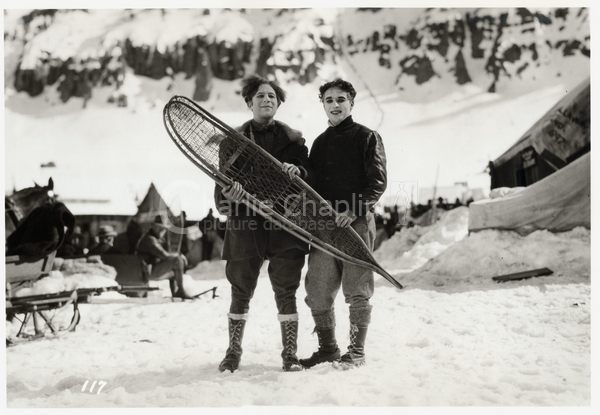
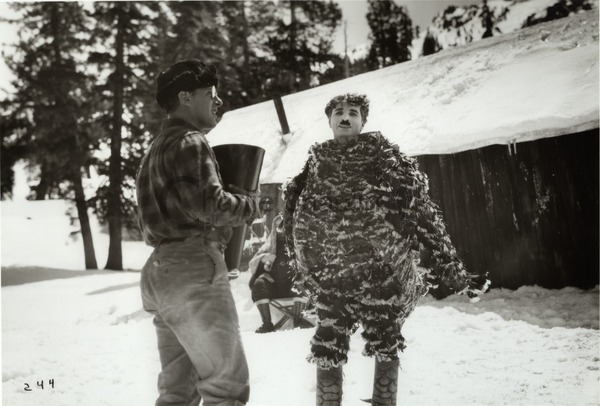
Charles Chaplin directing The Gold Rush (1925)
Lita Grey and The Circus
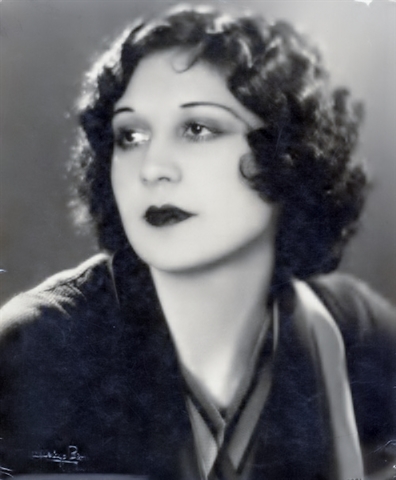
Lita Grey, whose bitter divorce from Chaplin caused a scandal
While making The Gold Rush, Chaplin married for the second time. Mirroring the circumstances of his first union, Lita Grey was a teenage actress, originally set to star in the film, whose surprise announcement of pregnancy forced Chaplin into marriage. She was 16 and he was 35, meaning Chaplin could have been charged with statutory rape under California law.
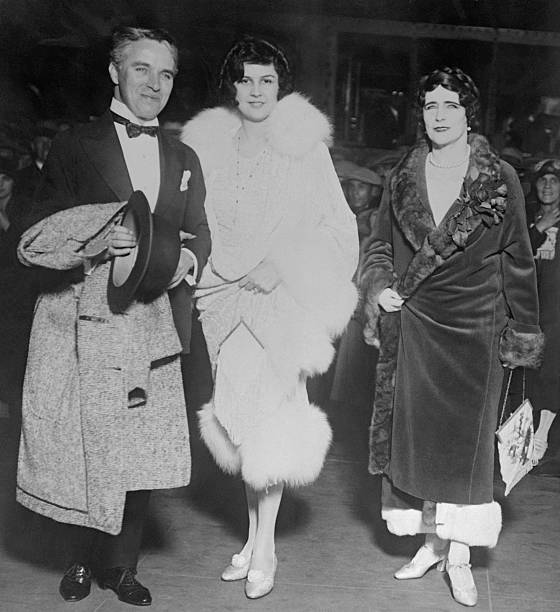
He therefore arranged a discreet marriage in Mexico on 25 November 1924. Their first son, Charles Spencer Chaplin, Jr., was born on 5 May 1925, followed by Sydney Earl Chaplin on 30 March 1926.
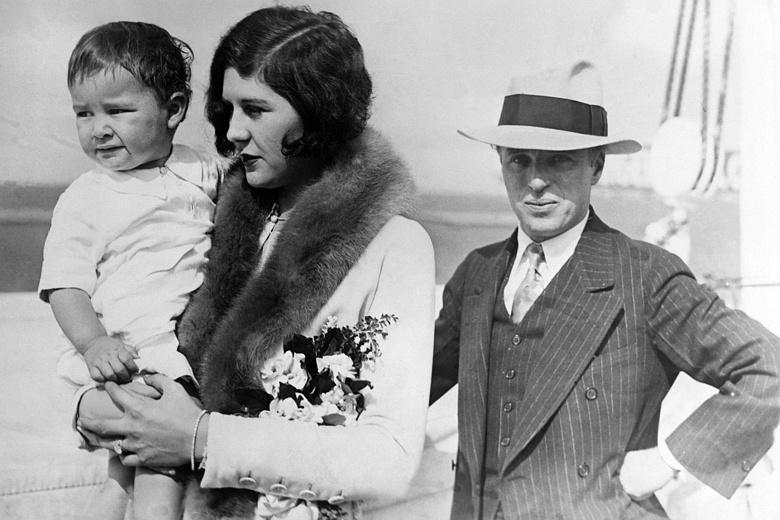
Charles Spencer Chaplin Jr., Lita Grey and Charles Chaplin
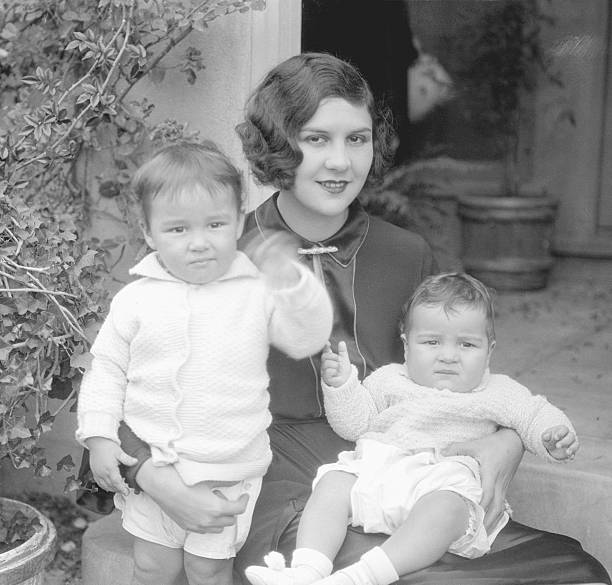
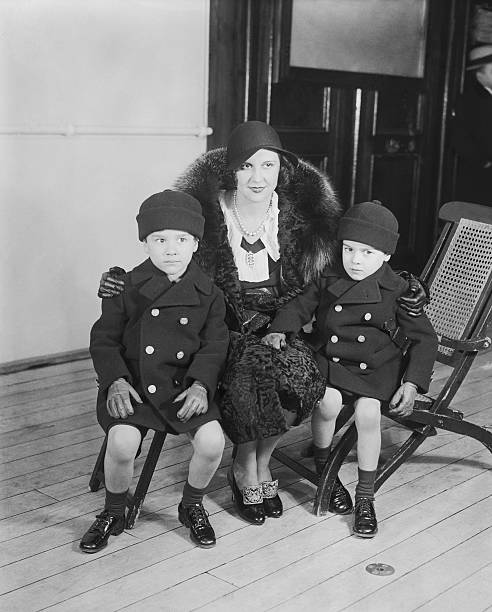
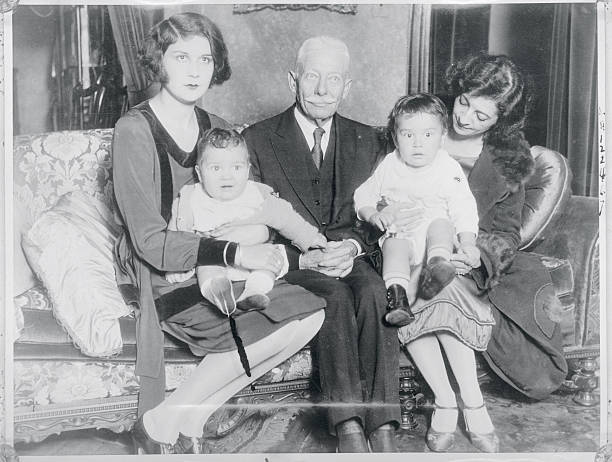
It was an unhappy marriage, and Chaplin spent long hours at the studio to avoid seeing his wife.
In November 1926, Grey took the children and left the family home. A bitter divorce followed, in which Grey’s application – accusing Chaplin of infidelity, abuse, and of harbouring “perverted sexual desires” – was leaked to the press. Chaplin was reported to be in a state of nervous breakdown, as the story became headline news and groups formed across America calling for his films to be banned.
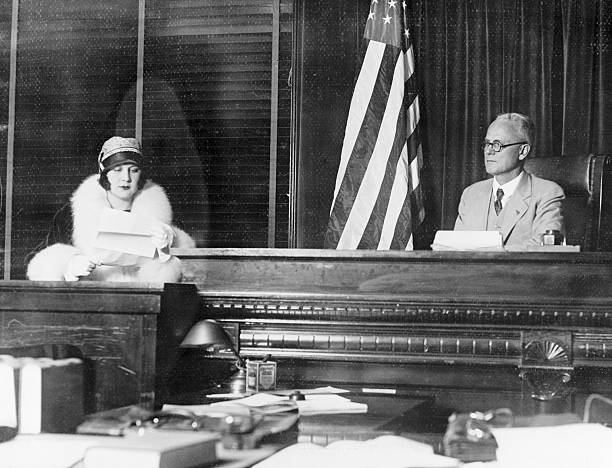
Eager to end the case without further scandal, Chaplin’s lawyers agreed to a cash settlement of $600,000 – the largest awarded by American courts at that time. His fan base was strong enough to survive the incident, and it was soon forgotten, but Chaplin was deeply affected by it.
Before the divorce suit was filed, Chaplin had begun work on a new film, The Circus. He built a story around the idea of walking a tightrope while besieged by monkeys, and turned the Tramp into the accidental star of a circus.
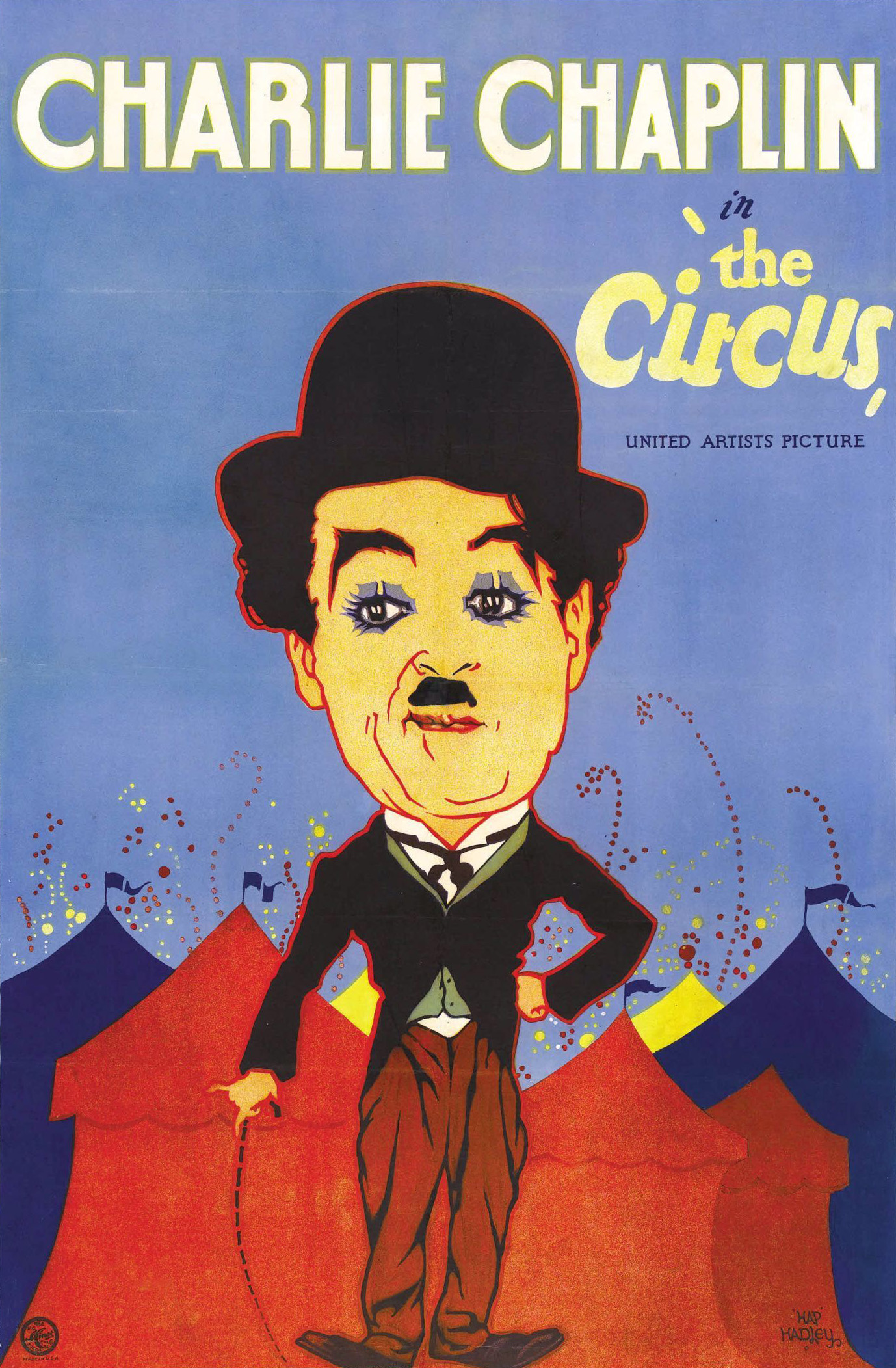
The Circus (1928) Poster
Filming was suspended for 10 months while he dealt with the divorce scandal, and it was generally a trouble-ridden production. Finally completed in October 1927, The Circus was released in January 1928 to a positive reception. At the 1st Academy Awards, Chaplin was given a special trophy “For versatility and genius in acting, writing, directing and producing The Circus“.
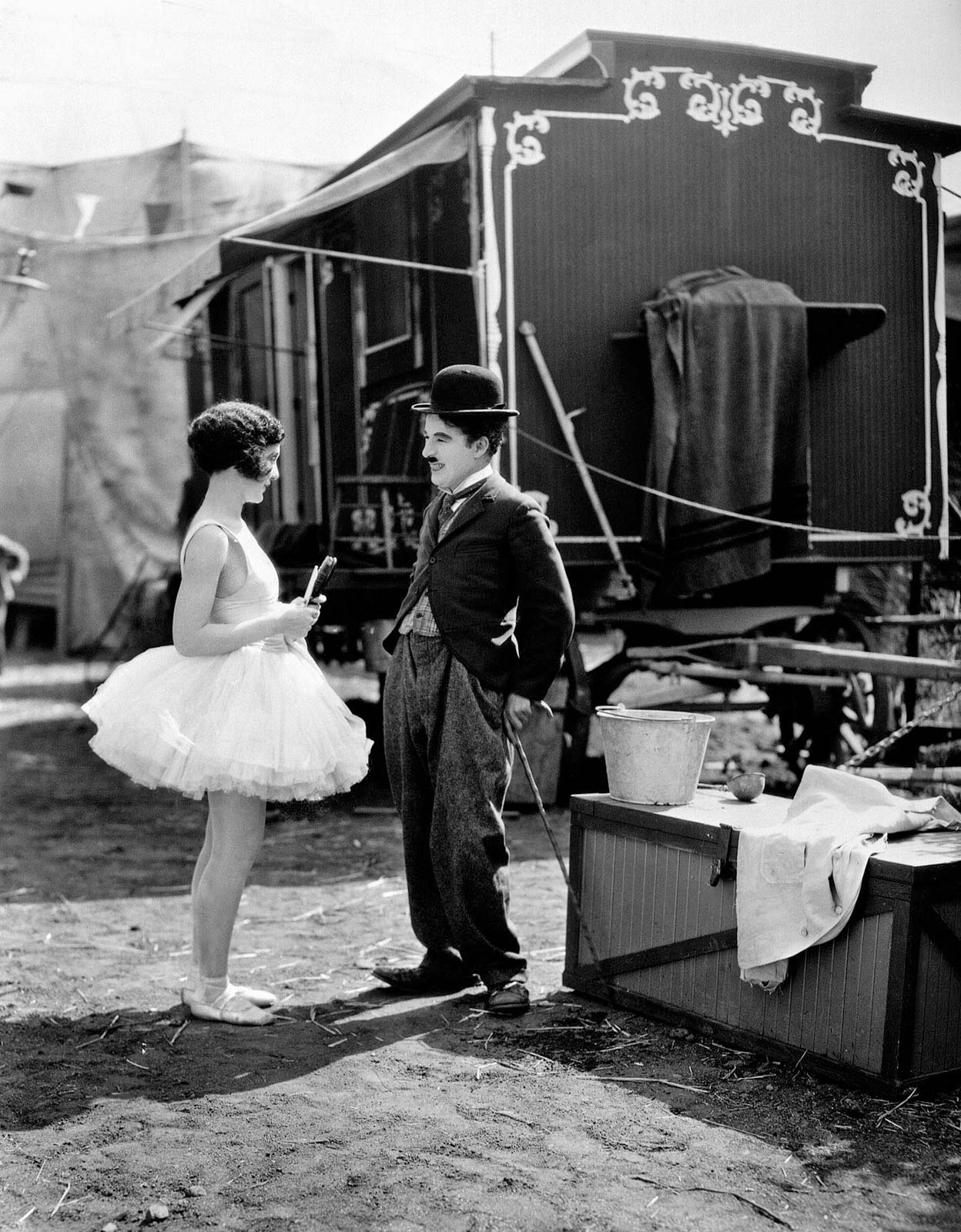
Merna Kennedy and Charles Chaplin in The Circus (1928)
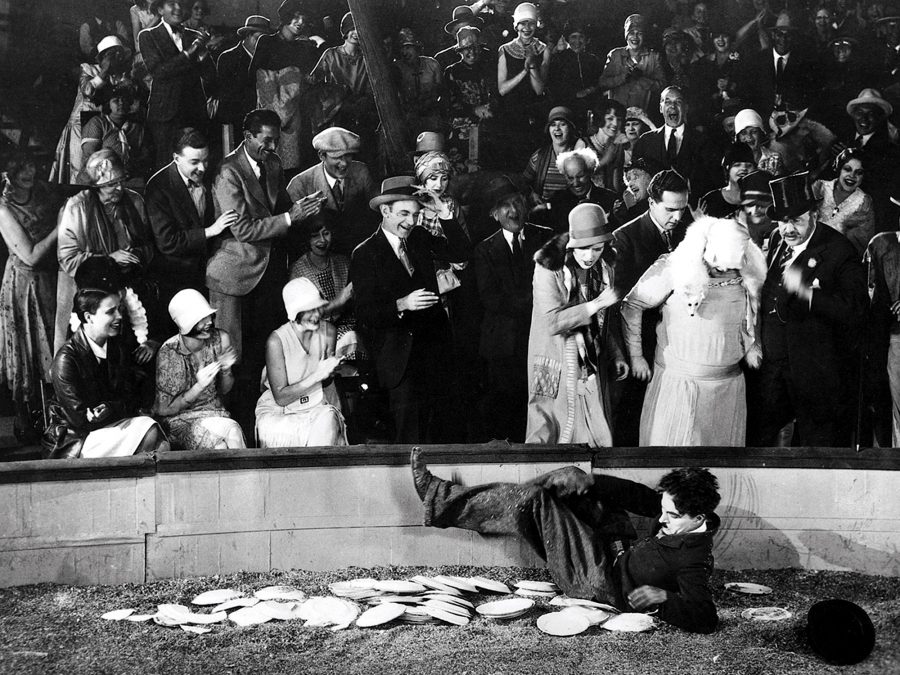
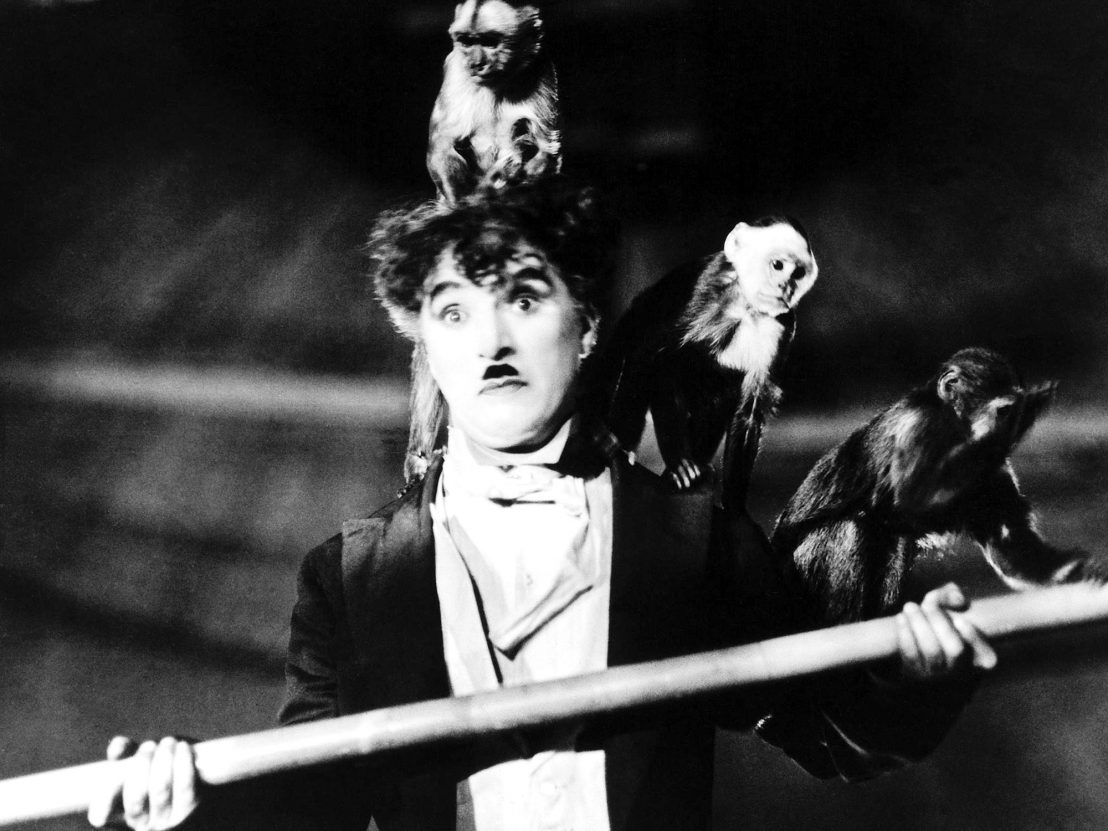
Charles Chaplin in The Circus (1928)
Despite its success, he permanently associated the film with the stress of its production; Chaplin omitted The Circus from his autobiography, and struggled to work on it when he recorded the score in his later years.
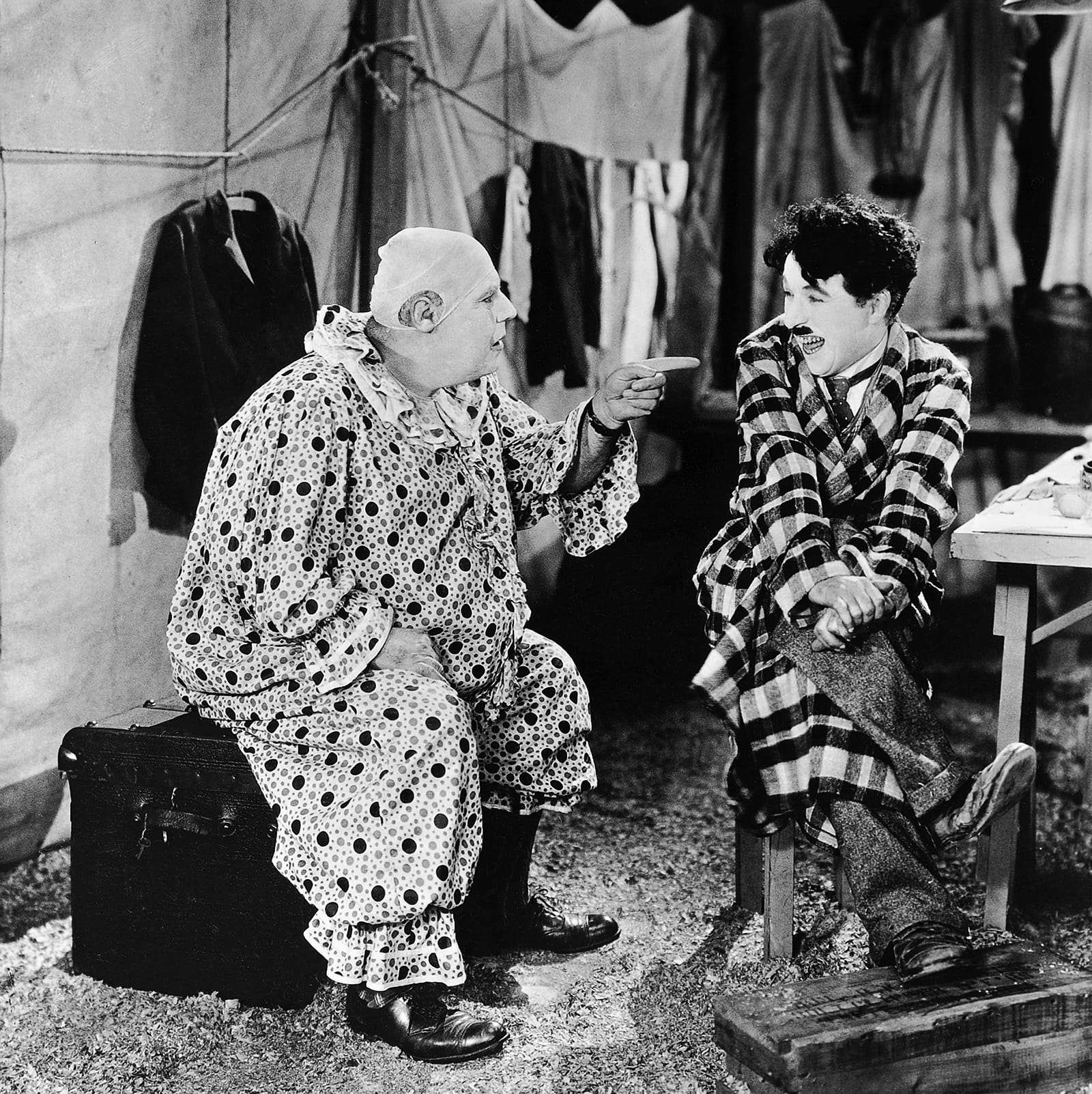
Henry Bergman and Charles Chaplin in The Circus (1928)
City Lights
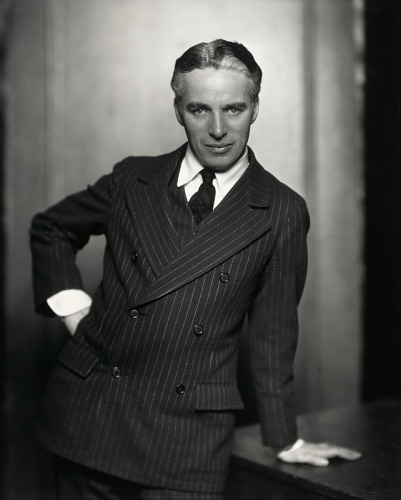
—Chaplin explaining his defiance against sound in the 1930s
By the time The Circus was released, Hollywood had witnessed the introduction of sound films.
Chaplin was cynical about this new medium and the technical shortcomings it presented, believing that “talkies” lacked the artistry of silent films. He was also hesitant to change the formula that had brought him such success, and feared that giving the Tramp a voice would limit his international appeal.
He, therefore, rejected the new Hollywood craze and began work on a new silent film. Chaplin was nonetheless anxious about this decision and remained so throughout the film’s production.
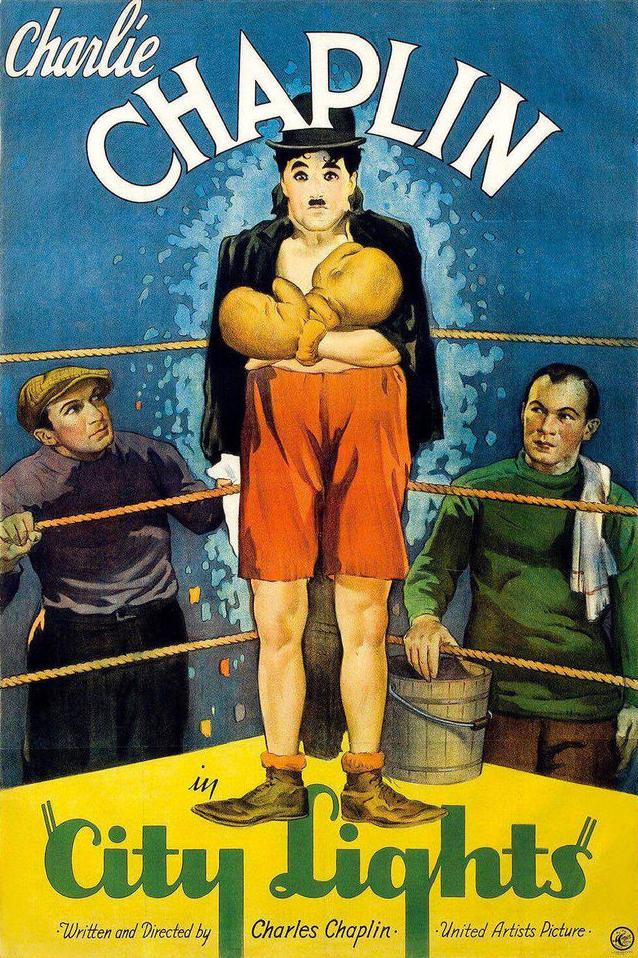
City Lights (1931) Poster – Regarded as one of Chaplin’s finest works
When filming began at the end of 1928, Chaplin had been working on the story for almost a year. City Lights followed the Tramp’s love for a blind flower girl (played by Virginia Cherrill) and his efforts to raise money for her sight-saving operation.
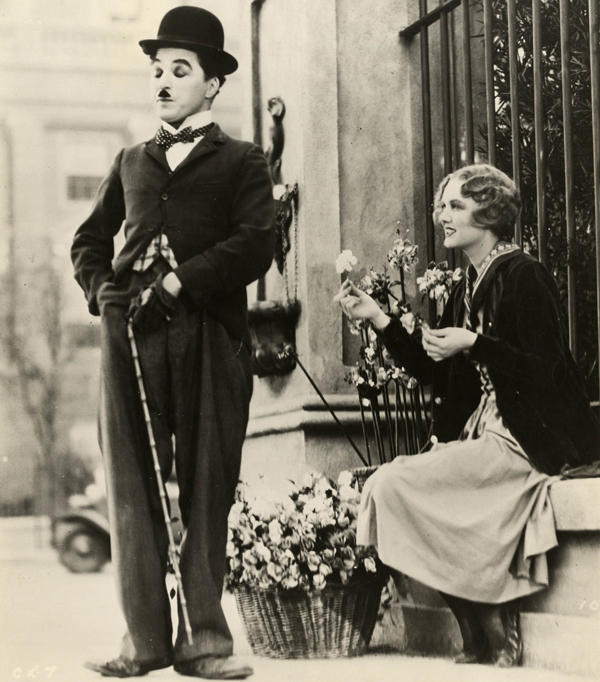
Charles Chaplin and Virginia Cherrill in City Lights (1931)
It was a challenging production that lasted 21 months, with Chaplin later confessing that he “had worked himself into a neurotic state of wanting perfection”. One advantage Chaplin found in sound technology was the opportunity to record a musical score for the film, which he composed himself.
Chaplin finished editing City Lights in December 1930, by which time silent films were an anachronism. A preview before an unsuspecting public audience was not a success, but a showing for the press produced positive reviews.
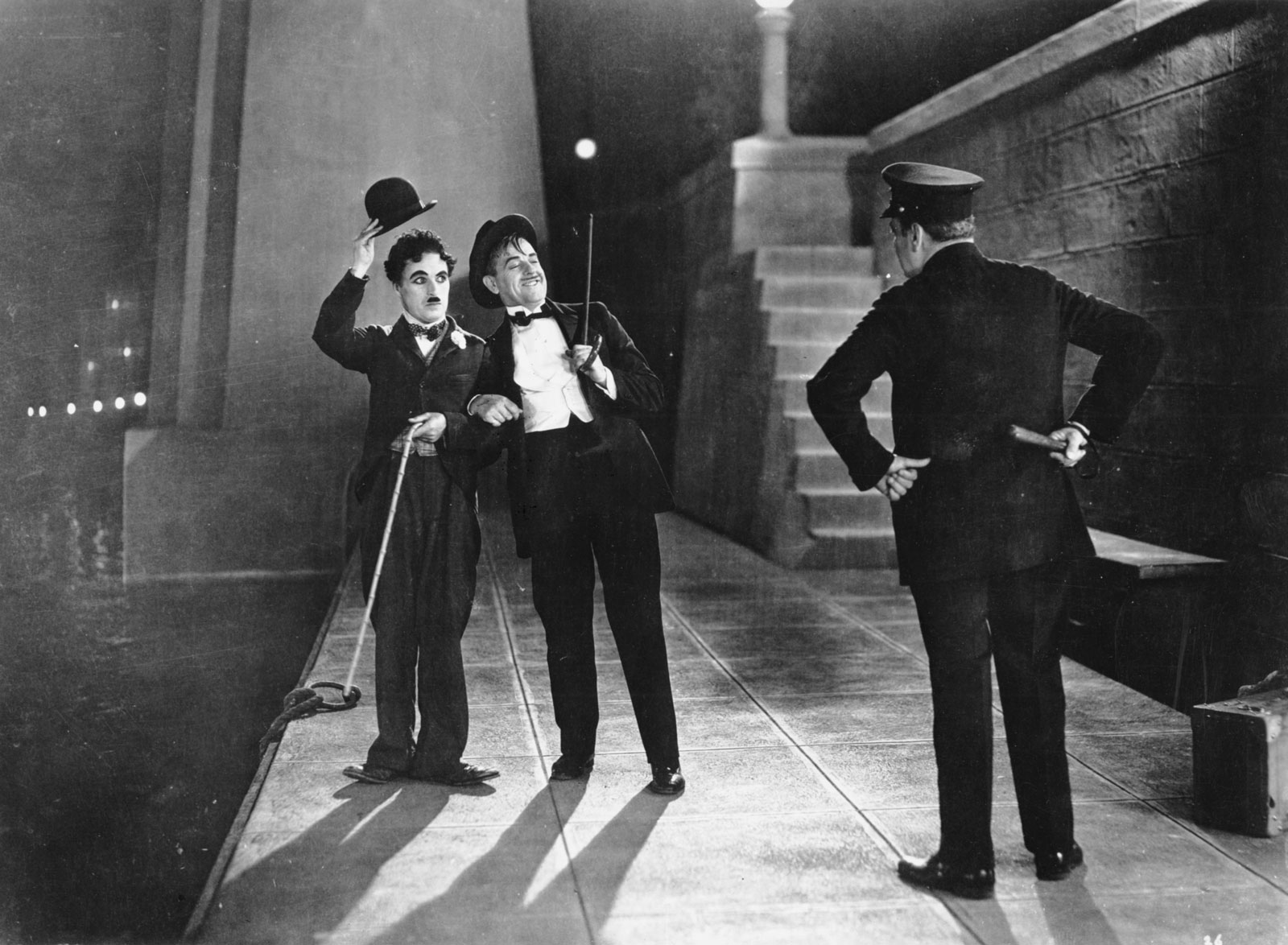
Charles Chaplin and Harry Myers in City Lights (1931)
One journalist wrote, “Nobody in the world but Charlie Chaplin could have done it. He is the only person that has that peculiar something called ‘audience appeal’ in sufficient quality to defy the popular penchant for movies that talk.” Given its general release in January 1931, City Lights proved to be a popular and financial success – eventually grossing over $3 million.
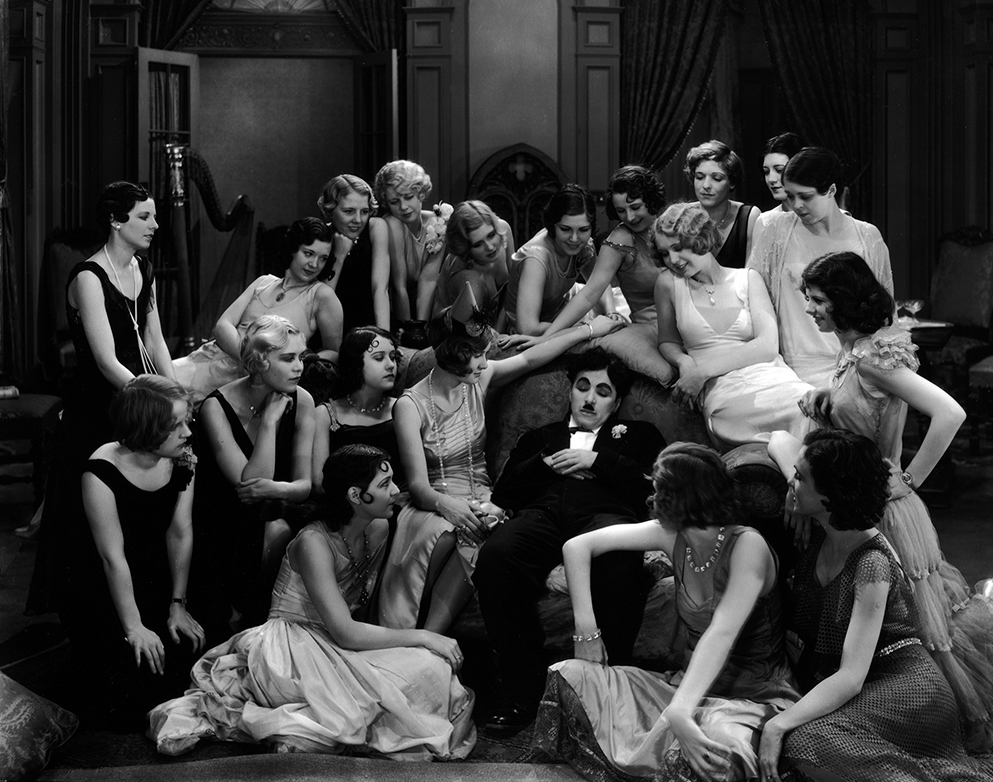
Charles Chaplin in City Lights (1931)
The British Film Institute cites it as Chaplin’s finest accomplishment, and the critic James Agee hails the closing scene as “the greatest piece of acting and the highest moment in movies”. City Lights became Chaplin’s personal favourite of his films and remained so throughout his life.
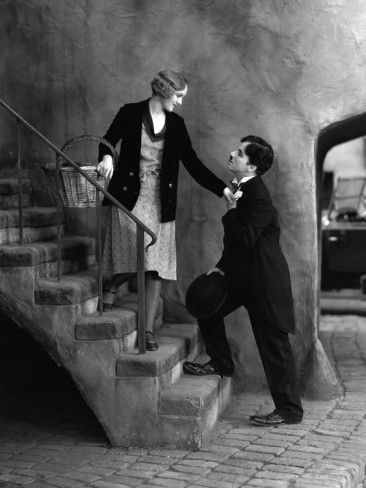
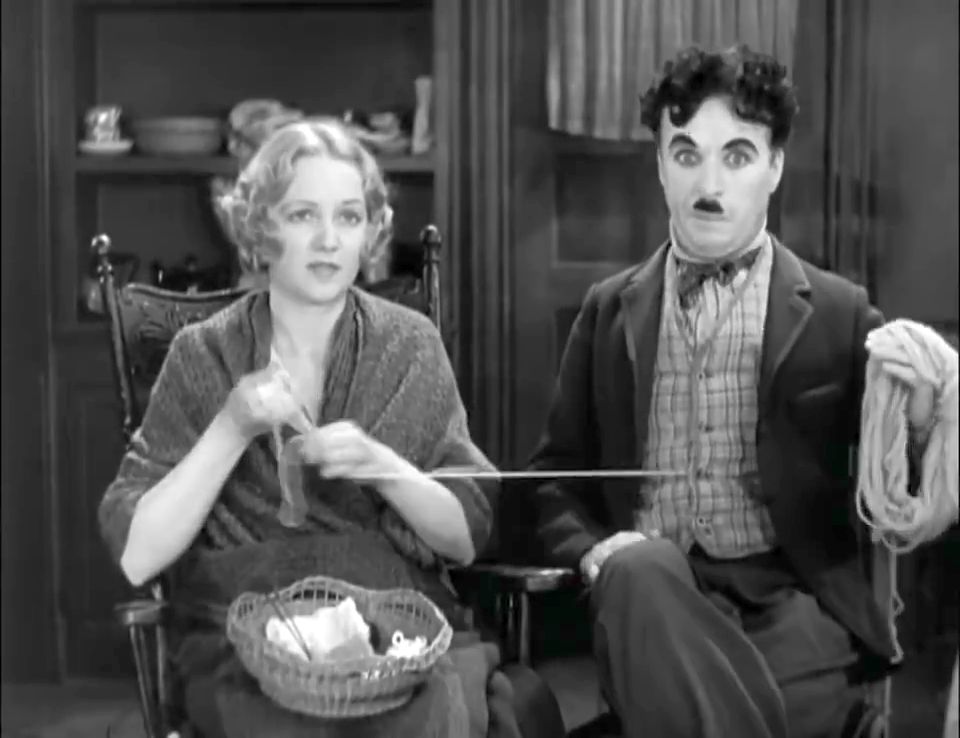
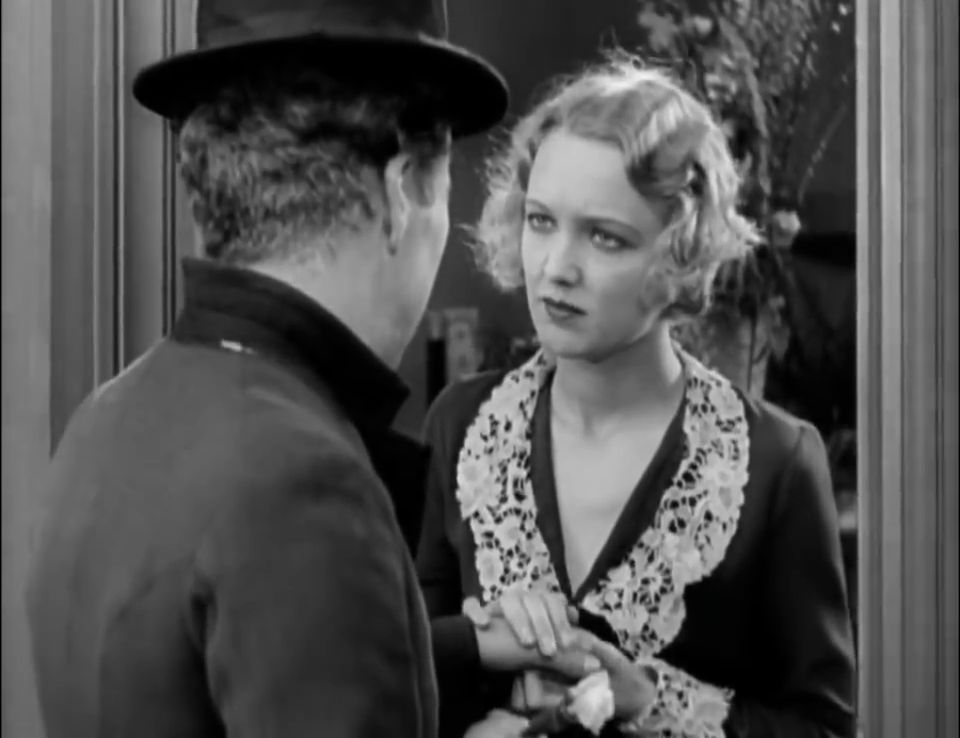
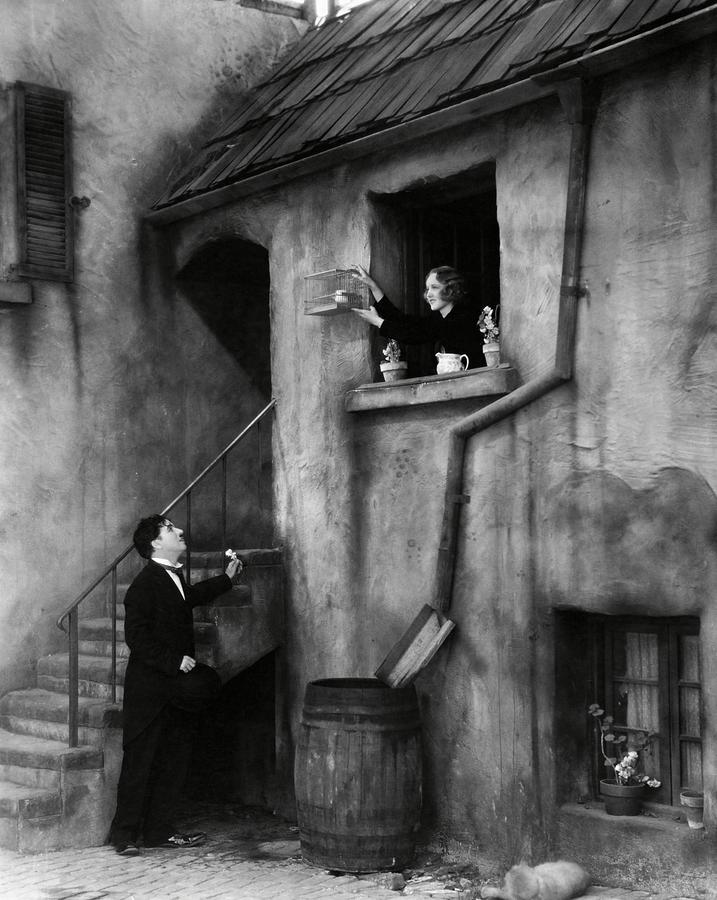
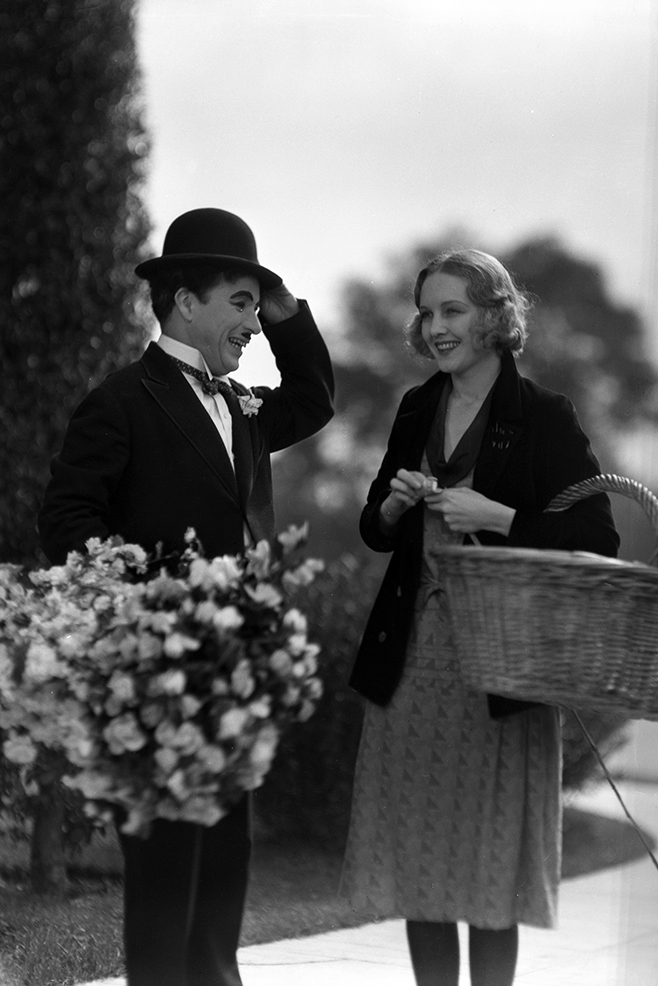
Charles Chaplin and Virginia Cherrill in City Lights (1931)
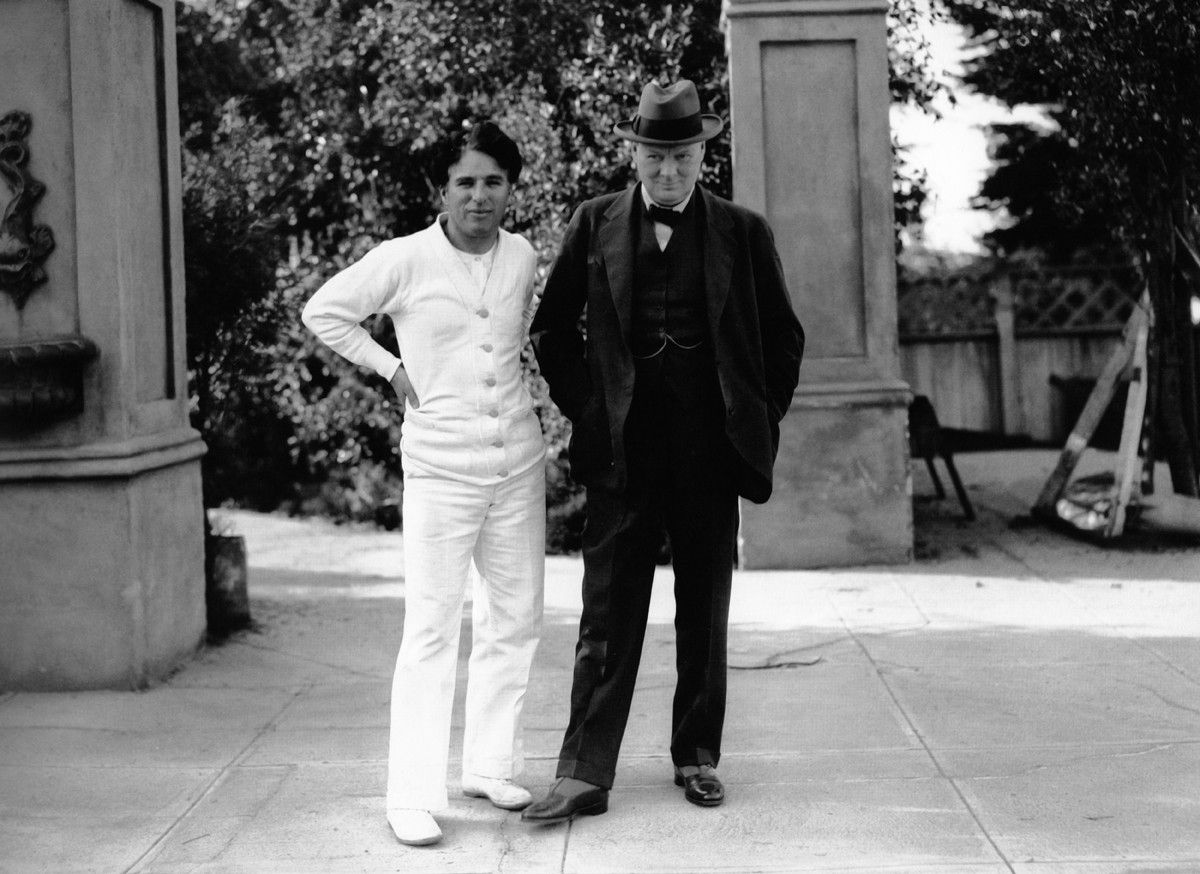
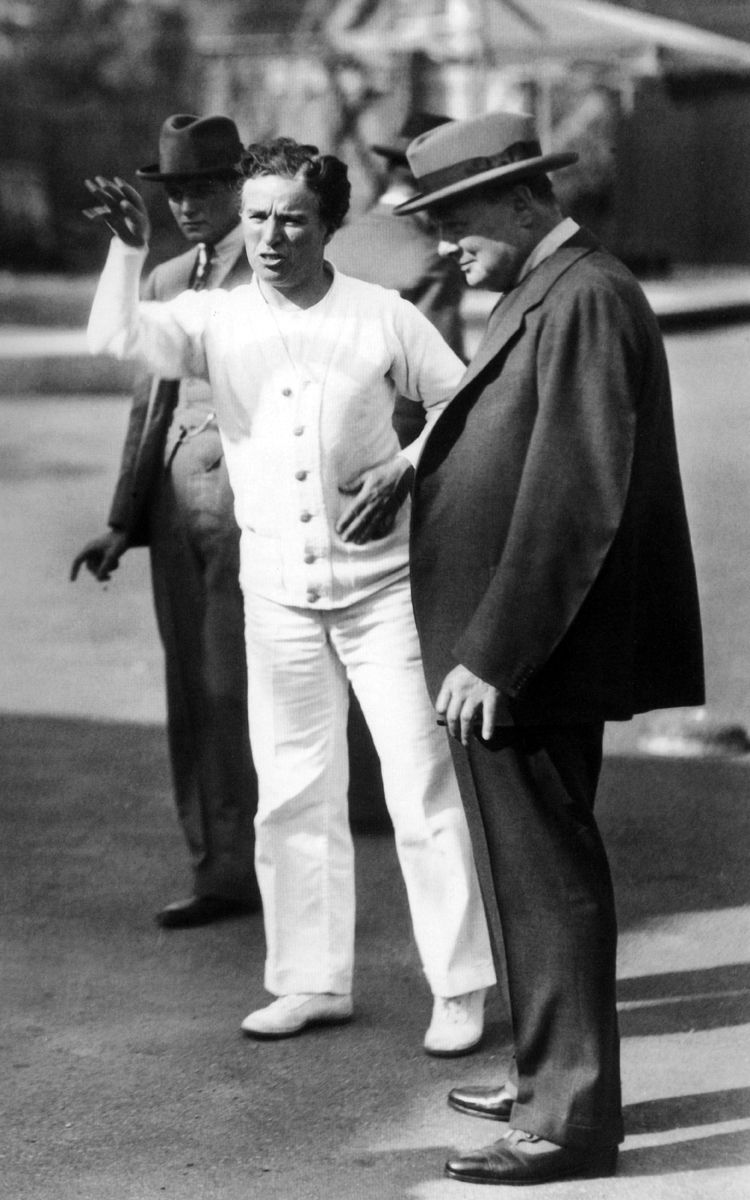
Charles Chaplin and Winston Churchill on the set of City Lights (1931)
Travels, Paulette Goddard, and Modern Times
City Lights had been a success, but Chaplin was unsure if he could make another picture without dialogue.
He remained convinced that sound would not work in his films, but was also “obsessed by a depressing fear of being old-fashioned.” In this state of uncertainty, early in 1931, the comedian decided to take a holiday and ended up travelling for 16 months.
He spent months travelling Western Europe, including extended stays in France and Switzerland, and spontaneously decided to visit Japan. The day after he arrived in Japan, Prime Minister Inukai Tsuyoshi was assassinated by ultra-nationalists in the May 15 Incident. The group’s original plan had been to provoke a war with the United States by assassinating Chaplin at a welcome reception organised by the prime minister, but the plan had been foiled due to delayed public announcement of the event’s date.
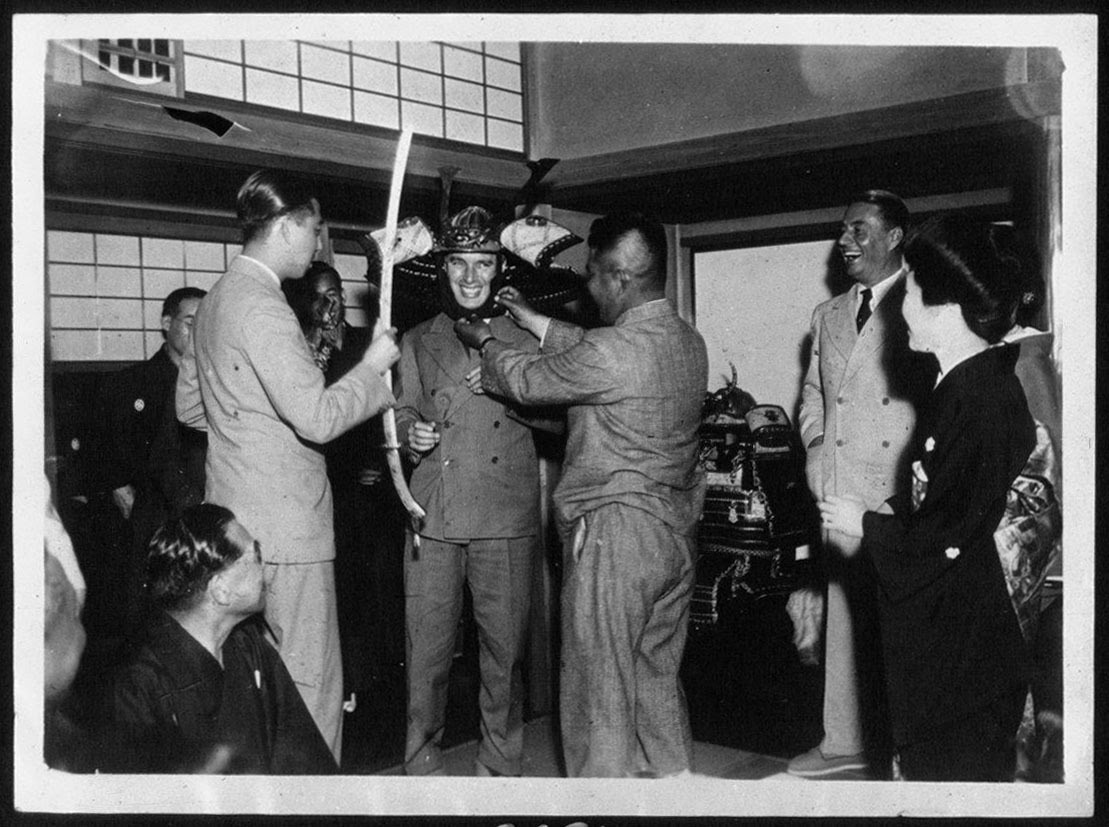
Charles Chaplin in Japan 1931

15th May Incident
In his autobiography, Chaplin recalled that on his return to Los Angeles, “I was confused and without plan, restless and conscious of an extreme loneliness”. He briefly considered retiring and moving to China.
Chaplin’s loneliness was relieved when he met 21-year-old actress Paulette Goddard in July 1932, and the pair began a relationship. He was not ready to commit to a film, however, and focused on writing a serial about his travels (published in Woman’s Home Companion).
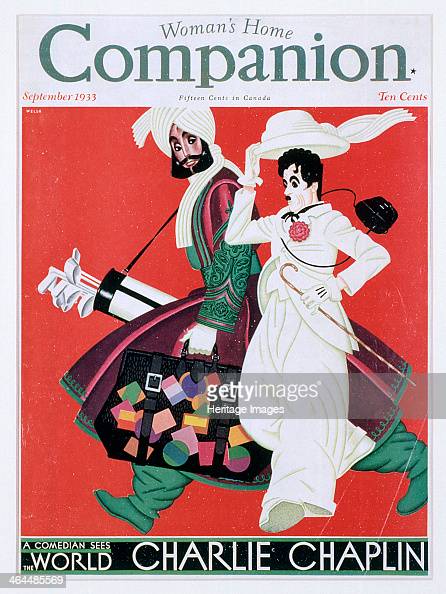
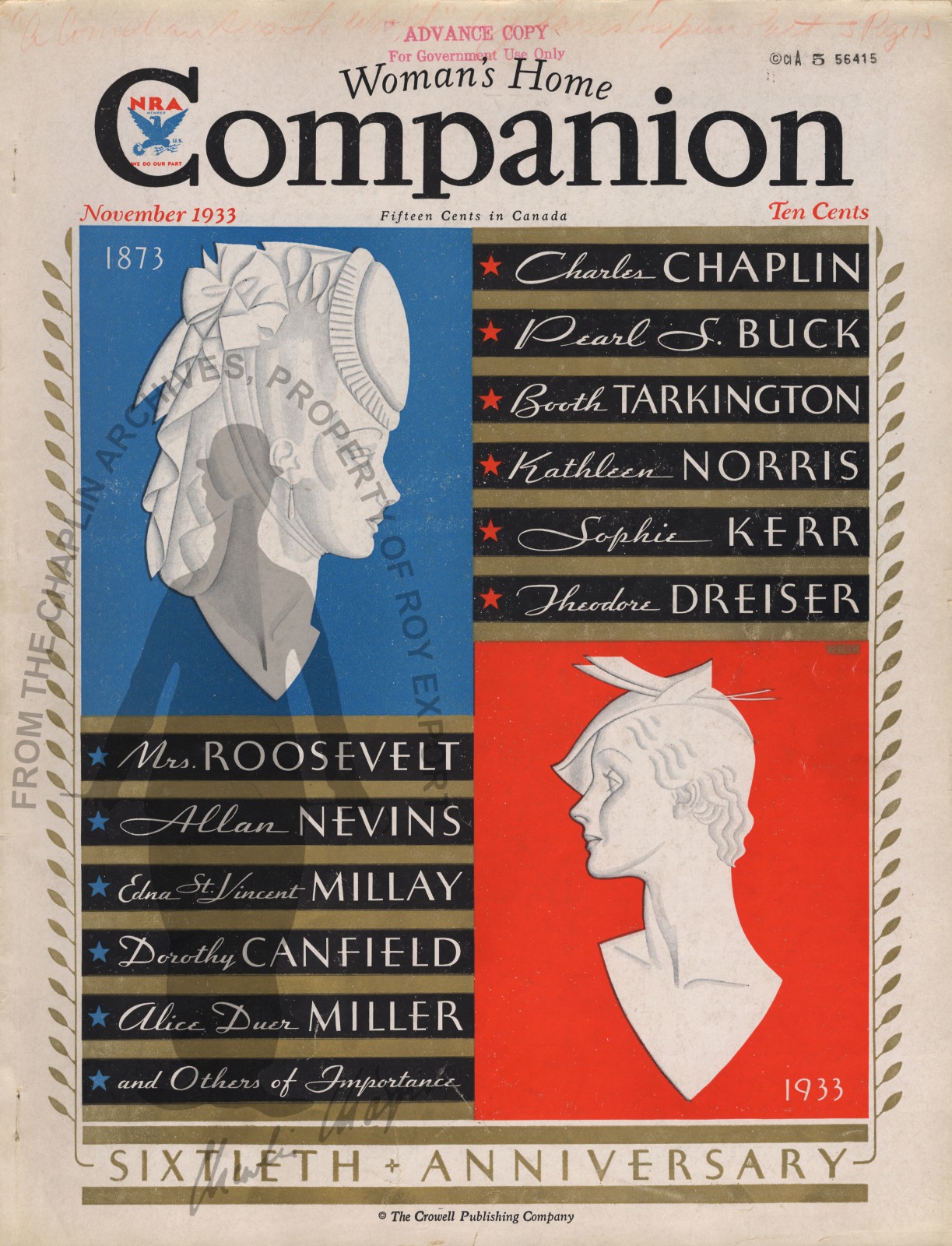
Woman’s Home Companion (1933)
The trip had been a stimulating experience for Chaplin, including meetings with several prominent thinkers, and he became increasingly interested in world affairs. The state of labour in America troubled him, and he feared that capitalism and machinery in the workplace would increase unemployment levels. It was these concerns that stimulated Chaplin to develop his new film.
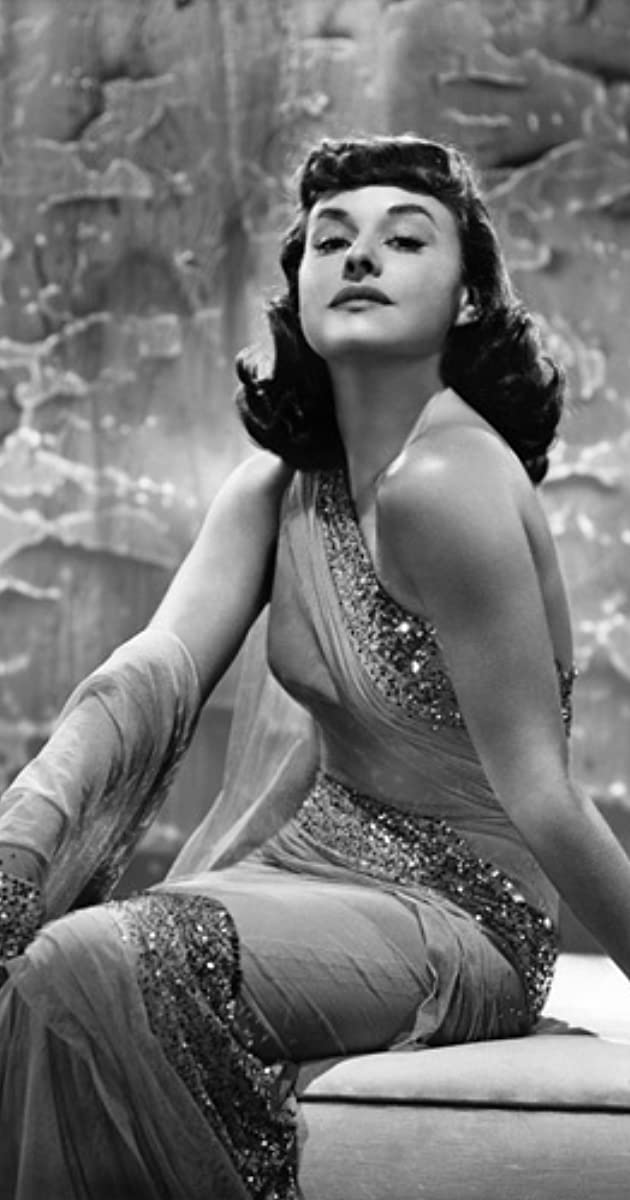
Paulette Goddard
Modern Times was announced by Chaplin as “a satire on certain phases of our industrial life.”
Featuring the Tramp and Goddard as they endure the Great Depression, it took ten and a half months to film. Chaplin intended to use spoken dialogue but changed his mind during rehearsals.
Like its predecessor, Modern Times employed sound effects but almost no speaking. Chaplin’s performance of a gibberish song did, however, give the Tramp a voice for the only time on film. After recording the music, Chaplin released Modern Times in February 1936.
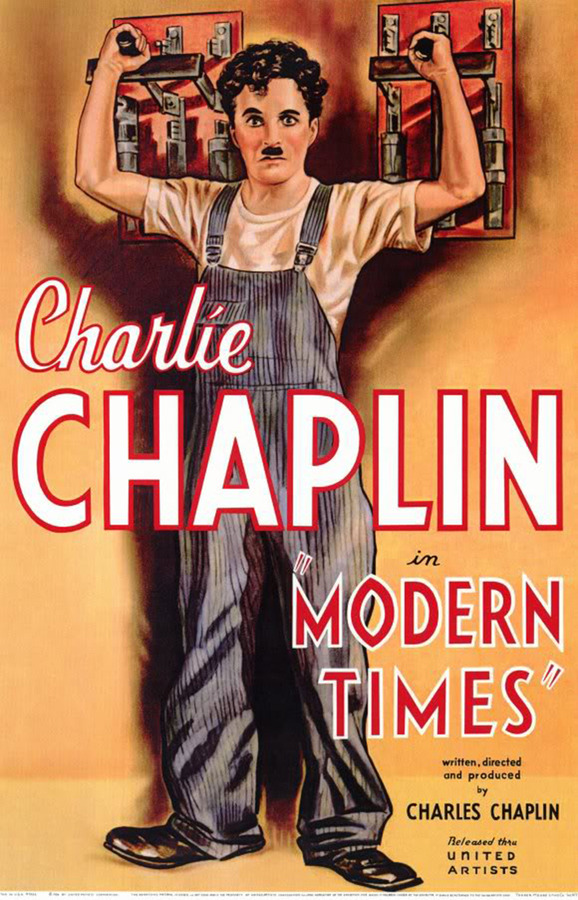
Modern Times (1936) Poster
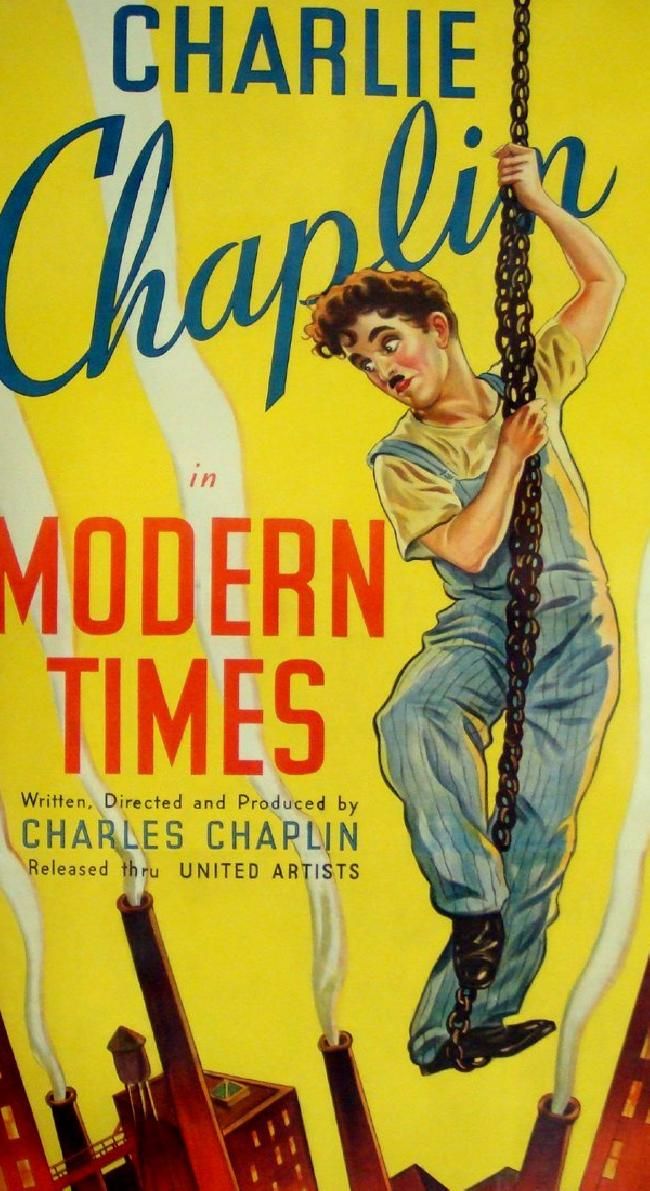
Modern Times (1936) Poster
It was his first feature in 15 years to adopt political references and social realism, a factor that attracted considerable press coverage despite Chaplin’s attempts to downplay the issue. The film earned less at the box-office than his previous features and received mixed reviews, as some viewers disliked the politicising.
Today, Modern Times is seen by the British Film Institute as one of Chaplin’s “great features,” while David Robinson says it shows the filmmaker at “his unrivalled peak as a creator of visual comedy.”
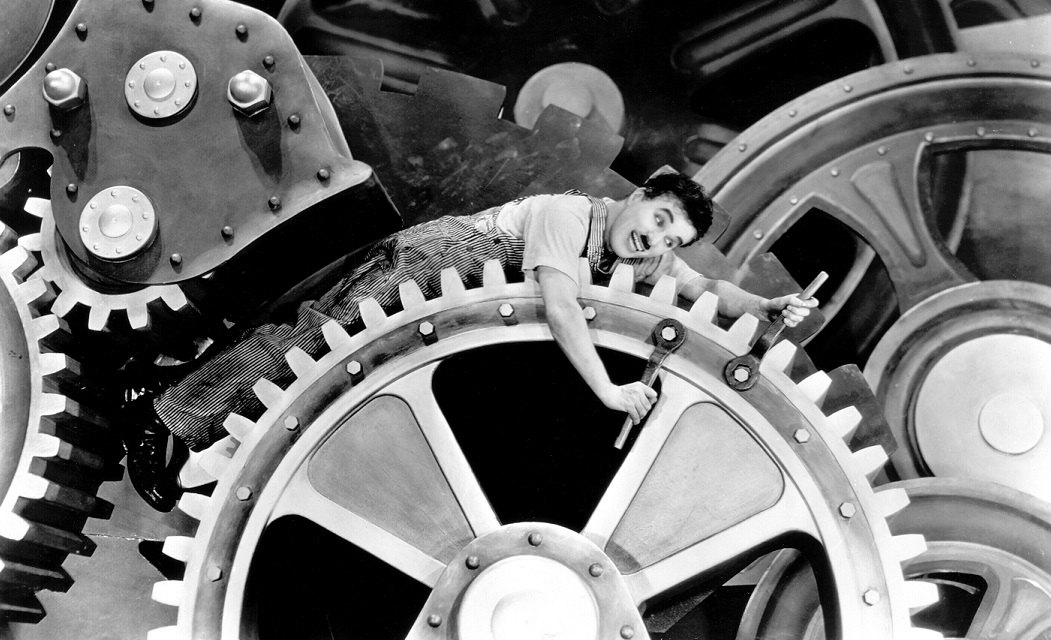
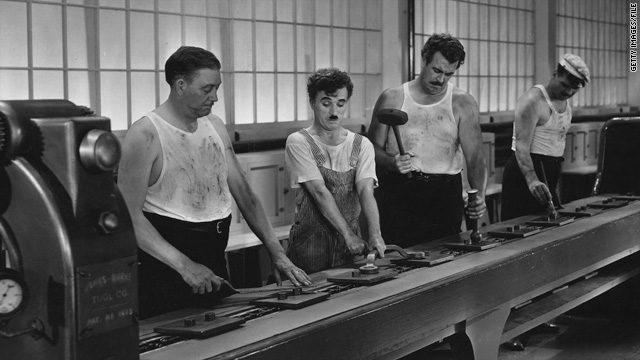
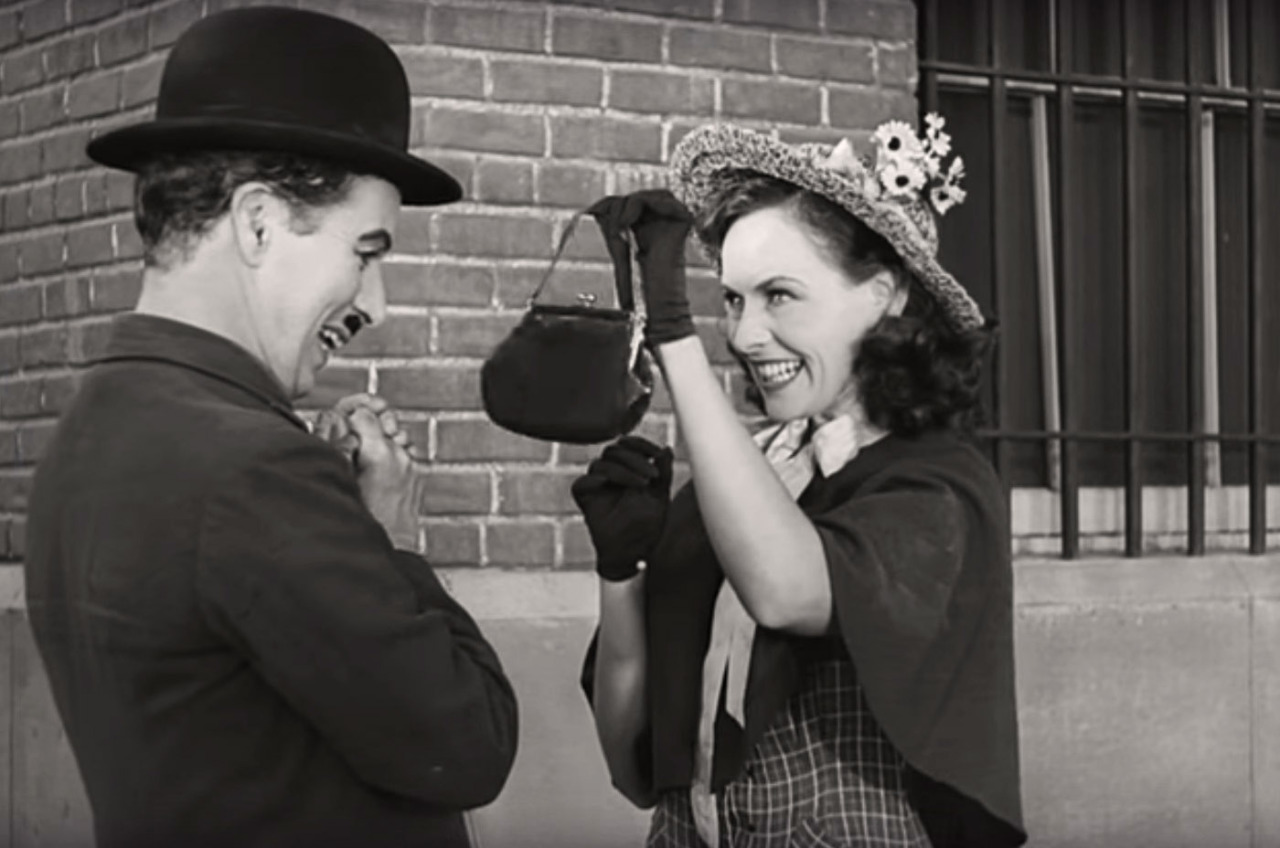
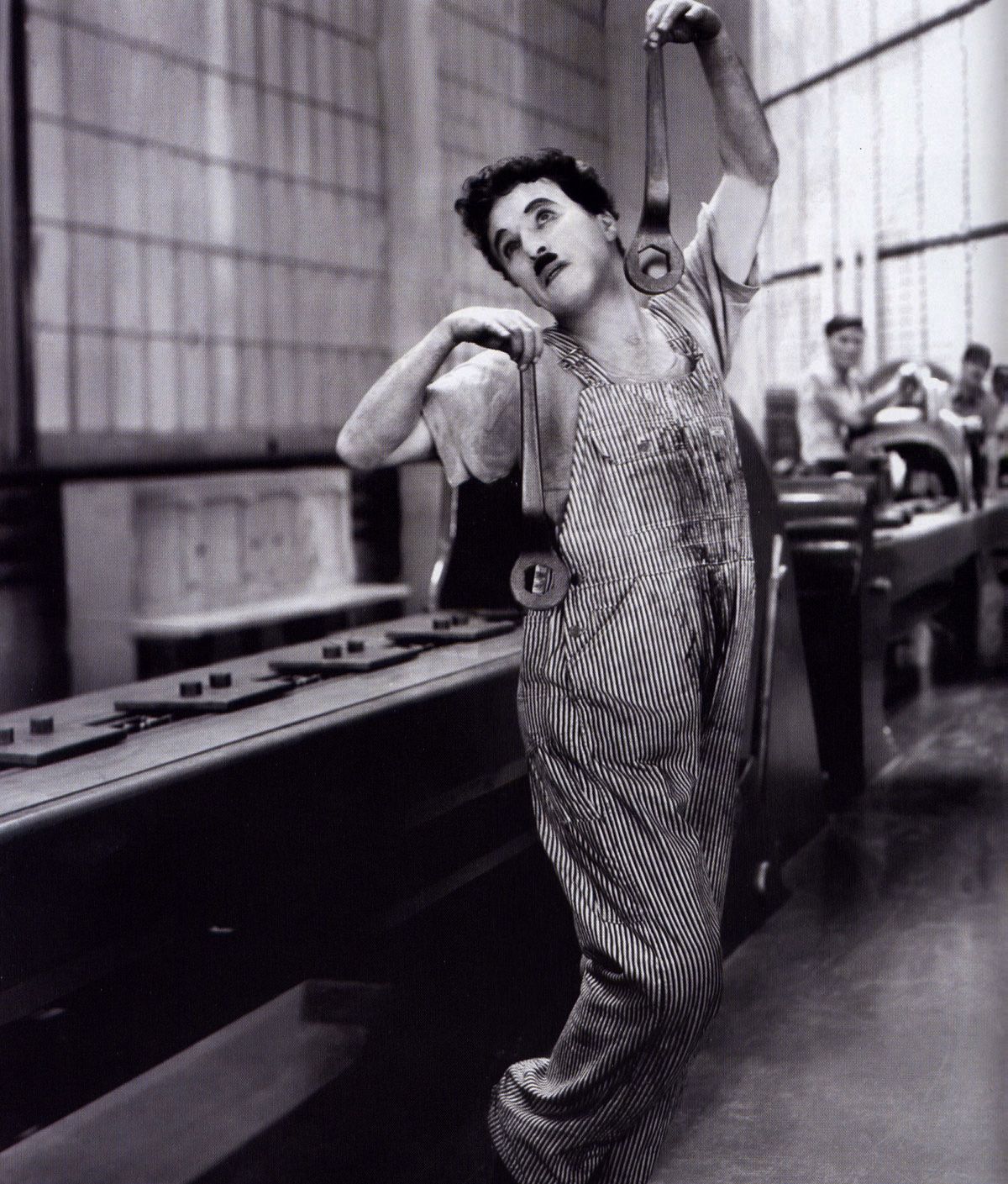
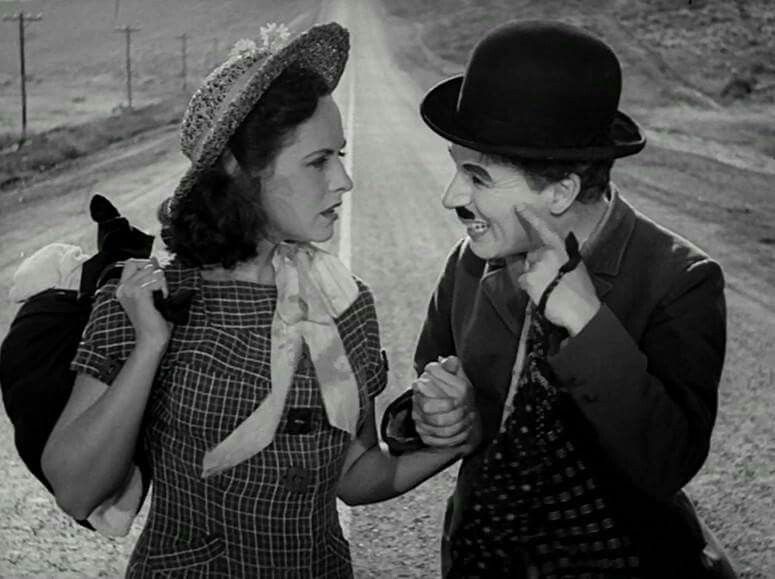
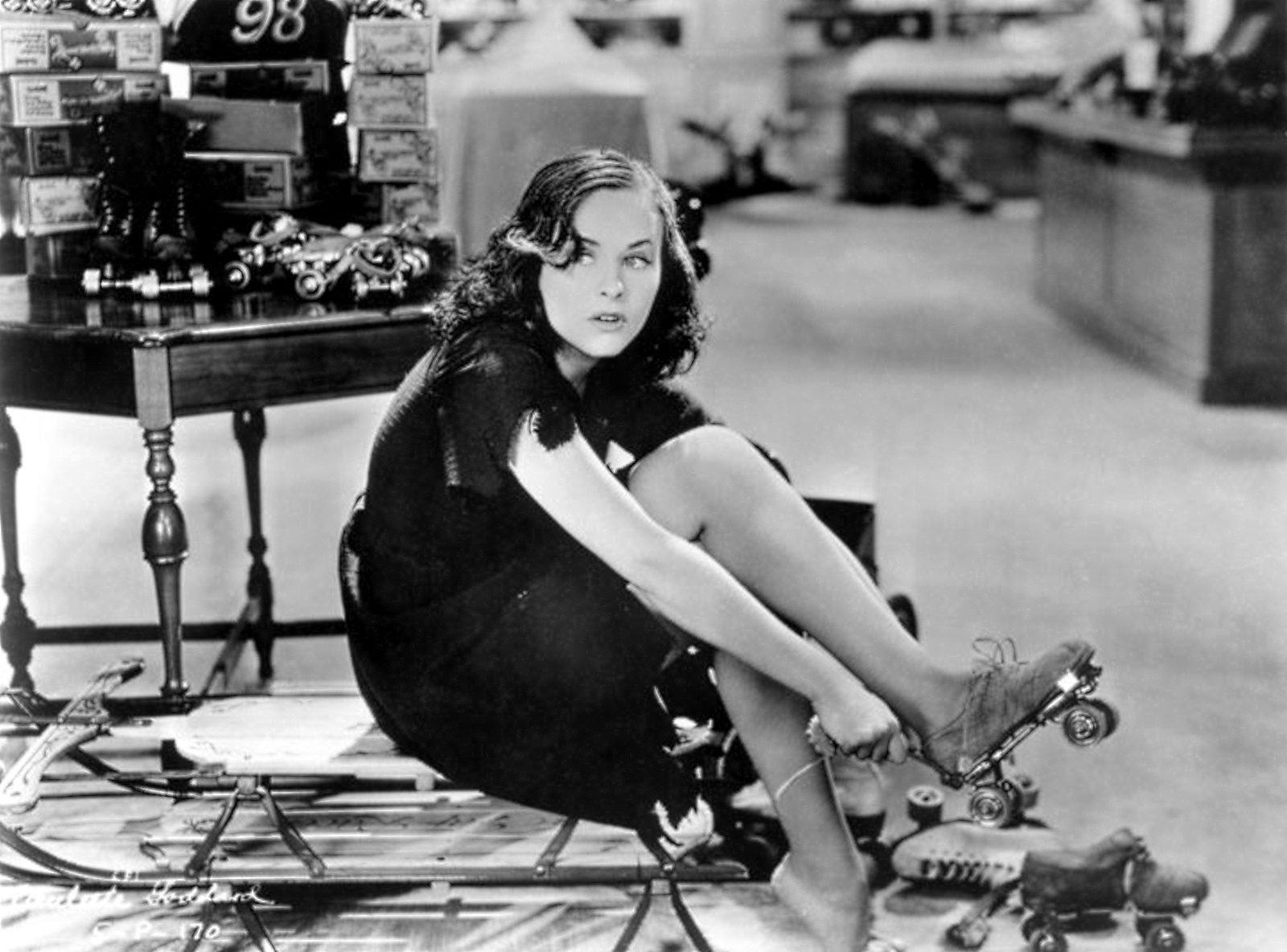
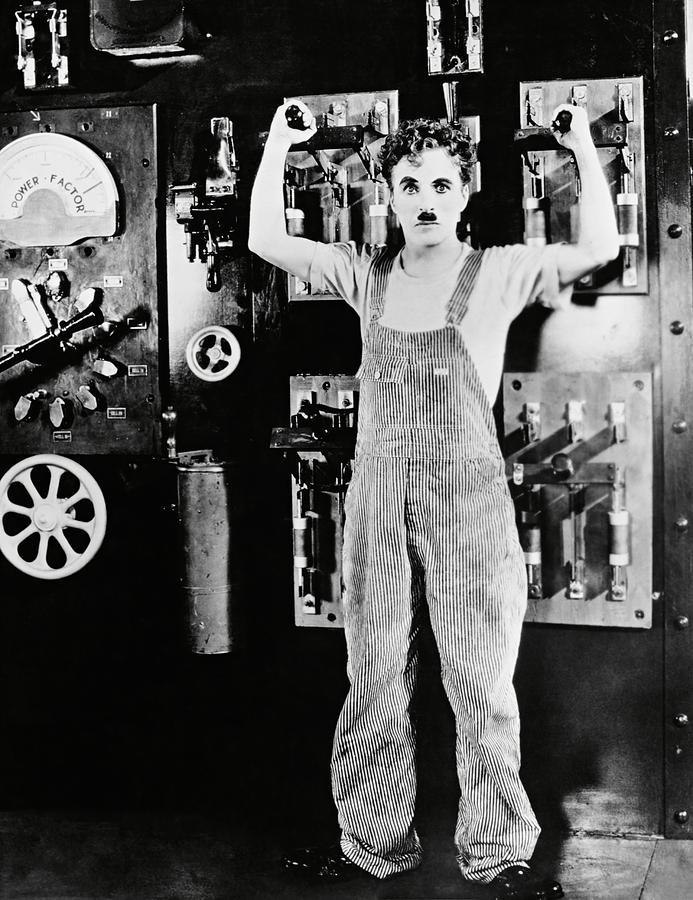
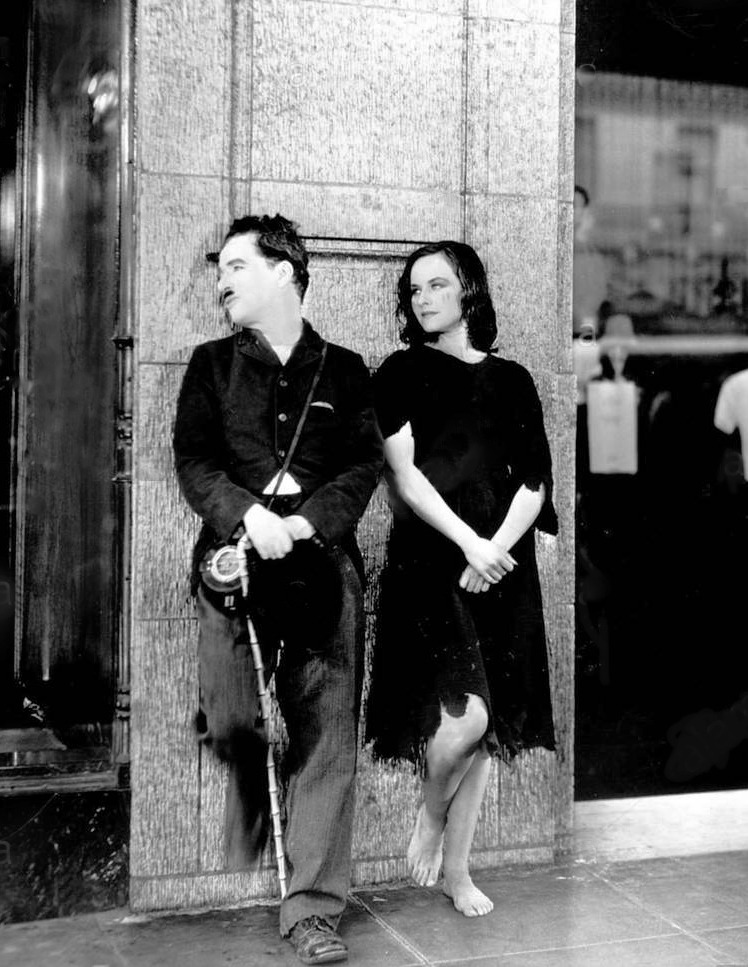
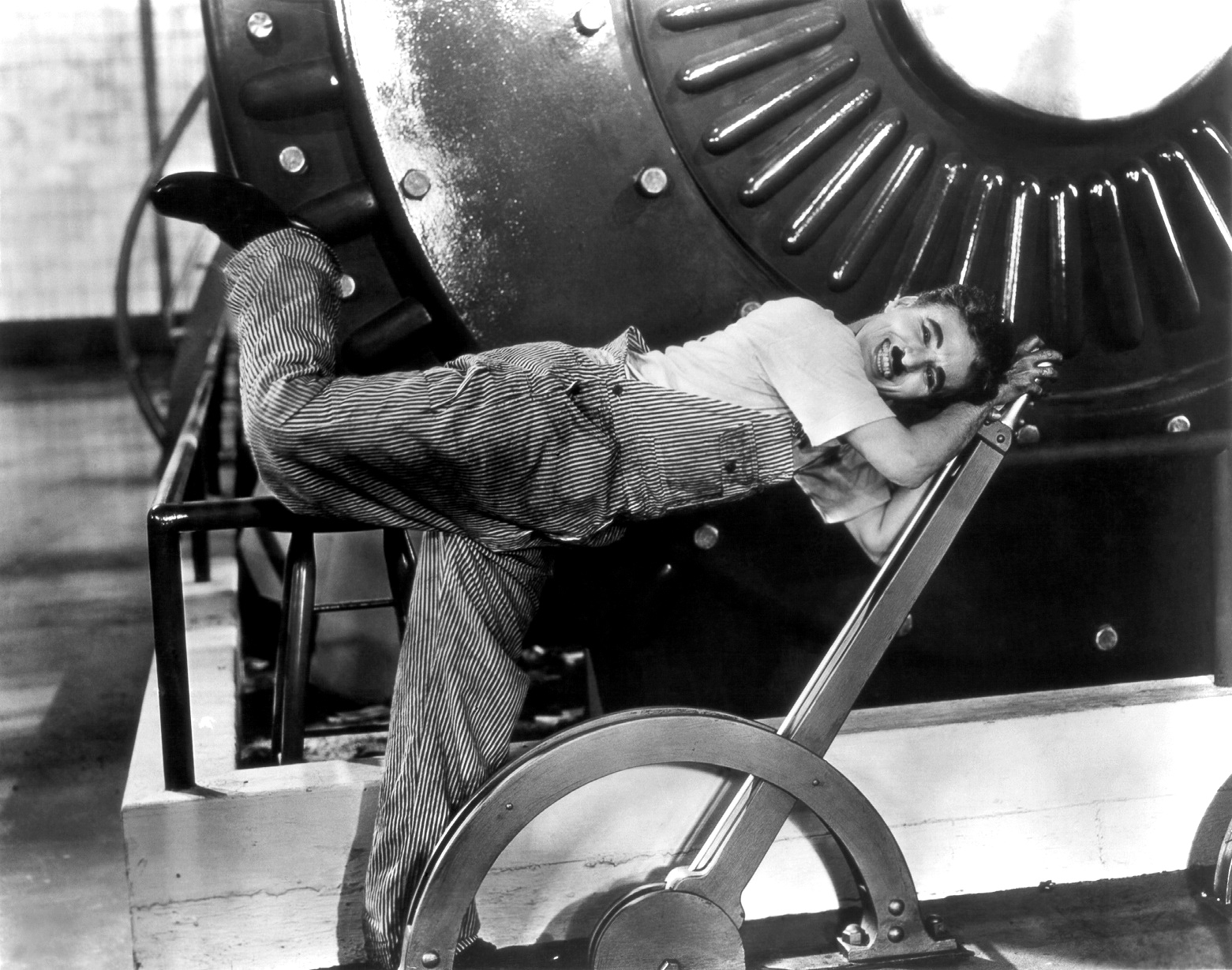
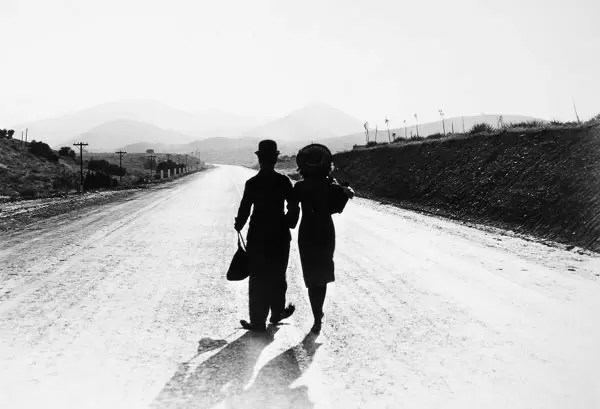
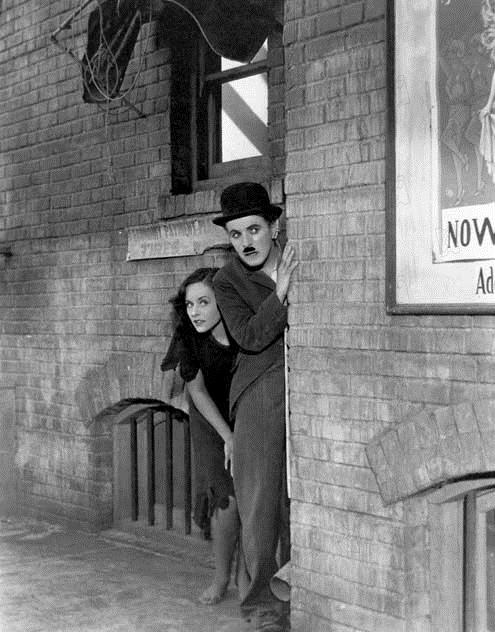
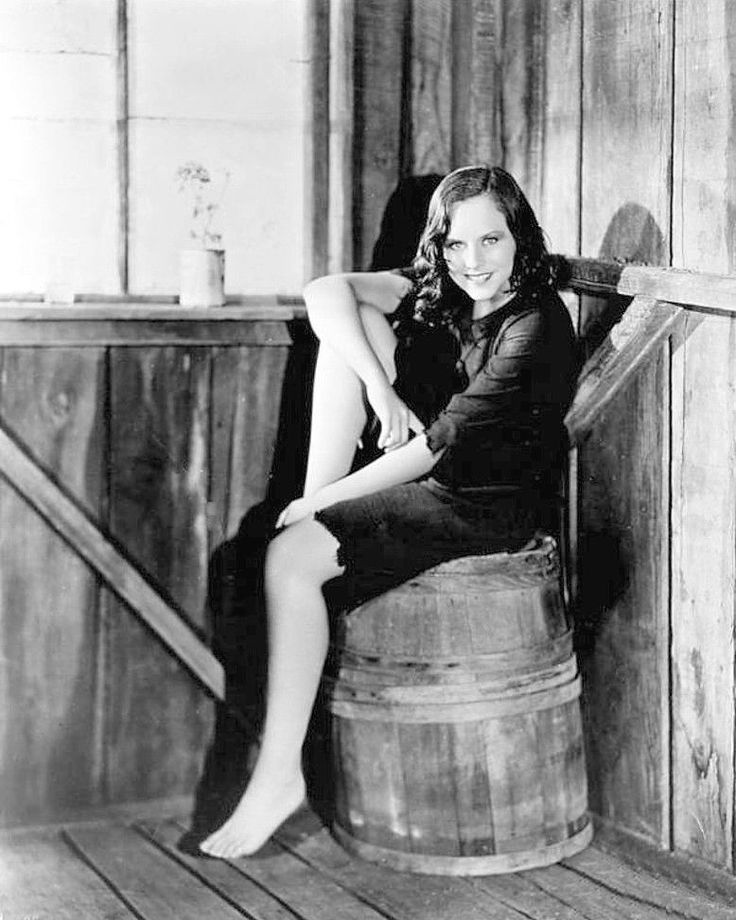
Charles Chaplin with Paulette Goddard in Modern Times (1936)
Following the release of Modern Times, Chaplin left with Goddard for a trip to the Far East. The couple had refused to comment on the nature of their relationship, and it was not known whether they were married or not.
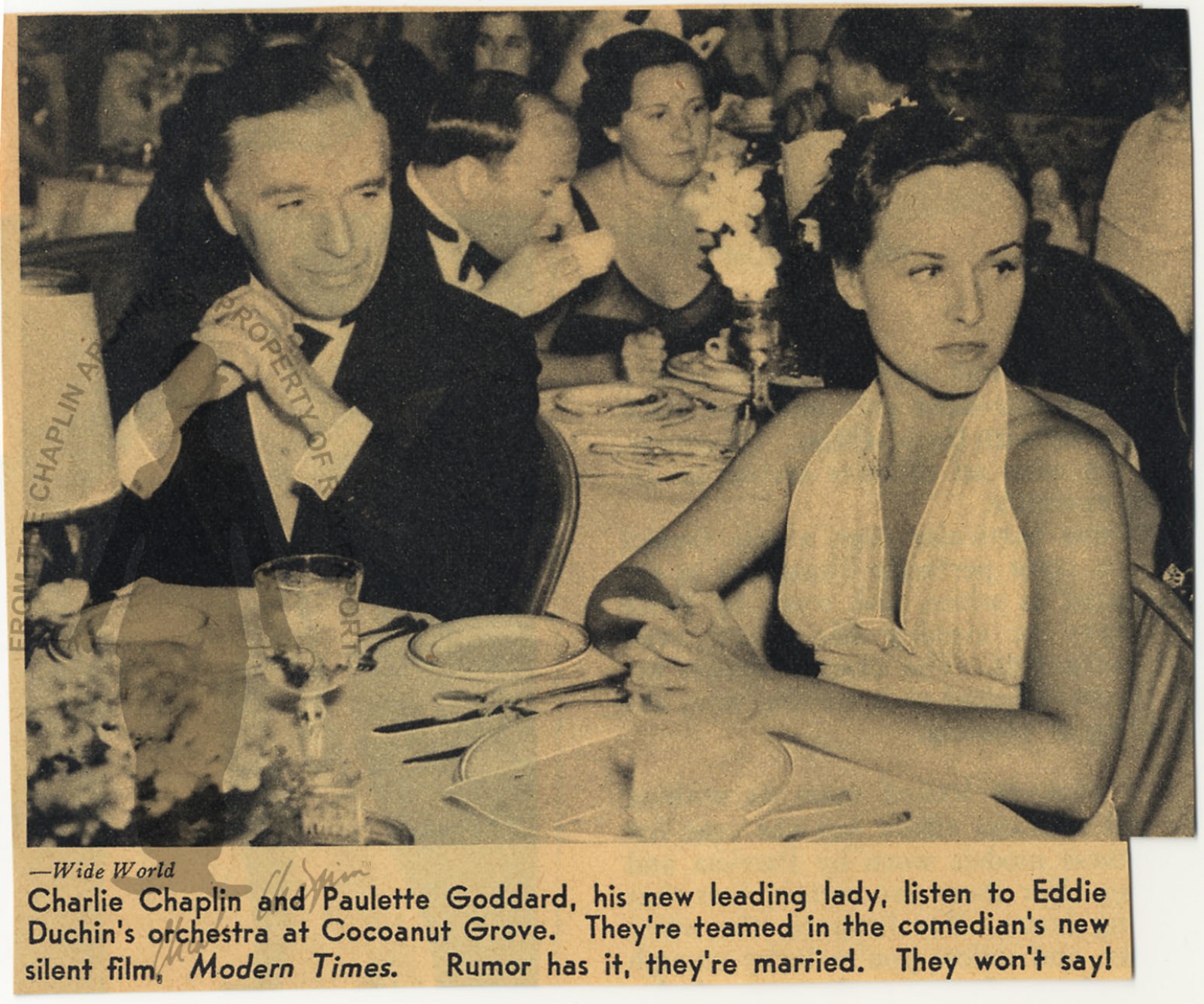
Chaplin/Goddard relationship was veiled in secrecy throughout their time together
Some time later, Chaplin revealed that they married in Canton during this trip. By 1938, the couple had drifted apart, as both focused heavily on their work, although Goddard was again his leading lady in his next feature film, The Great Dictator.
She eventually divorced Chaplin in Mexico in 1942, citing incompatibility and separation for more than a year.
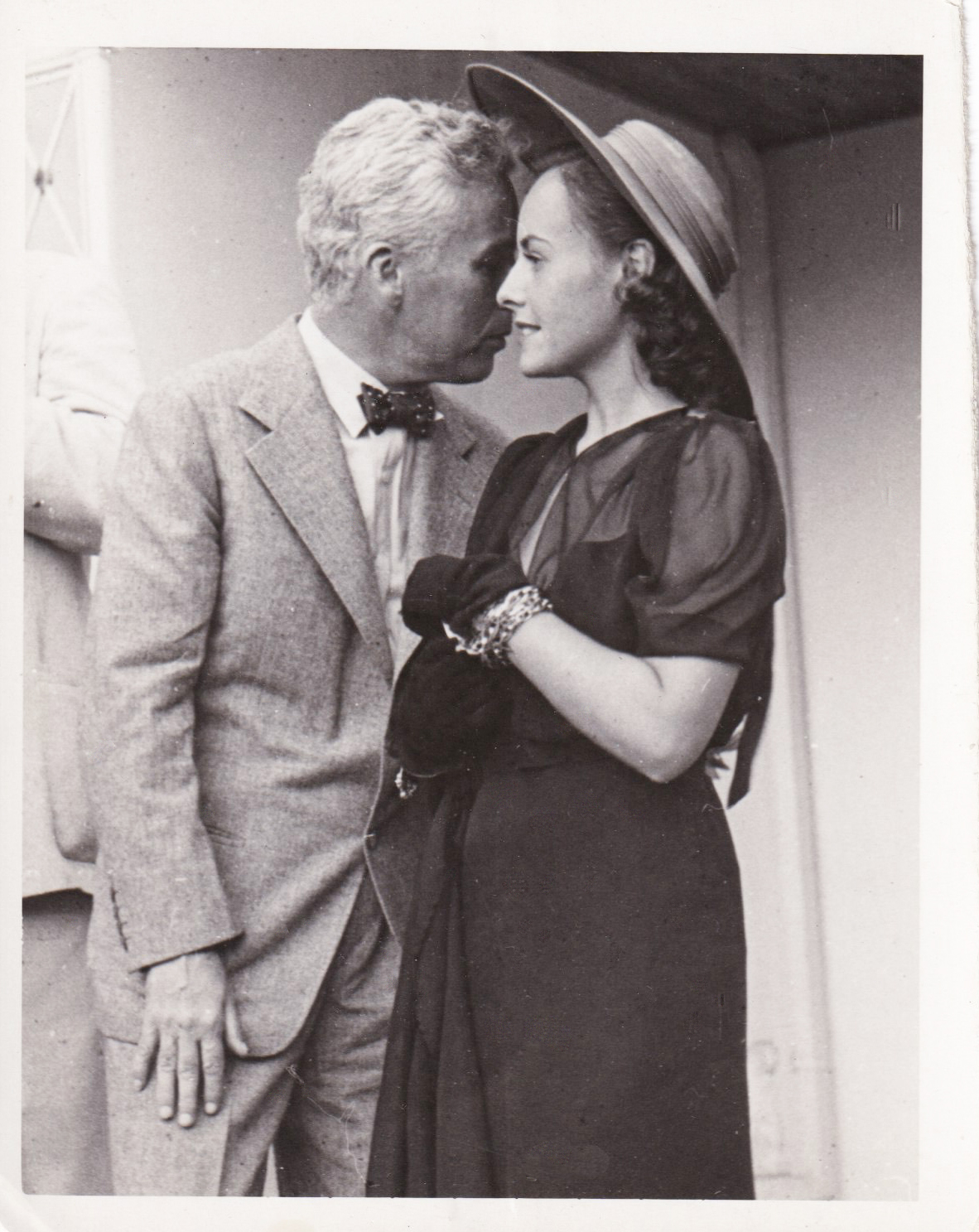
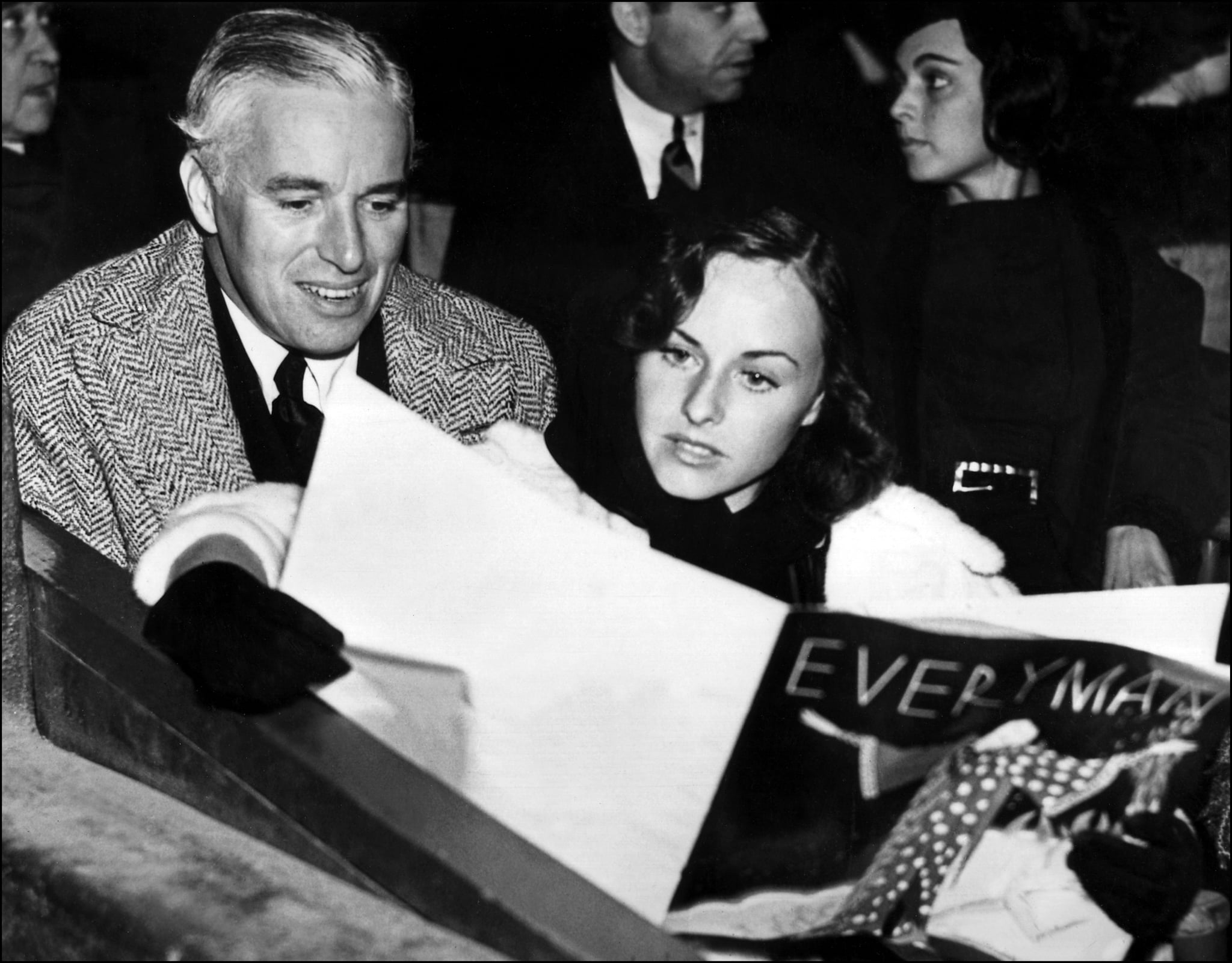
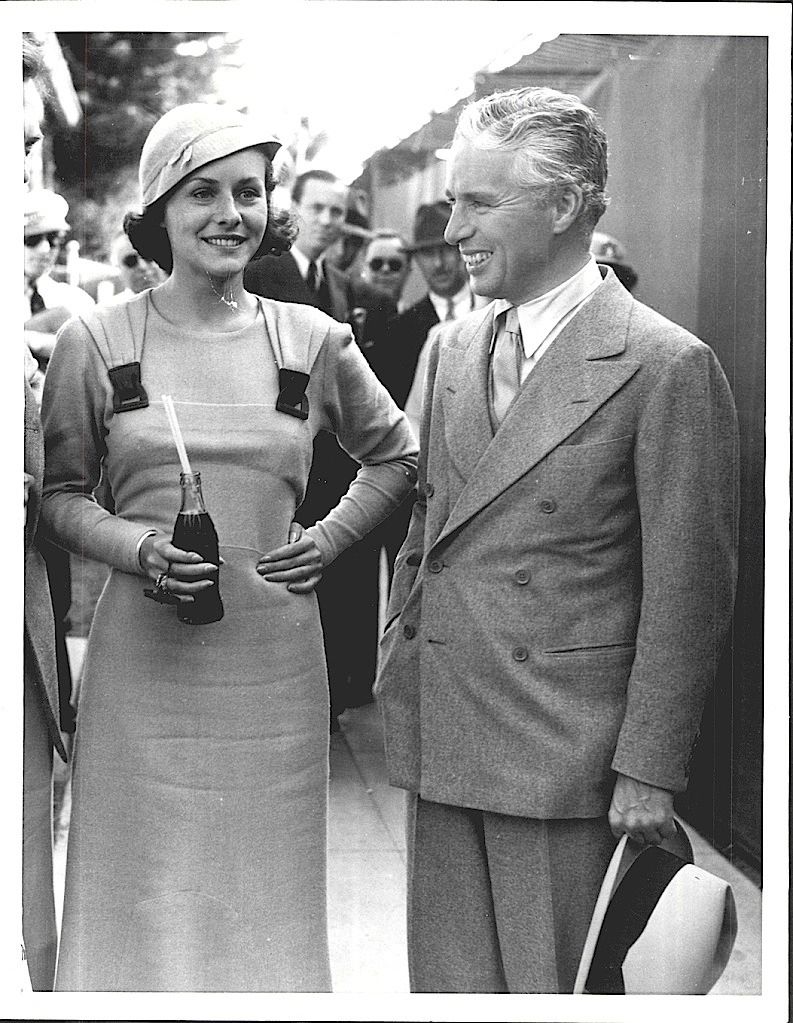
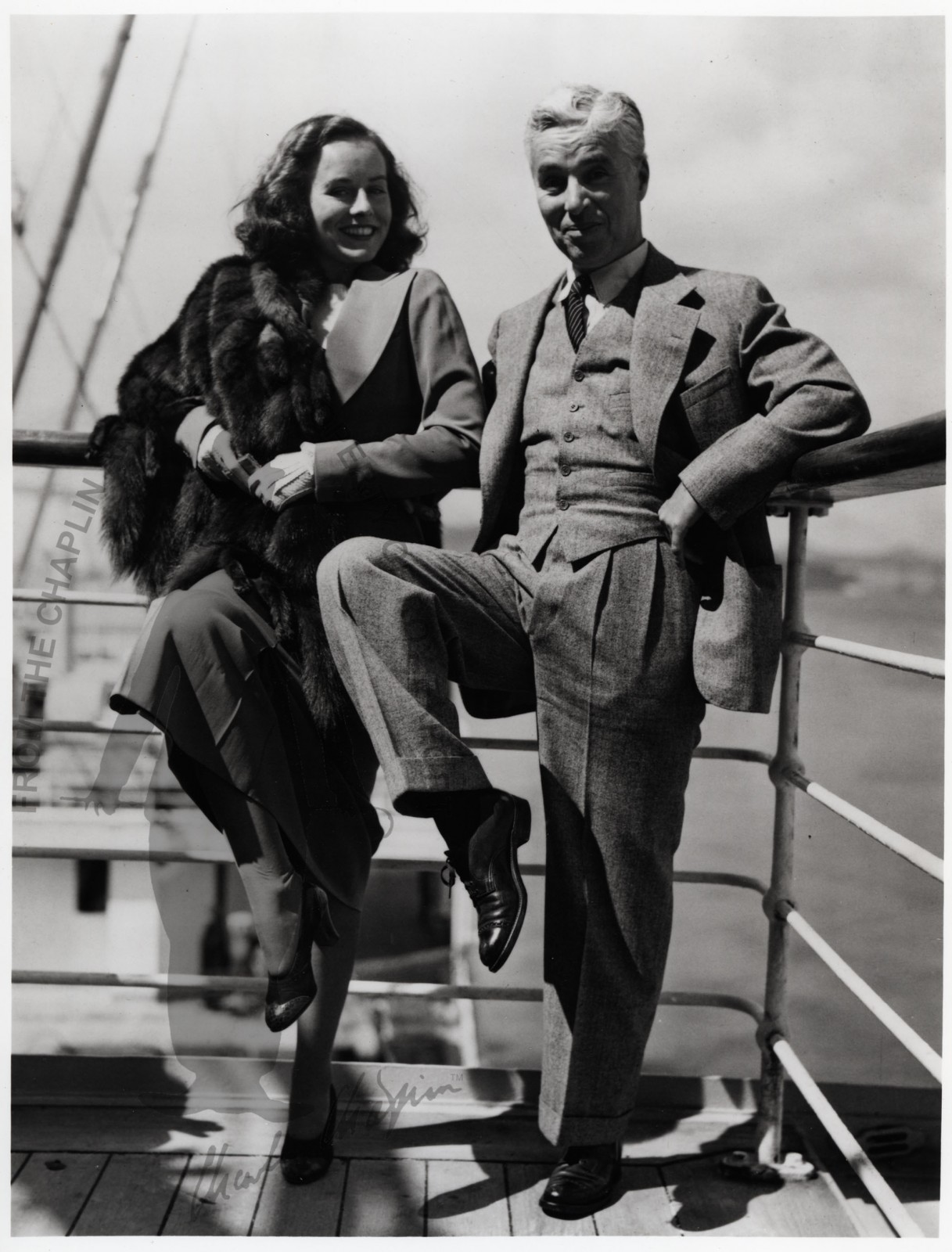
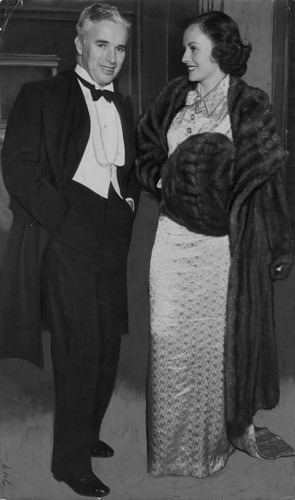
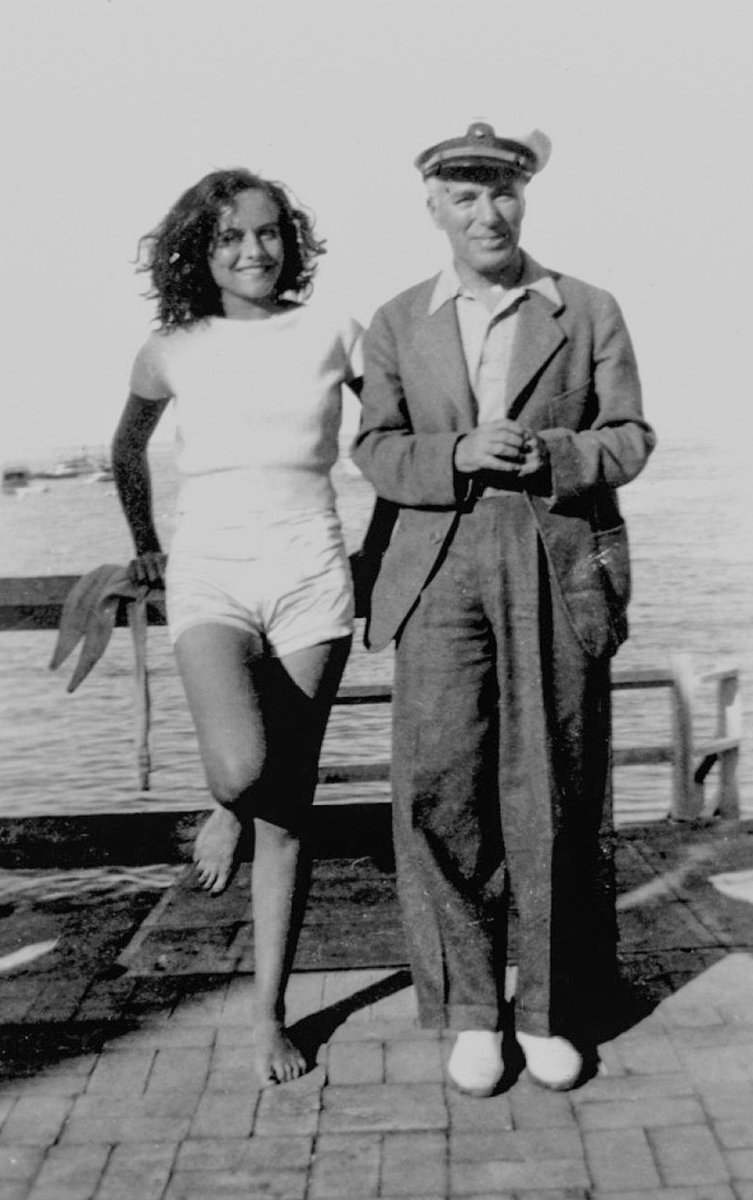
Charles Chaplin and Paulette Goddard
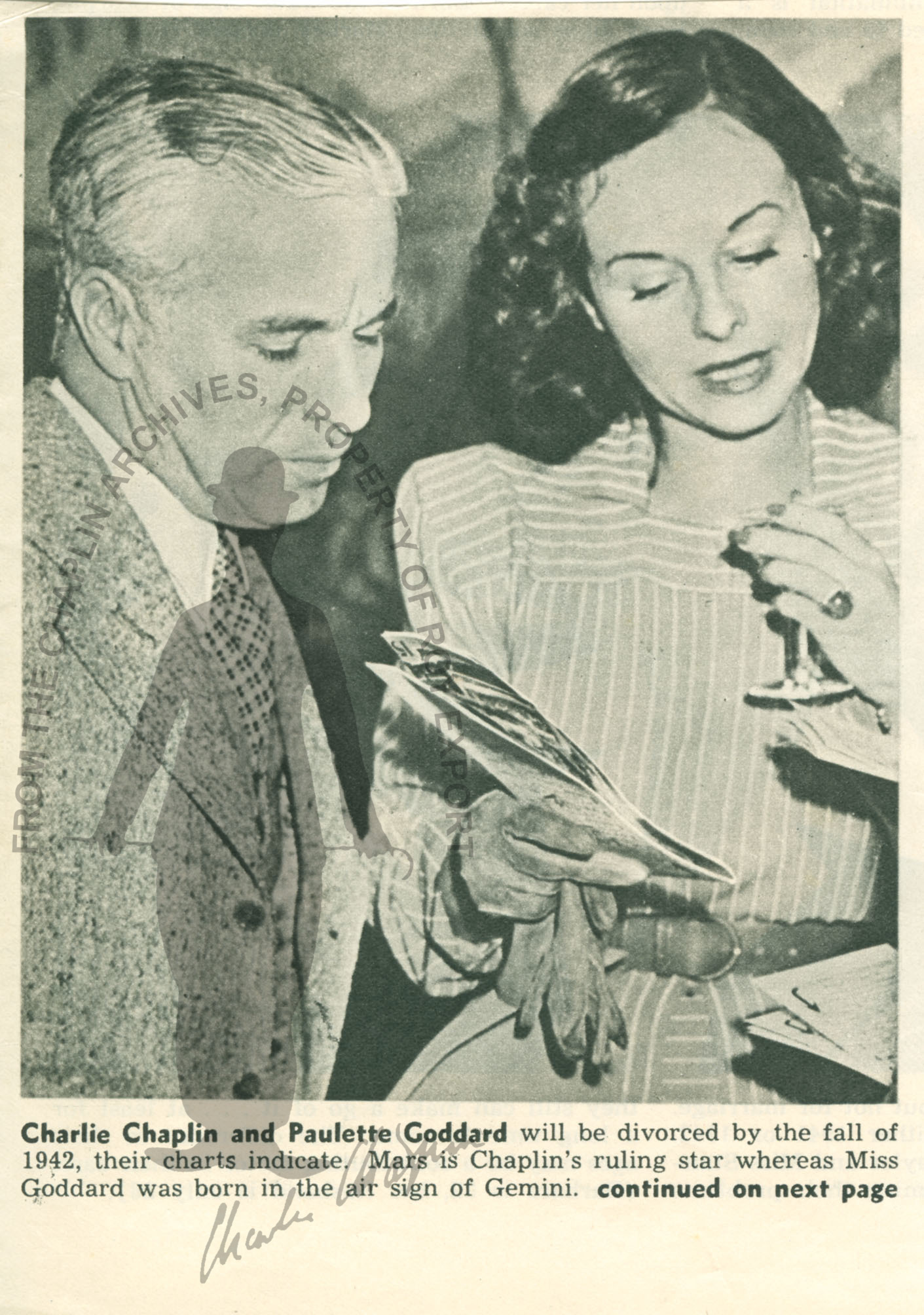
Chaplin and Goddard divorce
1939–1952: Controversies and fading popularity
The 1940s saw Chaplin face a series of controversies, both in his work and in his personal life, which changed his fortunes and severely affected his popularity in the United States. The first of these was his growing boldness in expressing his political beliefs. Deeply disturbed by the surge of militaristic nationalism in 1930s world politics, Chaplin found that he could not keep these issues out of his work.
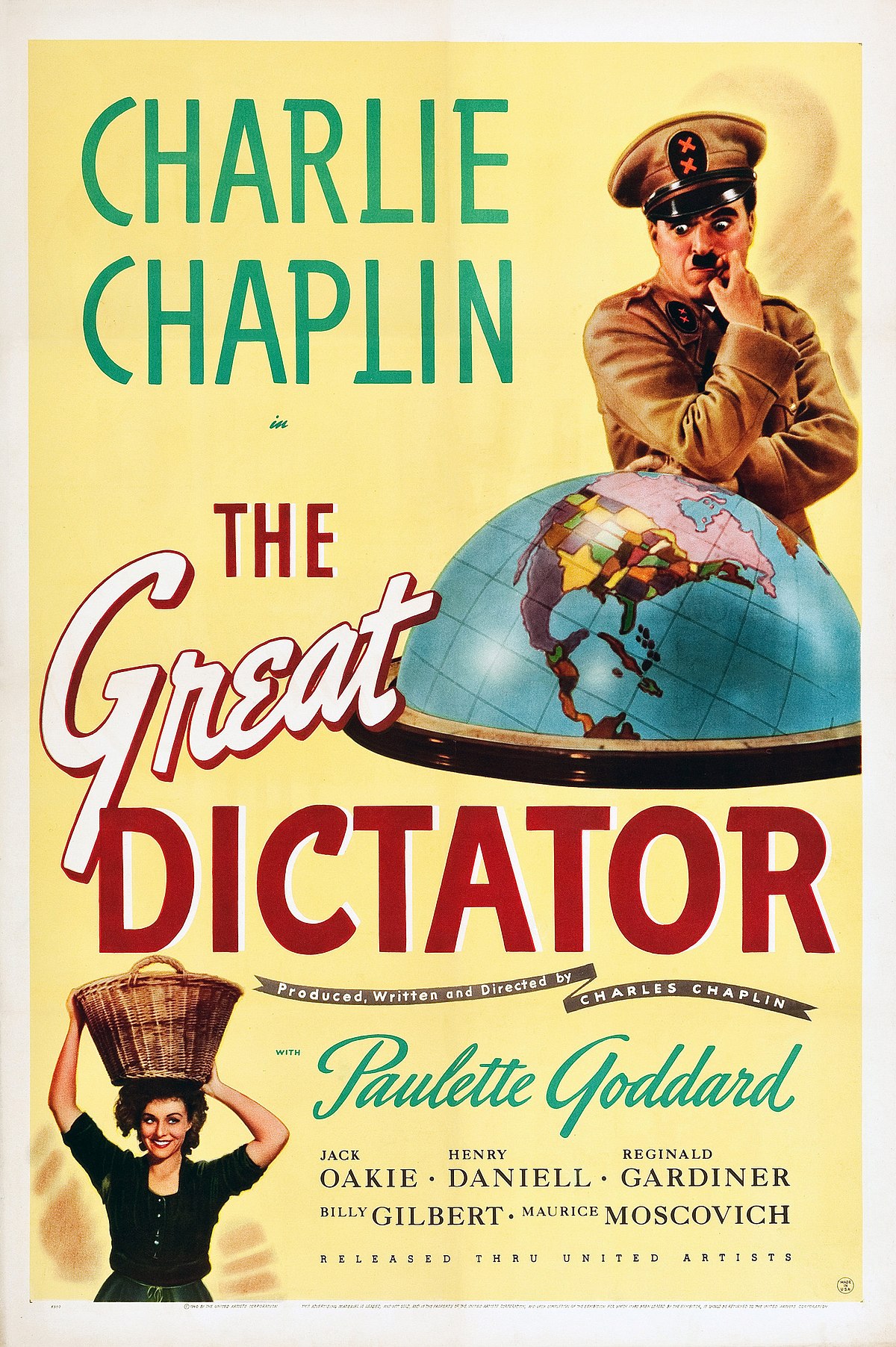
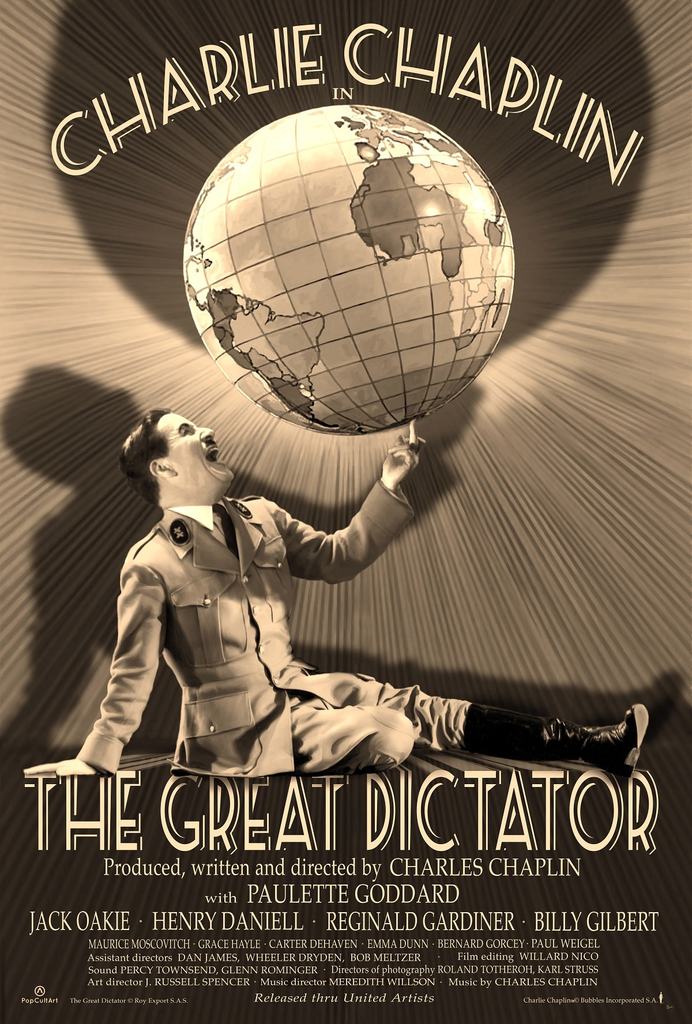
The Great Dictator (1940) poster
Parallels between himself and Adolf Hitler had been widely noted: the pair were born four days apart, both had risen from poverty to world prominence, and Hitler wore the same toothbrush moustache as Chaplin. It was this physical resemblance that supplied the plot for Chaplin’s next film, The Great Dictator, which directly satirised Hitler and attacked fascism.
Chaplin spent two years developing the script, and began filming in September 1939 – six days after Britain declared war on Germany. He had submitted to using spoken dialogue, partly out of acceptance that he had no other choice, but also because he recognised it as a better method for delivering a political message.
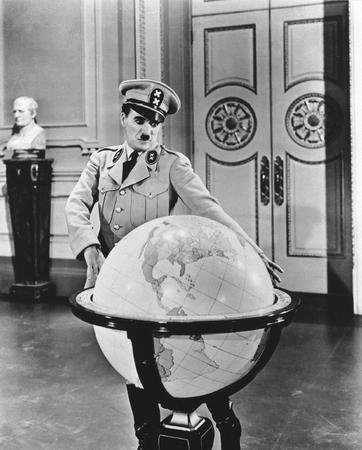
Charles Chaplin in The Great Dictator (1940)
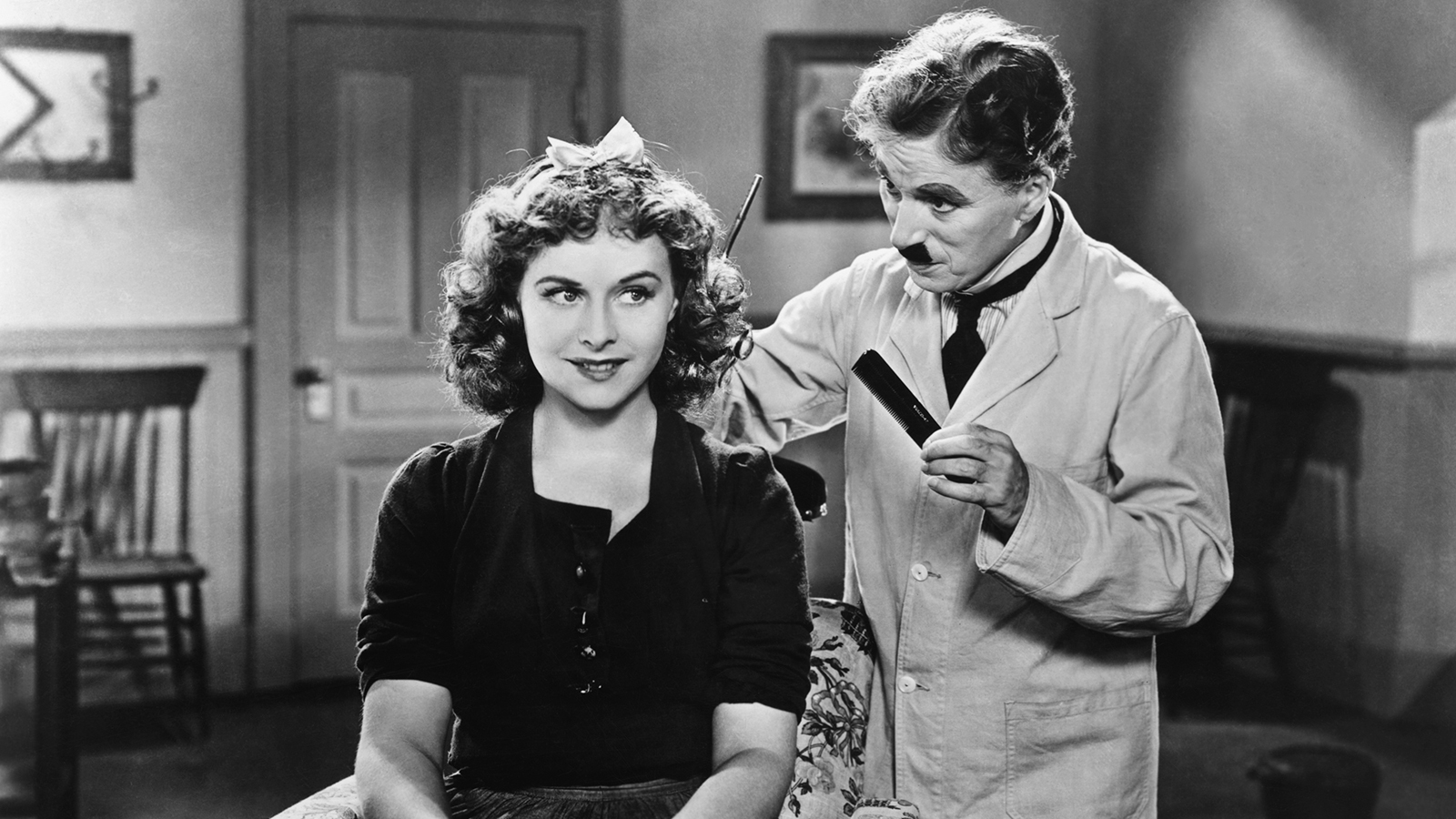
Paulette Goddard and Charles Chaplin in The Great Dictator (1940)
Making a comedy about Hitler was seen as highly controversial, but Chaplin’s financial independence allowed him to take the risk. “I was determined to go ahead,” he later wrote, “for Hitler must be laughed at.” Chaplin replaced the Tramp (while wearing similar attire) with “A Jewish Barber”, a reference to the Nazi party’s belief that he was Jewish.
In a dual performance, he also played the dictator “Adenoid Hynkel”, who parodied Hitler.
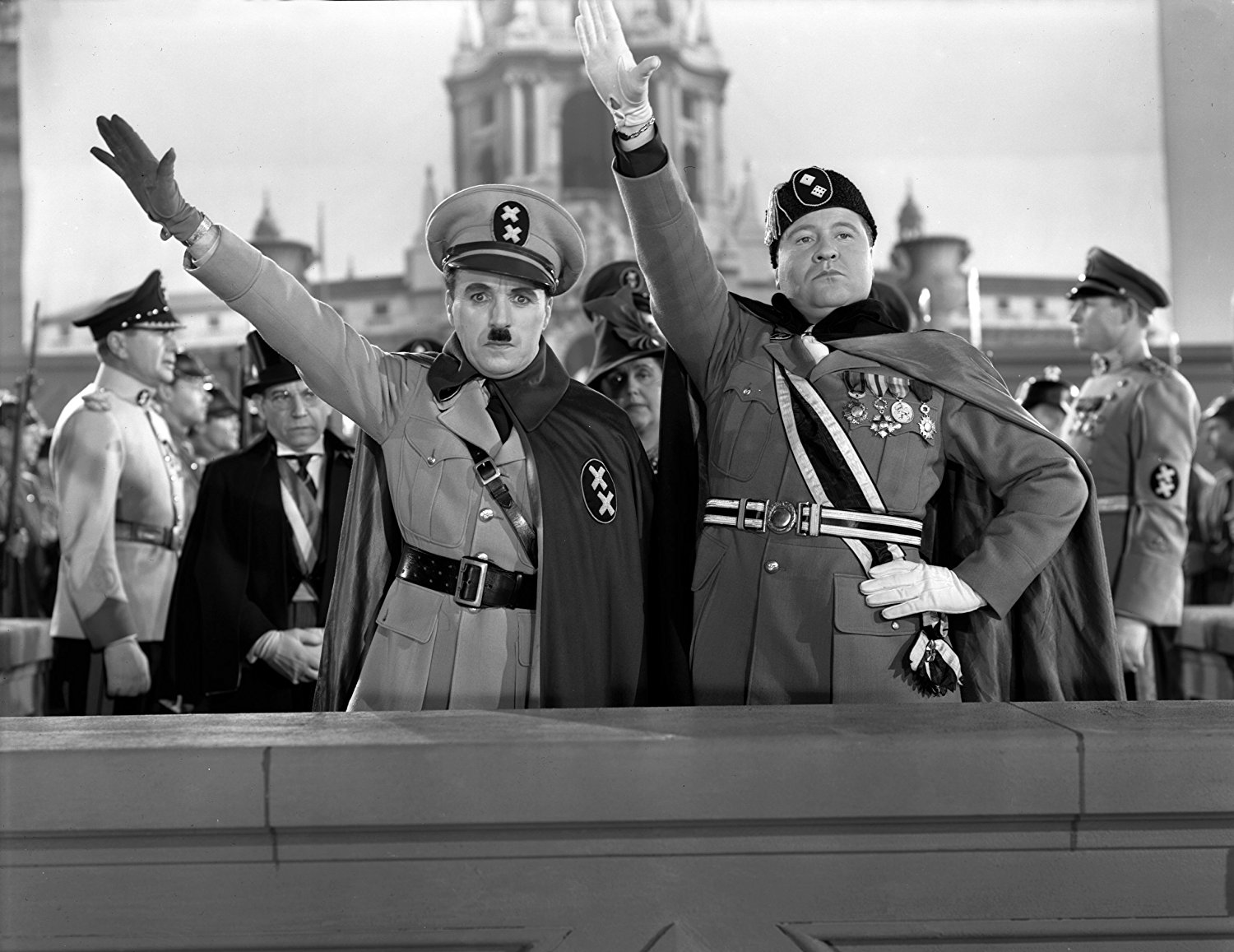
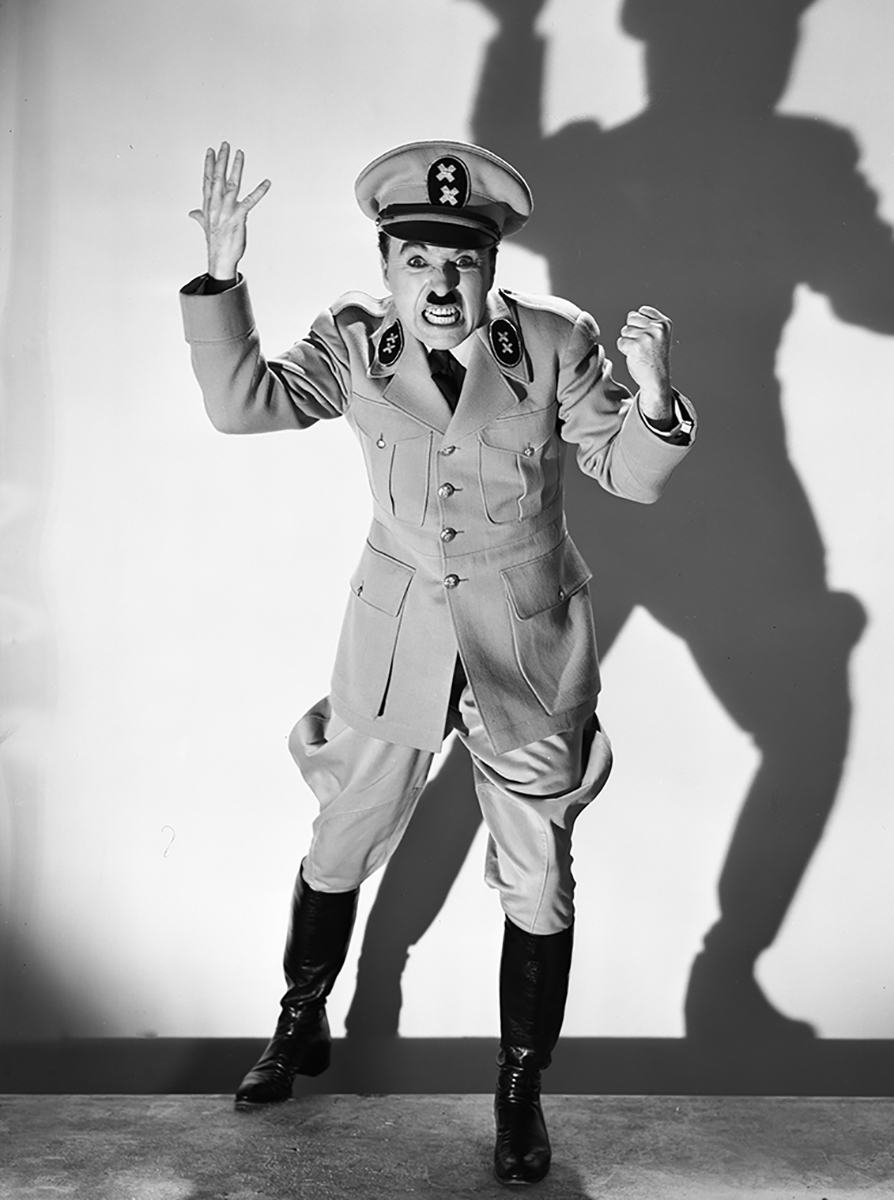
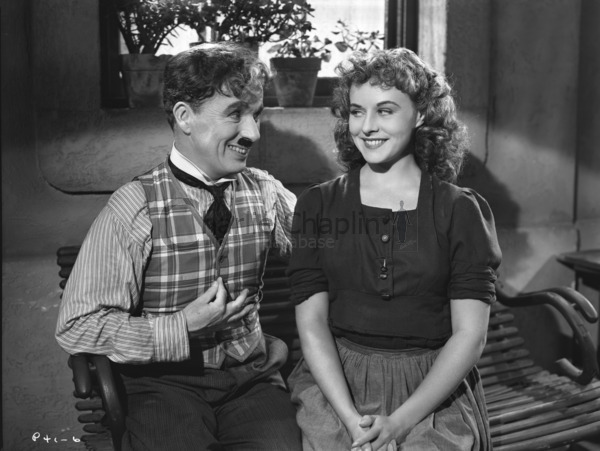
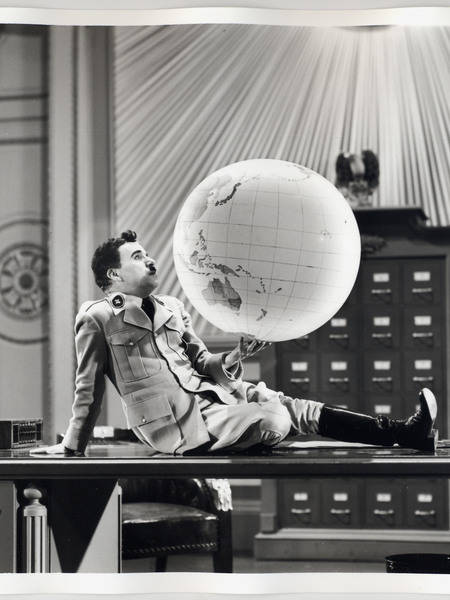
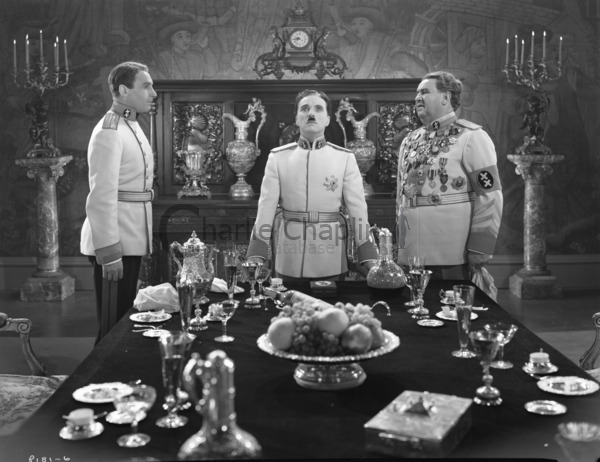
Charles Chaplin, Jack Oakie and Paulette Goddard in The Great Dictator (1940)
The Great Dictator spent a year in production and was released in October 1940.. The film generated a vast amount of publicity, with a critic for The New York Times calling it “the most eagerly awaited picture of the year”, and it was one of the biggest money-makers of the era.
The ending was unpopular, however, and generated controversy. Chaplin concluded the film with a five-minute speech in which he abandoned his barber character, looked directly into the camera, and pleaded against war and fascism.
Charles J. Maland has identified this overt preaching as triggering a decline in Chaplin’s popularity, and writes, “Henceforth, no movie fan would ever be able to separate the dimension of politics from [his] star image”. The Great Dictator received five Academy Award nominations, including Best Picture, Best Original Screenplay and Best Actor.
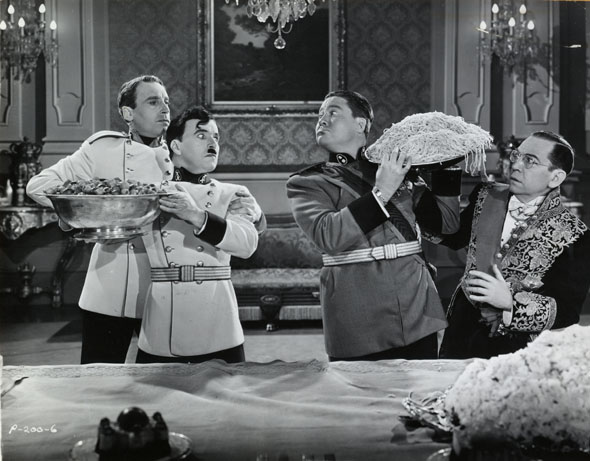
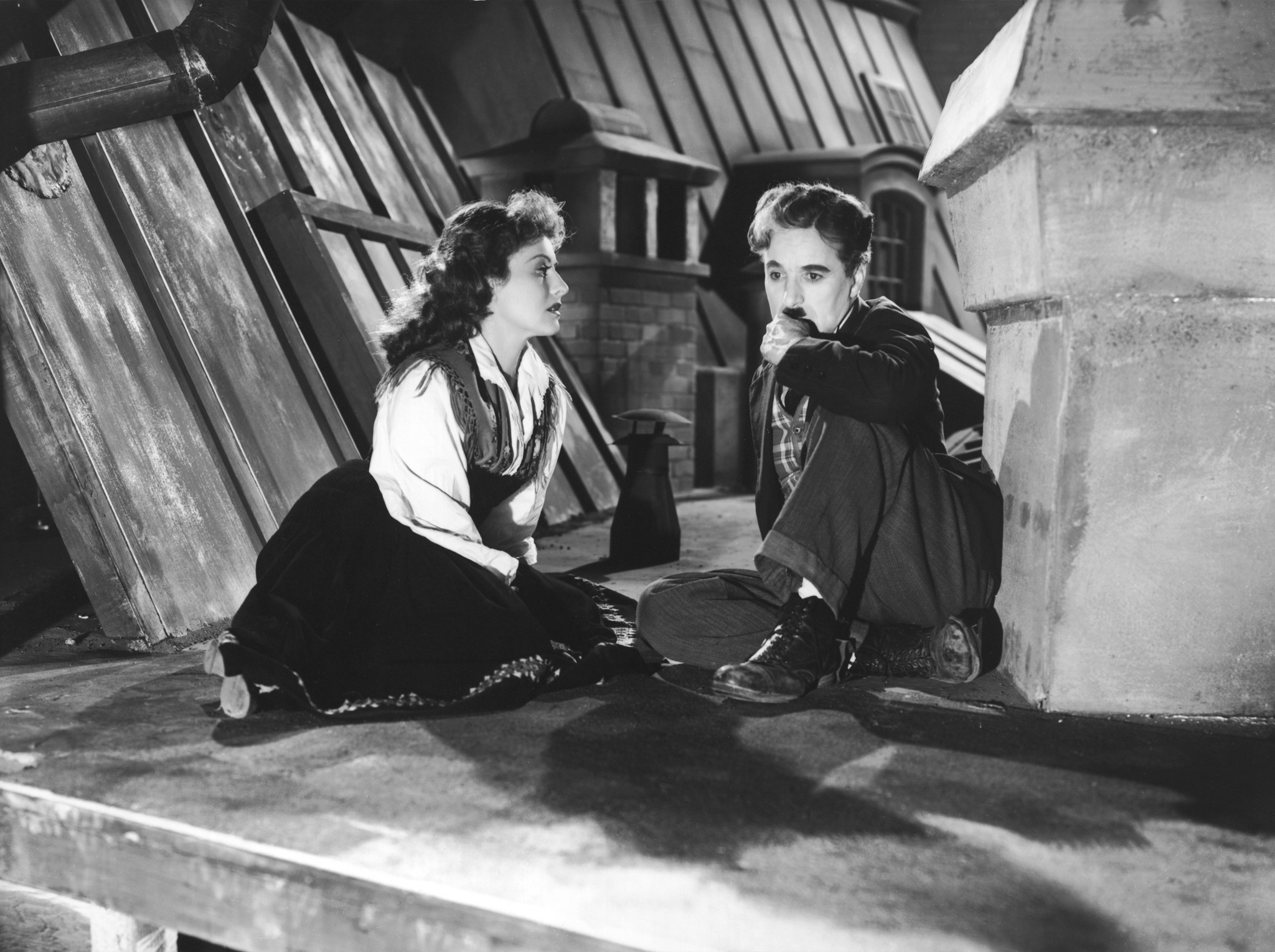
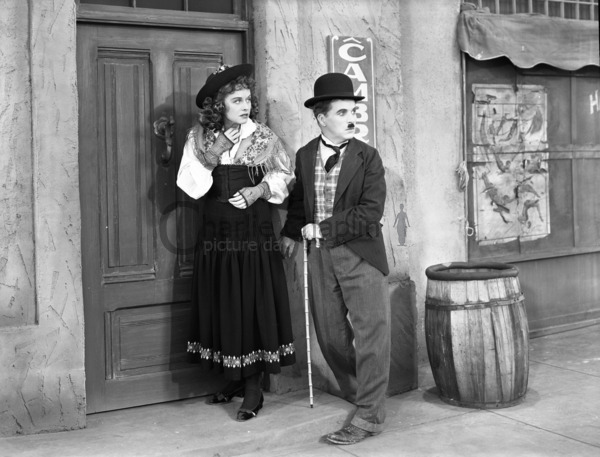
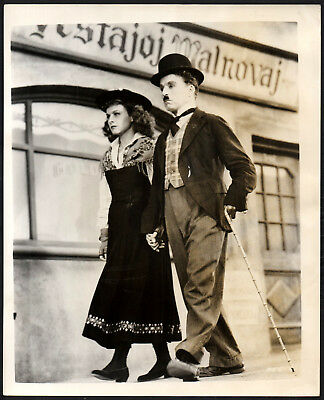
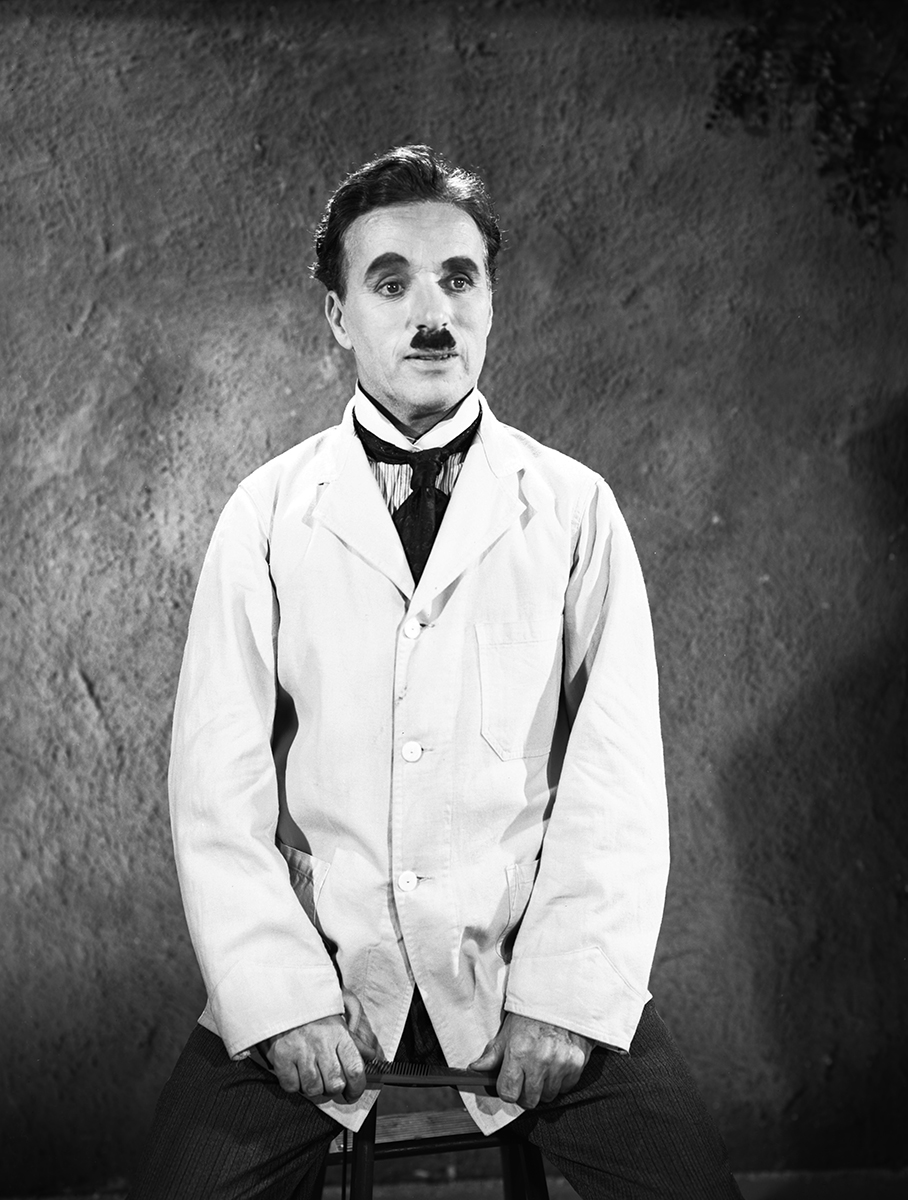
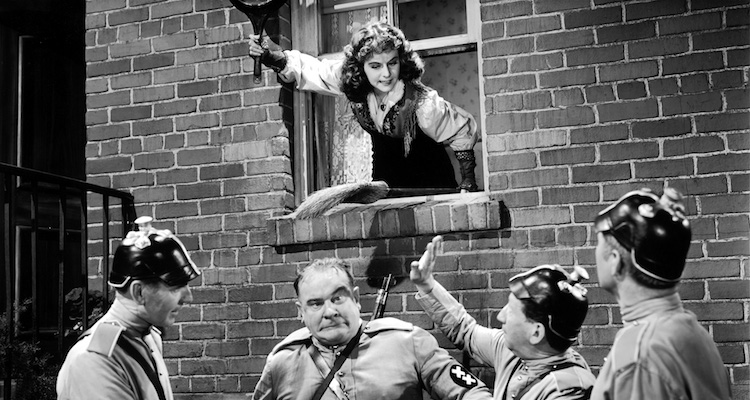
Charles Chaplin, Jack Oakie and Paulette Goddard in The Great Dictator (1940)
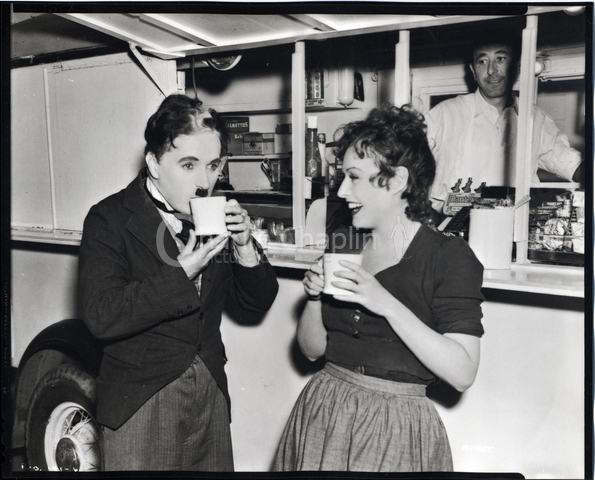
Charles Chaplin and Paulette Goddard on the set of The Great Dictator (1940)
Legal troubles and Oona O’Neill
In the mid-1940s, Chaplin was involved in a series of trials that occupied most of his time and significantly affected his public image.
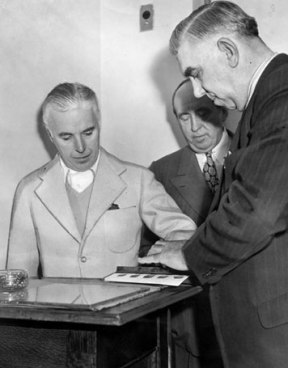
The troubles stemmed from his affair with an aspirant actress named Joan Barry, with whom he was involved intermittently between June 1941 and the autumn of 1942. Barry, who displayed obsessive behaviour and was twice arrested after they separated, reappeared the following year and announced that she was pregnant with Chaplin’s child. As Chaplin denied the claim, Barry filed a paternity suit against him.
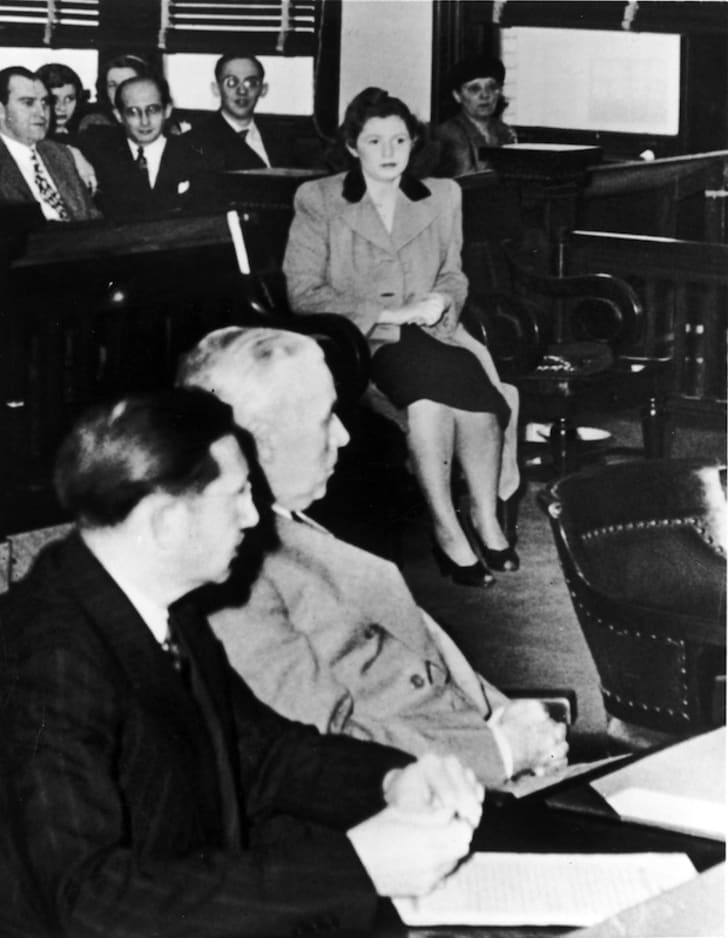
Charles Chaplin and Joan Barry in Court
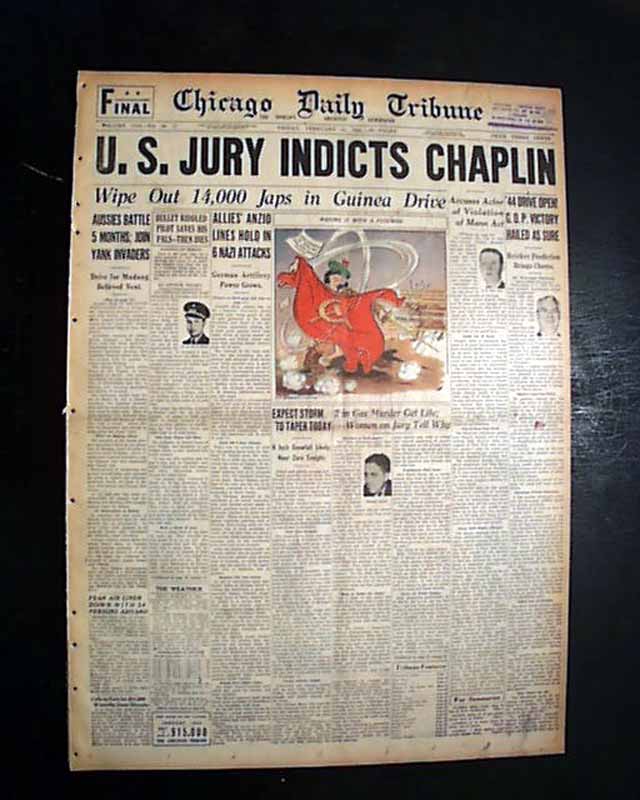
The director of the Federal Bureau of Investigation (FBI), J. Edgar Hoover, who had long been suspicious of Chaplin’s political leanings, used the opportunity to generate negative publicity about him. As part of a smear campaign to damage Chaplin’s image, the FBI named him in four indictments related to the Barry case. Most serious of these was an alleged violation of the Mann Act, which prohibits the transportation of women across state boundaries for sexual purposes..
The historian Otto Friedrich has called this an “absurd prosecution” of an “ancient statute”, yet if Chaplin was found guilty, he faced 23 years in jail. Three charges lacked sufficient evidence to proceed to court, but the Mann Act trial began in March 1944. Chaplin was acquitted two weeks later. The case was frequently headline news, with Newsweek calling it the “biggest public relations scandal since the Fatty Arbuckle murder trial in 1921.”
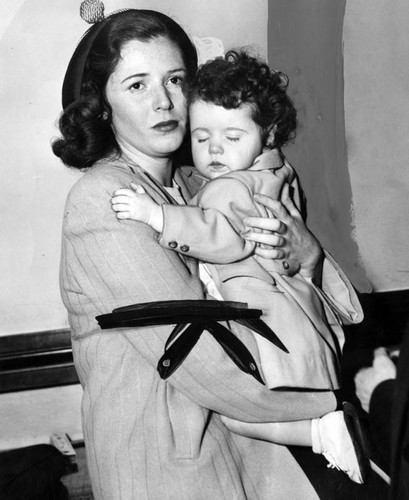
Joan Barry with Carol Ann
Barry’s child, Carol Ann, was born in October 1944, and the paternity suit went to court in February 1945. After two arduous trials, in which the prosecuting lawyer accused him of “moral turpitude“, Chaplin was declared to be the father.
Evidence from blood tests which indicated otherwise were not admissible, and the judge ordered Chaplin to pay child support until Carol Ann turned 21. Media coverage of the paternity suit was influenced by the FBI, as information was fed to the prominent gossip columnist Hedda Hopper, and Chaplin was portrayed in an overwhelmingly critical light.
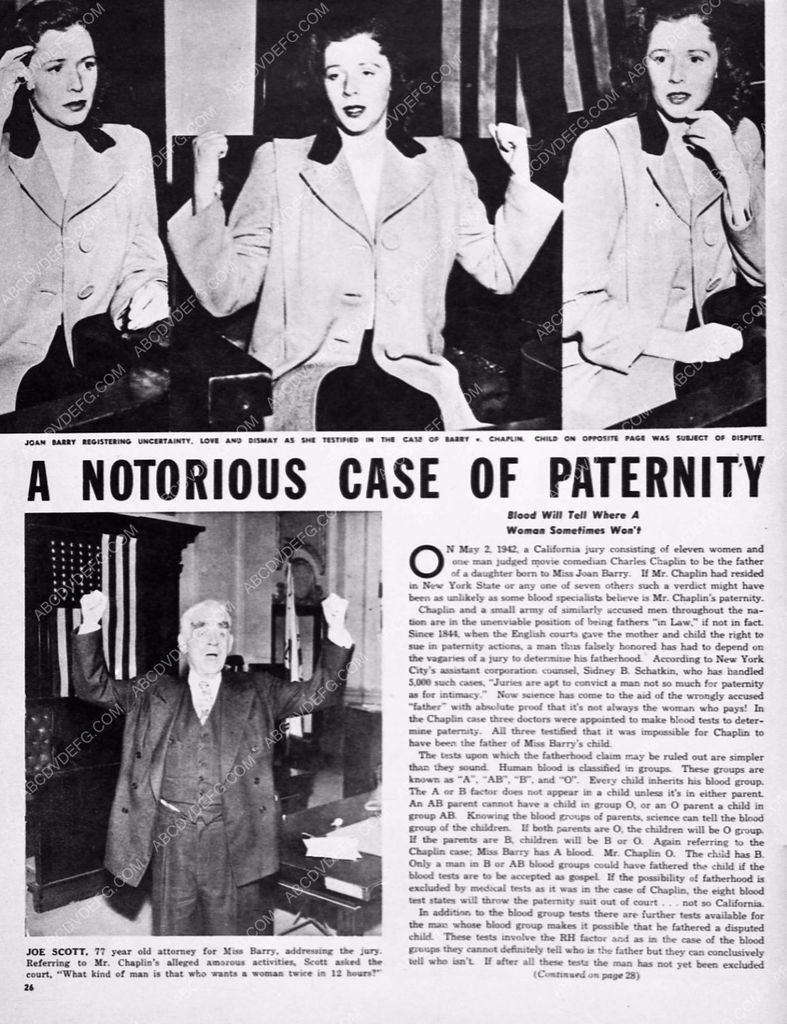
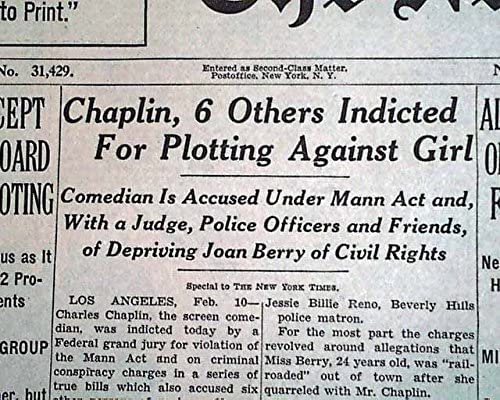
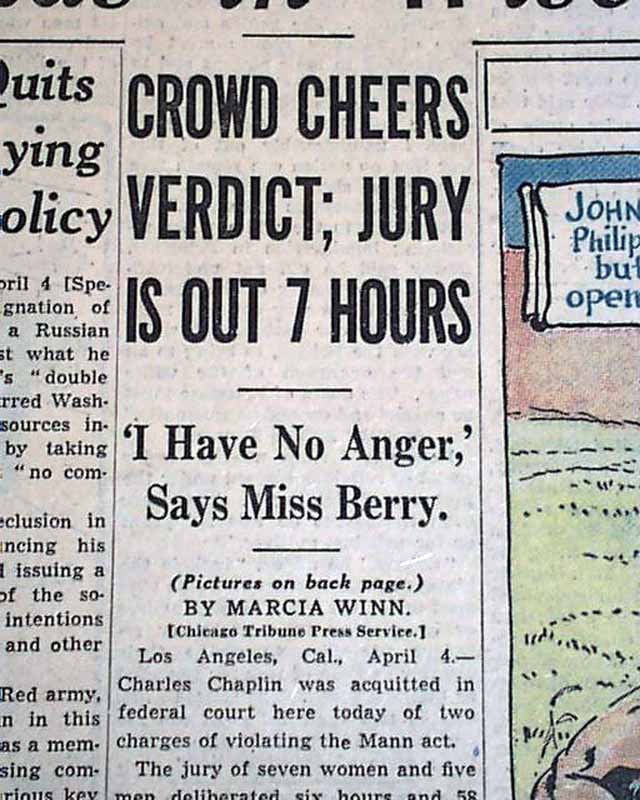
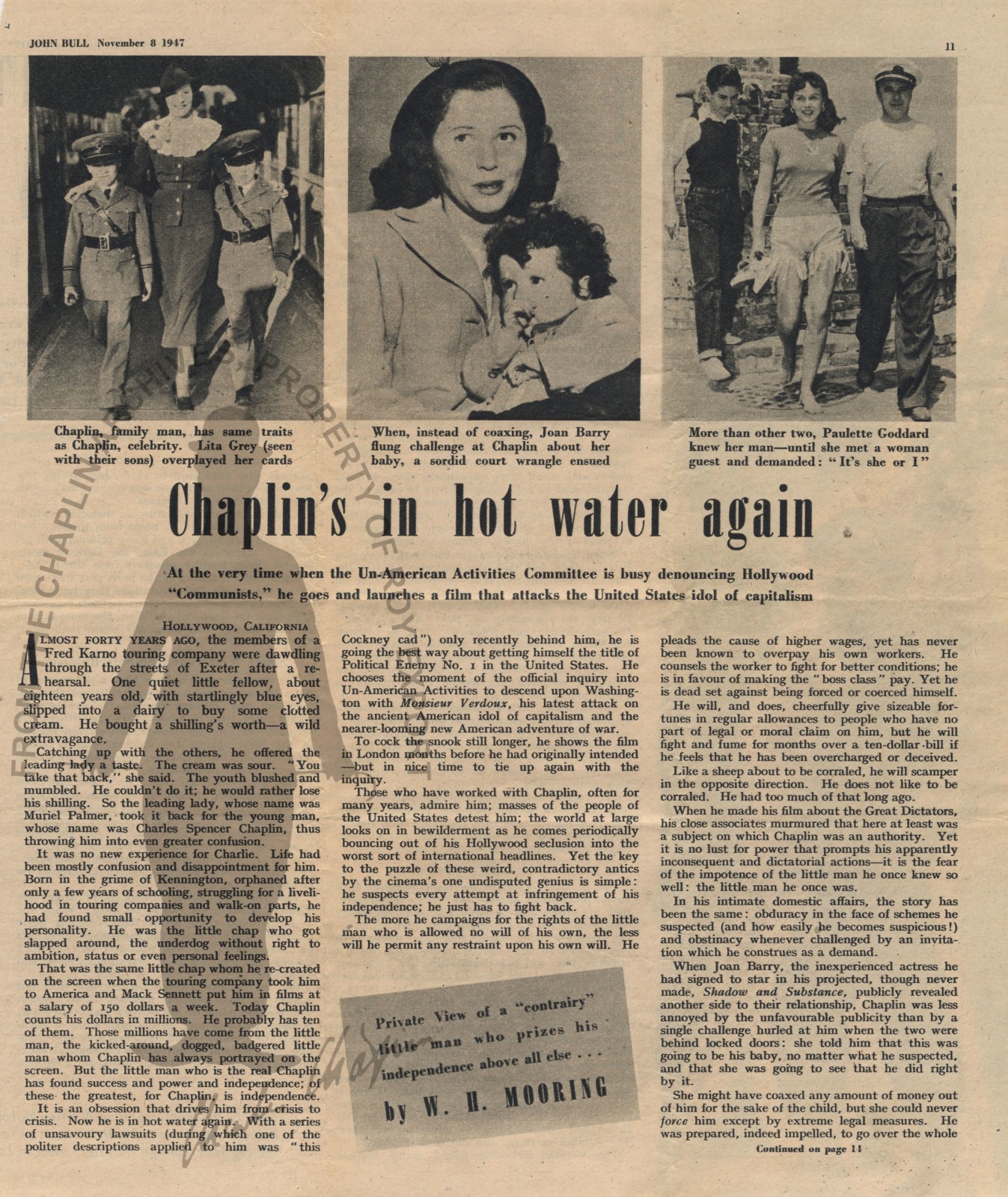
Media coverage of Barry vs Chaplin Court Case
The controversy surrounding Chaplin increased when, two weeks after the paternity suit was filed, it was announced that he had married his newest protégée, 18-year-old Oona O’Neill – daughter of the American playwright Eugene O’Neill.
Chaplin, then 54, had been introduced to her by a film agent seven months earlier. In his autobiography, Chaplin described meeting O’Neill as “the happiest event of my life”, and claimed to have found “perfect love”. Chaplin’s son, Charles Jr., reported that Oona “worshipped” his father.
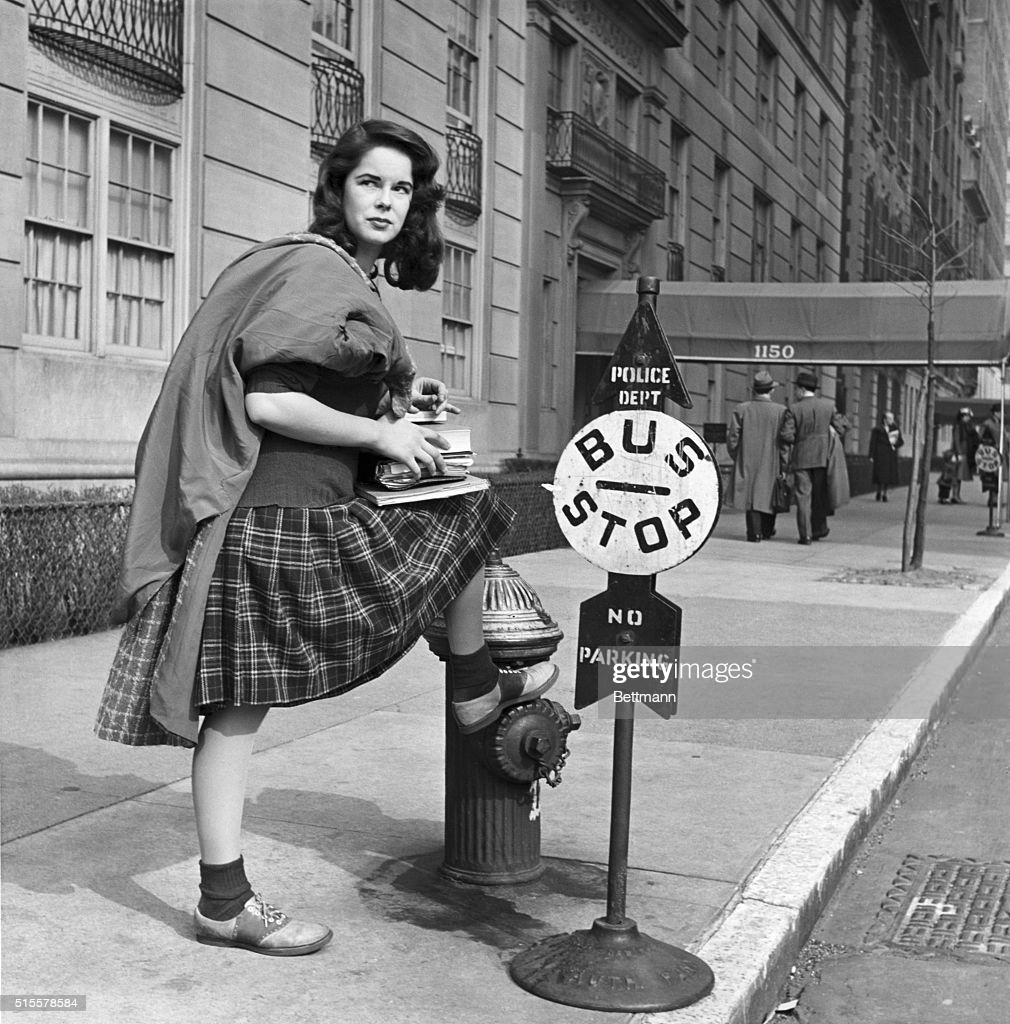
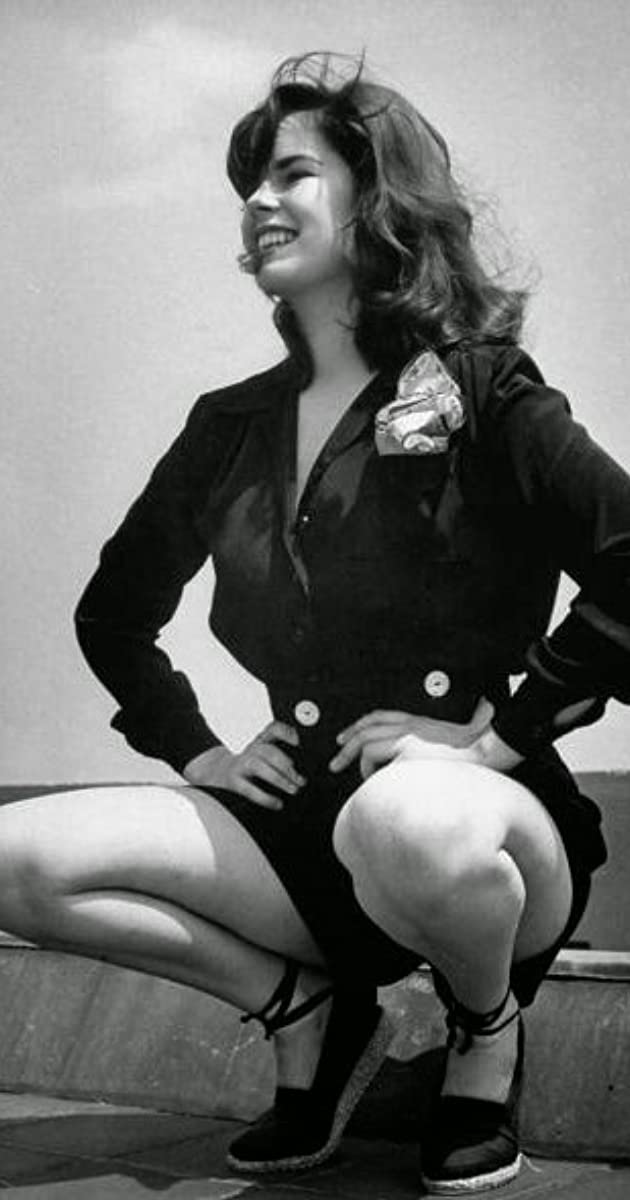
Oona O’Neill
The couple remained married until Chaplin’s death, and had eight children over 18 years: Geraldine Leigh (b. July 1944), Michael John (b. March 1946), Josephine Hannah (b. March 1949), Victoria (b. May 1951), Eugene Anthony (b. August 1953), Jane Cecil (b. May 1957), Annette Emily (b. December 1959), and Christopher James (b. July 1962).
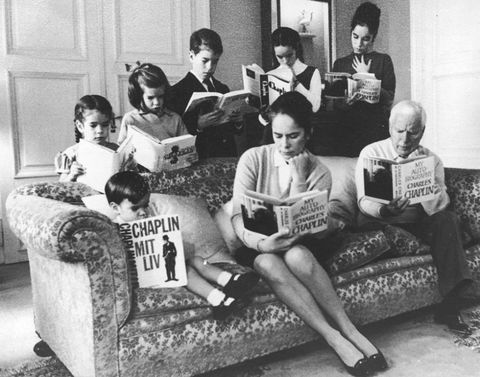
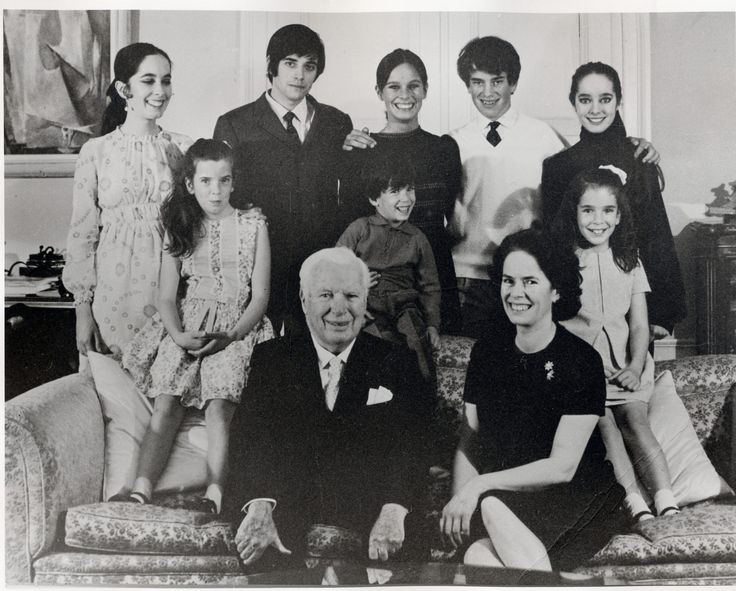
Charles Chaplin, Oona O’Neill and their children
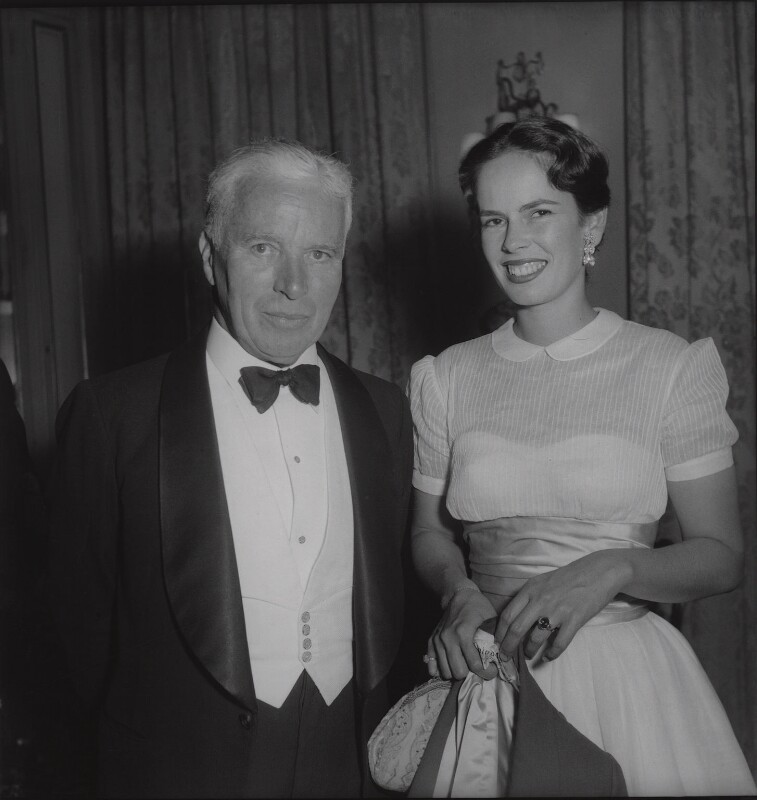
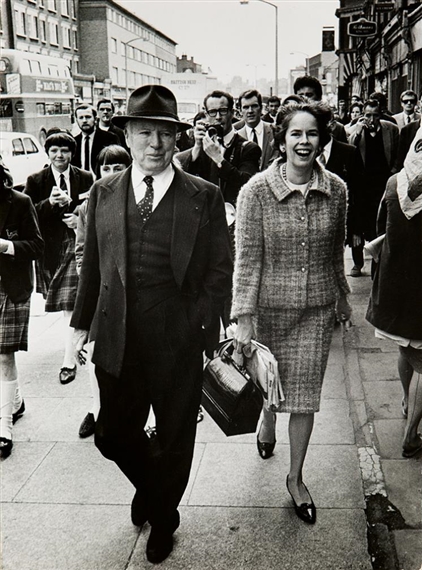
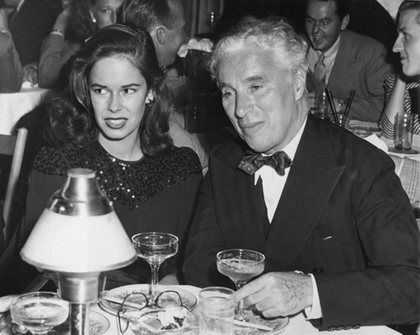
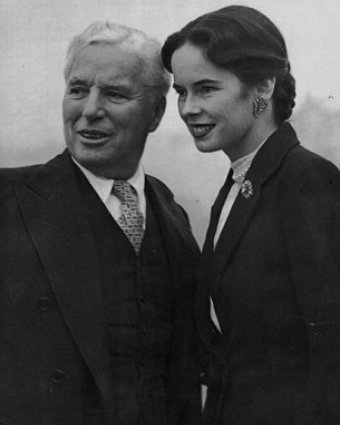
Charles Chaplin and Oona O’Neill
Monsieur Verdoux and communist accusations
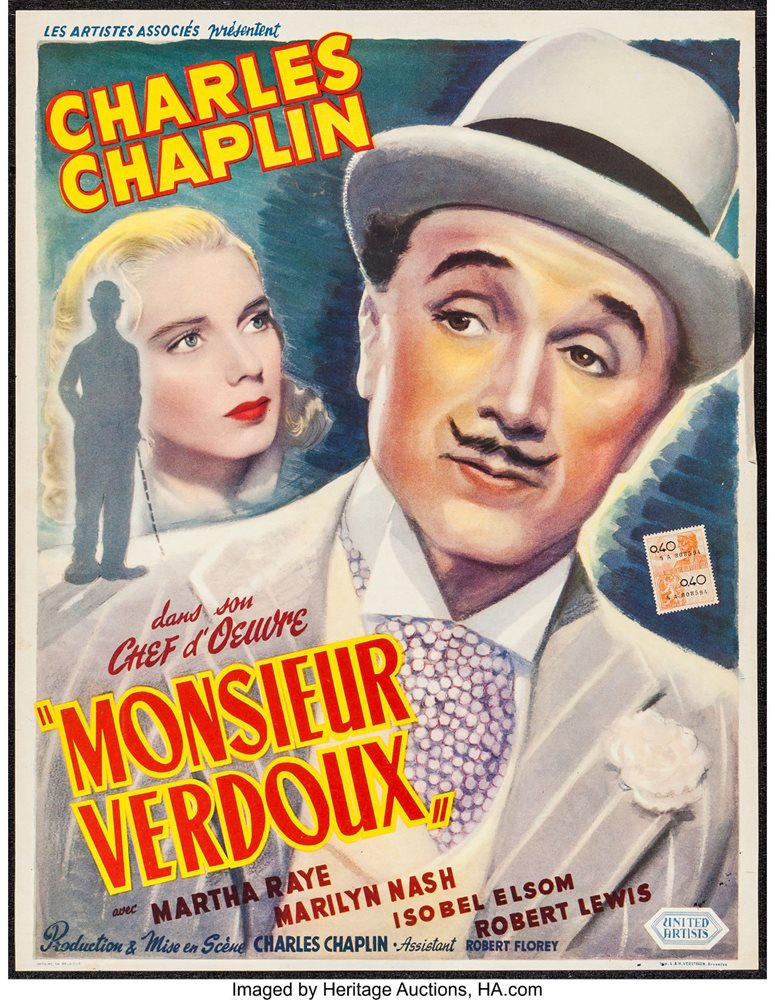
Chaplin claimed that the Barry trials had “crippled [his] creativeness”, and it was some time before he began working again. In April 1946, he finally began filming a project that had been in development since 1942.
Monsieur Verdoux was a black comedy, the story of a French bank clerk, Verdoux (Chaplin), who loses his job and begins marrying and murdering wealthy widows to support his family. Chaplin’s inspiration for the project came from Orson Welles, who wanted him to star in a film about the French serial killer Henri Désiré Landru. Chaplin decided that the concept would “make a wonderful comedy”, and paid Welles $5,000 for the idea.
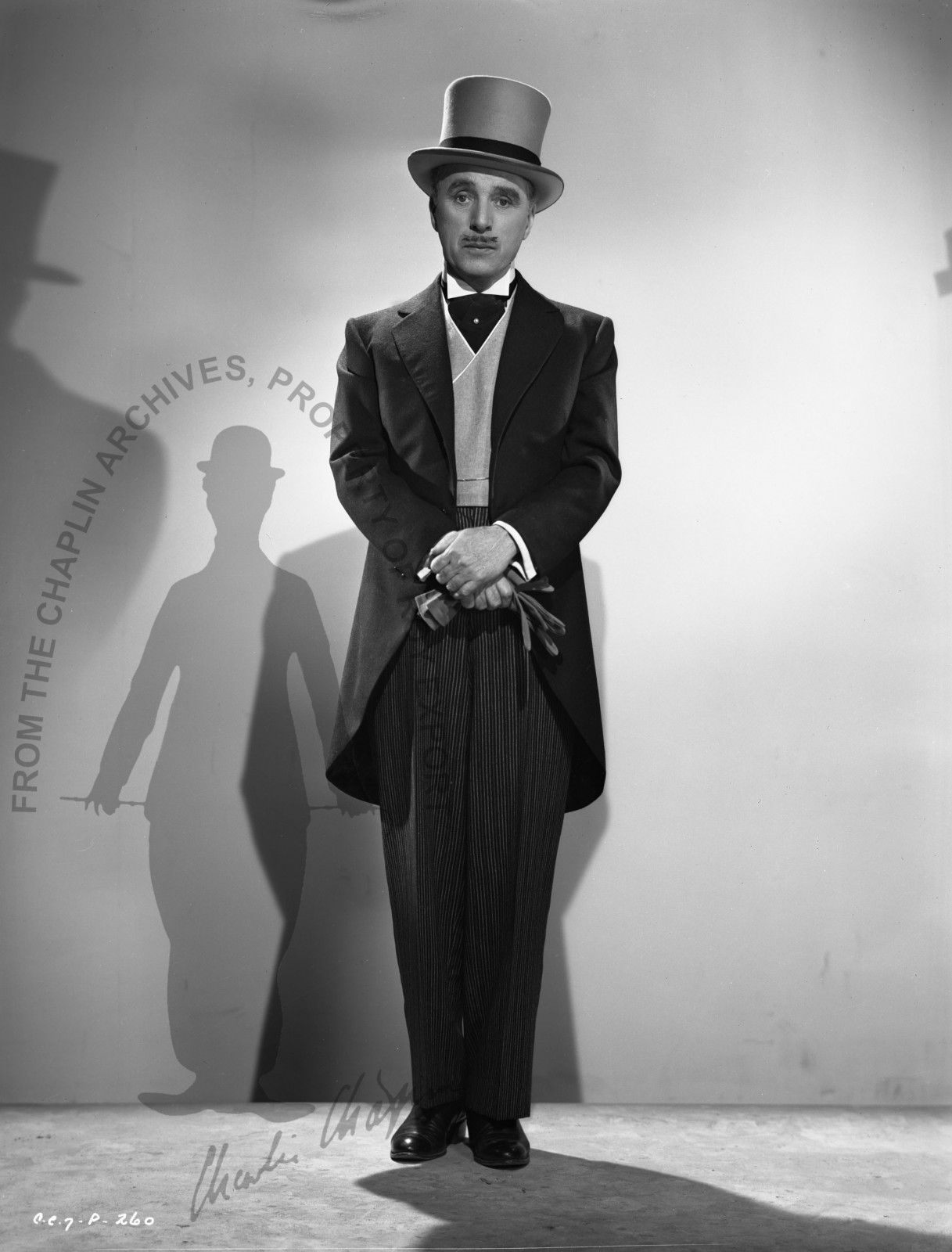
Charles Chaplin in Monsieur Verdoux (1947)
Chaplin again vocalised his political views in Monsieur Verdoux, criticising capitalism and arguing that the world encourages mass killing through wars and weapons of mass destruction.
Because of this, the film met with controversy when it was released in April 1947; Chaplin was booed at the premiere, and there were calls for a boycott. Monsieur Verdoux was the first Chaplin release that failed both critically and commercially in the United States. It was more successful abroad, and Chaplin’s screenplay was nominated at the Academy Awards. He was proud of the film, writing in his autobiography, “Monsieur Verdoux is the cleverest and most brilliant film I have yet made.”
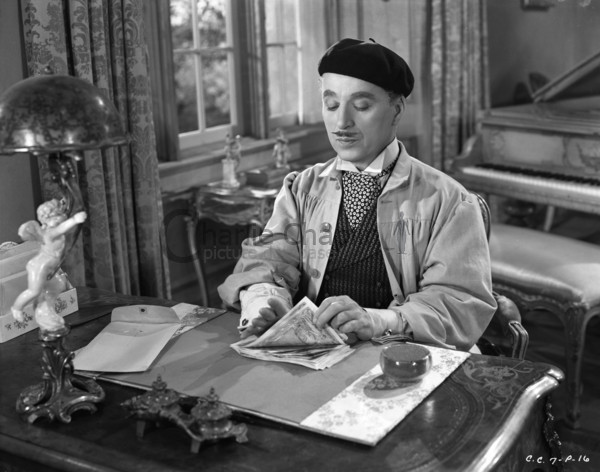
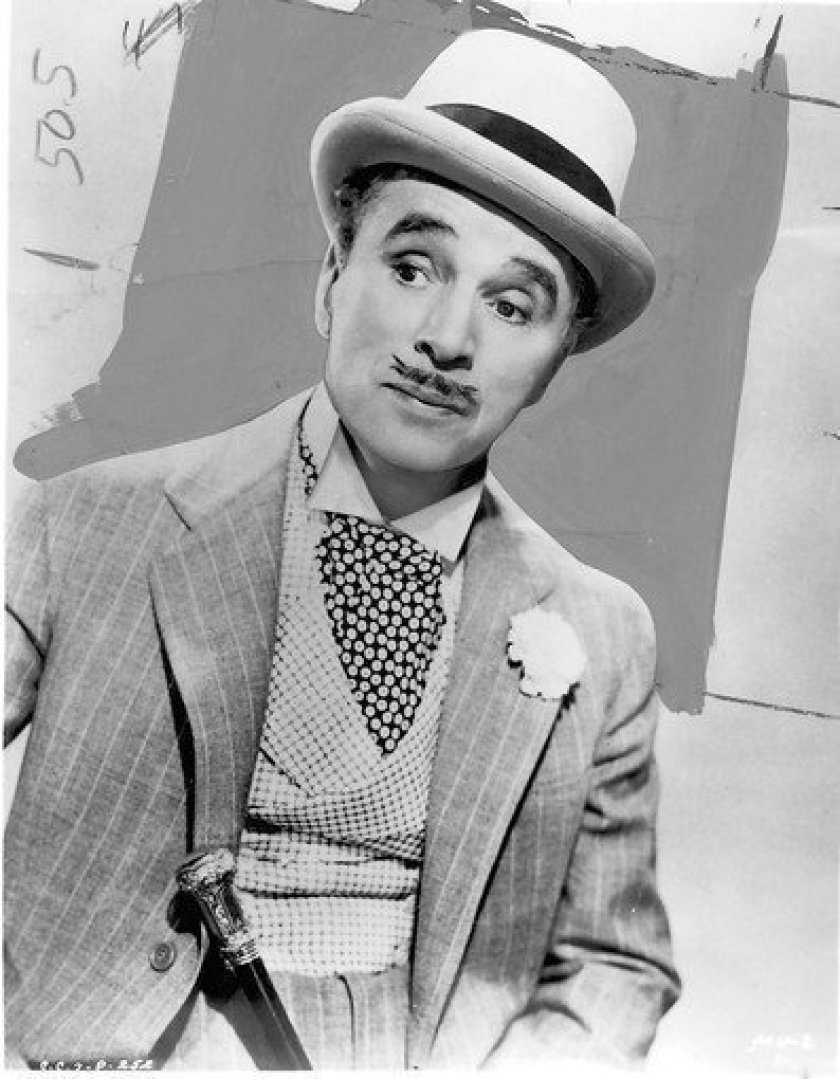
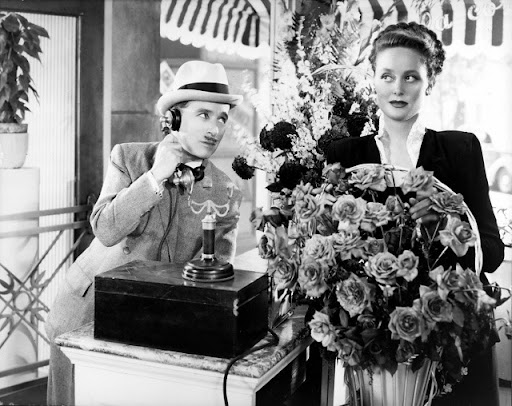
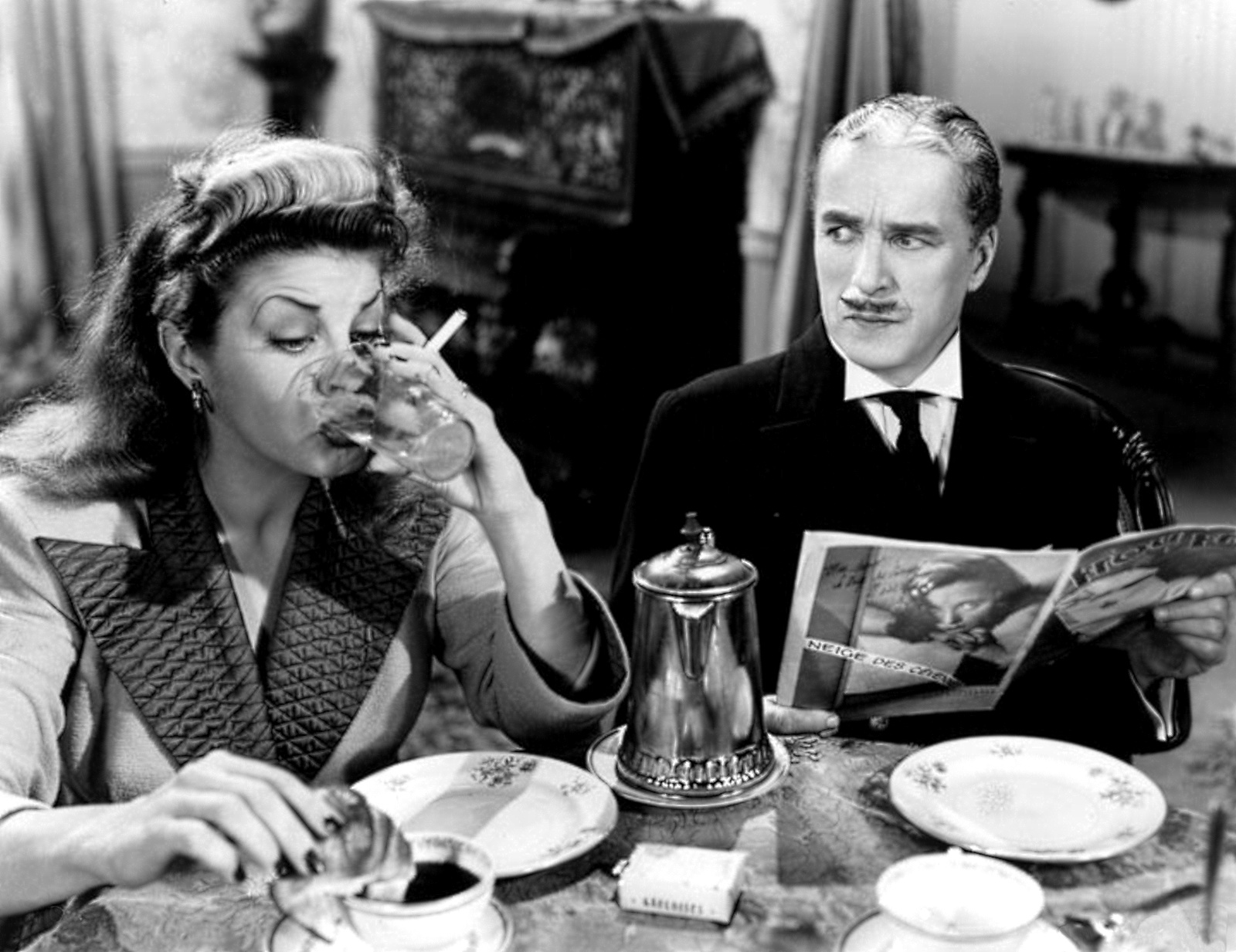
Charles Chaplin and Martha Raye in Monsieur Verdoux (1947)
The negative reaction to Monsieur Verdoux was largely the result of changes in Chaplin’s public image. Along with damage of the Joan Barry scandal, he was publicly accused of being a communist.
His political activity had heightened during World War II, when he campaigned for the opening of a Second Front to help the Soviet Union and supported various Soviet–American friendship groups.
He was also friendly with several suspected communists, and attended functions given by Soviet diplomats in Los Angeles. In the political climate of 1940s America, such activities meant Chaplin was considered, as Larcher writes, “dangerously progressive and amoral.” The FBI wanted him out of the country, and launched an official investigation in early 1947.
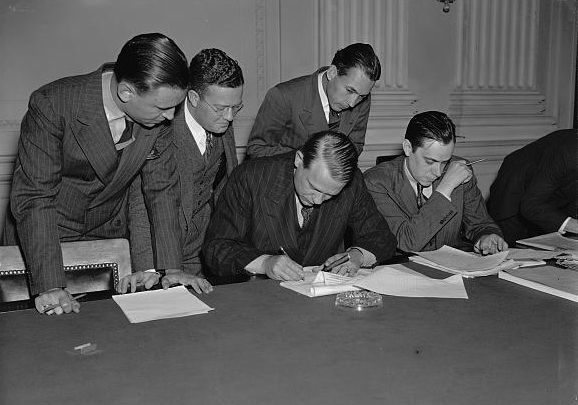
The House Committee on Un-American Activities (HCUA), popularly dubbed the House Un-American Activities Committee (HUAC), and from 1969 onwards known as the House Committee on Internal Security, was an investigative committee of the United States House of Representatives.
Chaplin denied being a communist, instead calling himself a “peacemonger”, but felt the government’s effort to suppress the ideology was an unacceptable infringement of civil liberties.
Unwilling to be quiet about the issue, he openly protested against the trials of Communist Party members and the activities of the House Un-American Activities Committee . Chaplin received a subpoena to appear before HUAC but was not called to testify. As his activities were widely reported in the press, and Cold War fears grew, questions were raised over his failure to take American citizenship .
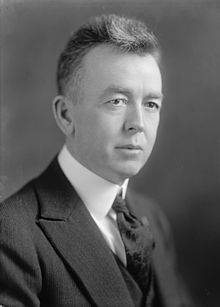
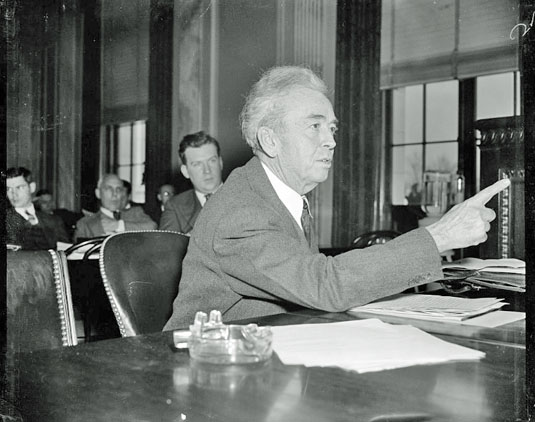
John E Rankin at HUAC hearing
Calls were made for him to be deported; in one extreme and widely published example, Representative John E. Rankin, who helped establish HUAC, told Congress in June 1947: “[Chaplin’s] very life in Hollywood is detrimental to the moral fabric of America. [If he is deported] … his loathsome pictures can be kept from before the eyes of the American youth. He should be deported and gotten rid of at once.”
Limelight and banning from the United States
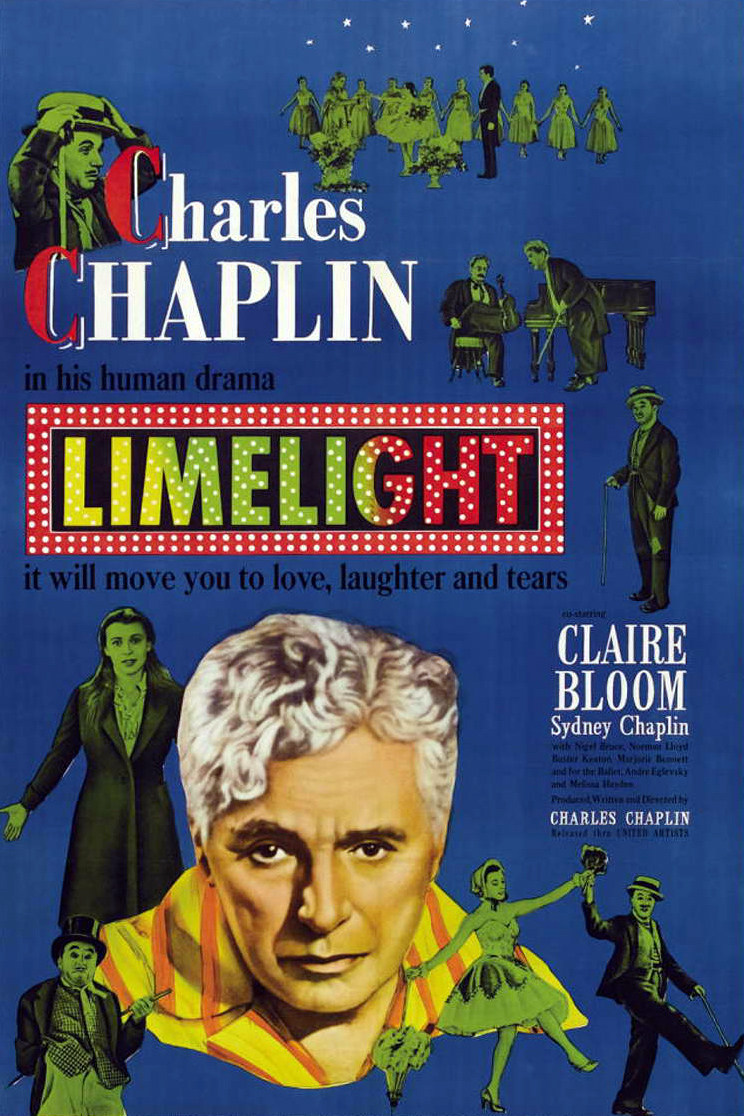
Limelight (1952) was a serious and autobiographical film for Chaplin: his character, Calvero, is an ex music hallstar (described in this image as a “Tramp Comedian”) forced to deal with his loss of popularity.
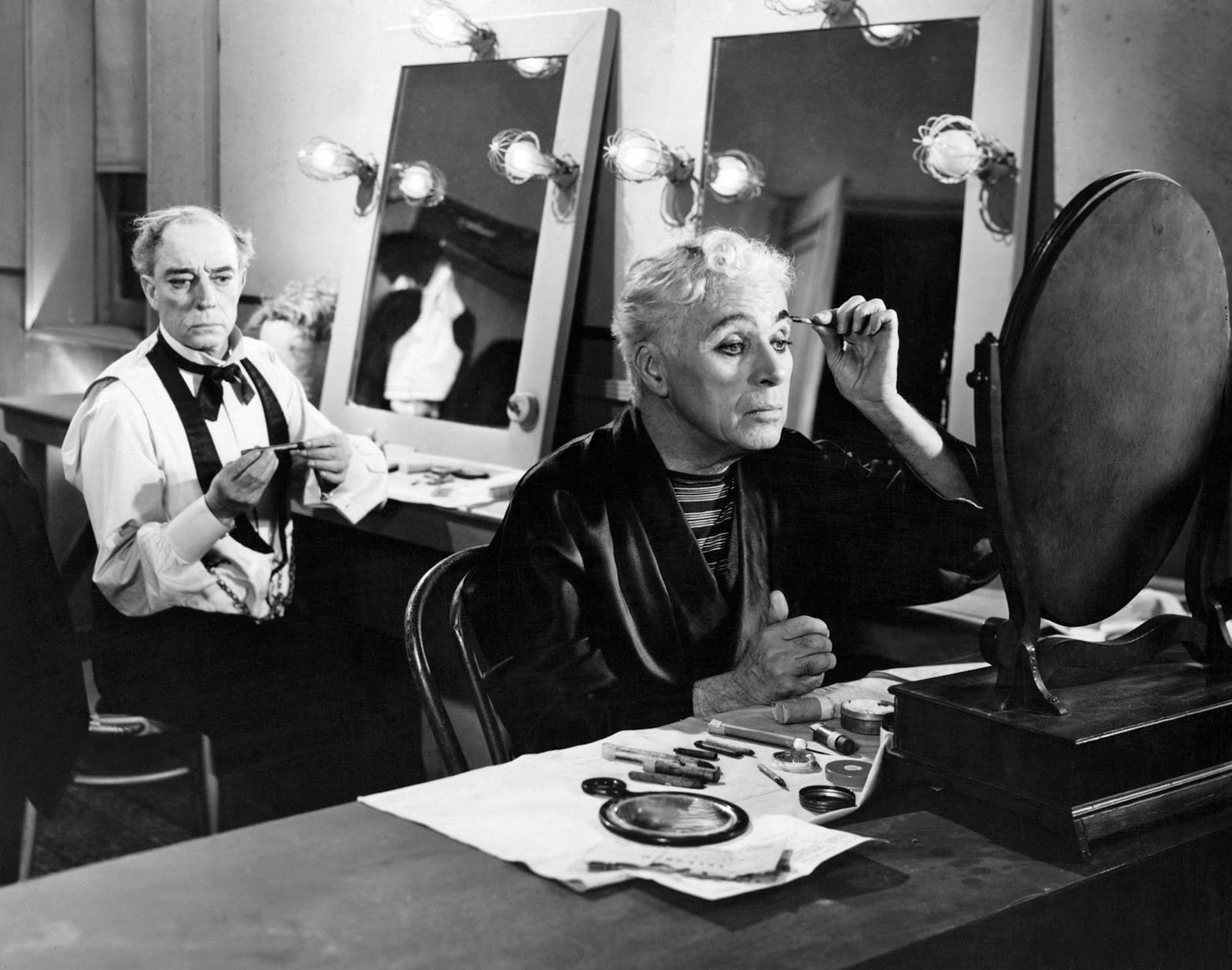
Buster Keaton and Charles Chaplin in Limelight (1952)
Although Chaplin remained politically active in the years following the failure of Monsieur Verdoux, his next film, about a forgotten vaudeville comedian and a young ballerina in Edwardian London, was devoid of political themes. Limelight was heavily autobiographical, alluding not only to Chaplin’s childhood and the lives of his parents, but also to his loss of popularity in the United States. The cast included various members of his family, including his five oldest children and his half-brother, Wheeler Dryden.
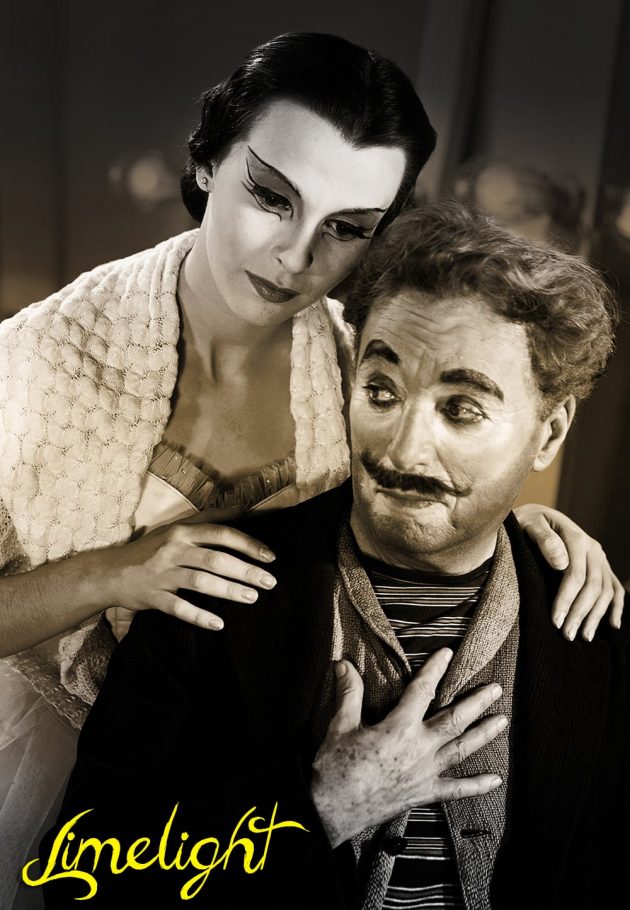
Claire Bloom and Charles Chaplin in Limelight (1952)
Filming began in November 1951, by which time Chaplin had spent three years working on the story. He aimed for a more serious tone than any of his previous films, regularly using the word “melancholy” when explaining his plans to his co-star Claire Bloom.
Limelight featured a cameo appearance from Buster Keaton, whom Chaplin cast as his stage partner in a pantomime scene. This marked the only time the comedians worked together.
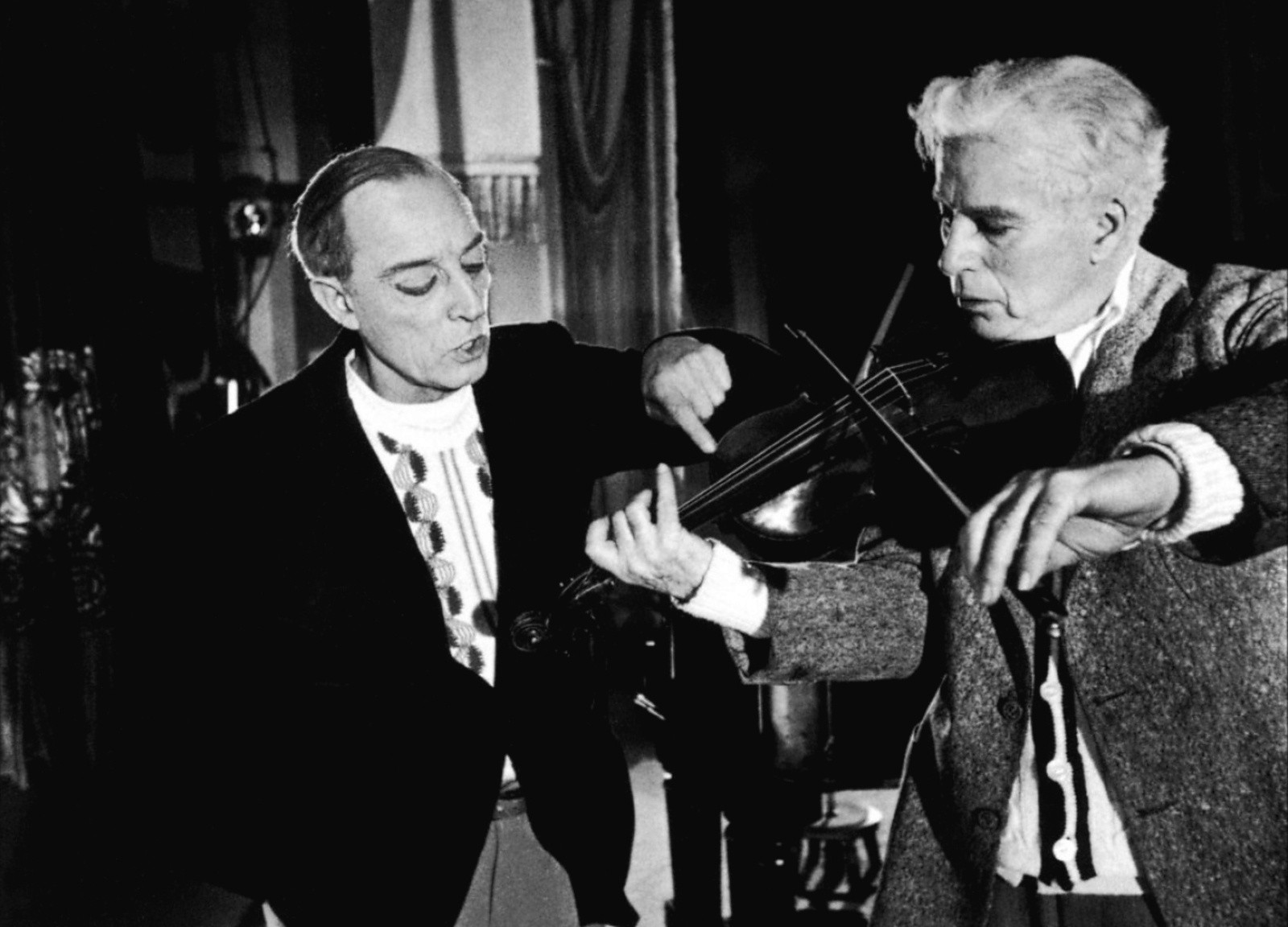
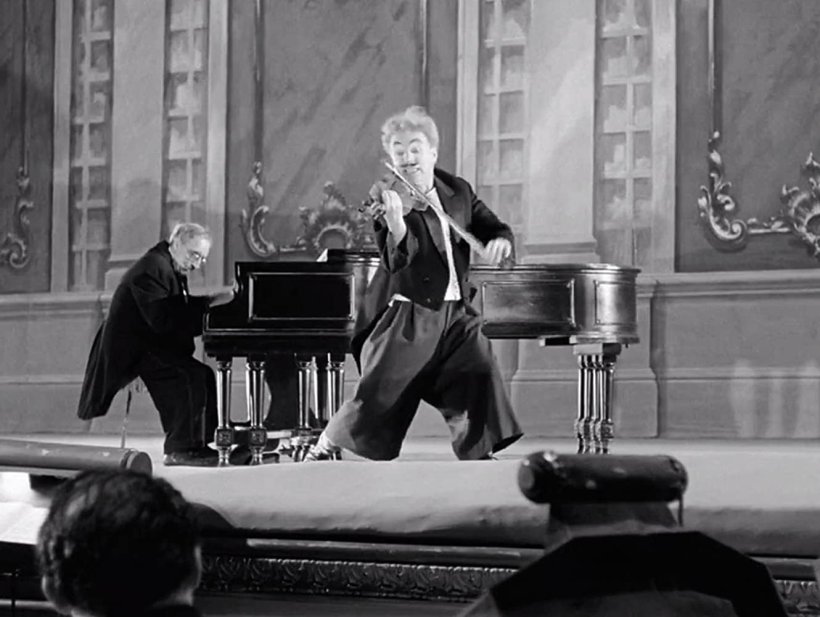
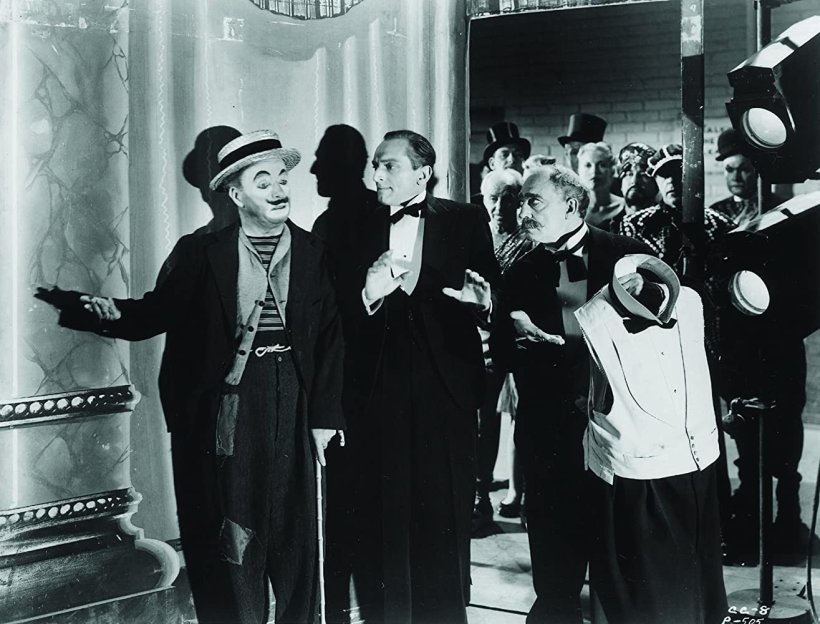
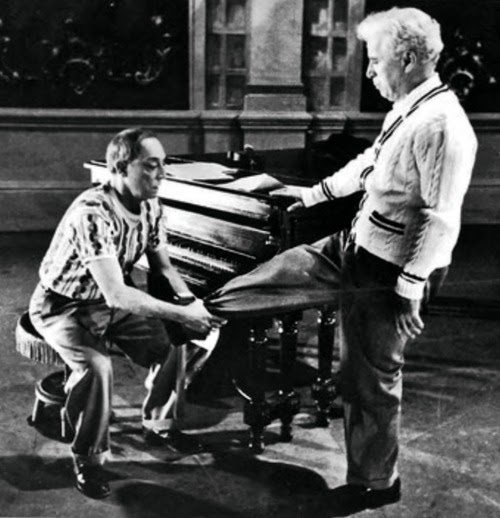
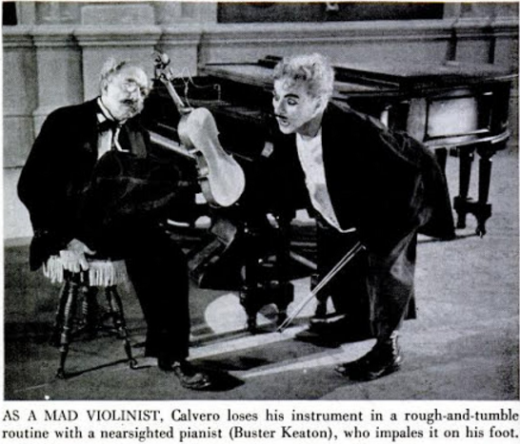
Charles Chaplin and Buster Keaton in Limelight (1952)
Chaplin decided to hold the world premiere of Limelight in London, since it was the setting of the film. As he left Los Angeles, he expressed a premonition that he would not be returning. At New York, he boarded the RMS Queen Elizabeth with his family on 18 September 1952.
The next day, attorney general James P. McGranery revoked Chaplin’s re-entry permit and stated that he would have to submit to an interview concerning his political views and moral behaviour in order to re-enter the US. Although McGranery told the press that he had “a pretty good case against Chaplin”, Maland has concluded, on the basis of the FBI files that were released in the 1980s, that the US government had no real evidence to prevent Chaplin’s re-entry.
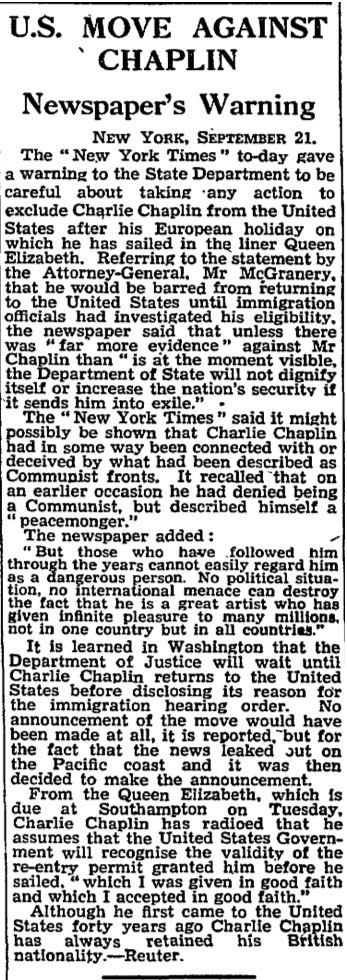
Reuters news on Chaplin and the immigration hearing order
It is likely that he would have gained entry if he had applied for it. However, when Chaplin received a cablegram informing him of the news, he privately decided to cut his ties with the United States:
Whether I re-entered that unhappy country or not was of little consequence to me. I would like to have told them that the sooner I was rid of that hate-beleaguered atmosphere the better, that I was fed up of America’s insults and moral pomposity…
Because all of his property remained in America, Chaplin refrained from saying anything negative about the incident to the press.
The scandal attracted vast attention, but Chaplin and his film were warmly received in Europe. In America, the hostility towards him continued, and, although it received some positive reviews, Limelight was subjected to a wide-scale boycott.
Reflecting on this, Maland writes that Chaplin’s fall, from an “unprecedented” level of popularity, “may be the most dramatic in the history of stardom in America”.
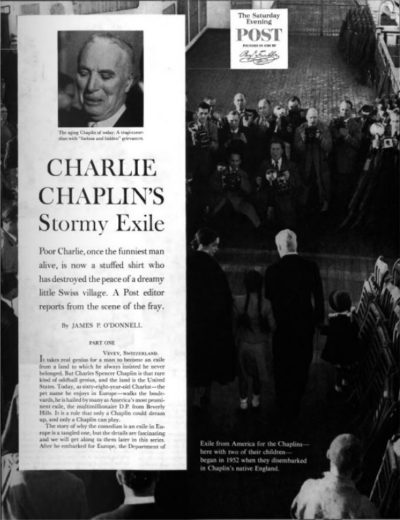
1953–1977: European years
Move to Switzerland and A King in New York
— Chaplin’s press release regarding his decision not to seek re-entry to the US
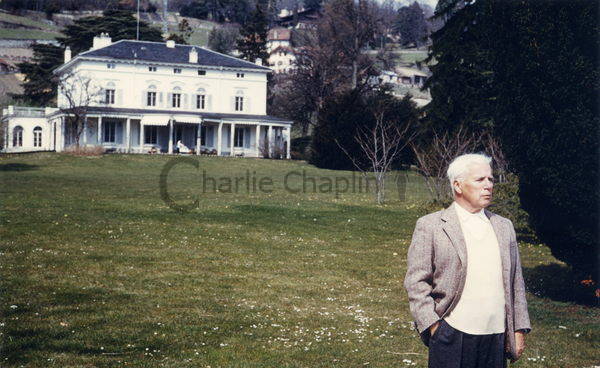
Manoir de Ban, Chaplin’s home in Corsier-sur-Vevey, Switzerland
Chaplin did not attempt to return to the United States after his re-entry permit was revoked, and instead sent his wife to settle his affairs.
The couple decided to settle in Switzerland and, in January 1953, the family moved into their permanent home: Manoir de Ban, a 14-hectare (35-acre) estate overlooking Lake Geneva in Corsier-sur-Vevey.
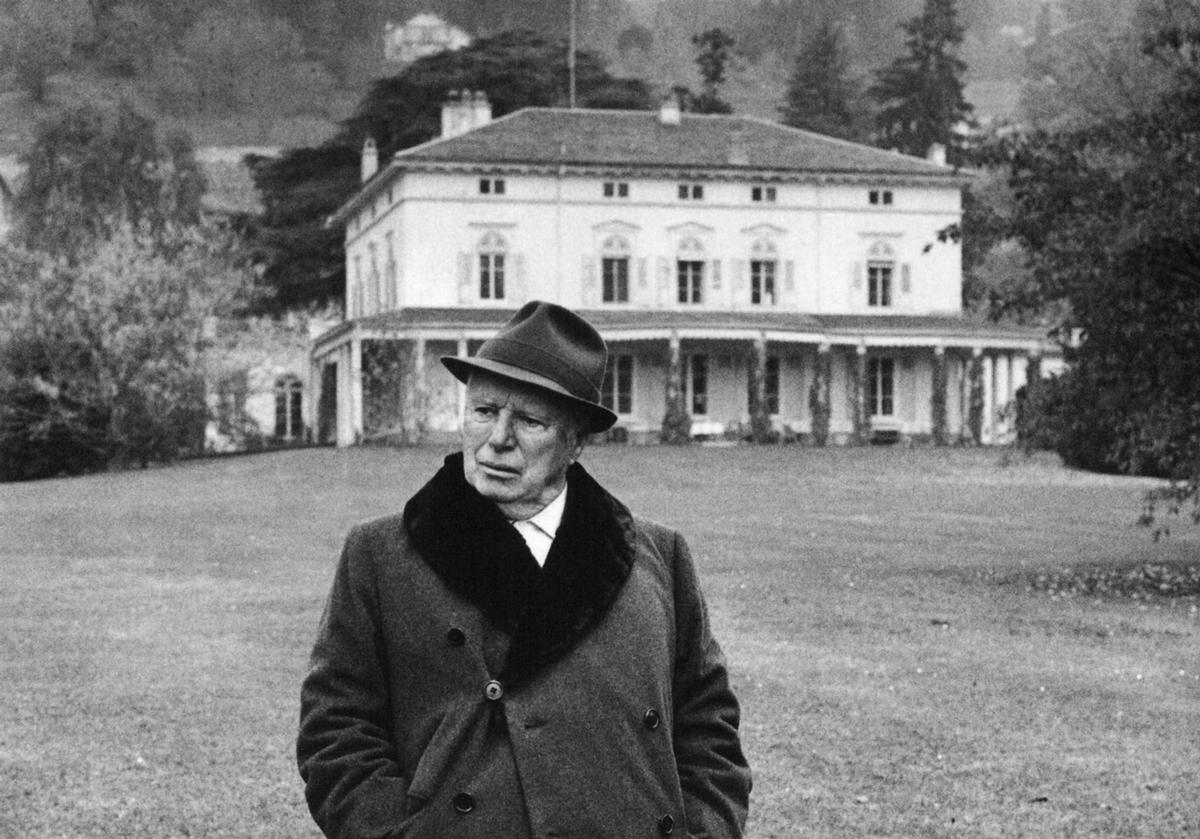
Manoir de Ban, Chaplin’s home in Corsier-sur-Vevey, Switzerland
Chaplin put his Beverly Hills house and studio up for sale in March, and surrendered his re-entry permit in April. The next year, his wife renounced her US citizenship and became a British citizen. Chaplin severed the last of his professional ties with the United States in 1955, when he sold the remainder of his stock in United Artists, which had been in financial difficulty since the early 1940s.
Chaplin remained a controversial figure throughout the 1950s, especially after he was awarded the International Peace Prize by the communist-led World Peace Council, and after his meetings with Zhou Enlai and Nikita Khrushchev.
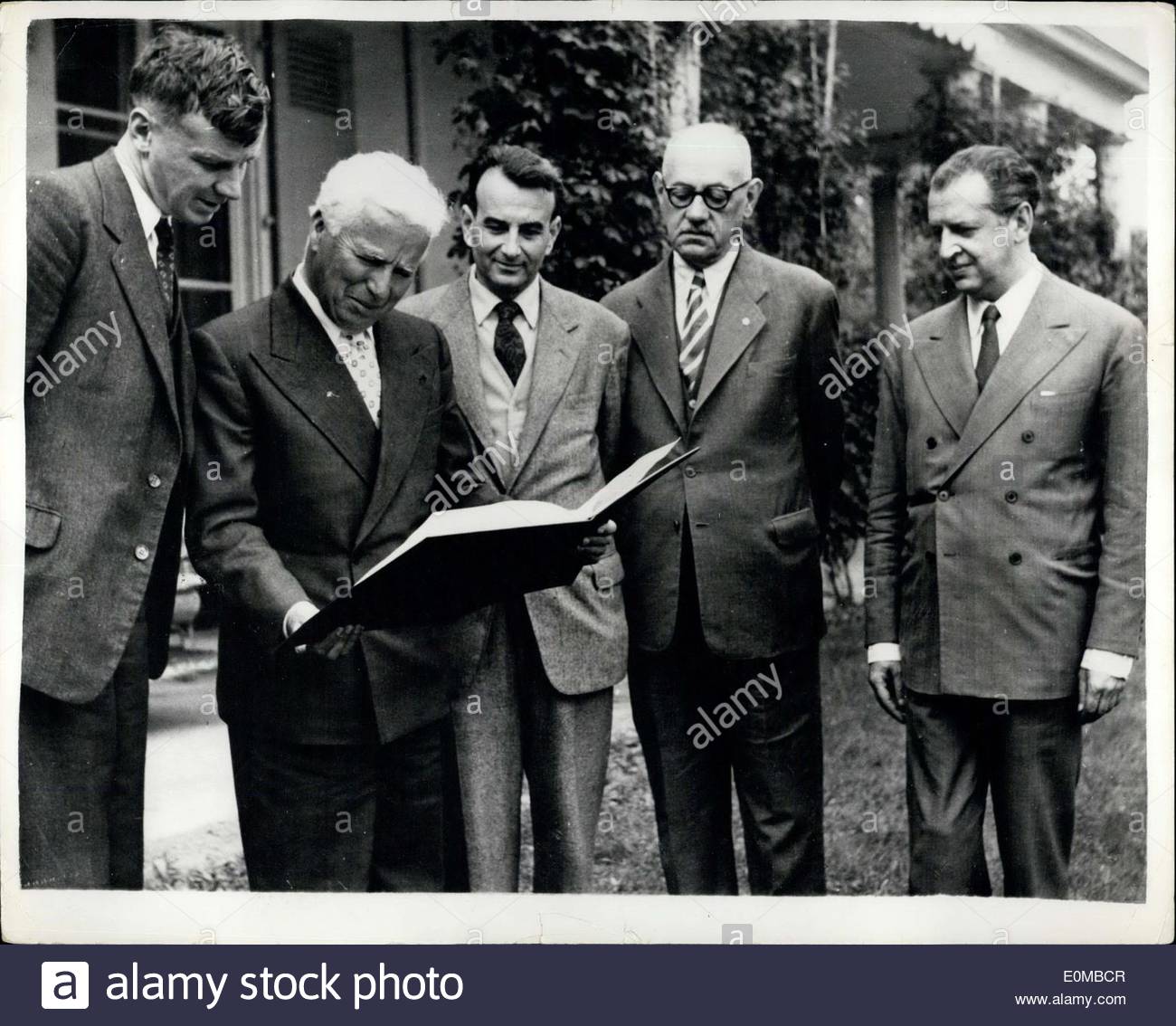
Jun. 05, 1954 – Charlie Chaplin Receives The ”World Peace Council” Prize
He began developing his first European film, A King in New York, in 1954. Casting himself as an exiled king who seeks asylum in the United States, Chaplin included several of his recent experiences in the screenplay.
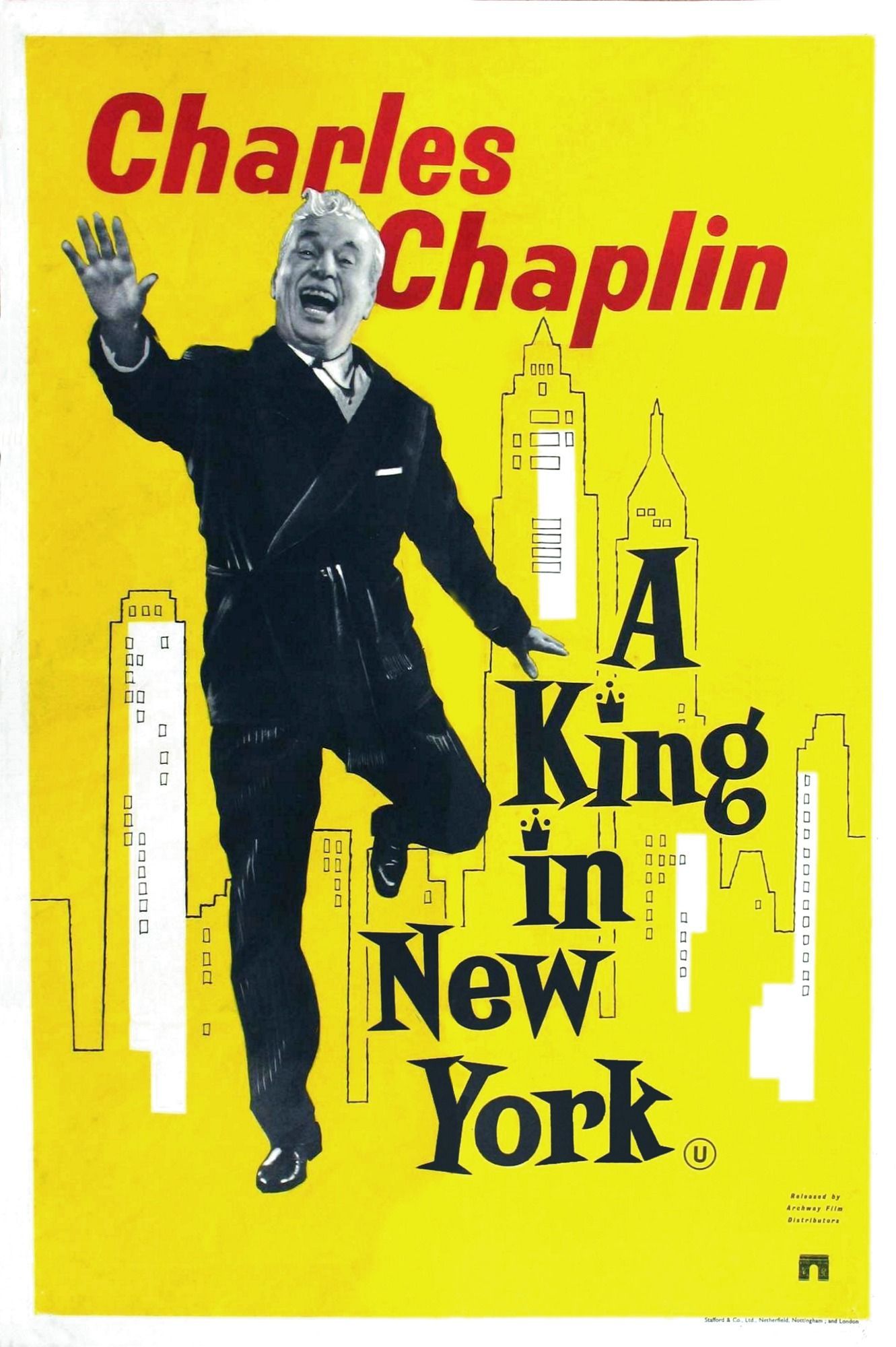
A King in New York (1957) Poster
His son, Michael, was cast as a boy whose parents are targeted by the FBI, while Chaplin’s character faces accusations of communism. The political satire parodied HUAC and attacked elements of 1950s culture – including consumerism, plastic surgery, and wide-screen cinema. In a review, the playwright John Osborne called it Chaplin’s “most bitter” and “most openly personal” film.
Chaplin founded a new production company, Attica, and used Shepperton Studios for the shooting. Filming in England proved a difficult experience, as he was used to his own Hollywood studio and familiar crew, and no longer had limitless production time. According to Robinson, this had an effect on the quality of the film. A King in New York was released in September 1957, and received mixed reviews.
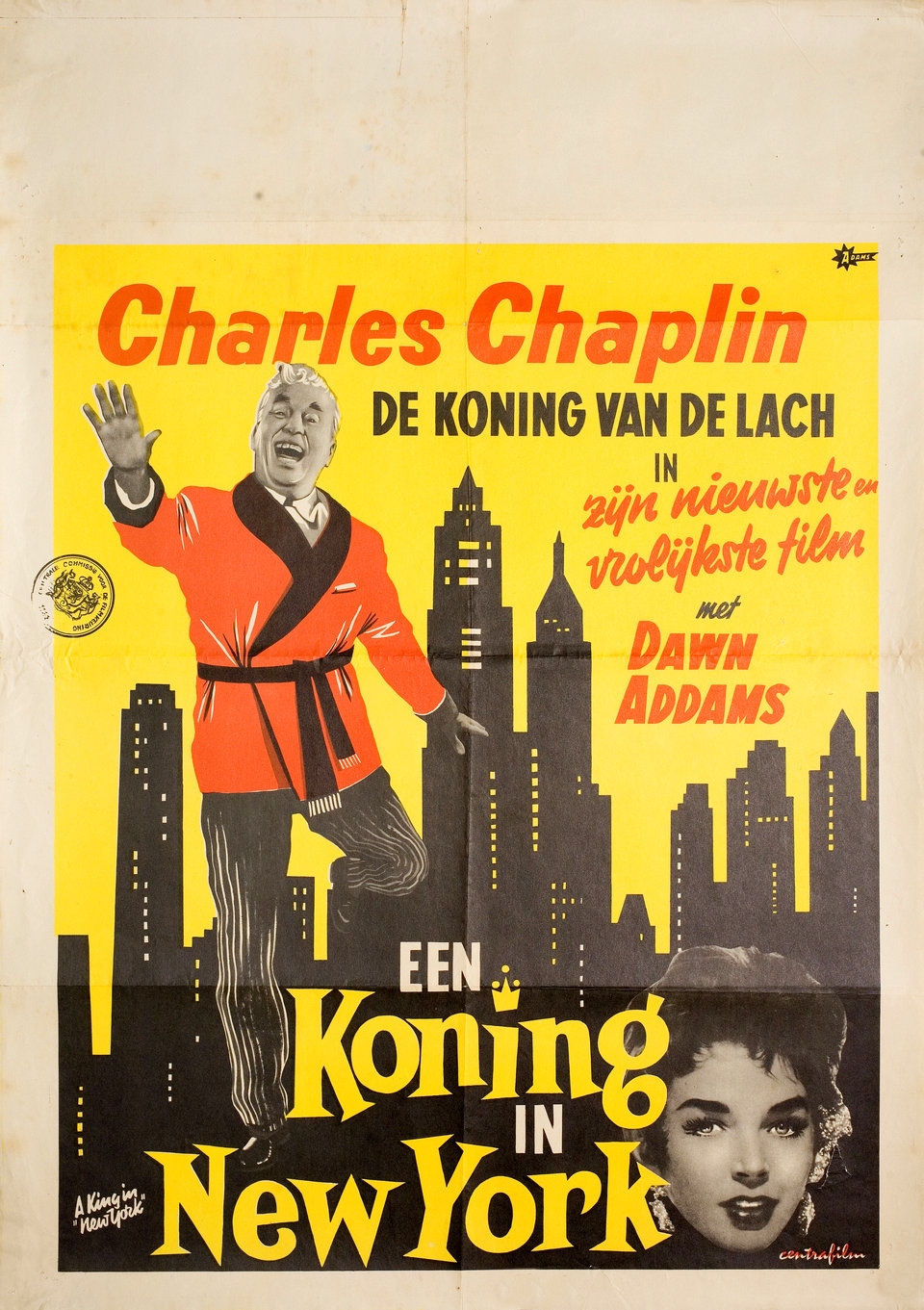
A King in New York (1957) Dutch Poster
Chaplin banned American journalists from its Paris première and decided not to release the film in the United States. This severely limited its revenue, although it achieved moderate commercial success in Europe. A King in New York was not shown in America until 1973.
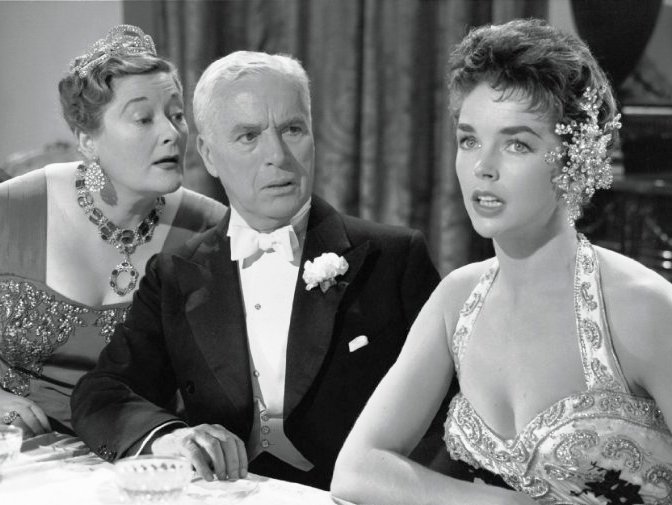
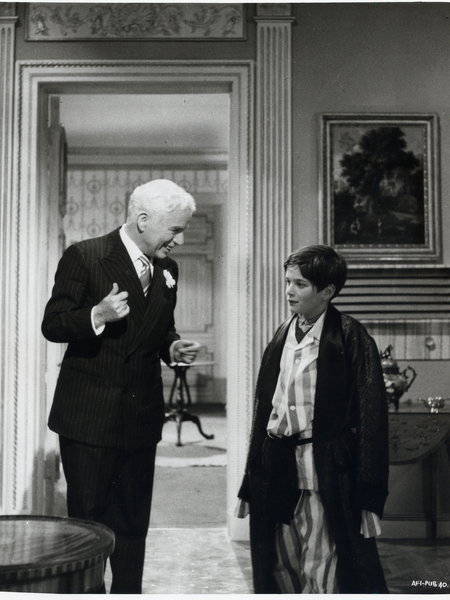
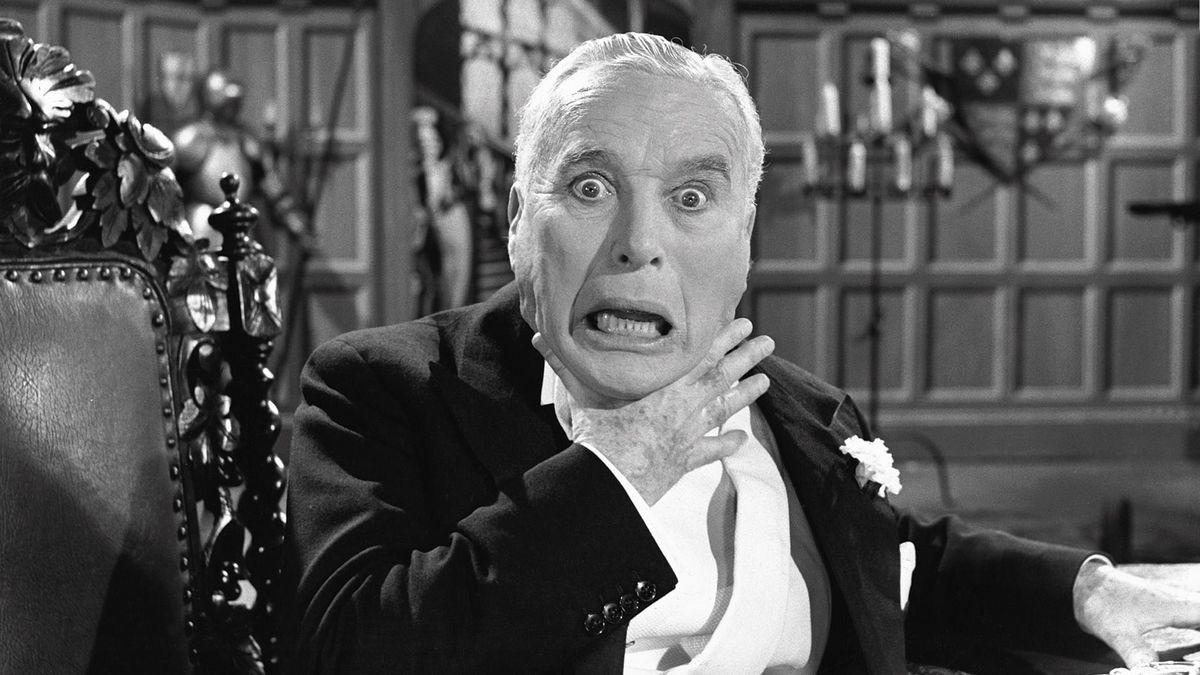
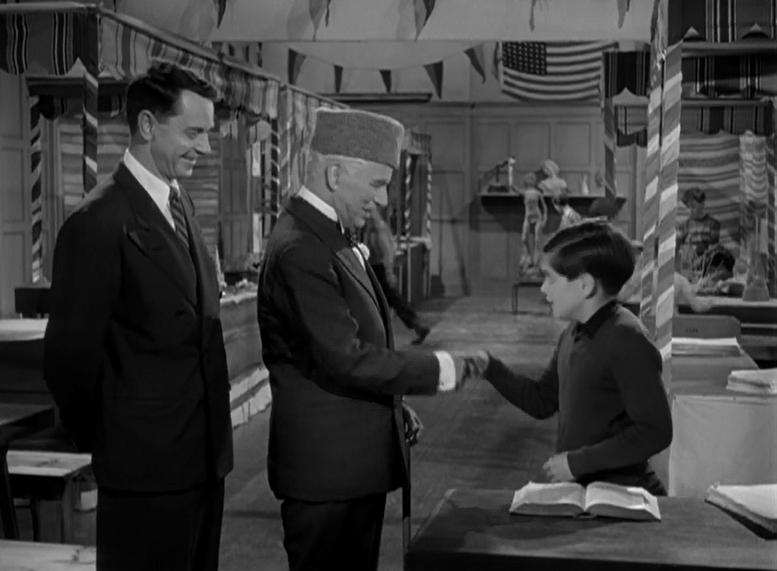
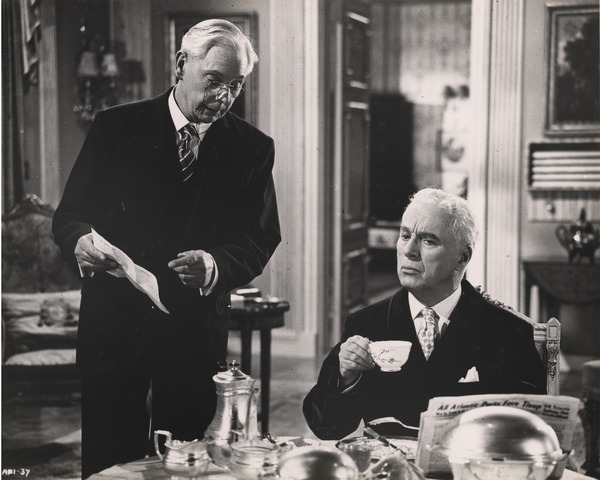
A King In New York (1957)
Final works and renewed appreciation
In the last two decades of his career, Chaplin concentrated on re-editing and scoring his old films for re-release, along with securing their ownership and distribution rights.
In an interview he granted in 1959, the year of his 70th birthday, Chaplin stated that there was still “room for the Little Man in the atomic age”. The first of these re-releases was The Chaplin Revue (1959), which included new versions of A Dog’s Life, Shoulder Arms, and The Pilgrim.
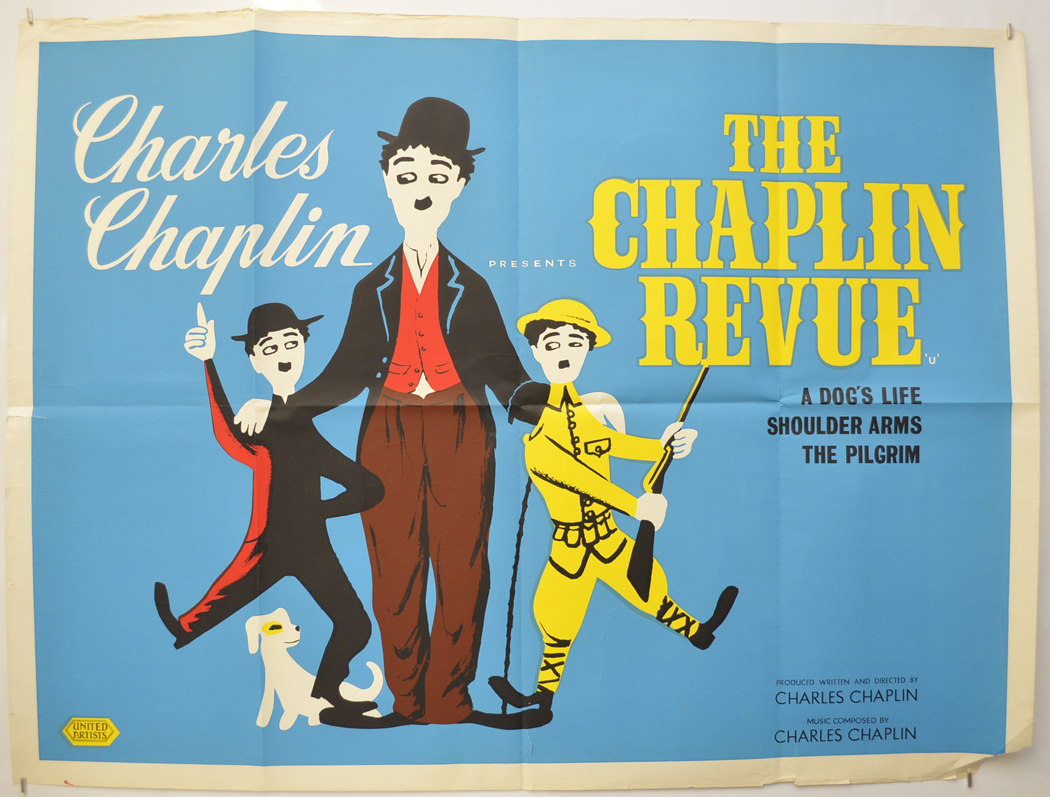
Chaplin Revue (1959) Poster
In America, the political atmosphere began to change and attention was once again directed to Chaplin’s films instead of his views. In July 1962, The New York Times published an editorial stating that “we do not believe the Republic would be in danger if yesterday’s unforgotten little tramp were allowed to amble down the gangplank of a steamer or plane in an American port”.
The same month, Chaplin was invested with the honorary degree of Doctor of Letters by the universities of Oxford and Durham. In November 1963, the Plaza Theater in New York started a year-long series of Chaplin’s films, including Monsieur Verdoux and Limelight, which gained excellent reviews from American critics.
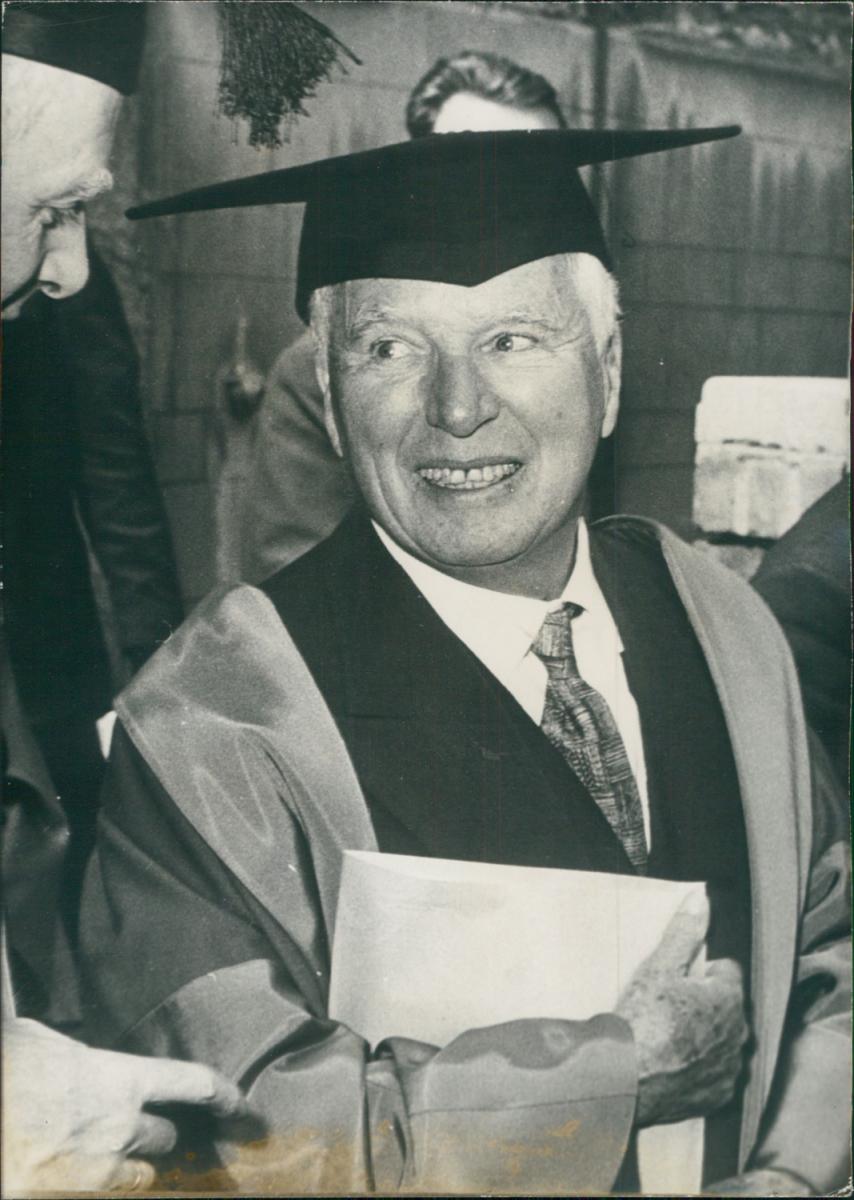
Jun. 06, 1962 – Charlie Chaplin Receives Honorary Degree – at Oxford
September 1964 saw the release of Chaplin’s memoirs, My Autobiography, which he had been working on since 1957. The 500-page book, which focused on his early years and personal life, became a worldwide best-seller, despite criticism over the lack of information on his film career.
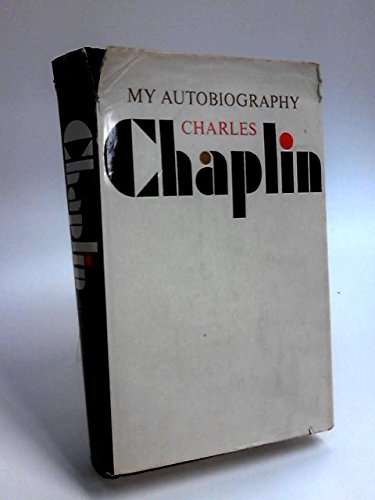
My Autobiography by Charles Chaplin – 1st Edition (1964)
Shortly after the publication of his memoirs, Chaplin began work on A Countess from Hong Kong (1967), a romantic comedy based on a script he had written for Paulette Goddard in the 1930s.
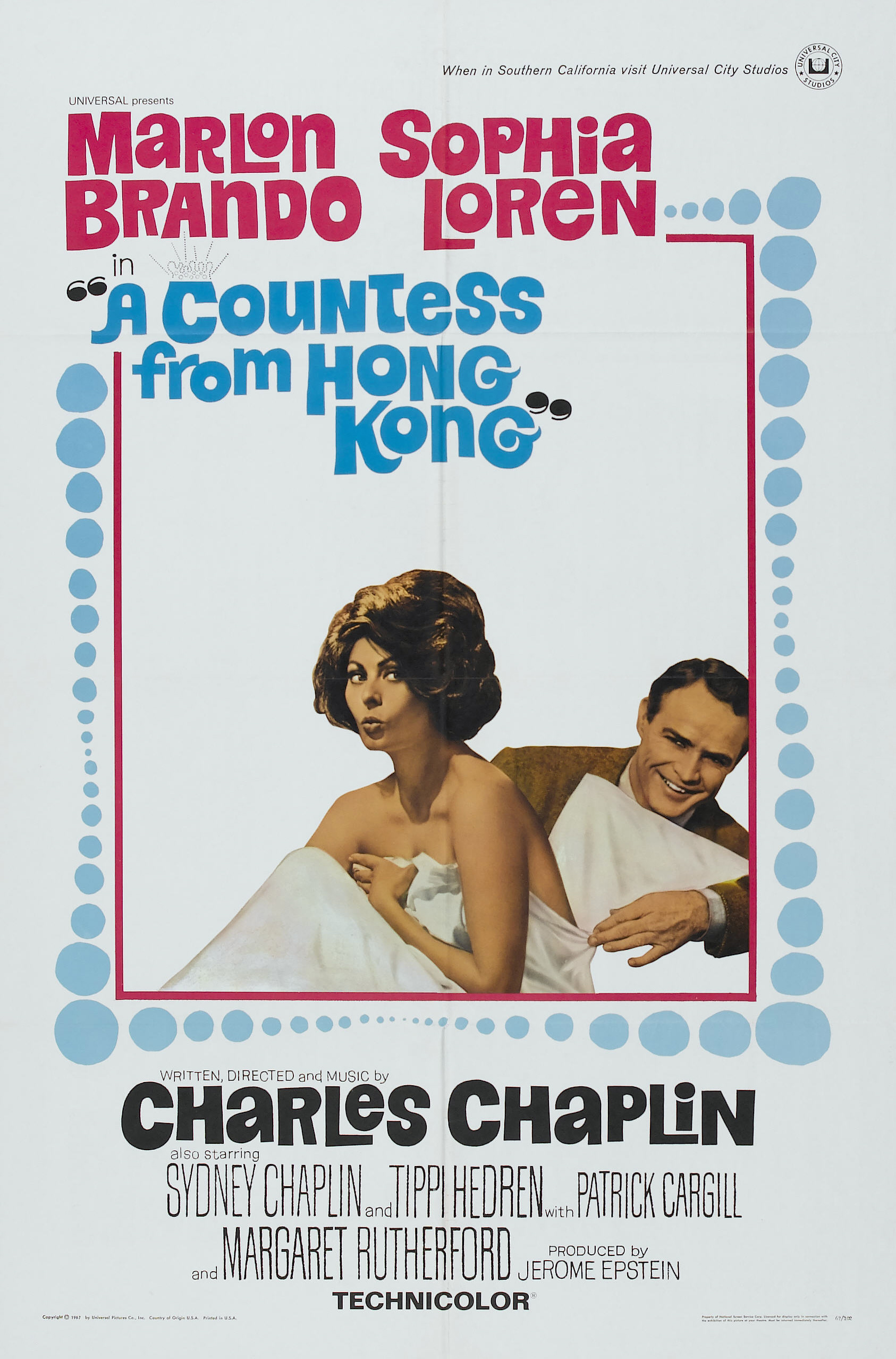
A Countess From Hong Kong (1967) Poster
Set on an ocean liner, it starred Marlon Brando as an American ambassador and Sophia Loren as a stowaway found in his cabin. The film differed from Chaplin’s earlier productions in several aspects. It was his first to use Technicolor and the widescreen format, while he concentrated on directing and appeared on-screen only in a cameo role as a seasick steward. He also signed a deal with Universal Pictures and appointed his assistant, Jerome Epstein, as the producer.
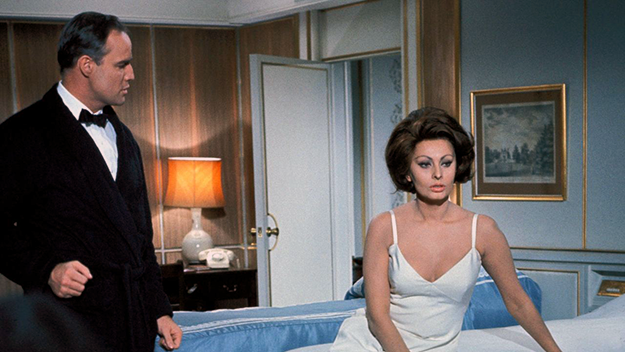
Marlon Brando and Sophia Loren in A Countess From Hong Kong (1967)
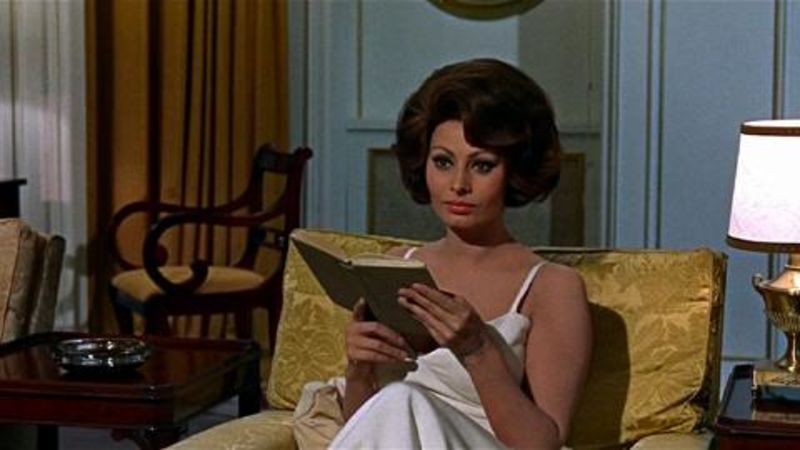
Sophia Loren in A Countess From Hong Kong (1967)
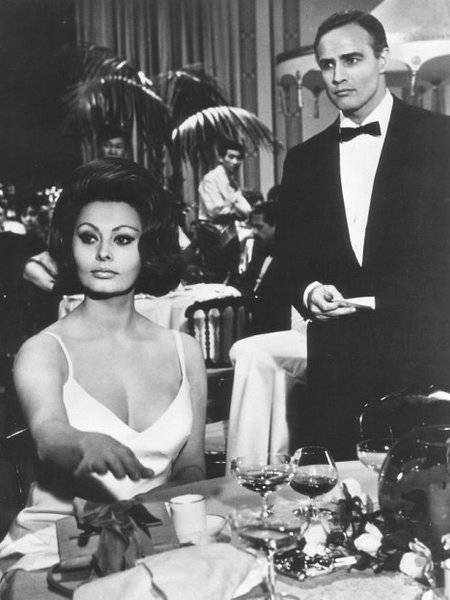
Marlon Brando and Sophia Loren in A Countess From Hong Kong (1967)
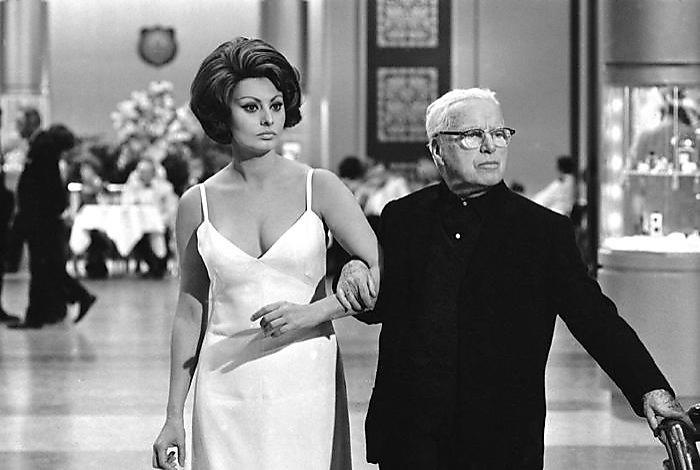
Charles Chaplin and Sophia Loren in A Countess From Hong Kong (1967)
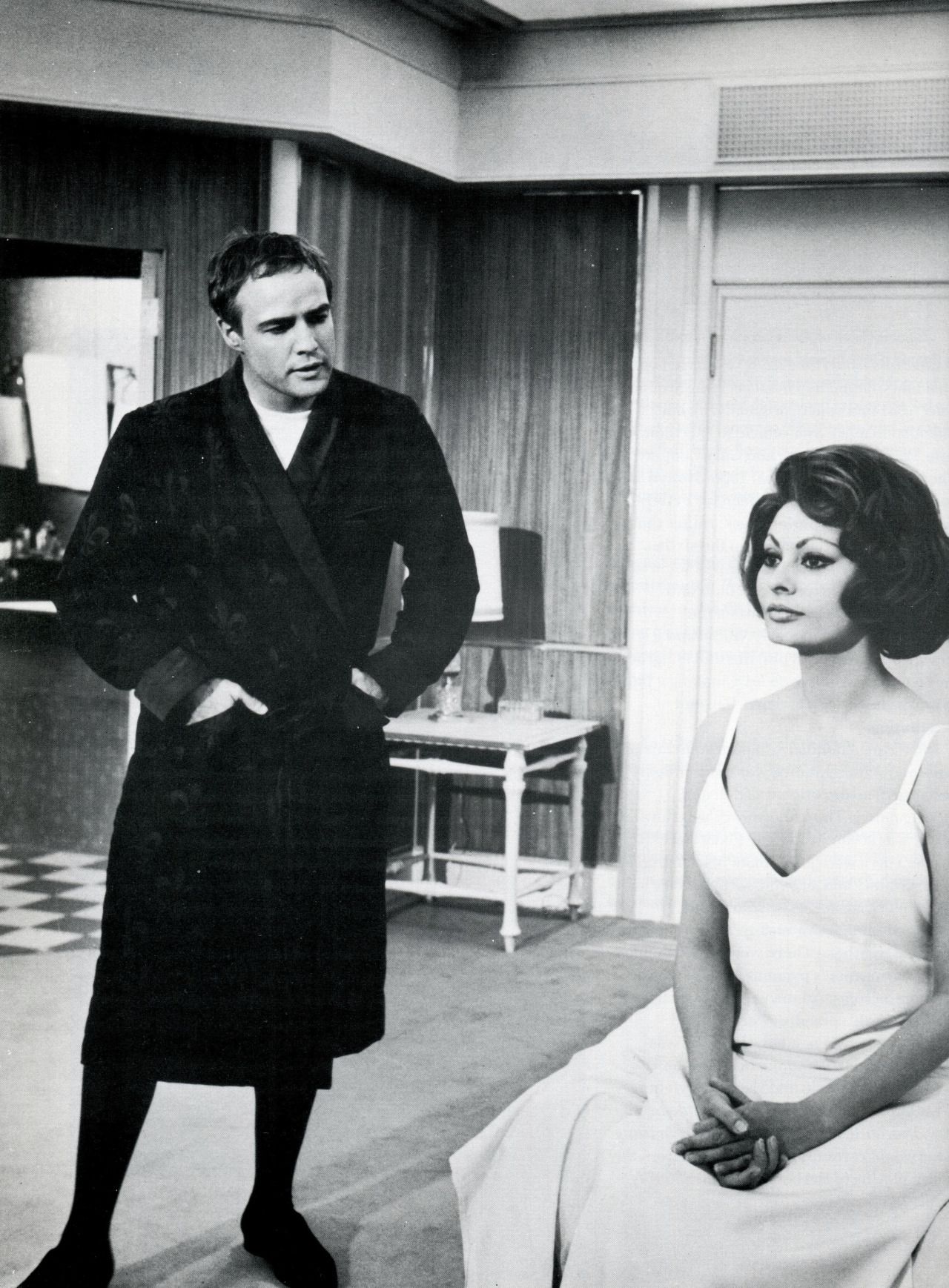
Marlon Brando and Sophia Loren in A Countess From Hong Kong (1967)
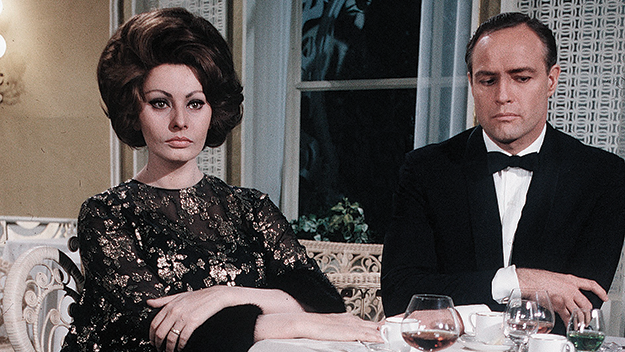
Marlon Brando and Sophia Loren in A Countess From Hong Kong (1967)
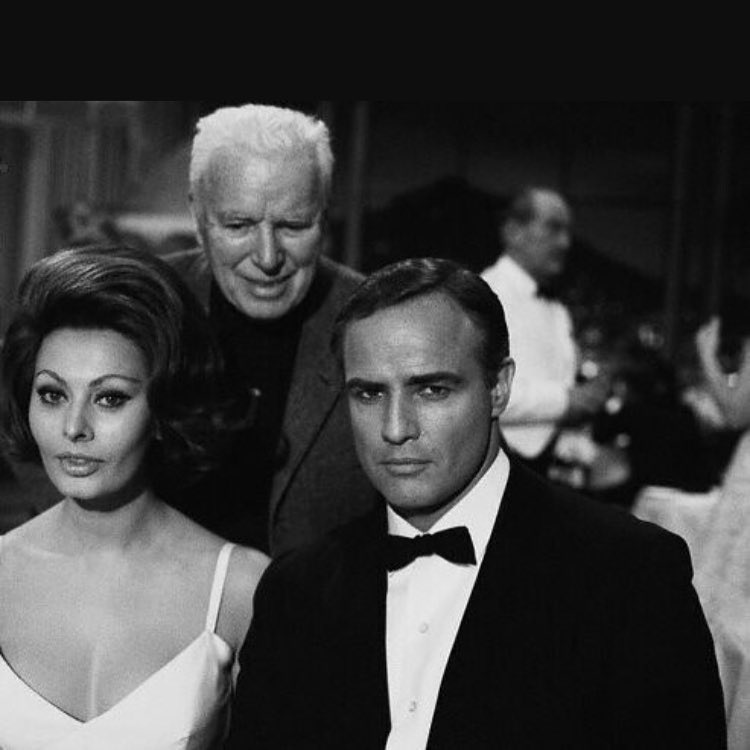
Charles Chaplin, Marlon Brando and Sophia Loren in A Countess From Hong Kong (1967)
Chaplin was paid $600,000 director’s fee as well as a percentage of the gross receipts. A Countess from Hong Kong premiered in January 1967, to unfavourable reviews, and was a box-office failure. Chaplin was deeply hurt by the negative reaction to the film, which turned out to be his last.
Chaplin suffered a series of minor strokes in the late 1960s, which marked the beginning of a slow decline in his health. Despite the setbacks, he was soon writing a new film script, The Freak, a story of a winged girl found in South America, which he intended as a starring vehicle for his daughter, Victoria.
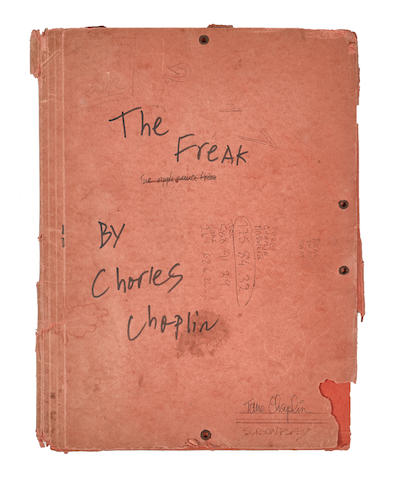
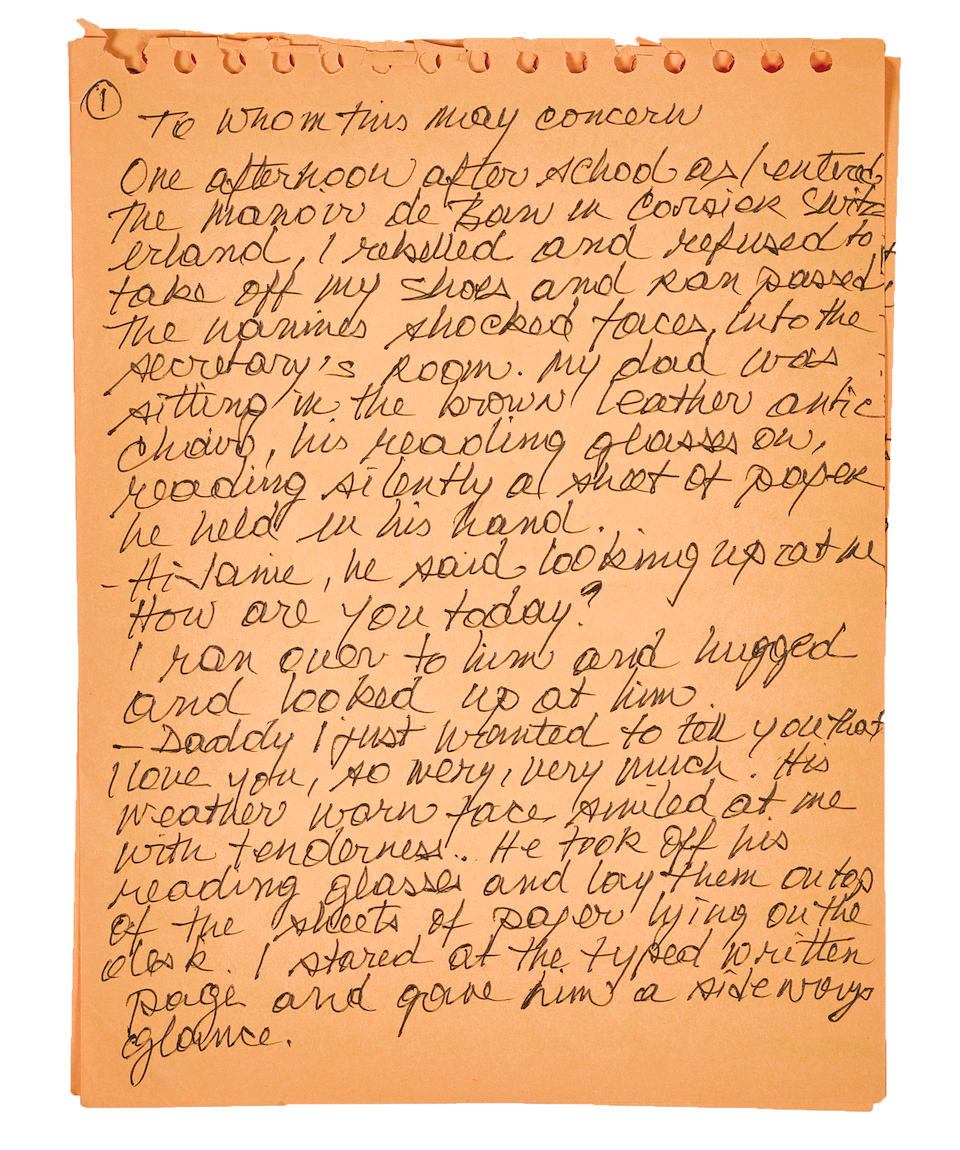
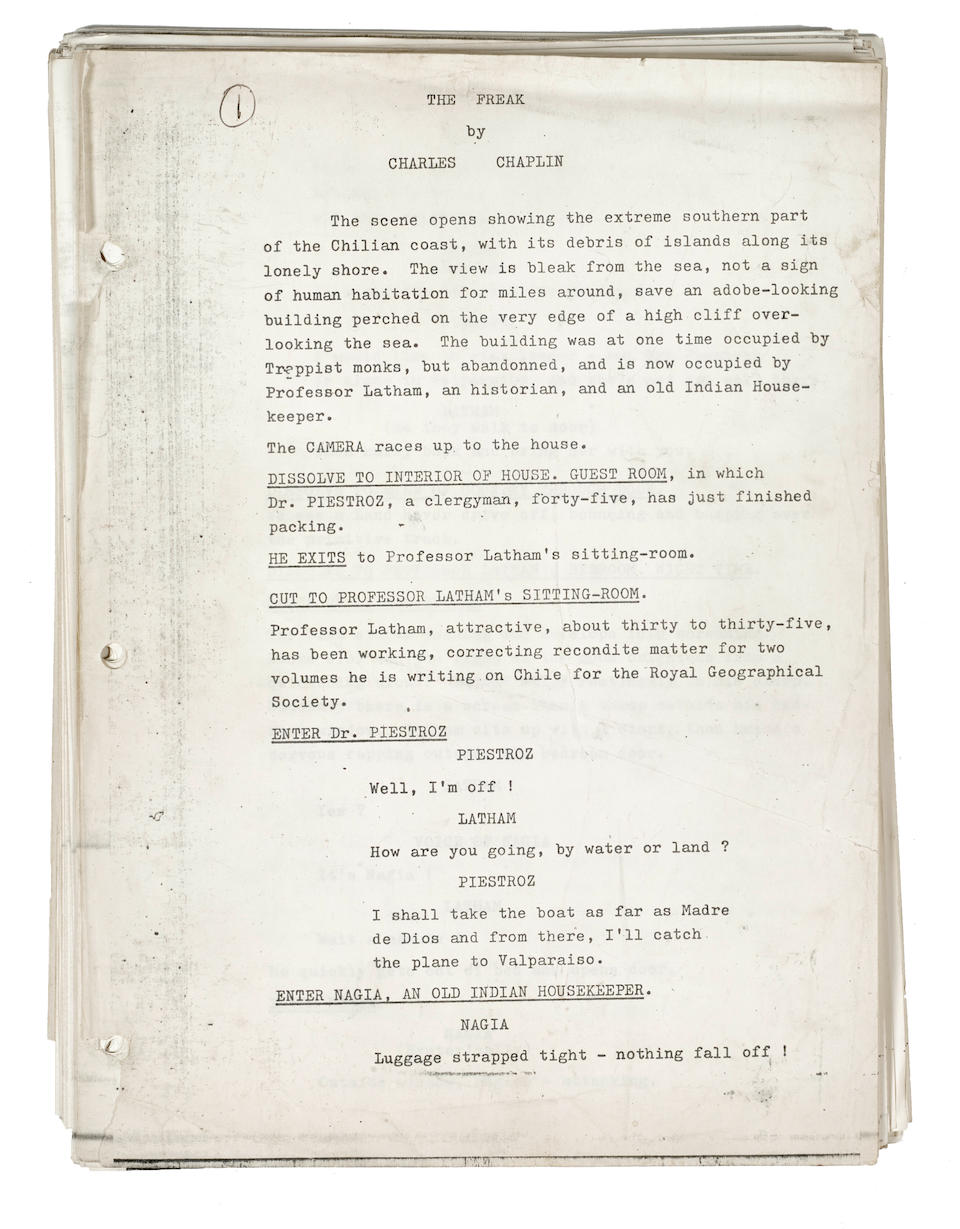
The Freak, Charles Chaplin’s script, unfinished project
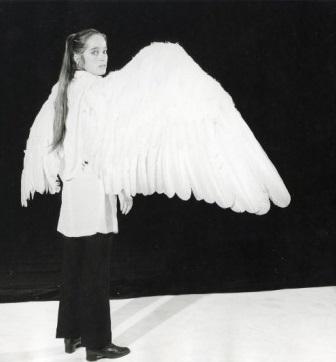
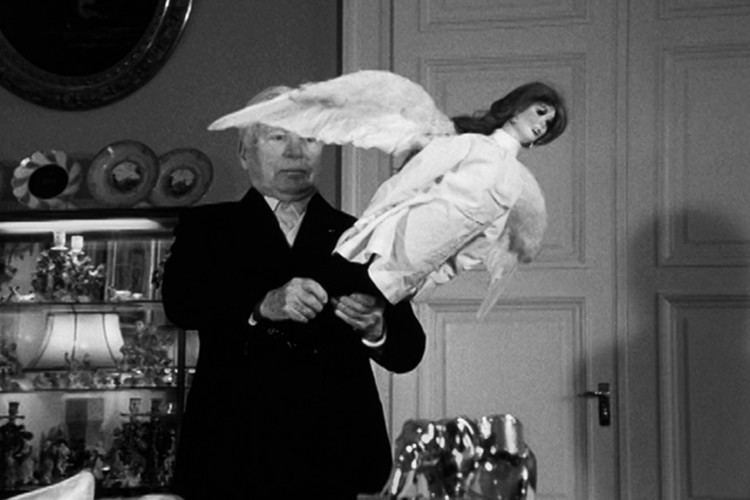
The Freak – rehearsals
His fragile health prevented the project from being realised. In the early 1970s, Chaplin concentrated on re-releasing his old films, including The Kid and The Circus. In 1971, he was made a Commander of the National Order of the Legion of Honour at the Cannes Film Festival. The following year, he was honoured with a special award by the Venice Film Festival.
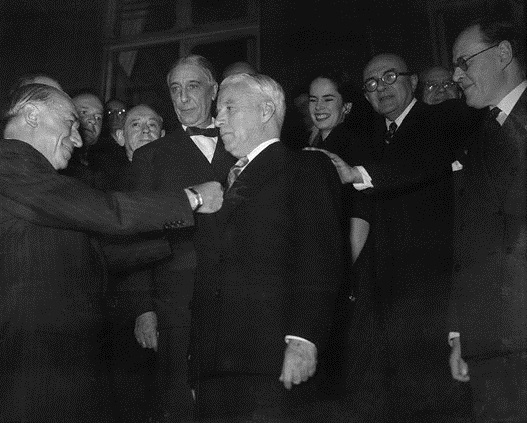
Venice Film Festival Honors Charles Chaplin in 1972
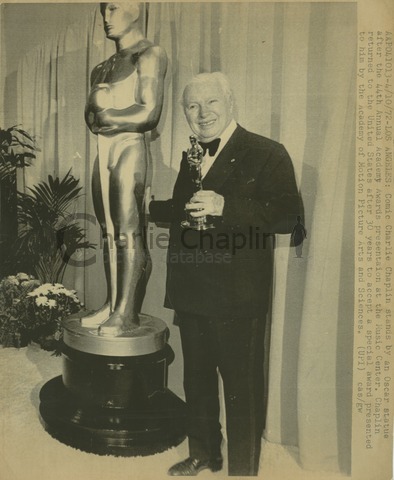
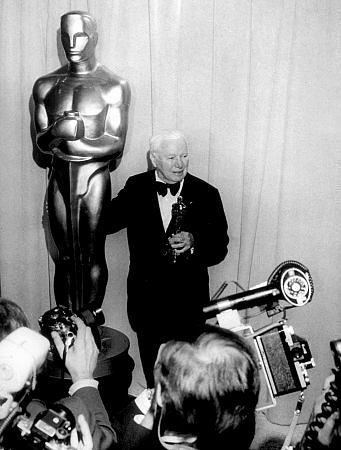
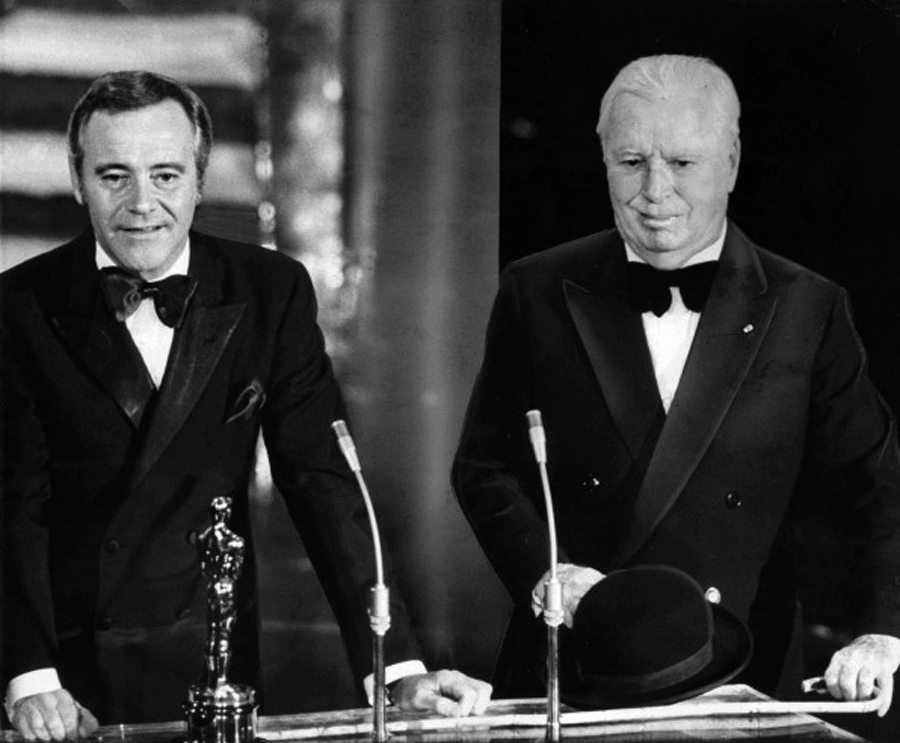
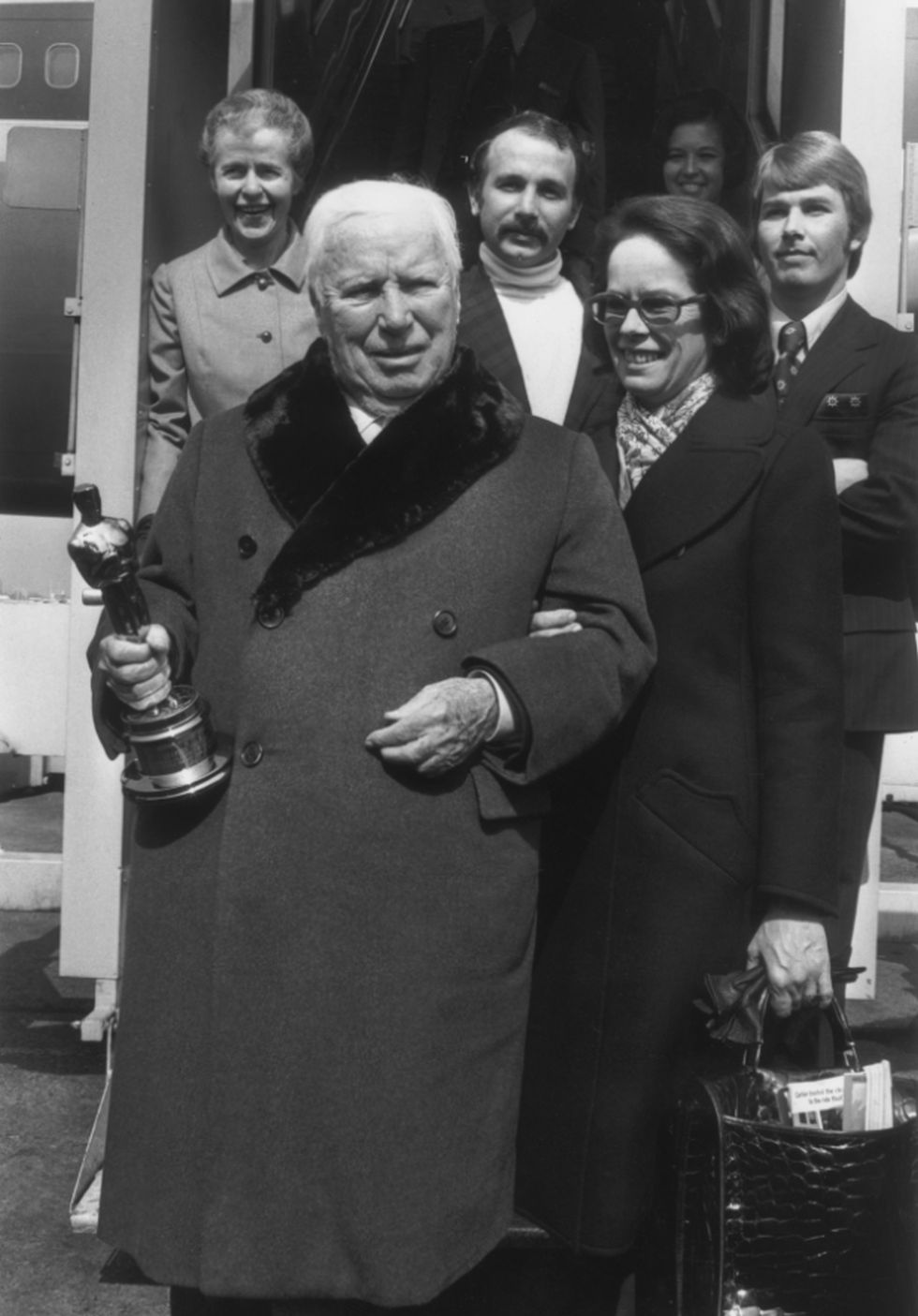
Chaplin (right) receiving his Honorary Academy Award from Jack Lemmon in 1972. It was the first time he had been to the United States in 20 years.
In 1972, the Academy of Motion Picture Arts and Sciences offered Chaplin an Honorary Award, which Robinson sees as a sign that America “wanted to make amends”. Chaplin was initially hesitant about accepting but decided to return to the US for the first time in 20 years.
The visit attracted a large amount of press coverage and, at the Academy Awards gala, he was given a twelve-minute standing ovation, the longest in the Academy’s history. Visibly emotional, Chaplin accepted his award for “the incalculable effect he has had in making motion pictures the art form of this century”.
Although Chaplin still had plans for future film projects, by the mid-1970s he was very frail. He experienced several further strokes, which made it difficult for him to communicate, and he had to use a wheelchair.
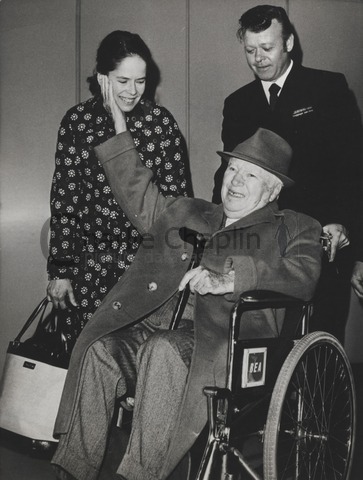
His final projects were compiling a pictorial autobiography, My Life in Pictures (1974) and scoring A Woman of Paris for re-release in 1976. He also appeared in a documentary about his life, The Gentleman Tramp (1975), directed by Richard Patterson.] In the 1975 New Year Honours, Chaplin was awarded a knighthood by Queen Elizabeth II, though he was too weak to kneel and received the honour in his wheelchair.
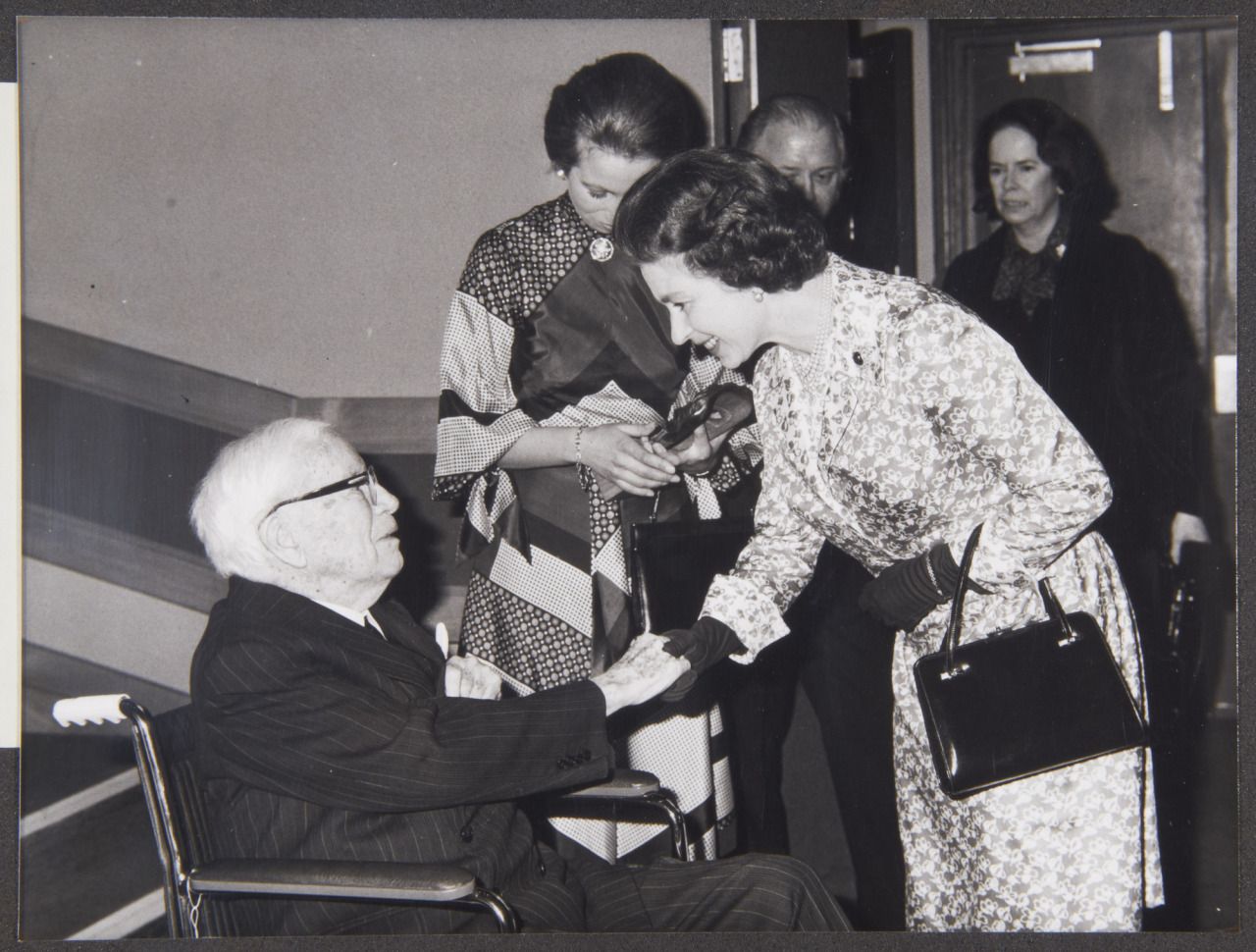
The Queen meets Charlie Chaplin at the opening of the British academy of film and television arts. 11th March 1976.
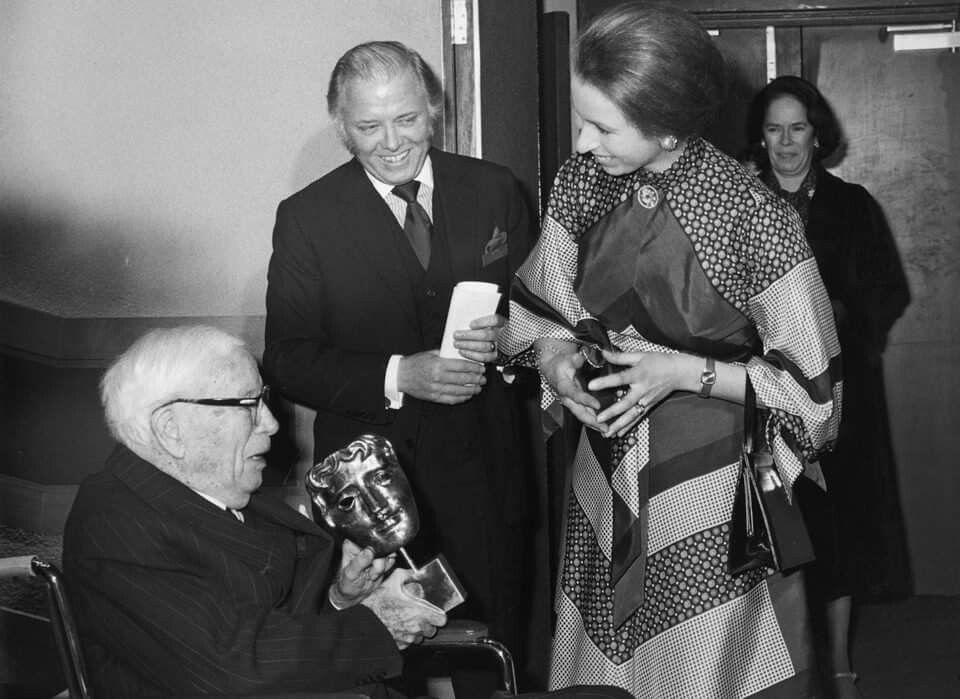
Princess Anne jokes with Sir Charles Chaplin after presenting him with an award, London, 1976
Death
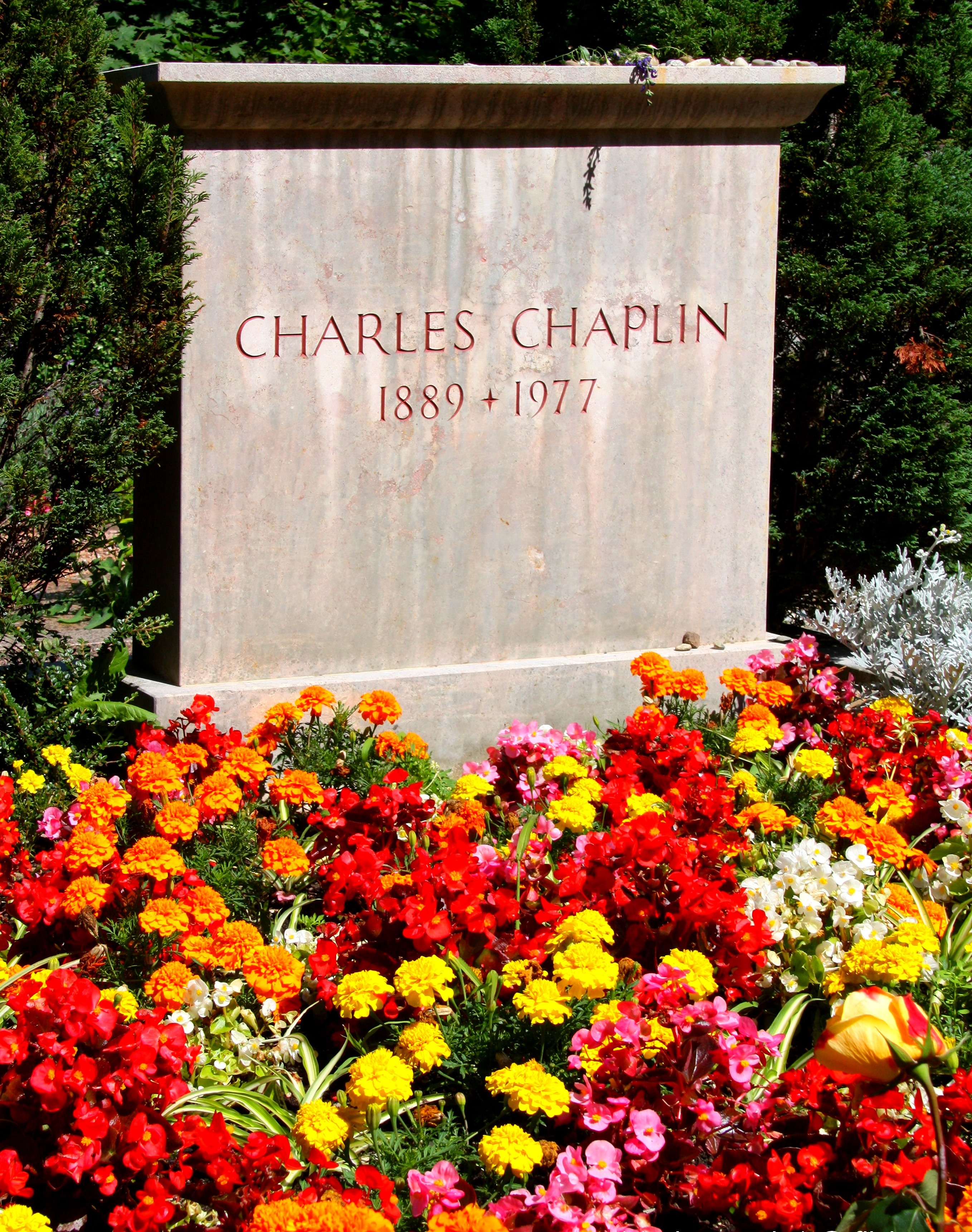
Chaplin’s grave in Corsier-sur-Vevey, Switzerland
By October 1977, Chaplin’s health had declined to the point that he needed constant care. In the early morning of 25 December 1977, Chaplin died at home after suffering a stroke in his sleep.
He was 88 years old.
The funeral, on 27 December, was a small and private Anglican ceremony, according to his wishes. Chaplin was interred in the Corsier-sur-Vevey cemetery. Among the film industry’s tributes, director René Clair wrote, “He was a monument of the cinema, of all countries and all times … the most beautiful gift the cinema made to us.”
Actor Bob Hope declared, “We were lucky to have lived in his time.”
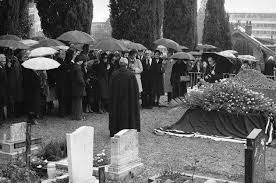
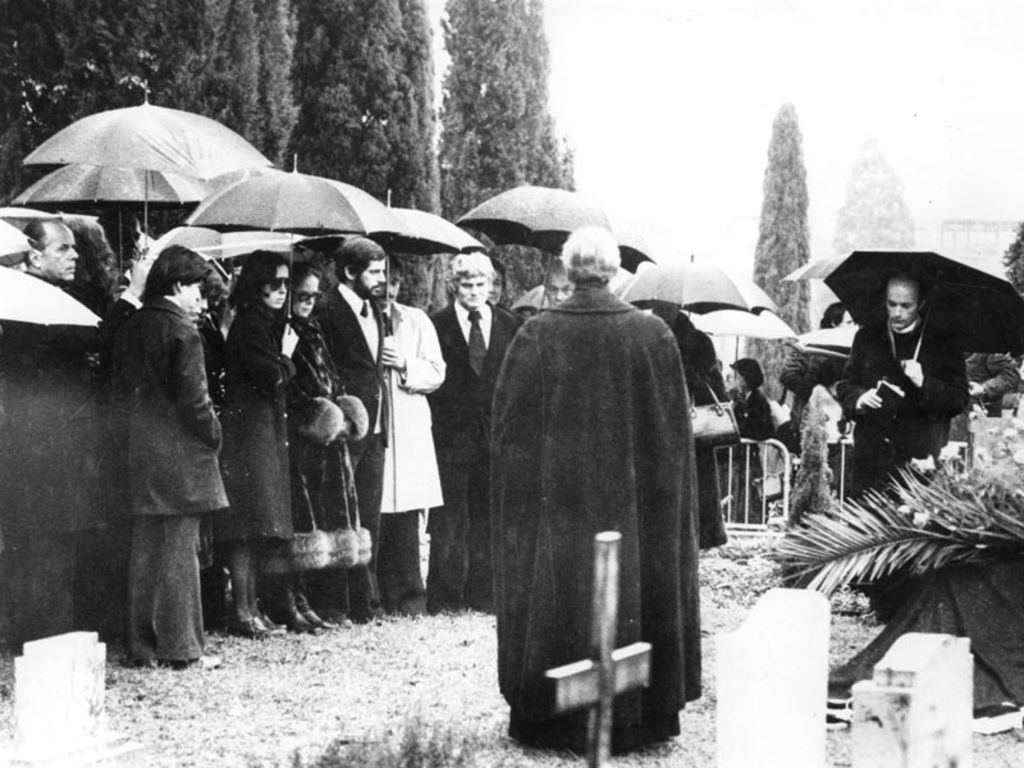
Charles Chaplin’s funeral 27th December 1977
On 1 March 1978, Chaplin’s coffin was dug up and stolen from its grave by two unemployed immigrants, Roman Wardas, from Poland, and Gantcho Ganev, from Bulgaria. The body was held for ransom in an attempt to extort money from Oona Chaplin.
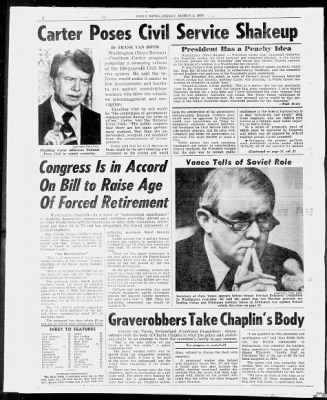
Newspaper coverage 3rd March 1978 – Daily News
The pair were caught in a large police operation in May, and Chaplin’s coffin was found buried in a field in the nearby village of Noville. It was re-interred in the Corsier cemetery surrounded by reinforced concrete.
Filmmaking
Influences
Chaplin believed his first influence to be his mother, who entertained him as a child by sitting at the window and mimicking passers-by: “it was through watching her that I learned not only how to express emotions with my hands and face, but also how to observe and study people.”
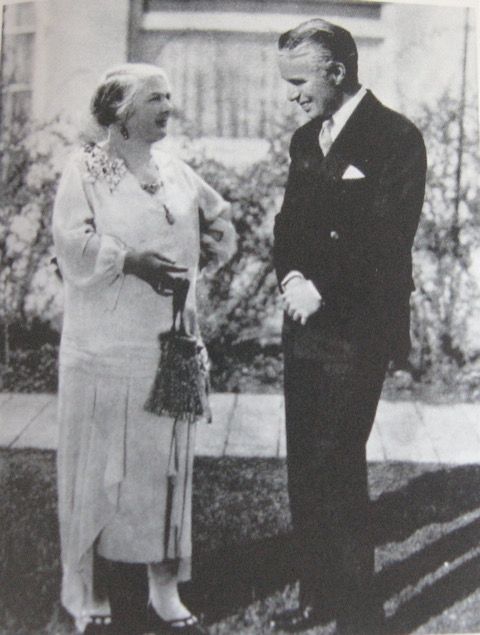
Charles Chaplin and his mother Hannah
Chaplin’s early years in music hall allowed him to see stage comedians at work; he also attended the Christmas pantomimes at Drury Lane, where he studied the art of clowning through performers like Dan Leno.
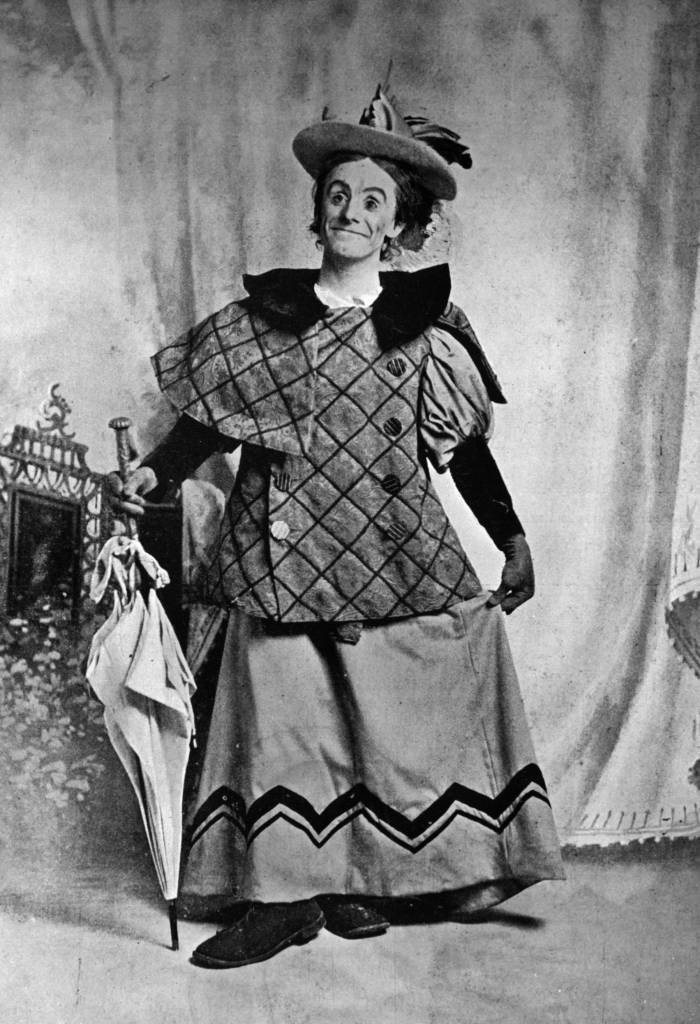
Dan Leno
Chaplin’s years with the Fred Karno company had a formative effect on him as an actor and filmmaker. Simon Louvish writes that the company was his “training ground”, and it was here that Chaplin learned to vary the pace of his comedy.
The concept of mixing pathos with slapstick was learnt from Karno, who also used elements of absurdity that became familiar in Chaplin’s gags.
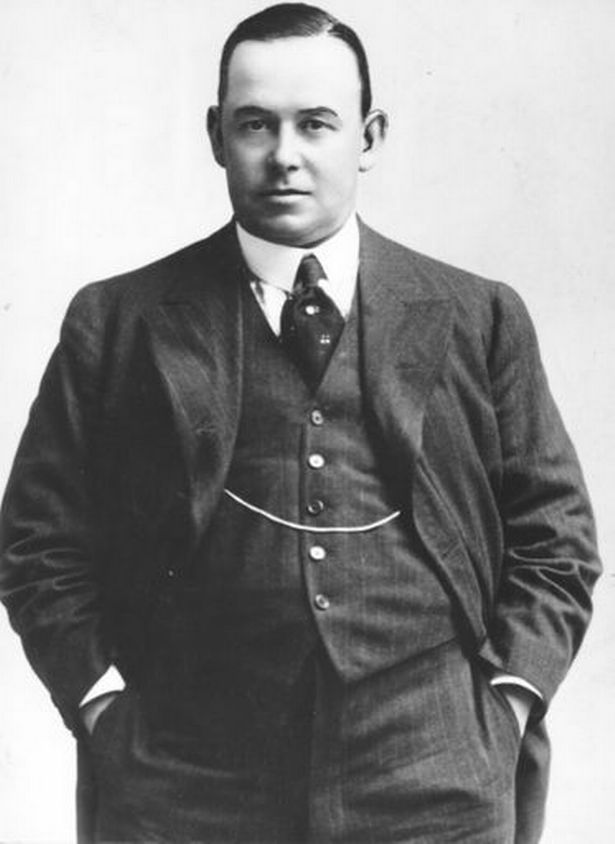
Fred Karno (Born Fredrick John Westcott)
From the film industry, Chaplin drew upon the work of the French comedian Max Linder, whose films he greatly admired. In developing the Tramp costume and persona, he was likely inspired by the American vaudeville scene, where tramp characters were common.

Max Linder
Method
Chaplin never spoke more than cursorily about his filmmaking methods, claiming such a thing would be tantamount to a magician spoiling his own illusion.
Little was known about his working process throughout his lifetime, but research from film historians – particularly the findings of Kevin Brownlow and David Gill that were presented in the three-part documentary Unknown Chaplin (1983) – has since revealed his unique working method.
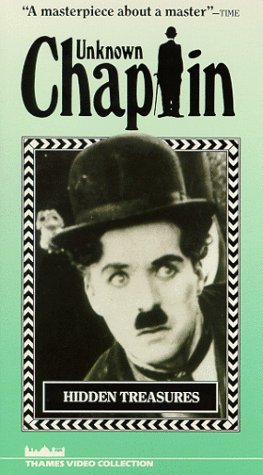
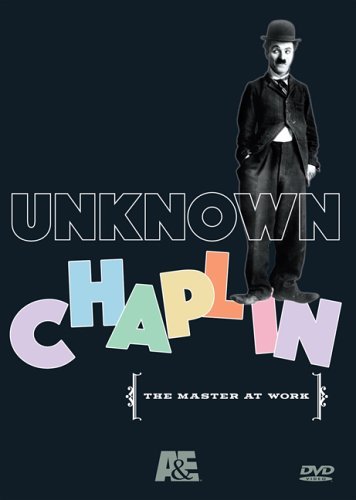
Until he began making spoken dialogue films with The Great Dictator, Chaplin never shot from a completed script. Many of his early films began with only a vague premise – for example “Charlie enters a health spa” or “Charlie works in a pawn shop.”
He then had sets constructed and worked with his stock company to improvise gags and “business” using them, almost always working the ideas out on film. As ideas were accepted and discarded, a narrative structure would emerge, frequently requiring Chaplin to reshoot an already-completed scene that might have otherwise contradicted the story.
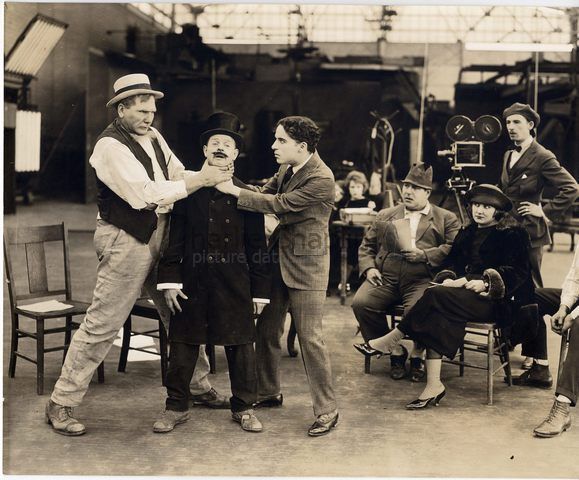
Charles Chaplin on the set of How to Make Movies
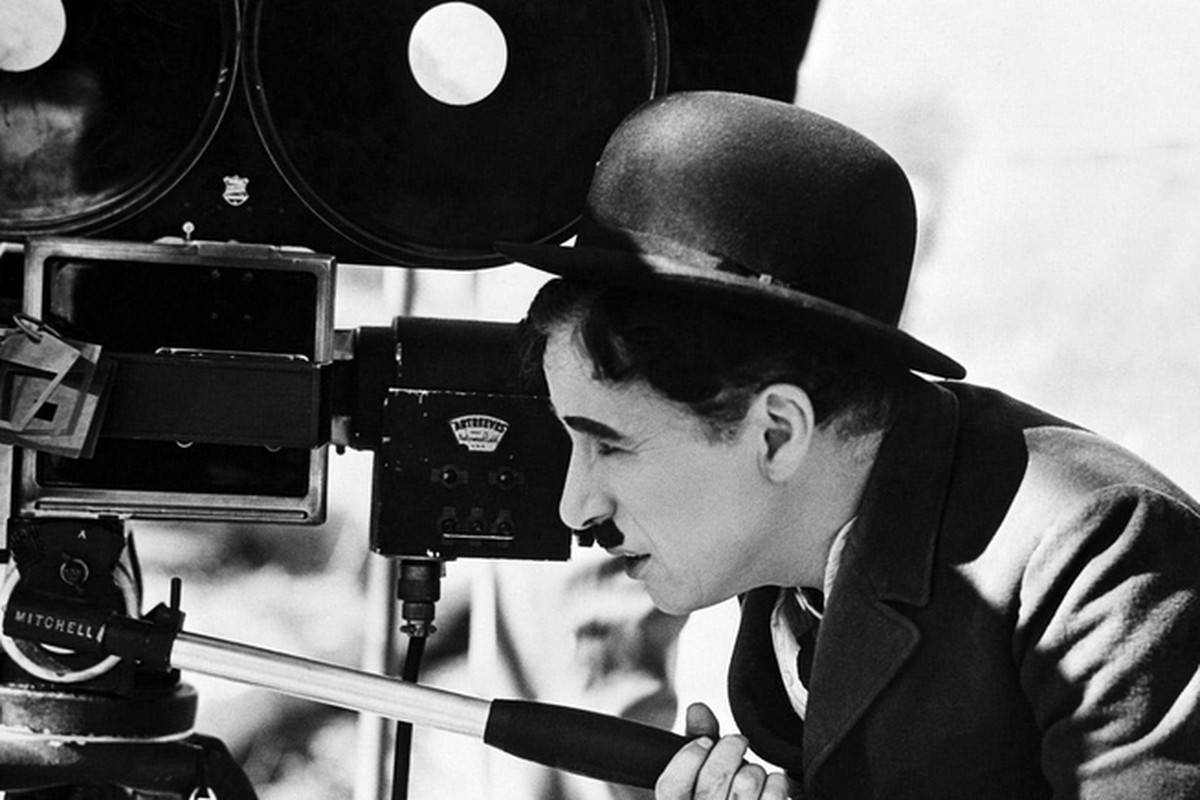
Charles Chaplin behind the camera
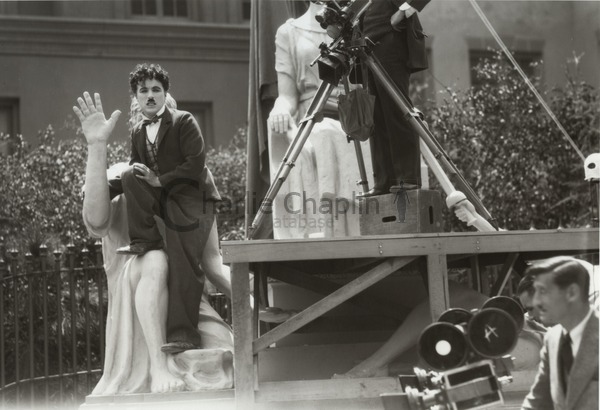
Charles chaplin on the set of City Lights
From A Woman of Paris onward Chaplin began the filming process with a prepared plot, but Robinson writes that every film up to Modern Times “went through many metamorphoses and permutations before the story took its final form.”
Producing films in this manner meant Chaplin took longer to complete his pictures than almost any other filmmaker at the time. If he was out of ideas, he often took a break from the shoot, which could last for days, while keeping the studio ready for when inspiration returned. Delaying the process further was Chaplin’s rigorous perfectionism.
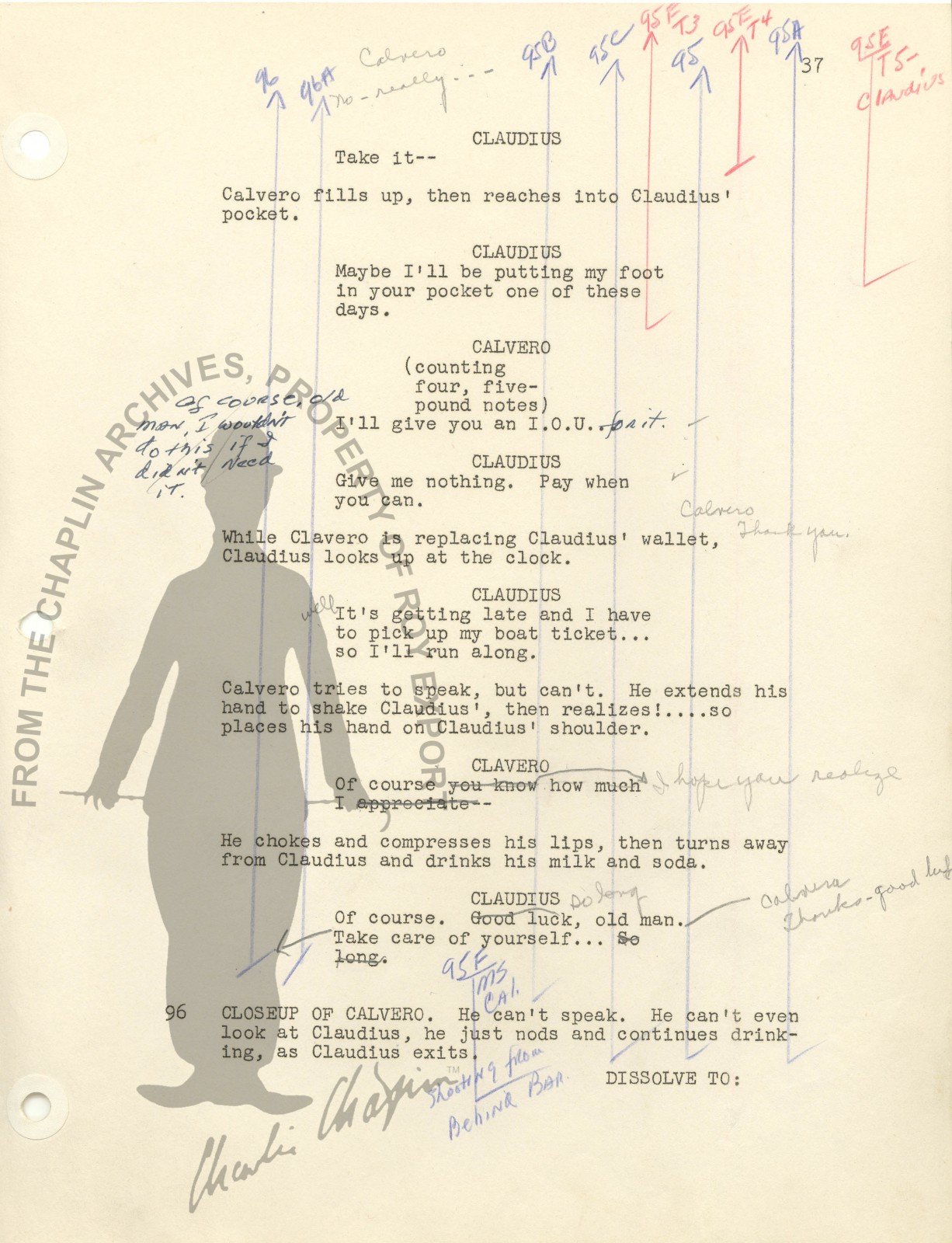
Limelight – Shooting Diary
According to his friend Ivor Montagu, “nothing but perfection would be right” for the filmmaker. Because he personally funded his films, Chaplin was at liberty to strive for this goal and shoot as many takes as he wished. The number was often excessive, for instance 53 takes for every finished take in The Kid. ] For The Immigrant, a 20 minute-short, Chaplin shot 40,000 feet of film – enough for a feature-length.
Chaplin biographer David Robinson
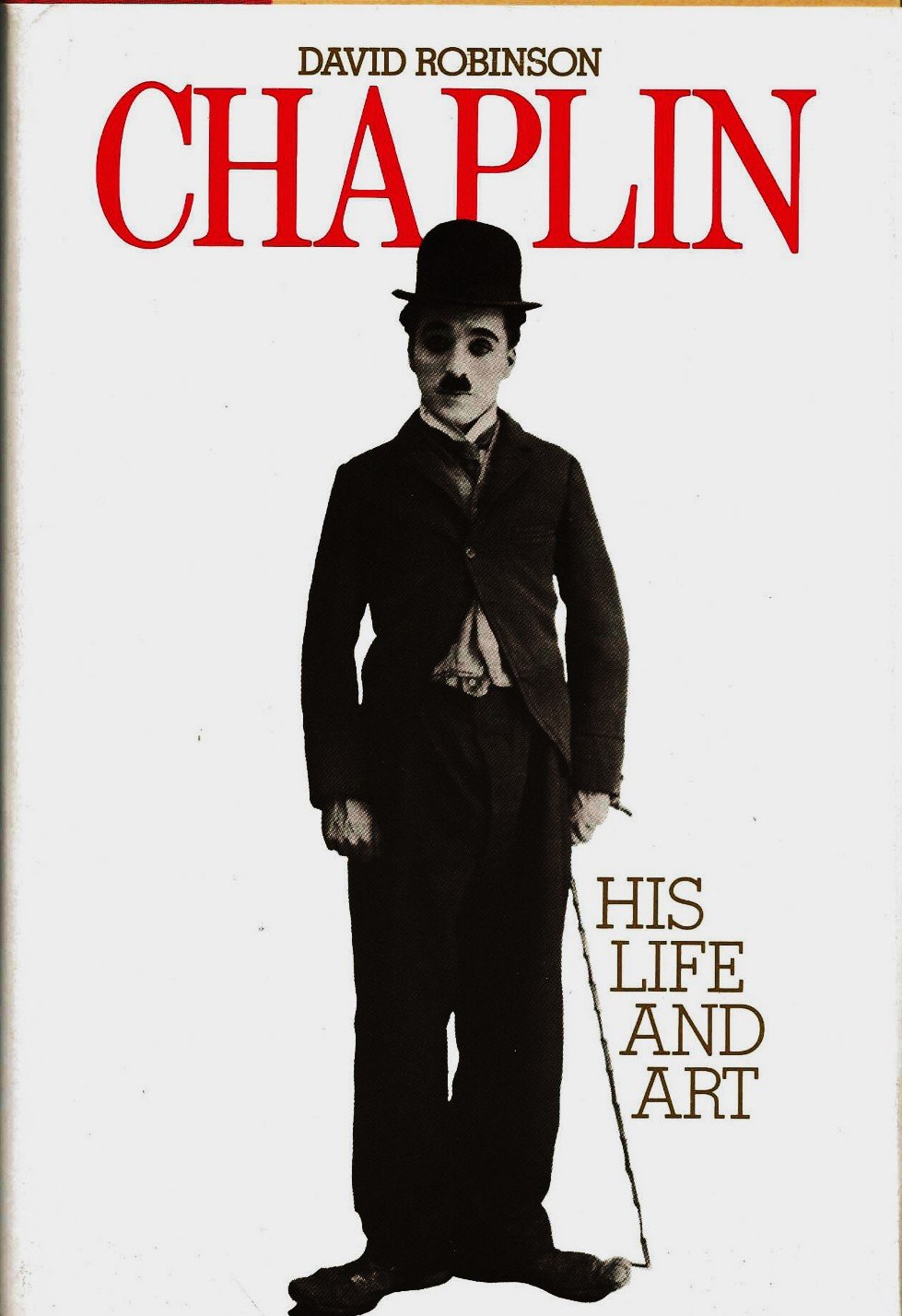
Chaplin Biography – David Robinson
Describing his working method as “sheer perseverance to the point of madness”, Chaplin would be completely consumed by the production of a picture. Robinson writes that even in Chaplin’s later years, his work continued “to take precedence over everything and everyone else.” The combination of story improvisation and relentless perfectionism – which resulted in days of effort and thousands of feet of film being wasted, all at enormous expense – often proved taxing for Chaplin who, in frustration, would lash out at his actors and crew.
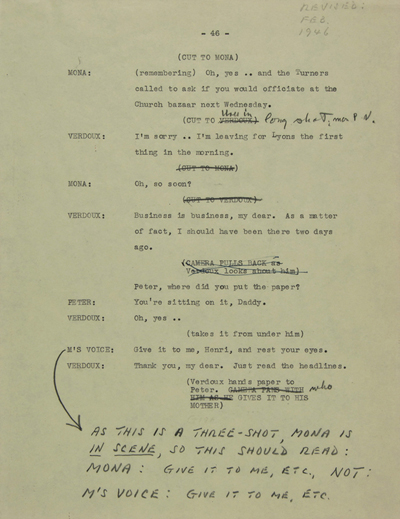
Monsieur Verdoux – Chaplin’s Script
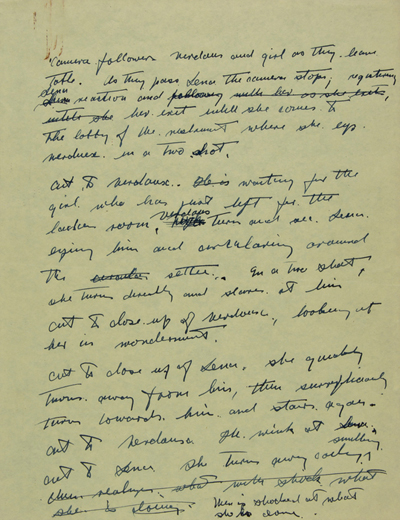
Monsieur Verdoux – Chaplin’s Notes
Chaplin exercised complete control over his pictures, to the extent that he would act out the other roles for his cast, expecting them to imitate him exactly. He personally edited all of his films, trawling through the large amounts of footage to create the exact picture he wanted.
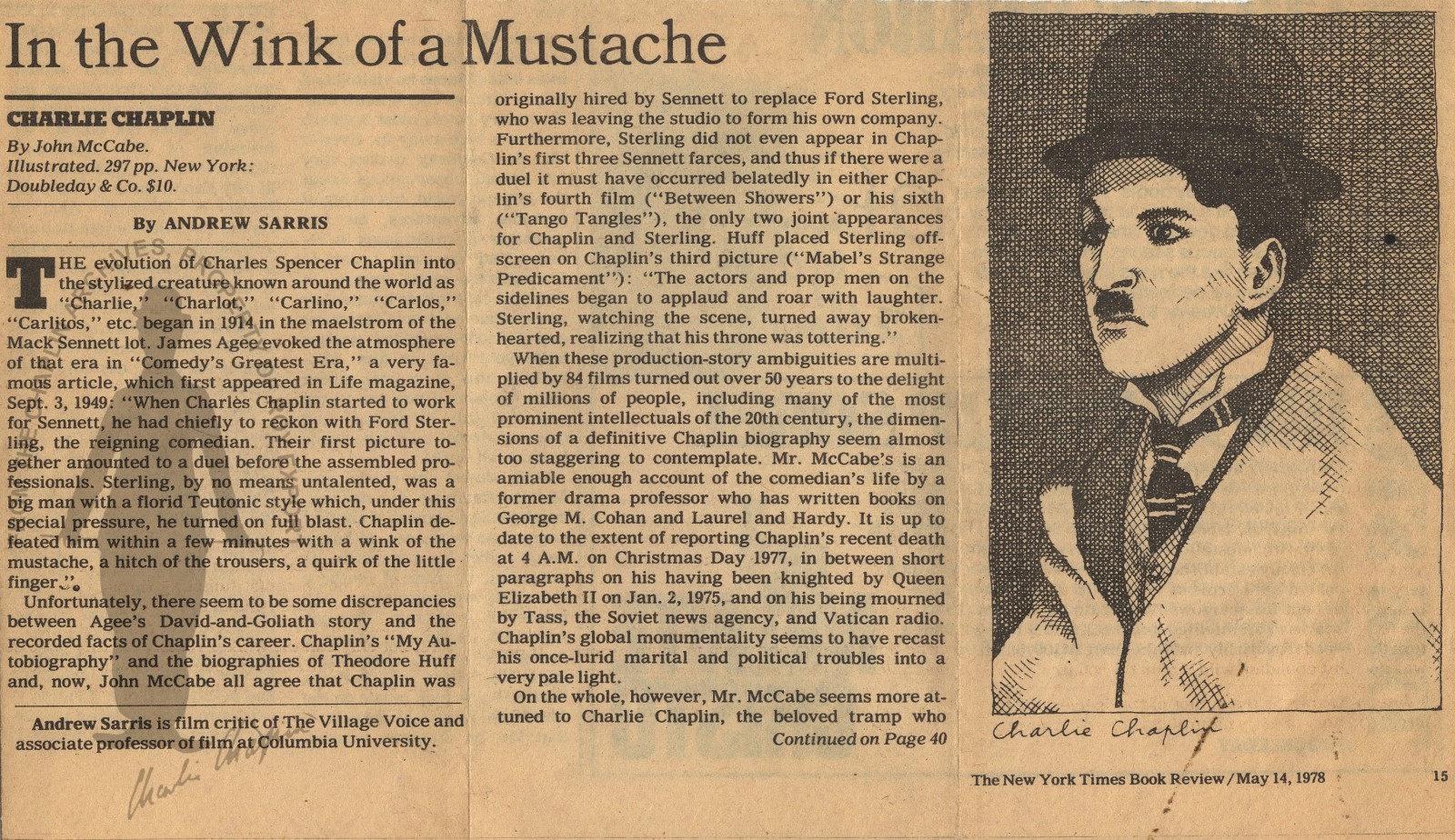
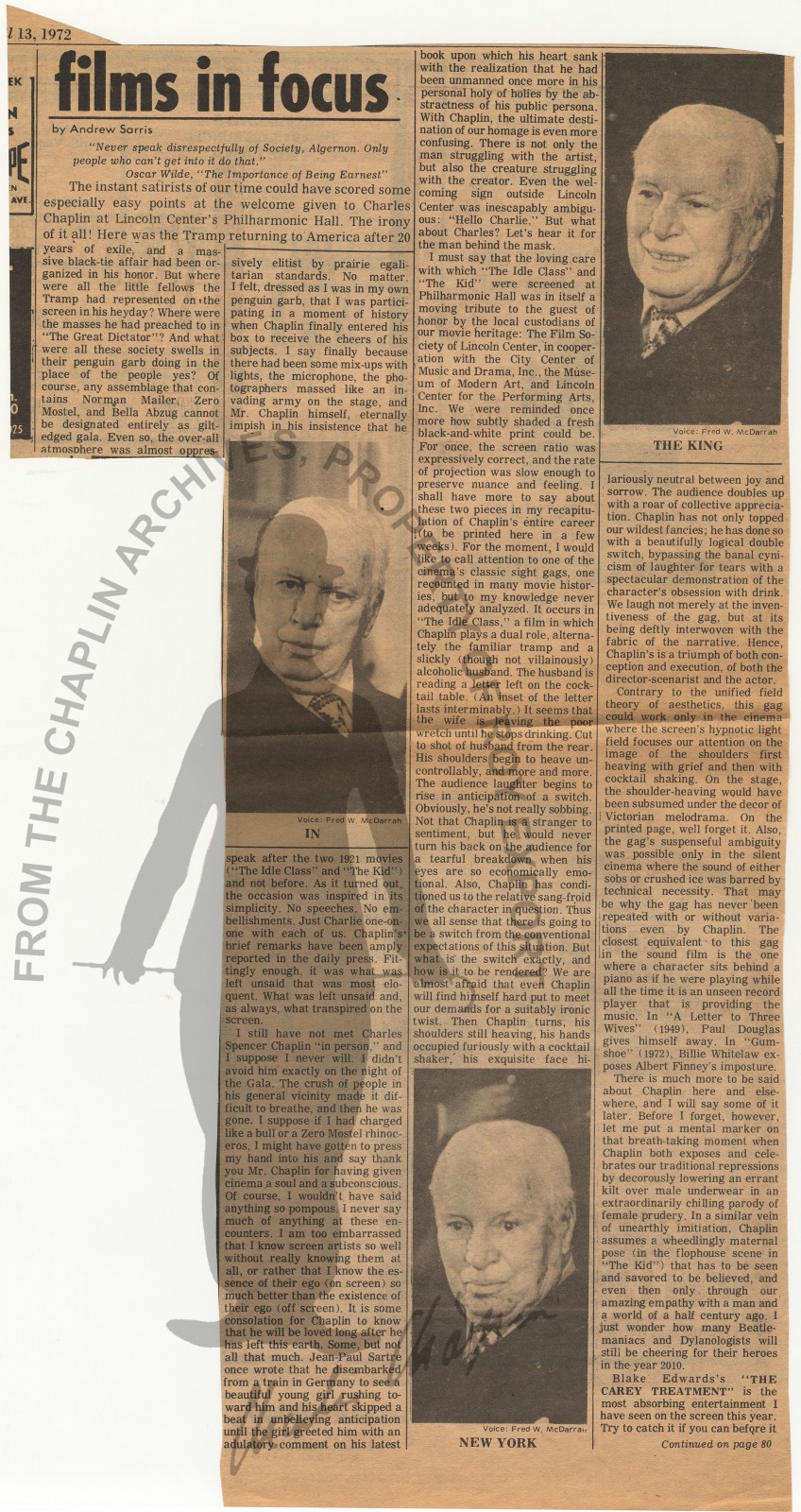
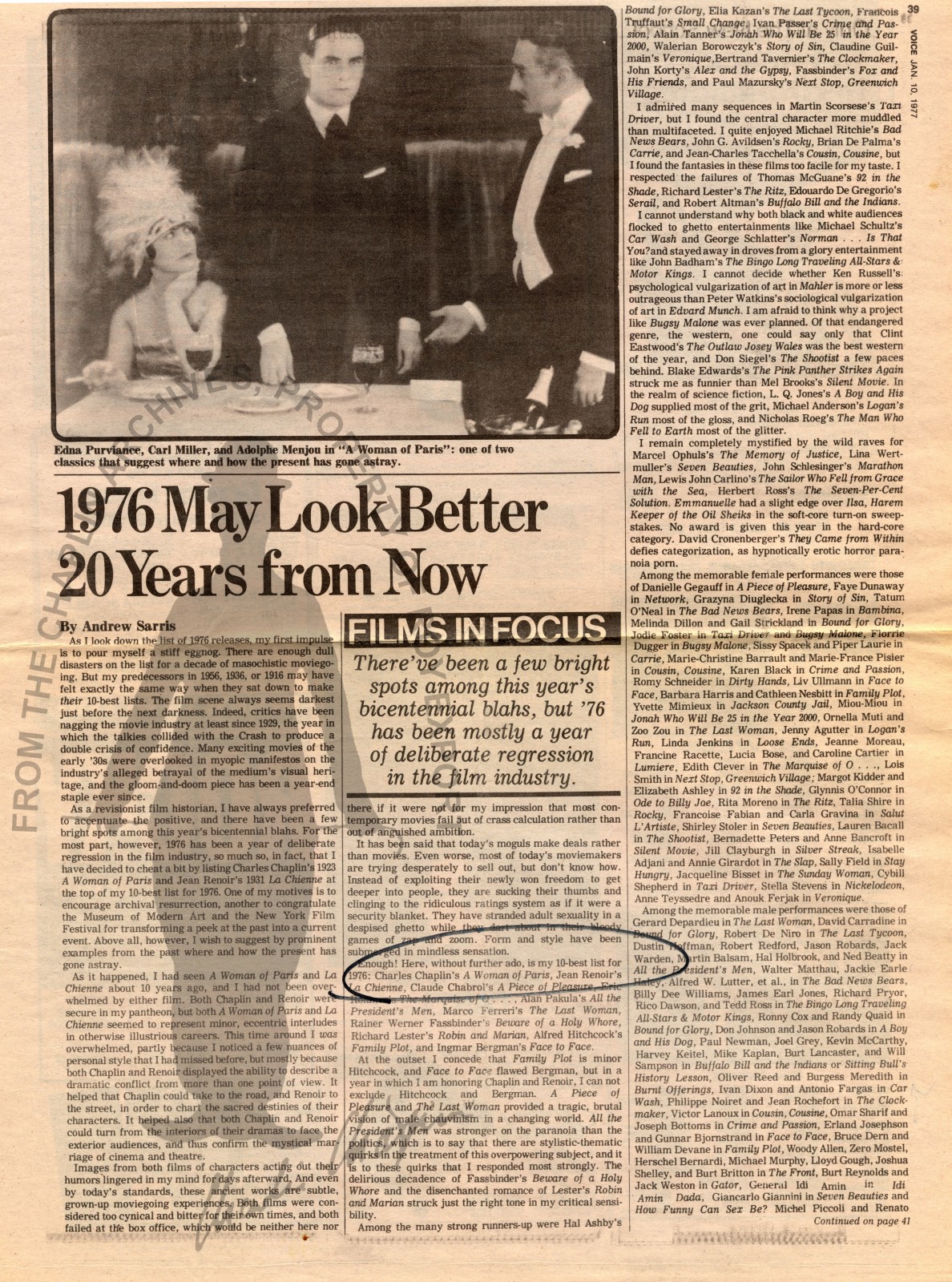
Andrew Sarris articles on Charles Chaplin
As a result of his complete independence, he was identified by the film historian Andrew Sarris as one of the first auteur filmmakers.
Chaplin did receive help, notably from his long-time cinematographer Roland Totheroh, brother Sydney Chaplin, and various assistant directors such as Harry Crocker and Charles Reisner.
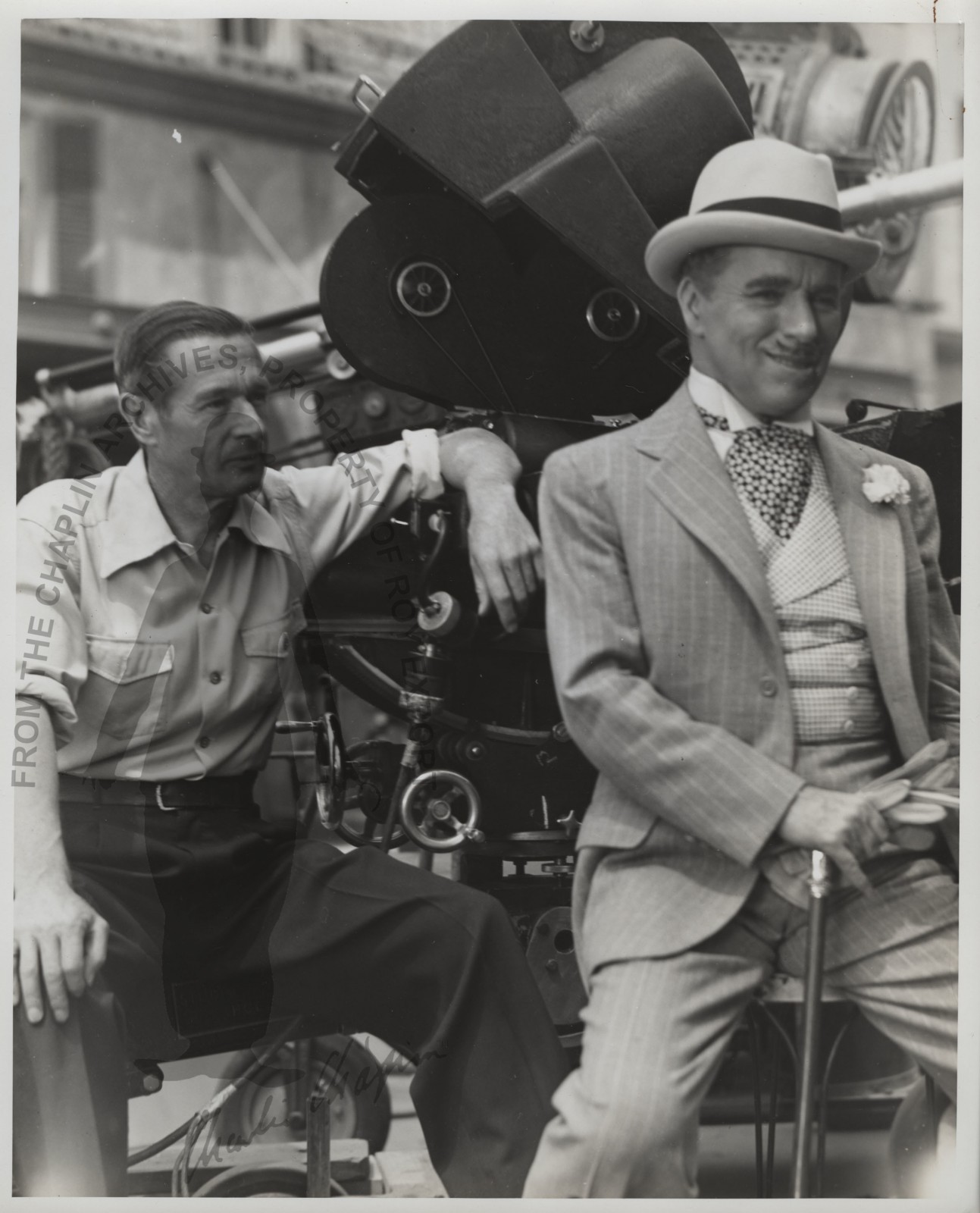
Charles Chaplin and Roland Totheroh
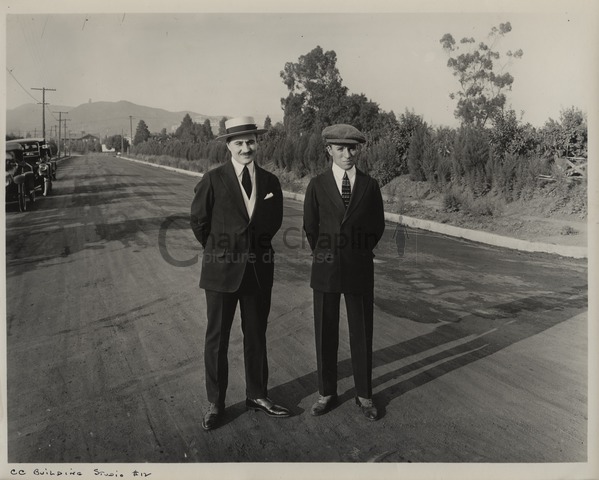
Charles and Sydney Chaplin
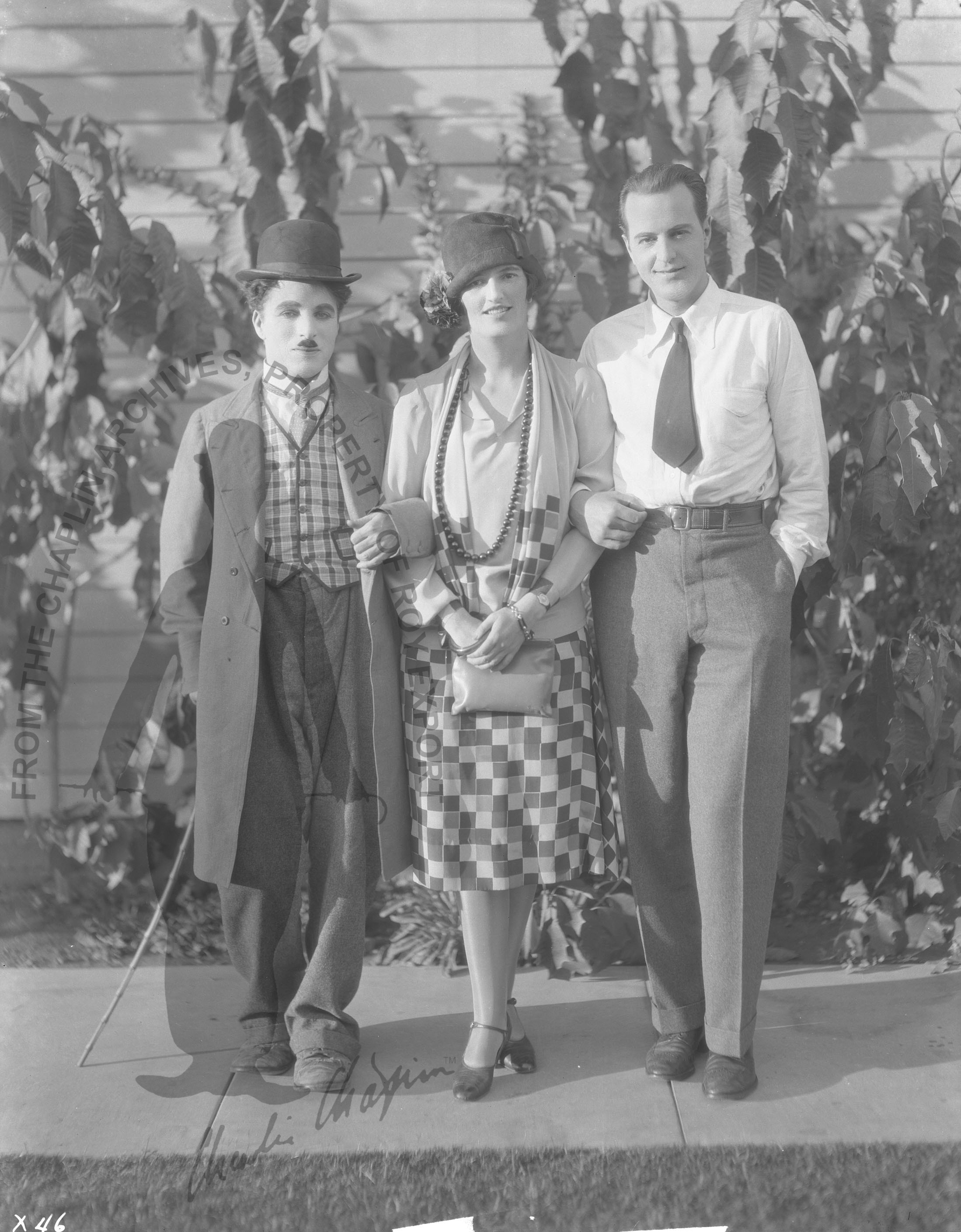
Charles Chaplin, Lady Levinsdale and Harry Crocker on the set of The Circus
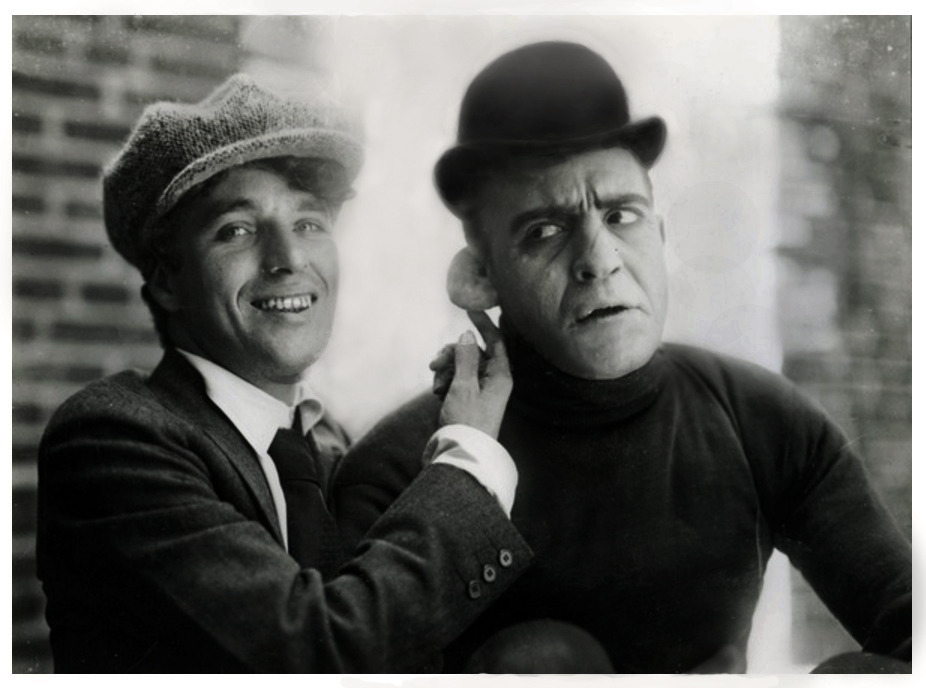
Charles Chaplin and Charles Reisner on the set of The Kid
Style and themes
While Chaplin’s comedic style is broadly defined as slapstick, it is considered restrained and intelligent, with the film historian Philip Kemp describing his work as a mix of “deft, balletic physical comedy and thoughtful, situation-based gags”.
Chaplin diverged from conventional slapstick by slowing the pace and exhausting each scene of its comic potential, with more focus on developing the viewer’s relationship to the characters. Unlike conventional slapstick comedies,
Robinson states that the comic moments in Chaplin’s films centre on the Tramp’s attitude to the things happening to him: the humour does not come from the Tramp bumping into a tree, but from his lifting his hat to the tree in apology.
Dan Kamin writes that Chaplin’s “quirky mannerisms” and “serious demeanour in the midst of slapstick action” are other key aspects of his comedy, while the surreal transformation of objects and the employment of in-camera trickery are also common features.
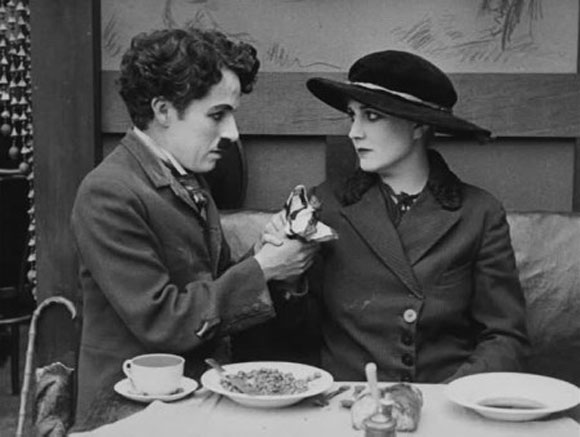
Charles Chaplin and Edna Purviance in The Immigrant (1917)
Chaplin’s silent films typically follow the Tramp’s efforts to survive in a hostile world. The character lives in poverty and is frequently treated badly, but remains kind and upbeat; defying his social position, he strives to be seen as a gentleman.
As Chaplin said in 1925, “The whole point of the Little Fellow is that no matter how down on his ass he is, no matter how well the jackals succeed in tearing him apart, he’s still a man of dignity.” The Tramp defies authority figures and “gives as good as he gets”, leading Robinson and Louvish to see him as a representative for the underprivileged – an “everyman turned heroic saviour”.
Hansmeyer notes that several of Chaplin’s films end with “the homeless and lonely Tramp [walking] optimistically … into the sunset … to continue his journey”.
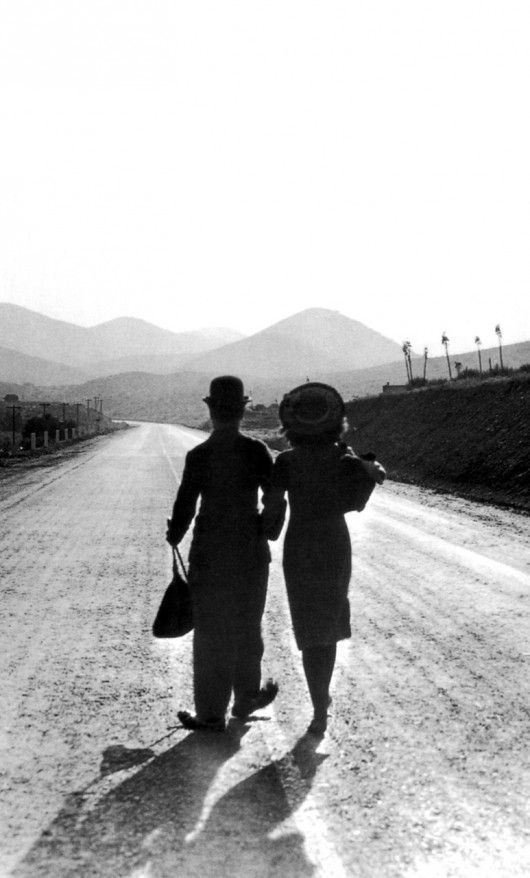
—Chaplin explaining why his comedies often make fun of tragic circumstances
The infusion of pathos is a well-known aspect of Chaplin’s work, and Larcher notes his reputation for “[inducing] laughter and tears”. Sentimentality in his films comes from a variety of sources, with Louvish pinpointing “personal failure, society’s strictures, economic disaster, and the elements.”
Chaplin sometimes drew on tragic events when creating his films, as in the case of The Gold Rush (1925), which was inspired by the fate of the Donner Party. Constance B. Kuriyama has identified serious underlying themes in the early comedies, such as greed (The Gold Rush) and loss (The Kid). Chaplin also touched on controversial issues: immigration (The Immigrant, 1917); illegitimacy (The Kid, 1921); and drug use (Easy Street, 1917). He often explored these topics ironically, making comedy out of suffering.
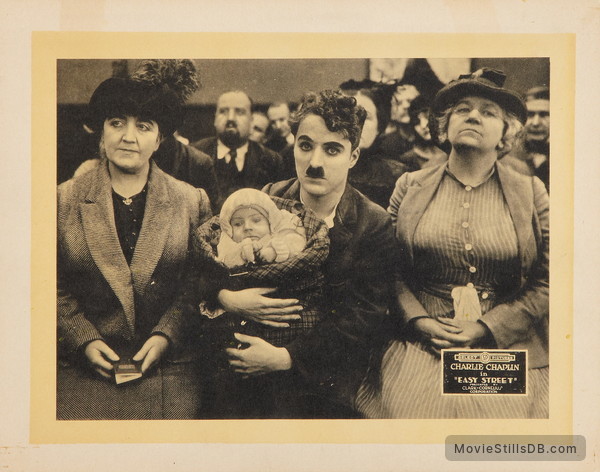
Charles Chaplin in Easy Street (1917)
Social commentary was a feature of Chaplin’s films from early in his career, as he portrayed the underdog in a sympathetic light and highlighted the difficulties of the poor man. Later, as he developed a keen interest in economics and felt obliged to publicise his views,
Chaplin began incorporating overtly political messages into his films. Modern Times (1936) depicted factory workers in dismal conditions, The Great Dictator (1940) parodied Adolf Hitler and Benito Mussolini and ended in a speech against nationalism, Monsieur Verdoux(1947) criticised war and capitalism, and A King in New York (1957) attacked McCarthyism.
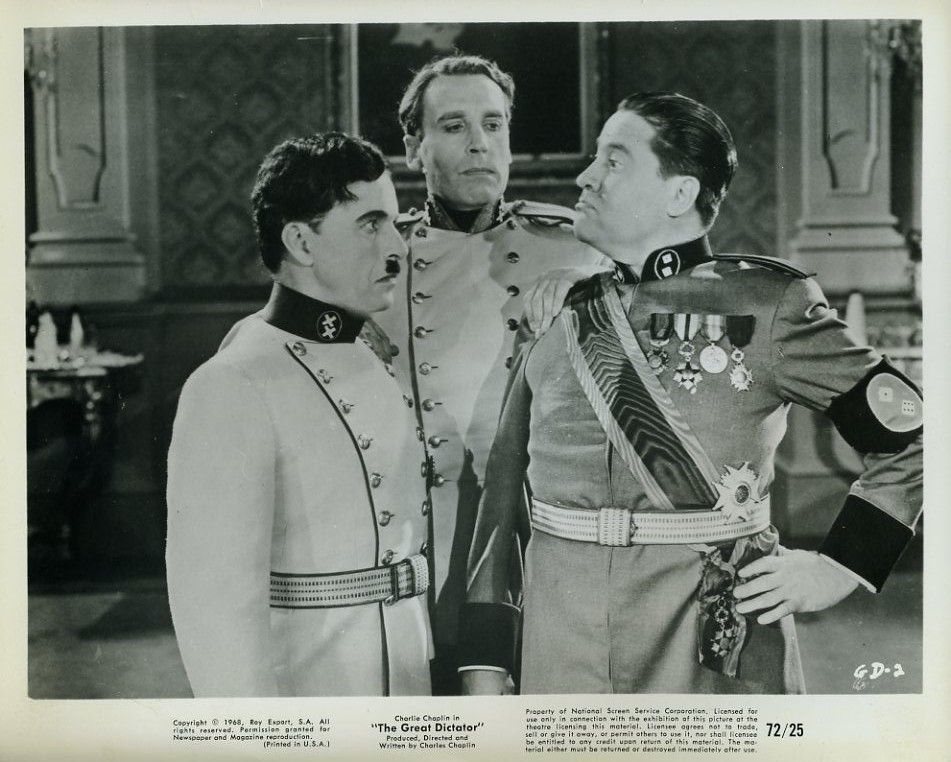
Charles Chaplin and Jack Oakie in The Great Dictator (1940)
Several of Chaplin’s films incorporate autobiographical elements, and the psychologist Sigmund Freud believed that Chaplin “always plays only himself as he was in his dismal youth”. The Kid is thought to reflect Chaplin’s childhood trauma of being sent into an orphanage, the main characters in Limelight (1952) contain elements from the lives of his parents, and A King in New York references Chaplin’s experiences of being shunned by the United States.
Many of his sets, especially in street scenes, bear a strong similarity to Kennington, where he grew up. Stephen M. Weissman has argued that Chaplin’s problematic relationship with his mentally ill mother was often reflected in his female characters and the Tramp’s desire to save them.
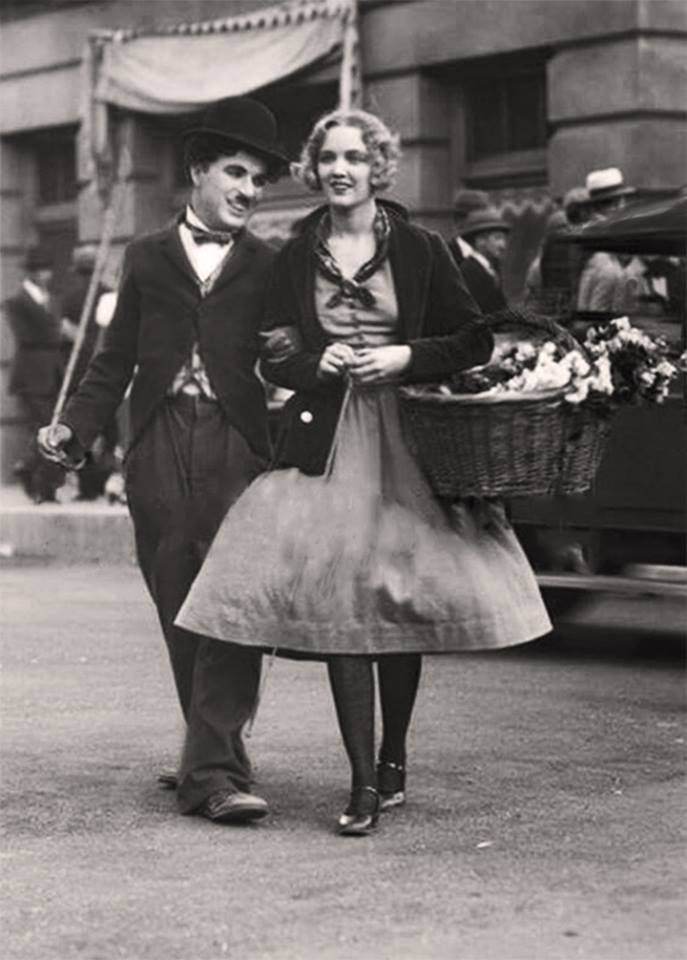
Charles Chaplin and Virginia Cherrill in City Lights (1931)
Regarding the structure of Chaplin’s films, the scholar Gerald Mast sees them as consisting of sketches tied together by the same theme and setting, rather than having a tightly unified storyline.
Visually, his films are simple and economic,with scenes portrayed as if set on a stage. His approach to filming was described by the art director Eugène Lourié: “Chaplin did not think in ‘artistic’ images when he was shooting. He believed that action is the main thing. The camera is there to photograph the actors”. In his autobiography, Chaplin wrote, “Simplicity is best … pompous effects slow up action, are boring and unpleasant … The camera should not intrude.”
This approach has prompted criticism, since the 1940s, for being “old fashioned”, while the film scholar Donald McCaffrey sees it as an indication that Chaplin never completely understood film as a medium. Kamin, however, comments that Chaplin’s comedic talent would not be enough to remain funny on screen if he did not have an “ability to conceive and direct scenes specifically for the film medium”.
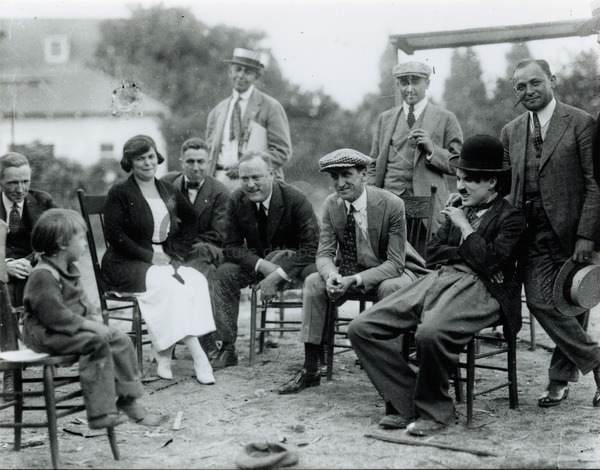
Charles Chaplin and Jackie Coogan on the set of The Kid (1921)
Composing
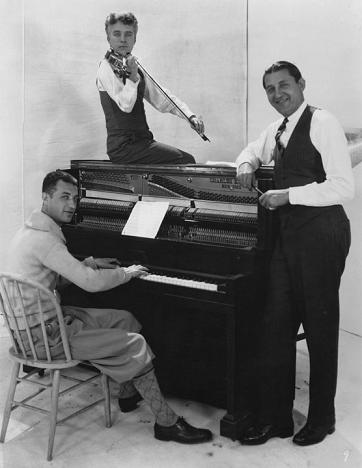
Charlie with Gus Arnheim (at the piano) and Abe Lyman
Chaplin developed a passion for music as a child and taught himself to play the piano, violin, and cello. He considered the musical accompaniment of a film to be important, and from A Woman of Paris onwards he took an increasing interest in this area.
With the advent of sound technology, Chaplin began using a synchronised orchestral soundtrack – composed by himself – for City Lights(1931). He thereafter composed the scores for all of his films, and from the late 1950s to his death, he scored all of his silent features and some of his short films.
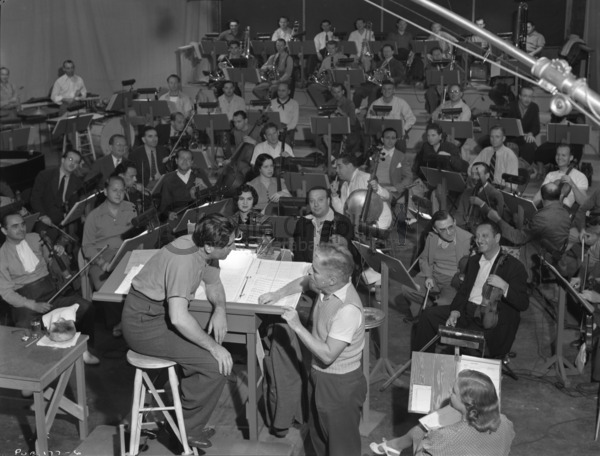
Chaplin and Meredith Wilson rehearsing with musicians for The Great Dictator (1940)
As Chaplin was not a trained musician, he could not read sheet music and needed the help of professional composers, such as David Raksin, Raymond Rasch and Eric James, when creating his scores.
Musical directors were employed to oversee the recording process, such as Alfred Newman for City Lights. Although some critics have claimed that credit for his film music should be given to the composers who worked with him, Raksin – who worked with Chaplin on Modern Times – stressed Chaplin’s creative position and active participation in the composing process.
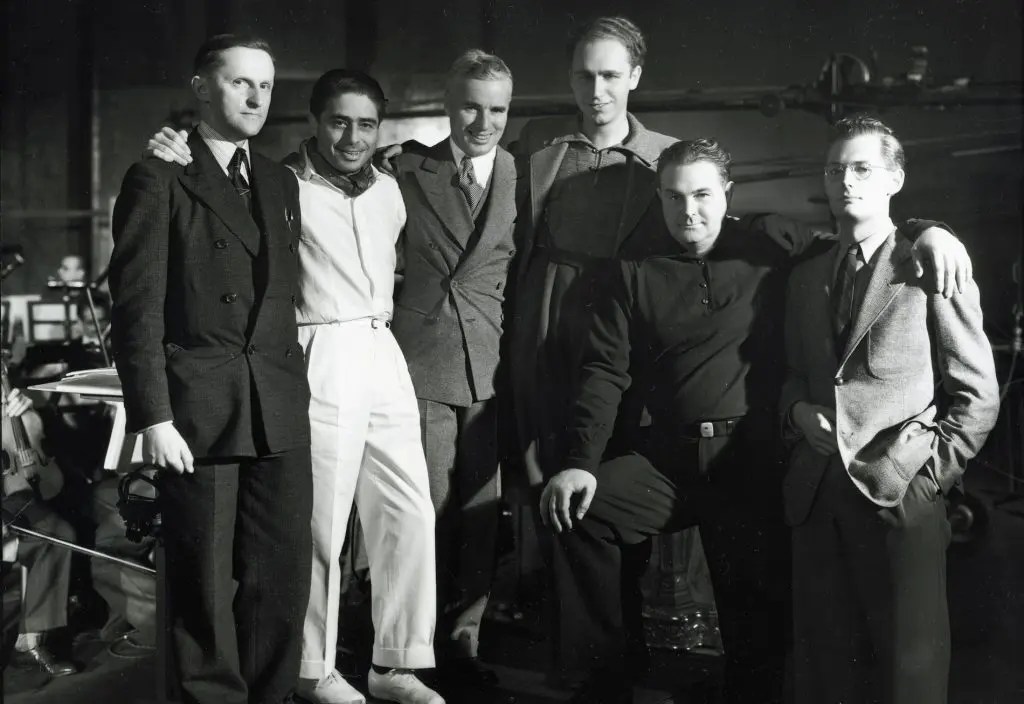
Happier times on the MODERN TIMES soundstage: Charles Dunworth, inventor of the system of visual cues for synchronization; conductor Alfred Newman; Chaplin; arranger and co-orchestrator David Raksin; recording engineer Paul Neal; and co-orchestrator Edward Powell. Photo by Max Autrey, c. November 1935.
This process, which could take months, would start with Chaplin describing to the composer(s) exactly what he wanted and singing or playing tunes he had improvised on the piano. These tunes were then developed further in a close collaboration among the composer(s) and Chaplin. According to film historian Jeffrey Vance, “although he relied upon associates to arrange varied and complex instrumentation, the musical imperative is his, and not a note in a Chaplin musical score was placed there without his assent.”
Chaplin’s compositions produced three popular songs. “Smile“, composed originally for Modern Times (1936) and later set to lyrics by John Turner and Geoffrey Parsons, was a hit for Nat King Cole in 1954.
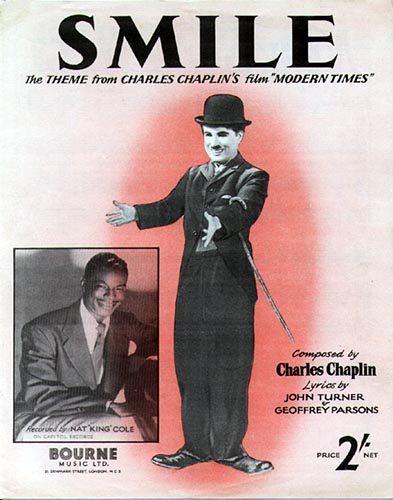
Chaplin composed the music, while John Turner and Geoffrey Parsons added the lyrics and title in 1954
For Limelight, Chaplin composed “Terry’s Theme”, which was popularised by Jimmy Young as “Eternally” (1952). Finally, “This Is My Song“, performed by Petula Clark for A Countess from Hong Kong (1967), reached number one on the UK and other European charts. Chaplin also received his only competitive Oscar for his composition work, as the Limelight theme won an Academy Award for Best Original Score in 1973 following the film’s re-release.
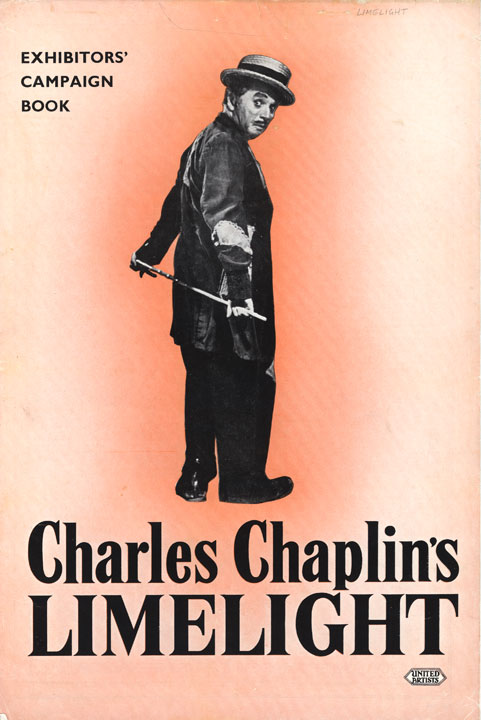
Exhibitor’s Campaign Book for Limelight (1952)
Legacy
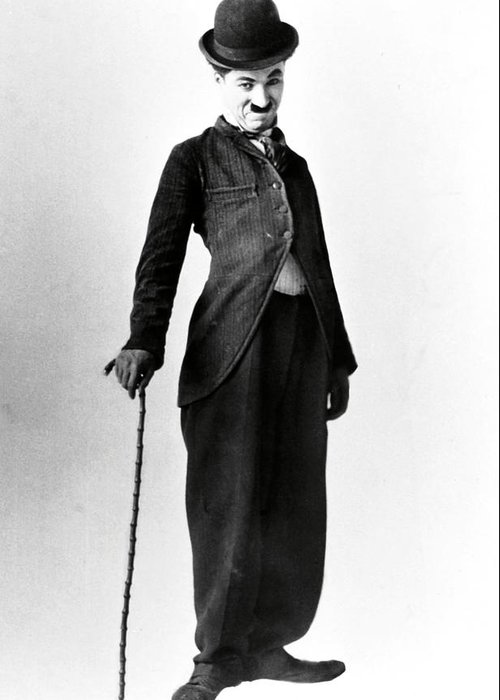
Chaplin as the Tramp in 1915, cinema’s “most universal icon”
In 1998, the film critic Andrew Sarris called Chaplin “arguably the single most important artist produced by the cinema, certainly its most extraordinary performer and probably still its most universal icon”.
He is described by the British Film Institute as “a towering figure in world culture”, and was included in Time magazine’s list of the “100 Most Important People of the 20th Century” for the “laughter [he brought] to millions” and because he “more or less invented global recognizability and helped turn an industry into an art”.
The image of the Tramp has become a part of cultural history; according to Simon Louvish, the character is recognisable to people who have never seen a Chaplin film, and in places where his films are never shown. The critic Leonard Maltin has written of the “unique” and “indelible” nature of the Tramp, and argued that no other comedian matched his “worldwide impact”.
Praising the character, Richard Schickel suggests that Chaplin’s films with the Tramp contain the most “eloquent, richly comedic expressions of the human spirit” in movie history. Memorabilia connected to the character still fetches large sums in auctions: in 2006 a bowler hat and a bamboo cane that were part of the Tramp’s costume were bought for $140,000 in a Los Angeles auction.
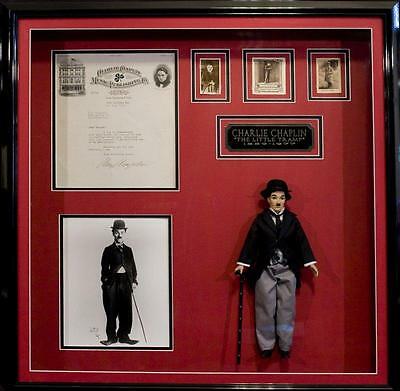
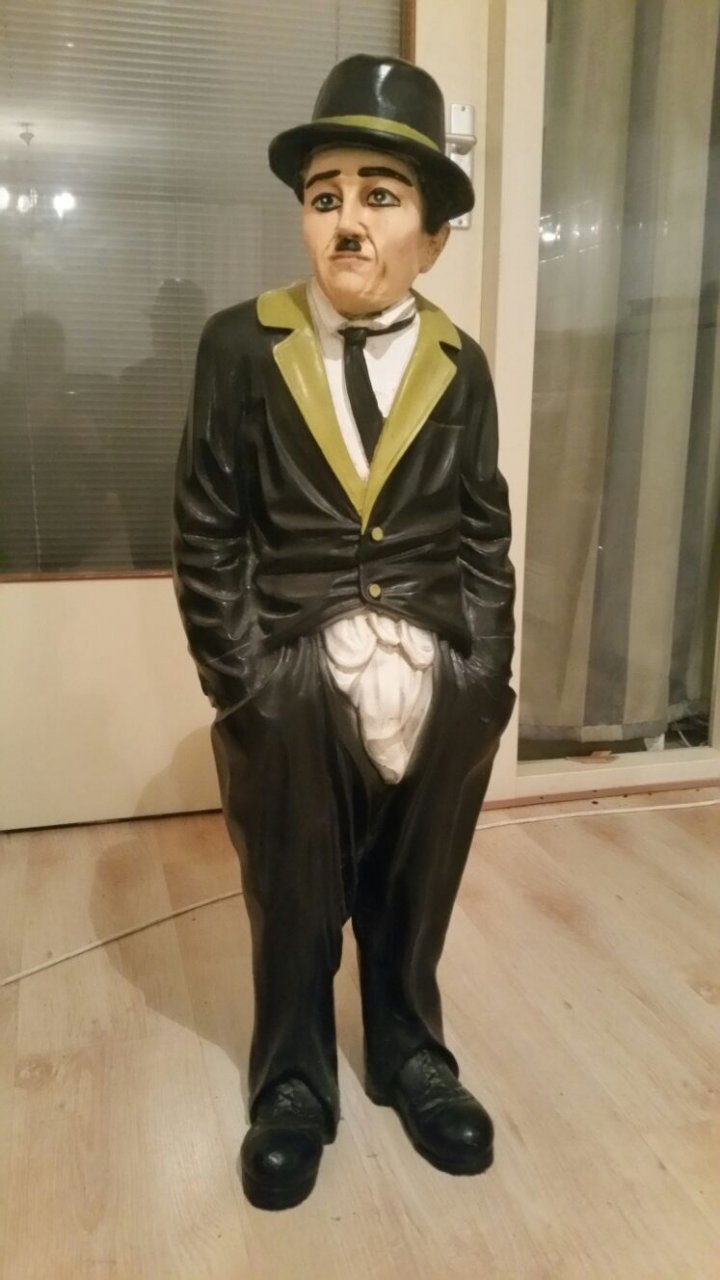
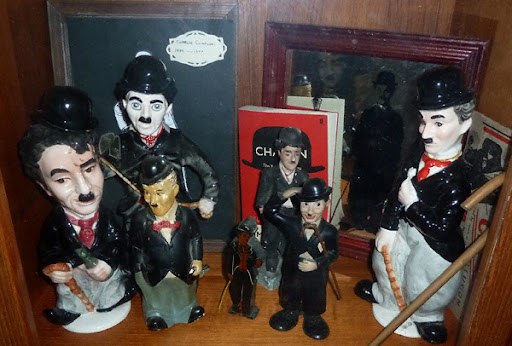
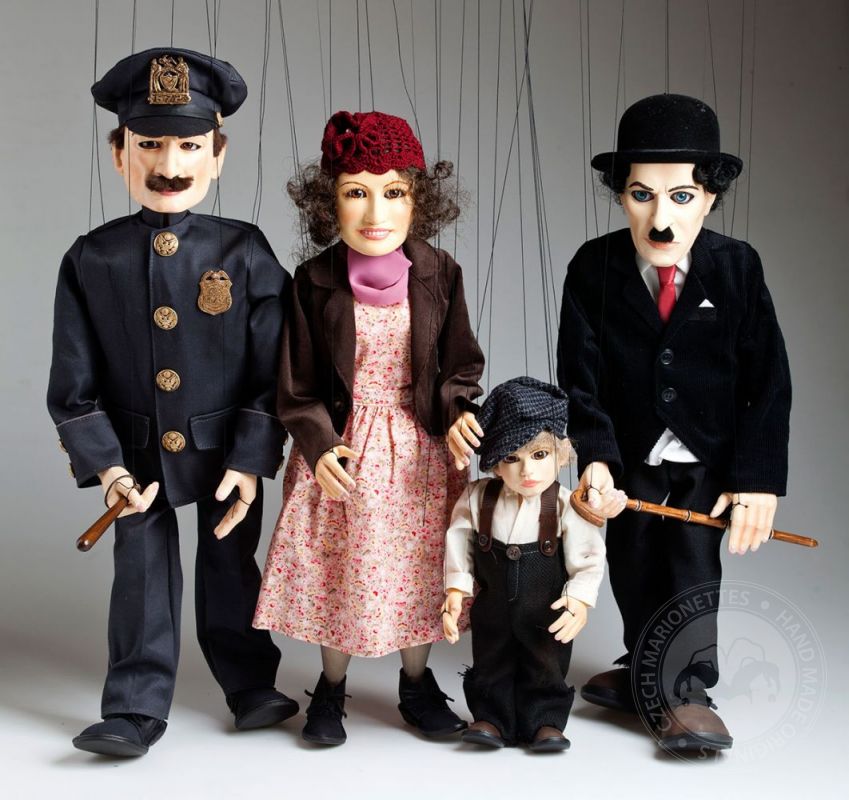
Chaplin memorabilia
As a filmmaker, Chaplin is considered a pioneer and one of the most influential figures of the early twentieth century.
He is often credited as one of the medium’s first artists. Film director and critic Mark Cousins has written that Chaplin “changed not only the imagery of cinema, but also its sociology and grammar” and claims that Chaplin was as important to the development of comedy as a genre as D.W. Griffith was to drama.
He was the first to popularise feature-length comedy and to slow down the pace of action, adding pathos and subtlety to it. Although his work is mostly classified as slapstick, Chaplin’s drama A Woman of Paris (1923) was a major influence on Ernst Lubitsch‘s film The Marriage Circle (1924) and thus played a part in the development of “sophisticated comedy”.
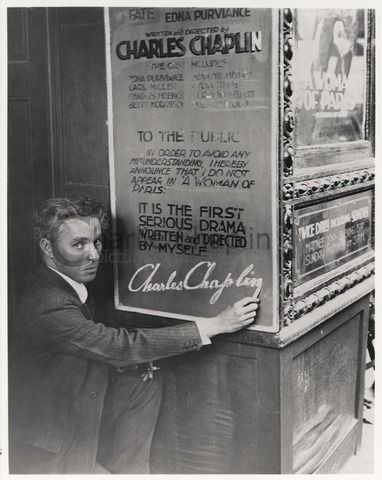
Charles Chaplin signing a poster for Woman of Paris (1923
According to David Robinson, Chaplin’s innovations were “rapidly assimilated to become part of the common practice of film craft.” Filmmakers who cited Chaplin as an influence include Federico Fellini (who called Chaplin “a sort of Adam, from whom we are all descended”),
Jacques Tati (“Without him I would never have made a film”), René Clair (“He inspired practically every filmmaker”), Michael Powell, Billy Wilder, Vittorio De Sica, and Richard Attenborough. Russian filmmaker Andrei Tarkovsky praised Chaplin as “the only person to have gone down into cinematic history without any shadow of a doubt. The films he left behind can never grow old.”
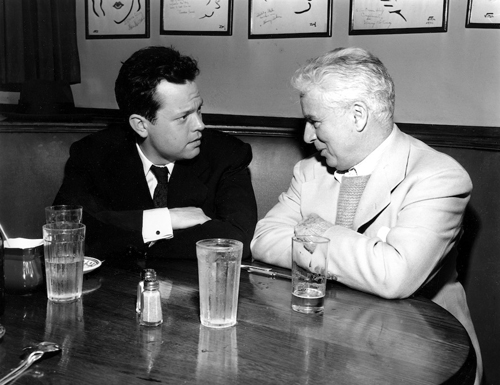
Orson Welles and Charles Chaplin
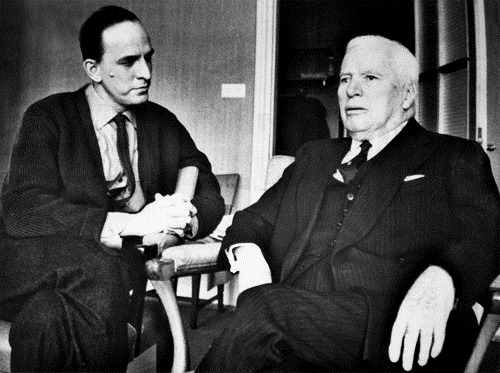
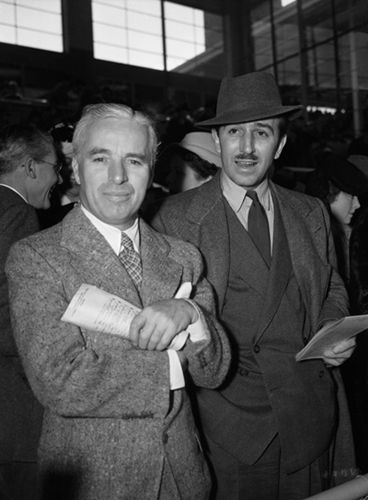
Charles Chaplin and Walt Disney
Chaplin also strongly influenced the work of later comedians. Marcel Marceau said he was inspired to become a mime artist after watching Chaplin, while the actor Raj Kapoor based his screen persona on the Tramp. Mark Cousins has also detected Chaplin’s comedic style in the French character Monsieur Hulot and the Italian character Totò.
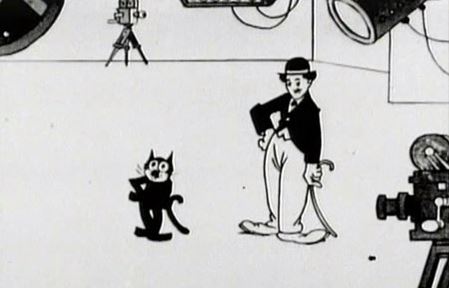
Felix the Cat and Charles Chaplin in Felix in Hollywood (1923)
In other fields, Chaplin helped inspire the cartoon characters Felix the Cat and Mickey Mouse, and was an influence on the Dada art movement. As one of the founding members of United Artists, Chaplin also had a role in the development of the film industry. Gerald Mast has written that although UA never became a major company like MGM or Paramount Pictures, the idea that directors could produce their own films was “years ahead of its time”.
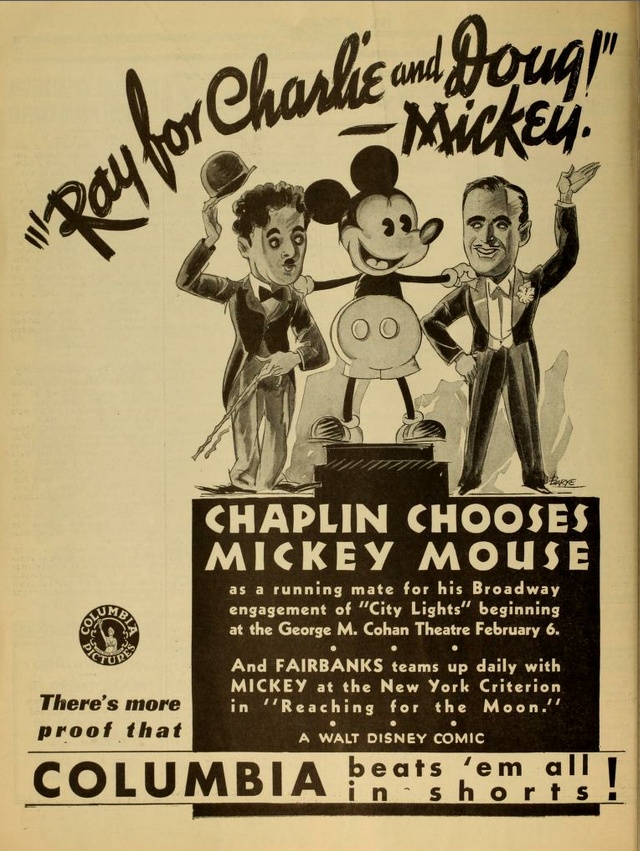
Charles Chaplin, Mickey Mouse and Douglas Fairbanks – Cinema Poster
In the 21st century, several of Chaplin’s films are still regarded as classics and among the greatest ever made. The 2012 Sight & Sound poll, which compiles “top ten” ballots from film critics and directors to determine each group’s most acclaimed films, saw City Lights rank among the critics’ top 50, Modern Times inside the top 100, and The Great Dictator and The Gold Rush placed in the top 250.
The top 100 films as voted on by directors included Modern Times at number 22, City Lights at number 30, and The Gold Rush at number 91. Every one of Chaplin’s features received a vote. In 2007, the American Film Institute named City Lights the 11th greatest American film of all time, while The Gold Rush and Modern Times again ranked in the top 100. Books about Chaplin continue to be published regularly, and he is a popular subject for media scholars and film archivists. Many of Chaplin’s film have had a DVD and Blu-Ray release.
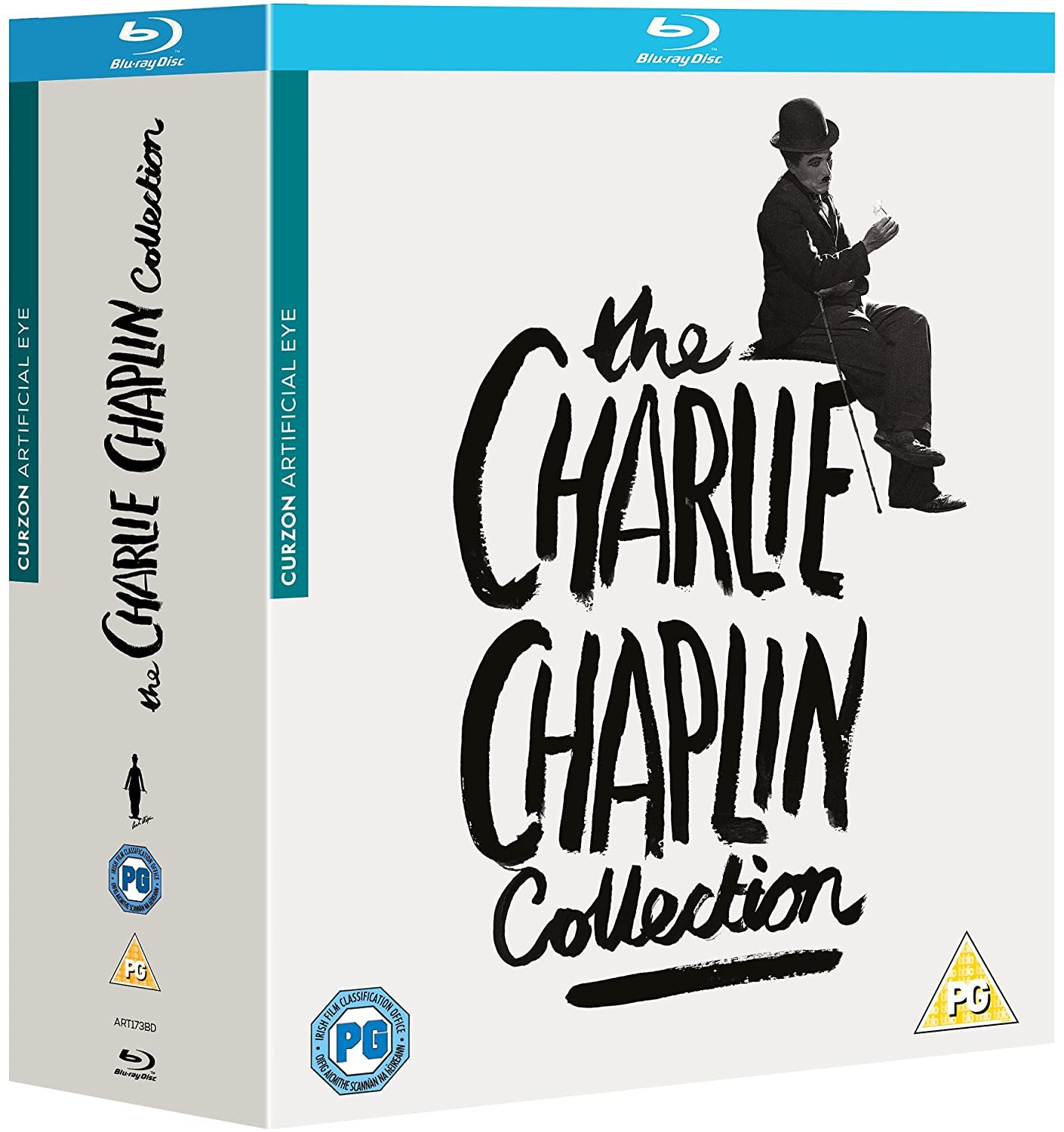
Charles Chaplin Collection – Blu Ray Box Set
Commemoration and tributes
Chaplin’s final home, Manoir de Ban in Corsier-sur-Vevey, Switzerland, has been converted into a museum named “Chaplin’s World“. It opened on 17 April 2016 after 15 years of development, and is described by Reuters as “an interactive museum showcasing the life and works of Charlie Chaplin”.
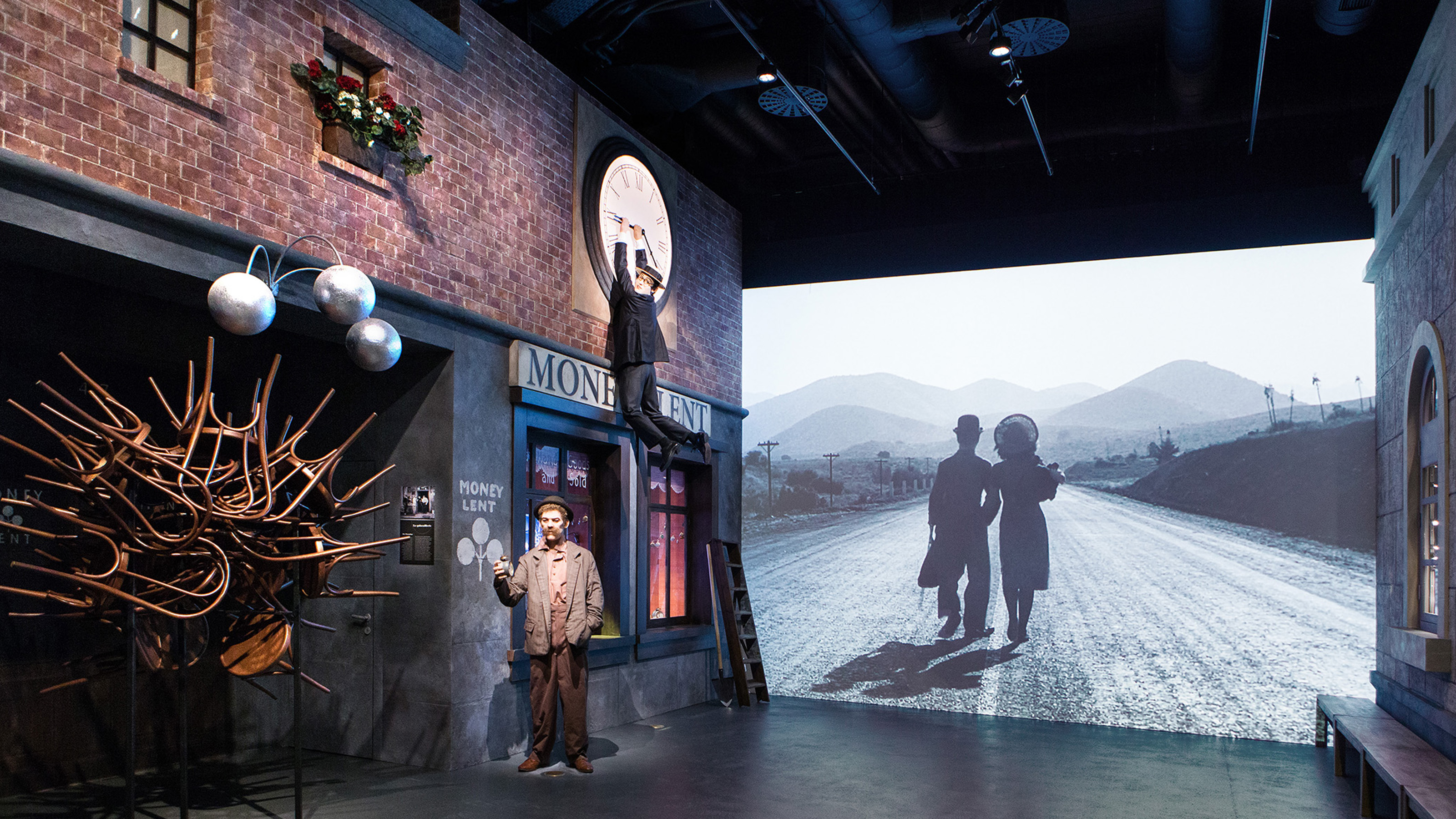
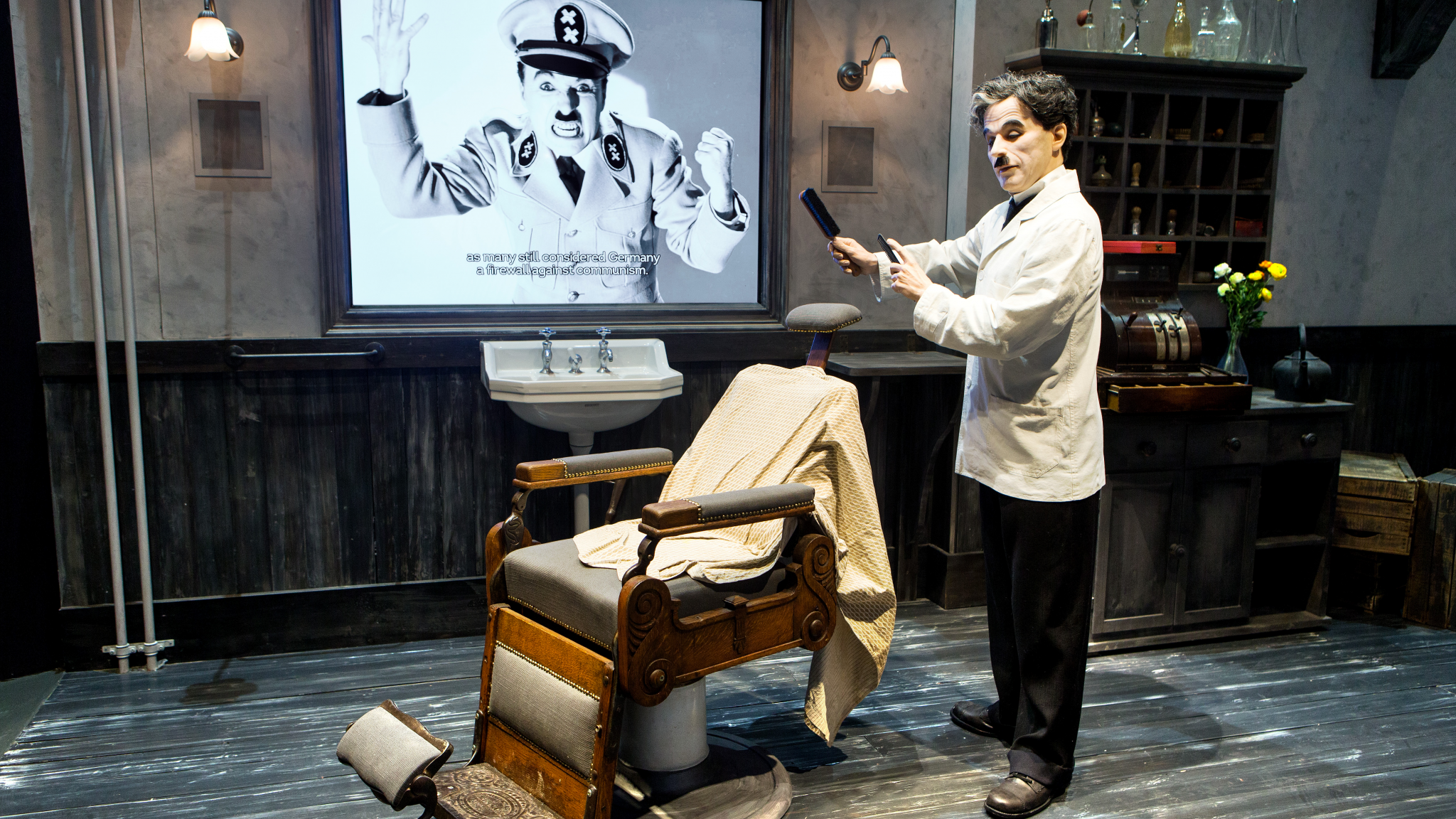
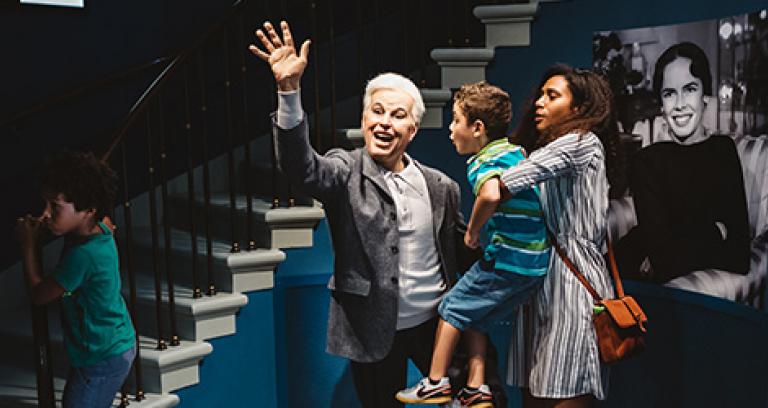

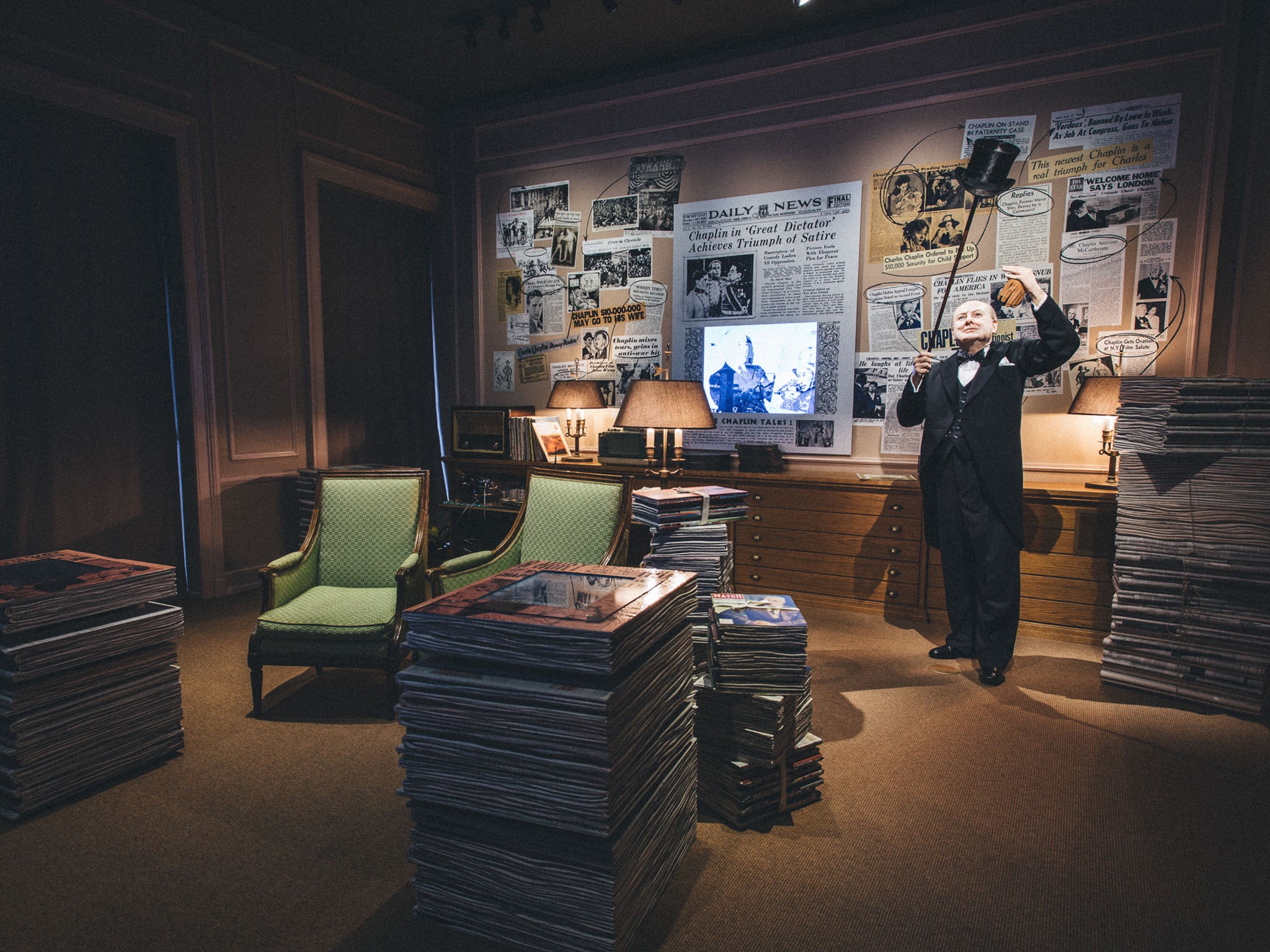
Chaplin’s World, Museum, Manoir de Ban in Corsier-sur-Vevey, Switzerland
On the 128th anniversary of his birth, a record-setting 662 people dressed as the Tramp in an event organised by the museum. Previously, the Museum of the Moving Image in London held a permanent display on Chaplin, and hosted a dedicated exhibition to his life and career in 1988. The London Film Museum hosted an exhibition called Charlie Chaplin – The Great Londoner, from 2010 until 2013.
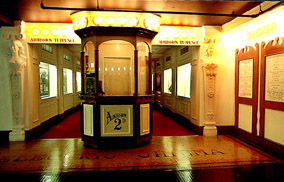
Charles Chaplin at MOMI London
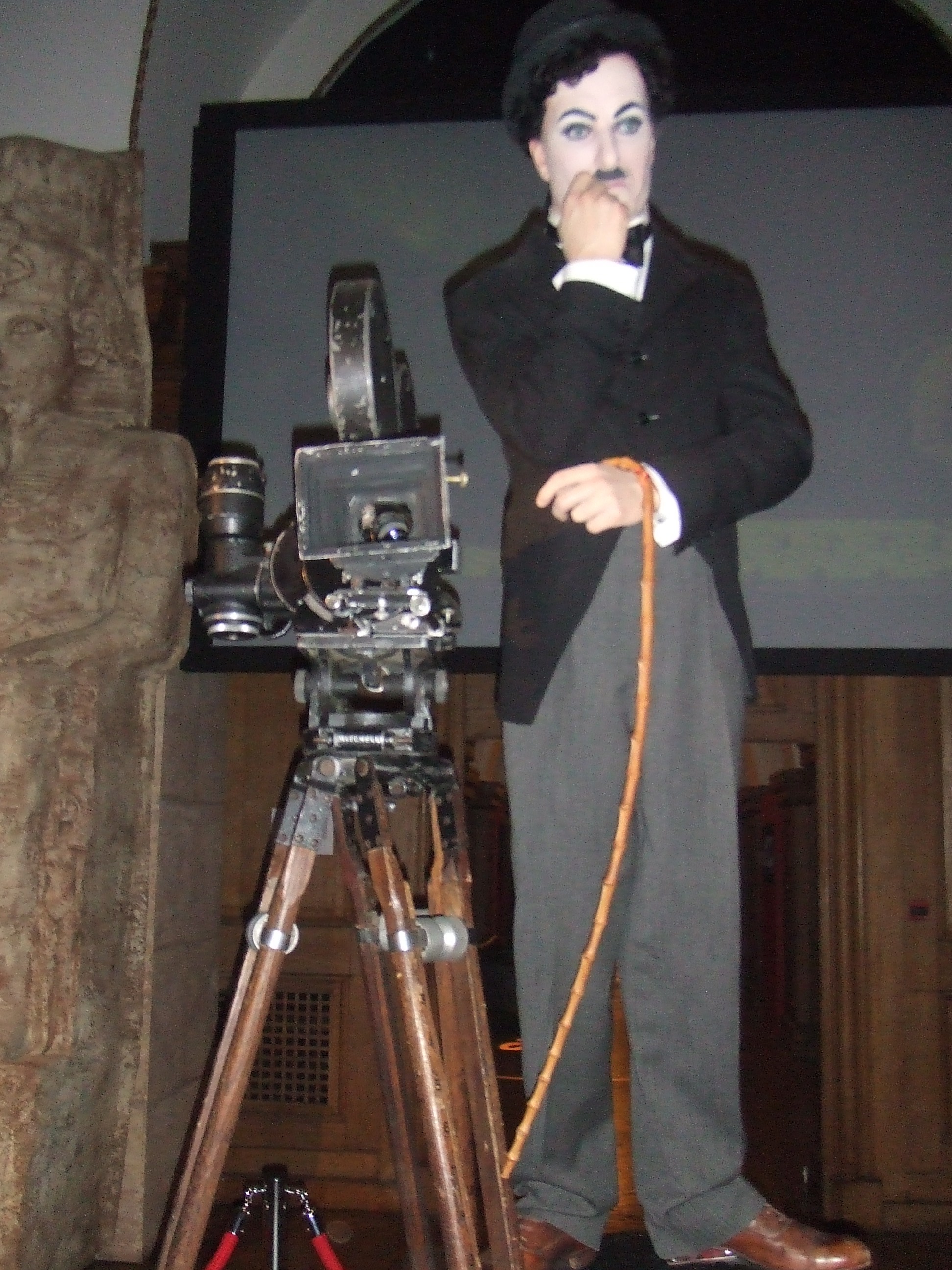
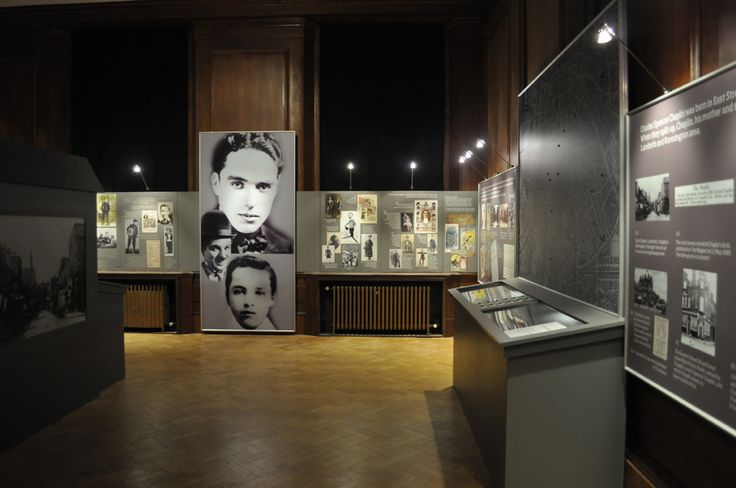
Charlie Chaplin – The Great Londoner – London Film Museum
In London, a statue of Chaplin as the Tramp, sculpted by John Doubleday and unveiled in 1981, is located in Leicester Square. The city also includes a road named after him in central London, “Charlie Chaplin Walk”, which is the location of the BFI IMAX.
There are nine blue plaques memorialising Chaplin in London, Hampshire, and Yorkshire. The Swiss town of Vevey named a park in his honour in 1980 and erected a statue there in 1982. In 2011, two large murals depicting Chaplin on two 14-storey buildings were also unveiled in Vevey. Chaplin has also been honoured by the Irish town of Waterville, where he spent several summers with his family in the 1960s. A statue was erected in 1998; since 2011, the town has been host to the annual Charlie Chaplin Comedy Film Festival, which was founded to celebrate Chaplin’s legacy and to showcase new comic talent.

Charles Chaplin Walk – BFI Imax Waterloo,, London
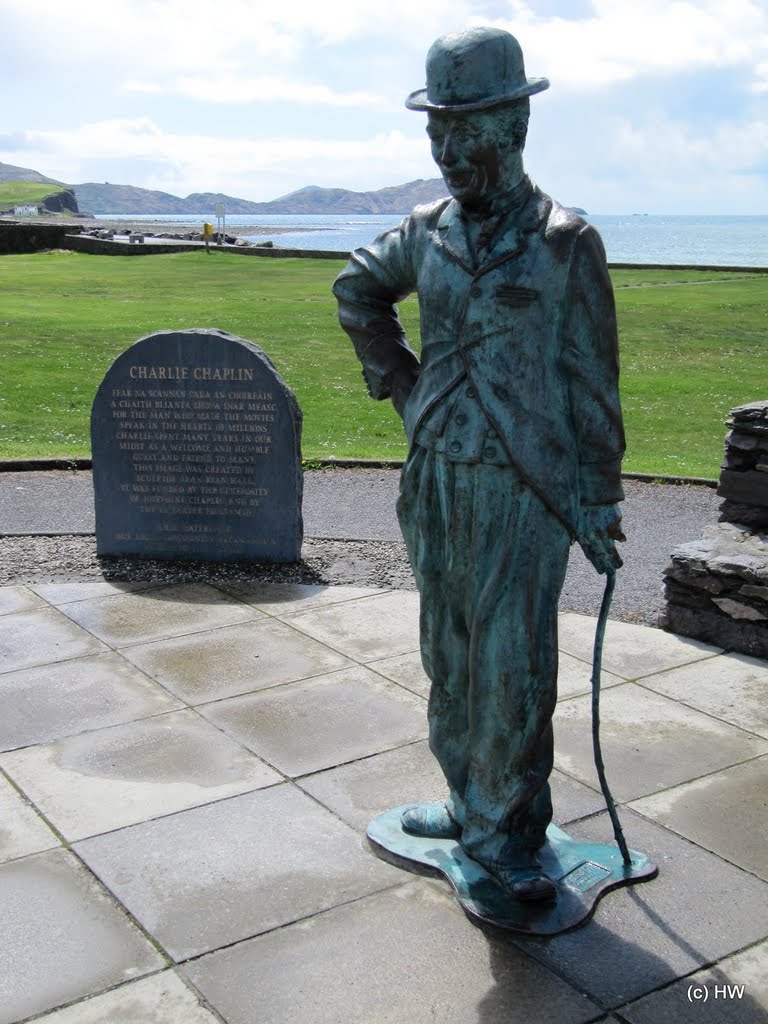
Chaplin statue in Waterville, Ireland
In other tributes, a minor planet, 3623 Chaplin – discovered by Soviet astronomer Lyudmila Karachkina in 1981 – is named after Chaplin. Throughout the 1980s, the Tramp image was used by IBM to advertise their personal computers. Chaplin’s 100th birthday anniversary in 1989 was marked with several events around the world, and on 15 April 2011, a day before his 122nd birthday, Google celebrated him with a special Google Doodle video on its global and other country-wide homepages. Many countries, spanning six continents, have honoured Chaplin with a postal stamp.
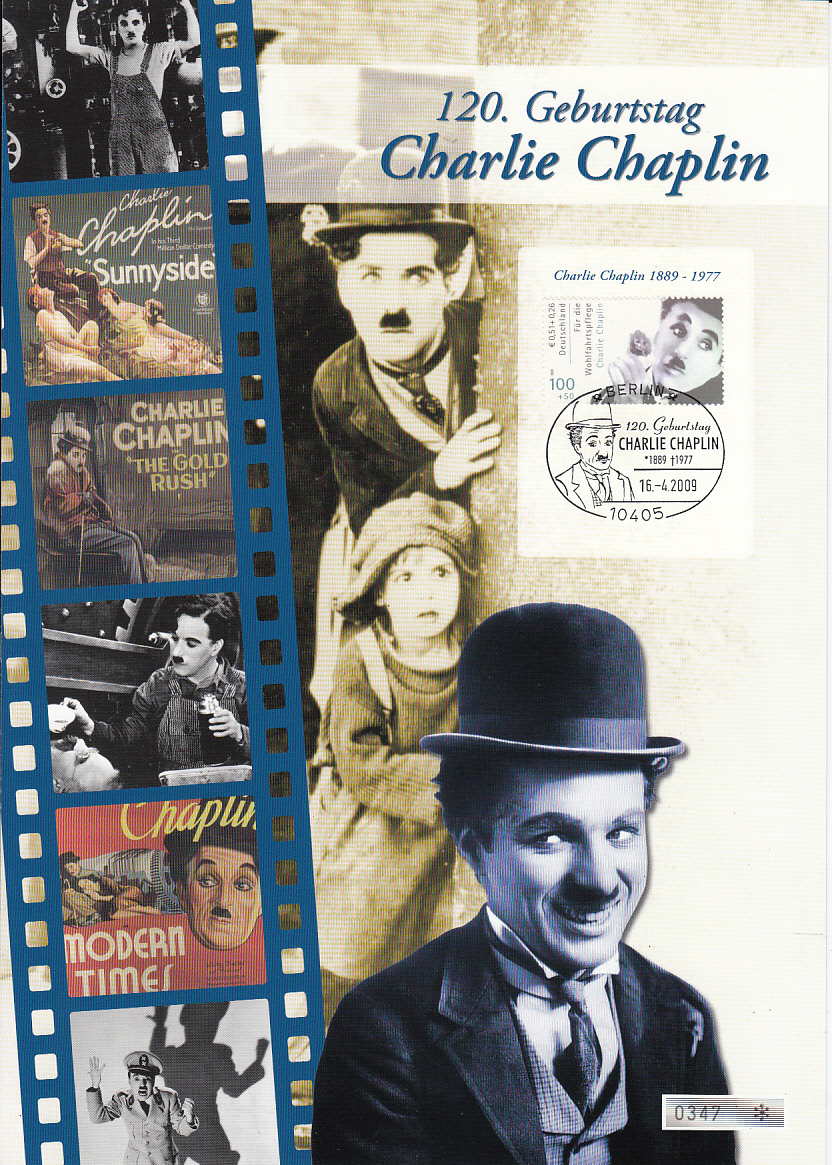
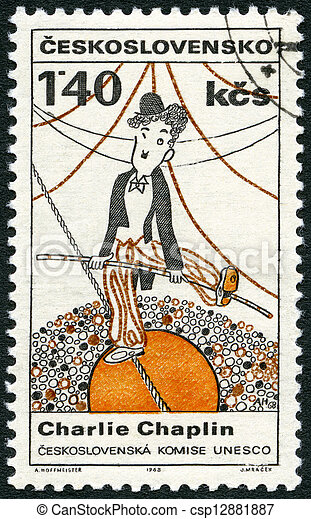
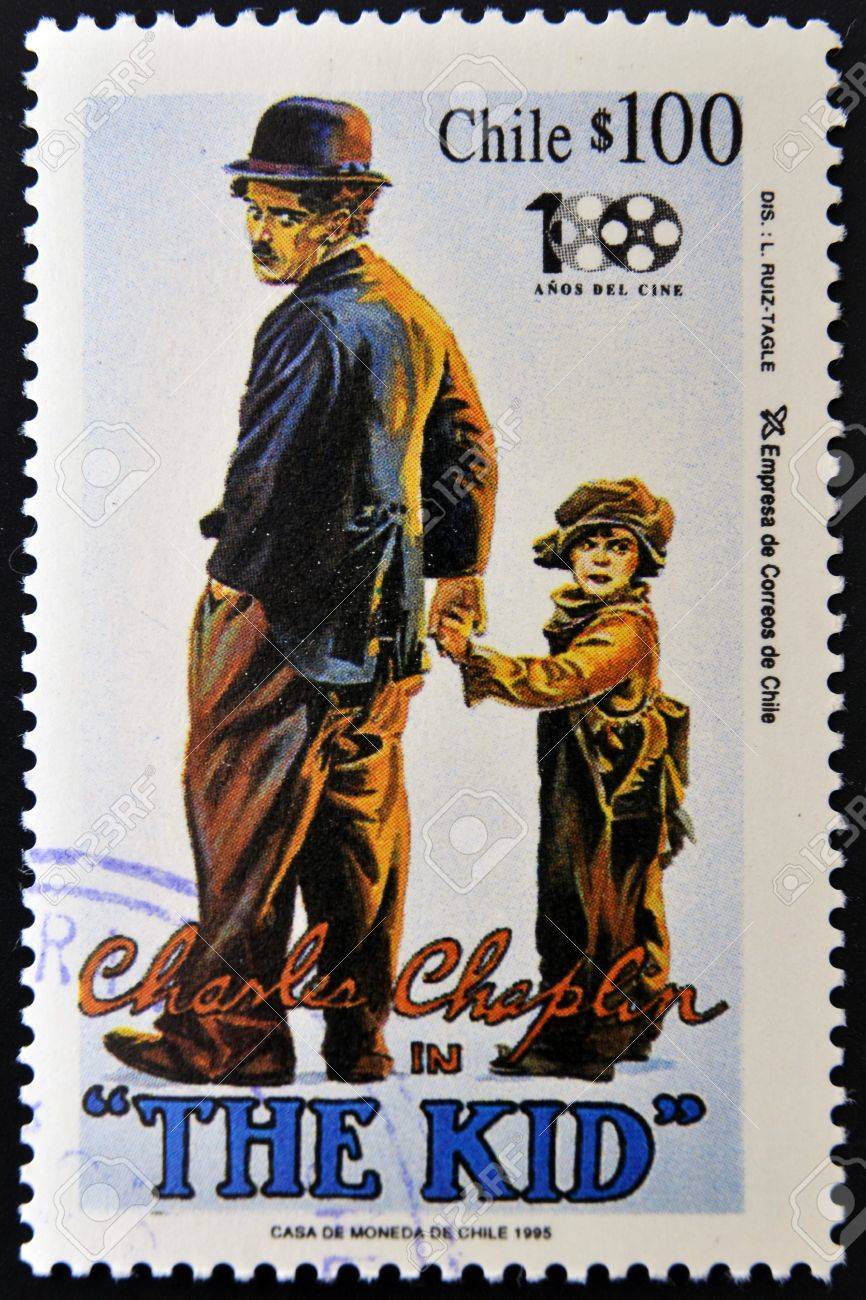
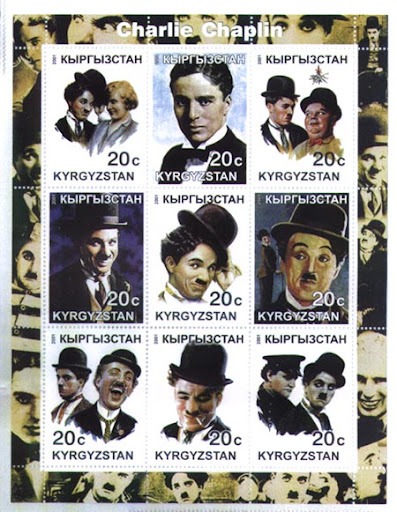
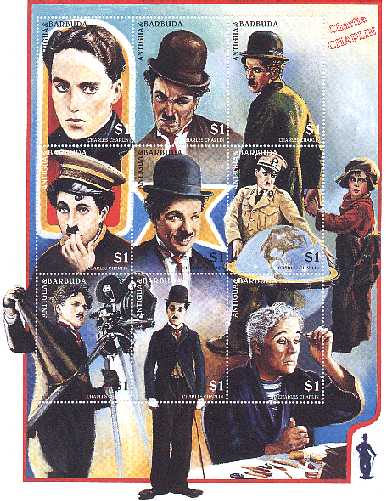
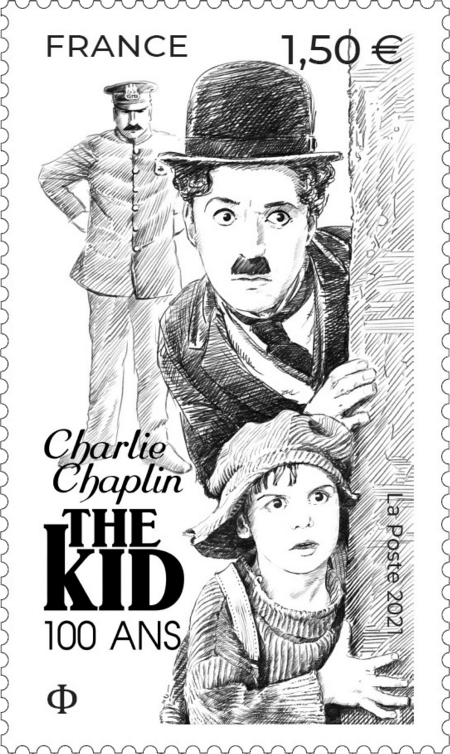
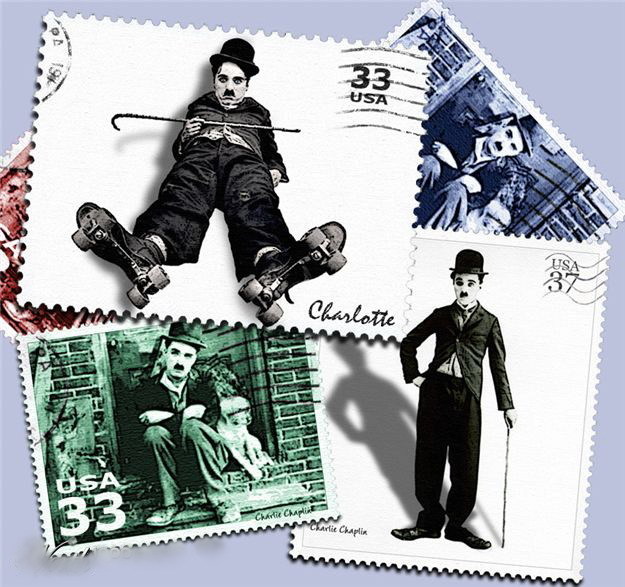
Charles Chaplin on stamps from around the world
Chaplin’s legacy is managed on behalf of his children by the Chaplin office, located in Paris. The office represents Association Chaplin, founded by some of his children “to protect the name, image and moral rights” to his body of work, Roy Export SAS, which owns the copyright to most of his films made after 1918, and Bubbles Incorporated S.A., which owns the copyrights to his image and name.
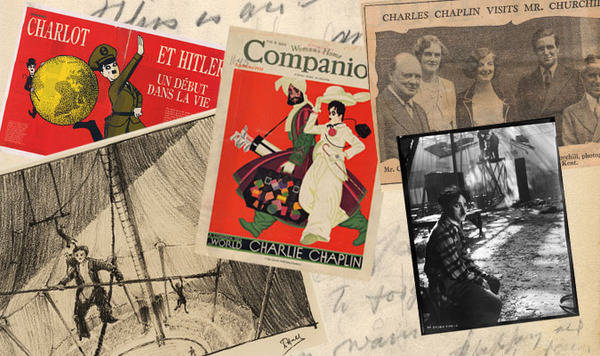
Charlie Chaplin : Chaplin Project / Cineteca di Bologna
Their central archive is held at the archives of Montreux, Switzerland and scanned versions of its contents, including 83,630 images, 118 scripts, 976 manuscripts, 7,756 letters, and thousands of other documents, are available for research purposes at the Chaplin Research Centre at the Cineteca di Bologna.
The photographic archive, which includes approximately 10,000 photographs from Chaplin’s life and career, is kept at the Musée de l’Elysée in Lausanne, Switzerland. The British Film Institute has also established the Charles Chaplin Research Foundation, and the first international Charles Chaplin Conference was held in London in July 2005.
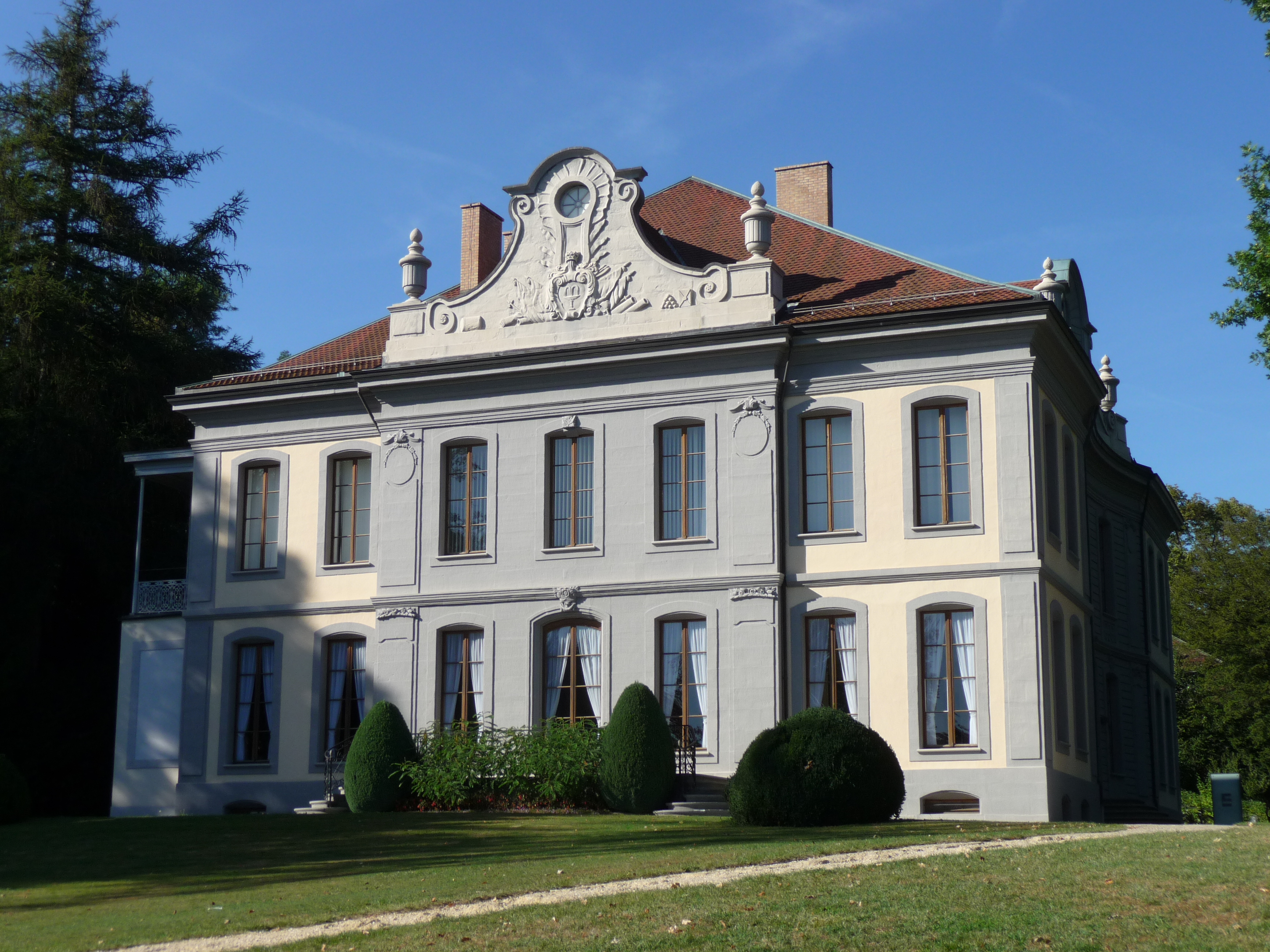
Musée de l’Elysée in Lausanne, Switzerland

Statues of Chaplin around the world, located at (left to right)
1. Trenčianske Teplice, Slovakia;
3. Waterville, Ireland;
4. London, United Kingdom;
5. Hyderabad, India;
8. Vevey, Switzerland
Characterisations
Chaplin is the subject of a biographical film, Chaplin (1992) directed by Richard Attenborough, and starring Robert Downey Jr. in the title role.
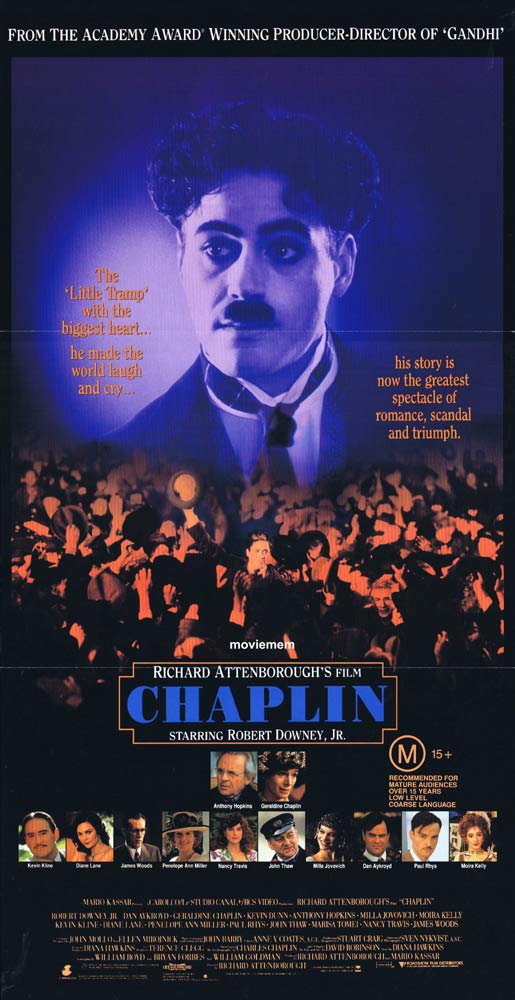
Chaplin (1992) Dir: Richard Attenborough Cinema Poster
He is also a character in the period drama film The Cat’s Meow (2001), played by Eddie Izzard, and in the made-for-television movie The Scarlett O’Hara War (1980), played by Clive Revill. A television series about Chaplin’s childhood, Young Charlie Chaplin, ran on PBS in 1989, and was nominated for an Emmy Award for Outstanding Children’s Program.
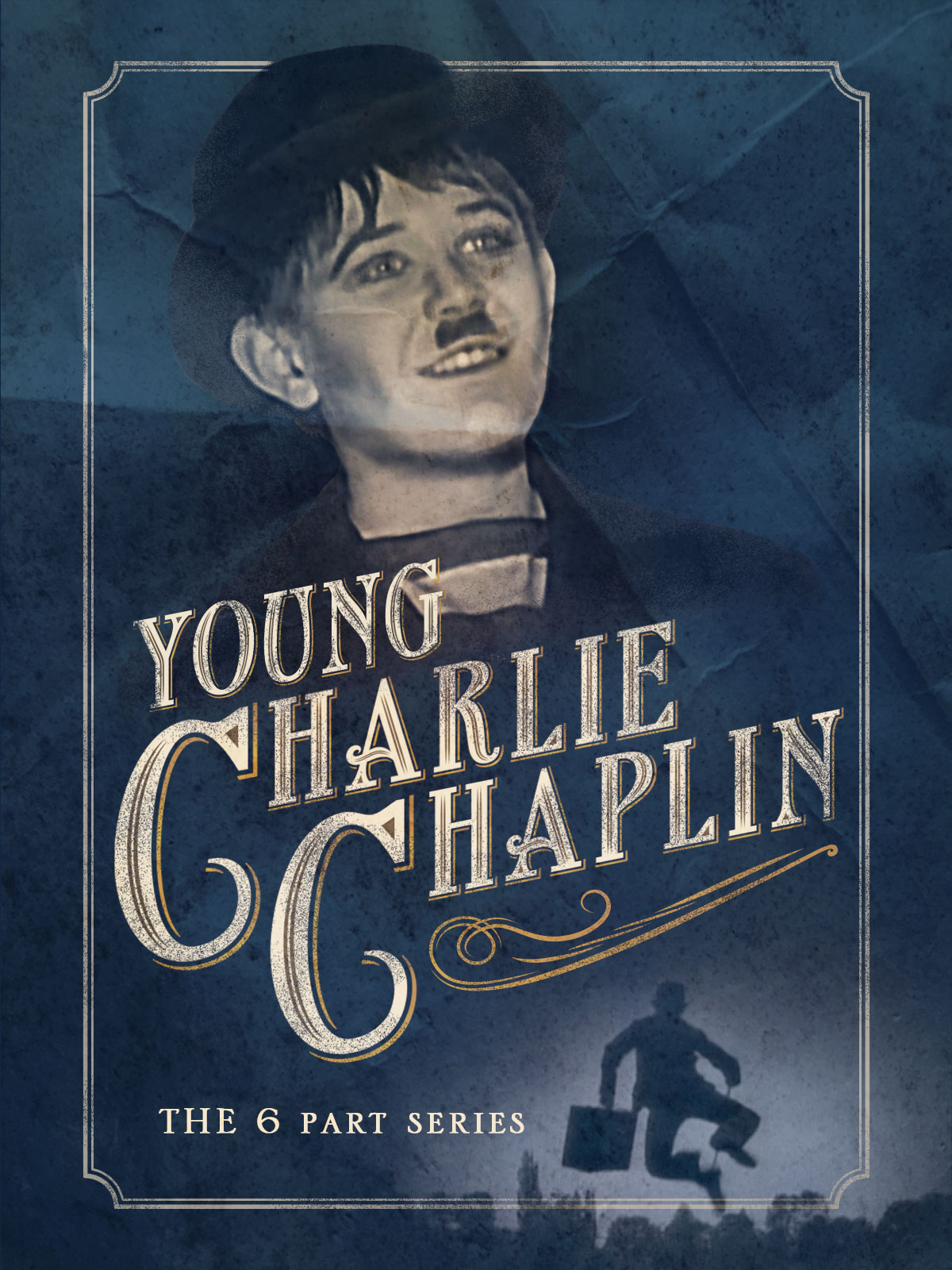
Young Charlie Chaplin (1989) Dir: Baz Taylor Poster
Chaplin’s life has also been the subject of several stage productions. Two musicals, Little Tramp and Chaplin, were produced in the early 1990s. In 2006, Thomas Meehan and Christopher Curtis created another musical, Limelight: The Story of Charlie Chaplin, which was first performed at the La Jolla Playhouse in San Diego in 2010. It was adapted for Broadway two years later, re-titled Chaplin – A Musical. Chaplin was portrayed by Robert McClure in both productions. In 2013, two plays about Chaplin premiered in Finland: Chaplin at the Svenska Teatern, and Kulkuri (The Tramp) at the Tampere Workers’ Theatre.
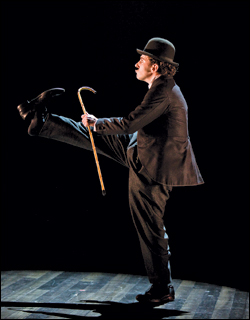
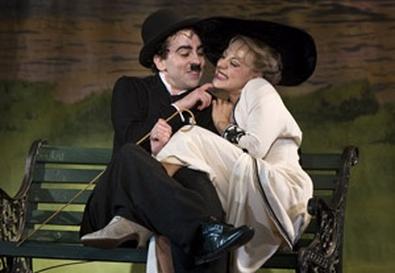
Limelight: The Story of Charlie Chaplin, which was first performed at the La Jolla Playhouse in San Diego in 2010.
Chaplin has also been characterised in literary fiction. He is the protagonist of Robert Coover‘s short story “Charlie in the House of Rue” (1980; reprinted in Coover’s 1987 collection A Night at the Movies), and of Glen David Gold‘s Sunnyside (2009), a historical novel set in the First World War period.
A day in Chaplin’s life in 1909 is dramatised in the chapter entitled “Modern Times” in Alan Moore‘s Jerusalem (2016), a novel set in the author’s home town of Northampton, England.
Alan Moore‘s Jerusalem (2016)
Awards and recognition
Chaplin’s star on the Hollywood Walk of Fame, is located at 6755 Hollywood Boulevard. Although the project started in 1958, Chaplin only received his star in 1970 because of his political views.
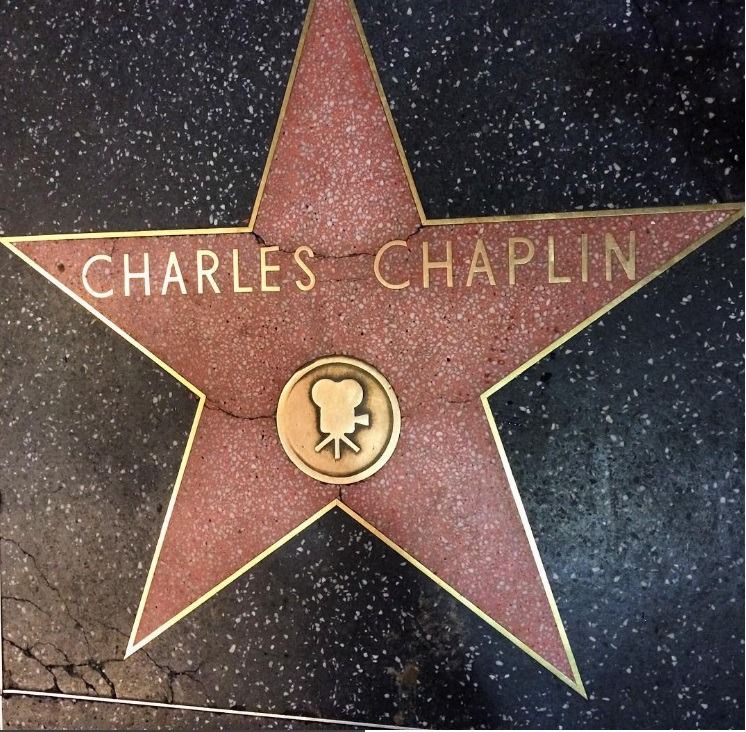
Chaplin’s star on the Hollywood Walk of Fame
Chaplin received many awards and honours, especially later in life. In the 1975 New Year Honours, he was appointed a Knight Commander of the Most Excellent Order of the British Empire (KBE).
He was also awarded honorary Doctor of Letters degrees by the University of Oxford and the University of Durham in 1962. In 1965, he and Ingmar Bergman were joint winners of the Erasmus Prize and, in 1971, he was appointed a Commander of the National Order of the Legion of Honour by the French government.
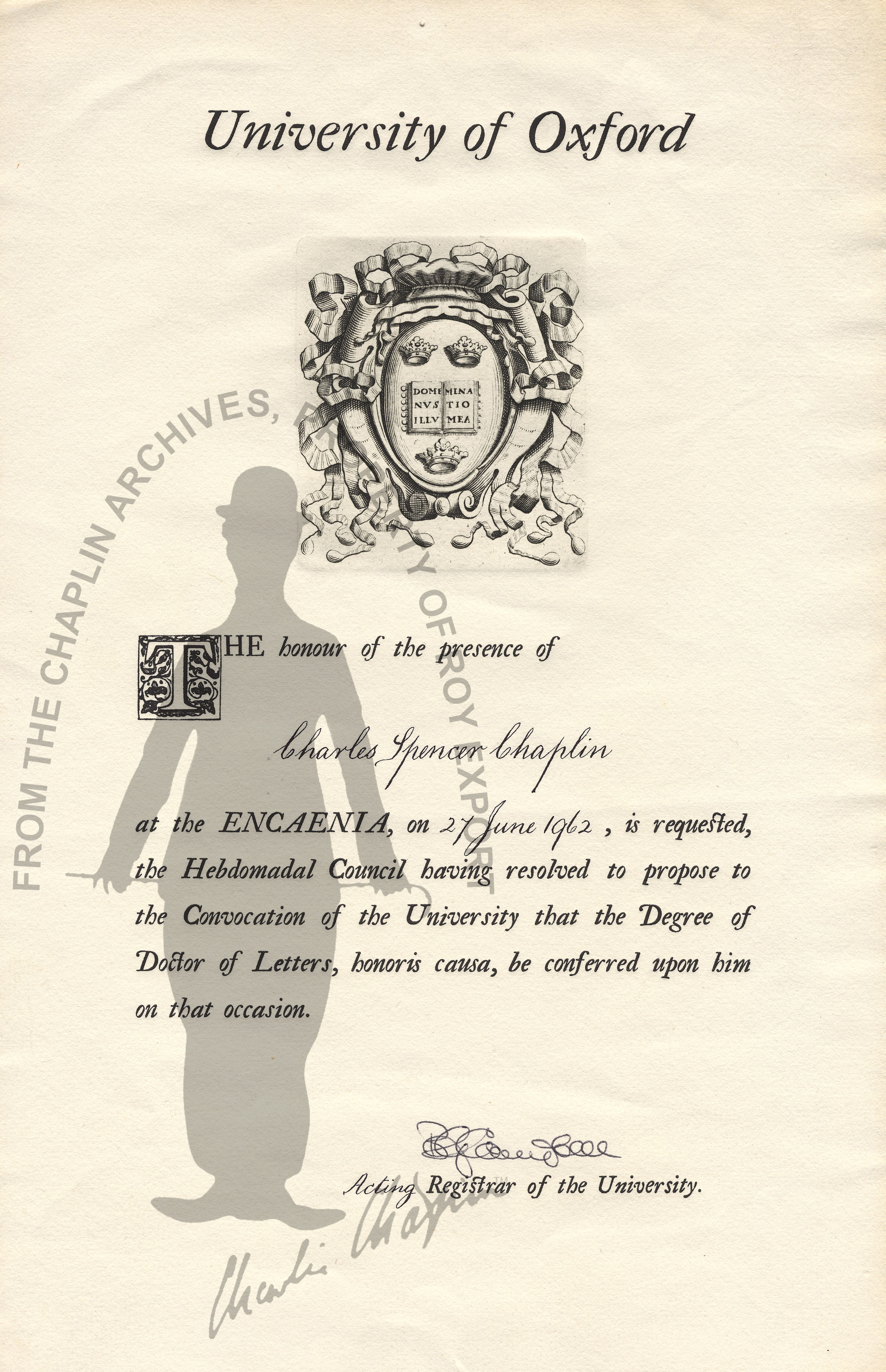
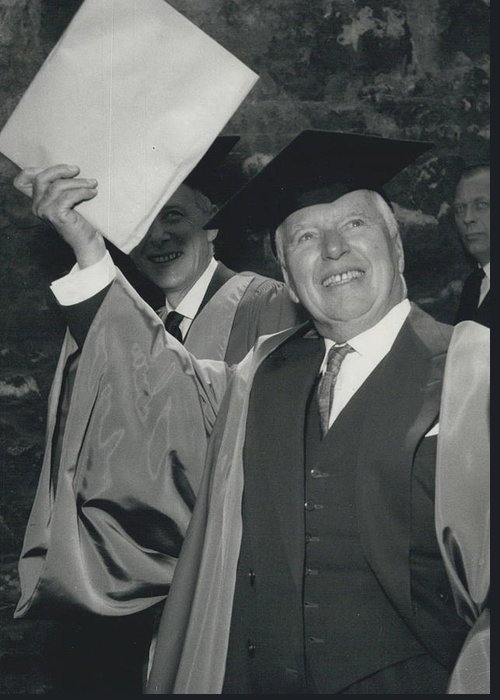
Charles Chaplin receiving his honorary Doctor of Letters degrees by the University of Oxford
From the film industry, Chaplin received a special Golden Lion at the Venice Film Festival in 1972, and a Lifetime Achievement Award from the Lincoln Center Film Society the same year. The latter has since been presented annually to filmmakers as The Chaplin Award. Chaplin was given a star on the Hollywood Walk of Fame in 1972, having been previously excluded because of his political beliefs.
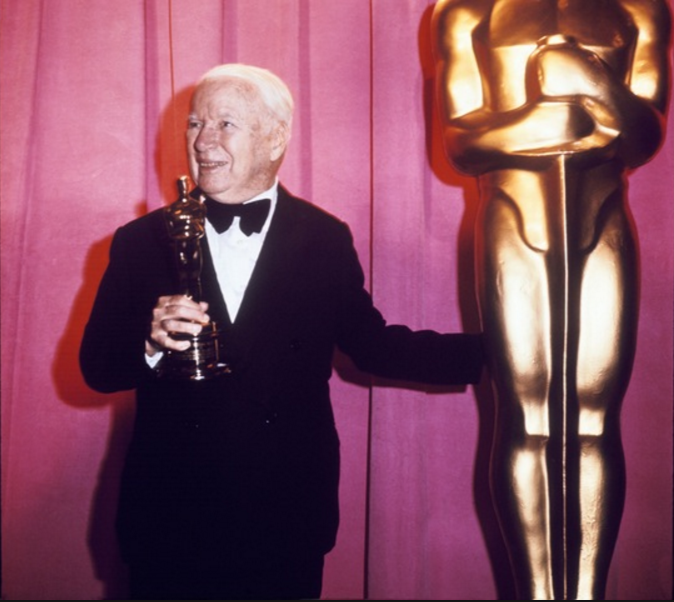
Charles Chaplin receiving his Lifetime Achievement Award from the Lincoln Center Film Society
Chaplin received three Academy Awards: an Honorary Award for “versatility and genius in acting, writing, directing, and producing The Circus” in 1929, a second Honorary Award for “the incalculable effect he has had in making motion pictures the art form of this century” in 1972, and a Best Score award in 1973 for Limelight (shared with Ray Rasch and Larry Russell).
He was further nominated in the Best Actor, Best Original Screenplay, and Best Picture (as producer) categories for The Great Dictator, and received another Best Original Screenplay nomination for Monsieur Verdoux. In 1976, Chaplin was made a Fellow of the British Academy of Film and Television Arts (BAFTA).
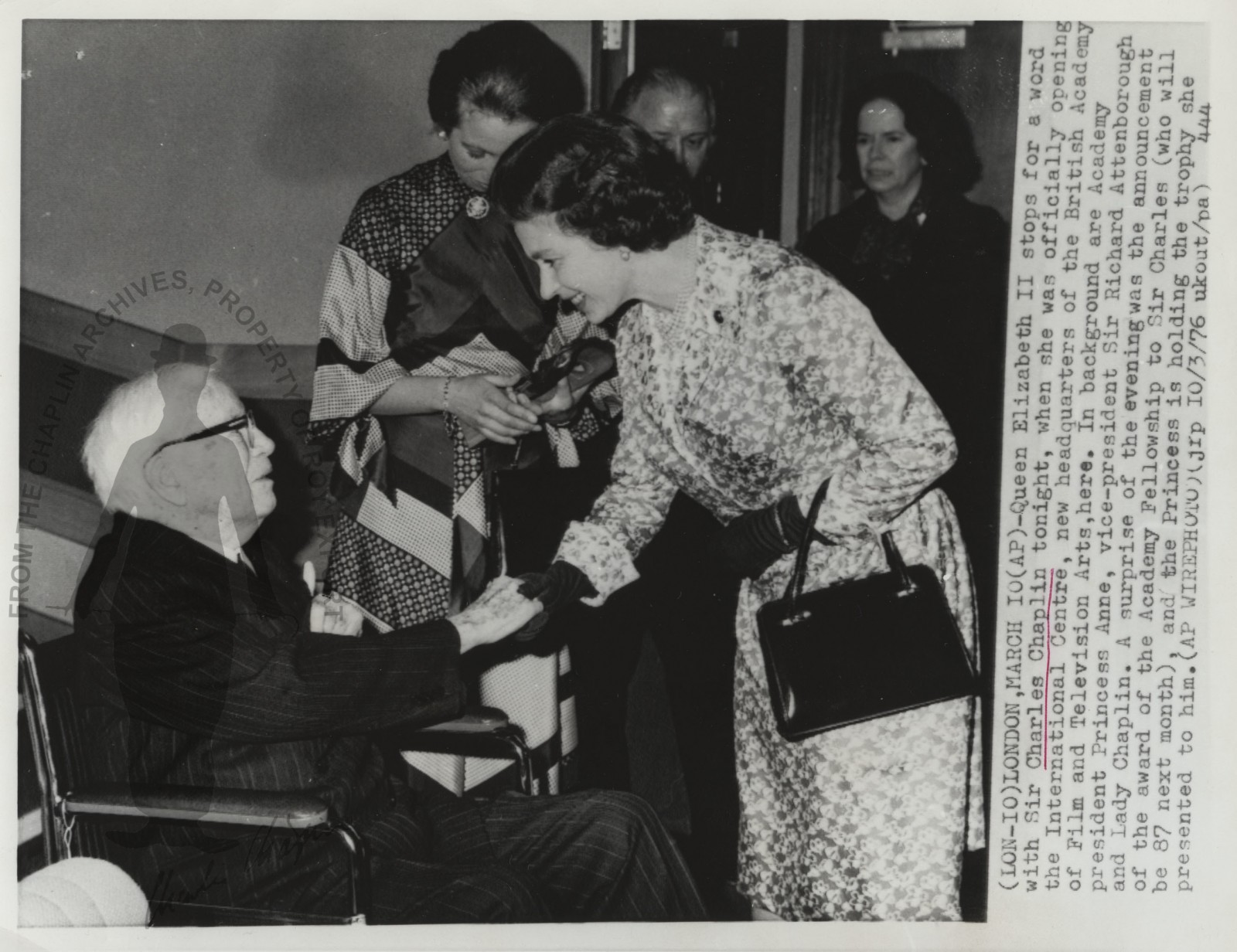
Charles Chaplin was made a Fellow of the British Academy of Film and Television Arts (BAFTA) and met HM the Queen Elisabeth II
Six of Chaplin’s films have been selected for preservation in the National Film Registry by the United States Library of Congress: The Immigrant (1917), The Kid (1921), The Gold Rush (1925), City Lights (1931), Modern Times (1936), and The Great Dictator (1940).
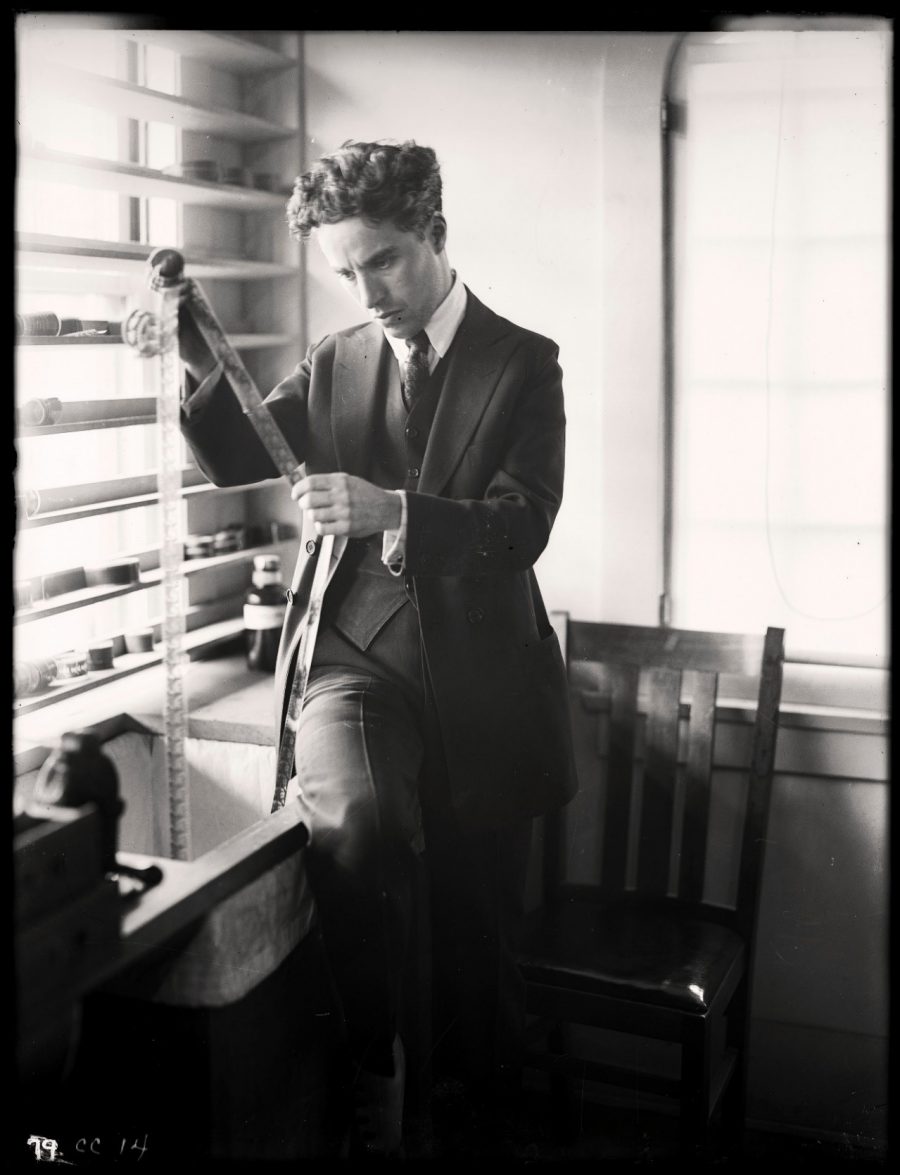
Filmography
The British Film Institute has compiled an excellent filmography with plenty of information on Chaplin’s films, including detailed descriptions of the very early shorts.
With Keystone Studios
1914
- Making a Living
- Kid Auto Races at Venice
- Mabel’s Strange Predicament
- A Thief Catcher
- Between Showers
- A Film Johnnie
- Tango Tangles
- His Favorite Pastime
- Cruel, Cruel Love
- The Star Boarder
- Mabel at the Wheel
- Twenty Minutes of Love
- Caught in a Cabaret
- Caught in the Rain
- A Busy Day
- The Fatal Mallet
- Her Friend the Bandit
- The Knockout
- Mabel’s Busy Day
- Mabel’s Married Life
- Laughing Gas
- The Property Man
- The Face on the Bar Room Floor
- Recreation
- The Masquerader
- His New Profession
- The Rounders
- The New Janitor
- Those Love Pangs
- Dough and Dynamite
- Gentlemen of Nerve
- His Musical Career
- His Trysting Place
- Tillie’s Punctured Romance
- Getting Acquainted
- His Prehistoric Past
With Essanay Film Manufacturing Company
1915
- His New Job
- A Night Out
- The Champion
- In the Park
- A Jitney Elopement
- The Tramp
- By the Sea
- Work
- A Woman
- The Bank
- Shanghaied
- A Night in the Show
1916
- Charlie Chaplin’s Burlesque on Carmen
- Police
Other Essanay titles
- Triple Trouble (film put together by Essanay from unfinished Chaplin films two years after he had left the company)
- His Regeneration [not generally considered a ‘Chaplin’ title although he did make a brief appearance]
With Mutual Film Corporation
1916
- The Floorwalker
- The Fireman
- The Vagabond
- One A.M
- The Count
- The Pawnshop
- Behind the Screen
- The Rink
1917
- Easy Street
- The Cure
- The Immigrant
- The Adventurer
With First National
1918
1919
1921
1922
1923
With United Artists
- 1923 A Woman of Paris
- 1925 and 1942 The Gold Rush
- 1928 The Circus
- 1931 City Lights
- 1936 Modern Times
- 1940 The Great Dictator
- 1947 Monsieur Verdoux
- 1952 Limelight
Other Productions
- 1957 A King in New York
- 1959 The Chaplin Revue (which includes A Dog’s Life, Shoulder Arms, The Pilgrim, and 1918 footage shot for How to Make Movies)
- 1967 A Countess from Hong Kong
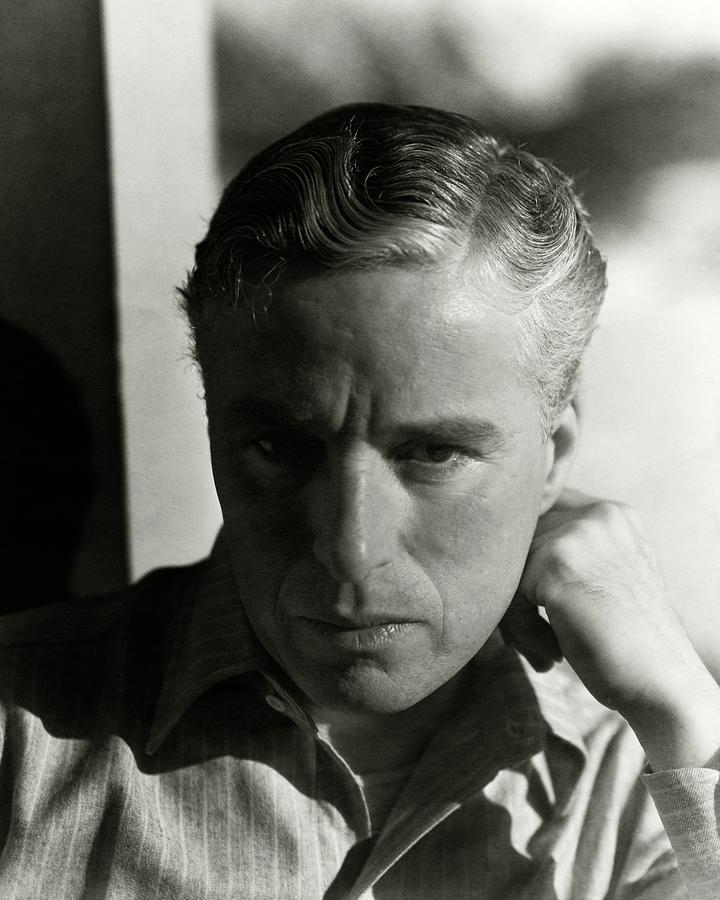
Sources and research publications
I used a large number of books, periodicals, magazines and on line libraries in order to research the life and the works of Charles Chaplin.
It has taken longer than a year to gather the photographs for this article.
I sincerely hope that reading this illustrated biography and researching the sources will drive you to further viewing and analysis of Chaplin’s work.
There is much to learn from his unsurpassed cinematic genius.
- Balio, Tino (1979). “Charles Chaplin, Entrepreneur: A United Artist”. Journal of the University Film Association. University of Illinois Press. 31 (1): 11–21.
- Bloom, Claire (1982). Limelight and After. London: Weidenfeld & Nicolson. ISBN0-297-78051-4.
- Brownlow, Kevin (2010) [2005]. The Search for Charlie Chaplin. London: UKA Press. ISBN978-1-905796-24-3.
- Cardullo, Bert (2009). Vittorio De Sica: Actor, Director, Auteur. Cambridge: Cambridge Scholars Publishing. ISBN1-4438-1531-4.
- Canemaker, John (1996). Felix: The Twisted Tale of the World’s Most Famous Cat. Cambridge, MA: Da Capo Press. ISBN0-306-80731-9.
- Chaplin, Charles (2003) [1964]. My Autobiography. London: Penguin Classics. ISBN0-14-101147-5.
- Chaplin, Lita Grey; Vance, Jeffrey (1998). Wife of the Life of the Party. Lanham, MD: Scarecrow Press. ISBN0-8108-3432-4.
- Cousins, Mark (2004). The Story of Film: An Odyssey. London: Pavilion Books. ISBN978-1-86205-574-2.
- Dale, Alan S. (2000). Comedy is a Man in Trouble: Slapstick in American Movies. Minneapolis, MN: University of Minnesota Press. ISBN0-8166-3658-3.
- Epstein, Jerry (1988). Remembering Charlie. London: Bloomsbury. ISBN0-7475-0266-8.
- Friedrich, Otto (1986). City of Nets: A Portrait of Hollywood in the 1940’s. Berkeley, CA: University of California Press. ISBN978-0-520-20949-7.
- Frost, Jennifer (2007). “‘Good Riddance to Bad Company’: Hedda Hopper, Hollywood Gossip, and the Campaign against Charlie Chaplin, 1940–1952”. Australasian Journal of American Studies. Australia and New Zealand American Studies Association. 26 (2): 74–88.
- Gehring, Wes D. (2014). Chaplin’s War Trilogy: An Evolving Lens in Three Dark Comedies, 1918–1947. Jefferson, NC: McFarland. ISBN978-0-7864-7465-3.
- Gunning, Tom (1990). “Chaplin and American Culture: The Evolution of a Star Image by Charles J. Maland”. Film Quarterly. University of California Press. 43 (3): 41–43. doi:10.2307/1212638. JSTOR1212638.
- Hansmeyer, Christian (1999). Charlie Chaplin’s Techniques for the Creation of Comic Effect in his Films. Portsmouth: University of Portsmouth. ISBN978-3-638-78719-2.
- Jackson, Kathy Merlock (2003). “Mickey and the Tramp: Walt Disney’s Debt to Charlie Chaplin”. The Journal of American Culture. 26 (1): 439–444. doi:10.1111/1542-734X.00104.
- Kamin, Dan (2011) [2008]. The Comedy of Charlie Chaplin: Artistry in Motion. Lanham, MD: Scarecrow Press. ISBN978-0-8108-7780-1.
- Kemp, Philip, ed. (2011). Cinema: The Whole Story. London: Thames & Hudson. ISBN978-0-500-28947-1.
- Kuriyama, Constance B. (1992). “Chaplin’s Impure Comedy: The Art of Survival”. Film Quarterly. University of California Press. 45 (3): 26–38. doi:10.2307/1213221. JSTOR1213221.
- Larcher, Jérôme (2011). Masters of Cinema: Charlie Chaplin. London: Cahiers du Cinéma. ISBN978-2-86642-606-4.
- Louvish, Simon (2010) [2009]. Chaplin: The Tramp’s Odyssey. London: Faber and Faber. ISBN978-0-571-23769-2.
- Lynn, Kenneth S. (1997). Charlie Chaplin and His Times. New York, NY: Simon & Schuster. ISBN0-684-80851-X.
- Maland, Charles J. (1989). Chaplin and American Culture. Princeton, NJ: Princeton University Press. ISBN0-691-02860-5.
- Maland, Charles J. (2007). City Lights. London: British Film Institute. ISBN978-1-84457-175-8.
- Marriot, A. J. (2005). Chaplin: Stage by Stage. Hitchin, Herts: Marriot Publishing. ISBN978-0-9521308-1-9.
- Mast, Gerald (1985) [1981]. A Short History of the Movies: Third Edition. Oxford: Oxford University Press. ISBN0-19-281462-1.
- McCaffrey, Donald W., ed. (1971). Focus on Chaplin. Englewood Cliffs, NJ: Prentice Hall. ISBN0-13-128207-7.
- Neibaur, James L. (2000). “Chaplin at Essanay: Artist in Transition”. Film Quarterly. University of California Press. 54 (1): 23–25. doi:10.2307/1213798. JSTOR1213798.
- Nowell-Smith, Geoffrey, ed. (1997). Oxford History of World Cinema. Oxford: Oxford University Press. ISBN978-0-19-874242-5.
- Raksin, David; Berg, Charles M. (1979). “Music Composed by Charles Chaplin: Auteur or Collaborateur?”. Journal of the University Film Association. University of Illinois Press. 31 (1): 47–50.
- Robinson, David (1986) [1985]. Chaplin: His Life and Art. London: Paladin. ISBN0-586-08544-0.
- Sarris, Andrew (1998). You Ain’t Heard Nothin’ Yet: The American Talking Film – History and Memory, 1927–1949. New York City, NY: Oxford University Press. ISBN978-0-19-503883-5.
- Sbardellati, John (2012). J. Edgar Hoover Goes to the Movies: The FBI and the Origins of Hollywood’s Cold War. Ithaca, NY: Cornell University Press. ISBN978-0-8014-5008-2.
- Sbardellati, John; Shaw, Tony (2003). “Booting a Tramp: Charlie Chaplin, the FBI, and the Construction of the Subversive Image in Red Scare America” (PDF). Pacific Historical Review. University of California Press. 72 (4): 495–530. doi:10.1525/phr.2003.72.4.495.
- Schickel, Richard, ed. (2006). The Essential Chaplin – Perspectives on the Life and Art of the Great Comedian. Chicago, Illinois: Ivan R. Dee. ISBN1-56663-682-5.
- Schmadel, Lutz D. (2003). Dictionary of Minor Planet Names (5th ed.). New York City, NY: Springer Verlag. p. 305. ISBN978-3-540-00238-3.
- Schneider, Steven Jay, ed. (2009). 1001 Movies You Must See Before You Die. London: Quintessence. ISBN978-1-84403-680-6.
- Silverberg, Miriam (2006). Erotic Grotesque Nonsense: The Mass Culture of Japanese Modern Times. Berkeley, Los Angeles and London: University of California Press. ISBN978-0-520-26008-5.
- Sheaffer, Louis (1973). O’Neill: Son and Artist. Boston and Toronto: Little, Brown & Company. ISBN0-316-78336-6.
- Simmons, Sherwin (2001). “Chaplin Smiles on the Wall: Berlin Dada and Wish-Images of Popular Culture”. New German Critique. Duke University Press (84): 3–34. doi:10.2307/827796. JSTOR827796.
- Sklar, Robert (2001). Film: An International History of the Medium (Second edition). Upper Saddle River, NJ: Prentice Hall. ISBN978-0-13-034049-8.
- Slowik, Michael (2014). After the Silents: Hollywood Film Music in the Early Era, 1926-1934. New York: Columbia Univ. Press. ISBN978-0231165839.
- Thompson, Kristin (2001). “Lubitsch, Acting and the Silent Romantic Comedy”. Film History. Indiana University Press. 13 (4): 390–408. doi:10.2979/FIL.2001.13.4.390.
- Vance, Jeffrey (1996). “The Circus: A Chaplin Masterpiece”. Film History. Indiana University Press. 8 (2): 186–208. JSTOR3815334.
- Vance, Jeffrey (2000). Introduction. Making Music with Charlie Chaplin. By James, Eric. Lanham, MD: Scarecrow Press. ISBN0-8108-3741-2.
- Vance, Jeffrey (2003). Chaplin: Genius of the Cinema. New York: Harry N. Abrams. ISBN0-8109-4532-0.
- Weissman, Stephen M. (1999). “Charlie Chaplin’s Film Heroines”. Film History. Indiana University Press. 8 (4): 439–445.
- Weissman, Stephen M. (2009). Chaplin: A Life. London: JR Books. ISBN978-1-906779-50-4.
- Williams, Gregory Paul (2006). The Story of Hollywood: An Illustrated History. Los Angeles, CA: B L Press. ISBN978-0-9776299-0-9
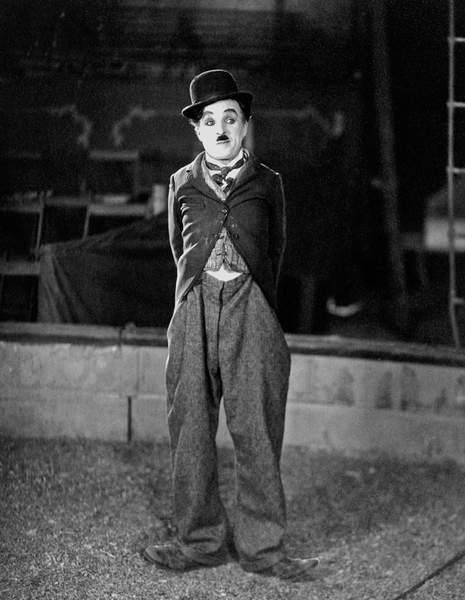
Notes
Wikipedia references and footnotes
- Jump up^ An MI5 investigation in 1952 was unable to find any record of Chaplin’s birth.[3]Chaplin biographer David Robinson notes that it is not surprising that his parents failed to register the birth: “It was easy enough, particularly for music hall artists, constantly moving (if they were lucky) from one town to another, to put off and eventually forget this kind of formality; at that time the penalties were not strict or efficiently enforced.”[2] In 2011 a letter sent to Chaplin in the 1970s came to light which claimed that he had been born in a Gypsy caravan at Black Patch Park in Smethwick, Staffordshire. Chaplin’s son Michael has suggested that the information must have been significant to his father in order for him to retain the letter.[4]Regarding the date of his birth, Chaplin believed it to be 16 April, but an announcement in the 11 May 1889 edition of The Magnet stated it as the 15th.[5]
- Jump up^ Sydney was born when Hannah Chaplin was 19. The identity of his biological father is not known for sure, but Hannah claimed it was a Mr. Hawkes.[7]
- Jump up^ Hannah became ill in May 1896, and was admitted to hospital. Southwark Council ruled that it was necessary to send the children to a workhouse “owing to the absence of their father and the destitution and illness of their mother”.[15]
- Jump up^ According to Chaplin, Hannah had been booed off stage, and the manager chose him – as he was standing in the wings – to go on as her replacement. He remembered confidently entertaining the crowd, and receiving laughter and applause.[27]
- Jump up^ The Eight Lancashire Lads were still touring until 1908; the exact time Chaplin left the group is unverified, but based on research, A. J. Marriot believes it was in December 1900.[30]
- Jump up^ William Gillette co-wrote the Sherlock Holmes play with Arthur Conan Doyle, and had been starring in it since its New York opening in 1899. He had come to London in 1905 to appear in a new play, Clarice. Its reception was poor, and Gillette decided to add an “after-piece” called The Painful Predicament of Sherlock Holmes. This short play was what Chaplin originally came to London to appear in. After three nights, Gillette chose to close Clarice and replace it with Sherlock Holmes. Chaplin had so pleased Gillette with his performance in The Painful Predicament that he was kept on as Billy for the full play.[38]
- Jump up^ Chaplin attempted to be a “Jewish comedian”, but the act was poorly received and he performed it only once.[45]
- Jump up^ Robinson notes that “this was not strictly true: the character was to take a year or more to evolve its full dimensions and even then – which was its particular strength – it would evolve during the whole rest of his career”.[65]
- Jump up^ After leaving Essanay, Chaplin found himself engaged in a legal battle with the company that lasted until 1922. It began when Essanay extended his last film for them, Burlesque on Carmen, from a two-reeler to a feature film (by adding out-takes and new scenes with Leo White) without his consent. Chaplin applied for an injunction to prevent its distribution, but the case was dismissed in court. In a counter-claim, Essanay alleged that Chaplin had broken his contract by not producing the agreed number of films and sued him for $500,000 in damages. In addition, the company compiled another film, Triple Trouble (1918), from various unused Chaplin scenes and new material shot by White.[91]
- Jump up^ The British embassy made a statement saying: “[Chaplin] is of as much use to Great Britain now making big money and subscribing to war loans as he would be in the trenches.”[108]
- Jump up^ In her memoirs, Lita Grey later claimed that many of her complaints were “cleverly, shockingly enlarged upon or distorted” by her lawyers.[165]
- Jump up^ Chaplin left the United States on 31 January 1931, and returned on 10 June 1932.[193]
- Jump up^ Chaplin later said that if he had known the extent of the Nazi Party’s actions he would not have made the film; “Had I known the actual horrors of the German concentration camps, I could not have made The Great Dictator; I could not have made fun of the homicidal insanity of the Nazis.”[218]
- Jump up^ Speculation about Chaplin’s racial origin existed from the earliest days of his fame, and it was often reported that he was a Jew. Research has uncovered no evidence of this, and when a reporter asked in 1915 if it was true, Chaplin responded, “I have not that good fortune.” The Nazi Party believed that he was Jewish and banned The Gold Rush on this basis. Chaplin responded by playing a Jew in The Great Dictatorand announced, “I did this film for the Jews of the world.”[223]
- Jump up^ Nevertheless, both Winston Churchill and President Roosevelt liked the film, which they saw at private screenings before its release. Roosevelt subsequently invited Chaplin to read the film’s final speech over the radio during his January 1941 inauguration, with the speech becoming a “hit” of the celebration.[231] Chaplin was often invited to other patriotic functions to read the speech to audiences during the years of the war.[231]
- Jump up^ In December 1942, Barry broke into Chaplin’s home with a handgun and threatened suicide while holding him at gunpoint. This lasted until the next morning, when Chaplin was able to get the gun from her. Barry broke into Chaplin’s home a second time later that month, and he had her arrested. She was then prosecuted for vagrancy in January 1943 – Barry had been unable to pay her hotel bills, and was found wandering the streets of Beverly Hills after taking an overdose of barbiturates.[235]
- Jump up^ According to the prosecutor, Chaplin had violated the act when he paid for Barry’s trip to New York in October 1942, when he was also visiting the city. Both Chaplin and Barry agreed that they had met there briefly, and according to Barry, they had sexual intercourse.[237] Chaplin claimed that the last time he was intimate with Barry was May 1942.[238]
- Jump up^ Carol Ann’s blood group was B, Barry’s was A, and Chaplin’s was O. In California at this time, blood tests were not accepted as evidence in legal trials.[243]
- Jump up^ Chaplin and O’Neill met on 30 October 1942 and married on 16 June 1943 in Carpinteria, California.[246] Eugene O’Neill disowned his daughter as a result.[247]
- Jump up^ Chaplin had already attracted the attention of the FBI long before the 1940s, the first mention of him in their files being from 1922. J. Edgar Hoover first requested that a Security Index Card be filed for Chaplin in September 1946, but the Los Angeles office was slow to react and only began active investigation the next spring.[268] The FBI also requested and received help from MI5, particularly on investigating the false claims that Chaplin had not been born in England but in France or Eastern Europe, and that his real name was Israel Thornstein. The MI5 found no evidence of Chaplin being involved in the Communist Party.[269]
- Jump up^ In November 1947, Chaplin asked Pablo Picasso to hold a demonstration outside the US embassy in Paris to protest the deportation proceedings of Hanns Eisler, and in December, he took part in a petition asking for the deportation process to be dropped. In 1948, Chaplin supported the unsuccessful presidential campaign of Henry Wallace; and in 1949 he supported two peace conferences and signed a petition protesting the Peekskill incident.[276]
- Jump up^ Limelight was conceived as a novel, which Chaplin wrote but never intended for publication.[280]
- Jump up^ Before leaving America, Chaplin had ensured that Oona had access to his assets.[293]
- Jump up^ Robinson speculates that Switzerland was probably chosen because it “was likely to be the most advantageous from a financial point of view.”[296]
- Jump up^ The honour had already been proposed in 1931 and 1956, but was vetoed after a Foreign Office report raised concerns over Chaplin’s political views and private life. They feared the act would damage the reputation of the British honours system and relations with the United States,[335]
- Jump up^ Despite asking for an Anglican funeral, Chaplin appeared to be agnostic. In his autobiography he wrote, “I am not religious in the dogmatic sense … I neither believe nor disbelieve in anything … My faith is in the unknown, in all that we do not understand by reason; I believe that … in the realm of the unknown there is an infinite power for good.”[340]
- Jump up^ Stan Laurel, Chaplin’s co-performer at the company, remembered that Karno’s sketches regularly inserted “a bit of sentiment right in the middle of a funny music hall turn.”[348]
- Jump up^ Although the film had originally been released in 1952, it did not play for one week in Los Angeles because of its boycott, and thus did not meet the criterion for nomination until it was re-released in 1972.[417]
- Jump up^ On his birthday, 16 April, City Lights was screened at a gala at the Dominion Theatre in London, the site of its British premiere in 1931.[458] In Hollywood, a screening of a restored version of How to Make Movies was held at his former studio, and in Japan, he was honoured with a musical tribute. Retrospectives of his work were presented that year at The National Film Theatre in London,[459] the Munich Stadtmuseum[459] and the Museum of Modern Art in New York, which also dedicated a gallery exhibition, Chaplin: A Centennial Celebration, to him.[460]
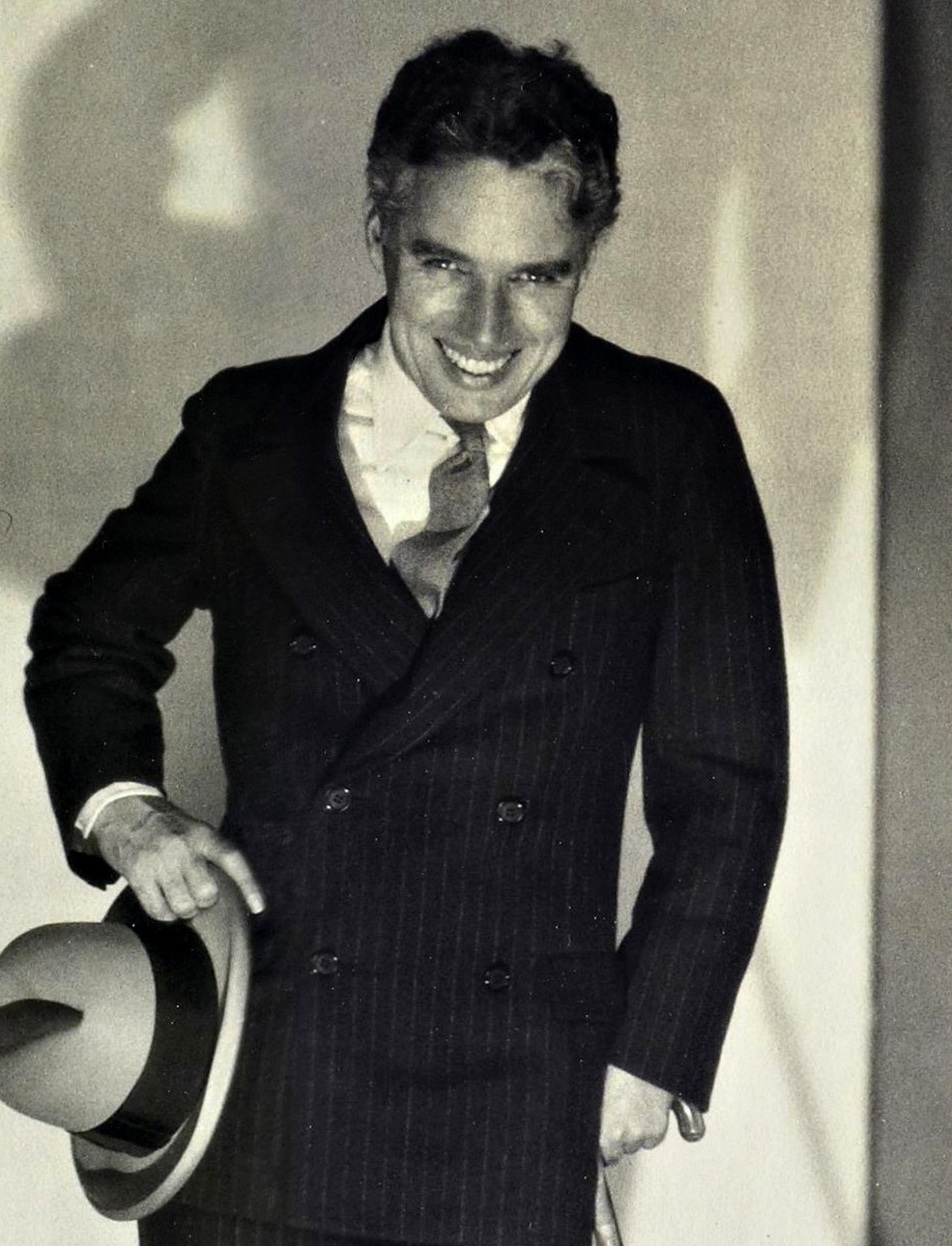
References
Footnotes
- ^ Jump up to:a b Cousins, p. 72; Kemp, pp. 8, 22; Gunning, p. 41; Sarris, p. 139; Hansmeyer, p. 3.
- ^ Jump up to:a b Robinson, p. 10.
- Jump up^ Whitehead, Tom (17 February 2012). “MI5 Files: Was Chaplin Really a Frenchman and Called Thornstein?”. The Telegraph. Archived from the original on 24 April 2012. Retrieved 11 April 2012.
- Jump up^ “Charlie Chaplin Was ‘Born into a Midland Gipsy Family'”. Express and Star. 18 February 2011. Archived from the original on 22 February 2012. Retrieved 17 February 2012.
- Jump up^ Robinson, p. xxiv.
- Jump up^ Robinson, pp. 3–4, 19.
- ^ Jump up to:a b Robinson, p. 3.
- Jump up^ Robinson, pp. 5–7.
- Jump up^ Weissman & (2009), p. 10.
- Jump up^ Robinson, pp. 9–10, 12.
- Jump up^ Robinson, p. 13.
- Jump up^ Robinson, p. 15.
- Jump up^ Robinson, p. xv.
- Jump up^ Robinson, p. 16.
- Jump up^ Robinson, p. 19.
- Jump up^ Chaplin, p. 29.
- Jump up^ Robinson, pp. 24–26.
- Jump up^ Chaplin, p. 10.
- Jump up^ Weissman & (2009), pp. 49–50.
- Jump up^ Chaplin, pp. 15, 33.
- ^ Jump up to:a b Robinson, p. 27.
- Jump up^ Robinson, p. 36.
- Jump up^ Robinson, p. 40.
- Jump up^ Weissman (2009), p. 6; Chaplin, pp. 71–74; Robinson, p. 35.
- Jump up^ Robinson, p. 41.
- Jump up^ Chaplin, p. 88; Robinson, pp. 55–56.
- Jump up^ Robinson, p. 17; Chaplin, p. 18.
- Jump up^ Chaplin, p. 41.
- Jump up^ Marriot, p. 4.
- Jump up^ Marriot, p. 213.
- Jump up^ Chaplin, p. 44.
- Jump up^ Louvish, p. 19.
- Jump up^ Robinson, p. 39.
- Jump up^ Chaplin, p. 76.
- Jump up^ Robinson, pp. 44–46.
- Jump up^ Marriot, pp. 42–44; Robinson, pp. 46–47; Louvish, p. 26.
- Jump up^ Robinson, pp. 45, 49–51, 53, 58.
- Jump up^ Robinson, pp. 59–60.
- Jump up^ Chaplin, p. 89.
- Jump up^ Marriot, p. 217.
- Jump up^ Robinson, p. 63.
- Jump up^ Robinson, pp. 63–64.
- Jump up^ Marriot, p. 71.
- Jump up^ Robinson, pp. 64–68; Chaplin, p. 94.
- Jump up^ Robinson, p. 68; Marriot, pp. 81–84.
- Jump up^ Robinson, p. 71; Kamin, p. 12; Marriot, p. 85.
- Jump up^ Robinson, p. 76.
- Jump up^ Robinson, pp. 76–77.
- Jump up^ Marriot, pp. 103, 109.
- Jump up^ Marriot, pp. 126–128; Robinson, pp. 84–85.
- Jump up^ Robinson, p. 88.
- Jump up^ Robinson, pp. 91–92.
- Jump up^ Robinson, p. 82; Brownlow, p. 98.
- Jump up^ Robinson, p. 95.
- Jump up^ Chaplin, pp. 133–134; Robinson, p. 96.
- Jump up^ Robinson, p. 102.
- Jump up^ Chaplin, pp. 138–139.
- Jump up^ Federal Reserve Bank of Minneapolis Community Development Project. “Consumer Price Index (estimate) 1800–”. Federal Reserve Bank of Minneapolis. Retrieved January 2, 2018.
- Jump up^ Robinson, p. 103; Chaplin, p. 139.
- Jump up^ Robinson, p. 107.
- Jump up^ Chaplin, p. 141.
- Jump up^ Robinson, p. 108.
- Jump up^ Robinson, p. 110.
- Jump up^ Chaplin, p. 145.
- Jump up^ Robinson, p. 114.
- ^ Jump up to:a b c d Robinson, p. 113.
- Jump up^ Robinson, p. 120.
- Jump up^ Robinson, p. 121.
- Jump up^ Robinson, p. 123.
- Jump up^ Maland & (1989), p. 5.
- Jump up^ Kamin, p. xi.
- Jump up^ Chaplin, p. 153.
- Jump up^ Robinson, p. 125; Maland (1989), pp. 8–9.
- Jump up^ Robinson, pp. 127–128.
- Jump up^ Robinson, p. 131.
- Jump up^ Robinson, p. 135.
- Jump up^ Robinson, pp. 138–139.
- Jump up^ Robinson, pp. 141, 219.
- Jump up^ Neibaur, p. 23; Chaplin, p. 165; Robinson, pp. 140, 143.
- Jump up^ Robinson, p. 143.
- Jump up^ Maland & (1989), p. 20.
- Jump up^ Maland & (1989), pp. 6, 14–18.
- Jump up^ Maland & (1989), pp. 21–24.
- Jump up^ Robinson, p. 142; Neibaur, pp. 23–24.
- Jump up^ Robinson, p. 146.
- Jump up^ Louvish, p. 87.
- Jump up^ Robinson, pp. 152–153; Kamin, p. xi; Maland (1989), p. 10.
- Jump up^ Maland & (1989), p. 8.
- Jump up^ Louvish, p. 74; Sklar, p. 72.
- Jump up^ Robinson, p. 149.
- Jump up^ Robinson, pp. 149–152.
- Jump up^ Robinson, p. 156.
- Jump up^ “C. Chaplin, Millionaire-Elect”. Photoplay. Chicago, Illinois, USA: Photoplay Publishing Co. IX(6): 58. May 1916. Archived from the original on 17 January 2014.
- Jump up^ Robinson, p. 160.
- Jump up^ Larcher, p. 29.
- Jump up^ Robinson, p. 159.
- Jump up^ Robinson, p. 164.
- Jump up^ Robinson, pp. 165–166.
- Jump up^ Robinson, pp. 169–173.
- Jump up^ Robinson, p. 175.
- Jump up^ Robinson, pp. 179–180.
- Jump up^ Robinson, p. 191.
- Jump up^ “”The Happiest Days of My Life”: Mutual”. Charlie Chaplin. British Film Institute. Archivedfrom the original on 22 November 2012. Retrieved 28 April 2012.
- Jump up^ Brownlow, p. 45; Robinson, p. 191; Louvish, p. 104; Vance (2003), p. 203.
- Jump up^ Chaplin, p. 188.
- Jump up^ Brownlow, Kevin; Gill, David (1983). Unknown Chaplin. Thames Silent.
- Jump up^ Robinson, p. 185.
- Jump up^ Robinson, p. 186.
- Jump up^ Robinson, p. 187.
- ^ Jump up to:a b Robinson, p. 210.
- Jump up^ Robinson, pp. 215–216.
- ^ Jump up to:a b Robinson, p. 213.
- Jump up^ Robinson, p. 221.
- Jump up^ Schickel, p. 8.
- Jump up^ Chaplin, p. 203; Robinson, pp. 225–226.
- Jump up^ Robinson, p. 228.
- ^ Jump up to:a b “Independence Won: First National”. Charlie Chaplin. British Film Institute. Archived from the original on 24 March 2012. Retrieved 5 May 2012.
- Jump up^ Chaplin, p. 208.
- Jump up^ Robinson, p. 229.
- Jump up^ Robinson, pp. 237, 241.
- Jump up^ Robinson, p. 244.
- Jump up^ Chaplin, p. 218.
- Jump up^ Robinson, pp. 241–245.
- Jump up^ Chaplin, pp. 219–220; Balio, p. 12; Robinson, p. 267.
- ^ Jump up to:a b Robinson, p. 269.
- Jump up^ Chaplin, p. 223.
- Jump up^ Robinson, p. 246.
- Jump up^ Robinson, p. 248.
- Jump up^ Robinson, pp. 246–249; Louvish, p. 141.
- Jump up^ Robinson, p. 251.
- Jump up^ Chaplin, p. 235; Robinson, p. 259.
- Jump up^ Robinson, p. 252; Louvish, p. 148.
- Jump up^ Louvish, p. 146.
- Jump up^ Robinson, p. 253.
- Jump up^ Chaplin, pp. 255–253.
- Jump up^ Robinson, p. 261.
- Jump up^ Chaplin, pp. 233–234.
- Jump up^ Robinson, p. 265.
- Jump up^ Robinson, p. 282.
- Jump up^ Robinson, pp. 295–300.
- Jump up^ Robinson, p. 310.
- Jump up^ Robinson, p. 302.
- Jump up^ Robinson, pp. 311–312.
- Jump up^ Robinson, pp. 319–321.
- Jump up^ Robinson, pp. 318–321.
- Jump up^ Louvish, p. 193.
- Jump up^ Robinson, pp. 302, 322.
- Jump up^ Louvish, p. 195.
- Jump up^ Kemp, p. 64; Chaplin, p. 299.
- Jump up^ Robinson, p. 337.
- Jump up^ Robinson, p. 358.
- Jump up^ Robinson, pp. 340–345.
- Jump up^ Robinson, p. 354.
- Jump up^ Robinson, p. 357.
- Jump up^ Robinson, p. 358; Kemp, p. 63.
- Jump up^ Kemp, pp. 63–64; Robinson, pp. 339, 353; Louvish, p. 200; Schickel, p. 19.
- Jump up^ Kemp, p. 64.
- Jump up^ Vance & (2003), p. 154.
- Jump up^ Robinson, p. 346.
- Jump up^ Chaplin and Vance, p. 53; Vance (2003), p. 170.
- Jump up^ Robinson, pp. 355, 368.
- Jump up^ Robinson, pp. 350, 368.
- Jump up^ Robinson, p. 371.
- Jump up^ Louvish, p. 220; Robinson, pp. 372–374.
- Jump up^ Maland & (1989), p. 96.
- Jump up^ Robinson, pp. 372–374; Louvish, pp. 220–221.
- Jump up^ Robinson, p. 378.
- Jump up^ Maland (1989), pp. 99–105; Robinson, p. 383.
- Jump up^ Robinson, p. 360.
- Jump up^ Robinson, p. 361.
- Jump up^ Robinson, pp. 371, 381.
- Jump up^ Louvish, p. 215.
- ^ Jump up to:a b Robinson, pp. 382.
- ^ Jump up to:a b Pfeiffer, Lee. “The Circus – Film by Chaplin [1928]”. Encyclopædia Britannica. Archived from the original on 5 September 2015. Retrieved 9 August 2015.
- Jump up^ Brownlow, p. 73; Louvish, p. 224.
- Jump up^ Chaplin, p. 322.
- Jump up^ Robinson, p. 389; Chaplin, p. 321.
- Jump up^ Robinson, p. 465; Chaplin, p. 322; Maland (2007), p. 29.
- ^ Jump up to:a b Robinson, p. 389; Maland (2007), p. 29.
- Jump up^ Robinson, p. 398; Maland (2007), pp. 33–34, 41.
- Jump up^ Robinson, p. 409, records the date filming ended as 22 September 1930.
- ^ Jump up to:a b Chaplin, p. 324.
- Jump up^ “Chaplin as a composer”. CharlieChaplin.com. Archived from the original on 5 July 2011.
- Jump up^ Robinson, p. 410.
- Jump up^ Chaplin, p. 325.
- Jump up^ Robinson, p. 413.
- Jump up^ Maland (2007), pp. 108–110; Chaplin, p. 328; Robinson, p. 415.
- ^ Jump up to:a b “United Artists and the Great Features”. Charlie Chaplin. British Film Institute. Archivedfrom the original on 6 April 2012. Retrieved 21 June2012.
- Jump up^ Maland & (2007), pp. 10–11.
- Jump up^ Vance, p. 208.
- Jump up^ Chaplin, p. 360.
- Jump up^ Louvish, p. 243; Robinson, p. 420.
- Jump up^ Robinson, pp. 664–666.
- Jump up^ Robinson, pp. 429–441.
- Jump up^ Silverberg 2006, pp. 1-2.
- Jump up^ Larcher, p. 64.
- Jump up^ Chaplin, pp. 372, 375.
- Jump up^ Robinson, p. 453; Maland (1989), p. 147.
- Jump up^ Robinson, p. 451.
- Jump up^ Louvish, p. 256.
- Jump up^ Larcher, p. 63; Robinson, pp. 457–458.
- Jump up^ Louvish, p. 257.
- Jump up^ Robinson, p. 465.
- Jump up^ Robinson, p. 466.
- Jump up^ Robinson, p. 468.
- Jump up^ Robinson, pp. 469–472, 474.
- Jump up^ Maland & (1989), p. 150.
- Jump up^ Maland & (1989), pp. 144–147.
- Jump up^ Maland (1989), p. 157; Robinson, p. 473.
- Jump up^ Schneider, p. 125.
- Jump up^ Robinson, p. 479.
- Jump up^ Robinson, p. 469.
- Jump up^ Robinson, p. 483.
- Jump up^ Robinson, pp. 509–510.
- Jump up^ Robinson, p. 485; Maland (1989), p. 159.
- Jump up^ Chaplin, p. 386.
- Jump up^ Schickel, p. 28; Maland (1989), pp. 165, 170; Louvish, p. 271; Robinson, p. 490; Larcher, p. 67; Kemp, p. 158.
- ^ Jump up to:a b Chaplin, p. 388.
- Jump up^ Robinson, p. 496.
- Jump up^ Maland & (1989), p. 165.
- Jump up^ Maland & (1989), p. 164.
- Jump up^ Chaplin, p. 387.
- Jump up^ Robinson, pp. 154–155.
- Jump up^ Tunzelmann, Alex von (2012-11-22). “Chaplin: a little tramp through Charlie’s love affairs”. the Guardian. Retrieved 2018-02-19.
- Jump up^ Maland & (1989), pp. 172–173.
- Jump up^ Robinson, pp. 505, 507.
- Jump up^ Maland & (1989), pp. 169, 178–179.
- Jump up^ Maland (1989), p. 176; Schickel, pp. 30–31.
- Jump up^ Maland, p. 181; Louvish, p. 282; Robinson, p. 504.
- Jump up^ Maland & (1989), pp. 178–179.
- ^ Jump up to:a b Gehring, p. 133.
- Jump up^ Pfeiffer, Lee. “The Great Dictator”. Encyclopædia Britannica. Archived from the original on 6 July 2015. Retrieved 16 March 2013.
- Jump up^ Maland & (1989), pp. 197–198.
- Jump up^ Maland & (1989), p. 200.
- ^ Jump up to:a b Maland & (1989), pp. 198–201.
- Jump up^ Nowell-Smith, p. 85.
- ^ Jump up to:a b Maland & (1989), pp. 204–205.
- Jump up^ Robinson, pp. 523–524.
- Jump up^ Friedrich, pp. 190, 393.
- Jump up^ Maland & (1989), p. 215.
- Jump up^ Maland & (1989), pp. 214–215.
- Jump up^ Louvish, p. xiii.
- Jump up^ Maland & (1989), pp. 205–206.
- Jump up^ Frost, pp. 74–88; Maland (1989), pp. 207–213; Sbardellati and Shaw, p. 508; Friedrich, p. 393.
- Jump up^ Louvish, p. 135.
- Jump up^ Chaplin, pp. 423–444; Robinson, p. 670.
- Jump up^ Sheaffer, pp. 623, 658.
- Jump up^ Chaplin, pp. 423, 477.
- Jump up^ Robinson, p. 519.
- Jump up^ Robinson, pp. 671–675.
- Jump up^ Chaplin, p. 426.
- Jump up^ Robinson, p. 520.
- Jump up^ Chaplin, p. 412.
- Jump up^ Robinson, pp. 519–520.
- Jump up^ Louvish, p. 304; Sbardellati and Shaw, p. 501.
- Jump up^ Louvish, pp. 296–297; Robinson, pp. 538–543; Larcher, p. 77.
- Jump up^ Louvish, pp. 296–297; Sbardellati and Shaw, p. 503.
- Jump up^ Maland & (1989), pp. 235–245, 250.
- Jump up^ Maland & (1989), p. 250.
- Jump up^ Louvish, p. 297.
- Jump up^ Chaplin, p. 444.
- Jump up^ Maland & (1989), p. 251.
- Jump up^ Robinson, pp. 538–539; Friedrich, p. 287.
- Jump up^ Maland & (1989), p. 253.
- Jump up^ Maland & (1989), pp. 221–226, 253–254.
- Jump up^ Larcher, p. 75; Sbardellati and Shaw, p. 506; Louvish, p. xiii.
- Jump up^ Sbardellati, p. 152.
- ^ Jump up to:a b Maland & (1989), pp. 265–266.
- Jump up^ Norton-Taylor, Richard (17 February 2012). “MI5 Spied on Charlie Chaplin after the FBI Asked for Help to Banish Him from US”. The Guardian. London. Archived from the original on 18 November 2010. Retrieved 17 February 2012.
- Jump up^ Louvish, pp. xiv, 310; Chaplin, p. 458; Maland (1989), p. 238.
- Jump up^ Robinson, p. 544.
- Jump up^ Maland & (1989), pp. 255–256.
- Jump up^ Friedrich, p. 286; Maland (1989), p. 261.
- Jump up^ Larcher, p. 80; Sbardellati and Shaw, p. 510; Louvish, p. xiii; Robinson, p. 545.
- Jump up^ Robinson, p. 545.
- Jump up^ Maland & (1989), pp. 256–257.
- Jump up^ Maland (1989), pp. 288–290; Robinson, pp. 551–552; Louvish, p. 312.
- Jump up^ Maland & (1989), p. 293.
- Jump up^ Louvish, p. 317.
- Jump up^ Robinson, pp. 549–570.
- Jump up^ Robinson, p. 562.
- Jump up^ Robinson, pp. 567–568.
- Jump up^ Louvish, p. 326.
- Jump up^ Robinson, p. 570.
- ^ Jump up to:a b c Maland & (1989), p. 280.
- Jump up^ Maland (1989), pp. 280–287; Sbardellati and Shaw, pp. 520–521.
- Jump up^ Chaplin, p. 455.
- Jump up^ Robinson, p. 573.
- Jump up^ Louvish, p. 330.
- Jump up^ Maland & (1989), pp. 295–298, 307–311.
- Jump up^ Maland & (1989), p. 189.
- Jump up^ Larcher, p. 89.
- Jump up^ Robinson, p. 580.
- Jump up^ Dale Bechtel (2002). “Film Legend Found Peace on Lake Geneva”. http://www.swissinfo.ch/eng. Vevey. Archived from the original on 9 December 2014. Retrieved 5 December 2014.
- Jump up^ Robinson, pp. 580–581.
- Jump up^ Robinson, p. 581.
- Jump up^ Robinson, pp. 584, 674.
- Jump up^ Lynn, pp. 466–467; Robinson, p. 584; Balio, pp. 17–21.
- Jump up^ Maland (1989), p. 318; Robinson, p. 584.
- ^ Jump up to:a b Robinson, p. 585.
- Jump up^ Louvish, pp. xiv–xv.
- Jump up^ Louvish, p. 341; Maland (1989), pp. 320–321; Robinson, pp. 588–589; Larcher, pp. 89–90.
- Jump up^ Robinson, pp. 587–589.
- Jump up^ Epstein, p. 137; Robinson, p. 587.
- Jump up^ Lynn, p. 506; Louvish, p. 342; Maland (1989), p. 322.
- Jump up^ Robinson, p. 591.
- Jump up^ Louvish, p. 347.
- Jump up^ Vance & (2003), p. 329.
- ^ Jump up to:a b Maland & (1989), p. 326.
- ^ Jump up to:a b Robinson, pp. 594–595.
- Jump up^ Lynn, pp. 507–508.
- ^ Jump up to:a b Robinson, pp. 598–599.
- Jump up^ Lynn, p. 509; Maland (1989), p. 330.
- Jump up^ Robinson, pp. 602–605.
- Jump up^ Robinson, pp. 605–607; Lynn, pp. 510–512.
- ^ Jump up to:a b Robinson, pp. 608–609.
- Jump up^ Robinson, p. 612.
- Jump up^ Robinson, p. 607.
- Jump up^ Vance & (2003), p. 330.
- ^ Jump up to:a b Epstein, pp. 192–196.
- Jump up^ Lynn, p. 518; Maland (1989), p. 335.
- ^ Jump up to:a b Robinson, p. 619.
- Jump up^ Epstein, p. 203.
- Jump up^ Robinson, pp. 620–621.
- ^ Jump up to:a b Robinson, p. 621.
- Jump up^ Robinson, p. 625.
- Jump up^ “Charlie Chaplin Prepares for Return to United States after Two Decades”. A&E Television Networks. Archived from the original on 18 November 2010. Retrieved 7 June 2010.
- Jump up^ Maland & (1989), p. 347.
- ^ Jump up to:a b Robinson, pp. 623–625.
- Jump up^ Robinson, pp. 627–628.
- Jump up^ Robinson, p. 626.
- ^ Jump up to:a b Thomas, David (26 December 2002). “When Chaplin Played Father”. The Telegraph. Archived from the original on 15 July 2012. Retrieved 26 June 2012.
- ^ Jump up to:a b Robinson, pp. 626–628.
- Jump up^ Lynn, pp. 534–536.
- Jump up^ Reynolds, Paul (21 July 2002). “Chaplin Knighthood Blocked”. BBC. Archived from the original on 18 November 2010. Retrieved 15 February 2010.
- Jump up^ “To be Ordinary Knights Commanders …” The London Gazette (1st supplement). No. 46444. 31 December 1974. p. 8.
- Jump up^ “Little Tramp Becomes Sir Charles”. New York Daily News. 5 March 1975. Archived from the original on 3 March 2016.
- ^ Jump up to:a b Robinson, p. 629.
- Jump up^ Vance & (2003), p. 359.
- Jump up^ Chaplin, p. 287.
- ^ Jump up to:a b Robinson, p. 631.
- ^ Jump up to:a b c Robinson, p. 632.
- Jump up^ “Yasser Arafat: 10 Other People Who Have Been Exhumed”. BBC. 27 November 2012. Archivedfrom the original on 27 November 2012. Retrieved 27 November 2012.
- Jump up^ Robinson, pp. 629–631.
- Jump up^ Robinson, p. 18.
- Jump up^ Robinson, pp. 71–72; Chaplin, pp. 47–48; Weissman (2009), pp. 82–83, 88.
- Jump up^ Louvish, p. 38.
- ^ Jump up to:a b c Robinson, pp. 86–87.
- Jump up^ A round-table Chaplin Interview Archived 28 August 2016 at the Wayback Machine. in 1952, first broadcast on BBC Radio on 15 October 1952. (In Norwegian)
- Jump up^ Lynn, pp. 99–100; Brownlow, p. 22; Louvish, p. 122.
- Jump up^ Louvish, pp. 48–49.
- ^ Jump up to:a b c Robinson, p. 606.
- Jump up^ Brownlow, p. 7.
- ^ Jump up to:a b Louvish, p. 103; Robinson, p. 168.
- Jump up^ Robinson, pp. 173, 197, 310, 489.
- Jump up^ Robinson, p. 169.
- Jump up^ Louvish, p. 168; Robinson, pp. 166–170, pp. 489–490; Brownlow, p. 187.
- Jump up^ Louvish, p. 182.
- Jump up^ Robinson, p. 460.
- Jump up^ Louvish, p. 228.
- Jump up^ Robinson, pp. 234–235; Cousins, p. 71.
- Jump up^ Robinson, pp. 172, 177, 235, 311, 381, 399; Brownlow, pp. 59, 75, 82, 92, 147.
- Jump up^ Brownlow, p. 82.
- Jump up^ Robinson, pp. 235, 311, 223; Brownlow, p. 82.
- Jump up^ Robinson, p. 746; Maland (1989), p. 359.
- Jump up^ Robinson, p. 201; Brownlow, p. 192.
- Jump up^ Louvish, p. 225.
- Jump up^ Brownlow, p. 157; Robinson, pp. 121, 469.
- Jump up^ Robinson, p. 600.
- Jump up^ Robinson, pp. 371, 362, 469, 613; Brownlow, pp. 56, 136; Schickel, p. 8.
- Jump up^ Bloom, p. 101; Brownlow, pp. 59, 98, 138, 154; Robinson, p. 614.
- Jump up^ Robinson, pp. 140, 235, 236.
- Jump up^ Maland & (1989), p. 353.
- Jump up^ “Chaplin’s Writing and Directing Collaborators”. British Film Institute. Archived from the original on 14 February 2012. Retrieved 27 June 2012.
- Jump up^ Robinson, p. 212.
- Jump up^ Brownlow, p. 30.
- Jump up^ Kemp, p. 63.
- ^ Jump up to:a b Mast, pp. 83–92.
- Jump up^ Kamin, pp. 6–7.
- Jump up^ Mast, pp. 83–92; Kamin, pp. 33–34.
- Jump up^ Louvish, p. 60.
- Jump up^ Kemp, p. 63; Robinson, pp. 211, 352; Hansmeyer, p. 4.
- Jump up^ Robinson, p. 203.
- ^ Jump up to:a b Weissman & (2009), p. 47.
- Jump up^ Dale, p. 17.
- Jump up^ Robinson, pp. 455, 485; Louvish, p. 138 (for quote).
- Jump up^ Hansmeyer, p. 4.
- ^ Jump up to:a b Robinson, pp. 334–335.
- Jump up^ Dale, pp. 9, 19, 20; Louvish, p. 203.
- Jump up^ Larcher, p. 75.
- Jump up^ Louvish, p. 204.
- Jump up^ Kuriyama, p. 31.
- Jump up^ Louvish, pp. 137, 145.
- Jump up^ Robinson, p. 599.
- Jump up^ Robinson, p. 456.
- Jump up^ Maland & (1989), p. 159.
- Jump up^ Larcher, pp. 62–89.
- ^ Jump up to:a b c Weissman & (1999), pp. 439–445.
- Jump up^ Bloom, p. 107.
- Jump up^ Robinson, pp. 588–589.
- Jump up^ Mast, pp. 123–128.
- Jump up^ Louvish, p. 298; Robinson, p. 592.
- Jump up^ Epstein, pp. 84–85; Mast, pp. 83–92; Louvish, p. 185.
- Jump up^ Robinson, p. 565.
- Jump up^ Chaplin, p. 250.
- Jump up^ Brownlow, p. 91; Louvish, p. 298; Kamin, p. 35.
- Jump up^ McCaffrey, pp. 82–95.
- Jump up^ Kamin, p. 29.
- Jump up^ Robinson, p. 411; Louvish, pp. 17–18.
- Jump up^ Robinson, p. 411.
- Jump up^ Vance & (2000), p. xiii.
- Jump up^ Slowik, p. 133.
- ^ Jump up to:a b c Raksin and Berg, pp. 47–50.
- ^ Jump up to:a b c d Vance, Jeffrey (4 August 2003). “Chaplin the Composer: An Excerpt from Chaplin: Genius of the Cinema”. Variety Special Advertising Supplement, pp. 20–21.
- Jump up^ Kamin, p. 198.
- Jump up^ Hennessy, Mike (22 April 1967). “Chaplin’s ‘Song’ Catches Fire in Europe”. Billboard, p. 60.
- Jump up^ Weston, Jay (10 April 2012). “Charlie Chaplin’s Limelight at the Academy After 60 Years”. The Huffington Post. Archived from the original on 13 May 2013. Retrieved 2 February 2013.
- ^ Jump up to:a b Sarris, p. 139.
- Jump up^ “Charlie Chaplin”. Charlie Chaplin. British Film Institute. Archived from the original on 22 June 2012. Retrieved 7 October 2012.
- Jump up^ Quittner, Joshua (8 June 1998). “TIME 100: Charlie Chaplin”. Time Magazine. Archived from the original on 23 May 2011. Retrieved 11 November2013.
- Jump up^ Hansmeyer, p. 3.
- Jump up^ Louvish, p. xvii.
- Jump up^ “Chaplin – First, Last, And Always”. Indiewire. Archived from the original on 25 May 2013. Retrieved 7 October 2012.
- Jump up^ Schickel, p. 41.
- Jump up^ “Record Price for Chaplin Hat Set”. BBC. Archived from the original on 23 April 2012. Retrieved 7 October 2012.
- Jump up^ Schickel, pp. 3–4; Cousins, p. 36; Robinson, pp. 209–211; Kamin, p. xiv.
- Jump up^ Cousins, p. 70.
- Jump up^ Schickel, pp. 7, 13.
- ^ Jump up to:a b Presented by Paul Merton, directed by Tom Cholmondeley (1 June 2006). “Charlie Chaplin”. Silent Clowns. British Broadcasting Corporation. BBC Four.
- Jump up^ Thompson, pp. 398–399; Robinson, p. 321; Louvish, p. 185.
- Jump up^ Robinson, p. 321.
- Jump up^ Brownlow, p. 77.
- ^ Jump up to:a b c Mark Cousins (10 September 2011). “Episode 2”. The Story of Film: An Odyssey. Event occurs at 27:51–28:35. Channel 4. More4.
- Jump up^ Cardullo, pp. 16, 212.
- Jump up^ “Attenborough Introduction”. Charlie Chaplin. British Film Institute. Archived from the original on 5 November 2013. Retrieved 11 February 2013.
- Jump up^ Lasica, Tom (March 1993). “Tarkovsky’s Choice”. Sight & Sound. British Film Institute. 3 (3). Archived from the original on 14 February 2014. Retrieved 1 February 2014.
- Jump up^ Canemaker, pp. 38, 78.
- Jump up^ Jackson, pp. 439–444.
- Jump up^ Simmons, pp. 8–11.
- Jump up^ Mast, p. 100.
- Jump up^ “The Greatest Films Poll: Critics Top 250 Films”. Sight & Sound. British Film Institute. Archived from the original on 7 February 2016. Retrieved 31 January 2013.
- Jump up^ “Directors’ Top 100 Films”. British Film Institute. Archived from the original on 9 February 2016. Retrieved 8 February 2013.
- Jump up^ “The Greatest Films Poll: All Films”. Sight & Sound. British Film Institute. Archived from the original on 5 February 2016. Retrieved 31 January2013.
- Jump up^ “AFI’s 100 Years … 100 Movies – 10th Anniversary Edition”. American Film Institute. Archived from the original on 18 August 2015. Retrieved 8 February2013.
- Jump up^ Louvish, p. xvi; Maland, pp. xi, 359, 370.
- Jump up^ “DVDs, United States”. Charlie Chaplin. Archived from the original on 24 December 2013. Retrieved 23 December 2013. “DVDs, United Kingdom”. Charlie Chaplin. Archived from the original on 13 March 2014. Retrieved 23 December 2013.
- Jump up^ Poullain-Majchrzak, Ania (18 April 2016). “Chaplin’s World museum opens its doors in Switzerland”. Reuters.
- Jump up^ “Charlie Chaplins gather in their hundreds to set world record – video”. The Guardian. 17 April 2017.
- Jump up^ “London Film Museum: About Us”. London Film Museum. Archived from the original on 28 August 2012. Retrieved 22 July 2012.
- ^ Jump up to:a b Robinson, p. 677.
- Jump up^ “Welcome to IMAX United Kingdom”. IMAX. Archived from the original on 4 June 2015. Retrieved 22 December 2013.
- Jump up^ “Charlie Chaplin”. Blue Plaque Places. Retrieved 20 July 2017.
- Jump up^ “Vevey: Les Tours “Chaplin” Ont Été Inaugurées”. RTS.ch. 8 October 2011. Archivedfrom the original on 28 October 2012. Retrieved 22 July 2012. (In French)
- Jump up^ “Charlie Chaplin”. VisitWaterville.ie. Archived from the original on 22 February 2015. Retrieved 22 July 2012.
- Jump up^ “The Story”. Charlie Chaplin Comedy Film Festival. Archived from the original on 24 August 2012. Retrieved 22 July 2012.
- Jump up^ Schmadel, p. 305.
- Jump up^ Maland & (1989), pp. 362–370.
- Jump up^ Kamin, Dan (17 April 1989). “Charlie Chaplin’s 100th Birthday Gala a Royal Bash in London”. The Pittsburgh Post-Gazette. US. Retrieved 22 July2012.
- ^ Jump up to:a b “Chaplin’s Back in The Big Time”. New Sunday Times. 16 April 1989. Retrieved 22 July2012.
- Jump up^ “The Museum of Modern Art Honors Charles Chaplin’s Contributions to Cinema” (PDF). The Museum of Modern Art Press Release. March 1989. Retrieved 22 July 2012.
- Jump up^ “Google Doodles a Video Honouring Charlie Chaplin”. CNN-News18. 15 April 2011. Archivedfrom the original on 9 May 2016. Retrieved 15 April2011.
- Jump up^ “Charlie Chaplin Stamps”. Blogger. Archivedfrom the original on 2 November 2013. Retrieved 8 February 2013.
- Jump up^ “Association Chaplin”. Association Chaplin. Archived from the original on 11 September 2013. Retrieved 13 July 2013.; “Interview with Kate Guyonvarch”. Lisa K. Stein. Archived from the original on 27 May 2013. Retrieved 24 July 2013.
- Jump up^ “Chaplin Archive”. British Film Institute. Archived from the original on 10 July 2012. Retrieved 11 December 2014.;“Charlie Chaplin Archive”. Cineteca Bologna. Archived from the original on 25 December 2015. Retrieved 11 February 2013.
- Jump up^ “Chaplin at the Musée de l’Elysée”. Musée de l’Elysée. Archived from the original on 5 November 2013. Retrieved 12 July 2013.
- Jump up^ “The BFI Charles Chaplin Conference July 2005”. Charlie Chaplin. British Film Institute. Archived from the original on 5 November 2013. Retrieved 11 February 2013.
- Jump up^ “Robert Downey, Jr. profile, Finding Your Roots”. PBS. Archived from the original on 23 November 2015. Retrieved 9 February 2013.
- Jump up^ “The Cat’s Meow – Cast”. The New York Times. Archived from the original on 24 November 2015. Retrieved 9 November 2013.
- Jump up^ “The Scarlett O’Hara War – Cast”. Archived from the original on 24 November 2015. Retrieved 9 November 2013.
- Jump up^ “Young Charlie Chaplin Wonderworks”. Emmys. Archived from the original on 9 November 2013. Retrieved 9 November 2013.
- Jump up^ “Limelight – The Story of Charlie Chaplin”. La Jolla Playhouse. Archived from the original on 21 July 2013. Retrieved 25 June 2012.
- Jump up^ “Chaplin – A Musical”. Barrymore Theatre. Archived from the original on 15 June 2012. Retrieved 25 June 2012.
- Jump up^ “Ohjelmisto: Chaplin”. Svenska Teatern. Archived from the original on 13 April 2013. Retrieved 8 February 2013.
- Jump up^ “Kulkuri”. Tampereen Työväen Teatteri. Archived from the original on 5 October 2013. Retrieved 2 October 2013.
- Jump up^ Ness, Patrick (27 June 2009). “Looking for the Little Tramp”. The Guardian. Archived from the original on 5 October 2013. Retrieved 25 June 2012.
- Jump up^ “Jerusalem by Alan Moore review — Midlands metaphysics”. Financial Times. 17 January 2017. Archived from the original on 13 November 2016.
- Jump up^ “Comic Genius Chaplin is Knighted”. BBC. 4 March 1975. Archived from the original on 18 November 2010. Retrieved 15 February 2010.
- Jump up^ Robinson, p. 610.
- Jump up^ “Tribute to Charlie Chaplin”. Festival de Cannes. Archived from the original on 28 October 2012. Retrieved 25 June 2012.
- Jump up^ Robinson, pp. 625–626.
- Jump up^ E. Segal, Martin (30 March 2012). “40 Years Ago–The Birth of the Chaplin Award”. Lincoln Center Film Society. Archived from the original on 2 May 2012. Retrieved 25 June 2012.
- Jump up^ Williams, p. 311.
- Jump up^ “The 13th Academy Awards: Nominees and Winners”. Academy of Motion Picture Arts and Sciences. Archived from the original on 3 March 2012. Retrieved 25 June 2012.
- Jump up^ Hastings, Chris (18 April 2009). “Dawn French and Jennifer Saunders to be honoured by Bafta”. Sunday Telegraph. London. Archived from the original on 10 October 2010. Retrieved 10 April2017.
- Jump up^ “National Film Registry”. Library of Congress. Archived from the original on 28 March 2013. Retrieved 5 November 2013.
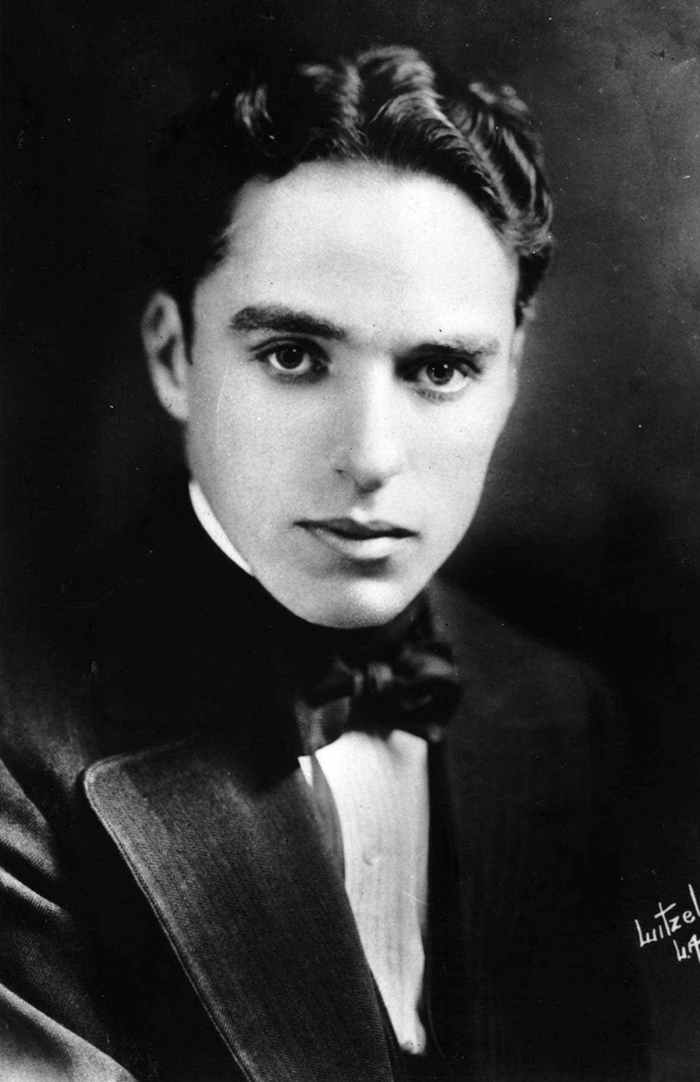
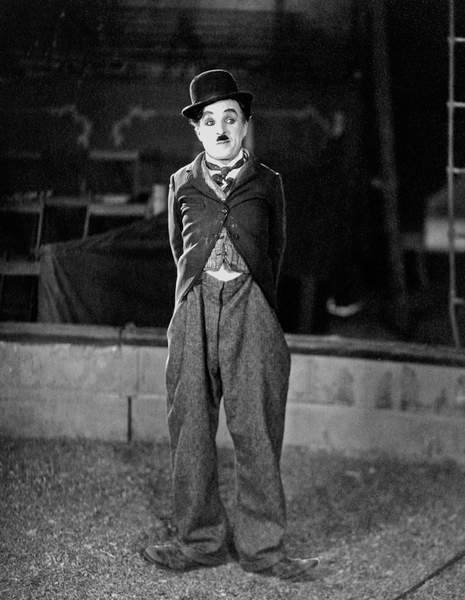
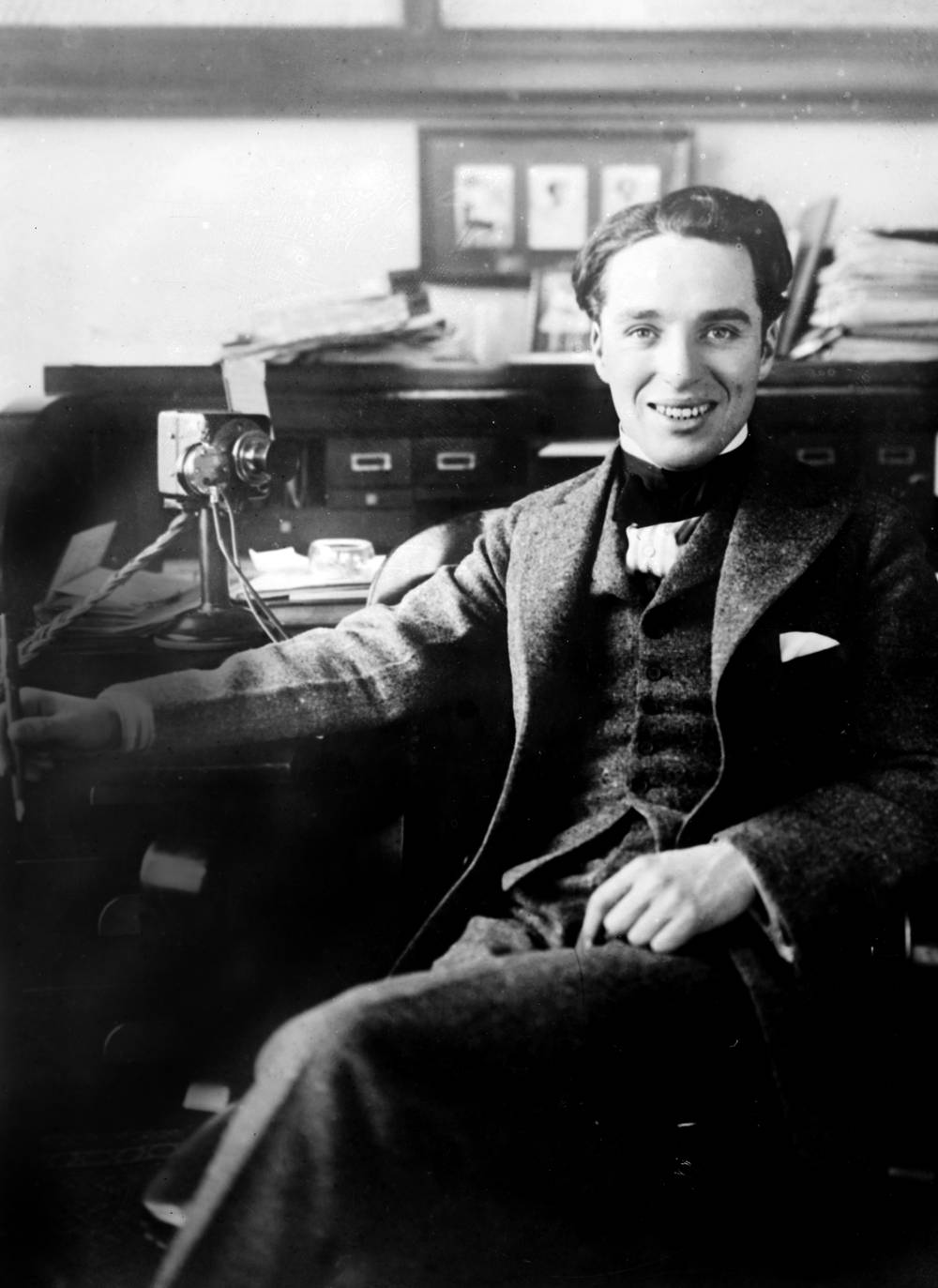
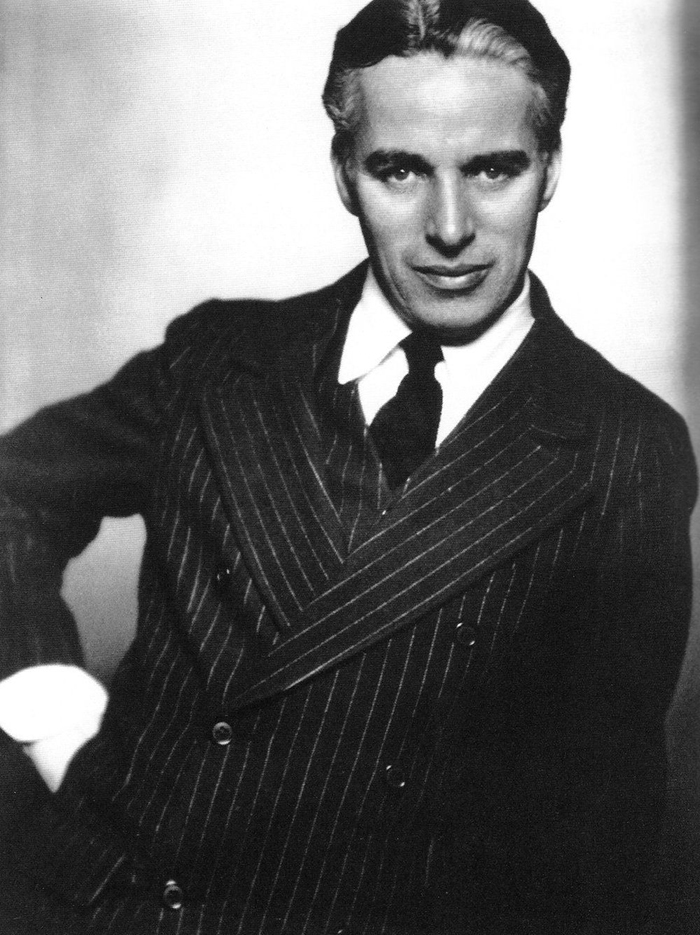
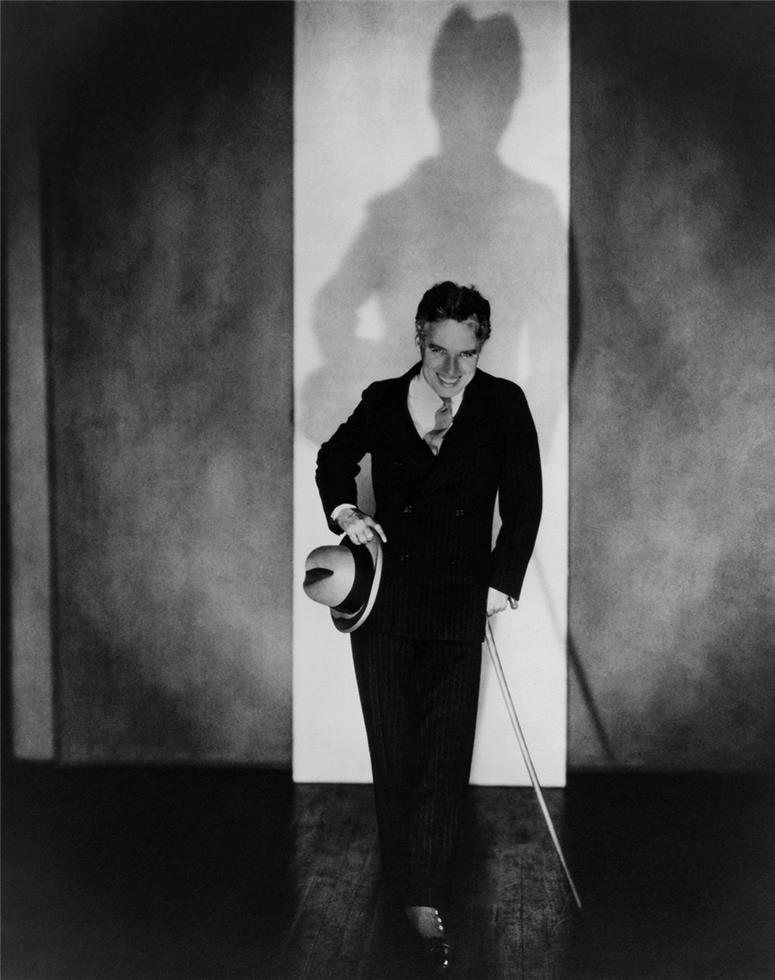
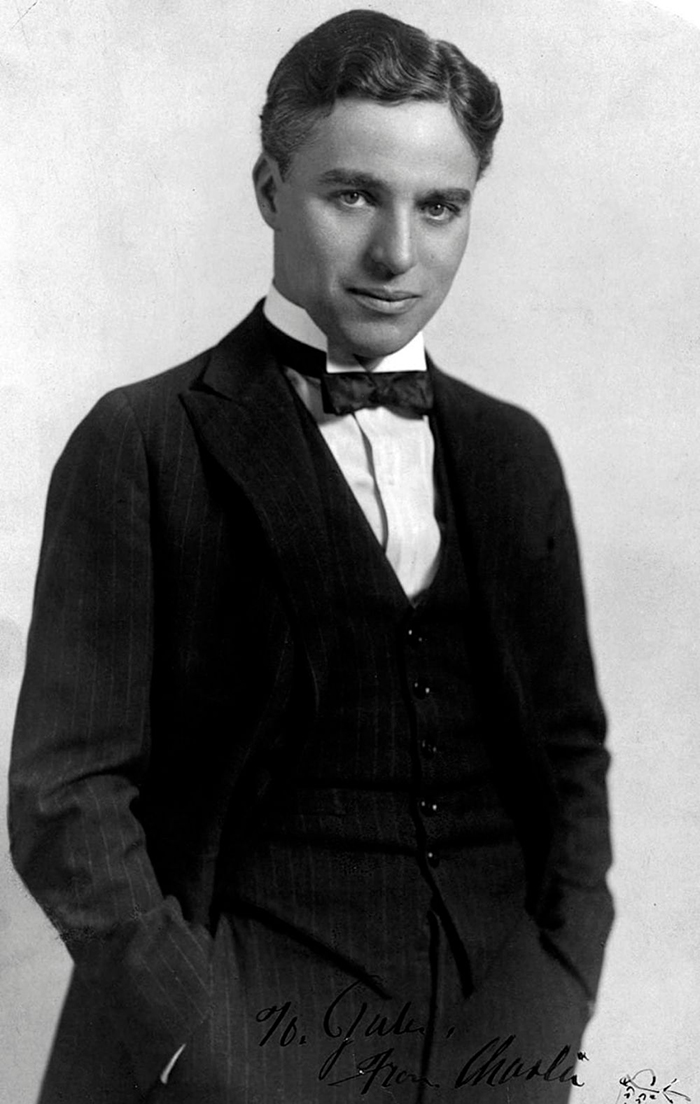
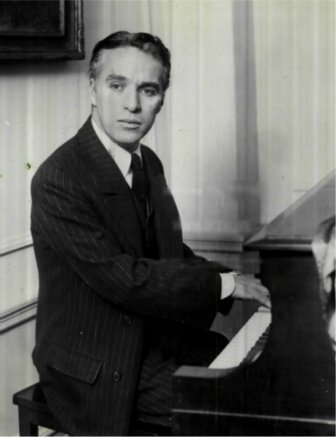
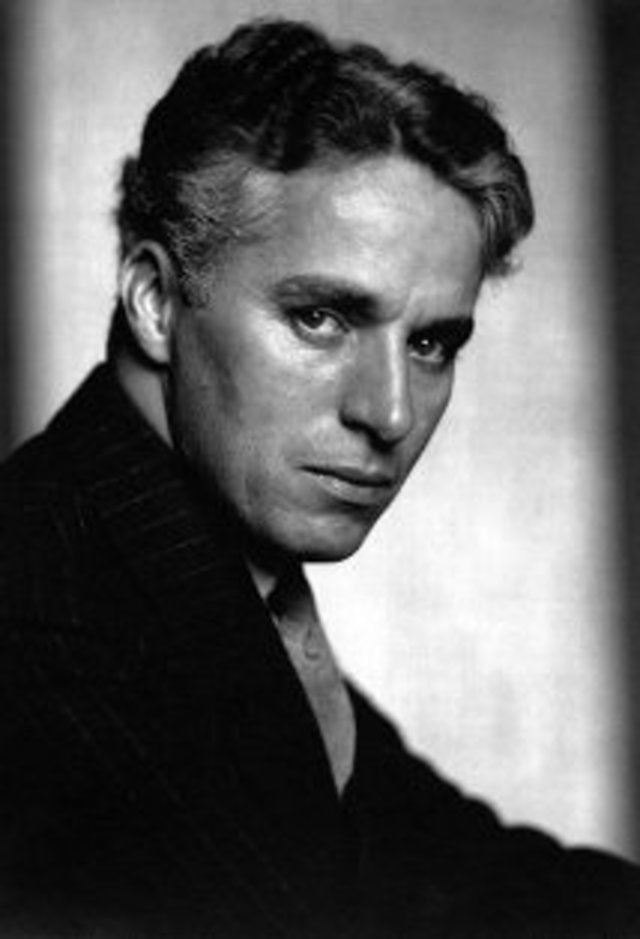
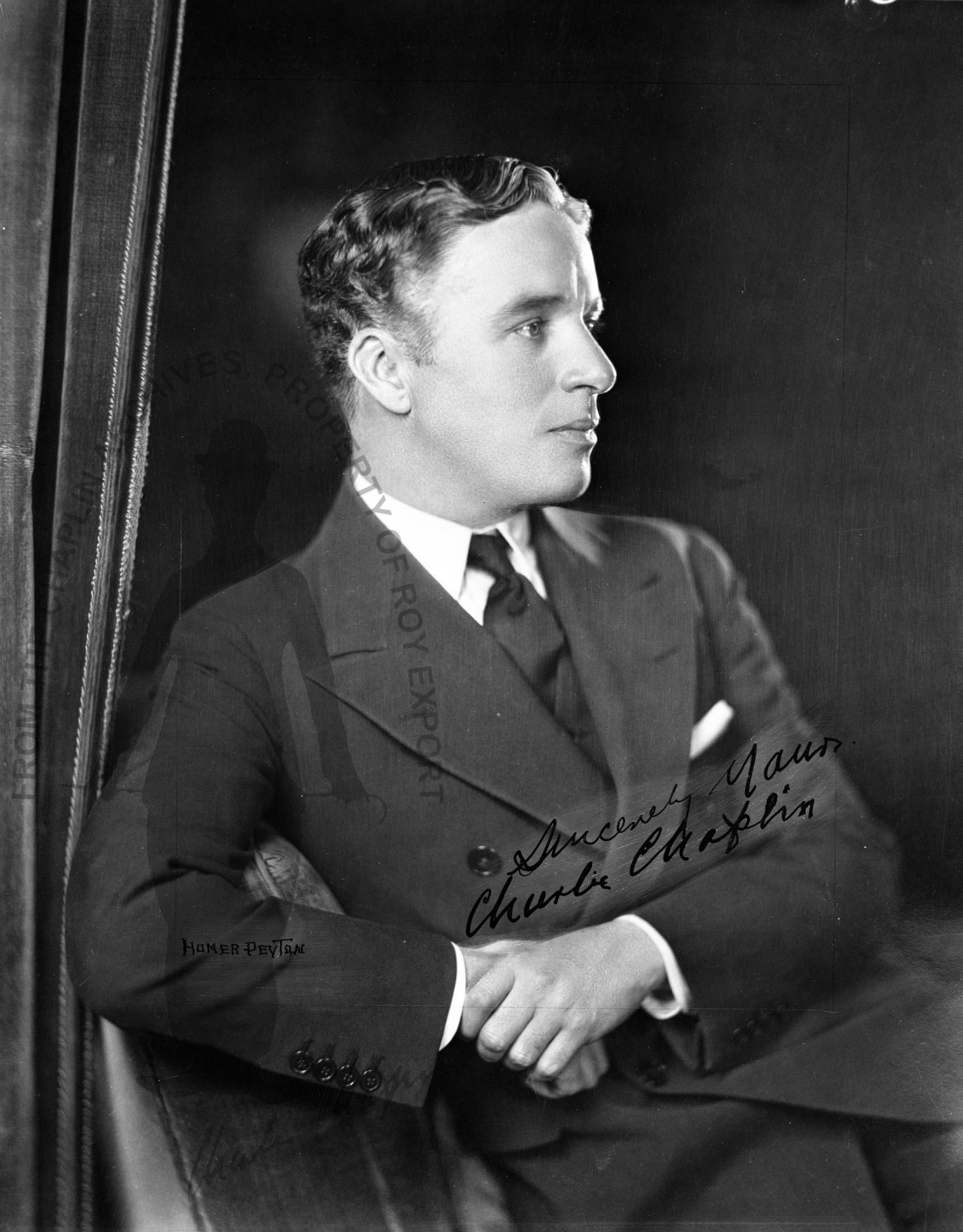
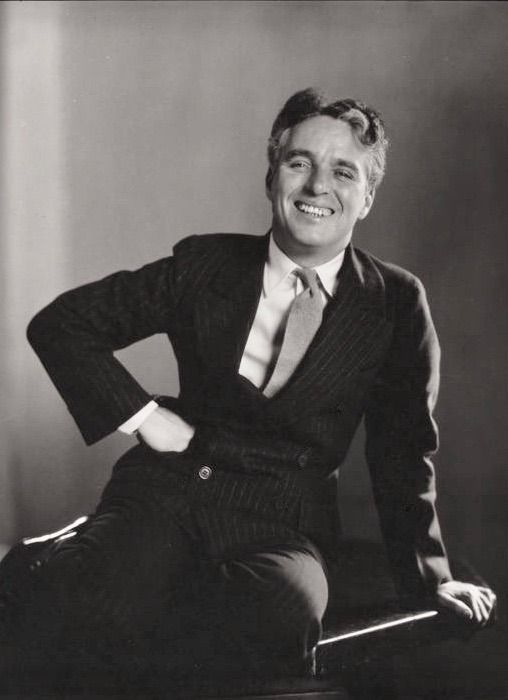
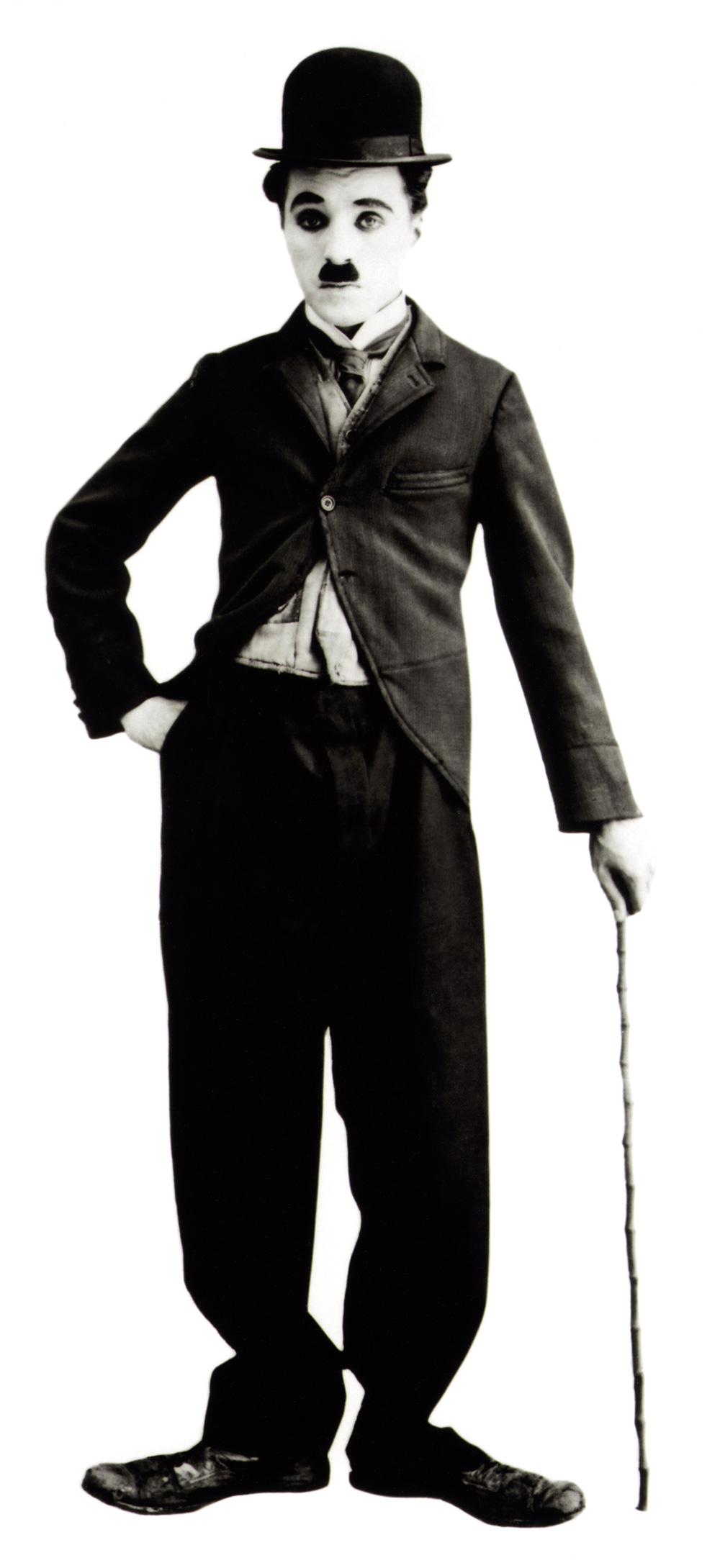
 Film Dialogue
You must be logged in to post a comment.